

Business
Canada’s Historic Ride Hits Its Biggest Test Yet in Morocco on Independence Day


HOUSTON — Canada brings its remarkable and wholly unexpected deep run at the 2026 World Cup to its most demanding test yet on Saturday, when the co-host nation faces Morocco in the round of 16 at NRG Stadium with a quarterfinal spot on the line and a Fourth of July holiday crowd roaring them on.
Kickoff is set for 1 p.m. ET, with the match available on Fox Sports in the United States. The winner advances to the quarterfinals to face either France or Paraguay in Boston on July 8 or 9.
Everything that has happened for Canada at this tournament already exceeds what anyone outside this program could have reasonably projected heading into June. First-ever World Cup point. First-ever World Cup win. First-ever knockout victory. The Canadians have outscored their four opponents 9-3 across the tournament, dispatched South Africa 1-0 in the round of 32 on a Stephen Eustaquio winner deep into stoppage time, and now stand on the edge of a quarterfinal that would represent a generational leap for Canadian football.
Morocco, meanwhile, is the team that eliminated Canada in the group stage of the 2022 World Cup in Qatar with a 2-1 victory built on goals from Hakim Ziyech and Youssef En Nesyri inside the opening 23 minutes. Four years ago, the Atlas Lions became the first African and Arab nation to reach a World Cup semifinal. This year they arrived in North America with bigger ambitions and stronger tactical foundations, and have delivered on that promise without losing a match, finishing second behind Brazil in Group C before eliminating the Netherlands on penalties in the round of 32 after Issa Diop’s 91st-minute header forced extra time.
Morocco coach Mohamed Ouahbi left no room for complacency in his prematch framing.
“If we get things wrong, we’ll go home,” Ouahbi said ahead of Saturday’s fixture.
Canada coach Jesse Marsch was equally direct about the scale of the challenge while refusing to accept the underdog label as a limiting factor.
“Preparing for Morocco is like a gory, horrible nightmare,” Marsch said. “But we want to be here and we expect to be here. So we know that everybody’s going to write us off, and in that is an opportunity.”
The tactical challenge for Canada is clear and has been the defining variable in every match the team has played at this tournament. Morocco possess Achraf Hakimi at right back, arguably the best attacking full back in the world, whose ability to arrive late into attacking positions creates width and depth that few defenses have been able to suppress consistently. Ismael Saibari, who scored three goals in the group stage and attracted attention from Bayern Munich sufficient to secure a transfer agreement, is Morocco’s most dangerous threat in the final third, arriving from midfield into spaces that traditional center backs are not positioned to track.
Canada’s best counter to that quality is a combination of defensive organization built around Kamal Miller, Derek Cornelius and Alistair Johnston across the backline, with Eustaquio providing the controlling and direct-running presence in central midfield that has been the Canadians’ most productive link between defense and attack throughout the tournament. Canada have shown across four games that they can absorb sustained possession pressure from better teams and find decisive moments on the counter, a quality that offers genuine hope even against a Moroccan side ranked 24 places above them in the FIFA world rankings.
The most significant team news development entering Saturday’s match concerns Alphonso Davies, whose return from the lower-body injury that kept him entirely absent from Canada’s first four games was hinted at by Marsch in his prematch comments. The Bayern Munich left back, arguably Canada’s best individual player and one of the fastest players in world football, appeared as a 75th-minute substitute against South Africa in the round of 32. Whether he starts Saturday remains one of the most consequential lineup decisions Marsch will make, given that Davies’ pace and quality on the left flank would give Canada a weapon Morocco’s right side has rarely needed to contain at this tournament. Ismael Kone, the Sassuolo midfielder who broke his leg against Qatar in the group stage, remains out.
Morocco have no reported injuries heading into the match, giving Ouahbi a full selection to work with. The anticipated lineup places veteran goalkeeper Yassine Bounou behind a back four of Hakimi, Romain Saiss, Issa Diop and Nayef Aguerd, with a midfield and attack built around El Aynaoui, Bouaddi, Brahim Diaz, Azzedine Ounahi, Bilal El Khannouss and Saibari.
Betting markets reflect the quality gap between the two sides without dismissing Canada’s chances entirely. Morocco sit at approximately -120 on the 90-minute money line at FanDuel Sportsbook, with Canada a significant underdog at +370 and a draw priced at +230. Morocco are -260 to advance by any means, including extra time and penalties, against Canada’s +205. The over/under on total goals is set at 2.5, with the over priced at +125.
Morocco have progressed in six of their last eight knockout ties at major tournaments, a success rate in elimination football that reflects the squad’s growing comfort with exactly the kind of high-stakes, one-game scenario Saturday presents.
Canada’s presence in this match is already historic in every meaningful sense, a young team co-hosting its first World Cup, led by players who grew up watching the country’s senior men fail to qualify for tournament after tournament, now finding themselves 90 minutes from a quarterfinal against a nation that was in the final four last time around. Whatever Saturday brings, Canadian football left this tournament with its identity reshaped. What happens next at NRG Stadium will determine whether that reshaping reaches a place no Canadian team has been before.



I am a specialist in Asian equities after having been a sellside analyst for 13 years. In addition, I have also spent time covering US hardware and semiconductor stocks on the sellside. Within Asia, I have covered the casino, automotive, industrial, consumer and technology sectors. I have also worked on the buyside as a fund manager in long only and as an analyst in hedge funds all covering Asian equities where I have developed a keen understanding of Asian companies and economies with a focus on China. From a global equities perspective, I enjoy covering companies globally by examining key metrics such as financial statements strength, valuation upside, and conducting proper analysis of the competitive advantages of the company. Throughout my career, I have found and written on undiscovered small cap companies which have increased in equity value by multiple times. I would like to write for Seeking Alpha where my goal is to help investors cut through the noise and to focus on fundamentals and the company’s competitive outlook instead of the momentum trade.
Analyst’s Disclosure: I/we have no stock, option or similar derivative position in any of the companies mentioned, and no plans to initiate any such positions within the next 72 hours. I wrote this article myself, and it expresses my own opinions. I am not receiving compensation for it (other than from Seeking Alpha). I have no business relationship with any company whose stock is mentioned in this article.
Seeking Alpha’s Disclosure: Past performance is no guarantee of future results. No recommendation or advice is being given as to whether any investment is suitable for a particular investor. Any views or opinions expressed above may not reflect those of Seeking Alpha as a whole. Seeking Alpha is not a licensed securities dealer, broker or US investment adviser or investment bank. Our analysts are third party authors that include both professional investors and individual investors who may not be licensed or certified by any institute or regulatory body.

Antenatal classes cover the birth in great detail. What they tend to gloss over is everything that happens to your body in the weeks and months after the baby arrives. Plenty of these changes are normal, temporary and far more common than anyone admits out loud.
The trouble is that nobody warns you, so when they happen you worry in silence. Once you know what’s going on, the worry usually settles down. Let’s examine the changes that tend to go unmentioned, so you know what’s normal, what’s worth a closer look, and what you can do about each one.
Your Pelvic Floor Takes a Lot of Strain
The pelvic floor is a sling of muscles that supports your bladder, bowel and womb. Pregnancy puts months of steady pressure on it, and a vaginal delivery stretches it further. That’s why so many new mums find they leak a little when they laugh, sneeze or run for the bus.
This is normal in the early weeks, but it shouldn’t be something you simply put up with forever. Pelvic floor exercises help most women, and the NHS recommends starting them as soon as you feel able to after the birth. The NHS has clear guidance on how to do them properly.
Leaking is common early on, but it’s not something you have to live with. If it carries on, or you feel a heaviness or dragging sensation, that’s worth raising with your GP or a women’s health physiotherapist. You don’t need to wait for it to get bad before asking.
Skin Pigmentation and the Line Down Your Bump
A lot of women notice darker patches on their face during pregnancy, often across the cheeks and forehead. This is called melasma, and it’s driven by the surge in hormones telling your skin to produce more pigment. The dark line that appears down the middle of your bump, the linea nigra, comes from the same process.
The good news is that both usually fade on their own once your hormones settle, though it can take several months. Sun exposure makes melasma darker, so a high-factor sunscreen is the simplest thing you can do to help it along.
If patches haven’t faded after a few months, or you’d like to treat them sooner, a GP or dermatologist can talk you through the options. There’s no rush, and there’s nothing wrong with leaving them be.
Postpartum Hair Loss Is More Common Than Anyone Says
Around three to four months after giving birth, a lot of women find clumps of hair coming out in the shower or on the pillow. It can be alarming, especially on top of everything else you’re managing. The condition has a name, telogen effluvium, and it’s one of the most common things to happen to a new mum’s body.
Why It Happens and How Long It Lasts
During pregnancy, high hormone levels keep more of your hair in its growing phase, which is why your hair often looks thicker and glossier when you’re expecting. After the birth, those hormone levels drop quickly, and all that hair you held on to enters the resting phase and sheds at once. According to the Cleveland Clinic, the shedding usually lasts less than six months, and most women find their hair regains its fullness by the time their baby turns one.
A few things are worth knowing if you’re going through it:
- It’s shedding, not balding. The hair grows back, though the regrowth can come in finer or with a different texture at first.
- No special treatment is needed for typical postpartum shedding. It resolves on its own.
- Breastfeeding can stretch the process out a little, because hormone levels keep shifting while you nurse.
What you can do is be kind to your hair while it settles. Eat well, keep on top of your iron levels if your midwife has flagged them, and go gentle with tight ponytails or heat styling. The evidence behind miracle supplements is thin, so don’t feel you need to spend money on them unless a doctor has identified a specific deficiency.
When to Get It Checked
There is a point where it’s sensible to get things checked. If the shedding is still going strong beyond six months, or certainly beyond 12 months, or you notice your parting widening or bald patches forming, that can point to something other than ordinary postpartum loss, such as a thyroid issue, low iron or female pattern hair loss being unmasked.
A proper assessment is the only way to know. If you want a professional opinion, some clinics offer assessments aimed specifically at female hair loss, and even offer unshaven hair transplants, giving you a greater level of discretion. Treatment Rooms London is one, and they run virtual consultations, so you don’t have to be in London or travel across the city with a newborn to get checked.
Your Feet Might Be a Whole Size Bigger
This one catches a lot of women out. The hormone relaxin loosens the ligaments in your body to prepare for birth, and that includes the ligaments in your feet. Combined with the extra weight you carry during pregnancy, this can flatten your arches and leave your feet permanently longer or wider.
For some women the change is temporary, but for plenty it’s permanent, and a pre-pregnancy shoe collection that no longer fits is a genuine and slightly bittersweet surprise. It isn’t a sign anything has gone wrong. If your old shoes pinch, it’s fine to size up and let your feet be comfortable.
Pregnancy Can Affect Your Teeth and Gums
Hormonal changes make your gums more prone to swelling and bleeding, a condition known as pregnancy gingivitis. Some women also find morning sickness wears at their tooth enamel because of the acid involved.
You can get free NHS dental care while you’re pregnant and for a year after your baby is born, but it isn’t automatic. You’ll need a Maternity Exemption Certificate, which your midwife, GP or health visitor can apply for, so it’s worth sorting that out and booking a check-up. Brushing gently, rinsing with water after being sick instead of brushing straight away, and keeping up regular dental visits all help protect your teeth through this stretch.
In a Nutshell
Your body has done something extraordinary, and it’s allowed to look and behave a little differently afterwards. Most of these changes are temporary, many are harmless even when they stick around, and almost all of them are far more common than the silence around them suggests.
The real value in knowing about them is that it lets you tell the difference between what’s normal and what deserves a proper look. You’re allowed to ask questions, ask for referrals, and expect to be taken seriously. Knowing what’s happening to your own body is the first step to looking after it.
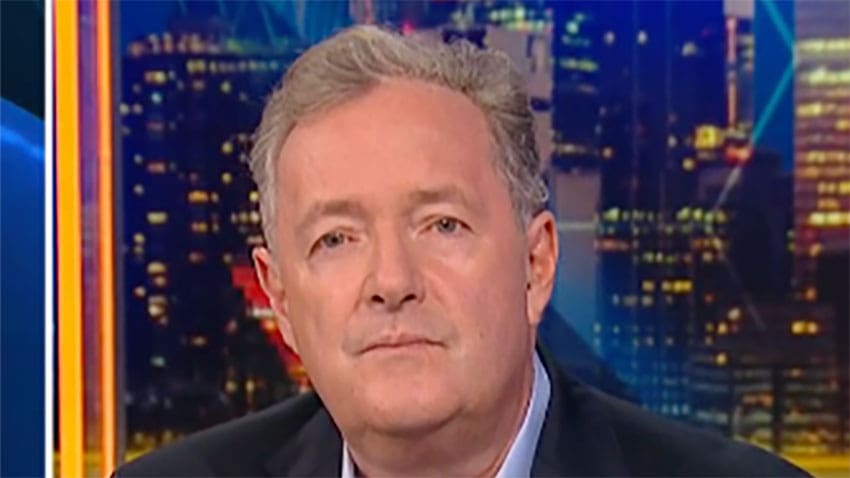
Piers Morgan’s Uncensored has been valued at $145 million (around £108 million) by investors, just 18 months after the broadcaster took full ownership of the brand, and five years after ITV parted company with him over his refusal to apologise for comments about Meghan Markle.
Morgan confirmed the figure in an interview with Karl Stefanovic on Australia’s Today show, days after closing a $27 million funding round for the business. The raise was led by Raine and Greek media group Antenna, with strategic backers including Elisabeth Murdoch and the billionaire Reuben brothers, Simon and David.
“We announced yesterday we’ve just finished an investor round on Uncensored,” Morgan said. “The investors have valued the business $145 million US.”
The valuation caps a remarkable turnaround for a presenter who walked off the Good Morning Britain set in March 2021 and left ITV shortly afterwards, having refused to apologise for his remarks about the Duchess of Sussex. Set against his reported £1.1 million-a-year ITV salary, the valuation is worth roughly a century of his old pay packet.
From one-man show to media network
Morgan bought the Uncensored brand outright from Rupert Murdoch’s News UK in early 2025, abandoning linear television for a YouTube-first model. “I’ve only owned it a year and a half,” he told Stefanovic. “We’ve got a business worth nearly $150 million in 18 months.”
The channel now has around 4.4 million subscribers and, according to Morgan, “generates a lot of cash from advertising and sponsorships”, all without a marketing budget. “We don’t pay anyone to market our content. We do it all ourselves,” he said.
Crucially for investors, Morgan has been deliberate about building a business that can outlive its founder’s on-screen presence. “I knew I had to build a business which would actually in the end become much less reliant on me. So I decided to take Uncensored as the brand of the business,” he said.
That strategy is already visible in the company’s expanding slate. Uncensored has struck partnerships with Paramount UK and Channel 5 to bring its shows to broadcast television, alongside a long-form interview series co-produced with Time Studios. Its newest vertical, World Cup Uncensored, has been an immediate hit.
“We’ve just done World Cup Uncensored, and that’s blown up as well,” Morgan said. “We’re doing bigger numbers than Gary Lineker’s show, which Netflix paid $14 million for,” a reference to The Rest Is Football, which the streamer is reportedly paying around £14 million to run daily throughout the tournament.
The economics of walking away
The round confirms the trajectory first reported in December, when Business Matters revealed Uncensored was closing in on a £100 million valuation with Raine’s backing. At the time, insiders said the ambition was to build a billion-dollar company within a few years.
For all the showmanship, the underlying lesson is one any business owner will recognise: ownership of the asset, not salary from an employer, is where value compounds. Morgan spent decades as highly paid talent for other people’s businesses. It took just 18 months of owning his own for his equity to dwarf everything that came before, a pattern now pulling television’s biggest names towards YouTube and away from the traditional broadcasters that once employed them.
“I think the sky’s the limit for this stuff,” Morgan said. On the evidence of the past 18 months, few investors would bet against him.

Amy Ingham
Amy is a newly qualified journalist specialising in business journalism at Business Matters with responsibility for news content for what is now the UK’s largest print and online source of current business news.

In the past 24 hours, Bitcoin was up 1.37% and Ethereum was up 2.30% to trade at $1,754 mark. Among the major altcoins, BNB, XRP, Solana, Tron, Hyperliquid, Dogecoin and Cardano gained upto 6.83%.
Also Read | Why is Parag Parikh Flexi Cap Fund still a top recommendation despite underperformance? Expert explains The global crypto market capitalisation was up 1.38% to $2.17 trillion, according to CoinMarketCap.
Nischal Shetty, Founder, WazirX said the prospect of a more accommodative Federal Reserve policy helped improve sentiment across risk assets, allowing Bitcoin to recover above the $60,000 mark, while Ethereum also benefited from renewed institutional interest as spot ETFs recorded fresh inflows.

Shetty further said that from a technical perspective, Bitcoin continues to hold the $60,000-$61,000 support zone, with $63,000-$64,000 emerging as the next key resistance. For Ethereum, traders are watching $1,650-$1,680 as immediate support, while $1,750-$1,800 remains the next major resistance area.
In the past week, Bitcoin and Ethereum were up 3.62% and 11.05%. Among the major altcoins, BNB, XRP, Solana, Tron, Hyperliquid, Dogecoin and Cardano rallied upto 19.16%.Harish Vatnani, Head of Trade, ZebPay said Bitcoin rebounded after finding support at its recent double-bottom formation near $58,000 last week. Despite the recovery, the daily RSI remains below the 50 level, indicating that the broader momentum is still negative.
“Ethereum found support at its double-bottom formation near the $1,505 level and has rebounded sharply. The daily RSI has crossed above the 50 mark, reflecting improving bullish momentum”
Also Read | 11 equity mutual funds multiply lumpsum investments by 4x in 7 years. Do you own any in your portfolio?
Vatnani further said that Ethereum and Solana investment products continued to attract inflows, while Bitcoin ETFs recorded net outflows of more than $290 million, reflecting a shift in institutional investor sentiment.
(Disclaimer: Recommendations, suggestions, views and opinions given by the experts are their own. These do not represent the views of The Economic Times)

BofA highlights FX intervention impact on reserves and central bank balance sheets
Business
US rally vs India story? Wealth managers explain why NRIs should stay the course for next 10 years

The debate has gained traction amid the AI-driven rally in US equities, a weaker rupee against the dollar and a temporary slowdown in corporate earnings.
For dollar-based investors, currency movement is another key consideration, with many assuming that rupee depreciation significantly erodes returns.
However, wealth managers argue that these concerns stem largely from short-term market cycles rather than a deterioration in India’s long-term fundamentals.
Historically, the rupee has depreciated at a much slower pace than commonly perceived, allowing strong rupee-denominated returns to translate into healthy dollar returns over longer investment horizons. More importantly, they say, India’s structural growth drivers remain intact despite periodic corrections.
Structural growth story remains intact
According to Feroze Azeez, Joint CEO at Anand Rathi Wealth, India’s biggest strength lies in where it stands in its economic journey.
Unlike several developed economies that are entering a phase of slower structural growth, India continues to benefit from favourable demographics, rising domestic consumption, manufacturing expansion and policy reforms. With nominal GDP expected to grow in double digits over the long term, the country offers a supportive backdrop for sustained corporate earnings growth, he said.
Azeez added that macroeconomic stability, supported by moderate inflation, prudent fiscal management and healthy foreign exchange reserves, provides greater visibility on earnings and valuations. “The investment case for India is based on long-term structural growth and compounding, rather than short-term market movements,” he said.
Domestic investors are becoming the market’s anchor
Another key change over the past decade has been the growing influence of domestic investors.Domestic institutional ownership has now overtaken foreign portfolio ownership for the first time in modern market history, aided by record SIP inflows that continue to provide a steady source of long-term capital. This has made Indian equities less vulnerable to swings in global risk appetite.
Shiv Gupta, Founder and CEO of Sanctum Wealth, believes this transition is one of the most underappreciated developments in Indian markets.
According to him, India’s growth is increasingly being funded by its own households through rising savings, domestic consumption and expanding capital markets. “A market supported by its own savers is more resilient than one dependent on foreign flows,” he said, noting that this explains why Indian markets now tend to recover faster from bouts of global volatility.
He also points out that the broader investment case remains anchored in long-term drivers such as rising incomes, financialisation of savings, infrastructure spending and a significantly healthier banking system than a decade ago.
Earnings, valuations support the long-term case
While earnings growth has moderated in the recent past, analysts expect corporate profitability to improve over the next two financial years. Combined with improving balance sheets and easing valuations, many wealth advisors believe the current environment offers an attractive entry point for patient investors.
Tarun Birani, Founder and CEO of TBNG Capital Advisors, says India’s appeal lies in its ability to deliver earnings compounding over long periods rather than quarter-to-quarter performance.
He notes that banks are well-capitalised, corporate balance sheets are among the strongest seen in over a decade and government-led capital expenditure continues to support economic activity. At the same time, valuations have moderated, even as corporate return on equity has room to improve, creating favourable conditions for long-term investors.
Birani also highlights the rapid rise in household participation in equities and mutual funds over the past decade, describing it as a structural “domestic capital flywheel” that helps cushion market corrections.
For NRIs, he believes India offers a unique combination of long-term wealth creation and alignment with future financial goals in rupee terms. “You’re participating in a long-run compounding story that also maps to your family, property and eventual return to India,” he said.
What Should NRI Investors Do?
For wealth managers, the message is clear: while short-term performance may influence sentiment, India’s investment case continues to rest on structural growth, improving corporate fundamentals and the increasing resilience of its domestic capital markets—factors that are likely to play out over years rather than quarters.
(Disclaimer: Recommendations, suggestions, views, and opinions given by experts are their own. These do not represent the views of the Economic Times)


I’m a fundamental, valuation-driven investor with a strong focus on identifying businesses that have the potential to scale over time and unlock massive terminal value. My investment approach centers around understanding the core economics of a business—its competitive moat, unit economics, reinvestment runway, and management quality—and how those factors translate into long-term free cash flow generation and shareholder value creation. I focus on fundamental research, and I tend to focus on sectors with strong secular tailwinds. Professionally, I am a self-educated investor that started this journey 10 years ago. Currently, I am managing my own funds, seeded from friends and family. My motivation for writing on Seeking Alpha is to share investment insights, and also at the same garner feedback from fellow investors in this site. My aim is to help readers focus on what truly drives long-term equity value. I believe good analysis should be both analytical and accessible, and I hope my work adds value to readers looking for high-quality, long-term investment opportunities.
Analyst’s Disclosure: I/we have no stock, option or similar derivative position in any of the companies mentioned, and no plans to initiate any such positions within the next 72 hours. I wrote this article myself, and it expresses my own opinions. I am not receiving compensation for it (other than from Seeking Alpha). I have no business relationship with any company whose stock is mentioned in this article.
Seeking Alpha’s Disclosure: Past performance is no guarantee of future results. No recommendation or advice is being given as to whether any investment is suitable for a particular investor. Any views or opinions expressed above may not reflect those of Seeking Alpha as a whole. Seeking Alpha is not a licensed securities dealer, broker or US investment adviser or investment bank. Our analysts are third party authors that include both professional investors and individual investors who may not be licensed or certified by any institute or regulatory body.

Mirum Pharmaceuticals: This Liver Disease Juggernaut Just Broadened Its Portfolio


Iranians flock to week-long funeral rites for Khamenei

Today, that market has been replaced by more serious, more structural, and more interesting market participants. The next Bitcoin rally will not be driven by narrative. It will be driven by liquidity. And if you don’t understand how liquidity moves, you will keep misreading every crypto cycle that follows.
What the Numbers Are Telling Us
Over the past eight months, more than $10 billion has moved out of Bitcoin spot ETFs, and that exodus has been a major driver of the downturn we’re witnessing. In 2024, inflows into those same ETFs powered Bitcoin to new all-time highs. Institutional capital pulled back, the pillar supporting the rally faded, and retail investors simply did not have the conviction to hold the market up on their own.
Spot ETFs now hold 6-7% of circulating supply, which means every billion dollars of net flow ripples directly into spot prices and through the rest of the crypto market.
How the Market Grew Up
The 2021 bull run was the last great hype-driven market. Retail FOMO, social media momentum, and speculative excess pushed Bitcoin to its then all-time high. Then came the unravelling of Luna, Celsius, and FTX. Each collapse eroded the casual investor’s willingness to act on hype without scrutiny.
At the same time, the market’s composition changed underneath it. The SEC’s approval of spot Bitcoin ETFs in January 2024 brought institutional capital into the space through regulated vehicles. BlackRock’s iShares Bitcoin Trust alone commands approximately $43 billion in assets under management as of June 2026.
These are investors who allocate based on macro conditions, rate environments, and portfolio construction frameworks with a long-term view, the same forces that move equity and bond markets.
Liquidity Is the Variable That Matters Now
Empirical research shows a significant strengthening in the relationship between global M2 money supply growth and Bitcoin price appreciation, with roughly a 90-day lag and correlation coefficients reaching 0.78 during the 2020-2023 period.
Put simply, when global liquidity expands, Bitcoin goes up. When it contracts, Bitcoin comes under pressure. That three-month lag means the direction of global money supply today is a leading indicator of where Bitcoin is headed next quarter, whether you’re watching for it or not.
Stronger-than-expected inflation readings and elevated bond yields have complicated the picture for Federal Reserve policy. Persistent energy price pressures and geopolitical instability now have investors worried that rate cuts could be delayed, and that makes for a less supportive environment for risk assets like Bitcoin.
What the On-Chain Data Is Actually Saying
Here is where it gets interesting. Beneath the price weakness, the network is telling us a different story altogether. CryptoQuant’s Bitcoin Network Activity Index has climbed steadily since January and recently hit its highest level since late 2024. Daily Bitcoin transactions have crossed 800,000, nearing the highs of the previous bull cycle.
Even the selling pressure from ETF redemptions has not triggered a rush of coins onto exchanges for liquidation, which tells you that some of these outflows are internal portfolio rebalancing, not investors walking away from Bitcoin.
What the Next Rally Needs
Any rotation back into growth positioning would likely pull Bitcoin along with it, re-anchoring the asset to the liquidity backdrop. An ETF flow reversal would provide direct support to prices.
Watch for a softening in Fed language, easing inflation data, and a resolution to the geopolitical tensions that have kept oil prices elevated and rate-cut expectations suppressed. Any one of these could meaningfully improve liquidity conditions, and when liquidity returns, Bitcoin has consistently been among the first assets to reflect it.
The next leg of this cycle will not announce itself through celebrity endorsements or viral posts. It will show up quietly, in ETF flow data, in M2 expansion numbers, and in what the bond market is telling us about where rates are headed.
The investors who stand to benefit most from the next Bitcoin rally are the ones watching the Fed, tracking ETF flows, and understanding that Bitcoin’s price today is largely a function of how much capital the global financial system is willing to allocate to risk assets.
(The author Prateek Gupta is Head of Business, Mudrex)
(Disclaimer: Recommendations, suggestions, views and opinions given by the experts are their own. These do not represent the views of The Economic Times)

Moston police issue image and appeal amid investigation

US Foods Holding Stock: Gaining Market Share In Key Segments (NYSE:USFD)

Revolut drops Tether USDT as MiCA rules force major crypto shift


![No Money [ DJ BEN RMX ]](https://wordupnews.com/wp-content/uploads/2026/02/1770218101_maxresdefault-80x80.jpg)


-

 Tech6 days ago
Bluekit phishing kit adopts browser-in-the-middle for login theft
-

 Fashion15 hours ago
Weekend Open Thread: High Hopes
-

 Tech6 days ago
Claude Code turned every engineer into three. Now companies need more product thinkers
-

 Crypto World4 days ago
Strategy authorizes up to $1.25B in Bitcoin sales under new capital plan
-

 Politics21 hours ago
The House | “Reframing the debate from a binary discussion of winners and losers”: Yuan Yang reviews ‘We Are Not Machines’
-

 News Videos6 days ago
MAJOR BITCOIN & MARKET UPDATE!!!! (MUST WATCH ASAP!!!)
-

 Tech4 days ago
Anonymous researcher drops 0-day ‘exploitarium’ repo
-

 Crypto World7 days ago
Coinbase, Circle Deepen Crypto Stock Losses Despite Resilient S&P 500
-

 Business4 days ago
Australia treasurer says alleged access of prime minister’s bank data ’incredibly concerning’
-

 Tech7 days ago
Russian hackers now target Signal backup recovery keys
-
 Business5 days ago
The AI boom won’t burst all at once. It will pop in ‘rolling bubbles’: Macquarie
-

 Sports3 days ago
Broncos roster: OL Ben Powers (No. 74) entering final year of contract
-

 Crypto World2 days ago
Binance stock trading tops $1B in first month after launch
-

 NewsBeat3 days ago
Presenter Caroline Flack’s brother Paul Flack dies aged 55
-

 Tech7 days ago
Silicon Valley paid to kill AI regulation, now it wants the rules back
-

 Tech7 days ago
OpenAI mulls delaying IPO over valuation concerns
-

 Crypto World2 days ago
Alibaba-affiliate Ant Group enters the humanoid robot market with 12 deals
-

 News Videos4 days ago
How to Build INSANE Live Financial Dashboards With Claude
-
 NewsBeat2 days ago
New exhibition reflects five decades of movement between island of Ireland and GB
-

 Business1 day ago
What a 10 Percent Drop Means for Buyers, Sellers and Renters
You must be logged in to post a comment Login