
Business
Piers Morgan’s Uncensored Hits $145m Valuation in 18 Months

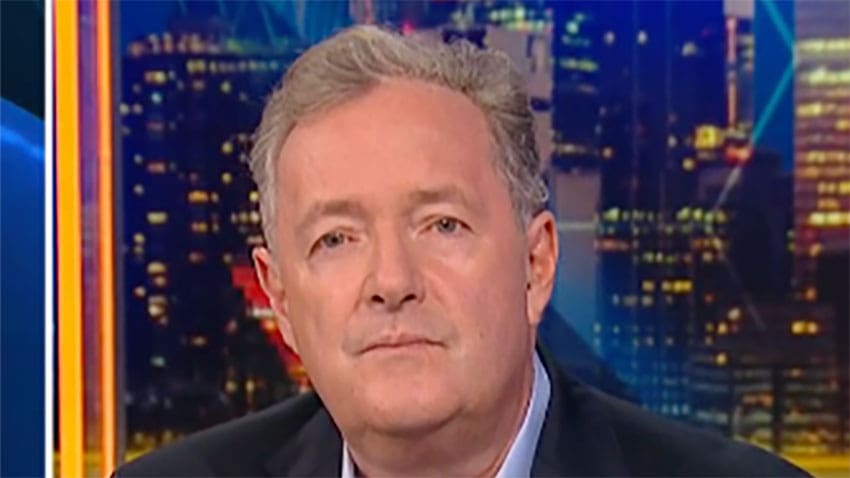
Piers Morgan’s Uncensored has been valued at $145 million (around £108 million) by investors, just 18 months after the broadcaster took full ownership of the brand, and five years after ITV parted company with him over his refusal to apologise for comments about Meghan Markle.
Morgan confirmed the figure in an interview with Karl Stefanovic on Australia’s Today show, days after closing a $27 million funding round for the business. The raise was led by Raine and Greek media group Antenna, with strategic backers including Elisabeth Murdoch and the billionaire Reuben brothers, Simon and David.
“We announced yesterday we’ve just finished an investor round on Uncensored,” Morgan said. “The investors have valued the business $145 million US.”
The valuation caps a remarkable turnaround for a presenter who walked off the Good Morning Britain set in March 2021 and left ITV shortly afterwards, having refused to apologise for his remarks about the Duchess of Sussex. Set against his reported £1.1 million-a-year ITV salary, the valuation is worth roughly a century of his old pay packet.
From one-man show to media network
Morgan bought the Uncensored brand outright from Rupert Murdoch’s News UK in early 2025, abandoning linear television for a YouTube-first model. “I’ve only owned it a year and a half,” he told Stefanovic. “We’ve got a business worth nearly $150 million in 18 months.”
The channel now has around 4.4 million subscribers and, according to Morgan, “generates a lot of cash from advertising and sponsorships”, all without a marketing budget. “We don’t pay anyone to market our content. We do it all ourselves,” he said.
Crucially for investors, Morgan has been deliberate about building a business that can outlive its founder’s on-screen presence. “I knew I had to build a business which would actually in the end become much less reliant on me. So I decided to take Uncensored as the brand of the business,” he said.
That strategy is already visible in the company’s expanding slate. Uncensored has struck partnerships with Paramount UK and Channel 5 to bring its shows to broadcast television, alongside a long-form interview series co-produced with Time Studios. Its newest vertical, World Cup Uncensored, has been an immediate hit.
“We’ve just done World Cup Uncensored, and that’s blown up as well,” Morgan said. “We’re doing bigger numbers than Gary Lineker’s show, which Netflix paid $14 million for,” a reference to The Rest Is Football, which the streamer is reportedly paying around £14 million to run daily throughout the tournament.
The economics of walking away
The round confirms the trajectory first reported in December, when Business Matters revealed Uncensored was closing in on a £100 million valuation with Raine’s backing. At the time, insiders said the ambition was to build a billion-dollar company within a few years.
For all the showmanship, the underlying lesson is one any business owner will recognise: ownership of the asset, not salary from an employer, is where value compounds. Morgan spent decades as highly paid talent for other people’s businesses. It took just 18 months of owning his own for his equity to dwarf everything that came before, a pattern now pulling television’s biggest names towards YouTube and away from the traditional broadcasters that once employed them.
“I think the sky’s the limit for this stuff,” Morgan said. On the evidence of the past 18 months, few investors would bet against him.

Amy Ingham
Amy is a newly qualified journalist specialising in business journalism at Business Matters with responsibility for news content for what is now the UK’s largest print and online source of current business news.


What is the Anna Karenina Principle of Monetary Policy?

A Dire Situation
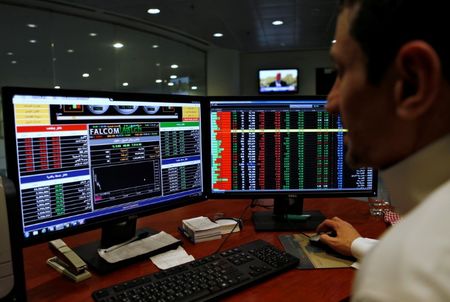
Saudi Arabia stocks higher at close of trade; Tadawul All Share up 1.10%
Business
Mamdani Unveils 30% Discount Plan for NYC’s New City-Owned Grocery Stores Amid Fierce Industry Backlash
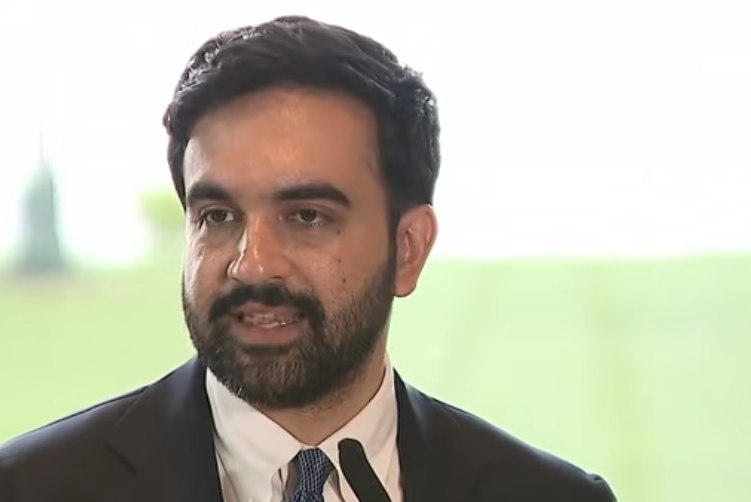
New York City Mayor Zohran Mamdani unveiled detailed pricing plans this week for his signature policy of city-owned grocery stores, announcing that a core basket of essential foods will sell for 30% below typical retail prices, a move that has drawn sharp criticism from grocers who say it unfairly threatens their businesses.
Speaking in Brooklyn, Mamdani said the discount will apply to a defined set of staples including all fresh produce, meat, seafood, bread, milk and pasta. “Once a month, our five city run grocery stores will set prices for this core set of goods at 30% below typical retail prices. No exceptions, no gimmicks,” Mamdani said. “The savings will last for the entire month. That means no weekly fluctuations nor sticker shock at the checkout line.” The mayor’s office said the discounts could save shoppers roughly $90 a month, or approximately $1,000 a year.
Mamdani said he settled on the 30% discount figure because food prices have risen by roughly that amount since 2019. The plan, known officially as N.Y.C. Groceries, calls for one municipal store in each of the city’s five boroughs, with a network the mayor’s office describes as a “first-of-its-kind model” among major U.S. cities. Rather than being run directly by city employees, the stores will be operated day-to-day by private grocery firms selected through a request for proposals process the city has issued, with the city setting overall standards, pricing requirements and store design.
The first store is expected to open by the end of 2027 in Hunts Point, in the South Bronx, a neighborhood the mayor’s office said has among the highest rates of food insecurity in the city, with 77% of households reportedly struggling to afford basic necessities. A second location is planned for La Marqueta, a historic public market in East Harlem, with an expected opening by 2029. All five stores are slated to be operating by the end of Mamdani’s first term. The city has allocated $70 million in capital funding for the project, including $30 million specifically for the ground-up construction of the East Harlem location.
Mamdani framed the initiative as central to his broader affordability agenda. “In the wealthiest city in the richest country in the world, no one should have to wonder how they’ll afford the food they need to feed themselves or their families,” Mamdani said. In a separate statement issued by his office, Mamdani added, “Every week, New Yorkers walk into a grocery store hoping the prices haven’t gone up again. A trip to the grocery store shouldn’t spell dread for New Yorkers.”
The stores will be able to offer lower prices in part because they will not need to turn a profit and will not face the same rent and operating costs that private grocers absorb. Mamdani has said the stores will not sell items such as cigarettes or alcohol, a decision he described as intended to avoid direct competition with local bodegas on those specific products.
The plan has drawn strong opposition from the grocery industry. Antonio Pena, president of the National Supermarket Association, which represents roughly 450 stores across New York City, said the initiative threatens grocers already operating on thin margins. “To have the city decide to open a store in the same neighborhood in which our members are operating at already low margins — because running a store in the city is very expensive, extremely expensive — we feel that it’s a big slap in the face to us,” Pena said. Jason Ferraira, a board member of the same association, which has separately been described as representing more than 700 stores across New York and the East Coast, criticized the city’s broader track record managing public services. He argued the city has “a poor track record” running public housing, hospitals and schools, and predicted the grocery initiative would “likely fail miserably.” Ferraira added that competition and choice matter to residents. “New Yorkers enjoy having options,” he said.
Critics have also raised broader economic concerns beyond the direct impact on individual grocers. Economists cited in coverage of the plan have warned that if enough bodegas and independent grocers are forced out of business by the subsidized competition, remaining stores could eventually raise prices to cope with reduced competition and higher operating costs, potentially offsetting some of the intended savings for consumers over the long run. Others have pointed to the city’s history with earlier municipal market experiments, including markets built under former Mayor Fiorello La Guardia in the 1930s, though those markets rented space to private vendors who remained subject to normal market pressures, differing structurally from the city-run model Mamdani has proposed.
The grocery store initiative follows a separate, related policy Mamdani has pursued this year to freeze rents on regulated apartments, part of a broader political platform built around addressing the rising cost of living in New York City. Grocery prices in the city have climbed sharply in recent years, with New York now ranked as the second most expensive city in the contiguous United States for grocery shopping, trailing only San Francisco, according to industry data cited in coverage of the plan.
With the city now formally soliciting proposals from private grocery operators to run the five planned stores, and construction still years away from completion at most sites, the ultimate success or failure of Mamdani’s city-owned grocery experiment is likely to remain a subject of ongoing debate among economists, grocery industry representatives and city officials well before any of the five stores fully open to the public.


I have a masters degree in Analytics from Northwestern University and a bachelors degree in Accounting. I have worked in the investment arena for over 10 years starting as an analyst and working my way up to a management role. Dividend investing is a personal hobby and I look forward to sharing my thoughts with the Seeking Alpha community.
Analyst’s Disclosure: I/we have a beneficial long position in the shares of NVDA, MSCI, WING, ROL, INTU, ZTS, MA, KLAC, BR, ODFL, MSFT, DPZ, APH, V, BMI, COST, MPWR, LLY, CTAS, MRSH, ACN, TJX, MCO either through stock ownership, options, or other derivatives. I wrote this article myself, and it expresses my own opinions. I am not receiving compensation for it (other than from Seeking Alpha). I have no business relationship with any company whose stock is mentioned in this article.
Seeking Alpha’s Disclosure: Past performance is no guarantee of future results. No recommendation or advice is being given as to whether any investment is suitable for a particular investor. Any views or opinions expressed above may not reflect those of Seeking Alpha as a whole. Seeking Alpha is not a licensed securities dealer, broker or US investment adviser or investment bank. Our analysts are third party authors that include both professional investors and individual investors who may not be licensed or certified by any institute or regulatory body.


Tired of effortful investing strategies with uncertain prospects? As a former deep value investor, I learned to appreciate the benefits of a dividend-focused value strategy several years ago. My strategy puts an emphasis on capital preservation and steadily growing income.I write primarily about stocks I hold in my diversified dividend stock portfolio, which emphasizes high-quality value stocks that offer meaningful growth and long-term safety.Feel free to reach out to me via direct messaging here, on Twitter, or through the comments section of one of my articles.Hit the “Follow” button if you’d like to join me on my journey to financial independence.
Analyst’s Disclosure: I/we have no stock, option or similar derivative position in any of the companies mentioned, and no plans to initiate any such positions within the next 72 hours. I wrote this article myself, and it expresses my own opinions. I am not receiving compensation for it (other than from Seeking Alpha). I have no business relationship with any company whose stock is mentioned in this article.
Disclaimer: The contents of this article, my previous articles, and my comments are for informational purposes only and may not be considered investment and/or tax advice. I am a private investor from Europe and share my investing journey here on Seeking Alpha. I am neither a licensed investment advisor nor a licensed tax advisor. Furthermore, I am not an expert on taxes and related laws—neither in relation to the U.S. nor other geographies/jurisdictions. It is not my intention to give financial and/or tax advice, and I am in no way qualified to do so. Although I do my best to make sure that what I write is accurate and well-researched, I cannot be held responsible and accept no liability whatsoever for any errors, omissions, or consequences resulting from the enclosed information. The writing reflects my personal opinion at the time of writing. If you intend to invest in the stocks or other investment vehicles mentioned in this article—or in any investment vehicle generally—please consult your licensed investment advisor. If uncertain about tax-related implications, please consult your licensed tax advisor.
Seeking Alpha’s Disclosure: Past performance is no guarantee of future results. No recommendation or advice is being given as to whether any investment is suitable for a particular investor. Any views or opinions expressed above may not reflect those of Seeking Alpha as a whole. Seeking Alpha is not a licensed securities dealer, broker or US investment adviser or investment bank. Our analysts are third party authors that include both professional investors and individual investors who may not be licensed or certified by any institute or regulatory body.
Australia’s home price retreat gathers pace in July, Cotality data shows

I am an independent investor with more than 15 years of experience researching public companies, with a primary focus on identifying misunderstood businesses where the market’s short-term narrative differs from long-term fundamentals. Before concentrating on biotechnology, I was a long-term investor in Advanced Micro Devices (NASDAQ: AMD) during its multi-year turnaround and Maxar Technologies (NYSE: MAXR) prior to its acquisition. Those investments reinforced my conviction that meaningful returns often come from understanding the underlying business, competitive positioning, and long-term catalysts rather than reacting to short-term market sentiment. Over the past seven years, my research has become increasingly focused on small- and micro-cap biotechnology companies, particularly those developing novel therapies for oncology and hematologic malignancies. My investment process centers on fundamental research, including SEC filings, ClinicalTrials.gov records, FDA regulatory pathways, peer-reviewed scientific literature, conference presentations, and corporate communications. I also seek to understand clinical trial design, survival statistics, regulatory strategy, and the competitive landscape surrounding emerging therapies. One company I have followed extensively is SELLAS Life Sciences, where I have been a shareholder for more than seven years. My research has included reviewing publicly available regulatory filings, analyzing clinical trial developments, engaging with management through shareholder communications, and participating in discussions with independent AML specialists to better understand the evolving treatment landscape. While SELLAS has become one of my deepest research projects, my broader interests include immunotherapy, precision medicine, targeted oncology, and event-driven biotechnology investing. Professionally, I am the founder and owner of Mobilize Cloud, a digital consulting and software development firm based in Ohio. My career in technology has been built around solving complex problems, analyzing data, and developing practical solutions for businesses. Those same analytical skills have naturally shaped my investment philosophy: question assumptions, rely on primary sources whenever possible, and distinguish evidence from narrative. I do not claim to predict clinical trial outcomes or possess information beyond what is publicly available. Instead, my goal is to synthesize complex scientific, regulatory, and financial information into clear, well-supported research that helps investors better understand both the opportunities and the risks associated with innovative biotechnology companies. Through my writing, I hope to encourage thoughtful, evidence-based discussion around biotechnology and other sectors where deep research can uncover opportunities that may not be fully reflected in prevailing market sentiment. Whether the topic is biotechnology, technology turnarounds, or other event-driven investments, my objective is to help readers evaluate the facts, challenge conventional assumptions, and make more informed investment decisions.


The Investment Doctor is a financial writer, highlighting European small-caps with a 5-7 year investment horizon. He strongly believes a portfolio should consist of a mixture of dividend and growth stocks.
He is the leader of the investment group European Small Cap Ideas which offers exclusive access to actionable research on appealing Europe-focused investment opportunities not found elsewhere. The a focus is on high-quality ideas in the small-cap space, with emphasis on capital gains and dividend income for continuous cash flow. Features include: two model portfolios – the European Small Cap Ideas portfolio and the European REIT Portfolio, weekly updates, educational content to learn more about the European investing opportunities, and an active chat room to discuss the latest developments of the portfolio holdings. Learn more.
Analyst’s Disclosure: I/we have a beneficial long position in the shares of CPX:CA either through stock ownership, options, or other derivatives. I wrote this article myself, and it expresses my own opinions. I am not receiving compensation for it (other than from Seeking Alpha). I have no business relationship with any company whose stock is mentioned in this article.
I have also written some out of the money put options and I intend to write more put options.
Seeking Alpha’s Disclosure: Past performance is no guarantee of future results. No recommendation or advice is being given as to whether any investment is suitable for a particular investor. Any views or opinions expressed above may not reflect those of Seeking Alpha as a whole. Seeking Alpha is not a licensed securities dealer, broker or US investment adviser or investment bank. Our analysts are third party authors that include both professional investors and individual investors who may not be licensed or certified by any institute or regulatory body.

Death toll from migrant rush into Ceuta rises to 72
What is the Anna Karenina Principle of Monetary Policy?

WWE SummerSlam 2026 card: Complete list of matches for Night 2 on Sunday
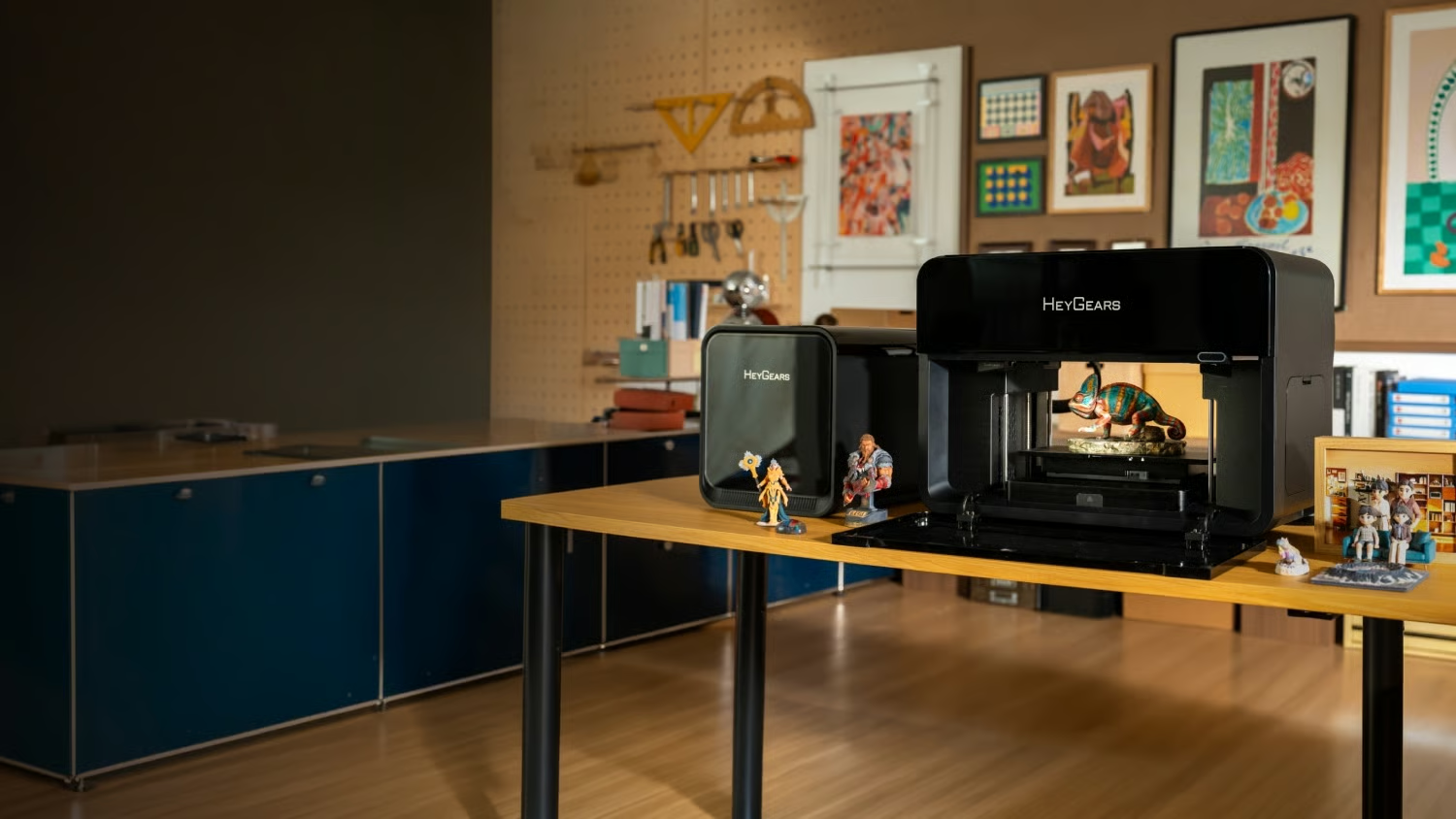
UV Printer? 3D Printer? HeyGears Says “Why Not Both”?


-
 Sports7 days ago
Commonwealth Games boxing: Jadumani Singh seals dominant 5-0 win over Pakistan’s Sumama Rehman to enter quarter-finals | Commonwealth Games News
-

 Business4 days ago
Why Trees Belong on the Risk Register
-

 Fashion2 days ago
Weekend Open Thread: Wit & Wisdom
-

 Tech7 days ago
Intel is reversing course and bringing hyper-threading back to its server chips
-

 Politics2 days ago
Meta enters AI-training agreement with far-right ‘propaganda rag’ Newsmax
-

 Politics6 days ago
Luke Littler dismantles Gerwyn Price to retain title in Blackpool
-

 Crypto World1 day ago
MicroStrategy Post-Earnings CLARITY Act Push Could Add New Catalyst for Its Stock
-

 Politics5 days ago
The Part of the Electric Transition Nobody Wants to Discuss
-
 Entertainment5 days ago
‘Stargate’ Creator’s New Sci-Fi Series Returns for Season 3 Tomorrow
-

 News Videos7 days ago
BITCOIN JUST ENTERED THIS CRITICAL ZONE…
-

 Business4 days ago
Major shareholder moves on Canyon
-

 News Videos3 days ago
Bitcoin Enters the 3rd Stage of the Bear Market
-

 Crypto World1 day ago
XRP Ledger v3.3.0 brings five institutional features
-

 Crypto World5 days ago
Kraken Enables Retail Access to Jersey Mike’s IPO via Tokenized Shares
-

 Tech6 days ago
New macOS Sequoia & Sonoma security updates for older Macs
-

 News Videos5 days ago
Claude: Build Financial Dashboards in Minutes (2026)
-

 Politics3 days ago
Luke Littler’s dominance sparks GOAT debate
-

 Sports3 days ago
Seema Kaliramna Wins Discus Throw Bronze, Takes India’s CWG Medals Tally To 17
-

 Business5 days ago
Johnson & Johnson agrees to $5.5B settlement over talc cancer claims
-

 Crypto World6 hours ago
Crypto PAC spending tops $2M in Michigan House race
You must be logged in to post a comment Login