Connect with us
DAPA Banner
DAPA Coin
DAPA
COIN PAYMENT ASSET
PRIVACY · BLOCKDAG · HOMOMORPHIC ENCRYPTION · RUST
ElGamal Encrypted MINE DAPA
🚫 GENESIS SOLD OUT
DAPAPAY COMING

NewsBeat

Inquiry into butcher brain surgeon Eljamel to go ahead in September after delay

Published

on

Daily Record

Stage one hearings had been scheduled for April but were postponed due to concerns around the venue.

The first hearings of the inquiry into disgraced brain surgeon Sam Eljamel are expected to go ahead in September as planned, Lord Weir has said.

The chair of the Eljamel Inquiry said work by the Scottish Government was under way to resolve building safety issues that led to the first evidence hearings being delayed. Stage one hearings had been scheduled for April but were postponed due to concerns around the venue at Waverley Gate in Edinburgh, which the inquiry team first became aware of last year.

Jamie Dawson KC, senior counsel to the inquiry, said it was not until February this year it “became apparent” to Lord Weir that the issue posed a “real risk” to attendees’ safety. In May, Mr Dawson KC criticised the Scottish Government’s handling of the issue, saying former patients had been left “uninformed, anxious and suspicious” by the lack of any public explanation for the delay.

Advertisement

On Friday, Lord Weir said he now expects the first hearings to go ahead over four weeks from September 7. He said the inquiry could now prepare for the hearings, including making contact with potential witnesses.

A provisional timetable for the hearings is also expected to be released next week. Lord Weir said the Scottish Government intends to resolve the safety issues by entering into a new lease covering the inquiry’s office space, hearing room and the corridor providing access to them.

He said he had been told the new lease should ensure the premises are safe for public use without the need for any construction work. While the Scottish Government said the issues should be resolved in time for the hearings, the inquiry chair said he could not guarantee this would be the case.

Advertisement

But he said he was “satisfied that the update with which I have been provided constitutes a suitable basis upon which we can proceed with the inquiry’s preparatory work on the assumption that the hearings will indeed go ahead in September”.

He added: “The Inquiry team will continue to monitor progress against milestones which the Scottish Government has set out. If there is any material slippage from the expected timetable, explanations and immediate solutions will be sought.

“In the meantime, I have instructed my team to make contact with the witnesses whom the Inquiry intends to call to give evidence at the section 1 hearings immediately so that a provisional timetable for the September hearings can be issued to core participants for their comment next week.”

A spokesperson for the Scottish Government said: “We fully recognise the pain and distress experienced by people impacted by Mr Eljamel’s practice. That is why we established the statutory public inquiry to ensure patients get the answers and justice they deserve.

Advertisement

“We understand the frustration caused as issues relating to the building are resolved. The Scottish Government has been working collaboratively with the inquiry teams, City of Edinburgh Council and the landlord of Waverley Gate to develop a solution that would allow inquiry hearings to take place in person as soon as safe to do so.

“Ministers are clear that as Eljamel Inquiry sponsor, the Government will continue to provide any necessary operational support to enable the chair and the inquiry to carry out their independent work and to ensure patients can fully participate in the inquiry process.”

Get more Daily Record exclusives by signing up for free to Google’s preferred sources. Click HERE.

Source link

Advertisement
Continue Reading
Click to comment

You must be logged in to post a comment Login

Leave a Reply

NewsBeat

Parents of toddler, 3, attacked by crocodile share update on his condition

Published

on

Cambridgeshire Live

A fundraising page set up to support the boy’s recovery and rehabilitation has now raised more than £25,000

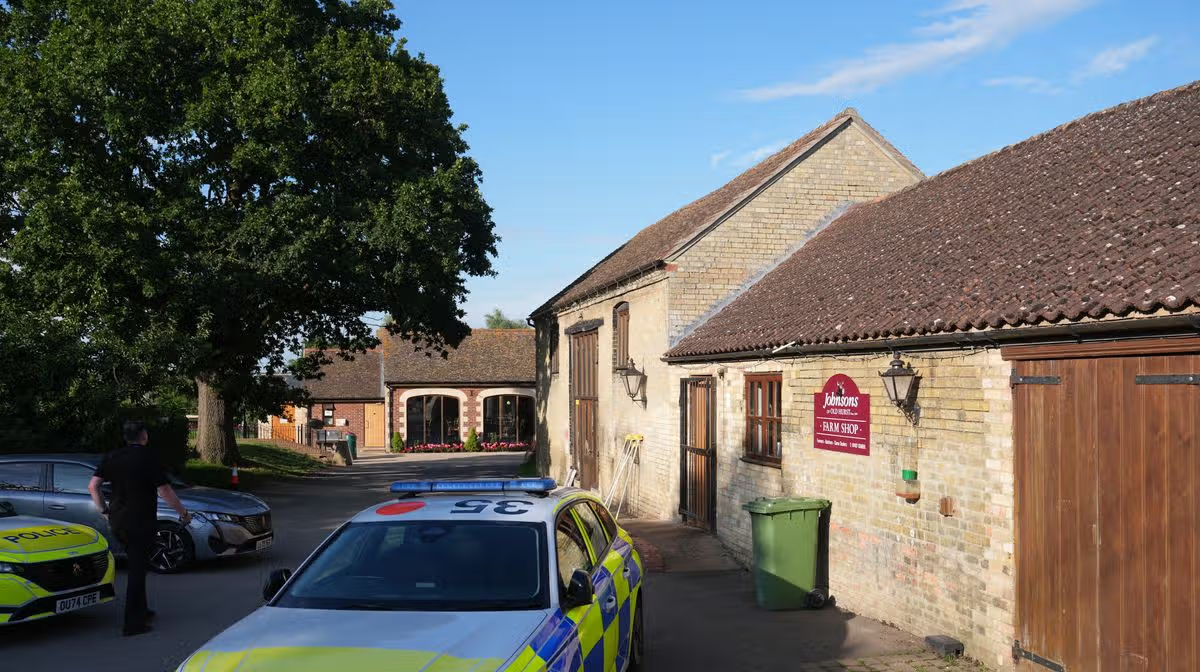
A three-year-old boy who was seriously injured after allegedly being thrown into a crocodile enclosure has underwent five surgeries, and faces more, his family has revealed. The incident happened at Johnson’s of Old Hurst, near Huntingdon, on June 18.

Advertisement

The injured boy, who has not been publicly named, underwent “five surgeries” following the incident, and is set to undergo “at least two more surgeries”, his family stated.

A fundraising page set up to support the boy’s recovery and rehabilitation, as well as to provide the family with financial stability while they are “living at the hospital”, has now raised more than £25,000.

In an update from the toddler’s parents, posted on the fundraising page, they said: “We are extremely grateful for everyone’s generosity. We could never thank you enough for the support you have given our family in this horrible time.

“We have been living at the hospital for 2 weeks now and our son has undergone 5 surgeries. At this moment in time we know that our son is to undergo at least two more surgeries, one of those surgeries being a nerve reconstruction in his arm.”

Advertisement

A 30-year-old man from Norfolk was arrested on suspicion of attempted murder following the incident. He has been released on bail after being found not to be fit for interview.

They said these last two weeks have been a “very uncertain and unsettling time” for them. The parents continued: “His rehabilitation journey is uncertain but we do know that it won’t be a short process. The money that has been donated so far has been used to pay for our expenses. We are both currently away from work and the time in which this will need to be the case is unknown.”

The donations have helped to ease the family’s pressure of these expenses and the parents are “extremely grateful” to everyone. Further donations will be used to support the toddler’s rehabilitation and to “give back to the hospital who have helped us in many ways during this challenging time”, they said.

In a statement, Johnsons of Old Hurst said they were “alerted to reports that a child has allegedly been thrown into one of our crocodile enclosures in the Tropical House”. The statement continued: “Everyone who was on site that day acted with incredible speed and determination.

Advertisement

“Within minutes of the first radio call, the child has been rescued from the enclosure and was receiving first aid. The emergency services arrived very quickly, supported by the MAGPAS Air Ambulance, and we cannot thank them enough for their professionalism, compassion and dedication in such difficult circumstances.”

Source link

Continue Reading

NewsBeat

More US children have been drowning in recent years

Published

on

More US children have been drowning in recent years

NEW YORK (AP) — Doctors and others are sounding an alarm: More U.S. children have been drowning in recent years.

“When drowning occurs, seconds matter,” said Dr. Rohit Shenoi, the lead author of a recent American Academy of Pediatrics warning. “Quick rescue and resuscitation can mean the difference between life, death and lifelong disability.”

About 4,000 to 5,000 Americans drown each year. Most are adults who die in natural bodies of water, such as lakes, ponds or oceans.

But statistically speaking, drowning is a much larger danger to children. It’s the No. 1 cause of death for kids ages 1 to 4, and one of the top killers of children ages 5 to 14. The drowning rate is higher for white kids in the younger group, but much higher for Black, American Indian and Alaska Native children in the older group.

Advertisement

Drownings of very young children sometimes occur in bathtubs. But most, like Stewie Leonard’s, occur in swimming pools.

This article is part of AP’s Be Well coverage, focusing on wellness, fitness, diet and mental health. Read more Be Well.

A family tragedy leads to a foundation for water safety

The Stew Leonard’s grocery chain offers a Disney-like shopping experience, featuring food-promoting animatronic characters like a dancing banana, a mooing cow and singing avocados. But several of its stores also have an animatronic creature that seems out of place: a life-jacketed duck named Stewie who sings about how not to drown.

The duck is named for the son of Stew Leonard, the grocery chain’s chief executive. The boy was 21 months old when he drowned during a family vacation on the island of St. Martin in 1989.

Advertisement

More than a dozen adults and kids had gathered at a birthday party for Stewie’s older sister, who was turning 3. Stew Leonard was outside hanging balloons and his wife was inside baking a cake.

“I saw Stewie outside and I assumed that he (Leonard) was watching him,” said his wife, Kim, noting that other relatives also were in the area of the pool.

“We never communicated with each other; ‘You’ve got him?’” said Kim Leonard, now 65. “When everyone’s watching, nobody’s watching.”

“There were a couple of balloons floating in the water,” Leonard, 71, recalled. “And you know after a few minutes, sort of everybody was like, ‘Where’s Stewie?’ Unfortunately I was the one who found him. He was face down in the pool.”

Advertisement

His death led the couple to start a foundation that pays for children’s swimming lessons and promotes drowning prevention.

Why are more kids drowning?

Unintentional child drowning deaths in the U.S. fell from around 2,000 a year in the 1980s to below 1,000 a year by the early 2000s, thanks in part to public awareness campaigns, expanded access to swimming lessons, and adoption of pool fencing laws. Between 2000 and 2019, health officials saw a 38% drop.

But then the trend reversed, with the number of child drowning deaths rising from 756 in 2019 to 865 in 2024, the most recent year for which complete data is available. The bulk of them were children younger than 5. The child drowning death rate also increased slightly, from 1.1 to 1.2 per 100,000 children.

What happened?

Advertisement

The COVID-19 pandemic interrupted swimming lessons and lifeguard training programs, and contributed to a national lifeguard shortage. Meanwhile, some data suggests an increase in swimming pool construction and increases in unsupervised swimming, said Tessa Clemens, the CDC Foundation’s senior director for drowning prevention initiatives.

Kym Roberts studies drownings in Australia — where child drownings have been either level or decreasing in recent years. She said “drowning in young children is often associated with falls into water and lapses in direct supervision.”

Some possible good news: Preliminary U.S. data for last year suggests child drownings declined. But it’s not clear whether that’s the start of a trend, and the deaths still remain higher compared to before the COVID-19 pandemic, Clemens said.

Pediatricians push for standards and regulations

Inventors have recognized a need for child water safety measures, and recent years have seen the emergence of immersion alarms that sound if the wristband a child is wearing goes underwater. But manufacturers of such devices note they can serve as an extra warning system, but should not be considered a primary way to keep children safe.

Advertisement

The federal government’s top public health agency, the Centers for Disease Control and Prevention, laid off Clemens and the rest of the staff of its drowning prevention program last year. But new guidance and drowning prevention support continues to come out of other organizations, including the CDC Foundation and the American Academy of Pediatrics.

A CDC Foundation program has paid for basic swimming and water safety skills training for over 35,000 students since 2024. The program operates in 11 states with higher drowning rates: Alaska, Arizona, California, Florida, Georgia, Hawaii, Louisiana, Michigan, New York, Oklahoma and Texas.

Ways to prevent drowning

The AAP says research shows that policies can make a difference, including lifeguard standards, life jacket regulations and requirements that swimming pools be completely surrounded by fences with self-closing, self-latching gates.

Stew Leonard emphasizes two other approaches — swimming lessons for young kids and complete focus by caregivers when young children are around water.

Advertisement

“I mean, I love ballet. I love karate. I love tennis lessons. You know, all the activities that kids can do,” he said. “But the only thing you can do to save their life is put them in swimming lessons.”

His foundation has funded over 250,000 swimming lessons for children and opened two swimming schools — one of them across the street from his company’s headquarters in Norwalk, Connecticut.

Also, “shut your cellphones off when you’re around the pool, watching the kids. Don’t sit there reading a book. Don’t sit there talking to your friends, neglecting your child that’s near the water,” he said.

“This happens in the blink of an eye.”

Advertisement

___

The Associated Press Health and Science Department receives support from the Howard Hughes Medical Institute’s Department of Science Education and the Robert Wood Johnson Foundation. The AP is solely responsible for all content.

Advertisement

Source link

Continue Reading

NewsBeat

Pitbull and Bowling for Soup live updates as huge gigs come to Cardiff

Published

on

Wales Online

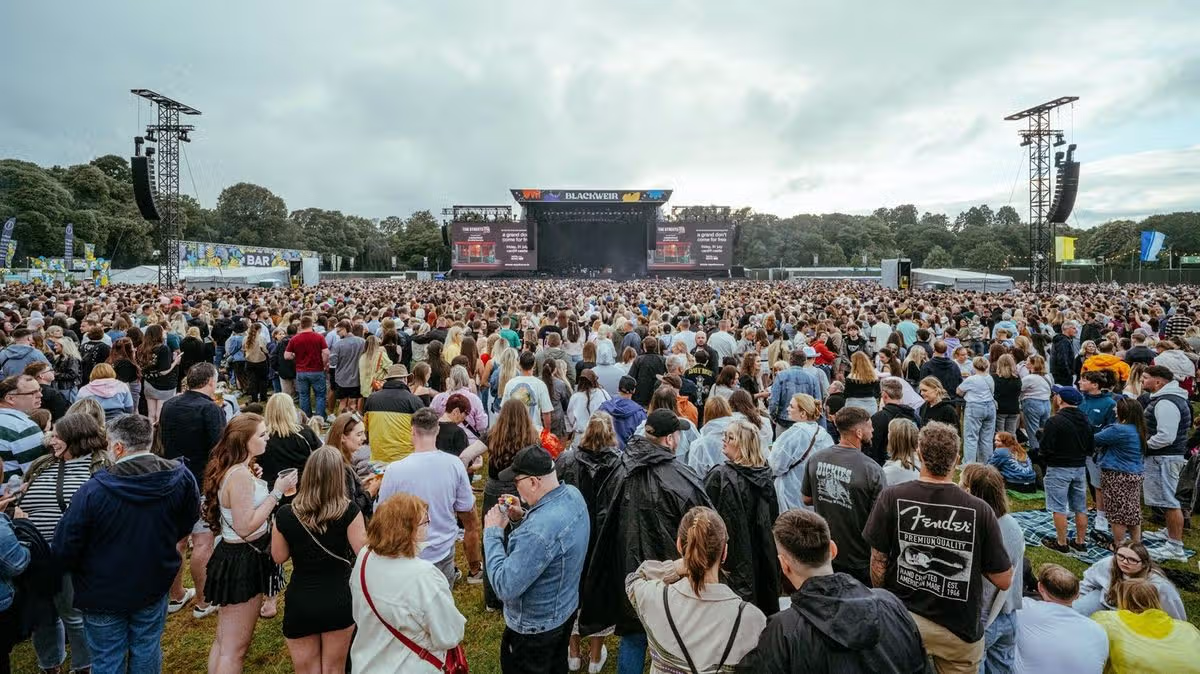
First things first, here are the line-ups and stage times for tonight’s two big gigs:

Pitbull at Blackweir Live:

Gates will open at 5pm. Organisers are encouraging attendees to arrive early in order to avoid lengthy queues.

Advertisement

Fuse ODG – 6.15pm

Lil Jon – 7.15pm

DJ Laz – 8.15pm

Pitbull – 8.30pm

Advertisement

Bowling For Soup and Frank Turner at Cardiff Castle:

Doors open for this gig at 5pm.

American Hi-fi – 6.30pm

Frank Turner and the Sleeping Souls – 7.25pm

Advertisement

Bowling For Soup – 9.05pm

Source link

Continue Reading

NewsBeat

Are we finally about to get decent wifi on trains and planes?

Published

on

Are we finally about to get decent wifi on trains and planes?

Wifi on the go is often unreliable – on buses, trains and, increasingly, planes. Whether via cellular or satellite systems, connectivity at speed suffers from highly variable signal coverage and strength. This leads to delays, degraded data speeds and service interruptions.

To address these issues, the UK government has announced a major upgrade to wifi connections on hundreds of intercity trains.

They will use low Earth orbit (LEO) satellite communication systems such as Starlink (a subsidiary of Elon Musk’s SpaceX company) and OneWeb (part of the of French Eutelsat group). Operating much closer to Earth than traditional satellites, these systems can provide near-global coverage and higher-speed communications.

So, as LEO networks are rapidly adopted for air, rail, road and maritime transport, how will this change our experience of wifi on the move?

Advertisement

Trains

At present, train wifi largely depends on aggregating terrestrial 4G and 5G signals along each route, with the available bandwidth shared between passengers. As a result, wifi often degrades in rural areas, tunnels and other locations where signal coverage is limited.

Such challenges are even harder on high-speed trains operating at speeds of 150mph (250km/h) and more, with some services in China reaching 220mph.

One technical fix is dedicated trackside communication networks that use advanced technologies to deliver ultra-fast, low-lag connectivity even at such high speeds. But they are still constrained by limited coverage and significant installation costs.

In contrast, LEO satellite systems could offer near-global coverage without requiring costly deployment trackside infrastructure. Following successful trials on LNER, South Western Railway and Great Western Railway services in 2025, the UK government recently announced a £57 million, five-year rollout of LEO satellite connectivity across nationalised mainline rail services.

Advertisement

Video: The Independent.

Up to 1,400 trains will receive satellite-enabled connectivity, with onboard wifi availability increasing from around half of UK train journeys up to 90% by the early 2030s.

Integrating LEO systems with existing terrestrial wifi networks should combine the strengths of both technologies. When one link becomes unavailable or degrades, alternative connections can seamlessly take over, reducing service interruptions and improving the reliability and quality of onboard wifi.

Planes

Since German airline Lufthansa introduced the first commercial in-flight internet service in January 2003, wifi on planes has expanded rapidly.

Advertisement

Today, approximately 70% of airlines worldwide offer onboard internet connectivity. Their wifi is provided either by air-to-ground or satellite communication systems.

Air-to-ground systems use an antenna mounted on the plane’s underside to connect to a network of land towers. While this approach ensures relatively low delays, coverage is limited to regions with terrestrial infrastructure so is unsuitable for most oceanic routes.

The preferred option for long-haul and transoceanic flights is using an antenna mounted on top of the aircraft to communicate with satellites. But maintaining reliable inflight connectivity remains challenging due to rapidly changing conditions and frequent satellite handovers at high speed (upwards of 500mph).

Climbs, descents and turbulence can all disrupt an antenna’s alignment with satellites. Continuous satellite tracking and antenna steering is needed to maintain accurate beam alignment throughout the flight.

Advertisement

Video: CNBC.

In recent years, LEO satellite systems have accelerated midair wifi provision, in some cases delivering “superfast” inflight internet speeds exceeding 100 megabits per second. With signals travelling up to 3,000 miles, though, transmission delays are still unavoidable.

As technologies such as electronically steered antennas and AI-driven network management mature and satellite capacity continues to expand, onboard wifi should become comparable to terrestrial broadband for most passengers. This will enable in-flight video streaming and cloud-based services with minimal disruption.

Buses

Many long-distance coaches use roof-mounted antennas with onboard routers to share a cellular connection among their passengers. Wifi performance thus depends heavily on mobile network coverage and capacity, and can degrade in rural areas, tunnels, or simply when the coach is full.

Advertisement

Connectivity has been enhanced with the transition from 4G to 5G networks. However, since coach and bus wifi relies on a shared cellular connection, passengers often have a better experience using their own mobile connectivity.

This means wifi provision on local bus services has slowed in recent years. In 2025, 13% of buses in England offered free wifi, down from a peak of 32% in 2020.

On rural and long-distance routes, where mobile coverage is limited or unavailable, reliable wifi can be essential not only for passengers but for operational services such as ticketing and CCTV.

With LEO satellite networks emerging as a promising solution, several UK bus and coach initiatives – including trials by Transport for Wales from 2024 – are exploring hybrid 5G-satellite systems. These can seamlessly switch between cellular and satellite links to reduce coverage blackspots and provide more consistent connectivity along rural routes.

Advertisement

Ferries

Ferries and cruise ships operating more than a few tens of kilometres from land rely on satellite communications. These have evolved from low-bandwidth systems used primarily for safety, navigation and crew communications in the 1980s and ’90s, to broadband passenger wifi services supported by geostationary satellites orbiting around 22,000 miles above the Earth.

Maintaining stable satellite communication at sea is particularly challenging. Ships roll, pitch and yaw because of the waves and wind. This can misalign satellite antennas, leading to performance degradation and temporary communication interruptions.

Harsh maritime conditions including salt corrosion, high humidity and heavy rainfall can also damage electronic devices, reducing the strength of high-frequency satellite signals.

Furthermore, the ship’s large steel structure can cause signal degradation and coverage dead zones. This makes onboard wifi provision especially difficult on large cruise ships with multiple decks, thick walls and narrow corridors.

Advertisement

LEO satellite technology has, however, significantly improved wifi provision at sea. As of 2025, more than 25,000 commercial and passenger vessels worldwide were using LEO satellite broadband services, primarily through Starlink.

And as with other modes of transport, this rate of adoption is projected to continue increasing rapidly. The prospect of seamless wifi coverage, whichever way you travel, should soon be a reality.

Source link

Advertisement
Continue Reading

NewsBeat

Police issue update after officers storm Timperley street and arrest woman

Published

on

Manchester Evening News

A man was injured following a ‘disturbance’

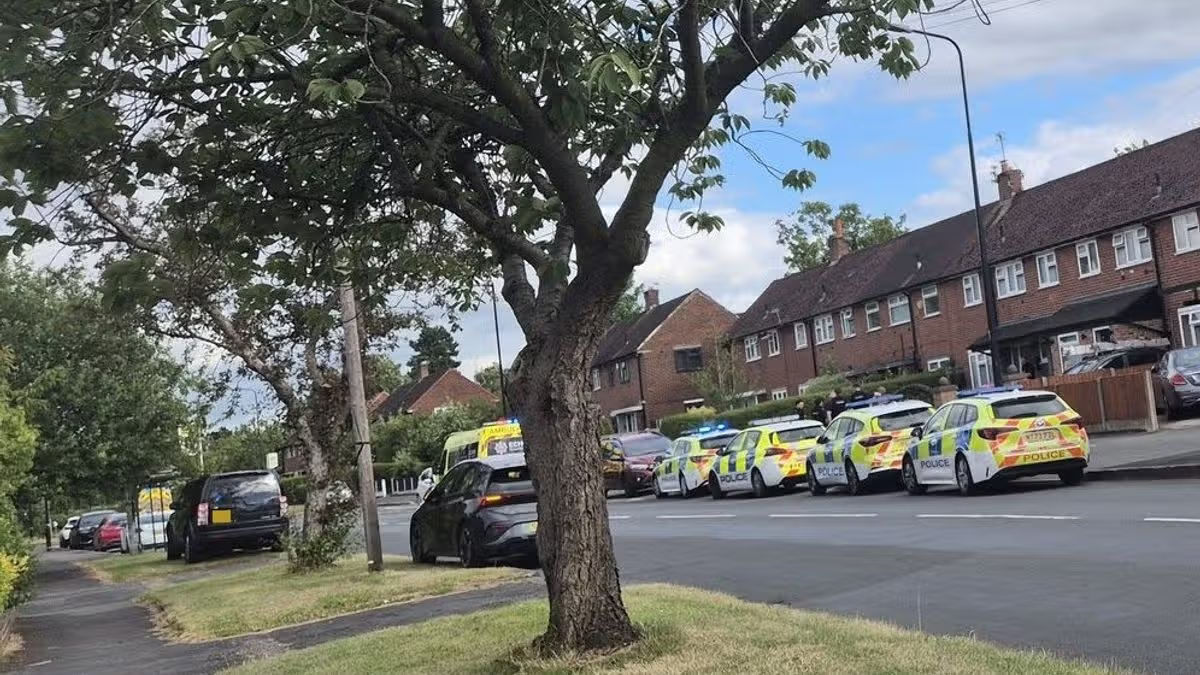
Police have issued an update after a woman was arrested following a ‘disturbance’ in Trafford. Emergency services attended Aimson Road East, in Timperley, at 5.20pm on Thursday evening (July 2).

Advertisement

Greater Manchester Police said it was called out to reports of a disturbance at a property on the street. An image from the scene showed at least four police cars and two ambulances as part of the response.

Witnesses reported seeing a large emergency services presence in the area. A man suffered an injury during the incident, police previously stated. A woman in her 60s was arrested on suspicion of assault.

Click here to get the biggest stories straight to your inbox in our Daily Newsletter

In an update issued today (Saturday), GMP confirmed she had since been released, with no further action to be taken against her. The man’s injury was previously described as ‘minor’ and ‘non-life threatening’ by GMP.

Advertisement

Source link

Continue Reading

NewsBeat

I found a cheaper alternative to Nando’s at this city centre restaurant

Published

on

Cambridgeshire Live

The restaurant was hidden away down a smaller road

Nando’s is one of my favourite restaurants, but after a visit to a hidden away food place in Peterborough, I’ve found a cheaper alternative. Peterborough city centre is full of mainly mainstream restaurants.

Advertisement

However in Cowgate – a small street just off the Cathedral Square – is a hive of independent food places. Looking for a spot to eat some lunch, I came across The Ladz.

I’ve never been there before, but I’ve seen it posted about on social media a lot. So, I decided to head there on a Thursday afternoon. I went at around 2.30pm, after the lunchtime rush, and there were a few people in there. I was welcomed by a kind staff member and sat down.

I scoured the menu and there was a lot on offer. The menu mainly offered chicken dishes, which won me over instantly. There were a range of burgers, pitas and wraps. All of the options were very similar to Nando’s, with a lot of the chicken being peri peri coated.

Advertisement

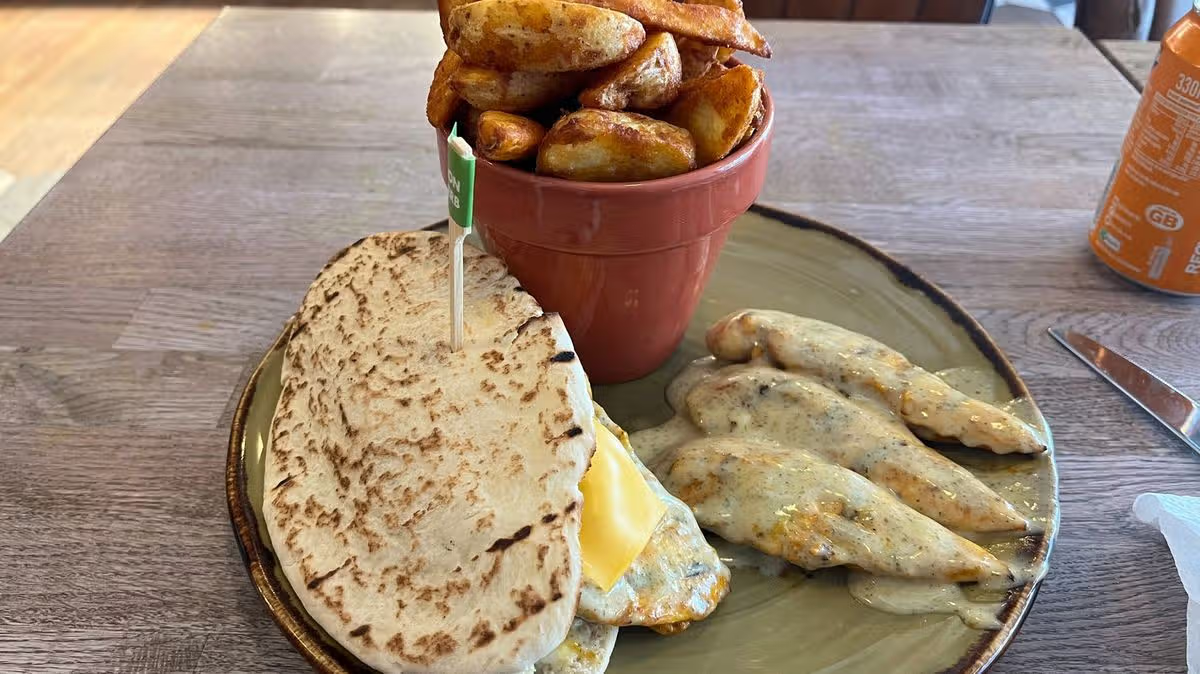
I opted for the Ladz box one, which cost £13.99. This included a burger, pita or wrap of your choice, three chicken strips or wings, any side and a can of drink. I tailored mine to have a peri peri chicken pita, three chicken strips, wedges and a can of Fanta. Although I hadn’t got my food yet, this seemed like a lot on offer for a very reasonable price.

My food came very quickly, and arrived piping hot, with steam coming off the chicken strips and wedges. The chicken strips and in the pita were coated in peri peri sauce. I firstly had a wedge and they were the crispiest wedges I’ve ever had at a restaurant.

I next tried a chicken strip. The peri peri sauce had a nice spicy and zesty taste to it, and the chicken was tender. I next tried the pita and the chicken was really packed in there. I expected this to be messy with the sauce dripping out, but it was neatly tucked in and tasted as good as the strips.

I ate all of the pita and strips, but I had to take some wedges back home in a doggy bag as there were a lot more than I expected! Ultimately, the £13.99 I paid for all of this food was well worth it.

Advertisement

Also the fact they offered very similar items to Nandos, I was a big fan of. If you want a cheaper alternative to Nando’s in Peterborough city centre, The Ladz is a good shout.

All of our food reviews are paid for by the writer. The establishments do not know we will be reviewing their food, allowing us to make fair judgements on each place.

Source link

Advertisement
Continue Reading

NewsBeat

Victoria Beckham risks Brooklyn’s fury as she extends another olive branch in anniversary post for David – after ‘fuming’ son said he ‘wished they’d stop posting about him’

Published

on

Victoria Beckham has risked Brooklyn's fury by mentioning him in her anniversary post for David - after their 'fuming' son said he 'wished they'd stop posting about him'

Victoria Beckham paid a subtle tribute to her estranged son Brooklyn when she marked her wedding anniversary with husband David. 

The Spice Girl, 52, commemorated 27 years of marriage by sharing a sweet snap planting a kiss on David in an Instagram post on Saturday. 

Yet in the caption, she also included a nod to Brooklyn as she praised her ‘four amazing children’. 

Victoria penned: ‘After 27 years of marriage, four amazing children and countless matching outfits, you’re still my *everything*. Happy anniversary!! I love you so much ♥️’.

Advertisement

David also referenced the aspiring chef in his post for Victoria, as alongside a series of throwback snaps, he referenced his pride over his family. 

He penned: ’29 years together, 27 years married & you have given me everything I could ever wish for.. Our proudest achievement will always be our family I love you & Happy Anniversary  @victoriabeckham.’ 

As well as Brooklyn, 27, the Beckhams are parents to Romeo, 23, Cruz, 21, and Harper, 14. 

Yet, while the Beckhams were sweetly referencing the entire brood, they may well have pushed Brooklyn further away, as he is reportedly ‘fuming’ that his parents keep posting about him. 

Advertisement

Victoria Beckham has risked Brooklyn’s fury by mentioning him in her anniversary post for David – after their ‘fuming’ son said he ‘wished they’d stop posting about him’

David also referenced the aspiring chef in his post for Victoria, as alongside a series of throwback snaps, he referenced his pride over his family

David also referenced the aspiring chef in his post for Victoria, as alongside a series of throwback snaps, he referenced his pride over his family

Advertisement
Brooklyn was reportedly fuming after David and Victoria's Father's Day posts and 'wishes they would leave him alone'

Brooklyn was reportedly fuming after David and Victoria’s Father’s Day posts and ‘wishes they would leave him alone’

David extended an olive branch to his eldest son in his Instagram post last month on Father’s Day as he shared an old photograph of himself and Brooklyn as a child as well as a snap of himself with all four of his kids.

Alongside the images, he wrote: ‘Being a dad is my most important job – I love you all and thank you mummy @victoriabeckham for giving me our beautiful family. Happy Father’s Day to all the Dads around the world’.

Victoria also included their son Brooklyn in her heartfelt Father’s Day post to her husband on Sunday.

Advertisement

Yet, while Brooklyn has publicly remained silent, behind the scenes he was reportedly ‘fuming’. 

A source revealed: ‘He’s fuming about it. He’s asked them to leave him alone and they just keep posting him.’

They told The Sun: ‘It just brings the whole thing up all over again. He wishes they’d leave it and leave him alone.’

Shortly before Christmas last year, Brooklyn blocked his parents on Instagram, while his lawyers later wrote to the Beckhams’ team requesting all communication be conducted through legal representatives. 

Advertisement

In January, Brooklyn then released a scathing six-page statement announcing he had cut ties with his family. 

Following months of rumours they had become estranged, Brooklyn confirmed the news in January, declaring he was no longer part of ‘Brand Beckham’ and insisting his parents and their other children are ‘performative’.

Brooklyn also claimed David and Victoria had controlled him for much of his life, attempted to drive a wedge between him and wife Nicola Peltz and left him embarrassed when his mother danced ‘inappropriately’ with him during the first dance at his wedding.

The aspiring chef was last pictured with his family during Christmas 2024, and by May 2025 it was clear a feud had formed after Brooklyn failed to acknowledge either of his parents’ birthdays and snubbed David’s 50th. 

Advertisement
David shared a series of throwbacks with his wife and penned: '29 years together , 27 years married & you have given me everything I could ever wish for..'

David shared a series of throwbacks with his wife and penned: ’29 years together , 27 years married & you have given me everything I could ever wish for..’

He concluded: 'Our proudest achievement will always be our family I love you & Happy Anniversary @victoriabeckham'

He concluded: ‘Our proudest achievement will always be our family I love you & Happy Anniversary @victoriabeckham’

Victoria penned: 'After 27 years of marriage, four amazing children and countless matching outfits, you’re still my *everything*. Happy anniversary!! I love you so much ♥️'

Victoria penned: ‘After 27 years of marriage, four amazing children and countless matching outfits, you’re still my *everything*. Happy anniversary!! I love you so much ♥️’

She shared a series of sweet snaps of the couple over the years

She shared a series of sweet snaps of the couple over the years 

Advertisement
The celebrity couple crossed paths in 1997 after Posh Spice attended one of David's Manchester United matches with Mel C, getting engaged a year later

The celebrity couple crossed paths in 1997 after Posh Spice attended one of David’s Manchester United matches with Mel C, getting engaged a year later

David extended an olive branch to his son on Father's Day as he shared an old photograph of himself and Brooklyn as a child, as well as a snap of himself with all four of his kids

David extended an olive branch to his son on Father’s Day as he shared an old photograph of himself and Brooklyn as a child, as well as a snap of himself with all four of his kids

Last month, Brooklyn was accused of selling his family out for a big sum following the release of his two-part DoorDash commercial. 

Five months after declaring that he and his wife Nicola want privacy, Brooklyn was savaged by fans, who branded him ‘classless’ after he collaborated with the food delivery firm for the sponsored video.

Advertisement

It was reported that Brooklyn was paid a hefty figure for the ad, with a source saying: ‘Anything that makes him money is good – it shows that his brand is there and flourishing.’

It’s thought that he was paid ‘at least $1million (£755,000)’ for the campaign.

However, the Beckham clan were reportedly less impressed with the advert, with an insider telling Page Six: ‘Brooklyn claims he wants peace and privacy and nothing to do with his family – now he’s trying to cash in on it all.’

In the teaser clip for the advert released on June 15, Brooklyn smirks and says: ‘You’re probably wondering why I’m watching the Fifa World Cup 2026 from home… It’s a long story.’

Advertisement

It has been taken as mocking parents David and Victoria with whom he no longer speaks – and profiting off their name, while friends of the Beckhams have said the pair are ‘devastated and inconsolable’ by the jibe.

The second longer version was released on Wednesday, sparking even fiercer backlash from even the most supportive Brooklyn fans, with followers commenting in their droves under the Instagram clip.  

Friends of the Beckhams were shocked to see Brooklyn’s advert.

One told the Daily Mail’s Katie Hind: ‘To do an advert based on estrangement from family as if it’s a joke when his family is devastated and sister and grandparents inconsolable is shocking.

Advertisement

‘Especially from someone who claims he wants peace and privacy.’

Brooklyn Beckham’s January statement in full  

‘I have been silent for years and made every effort to keep these matters private. Unfortunately, my parents and their team have continued to go to the press, leaving me with no choice but to speak for myself and tell the truth about only some of the lies that have been printed.

I do not want to reconcile with my family. I’m not being controlled, I’m standing up for myself for the first time in my life. For my entire life, my parents have controlled narratives in the press about our family. The performative social media posts, family events and inauthentic relationships have been a fixture of the life I was born into.

Recently, I have seen with my own eyes the lengths that they’ll go through to place countless lies in the media, mostly at the expense of innocent people, to preserve their own facade. But I believe the truth always comes out.

Advertisement

My parents have been trying endlessly to ruin my relationship since before my wedding, and it hasn’t stopped. My mum cancelled making Nicola’s dress in the eleventh hour despite how excited she was to wear her design, forcing her to urgently find a new dress. 

Weeks before our big day, my parents repeatedly pressured and attempted to bribe me into signing away the rights to my name, which would have affected me, my wife, and our future children.

They were adamant on me signing before my wedding date because then the terms of the deal would be initiated. My holdout affected the payday, and they have never treated me the same since. 

During the wedding planning, my mum went so far as to call me “evil” because Nicola and I chose to include my Nanny Sandra, and Nicola’s Naunni at our table, because they both didn’t have their husbands. Both of our parents had their own tables equally adjacent to ours.

Advertisement

The night before our wedding, members of my family told me that Nicola was “not blood” and “not family.” Since the moment I started standing up for myself with my family, I’ve received endless attacks from my parents, both privately and publicly, that were sent to the press on their orders.

Even my brothers were sent to attack me on social media, before they ultimately blocked me out of nowhere this last Summer. 

My mum hijacked my first dance with my wife, which had been planned weeks in advance to a romantic love song. In front of our 500 wedding guests, Marc Anthony called me to the stage, where in the schedule was planned to be my romantic dance with my wife but instead my mum was waiting to dance with me instead. 

She danced very inappropriately on me in front of everyone. I’ve never felt more uncomfortable or humiliated in my entire life. We wanted to renew our vows so we could create new memories of our wedding day that bring us joy and happiness, not anxiety and embarrassment.

Advertisement

My wife has been consistently disrespected by my family, no matter how hard we’ve tried to come together as one. My mum has repeatedly invited women from my past into our lives in ways that were clearly intended to make us both uncomfortable.

Despite this, we still travelled to London for my dad’s birthday and were rejected for a week as we waited in our hotel room trying to plan quality time with him. He refused all of our attempts, unless it was at his big birthday party with a hundred guests and cameras at every corner.

When he finally agreed to see me, it was under the condition that Nicola wasn’t invited. It was a slap in the face. Later, when my family travelled to LA, they refused to see me at all.

My family values public promotion and endorsements above all else. Brand Beckham comes first. Family “love” is decided by how much you post on social media, or how quickly you drop everything to show up and pose for a family photo opp, even if it’s at the expense of our professional obligations.

Advertisement

We’ve gone out of our way for years to show up and support at every fashion show, every party, and every press activity to show ‘our perfect family.’ But the one time my wife asked for my mum’s support to save displaced dogs during the LA fires, my mum refused.

The narrative that my wife controls me is completely backwards. I have been controlled by my parents for most of my life. I grew up with overwhelming anxiety. For the first time in my life, since stepping away from my family, that anxiety has disappeared.

I wake up every morning grateful for the life I chose, and have found peace and relief. My wife and I do not want a life shaped by image, press, or manipulation. All we want peace, privacy and happiness for us and our future family.’

Source link

Advertisement
Continue Reading

NewsBeat

British Grand Prix: Kimi Antonelli passes Lewis Hamilton to win Silverstone sprint race

Published

on

Mercedes' Kimi Antonelli ahead of Ferrari's Lewis Hamilton in the British Grand Prix sprint race

Mercedes’ Kimi Antonelli caught and passed Lewis Hamilton to win an action-packed sprint race at the British Grand Prix.

While McLaren’s Lando Norris, Mercedes’ George Russell and Red Bull’s Max Verstappen staged a frantic place-swapping scrap in the opening laps at Silverstone, Antonelli bided his time before homing in on Hamilton at the front.

The 19-year-old Italian let the race settle down before remorselessly homing in on the Ferrari and blasting past Hamilton on the Hangar Straight on lap eight after strategically saving his battery charge.

Hamilton hung on bravely but could do nothing to stop Antonelli extending his championship lead still further to 43 points over Russell.

Advertisement

Behind them, Norris drove an excellent race to blast up from sixth on the grid to fourth on the first lap before passing Russell on the second lap.

There were a few hectic laps as Norris, Russell and Verstappen swapped places before Norris managed to consolidate third place and move clear of the the battle behind him.

Russell managed to pass Verstappen on lap nine before the four-time champion fell back into the clutches of Ferrari’s Charles Leclerc, who moved past the Red Bull a lap later.

Verstappen dropped back but managed to hold off McLaren’s Oscar Piastri to take sixth.

Advertisement

Racing Bull’s Liam Lawson held off an attack from Red Bull’s Isack Hadjar in the closing laps as they took the final points positions.

Qualifying for Sunday’s main grand prix is at 16:00 BST on Saturday.

More to follow

Source link

Advertisement
Continue Reading

NewsBeat

Chained to a cage of tigers, beaten with metal pipes or threatened with huge pythons… IAN BIRRELL goes inside Chinese gangs’ scamming factories, and reveals the horrific torture imprisoned ‘workers’ face if they don’t steal from their online victims

Published

on

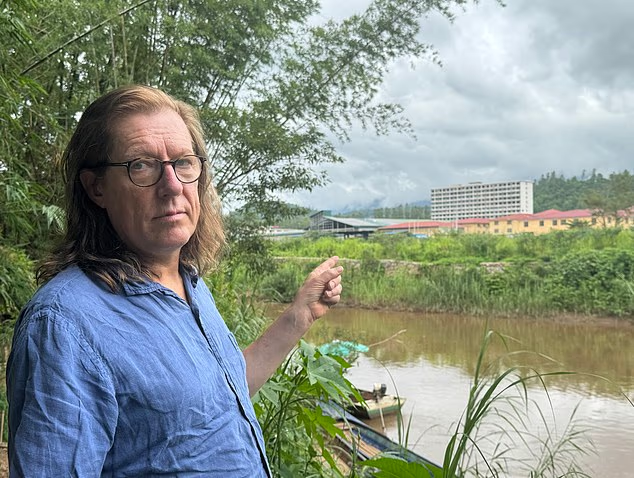
Ian Birrell points to a scam factory over the Moei River in Myanmar, full of workers ¿ some of whom have been kidnapped or conned ¿ hoovering up vast sums of money from people online

Carol was thrilled two years ago when she heard that, after several interviews, she had landed an office job in Thailand working as a typist. Her flight out there would be paid, food provided and there was free housing on top of her £600-a-month salary.

She had recently lost her job in hospitality in the Kenyan capital of Nairobi and life was tough. She was struggling to pay her rent, food bills and school fees for her eight-year-old daughter. So this seemed like a heaven-sent opportunity.

But the reality was very different. After arriving in Bangkok, she was taken on a long journey to the border with Myanmar and then smuggled into the war-torn country. There, she was forced by guards at gunpoint into a massive compound, and ordered by Chinese gangsters to take part in scamming operations targeting Americans, Britons and Canadians thousands of miles away for their cash.

The job advertisement and the interviews were a cruel trick. Carol had been duped into working in a vast ‘scam factory’ run by Chinese gangs, and forced through beatings and torture to find potential victims via social media who might fall for scams involving property, crypto investments, romance and online shopping.

Advertisement

Any hint of disobedience, any failure to meet their daily targets, led to savage punishments that included electric shocks to the head, being beaten with metal pipes, locked in a tiny, dark room for days on end or even chained to a cage containing a terrifying tiger.

‘It has been total hell,’ said Carol, speaking to me from Myanmar four days after escaping a 19-month nightmare, during which she worked in three different compounds. She was freed alongside 12 fellow Africans with the help of a network of Thai activists.

Scores of these giant scam complexes – many ringed with sinister walls of barbed wire and some with menacing watchtowers – can be seen from Thailand across the narrow brown waters of the Moei River that divides the two countries.

Advertisement

Ian Birrell points to a scam factory over the Moei River in Myanmar, full of workers – some of whom have been kidnapped or conned – hoovering up vast sums of money from people online 

Many of the scam complexes there are surrounded by barbed wire and menacing watchtowers

Many of the scam complexes there are surrounded by barbed wire and menacing watchtowers

They have been purpose-built over the last four years in lawless regions of Myanmar run by militia fighting the country’s endless civil war. They have a single aim: To hoover up vast sums of money online from greedy, lonely or unfortunate people around the planet.

The scale of these industrialised scam operations is staggering. The complexes hold tens of thousands of people from at least 78 countries – and one expert told me 135 nations have been hit by the scammers. ‘This is a global problem,’ said Mechelle Moore, chief executive of Global Alms, an anti-trafficking charity based in Thailand.

Advertisement

Many of those working here are taken to the complexes by ethnic Chinese gangs.

Most are conned like Carol – but some are kidnapped. They are made to sign bogus contracts – then told they must pay punitive sums to cover all their costs of travel, food and accommodation if they want to leave. ‘The idea is that once you’re in, there is no way out except by paying a big ransom,’ explained Moore.

Across South East Asia, where similar operations have sprouted up from Cambodia to the Philippines, it is estimated these factories extort up to £60billion a year. Some of the centres in Myanmar are also used to manufacture drugs such as crystal meth.

This is criminality in plain sight on an extraordinary scale.

Advertisement

From my vantage point on the border, I could see clearly the suburban-looking homes of the scam-factory bosses as well as accommodation blocks up to eight storeys high that held human-trafficking victims, often eight to a room in bunk beds.

I saw workmen building two compounds along a short stretch of the river, demonstrating that this is a rapidly growing industry.

The 60 compounds along this stretch of the border are run like well-organised business parks, with a main director, subordinates who rent out offices and dormitories to crime syndicates, supervisors monitoring performance and targets, and teams allocated differing tasks.

They contain brothels and gyms; some even have a basketball court, football stadium or swimming pool.

Advertisement
A Burmese woman prepares to take food to the compound... the 60 compounds along this stretch of the border are run like well-organised business parks, Ian Birrell writes

A Burmese woman prepares to take food to the compound… the 60 compounds along this stretch of the border are run like well-organised business parks, Ian Birrell writes

Thai activist groups that do deal with Myanmar militia, often struggle to help those who manage to escape the compounds

Thai activist groups that do deal with Myanmar militia, often struggle to help those who manage to escape the compounds

‘The better you are at scamming, the more access you get to their amenities,’ said Moore. ‘It’s all about controlling you.’ Yet these criminal enterprises have a veneer of business normality.

‘The operations work like companies – they have key performance indicators, quarters, bonuses if you perform well, but torture if you don’t perform well,’ said Ivan Franceschini, a lecturer in Chinese studies at the University of Melbourne and co-author of Scam: Inside Southeast Asia’s Cybercrime Compounds.

Advertisement

At one point I heard sounds of artillery fire, a reminder of the long-running civil war between the Myanmar government and various rebel groups – and of the risks for the trafficked workers trapped in a nearby compound. Later, I met a man whose finger had been blown off by shrapnel in an attack that killed fellow captives from China and Uganda.

This man, hired as a translator after studying for six years in China, was among the small group of Africans freed after they had used phones and computers to contact activists and diplomats in Thailand. Their release was negotiated with a local militia, whose leaders are sanctioned by the UK and US for links to scamming.

The 13 men and women came from Cameroon, Ghana, Kenya, Nigeria, Rwanda and Zimbabwe. Some were articulate and highly educated, others from simpler backgrounds. All had applied for jobs with good salaries offered by respectable-looking agencies on social media or through friends, before being interviewed.

‘I was running a business buying and selling clothes, making $300 [£225] a month, so when a friend in China called about work abroad offering $1,500 [£1,124] it was tempting,’ said the 37-year-old translator, who speaks fluent English, French and Chinese.

Advertisement

Another man was earning £37 a month as a barman in Lagos, Nigeria, when his wife became pregnant with their second child, so he was delighted to be offered a £637 monthly salary in Asia to work as a data engineer.

But when they reached Bangkok, the promised jobs turned out to be very different. Carol told me she was collected with others at the airport by a smart minivan and taken to a mall for food – then, after a 15-hour car journey, the group was dumped at midnight by the river, pushed on to boats and met on the opposite bank by gunmen in uniforms.

‘They were shouting, searching bags, throwing away our documents, then took us to a hospital where they tested us for HIV. I was so scared. I thought of my daughter [left back in Kenya with Carol’s sister] and how, if anything happened, my family did not even know where I was,’ she said.

The next day they were ordered to start working at midnight – to dovetail with California’s office hours – and began 15-hour shifts in which they built fake social- media identities and researched property markets in the US to target sellers.

Advertisement

‘You start making friends with them,’ she said. ‘When they become your friends, you start committing them emotionally and tell them how you make money out of crypto, that you have a good trade.’ As soon as anyone took the bait, her ‘client’ would be taken over by a Chinese supervisor. ‘I would send out up to 500 greetings a day – and you were meant to have three clients by the end of each day. If you don’t, you get punished,’ said Carol.

The punishments were horrific. She said beatings and electrocution were routine, along with being locked in the dreaded dark rooms for days. ‘It is very scary – like a very small cupboard with hardly any room to move and nowhere to use the toilet.’

Others talked of mock executions; being forced to stand still all day under fierce summer sun or monsoon rains; ordered to do 300 squats then beaten if wobbling when walking; having their heads half shaved as humiliation; and being sold like slaves between scamming companies.

Perhaps most feared was the ‘tiger’s cage’. ‘If you don’t have clients, they beat you mercilessly with pipes and then lock you on to the cage, so it is scratching your hand or your neck. Then they shock you constantly on the head with tasers,’ said Carol.

Advertisement

Others confirmed this hideous torture, several showing me their scars. One said they also used a caged white lion and huge python to terrify them into compliance. ‘They say they will kill you – every day they cock a pistol on your head to scare you.’

Each of the five scam centres I saw across the river reputedly held at least 5,000 people. And I heard of a Kenyan man who had been trapped for five years, Ian Birrell writes

Each of the five scam centres I saw across the river reputedly held at least 5,000 people. And I heard of a Kenyan man who had been trapped for five years, Ian Birrell writes

These were not idle threats. A young Ghanaian said he saw a Chinese man killed after trying to help a friend escape. Others said Chinese workers, often from rural areas, were treated worst of all. Some were left unable to walk after their wounds from beatings became badly infected.

Women told of rape. ‘If some bosses like you, if they think you have a good body or are pretty, they call you into the office any time. Then they do what they want with you. It happened to me when I was new,’ said one East African in tears.

Advertisement

Each of the five scam centres I saw across the river reputedly held at least 5,000 people. And I heard of a Kenyan man who had been trapped for five years. ‘He’s given up the will to live – he is just a shell of himself,’ said a friend.

Power and telecoms cables from Thailand to the companies have been cut in attempts to stop the criminality – but the gangs simply switched to generators and the use of Elon Musk’s Starlink satellite systems.

Eric Heintz, a global analyst at the International Justice Mission charity who uses data monitoring to map their activities, called on Starlink to shut down their access. ‘Each dish has a subscription, so it should be possible to switch them off,’ he said.

Last year, his anti-slavery group issued a report suggesting that some of Myanmar’s compounds were taking part in child sextortion – engaging children in online conversations, posing as potential friends or doctors to persuade them to send nude or sexual images that would then be used to blackmail them into sending money.

Advertisement

The scamming operations are very sophisticated. They use artificial intelligence, deep fakes and the dark web to gather data along with social media platforms such as Facebook, Instagram, Telegram and WhatsApp to find and fool their targets.

One woman from Cameroon showed me lists of names and numbers she was given to call daily, offering remote work to them and even sending over a few dollars at the start to win their trust. Another said she had to juggle as many as 40 faked Facebook accounts.

They showed me the detailed scripts they had to follow and images of a Ukrainian model and German journalist used to construct alluring fake social media sites. One was even told to pose as the managing director of Goldman Sachs in New York.

Their task was to befriend people and slowly draw them into the net. ‘When I was doing Facebook dating, I spoke to a man in the UK every day, selling him the scam,’ said Carol. ‘They told us to target older people, from 45 years old, since if people are lonely, they believe anything. We could not help the people getting scammed.’

Advertisement
Workers were given detailed scripts to follow when making scam calls, and some used images of models and journalists to construct alluring fake social media sites

Workers were given detailed scripts to follow when making scam calls, and some used images of models and journalists to construct alluring fake social media sites

When she secretly tipped off one elderly American that he was being scammed – after he had handed over £10,500 then started taking out a second mortgage to give more cash to the crooks – she was caught and locked in the dark room for two weeks. ‘They are killing people,’ she told me. ‘One time the Chinese were posting in their group about an American guy committing suicide because he lost all his money, $300,000 [£225,000]. He was a young man, 33 years old, who had just got married, and the Chinese were all celebrating.’

Chalerm Duangchan, deputy headman of a Thai border village, said he had seen three Chinese women drown in the river after trying to escape a compound during a crackdown last year. ‘I felt very sorry for them.’

Another man told of lines of people being delivered to a river crossing beside his home in cars, motorbikes and vans. He said he had seen them beaten, handcuffed and poked with electric prods when resisting.

Advertisement

Local Thai communities warn people against working there. One young man said he signed a contract for an administrative job, only to discover he had agreed to join the scamming teams. His family was given until midnight to pay a £500 ransom for his release from the compound.

‘I saw a friend inside and I asked why he was there,’ said Pariwat, 25. ‘He said he had been tricked but did not have the money to ransom himself out so had to stay.’

The ransoms – or ‘compensation’, as it is termed by the crime gangs – are far bigger for foreigners. Experts said they averaged about £7,500, although one said she knew of a captured forensic accountant paying £101,000 to escape the horrors.

Pariwat added that his friend was still working there, earning money as a successful scammer with big commissions – showing how the gangs can turn people. ‘He makes a lot of money from doing this scam work.’

Advertisement

This underlines the problems for the authorities in dealing with people who do manage to get out of the compounds, whether as a result of successful escape attempts, pressure from diplomats and foreign nations, or the efforts of Thai activist groups that do deals with Myanmar militia, aided by sympathetic police.

Critics complain that the Thai authorities often fail to screen survivors properly, preferring to charge them with illegal entry to their own country and then deporting them back to their own homeland.

Jay Kritiya, co-ordinator of the Civil Society Network for Human Trafficking Victim Assistance, which aided rescue efforts for the group of 13 Africans, said it was vital to gather intelligence through in-depth interviews with victims and to expand global efforts to crack down on both the crooks and the online platforms enabling them. ‘The truth that would help rescue the victims and protect the world from these transactional criminals is not being told,’ she said.

‘At least I am out,’ said Carol, when we met as monsoon rain poured down after she crossed back over the river to Thailand. ‘But everyone must know there are many people inside those terrible places going through hell.’

Advertisement

Additional reporting by Max Pratch

* Carol’s name has been changed to protect her identity.

Source link

Advertisement
Continue Reading

NewsBeat

Pope urges Europe to do more for migrants while visiting gateway island

Published

on

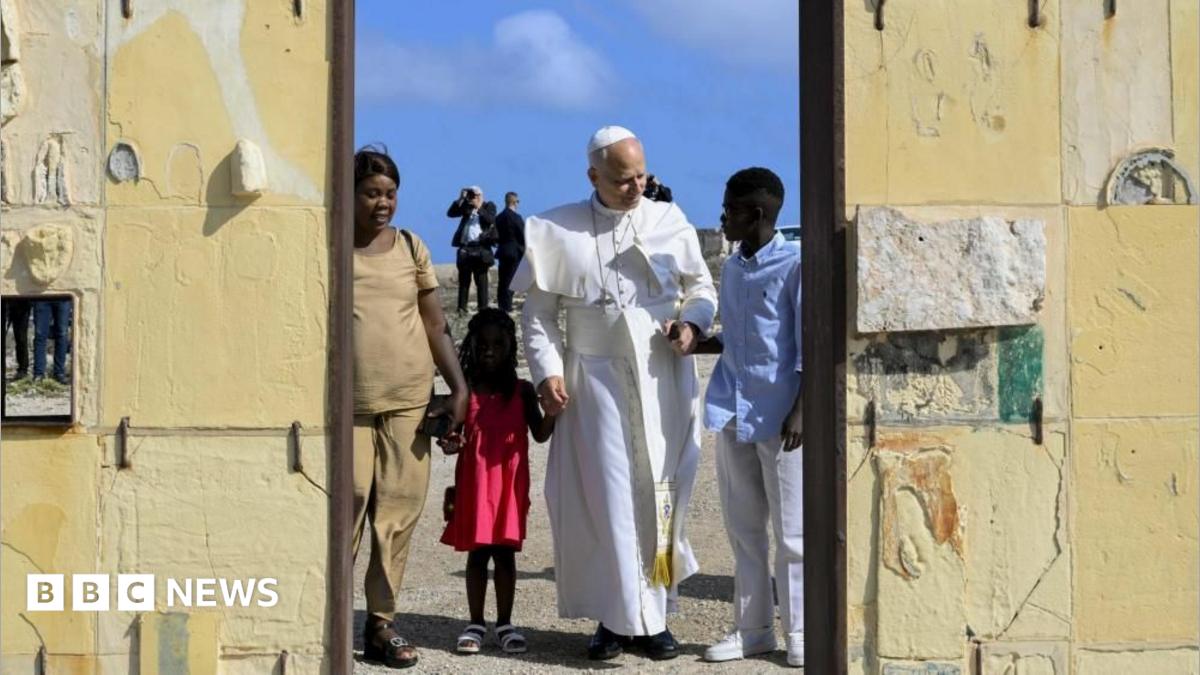
Pope Leo holds hands with a girl wearing a red dress and a man in blue shirt and white trousers. A women in a beige outfit stands alongside them at a doorway. Behind them are blue skies and men dressed in black

Pope Leo XIV has called on European leaders to rise to the “momentous challenge” of handling migration as he visited the Italian island of Lampedusa.

The pontiff urged Europe to help new arrivals integrate better and improve conditions in their home countries, during a mass on the island, which receives tens of thousands of migrants a year.

“Those who have lost their lives in this sea are victims both of decisions that were made and of decisions that were not made,” the Pope said.

Since becoming the head of the Catholic Church in May 2025, the American Pope has repeatedly called for greater support for migrants and criticised the US government’s anti-immigration policies.

Advertisement

He began the trip with a visit to a cemetery on Lampedusa and prayed at the graves of migrants who had died while making the dangerous journey from Africa to Europe across the Mediterranean Sea.

The Pope also stood at the “Door of Europe” memorial for those who had perished attempting the crossing and spoke to a migrant family.

“From this far-flung corner of Europe on the Mediterranean Sea, one can more clearly perceive the momentous challenge that the phenomenon of migration poses to European societies,” he told Catholics on the island.

“Europe is capable of addressing the crisis in this region in a comprehensive manner, integrating immediate relief efforts into a long-term strategic plan capable of receiving, protecting, supporting and integrating migrants” while “assisting developing countries so that no one is forced to emigrate”, he said.

Advertisement

The island of Lampedusa – which sits 90 miles (145km) off Tunisia’s coast – is home to a migrant reception centre that is overcrowded with challenging living conditions.

Those who make the journey often travel in poorly maintained and overcrowded vessels, making sea crossings more perilous for those aboard.

More than 1,400 people have died or gone missing while attempting to cross the ⁠Mediterranean this year, including 28 children, according to the UN’s International Organization for Migration.

Source link

Advertisement
Continue Reading

Trending

Copyright © 2025