

Business
What Happened to F1’s Lost Sponsors? Rothmans, Sega, Compaq & More

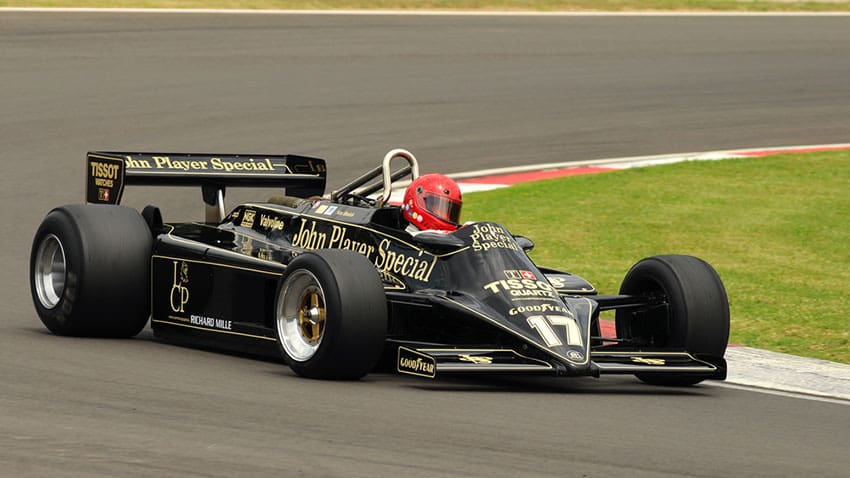
Stand at Becketts this weekend as the historic demonstration runs howl past and you could be forgiven for thinking the calendar has slipped.
The blue-and-gold of a Rothmans Williams, the screaming yellow of a Benson & Hedges Jordan, a Tyrrell in Elf colours, a McLaren still wearing its day-glo Marlboro chevrons: to a certain generation these liveries are as evocative as the engine notes. Yet look closely at those sidepods and you are not looking at a paddock. You are looking at a corporate graveyard.
The British Grand Prix that surrounds them could not be more different. A record crowd of well over half a million, a sprint format, a global streaming audience raised on Drive to Survive, and a sport that, as Business Matters reported this week, is now worth £12bn a year to the UK economy. But in the 1980s and 1990s Formula One was a very different commercial proposition: a rolling billboard held together by tobacco money, corporate vanity and the occasional fraudster. The teams, Williams, McLaren, Jordan, Tyrrell, survived, evolved or were absorbed. Many of the companies whose logos paid the bills did not. Their fates read like a potted history of three decades of business upheaval.
The tobacco giants: regulated out, swallowed up
No sector defined the era like tobacco. By 1995, nine of the top ten drivers in the world championship carried a cigarette brand on their overalls, and the sport’s aesthetic was effectively designed in the marketing departments of London and Winston-Salem.
Rothmans is the most instructive case. The brand arrived at Williams in 1994 and turned the FW16 into what one Italian commentator called “a cigarette packet on four wheels”, white, blue and gold, and utterly unmistakable throughout the seasons that carried Damon Hill and Jacques Villeneuve to their world titles. Yet within two years of leaving the sport’s front line, Rothmans International plc ceased to exist as an independent business. In 1999 it was swallowed by British American Tobacco in a merger waved through by the European Commission, and the Rothmans, Dunhill and Player’s brands disappeared into BAT’s portfolio, where they remain. The company that once wrote some of the biggest cheques in world sport is now a line item in someone else’s annual report.
Benson & Hedges followed a similar arc. Eddie Jordan’s masterstroke in 1996 was persuading Gallaher to paint his cars gold, then yellow, spawning the Buzzin’ Hornets and Bitten & Hisses workarounds when national advertising bans began to bite. B&H stayed with Jordan until 2005, by which time the FIA had already decreed that tobacco branding would be gone by the end of 2006. Gallaher, the last great independent British tobacco house, did not long outlive the ban that ended its motor racing adventure: in April 2007 it was acquired by Japan Tobacco for around £7.5bn, then the largest ever foreign takeover by a Japanese company.
Camel, which had splashed its yellow across Lotus, Benetton and Williams, read the regulatory runes earlier than most. When France banned tobacco advertising in motorsport in 1992, R.J. Reynolds began its retreat, and by the end of 1993 the desert dromedary had largely vanished from the grid. The lesson for any business built on a single, regulation-exposed revenue stream is timeless: the writing appears on the wall long before the wall falls on you.
Only Marlboro defied gravity. Philip Morris outlasted every rival, moved its money quietly to Ferrari, and kept paying long after its name could legally appear on the cars, proof that in sponsorship, as in business, the deepest relationships survive even when the logo cannot.
The technology names: disrupted at full speed
If tobacco was regulated out of existence, the technology sponsors of the era were simply out-innovated, an irony for brands that attached themselves to the fastest-moving sport on earth.
Consider the Williams FW15C of 1993, arguably the most technologically sophisticated F1 car ever built, with its active suspension and traction control. On its flanks sat Sega, then the swaggering champion of the console wars, which even had Sonic the Hedgehog’s feet painted below the cockpit and supplied a Sonic-shaped winner’s trophy, famously lifted not by a Williams driver but by Ayrton Senna at Donington, after which McLaren mischievously painted a squashed hedgehog on his car. Sega was at its absolute commercial peak. Within eight years it was gone from the hardware business entirely: bruised by the 32X and Saturn missteps and unable to sustain the Dreamcast against Sony and Nintendo, it exited consoles in 2001 to become a software publisher. The company survives, indeed, in a pleasing footnote, Sega returned to the grid last year as a gaming partner of McLaren, the very team that once taunted its Williams deal with a squashed-hedgehog sticker, but the colossus that sponsored world champions does not.
Compaq tells the same story at corporate scale. The Texan PC maker became a principal sponsor of the BMW Williams team in 2000, its logo carried by Ralf Schumacher and a young Juan Pablo Montoya. In May 2002, mid-season, Compaq was consumed by Hewlett-Packard in one of the most contentious mergers in tech history, and, in a neat piece of symbolism, the branding on the Williams cars was changed from Compaq to HP at that year’s British Grand Prix at Silverstone. A brand that had been one of the world’s biggest computer companies was reduced to a mid-race livery swap, and eventually retired altogether.
The telecoms adventure: two crashes for the price of one
The dot-com era brought a new breed of sponsor, and no partnership captured its giddiness better than Orange and Arrows. The mobile operator’s papaya livery made the 2000 Arrows A21 one of the best-looking cars on the grid, but the relationship delivered a double collapse. Arrows, run by the flamboyant Tom Walkinshaw, ran out of money and folded during 2002, its cars famously failing to appear at races while lawyers argued. Orange declined to renew and retreated from the sport. The sponsor fared better than the team, but not as an independent company: it had already been bought by France Télécom in 2000 at the very top of the telecoms bubble. The twist is that the brand ultimately devoured its owner, France Télécom judged the Orange name so much stronger than its own that in 2013 it renamed the entire group Orange S.A. Sometimes the sponsorship asset outlives the balance sheet that acquired it.
The cautionary tale: when the money was never real
And then there were the sponsors who were not what they seemed. Leyton House, the Japanese property and leisure group whose turquoise March cars very nearly won the 1990 French Grand Prix with Ivan Capelli, collapsed in scandal when founder Akira Akagi was arrested in 1991 over a fraud involving Fuji Bank. The team died with him, and F1 learned, not for the last time, as anyone who remembers more recent crypto logos will attest, that due diligence on a sponsor’s money matters as much as the size of the cheque.
What the survivors teach us
It would be wrong to paint the whole era as a graveyard. Canon, which backed Williams through its Mansell-Piquet pomp, remains a global imaging power. Elf, the French fuel brand on every Tyrrell and Renault of the period, lives on inside TotalEnergies, still in the sport today. And the teams themselves proved remarkably durable assets: Tyrrell’s entry was sold to BAT and became BAR, then Honda, then Brawn, and is today Mercedes-AMG F1; Jordan’s Silverstone factory now houses Aston Martin’s title challengers. In Formula One, as sponsorship strategist and author Jackie Fast, whose best-selling book PINPOINT chronicles what actually works in sponsorship, might observe, the platform has consistently outlived the brands that paid for it.
That, perhaps, is the real business story hiding in this weekend’s nostalgia. A grid livery is a leading indicator: it tells you which sectors have cash, confidence and something to prove. In 1986 that meant cigarettes; in 1993, video games; in 2000, PC makers and telecoms; today it is crypto exchanges, cloud computing and logistics giants, sectors whose own thirty-year survival is anything but guaranteed. The sport’s £12bn UK footprint suggests Formula One itself has never been healthier. History suggests the same cannot be assumed of the names painted on its cars.
So when the old Rothmans Williams crackles past the pits this afternoon, spare a thought not just for the drivers who wrestled it, but for the marketing directors who signed the deals, men and women who believed, entirely reasonably, that their brands were as permanent as the sport they adorned. Formula One is still here. Rothmans, Gallaher, Compaq, Leyton House and Sega’s console empire are not. In business, as at Becketts, nothing stays flat-out forever.

Paul Jones
Harvard alumni and former New York Times journalist. Editor of Business Matters for over 15 years, the UKs largest business magazine. I am also head of Capital Business Media’s automotive division working for clients such as Red Bull Racing, Honda, Aston Martin and Infiniti.



Mountain Valley Value Investments specializes in identifying undervalued companies with strong growth potential across various sectors. Focused on long-term value and buying at the right price, we leverage deep industry insights and rigorous analysis to uncover opportunities with the potential to deliver strong returns. Our investment philosophy is rooted in disciplined research and a commitment to highlighting risks that may impact the thesis. We aim to provide our readers with actionable investment ideas that stand the test of time. Follow us for in-depth analysis and thoughtful perspectives on high-potential stocks.
Analyst’s Disclosure: I/we have no stock, option or similar derivative position in any of the companies mentioned, and no plans to initiate any such positions within the next 72 hours. I wrote this article myself, and it expresses my own opinions. I am not receiving compensation for it (other than from Seeking Alpha). I have no business relationship with any company whose stock is mentioned in this article.
Seeking Alpha’s Disclosure: Past performance is no guarantee of future results. No recommendation or advice is being given as to whether any investment is suitable for a particular investor. Any views or opinions expressed above may not reflect those of Seeking Alpha as a whole. Seeking Alpha is not a licensed securities dealer, broker or US investment adviser or investment bank. Our analysts are third party authors that include both professional investors and individual investors who may not be licensed or certified by any institute or regulatory body.


Michael Kramer is the founder of Mott Capital Management – and is a long-only investor who focuses on macro themes and studies trends and options activities to identify and assess entry and exit points for investments in his long-term focused thematic growth strategy. He is a former buy-side trader, analyst, and portfolio manager with 30 years of experience tracking market technicals, fundamentals, and options.Michael Kramer leads the investing group Reading the Markets, where he helps a devoted following of members to better understand what is driving trading and where the market is likely heading, both the short and long-term. Features of the investing group include: daily written commentary and videos analyzing the driving factors behind price action; general macro trend education to help members make well-informed decisions based on market conditions, interest rates, currency movements and how they all interact; chat for questions and community dialogue; and regular Zoom videos sessions to discuss current ideas and answer questions. The level of access RTM subscribers and the expertise of the source are unprecedented given that the subscription price is a fraction of similar technical coaching and mentoring services. Learn more.
Analyst’s Disclosure: I/we have no stock, option or similar derivative position in any of the companies mentioned, and no plans to initiate any such positions within the next 72 hours. I wrote this article myself, and it expresses my own opinions. I am not receiving compensation for it (other than from Seeking Alpha). I have no business relationship with any company whose stock is mentioned in this article.
This report contains independent commentary to be used for informational and educational purposes only. Michael Kramer is a member and investment adviser representative with Mott Capital Management. Mr. Kramer is not affiliated with this company and does not serve on the board of any related company that issued this stock. All opinions and analyses presented by Michael Kramer in this analysis or market report are solely Michael Kramer’s views. Readers should not treat any opinion, viewpoint, or prediction expressed by Michael Kramer as a specific solicitation or recommendation to buy or sell a particular security or follow a particular strategy. Michael Kramer’s analyses are based upon information and independent research that he considers reliable, but neither Michael Kramer nor Mott Capital Management guarantees its completeness or accuracy, and it should not be relied upon as such. Michael Kramer is not under any obligation to update or correct any information presented in his analyses. Mr. Kramer’s statements, guidance, and opinions are subject to change without notice. Past performance is not indicative of future results. Neither Michael Kramer nor Mott Capital Management guarantees any specific outcome or profit. You should be aware of the real risk of loss in following any strategy or investment commentary presented in this analysis. Strategies or investments discussed may fluctuate in price or value. Investments or strategies mentioned in this analysis may not be suitable for you. This material does not consider your particular investment objectives, financial situation, or needs and is not intended as a recommendation appropriate for you. You must make an independent decision regarding investments or strategies in this analysis. Upon request, the advisor will provide a list of all recommendations made during the past twelve months. Before acting on information in this analysis, you should consider whether it is suitable for your circumstances and strongly consider seeking advice from your own financial or investment adviser to determine the suitability of any investment.
Seeking Alpha’s Disclosure: Past performance is no guarantee of future results. No recommendation or advice is being given as to whether any investment is suitable for a particular investor. Any views or opinions expressed above may not reflect those of Seeking Alpha as a whole. Seeking Alpha is not a licensed securities dealer, broker or US investment adviser or investment bank. Our analysts are third party authors that include both professional investors and individual investors who may not be licensed or certified by any institute or regulatory body.
Of course, at some point Sky could decommission some ITV shows – or renegotiate their contracts. You don’t take over another company without believing there are savings to be made (and some are pointing to synergies that could be made on the tech platform side, with ITVX and Sky’s streaming services potentially merged in the future).
Longer term, Frost believes users of both current streaming platforms ITVX and NOW can expect to see more “integrated services, for example, bundling titles in terms of genre instead of channel, as a natural way to cut production costs, and to cross-advertise”.
But when it comes to programmes, they won’t be able to make significant changes to those beloved shows until the supply deal comes to an end.
Producer Patrick Spence thinks the deal is “exciting”. He won a BAFTA for Mr Bates vs The Post Office which was a huge hit on ITV in 2024, with around 15 million tuning in. He’s currently producing Two Birds, a thriller starring Sheridan Smith for ITV.
He’s also made dramas for Sky and told me ITV and Sky “are very good bedfellows in many ways”.
“When they get behind a show, they really get behind it,” Spence says. “They want to make water cooler shows that bring audiences together.”
He believes the deal is a sign that the regularly predicted end of so-called linear TV is overplayed.
“We get told so often about the death of broadcast TV,” he adds. “For producers it’s said we’re looking at a cliff edge where the only places that will be left for us to sell our programmes will be the streamers, or some version of BBC, ITV, Channel 4 all joining together.
“What I take away from this deal as a producer and an audience member is that Sky must really like and believe in ITV to be only buying the network. They think there is a business to be grown and driven that uses the audience reach and loyalty that the ITV network has.”

Mercado Libre's Margin Compression May Be A New Normal – Potential Technical Bottoming

What are the most powerful forces shaping wealth creation today?

Pantiles, seen on rooftops across Britain, have a distinctive curved shape.
The machine Oldroyd is using dates back to the 1920s. Some equipment on site is much older and the work is far from easy.
“The most challenging thing for me probably would be lifting the clay,” she says.
But she wouldn’t trade her job.
“I’m glad to be actually making history.
“When I think about this site and how old it is and we’re still carrying on this tradition and the fact that lots of the tiles, if not all of them, will be here for hundreds of years to come.”
The work Oldroyd and her co-workers do today is part of a tradition stretching back centuries.
Though clay roof tiles were introduced by the Romans, the English industry grew up in the eastern part of the country during the 12th century.
By the early 1700s, pantiles were being made, with East Yorkshire and Lincolnshire becoming major centres of production.
Today about a dozen old school firms survive across the UK, according to the Roof Tile Association. William Blyth, founded in 1840, is among them.

Tsakos Energy Navigation: Economic Outlook Changed Dramatically But Still Dominates

Mid-Year 2026 Market Outlook: Oil, Gold, And Copper
Saudi Arabia stocks lower at close of trade; Tadawul All Share down 0.26%
Business
Here Is the Full Celebrity Guest List at Taylor Swift and Travis Kelce’s Historic Madison Square Wedding
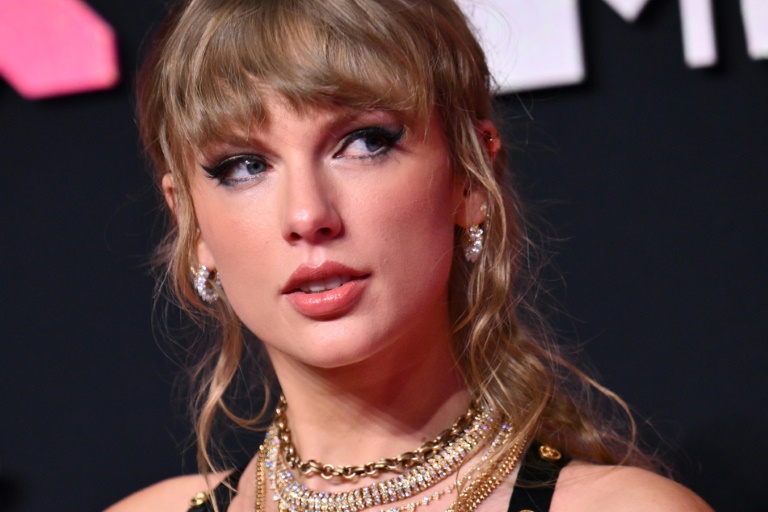
NEW YORK — The guest list at Taylor Swift and Travis Kelce’s July 3 wedding at Madison Square Garden has emerged as one of the most dazzling collections of celebrity, athletic, music industry and entertainment talent ever assembled in one building, confirming the event as the most star-studded wedding in modern American cultural memory.
Here is the most complete picture available of who attended, drawn from confirmed arrivals, photographic evidence and verified sourcing.
Entertainment and Acting
Actor and wedding officiant Adam Sandler arrived first for the ceremony and, according to TMZ, also performed an original song for the newlyweds. Director and producer Steven Spielberg attended the reception, as did former Disney CEO Bob Iger. Actor Bradley Cooper was photographed arriving alongside model Gigi Hadid. Hugh Grant and his wife Anna Eberstein were among the first international guests confirmed in photographs outside the venue. Actor Ethan Hawke, who appeared in Swift’s music video for her song “Fortnight,” was photographed entering the arena. Jason Sudeikis, the Ted Lasso creator and actor, also attended. Actress Dakota Johnson was spotted arriving. Actress and playwright Phoebe Waller-Bridge was among those seen in New York ahead of the event. Paul McCartney, who has been among Swift’s most prominent famous-friend relationships throughout her career, attended. Tom Hanks was among the industry heavyweights present, as was actress Anya Taylor-Joy. Actor Tom Cruise also attended the ceremony. Comedian Chris Rock was among those seen departing the tightly sealed event.
Music
Stevie Nicks, Swift’s longtime musical inspiration and friend, was confirmed by Good Morning America’s Robin Roberts to have performed at the reception, a moment Roberts described as “really intimate.” Ed Sheeran, who has co-written multiple Swift songs and appeared on her Eras Tour, was photographed at an upstate New York restaurant with fellow Swift collaborator Aaron Dessner before the event and was confirmed among the guests. Benson Boone attended. Jack Antonoff, Swift’s most frequent and closest creative collaborator across multiple album cycles, was among the first guests spotted at Thursday’s rehearsal dinner, where he arrived alongside his sister, fashion designer Rachel Antonoff. Singer Gwen Stefani attended. Jennifer Lopez, who has maintained a long-standing friendship with Swift, was confirmed among the guests. Singer and actress Camila Cabello attended. Producer and musician Mark Ronson was reported among guests.
Sports
Sportscaster Joe Buck and his wife, ESPN anchor Michelle Beisner-Buck, attended the ceremony. Soccer player and World Cup winner Abby Wambach attended alongside her wife, author Glennon Doyle. NFL Commissioner Roger Goodell was confirmed among the roughly 1,000 guests. Several Kansas City Chiefs players attended, consistent with pre-wedding reports placing NFL players at the nearby Marriott Marquis hotel throughout the holiday weekend. George Kittle, the San Francisco 49ers tight end and longtime friend of Kelce, had confirmed his invitation in the lead-up to the event, also noting that Swift and Kelce had told guests “absolutely no gifts.” Football star Tom Brady was spotted departing the event. Donna Kelce, Travis’s mother, arrived in New York on Thursday and went directly to Madison Square Garden.
Industry Executives
Disney Entertainment co-chair Dana Walden attended. Universal Music Group chairman Lucian Grainge, who oversees Swift’s label Republic Records, was confirmed as a guest, a presence that underscored the commercial and professional dimensions of Swift’s artistic relationships. AMC Theatres CEO Adam Aron attended and later shared a now-deleted post on social media describing what he saw inside the arena, providing the most detailed public account of the venue’s transformation. In that post, Aron described the arena as draped entirely in peach and white, unrecognizable as the sporting and concert venue it normally is.
Swift’s Close Personal Circle
Abigail Anderson Berard, Swift’s best friend since childhood and the subject of the song “Fifteen” from the Fearless album, attended Thursday’s rehearsal dinner and was confirmed among the guests. Selena Gomez, a member of Swift’s famous celebrity group from the mid-2010s era, was confirmed as attending. Zoë Kravitz was photographed arriving. The Haim sisters, Este, Danielle and Alana, who have been part of Swift’s inner circle for years and collaborated with her on multiple projects, were confirmed among the guests. Model Gigi Hadid, who attended alongside Bradley Cooper, is a longtime member of Swift’s social world. Karlie Kloss and her husband Joshua Kushner were photographed arriving. Reese Witherspoon, who has appeared on Swift’s social media and attended prior events with her, was confirmed among the guests. Lena Dunham was spotted at Thursday’s rehearsal dinner and was confirmed for the main event. Tim McGraw and Faith Hill, whose song “Tim McGraw” was the very first Taylor Swift single and who have maintained a warm relationship with her throughout her career, attended. Graham Norton, the British television host whom Swift personally invited on air during an appearance on his program, attended, having said she planned to invite him.
Television and Broader Media
Sacha Baron Cohen was photographed departing the event. Actor and director Edward Norton was reported as arriving in New York for the occasion. Former Disney co-chairman Dana Walden rounded out an executive contingent that reflected Swift’s position at the center of the global entertainment industry. Travis’s childhood best friend Aric Jones was confirmed on the guest list by People magazine, one of the few non-celebrity attendees to receive significant coverage given how thoroughly Swift’s professional circle dominated the confirmed invitees.
The dress code for the evening was black tie, with women in floor-length dresses and men in tuxedos with black bow ties. The couple had told guests no gifts were expected, though it was not confirmed whether all invitees honored that request. NDAs accompanied the digital invitations, which were issued with watermarking to prevent unauthorized distribution, explaining why photographic documentation from inside the venue remained extremely limited in the hours following the ceremony.

Broncos roster: WR Joseph Manjack (No. 86) competing at crowded position

EV Batteries Defy Expectations, Last Hundreds of Thousands of Miles

You’re Not Broke Because of Money… It’s Your Mindset


-

 Fashion2 days ago
Weekend Open Thread: High Hopes
-

 Politics2 days ago
The House | “Reframing the debate from a binary discussion of winners and losers”: Yuan Yang reviews ‘We Are Not Machines’
-

 Crypto World5 days ago
Strategy authorizes up to $1.25B in Bitcoin sales under new capital plan
-

 News Videos7 days ago
MAJOR BITCOIN & MARKET UPDATE!!!! (MUST WATCH ASAP!!!)
-

 Tech6 days ago
Anonymous researcher drops 0-day ‘exploitarium’ repo
-

 News Videos5 days ago
How to Build INSANE Live Financial Dashboards With Claude
-

 Business5 days ago
Australia treasurer says alleged access of prime minister’s bank data ’incredibly concerning’
-
 NewsBeat10 hours ago
Taylor Swift and Travis Kelce wedding staffer hilariously struggles to keep her cool while checking in megastars
-
 Business6 days ago
The AI boom won’t burst all at once. It will pop in ‘rolling bubbles’: Macquarie
-

 Sports4 days ago
Broncos roster: OL Ben Powers (No. 74) entering final year of contract
-

 Crypto World3 days ago
Binance stock trading tops $1B in first month after launch
-

 NewsBeat5 days ago
Presenter Caroline Flack’s brother Paul Flack dies aged 55
-

 Crypto World3 days ago
Alibaba-affiliate Ant Group enters the humanoid robot market with 12 deals
-
 NewsBeat3 days ago
New exhibition reflects five decades of movement between island of Ireland and GB
-
 Crypto World4 days ago
Airdrop Registration Becomes Key Focus For Remittix As RTX Launch Updates Approach
-

 Business4 days ago
Meta Platforms Stock Jumps 7% Today as Bloomberg Reports Company Plans to Enter the Cloud Business
-

 Business2 days ago
What a 10 Percent Drop Means for Buyers, Sellers and Renters
-

 Crypto World3 days ago
Binance Re-Enters Philippines As EU MiCA Rules Restrict Access
-

 Crypto World2 days ago
Standard Chartered Secures MiCA License as ESMA Adds 37 New Crypto Firms
-

 Tech6 days ago
The attack that hijacked Claude Code came through Sentry. Datadog, PagerDuty, and Jira have the same exposure.
You must be logged in to post a comment Login