
Entertainment
‘House of the Dragon’ Is Quietly Setting Up Another Major Reveal About Aegon’s Prophecy


Prequels often suffer from a lack of suspense, since the audience knows where the story is headed in the end. Back in its first season, House of the Dragon had an explosive solution for this issue — it confirmed for the first time that House Targaryen had prophesized the Long Night and the return of the White Walkers, and that prophecy had guided their actions for generations leading up to Game of Thrones. It was a long-time fan theory, but by confirming it, House of the Dragon showed that Westeros has many mysteries left to uncover, and they could come from any spinoff media. Now, with the series hurtling towards its end, fan theorists have many ideas about what other revelations might be coming before the Dance of the Dragons is over. One tantalizing possibility concerns Aegon’s prophecy, House Stark, and the future king of Westeros.
It’s been nearly four years since House of the Dragon revealed that Aegon the Conqueror dreamed of the White Walkers in a prophecy he called the “Song of Ice and Fire.” In that time, fans have teased out many of the implications this might have on the story — characters who passed it down, characters who were influenced by it, and characters who failed to get the message. In all that digging, many fans feel that House Stark must have known about the prophecy, and likely cooperated with House Targaryen because of it in some cases. Evidence for that theory is mounting, but the real question is if or when it might be confirmed. It would make sense to put another monumental lore dump at the end of House of the Dragon, and the show itself is giving us some hints about what’s coming.
‘House of the Dragon’ Says ‘Winter is Coming,’ Though It’s Still Summer

There are plenty of clues to support the theory that House Stark knew about Aegon’s prophecy and passed that knowledge down in secret — too many to include in this article. What’s important is how House of the Dragon is drawing attention to those clues, and perhaps setting up a grand revelation towards the end of the series. Northmen have only appeared in a few scenes scattered throughout the series so far, but that’s about to change, as we’ve already seen with Roderick Dustin’s (Tommy Flanagan) dramatic entrance into the Riverlands this season.
“We have come to die for the dragon queen,” he said bluntly in the season premiere. This stellar line is taken straight from George R.R. Martin‘s book Fire & Blood, and it’s not just melodramatic wording. Lord Dustin leads a force known as the “Winter Wolves,” who are all old, gray-bearded warriors from throughout the North. They do not expect to survive the war whether they win or lose — it’s part of a brutal custom in the North where old men risk their lives in battle or hunting expeditions around the time the seasons change, knowing they’ll likely die. This way, they leave their community with one less mouth to feed through the winter.
House of the Dragon is not shying away from this fatalistic aspect of Northern culture — if anything, the show is calling attention to it. In Season 2 Episode 1, the show depicted Jacaerys Targaryen (Harry Collett) meeting with Lord Cregan Stark (Tom Taylor) on the Wall, rather than at Winterfell. Lord Stark claimed that he could not send all his forces south to war because he would need them in the winter to guard the Wall. He asked Jace, “Do you think my ancestors built a 700-foot wall of ice to keep out snow and savages?” According to Cregan, the Wall is really there to keep out “death.” However, the Lord of Winterfell rarely visits the Wall, allowing the Night’s Watch to operate independently. Cregan’s personal interest in the Wall might be a hint that he knows something we don’t.
Cregan’s focus on the Wall and the Winter Wolves’ willingness to die are both surprising, since House of the Dragon has given us no real indications that winter is coming to Westeros. This fantasy world is defined by its irregular seasons, but there is usually quite a bit of warning of the onset of winter. Characters in the south have not complained about unusual cold or storms, and the maesters of the Citadel have not sent out their albino ravens to herald the changing seasons. It’s possible that Cregan, Roderick, and other Northmen can sense a different kind of winter coming on. Cregan might even have knowledge of Aegon’s prophecy passed down to him, and he may believe there are signs that the White Walkers’ attack is imminent.
Prophecies Could Completely Recontextualize ‘Game of Thrones’
In general, Game of Thrones did not examine the magical elements of Westeros very closely — especially toward the end, when it mattered most. For years, fans and critics have speculated that spinoffs like House of the Dragon will try to vindicate the main series, and in some ways, it looks like they’ve been right. House of the Dragon has magic centered in its story, from the haunting mysteries of Harrenhal to Helaena’s (Phia Saban) clear psychic abilities. Prophecies and telepathy are arguably more important to this franchise than dragons and ice monsters, and we should expect to see more of them in the back half of House of the Dragon.
So far, dreams and visions in this show have already shown us glimpses of important things coming in the main series. In Season 2, Episode 8 Alys Rivers (Gayle Rankin) leads Daemon (Matt Smith) to the Weirwood tree, where he sees the White Walkers, and Daenerys hatching dragons in the desert. He even sees Brynden Rivers, a.k.a. Bloodraven, the future Targaryen who will become a Greenseer and eventually teach Bran Stark (Isaac Hempstead Wright) to do the same. Bloodraven is an important character in the books, though his presence was downplayed in the TV adaptation. The younger version of him on House of the Dragon is played by Joshua Ben-Tovim, while on Game of Thrones he was played by Struan Rodger, then recast as Max von Sydow.
Readers know we should never take a vision of Bloodraven lightly. It’s possible that we’ll see him again in House of the Dragon as more characters interact with the Weirwoods and the bloodshed of the war awakens the trees. However, it’s possible this show will go one step farther by showing us Bloodraven’s successor, Bran Stark. We know that Bran can use his powers to reach backward in time to influence people and events — he did so when he commanded Hodor (Kristian Nairn) to “hold the door,” and in the books, it’s implied that he can reach other characters as well.
If Bran appears in a vision, it would be a fitting magical climax for House of the Dragon, and it would mirror some of the other tie-ins we’ve seen in the show so far. Some fans and critics would inevitably call it cheap, but it’s a move that would definitely appeal to HBO executives and creators who want to keep this franchise alive. In the long run, Easter eggs like that could become a central feature of Game of Thrones spinoffs, further complicating the web of causes and effects around the wars in Westeros.
‘House of the Dragon’ Has Just as Much Ice as Fire
House of the Dragon is ostensibly about a civil war among House Targaryen’s dragon-riders, yet the show has dedicated a surprising amount of time to the other end of Westeros’ magical spectrum — the old gods and the Weirwood trees, which are strongest in the North. The show has given us two glimpses of the mythical “Green Men,” and shown an immense amount of Greenseer magic at play around Harrenhal and the God’s Eye lake. According to Game of Thrones, this same branch of magic was responsible for the creation of the White Walkers in the first place, so it makes sense that the prequel is still highlighting this connection.
In some ways, Fire & Blood tells us where these Weirwood-heavy plots are headed, but because of the book’s unique nature, there’s a lot of ambiguity in the upcoming parts of the story. We’ve already seen connections that fans didn’t expect, such as Helaena’s intrusion on Daemon’s Weirwood vision, implying that dragon-dreamers and Greenseers have access to the same astral plane. We should expect a carefully-planned show like this to save some of its best spectacles for the end, so it’s not unreasonable to imagine a fully-realized King Bran appearing by the series finale. Alternatively, revealing that House Stark was also acting on Aegon’s prophecy could serve as one final revelation without the need for magical dreams.

Of course, the creative team will want to be careful not to overdo it with Easter eggs and lore drops. They could also be wary of delving into the lore without the involvement of Martin. The author is not pleased with this prequel, and doesn’t seem to be as closely involved as he was in Season 1. It’s possible that he already agreed to another big revelation when the show first started, but it’s also possible that the creators won’t want to rock the boat now that he’s not closely involved anymore.
At the time of this writing, there are only 14 episodes left of House of the Dragon — assuming showrunner Ryan Condal fulfills his plan of finishing the series with four seasons. That doesn’t leave much time for new information to sink in, so we should have our eyes peeled for any more big clues coming our way. Season 3 continues on Sunday nights at 9 p.m. ET on HBO and HBO Max. Martin’s books are available now in print, digital, and audiobook formats.

- Release Date
-
August 21, 2022
- Network
-
HBO
- Showrunner
-
George R.R. Martin
- Directors
-
Clare Kilner, Geeta Patel
- Writers
-
Gabe Fonseca
-

-

Fabien Frankel
Ser Criston Cole

Continue Reading

With public interest in Ariana Grande reaching a fever pitch, the pop star is reportedly ready to hit pause. According to a source, the “Petal” singer plans to retreat from the public eye after her ongoing tour wraps up in exactly one month. The decision is reportedly fueled, in part, by growing public scrutiny surrounding her health, appearance, and relationships.

One of Grande’s reps spoke with PEOPLE and said that the “Wicked” star will be “taking a step back from visibility after she completes the Eternal Sunshine Tour.”
“She looks forward to finishing the tour and ending it on a high note, both healthily and happily, and then taking a much-deserved break from public-facing work and appearances, which has led to endless, ongoing public scrutiny,” the rep added. “This tour has been a beautiful experience for her. She loves her fans and has loved every minute of this tour so much.”
Ariana Grande Backs Out Of ‘Sunday In The Park With George’ Show

Grande’s “Eternal Sunshine Tour” kicked off in early June 2026 and will run until September 1. Throughout the show, the singer performs tunes from her seventh studio album and also taps into some of the songs from her most recent project, “Petal.”
“She performs a very physical show, and there is a lot of athleticism involved. She performs healthily and successfully at a very high level night after night,” a source close to Grande said about the show.
Grande was also scheduled to appear in the West End revival of “Sunday in the Park with George” next summer; however, she’s since pulled out.
Conversation Surrounding Ariana Grande’s Body Ramps Up
Grande has been in the headlines over the last several years, as the public has taken an interest in her relationships and body like never before.
The “Victorious” alum addressed some of the claims in the single “Yes, And?” in 2024, singing, “My face is sitting, I don’t need no disguise / Don’t comment on my body, do not reply / Your business is yours, and mine is mine.”
She went even further, stating, “Why do you care so much whose [expletive] I ride? / Why?”
On Friday, July 31, Grande released “Petal” and the accompanying music video, which reportedly generated even more comments about her health and body.
An insider said that the album is a “fight song” and an “anthem about the love-hate relationship” she has with the public and their parasocial ways. “This album is not about any romantic partner or breakup in that way,” they continued.
Grande Has Spoken About Being In A ‘Petri Dish’ Since She Was A Kid
Grande has been open about how being picked apart by the public has affected her over the years. While promoting “Wicked,” the singer responded candidly to a question about how she handles beauty standards, noting that she’s been scrutinized since she was a teenager.
“I’ve been kind of doing this in front of the public and a specimen in a petri dish really since I was 16 or 17,” she said. “have heard it all. I’ve heard every version of it, of what’s wrong with me. And then you fix it, and then it’s wrong for different reasons.”
Grande went on to say that there’s been a “comfortability that we shouldn’t have at all,” adding that the comments can be “really dangerous.”
“I think that I’m really lucky to have the support system that I have to just know and trust that I’m beautiful. But I do know what the pressure of that noise feels like. It’s been a resident in my life since I was 17 and I just don’t invite it in anymore. It’s not welcome,” she said.
Grande Addresses Concerns About Her Body
@arianagrande ♡
In a 2023 TikTok, Grande addressed her followers and the public’s “concerns about my body” and reminded people that despite being a celebrity, she has feelings too.
“I think we should be gentler and less comfortable commenting on people’s bodies, no matter what,” she said. “There are ways to compliment someone or to ignore something that you see that you don’t like that I think we should help each other work towards.”

The 2027 Met Gala is already facing controversy after organizers announced an exhibition honoring John Galliano, the celebrated but polarizing designer whose career was derailed by antisemitic remarks in 2011. The Metropolitan Museum of Art and Vogue revealed Friday that Galliano will become the subject of “John Galliano: Horizon,” an exhibition examining his influential career in fashion. However, organizers are reportedly preparing for resistance over the decision, with Anna Wintour, Galliano and Costume Institute curator Andrew Bolton meeting privately with prominent Jewish leaders ahead of the event.

According to The New York Times, Wintour has met with New York City’s “influential rabbis and Jewish leaders” to “get their thoughts on the potential issues with next year’s planned fashion extravaganza.” Galliano and Bolton also reportedly participated in meetings intended to address concerns and seek the leaders’ “blessing” before the exhibition opens.
The meetings reflect the challenge facing organizers as they celebrate Galliano’s impact on fashion while still confronting the conduct that cost him his position at Dior.
Bolton, who has reportedly considered organizing a Galliano exhibition since 2010, acknowledged the responsibility of presenting both sides of the designer’s legacy. He said organizers must find a way to “hold artistic achievement and ethical accountability together without allowing one to erase the other.”
Galliano was serving as Dior’s creative director when his career unraveled in 2011 following an incident at a Paris bar. The designer was convicted of a hate crime after directing antisemitic insults at patrons and declaring, “I love Hitler” while intoxicated.
Galliano was ordered to pay court costs and a fine, while Dior fired him following the incident. The designer subsequently apologized and claimed that he could not remember what had happened because he was struggling with alcoholism and drug addiction.
Galliano withdrew from the fashion industry and entered rehabilitation before returning in 2014 as the creative director of Maison Margiela. The proposed Met exhibition will therefore arrive more than 15 years after the incident that transformed Galliano from one of fashion’s most powerful figures into one of its most divisive.
Jewish Leaders Address Galliano’s Attempt At Redemption
Some of the leaders who met with Galliano and the exhibition’s organizers believe his efforts since the scandal warrant consideration. Rabbi Rick Jacobs, president of the Union for Reform Judaism in North America, said he sensed Galliano’s “sincerity” during their conversation. “He was open. He looked right at us and spoke in a clear way, not as if he had memorized talking points,” Jacobs told the Times.
Jacobs also acknowledged that organizers appeared aware of the potential backlash surrounding the exhibition. “The fear clearly was the show could be met with a lot of resistance, not just skepticism, but a feeling of it’s wrong,” he continued.
Jonathan Greenblatt, chief executive of the Anti-Defamation League, similarly told the newspaper that he believes Galliano “has genuinely worked through the issues that led to his antisemitic outburst years ago in Paris.”
“We have long since accepted his apology,” Greenblatt added. “His efforts to repair the damage his words caused and to learn from that incident should be applauded.”
Rabbi Urges Met To Confront Galliano’s Past
Not every leader involved believes the exhibition should focus solely on Galliano’s creative achievements and personal rehabilitation. Rabbi Joshua Davidson, who leads Temple Emanu-El near the Metropolitan Museum of Art, encouraged organizers to use the event to educate visitors about antisemitism and its consequences.
“What we had said to them is it would be powerful, poignant and productive if they were able to leverage it as an opportunity to teach about the reality of antisemitism, and somehow wrap into the exhibition the importance of fighting back and the dangers of antisemitism in this moment,” Davidson told the newspaper.
Davidson also predicted that some members of the Jewish community would continue to view the decision as “problematic,” regardless of how the Met presents Galliano’s history. “People may very likely be upset by it. I can understand those feelings,” he said.
Anna Wintour Defends The Controversial Fashion Tribute

Despite the criticism, Wintour has firmly defended the decision to place Galliano at the center of an exhibition of this magnitude. In a text to the Times, the Vogue executive said Galliano’s “career isn’t defined by a single moment,” adding that “there is no one more deserving of an exhibition of this scale.”
Galliano played a major role in Dior’s evolution into a global luxury powerhouse and created some of the fashion house’s most recognizable designs, including the Dior Saddle Bag. His work continues to appear on high-profile red carpets, with stars such as Zendaya, Kim Kardashian, Amal Clooney and Tyla wearing vintage Galliano creations.
The exhibition will also place him in exceptionally rare company. Galliano is set to become only the third living designer, following Yves Saint Laurent and Rei Kawakubo, to receive a solo exhibition at the Met.

Science fiction is one of the most inspiring and interesting genres in cinema. For decades, the industry has produced some of the most entertaining and thought-provoking works in this rich and varied milieu. When it comes to finding great sci-fi movies to stream, you don’t have to break the bank. For these 10 titles, you don’t even have to pay.
From channels like Roku, Tubi, and YouTube, there are several space-themed winners to choose from. Whether it’s an established classic like The War of the Worlds or a recent triumph like Everything Everywhere All at Once, there are plenty of options to choose from when it comes to free streaming and sci-fi. So get your watchlist ready and check out these absolute masterpieces.
Please note: these titles are free to stream in the US; other availability may differ.
1
‘Stargate’ (1994)
Free To Stream on Roku

The movie that launched the successful Stargate franchise stars Kurt Russell, James Spader, and Djimon Hounsou. As a team of operatives works together to try to solve the mystery of a giant portal, they get way more than they bargained for. It turns out the portal is a doorway to other planets, and as the crew takes their first, brave steps through the Stargate, they begin a journey like none other.
Stargate is a fan-favorite movie that produced several TV spin-off series. It explores interesting themes like culture, religion, and personal liberty. Stargate is a terrific capsule story on its own, and viewers don’t have to be familiar with the TV series to watch and enjoy this mid-’90s classic.
2
‘Ex Machina’ (2014)
Free To Stream on YouTube and Tubi

Caleb Smith (Domhnall Gleeson) is a young computer programmer who wins a contest at work. The prize? A week spent at the private estate of the company’s CEO, inventor, and innovator Nathan Bateman (Oscar Isaac). Once Caleb arrives, he finds out that he will be participating in a rather unique experiment. Nathan’s newest creation is an extremely intelligent and lifelike android named Ava (Alicia Vikander), and it is Caleb’s task to evaluate how human she is.
Ex Machina is a modern masterpiece. As audiences watch the film, they become a participant in the Turing test as well, evaluating and determining what Ava’s true motives and intentions might be. Ex Machina is a must-watch for fans of sci-fi tech movies, and it will keep you guessing until the very end. Fans have been patiently waiting for this absolute gem to be available for free, and now is the time to add it to your list.
3
‘The Fifth Element’ (1997)
Free To Stream on Tubi

When the world is in danger, an ex-special forces agent and now cab driver and a supreme being work together to save it in The Fifth Element. Korben Dallas’ (Bruce Willis) life changes forever when the arcane and determined Leeloo (Milla Jovovich) literally crashes into his life. Directed by Luc Besson, with costumes designed by Jean-Paul Gaultier, The Fifth Element is a sci-fi movie like no other. It is playful, stylistic, funny, and poignant.
Growing to massive cult-favorite status over the years, The Fifth Element has aged remarkably well. It is still as entertaining to watch now as it was upon its advent, nearly three decades ago. Aging so well is a marvel within the sci-fi genre, and very few films have achieved it to any degree. Though many movies that have come after The Fifth Element have tried to duplicate its singular magic, they have failed. It is a unique and precious achievement within the genre.
4
‘Everything Everywhere All at Once’ (2022)
Free To Stream on YouTube

One of the most Oscar-winning sci-fi movies of all time, Everything Everywhere All at Once cleaned house at the Academy Awards and took home seven trophies. Michelle Yeoh stars as Evelyn Wang, a wife and mother who has a mid-life crisis across multiple dimensions. To save the known existence that she has, she must explore multiple versions of reality that could have been. The journey teaches her more about herself, her family, and life in general.
Everything Everywhere All at Once is phenomenal. It is eccentric, but still enjoyable and understandable for most audiences. It is a form of elevated sci-fi surrealism that features fantastic martial arts sequences and a fascinating multiverse concept. Yeoh, Ke Huy Quan, Jamie Lee Curtis, Stephanie Hsu, and the rest of the cast are outstanding, and Yeoh, Curtis, and Quan took home Oscars for their performances.
5
‘Bill & Ted’s Excellent Adventure’ (1989)
Free To Stream on Roku

A movie that no one would have predicted would go on to create a trilogy three decades in the making, Bill & Ted’s Excellent Adventure is the first and, for some, the favorite installment of the canon. Keanu Reeves and Alex Winter star as Theodore “Ted” Logan and Bill S. Preston, Esq., respectively. The movie follows Bill and Ted and the adventures that follow when they are gifted a time machine by a mysterious stranger. The duo decides to use the device to travel to different eras and ace their history exam.
Bill & Ted’s Excellent Adventure is a delightful sci-fi and time travel mashup. It has fun cameos, amusing takes on historical figures, and some wacky moments. Much like The Fifth Element, Bill & Ted’s Excellent Adventure stands out and became something greater than the sum of its parts. Fans of Reeves will enjoy seeing their favorite John Wick actor years before he became an action superstar. If you enjoy a zany comedy with sci-fi themes, then Bill & Ted’s Excellent Adventure is your next watch.
6
‘The War of the Worlds’ (1953)
Free To Stream on YouTube

From one of the greatest science fiction writers of all time and one of the greatest eras of moviemaking of all time comes The War of the Worlds. Based on H.G. Wells’ gripping tale, humanity must fight to survive when invaders from Mars come to conquer Earth. The War of the Worlds remains one of the best invasion movies of all time and is full of suspense like only a 1950s movie can do.
The War of the Worlds’ practical effects are astounding. The movie features explosions and fireworks, mob scenes with dozens of extras, and more. It was nominated for three Oscars and rightfully won for Best Effects, Special Effects. Retro-looking UFOs aside, The War of the Worlds delivers when it comes to chills and a growing sense of panic. It is easy to see why this movie has long been held as a staple within the genre.
7
‘Terminator 2: Judgment Day’ (1991)
Free To Stream on YouTube

Every once in a while, a sequel seems to outshine its original, and director James Cameron has achieved this phenomenon several times. The sequel to the 1984 movie The Terminator, Terminator 2: Judgment Day, once again featured the deadly T-800 humanoid robot played by Arnold Schwarzenegger. This time, the movie ramped up the stakes when it came to emotional connections and evil foes. Robert Patrick’s liquid metal T-1000 is a force to be reckoned with and still visually captivating on screen.
There is so much packed into Terminator 2: Judgment Day that viewers can take something new from it upon each rewatch. There are the major themes of life versus death and good versus evil, and there are more subtle and nuanced undercurrents about humanity, family, and society’s relationship and dependence upon technology. Even if you have seen this pop culture hit before, it always makes for an excellent watch.
8
‘Idiocracy’ (2006)
Free To Stream on Tubi

Another sci-fi comedy that features time travel, Idiocracy is a movie that starts as a farce and ends up being a prophetic documentary. Joe (Luke Wilson) and Rita (Maya Rudolph) are two people selected for a cryostasis experiment. When the project gets unexpectedly shut down and ignored, Joe and Rita remain in their suspended animation for hundreds of years instead of a handful. Upon emerging, Joe and Rita discover that humans have devolved dramatically and Joe, very average in every way in his day, is now the smartest person on earth.
Like many works of science fiction, Idiocracy seems to have a supernatural ability to predict what could happen in real-life events. As time has moved forward, many of the film’s commentaries about the degradation of human intelligence, social media, commerce, and politics have started to come true. Writer and director Mike Judge joins the esteemed company of science fiction authors such as Philip K. Dick, Arthur C. Clarke, and Isaac Asimov, who predicted events decades before they were realized.
9
‘I Am Legend’ (2007)
Free To Stream on Tubi

In I Am Legend, Will Smith plays Robert Neville, a man who believes he is the sole human survivor of a virus that killed 90% of the rest of humanity and turned the remainder into flesh-eating mutants. Science fiction has always endeavored to explore some of the most human concepts. In I Am Legend, themes of loneliness, connection, and survival are viewed through a post-apocalyptic lens.
Now is an ideal time to watch I Am Legend as the sequel, I Am Legend 2, is moving forward. Michael B. Jordan and Smith are involved with the movie, and Smith has already denied rumors that Jordan’s character will be Robert’s son. A director for I Am Legend 2 has recently been named, and Steven Caple Jr., known for his direction on The Land and Creed II, will be taking the helm. A release date for I Am Legend 2 has yet to be announced, so stay tuned with Collider for future updates.
10
‘Monsters’ (2010)
Free To Stream on Roku

A vastly underrated sci-fi gem that has flown under the radar for quite some time is Monsters. The plot involves a journalist named Andrew Kaulder (Scoot McNairy), who agrees to escort Samantha Wynden (Whitney Able) through Mexico and back to the US border before travel becomes completely impossible. Their journey is an arduous one due to giant creatures that have taken over the continent and driven many humans into hiding.
Monsters is a creature feature that feels unique and distinct. It always emphasizes the human viewpoint first, with the monster elements serving as a catalyst, rather than a singular focus. Monsters was one of director Gareth Edwards’ first films, and he has since gone on to direct blockbusters such as Rogue One: A Star Wars Story and Jurassic World: Rebirth. Edwards’ talent for directing memorable sci-fi films is evident in this low-budget masterpiece, and if you haven’t checked it out yet, this is the perfect opportunity to see why Monsters is a perfect 10/10.


Will Ferrell‘s eldest son, Magnus Ferrell, is now carving out his very own place in entertainment as his latest single continues to draw major attention. The 22-year-old musician has also received public support after his famous father helped introduce the track to a wider audience.
Magnus also spoke candidly about his experience trying to forge his own identity while growing up in a famous family.
Magnus Ferrell is proving he’s more than just Will Ferrell’s son. The 22-year-old musician has broken onto the Billboard charts as his single “Asleep Talking” continues to rack up streams and spread across social media, turning him into one of the internet’s latest breakout artists.
While the song had already been available for months, interest skyrocketed after Will Ferrell featured it during an appearance on Michelle Obama’s “IMO” podcast.
For Magnus, the sudden attention has been both exciting and disorienting. “It’s been like this weird dream,” he said in an interview with The Hollywood Reporter. “It doesn’t feel real, but then it does at the same time. It’s just crazy.”
Magnus Doesn’t Run From The ‘Nepo Baby’ Label

Magnus isn’t shying away from the “nepo baby” conversation that has followed his growing success. Instead, the rising musician says he understands why people point to his famous last name, even as he believes his music ultimately has to earn its own audience.
The singer acknowledged that being Will Ferrell’s son naturally brings extra attention, saying critics “aren’t wrong” to recognize the advantages that come with his upbringing. At the same time, he argued that exposure alone can’t sustain a career if the music fails to connect with listeners.
“You have to acknowledge the position that you’re in because they’re not wrong. I can’t control the attention that I get because of my dad, but like, it is there,” Magnus said.
Magnus Ferrell Says He Won’t Take His Opportunity For Granted
Magnus also made it clear that he understands not everyone gets the same chance to pursue a creative career. Rather than denying the advantages that come with his family background, he said he views them as a privilege and something he hopes to honor through his work.
“At the end of the day, it’s just about the music; like if my music was terrible, it wouldn’t be doing the thing that it’s doing,” he argued.
The singer added that he’s mindful of how fortunate he is to chase his passion when many aspiring artists never get that opportunity. “I acknowledge the fact that I’m in a position where I’m even lucky to chase a dream and some people aren’t,” Magnus continued. “So yeah, just gonna take it with grace.”
Magnus Ferrell’s Musical Breakthrough Has Been Years In The Making

Although he is now just landing on the Billboard charts, Magnus has been writing, producing, and releasing his own material while sharpening his sound behind the scenes. In the process, the 22-year-old has drawn on various influences ranging from jazz to classic pop.
Music has been part of Magnus’s life since childhood. He began piano lessons at age five and eventually teamed up with longtime collaborator Gabe Yaron after meeting in a school jazz band. The pair continued working together while attending the University of Southern California, where Magnus balanced his studies with an increasingly active music career.
He released his first songs independently before gaining traction with tracks including “Drinks On Me,” “Missed Your Chance,” and “Life Or Death,” the latter drawing hundreds of thousands of Spotify streams. Magnus later unveiled his “Hasn’t Even Started” EP and even contributed “Slow Down,” alongside “Deacon,” to his dad’s 2025 comedy “You’re Cordially Invited.”
Will Ferrell Jokes He Wants To Be Magnus’ Roadie

In a recent interview, Will joked that if Magnus’s momentum continues, he will happily swap his Hollywood movie sets for life on the road… as his son’s roadie. Speaking to Entertainment Tonight while promoting his Netflix series “The Hawk,” Will couldn’t hide his excitement over Magnus’ growing music career, calling it the thing he’s most proud of right now.
“It’s the best. I’m more excited about that than anything else,” he said, praising the younger Ferrell’s dedication to music. He then joked that his own career may have an expiration date if Magnus maintains the same trajectory. “I really want just to retire and be his roadie. Two or three more seasons of “The Hawk” and I’ll just be his roadie,” he said.
Imagining life on tour, Will quipped that he’d be happy working behind the scenes instead of taking center stage: “I’ll just be like the electrician at the Sabrina Carpenter concert. I’ll just do bits while he’s on stage.”

Jersey Shore: Family Vacation star Nicole “Snooki” Polizzi is getting candid about her ongoing hysterectomy recovery.
“Day 3 post-op,” Snooki, 38, wrote via her Instagram Stories on Sunday, August 2, sharing a selfie from her hospital bed. “This recovery is really humbling me.”
The MTV personality revealed hours earlier via Instagram that she had a hysterectomy, where doctors moved her uterus, cervix and “some parts of [her] vagina” as treatment for cervical cancer. (Snooki was diagnosed with stage I cervical cancer in April.)
“It’s starting to get dark. [I think] my surgery ended at 9:30 or 10:00. I’m going to be honest with you: not great,” Snooki said in her Friday, August 1, video update. “I told you guys, in general, I’m not good with pain, and I’ve really been trying to be tough, but it’s not great.”

Nicole “Snooki” Polizzi is gearing up — literally — for her upcoming hysterectomy amid her battle with cervical cancer. The Jersey Shore: Family Vacation star, 38, took to TikTok on Tuesday, July 28, to share the must-have items she bought from fans’ recommendations in preparation for her surgery, which she said is happening “soon.” Included […]
Snooki, a mom of three, tearfully admitted that her recovery journey has “been a lot.”
“The good thing is, obviously I’ve had three kids, so when you have kids, your abs disconnect,” Snooki quipped, referring to diastasis recti, a condition impacting an estimated 60 percent of pregnant individuals in which their abdominal muscles separate in order to accommodate a growing fetus. “[My doctor] ended up putting them back together, which is nice, because they were totally separated from my three kids.”

While finding the silver lining from her painful surgery, Snooki still admitted to feeling overwhelmed by the level of her pain.



Nicole “Snooki” Polizzi recalled having “a breakdown” after receiving her stage I cervical cancer diagnosis. “Like, ‘Oh, my God, what am I gonna do? Gotta get my will in place. What’s gonna happen?’ Planning my funeral. I was being so dramatic,” Polizzi, 38, said during a Tuesday, May 19, appearance on the “Let’s Be Honest” […]
“Just dealing with all the pain, it’s not great,” she noted in her upload. “I’m doing my best and I’m trying to stay optimistic. I hope I sleep tonight. I have a heating pad, so that’s helping. We got my fan, I have a ton of ginger ale and, yeah, we’ll see what happens tomorrow. The first couple days is hell, and then it’s going to get better, so I’m trying to stay in good spirits.”
The fashion entrepreneur further acknowledged that she was “being very vulnerable” in publicly documenting her recovery process.
“I feel like in this journey, I’ve been very vulnerable in general,” she said. “I just want to keep it going because it’s a scary thing and a lot of us women deal with it, and no one really talks about it. I’m here to give that platform for all us ladies. … I’m here to show you what’s up. It’s scary and it’s OK to be scared, but now it’s over.”

Alright now! Chris Brown’s latest tour moment has fans talking, but this time the conversation isn’t just about the performance. A recent onstage appearance involving a guest has sparked reactions online, with some fans revisiting past social media drama connected to Brown’s personal life and his ongoing legal situation with his ex, Diamond Brown.
RELATED: Awww! Baby Arrow Breaks The Internet As Fans Compare His Looks To Chris Brown & Jada Wallace (VIDEO)
Fans Question Chris Brown’s Recent Onstage Guest
During a recent stop on Chris Brown and Usher’s joint tour, Breezy brought a female guest onstage for a steamy performance moment that quickly made its rounds online. Footage shared by Livebitez shows the singer interacting with the woman, who goes by Kareema Divine Official online, during the performance as he sang to her while she was positioned onstage.
The moment caught even more attention after fans pointed out that Divine had previously spoken about Brown’s ex, Diamond Brown, on social media. In a TikTok video, Divine appeared to criticize Diamond’s posts about her relationship drama with Brown, with Brown reportedly responding to the clip with “Indeed.” Divine also accused Diamond of hurting Brown’s image, saying she was “not building the brand.”
Breezy And His Plus One Have Fans Talking
Folks wasted no time heading to LiveBitez’s Instagram comment section to share their reactions to the viral moment. While some commenters said they initially thought the woman was the same person featured in Usher’s viral concert video, others questioned the connection between the two situations. Meanwhile, some fans speculated that Chris Brown and Kareema Divine may have some history beyond the recent tour appearance.
One Instagram user @btaylor_tv claimed, “Oh they def hooked up before this show lol”
This Instagram user @teeceeharmony added, “Im confused why all the girls usher and Chris dealing with looks the same 😂😂I thought this was the usher girl ….same almost tattoos and hair”
And, Instagram user @9th.wonderoftheworld said, “I mean breezy didn’t seem to care wtf she said he agreed 😂”
Meanwhile, Instagram user @23.5ackson commented, “Don’t do it C.B they don’t want you fa you 🙌”
While Instagram user @queenofnailz13 wrote, “Not me thinking she was the usher lady that embarrassed herself on stage😂”
Finally, Instagram user @bxpinkdecember shared, “This is actually GROSS! 🤢 YUCK”
Chris Brown& Diamond’s Drama Resurfaces Online
The conversation comes as Chris Brown and Diamond remain involved in a custody battle over their four-year-old daughter, Lovely Symphani Brown. Some fans questioned whether Brown’s decision to bring Divine onstage had any connection to the past online exchanges, while others suggested it could simply be a coincidence since Divine has publicly supported Brown for years.
Adding more fuel to the discussion, Diamond previously appeared to respond to Divine’s comments online, accusing her of not knowing the full story behind their personal situation. As fans continue to debate the situation, neither Brown nor Divine has confirmed whether the onstage guest was connected to the past social media exchanges.
RELATED: Chris Brown Has Folks In Their Feelings After Stepping In For A Fan & Sending Her Boss A Message (VIDEO)
What Do You Think Roomies?

Tyla is finally addressing Yung Miami’s claims that she stole her song ‘Chanel.’ Back in October 2025, Yung Miami took to X and alleged that someone had “ran off” with her song. While the rapper didn’t initially name anyone, she later made it clear that she was referring to Tyla after comparing her unreleased track ‘Take Me to Chanel’ to Tyla’s then-upcoming single ‘Chanel.’ Miami also claimed she had personally played the song for Tyla before the singer previewed her own track. Now, months after the allegations sparked an online debate, Tyla is sharing her side of the story.
Related: Yung Miami Accuses Tyla Of Stealing ‘Take Me To Chanel’ Track After Tyla Teases New Song ‘Chanel’ (LISTEN)
Tyla Denies Stealing ‘Chanel’ From Yung Miami
During a recent appearance on Quen Blackwell’s ‘Feeding Starving Celebrities,’ the singer denied stealing the song and explained how ‘Chanel’ came together. Tyla recalled seeing Yung Miami’s posts online and immediately wondering whether they were about her. According to Tyla, she and Yung Miami had previously attended a party where Miami played around 20 songs. However, Tyla said her own ‘Chanel’ track came into the picture months later, when songwriter Bibi Bourelly sent her the song, with its concept and vibe already in place.
Tyla also said she understood why Yung Miami may have questioned the situation, explaining that she has experienced moments when other songs reminded her of her own music. She made it clear that she would never intentionally take another artist’s idea, adding, “You think I’m trying to ruin my career.” Despite the online controversy, Tyla made it clear she doesn’t have an issue with Yung Miami and showed the rapper love by singing part of her hit song ‘Spend Dat.’
Social Media Reacts
Plenty of TeaMates flooded The Shade Room Teens comment section after Tyla shared her side.
Instagram user @indigo.rich.official wrote, “Please, there are plenty songs with the same message. 😂 especially when people have ghost writers it’s very easy to have similar lyrics to another artist. The artist job is to perform.
Another Instagram user @alwayzthebride wrote, “Tyla didn’t even write the song. Let’s give the writing queen Bibib Bourelly the cred where credit is due
While Instagram usre @itsjstblu wrote, “Man let’s leave this in October, they both got good songs 😭🤣”
Instagram user @trinitymiraclle wrote, “The songs don’t even sound the least bit similar please”
Another Instagram user @irlgoofyasf wrote, “you sure sista? bc she said she played it FOR YOU 🤔🤔”
While Instagram user @amarerai wrote, “I love quen, she gon ask what everyone wants to know 😭”
Instagram user @kassidybanks wrote, “So the writer stole it? Either way somebody stole it & it’s ya song”
Another Instagram user @soniashubinternational wrote, “But she stole Ayra Star personaility”
While Instagram user itisjun_ wrote, “To say bibi stole anything yall need to do yall research!1 Especially when it come to Bibi and what bibi wrote… bibi wrote for yalls favoritesss !!! No shade one of the best writers in the game so plsss… she do not have to steal a f thing oms!!!
Songwriter Bibi Bourelly Steps In To Clear The Air
Tyla wasn’t the only person ready to address the speculation. After The Shade Room Teens shared the clip, the songwriter of Tyla’s ‘Chanel’ Bibi Bourelly stepped into the comment section herself to shut down the idea that ‘Chanel’ or its concept came from another artist’s work. “Respectfully, one thing’s for sure, two things are for certain: neither the song nor the concept were inspired by anyone else’s work,” Bourelly wrote, adding that she wanted to put the rumor to rest.
Related: Oop! Tyla Appears Unbothered Amid Reactions To Her Viral Video About Meeting Rihanna & Seeing Her At The Met Gala (WATCH)
What Do You Think Roomies?

Bachelor Nation’s Dylan Barbour is giving Us an exclusive update on Joe Amabile’s health and mindset ahead of the former The Bachelorette contestant’s scheduled brain surgery.
“Just saw Joe in the Hamptons,” Dylan, 32, exclusively told Us while attending the USA Basketball Foundation x RX3 Charity’s 3×3 tournament on Saturday, August 1. “He’s doing well. It’s good to see him. Good to spend time with him. I talk to him weekly.”
Dylan continued, “Surgery is coming up, but we’re praying for him. Obviously, my whole family is thinking about him. Joe’s the best. We spent summers together at our lake house. We went to the Hamptons. Him and Serena [Pitt] couldn’t be better people. I’m hoping for the best.”
Early last month, Bachelor in Paradise’s Joe, 40, revealed he would be undergoing brain surgery after doctors discovered a lesion.

Bachelor Nation alum Serena Pitt is thanking fans for their “love and support” after news of husband Joe Amabile’s brain tumor. “Finding out that Joe has a brain tumor has come with so many emotions. It has felt very scary, overwhelming and heavy at times,” Serena, 28, captioned an Instagram post on Tuesday, July 14. […]
“So a little medical update. I didn’t share my Prenuvo results because they ended up finding a lesion on my brain so then I had to go get a brain MRI and there was a blueberry size lesion in my brain that looks to be a glioma, which is a tumor,” Joe revealed on July 13 via a video shared on Instagram. “And then we’re going to go from there. So it’s been a wild couple weeks. I definitely wasn’t expecting this. I think it’s one of those things where you’re like, ‘Oh, something like this will never happen to me.’ And here I am.”
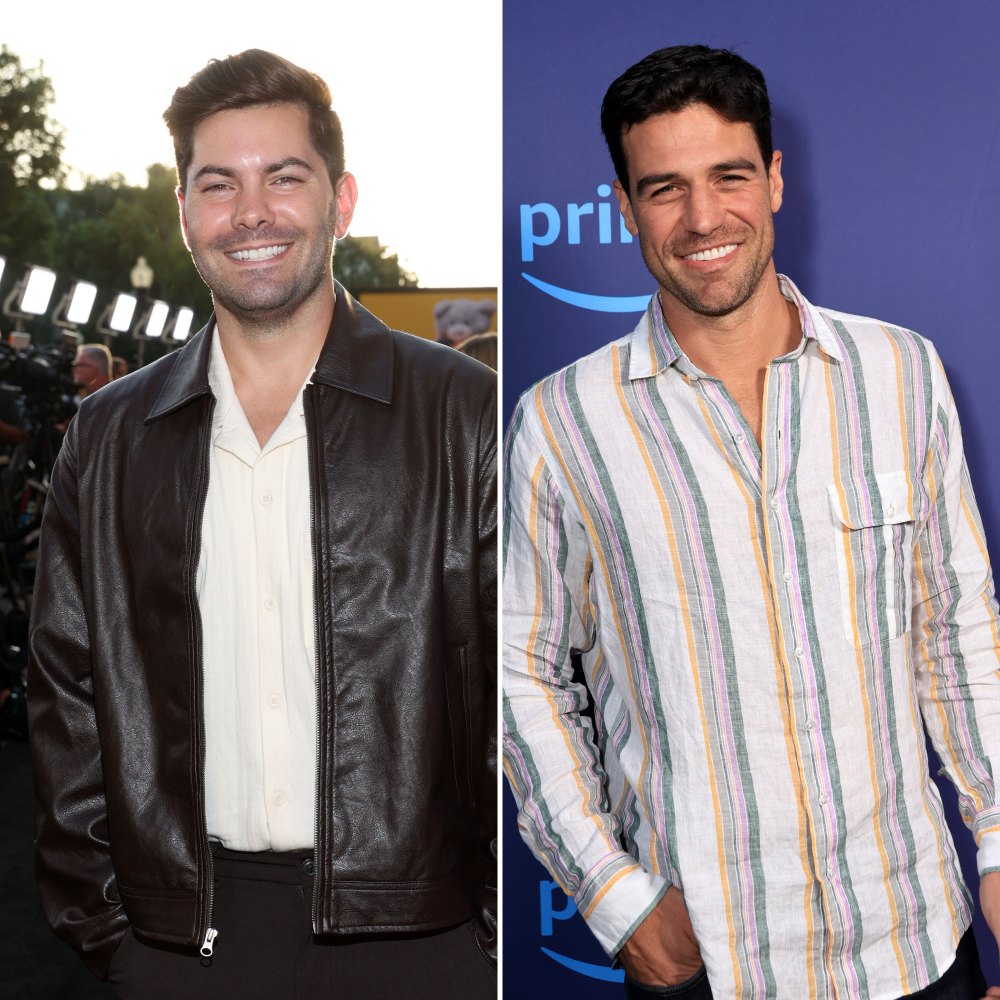
Despite his upcoming surgery, Dylan told Us that “life is good for Joe right now,” adding that his friend remains upbeat and positive.
“He’s healthy, working out, eating well,” he added. “I give him a hard time. You obviously don’t want to play too much into it. You can get pretty sad about those things. Everybody’s still holding out hope it’s just going to be all good. I think it will be, and we’re thinking of it. But Joe couldn’t be a better guy.”
Recently, on July 28, revealed his hope to run the New York City marathon in the wake of his surgery, sharing a screenshot of his acceptance into the race and writing, “We’ll see.” The former reality TV star also added a crossing finger emoji.
While spending time with Joe, Dylan has also become good friends with his wife, Serena, too. (For the uninitiated, Joe met Serena, a publicist, on season 7 of Bachelor in Paradise. The pair left the show engaged, going on to say “I do” in a New York City courthouse in October 2022. They had a second wedding in September 2023 in Charleston, South Carolina.)
“Joe and Serena are the most fun couple to hang out with. Joe and I get to be idiots,” Dylan dished to Us on Saturday. “Serena and [my wife] Hannah [Godwin] can be, like, playmates. They get to hang out, take pics, do their thing. So it’s a great time. I can’t wait. I’m sure we’ll see them soon in New York.”

The internet has been waiting for Jaidyn Alexis to enter the chat after Kai Bandz popped out with Yaya Mayweather. While Jaidyn hasn’t stepped in yet, Karlissa Saffold came through with her thoughts on Kai and Yaya’s cozy link-up. Karlissa also dropped some advice for Jaidyn amid the viral moment.
RELATED: New Bae Alert? Social Media Mentions Jaidyn Alexis After Yaya Mayweather Gets Cozy With Kai Bandz (VIDEOS)
Karlissa Saffold Weighs In On Kai Bandz & Yaya Mayweather’s Viral Pop-Out
Recently, Karlissa Saffold dropped a video on Instagram to weigh in on Yaya Mayweather and Kai Bandz’s viral link-up. In the clip, she kept it 100 with her followers and said she always felt like Kai Bandz was using Jaidyn for clout. “That little boy was using her for clout.” Karlissa continued, “Now look at her […] look at him up over there all tongued up with NBA YoungBoy ex-girlfriend, moving on to the next clout butt.” She also shared that she tried to give Jaidyn some advice, but she didn’t listen to her. “I told you not to let that little yellow boy use you. But y’all don’t listen to me though.”
Yaya Mayweather & Kai Bandz Had The Internet Asking “What’s Tea?” After Popping Out Together
Yaya Mayweather put social media in full detective mode after she dropped a video of herself looking real cozy with Kai Bandz on her Instagram Story. The clip showed the them hanging out in what looked like a lounge while Kai enjoyed some hookah. At one point, Yaya gave him several kisses on the cheek, but even with that she captioned her video, “my friend.” Kai hasn’t spoken on their status, but fans quickly brought up Jaidyn Alexis since she also looked cozy with Kai back in July.
Fans Revisit Jaidyn Alexis’ Cozy Moments With Kai Bandz
Social media users have been throwing Jaidyn’s name in the mix because she previously popped out on a Twitch livestream with Kai in July. During the stream, Jaidyn and Kai kicked it in the kitchen while she cooked, and at one point, he playfully smacked her on the butt. Jaidyn later fueled dating speculating when she shared Instagram photos of the them together that gave major dinner-date vibes.
Jaidyn Alexis started getting wild with her new man Kai Bandz on stream last night after officially moving on from Blueface 👀 pic.twitter.com/PGgJ3qUTaI
— keeno (@ayekeeno) July 18, 2026
RELATED: Whew! Jaidyn Alexis Seemingly Hard Launches New Boo As Blueface Gets Dragged Into The Conversation (VIDEOS + PHOTOS)
What Do You Think Roomies?
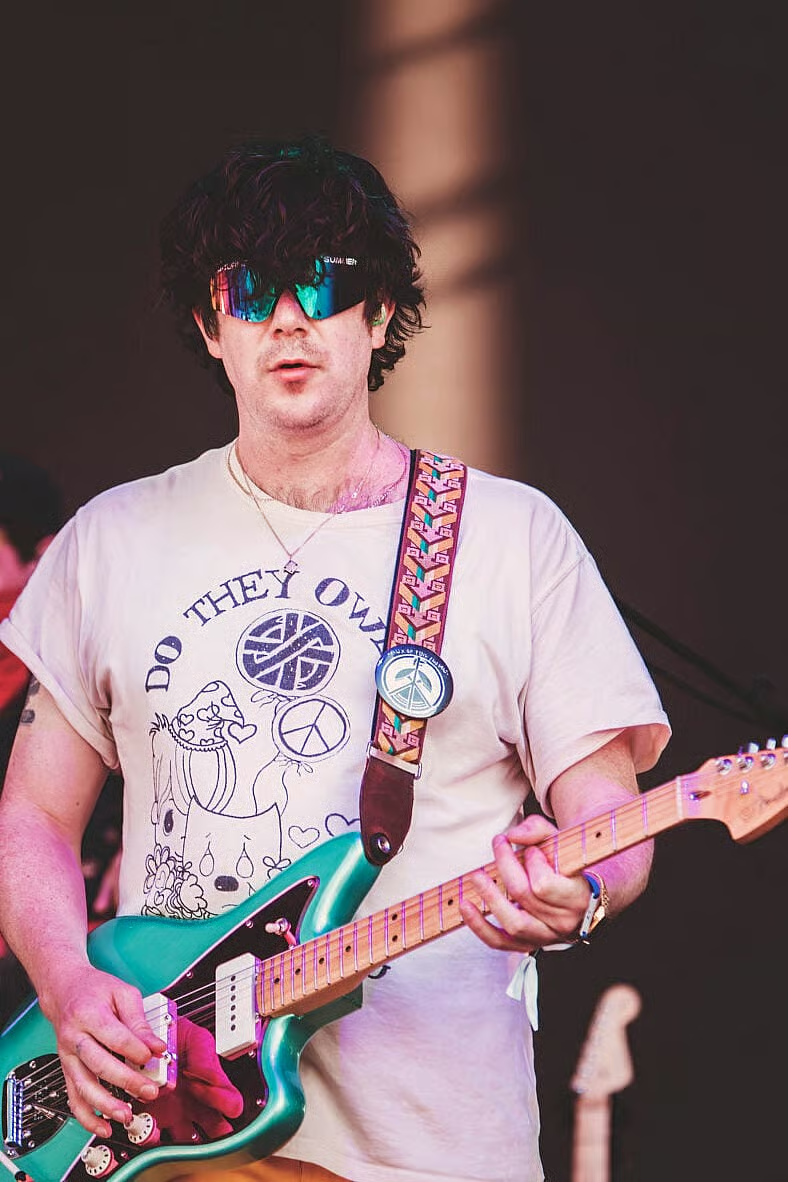
Modest Mouse guitarist Simon O’Connor will not join the band’s upcoming North American tour after an anonymous person accused him of sending inappropriate Instagram messages shortly before her 17th birthday. Screenshots posted on Reddit, and now circulating on X, reportedly show O’Connor sending the fan an explicit image before suggesting they were both responsible for how the exchange unfolded. The 42-year-old musician has since apologized for contacting the person but claimed he mistakenly believed the account belonged to someone who had repeatedly created profiles to “mess” with him.
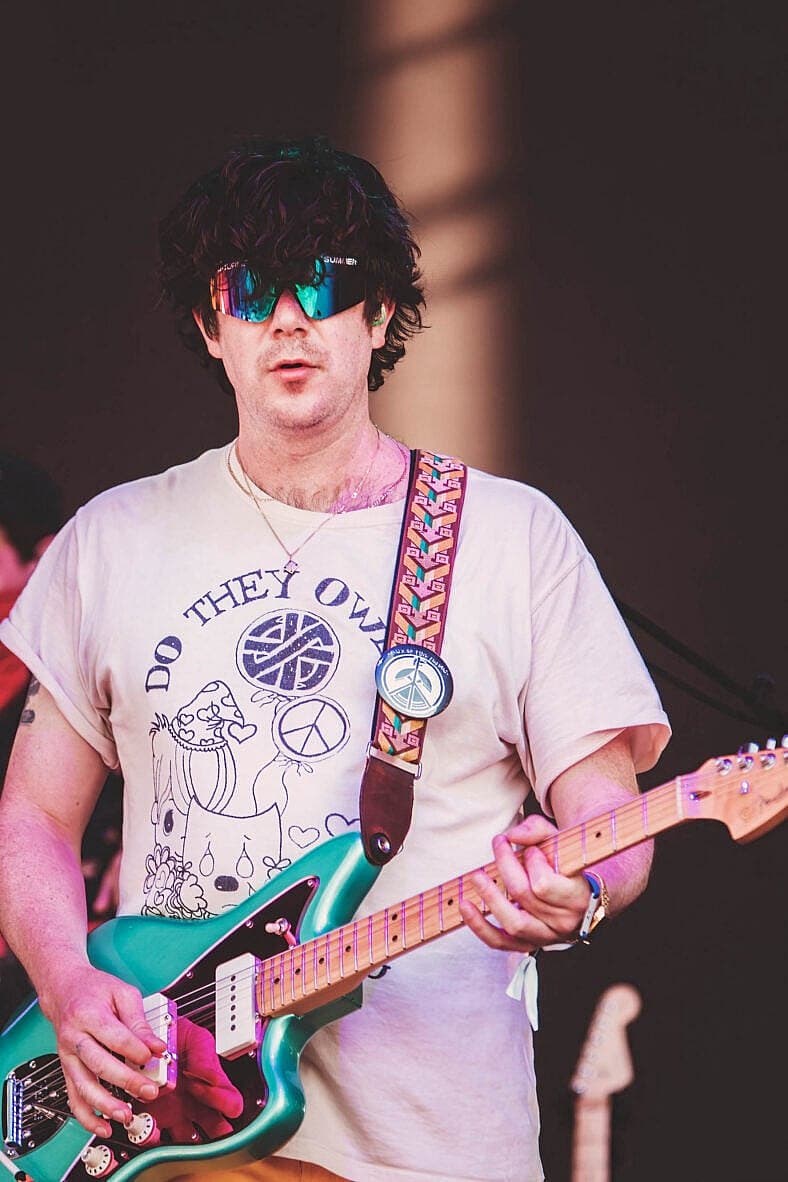
The allegations emerged in a Reddit post from an anonymous person who said O’Connor contacted her after she “liked” several of his Instagram posts. According to the shared screenshots, the interaction happened days before the fan turned 17.
O’Connor allegedly initiated the conversation by sending an image of people playing Simon Says accompanied by the words, “SIMON calls your bluff BUZZ.”
After the fan reacted to the message with an alien head emoji, the guitarist allegedly sent her a photo of a naked Black man sitting with his legs open. O’Connor quickly apologized, prompting the fan to tell him it was “all good” because she believed his account had been “hacked.”
However, O’Connor allegedly denied that anyone had taken control of his account. “Wish I was hacked just had a party night and looking at everything with one eye ya know,” he allegedly wrote.
Musician Allegedly Said They Were ‘Both To Blame’
The unnamed person advised O’Connor to “get a good night of sleep,” and he reportedly responded with a saluting face emoji.
The conversation allegedly continued when O’Connor attempted to explain why he had contacted her in the first place. “But you did blindside me with a gaggle of likes and then very little intro besides bikini pics so we are both to blame,” he allegedly wrote. The guitarist reportedly unsent that message before adding, “I did it again.”
The screenshots quickly circulated online, placing O’Connor under scrutiny over both the explicit image and his alleged attempt to assign some responsibility to the underage recipient.
The identity of the person behind the Reddit post has not been publicly disclosed.
Simon O’Connor Responds To Underage Fan Allegations
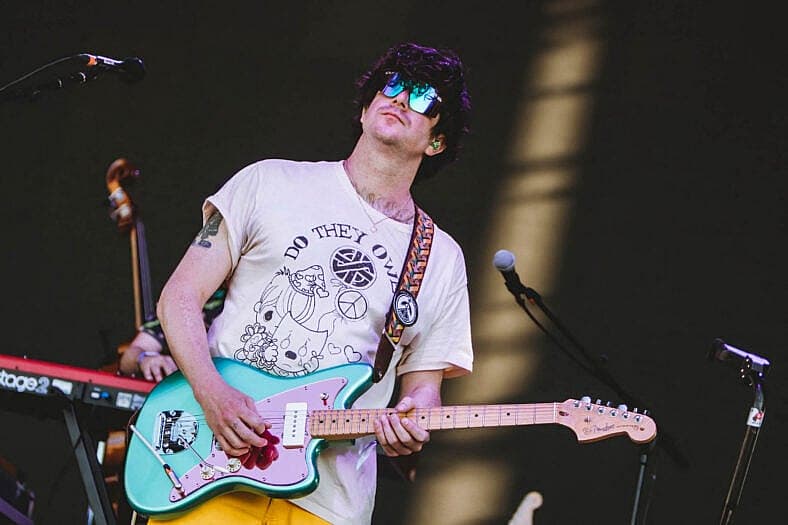
As the allegations spread, O’Connor addressed the controversy in a Reddit statement reported by Billboard. “Firstly, I would like to just state that I unequivocally oppose any sexual behavior towards minors, as a human and a parent, it disgusts me,” he wrote.
O’Connor claimed that an unidentified person had repeatedly contacted or followed him through multiple social media accounts over the years. “Throughout my adult life, there has been a person who has popped up from time to time with the intention of, for lack of a better term, messing with me,” he continued. “This person creates multiple social media accounts and deletes them … but always posts similar photos that I often recognize from previous accounts.”
According to the musician, he noticed a profile interacting with his posts one night and incorrectly assumed it belonged to that same person. “With poor judgement, I decided to reach out with a tasteless meme, a sticker that read ‘Simon calls your bluff,’ and an attempt to indicate that I recognized the “barrage of likes” and similar photo content from the previous profiles,” he wrote.
Guitarist Says The Message Was Intended As A ‘Gotcha’
O’Connor characterized his initial message as an ill-advised attempt to confront the person he thought was behind the account. “Almost a ‘gotcha.’ After a few minutes, I realized that I had made a mistake and this was not the person who I had dealt with before. I unsent the messages and immediately ceased communication.”
Although his statement offered an explanation for why he initiated contact, O’Connor acknowledged that the recipient should never have been placed in that situation. He said he was “genuinely sorry to the person who received those messages,” adding, “They didn’t deserve to be put in that position, and I’m sorry for the stress and attention this has brought them.”
O’Connor also recognized that his account of the incident might not satisfy everyone who saw the alleged messages. “I know some people will choose not to believe me, and I understand that. I can’t change what’s happened. All I can do is tell the truth, take responsibility for my mistake, and apologize,” O’Connor concluded.
Modest Mouse Announces O’Connor Will Miss Upcoming Tour
Modest Mouse subsequently announced that O’Connor would not participate in its forthcoming North American tour, which is scheduled to begin Tuesday in Ojai, California. “Simon O’Connor will not be joining us on the upcoming tour,” the band said in an Instagram statement Friday.
The group did not explain whether O’Connor’s absence is temporary or whether he has permanently left Modest Mouse. Its statement also did not directly reference the allegations or his response. Instead, the musicians confirmed that Les Savy Fav guitarist Seth Jabour would take his place for the scheduled performances. “The good news is that Seth Jabour of Les Savy Fav will be jumping in to play guitar. We look forward to being out there with you all.”
O’Connor’s longer-term status with Modest Mouse remains unclear, but he will not be onstage when the band launches its next run of shows.

Sports31 seconds ago
National Bank Open matches in Montreal cancelled due to rain

Tech2 minutes ago
World’s Only Cizeta-Moroder Prototype Has Sixteen Cylinders, One Name, and a Second Chance at Monterey

NewsBeat4 minutes ago
Ukraine-Russia war latest: Eight killed after Kyiv launches hundreds of drones in mass attack

Entertainment1 month ago
Renter of Home in Anne Heche Crash Denies Settlement With Son

Business2 months ago
No Jackpot Winner as $257 Million Prize Rolls Over to $269 Million Monday Draw

Fashion1 month ago
Weekend Open Thread: Staud – Corporette.com

News Videos9 minutes ago
3-7 August 2026 Gold & Silver Update-Just Analysis not financial advisor

News Videos29 minutes ago
10 lakh Ki Asli Kimat #gold #silver #market #finance #savingmoney #savingtips #locker #amitjain

News Videos50 minutes ago
Do you want financial freedom? #finance #business #Bangladesh #Bangla #shorts #fyp #reels
-

 Business4 days ago
Why Trees Belong on the Risk Register
-

 Fashion2 days ago
Weekend Open Thread: Wit & Wisdom
-

 Tech7 days ago
Intel is reversing course and bringing hyper-threading back to its server chips
-

 Politics2 days ago
Meta enters AI-training agreement with far-right ‘propaganda rag’ Newsmax
-

 Politics6 days ago
Luke Littler dismantles Gerwyn Price to retain title in Blackpool
-

 Crypto World1 day ago
MicroStrategy Post-Earnings CLARITY Act Push Could Add New Catalyst for Its Stock
-

 Politics6 days ago
The Part of the Electric Transition Nobody Wants to Discuss
-
 Entertainment5 days ago
‘Stargate’ Creator’s New Sci-Fi Series Returns for Season 3 Tomorrow
-

 Business5 days ago
Major shareholder moves on Canyon
-

 News Videos3 days ago
Bitcoin Enters the 3rd Stage of the Bear Market
-

 Crypto World2 days ago
XRP Ledger v3.3.0 brings five institutional features
-

 Crypto World5 days ago
Kraken Enables Retail Access to Jersey Mike’s IPO via Tokenized Shares
-

 Tech6 days ago
New macOS Sequoia & Sonoma security updates for older Macs
-

 News Videos5 days ago
Claude: Build Financial Dashboards in Minutes (2026)
-

 Politics3 days ago
Luke Littler’s dominance sparks GOAT debate
-

 Business5 days ago
Johnson & Johnson agrees to $5.5B settlement over talc cancer claims
-

 Sports3 days ago
Seema Kaliramna Wins Discus Throw Bronze, Takes India’s CWG Medals Tally To 17
-

 Crypto World13 hours ago
Crypto PAC spending tops $2M in Michigan House race
-

 Tech4 days ago
Gemini can now summarize the messiest comment threads in Google Docs
-

 Business2 days ago
Trump Announces Hamas Disarmament Agreement as Iran Strikes Kuwait Air Base and US Attacks Pause Overnight
You must be logged in to post a comment Login