




Connect with us
DAPA Banner
DAPA Coin
DAPA
COIN PAYMENT ASSET
PRIVACY · BLOCKDAG · HOMOMORPHIC ENCRYPTION · RUST
ElGamal Encrypted MINE DAPA
🚫 GENESIS SOLD OUT
DAPAPAY COMING

Tech

Robots can now ‘see’ touch thanks to a new color-changing tactile sensor

Published

on

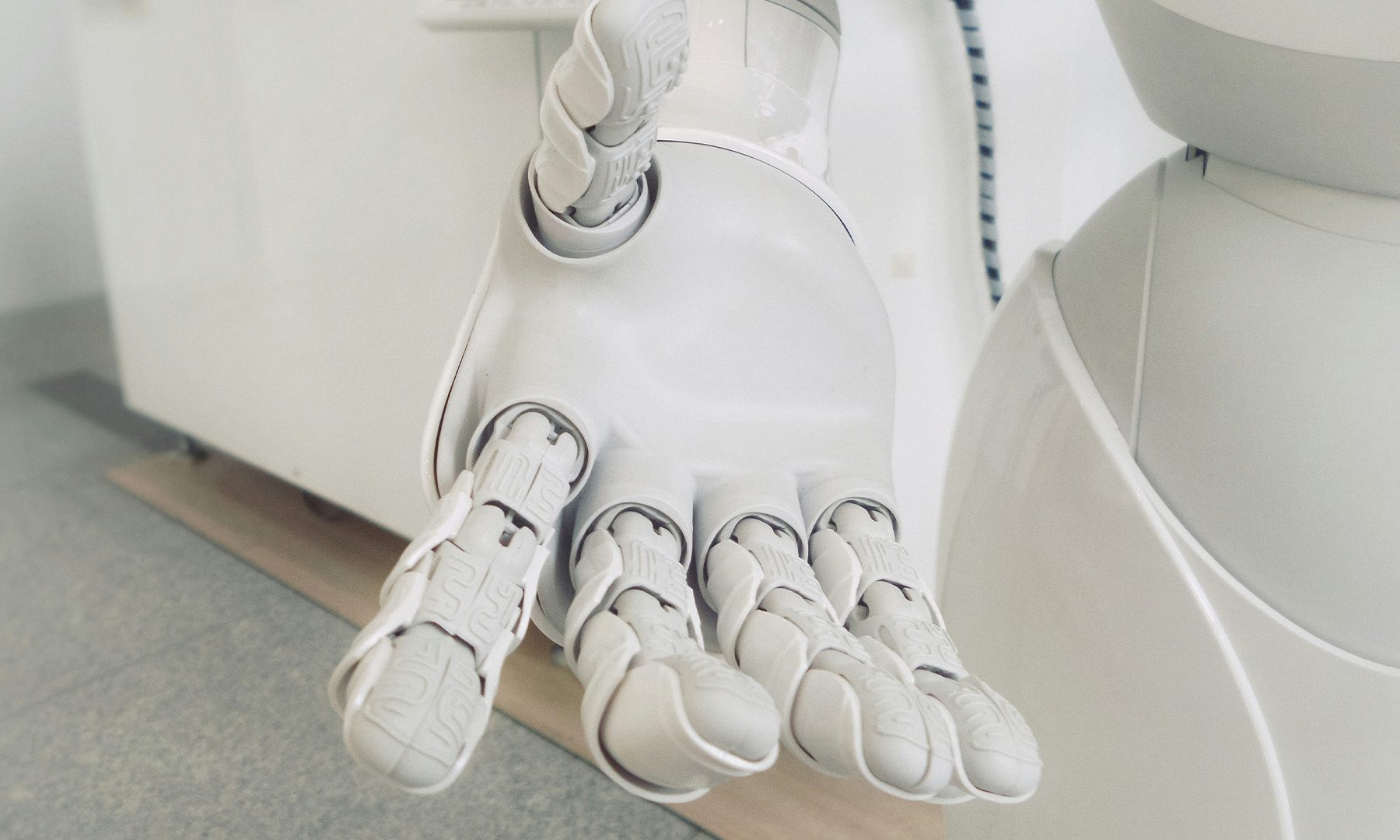
Most robots are pretty good at seeing, but touching? That’s been a much tougher problem. While humans instinctively know how hard they’re gripping a coffee mug or pressing a button, robots have traditionally relied on complex arrays of tiny sensors to estimate the same thing. Now, researchers at Queen Mary University of London believe they’ve found a much simpler solution: make touch visible.

A sensor that turns touch into color

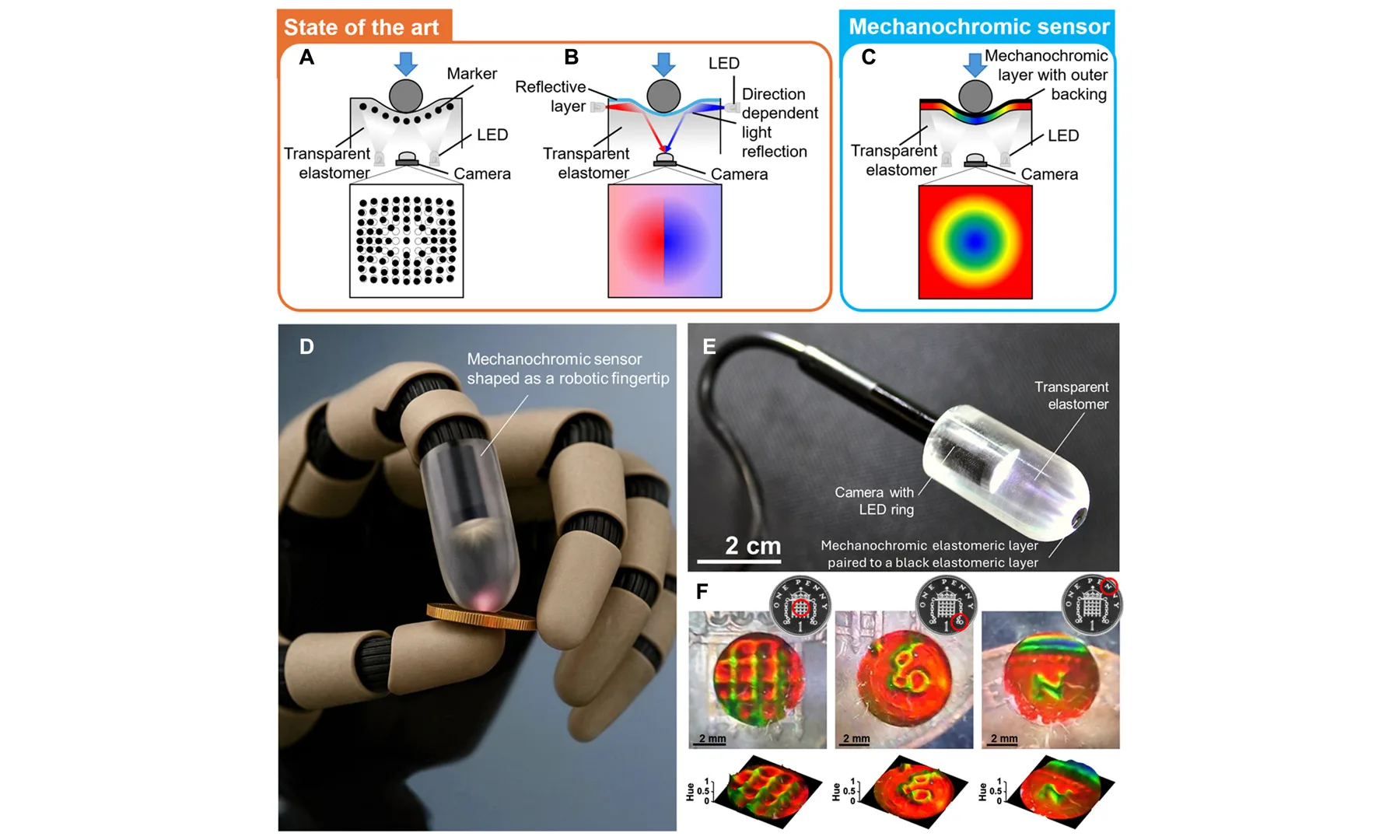
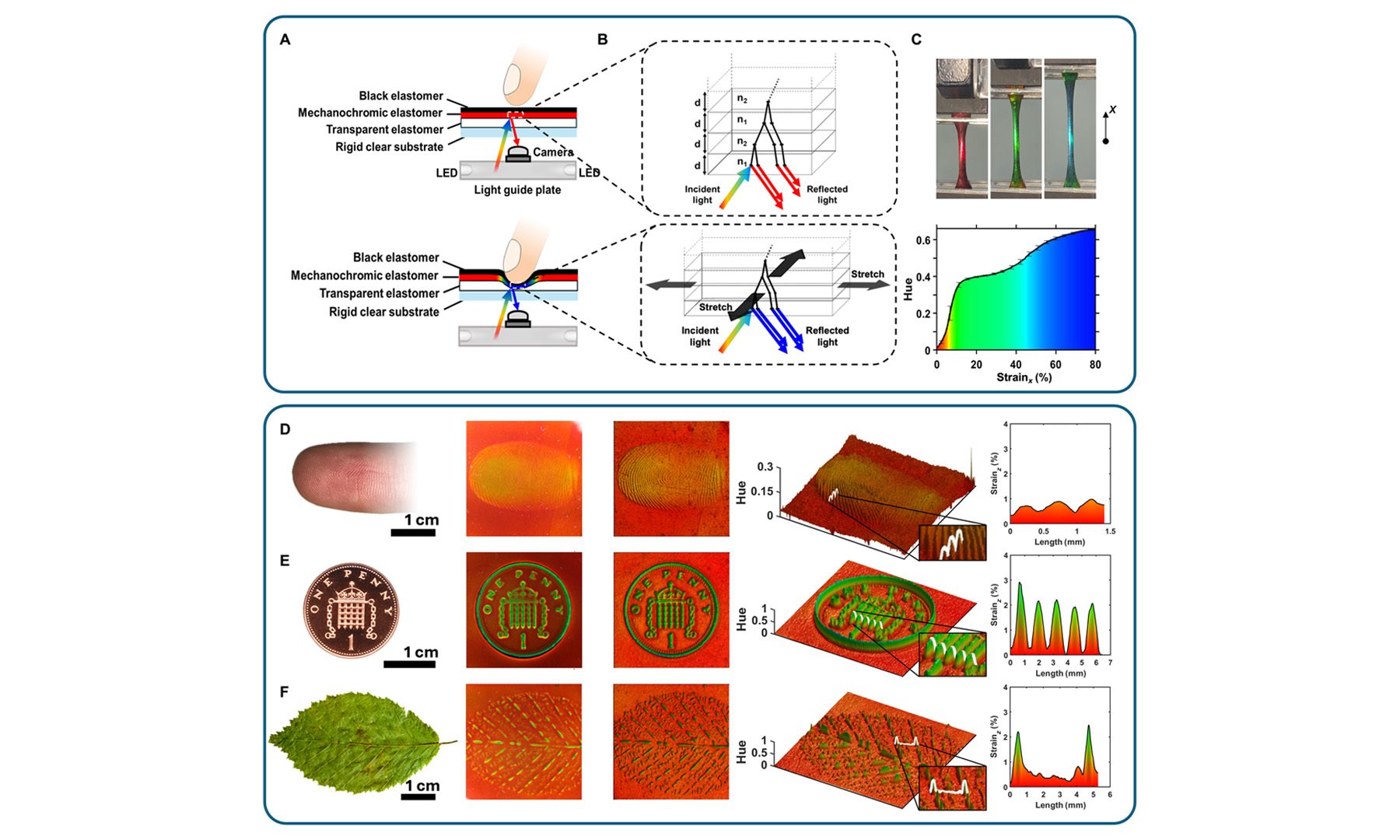
As per the study published in Science Advances, their new tactile sensor changes color whenever pressure is applied, allowing a standard camera to “see” exactly how an object is being touched in real time.

Instead of embedding thousands of electronic pressure sensors into a robotic fingertip, the new system builds the sensing directly into the material itself. When the soft surface is pressed, it produces vivid color patterns that instantly reveal where pressure is being applied, how much force is being used, and even how the material is deforming.

The clever bit is that those colors can be captured using an ordinary low-cost USB camera. That means robots no longer need computationally intensive software to reconstruct touch from sensor data. They can simply “look” at the color patterns and immediately understand what they’re feeling. According to the researchers, this produces high-resolution pressure maps while dramatically simplifying the overall hardware.

Why this matters beyond the lab

The impact goes well beyond giving robots a better sense of touch. Researchers believe the technology could help factory robots assemble tiny components more precisely, enable prosthetic limbs to feel more naturally, and even help surgical robots distinguish healthy tissue from abnormal tissue during delicate procedures.

More importantly, the new sensor could solve one of robotics’ biggest headaches. Traditional tactile systems often force engineers to choose between speed and accuracy. By turning pressure directly into visible color patterns that a simple camera can read, the new approach delivers both: allowing robots to “see” touch in real time instead of relying on complex computations.

Advertisement

Source link

Continue Reading
Click to comment

You must be logged in to post a comment Login

Leave a Reply

Tech

C programmers commit fresh crimes against readability

Published

on


The Twenty-Ninth International Obfuscated C Code Contest – or IOCCC for short – is back again with the results of the 2025 competition. This year, one of the entrants has a unique new trick up their sleeve: a valid use case. When we reported on last year’s event, it was had just been revived from a four-year hiatus, so we’re happy to see it back so soon. As we write, the judging concluded some three weeks ago, but although there is a recording on YouTube, it’s very nearly three hours long. It took a while to edit it down to individual clips for each winner, which is why we are covering it now. For many of these programs, you really must see what they do to believe it, and although it’s generally not our preferred format, video clips are superb for this. There are no fewer than 23 winning entries this year, including a hat-trick of hat-tricks: three entrants, Yusuke Endoh, Nick Craig-Wood, and Don Yang, all had three winning entries each. We have room for only a few of our personal highlights, but we highly recommend reading all the winners – they are well worth your time. One element of the IOCCC is that the judges, Landon Curt Noll and Leonid A. Broukhis, invent new categories each time for each winning entry. We’re using their titles, so if the subheadings initially don’t make much sense, reading the relevant IOCCC pages might explain all… but we wouldn’t rely on it. IOCCC29 – 2025/cable – Best imaginary emulator We cannot claim to have studied every result in every IOCCC. When the first one happened in 1984, this vulture was still at school and learning BASIC. However, this year, Adrian Cable’s Subleq computer was the one that grabbed our attention the most. The reason is that we had already looked at it and what it does – or at least a closely related project. Unusually for the IOCCC, it has a real-life use case in software preservation. The idea of the Eternal Software Initiative (ESI) is to aid in the preservation of software after its original hardware platform no longer exists by implementing a computer architecture that is specifically designed to be emulated very easily. There’s a sample implementation on GitHub. The CPU architecture isn’t new; it’s a One Instruction Set Computer called Subleq. OISC is the logical extrapolation of RISC: you can’t reduce an instruction set any further than cutting it down to just one instruction. In this instance, that instruction is Subleq (subtract and branch if less than or equal to zero). Here’s an explanation from 2020, and it wasn’t new then – here’s FPGA hardware from 2011 [PDF]. The ESI has implemented Subleq in software, built a C compiler to target it using LLVM, and ported Linux to it, complete with C and C++ runtime libraries. Run your emulator on that Linux, and you can bootstrap a runnable version of any hardware architecture from this tiny basis. And we do mean tiny. This is the IOCCC winning implementation of the architecture: #include #define o s[1&s[t=e++]?s[t]/4:t]/4,t b,y,t,e,s[38e5?s[memcpy(3[ g],6[s]+s,25

Source link

Continue Reading

Tech

MFA-optional banks leave safe doors (and accounts) wide open for thieves to pillage

Published

on

OPINION I write a weekly column called PWNED, about how poor security practices can lead to serious damage. Usually, there’s something funny in the malfeasance, like a CEO who kept every employee’s password in an Excel file on his desktop. 

However, I wasn’t laughing back in May when professional thieves invaded my 84-year-old mother’s entire financial life and managed to make off with $30,000 from her bank accounts alone. And they wouldn’t have gotten in if her financial institutions required multi-factor authentication (aka MFA or 2FA), a step too many institutions won’t take.

One day in May, Mom got a call from the institution that runs her retirement savings account, who had identified a suspicious transaction and asked her if it was legit. She said no and they immediately protected her account.

Then she checked her bank account at a different institution to see if it was compromised and found thousands of dollars transferred out of her checking and savings accounts. The thieves knew exactly how much they could withdraw each day, and used both withdrawals and transfers to a strange account. But the financial institution hadn’t flagged the fraudulent activity. 

Advertisement

The thieves were so slick that they broke into her Gmail account and created spam filters to filter any mail from her bank or retirement savings provider to the trash so she wouldn’t get alerts about the transfers or about the fake accounts they made in her name.

She spent hours on the phone reporting the theft to an unhelpful and incredulous fraud department who asked “Are you sure a relative didn’t do this?”

We don’t know for certain how the crims got into my mom’s accounts, but we know she used the same or similar passwords on all of her accounts, and at least one of her accounts was part of a data breach a few years ago, so that info was probably available somewhere online. The miscreants then could have used this info to get into her retirement account, her bank, and her Gmail. 

None of this would have been possible if she had MFA enabled on those accounts, but neither Google nor her financial institutions require it.

Advertisement

“Many consumers assume every bank requires 2FA, but that’s not the reality,” said Gregory Shein, CEO of Nomadic Soft, a SaaS company that serves fintech clients. “Some financial institutions still treat it as an optional feature because they’re balancing security against friction. Every extra login step can reduce conversions, increase support tickets, and frustrate less technical customers.”

Indeed, while some banks such as PNC require MFA, others such as Bank of America, Chase, Capital One, and Citibank leave it as optional. Google’s accounts are also MFA-optional.

Fortunately, after they spent hours telling my mom that someone in her family could have done the deed, and repeatedly putting her on hold, then forcing her to navigate a labyrinthine phone tree, the bank eventually agreed to investigate.

A few weeks later, they restored the stolen funds. 

Advertisement

A not entirely happy ending

My mother was lucky, because if money is stolen from your bank account, there is no guarantee that you will get it back, at least in the US.

According to the Consumer Financial Protection Bureau, you have 60 days from the date of a bank statement to dispute any transactions. The bank also has 45 days to investigate, unless your bank account was just opened in the last 30 days or the fraudulent transactions took place outside the US. 

But the bank could very well decide that those fraudulent transactions look legitimate and refuse to reimburse you. If the bank doesn’t agree to reimburse you, your next step is to get a lawyer and attempt to sue. A quick search revealed dozens of lawyers in my area who specialize in dealing with this problem.

It would be easy to blame my mom for being robbed. Using the same password in multiple places left her wide open for exploitation. However, her bank’s lack of a required second authentication factor also contributed. The bank doesn’t let you transact without a password, and it doesn’t issue you an ATM card without a PIN, because it knows that there has to be a required minimum level of security.

Advertisement

Banks and other financial institutions know better. Google knows better. But they’re all putting convenience ahead of security when it’s your money that’s on the line.

“Different segments of the population adopt technology faster or slower. If I’m a bank, I have to consider that very closely because I don’t want to lose any banking relationships.” Andrew Shikiar, CEO of the FIDO Alliance, an industry association that advocates for stronger login security, told me in an interview.  “So I think there’s some concerns around friction that have held some banks and other service providers back from really pushing this more aggressively.”

How effective is MFA?

According to a 2019 article from Microsoft, MFA prevents 99.9 percent of attacks on your accounts. However, other experts say this number is exaggerated, as there are many ways to get past MFA if you’re a criminal, including social engineering and interception.

One of the most common types of MFA, issuing a one-time passcode via an SMS message or an email, is inherently flawed. A determined thief can use social engineering to get a SIM card with your phone number on it, then get to your texts. And if your email itself isn’t perfectly secure and it is receiving an OTP, they can get to that too. Phishers can also trick you into giving up your OTPs by creating a fake website that looks like your bank’s login page. 

Advertisement

The right way to do MFA today is with a passkey. Passkeys are cryptographic key pairs where there’s a private key on the user’s device and a public key on the server. To access the key on the device, the user must either enter a PIN, touch a physical security key like a Yubikey, or enter a biometric login such as their face or fingerprint.  Passkeys cannot be phished or intercepted, which is why they are known as “phishing-resistant MFA.”

Unfortunately, a lot of banks are sticking with their OTPs. For example, when I went to set up MFA for a family member’s account with US bank Chase, using its website.

Chase offered the chance to receive an OTP via email, SMS, or a phone call. The bank is rolling out passkeys, according to the FIDO Alliance. So are Wells Fargo, US Bank, and Bank of America. 

Some banks may be using better MFA only within their mobile apps. Chase’s app, for example, asks users to use a fingerprint or facial recognition at login, even though the website does not. However, if a thief wants to log in at Chase’s website, there will be no biometric challenge. And if a user doesn’t have MFA enabled at all, it’s even easier for thieves to get in.

Advertisement

“OTP is just another password. So it’s a shorter-lived one, but it really is just another password,” Shikiar said. “And there’s also usability issues. You’re juggling between your mobile and your desktop. It’s insecure, inefficient, and a really inadequate user experience.”

What banks don’t seem to understand is that you’re only as secure as your weakest entry point. If security controls only exist on mobile apps, it doesn’t help with web-based attacks. If a level of security is optional, the majority of people won’t enable it. Thieves will take the path of least resistance, so service operators need to lock down all entry paths equally by default.

Unfortunately, an approach that favors convenience over security will lead to a lot more people losing their money. And, ultimately, banks will lose money when they have to reimburse people for those fraudulent transactions.

“I don’t expect banks to be mandating passkeys and only passkeys for some time, but the more they push them, the more comfort there is,” Shikiar told us. “The sooner we’ll get to that point where it becomes a de facto default and then becomes really something that’s either required or essentially required.”

Advertisement

That time should be now. ®

Source link

Continue Reading

Tech

NotebookLM Alternatives: Which Similar AI Tools Are Worth Your Time?

Published

on

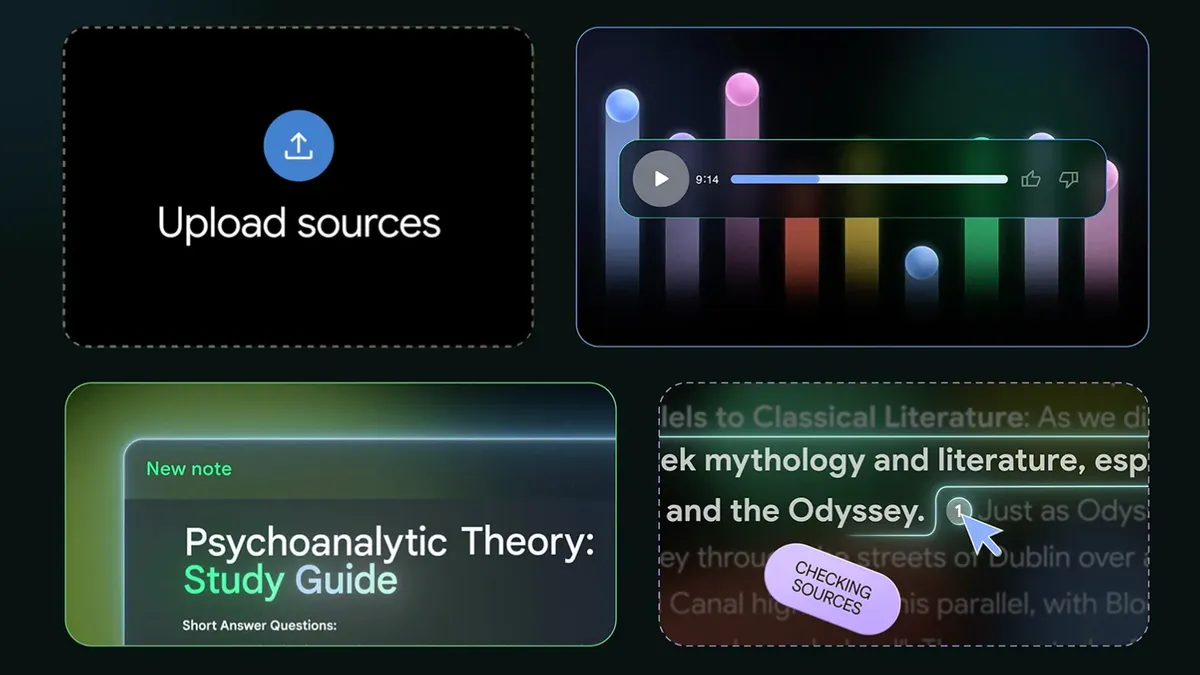
We’re big fans of NotebookLM around here, so much so that it received our Editor’s Choice Award. But it’s not the only AI tool out there that can synthesize your data to better understand it. In fact, there are a lot of options out there, it’s just that none are quite as approachable as NotebookLM. 

AI Atlas

Maybe you need a more specific type of output, or just don’t want Google handling your data. Not all of the following tools have nifty features like the Audio or Video Overviews that helped give NotebookLM its reputation today. Instead, they may offer a more tailored set of capabilities, whether you’re a student, an analyst or someone who simply prefers more privacy.

Below, we’ll detail a few other AI learning tools that have similar features but might be better suited for you depending on what you’re trying to do, your profession or your workflow.

Advertisement

Atlas.org launched in 2024, and its team consists of current students, recent graduates and former educators. Its sole purpose is to help you with your schoolwork, and it’s organized as such. 

When you first sign up and log in, you’ll be presented with a series of options, each tailored to the learning experience. The three primary sections are for studying, homework and taking notes, and each of those subsections has different options to dig in deeper. 

For studying, you can create a study guide, a quiz or flash cards. You can automatically create lecture notes from recorded audio or help get detailed answers to questions on your homework. 

The information you upload to Atlas.org is retained forever, so you’ll have a continuously growing knowledge base about your schoolwork, and you can create dedicated spaces for different topics. Like NotebookLM, it also has a mobile app for iOS and Android that allows you to learn on the go. 

Advertisement

Atlas is free to try out, but the free tier comes with some fairly steep limits. You can upgrade to the Pro version for $18 per month. 

Yes, another tool with Atlas in its name, but Atlas Workspace is pretty specific with its functions. It specializes in knowledge and semantic mapping and is aimed towards scientists and research analysts. It essentially allows you to create a full knowledge base on its servers and map out exactly what you want to see when you want to see it. The more sources you upload, the more you’ll get out of it, and since it’s a collective database of your sources, you don’t need to remember where you saved a specific piece of information. This is in contrast to NotebookLM’s Notebooks, where the sources remain isolated as individual projects. 

When you upload a source such as a PDF, Atlas Workspace will automatically begin building a knowledge map, breaking down the core components of your source — and you can start asking specific questions from there. You can also view a semantic map to get a more visual representation of your sources and how you’ve interacted with the tool.

Atlas isn’t going to be for everyone, and that’s because not everyone needs this type of tool. To get the most out of it, you’ll need to spend a lot of time working with it, and there’s a fairly steep learning curve to it. However, the Atlas Workspace blog has several in-depth comparisons between its competitors that might be helpful for people still on the fence. 

Advertisement

The free version of Atlas Workspace allows for 10 total sources and five lifetime AI chats, but you’ll have access to unlimited projects, which are similar to NotebookLM’s Notebooks, but Projects can connect concepts across projects, keeping up with the compounding knowledge aspect. If you opt for the $20 per month Pro plan, your source count gets boosted to 1,000 and you’ll have unlimited AI chats. 

OpenNotebook

We’ve covered OpenNotebook in depth before, and it’s fairly close to a lot of the functionality NotebookLM carries with it. However, you’ll need to know what you’re doing to set it up, which can feel incredibly involved if you don’t consider yourself a “tech” person. However, once it’s set up, there’s a lot it can do. 

As you’d expect, you can upload your sources to OpenNotebook and chat with AI about it, but what makes this tool special is that you can pretty much choose whatever AI model you want. This will require more work and, depending on the model, may require a paid API key. You can even use a local LLM if you so choose. 

Something standout about OpenNotebook is that it’s very privacy-friendly. Your data stays with you, and you decide what you share. OpenNotebook is also free and open-source. 

Advertisement

Source link

Continue Reading

Tech

The 5 best fitness trackers we’ve seen so far this year, from Google and Garmin to sleeper hits from Amazfit

Published

on

I’ve been writing about fitness tech for years, and we’re finally at a point where more affordable fitness trackers are now every bit as capable as models that would have cost hundreds of dollars or pounds, little more just a few years ago. That’s not to say premium options don’t have their place too, but many of the standouts this year have certainly been on the cheaper end.

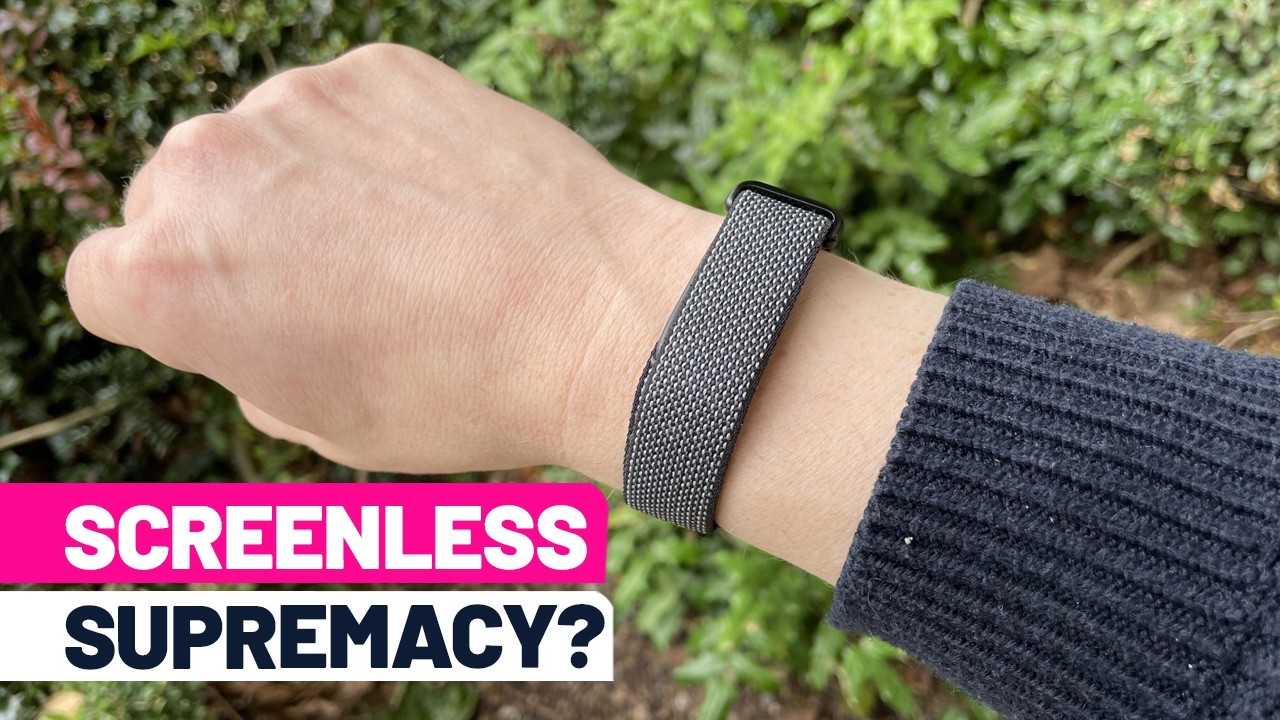
Whether it’s screenless devices showing less can be more, the latest iteration of the popular Oura Ring, or a pair of Amazfit options that can cut it with much more expensive models, here are the best fitness trackers in 2026 so far, in no particular order.

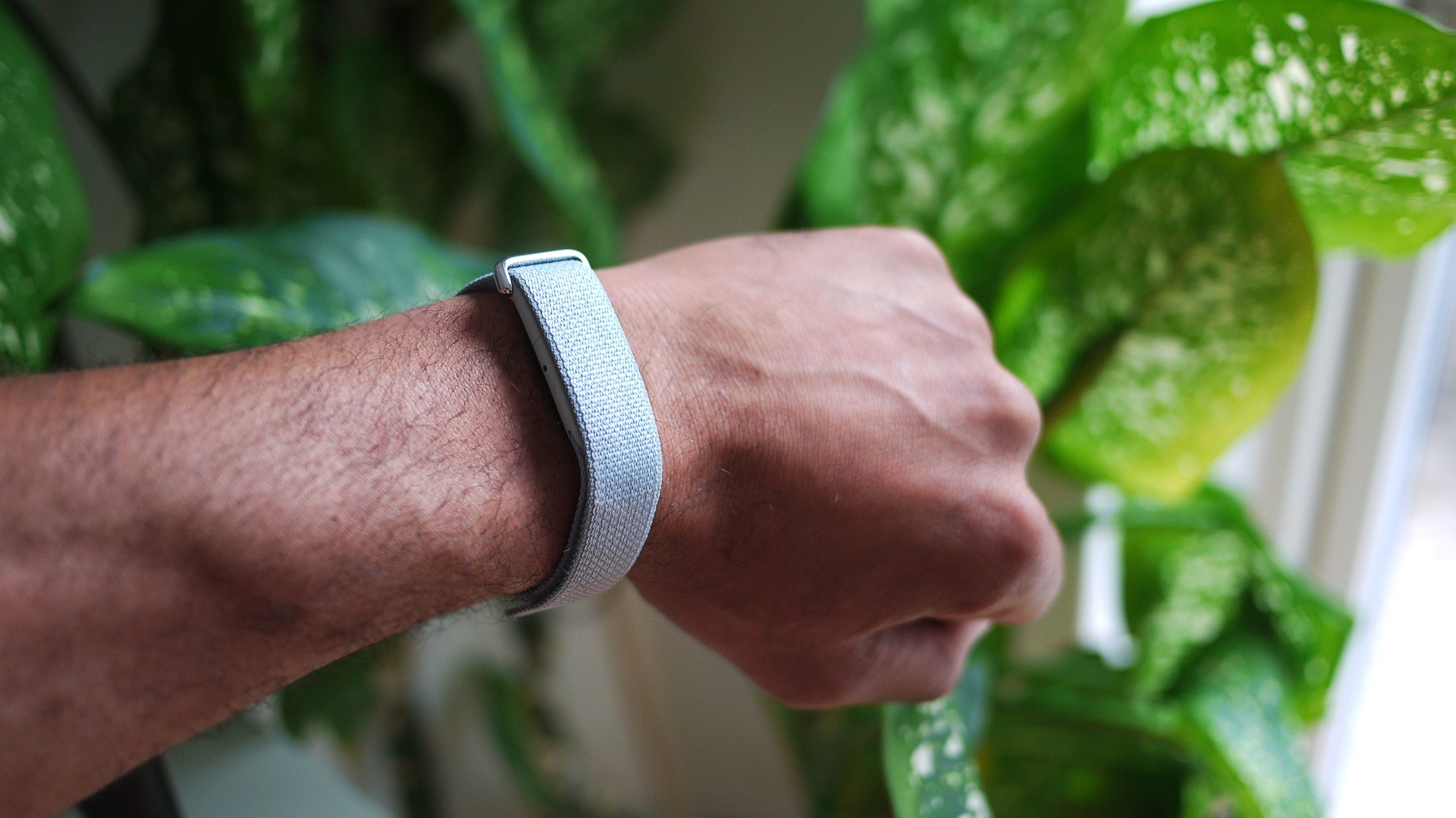
1. Google Fitbit Air

Google Fitbit Air

(Image credit: Peter Hoffmann)
  • Release date: May 26
  • Rating: 4/5

Source link

Continue Reading

Tech

Google is testing a webcam CAPTCHA that scans your hand, but it's already been bypassed using a photo

Published

on


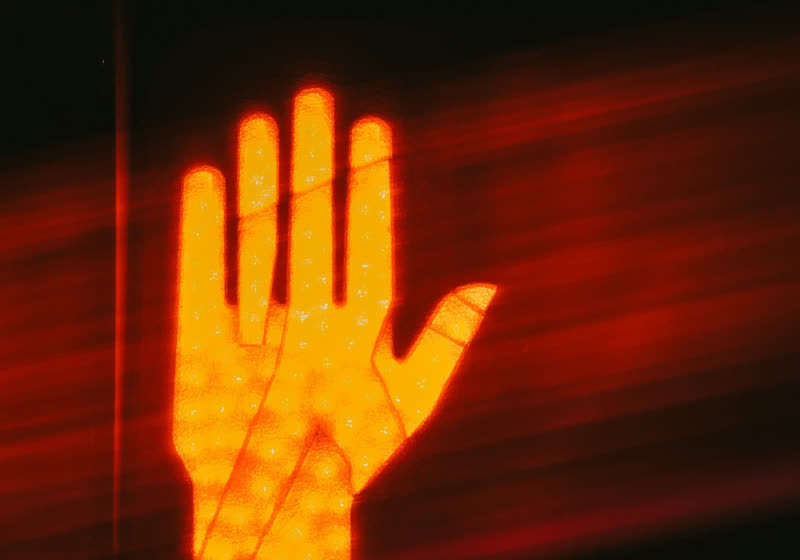
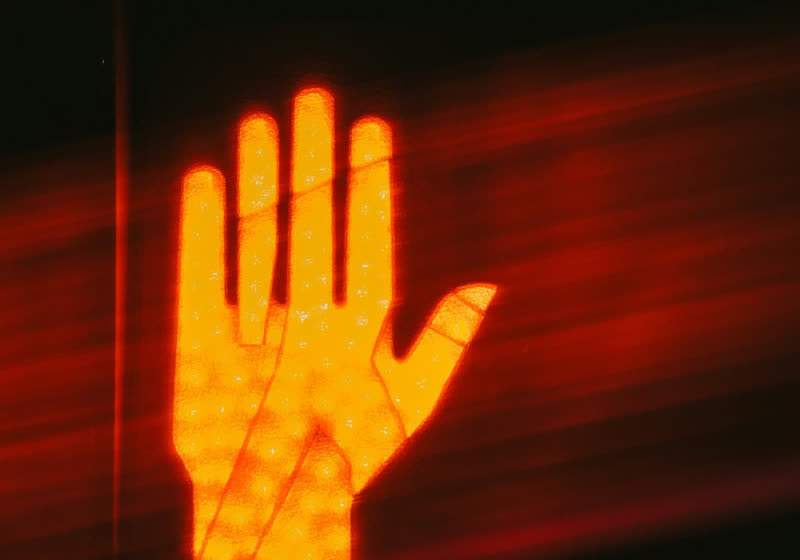
Google is working on a new kind of challenge to improve its reCAPTCHA system, using biometric identification to confirm that the user is indeed human. The new method is officially named “hand gesture verification” (HGV), and, according to early testing, is mostly useless. Even worse, HGV might pose a significant…
Read Entire Article
Source link

Continue Reading

Tech

2026 Frikkin Lasers Challenge: A 3D-Printed Raman Spectrometer

Published

on

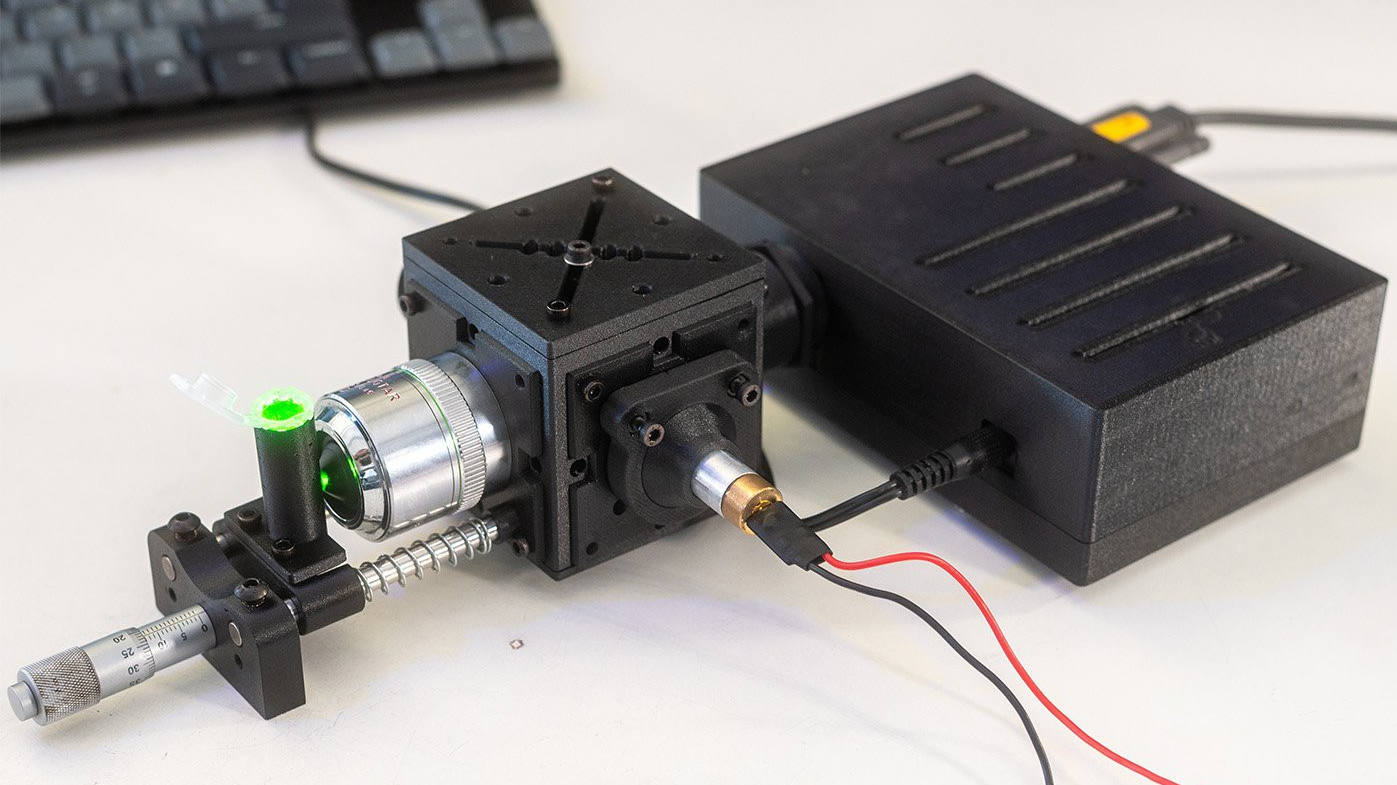
When light reflects off a surface, not all of it reflects off at the same wavelength; some photons impart a portion of their energy to raising the vibrational energy of the surface’s molecules, and are thus scattered away at a lower energy and longer wavelength. This is called Raman scattering, and the precise wavelength shifts are characteristic of the particular molecule being illuminated. It can therefore be used in Raman spectroscopy to identify molecules; these spectrometers are normally elaborate, expensive instruments, but [Allegedly Science] was able to build a simple system with surprising sensitivity.

The system is named the CubeRaman, after the cube-shaped body containing the main optical path. It uses a cheap 532-nm laser module as a monochromatic light source, with a bandpass filter to eliminate stray infrared light. The beam then reflects off a 45-degree dichroic mirror and passes through a microscope objective onto the sample. Raman-shifted light then scatters back through the objective, passes through the dichroic mirror and a long-pass optical filter, and is focused by an achromatic lens onto the slit of a spectrometer. The entire housing is 3D-printed, as are most parts of the kinematic mounts; the kinematic mounts use adjustment screws running through inserts in the mount, with the tips of the screws held in place by magnets.

[Allegedly Science]’s first test was with a raw diamond, which clearly showed the expected Raman shift. When trying to test a chemical inside a glass bottle, it mainly returned the signature of silica, making thin-walled cuvettes essential. Ethanol inside a plastic bottle was similarly interesting; varying the focal distance changed whether it detected the characteristic shift of ethanol or polypropylene. Nevertheless, [Allegedly Science] thinks there’s still room for improvement, particularly by eliminating stray light and using a narrower slit in the spectrometer.

Advertisement

Although we’ve seen an open-source Raman spectrometer before, this design is significantly more accessible. It does still require a separate spectrometer, though, so it might be worth considering some other spectrometer options.

Advertisement

Source link

Continue Reading

Tech

A Brief History of Fireworks

Published

on

In the 1970s, American Fireworks, a family-run pyrotechnics company in Hudson, Ohio, used a “home run box” to offer quick and easy fireworks displays for the Cleveland Indians (now the Cleveland Guardians) baseball games.

The red wooden crate had metal silos to store the rockets. Each switch on the control panel allowed the operator to set off a different firing sequence. This setup instantly triggered the display whenever a Cleveland batter hit a home run. Before computerized firing systems became common, panels like this represented the state of the art. But they did not eliminate human error. On 15 September 2015, the technician in charge of the Indians’ pyrotechnics accidentally set off the fireworks when the opposing team hit a home run. The embarrassed technician was caught on camera holding his head in his hands.

Two photos, one showing a rusted metal box with labeled buttons propped against a painted red wooden box, the other showing a person placing round cylinders into a tall rectangular box that\u2019s resting in bleachers. This home run box and control panel [left] were used to launch fireworks during Cleveland Indians games. The rockets were housed in metal silos within the box.Left: Jahna Auerbach/Science History Institute; Right: American Fireworks

The Early History of Fireworks

Fireworks are one of the many Song Dynasty inventions that migrated from China through the Middle East and into Europe by way of trade routes. Around 200 B.C.E, the Chinese invented small firecrackers by simply tossing pieces of bamboo into a fire. The air inside the bamboo would expand and crack the wood, and the pop supposedly scared away evil spirits. After the invention of gunpowder—a mixture of sulfur, charcoal, and potassium nitrate—about a thousand years later, some clever person thought to pack the powder into the bamboo tubes and ignite them, launching the first fireworks—and the first rockets—into the sky.

Advertisement

Two illustrations of historic fireworks, one showing wheel-shaped fireworks on a pole and the other showing a dragon figure attached to a rocket on a rope strung between two buildings. John Bate’s popular 1634 book on fireworks described fire wheels [left] and a flying dragon [right], consisting of a dragon-shaped rocket that sped along a rope. SSPL/Getty Images

By the Renaissance, specialized schools for pyrotechnics had emerged across Italian city-states, and European craftsmen began creating large spectacles for royal occasions and religious celebrations. In 1634, John Bate published the four-volume series The Mysteries of Nature and Art, the second of which described how to create all manner of fireworks. Woodcut illustrations showed fire wheels (now called pinwheels or Catherine wheels), as well as the more ambitious flying dragon—a rocket shaped like a dragon that emitted sparks while speeding across a rope strung between two buildings.

During the 18th and 19th centuries, chemists and alchemists discovered new chemical compounds and isolated new elements that expanded the palette for fireworks. Adding barium nitrate produced green, for example, and strontium nitrate produced red. Chemists also mixed in metal particles to create sparkles.

The 1880s saw the introduction of the loud screech or whistle that precedes the exploding boom. Amédée Denisse, a graphic artist by trade and a fireworks hobbyist, discovered that a cardboard tube containing potassium picrate added that satisfying auditory effect to his fireworks display.

How Did Fireworks Become a 4th of July Tradition?

British colonists brought fireworks to the Americas. In 1608, Captain John Smith set them off to celebrate the founding of Jamestown, Virginia, the first permanent English settlement in what would become the United States. More than a century and a half later, while the Continental Congress was meeting in Philadelphia in July 1776, future U.S. president John Adams speculated in a letter to his wife that Independence Day would be celebrated “with pomp and parade, with shews, games, sports, guns, bells, bonfires and illuminations from one end of this continent to the other.”

Advertisement

Although Adams got the day wrong—he mistakenly thought the committee would complete the revisions to the Declaration of Independence by the 2nd of July—he was correct in foreseeing that Independence Day would be celebrated with lots and lots of fireworks. Just a year later, on 5 July 1777, the Pennsylvania Evening Post reported on the grand exhibition of fireworks the previous night, which began and concluded with 13 rockets representing the 13 colonies.

It’s safe to say that the United States is still obsessed with fireworks. According to the American Pyrotechnics Association, the country spends about US $3 billion on fireworks each year; it’s also the leading importer of fireworks. As the U.S. gears up to celebrate its 250th birthday this 4th of July, expect to see fireworks displays everywhere, from kids with sparklers running in backyards to ambitious professional displays for huge crowds.

Color photo of spectators watching an elaborate fireworks display against a city skyline. Modern fireworks displays like the Macy’s 4th of July celebration in New York City are computer choreographed and controlled. Roy Rochlin/Getty Images

Fireworks today are an engineering marvel. State-of-the-art displays are computer controlled with precise digital timing, often tied to musical accompaniment. Designers can spend weeks choreographing complicated patterns and assigning launch times, shell types, and colors. The completed script is uploaded to an electronic firing system, which consists of the control panel and hundreds or thousands of firing modules that connect to the rockets. It can take days to set up the launch site for a large-scale display that lasts just minutes.

For example, last year more than 60 licensed pyrotechnicians worked for 12 days to arrange more than 80,000 shells for the Macy’s 4th of July Fireworks in New York City. Each of the firework shells measured up to 25 centimeters in diameter and weighed more than 13 kilograms—a far cry from their bamboo ancestors. More than 120 kilometers of wire connected the bundles of explosives to twelve computers. All that for a 25-minute display.

Advertisement

As much as I unabashedly love fireworks, they’re not for everyone and they do have a downside. The explosions can trigger PTSD for military veterans, and they can also upset animals. Every year, thousands of people are injured by mishandled or damaged fireworks. Known to set off wildfires, fireworks are often banned during droughts. Scientists who’ve studied the environmental impact of fireworks displays have noted their tendency to disperse airborne metallic particles and other harmful particulates.

Nighttime photo showing a young man's face displayed in the sky over a city. A drone light show over Busan, South Korea, shows a member of the K-pop band BTS.Hwawon Ceci Lee/Anadolu/Getty Images

Perhaps to counter those drawbacks, or maybe it’s just the next technological evolution in aerial display, companies are now offering drone light shows. Fleets of hundreds or thousands of LED-toting drones can be programmed to hover in the air and fly in formation, forming logos and other designs that are more stable than exploding fireworks.


These exquisitely choreographed light shows are truly impressive. And yet I relish the full sensory experience of fireworks, including the booms, the smoke, and the smell. So whether you’re celebrating your country’s birth, Guy Fawkes Day, Saint Sylvester’s Night, New Year’s, Diwali, or simply cheering a home run from your favorite team, I hope you get to enjoy this millennia-old technological marvel.

Part of a continuing series looking at historical artifacts that embrace the boundless potential of technology.

Advertisement

An abridged version of this article appears in the July 2026 print issue as “Rooting for the Home Team.”

From Your Site Articles

Related Articles Around the Web

Advertisement

Source link

Continue Reading

Tech

Did Microsoft Shift Its Profits to Low-Tax Countries?

Published

on

Microsoft is apparently shifting its profits to countries with low taxes — and out of countries where they have many more employees and significant sales. Back in 2005 Former Microsoft CEO Steve Ballmer even said that a low corporate tax rate “is part of the overall advantage of doing business in Ireland,” remembers long-time Slashdot reader theodp. (Ballmer added “It would be disingenuous to say otherwise.”)

But in 2026 the EU now requires a country-by-country compliance report, and the New York Times notes that Microsoft “was most likely the first major U.S. technology company to make a so-called country by country report of its finances to comply…”

Like other big companies, Microsoft uses transactions between subsidiaries to shift profits around to reduce its tax bill. The report revealed a consistent pattern: high returns in low-tax jurisdictions and slim margins in higher-tax ones. The report showed the sometimes absurd results. Microsoft said it had generated almost 40 percent of its pretax income in tax-friendly Ireland, where it employed about 3 percent of its global work force. In higher-tax Germany, the largest economy in Europe, Microsoft earned barely half of 1 percent of its global profits, it said.

Excluding Ireland, the company said, it generated less than 2 percent of its worldwide pretax earnings in Europe… [In Luxembourg Microsoft said it had $283 million in pretax income with only 34 employees.]

Advertisement

[America’s] Internal Revenue Service is challenging profit-shifting transactions used by Microsoft, and is seeking back taxes of nearly $29 billion4. The company has said it disagrees with the I.R.S. and said in a securities filing that it “will vigorously contest” the proposed tax bills.

This week a Microsoft blog post offered their own “context,” arguing that tax is “one important measure of contribution, but it is not the only one.

“Our investments, partnerships, infrastructure, and long-term presence in countries around the world also reflect a commitment to helping strengthen the economies and communities where we operate, today and for the future.”

Source link

Advertisement
Continue Reading

Tech

EV Batteries Defy Expectations, Last Hundreds of Thousands of Miles

Published

on

247,000 miles on an EV battery? So says the owner of a U.K.-based used-car sales company that specializes in Evs, who tells the Wall Street Journal EV batteries keep performing well even after several hundred thousand miles. “They are proving themselves to be exceptionally reliable.”

After five years on the road, the average EV will still be able to drive up to 95% of its original range, according to Recurrent, a data-science company that provides a battery-monitoring tool for EVs — better than many in the auto industry expected…

Potential new car buyers’ fear of having to pay for a battery replacement is the number one reason they choose to steer clear of EVs, according to a 2025 survey from industry research firm AutoPacific. When early EVs hit the market, buyers’ concerns were well-founded. Roughly one in 12 EVs built from 2011 to 2016 have had to have battery replacements. But new data shows that more modern EVs are doing better so far. Among EVs built from 2022 on, 0.3% have had battery replacements, according to a 2025 study from Recurrent. As battery technology has advanced, EVs have avoided problems like the ones that plagued the original Nissan Leaf when it hit the market in 2010, for example. Those cars lacked the battery-cooling technology that is in newer EVs, and they made headlines for wearing down quickly. Buyer perception hasn’t quite caught up, according to Scott Case, co-founder and chief executive of Recurrent…

The newest battery-powered EVs have lifespans comparable to internal-combustion-engine vehicles, even when driven more miles, according to Viet Nguyen-Tien, a research officer at the London School of Economics who focuses on Evs. Improvements in car batteries’ chemical contents, battery-management systems and thermal regulation have been the difference in making batteries last longer and cost less, Nguyen-Tien said. Battery prices have fallen more than 90% since 2010, according to a BloombergNEF report from late last year. Industry analysts say battery-replacement costs are also improving as more EVs are designed for repairability in the long-haul. An out-of-warranty battery replacement can cost anywhere from $5,000 to $16,000, depending on the manufacturer, according to Recurrent. But many EV manufacturers have shifted to allow smaller components of their battery packs to be repaired, which can allow owners to avoid the full costs of a battery replacement, Case said.

Advertisement

EV batteries aren’t without their challenges, though. A battery that is frequently fast-charged with high power loses its range, on average, at twice the rate of a battery charged at a lower power, according to telematics company Geotab. Frequently charging a battery to 100%, or letting it rest at 0% for extended periods, can also reduce range long-term. And EVs regularly deliver less range in extreme cold or heat.
The article also includes two new projections on EV adoption:

  • “The share of new EVs sold is expected to nearly double to 11% of new-car sales in the U.S. by 2030, according to industry consulting firm AlixPartners.”
  • “Globally, EVs already make up 15% of new-car sales and are expected to form nearly a quarter of the global market by 2030, according to AlixPartners.”

Source link

Advertisement
Continue Reading

Tech

Spotify’s streaming fraud issue runs so deep that Kalshi traders are profiting from rigged charts

Published

on

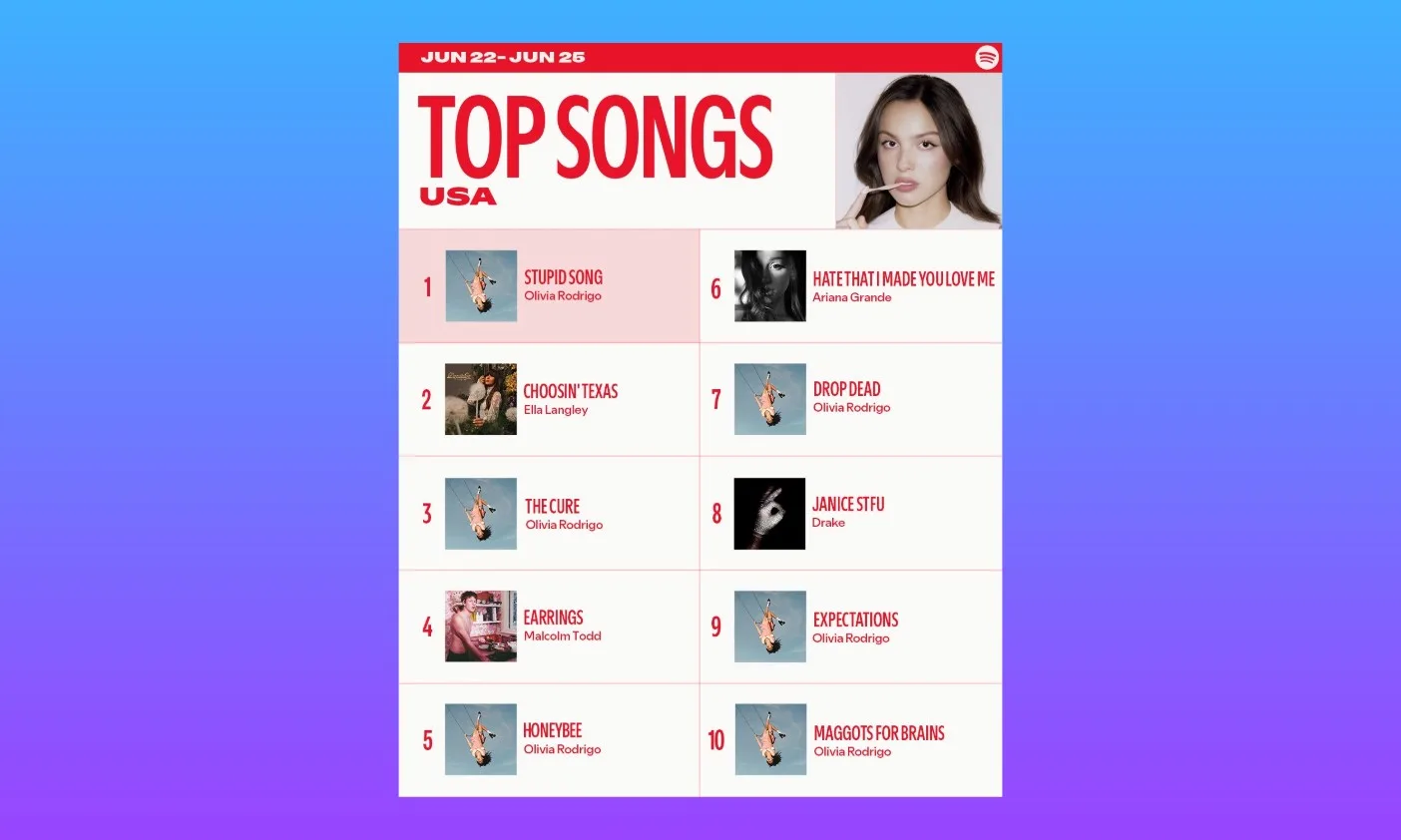
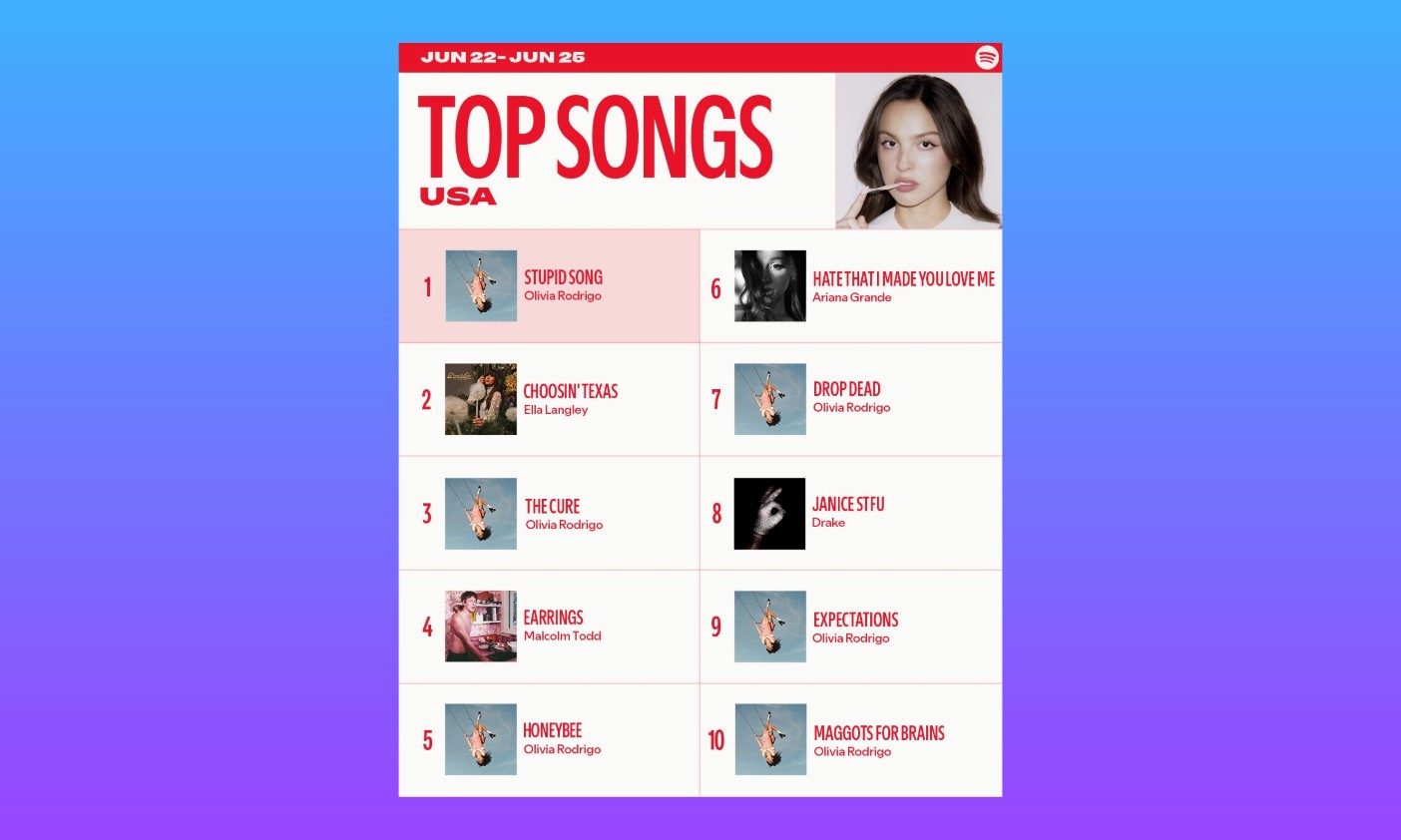
Spotify has removed more than half a million streams from Malcolm Todd’s song “Earrings” after finding suspected bot activity, according to a report by Financial Times.

The track, first released in 2024, suddenly rose to No. 1 on Spotify’s daily U.S. chart after a sharp jump in streams. At the same time, traders on prediction market Kalshi had been betting on whether Todd would land a No. 1 song on Spotify USA before the end of June. There is no suggestion Todd or his team were involved in any attempt to boost the song’s numbers. Kalshi has said it is investigating the matter.

A chart move became a payout

According to the report, U.S. streams of “Earrings” jumped almost 70% between Sunday and Monday. Spotify later removed streams it believed were initiated by bots, which are designed to play tracks repeatedly and make them appear more popular than they are.

After the correction, “Earrings” fell to fourth place on Spotify’s U.S. chart for Monday. Kalshi, however, had already paid out traders who bet on Todd reaching No. 1 before the end of June. According to the Financial Times, traders who backed the long-shot outcome could have made roughly 20 times their initial wager.

Can Spotify keep its charts clean enough?

Spotify has dealt with fake streams for years, usually as a royalties and chart integrity issue. Now, it has another problem to worry about, since those same charts can be used to settle prediction-market bets.

Advertisement

Spotify’s spam problem also goes beyond music streams. Earlier this year, the company removed tens of thousands of fake podcast episodes tied to illegal online pharmacies and scam websites. Music streaming fraud has become more sophisticated too. Prosecutors previously charged Michael Smith in an AI-assisted streaming fraud case involving bots and billions of artificial plays. He later pleaded guilty.

Spotify says it has “best-in-class” systems to detect and reduce fake streams, and does not pay royalties on manipulated plays. Kalshi says it is in touch with Spotify and is investigating, but the companies are not exactly aligned. Spotify’s legal team reportedly asked Kalshi to remove its logo from the app and website, and Kalshi has added a disclaimer saying its products are not endorsed by Spotify.

Source link

Advertisement
Continue Reading

Trending

Copyright © 2025