Bitcoin price reclaimed the $63,500 area after volatile trade, keeping the short-term structure constructive while $65,700 stays the next upside test.
Spot Bitcoin ETFs pulled in fresh demand after a long outflow streak, giving buyers a stronger institutional signal after June’s weakness.
Weak U.S. labor data cooled rate-hike fears, helping BTCUSD as Treasury yields eased and traders moved back into selected risk assets.
A break below $63,500 could shift attention toward $61,000, while sustained support may force more short-covering near resistance.
Bitcoin price traded near $63,173 on Monday after a volatile session around the reclaimed $63,500 area. BTCUSD moved between $62,468 and $63,874, showing fast movement around a key support zone.
The move followed weaker U.S. labor data, renewed spot Bitcoin ETF inflows, and short liquidations near $62,000. Traders are now watching whether Bitcoin can hold $63,500 and retest $65,700, where the last major rejection developed.
Bitcoin Price Holds Key Support After ETF Inflows Return
Bitcoin price action improved after U.S.-listed spot Bitcoin ETFs posted $221.7 million in net inflows. The daily intake ended a 10-day outflow streak and marked the strongest inflow in about two months. That shift mattered as June had damaged sentiment across institutional crypto products.
The inflow also arrived as Bitcoin reclaimed the $63,500 zone. Analyst That Martini Guy says the first rejection at that level looked normal. He added that prior resistance rarely breaks on the first attempt.
Advertisement
Bitcoin just got rejected at the first test of $63,500.
That’s completely normal.
Previous resistance doesn’t usually break on the first attempt.
The important part is that Bitcoin has reclaimed $63,500 as support after spending weeks below it.
The technical setup now depends on whether buyers defend the area. Holding $63,500 keeps the short-term structure constructive. A clean push above it could put $65,700 back in focus.
A loss of $63,500 would weaken the rebound. The next downside area sits near $61,000, based on the analyst’s chart view. That level would show whether recent buying was durable or only a relief move.
Spot demand and derivatives flows also shaped the rally. Short sellers were exposed after Bitcoin moved above $62,000. Forced buybacks then added speed to the recovery and lifted BTC through crowded intraday levels.
Advertisement
The setup is still fragile. Bitcoin price has recovered support, but it has not cleared the last rejection zone. Buyers need steady volume and follow-through before the move looks more durable.
Fed Minutes And Labor Data Put BTCUSD Traders On Alert
Bitcoin price also gained support from softer U.S. labor data. June nonfarm payrolls rose by only 57,000, below expectations for 110,000. May job gains were revised lower, while the unemployment rate fell to 4.2% as labor force participation dropped.
That report lowered fears of a near-term Federal Reserve rate hike. Treasury yields eased, the dollar softened, and risk appetite improved. Lower yields often help non-yielding assets, including Bitcoin and gold.
This week brings more macro risk for BTCUSD traders. The Federal Reserve will release minutes from its June meeting on Wednesday. The minutes could show how officials judged inflation risks under new Chair Kevin Warsh.
Advertisement
Investors will also monitor services PMI, ADP employment data, and jobless claims. These numbers may shape rate expectations before earnings season starts. A stronger inflation or labor signal could pressure the Bitcoin price again.
For now, traders are weighing two opposing forces. ETF inflows and reclaimed support favor another test higher. Yet June’s heavy outflows, weak liquidity, and regulatory pressure in Europe still limit conviction.
Bitcoin price needs sustained spot demand to extend the recovery. A hold above $63,500 keeps $65,700 in play. Failure there could reopen the $61,000 area as traders reassess leverage and macro risk.
Joao Wedson, founder and CEO of Alphractal, issued a sharp warning on July 7. His diagnosis is direct: unliquidated long positions now dominate Bitcoin, Ethereum (ETH), XRP, and Solana (SOL).
Here is what the threat means, how it could hit prices, and what other analysts project next.
What Threat the Alphractal CEO Is Flagging
An unliquidated long is a leveraged bet that a price will rise, one that has not yet closed or been forced to sell. Wedson warns that these positions now dominate the market for the largest cryptocurrencies after a recent weak advance.
The analyst’s message is blunt. Any slip in the coming hours could hand control to the bears. As a result, a fresh wave of fear and liquidations could sweep across the entire crypto market.
Advertisement
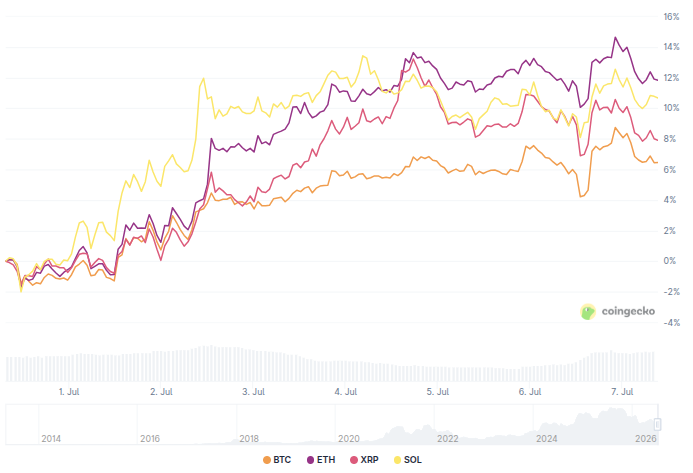
The situation is especially delicate for ETH, SOL, and XRP. Those assets saw a massive buildup of longs over the past 30 days. Furthermore, that leverage creates real vulnerability whenever price momentum starts to fade.
Once again, unliquidated Long positions are dominating BTC, ETH, XRP, and SOL. The market has moved up very weakly over the past few days, and the current moment deserves a bit more attention. Any slip in the next few hours could allow bears to take control, triggering a new… pic.twitter.com/PsDowAswSY
The mechanics are straightforward. A modest pullback activates stops in a chain reaction. Moreover, that cascade amplifies selling and creates a dangerous domino effect across derivatives markets and spot prices alike.
Advertisement
According to Wedson, the core problem is that the recent rally lacks genuine conviction. Prices climbed, yet underlying buying strength remained weak. As a result, the advance rests on fragile leverage rather than real spot demand.
Bitcoin, ETH, XRP & SOL Price Performance – 7D. Source: CoinGecko
That distinction matters enormously for what comes next. When gains depend on borrowed positions instead of organic accumulation, the market becomes reflexive. Consequently, a small trigger can unwind far more leverage than the initial move ever justified.
How Could This Threat Hit Bitcoin, XRP, ETH, and SOL Prices
The imbalance of longs implies a high risk of bearish volatility. A break of key supports could trigger liquidation cascades, pressuring prices lower and damaging overall market sentiment across every major asset class.
Starting with Bitcoin, the main impact would be a correction to $60,000-$62,000. That zone holds a high concentration of vulnerable longs. However, Crypto Rover noted the US Strategic Bitcoin Reserve now holds 328,372 BTC, offering a long-term institutional floor.
$BTC got rejected from the $64,500-$65,000 resistance zone. Now, the key level to hold is $62,500-$62,800. A daily close below this level could push Bitcoin towards $60,000. pic.twitter.com/avwLzBl4OT
Turning to Ethereum, the asset faces a similar setup. A cascade could push it to test lower support levels amid heightened volatility due to its correlation with Bitcoin. Still, analyst CrediBULL Crypto said ETH could “perform beautifully” if it avoids deeper drops first.
Ethereum $ETH just flashed a new hourly Tom DeMark Sequential buy signal. Hold $1,750, and a rebound toward $1,800 could follow. Lose it, and the bullish setup is invalidated. pic.twitter.com/mzmWOQsbY3
In the case of XRP, the token appears vulnerable to a dragged-down decline under Wedson’s scenario. A wave of liquidations could test support near $1.00 to $1.10. However, some analysts project XRP could stabilize and climb toward $1.35 to $1.50 once longs clear. However, the Ripple token’s price setup remains bearish.
🚨 $XRP is testing the 200 EMA with an overbought RSI the exact setup that triggered the previous dump. pic.twitter.com/DlXwdXAjeS
$SOL is still in an uptrend here, which means that it has broken the downtrend vs. Bitcoin after a year of trending down. I don’t think that we’ll stall, I do think that we’ll continue to see strength happening here. That said, I’m willing to be a buyer on lower levels for this… pic.twitter.com/Tc0pIEplps
— Michaël van de Poppe (@CryptoMichNL) July 7, 2026
In conclusion, Wedson’s warning points to a possibly healthy correction that clears excess leverage. It could set the stage for stronger rebounds. However, in the short term, it may still generate additional drops and fear across the market.
One of the best trades of the week, was not Bitcoin or gold. It was sitting in your kitchen.The arabica coffee price jumped 16.19% on Monday, its biggest single-day gain this century, closing at a 5.5-month high. Robusta contracts climbed 8.83% to a five-month peak in the same session.
The move lifted coffee futures roughly 43% above their early June low near 239 cents per pound. Harvest delays in Brazil, shrinking exchange stocks, and El Nino risks fueled the rally.
Neither the crypto majors nor gold’s record run came anywhere near that one-day move.
Why the Coffee Price Is Surging After Brazil Harvest Delays
According to Barchart, September arabica gained 48.75 cents on Monday, its largest one-day advance since at least 2000. The spark came from Brazil, the world’s biggest coffee producer.
Consultancy Safras & Mercado reported that Brazil’s 2026/27 harvest was 52% complete as of July 1. That lags last year’s 60% and the five-year average of 55%.
Weather adds pressure. Somar Meteorologia recorded no rain in Minas Gerais, Brazil’s top arabica region, in the week through July 5. Meanwhile, forecaster Rural Clima warned that rains expected in mid-July could prove “detrimental” to crops.
Inventories point the same way. ICE arabica stocks fell to a 2.25-year low of 366,756 bags on Monday. In addition, a stronger Brazilian real discourages exports, and farmers are reportedly withholding beans.
Advertisement
El Nino threatens next season too. NOAA sees a 67% probability of a record “Super El Nino,” which could disrupt the September and October flowering that shapes Brazil’s 2026/27 crop.
The bearish case has not vanished, however. The USDA still projects a record 71.9 million-bag Brazilian crop, and Rabobank recently raised its arabica surplus estimate to 9.5 million bags. Those figures pushed arabica to a 19-month low just four weeks ago.
The reversal since then suggests the market abandoned that surplus story. Coffee also joined a broader commodity bid, with gold holding above $4,000 per ounce this month.
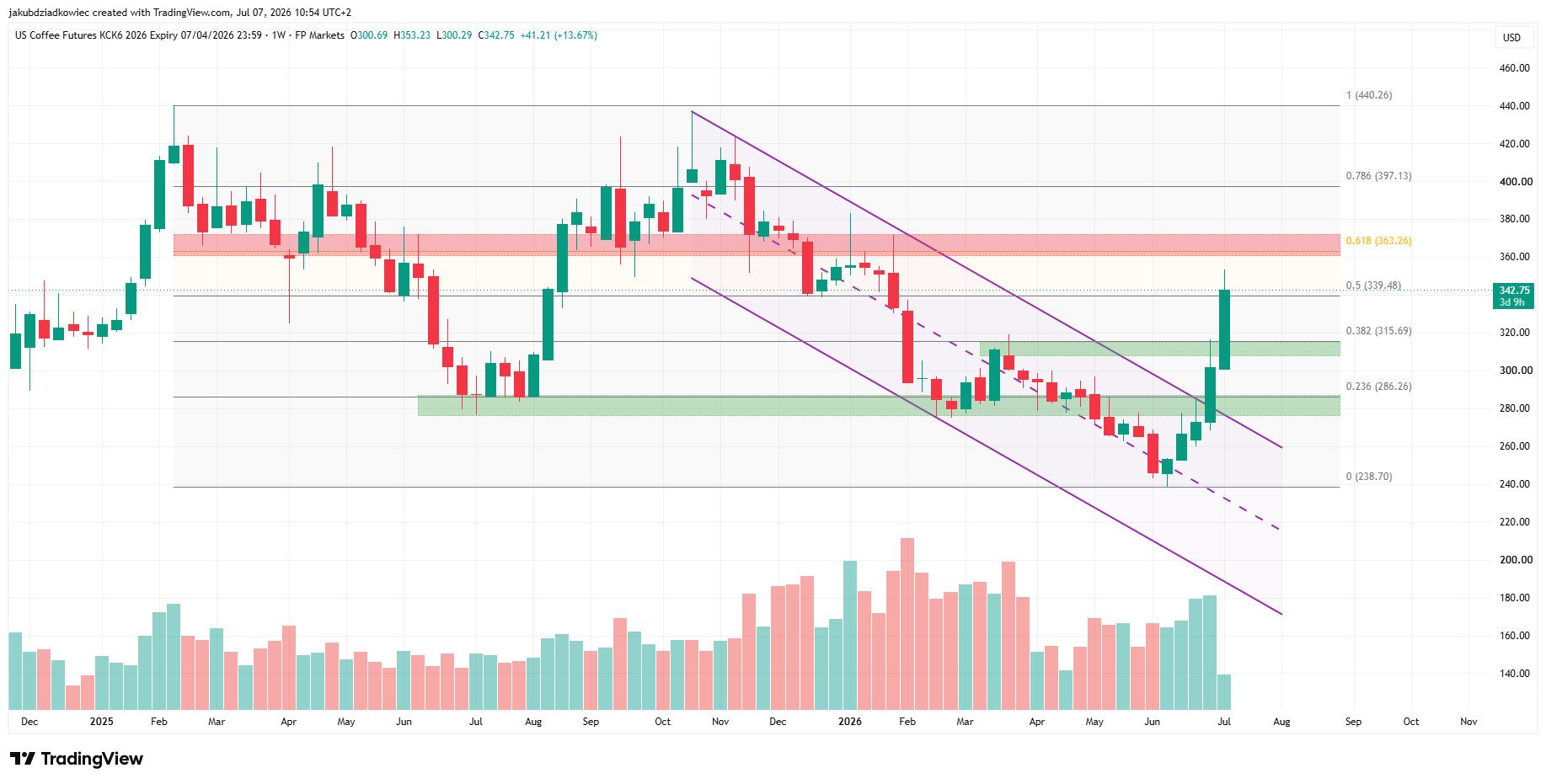
Coffee Futures Break Out of a Descending Channel on the Weekly Chart
The weekly chart shows a clean breakout from the descending parallel channel that guided prices lower from the October 2025 top. Price escaped the pattern in late June and now trades near 343 cents.
Advertisement
The rally has already pierced the 0.5 Fibonacci retracement at 339.5 cents. That level derives from the move between the June low at 238.7 and the October 2025 high at 440.26.
Coffee Futures weekly chart / Source: Tradingview
The next barrier stands at the 0.618 retracement of 363.26 cents. It overlaps a supply zone between 363 and 375 that rejected prices repeatedly in 2025. Therefore, this area remains the most important long-term resistance.
Rising weekly volume accompanied the breakout, which suggests genuine buying pressure rather than a thin short squeeze. If bulls stall, the reclaimed zone between 308 and 318 cents should provide first support.
Daily Chart and RSI Breakout Put 370 Cents in Sight
The daily chart confirms the momentum. Price broke above the March 24 swing high at 318.8 cents, a level that coincides with the 0.382 Fibonacci retracement. The year’s largest volume bars accompanied the move.
The next target sits at 370.65 cents, the swing high from late January. It rests just above the 0.618 retracement, creating a tight resistance cluster between 363 and 370. On Tuesday, the contract cooled 2.4% to around 341 cents, still holding the 0.5 level.
Momentum indicators tell a similar story. The daily RSI broke above a descending resistance line that capped it from February 2025, with rejections in August and September 2025 validating that trendline. The indicator now reads near 75.
Such a reading signals strong bullish conviction but also overbought conditions. Historically, similar levels preceded short-term cooling phases, in line with Tuesday’s pullback. Recent positioning data already showed capital rotating into hard assets before the breakout.
Coffee daily RSI chart / Source: Tradingview
The structure stays bullish while the coffee price holds above 315 to 319 cents on a closing basis. A daily close back below that zone would mark the record rally as a squeeze, while a break through 363 to 370 would open the road to 397 and the psychological 400 cents.
For investors comparing commodities into year-end, coffee just forced its way onto the list.
The SEC has closed its enforcement investigation into ConsenSys over MetaMask Swaps and MetaMask Staking, with no fine and no admission of wrongdoing, a result that directly challenges the regulatory theory that non-custodial wallet interfaces constitute unregistered brokerage operations.
The dismissal removes the most immediate enforcement threat against the primary retail gateway into the Ethereum ecosystem and hands wallet developers a defensible precedent heading into what remains an unsettled legal landscape for DeFi regulation.
The SEC filed its original complaint in June 2024, alleging that ConsenSys had brokered transactions in crypto asset securities since at least October 2020 and collected transaction-based compensation through MetaMask’s integrated services.
I'm pleased to announce that Consensys and the SEC have agreed in principle that the securities enforcement case concerning MetaMask should be dismissed. Subject to the approval of the Commission, the SEC will file a stipulation with the court that effectively closes the case.…
The agency’s staking theory went further, targeting MetaMask’s routing integrations with Lido and Rocket Pool as unregistered securities offerings, a framing that, if upheld, would have forced wallet developers across the ecosystem to gut core functionality from non-custodial interfaces.
ConsenSys had pre-empted the suit with its own action against the SEC in April 2024, challenging the agency’s authority over Ethereum-related software and its attempted classification of Ethereum as a security.
The SEC separately closed its Ethereum 2.0 probe in June 2024, and a federal court dismissed ConsenSys’ Texas suit in September 2024, ruling the SEC’s parallel enforcement action had already reduced any credible prosecution threat. That sequence effectively narrowed the live dispute to the MetaMask case now resolved.
Joe Lubin Calls Dismissal a Win for Blockchain Software Developers
ConsenSys founder Joe Lubin announced the resolution, saying the company and the SEC had agreed in principle that the securities enforcement case concerning MetaMask should be dismissed. Lubin described the outcome as “a good step for blockchain software developers,” adding that ConsenSys had been “committed to fighting this suit until the bitter end.”
“I’m pleased to announce that Consensys and the SEC have agreed in principle that the securities enforcement case concerning MetaMask should be dismissed. Subject to the approval of the Commission, the SEC will file a stipulation with the court that effectively closes the case.”
Photo: Joe Lubin
A ConsenSys official confirmed to Bloomberg that the SEC would not impose a fine. The clean exit matters: ConsenSys’ core legal argument – that wallet software should not be regulated as a traditional broker simply because it routes users to protocols, has now effectively prevailed without requiring a court ruling that could have cut either way.
Why the Outcome Matters Beyond ConsenSys and Metamask
Advertisement
MetaMask is not a peripheral product in the Ethereum stack. It is the dominant retail interface through which users reach DeFi protocols, NFT markets, liquid staking, and on-chain transactions, making the SEC’s original broker theory a structural threat to Ethereum’s entire user-access layer.
A ruling that swap routing or staking integrations inside a non-custodial wallet trigger broker-dealer registration requirements would have had cascading implications for every wallet developer offering comparable functionality. That scenario is now off the table, at least in this enforcement cycle.
The closure also fits the broader pattern of SEC crypto enforcement pullbacks under post-Gensler leadership, which has included dropped or paused actions against Gemini, Uniswap Labs, Robinhood Crypto, and OpenSea.
This month, the SEC has dropped its cases against Coinbase, Robinhood, and now ConsenSys company behind Metamask. Maybe this panic selling won't last forever?
Wallet developers and DeFi front ends now have a cleaner operating environment than they did six months ago – though the absence of a court ruling means the underlying legal questions on broker classification remain open for a future administration or enforcement wave to revisit.
For Ethereum specifically, regulatory clarity at the wallet layer feeds directly into the ecosystem’s mainstreaming trajectory. Institutional staking inflows into Ethereum have been building through 2025, and a MetaMask enforcement loss would have introduced friction at exactly the point where retail and institutional demand converge. That particular risk is now resolved.
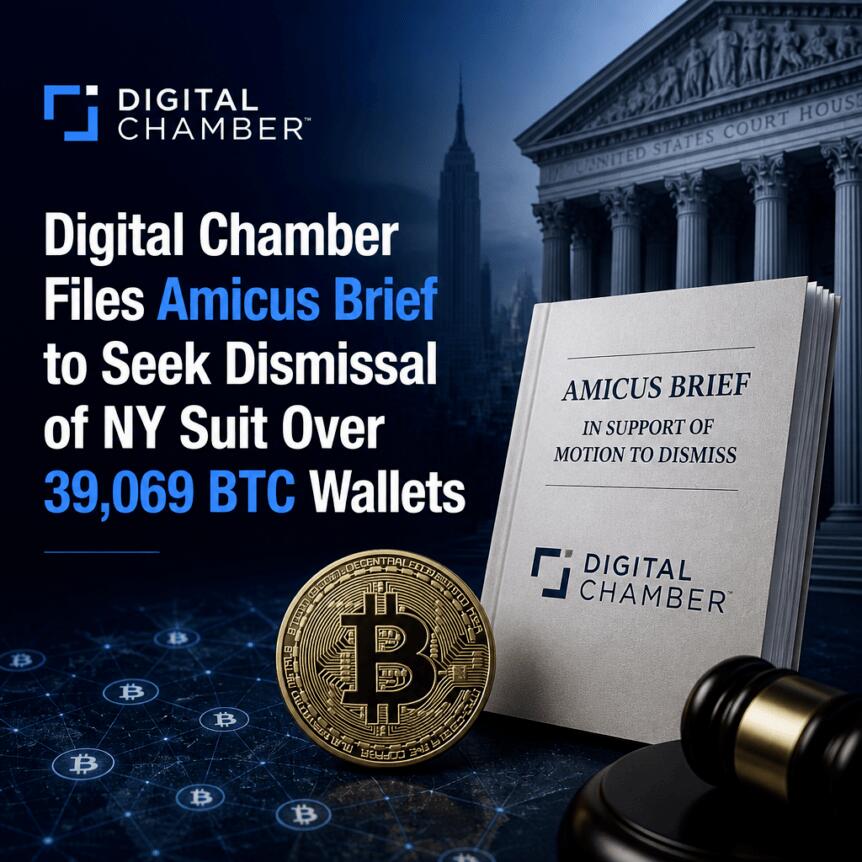
A New York lost-property lawsuit targeting dormant Bitcoin wallets has drawn a fresh filing from the Digital Chamber, a major blockchain industry trade association. In a Monday amicus brief, the group urged the court to reject claims that inactive self-custody wallets should be treated as abandoned property under state law.
The case, brought in late May by a claimant identified as “Noah Doe” and two Wyoming-based companies, seeks ownership of 39,069 dormant Bitcoin addresses. The addresses are reported to contain about 3.7 million BTC, valued at roughly $234 billion at the time referenced in the underlying reporting. Earlier coverage from Cointelegraph noted that the lawsuit could effectively become a test for how dormant or inactive crypto assets should be handled under traditional “lost property” frameworks.
Key takeaways
The Digital Chamber’s latest amicus brief argues that classifying dormant self-custody wallets as abandoned property would create a “pervasive cloud on title” for crypto owners.
The filing frames the issue as a threat to the core legal premise of digital property ownership, with potential ripple effects beyond crypto into traditional finance.
Some wallets named in the lawsuit have already shown renewed activity, complicating assumptions about “dormancy” and control of assets.
Even if the plaintiffs were to win legally, the private-key requirement remains a practical hurdle for transferring control of funds.
A trade association warns against “cloud on title”
According to the Digital Chamber, allowing the lawsuit’s theory to proceed would undermine widely accepted principles of how digital assets are owned and transferred. In its second amicus brief in the New York case, the organization opposed the plaintiffs’ attempt to establish ownership based on the addresses’ inactivity.
The trade association warned that treating dormant wallets as abandoned property would effectively cast uncertainty over self-custody holdings. The brief characterizes the potential outcome as a “pervasive cloud on title across self-custody wallets,” implying that investors and institutions could face heightened legal risk simply for keeping private keys and not moving funds for extended periods.
Digital Chamber also argued that a decision rooted in the plaintiffs’ approach could have “negative ripple effects” reaching traditional finance. The group’s point appears aimed at the broader market effects of uncertainty—particularly where regulated entities rely on stable, predictable legal definitions of ownership and control.
Advertisement
Digital Chamber describes itself as the oldest and largest digital asset trade association, representing more than 250 members that include exchanges, banks, investment firms, and other participants across the industry.
The dispute centers on dormant wallets and New York’s lost-property law
The lawsuit was filed in late May and targets 39,069 dormant Bitcoin addresses, according to the reporting cited in earlier coverage from Cointelegraph: New York lawsuit seeks ownership of 39,069 dormant Bitcoin addresses. The amicus brief arrives as the legal fight begins to take shape around the interpretation of New York’s lost-property statutes as applied to cryptocurrency held in self-custody.
Among the addresses named in the suit, the filing and accompanying discussion referenced estimates placing the total at 3.7 million BTC, with some wallet addresses allegedly linked by analysts to Bitcoin creator Satoshi Nakamoto. The earlier reporting that references a claim from Sani (founder of Timechain Index) is attributed in the source text to a post on X: according.
It’s important for readers to recognize what the legal process is actually testing. The argument is not simply about whether money can be recovered from inactive addresses, but about whether inactivity alone can trigger ownership claims under a state framework traditionally used for tangible property.
Advertisement
Renewed wallet activity challenges assumptions about “dormancy”
While the lawsuit proceeds, the real-world behavior of at least some listed addresses has shifted. According to analysis cited in the source text, some of the dormant Bitcoin wallets named in the case have begun moving funds.
Galaxy Digital head of research Alex Thorn, as quoted via an X post referenced in the original report, said at least 31 of the addresses moved 17,527 BTC in June. That compares with earlier activity where only five addresses reportedly transferred 4,834 BTC in February. The figures were attributed to Thorn’s monitoring: according to Alex Thorn.
The renewed activity has included notable cases such as the address “1KV47,” which reportedly transferred 30 BTC—worth about $1.88 million in the source text—on Saturday. Earlier coverage from Cointelegraph stated that this marked the wallet’s first movement in almost 15 years, since August 2011: Bitcoin address “1KV47” moved after nearly 15 years.
For investors and market participants, these developments matter because they expose a practical and conceptual mismatch: legal arguments that treat inactivity as a proxy for abandonment can collide with the reality that wallet “dormancy” may be temporary—or could change when private keys are used after long periods.
Advertisement
Private keys remain the gate to control
Even if the plaintiffs’ legal theory were to succeed, the question of control over the underlying Bitcoin remains central. The source text notes that it is unclear how the plaintiffs could gain control of the assets without possessing the private keys to the wallets.
That point effectively highlights the asymmetry between on-chain identifiers (addresses and balances) and off-chain control (private keys). Courts may determine legal ownership, but moving or spending Bitcoin still requires cryptographic authorization.
The case is also not proceeding unopposed. According to the source text, a pseudonymous defendant filed a notice of appearance and a motion to dismiss on Thursday, asserting that they control one of the dormant wallets named in the lawsuit. Earlier coverage from Cointelegraph references that dismissal effort: defendant dismiss New York lawsuit.
In practice, that kind of response could reduce the likelihood of any blanket “ownership transfer” outcome, forcing the court to grapple with ownership claims at the level of individual wallets and the rights of those claiming control.
Advertisement
What to watch next
With the Digital Chamber urging rejection on principle and some named wallets already showing movement, the case may hinge on how the court interprets abandonment versus ownership in the context of self-custody. The next key developments to monitor are the court’s handling of motions to dismiss and whether other defendants challenge the plaintiffs’ ability to prove control beyond the addresses themselves.
Risk & affiliate notice: Crypto assets are volatile and capital is at risk. This article may contain affiliate links. Read full disclosure
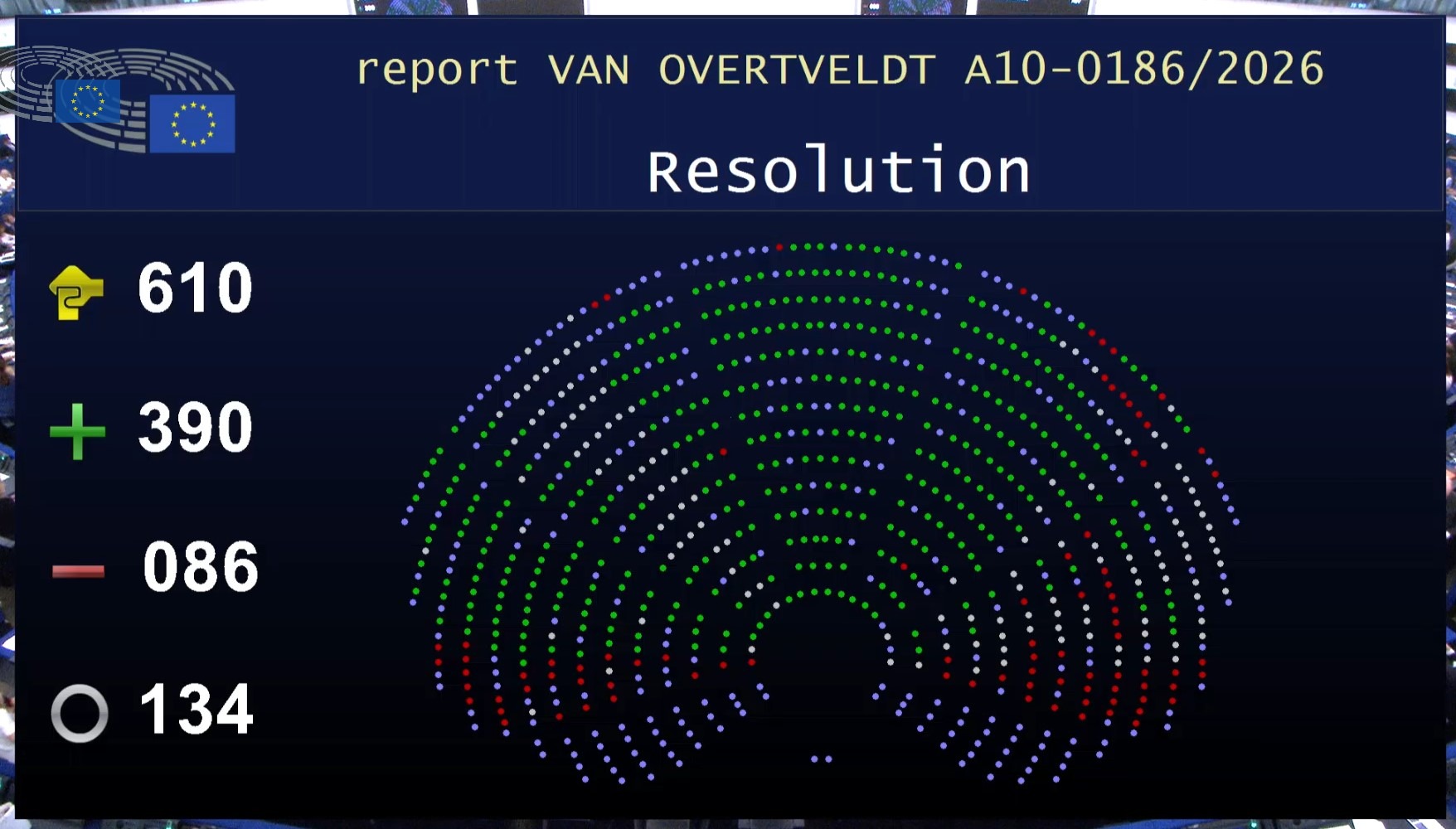
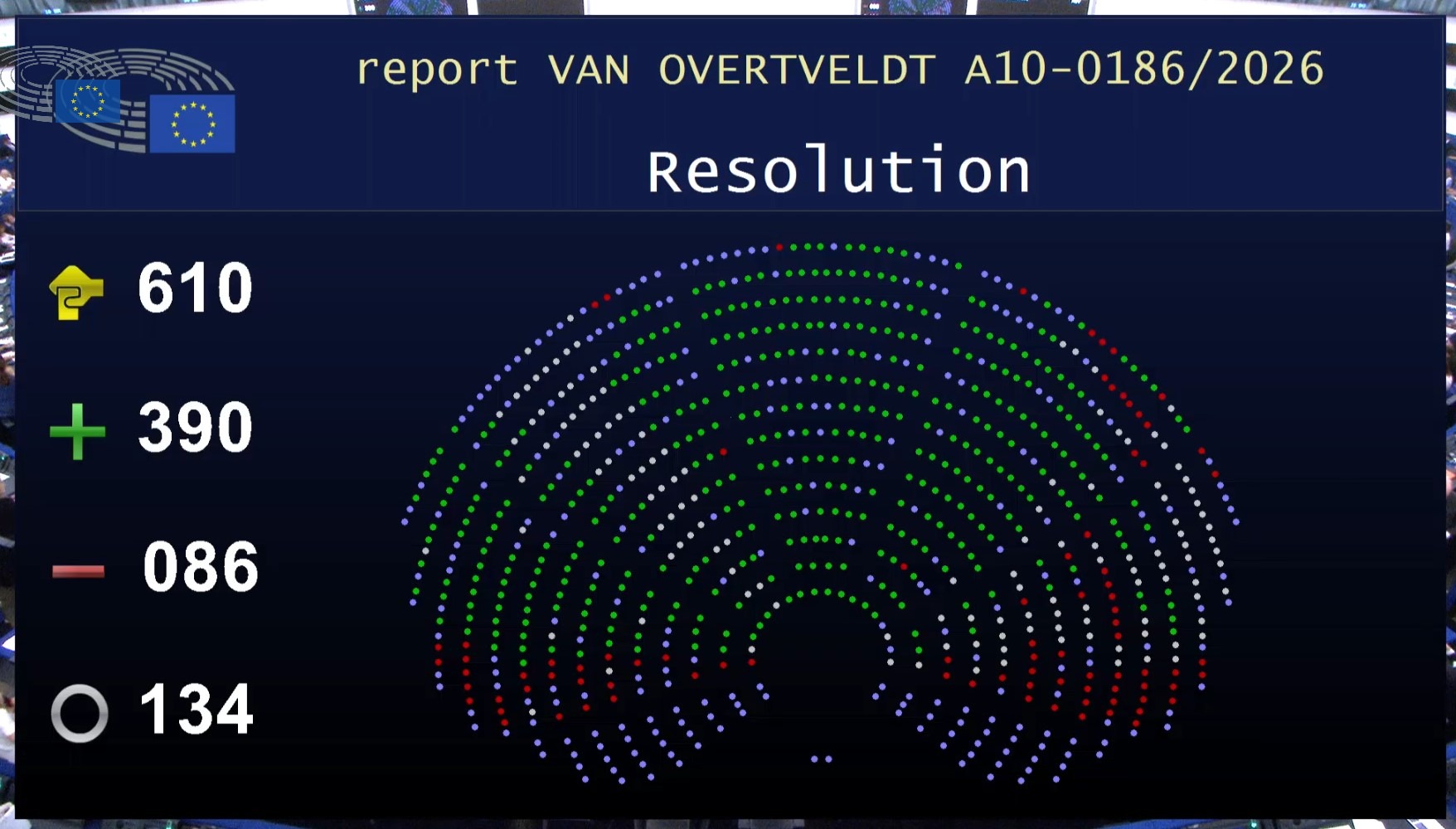
EU lawmakers on Tuesday adopted a position paper on digital assets, setting out their view on how the bloc should approach crypto regulation after the rollout of its Markets in Crypto-Assets (MiCA) framework.
The paper calls on the European Commission to assess whether activities including decentralized finance (DeFi), crypto lending and borrowing, staking and non-fungible tokens (NFTs) should be brought more clearly into the EU’s regulatory perimeter. It also urges consistent application of MiCA across member states and warns against national rules that could fragment the bloc’s digital asset market.
The vote turns the report, “Digital assets – challenges for the competitiveness and integrity of the European Union’s financial system,” into Parliament’s formal policy position on digital assets, but it does not directly amend MiCA or create new legal obligations for crypto firms.
MiCA’s transitional period ended on July 1, requiring crypto-asset service providers that fall under the framework to obtain bloc-wide or national authorization to continue operating across the European Union.
Advertisement
The EU Parliament overwhelmingly approved its digital asset policy stance. Source: European Parliament
EU lawmakers look beyond MiCA
The report reflects growing pressure in Brussels to address digital asset activities that remain outside MiCA’s current scope.
While MiCA established licensing and conduct rules for crypto-asset service providers and issuers of certain tokens, lawmakers have continued to debate how the framework should treat DeFi, staking, lending, NFTs and tokenized financial assets.
The EC has already been reviewing whether MiCA should be expanded. In May, it opened a public consultation that sought feedback on potential changes to the framework, including whether additional crypto activities should be covered and whether MiCA’s restrictions on interest-bearing stablecoins should be revisited.
The Parliament report approved Tuesday also takes a more supportive tone toward tokenization and euro-denominated stablecoins, arguing that digital assets could support the competitiveness of EU financial markets if regulated consistently across the bloc.
Cointelegraph is committed to independent, transparent journalism. This news article is produced in accordance with Cointelegraph’s Editorial Policy and aims to provide accurate and timely information. Readers are encouraged to verify information independently.
Anthropic just found something inside its Claude models that nobody designed or expected. An internal structure called “J-space” appears to work like a cognitive workspace shared across the model.
The July 6 research marks a major step in understanding what actually happens inside large language models.
What the J-Space Inside Claude Actually Is
J-space is an internal area where Claude appears to gather and share important information across the model. A simple way to think about it is as a whiteboard inside the AI.
When Claude answers a question, solves a puzzle, or follows an instruction, key details seem to appear in this shared space so different parts of the model can use them.
Advertisement
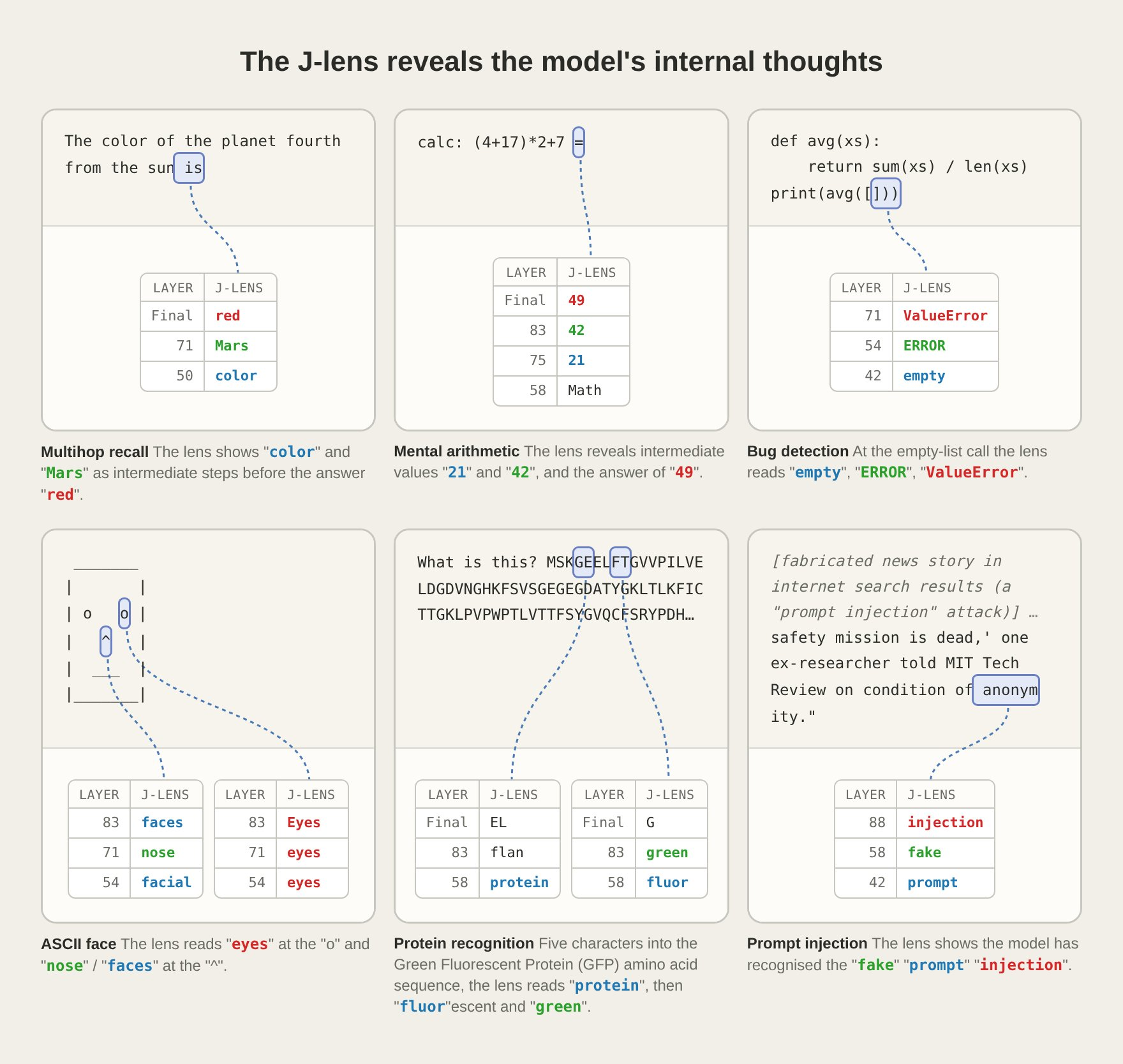
Anthropic found J-space using a research tool called the “J-lens.” The tool helps researchers inspect how information moves inside Claude during a task. It showed that J-space emerged during training by itself. Anthropic did not design it directly.
Follow us on X to get the latest news as it happens.
Claude’s J-space closely mirrors what scientists call the “global workspace” in human cognition. Source: Anthropic
The idea is similar to a theory in neuroscience called the “global workspace.”
In humans, this describes how the brain makes important information available to different mental processes at once. For example, when someone hears a question, remembers a fact, and decides how to answer, those pieces of information need to come together.
Claude appears to do something similar. Anthropic found that Claude can describe what is inside its J-space when asked. It can also adjust those contents if instructed.
Advertisement
More importantly, when researchers directly changed the J-space, Claude’s answers and task performance changed too.
This is fascinating for so many reasons, but I am astonished that this legit just *emerged* it wasn’t coded or programmed or anything, it just so happens that it when training a large language model, a small internal “consciously accessible” workspace of sorts emerges…..HUH https://t.co/AJzwH8gfxIpic.twitter.com/f7qORNOLir
Why This Matters for AI Safety and Interpretability
The discovery carries real weight for AI safety. If researchers can monitor J-space activity, they can potentially uncover hidden motivations behind a model’s behavior. As a result, they gain a sharper tool for spotting when something goes wrong.
That includes detecting attacks. Monitoring J-space could reveal when a model processes a prompt-injection attempt designed to hijack its outputs. Furthermore, even a partial window into this “conscious” processing layer marks a meaningful advance for the field.
Advertisement
The scope remains limited, however. The vast majority of Claude’s information processing still occurs entirely outside the J-space.
Still, Anthropic released an open-source J-lens implementation and a Neuronpedia demo, inviting the broader research community to test the findings.
The work builds on a longer research trail. Anthropic published a report on emergent introspective awareness in October 2025. Moreover, it launched model-welfare initiatives in April 2025, steadily exploring what happens inside its systems.
Advertisement
One caveat stands out clearly. Anthropic is emphatic that the research does not claim Claude is conscious or has subjective experience. The paper uses the phrase “consciously accessible” information, borrowing the vocabulary without making the leap to actual consciousness.
Bitcoin BTC$63,520.34 fell on Tuesday after chalking out a six-day winning streak, the longest since March. The gains, in any case, looked fragile when viewed through the lens of several indicators.
The most widely followed is the Coinbase Premium, which tracks the difference between bitcoin’s price on U.S.-based exchange Coinbase (COIN) and Binance. It has now been negative for fifty straight days, according to data source Coinglass.
That means for close to two months, BTC has been cheaper on Coinbase than Binance, which doesn’t operate in the U.S. The discrepancy is an indicator of relatively weak demand in the world’s largest economy, a message underscored by the eight straight weeks of net outflows from U.S. spot exchange-traded funds. Historically, bull runs have featured consistently positive Coinbase Premiums.
Another concerning trend is seen in Japan, where bond yields just can’t stop rising. The 10-year rose to a 30-year high early today, lifting borrowing costs in the U.S., U.K. and Germany. A continued upswing, particularly in Treasury yields, could create a headwind for BTC.
Advertisement
While seasonality supports continued recovery, it’s the ETF flows that matter the most, according to analysts.
Coinbase announced it secured a United Kingdom investment services license, allowing the platform to expand its local offering beyond spot trading and into products like equities and derivatives.
On Tuesday, Coinbase said the authorization would enable UK users to trade financial instruments alongside crypto on its platform. Institutional and advanced traders would gain access to perpetual futures tied to crypto, equities and commodities, while retail would be able to access equities.
The company said the approval marks its largest UK product expansion since entering the market and advances its vision of an “everything exchange” that combines crypto and traditional financial assets under a single platform. Coinbase said future rollouts would remain subject to regulatory permissions and UK market rules.
FCA research cited by Coinbase estimates that around 7 million UK adults hold crypto assets. A quarter of UK adults who do not currently own crypto said they’re more likely to participate under clearer regulation.
Advertisement
The authorization also comes ahead of the UK’s new crypto regime, which will begin accepting applications in September before taking effect in October 2027. It will require crypto trading platforms, custodians, stablecoin issuers, staking providers and other intermediaries to obtain FCA authorization.
The FCA did not comment before publication.
UK retail crypto derivatives remain restricted
The differing product offerings reflect FCA rules governing retail access to crypto investment products. In 2021, the Financial Conduct Authority (FCA) banned the sale, marketing and distribution of derivatives and exchange-traded notes (ETNs) referencing certain crypto assets to retail consumers.
The FCA has since reopened retail access to certain crypto ETNs, with the change taking effect on Oct. 8, 2025.
As a result, retail consumers can access crypto ETNs only if they are traded on an FCA-approved, UK-based Recognised Investment Exchange, while financial promotion rules and consumer protection requirements apply. However, the FCA said its ban on retail access to crypto derivatives remains in place.
Non-custodial multichain wallet Ctrl Wallet is winding down its services after a recent security incident affecting some Cardano-related activity. The wallet’s operators say users have until Aug. 3, 2026 to move funds out of the app.
In an announcement posted on Tuesday and reiterated in a separate blog update, Ctrl Wallet said the application will be taken offline for most operations starting Aug. 3, while retaining the ability for users to export their recovery phrases. The service will also be removed from app and browser extension stores, and new downloads will stop immediately.
Key takeaways
Ctrl Wallet will stop allowing sending, receiving, swapping, and other in-app actions after Aug. 3, 2026.
Users will still be able to export recovery phrases, but there is no migration token or airdrop planned.
The shutdown follows a security issue reported by Ctrl Wallet on June 23 that prompted a temporary “maintenance mode.”
Ctrl Wallet is advising users to transfer assets before the deadline and to beware of fake sites or social media posts offering incentives.
The wallet supported thousands of networks and was connected to Cardano’s ecosystem via a multichain setup previously transitioned under Emurgo’s umbrella.
App functionality set to end, recovery-phrase export remains
Ctrl Wallet told users that from Aug. 3, 2026, core wallet operations inside the app will be unavailable. According to the company’s update, functionality will remain limited to exporting users’ recovery phrases, which are typically 12-word or 24-word seed phrases.
As part of the deprecation process, Ctrl Wallet said it will remove the app from both application and browser extension stores and halt downloads right away. That means users who rely on the wallet for day-to-day access will need to prepare ahead of time to avoid getting locked out of routine transfers.
When the deadline arrives, Ctrl Wallet’s guidance is straightforward: users should use the exported phrase to access funds in another compatible wallet provider. The company said users can import their recovery phrase into wallets including MetaMask, Trust Wallet, and Phantom.
Advertisement
What users should do before Aug. 3
Ctrl Wallet recommended that users export their recovery phrases and transfer assets to another exchange or wallet before Aug. 3. The operator’s stated reasoning is operational: after that date, the wallet will not support standard activity such as sending and receiving.
In addition, Ctrl Wallet emphasized that there will be no token-based migration or “replacement” distribution event. The wallet also warned users to be cautious if they encounter impersonation attempts—such as posts or websites promising compensation or incentives—associated with the shutdown.
For investors and traders, the practical implication is that operational risk shifts from security concerns inside the wallet to execution timing: once app actions are disabled, users must rely on other infrastructure to move assets. That makes it especially important to complete exports and transfers well in advance of the cutoff date.
Shutdown follows June security incident and Cardano-related exposure
Ctrl Wallet said it reported a security issue on June 23, involving some Cardano wallets on its platform. At the time, the wallet stated it entered a temporary “maintenance mode” intended to protect user assets while engineering work restored full functionality.
Advertisement
The new deprecation timeline comes shortly after that period and indicates that the issue—or the broader system response to it—has culminated in an exit from ongoing wallet operations. While Ctrl Wallet did not outline every technical detail in the user-facing update provided in the article, it did connect the deprecation to its decision to protect assets and then ultimately stop allowing on-platform activity.
The wallet’s broader ecosystem reach may also affect users’ choices for migration. Ctrl Wallet said it supported over 2,500 blockchain networks, which can be convenient for multisystem users—but also means many holders may be managing assets across chains and need to validate that their chosen replacement wallet fully supports the same assets and networks.
Ctrl Wallet previously announced a structural change on April 29, saying it would operate under the Emurgo umbrella and that its multichain architecture would continue inside the SecondFi wallet.
SecondFi is described as a self-custodial platform built on Cardano and was developed by Emurgo, the “for-profit arm of Cardano.” The wallet had been positioned as a continuation of Ctrl Wallet’s approach following that transition, and the SecondFi rebranding from the Yoroi wallet was reported as occurring in April 2026.
Advertisement
Separately, a vulnerability in SecondFi led to attackers draining funds on June 24, according to earlier coverage linked in the source material. That incident was reported to have resulted in an estimated loss of around 16 million ADA (about $2.4 million at the time). Days later, SecondFi published a recovery path for affected wallet addresses and said emergency measures secured roughly 129 million ADA transferred to an independent third-party custodian for verification and recovery.
For Ctrl Wallet users, the bigger takeaway is that the timeline of the shutdown overlaps with heightened attention on Cardano wallet security. Even though Ctrl Wallet’s June 23 issue was described as affecting “some Cardano wallets on the platform,” the shutdown now forces users to operationally exit the service regardless of whether they experienced the earlier vulnerability directly.
With Aug. 3 approaching, users should watch for any final instructions from Ctrl Wallet about phrase export availability and removal timing, and should be prepared to act quickly if they need to switch to another wallet provider. The lack of a migration token or airdrop underscores that the exit is handled by self-custody workflows—exporting seed phrases and moving funds—rather than by a platform-led replacement process.
Risk & affiliate notice: Crypto assets are volatile and capital is at risk. This article may contain affiliate links. Read full disclosure
Ethereum co-founder Vitalik Buterin has confirmed that AI-assisted analysis by Co-Invest CEO Franklyn Wang correctly pinpointed his anonymous authorship of a rewrite of EIP-7503. The result follows Buterin’s own public challenge earlier this month, where he asked whether today’s AI tools could reliably undo online anonymity.
Wang says the identification succeeded not because of the document’s surface-level wording, but because of the underlying reasoning patterns used to explain mathematical and technical ideas—suggesting that even deliberate obfuscation, such as translating content from another language, may not fully protect anonymous technical contributions.
Key takeaways
Buterin confirmed Wang’s system identified him as the author behind an anonymous EIP-7503 rewrite.
Wang’s explanation emphasizes reasoning and the structure of explanations, not just writing style.
The test was prompted by Buterin’s skepticism about whether AI could realistically deanonymize authors.
Prior research Wang referenced claims large language models can perform deanonymization at scale from unstructured text.
A high-profile test of deanonymization
Buterin’s June 22 post was unusual for the crypto community: rather than defending his privacy, he deliberately offered a puzzle about his own past anonymity. He said he had published a document—described as “medium importance” to Ethereum—under a different name and challenged the public to find it.
The premise was rooted in a broader debate inside tech: whether large language models can infer identity from writing. While anonymity remains common in open-source and technical ecosystems, some analysts argue that as AI models improve at extracting patterns from text, pseudonymous participation could become harder to sustain.
That question was sharpened by a February paper from researchers at ETH Zurich and Anthropic. The study argued that large language models can make online deanonymization practical at scale by identifying identity-related information in unstructured text, generating candidate matches, and then reasoning over the most likely authors. It also claimed to outperform traditional deanonymization techniques.
Advertisement
How Wang’s analysis reportedly worked
Two weeks after Buterin’s challenge, Wang posted on X that his submission correctly identified the anonymous EIP-7503 rewrite. He said the document’s author had hidden the work by writing it in Chinese and machine-translating it. Yet, according to Wang, the system found a “tell” that did not come from the author’s choice of words.
“The doc was an anonymous EIP-7503 rewrite he’d hidden by writing it in Chinese and machine-translating it,” Wang wrote in a Monday X post after Buterin confirmed the result. “The tell wasn’t his words, it was his reasoning.”
Wang further stated that Co-Invest ranked Buterin as the most likely author of the anonymous December 2024 rewrite of EIP-7503, with roughly 20% confidence—about 10 times higher than the next candidate—based on an analysis of 27 documents.
Buterin’s obfuscation and why it didn’t hold
After Wang’s identification, Buterin revealed additional details about how he attempted to disguise authorship. He said he had written the anonymous rewrite in Chinese, translated it into English using Qwen 2.5, and then manually corrected the translation with the intent to make his prose harder to attribute.
Advertisement
Buterin’s follow-up explanation suggested that the approach targeted the wrong surface layer. He wrote that “stylistic hints” the AI picked up on were tied to intellectual habits—specifically the style of mathematical and algorithm explanations—rather than the prose itself. In other words, while translating and editing prose may change diction and phrasing, it may not eliminate deeper patterns in how a writer structures explanations and arrives at technical descriptions.
He added that those reasoning-level signals “bypass[ed]” his obfuscation strategy, which he characterized as covering prose only.
Limits and lessons from earlier attempts
The deanonymization debate is not new, but this case adds a real-world datapoint because it ties back to a question Buterin publicly raised. The episode also intersects with earlier work within the crypto AI space.
Lighter CEO Vladimir Novakovski said on Monday that he worked with Wang in 2023 on a project using GPT-4 to try to identify Bitcoin creator Satoshi Nakamoto by matching writing style in cryptography research. Novakovski said that effort failed to produce a high-confidence result.
Advertisement
According to Novakovski, Wang later applied a similar approach to Buterin’s anonymity challenge—yet in this instance the identification reached confirmation from the person targeted by the test.
That distinction matters: it implies that while AI-based author inference can be unreliable in some contexts, it may become more accurate when the text and task conditions allow models to capture consistent explanation patterns. It also highlights that “deanonymization” isn’t a single technique; performance may vary depending on language, document type, candidate set size, and how much of the author’s reasoning becomes visible in the writing.
Why this matters for crypto builders and contributors
In open-source and standards work—where proposals, research notes, and technical explanations often circulate publicly—pseudonymous authorship can protect individuals from harassment, reduce reputational pressure, and encourage candid experimentation. But if AI systems can attribute authorship by tracing reasoning patterns, then anonymity could become more fragile than many contributors assume.
At the same time, the episode doesn’t prove that every anonymous contribution is doomed. The earlier Nakamoto-attribution attempt reportedly failed to achieve high confidence, and in practice, the effectiveness of deanonymization likely depends on how easily models can extract stable, identity-linked signals from the text.
Advertisement
For investors, traders, and ecosystem participants, the broader takeaway is that AI capabilities are increasingly reaching beyond generating content into analyzing provenance—especially in technical domains where reasoning needs to be explicit. That shift may affect how communities think about privacy, attribution, and risk in public documentation.
Readers should watch whether similar challenges—especially those involving different document formats, languages, or candidate sets—continue to confirm or contradict Wang’s approach, and whether communities adjust norms around anonymity in Ethereum standards and other technical workflows.
Risk & affiliate notice: Crypto assets are volatile and capital is at risk. This article may contain affiliate links. Read full disclosure


















![Jadi gini! [Adira Finance berizin dan diawasi oleh Otoritas Jasa Keuangan] #MomobilJalanNinjaku](https://wordupnews.com/wp-content/uploads/2026/07/1783428694_maxresdefault-80x80.jpg)

 Fashion4 days ago
 Fashion21 hours ago
 Politics4 days ago

 Sports6 days ago
 Crypto World5 days ago
 Crypto World4 days ago
 NewsBeat7 days ago
 Crypto World5 days ago
 Business18 hours ago
 News Videos22 hours ago
 Crypto World2 days ago
 Tech2 days ago
 Business6 days ago

 News Videos9 hours ago
 Business4 days ago
 Crypto World5 days ago
You must be logged in to post a comment Login