Corruption is escalating in Thailand, reflected by a declining CPI score of 33. Structural reforms are needed, as the public and private sectors push for anti-corruption measures to restore economic competitiveness.
Key Points
Declining CPI Score: Thailand scored 33/100 in 2025, ranking lower than Laos and Vietnam, reflecting worsening corruption.
Economic Impact: Corruption is estimated to cost the private sector up to 500 billion baht annually, stifling growth and investor confidence. Addressing corruption could boost GDP by up to 4%.
Government Negligence: Successive governments have failed to implement serious anti-corruption measures, entrenching corruption as systemic.
Corruption remains a significant issue in Asia-Pacific, with Thailand scoring 33/100 in 2025, its lowest in 19 years. The private sector estimates annual losses of up to 500 billion baht due to corruption, hindering economic growth and investor confidence. Continued negligence by governments over the past two years has entrenched corruption as a systemic problem.
Countries like Maldives and Vietnam show improvements via structural reforms, while fragile states like Afghanistan and North Korea remain near the bottom of the corruption index due to poor governance and limited civic freedoms. High-scoring countries include Denmark (89/100) and Finland (88/100), whereas most regional countries fall below the global average.
Political parties have proposed diverse anti-corruption measures for the upcoming election, emphasizing transparency and technology. Initiatives include regulatory revisions, creating accessible public data platforms, and strengthening whistleblower protections. A united effort is critical, as solving corruption is vital for Thailand’s economic recovery and national competitiveness.
Corruption and Governance Trends in Asia-Pacific
The recent Transparency International’s Corruption Perceptions Index (CPI) reveals troubling trends in perceived corruption across the Asia-Pacific region, highlighting Thailand’s decline, which saw a score drop to 33 out of 100, marking the lowest in 19 years. Public sentiment indicates that abuse of power is prevalent among those in authority, contributing to a lack of essential public services and economic instability. Nations like the Maldives, Vietnam, and Timor-Leste have made advancements due to governance reforms, yet they still fall below the index average, suggesting a need for continued improvement.
Advertisement
Economic Impacts and Structural Challenges
Corruption in Thailand is projected to result in economic losses nearing 500 billion baht annually, driven by “under-the-table” payments in public procurement. The private sector believes this environment stifles growth, estimating potential GDP increases of up to 4% if corruption issues were addressed.
Despite recent growth concerns, the lack of serious anti-corruption measures from successive governments has entrenched corruption as a systemic issue. Prominent business leaders stress that the focus should not only be on stimulating the economy but also on establishing robust governance to rebuild investor confidence and mitigate risks associated with “grey capital.”
Corruption is not inevitable. Our research and experience as a global movement fighting corruption show there is a clear blueprint for how to hold power to account for the common good, from democratic processes and independent oversight to a free and open civil society.
François Valérian, Chair of Transparency International
Political Responses and Future Directions
In light of the corruption crisis, political parties in Thailand are emphasizing anti-corruption measures in their election platforms. Proposals include the Zero Corruption initiative, aiming for concrete reforms and greater transparency in governance. Key strategies involve regulatory revisions, a move to AI and open data systems, and shifting governmental roles to facilitate easier business practices.
Advertisement
The Pheu Thai and Democrat parties also propose comprehensive legal overhauls and public accountability initiatives. However, consistent political will and stable governance are essential to enforce these reforms and address the systemic roots of corruption effectively, ensuring a healthier economic environment for all.
Global Corruption: Key Findings
The Corruption Perceptions Index (CPI) 2025 reveals a concerning global increase in public sector corruption, attributed to a decline in bold and accountable leadership, and a dangerous disregard for international norms. The global average CPI score has dropped to 42 out of 100, the lowest in over a decade, with 122 out of 182 countries scoring below 50, indicating pervasive corruption. A shrinking number of countries now score above 80, with even high-scoring democracies showing signs of regression.
Key findings and trends from the CPI 2025 include:
Global Overview of Corruption:
The global CPI average is 42, with 122 countries scoring below 50, indicating widespread public sector corruption.
Only five countries score above 80, a significant drop from 12 a decade ago, while over two-thirds (68%) of countries fall below 50.
Denmark maintains the highest score at 89, while Somalia and South Sudan are the lowest with a score of 9.
Democratic Backsliding and Civic Space:
A strong correlation exists between restricted civic space and worsening corruption; 36 of the 50 biggest CPI decliners since 2012 also saw a reduction in freedoms of expression, association, and assembly.
Over 90% of journalists murdered for investigating corruption since 2012 were in countries with CPI scores lower than 50, highlighting the danger faced by those holding power accountable.
High-scoring democracies, including the United States (64), Canada (75), the United Kingdom (70), France (66), Sweden (80), and New Zealand (81), have experienced slippage, indicating increased corruption risks due to weakened checks and balances and political polarisation.
Autocracies like Venezuela (10) and Azerbaijan (30) exhibit systemic corruption at all levels.
Data indicates that democracies, traditionally stronger in combating corruption compared to autocracies or flawed democracies, are witnessing a troubling decline in performance. This concerning trend is evident in countries such as the United States (64), Canada (75), and New Zealand (81), as well as across parts of Europe, including the United Kingdom (70), France (66), and Sweden (80). Equally alarming is the growing imposition of restrictions by many states on freedoms of expression, association, and assembly. Since 2012, 36 out of the 50 countries with significant drops in CPI scores have also faced a shrinking civic space.
Netflix Inc. shares edged lower Wednesday, trading around $95.66 midday after closing at $96.15 the previous session, as Wall Street positioned for the streaming giant’s first-quarter 2026 earnings report scheduled for April 16.
The stock opened near $93 before climbing intraday, reflecting a volatile but relatively contained session. Volume remained active following a strong 3.42% gain on Tuesday, when shares closed at $96.15 on higher-than-average turnover of more than 54 million shares. Year to date, Netflix has posted modest gains of roughly 2.5%, though it remains well below its 52-week high of $134.12 reached in mid-2025.
Analysts and investors are closely watching how recent subscription price increases and advertising-tier momentum will shape the upcoming results. On March 25, Netflix quietly raised prices across all plans without a formal announcement. The standard ad-free tier jumped to $19.99 monthly from $17.99, the premium plan rose to $26.99, and the ad-supported option increased by $1 to $8.99. It marked the company’s fifth price hike in six years, underscoring its pricing power in a competitive streaming landscape.
“Netflix continues to demonstrate strong monetization capabilities,” one market observer noted, pointing to the company’s ability to pass on costs while maintaining subscriber loyalty. The moves come as Netflix eyes further growth in advertising revenue, which more than doubled in 2025 to over $1.5 billion and is projected to roughly double again in 2026.
Recent Performance and Market Context
Netflix shares have shown resilience in recent weeks despite broader market fluctuations. Tuesday’s advance followed positive reactions to the price adjustments, with some sessions seeing gains of more than 1%. However, the stock has traded in a wide range over the past year, dipping as low as $75.01 amid concerns over content spending, competition and earlier uncertainty surrounding a potential Warner Bros. Discovery acquisition that Netflix ultimately walked away from.
Advertisement
As of early April 1 trading, the stock was down about 0.48% at $95.66, with a market capitalization hovering near $406 billion. The price-to-earnings ratio stood around 46, reflecting expectations of continued profitability growth even as the company invests heavily in content.
Wall Street maintains a generally optimistic stance. Consensus analyst ratings lean toward “moderate buy,” with an average price target suggesting potential upside of around 19-20% from current levels. Optimism stems from Netflix’s massive global subscriber base — which surpassed 325 million paid members by the end of 2025 — and steady expansion into live sports, gaming and international markets.
Q1 Earnings on the Horizon
Netflix is set to release its first-quarter 2026 financial results after the market close on April 16, followed by a live video interview with co-CEOs Ted Sarandos and Greg Peters, along with Chief Financial Officer Spence Neumann. Investors will scrutinize several key metrics:
Subscriber growth and retention: How the recent price hikes affect churn rates.
Advertising revenue: Progress toward doubling ad income in 2026.
Content spending: The company has signaled heavier investment this year, which could pressure margins in the short term.
Free cash flow and profitability: Guidance for the full year will be closely parsed.
For the first quarter, analysts expect revenue around $12 billion or higher, building on the fourth-quarter 2025 results that showed 18% year-over-year growth to more than $12 billion and earnings per share of 56 cents, narrowly beating estimates.
Full-year 2026 revenue guidance issued earlier pointed to a range of $50.7 billion to $51.7 billion, driven by membership gains, pricing and advertising. Operating margins are targeted to improve, though increased content outlays — potentially reaching $20 billion annually — remain a focus for cost-conscious investors.
Advertisement
Strategic Shifts and Competitive Landscape
Netflix has pivoted aggressively in recent years. The introduction and expansion of its ad-supported tier has opened new revenue streams, appealing to price-sensitive viewers while allowing the company to maintain premium offerings for others. Live programming, including sports events and unscripted specials, has helped differentiate the platform from rivals like Disney+, Amazon Prime Video and emerging competitors.
The company also collected a significant $2.8 billion breakup fee after stepping away from a bid for Warner Bros. Discovery assets, providing a cash cushion as it prioritizes organic growth and share repurchases in the longer term.
Challenges persist. Heavier 2026 content spending could weigh on margins, and competition for viewer attention remains fierce. Some analysts have flagged risks of slowing subscriber additions in mature markets, though international expansion continues to offer tailwinds.
Bay Area-based Netflix, with its headquarters in Los Gatos, continues to be a bellwether for the technology and entertainment sectors. Its performance influences broader sentiment toward streaming stocks and ad-supported digital media.
Advertisement
What Investors Are Watching
Market participants are weighing several factors heading into earnings season:
Impact of price increases: Will higher bills lead to cancellations, or will loyal subscribers absorb the changes as they have in past rounds?
Ad tier traction: Growth in this segment is critical for long-term revenue diversification.
Content pipeline: Upcoming releases and original programming slate for the remainder of 2026.
Macro environment: How inflation, consumer spending and global economic conditions affect discretionary entertainment budgets.
Some voices on Wall Street have expressed caution, noting that Netflix shares have lagged the broader market over certain periods despite strong fundamentals. Others argue the current valuation offers an attractive entry point for a company with proven scalability and a massive addressable audience.
Social media and trading forums buzzed Wednesday with mixed commentary. Some users highlighted the stock’s recent stability as a positive sign, while others pointed to the upcoming earnings as a potential volatility catalyst.
Broader Industry Implications
Netflix’s trajectory carries weight beyond its own balance sheet. As the pioneer of streaming, its success or struggles often set the tone for peers. Recent price adjustments across the industry suggest many platforms are testing similar monetization strategies.
Meanwhile, the entertainment landscape evolves rapidly with technological advances in artificial intelligence for content creation, personalized recommendations and competitive bidding for sports rights.
Advertisement
For retail investors, particularly those in tech-heavy regions like the San Francisco Bay Area, Netflix remains a core holding or watchlist staple. Its ability to adapt — from DVD rentals to global streaming dominance — has long captivated shareholders.
Outlook and Advice for Investors
With Q1 results less than two weeks away, analysts recommend reviewing individual risk tolerance before making moves. Long-term bulls point to Netflix’s track record of innovation and subscriber monetization as reasons for confidence. Bears cite elevated content costs and valuation multiples as areas of concern.
Diversification remains key. While Netflix has delivered extraordinary returns over two decades — turning early investments into life-changing gains for many — past performance does not guarantee future results.
Investors can track real-time quotes on platforms like Yahoo Finance, Nasdaq.com or their brokerage accounts. Official updates will come via Netflix’s investor relations site ahead of the April 16 release.
Advertisement
As midday trading continued on April 1, the slight dip appeared contained, with many viewing it as routine profit-taking after Tuesday’s advance rather than a shift in sentiment. Attention now turns squarely to the earnings report, which could set the narrative for Netflix’s stock through the spring and beyond.
Whether the streaming leader sustains its momentum or faces renewed pressure will depend on execution in a crowded digital entertainment arena. For now, the market awaits fresh data with cautious optimism.
Circle Squared Alternative Investments founder Jeff Sica joins Varney & Co. to explain the effect of high oil and gas prices on the housing market.
A suburb near Nashville, Tennessee, is in the midst of a boom amid an influx of higher-paying tech and trade jobs.
A report by Realtor.com found that Clarksville, located about 45 minutes outside of Nashville, is drawing in residents in part because of several manufacturing firms setting up shop in the area and lower housing prices.
Advertisement
The median listing price for a house in Clarksville is $357,950, whereas the median list price in Nashville is $527,225 – which represents a potential savings of about 32.1%.
Housing demand is expected to remain strong in the area. Realtor’s report noted that T.RAD, an auto parts manufacturer headquartered in Japan, opted to build a new plant in the area while Korea Zinc is expanding its footprint there as well.
Clarksville is a city in Montgomery County, Tennessee. (iStock)
T.RAD’s Clarksville manufacturing facility is the first location in Tennessee for the company’s North American division. It plans to invest $90.2 million in a manufacturing facility that’s projected to create 928 jobs in the next few years.
Advertisement
Korea Zinc currently has about 300 existing jobs in the area and is also expanding with at least 420 direct positions, while also supporting additional jobs through suppliers and other economic activity.
Workers filling the new roles are expected to earn income in a range between $86,000 and nearly $200,000 a year, according to the report.
The U.S. military is a leading employer in the area near Clarksville because of its proximity to Fort Campbell. (Luke Sharrett/Getty Images)
The U.S. Army’s Fort Campbell is also one of the top employers in the area, which is also home to Austin Peay State University.
Advertisement
“Bringing more jobs to a smaller area can be great for the local housing market, if inventory is able to keep up with demand,” said Hannah Jones, senior economic research analyst at Realtor.com.
“The data suggests that a pickup in demand resulted in significant home price growth over the last six years. However, prices have leveled out in the last year and time on market has grown, suggesting the market is rebalancing,” Jones added.
“Nevertheless, the new construction share of sales grew almost 6 percentage points in 2025 compared to 2024, suggesting that more buyers are opting for new construction compared to the last three years, though the share is below the pandemic era norm,” she added.
| Revenue of $666.95M (-52.95% Y/Y) beats by $24.47M
Cal-Maine Foods, Inc. (CALM) Q3 2026 Earnings Call April 1, 2026 9:00 AM EDT
Company Participants
Sherman Miller – CEO, President & Director Max Bowman – VP, CFO, Treasurer, Secretary & Director
Advertisement
Conference Call Participants
Heather Jones – Heather Jones Research LLC Pooran Sharma – Stephens Inc., Research Division Leah Jordan – Goldman Sachs Group, Inc., Research Division Benjamin Mayhew – BMO Capital Markets Equity Research Benjamin Klieve – The Benchmark Company, LLC, Research Division
Advertisement
Presentation
Operator
Good morning, everyone, and welcome to the Cal-Maine Foods Third Quarter Fiscal 2026 Earnings Conference Call. [Operator Instructions]. Please note this call is being recorded. I will now turn the call over to Sherman Miller, President and Chief Executive Officer of Cal-Maine Foods. Please go ahead.
Advertisement
Sherman Miller CEO, President & Director
Good morning. Thank you for joining us today. I want to remind everyone that today’s remarks may include forward-looking statements. These are based on management’s current expectations and are subject to risks and uncertainties described in our SEC filings. Let me start by sincerely thanking our teams across the organization whose execution, focus and commitment to excellence drive the operational and financial performance that underpins everything we do.
The hard work and dedication continue to set us apart, and these results are a direct reflection of their efforts. In February, we shared the sad news of the passing of long-time Board member, Jim Poole. Over more than 2 decades, Jim made a lasting impact on the company, and we extend our heartfelt condolences to his family and loved ones.
Today, we announced the appointment of Dudley Wooley to the Board to fill the vacancy left by Jim. Dudley brings deep expertise in risk management and governance, along with a strong track record of leading growth-oriented organizations and driving operational performance.
Pilots of a Delta flight contacted the wrong control tower during a landing attempt in New York City earlier this month in an alarming mix-up captured in newly surfaced flight audio.
The incident occurred March 15, when Delta Air Lines flight 5752, operated by Republic Airways, was flying from Washington Reagan National Airport in D.C. to LaGuardia Airport in Queens.
Advertisement
Instead of reaching LaGuardia, the pilots appeared to radio the John F. Kennedy tower about 10 miles away, according to audio published on LiveATC over the weekend.
The baffling error prompted a go-around before the flight ultimately landed safely, the Federal Aviation Administration (FAA) told FOX Business Wednesday.
A Delta Air Lines Boeing 767 plane bound for New York’s John F. Kennedy International Airport takes off April 5, 2025. (Omar Havana/Getty Images / Getty Images)
According to the transmission, multiple control towers and pilots from other flights could be heard on the feed, with one pilot reacting in stunned disbelief as the mix-up came to light.
Advertisement
The exchange began when the pilots identified themselves and requested clearance to land, prompting an air traffic controller to respond in apparent confusion.
“That’s … uh … Who?” the JFK tower controller asked. “I’m sorry, where are you?”
An airplane takes off near the control tower at Reagan National Airport in Arlington, Va., Oct. 8, 2025. (Brendan Smialowski/AFP/Getty Images / Getty Images)
Another unknown individual, who heard the interaction in the feed, reacted in disbelief, saying, “That’s crazy.”
The pilots then contacted the correct tower, announcing, “We’re going around.”
Advertisement
The FAA confirmed the slip-up to FOX Business Wednesday, explaining the flight began a go-around, which aborts the landing approach and returns the aircraft to a safe altitude for another attempt.
“The flight crew of Delta Air Lines Flight 5752 performed a go-around on approach to LaGuardia Airport after incorrectly establishing communication with the John F. Kennedy air traffic control tower,” the FAA said.
“Air traffic control instructed the flight crew to switch to the correct frequency. No other aircraft were involved.”
Delta Air Lines confirmed to the New York Post that its flight crew was not on board the aircraft, which was operated by Republic Airways, according to FlightAware.
FOX Business reached out to Republic Airways for more information.
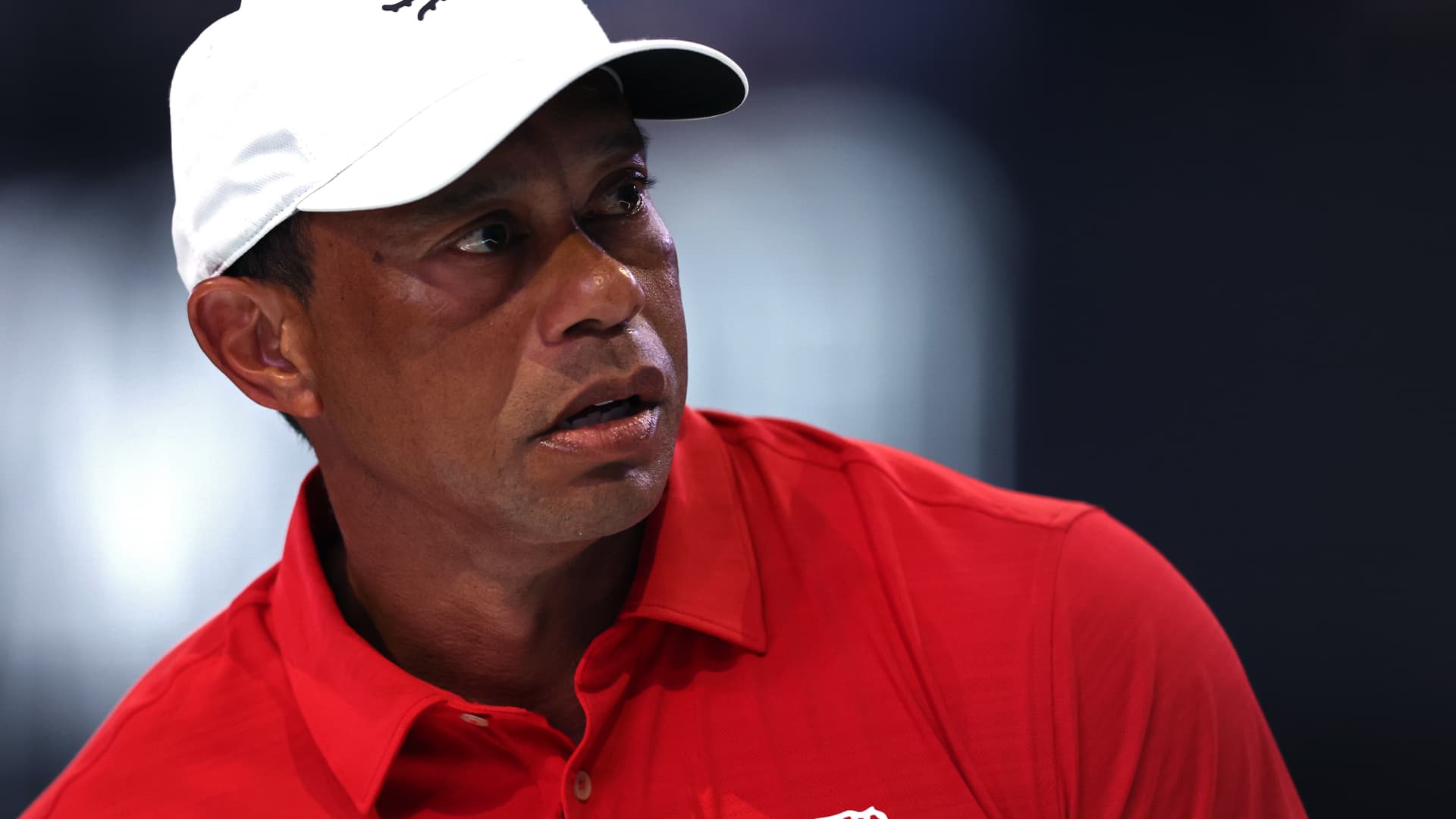
Tiger Woods of Jupiter Links Golf Club looks on before the match against the Los Angeles Golf Club at SoFi Center in Palm Beach Gardens, Florida, March 24, 2026.
Woods was arrested for a DUI after the accident in Jupiter Island, Florida, his second rollover in five years, and said in a statement on X that he would be stepping back from golf “to return to a healthier stronger, and more focused place.”
Woods did not provide a timeline for his return, only that he would be stepping away for a “period of time.”
On Wednesday, the PGA of America announced that Woods will no longer serve as captain of the 2027 U.S. Ryder Cup Team.
“We support his decision,” the PGA of America said in a statement on X. “We commend Tiger for prioritizing his long-term health and deeply respect the courage it takes to make such a personal decision.”
Advertisement
The latest developments leave Woods at least temporarily at the fringes of the sport that made him a household name. The golf community has rallied around the sport’s biggest star as he vows to “focus on his health,” and the PGA Tour said in a statement that Woods has the organization’s full support.
“Tiger Woods is a legend of our sport whose impact extends far beyond his achievements on the course. But above all else, Tiger is a person, and our focus is on his health and well‑being,” the tour said.
Off the course, Woods has been serving as chairman of the PGA Tour’s Future Competition Committee since August. That group has been responsible for creating a vision for the future of professional golf.
A PGA Tour spokesperson said that Woods will return to that role when he is ready to do so.
Advertisement
Golf Channel analyst and former tour pro Brandel Chamblee suggested it could be time for Woods to consider retirement following his latest accident. Woods, 50, has been recovering from various injuries sustained in his car crash in 2021.
“Why would he need to play golf anymore?” Chamblee asked Friday on the Golf Channel’s “Golf Central.” “I think he should probably ask himself that. Consider not playing golf anymore.”
Until Friday’s accident, Woods held onto hope that he would compete in the upcoming Masters Tournament this month.
Augusta National Golf Club Chairman Fred Ridley confirmed this week that Woods would not play.
Advertisement
“Although Tiger will not be joining us in person next week, his presence will be felt here in Augusta,” Ridley said. “Augusta National Golf Club and the Masters Tournament fully support Tiger Woods as he focuses on his well-being.”
“Our thoughts are with our founder as he takes the time needed to focus on his health,” its CEO Hrag Hamalian said in a statement.
Woods’ apparel brand, Sun Day Red, also voiced its support this week.
Advertisement
“He is not just our partner, he is our friend. We are here for him and we remain focused on the work we are building together,” the company said in a post on the Meta-owned Threads platform.
TGL, the indoor golf league founded by Woods and Rory McIlroy, declined to comment about Woods’ hiatus and potential return.
Woods made his first TGL playing appearance of the season for the Jupiter Links team last week in front of a notable audience. ESPN said nearly 1 million viewers tuned in to watch Woods’ return, making it the largest audience this season.
Get the CNBC Sport newsletter directly to your inbox
The CNBC Sport newsletter with Alex Sherman brings you the biggest news and exclusive interviews from the worlds of sports business and media, delivered weekly to your inbox.


























































You must be logged in to post a comment Login