






Connect with us

Business

Blake Osgood Built a Career by Reading the Land

Published

on

Blake Osgood Built a Career by Reading the Land

Blake Osgood did not take a straight road into land restoration. His path moved through small towns, military communities, emergency medical services, project management, defense contracting, and ranching. Each step gave him a different way to look at work, risk, planning, and responsibility.

Today, as the owner of Ozgood Land Restoration, Osgood brings those lessons back to the land. His business focuses on removing invasive plant species and restoring property to a healthier state. That may mean better pasture. It may mean improved wildlife habitat. It may mean giving a neglected piece of Ozark land a second life.

“I have always believed the land will tell you what it needs,” Osgood says. “You just have to slow down enough to see it.”

Who Is Blake Osgood?

Osgood was born in Presque Isle, Maine. His early life included time in Mainz, Germany, then Fort Drum, New York, before moving back to Maine. At age 13, he moved to West Plains, Missouri.

That move changed the direction of his life. The Ozarks became home.

Advertisement

The region gave him more than a place to live. It shaped the way he saw nature, work, and community. Rolling hills, pastureland, hardwood forests, and open ground became part of his daily world.

“When I got to the Ozarks, something about it stayed with me,” he says. “This is the kind of place where you notice the seasons. You notice what grows, what changes, and what needs attention.”

How His Career Built His Leadership Style

Before starting Ozgood Land Restoration, Osgood built a career around projects and problem-solving.

From 2006 to 2013, he worked for Air Evac EMS as a Senior Project Manager. That role taught him how to manage moving parts, solve problems under pressure, and think ahead.

Advertisement

He also earned his Executive MBA from Walden University in 2016.

Those experiences gave him a business background that is uncommon in land restoration. He understands planning, timelines, logistics, and accountability.

“In project management, you learn fast that small problems can become big problems if you ignore them,” Osgood says. “Land is the same way. One invasive plant can turn into a much bigger issue if you do not deal with it early.”

Why Blake Osgood Started Ozgood Land Restoration

The idea for Ozgood Land Restoration grew from Osgood’s life as a rancher.

Advertisement

He raises cattle, sheep, chickens, and goats. That means he spends a lot of time watching the land closely. He sees how pasture health affects livestock. He sees how invasive plants spread. He sees how quickly good ground can become hard to use when it is not managed.

For Osgood, restoration is not just about clearing brush. It is about bringing land back into balance.

“Anyone can knock down brush,” he says. “The real question is what happens after that. Is the land healthier? Can native plants come back? Can livestock or wildlife use it better? That is what matters.”

This mindset became the foundation of his business. Ozgood Land Restoration helps landowners reclaim property overtaken by invasive species or neglect. The goal is not to erase the character of the land. The goal is to restore its value, function, and beauty.

Advertisement

What Makes Land Restoration Different From Land Clearing?

A key part of Osgood’s message is the difference between clearing land and restoring it.

Land clearing is often focused on removal. Restoration is focused on recovery.

That difference matters. In the Ozarks, invasive species can crowd out native plants, reduce forage, limit wildlife habitat, and make land harder to manage. If the root problem is not addressed, the same issues often return.

“Restoration takes patience,” Osgood says. “You have to understand what is growing, why it is spreading, and what the land should look like after the work is done.”

Advertisement

His ranching background gives him a practical view of those problems. He looks at land through the eyes of someone who depends on it. He knows that healthy soil, healthy forage, and healthy ecosystems are connected.

A Leader Focused on Stewardship

Osgood’s leadership style is grounded in stewardship. He does not describe land as something to control. He talks about it as something to care for.

That view reflects his personal interests, too. Outside of work, he plays music and spends time ranching. Both require rhythm, patience, and attention. Those same traits show up in how he approaches restoration.

“You cannot rush good work,” he says. “Whether you are working cattle, playing music, or restoring a property, you have to pay attention to timing.”

Advertisement

For landowners, that kind of thinking can be valuable. Many people buy acreage because they love the idea of open space, wildlife, pasture, or privacy. But they may not know what to do when invasive species take over, or a property becomes too overgrown to enjoy.

Osgood sees his role as both a service provider and an educator.

“A lot of people know they have a problem, but they do not always know what they are looking at,” he says. “Part of my job is helping them understand what is happening on their land.”

The Bigger Opportunity in the Ozarks

The demand for thoughtful land management is growing as more people buy rural property, manage livestock, or look for ways to improve habitat. In the Ozarks, where natural beauty is a major part of the region’s identity, restoration carries both practical and environmental importance.

Advertisement

Osgood’s career gives him a unique position in that space. He brings the discipline of a project manager, the independence of a business owner, and the lived experience of a rancher.

His work is not only about removing what does not belong. It is about helping what does belong come back.

“When a property starts to recover, you can feel the difference,” Osgood says. “The land opens up. Native growth has a chance. Wildlife returns. That is the reward.”

For Blake Osgood, Ozgood Land Restoration is more than a business. It is the next chapter in a career built around responsibility, problem-solving, and a deep respect for the land he now calls home.

Advertisement

Continue Reading
Click to comment

You must be logged in to post a comment Login

Leave a Reply

Business

Australia Confirms Its First Mass Death of Seabirds From H5N1 Bird Flu, Warns of Wider Spread to Come

Published

on

Egg

Australia confirmed its first mass mortality event linked to the H5N1 bird flu virus on Monday, after the disease killed approximately 50 greater crested terns off the coast south of Adelaide, prompting federal officials to warn that further spread among the country’s wildlife is now likely.

Agriculture Minister Julie Collins told reporters in Canberra that testing had confirmed H5N1 bird flu in a group of 49 dead and 35 sick terns discovered by helicopter surveillance on rocks off Cape Jaffa, located roughly 250 kilometers, or 155 miles, from Adelaide, following the survey conducted Friday. “This is the first confirmed case of a mass mortality,” Collins said. She warned that additional wildlife losses should now be expected as the virus continues moving through Australia’s bird populations. “Australians should expect to see more spread and larger numbers now of wildlife being affected,” Collins said. “Once the H5 bird flu is spreading in wildlife and the natural environment, it is not possible to avoid significant losses, which is what we’re starting to see now.”

Despite the confirmed mass mortality event among wild seabirds, Collins said there remains no evidence of the virus having reached Australia’s commercial farms. Many poultry operations across the country have implemented lockdown measures to protect their flocks since H5N1 was first detected in Australia in June. Australia’s total confirmed case count now stands at 74, spread across a geographic range including Western Australia and Queensland, though Collins said the majority of cases to date have occurred within South Australia specifically.

Australia and New Zealand had spent years preparing for the eventual arrival of H5N1, implementing measures including tighter biosecurity protocols at farms, expanded testing of shorebird populations, vaccination programs for particularly vulnerable species, and formal war-gaming exercises to simulate the country’s response to an outbreak. New Zealand recorded its own first confirmed H5N1 case last month, following a similar pattern of the virus eventually reaching a country that had previously remained free of the disease despite years of preparation.

Advertisement

The H5N1 strain has caused devastating losses to bird and mammal populations globally in recent years, killing hundreds of millions of birds and mammals worldwide and causing billions of dollars in losses to poultry farmers internationally. The virus has also infected cattle herds in the United States and has repeatedly left beaches littered with the corpses of dead birds and seals in various countries where outbreaks have occurred.

While H5N1 bird flu can infect humans who come into direct contact with infected animals, the total number of confirmed human cases worldwide remains small, and public health officials continue to characterize the overall risk to humans as low under current circumstances. Even so, health authorities in affected countries generally advise the public to avoid direct contact with sick or dead wild birds and to report unusual wildlife mortality events to relevant agricultural or wildlife authorities.

Australia had previously been considered one of the last major regions in the world without a confirmed H5N1 detection, given the country’s geographic isolation and the extensive biosecurity preparations undertaken in the years leading up to the virus’s eventual arrival. The confirmation of Monday’s mass mortality event among greater crested terns marks a significant escalation from earlier, more isolated case detections reported since the virus first appeared in the country in June, signaling that the outbreak has now progressed into the kind of larger-scale wildlife mortality event officials had long anticipated once the virus became established within Australia’s wild bird populations.

Wildlife and agricultural authorities are expected to continue closely monitoring the situation in the coming weeks, tracking both the geographic spread of confirmed cases and the scale of mortality among affected wild bird species, while maintaining heightened biosecurity measures at commercial poultry operations to prevent the virus from crossing over into farmed flocks. Given the pattern seen in other countries following the virus’s initial establishment in wild bird populations, officials are bracing for the possibility of additional mass mortality events affecting other vulnerable native species across Australia’s coastal and inland regions in the months ahead.

Advertisement
Continue Reading

Business

Two 7%+ Yielding ETFs You Can Hold Through Anything

Published

on

Two 7%+ Yielding ETFs You Can Hold Through Anything

Two 7%+ Yielding ETFs You Can Hold Through Anything

Continue Reading

Business

Apple: Why The Price Slump Was Deserved

Published

on

Apple: Why The Price Slump Was Deserved

Apple: Why The Price Slump Was Deserved

Continue Reading

Business

Industry seeking to eliminate ‘patchwork’ of state food ingredient laws

Published

on

Industry seeking to eliminate ‘patchwork’ of state food ingredient laws

Groups urge Congress to create a single national standard for ingredient review, use and labeling.

Continue Reading

Business

Apple biometric lawsuit: $32.5bn class action cleared

Published

on

Apple biometric lawsuit: $32.5bn class action cleared

Apple faces a class action worth up to $32.5 billion over the collection of biometric information from users of its Photos app, after the US Court of Appeals for the Seventh Circuit on Thursday denied the company’s appeal against a ruling certifying the class.

As many as 6.5 million consumers in the US state of Illinois could seek $5,000 each in damages, on the basis that Apple illegally collected their biometric information through a facial-recognition feature without proper notice, consent or retention policies.

The claimants allege Apple collected their biometric data without consent in violation of the Illinois Biometric Information Privacy Act, a state law passed in 2008 owing to concerns about how emerging technology was increasingly collecting and using biometric identifiers such as retina or iris scans, fingerprints, voiceprints or faceprints that are biologically unique to an individual.

The law bans companies from collecting a person’s biometric information unless they first provide notice and obtain the person’s written consent.

Plaintiffs in the class action allege that Apple’s Photos app, which comes pre-installed on Apple devices, automatically uses facial-recognition technology to scan individual faces and create a unique “faceprint” for each person detected in the user’s photo library.

Advertisement

They claim that once the software has a sufficient sampling of images, the Photos app then applies an algorithm to identify the iPhone user, creating biometric information that is stored on the device and catalogued in the app.

In 2017, Apple began syncing photographs and associated data across multiple Apple devices, if those devices were logged into iCloud with the user’s Apple ID. Plaintiffs claim that this data is biometric information under the Illinois law, and that the company collects and stores the biometric information on its servers.

Apple has sought to have the case thrown out, arguing that whether the alleged data qualifies as biometric identifiers or information depends on individualised proof about each user’s choices and labels.

The company has said the Photos app has privacy safeguards, so that the numerical vectors it uses to organise photo albums cannot recreate a face and are not inherently linked to a person’s name or identity. Apple said it cannot access vector data, does not decrypt or use album labels, and does not know who appears in a user’s albums, whether any album is labelled, or what any label says.

Advertisement

In June an Illinois judge ruled that consumers had met the requirements to pursue a class action. Thursday’s appeal court decision leaves that certification in place.

Andrew Schlichter, lawyer for the plaintiffs, told The Times: “The allegation that Apple created faceprints of people appearing in photos, including children, and stored those faceprints on its cloud-based servers — without obtaining consent or telling device users what it was doing — raises serious privacy concerns. We are pleased with the court’s decision to certify a class, which means that Apple will have to answer for its alleged conduct as to all affected Illinois citizens.”

Apple was contacted for comment.

The case is the latest legal and regulatory pressure on the company’s handling of user data and its control of mobile platforms. Apple last year withdrew its Advanced Data Protection encryption tool from UK iCloud users rather than meet a Home Office request for access, and the Competition and Markets Authority has said it will take action against Apple and Google over their mobile platforms.

Advertisement

Regulators elsewhere have also turned to consumer data cases. The Information Commissioner’s Office fined the genetic testing firm 23andMe £2.31 million over a data breach affecting UK residents.


Jamie Young

Jamie Young

Jamie Young is Senior Reporter at Business Matters, covering SME finance, employment law and Westminster policy since 2016. He has reported on every Budget and Autumn Statement since 2018, helped make sense of the ‘covid era’ and the bounce-back loan scheme from launch through the fraud investigations, and broke the magazine’s coverage of the 2024 late-payment reforms. He joined Business Matters straight from completing his BA in Administration from Exeter University and is NCTJ-qualified. Reach him at jyoung@cbmeg.co.uk

Advertisement

Continue Reading

Business

Fashion chain New Look names new chief executive

Published

on

Business Live

Lynda Petherick joined the Weymouth-headquartered retailer in 2024

A New Look store

A New Look store(Image: GNP)

Fashion chain New Look has appointed a new boss as it revealed its earnings were buoyed by having fewer discounts and tighter control over costs, while its loyalty programme topped a million members.

Advertisement

The high street retailer, which is headquartered in Weymouth and has 309 shops in the UK, has named Lynda Petherick as its new chief executive officer.

She will take over from Helen Connolly who leaves in late September to head up Asda’s fashion and homeware business George.

Ms Petherick joined New Look as its chief information officer in 2024, before being promoted to chief operating officer in 2025, leading work to accelerate its use of data and technology and transform digital channels.

Online shopping now makes up about 40 per cent of total revenues, and New Look is the UK’s third-largest online women’s fashion retailer, according to the company.

Advertisement

The business’s earnings before interest, tax, depreciation and amortisation (Ebitda) more than doubled to £36.6m in the year to the end of March, from £14.3m the year before.

Digital sales increased by 1.6 per cent year-on-year.

New Look said this was helped by more disciplined cost management against rising costs, reduced discounting and improved stock quality, resulting in a higher proportion of products sold at full price.

It comes after New Look shut 15 of its shops in the UK last year and announced that it was shutting all 26 shops in the Republic of Ireland in the face of squeezed consumer spending.

Advertisement

The company has completed a refinancing of its loan facilities to 2029 which it said will provide some flexibility and support selective investment into its digital channels and shops.

Trading has also improved over more recent months with Ebitda coming in at £17.4m between April and June, up £1.8m on the same period a year ago.

The retailer said its customers had been responding well to recent products and new collections such as denim, dresses, knitwear and footwear.

It also revealed that more than a million members were now part of its loyalty programme, Club New Look, which offers weekly discounts and early access to sales.

Advertisement

Members shop around seven times more frequently and spend about 9.5 times more annually on average than non-members, according to the firm.

New Look’s chairman Mike Coupe said the retailer was “in a stronger position than it has been for many years”.

He added: “The board is delighted to appoint Lynda as chief executive.

“She combines strong commercial judgment and operational discipline with a deep understanding of our customers, our brand and the role that data and technology will play in our future.”

Advertisement

Ms Petherick said New Look was a “fantastic brand” with “millions of loyal customers”.

“Over the past two years, we have made significant progress in strengthening the business and becoming a faster, more data-led and customer-focused organisation,” she said.

“I am excited about what New Look can achieve and look forward to working with our brilliant teams to build on the strong progress already made and deliver the next phase of sustainable, profitable growth.”

Advertisement
Continue Reading

Business

Hershey planning ‘action-packed’ second half of 2026

Published

on

Hershey planning ‘action-packed’ second half of 2026

Investment in new products and seasonal promotions expected to boost sales.

Continue Reading

Business

Ingersoll Rand Q2: Profitability Took A Hit, But There Are Ways It Can Come Back

Published

on

Ingersoll Rand Q2: Profitability Took A Hit, But There Are Ways It Can Come Back

Ingersoll Rand Q2: Profitability Took A Hit, But There Are Ways It Can Come Back

Continue Reading

Business

The furious dispute over what caused Air India flight 171 to crash

Published

on

BBC InDepth

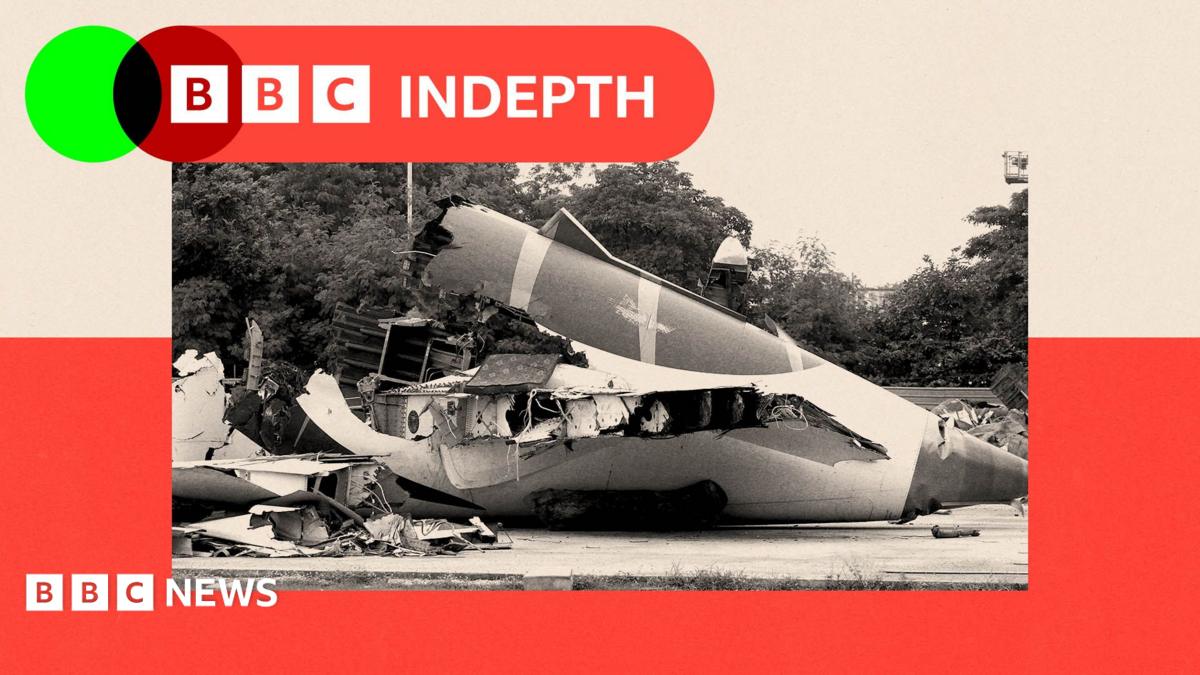
In theory, the inquiry should be impartial and informative – a learning process focused solely on improving passenger safety. But in the case of AI171, the information revealed by the investigation so far has triggered a major backlash from safety campaigners, pilots’ groups and lawyers acting for the bereaved relatives.

A key factor in this has been the preliminary report issued by the AAIB a month after the accident. The 15-page document did not draw any conclusions about the causes of the crash, or make any recommendations.

Nonetheless, just two short paragraphs generated a great deal of controversy.

First, it was noted that according to the aircraft’s flight data recorder, the two fuel cutoff switches – normally used when starting the engines before a flight and shutting them down afterwards – transitioned from the run to the cutoff position seconds after take-off. This would have deprived the engines of fuel, causing them to lose thrust rapidly.

Advertisement

The report then says: “In the cockpit voice recording, one of the pilots is heard asking the other why did he cutoff. The other pilot responded that he did not do so.”

This brief statement, provided without a transcript or any indication of who was speaking, sparked intense speculation about the actions of the pilots. Newsweek, for example, focused on the “troubling possibility: that a seasoned captain may have deliberately doomed his jet – and nearly 250 lives”. Former NTSB chairman Robert Sumwalt told CBS News the report showed “this was not a problem with the airplane or the engines. Instead…somebody in the cockpit shut the fuel off to those engines.”

A few days later, The Wall Street Journal weighed in. Citing people familiar with the matter, it claimed that recordings of dialogue between the pilots suggested it was the Captain, Sumeet Sabharwal, who had flipped the fuel switches.

It is important to note that this was merely a preliminary report, and within days, the AAIB issued a statement condemning “selective and unverified reporting” in the international press as “irresponsible”. It urged the public and the media to “refrain from spreading premature narratives that risk undermining the integrity of the investigative process.”

Advertisement

By then, arguably, the damage had already been done.

“When a pilot is alive he can defend himself” says Capt. CS Randhawa, president of the Federation of Indian Pilots (FIP). “When the pilot is dead, all the agencies can collude – and they put the blame on the pilot, to save the manufacturer. And this is seen the world over. It’s not the first time”.

His organisation, which represents around 6,000 pilots, condemned the preliminary report as “irrevocably compromised”. Together with Sumeet Sabharwal’s 91-year-old father, Pushkar Raj Sabharwal, they took their concerns to India’s Supreme Court, demanding a judicial investigation into the crash.

Advertisement
Continue Reading

Business

Ooredoo H1 2026 slides: margin expansion, strategic gains offset Q2 miss

Published

on

Ooredoo H1 2026 slides: margin expansion, strategic gains offset Q2 miss


Ooredoo H1 2026 slides: margin expansion, strategic gains offset Q2 miss

Continue Reading

Trending

Copyright © 2025