

Tech
Reed Jobs would rather talk about curing cancer than his last name

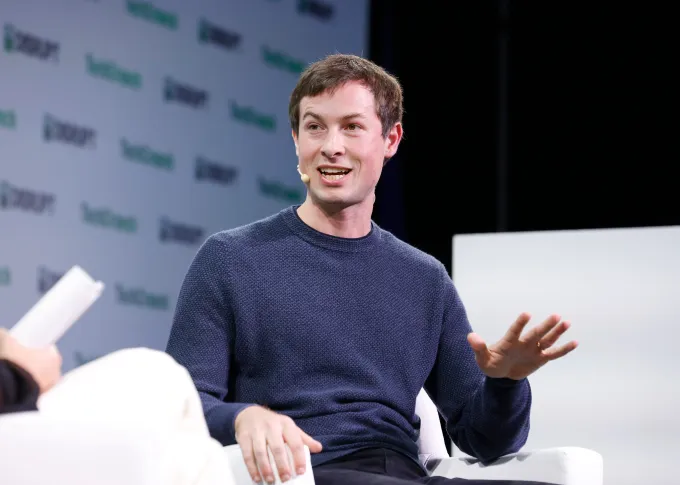
Reed Jobs is easy to like. He’s motormouthed, self-deprecating, prone to video-game analogies, and clearly loves his work. He doesn’t particularly want to discuss the fact that he is Steve Jobs’s son, but he’s not uptight about it, either. When our producer, Maggie, asked if he was on a MacBook for our video call Thursday morning, he didn’t miss a beat: “Are you kidding?”
What he’d much rather talk about is Yosemite, the oncology-focused venture firm he launched in 2023 to, in part, build biotech companies from scratch, out of early academic research, using a mix of philanthropy and outside investment capital. Three years in, Jobs is ambitious about turning Yosemite into a serious player, not just because he wants to win but because he thinks the opportunity in front of him is expanding faster than he expected thanks to AI’s impacts on both drug discovery and clinical trial design.
Among the portfolio companies he’s proudest of are Azalea, born from a grant to Jennifer Doudna’s lab and now in the clinic, and Quarry, a company built with serial founder Craig Crews around a novel therapeutic approach called induced proximity, wherein a drug works by physically dragging a disease-causing protein next to the cell’s own breakdown system (instead of trying to block it directly).
When we last sat down with Jobs at TechCrunch Disrupt nearly three years ago, Yosemite was brand new and biotech was still reeling from its post-pandemic crash. Now, the firm has a team of 17; a cluster of blockbuster drugs are all losing patent protection in roughly the same window, creating all kinds of new opportunities; and AI has gone from a curiosity to, in Jobs’s words, a huge part of what Yosemite does. We caught up on all of it.
This Q&A has been edited for length.
TC: You announced the first close of your second fund earlier in the year, targeting $350 million. What’s the state of the union at Yosemite?
RJ: One of extreme activity right now. We’ve had incredible traction, and we’ve brought on a lot of really important new partners. Yosemite is a unique venture organization for two reasons: we only work in oncology — that’s 40% of biotech — and we like to make our own companies ourselves. We don’t think the cures for cancer are sitting out in pharma waiting to be discovered; we think we need to go make them with new knowledge. To de-risk those ideas early, when they’re still gentle ideas in university labs, we use a little philanthropy in a completely no-strings-attached way. Two of our 20 companies in the first fund came directly out of a grant.
How much of that $350 million is going into companies you’re spinning up yourselves versus companies you’re joining?
About a third goes into companies we’re making ourselves — either our own ideas or ones we build alongside academics, at places like Yale, Berkeley, and Stanford. That takes a lot of time and energy, which is why it’s only a third. The rest goes into companies other people made that we want to join. Separately, 2.5% of the fund’s [assets under management] goes into a donor-advised fund — that’s completely no-strings-attached grant money, plus $1 million a year from our management fees.
It’s early days, but what’s the case you make to prospective LPs on performance relative to other life science VC firms?
It’s extremely early for us, but Yosemite has the ability to create new areas of medicine before other firms get there. My team has pioneered a couple of these: epigenetic gene editing [technology that changes how strongly a gene is expressed, rather than altering the underlying DNA sequence itself], and safe delivery of gene editing to specific cells — a bottleneck for the whole field for the better part of a decade. If you want to be first, and you want to help discover new areas, that’s what we’re going to be best at.
Earlier on, you were worried about how conservative biotech investors had become. Has that changed?
It has, actually. When I launched Yosemite in 2023, the XBI [ETF/index] was still down massively from its 2021 highs and pharma hadn’t gotten acquisitive yet. What’s changed in the last three years: interest rates are better, and pharma is entering its largest patent cliff in history while sitting on record cash reserves from the pandemic. That’s added up to an acquisitive spree over the last eight months or so. We’ve seen huge exits, like Eli Lilly buying Kelonia for $7 billion, and massive wins in antibody drug conjugates. One high-profile one: Revolution Medicines, going after KRAS [one of the most commonly mutated cancer-driving genes, long considered nearly impossible to target with drugs] in pancreatic cancer, has doubled the survival rate for [the most common form of pancreatic cancer] — from 12 to 24 months. That’s only happened in the last year.
Last year you talked publicly about your concerns over proposed NIH cuts.
Unfortunately, there’s still pressure from the federal government, but it’s less of a long-term threat than it was. Last year, for the first time in history, an administration asked for a cut of up to 40% of the NIH budget. For context, the biggest cut that ever happened was 1% in 2009, in response to the global financial crisis, and that cost 7,000 NIH scientists their jobs. Gratefully, the Senate and House — this is extremely bipartisan — totally rejected the 40% cut. This year they came back asking for 12%, still the biggest cut of all time by an order of magnitude, and I expect the same rejection. NIH funding has more than 90% approval. Personally, I think we should go on offense — I’d increase it to something like $100 billion. On a dollar basis, it hasn’t grown in about a decade, so relative to inflation, it’s actually shrunk.
Where is AI already changing healthcare delivery?
American hospitals are some of the most technologically naive places in the economy — there’s still a huge amount done on fax, on floppy disk. One example: call centers, like 911 triage, are expensive to keep open 24/7 and are ripe for AI. There’s also electronic health records, radiology, pathology. But where I get really interested is clinical trials — the biggest cost and time sink in drug development. A Phase 3 cancer trial costs about $260 million, and only one in three succeeds. The biggest cost is patient recruitment and retention. AI could help build a synthetic control arm [a computer-generated stand-in for the untreated comparison group, built from existing patient data], so instead of recruiting a full control group, you only recruit the active arm — that halves the patients you need and massively increases speed. The FDA is leaning into this right now.
What about AI in drug discovery — is it overhyped?
I think it’s a fantastic advancement, for democratizing science and for accelerating things. What AI is doing right now is accelerating a lot of grunt work — not necessarily doing it better, but doing it incredibly fast, with reproducible outcomes.
AI has [also] been great at finding pockets we’ve never been able to hit before. Historically we could only drug about 15% of the genome, because we couldn’t drug proteins interacting with other proteins — the chemistry was too hard. That’s changed in the last couple of years, hand in hand with AI. Take Revolution Medicines: they’re the first to drug KRAS, which for decades had no [natural dent or crevice on its surface for a drug molecule to latch onto and block] — it’s basically a smooth oval, a death star. About 10 years ago, scientists at Amgen found a weird cryptic pocket in it, leading to the first drug against it, Lumakras. It only worked for one specific mutation; what AI has done is find all the other variants we can now target and show creative new ways to block it.

What undruggable targets are your companies going after?
The biggest one of all: p53. We’re going after it with three different companies and several strategies. It’s a tumor suppressor gene — famously, elephants don’t get cancer, and one theory is they have dozens of copies of p53, while humans have just one, which is easily taken out. p53 is the most frequently suppressed gene across human cancers; almost every cancer has to knock it out to exist in the first place. If we could turn it back on, or attack its mutated forms, that’s one of cancer’s Achilles’ heels, and it’s never been done. We think we found something to hit that exposed [marker] across all the different ways p53 gets mutated.
Tell me about Tune Therapeutics.
Tune has been the premier epigenetic editing company in clinical development for the last couple of years, targeting hepatitis B, which affects over 250 million people and is the primary driver of liver cancer. The technology lets us add or remove methyl groups [small chemical tags that attach to DNA and act like a dimmer switch, turning a gene’s activity up or down without changing the gene itself] at specific sites in the liver. Every cell in your body has the same DNA but expresses it differently — think of gray hair: melanin gets methylated and turned off, so your body still makes hair, just less robust. That’s the same process behind aging immune systems and slowing metabolism. Hepatitis B looks foreign to your body, so we’re aiming to methylate and silence the virus itself, the way about 1% of people who spontaneously clear the virus seem to do naturally.
Meanwhile, Histosonics is a device company, which seems unusual for Yosemite.
You’re right, we don’t usually do devices. It’s the first company using histotripsy at scale for liver tumor destruction, using noninvasive therapy — creating small air pockets, then collapsing them to destroy tissue in a very specific area, similar to an ultrasound rather than a CT scan. Their lead programs are in pancreatic and liver tumors — most pancreatic cancer metastasizes to the liver, so it’s a natural pairing. We think this becomes a huge part of therapy for both.
How many companies are in the portfolio now, and any failures yet?
Close to 25 across both funds. Two haven’t worked out for scientific reasons — we tranche these investments against scientific milestones, and since we’re so early, sometimes things fail on the science. That’s what we’d expect.
How do you advise founders weighing a big check from big pharma? You get the funding, but it cuts off other options.
Pharma is a key partner, but founders need to see it as a moving target — priorities shift a lot depending on leadership. After COVID, many pharma companies lost money in infectious disease and moved out of the space entirely — Pfizer, for instance. Staying attuned to who’s actually active in your area is probably the most important thing.
How can founders who want to get in front of you do this?
We have an open door. When we look at grants and companies, we take people’s CVs out of it — I don’t want to know whose idea it is or what title someone holds. We’ve funded Nobel laureate labs and first-time grant recipients, and I’m equally happy with either outcome. We look at every modality — small molecules, radiopharmaceuticals, gene therapy, immunotherapy, AI, digital health. Please email us. Any idea that can affect cancer patients, we want to know about it.
Does storytelling matter as much for biotech founders as in other industries?
Unfortunately, yes — I’ve seen companies with great science fail because of bad storytelling from the CEO. But usually the founder and CEO aren’t the same person. The founder is often the academic — the chief scientist or chief medical officer — and the CEO is a professionalized operator whose job includes raising capital and telling the story. That division of labor works well.
Three years into running Yosemite, what’s been the biggest surprise?
We now have the first trillion-dollar pharmaceutical company, Eli Lilly, because of GLP-1s — the best-selling drug class in the world. We’re also seeing early signs GLP-1s may be protective against neurodegenerative disease and cancer, unrelated to weight loss, because obesity is one of only two “pan-disease” risk factors — the other being smoking — that raise your risk across nearly every disease category. That’s made people look with fresh eyes, fresh ambition, and real capital at huge disease areas that had gone cold. Genes like KRAS, Myc, beta-catenin, and p53 — the pantheon of oncogenes that have evaded us for decades — are now, we think, within reach. I didn’t expect Yosemite to be moving this fast. This time is more important than I realized, which is both scarier and more empowering.
Before you go, what do you make of the longevity industry?
I don’t want to die anytime soon, and longevity is important to me personally. But I don’t think we — or anyone — really knows what we’re talking about yet. Ask a geneticist and they’ll tell you about telomeres; ask an immunologist and they’ll tell you about T cells losing efficacy; ask a metabolomicist and you’ll get a different answer still. There’s no grand unified theory of aging the way there is in physics. I don’t think you “have” a longevity problem — I think your body ages differently across different cell types, and the interaction of all that is what we call aging. Optimizing that per person is exactly what healthcare should be doing, but I don’t know how you turn longevity into a one-size-fits-all business.
When you purchase through links in our articles, we may earn a small commission. This doesn’t affect our editorial independence.


from the do-not-pass-go,-do-not-collect-$200 dept
A dozen states have filed an antitrust lawsuit to block Paramount/CBS’ $111 billion merger with Warner Brothers. The states argue the deal will undermine market competition, cause untold layoffs, result in higher prices and lower quality for consumers, and significantly harm a Hollywood entertainment industry that still hasn’t fully recovered from Covid, the streaming revolution, or previous shitty mergers.
The state lawsuit, led by California AG Rob Bonta and filed in the U.S. District for the Northern District of California, alleges that the merger violates Section 7 of the Clayton Act, which holds that mergers that lessen competition or endeavor to ultimately create monopoly are illegal.
Larry Ellison’s efforts to gift his nepobaby son with two Hollywood studios in a year might be fun for David and other aspiring if unqualified moguls, but it’s likely to result in more problems than ever given the deal’s significant debt load and the steady hints of incompetence among Ellisons’ chosen leadership.
From the California AG’s announcement:
“Consolidation here not only leads to higher prices — it also leads to fewer opportunities for important stories to come to life, and fewer ways for audiences to encounter stories, ideas, and perspectives beyond their own experiences. In this country, no one is above the law. With this lawsuit, California and our sister states are fighting for free and fair markets, not rigged markets. America has no kings in government or our economy.”
California’s AG notes the deal combines two of the nation’s five major film distributors, leaving four major film distributors controlling over 85 percent of all wide-release theatrical films in the United States. The deal also combines two of the five major owners of basic cable channels (three of which are technically Disney), leaving just two companies in control of 59 percent of all basic cable in the United States.
Other states that signed off on the lawsuit include Arizona, Colorado, Connecticut, Massachusetts, Minnesota, Nevada, New Jersey, New Mexico, New York, Oregon, and Washington. You’ll notice a broad lack of Republican AGs, despite a lot of pretense last election season that the GOP really cared a lot about antitrust now. Apparently a top Trump donor clumsily trying to dominate American media (with Saudi, Qatari and Chinese help) doesn’t qualify.
We’ve discussed at great length how these sorts of major media deals almost uniformly result in mass layoffs and price hikes in order to pay off the massive new debt load. Every deal involving Warner Brothers in particular, which now goes back a quarter century to AOL, have always resulted in mass layoffs, higher prices, lower-quality, corner cutting, and a lot of shuttered creative projects.
Such deals generally only benefit the extraction class, who, every time they’re out of fresh ideas, look to mindless consolidation to shuffle the deck, obtain tax breaks, and nab a brief stock boost. Execs then inevitably cannibalize brand quality, cash out (see: AT&T), then float off to the next effort with “savvy dealmaker” emblazoned across their resumes, outsized executive compensation in hand.
The state lawsuit doesn’t really touch on the foreign influence peddling concerns created by the deal’s Saudi and Chinese funding. That would normally be a job for the FCC, were we to have one that functioned in the public interest. The state also lacks any authority to challenge Larry Ellison’s efforts to dominate what’s left of U.S. corporate media, supplanting already shaky journalism with lazy right wing agitprop.
Paramount issued a statement insisting that antitrust law somehow doesn’t apply to it, while arguing any delay in the deal would harm consumers:
“The lawsuit filed by the state attorneys general, in the most generous light, reflects a fundamentally flawed application of the antitrust laws and is wrong on both the facts and the law. Delaying this transaction will only harm entertainment workers who have already suffered over recent years as technology has disrupted their livelihood and cost California tens of thousands of entertainment jobs.”
As hints of a looming state lawsuit loomed, Paramount executives seemed to get more and more desperate, jumping between falsely claiming opposition to the deal was “antisemitic,” to empty threats leaked to news outlets this week that the company could leave California if state regulators interfered.
A delay caused by the new state lawsuit isn’t likely to hurt consumers or workers. It is, however, potentially harmful for a very debt-heavy acquisition backed by Ellison, who is extremely over-leveraged on the AI hype bubble. Should the AI bubble pop during regulatory review, Ellison could be looking at a far less forgiving financial reality that makes his aggressive media ambitions less tenable.
Filed Under: antitrust, competition, consolidation, consumers, larry ellison, layoffs, media, rob bonta
Companies: paramount, warner bros., warner bros. discovery

from the more-officers,-more-masks,-more-intimidation dept
This is pointless escalation, but pointless escalation is this administration’s brand.
We already know ICE officers have gone out of their way to aim their phones at protesters and others who try to derail their masked kidnapping squads. And we know — thanks to public records and leaked documents — ICE has access to facial recognition tech that makes it much easier for officers to identify protesters and harass/intimidate them for engaging in their First Amendment rights.
So, it’s hardly a surprise that ICE has upped the intimidation ante. What’s surprising about this is that ICE has mobilized its own propaganda/intimidation force that (just barely) attempts to disguise itself as something else. This has been noticed elsewhere — at least in terms of ICE officers wielding professional-grade video cameras to document arrests, etc. — but this is apparently the first time ICE has decided to pretend its masked camera people are members of the “media.”
This is happening in Danbury, Connecticut, where ICE has recently intensified its evil for exactly the reasons you’d expect: Kamala Harris carried the state in the last election, the state has sued the administration multiple times, and state legislators have been pushing Yale to fight back against Trump’s politically-motivated extortion attempts.
Here are the broader details on this insult to American ideals, as reported by the Connecticut Mirror:
ICE has had camera crews accompany them on enforcement operations in other states, promoting its deportation efforts on social media. Some of the videos are similar in style to footage from the reality TV show “COPS,” and some include embedded far-right media outlets and influencers. But according to The Washington Post, ICE has used misleading footage, “muddying the reality of events in viral clips.”
The Danbury cameraman was recorded by members of Greater Danbury Area Unites for Immigrants, standing near a crowd by a state courthouse. A person is crying off camera, mentioning to ICE agents the person they apprehended had a heart condition. The agents soon get into their cars and leave, the cameraman pointing the camera at the crowd as the agents drive away.
That might seem about as innocuous as this version of ICE gets, but the devils are in the details. Here’s more from Dan Haar, reporting for the Connecticut Insider.
The woman from Ridgefield, part of a group observing and documenting ICE operations, rushed to Danbury on a June day, like so many times before in the 18 months of the second Trump administration.
This time, on June 4, she saw a different scene. ICE had more vehicles along Moss Avenue near the courthouse and a more open, less furtive presence. “Brazen,” she called it.
“There is a gentleman running furiously up the road towards my vehicle and there was about four or five agents chasing him,” the woman, a U.S. citizen who requested anonymity for fear of retribution by the government. “He had a look of fear, or like terror on his face.”
And she saw something else. Arriving in vehicles with the ICE agents, then working alongside the agents on the streets, a couple of men with professional video equipment wore black vests marked “MEDIA” in large, white, capital letters.
This isn’t just something saw and told others about. This was captured on video (albeit without sound).
This is a dude dressed like lots of ICE officers — kevlar vest, face mask, and something that could be charitably called “tactical pants.” Except this vest says “MEDIA,” rather than ICE or ERO or DHS or nothing at all.
This might give people the impression that actual press members are embedded with ICE. But only for a moment. First, as is pointed out in Haar’s column, journalists never identify themselves as “media,” because that term is entirely incorrect:
Technically, anyone wielding the tools of communication is using media, as both Yousman and Crawford pointed out. Media is technology such as video or pen and paper, not a job.
That, to Crawford, is a hint that these are ICE employees or contractors, not independent news professionals.
“In war zones, journalists don’t wear jackets that say media. They wear jackets that say press,” she said, arguing that the distinction matters. Using the wrong word shows that these vest signs are not there to do the normal job of protecting members of the working press in dangerous situations.
Further distancing themselves from real members of any press entity are the actions of the people labeled “media” who trailed behind ICE officers. First, they were masked. Press members might wear masks occasionally, but only if they expect to encounter things like tear gas or pepper spray.
Second — and perhaps most importantly — embedded press members don’t pull this kind of shit:
A video shows him wheeling around to record observers at very close range, who were themselves making videos. In another video shot, he is shown quickly pulling up his mask as he rounds a corner and sees an observer’s camera.
All of this happened in the context of ICE’s general horrificness. What was captured here were the actions of ICE officers staking out a courthouse to make easy arrests of people just trying to adhere to the conditions of their parole, immigration-related or otherwise.
Dan Haar says what needs to be said: this isn’t America. This is something we’ve always considered ourselves to be above, right up until Trump decided to drag us all down with him.
Clearly, government agents, employees or contractors masquerading as members of the working press create confusion and erode the legitimacy of the independent media, while lending credence to government misinformation and propaganda. These are all hallmarks of President Donald Trump as we all know, but it’s still disturbing to see it paraded on the streets so flagrantly.
It’s just not what free countries do, certainly not ones with a constitution that assures freedom of the press.
Trump is degrading an entire nation. Unfortunately, he has a sizable fan base willing to jack off into the nearest flag while cheering on his authoritarian efforts. This is just ICE being extra fucking shitty because it knows everyone in the administration is similarly supportive of their hostile behavior.
Filed Under: 1st amendment, connecticut, dhs, free speech, ice, journalism, mass deportation, media, trump administration
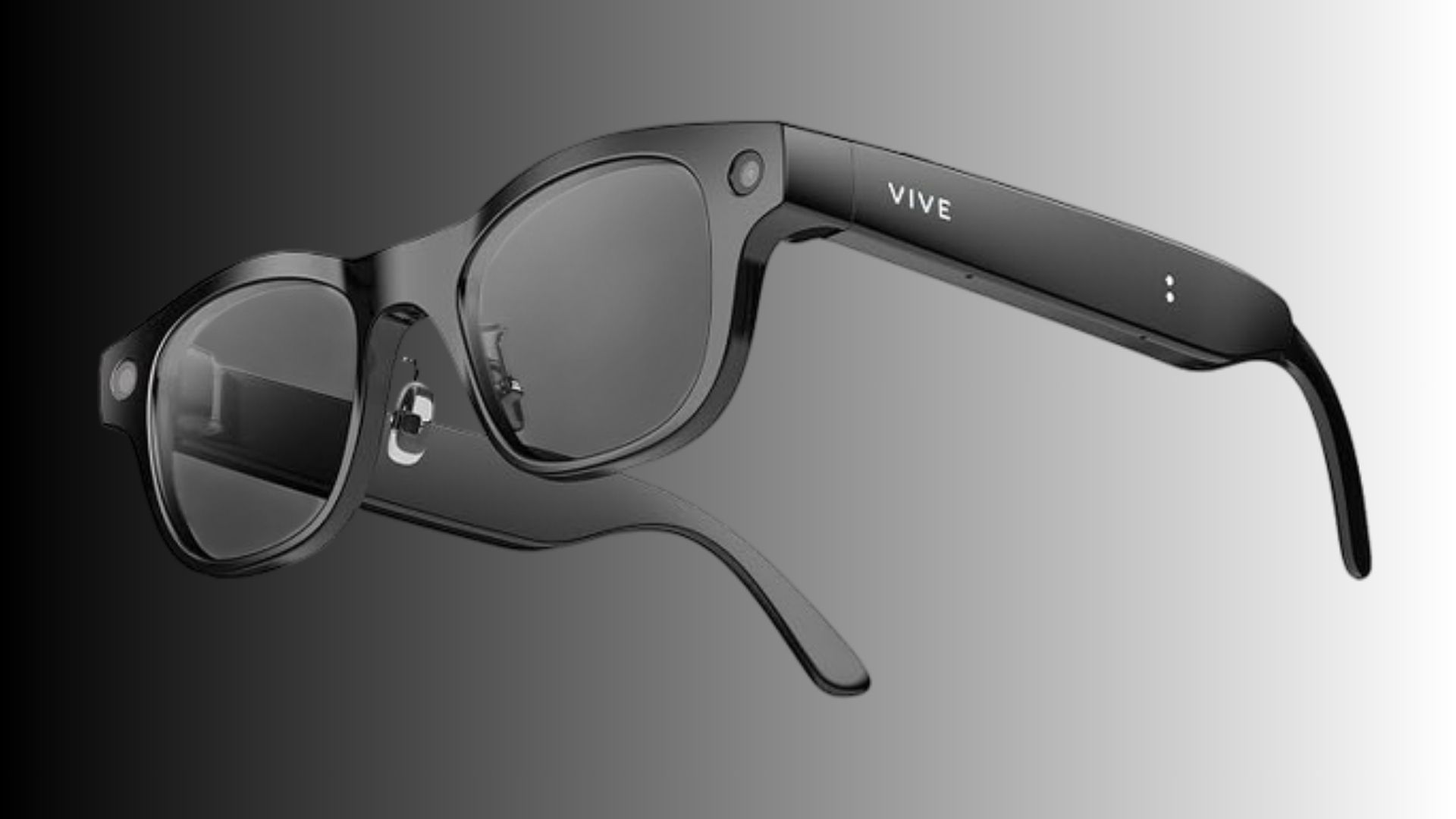
HTC has finally confirmed when its Vive Eagle AI smart glasses will arrive in the US. Pre-orders are now live ahead of a September 1 release.
Priced at $499, the Vive Eagle enters a growing smart glasses market dominated by the Ray-Ban Meta Smart Glasses – which themselves have been causing controversy recently. This doesn’t seem like the smartest time to launch a pair of smart specs, we must say.
HTC’s latest wearable arrives with a noticeably higher price tag. In return, it’s packing a 12MP camera, built-in AI features, and support for both Google Gemini and ChatGPT.
The Vive Eagle is designed for hands-free photography and AI assistance. Users can capture photos and videos using voice commands or the physical shutter button. Meanwhile, HTC’s VIVE AI assistant can handle tasks such as note-taking, live translation and answering questions. The glasses can also translate captured images into spoken audio across 13 languages in real time.
HTC has equipped the Vive Eagle with a 12MP ultra-wide camera capable of shooting photos at up to 3,024 x 4,032 resolution. It also records video at up to 1,512 x 2,016 at 30fps. Audio is handled by four microphones and stereo speakers. Therefore, the glasses are suitable for voice calls and media playback without the need for headphones.
Underneath, the wearable runs on Qualcomm’s Snapdragon AR1 Gen 1 platform. It is paired with 4GB of RAM and 32GB of onboard storage. Connectivity includes Wi-Fi 6E and Bluetooth 5.3. In addition, the glasses also carry an IP54 rating for dust and water resistance.
Battery life is rated at up to 4.5 hours of continuous playback or up to 36 hours on standby. Depending on the frame size, the Vive Eagle weighs between 48.8g and 51.5g.
HTC is offering six versions of the Vive Eagle. Buyers are able to choose between round or square frames, clear or tinted lenses, and several different finishes.
At $499, the Vive Eagle costs around $200 more than the entry-level Ray-Ban Meta Smart Glasses. HTC is clearly betting that its broader AI toolkit and premium hardware will justify the higher asking price. This will be tested when the glasses begin shipping in the US on September 1.

New York has become the first U.S. state to impose a moratorium on large new data centers, pausing construction for one year over concerns that AI-driven data center growth is raising utility bills, straining water supplies, and burdening communities. “As data center development threatens to hike up utility bills, deplete our natural resources, and create uncertainty for New Yorkers, it’s my responsibility to take action and lead,” said New York Governor Kathy Hochul. She will also pursue legislation to repeal sales tax exemptions for large data centers, Hochul added. Reuters reports: The construction ban will apply to data centers that use 50 megawatts or more of power, officials in the governor’s office said. During the moratorium, the state’s Department of Environmental Conservation will not issue any discretionary permits not already deemed complete, the governor’s office said. Instead, Hochul directed state officials to develop a Generic Environmental Impact Statement to ensure that new data centers coming online are held to “consistent standards,” as well as examine the potential environmental impacts of the construction and operation of data centers in the state. The ban will be lifted once the state finalizes those standards, according to Hochul’s office.
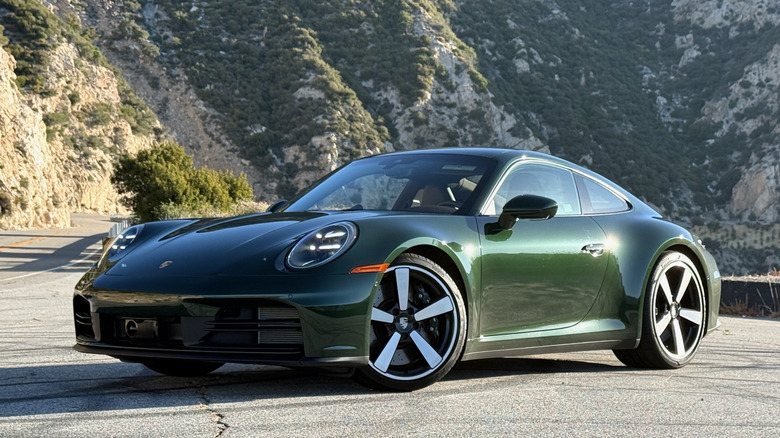
The Porsche 911 has transcended simple sports car status. It’s a standard bearer for its class and an icon that represents the Porsche brand. On top of that, it’s a yardstick by which all other competing vehicles are measured. I don’t normally wake up before dawn, but this car is worth it. I voluntarily set my alarm clock at an ungodly hour to get out on the road in the 2026 Porsche 911 Carrera 4S without any traffic.
I’m on a winding mountain road that’s normally lined with hundreds of motorists, but at this hour, things are quiet. The sun has just started to creep over the distant mountains, and I’ve seen maybe a dozen other humans since I left my home. This is the sort of driving the 911 was made for, and I’ve already enjoyed every moment, but there’s a caveat — I know just how expensive this car is.
 Travis Langness/SlashGear
In the process of becoming the go-to sports car, performing at the top of its class, the 911 has also become way more of a financial reach than it once was. The 911 used to be a car that many automotive enthusiasts could stretch their budgets for. Not too long ago, you could get a base version of the 911 for less than $100,000, but prices for even the most basic 911s now go deep into the six figures. Inflation and tariffs are certainly part of the hockey-stick curve in car prices these days, but that doesn’t change the high cost of a new 911. After upping my caffeine intake and stitching together a few dozen corners with the 4S that Porsche loaned me for a week, I had to wonder if it was worth the price.
The price that got me thinking

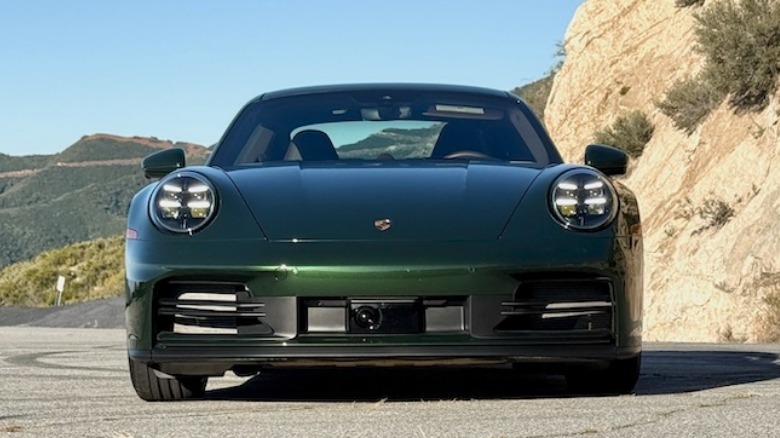
After my enthusiastic early-morning cruise up the mountain, while the 911’s brakes and engine cooled down a little, I took a look at the pricing sheet (also known as a Monroney). The standard 2026 911 Carrera has a starting price of $137,850 (including a $2,350 destination fee). For that, you get the base 388-horsepower flat-six engine, an excellent driving experience, and a few luxury features, but it’s just the tip of the iceberg.
 Travis Langness/SlashGear
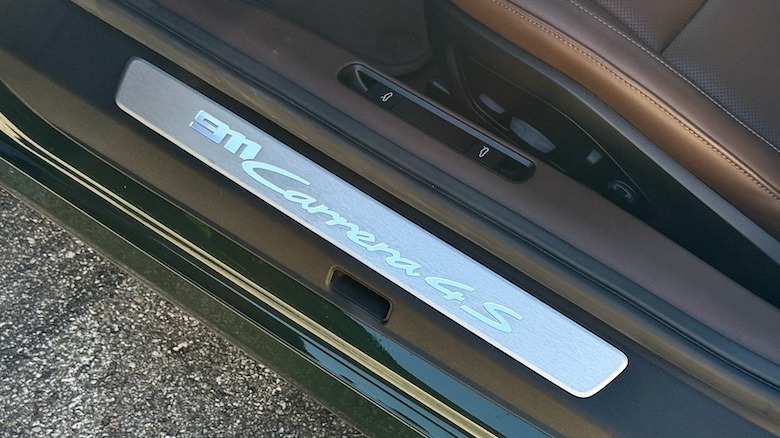
The car Porsche lent me to test for a week had an MSRP of $196,050. The 4S — back in the lineup for 2026 — has a more powerful engine than the standard 911, along with all-wheel drive and some hardware from the spicy 911 GTS. The 4S starts at $164,500, though, so there are some key options that brought up the total.
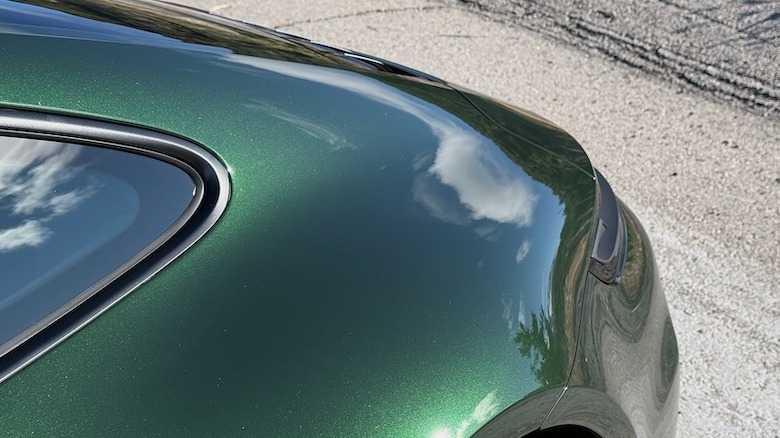
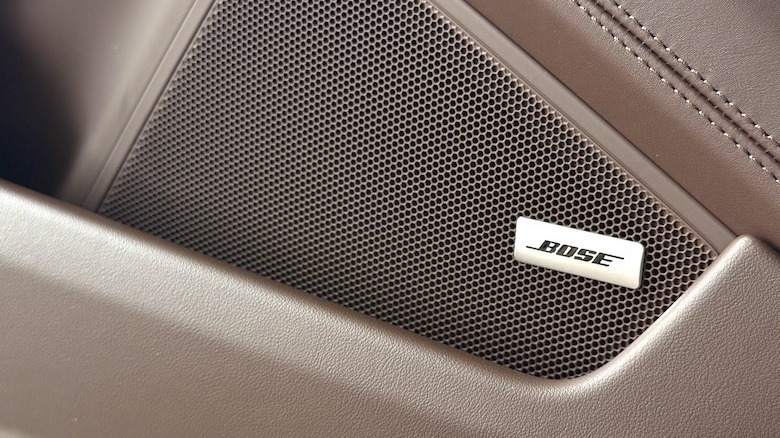
The excellent Oak Green metallic paint job, for example, is an extra $3,160. The front-axle lift to avoid scraping when you enter and exit steep driveways — that’s another $3,160. The Truffle brown leather that makes the inside feel utterly refined is $5,190 on top of the standard price. And the Premium package that adds a Bose stereo, ventilated front seats, adaptive cruise control, and a surround-view camera adds $5,590.
 Travis Langness/SlashGear
Testing various Porsches over the years, I’ve learned this lesson: No matter what the base price of your desired model is, it’s probably best to mentally add about 20% more to the price tag to accommodate the options you end up choosing. Or at least that’s how I seem to spec out my imaginary Porsches.
More than enough power

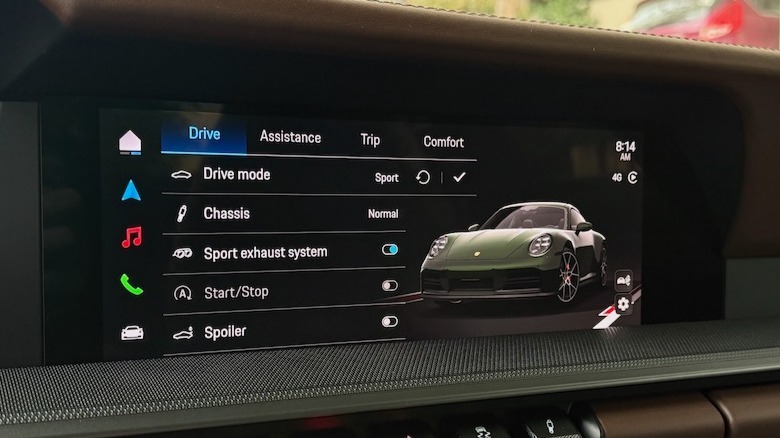
After spending a few moments thinking about how unlikely it is that I’ll ever be able to afford this sort of car myself, I decided to go back out and enjoy it some more: no point in dwelling on the malaise of a hypothetical non-future while I’ve got the keys to the real-life car in my hands that’ll bring me joy in the present. I key up, select sport mode, mash the throttle, and head back down the mountain. From a dig, the 4S moves forward in an astonishing but non-violent hurry. It’s properly fast, but it doesn’t feel particularly aggressive in its acceleration — instead, it’s purposeful.
 Travis Langness/SlashGear
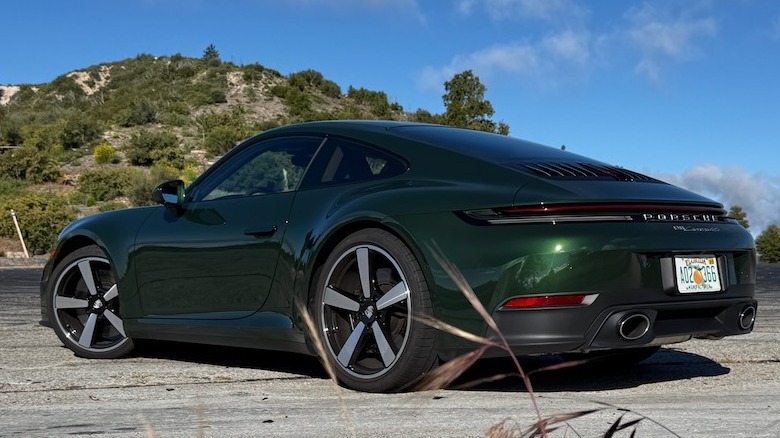
Behind the driver and the rear axle, hidden from view underneath some fans and bodywork, is the 4S’ twin-turbocharged 3.0-liter flat-six engine. It’s paired with Porsche’s 8-speed PDK transmission and all-wheel drive, a combo I think is broadly appealing. Though there’s certainly a case for the manual Carrera T being the best spec, the upgraded engine in the 4S makes noticeably more power and a bit more growl.
 Travis Langness/SlashGear
The 4S version of the Porsche engine makes 473 horsepower and 390 pound-feet of torque, and it’s the sort of powertrain that makes the bigger-power Porsches feel a bit unnecessary. With a long enough straightaway, it’ll hit 191 mph. Press the right buttons and prepare a clear enough straightaway, and the 911 4S will blast from zero to 60 mph in 3.3 seconds – quicker than you’ll ever need to scoot away from a stop light, even if you are late for work.
Much more than just a powertrain
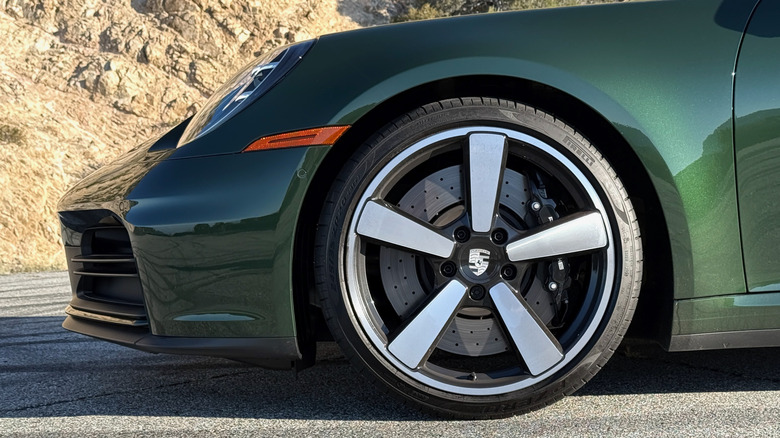
More than just balanced and adept at navigating every curve on the most challenging of mountain roads, the 911 can be driven in a calm and relaxed way, or it can be driven hard. I brake late into corners, transition immediately to near-full acceleration on the way out, and it doesn’t flinch. The Pirelli P Zeros provide all the grip you’ll need. The 911 won’t find its limits until you’re well beyond the responsible (and legal) limits of driving on public roads.
 Travis Langness/SlashGear
I also took my time, enjoying the scenery, soaking in the warm rays of the rising sun, dropping the windows and feeling the wind on my face as I dialed up the volume on the stereo. Road imperfections that jostle lesser sports cars are shed off by the 911 as well. Along some of the most broken and beaten sections of Los Angeles’ overcrowded freeway system, the 4S is easy to live with. You might be spending a lot on the 911, but it can truly be your everyday car, no matter what your day looks like. Paying for the performance makes sense, but getting this level of refinement is included right alongside the thrills.
Comfortable, even at a standstill
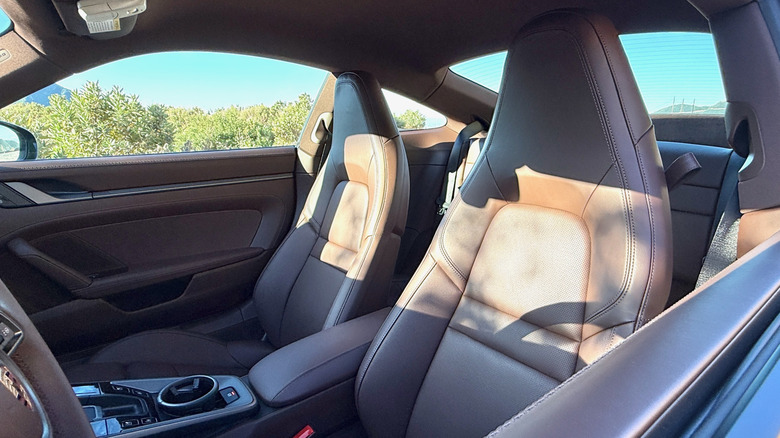
After a few dozen miles enjoying the 911 at speed, I slowed down to appreciate some of the finer details – of which there are many. As a part of the optional Premium package, my test car came with 14-way power Sport seats. They aren’t quite at the top of the heap when it comes to available 911 seats, but they’re pretty close.
They’re supportive, well-padded, and bolstered strongly enough that I never slid from side to side. Opting to get the 14-way seats, with the ventilation added to the mix, is a wise choice — especially for anyone who lives in a hot climate.
 Travis Langness/SlashGear
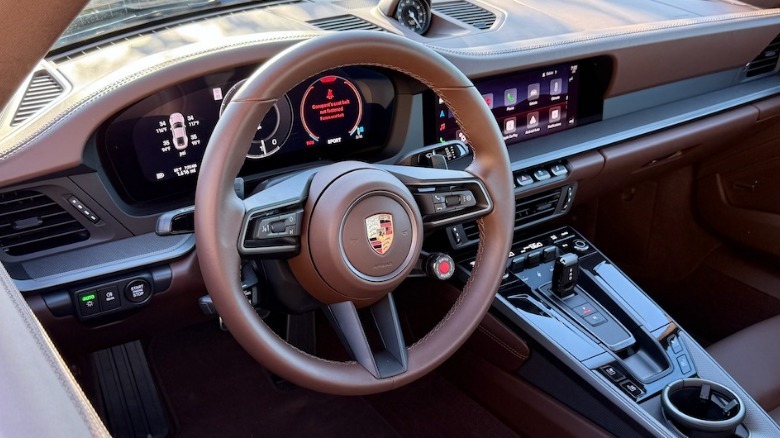
Like just about every other Porsche, the 911 has one of the best steering wheels fitted to any car on the road today. The size of the steering wheel itself, the heft of the rim, and the limited number of buttons to get in the way makes it a favorite of mine. Along with the steering wheel, every surface in the 911’s cabin is crafted with care, with near-perfect cross-stitching spanning the dashboard. Even the piano black plastics that typically drag down the vibe of an interior somehow feel more elegant in their placement and material quality with the 911.
Immediately part of the club, but at a higher tier

A few days after my test in the mountains, I took the 4S to a local Cars and Coffee. Even though it felt relatively understated at the Sunday-morning caffeine-fueled car event, flanked by big-wing GT3s and ultra-modified 911s, the 4S got me into the Porsche club immediately. This is not any official Porsche club, mind you (of which I’m sure there are many), but I was immediately counted amongst the chosen few. While this was a similar experience to when I drove the electric Macan, the 911 certainly brought a different gravitas.
 Travis Langness/SlashGear
As I pulled into a local lot, planning on spectating, I was directed to the most VIP of parking spots, asked questions about the car from bystanders, and given compliments immediately — many of which were about the 4S’ excellent paint color. If you want instant street cred, buying just about any version of the 911 will give it to you. This wasn’t the only experience I had with the 911 like this, either. It might not be listed as an official standard feature with the $200k price tag, but being admitted to the top tier of the Porsche clubs is part of the package.
No car is without its flaws
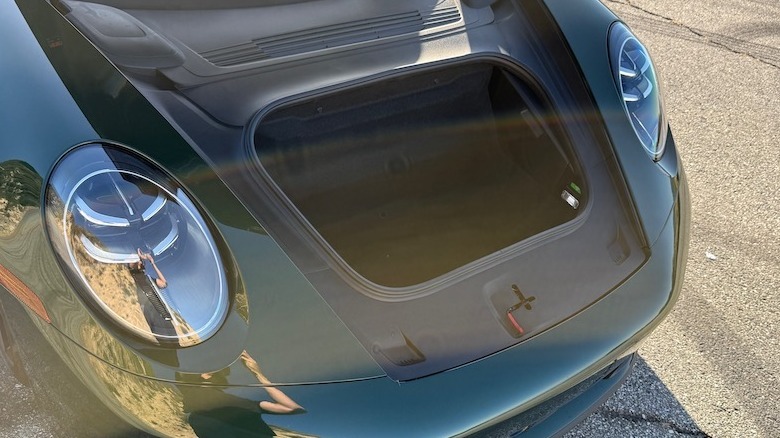
Just like everything else on four wheels, the 911 has drawbacks, but these are the most insignificant of gripes, really. Cargo space, for instance, is at a premium. With the engine out back, the 911 has to make do with a tiny front trunk; there’s just 4.7 cubic feet of space up there. The back seat, however, has more room for luggage if you treat the 911 like a two-seater (as many owners I know do).
 Travis Langness/SlashGear
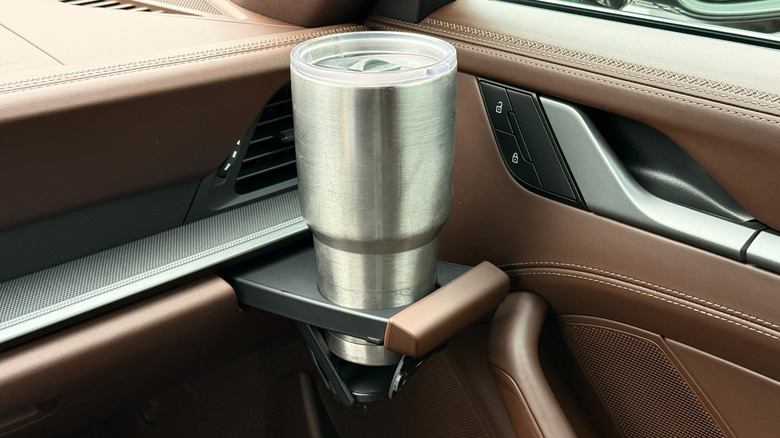
In the 4S’ Sport Plus setting the ride is a bit stiffer than I’d like, but that can be solved by simply leaving it in the basic Sport mode. The cupholders could be a bit bigger, or I could just get a smaller cup, I suppose, and I’d prefer a different one of Porsche’s wheel designs (wide spokes just aren’t my thing), but that’s more of a customization than it is a complaint. Like I said, the problems here aren’t really problems.
2026 Porsche 911 Carrera 4S verdict
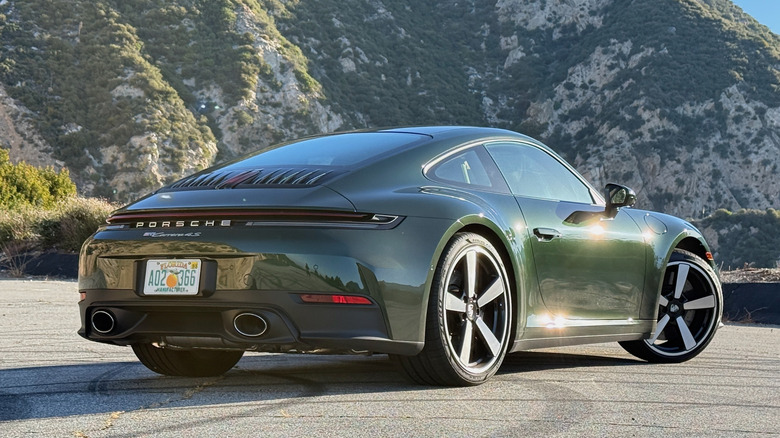
There aren’t too many cars that I’d describe as perfect, but in the sports car world this is about as close as it gets. The 911 is lauded as one of the best sports cars of all time, partly because of its commitment to refinement over the years, but also because of its ability to balance performance with comfort. Simply owning one will push you to wake up early, get extra coffee, and experience all the sensations it offers as often as you can, but it is also the sort of car you can drive on a daily basis for decades.
 Travis Langness/SlashGear
With only a week behind the wheel, I wanted to feel the near-perfect steering, the excellent weight distribution, and the sonorous flat-six engine as much as possible. I got up early on multiple days, not just my test day in the mountains, to drive the 911 anywhere I could. It’s worth the loss of sleep if you’ve got limited time with it. Unfortunately, the cost is more than just the loss of a little bit of sleep.
 Travis Langness/SlashGear
With the Cayman gone from its lineup, Porsche doesn’t have an entry-level sports car anymore: it’s either the 911 or something with four doors for new-car shoppers who want the Porsche badge. A base price of nearly $140,000, or a mid-level version for nearly $200,000 (with several versions well into the $300k range), means the 911 is now more aspirational than it is attainable. As far as automotive experiences go, though, it’s still just as desirable.

For over 30 years I’ve been teaching teachers to engage in meaningful conversations with their students about real things. Strong teachers know how to pose thoughtful questions, elicit questions from students, and listen and engage respectfully with students.
And yet, 30 years in, there are still a shocking number of schools where adults and children fail to discuss important issues. For instance, according to findings recently released by RAND’s American Youth Panel, only about 1 in 3 students say their school has a school-wide policy on the use of AI. Many students say AI policy in their school varies by teacher, and 67 percent of students endorsed the statement, “The more students use AI for their schoolwork, the more it will harm their critical thinking skills.”
The RAND report recommends “direct conversations” with students about the use of AI. So let’s talk about how to do that.
Talking Directly About AI in Schools
According to the Center for Democracy and Technology, approximately 85 percent of teachers and students report using AI for schoolwork. If your school has a clear policy on AI use, great! Discuss it with your students. Ask them how they feel about it; what’s clear and what needs more explanation; what feels fair and what they might want to advocate to change.
If your school does not have a clear policy on AI, talk with your colleagues, and talk with your students. Here are some questions to get those conversations started.
With colleagues, including teachers and school leaders:
-
Is it our goal to make things easier for students? For teachers? AI can simplify, increase efficiency, and in other ways do the work for us. Is this what we want?
-
If so, when is this a good thing?
-
In what types of situations might we want to avoid making things easier?
-
How can we implement AI and LLM tools in a way that benefits our learning community, i.e. increased efficiency, time savings, ability to gather and analyze more data, etc.?
-
What guardrails can we put in place to ensure we maintain the learning experiences we value, such as engaging in productive struggle; working through complex problems and devising, testing, and refining solutions?
-
How are we going to teach students to critically analyze information and “answers” provided by AI tools?
-
How skillful are our students at identifying bias? Will our students ask, “What’s the source for this information?” “What perspective does this source have?” Can they distinguish fact (i.e. the distance between the Earth and the sun) from opinion (i.e. the filibuster as a tool for promoting democracy)?
-
What skills do they – and we – need to strengthen in order to ensure that we are the drivers of AI innovation?
-
Are there other schools or people we trust, admire, and respect who have implemented AI policies? What can we learn from them?
-
What processes do we have in place (or can we put into place) to include student voice in determining when and how to use AI in our school?
With students:
-
What is valuable about the work we do together in school? How might AI tools increase this value? How might AI undermine it?
-
What does integrity mean to us, as individuals and as a school? How can we implement AI in a way that supports integrity in our school?
-
What do you know about AI? What do you want to know about it?
-
What are some ways we might use AI in our school? What are the potential benefits and drawbacks?
Aligning AI with School Values
If this seems like a lot of work, and a lot to talk about, that’s because it is. An AI policy isn’t something to overlay on a school, and then continue with business as usual. AI is a powerful tool. It has the power to disrupt. That disruption can be beneficial, such as disrupting inequitable access to information and learning tools. It can also be harmful: AI can fuel complacency and undermine critical thinking and curiosity. So a school’s AI policy needs to be deeply aligned with the school’s values. And that requires thoughtful, school-wide conversations about those values.
During these conversations, make liberal use of the phrase, “I don’t know.” Because we don’t have all the answers. There is so much we don’t yet know about what AI can, or should, do. How it might support, or undermine, critical thinking and curiosity.
When you engage in conversations based on the questions above, you are modeling to your students – and your colleagues – how to puzzle through complex issues. You’re building uncertainty tolerance. You’re teaching problem solving at the highest level.
And isn’t that what we teachers are here to do in the first place?
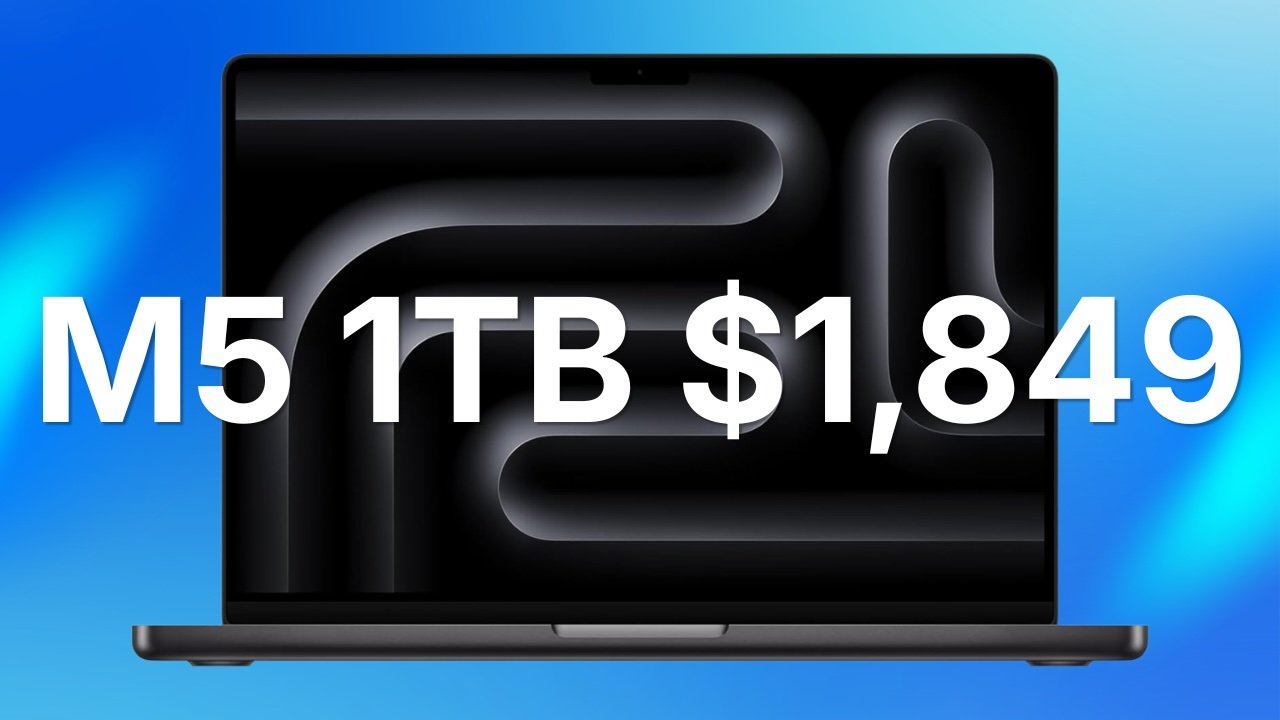
A price war has erupted between Amazon and B&H, resulting in Apple’s current M5 MacBook Pro 14-inch falling to $1,849. Plus save up to $500 on a multitude of models.
B&H and Amazon are competing for your business this Tuesday, with a $150 discount on the 10-core M5 14-inch MacBook Pro with 16GB of unified memory and 1TB of storage, bringing the price down to $1,849. Both Space Black and Silver are available for that price, with B&H stating there is limited supply available.
- Buy 1TB M5 MacBook Pro 14-inch for $1,849 at B&H
- Buy 1TB M5 MacBook Pro 14-inch for $1,849 at Amazon
B&H is throwing in free 2-day shipping on orders shipped within the contiguous U.S., with both Amazon and B&H having units in stock at press time.
Today’s top 14-inch MacBook Pro deals
- 14″ MacBook Pro M5 (10C CPU, 10C GPU, 16GB, 1TB, Standard Display): $1,849 ($150 off)
- 14″ MacBook Pro M5 Pro (18C CPU, 20C GPU, 24GB, 2TB, Standard Display): $2,999 ($200 off)
16-inch MacBook Pro sale prices
- 16″ MacBook Pro M5 Pro (18C CPU, 20C GPU, 24GB, 1TB, Standard Display, Space Black): $2,818 ($181 off)
- 16″ MacBook Pro M5 Pro (18C CPU, 20C GPU, 48GB, 1TB, Standard Display, Space Black): $3,299 ($300 off)
- 16″ MacBook Pro M5 Max (18C CPU, 32C GPU, 36GB, 2TB, Standard Display): $3,999 ($400 off)
- 16″ MacBook Pro M5 Max (18C CPU, 40C GPU, 48GB, 2TB, Standard Display): $4,499 ($500 off)
For even more discounts and easy price comparison across retail and CTO models, be sure to check out our MacBook Pro Price Guide.


Salesforce’s Tableau business has renewed its lease for roughly 114,000 square feet at the Data 1 office building in Seattle’s Fremont neighborhood, extending its long-term home in the city.
The lease renewal takes effect after the current agreement expires in 2029, according to an announcement Monday first reported by the Puget Sound Business Journal.
The renewal continues Tableau’s long association with Fremont, where the company added offices over the years to accommodate its rapid growth before its $15.7 billion acquisition by Salesforce in 2019. Salesforce CEO Marc Benioff once said the Seattle region would become the company’s “HQ2” with the Tableau deal.
However, the years following the acquisition brought significant change. Salesforce conducted multiple rounds of layoffs that affected Tableau employees and trimmed its Seattle office footprint as hybrid work reshaped demand for office space.
Former Tableau CEO Mark Nelson also departed in 2024 after leading the business for two years. Before the acquisition, Tableau had grown to about 4,200 employees worldwide, about half of them in the Seattle region.
Salesforce originally planned to sublease the Data 1 building at 744 N. 34th St., which Tableau opened in 2018. But it then quickly reversed course in 2023, instead choosing to put its nearby Fremont headquarters building on the sublease market.
The Tableau news also comes at a changing time for Fremont.
Last year, Google announced plans to leave its Fremont campus, bringing all of its employees in Seattle together at its South Lake Union campus. At the time, it cited a desire for better collaboration and community. The pending departure has meant a large chunk of prime office space remains available for lease along the Lake Washington Ship Canal.
We’ve reached out to Salesforce about the Tableau lease, and we will update this post as we learn more.

New York became the first state to halt data center construction after Gov. Kathy Hochul signed an executive order today that temporarily bars the state from approving new permits for large projects.
Hochul’s order applies to data centers 50 megawatts or larger, potentially affecting more than a dozen projects. The state’s Department of Environmental Conservation will not issue any permits that haven’t already been completed.
While resource concerns have fueled some of the backlash, broader concern about AI has been behind much of it as well. A recent Pew Research report found that only 10% of Americans were more excited than concerned about AI use in daily life, and just 23% felt that the technology would have a positive impact on how people do their jobs. Less than a quarter of the general public feels that AI will give the economy a boost, and less than a third were confident that the government would regulate the technology responsibly.
“Progress shouldn’t arrive with a higher utility bill, deleted water supply, or noise pollution,” Hochul said at a press conference in Brooklyn. “These data centers can only be built, should only be built in places that want them. So they will never be exempt from local zoning, local approvals.”
The moratorium will be lifted once the state finalizes an environmental review process for data centers, which Hochul expects will take about a year. Hochul’s office is also considering requiring data centers to pay into a fund that would support the state’s electrical grid, and she would like to prevent hyperscale data centers from receiving tax benefits.
Hochul’s executive order arrives as more stringent measures are moving through New York’s legislature. Last month, the legislature advanced a bill that would pause construction of data centers larger than 20 megawatts for one year, while another still in committee would institute a three-year moratorium.
The average data center built in the last few years has been smaller than 100 megawatts, but those in development are expected to be much larger as AI drives computing demands higher. Through 2030, nearly a quarter of new data centers will exceed 500 megawatts, according to BloombergNEF, driven by increasing AI investment.
The idea of a data center moratorium has been debated at the state and federal levels, but New York is the first to put one into practice. In December, more than 230 organizations called for a nationwide pause on new data centers. Vermont Sen. Bernie Sanders has also proposed a nationwide moratorium, though it hasn’t received much traction. More recently, Maine’s legislature passed a bill that would have paused construction on new data centers until November 1, 2027, but Gov. Janet Mills vetoed it.
Just years ago, data centers were sought after by states eager to secure new development projects, but recently, public sentiment on data centers has soured as new projects have grown in size. The scale and pace at which they’re being constructed has started to strain the electrical grid in addition to regional resources like water and farmland. Two-thirds of respondents to a recent poll said they were concerned about data centers driving up electricity prices. Another survey found that people would rather have an Amazon warehouse in their backyard than a data center.
Hochul’s order could be setting up for a clash with the Trump administration, which thus far has supported data center development. Last month, the Federal Energy Regulatory Commission, which is led by a Trump appointee, told grid operators to develop special fast lanes to speed data centers’ interconnections.
When you purchase through links in our articles, we may earn a small commission. This doesn’t affect our editorial independence.
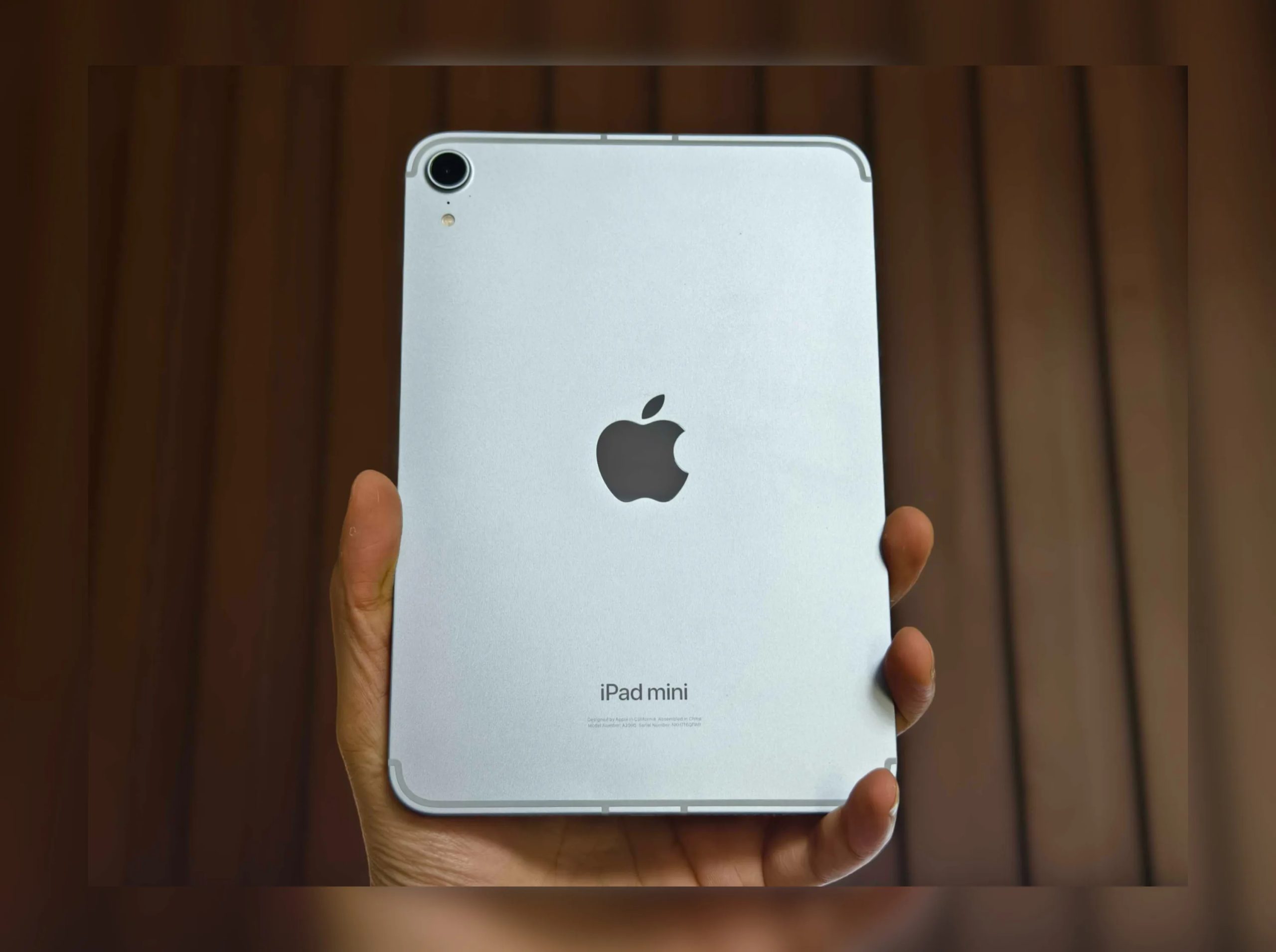
If you’ve been holding off on buying an iPad mini because you were hoping Apple’s first OLED model would finally get a smoother display, you may want to temper your expectations.
A prettier screen, but not necessarily a faster one
A new rumor from Korean leaker yeux1122 claims the upcoming OLED iPad mini will still use a 60Hz display, despite making the jump from LCD to OLED. That’s a bit surprising, especially since many fans expected Apple to pair the long-awaited OLED upgrade with a higher refresh rate. For everyday tasks like reading, streaming Netflix, or browsing the web, 60Hz is perfectly usable. But once you’ve spent time with a 120Hz display, whether it’s on a flagship Android phone or an iPad Pro, it’s hard to ignore the difference. Scrolling feels noticeably smoother, animations are more fluid, and even simple interactions like swiping through apps feel snappier.
According to the leak, Apple is reportedly using an LTPS OLED panel rather than the more advanced LTPO OLED technology found in the iPad Pro lineup. The distinction matters because LTPO displays can intelligently vary their refresh rate up to 120Hz, helping them deliver smoother visuals while also saving battery life. LTPS panels, on the other hand, generally stick to a fixed refresh rate, and in this case, that would reportedly be 60Hz.
Apple may be betting that gorgeous beats buttery
That doesn’t mean the new iPad mini wouldn’t be an upgrade. Moving from LCD to OLED should still bring deeper blacks, punchier colors, better contrast, and improved power efficiency. Movies would look more vibrant, and dark mode should finally appear truly black instead of dark gray. Still, a 60Hz OLED panel could leave some buyers scratching their heads. Apple has gradually expanded high-refresh-rate displays across more of its product lineup, so many expected the next iPad mini to follow suit. Then again, Apple has shown it’s still comfortable shipping premium-looking devices with 60Hz screens when it wants to keep costs under control, making this rumor believable enough.
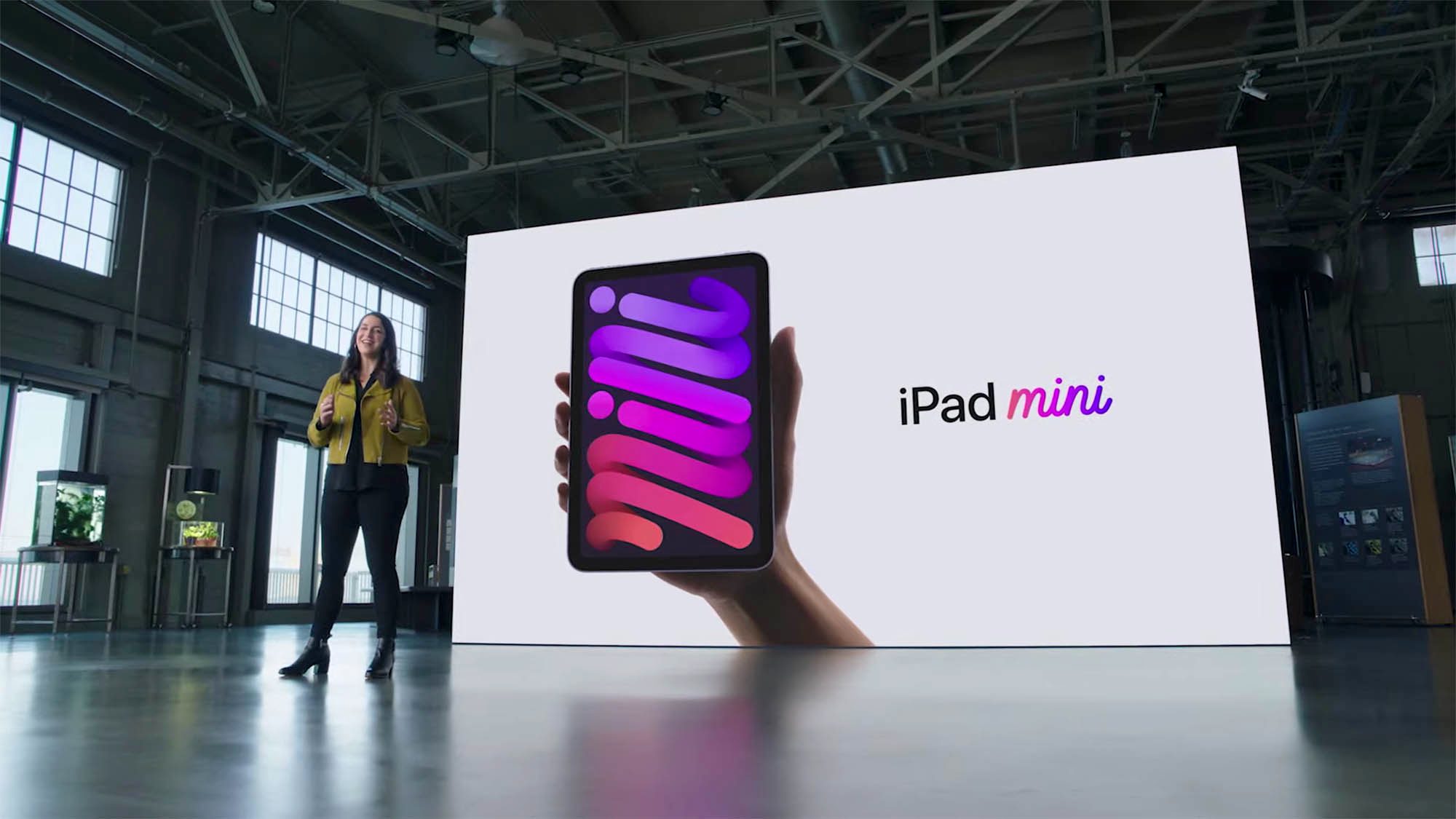
The good news is that this leak isn’t set in stone. So, even if mass production has begun, it doesn’t necessarily confirm which display technology Apple has ultimately chosen. Recent reports from Korea suggest the OLED iPad mini is on track for a late 2026 launch, though Apple hasn’t officially confirmed anything yet. If the rumors prove accurate, the biggest upgrade may simply be OLED itself rather than the smoother 120Hz experience many fans were hoping for.

JusRol adds ready-to-bake turnover kits

American retirees use ETH AI auto trading via MoneySimpler to earn $58,500 stable passive income monthly

The13 Best Wide-Legged And Cropped Trousers For Summer, From M&S To Uniqlo


-

 Fashion5 days ago
Loro Piana Fall 2026 Enters Houston’s Art Scene
-

 Fashion4 days ago
Weekend Open Thread: Nutriplenish Leave-In Conditioner
-
 Sports5 days ago
2026 Genesis Scottish Open Thursday TV coverage: Round 1
-

 Tech7 days ago
Anthropic brings Claude Cowork to mobile and web as usage data shows most users aren’t coding
-

 Sports4 days ago
Super Eagles star Moses Simon opens up on Liverpool transfer regret
-

 Tech5 days ago
Character.AI enters the microdrama arena with its own productions, but there’s a twist
-
 Crypto World7 days ago
Nasdaq arthritis company holding Moshe Hogeg crypto hits all-time low
-

 Tech12 hours ago
Get Your ESP32 Sunny Side Up With This Solar Dev Board
-

 News Videos6 days ago
Crypto Just Entered Its Most Important 6-Month Candle (Could Decide Everything!)
-
 Tech7 days ago
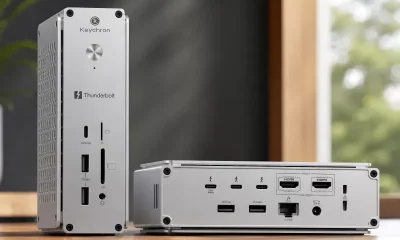
Keychron is stepping outside keyboards with a $349 Thunderbolt 5 dock aimed at power users
-
 Business7 days ago
ASX 200 Slides Over 0.6% as Rare Earths and Lithium Stocks Tumble Amid Global Semiconductor Sell-Off Today
-
 NewsBeat5 days ago
Major update after Huntingdon train attack as man enters plea
-
 Business7 days ago
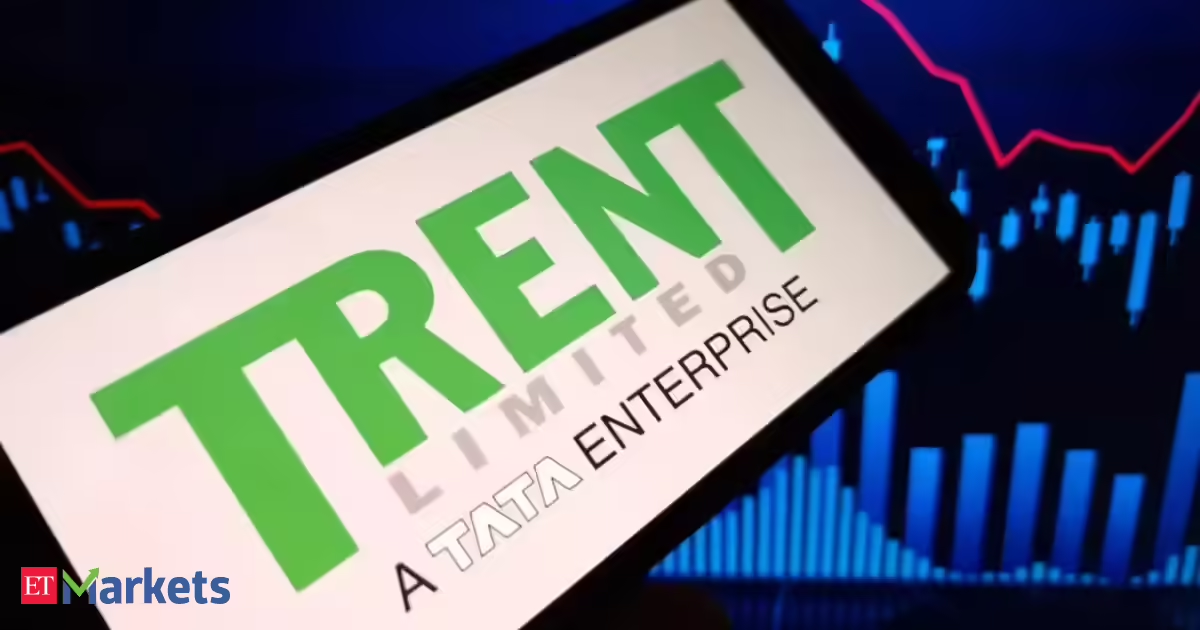
Will Trent shares rebound after Q1 update triggers 13% crash? Here’s what technical charts indicate
-
 Tech7 days ago
OpenAI teams with Work Louder to launch Codex-native keyboard, weeks after CEO of Apps told staff ‘not to be distracted by side quests’
-
 Business7 days ago
SpaceX Shares Slide Nearly 6% Amid Post-IPO Volatility and Starship Test Focus
-
 Sports6 days ago
39-year-old Djokovic wins five-hour thriller to enter Wimbledon semis | Other Sports News
-
 Crypto World7 days ago
TeraWulf’s $19B Anthropic Lease Turns Bitcoin Miner Into AI Landlord
-
 Tech23 hours ago
Cloudflare Precursor Watches Your Mouse and Keyboard To Decide If You Are Human
-

 News Videos1 day ago
how to make coin bank box with cardboard #scienceproject #money #diy #shorts
-

 Tech6 days ago
Entra passkey enrollment vishing targets Microsoft 365 users
You must be logged in to post a comment Login