Connect with us

Business

ETMarkets Smart Talk | Selling property in India? Here’s how NRIs can avoid excess TDS: Trilegal’s Himanshu Sinha

Published

on

ETMarkets Smart Talk | Selling property in India? Here's how NRIs can avoid excess TDS: Trilegal's Himanshu Sinha
Selling property in India can be a rewarding financial decision for Non-Resident Indians (NRIs), but it also comes with a complex web of tax rules that can significantly impact the final proceeds.

One of the biggest pain points is the tax deducted at source (TDS), which is often withheld on the entire sale consideration rather than the actual capital gains, resulting in excess tax deductions and lengthy refund timelines.

In this edition of ETMarkets Smart Talk, Himanshu Sinha, Partner – Tax Practice at Trilegal, explains how NRIs can navigate the tax implications of property transactions, avoid unnecessary TDS through a Lower/Nil TDS certificate, and make the most of available exemptions under the Income-tax Act.

He also discusses the latest changes in capital gains taxation, repatriation rules, and common tax mistakes that every NRI investor should avoid. Edited Excerpts –

Advertisement

Q) What are the key tax considerations NRIs should keep in mind before investing in India?

A) Before an NRI puts money to work in India, the first thing to sort out is residential status. This is governed by Section 6 of the Income-tax Act, 2025 (ITA 2025), which took over from the 1961 Act on 1 April 2026 and carries forward the same residency framework rather than rewriting it.Basic conditions for residence, Section 6(1). A person becomes a Resident of India in a given Tax Year if either of two tests is met. The first, often called the 182-day rule, is met simply by being physically present in India for 182 days or more in that year. The second, the 60-day plus 365-day test, applies where someone is in India for 60 days or more in the year and has also clocked up 365 days or more across the preceding four years. Meeting just one of these is enough to trigger residency, and both the arrival and departure dates count as days spent in India.
Relaxation for Indian citizens and PIOs, Section 6(1) proviso. For two groups, the 60-day threshold in the second test is pushed up to 182 days: Indian citizens who leave the country as ship’s crew or for employment abroad, and Indian citizens or Persons of Indian Origin (PIOs) who visit India from abroad. In practice, this means that a typical NRI coming home for a family visit only becomes resident by crossing 182 days—short trips alone won’t do it, since the 365-day look-back simply doesn’t apply to them.
Exception for high-income NRIs and PIOs, Section 6(1) second proviso. There’s a catch for those whose Indian-sourced income exceeds ₹15 lakh in the year. For this group, the relief is only partial—the 60-day threshold drops to 120 days rather than 182.

So a high earner who spends 120 days or more in India, and has also been here for 365 days or more over the preceding four years, ends up resident even without crossing 182 days. The ₹15 lakh figure looks only at Indian income, not worldwide income, and it’s worth tracking closely if that number is likely to grow.

Deemed residency, Section 6(7). A separate rule targets Indian citizens based in places like the UAE that don’t tax income at all. Under Section 6(7)—previously Section 6(1A)—an Indian citizen with Indian-sourced income above ₹15 lakh is deemed resident if they aren’t liable to tax anywhere else by virtue of domicile or residence. “Liable to tax” here has a specific meaning: it covers any legal tax liability, even one that’s later been exempted. Anyone caught by this provision is automatically treated as RNOR rather than a full resident, so only Indian income gets taxed and foreign income stays out of reach—even if the person never actually sets foot in India that year. This is squarely aimed at NRIs in zero-tax jurisdictions such as the UAE.

RNOR status, Section 6(13). Even if someone meets a basic residency test, they may still qualify as Resident but Not Ordinarily Resident rather than a full Resident, provided either: they were non-resident in nine or more of the preceding ten years, or their total time in India over the preceding seven years adds up to 729 days or less.

Advertisement

RNOR status limits taxation to Indian-sourced income and business income controlled from India, leaving foreign earnings untouched. It typically acts as a two-to-three-year transition window for NRIs moving back to India, and it applies automatically to anyone caught by the deemed-residency rule above.

Resident and Ordinarily Resident (ROR). Anyone who meets a basic residency test but fails both RNOR conditions becomes a full ROR and gets taxed on worldwide income—foreign salary, rent, capital gains abroad, overseas interest, all of it. The move from RNOR to ROR is the point returning NRIs need to watch most carefully, and it’s worth planning travel days around it in the years just after moving back.

Practical implications for investors. On the ground, the first decision is how to structure bank accounts. NRE and FCNR(B) deposits pay interest that’s fully tax-exempt and freely repatriable, while NRO accounts get hit with 30% TDS on interest under Section 393(2). Parking investible savings in an NRO account rather than NRE or FCNR is a needless drag on returns before any
actual investing happens. A PAN is required for investments, DTAA claims, and refunds.

Because TDS under Section 393(2)—deducted by banks, brokers, mutual funds, and property buyers alike—often exceeds actual tax owed, applying in advance for a Lower/Nil TDS Certificate under Section 395, or simply filing an ITR promptly to claim a refund, matters a great deal. NRIs also can’t buy agricultural land, farmhouses, or plantation property except by inheritance, and every property payment has to go through proper banking channels.

Advertisement

Q) Has the tax treatment of NRI investments changed significantly over the past few years?
A) It has, and the changes over the last three years have added up to quite a lot. The biggest shift came with Budget 2024, effective 23 July 2024, which overhauled capital gains taxation across the board. LTCG on listed equities and equity funds went from 10% to 12.5%, STCG on the same went from 15% to 20%, and LTCG on real estate and other assets was flattened to a uniform 12.5%. Indexation disappeared entirely for transfers after that date.

Unlike resident taxpayers, NRIs got no grandfathering relief, which stings particularly hard for those holding property for a long time.

A year before that, from 1 April 2023, the Finance Act 2023 pulled the LTCG concession on debt mutual funds bought after that date. Funds with under 35% equity exposure are now taxed at slab rates regardless of how long they’re held, putting them on par with NRO fixed deposits from a tax standpoint—a real change in how attractive debt funds are for NRIs in higher brackets.

More recently, Finance Act 2026 simplified TDS compliance for property buyers from 1 October 2026 by allowing PAN in place of TAN in eligible cases. Budget 2026 also tightened the rules on Sovereign Gold Bonds, restricting the tax-free maturity benefit to original subscribers only; anyone who bought SGBs in the secondary market is now fully taxed on redemption.

Advertisement

Another positive development in recent years has been the use of GIFT City IFSC. Some NRIs, instead of going the conventional mutual fund or PMS route, choose to invest through a specified fund set up in the GIFT City IFSC.

The appeal isn’t a special low tax rate—it’s that certain income earned by these funds is carved out of Indian tax altogether under an exemption regime carried over into ITA 2025. But this only works if the fund actually qualifies as a “specified fund” and meets the IFSCA conditions, and even then, the exemption only covers specific kinds of income—gains from particular securities transactions, certain non-resident securities income, and so on.

Whether an NRI actually benefits comes down to how the fund is structured and what it invests in, so it’s best to think of GIFT City as a planning option worth examining case by case, not as a shortcut to low tax across the board.

Q) How can NRIs avoid common tax mistakes while investing in Indian financial assets?
The biggest mistake by far is getting residential status wrong. NRIs who make frequent short trips home should keep an actual day-count log each year. The 120-day rule for high earners means even a small overrun can trigger residency, especially if the 365-day look-back is also satisfied.

Advertisement

The deemed-resident rule under Section 6(7) adds another wrinkle for those in zero-tax jurisdictions like the UAE—Indian income above ₹15 lakh means RNOR status by statute, though it’s worth getting proper advice to confirm exactly how that threshold is being measured.

Another frequent error is treating TDS as if it were the final tax bill rather than an advance payment. TDS under Section 393(2)—30% on NRO interest, 20% on dividends, up to roughly 14.95% on the full sale price for property LTCG—regularly comes in above what’s actually owed, and the only way to get that money back is to file a return.

Better still, apply ahead of time for a Lower TDS Certificate under Section 395 so the over-deduction never happens in the first place.

Skipping DTAA paperwork is another costly slip. Without a valid Tax Residency Certificate and a properly filed Form 41 handed to each Indian payer before the year’s first income event, the payer has no choice but to apply full domestic withholding.

Advertisement

And the foreign tax credit claim—now made through Forms 44 and 45 under ITA 2025, replacing the old Form 67—has to be filed by the ITR due date; miss that window and the credit is gone, no matter how clear-cut the entitlement was.

Q) How do Double Taxation Avoidance Agreements (DTAAs) help NRIs, and how should investors make the most of them?
A) DTAAs, now sitting under Section 159 of ITA 2025 (formerly Section 90), are treaties India has with close to a hundred countries to stop the same income being taxed twice over.

They work in three basic ways—handing exclusive taxing rights to one country for certain income types, setting lower withholding rates than India’s domestic rates, and requiring the home country to give credit for tax already paid in India.

Section 159 makes clear that whichever is more favourable, the treaty rate or the domestic rate, is the one that applies, so it’s always worth comparing the two before assuming a rate.

Advertisement

The savings can be substantial. NRO interest that would normally face 30% TDS often drops to 10–15% under a treaty. Dividends taxed at 20% domestically can fall to 10–15% as well. On capital gains, many treaties give taxing rights entirely to the country of residence, which can mean zero Indian tax if that country doesn’t tax capital gains at all.

A March 2025 ruling by the Income Tax Tribunal is a good illustration: it held that a Singapore-based NRI’s gains from Indian mutual funds weren’t taxable in India, since mutual fund units aren’t the same as company shares and Article 13(5) of the India–Singapore treaty gives residual capital gains rights to the residence country.

NRIs in the UAE, which levies no capital gains tax, stand to gain the most from this reasoning, though the ruling hasn’t been tested in higher courts yet.

To actually use a DTAA, an NRI needs a Tax Residency Certificate from their home tax authority, and if that certificate is missing any required field, a Form 41 filed electronically on the Indian portal. Both, along with a self-declaration and PAN copy, need to reach every Indian payer before the year’s first income event. The claim then gets backed up in the ITR filed under Section 159.

Advertisement

Q) How are short-term and long-term capital gains taxed for NRIs investing in Indian equities and mutual funds?
A) For listed equities and equity-oriented funds (at least 65% domestic equity), anything held over 12 months counts as long-term. LTCG here falls under Section 197 (formerly Section 112A) and is taxed at 12.5% on gains above ₹1.25 lakh a year—that exemption limit was bumped up from ₹1 lakh in the July 2024 changes. TDS is deducted at 12.5% when units are redeemed or sold.

Gains on anything held 12 months or less are short-term under Section 196 (formerly Section 111A), taxed flat at 20%, with TDS applied at the same rate—up from 15% before 23 July 2024.

NRIs can’t claim the Section 87A rebate against this. Unlisted equities work differently: the long-term threshold is 24 months, not 12. LTCG there is 12.5% without indexation, while STCG is taxed at slab rates (which can run up to around 30%), with 30% TDS deducted under Section 393(2).

One useful relief brought in by the Finance Act 2025 and carried through into ITA 2025 concerns unlisted equity bought with foreign currency: NRIs can now work out their gain in the original foreign currency and convert to rupees at the applicable rate, rather than being stuck with the historical rupee cost. This stops rupee depreciation alone from artificially inflating the
taxable gain.

Advertisement

Q) How are equity, debt, and hybrid mutual funds taxed for NRIs?
A) Mutual fund taxation for NRIs hinges on how much equity a fund holds, and there’s a sharp line between funds bought before and after 1 April 2023.

Equity-oriented funds, meaning at least 65% domestic equity, follow the same LTCG-at-12.5%-above-₹1.25-lakh and STCG-at-20% pattern as direct equity. ELSS funds and aggressive hybrid funds that stay above the 65% mark fall in this bucket too.

Debt funds and anything under 35% equity—fund-of-funds, international funds, gold-ETF type products—are taxed at slab rates no matter how long they’re held, as long as they were bought on or after 1 April 2023.

This came in with the Finance Act 2023 and did away with the old LTCG break and indexation, which used to make debt funds appealing to NRIs in higher brackets. Units bought before that date still follow the old rules: short-term if held under 36 months (taxed at slab rates), long-term at 12.5% without indexation if held 36 months or more.

Advertisement

Hybrid funds sit in between. Aggressive hybrids with 65% or more equity are treated just like equity funds. Conservative hybrids under 35% equity are treated as debt funds, so post-April-2023 units face slab rates.

Balanced or dynamic funds in the 35–65% band sit in the middle: units bought after April 2023 get LTCG at 12.5% after a 24-month hold, with STCG at slab rates otherwise. Dividends from any of these categories are taxed at slab rates in the investor’s hands, with 20% TDS at source—reducible to 10–15% under a DTAA via Section 159.

Q) How are interest income and capital gains from bonds taxed for NRIs?
A) Bond interest is generally taxed at slab rates for NRIs, with a few carve-outs. The main one is NRE and FCNR(B) deposits, where interest is fully exempt with no TDS at all—these remain the most tax-efficient place to park foreign savings in India.

NRO fixed deposits and corporate bonds are taxed at slab rates with 30% TDS under Section 393(2), though a valid TRC and Form 41 can bring this down to the treaty rate, usually 10–15% depending on the country. Tax-free bonds under the Schedule II exemptions (formerly Section 10(15))—typically issued by infrastructure PSUs—still pay fully exempt interest with no TDS.

Advertisement

Capital gains on bonds work differently depending on whether they’re listed or unlisted. Listed bonds and debentures held over 12 months qualify as LTCG, taxed at 12.5% without indexation under Section 197. Unlisted bonds need a 24-month hold for the same treatment. Anything shorter is short-term and taxed at slab rates in both cases. One thing worth remembering: even tax-free bonds attract capital gains tax if sold before maturity in the secondary market—the exemption only ever covered the coupon, not price appreciation.

Q) What are the tax implications of buying and selling property in India as an NRI?
A) NRIs can buy residential and commercial property freely, but not agricultural land, farmhouses, or plantation property except through inheritance. Payments have to go through NRE, NRO, or FCNR(B) accounts—cash or foreign currency notes aren’t allowed under FEMA.

On the buying side, there’s nothing unusual tax-wise beyond the standard stamp duty and registration costs. Selling is where it gets more involved. The buyer has to deduct TDS under Section 393(2) on the entire sale price, not just the gain.

For LTCG (property held over 24 months), that works out to roughly 14.95% on the full consideration where income crosses ₹50 lakh. Take a ₹3 crore sale where the real LTCG tax might be ₹30–35 lakh: TDS could still come to ₹44–45 lakh, and getting that excess back means filing an ITR and waiting anywhere from 12 to 18 months.

Advertisement

The better route is to apply for a Lower/Nil TDS Certificate on Form 128 under Section 395, ideally 45–60 days before the sale, so TDS is limited to the actual gain. TAN is still needed for the first half of Tax Year 2026-27 (up to 30 September 2026); from 1 October 2026, buyers can use PAN instead in eligible cases under the Finance Act 2026 simplification.

Three exemptions can reduce or wipe out the LTCG liability. Section 82 (formerly Section 54) allows the gain to be reinvested in one residential property within two years of sale, or three years if it’s under construction, capped at ₹10 crore.

Section 86 (formerly Section 54F) allows the entire sale proceeds, not just the gain, to be reinvested in one residential property for full exemption—same cap, and the NRI can’t own more than one other residential property at the time. Section 85 (formerly Section 54EC) allows up to ₹50 lakh to go into specified government bonds within six months of sale.

Once tax is settled, the proceeds can be repatriated abroad under FEMA, up to USD 1 million a year from the NRO account, supported by Form 145 (the new Form 15CA) and Form 146 (the new Form 15CB, a CA’s certificate confirming tax compliance).

Advertisement

For property that was bought rather than inherited, this repatriation route covers the sale of at most two residential properties over the NRI’s lifetime. Inherited property—agricultural land in particular—needs RBI approval before proceeds can be repatriated. And none of this works without filing an ITR for the relevant year reporting the gain and any exemptions claimed, since that’s the only route to recovering excess TDS.

(Disclaimer: Recommendations, suggestions, views, and opinions given by experts are their own. These do not represent the views of the Economic Times)

Continue Reading
Click to comment

You must be logged in to post a comment Login

Leave a Reply

Business

LIC OFS opens on August 4 as govt looks to sell up to 6.5% stake. Check details

Published

on

LIC OFS opens on August 4 as govt looks to sell up to 6.5% stake. Check details
The government will open an offer for sale in Life Insurance Corp (LIC) on Tuesday for non-retail investors, as it moves to reduce its stake in the country’s largest insurer and meet minimum public shareholding milestones ahead of schedule. Retail investors will be able to bid on Wednesday.

The government plans to sell 2.5% equity in LIC, with an additional 4% available as a green shoe option. If fully subscribed, the offer could lead to a total stake sale of up to 6.5%.

The floor price for the OFS has been fixed at Rs 382 per share. The sale is part of the government’s plan to increase public shareholding in LIC after the insurer’s listing. LIC remains one of the largest government-owned listed companies, and the public float has to be gradually increased to comply with minimum public shareholding requirements.

Also Read: 200 point-jump in 2 minutes: Why Nifty made a surprising surge before closing bell

Advertisement

Non-retail bidding first


The OFS will open first for non-retail investors on Tuesday. This category usually includes institutional investors and high-net-worth investors. Retail investors will get their turn on Wednesday. Under the OFS process, retail investors can place bids separately, usually with a portion reserved for them.
The floor price of Rs 382 per share will act as the minimum price at which investors can bid. Bids below this price will not be accepted. The final sale price will depend on investor demand during the OFS window.”The Life Insurance Corporation of India (LIC) is a cornerstone of the nation’s financial sector, serving as India’s largest life insurer and the country’s second-largest public sector enterprise by market capitalization. Its institutional eminence is recognized both domestically and globally, with LIC ranked as the fourth most valuable brand in India and the world’s third-strongest insurance brand. Furthermore, LIC’s exceptional operational scale and market penetration are exemplified by its Guinness World Record for the most life insurance policies sold within a 24-hour period, reflecting unwavering public trust and unmatched execution capabilities,” DIPAM secretary Arunish Chawla said.

The base issue size is 2.5% of LIC’s equity. The government has also kept an additional 4% as a green shoe option. A green shoe option allows the seller to sell more shares if demand is strong. In this case, if investors show enough interest, the government can sell more than the base 2.5% stake.

LIC is a largecap public sector financial company with a wide retail investor base, and any stake sale in the company is closely tracked by investors.

The stake sale is expected to help LIC move faster toward minimum public shareholding milestones. Listed companies are required to maintain a minimum level of public shareholding. Since LIC was listed with the government holding a large majority stake, the public float has to rise over time.

Advertisement
Continue Reading

Business

Teva's Re-Rating Still Has Room To Run

Published

on

Teva's Re-Rating Still Has Room To Run

Teva's Re-Rating Still Has Room To Run

Continue Reading

Business

Patriots RB TreVeyon Henderson Says ‘Apart From Jesus I Can’t Do Anything’ in Faith Reflection

Published

on

TreVeyon Henderson

New England Patriots running back TreVeyon Henderson shared a personal reflection on his Christian faith this week, writing that he is “so weak without Him, and apart from Jesus I can’t do anything.”

In a post on X dated Aug. 2, Henderson addressed a common saying about God giving tough battles to the toughest soldiers. He pointed instead to biblical examples of disciples and others who suffered for their faith, noting that God often chooses weak people and empowers them through the Holy Spirit.

“I once thought I was a ‘tough soldier’ until I met Jesus, I then realized that I’m so weak without Him, and apart from Jesus I can’t do anything,” Henderson wrote. “I need Jesus daily. The only way that I can truly become who God wants me to be and truly do what God wants me to do, is not by my power not by my might, but only by The Spirit of The Living God. Thank you Jesus.”

The message continues a consistent theme for the second-year running back, who has spoken openly about his faith since his college days at Ohio State and throughout his NFL career. Henderson, selected in the second round of the 2025 NFL Draft, has repeatedly credited Jesus for both his on-field success and personal transformation.

Advertisement

During his rookie season, after a multi-touchdown performance against the New York Jets in November 2025, Henderson told reporters on national television: “I’ve just been staying patient, trusting the Lord’s plan – just continue to do my part, and the rest I just leave up to Him. And so I’m thankful that I was able to come out here, and He allowed me to have this success. But I’m so weak without Him. And you know – I really mean this from my heart – I can’t do it without Jesus.”

He has described a turning point during his time at Ohio State, when recovery from injury and conversations with coaches led him to deepen his faith. Henderson has said he previously struggled with depression, suicidal thoughts and finding identity in football, money and other pursuits. After coming to faith, he has spoken of finding purpose and freedom from those struggles.

“I was accomplishing everything at one point. I had the money, women, but at the end of the day, deep in my heart, I was empty, lost, broken inside,” Henderson has shared in interviews. “When I came to Christ, I found healing, true love, true purpose, true identity, and I realized who I truly am and who God always intended for me to be: His son.”

His social media bios reflect the priority: “Jesus Saved My Life | Follower of Jesus Christ | Running Back” and similar statements emphasizing that football is what he does while being a child of God is who he is. Henderson regularly posts Scripture and messages encouraging others to turn to Christ, including calls for those who feel “too far gone” to recognize that Jesus came for sinners.

Advertisement

On the field, Henderson contributed significantly as a rookie, rushing for 911 yards and nine touchdowns while averaging 5.1 yards per carry. He provided explosive plays for the Patriots, including multiple long touchdown runs, and helped the team reach the Super Bowl. He has shared the backfield with veteran Rhamondre Stevenson and has spoken positively about their complementary styles.

Entering his second season, Henderson has participated in the team’s offseason program and training camp. He has discussed feeling more relaxed and focused on growth as a player and person, while continuing to emphasize mental preparation, blocking and receiving improvements. The Patriots’ running back room remains a point of interest as the team builds around quarterback Drake Maye.

Henderson has also addressed the challenges that come with publicly sharing his beliefs. Earlier in 2026, after posting in response to a situation involving another athlete, he spoke with reporters about conversations with head coach Mike Vrabel.

“I think the biggest thing I know is the cost that it comes with when I share my faith in Jesus Christ,” Henderson said. “I have love for everyone, but my love may not look like the world’s love. I try to love people through a biblical lens with just grace and truth. I know a lot of people may be offended by it. But I think the biggest thing is just we look at life at two different lenses. I look at it one way; someone else looks at it another.”

Advertisement

He added that he does not plan to stop sharing his faith. “I’m not going to stop sharing my faith, you know? I’ll continue to share my faith and reach people and just let the Lord use me to reach people with love and truth.” Henderson described the discussion with Vrabel as respectful and productive.

Throughout interviews, Henderson has stressed reliance on prayer, Scripture and trust in God’s plan amid the highs and lows of professional football. He has noted that the NFL brings significant physical and mental demands, especially after consecutive long seasons, but returns repeatedly to the idea that his foundation rests on faith rather than performance or external validation.

“My life is going to be a whole lot of ups and downs. But I’m no longer building my life on the foundation of football. I’m building my life on the foundation of Jesus Christ,” he has said in past comments. He frequently references the need to honor God through daily work and to remain grateful regardless of individual statistics or team results.

As the Patriots prepare for the 2026 season, Henderson continues to balance his role as a dynamic contributor in the backfield with his public expressions of faith. His recent post reiterates a message he has delivered in various forms: dependence on Jesus rather than personal strength.

Advertisement

The 23-year-old running back remains one of the more vocal athletes in the league on matters of faith, using both postgame interviews and social media platforms to point others toward the beliefs that he says transformed his life. Whether discussing on-field patience, personal struggles or broader spiritual themes, Henderson consistently frames his perspective around daily reliance on Jesus.

Continue Reading

Business

DWP’s Newcastle city centre headquarters hits construction milestone

Published

on

Business Live

The Government department’s new regional headquarters at 1 Pilgrim Place in Newcastle is one of the largest office developments ever built in the city centre

Left to right: Roger Thornton, Head of Property at Motcomb Estates, asset manager for Reuben Brothers (Newcastle) Ltd, and Sarah Homer, Director General for Corporate Transformation at the Department for Work and Pensions, present a commemorative plaque to mark the occasion.

Left to right: Roger Thornton, head of property at Motcomb Estates, asset manager for Reuben Brothers (Newcastle) Ltd, and Sarah Homer, director general for corporate transformation at the Department for Work and Pensions, present a commemorative plaque to mark the occasion.(Image: Bowmer + Kirkland)

One of the largest office schemes ever created in Newcastle city centre has reached its latest construction milestone. With just eight months to go before the official launch of 1 Pilgrim Place, representatives from all of the project’s partners have gathered in Newcastle to see the continued construction progress at the landmark development.

Representatives from the Department for Work and Pensions (DWP), Reuben Brothers (Newcastle) Ltd, Bowmer + Kirkland, Avison Young, Ryder Architecture, Cundall and Newcastle City Council visited the site to mark the latest construction milestone ahead of the building’s completion in 2027.

The building is one of three planned by project partners in the heart of the city – Pilgrim’s Quarter, which will become home to thousands of HMRC staff. 1 Pilgrim Place which will become the new regional base for the DWP, while 2 Pilgrim Place is being made available to let with property agents, offering “sustainable, best-in-class office accommodation”.

Attendees were taken on a guided tour of the development before hearing from project partners about the significance 1 Pilgrim Place will hold in the continuing transformation of Newcastle city centre. Alongside neighbouring schemes including Pilgrim’s Quarter, Hotel Gotham Newcastle, Worswick Chambers – now a permanent home to Stack – and Bank House, the development’s 7.9-hectare site forms a key component of one of the most ambitious city-centre regeneration programmes in the UK.

Advertisement
Pilgrim Place is part of a wider regeneration effort.

1 and 2 Pilgrim Place are scheduled for completion in April 2027.(Image: Avison Young)

Like this story? For more news from the commercial property scene around the regions, visit our dedicated section here for the latest news and analysis within the sector.

The occasion underscored the strength of partnership between the public and private sectors, with stakeholders reflecting on the considerable progress made to date. A commemorative plaque was also unveiled to mark the completion of the building’s shell.

Roger Thornton, head of property at Motcomb Estates, asset manager for Reuben Brothers (Newcastle) Ltd, said: “Today’s event is a great opportunity to recognise the progress being made at 1 Pilgrim Place and the commitment shown by everyone involved in delivering it. The building is an important part of the wider regeneration of Pilgrim Street, creating high-quality workspace that will complement the growing mix of commercial, leisure and hospitality uses emerging across this part of the city. As more projects reach completion over the coming months, the long-term vision for Pilgrim Street is becoming a reality.”

Sarah Homer, director general – corporate transformation at the DWP said: “It’s fantastic to see the progress being made at 1 Pilgrim Place. This development will provide a modern, collaborative workplace that supports the way DWP and our staff work while reinforcing our long-term commitment to Newcastle. We look forward to seeing the building completed and becoming part of this thriving new city-centre neighbourhood.”

Advertisement

Paul Anderson, project director at Bowmer + Kirkland, said: “Reaching this stage of construction is a testament to the commitment and expertise of everyone working on the project. Delivering a development of this scale within a busy city-centre environment requires close collaboration, and we’re proud of the progress made as we continue towards completion.”

Christopher Turnbull, principal at Avison Young, said: “1 Pilgrim Place is another significant milestone in the wider regeneration of Pilgrim Street. Avison Young is proud to support the programme through project management, property management, planning and agency services. The scheme will deliver one of the city’s most prominent office developments, helping to make a lasting contribution to Newcastle’s economy, business community and long-term commercial future.”

Continue Reading

Business

Kosmos Energy Ltd. 2026 Q2 – Results – Earnings Call Presentation

Published

on

OneWater Marine Inc. (ONEW) Q1 2026 Earnings Call Transcript

Kosmos Energy Ltd. 2026 Q2 – Results – Earnings Call Presentation

Continue Reading

Business

US FAA approves 737 MAX-7 for production, sends Boeing shares up 5%

Published

on


US FAA approves 737 MAX-7 for production, sends Boeing shares up 5%

Continue Reading

Business

Oil prices fall sharply as Trump signals Iran deal on Hormuz Strait

Published

on

Goldman Sachs says Iran war unlikely to trigger COVID-like supply crisis

Oil prices fell on Monday as markets embraced hopes for the de-escalation of the Iran war, despite uncertainty over the prospects for a Federal Reserve interest rate hike.

President Donald Trump on Sunday signaled he was holding off on ordering fresh strikes against Iran and said he did so because U.S. allies in the Middle East have reached the outline of an agreement to end the war, adding it would “include the Immediate, Complete and Total OPENING OF THE HORMUZ STRAIT, and an end to Iran’s nuclear threat.”

Advertisement

Trump indicated the negotiations would begin on Monday afternoon, which caused oil prices to slide on the potential deal to restore the flow of oil shipments through the Strait of Hormuz that have been constrained amid the threat of Iranian attacks and mines amid the conflict.

Prices for West Texas Intermediate crude, a key U.S. benchmark, were down about 6.2% during Monday morning, trading around $79.45 a barrel after a decline of about $5. Brent crude oil prices were down over 3.5% at around $79.30 a barrel.

FORGET GASOLINE: THIS OVERLOOKED FUEL COULD RAISE THE PRICE OF NEARLY EVERYTHING YOU BUY

An oil rig at sunrise

Oil prices fell on Monday on the prospect of a deal to end the Iran war. (Todd Korol/Reuters)

A spokesman for Iran’s foreign ministry said in a report by Reuters that no negotiations with the U.S. were occurring or scheduled, adding that the only ongoing discussions were with Oman over the management of the Strait of Hormuz.

Advertisement

Oil prices spiked above $110 a barrel earlier this year as the conflict disrupted oil shipments from the Middle East, as tanker traffic plummeted due to the threat of missile and drone strikes by Iran as well as mines laid in the key shipping lanes of the Strait.

AAA NATIONAL GAS PRICE TOPS $4 AMID RENEWED US STRIKES ON IRAN

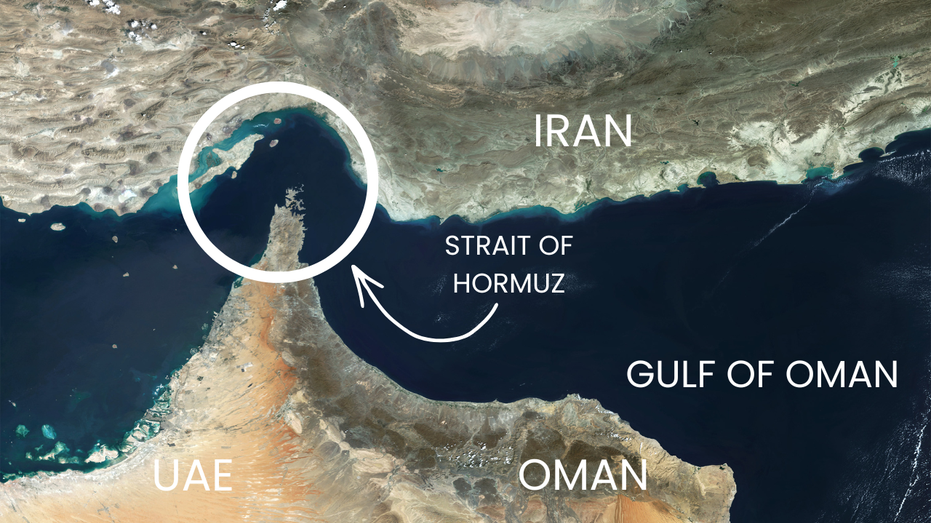
map of strait of hormuz

The Strait of Hormuz is a key chokepoint for maritime oil flows through the Middle East. (Amanda Macias/Fox News Digital)

Before the outbreak of the conflict, oil prices were in the $60 to $70 a barrel range, and the rise caused gas prices in the U.S. to surge. The national average price for a gallon of regular gasoline was $4.095 as of Monday, up 7% from a month ago and 30% from a year ago, which has pressured household budgets.

Trump wrote in a post on his Truth social media platform that Chevron CEO Mike Wirth gave “all of the reasons that his company is doing so well,” in an interview with FOX Business’ Maria Bartiromo, but added that his administration has helped facilitate that success and urged him to lower prices for consumers.

Advertisement

WHITE HOUSE, GAS STATIONS POINT FINGERS OVER STUBBORN PRICES WHILE LOCATIONS THAT SLASHED PRICES SEE BOOM

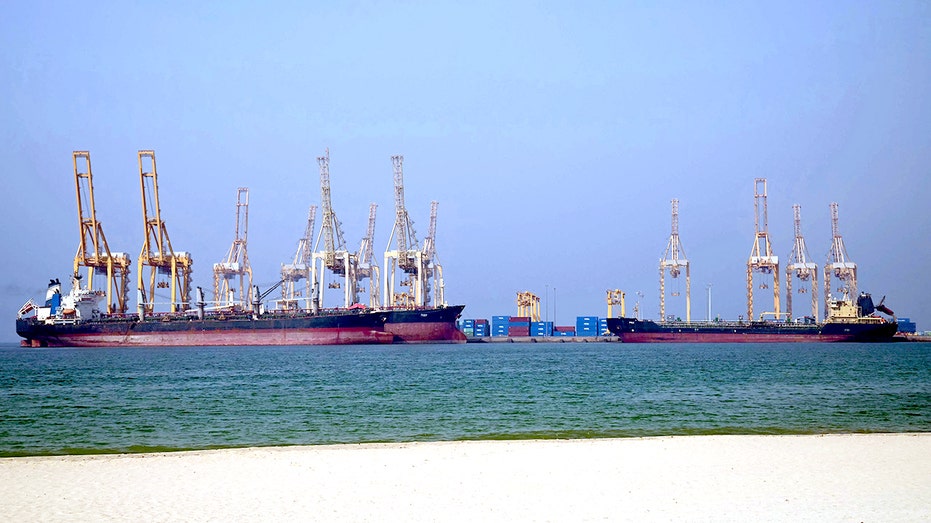
Oil tankers in the Strait of Hormuz.

Oil shipments through the Strait of Hormuz have been severely constrained due to the risk of Iranian attacks. (Giuseppe Cacace/AFP via Getty Images)

“The only thing he conveniently forgot to mention is that, without the genius, foresight, strength, and stability, of the TRUMP Administration, the Oil Industry, and our Country itself, would be DEAD! As an example, they threw Mike and Chevron out of Venezuela, but now they’re back, far bigger and stronger than ever before, expecting to make a fortune! That goes for other Oil Companies as well…and get your consumer (retail!) Oil Prices DOWN, NOW!” Trump wrote.

The White House has previously criticized gas stations for not lowering prices, accusing them of padding profit margins.

Groups representing smaller gas stations and energy marketers have pushed back on the argument, saying that retail prices are linked to oil prices and that they typically decline over several weeks after oil prices decline due to the need to turn over higher-cost inventory.

Advertisement

GET FOX BUSINESS ON THE GO BY CLICKING HERE

Continue Reading

Business

Sugar’s natural halo keeping it resilient

Published

on

Sugar’s natural halo keeping it resilient

Consumers cutting back on HFCS, not sugar, recent report says.

Continue Reading

Business

Kansai Nerolac Q1 profit rises 5%; approves Rs 601 crore capacity expansion

Published

on

Kansai Nerolac Q1 profit rises 5%; approves Rs 601 crore capacity expansion
Kansai Nerolac Paints reported a more than 5% rise in consolidated net profit for the June quarter, aided by healthy demand across decorative and industrial paints. The company approved Rs 601 crore of capacity expansion across three plants.

Consolidated net profit rose to Rs 228.41 crore from a year earlier, while revenue increased nearly 10% to Rs 2,374 crore.

Demand remained healthy in both decorative and industrial paints despite geopolitical tensions and was supported by the delayed onset of the monsoon, managing director Pravin Chaudhari said.

“Looking ahead, we anticipate that demand in both market segments will continue to remain strong despite an erratic monsoon and prevailing geopolitical situation,” he said. “Additionally, Diwali being later this year, should add a fillip to the festive demand,” he said.

Advertisement

Chaudhari said the geopolitical situation in West Asia disrupted supply chains and sharply increased raw material prices from March. While conditions improved midway through the June quarter, the company would continue to monitor the situation closely.


The company raised prices during the quarter to partly offset higher raw material costs. Total expenses rose more than 10% to Rs 2,116 crore, while consolidated earnings before interest, tax, depreciation and amortisation (EBITDA) increased 7.7% to Rs 335.89 crore.
On a standalone basis, revenue rose 10% to Rs 2,299 crore, while Ebitda increased 8% to Rs 336 crore.The company announced its results after market hours on Monday. Its shares closed 3.6% higher at Rs 203.95 on the BSE.

Capacity expansion approved

The board has approved capacity expansion for industrial paints, powder coatings and industrial resins across three manufacturing facilities.

Industrial paint capacity will be expanded at the Sayakha, Bawal and Hosur plants at an investment of Rs 412 crore.

Advertisement

“In view of the estimated growth in automotive paint industry, capacity additions are being carried out,” the company said in an exchange filing.

The company will invest another Rs 189 crore to expand powder coating and industrial resin capacity at the Sayakha plant.

The projects will be funded through internal accruals and are expected to be completed in phases by the end of fiscal 2029.

Advertisement
Continue Reading

Business

European shares start August higher on US-Iran diplomacy hopes

Published

on


European shares start August higher on US-Iran diplomacy hopes

Continue Reading

Trending

Copyright © 2025