Connect with us
DAPA Banner
DAPA Coin
DAPA
COIN PAYMENT ASSET
PRIVACY · BLOCKDAG · HOMOMORPHIC ENCRYPTION · RUST
ElGamal Encrypted MINE DAPA
🚫 GENESIS SOLD OUT
DAPAPAY COMING

Business

what the new carbon border tax means for SMEs

Published

on

what the new carbon border tax means for SMEs

UK businesses importing steel, aluminium, cement, fertiliser or hydrogen products face a new compliance burden from 1 January 2027, when record-keeping requirements for the UK’s Carbon Border Adjustment Mechanism (CBAM) take effect. And in a detail that will catch many smaller firms off guard, using a customs broker or freight forwarder does not pass the responsibility on.

CBAM is a new tax designed to tackle so-called carbon leakage, ensuring that certain highly traded, carbon-intensive goods imported into the UK face a comparable carbon price to equivalent goods produced here. The mechanism, already a sticking point in the UK’s trade negotiations with India, is part of the government’s push towards net zero by 2050.

For the thousands of SMEs that import components, materials or finished goods in the five affected sectors, the practical impact starts well before any tax is due.

Records first, tax later

From 1 January 2027, any business importing CBAM goods must keep records relating to those imports, and keep them for six years. Businesses that fail to keep adequate records may be liable for penalties, so HMRC’s message is clear: find out what you need to do beforehand and get it right.

Crucially, outsourcing your imports offers no escape. If a customs broker, freight forwarder, haulier or tax agent completes the import declaration on your behalf, you may still be classed as the importer and therefore responsible for meeting CBAM obligations.

Advertisement

The record-keeping duty applies regardless of whether a business will ultimately need to register for the tax. Full details of who needs to register and what records to keep are on GOV.UK.

Registration opens in 2028

Registration for CBAM opens on 1 January 2028. Businesses must register with HMRC if the value of CBAM goods imported over the previous 12 months exceeds the £50,000 threshold, or if they expect to import above it within the next 30 days.

That threshold is low enough to capture plenty of small manufacturers, builders’ merchants, fabricators and construction firms, not just large industrial importers.

Registered businesses must submit a return, even if there is no tax to pay, and settle any liability for the 1 January to 31 December 2027 accounting period by 31 May 2028.

Advertisement

HMRC says further guidance on CBAM rates, default emissions values and the monitoring, reporting and verification of emissions will be published in the coming months.

Another layer for stretched small firms

The timing will test smaller importers. Research shows SMEs are already falling behind on sustainability reporting, with just one in eight classed as net zero ready and two-thirds unfamiliar with basic emissions categories.

CBAM also lands amid a wider debate about carbon pricing, with plans to align UK carbon rules with the EU’s scheme drawing both criticism over costs and support from industries hoping to sidestep the EU’s own border levy.

For now, the advice for any business importing goods in the five sectors is simple. Check on GOV.UK whether your goods are in scope, work out whether you or your agent counts as the importer, and get your record-keeping in order before January 2027. Six years is a long time to keep paperwork, but a penalty from HMRC will feel longer.

Advertisement

Jamie Young

Jamie Young

Jamie Young is Senior Reporter at Business Matters, covering SME finance, employment law and Westminster policy since 2016. He has reported on every Budget and Autumn Statement since 2018, helped make sense of the ‘covid era’ and the bounce-back loan scheme from launch through the fraud investigations, and broke the magazine’s coverage of the 2024 late-payment reforms. He joined Business Matters straight from completing his BA in Administration from Exeter University and is NCTJ-qualified. Reach him at jyoung@cbmeg.co.uk

Advertisement
Continue Reading
Click to comment

You must be logged in to post a comment Login

Leave a Reply

Business

US suitor raises offer for pawnbroker Ramsdens following shareholder talks

Published

on

Business Live

The new offer values the Teesside-based chain at about £232m on a fully diluted basis

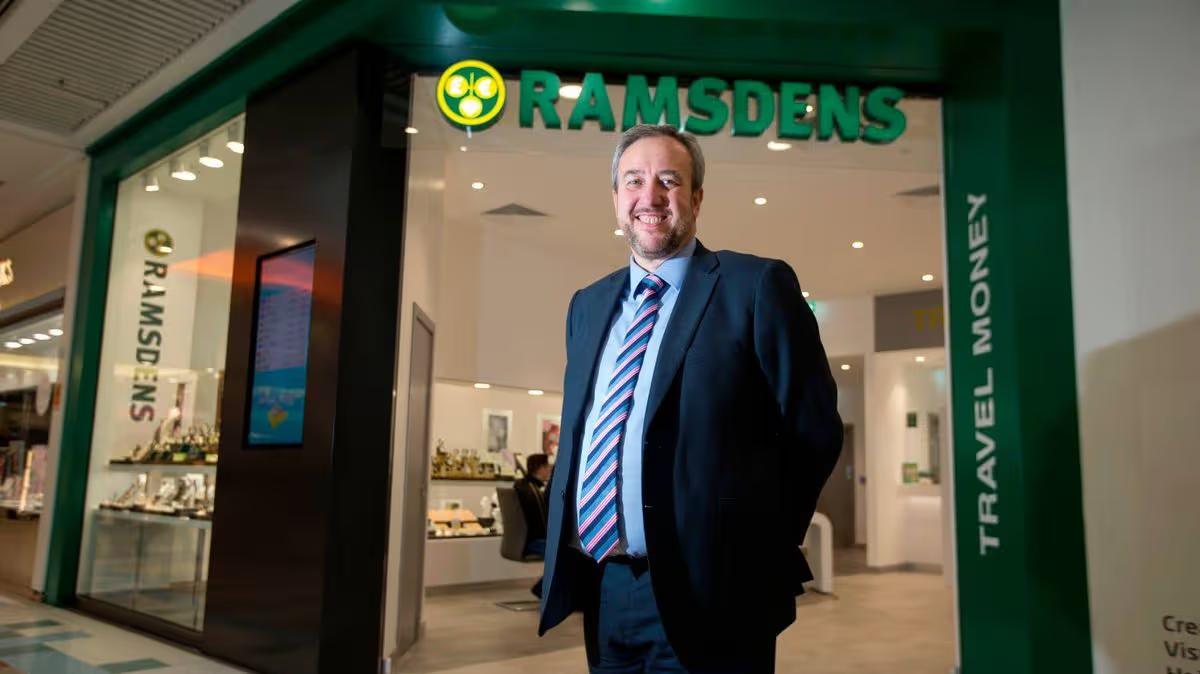
Ramsdens CEO Peter Kenyon

Ramsdens CEO Peter Kenyon

The US-based buyer of high street pawnbroking chain Ramsdens has increased its offer for the business.

Investors on the London Stock Exchange were told that FirstCash has revised its bid for Ramsdens following shareholder talks. It now values the Teesside-based firm, which also specialises in jewellery sales and foreign exchange, at about £232m on a fully diluted basis.

Advertisement

The offer represents a 49% premium to Ramsdens share price on June 22, the last trading day before announcement of FirstCash’s original offer. It will see Ramsdens taken off the AIM market, nearly 10 years since its launch on the London Stock Exchange.

FirstCash is an international pawnbroker with around 3,300 sites across the US, South America and the UK, and is listed on the US’s Nasdaq stock market index. It intends to use funding from its US revolving credit facility to finance the acquisition.

Separately, Ramsdens gave a trading update in which it boosted full year profit expectations. The firm now expects pre-tax profits of between £33m-£35m.

It pointed to continued high gold prices – though down 20% since the peak in January this year – and robust demand for pawnbroking loans with June proving to be another record month. In six weeks since reporting the May 2026 loan book figure of £14.5m, the loan book has increased to £15.5m. Bosses also said England and Scotland’s World Cup run had helped boost the foreign exchange business.

Advertisement

Chief executive Peter Kenyon said: “The foundations of the group are strong. We are continuing to trade well, maximising the opportunity of trading with a favourably high gold price but knowing that our diversified financial services are all contributing to the Group’s ongoing success.

“The investment in our new store opening program is going well. Hereford and Skegness have recently opened, Newark and Peterborough are in shop fit and we have completed the lease formalities in Corby and St Helens with shop fitting to start shortly.”

Continue Reading

Business

Nasdaq Sinks 1% to 26,003 as Chip Stocks Slide Again Despite Strong Earnings From Taiwan Semiconductor

Published

on

The Nasdaq logo is displayed at the Nasdaq Market site in Times Square in New York

The Nasdaq Composite fell sharply Thursday, dropping 265.61 points, or 1.01%, to close at 26,003.62, as semiconductor stocks extended a multi-day slide even after Taiwan Semiconductor Manufacturing reported blowout quarterly earnings, underscoring growing investor skittishness over lofty valuations in the artificial intelligence trade.

The decline marked a sharp reversal from Wednesday’s session, when the tech-heavy index climbed 0.62% to settle at 26,269.23 on the back of cooling inflation data and strength in Big Tech names including Apple, Amazon, Alphabet and Microsoft. Thursday’s pullback erased much of that momentum, as chip stocks — which have powered much of this year’s broader market rally — came under renewed pressure for a second straight day.

Taiwan Semiconductor Manufacturing, the world’s largest contract chipmaker, reported a 77% annual earnings gain and posted record second-quarter revenue, while lifting its full-year capital expenditure outlook to a range of $60 billion to $64 billion, up from prior guidance of $52 billion to $56 billion. Despite the strong results, TSM shares fell in early trading, with the stock declining as investors focused instead on the company’s warning about rising prices and questioned whether even robust earnings could justify current valuations across the sector. The stumble in TSM shares rippled through the broader chip complex, dragging down the VanEck Semiconductor ETF and contributing to declines in Arm Holdings, which fell around 5%.

Memory chip names bore some of the heaviest losses. Western Digital shares fell more than 8%, and SanDisk dropped nearly 8%, while South Korea’s SK Hynix fell 7% in U.S. trading, adding to a bruising stretch for the memory sector that has seen sharp single-day swings in both directions over the past several weeks. The selling pressure followed a similar pattern to Wednesday’s session, when SK Hynix sank nearly 11%, SanDisk tumbled more than 12%, Western Digital fell almost 8% and Micron Technology dropped more than 7%, as investors took profits following a run-up in memory stocks tied to enterprise customers shifting spending toward servers, storage and memory hardware.

Advertisement

The weakness spread overseas as well. Shares of Samsung Electronics and SK Hynix fell sharply in Seoul trading, dragging South Korea’s benchmark Kospi index lower and contributing to broader declines across Asian chip stocks, including Japan’s Advantest, SoftBank Group, Tokyo Electron and Renesas Electronics. Europe’s chip sector also felt the pressure, with STMicroelectronics, ASML and Infineon Technologies among the decliners tracking the global selloff in semiconductor shares.

Not all of Thursday’s session was negative. The Dow Jones Industrial Average bucked the broader trend, rising modestly as a more than 6% jump in UnitedHealth Group helped offset weakness elsewhere. UnitedHealth’s results easily topped Wall Street’s expectations, and the company raised its full-year outlook, citing more favorable trends in medical costs during the first half of the year. GE Aerospace also reported an earnings beat before the opening bell, while Abbott Laboratories rose nearly 4% after slightly beating estimates and raising its 2026 earnings guidance. Trucking company J.B. Hunt Transport Services jumped 7.5% after handily beating analyst estimates on the strength of increased intermodal shipping volumes.

Not every earnings report drew a positive reaction. United Airlines shares fell nearly 3% after the company issued cautious third-quarter guidance tied to rising fuel costs, even though its second-quarter earnings beat estimates and revenue matched consensus forecasts. The airline’s chief executive told CNBC that overall demand remained strong despite the guidance concerns. Netflix was scheduled to report its second-quarter results after Thursday’s closing bell, capping a week of earnings that had broadly exceeded expectations, though the streaming company’s shares had fallen following each of its last four quarterly reports.

Broader economic data released Thursday added to the day’s uncertain tone. June retail sales rose 0.2% from the prior month, falling short of the 0.3% consensus estimate, even as some underlying components of the report were viewed more favorably by economists. The modest miss came alongside continued concern over geopolitical tensions in the Middle East, as the United States continued launching strikes against Iran and crude oil prices remained elevated near recent highs. Treasury yields rose Thursday morning as investors weighed the combination of persistent Gulf tensions and mixed economic signals.

Advertisement

The volatility in chip stocks has become a recurring theme throughout July, with the sector swinging sharply in both directions as investors debate whether current spending and valuation levels tied to the AI buildout are sustainable. JPMorgan analysts have characterized the recent weakness as a reflection of crowded investor positioning within the sector rather than a sign that the broader AI investment cycle is faltering, drawing comparisons to similar bouts of chip-sector selling in past months that were later followed by recoveries.

SpaceX shares also remained under pressure this week, falling below their $135 initial public offering price for the first time since the company’s record-setting Nasdaq debut in June, amid investor concerns over increased competition from Chinese launch providers and a coming increase in the number of shares available to trade on the exchange.

Thursday’s divergence between the Dow’s modest gain and the sharp declines in the Nasdaq and S&P 500 highlighted the extent to which chip and technology stocks continue to dictate the direction of the broader market, even as strength in healthcare, industrials and select consumer names offered some counterbalance. With Netflix’s earnings due after the close and geopolitical tensions in the Middle East showing no signs of easing, investors said they expect volatility in technology shares to persist in the sessions ahead as markets continue to grapple with high expectations heading into the heart of the second-quarter earnings season.

Advertisement
Continue Reading

Business

Ivanhoe Electric stock hits 52-week low at 8.43 USD

Published

on


Ivanhoe Electric stock hits 52-week low at 8.43 USD

Continue Reading

Business

EMI grant reporting simplified: HMRC to scrap notifications

Published

on

EMI grant reporting simplified: HMRC to scrap notifications

Small firms that reward staff with share options are set to lose one of their more tedious HMRC chores, after the government published draft legislation scrapping the requirement to notify the taxman separately every time an Enterprise Management Incentive option is granted.

Under proposals included in the draft Finance Bill 2026-27, published on 13 July, companies operating EMI schemes would report new option grants through their existing annual EMI return rather than filing a standalone notification for each grant.

For the thousands of growing businesses that use EMI to compete for talent against deeper-pocketed rivals, the change removes a compliance trap that has caught out many an otherwise well-run company. Miss a notification and the tax advantages that make the scheme worthwhile can be put at risk.

Cam Wright, a Senior Associate at audit, tax and business advisory firm Blick Rothenberg, said: “As part of the draft Finance Bill 2026-27, HMRC have published proposals to simplify the grant reporting process. Reducing the reporting burden should make EMI more appealing to businesses.”

He added: “The proposals remove the requirement for companies to separately notify HMRC about EMI option grants. Instead, options granted on or after 6 April 2027 would be reported through the existing annual EMI return.”

Advertisement

EMI is widely regarded as the most generous of the government’s tax-advantaged share schemes, and a mainstay for SMEs incentivising staff through an employee share scheme rather than cash bonuses alone. Qualifying companies can grant options worth up to £250,000 per employee over a three-year period, normally free of Income Tax and National Insurance for the recipient.

Wright said: “EMI options are a tax-advantaged share option scheme approved by the Government. They are designed to help small to medium-sized businesses recruit and retain key talent. EMIs remain one of the UK’s most valuable tax-advantaged share incentive arrangements available for qualifying companies.”

The reform will be particularly welcome to founders who see employee ownership as central to their recruitment pitch but have long complained that the compliance burden on entrepreneurs keeps growing even as ministers talk up simplification.

He added: “The proposed changes will also consolidate reporting through the annual EMI return, reduce the administrative requirements for companies operating EMI schemes and simplify the process of granting EMI options while maintaining HMRC reporting requirements through the existing annual filing framework. While this change was originally announced at Budget 2025, the publication of draft legislation represents a significant step towards implementation.”

Advertisement

The draft clauses are open for technical consultation until 7 September 2026, with the final contents of the Bill subject to the Chancellor’s decision.

Wright said: “The proposal forms part of a broader trend towards modernisation and simplification across the UK’s shares and incentives landscape.”

Until the new rules take effect, companies granting EMI options must continue to notify HMRC under the current framework. Business owners planning grants around the April 2027 changeover should take advice on timing, and on keeping their annual returns in good order, since that single filing will soon carry all the weight.


Jamie Young

Jamie Young

Jamie Young is Senior Reporter at Business Matters, covering SME finance, employment law and Westminster policy since 2016. He has reported on every Budget and Autumn Statement since 2018, helped make sense of the ‘covid era’ and the bounce-back loan scheme from launch through the fraud investigations, and broke the magazine’s coverage of the 2024 late-payment reforms. He joined Business Matters straight from completing his BA in Administration from Exeter University and is NCTJ-qualified. Reach him at jyoung@cbmeg.co.uk

Advertisement

Continue Reading

Business

SoftBank-backed AceVector files updated IPO papers; targets to raise Rs 300 cr via fresh issue

Published

on

SoftBank-backed AceVector files updated IPO papers; targets to raise Rs 300 cr via fresh issue
SoftBank-backed digital-commerce ecosystem AceVector Ltd has filed updated draft papers with markets regulator Sebi for an initial public offering (IPO), which will include a fresh issue of shares worth Rs 300 crore.

In addition to the fresh issue, the IPO will also involve an offer-for-sale (OFS) of 6.38 crore shares by existing shareholders, according to the updated draft red herring prospectus (UDRHP).

As part of the OFS, promoter Starfish I Pte Ltd and other shareholders Nexus, Wonderful Star Pte Ltd, Kenneth Stuart Glass, Jason Ashok Kothari, Priyanka Shreevar Kheruka, Rupen Investment and Industries, and Centaurus Trading and Investments will offload their holdings.

Despite the share sale by several investors, AceVector’s promoters and founders Kunal Bahl and Rohit Bansal, who together hold a 23.56 per cent stake, will not participate in the OFS. However, another promoter entity Starfish, which owns 30.68 per cent stake in the company, will be divesting part of its stake.

Advertisement

The company plans to use the IPO proceeds to strengthen technology infrastructure, support marketing and business promotion for Snapdeal, pursue inorganic growth through acquisitions, and meet general corporate requirements.


The Gurugram-based company operates Snapdeal, a value-focused lifestyle e-commerce marketplace; Unicommerce, an e-commerce enablement SaaS platform; and Stellaro Brands, an omnichannel consumer brands arm.
Financially, AceVector reported operating revenue of Rs 244 crore in H1 FY26, up 34 per cent from Rs 181 crore in H1 FY25. During the same period, its adjusted EBITDA loss narrowed significantly to Rs 9.2 crore from Rs 28 crore a year earlier.

AceVector had initiated its IPO journey earlier this year by filing confidential draft papers with Sebi in July and subsequently securing approval in November. By opting for the confidential pre-filing route, the company gained the flexibility to delay public disclosure of IPO details until the later stages.

Continue Reading

Business

Nederman Holding AB (publ) (NHOXF) Q2 2026 Earnings Call Transcript

Published

on

OneWater Marine Inc. (ONEW) Q1 2026 Earnings Call Transcript

Operator

Welcome to the Nederman Holding Q2 2026 Report Presentation. [Operator Instructions] Now I will hand the conference over to speakers, CEO, Sven Kristensson, and CFO, Matthew Cusick. Please go ahead.

Sven Kristensson
President, CEO & Director

Advertisement

Good morning, everyone, and thank you for joining us today, taking the time not sitting in the fabulous sunshine in this — at least in this part of Sweden. The second quarter was encouraging for Nederman and our owners. We saw a clear increase in customer activity and a strong order intake across all 4 divisions. This confirms the positive trend we saw at the end of the first quarter.

You remember the first part of the first quarter wasn’t that great. Market uncertainty persists, but we continue to see customers investing in areas that are important for their operations. It’s also encouraging that the investments we have made in innovation, operations over the — and operations over the recent years are creating results. This is strengthening our competitiveness, and it’s also helping us gain market share in traditional and new industries.

During Q2, orders received increased in all 4 divisions. Extraction & Filtration Technology, which is the biggest division, had record order intake. Monitoring & Control Technology and Duct & Filter Technology had the highest quarterly order intake since Q1 last year. We also see continued growth in our service business. That’s a focus area, and it’s very important for recurring revenue and long-term value creation. We continue to advance our innovation agenda through new product development and releases that address our customers’ need for cleaner production, improved

Advertisement
Continue Reading

Business

GLP-1 users spark product revamps

Published

on

Protein Pints debuts portable, frozen novelty format

‘Benefit stacking’ GLP-1 users are demanding products high in protein, fiber and in smaller sizes.

Continue Reading

Business

Nasdaq Futures Follow Tumble in South Korea’s KOSPI Index

Published

on

Stocks Little Changed After Fed Decision

South Korean stocks sank on Thursday, which could be an indicator of what to expect from U.S. markets today.

The KOSPI Composite Index fell 6.4%, which signals it could be a rough day for tech stocks.

On Monday, the KOSPI selloff bled into the U.S. trading day with all three indexes ending lower and the tech-heavy Nasdaq leading declines.

Continue Reading

Business

Open Championship 2026: Birkdale set for economic boost as local spending doubles

Published

on

Business Live

The 2026 Open Championship at Royal Birkdale is set to double local business spending, according to Mastercard data based on economic impact from previous tournaments

Early morning crowds at Royal Birkdale for the 154th Open

Early morning crowds at Royal Birkdale today for the 154th Open

This week’s Open Championship at Royal Birkdale is forecast to double spending at businesses in the surrounding area, according to figures from Mastercard.

Advertisement

Last year’s tournament at Royal Portrush in Northern Ireland generated a 119 per cent surge in spending within 5km of golf’s oldest major, while the 2024 Open delivered an 82 per cent uplift within 3km of Royal Troon.

The hospitality sector stands among the greatest beneficiaries. Spending in bars and restaurants around Portrush last year soared 234 per cent and 95 per cent respectively, while at Troon expenditure across both categories more than doubled.

“As fans travel to Royal Birkdale to enjoy one of golf’s greatest Championships, the local hospitality sector is in for a bumper weekend,” said Mastercard UK and Ireland president Simon Forbes, as reported by City AM.

“From Australian tourists to B&B owners in Merseyside, live events bring people together. We’re proud to help businesses at these busy times, connecting them to tourists from all over the world with the tap of a card.”

Advertisement

Play got under way this morning at Royal Birkdale, where local favourite Tommy Fleetwood is considered one of the frontrunners to lift the Claret Jug.

The Open draws in excess of 250,000 spectators, with a significant proportion travelling from abroad — particularly from the United States, home of defending champion Scottie Scheffler, and Australia. Accommodation spending at the 2024 Open rose 44 per cent, according to Mastercard’s findings.

This comes as Britons are continuing to devote more of their budgets to experiences. The proportion of UK consumer spending on experiences, excluding travel, rose to 23.3 per cent, up from 22.3 per cent the previous year, according to the payments giant.

This rise in spending also provides a welcome boost to the broader economy, with the 2025 Open credited with delivering £89.2m in economic impact for Northern Ireland. The 2024 Open generated a comparable figure, £87.3m, for Scotland.

Advertisement
Continue Reading

Business

Milo’s Tea expands Alabama footprint

Published

on

Milo’s Tea expands Alabama footprint

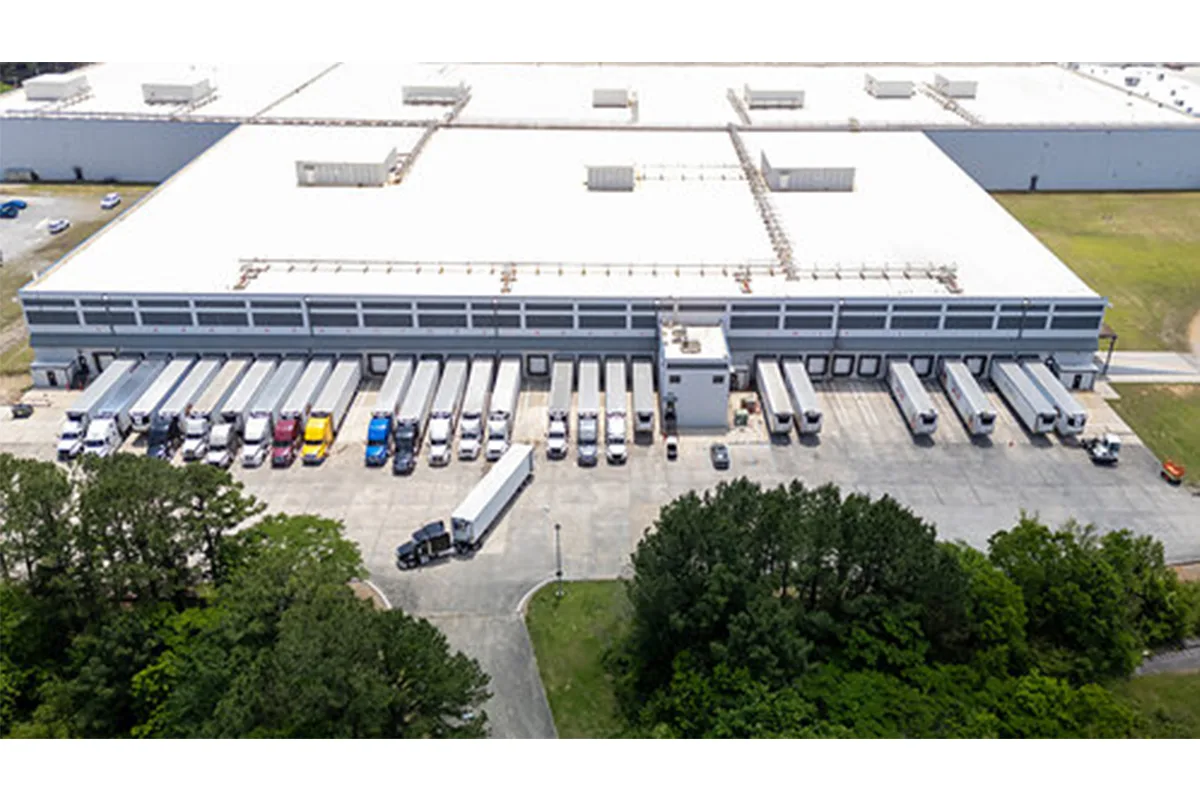
RTD beverage manufacturer opens refrigerated distribution center in Birmingham.

Continue Reading

Trending

Copyright © 2025