TL;DR
Alibaba’s T-Head open-sourced SAIL, the software stack for its Zhenwu AI chips, at WAIC in Shanghai. It aims to lower the barrier to migrating off Nvidia’s CUDA.



Alibaba’s T-Head open-sourced SAIL, the software stack for its Zhenwu AI chips, at WAIC in Shanghai. It aims to lower the barrier to migrating off Nvidia’s CUDA.
Alibaba’s chip design unit T-Head announced at the World AI Conference in Shanghai on Saturday that it is open-sourcing SAIL, the full software stack for its Zhenwu series of AI chips. The move is designed to lower migration barriers for developers currently locked into Nvidia’s CUDA ecosystem. T-Head said programmers can adapt SAIL to mainstream AI frameworks in under seven days.
The vast majority of AI developers globally write software using CUDA, Nvidia’s proprietary toolkit for programming GPUs. That dependency effectively locks them into buying Nvidia hardware, a dynamic that has helped the company reach a $3.4 trillion market cap. Xi Jinping used the same conference on Friday to argue that no single country should monopolise AI, and T-Head’s open-sourcing of SAIL is the infrastructure-level expression of the same argument: if China wants AI independence, it needs to break the CUDA lock-in at the software layer, not just build alternative chips.
T-Head is not alone. Huawei open-sourced CANN, the software platform for its Ascend AI processors, in 2025. Moore Threads has pursued a similar strategy with its own GPU stack. All three are competing for the same developer migration: getting AI engineers to write code that runs on Chinese hardware without losing access to frameworks like PyTorch. The challenge is less technical than habitual. CUDA has a 17-year head start and the largest library ecosystem in the industry.
For Alibaba, the timing is loaded. Anthropic accused Alibaba’s Qwen lab of running the largest AI distillation campaign ever against a US company last month, and the Pentagon added Alibaba to its Chinese military companies blacklist in June. Open-sourcing SAIL positions the company as a contributor to open AI infrastructure while it fights those designations in court. The 560,000 Zhenwu chips Alibaba has already shipped to over 400 customers now have a publicly available software layer, which makes the ecosystem stickier and harder for any single government to shut down.
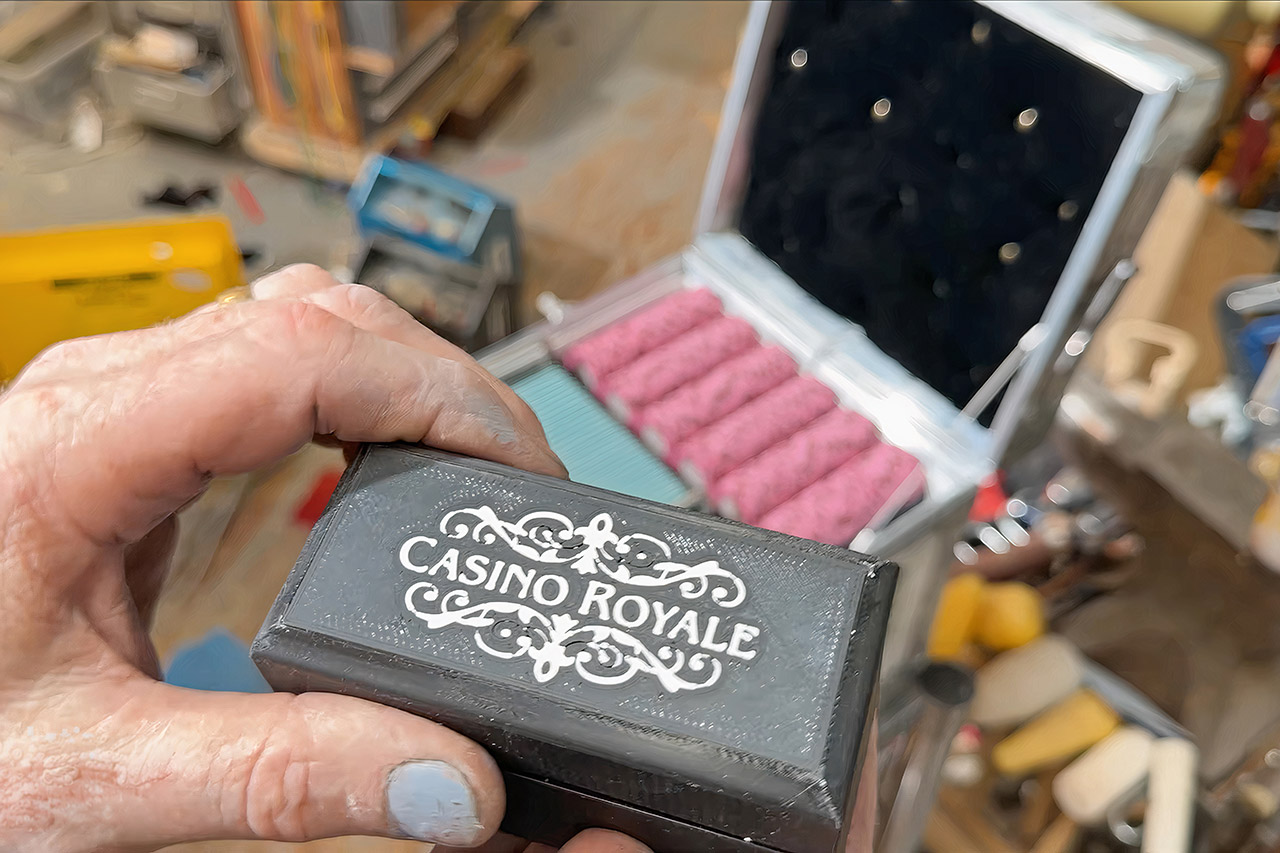
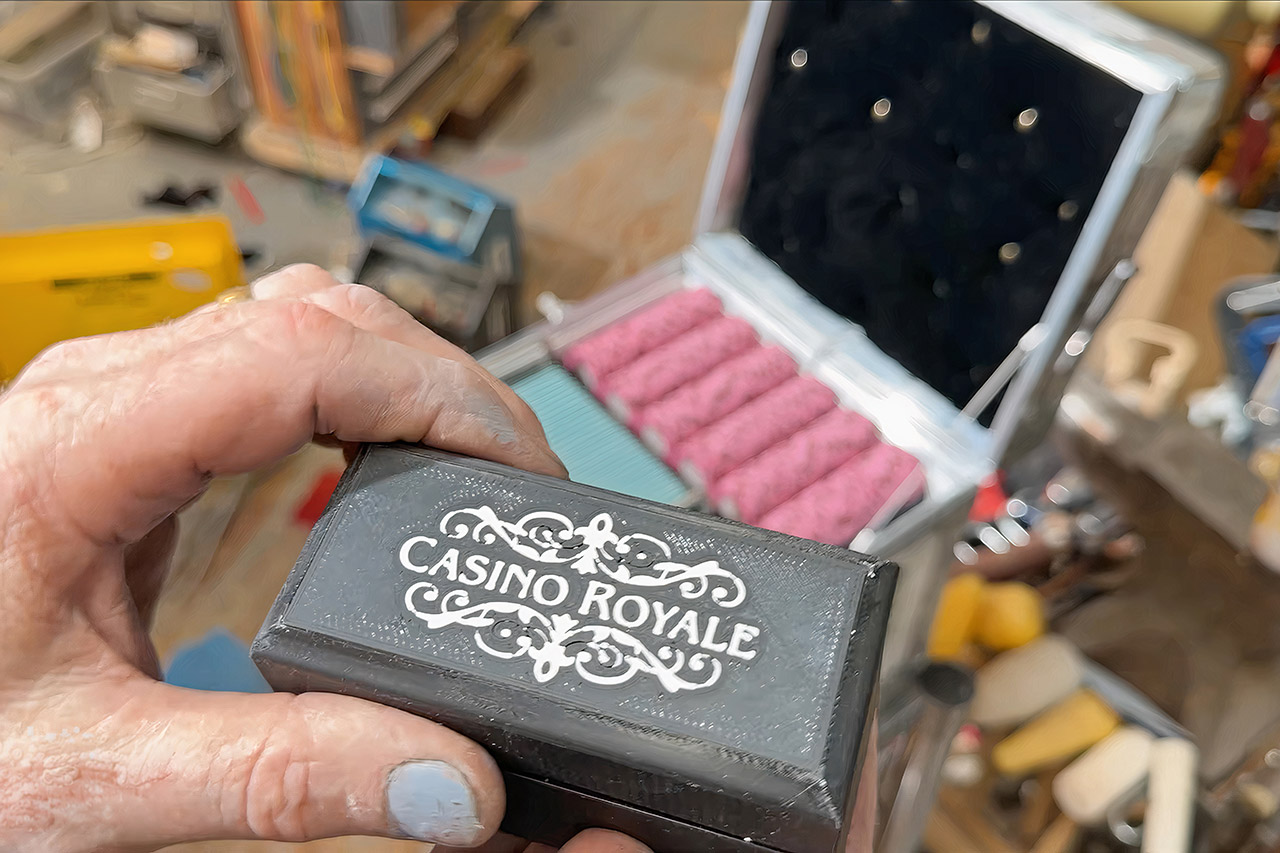
Adam Savage has spent years turning movie props into objects he can actually touch and use. His earlier work on Rounders chips and a matching poker table showed how deeply he loves the gear that surrounds a serious game. This new project takes that same passion and points it at his favorite Bond film. Casino Royale features one of the most intense poker scenes ever put on screen, complete with million-dollar plaques and sky-high tension. Savage decided to build the kind of custom carrier and racks that might actually move such a set between games.
He began by looking for realistic copies rather than making things from scratch, as the details might be very confusing. One manufacturer, Apache Poker Chips, sent him several ceramic pieces that mimic the chips depicted in the movie in every aspect, including weight, sound when knocked together, and feel in your hand. To top it all off, the set includes these large plaques that are worth a million dollars each, as they have the same styling and design as the high-roller tables in Montenegro. It all adds up to over 65 million dollars, but that’s still nowhere near the ultimate sum from the film.
Sale

Next came the design process, which involved Savage working with his shop assistant to create specialized racks that could carry many more chips than a regular tray. Each rack has 175 chips, organized into five stacks of 35. They produced the racks on a two-color machine, so the Casino Royale emblem is visible through the plastic as part of the design. With six racks in all, the set has plenty of capacity, but it all fits in one large case with a lock. Getting it just right required some careful computer work and a lot of test printing to ensure that the fit and logo were correct.
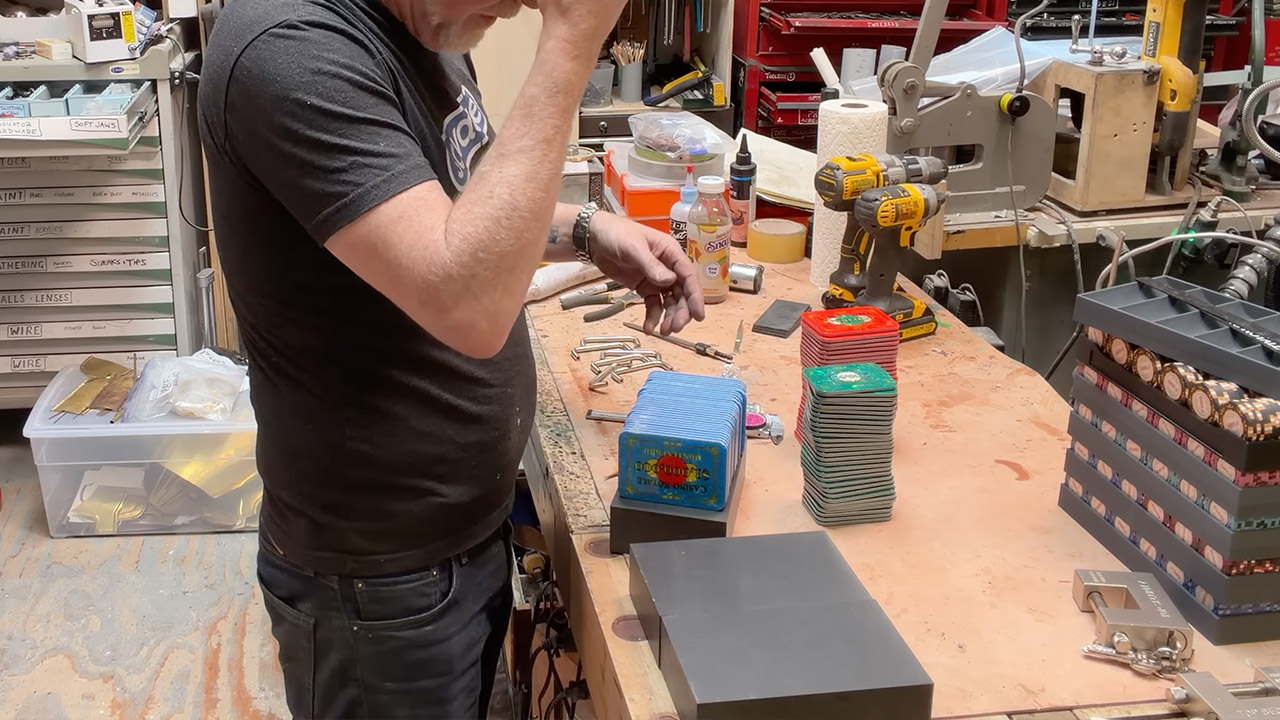
The plaques needed some boxes to keep them in, so Savage used the table saw to make some wooden trays, angled the cuts so the boxes would stack nicely and stand out when pulled out with those old drawer handles. After some testing, he decided to producing them using a 3D printer, which allowed him to get a smoother finish that looked like it belonged in a fine shop. Each box may hold a number of plaques and has the same two-color design treatment as the chip racks.
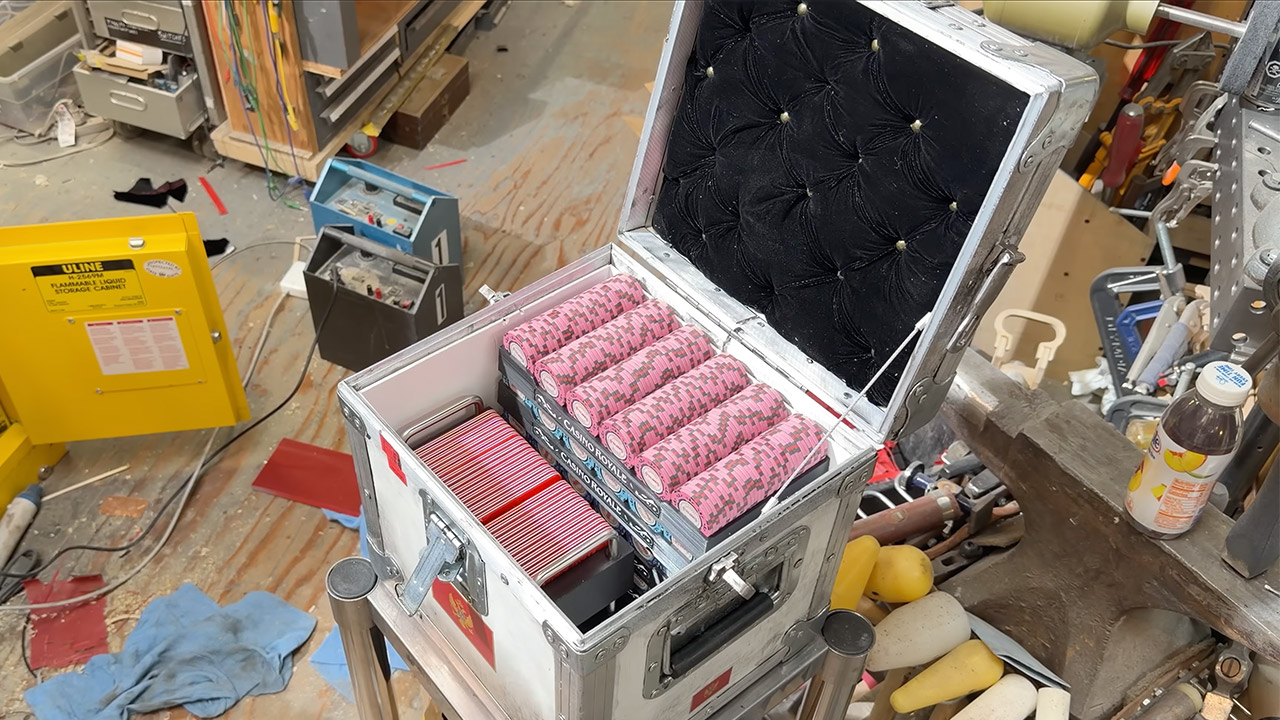
The case, however, is the true standout, as Savage started with a massive anvil-style box that was essentially a strongbox and then transformed it into something that resembles a bank vault on wheels. He fitted boat-style latches and a very good lock on each side. There are plastic bits to assist everything line up when you seal the lid, and the inside of the lid has a small tufted trim for a luxurious feel. He polished it off with some old aircraft stickers, a Montenegrin flag, and some tamper-evident seals, making it look like something from an extremely secretive high-stakes operation.
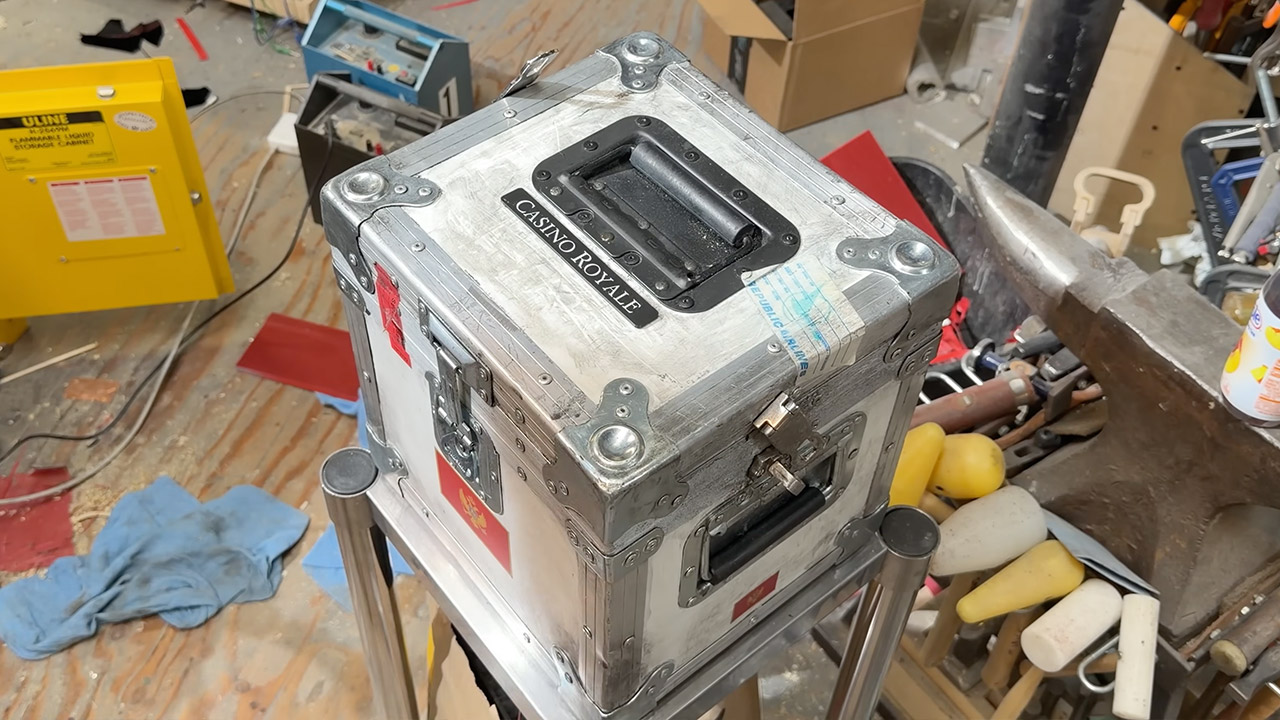
The problem is that once the case is filled, moving it around becomes difficult because it weighs around 19kg on its own, before you even consider the box itself. So Savage decided to link the box to one of those stainless steel moving kitchen carts, allowing one person to move it without exerting themselves. Inside the cart, he also fitted some custom 3D-printed card carriers that look just like the original mid-century designs, ensuring that you always have two decks of cards ready. The entire operation is now sitting on the cart, and every detail has been meticulously planned. The chips sound and feel just like the ones in the movie, and the plaques are also spot-on.
France and Germany pledged to develop a sovereign alternative to Palantir’s military software. France’s Arcadia is the model. Both countries already dropped Palantir for ChapsVision.
France and Germany pledged on Friday to develop a European alternative to Palantir’s military AI software. A joint declaration signed after talks between Emmanuel Macron and Friedrich Merz committed the two countries to examine “a European sovereign digital backbone” covering data-centric security, AI, and cloud solutions. France’s Arcadia, an AI-powered command-and-control platform, was named as the starting point, alongside unspecified “comparable German solutions.”
The declaration arrives after both countries moved to drop Palantir from their intelligence services. France’s DGSI announced in June it was replacing Palantir with ChapsVision’s ArgonOS, six months after renewing the American firm’s contract. Germany’s BfV chose ChapsVision for the same role. The Bundeswehr has excluded Palantir from its defence cloud procurement entirely. A top NATO commander recently told Politico there was no real European alternative to Palantir’s Maven software, which the alliance uses for battlefield data processing. Friday’s declaration is Paris and Berlin’s answer: build one.
The joint statement also covers missiles, tanks, and space. France, Germany, and the UK will examine cooperation on long-range weapons with a 2,500-kilometre range, drawing on capabilities at ArianeGroup. The Franco-German MGCS tank programme, intended to replace the Leopard 2 and Leclerc, will launch a research programme on autonomous driving, sensors, and battlefield networking. The troubled FCAS next-generation fighter jet was notably absent from the declaration. Instead, the two countries agreed to create a “European collaborative combat standard” so fighter jets and drones from different nations can communicate in the field.
Palantir’s CEO Alex Karp called Germany’s refusal to consider his company “conversations about witchcraft“ in a Bild interview last month, arguing the software was proven on every serious battlefield. That argument has not moved Berlin. The sovereignty question is not whether Palantir’s technology works, it plainly does, but whether Europe’s most sensitive military infrastructure should depend on an American company at a time when transatlantic relations cannot be taken for granted. France and Germany have now put that question into a joint declaration. Whether they can turn it into working software is the harder part.
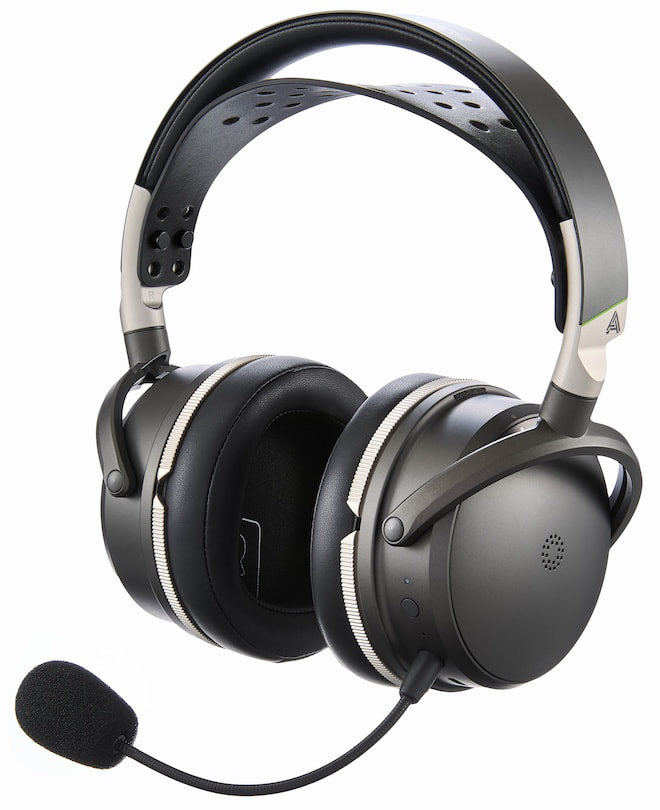
The new Audeze Maxwell 2 ANC addresses the most conspicuous omission from one of the best-sounding wireless gaming headsets on the market. Following the Maxwell 2’s debut in early 2026 and the recent introduction of interchangeable ReSkin earcups, Audeze is adding active and adaptive noise cancellation, expanded smart-audio capabilities, and new visual accents. More significantly, the Maxwell 2 ANC is the first headset in Audeze’s entire headphone lineup to offer ANC.
The original Maxwell did more than raise expectations for gaming audio. It smashed through the category’s glass ceiling and demonstrated that a high-end headphone manufacturer could build a wireless gaming headset with serious planar magnetic performance without charging $2,000 to $4,000 for admission. There is, after all, a finite supply of audiophiles willing to explain that purchase to a spouse, accountant, or divorce attorney.
Sony Interactive Entertainment has never said that Maxwell convinced it to acquire Audeze in August 2023, but the timing is difficult to ignore. The headset gave Audeze a credible path beyond the comparatively limited market for ultra-premium planar magnetic headphones and into the vastly larger PlayStation, PC, and console-gaming ecosystem. It would be surprising if that potential did not feature prominently in Sony’s calculations.
Audeze gave eCoustics an early listen to the Maxwell 2 at CanJam NYC 2026, and its planar magnetic drivers delivered the detail, impact, and spatial precision that made the original such a category disruptor. The missing feature was ANC. With the Maxwell 2 ANC, Audeze has finally filled that hole rather than hoping gamers would stop noticing it.
Related Review: Audeze Maxwell Wireless Gaming Headphones Review
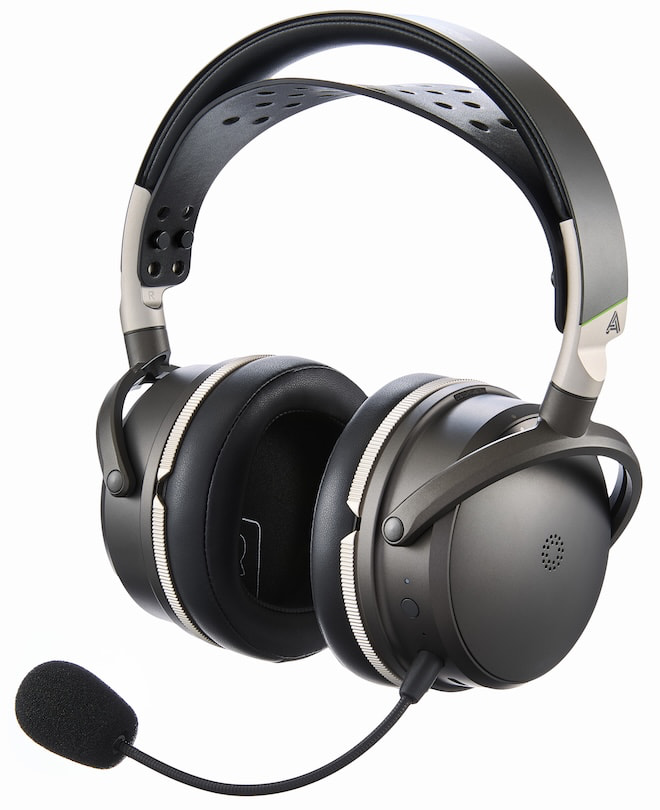
The inclusion of ANC and expanded smart-audio capabilities is a welcome addition to the Maxwell platform, which has already earned considerable attention from the media, esports competitors, and audio professionals.
Audeze’s adaptive hybrid noise cancellation system has been engineered specifically for gamers. It combines feedforward and feedback noise reduction with low-latency transparency, reducing external distractions while preserving positional-audio accuracy. According to Audeze’s internal testing, the system delivers a significant reduction in constant low-frequency noise and outperforms typical consumer ANC headphones during gameplay.
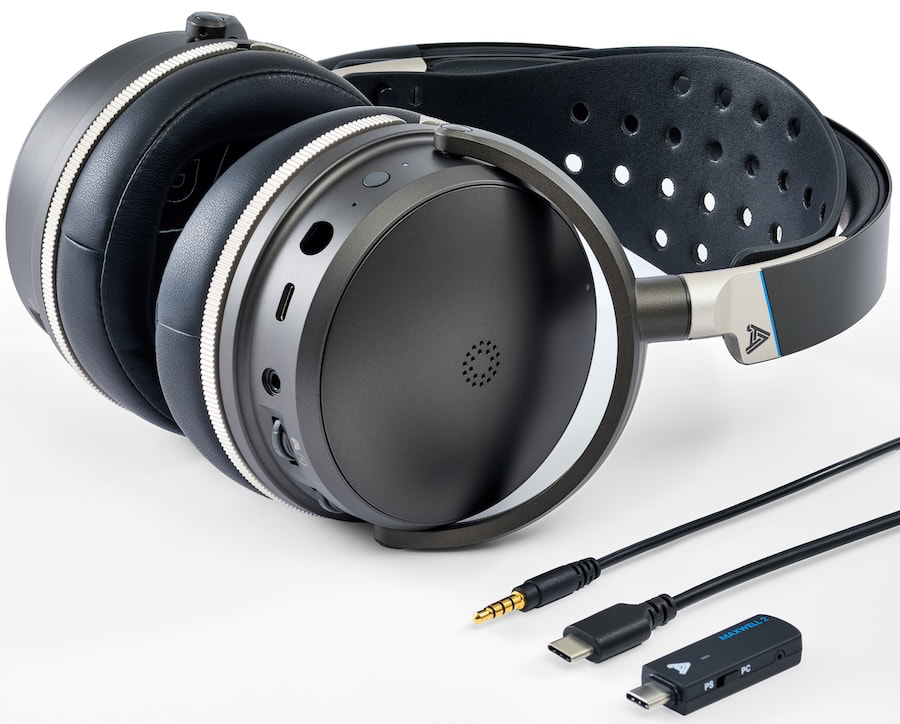
The Maxwell 2 ANC also supports AI-controlled ANC settings, voice-activated commands, an improved transparency mode, and simultaneous wired and Bluetooth audio playback. Combined with the full planar magnetic driver system and SLAM technology carried over from the Maxwell 2, these upgrades position the Maxwell 2 ANC as the most advanced gaming headset Audeze has released to date.
| Audeze Model | Maxwell 2 ANC (2026) | Maxwell 2 (2026) | Maxwell (2023) |
| Product Type | Wireless Gaming Headset | Wireless Gaming Headset | Wireless Gaming Headset |
| Price | For PlayStation: $429
For Xbox: $449 |
For Playstation: $329
For Xbox: $349 |
For Playstation: $299
For Xbox: $329 |
| Wearing Style | Over-ear, Closed-Black | Over-ear, Closed-Black | Over-ear, Closed-Black |
| Transducer type. | Planar magnetic | Planar magnetic | Planar Magnetic |
| Transducer size | 90 mm | 90 mm | 90 mm |
| Magnet type | Neodymium N50 | Neodymium N50 | Neodymium N50 |
| Magnetic Structure. | Fluxor magnet array | Fluxor magnet array | Fluxor magnet array |
| Diaphragm type | Uniforce | Uniforce | Uniforce™ |
| Phase Management | Fazor | Fazor | Fazor |
| Acoustic management | SLAM | SLAM | – |
| Maximum SPL | > 115 dB | > 115 dB | > 120 dB |
| Frequency Response | 10Hz – 50kHz | 10Hz – 50kHz | 10Hz – 50kHz |
| THD | <0.1% @ 100dB | <0.1% @ 100dB | <0.1% (@ 1 kHz, 1mW) |
| Noise Reduction | ANC | N/A | N/A |
| Bluetooth 5.3 | Yes | Yes | Yes |
| Bluetooth Codec Support | LE Audio, LDAC, AAC, SBC | LE Audio, LDAC, AAC, SBC | LE Audio, LC3, LC3plus, LDAC, AAC, SBC |
| Bluetooth Multipoint | Yes | Yes | Yes |
| Wireless Dongle | USB-C, ultra-low latency | USB-C, ultra-low latency | USB-C |
| Wired connection | USB-C digital, 3.5mm analog | USB-C digital, 3.5mm analog | USB-C with dual-audio endpoints and game-chat mix 3.5mm TRRS active |
| Audeze App | Yes | Yes | Yes |
| Battery | Lithium-polymer, 1800mAh | Lithium-polymer, 1800mAh | Lithium-polymer, 1800mAh |
| Battery life | Over 80hr (wireless, 80dBA) | Over 80hr (wireless, 80dBA) | Over 80 hrs wireless playback @ 80dBA |
| Fast charge | USB-C 5v 1.8A max | USB-C 5v 1.8A max | USB-C, 5v 1.8 Amp max – 25% charge / 20min (Full charge 2hr) |
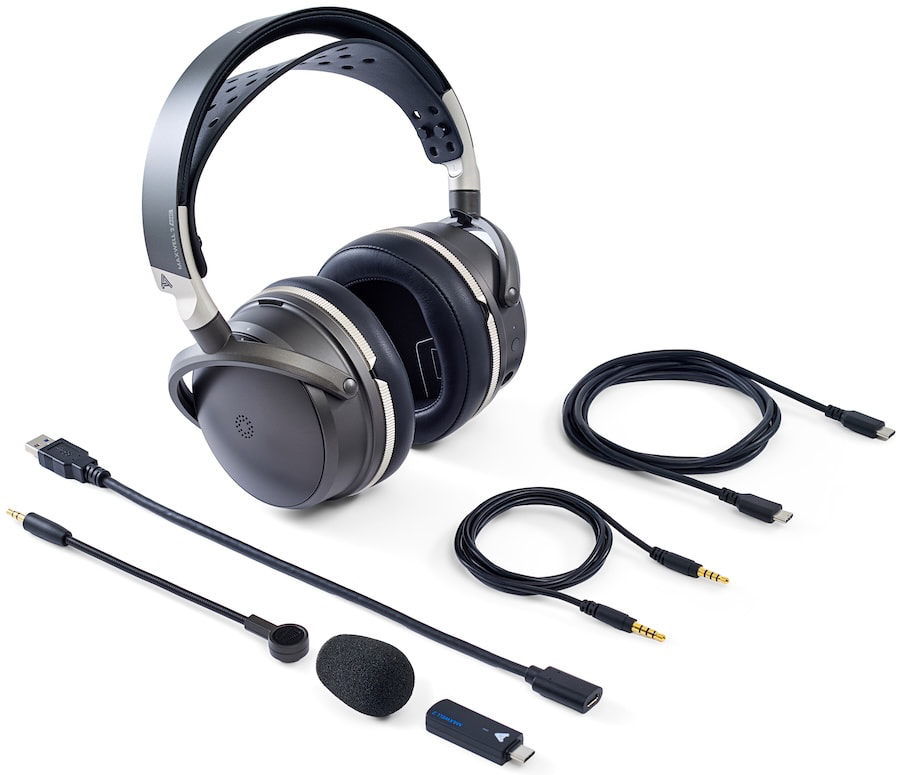
The Maxwell 2 was unveiled at CES 2026 and quickly established itself as one of the strongest premium gaming headsets on the market. The Maxwell 2 ANC addresses its most obvious omission by adding adaptive hybrid noise cancellation, improved transparency, and expanded smart-audio features without abandoning the 90 mm planar magnetic drivers, Fluxor magnet arrays, Fazor waveguides, and SLAM acoustic technology that distinguish the platform.
That combination is what makes the Maxwell 2 ANC unusual. Noise cancellation is hardly new to gaming headsets, but pairing gaming-focused adaptive ANC with Audeze’s full-size planar magnetic driver technology is far less common. Its primary competition includes the SteelSeries Arctis Nova Pro Omni ($399), Turtle Beach Stealth Pro II ($349), and the Razer Kraken V4 Pro ($399).
Those rivals offer their own advantages, including lighter designs, hot-swappable batteries, elaborate control hubs, and aggressive competitive-gaming tuning. Audeze’s strongest argument remains sound quality, particularly for gamers who also expect one headset to handle music, movies, voice chat, and everyday listening without sounding like a plastic helmet full of angry bees.
At $429 for the PlayStation version and $449 for Xbox, the Maxwell 2 ANC is aimed at serious console and PC gamers who prioritize planar magnetic clarity, bass extension, positional accuracy, and effective isolation over low weight or bargain pricing. It is not an impulse purchase, but it is considerably less expensive than the SteelSeries Arctis Nova Elite and occupies a rare position between conventional premium gaming headsets and Audeze’s far more expensive audiophile headphones.
Sony’s acquisition of Audeze appears to be paying dividends. Rather than sanding away the company’s audiophile identity, the Maxwell platform is bringing its planar magnetic technology to a much larger audience. The Maxwell 2 ANC is the most complete version of that strategy so far—and potentially the model that finally eliminates the strongest reason some gamers had for buying something else.

All models support Windows, macOS, Android, iOS, and Nintendo Switch. The Maxwell 2 ANC will be demonstrated at CanJam London 2026 from July 18-19.

If you have ever been a subscriber of YouTube TV or DirecTV at any point since April 2019, you could get cash as part of a $50 million settlement agreed to by Disney in an antitrust lawsuit the corporation faced for allegedly forcing higher prices for live TV streaming services.
To be eligible for a payout, you had to have bought a subscription to either YouTube TV or DirecTV — or both — between April 1, 2019, and March 31, 2026. DirecTV subscriptions might have been called DirecTV Stream, DirecTV Now and/or AT&T TV Now.
If you’re part of the settlement, you will likely get a notice in your USPS mailbox or your email inbox. Check your junk or spam folders in case your email service filtered it. The deadline for claiming a payment is Sept. 8.
If you get a notice, go to this website and log in with the ID and PIN provided on the settlement notice. You will need to verify your YouTube TV or DirecTV Stream subscription.
If you don’t get a notice but believe you are eligible for the cash settlement, send an email to info@OnlineTVSettlement.com or print out a PDF version of the claim form and send it via snail mail to:
Biddle v. Disney
Settlement Administrator
P.O. Box 4720
Portland, OR 97208-4720
Printed settlement claims must be postmarked by Sept. 8.
The settlement terms specify that 90% of the money will go to payees in these states and territories: Alabama, Arizona, Arkansas, California, Colorado, Connecticut, Delaware, District of Columbia, Florida, Guam, Hawaii, Iowa, Kansas, Maine, Maryland, Massachusetts, Michigan, Minnesota, Mississippi, Missouri, Montana, Nebraska, Nevada, New Hampshire, New Jersey, New Mexico, New York, North Carolina, North Dakota, Oregon, Puerto Rico, Rhode Island, South Carolina, South Dakota, Tennessee, Utah, Vermont, West Virginia and Wisconsin.
The remaining 10% will go to settlement members in other states.
In Biddle v. Disney, (PDF) filed in 2022, the plaintiffs alleged that Disney violated federal and state antitrust and consumer protection laws by forcing YouTube TV, DirecTV and FuboTV subscribers to pay more for livestreaming TV. The $50 million settlement does not apply to FuboTV plaintiffs, who have not yet settled with Disney.
The plaintiffs alleged that Disney forced streaming platforms to bundle content from expensive channels such as ESPN and Hulu — both owned by Disney — into base packages, thereby escalating the subscription prices for those packages. It was alleged that prices for YouTube TV base package subscriptions went up from $35 to $65.
“Since Disney acquired operational control over Hulu in May 2019, prices across the SLPTV [Streaming Live Pay Television] Market, including for YouTube TV and DirecTV Stream, have nearly doubled,” the lawsuit alleged.
Disney denies violating any laws. There will be a hearing on Jan. 14, 2027, for final approval of the settlement.
A representative for Disney did not immediately respond to a request for comment.

Cutting the cord in your car is a simple upgrade.

Every morning, you have the same routine: get in the car, dig out your phone, plug in the cable and wait for Android Auto to load. It works just fine, but we’re living in a wireless world now.. The good news is that a tiny wireless adapter that can fit in the palm of your hand can help cut the cord.
Most modern cars come with Android Auto (and often Apple’s CarPlay as well), but not all of them offer the wireless version. These tiny adapters will plug into your car and turn your car’s infotainment system into a wire-free experience.
It’s simple to convert your car’s Android Auto connection to wireless. Of course, your car needs to already come with support for wired Android Auto. Wireless adapters are not a workaround for cars that lack Android Auto support completely — they’re an upgrade, not an overhaul for a 2005 beater.
They are tiny devices that act as middlemen. They’re the clever hardware translators that convert your car’s wired Android system into a wireless one. You plug them into your car’s USB port, set it up, and then enjoy an easier start to your commute.
Here’s what happens when you use an Android Auto adapter. When you get in the car, your phone finds the adapter via Bluetooth and authenticates your device, confirming the phone’s identity and sharing credentials for the Wi-Fi connection. The Bluetooth connection will later also handle hands-free calling. Then, the adapter creates a localized 5GHz Wi-Fi Direct network which will handle the heavy lifting, including streaming navigation, audio and real-time screen data.
The result is a seamless automatic connection that happens every time you get in the car. No more fumbling around after phones and cables.
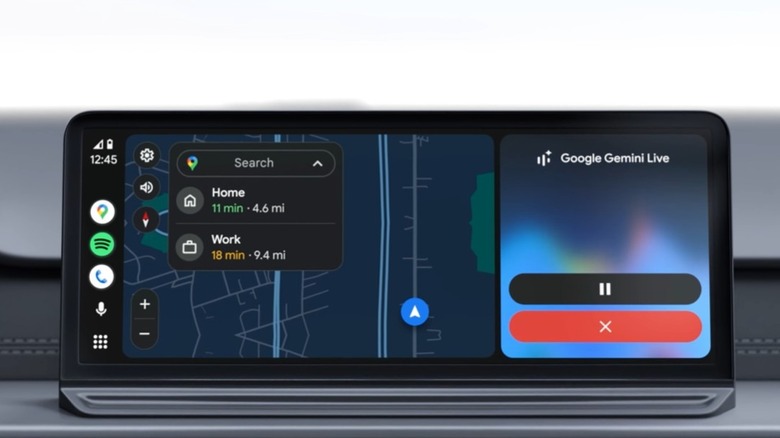
There are loads of advantages to using an Android Auto adapter, obviously, but not everything is sunshine and roses. While using an adapter makes your drives easier because you no longer have to plug in your phone, there are some possible downsides too.
As great as adapters are, the connection between the car, adapter and phone can’t be as fast as a direct connection between car and phone would be. It’s a minor trade-off, but it’s better than having to look for your phone.
When switching from a wired connection to wireless Android Auto, you have to be prepared for your phone’s battery to drain a lot faster. Maintaining a constant 5GHz Wi-Fi direct connection while running GPS, streaming music, and so on, will take a toll on your battery. On longer road trips, you’ll want to use a separate charging cable.
There are quite a few wireless Android Auto adapters available from Carlinkit, AAWireless, Ottocast, Motorola, and so on. But, rather than focusing on specific brands, we’d rather you understand what hardware specs actually separate a quality adapter from a potentially disappointing one.
You want to make sure the adapter you are buying doesn’t rely on 2.4GHz Wi-Fi connections because those will be noticeably slower and prone to lag. You want an adapter that can handle 5GHz so you can stream your map and audio at the same time.
You’ll also want an Android Auto adapter with a detachable USB cable. Models that come with built-in USB connectors may affect access to your other ports or simply stick out at a weird angle due to the shape of your console or dashboard.
Getting a wireless Android Auto adapter is one of the best upgrades you can make for your car as it will genuinely change something you use every single day. The cost is low enough that you can’t even complain about it, the setup takes minutes, and your maps app will be ready to go before you’ve pulled out of your parking spot.
Modern video games are nothing short of amazing. My son and I were playing through the one of the latest Zeldas, which involve a mix of combat and puzzle-solving that’s pretty much the hallmark of the franchise. But the most recent open-world Zelda is simply massive. Made by around 1,000 people at a development expense of $150,000,000, it takes probably 60-80 hours to play through if you’re not rushing, and more if you’re taking it easy. It has layers of game mechanics, and worlds in the sky, on land, and underground. It’s big in every way.
Contrast the games of my youth, which were a lot smaller. Written by a pair of people or maybe a handful, with playtimes in the single-digit hours, and of course fitting in the limited computing resources of the time. But the low-stakes nature of the early phases of the industry meant that software developers could take risks, and many of the games were consequently kinda idiosyncratic in this more innocent time.
I think there’s something to be said for small games. They don’t require a lifestyle commitment just to get through. They can still be fun, without taking all of your time. And honestly, when you’re done with a game quickly, you have more time for other stuff. Granted, some of this spirit lives on in the small indie games of today, but even so, game developers have the big studios’ products in the backs of their minds when they are working on their smaller oeuvres.
We were talking about preserving old games for posterity around Hackaday and on the podcast, and our conversations reminded me of a couple of educational games that, despite their rudimentary graphics, are still pretty good today. Both were electronics related, and both are still playable today thanks to efforts on emulation and software preservation. To get a feel for the 1980’s, give Rocky’s Boots a try. (I like the TRS-80 Color Computer version the best, but that may just be nostalgia.) Most of you grownups out there will get through it in an hour or so.
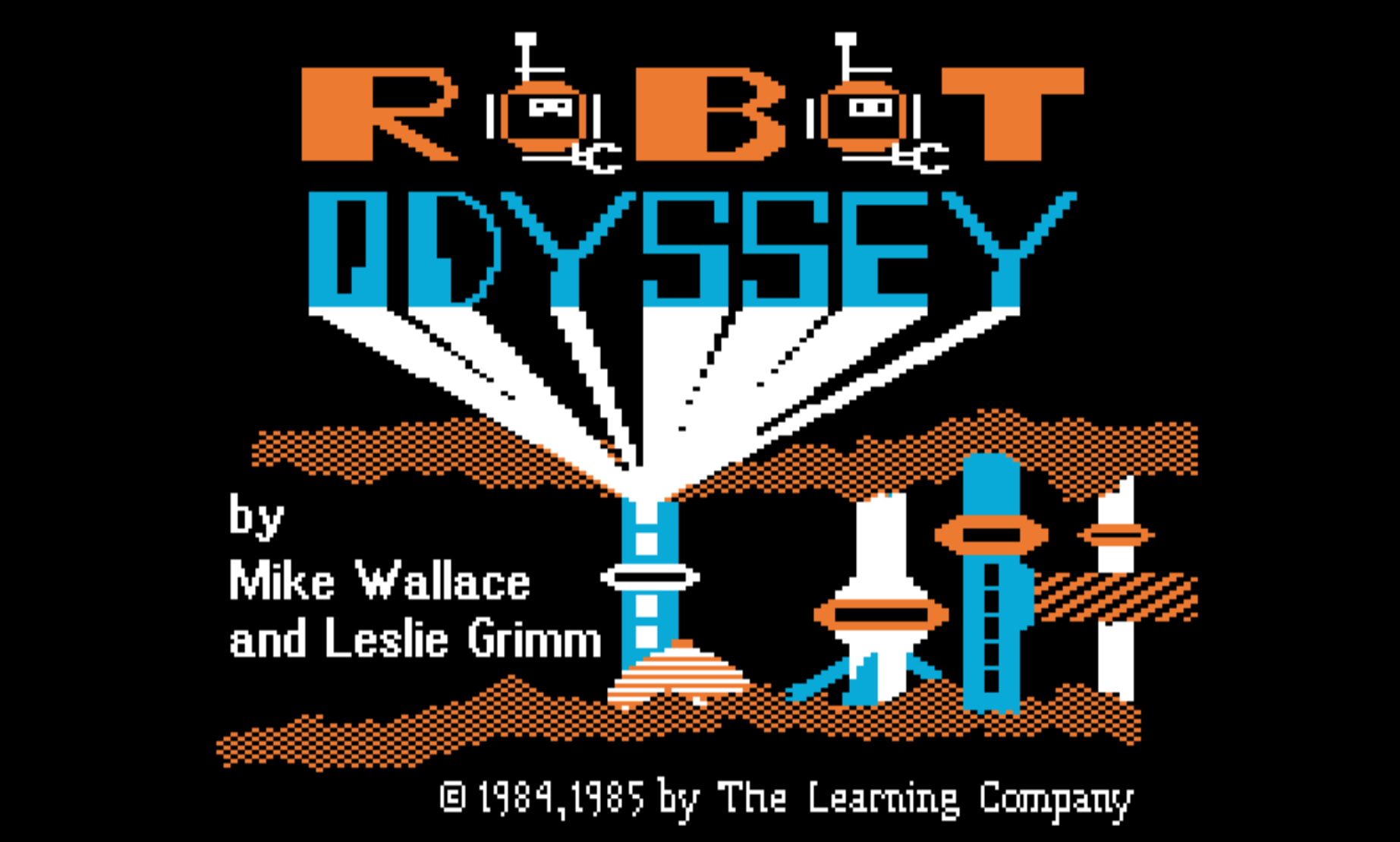
And if you want a challenge, try Rocky’s harder sequel: Robot Odyssey. If you already have a background in digital circuits, you’ll find it doable. Younger me hit a wall about two-thirds of the way through.
Both of these games stick with me because they taught me something, but also because they were simply quirky in a way that a game can only be when it’s written by a small team of folks who are just having fun programming it. If you pitched “a puzzle game about a raccoon who builds logic circuits to activate robot boots”, the boardroom would look at you like you’re out of your mind. But it’s just exactly the quirkiness and individuality of some of these early games that I cherish the most.
If you find yourself knee-deep in an endless modern game, take a side-quest off into a more naive time, and you’ll appreciate why people are putting efforts into archiving them.
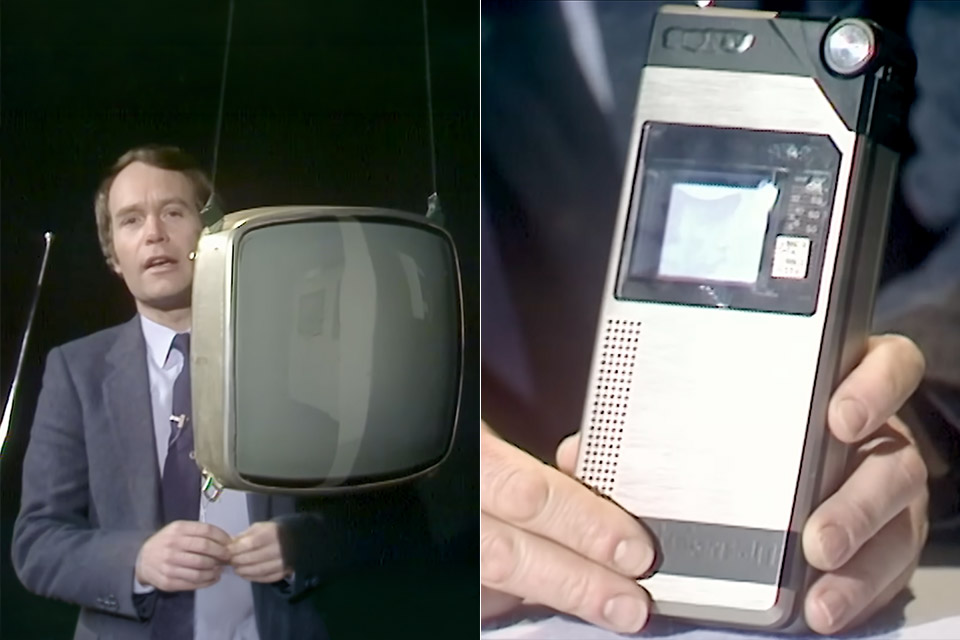
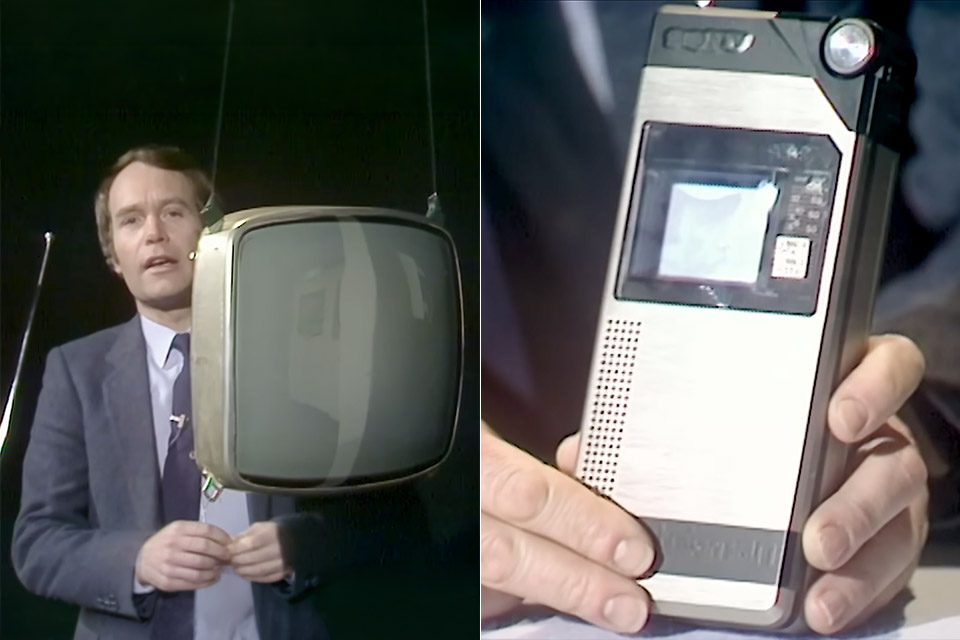
Viewers who caught the January 27, 1983 episode of BBC’s Tomorrow’s World saw presenter Peter Macann lay out real hardware that tried to solve an old complaint. Television sets of the day sat deep and heavy because their cathode ray tubes needed space for an electron gun to fire straight at the screen. Macann began with a plain observation: a set flat enough to hang on the wall like a picture would free up room and change how living spaces worked. The demonstration that followed showed both how close engineers had come and how many practical hurdles still stood in the way.
Macann begins with a small Sony pocket TV. It’s the same cathode ray tube idea everyone knows, but the engineers placed the electron gun to the side of the case, essentially sideways. The electron beam is then bent downward onto a small phosphor surface by charged plates. That clever method eliminates the majority of the depth that ordinarily extends from the back of the set. It still runs for about three hours on penlight batteries and receives BBC and the newer Channel 4 signals directly in the studio. The image quality is a little hazy, as if it were taken in a studio, but it appears to be something you could easily put into your pocket and take with you.
Sale

The segment then looks at an entirely new approach, this time with liquid crystals. This material requires significantly less electricity because it does not generate its own light. Instead, it twists under electric current to control how much light passes through or bounces back. Macann is holding up a modest handheld game with a screen comprised of small liquid-crystal shapes carved out to resemble motorcycles. By turning those shapes on and off in sequence, you can create the illusion of racing bikes without using a light tube or constant high voltage. The similar low-power approach is used in a portable oscilloscope, where the display consists of hundreds of small square cells that turn black or white when exposed to voltage. This implies that technicians may now bring the tool into the field using only battery power, which was previously impossible with classic tube-based scopes that required mains power and bulk.
Tomorrow’s World kept its most visually appealing example for last. A Japanese prototype packed a liquid-crystal screen into a casing the size of a wristwatch. The screen is simply sitting there, ready to display moving images, but the rest of the circuitry and power supply are in a separate pack connected by a wire. Sound travels through a set of headphones. Macann demonstrates the device and then explains its limitations in plain English. Since the crystals simply reflect the light surrounding them rather than creating their own, the image can appear faint or washed out in a regular room. The detail is obviously a little rougher than what you’d get from a traditional tube, but the fact that a moving image appears on something tied to someone’s wrist is a step ahead that goes beyond simple whiteboard sketching.
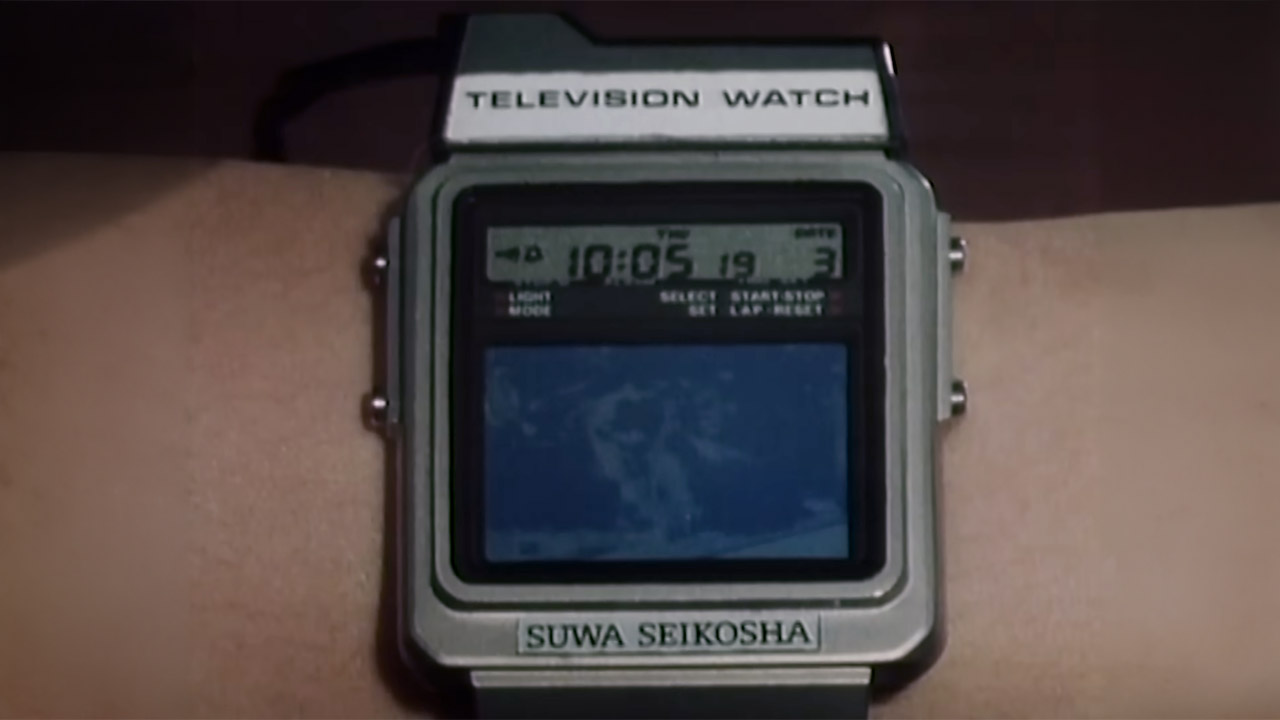
Macann concludes by pointing out that liquid-crystal panels have already achieved several of the characteristics that TV designers have sought for years, such as thinness and low power consumption. With some more effort on brightness and viewing angle, the existing playthings could become something you’d want to watch at home. Macann is cautious, refusing to declare that the future has arrived. The team is only demonstrating what was accomplished in early 1983 and leaving viewers to wonder how long it would take before things are good enough to utilize in real life.

ManageEngine’s Vimalraj Sampathkumar explores how R&D recruitment requires a long-term approach.

In the modern era, the majority of organisations within STEM depend on strong and robust research and development teams to ensure that new discoveries are being made, that processes and techniques are up to date and that current knowledge is not stagnating.
But this requires a consistent and skilled talent pipeline that nowadays is not so easy to maintain.
In May, a report from recruitment platform IrishJobs found that employers are hiring for highly specific, rather than broad roles, with a focus on AI and cybersecurity in particular.
“Building a strong talent pipeline requires a long-term approach rather than simply hiring when demand arises,” explained Vimalraj Sampathkumar, the regional technical head for the UK and Ireland at Enterprise IT management company ManageEngine.
“Irish organisations should partner with universities, offer internships and graduate programmes and provide structured learning and career development opportunities.
“Equally important is creating an environment that encourages people to innovate, collaborate across teams and experiment with new technologies. When learning becomes part of the culture, organisations are better equipped to attract, develop, and retain highly skilled R&D professionals.”
Despite best efforts, there is only so much you can achieve alone. Often the organisations with the most efficient teams are the ones in which there is clear collaboration and a committed effort to upskill as a unit.
Sampathkumar finds that, as technology continues to advance rapidly, continuous learning becomes an essential element of the workspace. He advised Irish organisations to provide access to technical training, certifications, mentoring and opportunities to work on emerging technologies and also cited the benefits of knowledge sharing across teams.
He said: “Investing in upskilling enables R&D teams to innovate faster, improve product quality, respond more effectively to changing customer needs and stay ahead of evolving security and technology trends.
“It also helps improve employee engagement and retention. This can be a critical differentiator in what is still a very competitive Irish labour market where highly skilled tech talent has no shortage of options despite the emergence of AI.”
Of the challenges R&D teams face nowadays, Sampathkumar noted the issue of balancing innovation with the need to deliver secure, reliable and scalable products in a landscape where compliance requirements are ever-evolving and deadlines tightening.
“Simultaneously, customer expectations and technology within the European market continue to evolve rapidly, requiring teams to adapt quickly due to tightening regulatory demands, the EU AI Act, accelerating cloud and AI adoption and the evolving cybersecurity landscape,” he explained.
“The opportunity lies in embracing technologies such as AI, automation, and advanced analytics, which enable engineers to spend less time on repetitive tasks and more time solving complex problems that drive meaningful innovation.”
With the changing workplace environment in mind and as most companies continue the march forward, Sampathkumar made note of the tools and recent advancements that can aid R&D professionals in their work.
He explained that AI-assisted development tools, cloud-native platforms, automation and DevSecOps practices have transformed how engineering teams build and deliver software, while also improving productivity and maintaining quality and security throughout the development life cycle.
“One area I believe remains underutilised is customer feedback analytics. Organisations collect significant amounts of customer data, but many don’t fully leverage those insights to influence product decisions. Combining customer feedback with AI-driven analytics can lead to more informed and impactful innovation.”
It isn’t all about trendy tech and gadgets, however. For Sampathkumar, the space is driven largely by its people.
“Irish organisations that invest in developing talent, encourage collaboration between customer-facing and engineering teams and maintain a strong focus on solving real customer problems will be best positioned for long-term success.
“Ultimately, continuous learning and adaptability will remain the defining characteristics of successful R&D organisations.”
Don’t miss out on the knowledge you need to succeed. Sign up for the Daily Brief, Silicon Republic’s digest of need-to-know sci-tech news.

Apple has been accused of “aiding and abetting” the use of “nudify” AI apps on the iPhone, with San Francisco City Attorney David Chiu demanding they be removed from the App Store in a new cease-and-desist letter sent to the company.
A Wired report notes that both Apple and Google have been told to prevent the sale of AI apps that can be used to create deepfake images. They must also “sever” business relationships with all of the developers responsible for the apps.
So-called “nudify” apps have been around for some time. They allow users to create non-consensual intimate images of others, often minors, without the knowledge of the subject.
Such apps can be used to remove the clothes of subjects. Some allow the subjects to then be placed into specific scenarios of the user’s choosing.
In a statement provided to Wired, Chiu pointed out that generating deepfake imagery is “illegal, harmful, and completely unacceptable.” Chiu also noted that Apple and Google have likely made considerable sums from the sale of, or subscriptions relating to, such “nudify” apps.
Chiu also made it clear that Apple and Google have a responsibility to ensure that their platforms aren’t being used to create such content. His legal letters also pointed out to both companies that California law prohibits supporting services that can create deepfakes.
Google says that it investigates apps that are believed to be used to create deepfake content. It added that it “takes swift action” when required.
Apple issued a statement to AppleInsider on Friday evening after publication.
“The App Store was designed to be a safe and trusted place for users, and we have always strictly prohibited apps designed to generate, distribute, or consume pornography. ‘Nudification’ apps are against our App Review Guidelines and we have proactively rejected many of these apps and removed many others, including when users have flagged them via our reporting tools. We have removed three of the apps in question and are in the process of terminating their developer accounts from our program. We are in contact with four others that need to address policy violations or risk being removed as well.”
Apple previously removed a number of similar generative AI apps from the App Store. The company previously told AppleInsider that nudification apps aren’t allowed in the App Store, with no exceptions.
App Store reviewers appear to give developers some benefit of the doubt. Developers are first notified if their apps are found to be used to create “nudify” images.
Violations that aren’t addressed generally result in the offending app being removed from the App Store. It’s not clear if any of the apps in question have gone through this process, or where they are in it.
Apple also says that it actively blocks App Store search terms for such apps.
As for Chiu, he intends to continue to pursue both companies. For now, he wants Apple and Google to remove the offending apps and strengthen the tools that they use to screen new apps before they are made available for download.
Update July 18, 10:03 AM: Updated with Apple’s statement on the matter.


The duo behind the major 2024 cyberattack are reported to have been leading members of the Scattered Spider cybercrime collective.
Two men responsible for the 2024 cyberattack on Transport for London (TFL) have each been sentenced to five and a half years in prison by a UK court.
Owen Flowers and Thalha Jubair, who were teenagers at the time of the cyberattack, were sentenced today (16 July) at Woolwich Crown Court after previously pleading guilty to the hack. The pair were arrested and charged last year.
In late August and early September in 2024, Flowers and Jubair gained access to TFL customer data after impersonating an employee and tricking a phone helpdesk worker into resetting that employee’s password – leading to the theft of around 10m customers’ data.
The cyberattack – which cost TFL £29m – disrupted a number of transportation services in the UK’s capital, including a booking service that provides transport to vulnerable Londoners, while 148 technology systems were rendered inoperable.
In order to stop the attack, all 27,000 TFL employees were summoned to one of the authority’s offices for a password reset and its IT team disconnected its system from the internet.
Had the attack been successful in shutting down TFL’s entire network, it’s estimated that damages could’ve totalled up to £56bn.
According to the UK’s National Crime Agency, both Flowers and Jubair were leading members of cybercrime collective Scattered Spider, which has been linked to other major cyberattacks such as the Marks and Spencer hack.
As well as the TFL attack, Flowers also admitted to conspiring to launch cyberattacks on American nonprofit healthcare systems SSM Health and Sutter Health.
According to the Crown Prosecution Service (CPS), devices belonging to Flowers linked him to all three attacks, while information linking Jubair to the TFL cyberattack was reportedly found overseas.
During the trial – which began last month – the court heard that the duo livestreamed the TFL hack online. Telegram messages of Flowers and Jubair joking about the consequences of the cyberattacks were also uncovered and then used by the prosecution as evidence of the pair’s involvement.
According to the CPS, Flowers and Jubair are believed to be the first hackers to be successfully prosecuted under Section 3ZA of the UK’s Computer Misuse Act 1990.
“Flowers and Jubair broke into and accessed sensitive systems to extract information from millions of Oyster card-holders,” said Lionel Idan, chief crown prosecutor for SEOCID Regional and Wales Division in a press release.
“The evidence revealed not only the sophistication and persistence of their attack but also the recklessness of those responsible. Both defendants showed a staggering disregard for the consequences of their actions as their cyberattack led to TfL having to ‘pull the plug’ on their own network to protect it from wider disruption to the transport network.
“This successful prosecution was a perfect example of collaboration with investigators, prosecutors and international partners working together to build a watertight case that left Jubair and Flowers with little choice but admit their crimes.”
Don’t miss out on the knowledge you need to succeed. Sign up for the Daily Brief, Silicon Republic’s digest of need-to-know sci-tech news.



London Mayor Sadiq Khan handed a peerage by Keir Starmer alongside 15 other Labour figures… just days before the PM leaves No10


Weekend Open Thread – Corporette.com


The House | The City of London can help the new chancellor deliver growth in every postcode


CFTC blocks Kalshi from unwinding Michigan trades after court order


Young campaigners urge incoming PM to act on outdoor junk food ads


Nvidia Stock Slips After Big Tuesday Rally as Huang Confirms Vera Rubin Chip Is Now in Production Today


Ripple Payments Joins MiCA With 14 Firms, Does It Mean Anything For XRP?

Disney’s Most Ambitious Failed Star Wars Attraction Is Coming to SDCC


Ripple wins EU-wide access as ESMA adds it to MiCA register


Palantir Shares Rise After Expanded Nvidia Partnership and Fresh Analyst Upgrades Ahead of Earnings Day


Get Your ESP32 Sunny Side Up With This Solar Dev Board


XRP BOMBSHELL… XRP OMBOARDED FOR TRANSACTIONS!!!


Injective Submits SEC Transfer-Agent Registration to Onchain Ownership Records


Registration is now open for March for Men with Kev 2026


Dark Secrets Emerge When Jailbreaking LLMs

New Cornerback Enters Vikings Trade Rumor Mill


Money | Class 12 Economics | CBSE Board Exam 2026-27

Banco Bilbao Vizcaya Argentaria, S.A. (BBVA) Discusses Global Macro Environment and Economic Outlook for Core Markets Transcript

Cloudflare Precursor Watches Your Mouse and Keyboard To Decide If You Are Human


Durham County Council to send out electoral registration emails



You must be logged in to post a comment Login