

Connect with us
DAPA Banner
DAPA Coin
DAPA
COIN PAYMENT ASSET
PRIVACY · BLOCKDAG · HOMOMORPHIC ENCRYPTION · RUST
ElGamal Encrypted MINE DAPA
🚫 GENESIS SOLD OUT
DAPAPAY COMING

Business

United Airlines Down? Service Hit by Nationwide Outage Reports Saturday Morning as Complaints Spike

Published

on

united airlines

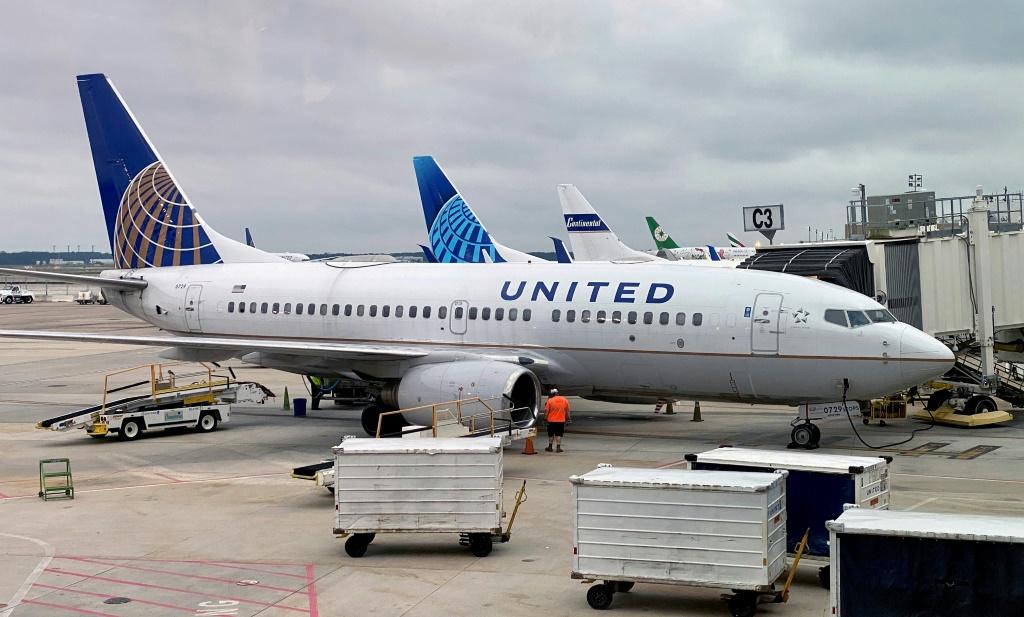
United Airlines customers began reporting widespread problems with the airline’s systems Saturday morning, according to outage-tracking service Downdetector, which noted a spike in user complaints beginning at 8:16 a.m. Eastern time.

Downdetector, a service that aggregates real-time user reports to identify potential service disruptions, flagged the surge in complaints on its social media account, prompting the hashtag #UnitedAirlinesDown to circulate on X as affected travelers shared their experiences. As of Saturday morning, specific details about the cause, scope and expected duration of the disruption had not been confirmed by United Airlines or federal aviation authorities.

United has faced a series of technology-related disruptions in recent years, ranging from brief, planned system maintenance windows to unplanned outages that have grounded flights and stranded passengers across the country. The airline’s core reservation platform, known as the SHARES system, has been at the center of several previous incidents. In one instance earlier this year, United proactively scheduled and publicized an overnight outage of its SHARES booking system as part of what the company described as a controlled restart intended to improve the platform’s long-term functionality and reliability. That planned outage, which ran for roughly two to three hours during low-demand overnight hours, took offline United’s website, mobile app, call centers, airport kiosks, travel agency booking channels and partner airline access, pausing new bookings, ticketing, cancellations, refunds and check-in services during the window, though already-airborne flights were allowed to continue operating.

Unplanned outages have proven more disruptive for United in the past, given their unpredictable timing and broader operational impact. In one prior incident, an hours-long computer system problem caused delays and cancellations for United flights globally, with passengers traveling late at night and into the early morning hours reporting delays as long as six hours before the airline confirmed the issue had been resolved. Flight-tracking services at the time recorded roughly 20 United flights delayed and seven canceled worldwide during the disruption. In a separate, earlier incident, a two-hour outage in one of United’s flight operations systems delayed roughly 250 mainline United flights, with the airline later saying it had corrected the underlying error and restored systemwide on-time performance to around 80% by that afternoon. United offered flexible flight-change and refund options to affected customers following that disruption.

Advertisement

Technology outages affecting major U.S. airlines have drawn increased scrutiny from federal regulators in recent years, particularly following high-profile disruptions across the industry. In one widely covered incident affecting a rival carrier, a “technology issue” prompted a ground stop at major hub airports, delaying travelers at multiple locations before the airline confirmed the issue had been resolved later that evening. Following that episode, the U.S. Transportation Secretary said he had been briefed directly by the airline’s chief executive on the situation, noting publicly that the issue was specific to the airline’s own internal operations and unrelated to the broader national air traffic control system. The Transportation Department and the Federal Aviation Administration both offered support to help the airline clear its resulting flight backlog, with the FAA saying it remained in close contact with the carrier’s operations team throughout the disruption.

United has previously described its approach to handling technology disruptions as centered on transparency with both passengers and employees. Steve Restivo, the airline’s vice president of global corporate communications, has said the carrier learned early on, particularly during the coronavirus pandemic, that the best course of action during operational disruptions was to remain as direct and open with employees and customers as possible, regardless of whether the underlying news was positive or negative.

Airlines more broadly have faced significant technology-driven disruptions in recent years beyond United specifically. A separate major carrier experienced a multi-day operational meltdown in the summer of 2024 following a global software outage tied to a third-party cybersecurity vendor, a disruption that led to the cancellation of more than 7,000 flights over five days and affected more than 1.3 million passengers. That incident drew a formal investigation from the Department of Transportation, which later classified the resulting delays and cancellations as a “controllable” event, placing responsibility for the disruption on the airline itself rather than treating it purely as an unavoidable external event.

As of Saturday morning, outage-tracking services offered a mixed picture of United’s system status heading into the reported disruption, with some monitoring platforms showing no significant issues in the days immediately prior to Saturday’s spike in complaints. That pattern is consistent with how sudden, unplanned technology outages typically develop, often emerging with little or no advance warning before affected systems are restored, sometimes within hours.

Advertisement

Passengers experiencing issues with United flights, bookings or check-in are typically advised to monitor the airline’s official channels, including its website and mobile app status updates, along with its social media accounts, for the most current information during an active disruption. United has historically offered flexible rebooking or refund options to customers affected by significant system outages, though the specific terms of any such accommodations depend on the scope and cause of each individual incident.

Given the early stage of Saturday morning’s reported disruption, the full scope of affected flights, airports and services remained unclear. United Airlines had not issued a public statement addressing the Downdetector reports as of the time of this article’s publication, and it remained uncertain whether the issue was confined to digital booking and account-management systems or extended to broader operational impacts such as flight delays, cancellations or ground stops at specific airports. Travelers with upcoming United flights were encouraged to check directly with the airline for the latest updates as the situation continued to develop.

Continue Reading
Click to comment

You must be logged in to post a comment Login

Leave a Reply

Business

Six Host Countries, Three Continents and a Centenary Celebration Ahead

Published

on

Cristiano Ronaldo

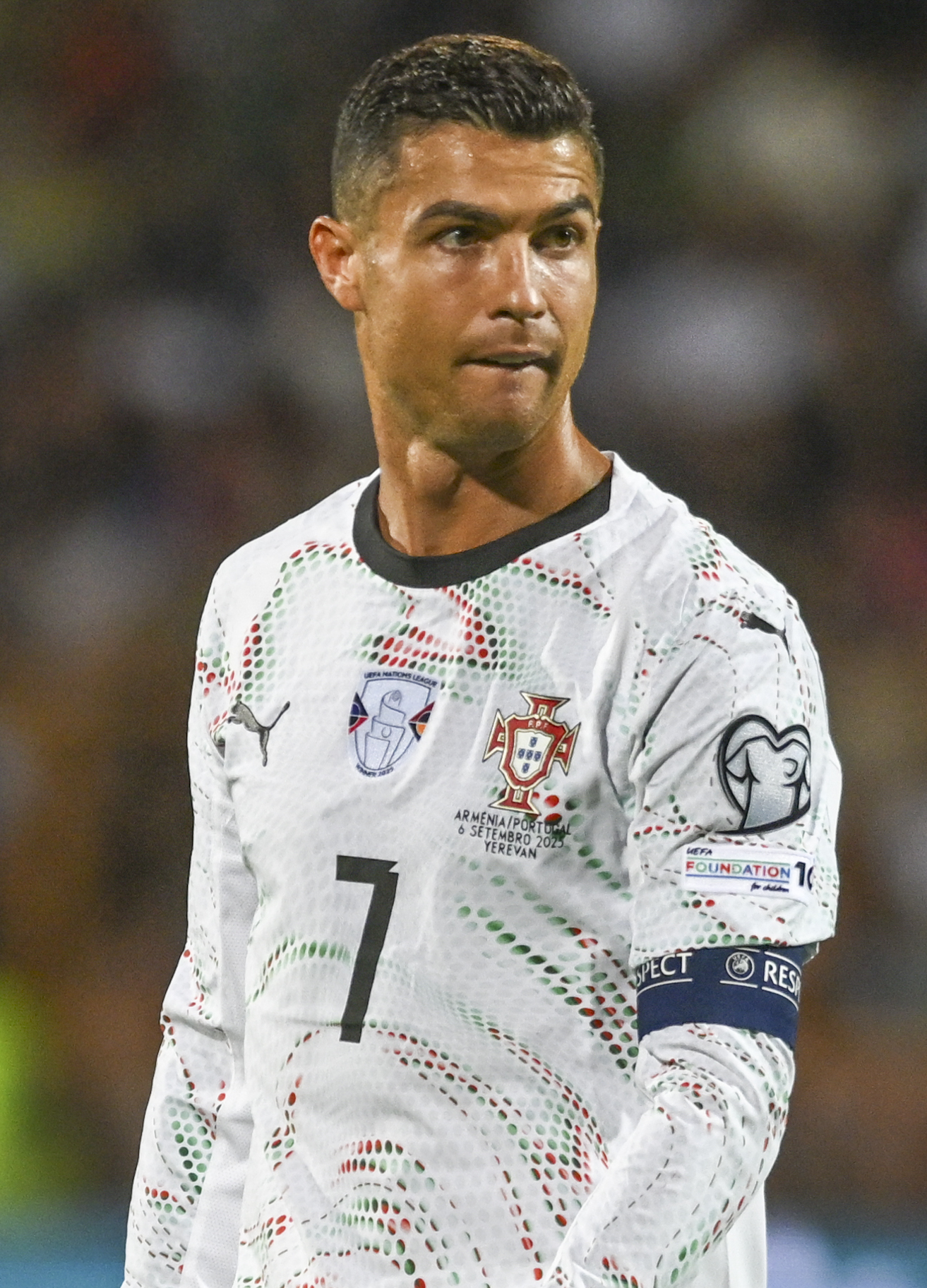
Just one day after Spain lifted the 2026 World Cup trophy in New Jersey, soccer’s global governing body is already looking ahead to a tournament unlike any before it: the 2030 FIFA World Cup, which will be staged across six countries spanning three continents to mark the competition’s 100th anniversary.

According to FIFA’s proposed schedule, the tournament will open with a series of centenary matches held in South America before shifting to its three primary host nations in Europe and Africa, a format that will make 2030 the first men’s World Cup ever played across three continents.

A tournament rooted in history

Spain, Portugal and Morocco will serve as the tournament’s main co-hosts, staging the majority of the competition’s matches. To honor the World Cup’s centennial, Uruguay, Argentina and Paraguay will each host a single opening-round match before the remainder of the tournament shifts entirely to the three principal host countries.

Advertisement

The symbolism behind each South American host nation’s involvement is deliberate. Uruguay will host a match in recognition of staging the first-ever World Cup in 1930, while Argentina’s fixture will acknowledge its role as that inaugural tournament’s runner-up. Paraguay, meanwhile, will host a game as the home of CONMEBOL, South America’s soccer confederation and the only continental football governing body that existed at the time of the first World Cup.

Under FIFA’s proposed calendar, the centenary matches in Uruguay, Argentina and Paraguay are scheduled for June 8 and 9, 2030, with the main tournament’s opening ceremony and first matches following in Morocco, Portugal and Spain on June 13 and 14. Teams competing in the South American centenary matches will be given extra time to travel and prepare before beginning their group-stage campaigns in Europe and Africa. The remaining teams in those same groups are expected to begin play on June 15 and 16, with a second round of group matches following on June 21 and 22. FIFA has not yet released a complete match calendar, and the federation has indicated the World Cup final is expected to take place July 21, 2030, though that date has not been formally confirmed.

Automatic qualifiers already locked in

Six nations have already secured automatic qualification for the 2030 tournament by virtue of their hosting roles: Spain, Portugal and Morocco as the three primary co-hosts, along with Uruguay, Argentina and Paraguay through their centenary match hosting duties. The remaining 42 spots in the 48-team field will be determined through FIFA’s continental qualifying tournaments over the next several years.

Advertisement

Could the tournament grow even larger?

While the 2030 World Cup is currently set to retain the 48-team format that debuted at this year’s tournament in the United States, Canada and Mexico, FIFA President Gianni Infantino has signaled the organization may explore expanding the competition even further, to 64 teams.

Speaking with Swiss outlet Bluewin, Infantino called the expanded 48-team format a “huge success,” crediting it with giving more nations the chance to compete on the sport’s biggest stage and helping grow the game’s global reach. He pointed to strong showings from smaller footballing nations during the 2026 tournament as evidence that wider participation benefits the sport overall. Asked directly whether a 64-team World Cup could become reality, Infantino said the proposal “will be examined and discussed” going forward, though no formal decision or timeline has been announced.

A century of growth for the World Cup

Advertisement

The 2030 edition will arrive almost exactly a century after the World Cup’s origins, which trace back to the success of men’s soccer tournaments at the 1924 and 1928 Olympic Games, both won by Uruguay. At the time, Olympic football fell under the jurisdiction of the International Olympic Committee, prompting FIFA to create a standalone international tournament specifically for national soccer teams.

The 1924 Olympic final in Paris drew a crowd of nearly 50,000 spectators as Uruguay defeated Switzerland 3-0 to claim gold. Four years later, Uruguay successfully defended its Olympic title with a 2-1 win over Argentina, a result that helped convince FIFA officials that a dedicated World Cup tournament could succeed on its own.

FIFA formally approved plans for the inaugural World Cup in May 1928 and selected Uruguay as host, both in recognition of the country’s back-to-back Olympic titles and to coincide with the 100th anniversary of Uruguayan independence in 1930. That first tournament kicked off in July 1930 with 13 participating nations, several of which traveled from Europe by ship to compete. Uruguay went on to defeat Argentina 4-2 in the final at Montevideo’s Estadio Centenario, becoming the first nation crowned men’s World Cup champions.

Since that modest beginning, the tournament has grown dramatically in scale, expanding from 13 teams in 1930 to 32 teams by 1998 and, most recently, to 48 teams for this year’s tournament across North America. The 2030 edition will mark a full century since that first competition and stand as the first men’s World Cup ever contested across six countries and three continents simultaneously.

Advertisement

Looking further ahead: 2034 in Saudi Arabia

Beyond 2030, FIFA has already confirmed the host of the following World Cup. The 2034 tournament will be staged entirely within Saudi Arabia, which FIFA confirmed as host in December 2024 after emerging as the only country to submit a bid for that edition. Unlike the multi-continental 2030 format, the 2034 World Cup will return to a single-host-nation model. FIFA has not yet announced specific dates or a match schedule for that tournament, leaving further details to be finalized in the years ahead as the federation first turns its full attention to executing the historic six-country centenary celebration planned for 2030.

Continue Reading

Business

Analysis: Solving a multifactorial housing crisis

Published

on

Analysis: Solving a multifactorial housing crisis

ANALYSIS: Persistent undersupply has placed upward pressure on house prices over recent years, contributing to a significant deterioration in housing affordability for many Australians.

Continue Reading

Business

Axis Bank shares fall 5% after Q1 earnings fail to cheer D-Street. What brokerages say

Published

on

Axis Bank shares fall 5% after Q1 earnings fail to cheer D-Street. What brokerages say
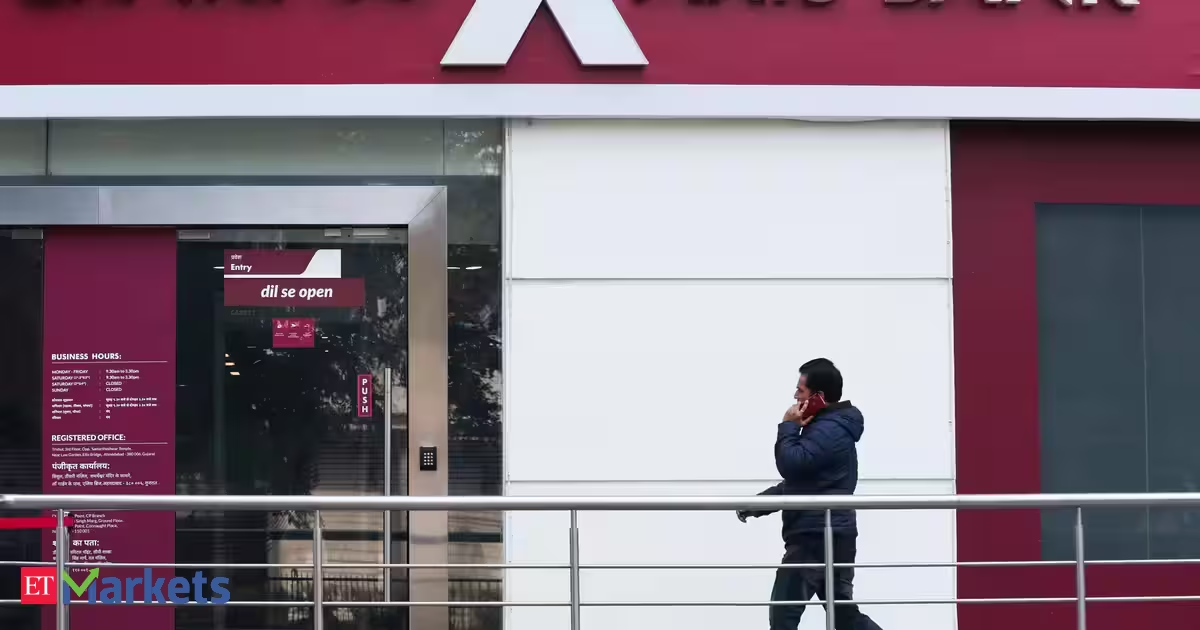
Shares of Axis Bank declined 5% to Rs 1,261 on the BSE on Monday even after the private lender reported a 22.5% year-on-year rise in standalone net profit to Rs 7,114 crore for the April-June quarter of FY27, with brokerages issuing mixed calls for the stock.

The private lender on Saturday released its Q1 FY27 results. Its net interest income (NII), meanwhile, rose more than 8% YoY to Rs 14,646 crore during the first quarter of the ongoing financial year 2027, from Rs 13,560 crore reported in the same period last year. Notably, this is higher than Nomura and Kotak Institutional’s estimates. Net interest margin during the quarter under review stood at 3.46%.

Axis Bank’s gross non-performing assets (GNPA) declined around 4% YoY to Rs 17,124 crore, while net NPA rose around 2.5% YoY to Rs 5,193 crore. The gross NPA and net NPA ratios improved on a YoY basis to 1.28% and 0.39%, respectively. However, both increased sequentially from 1.23% and 0.37% in Q4 FY26.

Provision and contingencies for Q1 FY27 stood at Rs 2,223 crore, while specific loan loss provisions stood at Rs 2,079 crore. Total deposits rose 3% QoQ and 18% YoY on a month-end basis, with current account deposits up 6% YoY, savings account deposits rising 14% YoY and term deposits increasing 23% YoY. The lender’s advances rose 19% YoY and 2% QoQ to Rs 12.62 lakh crore as on June 30, 2026.

Advertisement

Also read | Axis Bank Q1 Results: Net profit jumps 23% YoY to Rs 7,114 crore; NII up 8%

Nuvama on Axis Bank share price

Nuvama said Axis Bank delivered strong credit growth of 19%, but net interest margin slipped again by 16 bps QoQ to 3.46%, while management aims to pull it back to 3.8% over the next 12–15 months. Higher other income and lower provisions led to 9% PAT beat, it added.


GNPA inched up 5 bps QoQ to 1.3% due to seasonally higher agri NPAs, which should ease, according to Nuvama, which further noted that Axis has not used West Asia conflict related provisions.
“We believe Axis will be a key beneficiary of FCNR flows, which should help retrace margins. This coupled with lower LLP should drive-up RoA from 1.4% in FY26 to 1.6–1.8% over FY27–29,” the brokerage said. Nuvama retained its ‘Buy’ call on the shares of Axis Bank with a target price of Rs 1,650 apiece. This implies an upside potential of more than 24% from the stock’s previous closing price of Rs 1,328.50 apiece on NSE.

Motilal Oswal on Axis Bank share price

Motilal Oswal noted that while Axis Bank’s net profit was 7% higher than its estimate, the bank’s NII and NIM missed expectations. It cut its FY27 and FY28 earnings expectations by 2% each and estimated FY28 RoA and RoE at 1.6% and 15.3% respectively. Axis Bank reported a weak quarter, Motilal Oswal said, noting that the bank reiterated its through-cycle NIM aspiration of ~3.8%, driven by an improving balance sheet mix. “Credit costs edged up marginally due to seasonally higher slippages, which also resulted in elevated interest reversals. Business growth remained modest, with corporate lending driving overall loan growth, while retail growth continued to be relatively subdued. Deposit growth was primarily led by term deposits, keeping the CD ratio broadly stable at ~92%,” it said.

The domestic brokerage has a ‘Neutral’ call on the shares of Axis Bank with a target price of Rs 1,500 apiece. This implies an upside potential of nearly 13% from the stock’s previous closing price.

Advertisement

What other brokerages say?

Centrum Broking said Axis Bank delivered a healthy quarter, reinforcing its positive view on the franchise despite near-term margin pressures. Its maintained its ‘Buy’ call on the shares of Axis Bank, but increased its target price to Rs 1,720 apiece, implying an upside potential of more than 29% from the stock’s previous closing price.

Systematix Institutional Equities meanwhile reduced its target price to Rs 1,570 apiece, while maintaining its ‘Buy’ rating on the stock. Dolat Capital meanwhile had an ‘Accumulate’ rating on the shares of Axis Bank, with a target price of Rs 1,525 apiece.

Also read: Axis Bank weighs raising stake in its insurance venture to 30%

(Disclaimer: Recommendations, suggestions, views and opinions given by the experts are their own. These do not represent the views of The Economic Times)

Advertisement
Continue Reading

Business

Liverpool declares ‘war’ on HMOs amid fears over impact on neighbourhoods

Published

on

Business Live

Council wants to stop rental conversions taking over entire streets

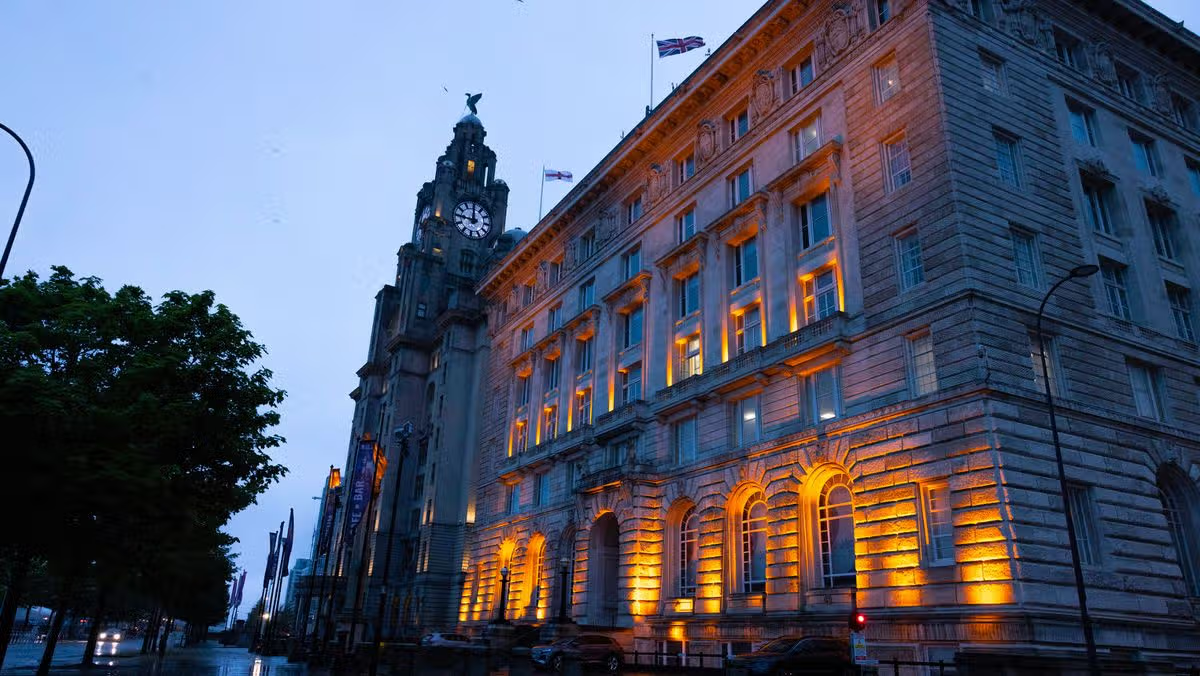
The Cunard Building in Liverpool, where the city council is based

The Cunard Building in Liverpool, where Liverpool City Council is based(Image: Liverpool Echo)

Liverpool has declared “war” on houses of multiple occupation (HMOs) amid growing concern about the concentration of developments in communities. As the use of HMOs across the city becomes more prevalent, the city council is hoping to flex its muscles in a bid to stop the “blight” of the properties swallowing up residential streets.

Advertisement

Launching its local plan, city council leaders have set out their vision to set limits on how HMOs are utilised. According to data compiled by the authority’s Labour group, 260 applications for HMOs have been rejected since 2021.

Setting out the direction of the city over the next 15 years, the local plan lays out a design to provide a minimum of 33,000 new homes during that period. This is through a brownfield first approach.

Cllr Nick Small, cabinet member for growth and economy, told a cabinet meeting last week how the scheme was also about creating mixed communities with 81 sites identified for housing growth. However, a specific plan of action will be put together on how HMOs are used across the city.

He said: “What we are doing within the local plan is around managing the concentration of HMOs. We’re doing that as a separate piece of work within the local plan.

Advertisement

“We don’t want to see more than 10% of HMOs in any one area, we don’t want to see a loss of family dwellings, and we’ve got new policy in here around sandwiching that doesn’t result in a non-HMO being sandwiched between two HMOs which is an issue in certain parts of the city.”

No more than three HMOs would be allowed in a frontage, he added. Since June 2021, a directive has been in place known as an Article 4 that restricts the conversion of single dwellings into HMOs.

This was introduced in areas of the city where HMO numbers had reached a certain level and greater control was needed. This includes areas like Tuebrook, where Cllr Joe Dunne has campaigned against the expansion of HMOs, with some thought to be unregistered.

He said: “The council’s stronger language on HMOs is welcome, but residents will judge this by action rather than declarations of a ‘war’. Communities such as Tuebrook have lived with the consequences of poorly managed and unauthorised HMOs for years, including overcrowding, waste problems, increased pressure on local services and the loss of much-needed family homes.

Advertisement

“The new Local Plan must give the council stronger policies to resist further concentrations of HMOs, supported accommodation and other intensive residential uses in areas that are already under significant pressure. However, planning policy alone will not solve the problem. It must be backed by properly resourced enforcement, faster investigations and much closer coordination between planning, housing options and licensing.

“I have repeatedly raised concerns about properties appearing to operate as HMOs despite having no planning permission or after permission has been refused. It is unacceptable for different council departments to act in isolation, with one department potentially licensing, funding or referring residents into a property while its planning status remains unresolved. Residents deserve more than strong words-they need visible enforcement and lasting protection for their neighbourhoods.”

Cllr Small, who represents the city centre north ward, said officers were looking separately around the expansion of the Article 4 direction and getting the evidence base on that. He added: “There’s some really important work that’s gone on in the local plan around HMOs alongside the work that we’ve been doing and will continue to do around the Article 4.

“We recognise that HMOs are an issue in parts of the city, the over concentration of HMOs and we want to take robust action against that within the local plan.”

Advertisement

Cllr Angela Coleman, cabinet member for adult social services, said the impact of HMOs on communities had been stark. She said: “I’m really, really pleased to see the information on HMOs.

“They’ve been such a blight on so many communities across the city and to see it there embedded into this legal blueprint for development is a really good sign that we’ve listened to residents’ concerns and done something about it.”

Cllr Liam Robinson, leader of Liverpool Council didn’t mince his position on where he saw the authority’s position on the housing situation. He said: “I am very pleased the next stage of what I’ll very straightforwardly call the war on HMOs in communities like the one me and Liz (Cllr Parsons) represent.

“We know we’re having success in knocking some of these things back but the fact we’ll get further additional powers on top of the existing article 4s, stopping of the sandwiching, making sure no loss of family dwelling and the other work we’re doing to extend the article 4 is exactly what we want to see in our city.” The new policy set out by city leaders after years of development with officials across the authority did acknowledge a place for HMOs across Liverpool moving forward.

Advertisement

It said: “While it is recognised that HMOs are an essential part of Liverpool’s housing stock, meeting a diverse range of housing needs, the cumulative impact of excessive concentrations within any given area can harm the character and amenity of the wider neighbourhood. This policy aims to manage the distribution and concentration of HMOs within Liverpool, promoting sustainable, balanced communities, and safeguarding the character and amenity of residential areas.”

This was echoed earlier this month by Cllr Hetty Wood, the city’s lead for housing. She said: “We know residents have genuine concerns about the impact of poorly managed HMOs in some neighbourhoods, particularly where family homes are being converted without the right checks and permissions.

“That is why the council has strengthened its work in this area, including more intelligence-led enforcement, additional housing enforcement capacity and a wider review of how HMOs are managed across the city. HMOs must be properly regulated, safe for tenants and managed in a way that respects surrounding communities.

“The council has already strengthened procedures following previous cases where planning status had not been verified before accommodation was used, and work is under way to improve cross-service checks and due diligence.”

Advertisement
Continue Reading

Business

Ariel Focus Fund Q2 2026 Commentary

Published

on

Rates Spark: Resumed Steepening Impulse

Ariel Investments, LLC is a global value-based asset management firm founded four decades ago in 1983. Ariel is headquartered in Chicago, with offices in New York City, San Francisco and Sydney, Australia. Ariel serves individual and institutional investors through five no-load mutual funds and eleven separate account strategies. Our four core values are: Active Patience®, Independent Thinking, Focused Expertise and Bold Teamwork. Ariel Investments models these behaviors in everything they do.Note: This account is not managed or monitored by Ariel Investments, and any messages sent via Seeking Alpha will not receive a response. For inquiries or communication, please use Ariel Investments’ official channels.

Continue Reading

Business

Spain Defeats Ten-Man Argentina 1-0 in Extra Time to Win World Cup, Becomes First Ever Double Champion

Published

on

Lionel Messi will be 35 by the time the World Cup comes around -- like Cristiano Ronaldo he has never scored a goal in the tournament's knockout rounds

EAST RUTHERFORD, N.J. — Spain won the World Cup for the second time Sunday, defeating a 10-man Argentina 1-0 in extra time at New York New Jersey Stadium in a tense, foul-heavy final that became the first men’s World Cup decided under the shadow of a lengthy halftime show and a late red card.

Substitute Ferran Torres broke a scoreless deadlock in the 106th minute, converting a header from fellow substitute Nico Williams to give Spain the lead it would not relinquish. The victory made Spain the first nation in history to hold the men’s and women’s World Cup titles simultaneously, having already won the Women’s World Cup previously.

The match, played before 80,663 fans, never reached the heights many expected from two of the tournament’s most talented squads. Argentina, the defending champions, leaned heavily on defensive discipline and disruption rather than sustained attacking football, while Spain created the better chances throughout without finding a breakthrough until deep into the additional 30 minutes.

The contest turned decisively in the third minute of second-half stoppage time, when Argentina midfielder Enzo Fernandez was shown a second yellow card for a reckless challenge on Spain defender Pau Cubarsi, having already been cautioned earlier in the match. Fernandez’s dismissal left Argentina to play the entirety of extra time a man down, a disadvantage that ultimately proved decisive against a Spain side that controlled possession for long stretches.

Advertisement

A tense, stop-start final

Referee Slavko Vincic’s officiating became a recurring point of frustration for Spain throughout the match, with the team repeatedly appealing for cards it felt were not given, including a late challenge by Alexis Mac Allister on Dani Olmo. The first caution of the match did not arrive until the 40th minute, when Argentina defender Lisandro Martinez was booked for fouling Mikel Oyarzabal, shortly before Martinez was forced off with an injury.

Argentina goalkeeper Emiliano Martinez was his team’s standout performer for much of the match, denying Spain a series of clear chances. In the closing seconds of regulation time, Martinez produced a crucial save to deny a Lamine Yamal free-kick, keeping the score level and forcing the match into extra time. He was called into action again in the additional period, making another important stop on a Williams header shortly before Spain finally broke through.

Spain also had what looked to be a second goal ruled out during extra time, after Williams put the ball in the net following a foul committed by substitute Mikel Merino on Argentina defender Nicolas Otamendi.

Advertisement

Off-field spectacle overshadows the football

Sunday’s final carried significance well beyond the result, unfolding as one of the most heavily produced World Cup finals in the tournament’s history. U.S. President Donald Trump attended the match, arriving at the stadium as part of a fleet of helicopters ahead of kickoff. The halftime interval stretched to 27 minutes to accommodate performances from Shakira, Madonna and Justin Bieber, marking the first World Cup halftime show of its kind.

Despite the spectacle surrounding it, the match itself was widely regarded as one of the more disappointing finals in recent tournament history, marked by frequent stoppages, tactical caution and a lack of the free-flowing football that had characterized both nations’ paths to the final.

Spain’s steady rise to the title

Advertisement

Spain’s triumph capped a tournament arc that began modestly, with the team opening group play in a goalless draw against Cape Verde before steadily building momentum through the knockout rounds. Their run included a commanding win over tournament favorites France in the semifinals, a result that underlined the squad’s growth under coach Luis de la Fuente.

De la Fuente, known for his measured and understated approach on the touchline, has now delivered back-to-back major international successes for Spain, having previously led the team to victory over England in the Euro 2024 final in Berlin. His side’s composure in the face of Argentina’s physical and disruptive approach on Sunday was seen as a key factor in securing the title.

Nineteen-year-old winger Lamine Yamal was named player of the match, finishing with the tournament’s highest average fan rating of any player in the final at 7.94. Rodri, Nico Williams and Torres also received high marks for their performances in a match where Spain’s squad depth ultimately proved decisive.

A bittersweet ending for Messi

Advertisement

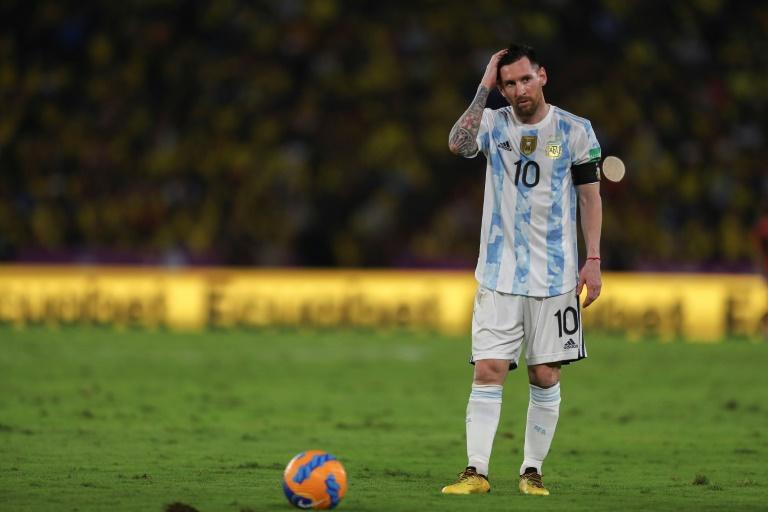
For Argentina, the defeat marked a painful end to their bid to defend the title they won in 2022, and potentially closed the book on Lionel Messi’s World Cup career. At 39, Messi remained Argentina’s talisman throughout the tournament, scoring eight goals overall and playing a central role in the team’s dramatic semifinal win over England, where he set up both of Argentina’s goals in a 2-1 victory.

Sunday’s final offered a far quieter conclusion for the veteran forward. Closely marshaled by Spain’s defense throughout the match, Messi managed just one shot, which did not test Unai Simon in the Spain goal, and was largely kept away from dangerous areas for the majority of the contest.

Argentina had shown resilience earlier in the knockout stage, coming from behind to beat both Egypt and England en route to the final. But they could not replicate that fighting spirit against a Spain team playing with a numerical advantage for the final stretch of the match, and left New Jersey with the runner-up medal instead of the trophy they had hoped would cement a second consecutive title.

Advertisement
Continue Reading

Business

(VIDEO) World Cup Final Debuts First Halftime Show With Shakira, Madonna, BTS and Bieber, Draws Mixed Reviews

Published

on

Shakira

EAST RUTHERFORD, N.J. — The 2026 FIFA World Cup final delivered a first in the tournament’s nearly century-long history Sunday, staging a full-scale halftime show during the championship match between Spain and Argentina, a production curated by Coldplay frontman Chris Martin that drew both praise and sharp criticism from fans and commentators around the world.

The performance, which stretched the intermission between the first and second halves to 27 minutes, featured an extensive lineup including Madonna, Justin Bieber, K-pop group BTS, Colombian singer Shakira, Nigerian artist Burna Boy, conductor Gustavo Dudamel, the Muppets, and a cameo appearance from actor Jason Sudeikis reprising his role as Ted Lasso. The show closed with a group of children gathered at midfield joining several of the performers for a song about love.

Madonna opened her segment from the stadium tunnel before moving out onto the field as the crowd cheered. Dudamel then led the Muppets through a rendition of “Seven Nation Army,” before BTS joined the performance to sing their hit “Dynamite.” In a scripted transition, Sudeikis’ Ted Lasso character “subbed in” Bieber, who performed a slower ballad called “Everything Hallelujah,” reworking some lyrics to reference the World Cup. Shakira and Burna Boy later performed the tournament’s official anthem, “Dai Dai,” backed by a large ensemble of dancers, providing what many viewers described as the show’s most energetic stretch before the closing number.

Advertisement

The spectacle marked a significant departure for FIFA and World Cup organizers, who have never previously staged a Super Bowl-style halftime show at a men’s World Cup final. This year’s tournament, hosted jointly by the United States, Mexico and Canada, has been billed by organizers as one of the most ambitious global sporting events ever staged. Alex Lasry, chief executive of the New York New Jersey host committee, had described the final in the lead-up to Sunday’s match as potentially one of the largest events in human history, citing the scale of preparations for an anticipated global audience of billions and the presence of international dignitaries.

Reaction to the show was sharply divided. Many viewers and commentators compared it favorably to recent Super Bowl halftime performances, including Bad Bunny’s widely discussed set earlier this year, with several observers noting that Sunday’s show felt more energetic and easier to follow. Others took issue with the length and premise of the show altogether, questioning why a 27-minute intermission was inserted into a sport that has never featured elaborate halftime entertainment at its biggest matches.

Former England international Wayne Rooney was among the most vocal critics, telling the BBC broadcast team that he thought the show was “crap.” His comments echoed a broader thread of criticism from soccer traditionalists who argued that the production imported an American sporting convention into a global tournament that had never asked for it.

Despite the criticism, the overall reception leaned positive, with many viewers saying the show flowed well and did not overstay its welcome despite its unusual length for a soccer match. Given the show’s apparent success, organizers and analysts suggested it could become a permanent fixture of future World Cup finals, following the same trajectory that turned the Super Bowl halftime show into one of the most-watched entertainment events in the United States each year.

Advertisement

The elaborate production stood in contrast to the match itself, which many observers described as one of the more underwhelming finals in recent World Cup history. Both Spain and Argentina played cautiously in the opening exchanges, with the contest slow to develop scoring opportunities even as the two nations vied for the sport’s most prestigious trophy. Spain ultimately emerged victorious in extra time, defeating a 10-man Argentina side after a red card left the South Americans facing the closing stages of the match a player short.

Sunday’s final carried additional historical weight beyond the halftime spectacle. Argentina had entered the match with a chance to become the first nation to win consecutive World Cup titles since Brazil accomplished the feat in 1958 and 1962, while the tournament as a whole was already being described as the most attended World Cup ever held and among the most expensive major sporting events in history.

The match also drew a heavy political presence, with President Donald Trump attending the final in person, arriving at the stadium as part of a large helicopter convoy ahead of kickoff. His attendance added another layer of attention to a final that organizers had positioned as a landmark moment not just for soccer, but for large-scale international sporting spectacle more broadly.

Social media reaction to the halftime show was immediate and voluminous, with debate continuing well after the final whistle over whether the performance represented a welcome evolution for the World Cup or an unnecessary Americanization of the sport’s oldest and most storied championship match. Supporters of the show pointed to its relatively restrained political tone and broad international lineup, featuring artists from Latin America, Asia, Europe and the United States, as evidence that organizers had successfully balanced entertainment value with global appeal.

Advertisement

Critics, meanwhile, continued to argue that soccer’s biggest stage did not need supplementary entertainment to draw attention, given the sport’s existing global following and the drama inherent in a World Cup final itself. That tension between spectacle and tradition is likely to shape discussions ahead of future tournaments, particularly if FIFA and host organizers choose to continue expanding the ceremonial elements surrounding the sport’s championship match.

For now, Sunday’s show stands as a one-time experiment that has already reshaped expectations for how the World Cup’s biggest match might be presented in years to come, even as reaction to its first attempt remains far from unanimous among fans, players and commentators who watched it unfold in New Jersey.

Continue Reading

Business

Aurelia Metals Limited (AUMTF) Q4 2026 Earnings Call Transcript

Published

on

OneWater Marine Inc. (ONEW) Q1 2026 Earnings Call Transcript

Operator

Thank you for standing by, and welcome to the Aurelia Metals Limited June 2026 Quarter Activities Report. [Operator Instructions]

I would now like to hand the conference over to Mr. Bryan Quinn, Managing Director and CEO. Please go ahead.

Advertisement

Bryan Quinn
MD, CEO & Director

Thanks, Darcy. Look, thanks for joining the Aurelia management team June quarter results. I have with me today Martin Cummings, CFO and soon to be interim CEO; Angus Wyllie, the Regional GM for Cobar Region; Andrew Graham, the Chief Technical and Business Development Officer; and Leigh Collins, our future interim CFO.

Today is a proud moment for me personally since it will be the last quarterly update I provide for Aurelia as CEO and Managing Director, but I’m also proud due to the extremely positive results we are releasing today to the market. Bottom line is that it’s an exciting time to be investing in Aurelia Metals, with gold metal produced above our revised high guidance, strong metals production overall, costs in line with guidance and significantly improved operating cash flow.

Over the last few years, it really has been on a deliberate strategy to grow our business in metal production and transform the portfolio, deliver operating excellence across our operations, strengthen the balance sheet through a refinance supported by a credible life of mine plan, generate

Advertisement
Continue Reading

Business

Yes Bank shares drop 4% after Q1 results. What are Nuvama, other brokerages saying?

Published

on

Yes Bank shares drop 4% after Q1 results. What are Nuvama, other brokerages saying?
Shares of Yes Bank declined 4% to Rs 22.70 on the BSE on Monday even after the private lender reported a standalone net profit of Rs 1,070.99 crore for the April-June quarter of FY27, a 34% year-on-year (YoY) rise from Rs 801.07 crore posted in the corresponding quarter of the previous financial year.

Yes Bank on Saturday announced that its net interest income, which is the difference between interest earned and interest expenses, rose around 17.5% YoY to Rs 2,786,46 crore during the first quarter of the ongoing financial year, as against Rs 2,371.47 crore in the year-ago period.

Yes Bank’s asset quality improved on a YoY basis, but non-performing assets rose sequentially. Its gross NPA stood at Rs 3,705 crore at the end of the quarter, lower than the Rs 4,022 crore reported in Q1 FY26 but higher than Rs 3,605 crore in Q4 FY26. Net NPA also declined from the same period last year, but increased from the March quarter of FY26 to Rs 677 crore in the June quarter. Gross NPA ratio and net NPA ratio meanwhile stood at 1.3% and 0.2% respectively.

Yes Bank’s provisions, however, jumped 39% YoY to Rs 394 crore during the quarter ended June 30, 2026. Debt-equity ratio stood at 0.66%, as against 0.69% in the year-ago period.

Advertisement

Nuvama on Yes Bank share price

Despite higher credit growth, Yes Bank profit missed estimate by 6% mainly due to higher provisions on account of slower SR recoveries and staff cost, Nuvama said, adding that NIM was flat QoQ at 2.7%, but remains relatively soft.

While headline asset quality was stable, SME witnessed uptick in slippages. Going ahead, management expects growth to remain strong and has guided for 1% RoA in FY28, the brokerage noted. “We believe court judgement on AT1 bond issue (write-off of Rs 75bn) and any potential increase in stake by SMFG will be key monitorables,” Nuvama said.


Given weak core profitability and valuations ahead of fundamentals, Nuvama maintained its ‘Reduce’ call on the shares of Yes Bank with a target price of Rs 22 per share. This implies a downside potential of nearly 7% from the stock’s previous closing price.

JM Financial on Yes Bank share price

JM Financial said Yes Bank’s Q1 profit beat its estimate by 2%, primarily driven by improving core profitability and lower tax expenses, and partly offset by higher-than-expected provisions. While management reiterated FY27F SR recovery guidance of Rs 8–10 bn ( around Rs 15.6 bn in FY26), moderating recoveries may potentially weigh on FY27 credit costs, it said.
“While core operating trends continue to improve, uncertainty around future SR recoveries remains a key factor to monitor,” the domestic brokerage said. It upgraded its rating on the shares of Yes Bank to ‘Reduce’ from ‘Sell’, with a target price of Rs 22 per share.

Continue Reading

Business

Forrest buys $190m stake in tungsten producer

Published

on

Forrest buys $190m stake in tungsten producer

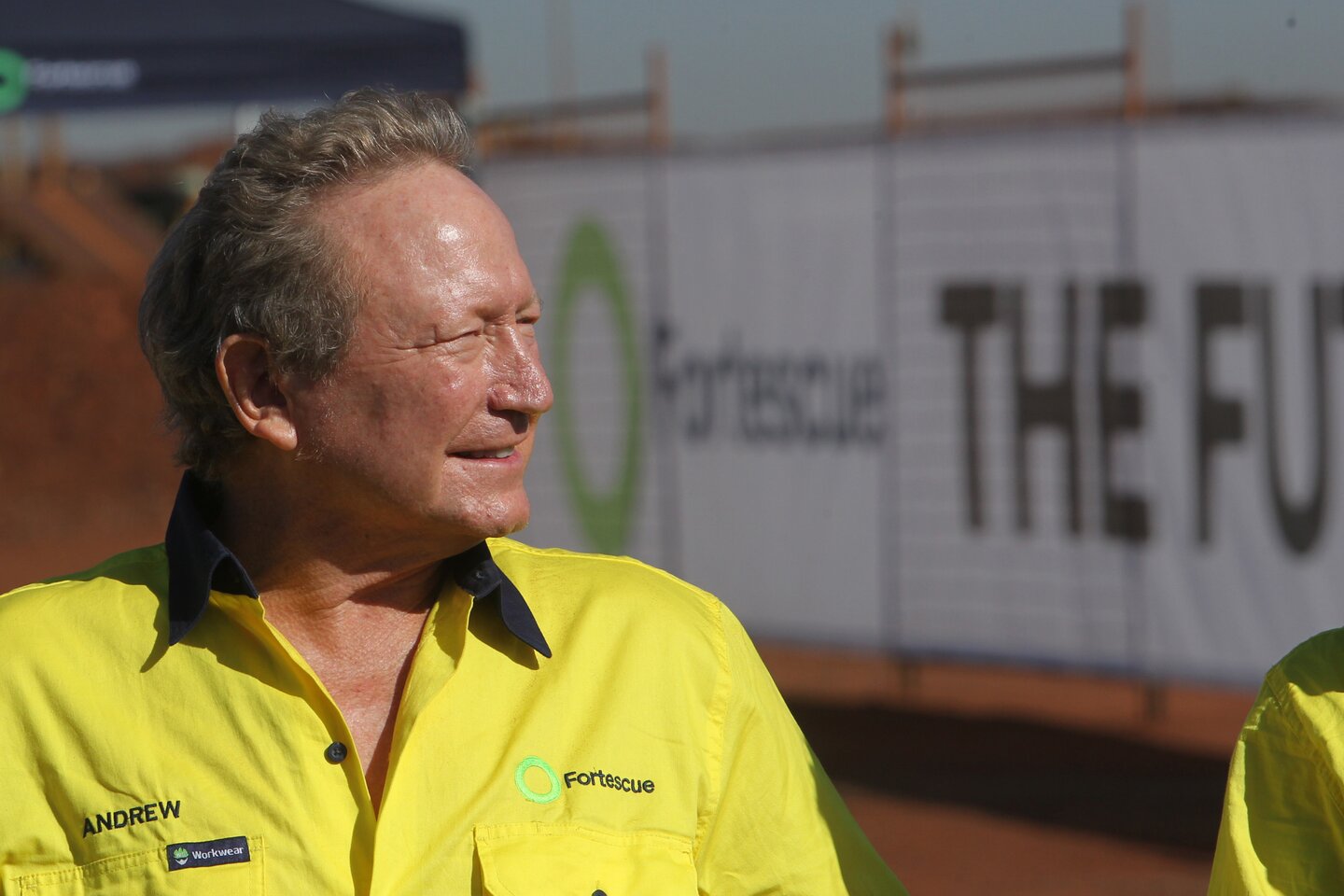
Andrew Forrest has struck a deal to acquire a significant stake in listed tungsten producer EQ Resources in a transaction valued at $190 million.

Continue Reading

Trending

Copyright © 2025