

Business
What is gazundering and how can it be avoided?


Gazundering is when a buyer lowers their agreed offer just before contracts are exchanged.
It puts a seller under pressure to accept the lower price or risk losing their sale and collapsing their property chain – potentially losing the house they want to buy.
It is possible because in England, Wales and Northern Ireland an offer is not legally binding until parties exchange contracts. Once an offer is accepted it takes an average of 120 days to complete. One in three house sales fall through before exchange.
This costs sellers £400m and the wider economy £1.5bn each year, according to the Ministry for Housing, Communities and Local Government.
Planned government reforms would cut that time by four weeks and save the average first time buyer £650, it says.
After speaking to her dad and husband Sarah decided to put her house back on the market that same day.
The next day, her buyers “went running into the estate agent’s office saying they were happy to proceed with the agreed sale price”, she says.
“Gazundering is actually awful. It’s not just a business deal. It’s my children’s home and the fact that nothing’s been done about it is ridiculous.”
Beth Rudolf from the Conveyancing Association says gazundering is a small but growing problem.
“It’s not actually that big, it doesn’t happen very often [but] it’s started increasing though because of the change in the property market that’s made it a buyers’ market.”
There are more houses on the market than people looking to buy, she explained, which means sellers face stiffer competition, forcing them to lower prices.
The government has put plans in place to reform the house buying and selling market in England and Wales which would tackle issues like gazundering although at the moment the timetable for those reforms, external is by the end of the current parliament in 2029.
The Ministry for Housing, Communities and Local Government told the BBC: “We’re stopping gazundering by introducing legally binding agreements that prevent buyers from walking away at the last minute without a valid reason, with fines for those who do.”

Business
Top 10 Must-Visit Vietnam Destinations for 2026, From Bustling Hanoi’s Old Quarter to Phu Quoc Island

Vietnam has continued to draw growing numbers of international travelers heading into 2026, with the country’s blend of centuries-old culture, dramatic landscapes and affordable travel costs keeping it firmly among Southeast Asia’s most in-demand destinations. From the terraced mountains of the north to the tropical islands of the south, here are 10 destinations travel guides say should top any Vietnam itinerary this year.
Hanoi. Vietnam’s capital sits at the heart of the Red River Delta in the north and continues to charm visitors with its slower, more traditional pace compared with the country’s southern metropolis. Travelers typically spend their time exploring the bustling Old Quarter, sipping traditional Vietnamese coffee, and taking in the calm surrounding Hoan Kiem Lake. The city’s historical landmarks, including the Ho Chi Minh Mausoleum and the Temple of Literature, remain top draws, alongside its widely praised street food scene and easy access to the newly expanded metro system, which has made the city considerably easier to navigate for visitors in recent years.
Ha Long Bay. Roughly three hours east of Hanoi, Ha Long Bay remains one of Vietnam’s most iconic destinations, defined by its emerald waters and thousands of towering limestone karsts rising dramatically from the sea. Most travelers experience the bay via overnight or multi-day boat cruises, which typically include stops for kayaking, cave exploration and swimming among the dramatic rock formations that have made the bay a UNESCO World Heritage Site.
Sapa. For travelers drawn to Vietnam’s mountainous north, Sapa remains the primary gateway to trekking through terraced rice fields and visiting hill tribe villages, offering some of the country’s most striking panoramic views. Guides note that Sapa pairs well with nearby Mu Cang Chai for travelers seeking an extended highland trekking itinerary, and the region has become increasingly popular for multi-day guided hiking expeditions.
Ninh Binh. Often described as “Halong Bay on land,” Ninh Binh has grown rapidly in popularity as travelers seek out its dramatic limestone karsts rising above lush rice paddies and quiet rivers. Highlights include boat trips through the emerald waters of Tam Coc, the climb to the Hang Mua viewpoint for sweeping panoramic views over the region, and the ancient temples of Hoa Lu, Vietnam’s first capital. With its tranquil villages, cycling paths and warm local hospitality, guides consistently rank Ninh Binh among the destinations that best combine nature, history and relaxation in a single stop.
Hoi An. This lantern-lit ancient town in central Vietnam continues to draw travelers with its well-preserved architecture and atmospheric old streets. Just outside the town, the My Son Sanctuary offers a striking group of temples built by the Cham people between the seventh and 13th centuries, with sunset tours frequently recommended as a way to experience the ruins with fewer crowds. The nearest airport, in Danang, sits roughly a 45-minute taxi ride from Hoi An’s town center.
Da Nang. Sitting along Vietnam’s central coast, Da Nang combines modern city energy with striking natural scenery, anchored by the sprawling golden sands and turquoise waters of My Khe Beach. The city’s iconic Golden Bridge at Ba Na Hills and the nearby Marble Mountains continue to draw thousands of visitors annually, and Da Nang also serves as the starting point for the Hai Van Pass, a scenic coastal motorbike route connecting the city to Hue that has been described as one of the most spectacular coastal drives in the world.
Hue. Vietnam’s former imperial capital rounds out central Vietnam’s cultural core, offering a deeper look at the country’s dynastic history alongside Hoi An’s colonial-era charm. Travel guides consistently pair Hue with Hoi An and Da Nang as part of a natural central Vietnam route that balances history, coastline and adventure.
Phong Nha-Ke Bang National Park. For travelers seeking adventure beyond Vietnam’s more established tourist circuit, this UNESCO-listed national park offers world-class cave exploration, including access to Son Doong Cave, recognized as the largest cave in the world. The park has become an increasingly popular stop for adventure travelers looking to combine Vietnam’s cultural highlights with more rugged, off-the-beaten-path experiences.
Ho Chi Minh City. Formerly known as Saigon, Vietnam’s largest city remains the commercial and cultural hub of the south, offering a sharp contrast to Hanoi’s more relaxed pace. Visitors typically split their time between the War Remnants Museum and the Cu Chi Tunnels for history enthusiasts, Ben Thanh Market for shopping and street food, and the city’s growing collection of rooftop bars offering panoramic views over the skyline.
Mekong Delta and Phu Quoc. Just outside Ho Chi Minh City, the Mekong Delta offers an authentic window into rural Vietnamese life, with early-morning floating markets at Cai Rang and Phong Dien among the most recommended experiences, alongside boat trips showcasing the region’s agricultural and fishing traditions. For travelers seeking a beach-focused finish to their trip, Phu Quoc Island offers a more tropical, laid-back alternative, combining pristine beaches with snorkeling, diving in crystal-clear waters, and visits to local pepper farms and fish sauce factories that reflect the island’s traditional industries.
Guides note that Vietnam’s geography naturally lends itself to a north-to-south travel route, allowing visitors to experience the country’s distinct regional identities in sequence: the mountains and rice terraces of the north, the coastal towns and ancient cities of the central region, and the lively cities and tranquil delta landscapes of the south. For thrill-seekers, additional 2026 highlights include kitesurfing along Mui Ne’s consistently windy coastline, best enjoyed from November through March, and the increasingly popular multi-day Ha Giang Loop motorbike route through Vietnam’s far north.
With affordable travel costs, an expanding transportation network and a well-established circuit of destinations spanning mountains, coastline, ancient cities and modern metropolises, travel guides say Vietnam continues to offer one of Southeast Asia’s most complete and accessible travel experiences heading into 2026, whether visitors are drawn to history, adventure, cuisine or simply the country’s famously warm hospitality.
Business
World Cup 2026 Set to Generate Record $13 Billion in Revenue for FIFA This Summer as Tournament Ends

The 2026 FIFA World Cup, wrapping up its month-long run across the United States, Mexico and Canada, is on pace to become the most financially successful tournament in the sport’s history, with soccer’s governing body projecting total revenue of roughly $13 billion across its four-year commercial cycle, the majority of it generated directly by this summer’s expanded 48-team tournament.
According to data compiled by Sports Value based on FIFA’s own annual reports, total revenue for the 2026 tournament is projected to reach approximately $10.9 billion, a 56% increase over the $7 billion generated by the 2022 World Cup in Qatar. That prior tournament had itself marked a 32% jump over the cycle before it, underscoring the pace at which FIFA’s revenue has continued climbing with each successive edition. Business Standard reported that FIFA’s broader four-year commercial cycle, which culminates in this year’s tournament, is expected to bring in close to $13 billion in total income, with roughly $8.9 billion of that figure generated by the World Cup itself. That total represents a 72% increase over the cycle that ended with the Qatar tournament and more than double the revenue generated during the 2015-2018 cycle.
FIFA’s original budget for the current 2023-2026 commercial cycle had projected revenue of $11 billion, a figure that was already a substantial increase over prior cycles before being revised upward as the tournament approached. Given that FIFA exceeded its own revenue forecasts for the 2022 Qatar World Cup by more than $1 billion, some analysts have suggested the final tally for 2026 could climb even higher once all figures are finalized after the tournament’s conclusion.
Broadcasting rights remain FIFA’s single largest source of income, projected to contribute close to $4 billion to the current cycle, according to Business Standard. Sponsorship revenue is expected to add roughly $1.8 billion, boosted by new commercial partnerships secured ahead of this year’s tournament, including a deal with Saudi energy company Aramco. The expansion from 32 to 48 participating teams, which added significantly more matches to this year’s tournament compared with previous editions, has also played a direct role in driving broadcasting revenue higher, with FIFA expecting television rights income to surpass every previous World Cup edition, according to reporting cited by The Guardian.
Beyond FIFA’s own direct revenue, the tournament’s broader economic footprint has been the subject of extensive analysis by FIFA and the World Trade Organization, which jointly released a socioeconomic impact study estimating the 2026 World Cup could generate a global gross output impact of $80.07 billion. Of that total, roughly 38%, or $30.46 billion, is projected to flow to the United States, with the remaining 62%, or $49.61 billion, distributed across the rest of the world. The same study estimated the tournament’s impact on global gross domestic product at $40.92 billion, with 42% of that figure benefiting the U.S. economy, alongside an estimated $20.77 billion in global labor income, of which roughly 49% is projected to reach American workers. FIFA said in its report that spending tied to the World Cup has rippled through value chains across the U.S. economy, with the accommodation and food services sector benefiting most, followed by real estate and wholesale and retail trade.
FIFA and the WTO’s analysis also projected the tournament would support the creation of nearly 824,000 jobs globally, including roughly 185,000 full-time equivalent positions within the United States alone, alongside $17.2 billion in U.S. gross domestic product and $30.5 billion in U.S. gross output specifically. Attendance projections tied to those economic estimates put expected World Cup turnout at approximately 6.5 million fans across the tournament’s run.
Not every analysis of the tournament’s economic impact has painted an entirely rosy picture for host cities specifically. Research examined by North Carolina State University in June cautioned that economic impact studies surrounding major events like the World Cup often overstate local benefits by counting total visitor spending without accounting for public costs or spending that would have occurred regardless of the tournament. According to that analysis, FIFA captures the substantial majority of the tournament’s financial gains through media rights, sponsorships and ticketing, while host cities themselves generally absorb major costs tied to security, transportation, stadium preparation and public services, with limited direct revenue flowing back to local governments. “Historical evidence gives us little reason to expect substantial, lasting economic gains for host cities,” one researcher involved in that analysis said, noting that local economic benefits tend to be concentrated in tourism and hospitality sectors and typically fade once the tournament concludes.
That tension has played out publicly in some host cities. In New York, a spokesperson for Mayor Zohran Mamdani pushed back on a city comptroller’s more conservative economic estimate ahead of the tournament, arguing it failed to capture the full scope of the World Cup’s benefit to the city, pointing instead to a projected $1.7 billion in direct regional spending expected to translate into hundreds of millions of dollars in tax revenue. Fortune reported that figure, along with FIFA’s own separate claim of $432 million in projected state and local tax revenue, actually described the broader New York-New Jersey region rather than New York City’s specific share of that economic activity. The New York-New Jersey host committee, working alongside the consultancy Tourism Economics, separately projected $3.3 billion in regional economic impact and more than 26,000 jobs tied to the tournament, a figure the committee unveiled during a ceremony at the New York Stock Exchange.
In Canada, the country’s Parliamentary Budget Officer estimated total government support for hosting World Cup matches at 1.066 billion Canadian dollars, including 473 million dollars from the federal government and 593 million dollars from other levels of government, working out to roughly 82 million Canadian dollars per match across the 13 matches hosted in the country.
FIFA President Gianni Infantino campaigned for his role in 2016 on a promise to quadruple the organization’s income, a goal Fortune reported he appears on track to fulfill once final 2026 revenue figures are tallied following Sunday’s championship match. With the tournament now concluding after Argentina and Spain’s World Cup final in East Rutherford, New Jersey, FIFA is expected to release updated revenue figures in the coming months as final broadcasting, sponsorship and ticketing totals are confirmed, figures that could ultimately push the 2026 World Cup’s total economic footprint even higher than current projections suggest.

Argentina and Spain meet today at MetLife Stadium in East Rutherford, New Jersey, in a World Cup final that both statisticians and tacticians have described as one of the most historically rich matchups in the tournament’s history, pitting Lionel Messi’s bid for a second consecutive title against Spain’s chance to become just the seventh nation to win multiple World Cups.
The two sides enter the final with a nearly even head-to-head record dating back to their first meeting in 1966. Across 14 previous encounters spanning all competitions, the series sits at six wins apiece with two draws, according to Fox Sports. Spain has won four of the last six meetings between the nations, though Argentina’s most recent victory in the series came in 2010, the same year Spain went on to win its only previous World Cup title. The two teams have not met since a March 2018 friendly, which Spain won 6-1, though neither current roster closely resembles the one that took the field in that lopsided result.
Argentina arrives at the final riding one of the most statistically dominant scoring stretches in World Cup history. According to Fox Sports, Argentina has scored multiple goals in 13 straight World Cup matches, the longest such streak in tournament history, and remains unbeaten in 19 consecutive major-tournament games, a run that includes 16 wins and three penalty-shootout victories. The team has also scored eight goals after the 85th minute of matches during this tournament alone, including extra time, a single-edition record for late-game scoring in World Cup history, reflecting the pattern of dramatic, come-from-behind victories that has defined Argentina’s run through the knockout stage, including Wednesday’s stunning 2-1 semifinal win over England.
Individual milestones are also within reach for several Argentine players. Should Messi score in the final, he would become just the sixth man in World Cup history to find the net in two separate finals, joining Vavá, Pelé, Paul Breitner, Zinedine Zidane and Kylian Mbappé on that list. Messi already holds the tournament’s all-time career scoring record with 21 goals across six World Cups, a mark he set earlier this summer. Teammate Alexis Mac Allister has also quietly built a historic individual record of his own, having played in more World Cup matches without a loss than any player in tournament history, a streak now standing at 13 matches.
Argentina’s path to today’s final has been built on resilience rather than dominance, needing extra time or dramatic late goals in multiple knockout matches, including wins over Cape Verde, Egypt and Switzerland before Wednesday’s comeback against England, in which Enzo Fernández and Lautaro Martínez scored in the match’s closing minutes off assists from Messi.
Spain, by contrast, enters the final having conceded just once through seven tournament matches, that lone goal coming against Belgium in the quarterfinals, the stingiest defensive record of any team remaining in the competition. Manager Luis de la Fuente’s side delivered a controlled, disciplined performance in Tuesday’s 2-0 semifinal win over France, with full-backs Pedro Porro and Marc Cucurella limiting space for Kylian Mbappé, Michael Olise and Ousmane Dembélé throughout that match. Spain’s path to the title carries its own historic weight: a win would make it just the third nation to capture the World Cup in both of its first two final appearances, following Uruguay in 1930 and 1950 and Italy in 1934 and 1938. Spain would also become the seventh country to win multiple World Cup titles overall, having captured its only previous crown in 2010.
At the center of Spain’s attack sits 19-year-old Lamine Yamal, whose tournament form has drawn scrutiny relative to the outsized expectations placed on him entering the summer. According to Fox Sports, Yamal has yet to record a goal or an assist during the tournament’s knockout stage, though he remains just the third teenager in tournament history to make seven World Cup appearances, joining Mbappé and Spain teammate Pau Cubarsí on that list. Despite the modest individual output, Yamal has consistently drawn defensive attention from opposing teams throughout the tournament, a dynamic Spain’s coaching staff has said has helped create space for other attacking players, including forward Mikel Oyarzabal, who has scored five goals this summer.
Beyond the individual and team storylines, today’s final carries broader historical significance for Spain’s soccer program overall. A win would make Spain the first country to hold both the men’s and women’s World Cup titles simultaneously, a milestone tied to the Spanish women’s national team’s own recent championship success.
Betting markets ahead of kickoff have consistently favored Spain, with FanDuel Sportsbook odds listing Spain at +125 to win in regulation, meaning a $100 wager on Spain would return $225 total, while Argentina was priced at longer odds reflecting its underdog status entering the match, with a winning $100 bet on Argentina projected to return $355 total according to Fox Sports’ pregame coverage.
Tactically, analysts have framed the final as a clash of styles as much as talent. Spain’s approach has centered on puncture-resistant possession and defensive organization, limiting high-quality scoring chances against a string of dangerous opponents throughout the tournament. Argentina, meanwhile, has repeatedly shown an ability to manufacture goals in the tournament’s most pressure-filled moments, frequently through Messi’s vision and precision passing in the attacking third, even when the team’s overall play has appeared to labor for long stretches of individual matches.
With both nations chasing distinct pieces of soccer history, Argentina pursuing a first back-to-back World Cup title since Brazil accomplished the feat in 1962, and Spain chasing just its second championship and a chance to complete a rare men’s-and-women’s World Cup double, today’s final in New Jersey carries stakes that extend well beyond the individual matchup between Messi and Yamal that has anchored much of the tournament’s promotional buildup. Whichever side ultimately lifts the trophy, both the numbers and the narratives entering kickoff suggest today’s match was always destined to add another significant chapter to the World Cup’s long history.
Business
The 10 Most-Watched Australian Movies of 2026 So Far, From Elvis Concert Films to Zombie Thrillers


Australian filmmakers have delivered one of the most varied slates of homegrown cinema in recent memory so far in 2026, spanning family animation, zombie horror, concert documentaries and Indigenous drama, even as local audiences continue to favor streaming platforms over cinemas for many of the year’s biggest Aussie-made titles. Here is a look at 10 of the most-watched Australian films of the year to date, based on box office performance, streaming popularity and critical attention.
EPiC: Elvis Presley in Concert. Baz Luhrmann’s latest ode to the King of Rock ‘n’ Roll stands as the highest-performing homegrown release at the Australian box office so far in 2026, by a significant margin over every other local production. Built around meticulously restored live footage of Elvis Presley, the film has drawn strong turnout from audiences eager for the kind of imported-star validation that has historically boosted Australian films at the box office, even though Presley himself never performed in Australia.
The Pout-Pout Fish. Sitting just behind EPiC as the second-highest-performing Australian release of the year, this colourful family animation from Brisbane-based studio Like a Photon Creative adapts the popular children’s book of the same name and kicked off the year’s slate of local releases.
We Bury the Dead. Directed by Zak Hilditch and starring Daisy Ridley alongside Brenton Thwaites, this Tasmanian-set zombie thriller has emerged as one of the year’s most talked-about genre entries, following an American woman collecting corpses amid a post-accident zombie outbreak. The film premiered at South by Southwest before its Australian theatrical rollout in February and has drawn praise for its blend of horror and dark comedy set against the Tasmanian landscape.
War Machine. A Victoria-shot science-fiction action film pitting soldiers against robots, War Machine features Australian director Patrick Hughes, co-writer James Beaufort, and cast members including Jai Courtney, Keiynan Lonsdale and Daniel Webber. Despite an $80 million U.S. budget, the film earned just $82,000 at the Australian box office during its brief theatrical run, illustrating a broader trend this year: Australian audiences have overwhelmingly preferred watching Aussie-shot productions like War Machine from their couches on Netflix rather than in cinemas.
Bring Her Back. From brothers Danny and Michael Philippou, following up their breakout horror hit “Talk to Me,” Bring Her Back claimed the Best Film honor at the 2026 AACTA Awards, cementing the Philippou brothers as two of the most closely watched genre filmmakers currently working in Australian cinema.
The Deb. Rebel Wilson’s directorial debut, adapting the acclaimed stage musical by Hannah Reilly and Megan Washington, overcame production delays and legal controversy to become a genuine crowd-pleaser upon its April release. Set in a fictional country town, the film follows cousins clashing in the lead-up to a debutante ball, blending big laughs and pop-inflected musical numbers with a distinctly Australian sense of humor and local flavor.
Wolfram. Widely regarded as one of the standout Australian films of the year, Wolfram is a spiritual successor to Warwick Thornton’s acclaimed “Sweet Country” and continues the celebrated Indigenous filmmaker’s exploration of colonial violence and its lasting impact, dating back to his Cannes Caméra d’Or-winning debut, “Samson and Delilah.” Critics have singled out Thornton’s cinematography as demanding to be seen on the biggest screen possible.
Alphabet Lane. Among the strongest new releases of the year, this debut feature from first-time filmmaker James Litchfield stars Tilda Cobham-Hervey and strands its characters against the outback landscape, offering what reviewers described as a playful and unexpectedly original exploration of long-term relationships, loneliness and the difficulty of making friends as an adult, avoiding the sameness sometimes associated with outback-set Australian films.
Jimpa. Sophie Hyde’s heartfelt drama stars John Lithgow and Olivia Colman and has drawn attention as one of the year’s most emotionally resonant Australian releases, adding to a 2026 slate that has spanned everything from horror and comedy to intimate family drama.
Apex, The Bluff and Balls Up. Rounding out the year’s most-watched Aussie-shot content are a trio of major streaming titles that, while not all technically classified as Australian productions given their international financing and creative teams, have nonetheless dominated local streaming charts. Apex, a Netflix survivalist thriller blending elements of a serial-killer story and starring Taron Egerton in an Australian accent, has become one of the platform’s most-watched titles domestically. Prime Video’s swashbuckling adventure The Bluff and Mark Wahlberg comedy Balls Up, both filmed in Queensland, have similarly drawn strong local streaming numbers, reflecting how Australian audiences are increasingly encountering Aussie-filmed content through their couches rather than at the cinema.
Beyond this list, several other Australian titles have drawn critical acclaim and audience attention throughout 2026, including the Teresa Palmer-led romantic comedy Addition, the Lismore flood documentary Floodland, the Mental As Anything documentary Live It Up, sailing documentary True South, horror debut Proclivitas, Mongolia-set documentary Iron Winter, World War II documentary Under a Bamboo Sky, the fight drama Beast starring Daniel MacPherson and Russell Crowe, and Seven Snipers, featuring Radha Mitchell and Tim Roth.
Industry analysts have continued to push back on the long-standing narrative that Australian films struggle at the box office because they all resemble one another, pointing to 2026’s slate as clear evidence to the contrary. Over the course of just a few months, local filmmakers have delivered family animation, romantic comedy, undead horror, Elvis concert footage, queer family drama, Indigenous historical drama and documentary work spanning band biography, natural disaster and rural Mongolia, a level of genre diversity industry observers say rivals any comparable stretch in recent Australian film history.
Despite that variety, Hollywood productions continue to dominate Australia’s overall box office rankings for 2026, with only a handful of homegrown or Australian-adjacent titles, including EPiC, The Pout-Pout Fish, and international productions featuring prominent Australian actors such as Wuthering Heights, Song Sung Blue and Crime 101, cracking the year’s top 20 releases. Even so, industry figures say the strength and range of this year’s Australian film slate suggests local audiences have more reason than ever to support homegrown cinema in theaters, rather than waiting to catch Aussie-made films once they arrive on streaming platforms months later.

These 3 Stocks Are So Good, I May Never Sell Them

The electric pickup truck market has grown considerably more crowded since Tesla’s Cybertruck first hit roads, and 2026 has brought a fresh wave of competitors offering everything from higher towing capacity to significantly lower price tags. For buyers drawn to the idea of an electric truck but put off by the Cybertruck’s polarizing angular design, here are five alternatives industry reviewers say are worth serious consideration this year.
Rivian R1T. Widely regarded by automotive reviewers as the strongest overall alternative to the Cybertruck currently on the market, the Rivian R1T pairs a distinctive, more conventional truck silhouette with genuinely usable off-road capability and a well-regarded interior. Autoblog’s testing found the R1T easy to see out of, free of the driving gimmicks associated with Tesla’s truck, and among the most daily-driver-friendly options in its class, even if some testers noted a slightly stiff ride and preferred keeping towing loads closer to 8,000 pounds rather than pushing toward its 11,000-pound rated maximum. U.S. News currently lists the R1T as offering the highest efficiency figures among electric pickups, with EPA-estimated ratings of 85 to 93 MPGe in city driving and 72 to 80 MPGe on the highway for the base 2026 model.
Chevrolet Silverado EV. For buyers prioritizing maximum driving range above all else, the Chevrolet Silverado EV currently leads the electric pickup segment. According to CarGurus, the base Silverado EV equipped with GM’s Max Range battery pack, a massive 205-kWh unit, delivers an estimated 493 miles of range for 2026, comfortably outdistancing the Cybertruck’s roughly 325-mile range on a full charge. Pricing spans a wide range, from around $55,000 up to nearly $100,000 depending on trim and configuration, giving buyers meaningful flexibility depending on how much range and capability they actually need.
GMC Sierra EV. Built on the same underlying platform as the Silverado EV and the GMC Hummer EV, the Sierra EV offers a somewhat more traditional pickup truck experience within GM’s electric lineup, positioned to appeal to contractors, tradespeople and other buyers who want genuine work-truck functionality rather than the more image-focused styling of vehicles like the Cybertruck or Hummer EV. U.S. News notes the base 2026 Sierra EV ranks among the most efficient electric trucks currently available in terms of its city and highway performance figures.
Scout Terra. Revived last year by Volkswagen after decades of dormancy, the relaunched Scout brand’s all-electric Terra pickup has drawn attention as one of the more compelling upcoming entries in the segment. The Terra offers an estimated 350 miles of range and a towing capacity of up to 10,000 pounds, and crucially, will be sold directly to consumers rather than through a traditional dealer network, a structure Jalopnik noted should help buyers avoid the kind of markup pressure sometimes associated with dealer-negotiated pricing. According to Pickup Truck Talk, the Scout Terra is expected to start roughly $40,000 cheaper than the Cybertruck while still rivaling its off-road and towing capabilities, positioning it as one of the more direct value-oriented challengers to Tesla’s truck.
Slate Truck. For buyers seeking the most dramatic price difference from the Cybertruck, the Slate Truck represents perhaps the starkest alternative on the market. Backed by Michigan-based startup Slate Automotive and funded in part by Amazon founder Jeff Bezos, the Slate Truck is designed around radical simplicity, featuring steel wheels, flat body panels, manual windows and no central touchscreen, built around a philosophy of “buy what you need and add the rest yourself” through a wide range of factory and aftermarket customization options. At just 174.6 inches long, smaller than even a Ford Maverick, the Slate Truck is projected to start in the mid-$20,000s when shipments begin at the end of 2026, according to Pickup Truck Talk, undercutting the Cybertruck’s roughly $82,000 starting price by a wide margin.
Notably absent from this list is the Ford F-150 Lightning, once considered one of the Cybertruck’s most direct competitors. Edmunds confirmed that Ford has already announced it is no longer building the electric F-150 Lightning, though the company has said a replacement model is in development, meaning buyers specifically interested in Ford’s next electric pickup offering will need to wait for further details on that upcoming vehicle rather than shopping the current Lightning.
Buyers willing to wait even longer for additional options also have Stellantis’ Ram 1500 REV on the horizon, Ram’s first fully electric pickup, slated to launch once the brand’s hybrid Ramcharger model reaches the market. When it does arrive, the 1500 REV is expected to offer the highest towing capacity among major electric pickup competitors, at roughly 14,000 pounds, alongside an estimated 350 miles of range and a payload capacity exceeding 2,600 pounds, more than 100 pounds greater than what the Cybertruck can manage.
For context, the current 2026 Tesla Cybertruck starts at $81,985, with the range-topping tri-motor Cyberbeast trim beginning at $116,985, according to Kelley Blue Book. Equipped with a 123-kWh battery, the Cybertruck offers an estimated 325-mile range in its all-wheel-drive configuration and can tow up to 11,000 pounds, with the Cyberbeast capable of reaching 60 mph in as little as 2.6 seconds. Despite its high price and polarizing design, the Cybertruck briefly became the best-selling vehicle in the United States following its launch, reflecting the strong demand and cultural attention the truck has generated even amid persistent criticism of its off-road limitations, cargo bed constraints and reported build-quality issues.
For buyers who want an electric pickup without the Cybertruck’s angular styling or its reported off-road shortcomings, the current market offers a genuinely diverse set of alternatives, ranging from the Rivian R1T’s daily-driver-friendly refinement to the Slate Truck’s back-to-basics affordability, giving shoppers considerably more choice in 2026 than existed when Tesla’s truck first arrived on the market.

Multicultural Business Coalition chairman Frank Garcia highlights some of the stores that could be put out of business due to NYC Mayor Zohran Mamdani’s government-run grocery store initiative on ‘The Bottom Line.’
Shoppers looking to stretch their grocery budgets may want to take a closer look at Kroger.
The Ohio-based grocer had the cheapest store-brand grocery basket in a new price comparison of four major U.S. grocery chains.
A new study from Restaurant Furniture Plus compared the cost of 15 store-brand essentials at Kroger, Walmart, Aldi and Albertsons, including milk, bread, eggs, chicken breast, spaghetti, canned beans and baking items, Southern Living reported.
Kroger ranked No. 1 with a total basket cost of $30.
MORE AMERICANS ARE RELYING ON CREDIT CARDS TO BUY GROCERIES, NEW STUDY FINDS
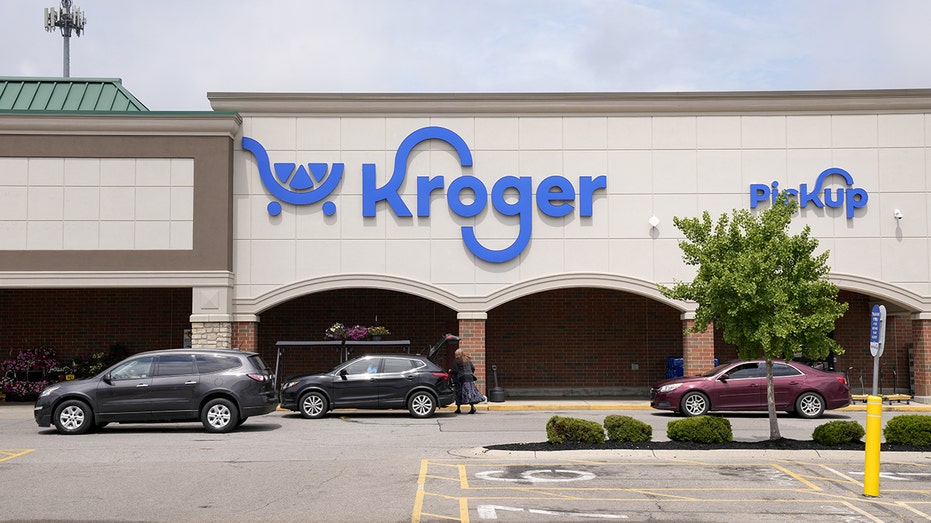
Kroger had the cheapest store-brand grocery basket in a new price comparison of four major U.S. grocery chains. (Jeffrey Dean/Bloomberg via Getty Images)
The grocer had the lowest prices on 10 of the 15 items analyzed, more than any other retailer in the study, according to the outlet.
Kroger, which operates roughly 1,229 grocery stores across 16 states, also offered the lowest prices on several pantry staples, including canned diced tomatoes, spaghetti and sugar, as well as a dozen large eggs.
Walmart came in second with a basket total of $30.95, followed by Aldi at $33.15 and Albertsons at $35.58, Southern Living reported.
CALIFORNIA GROCERY PRICES COULD RISE AS PLASTIC PACKAGING LAW TAKES EFFECT

Kroger offered the lowest prices on several pantry staples, as well as a dozen large eggs. (Brandon Bell/Getty Images)
However, Aldi’s store-brand dairy products stood out as a particularly strong value, the study noted.
The survey did not include Costco, Trader Joe’s, H-E-B or Piggly Wiggly. Trader Joe’s was excluded because it did not carry some items in the comparison, while Costco’s bulk model made single-item price comparisons difficult, Southern Living reported.
| Ticker | Security | Last | Change | Change % |
|---|---|---|---|---|
| WMT | WALMART INC. | 114.24 | -0.71 | -0.62% |
| COST | COSTCO WHOLESALE CORP. | 940.87 | -4.70 | -0.50% |
The findings come as many Americans continue to feel squeezed at the grocery store.
COSTCO MAKES PAYMENT CHANGE THAT COULD SPEED UP CHECKOUT FOR MEMBERS

Walmart came in second with a basket total of $30.95. (Scott Olson/Getty Images)
GET FOX BUSINESS ON THE GO BY CLICKING HERE
Food prices have climbed 32% over the past five years, pushing more than one in four working-age Americans into credit card debt to cover regular grocery bills, according to a new Urban Institute study released Monday.
“Groceries are one of the largest household budget items for families. Over the past five years, food costs have increased substantially,” the report said. “This means that families today face persistently higher prices when they go to the grocery store, and food affordability remains a key concern for many.”
FOX Business’ Kristen Altus contributed to this report.


I am an investor and researcher focused on identifying high-quality businesses trading at a fair price. My approach is rooted in the value investing tradition of Warren Buffett, Howard Marks, and Mohnish Pabrai: owning great businesses, insisting on a margin of safety, and weighing the downside before the upside.I am currently studying at Frankfurt School of Finance & Management, one of Germany’s leading business universities. Alongside my studies, I have gained professional experience across research and advisory as well as audit, work that shaped how I read financial statements, assess earnings quality, and separate durable economics from accounting noise.For over five years I have actively researched public markets as an independent investor. My focus is picks and shovels exposure to structural growth across the energy, semiconductor, technology, and AI infrastructure supply chains. I also follow the consumer sector closely, where brand strength and pricing power create durable competitive advantages.On Seeking Alpha I intend to publish company specific deep dives and sector theses, emphasizing primary sources, valuation discipline, and honest bear case analysis, including the risks to my own conclusions. My goal is to contribute rigorous, independent research to the community and to sharpen my own thinking through the scrutiny of informed readers.
Analyst’s Disclosure: I/we have a beneficial long position in the shares of CEG either through stock ownership, options, or other derivatives. I wrote this article myself, and it expresses my own opinions. I am not receiving compensation for it (other than from Seeking Alpha). I have no business relationship with any company whose stock is mentioned in this article.
Seeking Alpha’s Disclosure: Past performance is no guarantee of future results. No recommendation or advice is being given as to whether any investment is suitable for a particular investor. Any views or opinions expressed above may not reflect those of Seeking Alpha as a whole. Seeking Alpha is not a licensed securities dealer, broker or US investment adviser or investment bank. Our analysts are third party authors that include both professional investors and individual investors who may not be licensed or certified by any institute or regulatory body.

- A 2025 ILO policy brief estimates that nearly 80 million workers across ASEAN — roughly 23 percent of total employment — hold jobs with meaningful exposure to generative AI. Only about 11.7 million fall into the highest-exposure category, and two-thirds of the regional workforce shows no identified exposure. Employment in exposed occupations has continued to grow despite increasing AI contact.
- Thailand ranks at 20.6 percent exposure, near the regional middle, while Singapore leads at 42.2 percent. The ILO highlights a preparedness gap between how exposed workforces are and how ready institutions are to respond. Women face disproportionately high exposure due to concentration in clerical and professional roles, and informal workers remain largely outside the data.
A new policy brief from the International Labour Organization puts a hard number on a question that has hovered over Southeast Asian boardrooms and finance ministries for the past two years: how many jobs in the region actually sit in the path of generative AI. The answer, released this week, is nearly 80 million.
What the ILO found
According to the ILO’s 2025 estimates, 22.9 percent of total employment across ASEAN — close to 80 million workers — sits in occupations with more than a minimal degree of potential exposure to generative AI. The brief, titled “Generative AI and labour markets in ASEAN: Significant exposure, limited disruption, uneven preparedness,” is careful to separate exposure from displacement. Only 3.3 percent of the regional workforce, around 11.7 million people, falls into the “highest exposure” category, and roughly 67 percent of ASEAN employment shows no identified GenAI exposure at all.
The report’s own framing captures the tension: significant exposure, but limited disruption so far. Employment in the most exposed occupations has kept growing even as GenAI touches more of the workforce, and actual adoption remains concentrated in technology-heavy roles, with much slower uptake in office and administrative jobs despite their higher exposure scores.
Where Thailand sits in the regional picture
Singapore tops the exposure ranking at 42.2 percent of total employment, a reflection of its finance- and tech-heavy economy. The Philippines follows at 28.1 percent, driven by its large IT and business process outsourcing sector, then Indonesia at 21.7 percent and Vietnam at 20.8 percent. Thailand comes in at 20.6 percent, near the middle of the pack and meaningfully below Singapore’s exposure level.
That positioning is worth reading alongside Thailand’s own AI trajectory. Microsoft recently reported that Thailand ranks second worldwide for AI adoption growth, with workplace AI adoption up 36.4 percent year-on-year. The two data points aren’t contradictory — fast-growing adoption from a low base is consistent with occupational exposure that hasn’t yet caught up to Singapore’s. The Thai government’s own 25 billion baht AI development programme allocates 6 billion baht specifically to building a skilled AI workforce, which suggests policymakers are already positioning for exposure to rise.
A gender gap inside the numbers
One of the more striking findings concerns who bears the exposure. Women are more than twice as likely as men to work in occupations with high GenAI exposure, a pattern the ILO links to their concentration in clerical, administrative, and professional roles. Young workers aged 15 to 24 show broadly similar exposure levels to older adults, suggesting this isn’t primarily a generational story.
The preparedness gap
Perhaps the most useful concept in the brief is what the ILO calls the preparedness gap — the distance between how exposed a country’s workforce is and how ready its institutions are to manage that exposure. Singapore is held up as the clearest example of high exposure matched with high preparedness, combining advanced digital infrastructure, strong talent availability, and a coordinated government strategy. The implicit question for the rest of ASEAN, Thailand included, is whether exposure will keep climbing faster than the institutional response.
That question sits close to ground Thailand has already been covering on other fronts. The country’s data centre and AI infrastructure buildout is running into its own talent shortage, with demand for skilled data-centre professionals outpacing supply. And in the informal economy, the ILO has separately noted that more than 16 percent of ASEAN youth were not in education, employment, or training in 2024 — a workforce segment the GenAI exposure figures don’t fully capture, since informal work accounts for a large share of employment in Thailand, Cambodia, and Indonesia.
The investment read
For now, the ILO’s message to policymakers and investors is one of urgency without alarm: the potential for labour market transformation is real, but the disruption itself hasn’t materialised yet. That gives ASEAN governments, Thailand’s among them, a window to build the reskilling and social protection systems the report calls for before adoption catches up to exposure. Whether that window stays open depends largely on how quickly GenAI moves from technology-sector adoption into the office and administrative roles where exposure is highest but uptake has so far lagged.
Other People are Reading
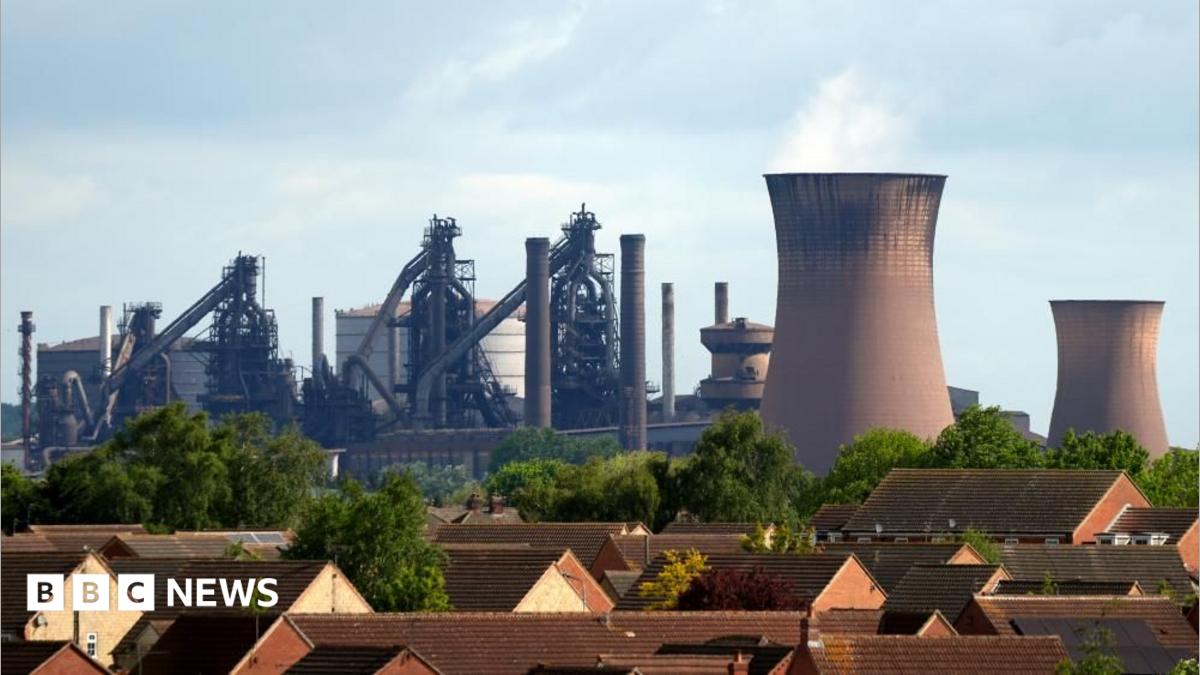
The former owner of British Steel has said it will pursue the British government for compensation after the loss-making firm was nationalised.
The UK took control of the Scunthorpe steelworks a year ago after China’s Jingye Group said it planned to close the site because it was not financially viable, and fully nationalised the plant on Thursday.
In a statement on Sunday, Jingye said it will seek “full compensation through legal means to the very end” over the UK’s move.
A government spokesperson said draft compensation regulations due to be released in the autumn will set out a compensation process through which an independent assessor “would determine what, if any, is payable”.
Jingye bought the Lincolnshire steel plant in 2020, but in March last year the firm launched a consultation on its closure saying the plant was losing £700,000 a day.
The government took control of British Steel operations in April 2025, but until this week it remained under Jingye’s ownership which limited the government’s ability to shape the firm’s future.
On Thursday the UK government said it was taking the firm into public hands in order to safeguard a “vital national capability”, giving the government the power to decide the plant’s future.
The decision to nationalise British Steel has threatened to strain the relationship between London and Beijing just as Andy Burnham prepares to enter Downing Street as prime minister on Monday.

Joe Hart backs surprise result in Spain vs Argentina World Cup final | Football

Top 10 Must-Visit Vietnam Destinations for 2026, From Bustling Hanoi’s Old Quarter to Phu Quoc Island

‘Spain will win easily’: Ronaldo makes bold Argentina prediction before World Cup final | Football News


-
 NewsBeat3 days ago
London Mayor Sadiq Khan handed a peerage by Keir Starmer alongside 15 other Labour figures… just days before the PM leaves No10
-

 Fashion2 days ago
Weekend Open Thread – Corporette.com
-

 Politics1 day ago
The House | The City of London can help the new chancellor deliver growth in every postcode
-

 Politics4 days ago
Young campaigners urge incoming PM to act on outdoor junk food ads
-

 Crypto World3 days ago
CFTC blocks Kalshi from unwinding Michigan trades after court order
-

 Business3 days ago
Nvidia Stock Slips After Big Tuesday Rally as Huang Confirms Vera Rubin Chip Is Now in Production Today
-

 Crypto World1 day ago
Ripple Payments Joins MiCA With 14 Firms, Does It Mean Anything For XRP?
-
 Entertainment4 days ago
Disney’s Most Ambitious Failed Star Wars Attraction Is Coming to SDCC
-

 Crypto World2 days ago
Ripple wins EU-wide access as ESMA adds it to MiCA register
-

 Business3 days ago
Palantir Shares Rise After Expanded Nvidia Partnership and Fresh Analyst Upgrades Ahead of Earnings Day
-

 Crypto World3 days ago
Injective Submits SEC Transfer-Agent Registration to Onchain Ownership Records
-

 NewsBeat2 days ago
Registration is now open for March for Men with Kev 2026
-

 Tech5 days ago
Get Your ESP32 Sunny Side Up With This Solar Dev Board
-

 News Videos5 days ago
XRP BOMBSHELL… XRP OMBOARDED FOR TRANSACTIONS!!!
-

 Tech5 days ago
Dark Secrets Emerge When Jailbreaking LLMs
-
 Crypto World2 days ago
Two July Windows Left: The CLARITY Act’s Senate Fight and What Failure Means
-
 Sports4 days ago
New Cornerback Enters Vikings Trade Rumor Mill
-

 News Videos2 days ago
Money | Class 12 Economics | CBSE Board Exam 2026-27
-

 Business2 days ago
Banco Bilbao Vizcaya Argentaria, S.A. (BBVA) Discusses Global Macro Environment and Economic Outlook for Core Markets Transcript
-

 Crypto World3 days ago
Claude Fable 5 Slips to Second in AI Coding Leaderboard
You must be logged in to post a comment Login