

Crypto World
South Korean Regulator Launches Sanctions Process for Dunamu: Report

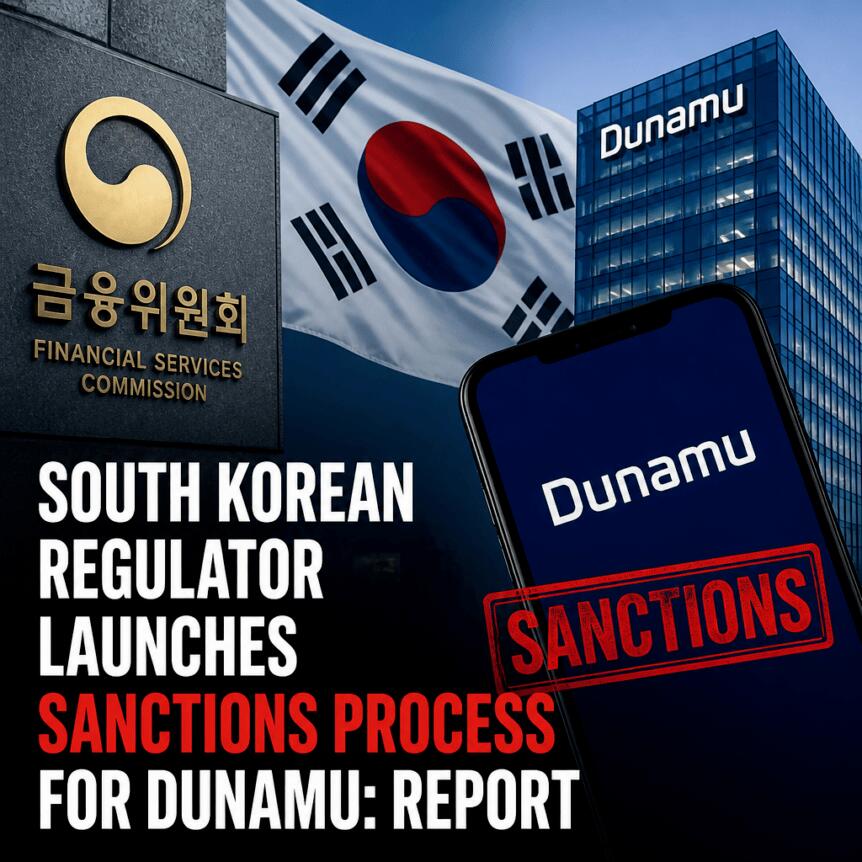
South Korea’s Financial Supervisory Service (FSS) has reportedly moved to formally examine whether crypto exchange operator Dunamu, the parent company behind Upbit, breached local rules after a $36 million hack last November. Yonhap News reported Sunday that the regulator recently sent Dunamu an inspection opinion letter—an early step that starts a sanctions process and gives the company a chance to respond to the FSS’s findings before any penalties are proposed.
At the center of the inquiry is a regulatory question about how existing South Korean law applies to cyber incidents. According to the same report, authorities are also looking at a potential legislative fix that would add clearer sanctions and compensation provisions for hacking and computer system failures.
Key takeaways
- The FSS has sent an inspection opinion letter to Dunamu, the operator of Upbit, marking the start of a formal sanctions procedure, per Yonhap News.
- Dunamu is expected to respond to the regulator’s inspection findings before any proposed sanctions are issued.
- The probe is tied to a $36 million exploit reported by Upbit in connection with a breach that lasted about 54 minutes on November 27, 2025, though the announcement came later that day.
- South Korean authorities are reviewing whether the incident violated the Virtual Asset User Protection Act, which currently lacks direct provisions for cyberattacks or computer hacks.
- The report indicates plans to address that legal gap in a second phase of the Digital Asset Basic Act by adding sanctions and compensation related to system failures.
Regulator signals sanctions after the November Upbit exploit
Yonhap News said the FSS recently sent Dunamu an inspection opinion letter following the November 2025 hack tied to Upbit. The letter effectively initiates the regulator’s step-by-step sanctions process, starting with a formal assessment and allowing the exchange operator to reply before the FSS notifies the company of any proposed penalties.
The development matters for market participants because it frames the incident not just as a security lapse, but as a compliance issue under South Korea’s financial oversight. When regulators move from incident response to sanctions procedures, it typically signals heightened scrutiny over both operational controls and communications practices around material events.
Timing of Upbit’s disclosure comes under scrutiny
Yonhap also highlighted criticism directed at Upbit regarding the timing of its public disclosure about the $36 million exploit. The report states that the breach began at 4:42 a.m. KST on November 27, 2025 and lasted roughly 54 minutes. However, Upbit did not announce the hack until the end of the day.
Yonhap attributed the delayed announcement to the conclusion of a merger-related event involving Naver Financial. That detail underscores the potential tension between corporate event calendars and the expectations regulators and users may have for timely disclosure after a major security incident.
Legal gap: current law lacks direct cyberattack sanctions
According to Yonhap, the FSS is reviewing whether the exchange violated the Virtual Asset User Protection Act. The report specifically notes that the act does not contain direct sanction provisions for cyberattacks or computer hacks.
This is a significant point for investors and compliance teams: if the law does not clearly address hacking events, regulators may have to rely on broader consumer protection obligations or other compliance standards to justify penalties. That can lead to uncertainty about outcomes—especially while case-specific interpretations develop.
Yonhap added that South Korean authorities intend to reduce this ambiguity by proposing additions for sanctions and compensation related to hacking and computer system failures in the second phase of the Digital Asset Basic Act. In practical terms, that suggests policymakers want future regulatory enforcement to be more direct and standardized when similar incidents occur.
Upbit’s response after the breach: reimbursement and wallet changes
Following the November exploit, Upbit said it froze approximately 2.3 billion won (about $1.5 million) worth of funds and would fully reimburse affected customers using its own balance sheet, according to a statement published on the exchange’s website. Upbit said it would reimburse impacted users rather than leaving them to absorb losses.
In addition to reimbursement, Upbit said it initiated an overhaul of its crypto wallet architecture to address potential vulnerabilities identified in the aftermath of the incident. The exchange also stated that it migrated all assets from wallets considered affected.
The operator’s efforts extended into onchain monitoring as well. In December 2025, Upbit said it developed an automatic onchain tracking service called Onchain AI Tracer System. The stated purpose was to follow the path of stolen funds and support potential recovery efforts.
For traders and users, these actions are relevant because they indicate how Upbit has approached both immediate risk containment and longer-term incident response. Yet regulators may still evaluate whether controls were sufficient before the breach, how the incident was managed during the window of compromise, and how promptly users were informed.
Separately, Upbit is described as ranking third in CoinMarketCap’s spot exchange rankings, based on a scoring system that includes factors such as traffic, liquidity, and trading volumes, according to CoinMarketCap’s exchange rankings page.
What to watch as the inspection and sanctions process unfolds
With the FSS inspection opinion letter now in place, the next key development will be how Dunamu responds to the regulator’s findings and what compliance arguments it presents around disclosure timing, incident handling, and the applicability of existing law. Observers should also watch the legislative track Yonhap described—if the second phase of the Digital Asset Basic Act adds cyber-focused sanctions and compensation provisions, it could materially change how future security incidents are regulated in South Korea.

CLARITY hinges on Trump’s ethics
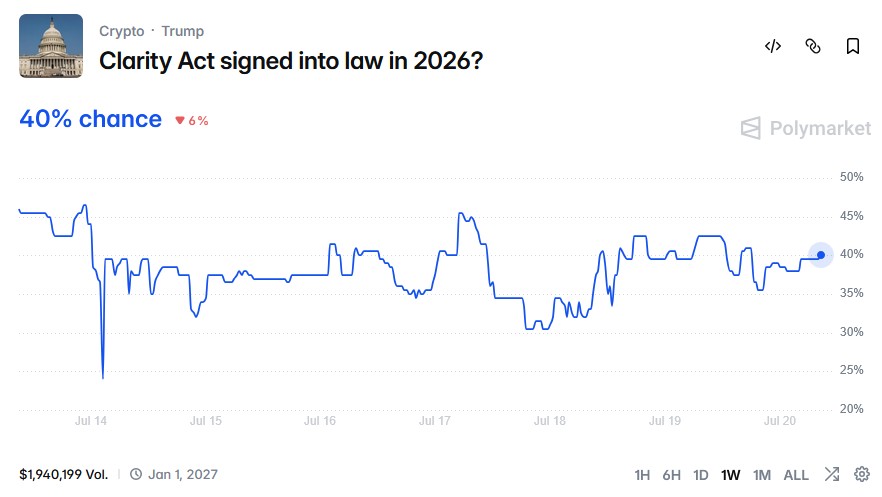
Polymarket suggests the odds of the CLARITY Act passing this year are just 40%, after a raft of Democratic Senators, including Chris Murphy, Jeff Merkley and Chris Van Hollen, spoke out against the bill.
A crucial Senate vote could happen as early as this week, with Senate Majority Leader John Thune stating it will definitely be held before Aug. 10.
Democrat Senator Elizabeth Warren is trying to spoil the vote by highlighting how much money President Trump has extracted from the industry. She demanded Trump voluntarily release his crypto earnings for this year, after his 2025 disclosure, showed he earned more than a billion dollars from crypto last year. The controversy means that Senate Democrats are unlikely to support the bill without a provision banning elected officials promoting or issuing cryptocurrency.
Summer Mersinger, the CEO of the Blockchain Association and a former commissioner at the US Commodity Futures Trading Commission, said: “Ethics is the big elephant in the room.”
“For my members and what we are advocating for on the Hill… look, whatever you decide on ethics, that’s really not our concern. That is politics. That’s Congress. That’s elected officials. But please don’t let it kill all the hard work that we put in the rest of the bill.”
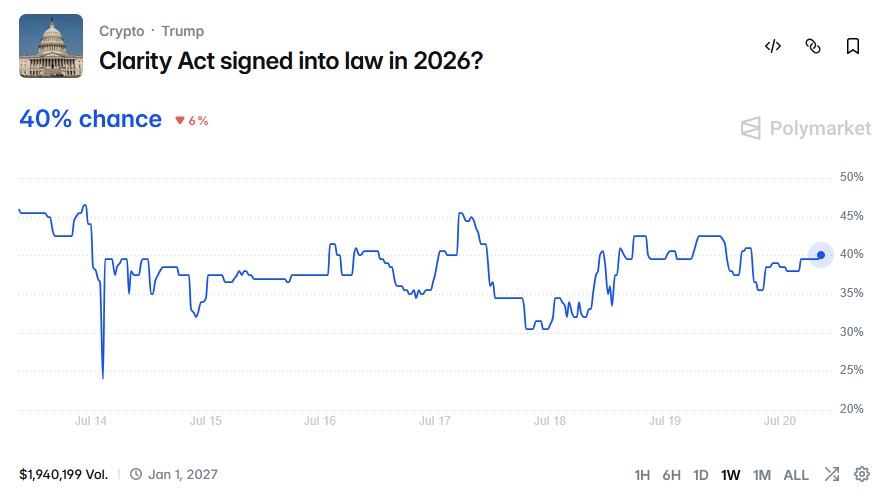
Source: Polymarket
Prediction markets see record Q2 volume, France blocks Polmarket
Crypto markets continued to flounder in the second quarter, with the notable exception of prediction markets.
Spot trading volume across the top 10 centralized exchanges (CEXs) fell from $2.7 trillion in the first quarter to just $1.95 trillion in the second, according to CoinGecko’s latest Crypto Industry Report.
CEX perps volume also declined 10% to $12.7 trillion, while the stablecoin market slipped 1.6% to $305.1 billion. In contrast, prediction markets recorded their strongest quarter on record with $113.8 billion in notional volume.
Polymarket’s World Cup winner market alone has attracted more than $3.3 billion in trading volume, while contracts tied to the 2028 US presidential election rank among the platform’s largest markets, according to Polymarketscan data.
Meanwhile, France’s National Gambling Authority has just ordered internet service providers to block access to Polymarket as it considers prediction markets to be illegal gambling.
Polymarket is blocked in 33 countries… unless you have a VPN of course.
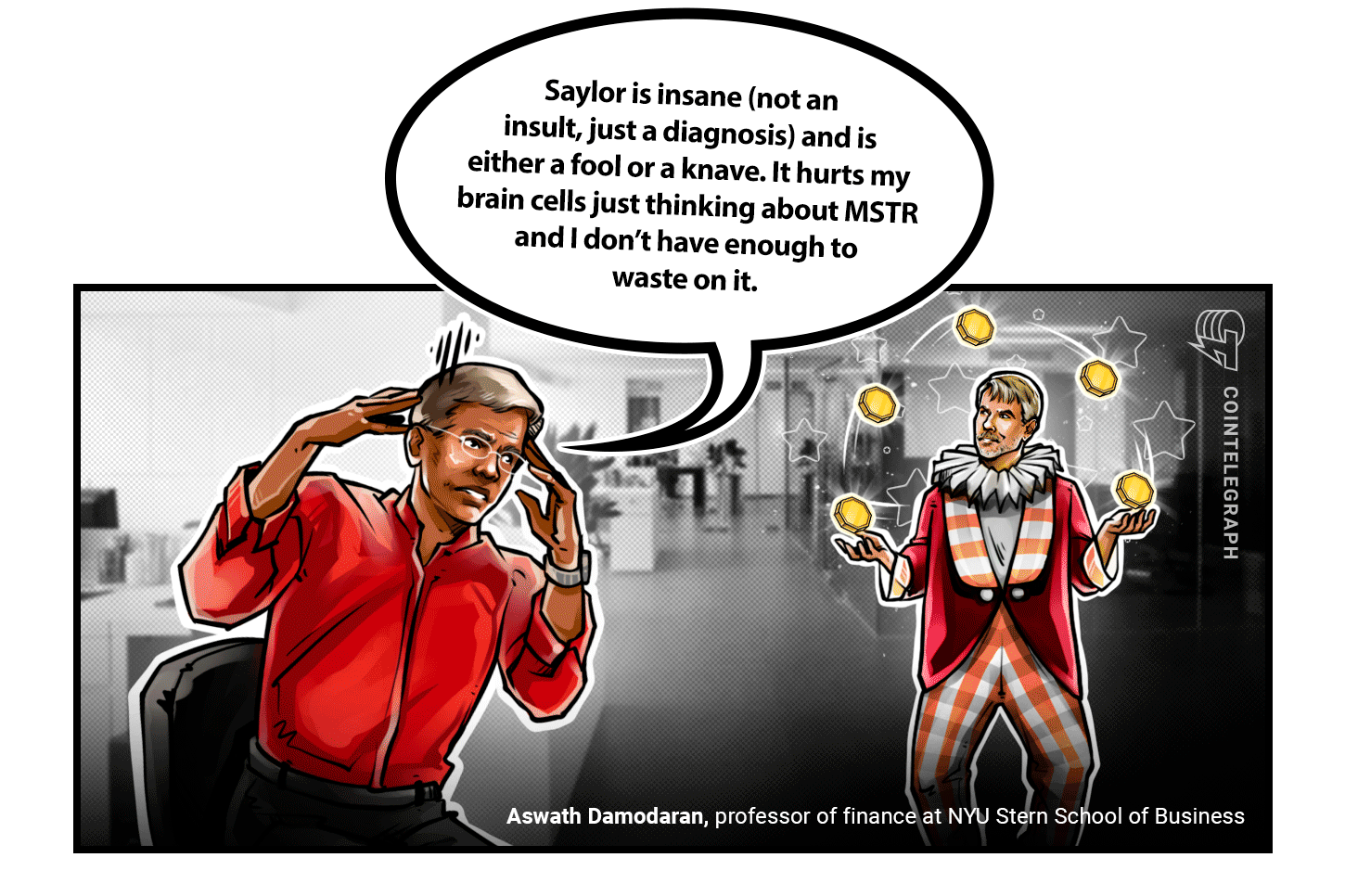
Strategy became a symbol of the dot-com crash: Could history repeat?
Senate agrees SBF should serve his time as FTX distributes another $900M
The US Senate has adopted a resolution opposing executive clemency for former FTX CEO Sam Bankman-Fried.
The measure cannot block a presidential pardon but reflects bipartisan Senate opposition.
Bankman-Fried was sentenced to 25 years in federal prison in March 2024 after being convicted of fraud and conspiracy charges linked to FTX’s collapse in 2022.
Speculation about a possible presidential pardon grew after Bankman-Fried applied for clemency from Trump in June 2026.
On Friday, the FTX Recovery Trust said it would distribute about $900 million to creditors in the fifth round of repayments. The trust has now paid out about $10 billion since the company filed for bankruptcy.
Tokenized stocks hit record $2.3B
The global market capitalization of tokenized stocks rose to a record $2.3 billion on Wednesday, as more investors sought exposure to blockchain-based equity products.
The Ethereum network boasted the largest market share, at 34%, followed by BNB Chain with 30% and the Solana network with 23%, data aggregator Token Terminal shared in a Wednesday X post.
The largest increase came from Kraken exchange’s xStocks, which accounted for $507 million worth of tokenized stocks and Binance’s bStocks, with $334 million. Ondo Finance remained the largest tokenized stock issuer with $955 million in onchain equities, according to Token Terminal data.
The Depository Trust & Clearing Corporation, which is the custodian of $114 trillion in assets, last week launched a trial of tokenized securities in partnership with more than 40 financial firms.
Robinhood Chain also aims to become a leader in tokenized stocks, however its volume to date is largely driven by memecoins.

Is Robinhood Chain’s success bullish or bearish for ETH the asset?
US and UK to align stablecoin rules, but Genius Act rules are TBA
The US Department of the Treasury and HM Treasury in the UK have issued four joint recommendations on digital assets.
The task force recommended that authorities consider a private-sector-led group focused on “testing of cross-border use cases for tokenized assets” and that financial agencies in the US and the Bank of England identify shared approaches on the regulation of tokenized assets.
The statement said that stablecoins “should be fully backed, on at least a one-to-one basis, by high-quality, liquid assets,” aligning with the US law.
Ironically, a few days later it emerged the US regulatory agencies had all missed Saturday’s rulemaking deadline for the GENIUS stablecoin act. Missing the statutory deadline does not invalidate the GENIUS Act, but will result in issuers having less time to comply before the rules go into effect in January.
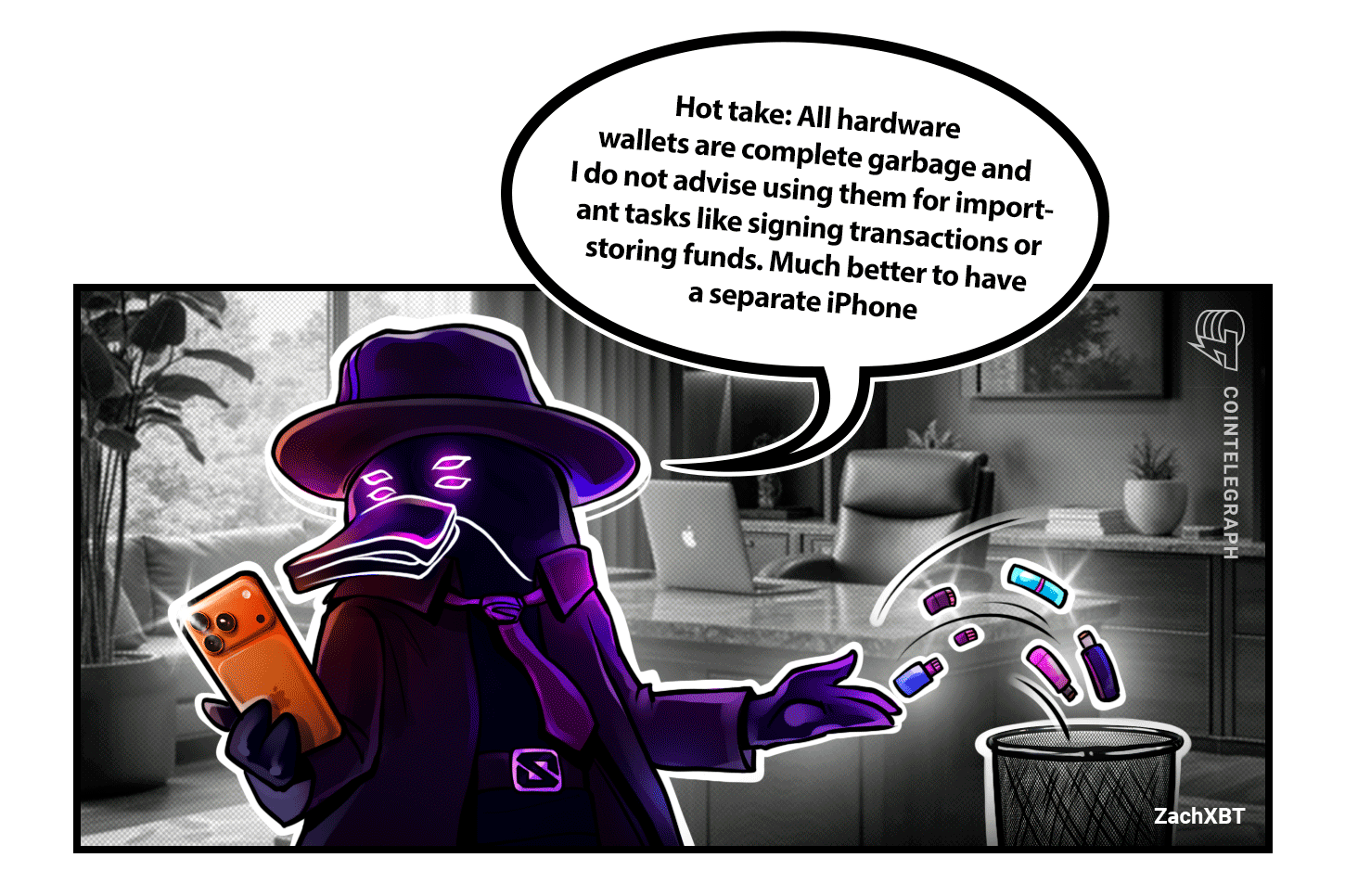
Source: ZachXBT (but DYOR)
Winners and Losers
At the end of the week, Bitcoin (BTC) is at $64,620, Ether (ETH) at $1,868 and XRP (XRP) is at $1.09. The total market cap is at $2.21 trillion, according to CoinMarketCap.
Among the biggest 100 cryptocurrencies, the top three altcoin winners of the week are Pump.fun (PUMP) which gained 36%, Venice Token (VVV) on 10%, and Litecoin (LTC) which is up 7%.
The top three altcoin losers of the week are DeXe (DEXE) after it lost 27%, Lighter (LIT) which was down 17%, and Worldcoin (WRLD) which fell 14%.
Prediction of the Week
Bitcoin gets new $80K August target
Bitcoin (BTC) may hit up to $80,000 by August if it clears nearby resistance, a new prediction says. A macro tide could be the spark to ignite the next move higher.
Crypto trader and analyst Michaël van de Poppe said earlier this week that BTC/USD has successfully defended “crucial” support.
“It’s holding the crucial level at $61,000 and flipping important MAs for support, indicating that there’s more momentum on the horizon,” he wrote, referring to moving average trend lines.
“I’m expecting to see a rally to $68,000 in the next 1-2 weeks, followed by a continuation towards $75,000-80,000 in August.”
Not everyone agreed with the analysis, including nichoxbt who thinks the price is heading back under $60,000.
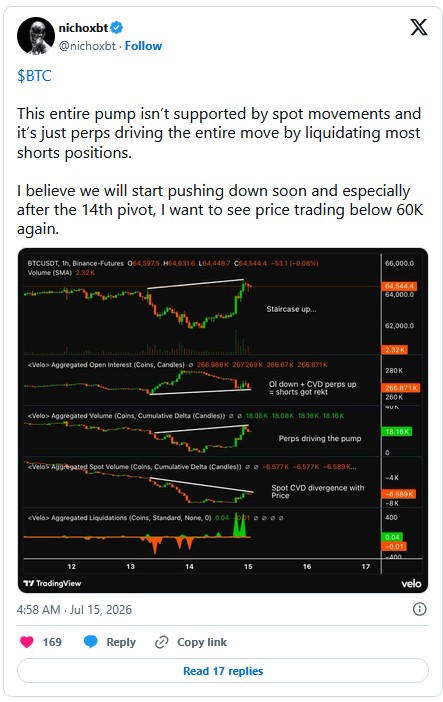
Source: Nichoxbt
Top FUD of the Week
Consensys unknowingly outsourced developer work to North Korean
Blockchain company Consensys accidentally used a software developer linked to North Korea, who had access to some of its systems for a month.
First reported on Friday by Drop Site, Consensys earlier this year took on a software developer via a “reputable third party service provider” who was later discovered to have ties to the Democratic People’s Republic of Korea.
The move caused the Metamask developer to temporarily suspend product releases, but said an investigation has “confirmed there was no misappropriation of assets or data, no malicious code deployed, and no impact to user safety and security.”
Kaspersky identifies malware framework targeting crypto investors
Cybersecurity company Kaspersky said a newly identified malware framework is targeting cryptocurrency investors.
Dubbed “OkoBot,” the malware initiates an infection chain that starts with social engineering tactics such as ClickFix, which tricks users into running malicious commands, or trojanized GitHub apps that deliver a backdoor to infected devices, the cybersecurity company wrote in a Wednesday report.
A separate malware campaign seeks to infiltrate the devices of Web3 developers via fake LinkedIn recruitment opportunities, according to SlowMist.
Attackers contact blockchain devs via LinkedIn, posing as recruiters. They then send fake GitHub repositories to victims, claiming they contain code that needs to be assessed before the interview, the security company said in a Saturday report.
Base’s social bet left it trailing in prediction markets and perps: Pollak
Base creator Jesse Pollak says he is stepping back from leading the Base App after admitting he made a “wrong bet” on social, leaving the chain to fall behind on prediction markets and perpetual futures.
In a post to X on Wednesday, Pollak said he had bet that creator, content and messaging apps would drive adoption, but instead the market “disintegrated completely.”
Pollak said he now realized financial applications are the way forward for the network, with a focus on trading, payments and AI agents.
The Base App will now return to Coinbase, and will be overseen by crypto influencer and trader Jordan Fish, better known on X as “Cobie.”
Top Magazine Stories of the Week

Strategy became a symbol of the dot-com crash: Could history repeat?
MicroStrategy blew up during the dot-com era, before Michael Saylor transformed it into the world’s largest corporate Bitcoin holder. Did he learn his lesson?
Is Robinhood Chain’s success bullish or bearish for ETH the asset?
Surging volumes on Robinhood Chain could be very good for Ethereum, but only if the “ETH is money” crowd turn out to be right.
Gambling on random Pokémon cards: Onchain gagcha hits record high as crypto sinks
Users spent a record $324 million on onchain gacha in June, even as Bitcoin hit a 21-month low. The thrill of scoring a top Pokemon card from a random pack is becoming big business.
Cointelegraph publishes long-form journalism, analysis and narrative reporting produced by Cointelegraph’s in-house editorial team with subject-matter expertise. All articles are edited and reviewed by Cointelegraph editors in line with our editorial standards. Content published in here does not constitute financial, legal or investment advice. Readers should conduct their own research and consult qualified professionals where appropriate. Cointelegraph maintains full editorial independence.
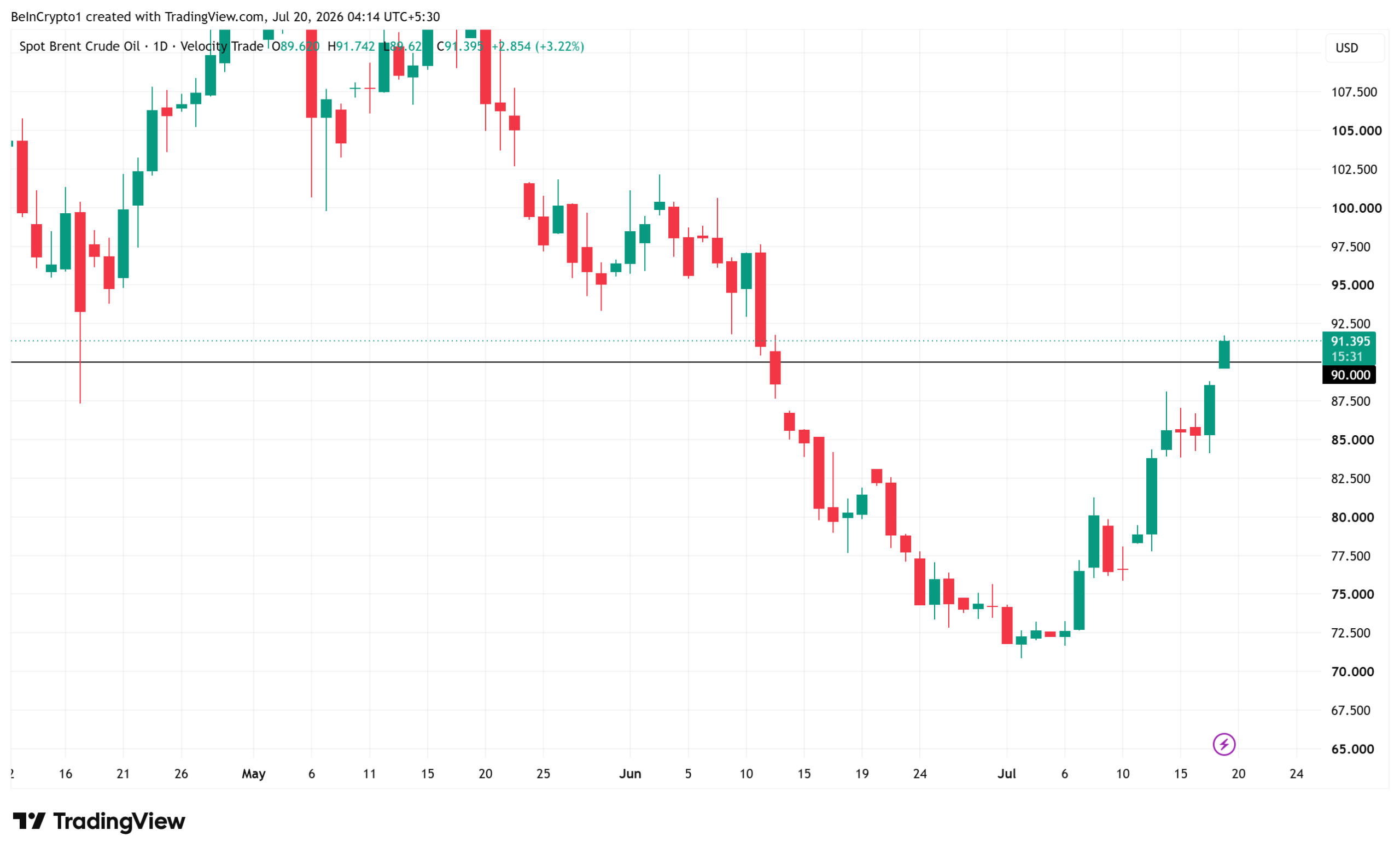
Oil just broke $90. Brent crude climbed more than 3% on Monday to its highest level since mid-June, as the US-Iran war chokes shipping through the Strait of Hormuz.
The US hit Iran for an eighth straight night over the weekend. Washington has blockaded Iranian ports, and Tehran says the strait is closed to unauthorized ships.

Why the Oil Price Is Climbing So Fast
Brent traded near $91.40 early Monday, up 3.2%, according to Trading Economics data. That caps a 14% jump last week. Crude has now rebounded nearly 30% from its early-July low near $71.
The rally has a clear trigger. A June 17 truce between Washington and Tehran had reopened the strait, and oil slid from above $107 in May to $71.
US President Donald Trump ended that truce on July 8. The war premium came right back.
The strait carries about a fifth of the world’s oil, and traffic is now thin. Kuwait said Iranian strikes hit a power and water plant twice in two days, Al Jazeera reported.
The damage is reaching US wallets too. BeInCrypto recently showed how the Hormuz oil shock is undoing June’s drop in inflation.
Why the Fed May Hike Instead of Cut
Bonds fell as oil jumped. The 10-year Treasury yield sits near 4.55%, close to a two-month high.
Here is the problem. US prices fell 0.4% in June, the biggest monthly drop since April 2020, because energy got 5.7% cheaper, BLS data shows. Oil at $90 runs that math in reverse.
The Federal Reserve is already leaning hawkish. New Chair Kevin Warsh held rates steady in June, and nine of his 18 colleagues see higher rates this year. At a central-bank forum in Portugal on July 1, Warsh kept it short.
“Prices are too high,” Kevin Warsh stated.
Traders noticed. Hike odds for the July 28 to 29 meeting doubled to 36% from 18% in early July. As of this writing, it was 14%, per CME FedWatch data, still elevated.

Silver already slumped as the oil shock lifted Fed hike bets. Economists also expect an ECB rate hike in September.
What This Means for Bitcoin
None of this helps crypto. High rates hurt risk assets, and Bitcoin (BTC) is struggling to hold its recovery, with sellers fading every bounce, BeInCrypto analysis shows.
The war itself has not helped either. A BeInCrypto study of the first phase, from February 28 to June 17, found stocks beat BTC as the strongest war hedge.
Now all eyes turn to July 28 and 29. If oil holds above $90, a Fed hike could move from tail risk to base case.
The post Oil Price Tops $90 as Iran War Escalates: What It Means for Crypto appeared first on BeInCrypto.
Crypto World
Saylor’s Strategy Strengthens Liquidity Position but Long-Term Bitcoin Plan Still Faces Scrutiny

American business intelligence firm Strategy has bolstered its financial position by addressing liquidity concerns raised earlier this year. In a July 14 follow-up, the on-chain analytics firm CryptoQuant said the company’s new capital framework has eased short-term financial pressure. The firm, however, noted that questions remain about Strategy’s long-term Bitcoin strategy.
The update follows CryptoQuant’s June 23 assessment, which warned that Strategy’s cash reserves were shrinking even as Bitcoin purchases continued. At the time, analysts estimated the company had enough liquidity to cover preferred dividend obligations for only about 14 months without additional funding.
Strategy Rolls Out New Capital Framework
To address those concerns, Strategy introduced its Digital Credit Capital Framework on June 29 to strengthen its financial flexibility. The plan established a board-approved U.S. dollar reserve policy that initially targeted about $2.55 billion before later raising the goal to roughly $3 billion.
The framework also raised the STRC dividend rate to 12% and approved up to $1 billion each for preferred securities issuance and MSTR share repurchases. It also introduced a Bitcoin Monetization Program, allowing the company to sell up to $1.25 billion in Bitcoin to support reserves and funding needs.
The on-chain analytics firm said the measures are closely aligned with recommendations made in its earlier report. Strategy also paused additional Bitcoin purchases and sold 3,588 BTC worth about $216 million between June 29 and July 5. It further raised $466.7 million through its MSTR at-the-market share offering.
As a result, cash reserves rose from roughly $1.44 billion to about $3 billion, extending estimated dividend coverage to around 29 months. During the same period, Strategy maintained its Bitcoin holdings at approximately 843,775 BTC by suspending further accumulation.
Questions Over Future Bitcoin Management Remain
According to CryptoQuant, the market has responded positively to the stronger liquidity position, although some uncertainty remains. STRC recovered from a June low near $75 to around $88 but continued trading below its stated value of $100.
Even so, analysts said the framework does not explain when Bitcoin purchases could resume after the recent pause. They also said the Bitcoin Monetization Program prioritizes dividends, reserves, and share repurchases without defining a clear Bitcoin trading strategy.
The post Saylor’s Strategy Strengthens Liquidity Position but Long-Term Bitcoin Plan Still Faces Scrutiny appeared first on CryptoPotato.

Kraken Financial’s Federal Reserve master account is still not live more than four months after approval, bank CEO Brian Mathena told Wyoming lawmakers last week.
In March, the Wyoming-chartered bank became the first crypto firm ever to win one. Winning was hard. Switching it on is proving even harder.
Why the Kraken Fed Master Account Is Not Live Yet
A master account is a bank’s own account at the Fed. It lets a firm move US dollars without a middleman bank. That is why crypto firms want one so badly.
The Federal Reserve Bank of Kansas City approved Kraken’s account on March 4. That made Kraken the first crypto firm plugged directly into the Fed. The bank had waited since October 2020.
Yet the account sits idle. Mathena told Wyoming’s blockchain select committee that the bank is still switching it on.
“Obviously with the uncertainty around the account, we’re now playing a bit of catch up, trying to get the account operationalized and to expand our deposit product and be able to more fully leverage the Fed master account.”
Follow us on X to get the latest news as it happens
Kraken never promised a fast launch. Its March announcement described a phased rollout, starting with big institutional clients. Meanwhile, customer wires still run through a middleman. Kraken’s own support pages list Dart Bank as its US dollar wire provider.
The account itself is unusual. The Kansas City Fed approved it for one year only, with undisclosed limits “tailored” to Kraken’s risks. Even Congress wants answers. Representative Maxine Waters pressed Kansas City Fed President Jeff Schmid in March.
Her letter notes the term “limited purpose account” appears nowhere in law or Fed guidelines. She also asks whether Kraken can use the Fed’s ACH network or earn interest on its balances.
The prize is clear, however. A live account would let Kraken settle dollars directly on Fedwire, the Fed’s big-money transfer system. The timing matters too, as Kraken advances its confidential IPO filing.
Tier 3 Fed Access Remains Nearly Impossible
Kraken applied as a Tier 3 firm. That is the Fed’s bucket for state-chartered banks with no federal insurance and no federal watchdog. These applicants almost never win.
Fed Vice Chair for Supervision Michelle Bowman put it bluntly at an American Bankers Association event in March.
“That third level… was a little bit like, I like to say ‘unobtainium,’ right, you just can’t qualify, it’s not, it doesn’t work.”
Subscribe to our YouTube channel to watch leaders and journalists provide expert insights
The numbers back her up. Just three of 53 Tier 3 or unclassified applicants have ever won approval, per fintech analyst Jason Mikula.
The other two are a Puerto Rico cooperative and banknote specialist Numisma Bank. Neither touches crypto.
Custodia Bank shows the dark side of those odds. The fellow Wyoming bank applied in October 2020, the same month as Kraken. The Fed said no in January 2023. On July 10, Custodia asked the Supreme Court to step in, calling the denial a “death sentence.”
More delays may follow. Banking trade groups warned that Kraken’s approval came before the Fed finished writing its rules. The Fed then asked Reserve Banks to pause all Tier 3 decisions.
Instead, it is finalizing a payment account proposal for non-banks. Comments close on July 27, and Governor Christopher Waller expects final rules only by year-end.
For now, Kraken holds a first-of-its-kind account it cannot fully use. Whether the one-year pilot goes live before the new rules land remains an open question.
The answer may shape how the Fed treats Ripple’s pending application and everyone else waiting in line.
The post Kraken Won Historic Fed Approval. So Why Isn’t Its Master Account Live Yet? appeared first on BeInCrypto.


MicroStrategy CEO Phong Le says Wall Street’s largest banks are locked in a tight race for second place on the company’s Bitcoin Banking Adoption Index.
Goldman Sachs, JPMorgan, Morgan Stanley, and Citi each score within three points of one another. Fidelity, however, still holds a commanding lead.
Fidelity’s Lead Sets the Bitcoin Banking Adoption Index Bar
The Bitcoin Banking Adoption Index grades 25 major banks on Bitcoin (BTC) trading, custody, and product depth.
Strategy, formerly known as MicroStrategy, published the initial 32% score, drawing on public data through July 10.
Fidelity topped the list at 71%, built on Fidelity Digital Assets, the custody arm it launched back in 2018.
BNY follows at 46%, while Goldman Sachs Group Inc. trails narrowly at 45%. Historically, few banks matched Fidelity’s early crypto custody bet.
Bitcoin traded near $64,539 on Sunday, up about 1% over 24 hours. The index, therefore, measures structural adoption rather than short-term price swings.
Goldman, JPMorgan, and Citi Battle for Second
JPMorgan Chase, Morgan Stanley, and Citigroup each land at 43%, separated from Goldman by just two points. Record bank earnings this quarter show JPMorgan and Goldman trading desks already profiting from crypto-adjacent activity.
Several rivals are also chasing tokenization efforts underway across the sector, where more than 15 banks now compete to move assets on-chain.
That shift, in contrast, sidesteps Bitcoin entirely and could reshape future index gains.
Vanguard illustrates the gap further. The asset manager only recently began planning its own crypto strategy, years after Fidelity built out its custody business. Meanwhile, smaller regional lenders have barely started.
Major-bank Bitcoin adoption is accelerating, but still early: 32% overall as measured by the index.
Michael Saylor, MircroStrategy’s executive chairman, posted that assessment on X alongside the index’s July 13 debut.
New Launches Could Reshuffle the Bitcoin Banking Adoption Index
Goldman Sachs, JPMorgan, Morgan Stanley, and Citi are each developing several crypto initiatives slated for release within the current year. That could include new exchange-traded products, custody expansions, or tokenization tools already in development.
Le expects these launches to bring significantly more clarity to the sector by year-end.
MicroStrategy, holder of the largest corporate Bitcoin treasury, has a stake in that outcome. Saylor’s own case for corporate Bitcoin adoption echoes the same expectation of accelerating bank participation.
Whether Goldman or JPMorgan ultimately claims outright second place may depend on which products actually ship before December arrives.
The post MicroStrategy CEO: Wall Street’s Biggest Banks are Locked in a Tight Bitcoin Race appeared first on BeInCrypto.
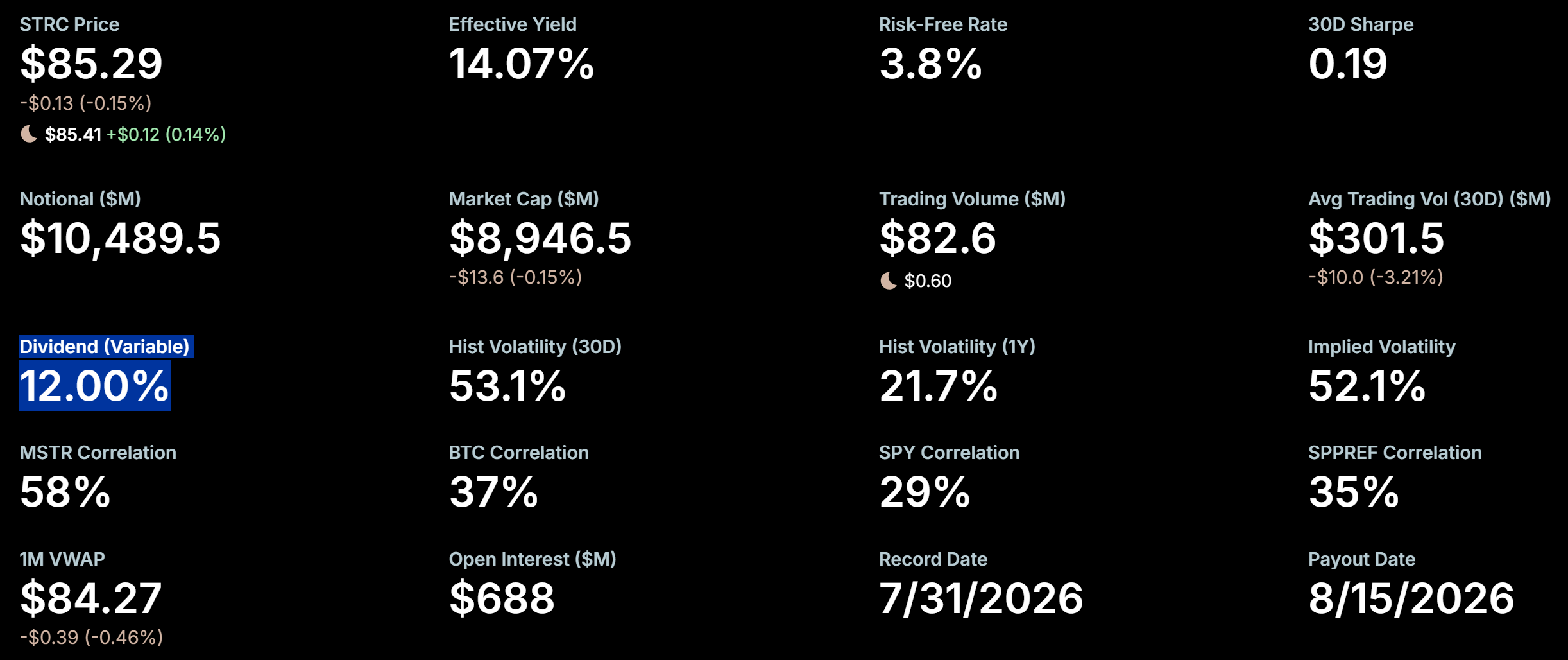
Khing Oei, a former Goldman Sachs credit investor, says the market has Strategy’s STRC preferred stock priced wrong. His math says it is worth about $96. It trades near $85.
Oei spent 25 years valuing risky debt at Goldman Sachs and hedge funds. He shared his STRC model in a recent lengthy discussion.
Why the 14% Yield on MicroStrategy’s STRC Misleads
STRC pays a 12% dividend. Divide that by today’s discounted price and you get a yield above 14%. That number is everywhere. Oei says it is wrong.

Here is the problem. That math assumes STRC pays out forever, no matter what. STRC promises no such thing. It never matures and never has to repay its $100 face value, known as par. It pays only while MicroStrategy can afford it.
The shares crashed 25% below par during June’s Bitcoin selloff. That is what made the yield look so juicy.
“That experience leaves you with a simple instinct: never value a stream by dividing this year’s coupon by today’s price,” Oei wrote in his analysis.
Follow us on X to get the latest news as it happens
So he values STRC like a bond. Count the cash it will actually pay out, and nothing more. Strategy’s dashboard showed 843,775 Bitcoin (BTC) worth $54 billion, plus $3 billion in cash. Debt and senior preferred shares claim $8 billion of that first. STRC’s $10.5 billion comes next.
29 Years of Dividends Even if Bitcoin Never Rises
Strip out the senior claims and $50.2 billion backs the preferred shares. The dividend bill runs $1.73 billion a year.
That produces two striking numbers. Bitcoin only needs to grow 3.4% a year and the dividends never stop. If Bitcoin stays flat forever, the money still lasts 29 years.
Value those 29 years of payments at a 12% discount rate and STRC is worth $96.30. BeInCrypto checked the math. It holds.
The market pays $85.29. That price only buys 17 years of dividends. Oei thinks that is too gloomy, since STRF, the safer Strategy share above STRC, yields just 10.4%.

That gap between $85 and $96 is the 13% mispricing. It carries a sharp implication. If Oei is right, buyers collect the 14% yield while the price climbs toward fair value. If the market is right, the discount is a warning that the dividend may one day stop.
Some buyers seem to agree with Oei. A BitcoinTreasuries survey found over half of holders bought the dip below par.
The Road Back to $100
Bitcoin’s price does most of the work. Oei’s table puts STRC back at $100 if Bitcoin reaches $80,000. At $40,000, it drops to $58.
MicroStrategy holds levers too. STRC listed in July 2025 at $90 with a 9% dividend. The board has raised the rate again and again, now 12%, to pull the price toward par.
Cash helps as well. Each $1 billion raised and held in reserve adds about four points, Oei estimates. A buyback adds five, since Strategy would pay $85 for something he values at $96.
The mispricing itself becomes the company’s cheapest tool. The growing cash pile fits what one research desk called a Bitcoin winter pivot.
One caveat applies. Oei runs Treasury, a European Bitcoin treasury firm, so he benefits when these shares are taken seriously. Skeptics also remain. Economist Peter Schiff just predicted a crash toward $20,000, and others ask who ultimately pays if Strategy’s $64 billion bet unwinds.
The question is now a simple one. Does a company with $57 billion in assets deserve this much doubt over a $1.73 billion dividend bill? Bitcoin’s next move will go a long way toward answering it.
The post Ex-Goldman Credit Veteran Says Markets May Be Mispricing MicroStrategy’s STRC by 13% appeared first on BeInCrypto.
Coinbase CEO Brian Armstrong says Bitcoin did not live up to Satoshi Nakamoto’s vision of everyday digital money. It became digital gold instead. Stablecoins took over the payments job, he argues.
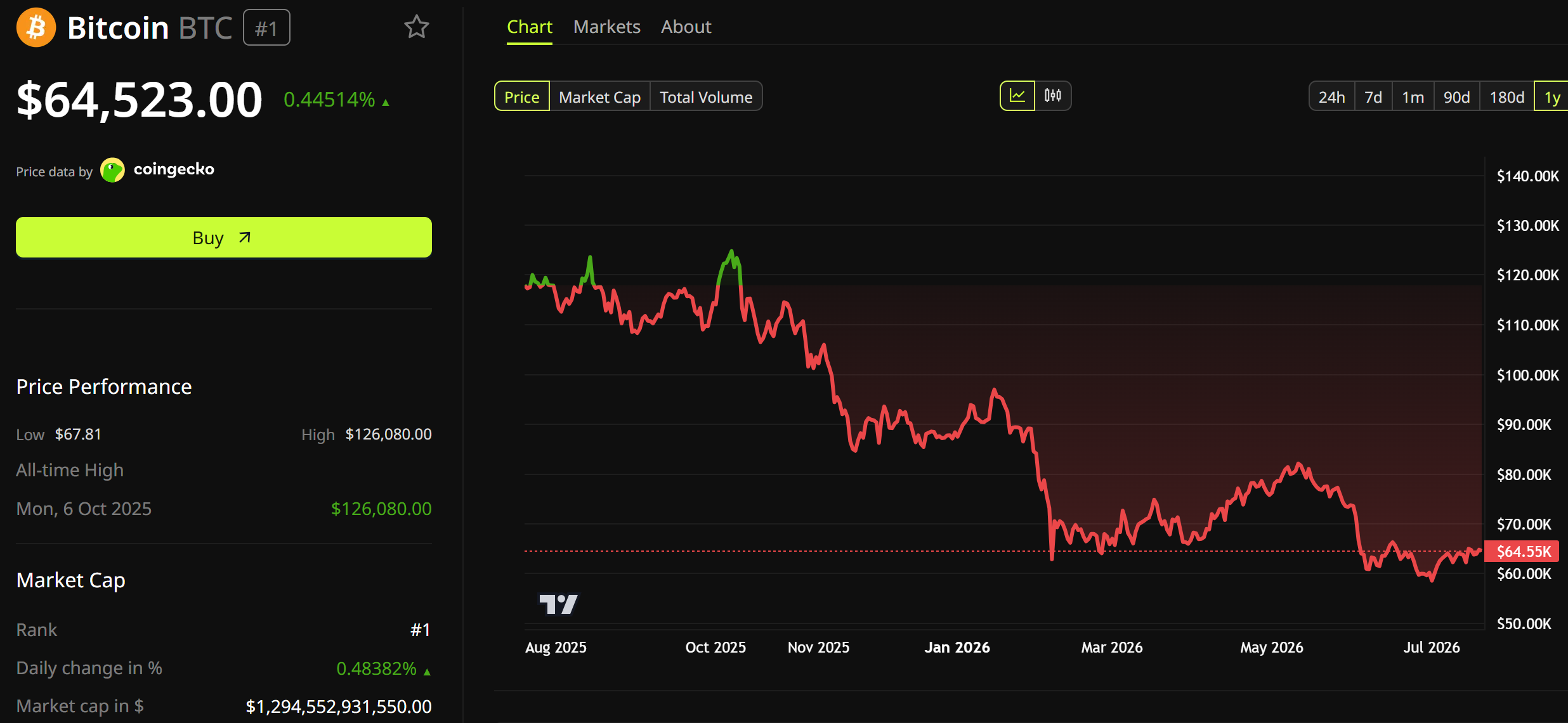
Bitcoin (BTC) sits near $64,523, down about 45% from its October 2025 peak of $126,080. Stablecoins are moving the other way, with supply near record highs.

Armstrong Rethinks Bitcoin’s Original Role
Armstrong made the call in an interview with Zerodha co-founder Nikhil Kamath on the People by WTF podcast. Kamath is a self-declared crypto skeptic. He asked the Coinbase boss a simple question. Does Bitcoin still do what it was built for?
“You’re right, I think it’s fair to say at this point that Bitcoin has succeeded as a store of value, and I don’t think it has become a medium of exchange,” Armstrong responded.
Follow us on X to get the latest news as it happens
Why Bitcoin Drifted From Satoshi’s Vision
Nakamoto’s 2008 whitepaper promised cash that moves online without banks. Bitcoin’s first block even carried a 2009 headline about UK bank bailouts. That was the mission.
Seventeen years on, Armstrong says the payments dream never landed. Fixes came and went.
“There’s people who have tried to make that happen with the Lightning Network, was an optimisation layer on top of Bitcoin, but it never really took off.”
The bigger problem sits in Bitcoin’s own design. Supply is capped, so holders hoard it like gold.
Armstrong said “people think it’s going to be worth more in the future, so they don’t really want to spend it right now.” Volatility makes it worse, he added.
Stablecoins Take Over the Payments Role
Stablecoins filled the gap. These dollar-backed tokens now do the boring job of money, even as banks defend their old rails.
“So we’ve actually seen massive growth of stablecoins running on blockchains. Fiat-backed stablecoins as the medium of exchange and Bitcoin has remained the store value as digital gold.”
The numbers agree. DefiLlama data shows stablecoin supply near $310 billion. Tether’s USDT holds $184 billion, and Circle’s USDC adds $73 billion.

Armstrong also credits the GENIUS Act, signed in July 2025, for making the tokens legal and trusted in the US. Much of that activity now runs on Base and Solana.
Still, Armstrong sees no failure here. In his view, Bitcoin simply found a different job.
“I think the Bitcoin chain is okay with that. They’re not intending it to be used for high volume payments. They’re digital gold.”
The post Brian Armstrong Admits Bitcoin Didn’t Deliver Satoshi’s Vision, Something Else Did appeared first on BeInCrypto.


Quantum hackers could one day crack old Bitcoin (BTC) wallets and forge their signatures. A new proof from quantum security startup Project Eleven gives real owners a way to take their coins back, using nothing but a seed phrase.
Not everyone can use it, though. Binance co-founder Changpeng Zhao (CZ) said in June the community could freeze Satoshi Nakamoto’s coins after a quantum breakthrough. Critics called it confiscation.
Why a Bitcoin Quantum Freeze Just Got Less Scary
The freeze idea is already on paper. BIP-361, a proposal co-authored by Casa co-founder Jameson Lopp, would switch off Bitcoin’s old signature system over several years. Coins that never move would freeze forever.
Pressure grew after Washington’s quantum push put the threat on the map. Still, one objection kept coming back. A freeze takes coins away with no path back.
Project Eleven’s recent announcement attacks that weak spot. Its proof works like a receipt. It shows you own the master key behind an address without ever revealing it.
Here is the trick. A quantum computer may crack the private key of an exposed address. However, it cannot climb up to the master key, because the math there only runs one way.
Only the true owner holds that master key. So only the true owner can produce the proof, even after signatures break.
Speed makes it practical. Academics Or Sattath and Shai Wyborski floated the concept in 2023, calling it signature lifting. Lightning Labs CTO Olaoluwa Osuntokun built the first prototype. The new version runs 16 times faster, at 243 milliseconds on a laptop.
“Quantum computers can extract a private key from a public key. They cannot reverse the hashing that produced it. A wallet’s own key derivation may still provide a final, post-quantum proof of ownership,” Project Eleven stated.
Follow us on X to get the latest news as it happens
Why the Tool Cannot Save Satoshi’s Coins
The catch sits in the calendar. The proof needs BIP-32, the seed phrase system modern wallets adopted from 2012. Older wallets created every key on its own, with no master key at all.
Satoshi mined in 2009 and 2010 and left before seed phrases existed. Researcher Sergio Demian Lerner’s 2013 analysis ties roughly 1.1 million BTC to Satoshi across some 22,000 addresses.
Worse, those coins expose their public keys on-chain. That makes them the easiest quantum targets and the hardest coins to rescue.
Therefore, CZ’s idea of freezing Satoshi’s coins would still lock them away for good. BIP-361 would do the same by design.
The tool has limits too. It is unaudited, covers three older address types, and no blockchain accepts it yet.
Meanwhile, the clock ticks. Google’s quantum research cut the hardware needed for such attacks by 20 times this year. US agencies also face post-quantum cryptography deadlines by 2031.
One question now hangs over Bitcoin governance. If a freeze ever comes, the fight will not be over whether coins get frozen. It will be over which coins ever come back.
The post Bitcoin Has a New Defense Against Quantum Hackers, But It Can’t Save Everyone appeared first on BeInCrypto.
After a violent eight-week streak with nothing but substantial withdrawals, the spot Bitcoin ETFs changed their course in the middle of July and now extended their recovery period with another green performance.
However, the funds tracking the largest altcoin managed to beat the market leader in terms of weekly net inflows.
BTC ETF Green Wave Endures
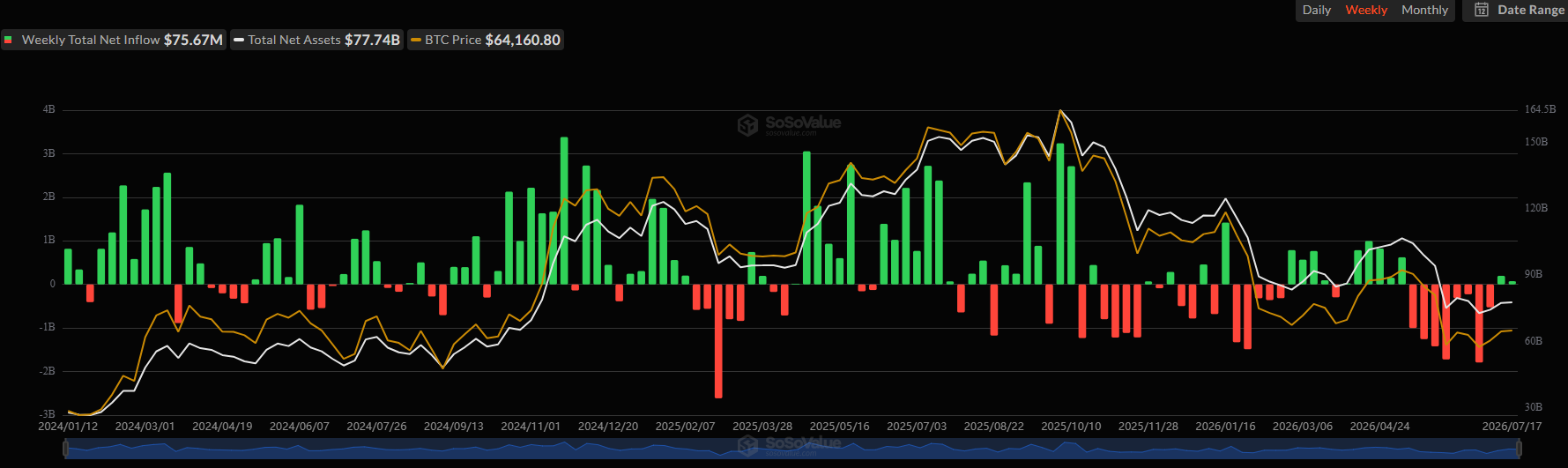
Perhaps due to the rising tension in the Middle East over the previous weekend, Monday began with a massive $424.66 million net outflow from the spot BTC ETFs. This was the single-largest withdrawal since June 26. Thus, the good news from the previous week started to look like a fluke that cannot be repeated.
However, investors’ behavior changed in the following four days, and fresh capital started to flow in. Data from SoSoValue shows that $181 million entered the funds on Tuesday, another $107.8 million on Wednesday, $79.15 million on Thursday, and $132.30 million on Friday. As such, the weekend ended in the green, with net inflows of $75.67 million.
Nevertheless, these numbers are nowhere near the mass exodus experienced from the middle of May and the beginning of July. In five out of these eight weeks, investors pulled out $1 billion or more, with the week that ended on June 26 registering the second-highest net outflows of $1.79 billion. Overall, the funds lost more than $8 billion in approximately two months.
The cumulative total net inflows dumped from $59.34 billion to $51.08 billion before they recovered some ground to $51.35 billion as of July 17.
ETH Funds Do Even Better
While the financial vehicles tracking BTC attracted just over $75 million last week, those following the largest altcoin did even better. The spot Ethereum ETFs gained $105.44 million, building on the previous week’s $84.42 million.
Monday was also in the red, but in a more modest manner. Investors took out $15.41 million. Thursday saw $28.04 million in net outflows, but the $58.34 million on Tuesday, $53.83 million on Wednesday, and $36.73 million on Friday offset all the losses.
Similar to the BTC ETFs, the Ethereum counterparts were on an eight-week red streak, in which they lost well over $1.1 billion in cumulative total net inflows, going from $12.09 billion to $10.89 billion. However, the figure has risen to $11.08 billion after the two consecutive weeks in the green in mid-July.
The post 2 in a Row: Bitcoin ETFs Mark Another Green Week, but Ethereum Wins appeared first on CryptoPotato.
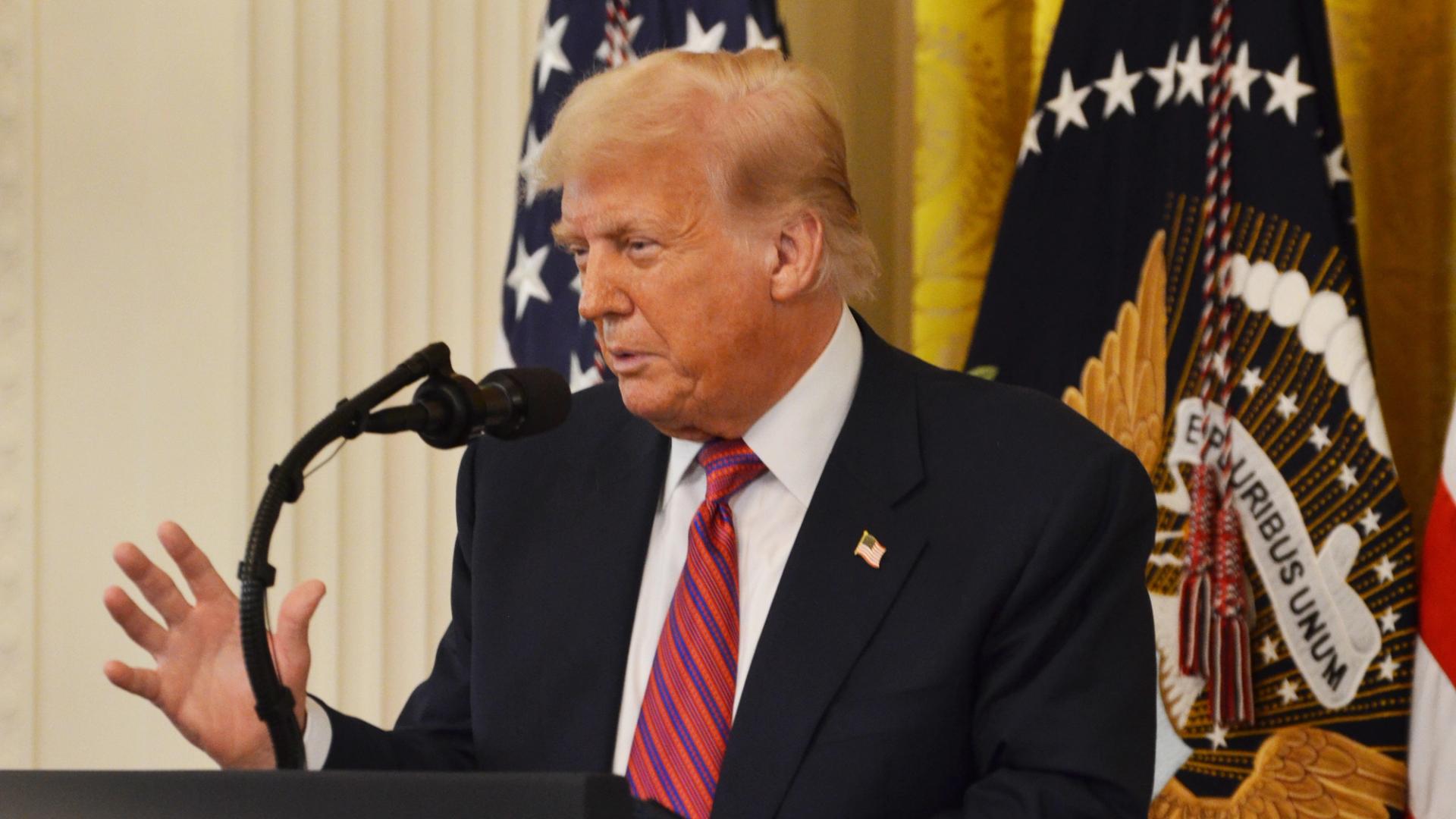
A year on, the rules aren’t quite ready for implementation, but we have a much clearer idea as to how the regulators are thinking about stablecoins and where they’re likely to land on those rules.
In an emailed statement, Crypto Council for Innovation CEO Ji Hun Kim called the passage of the bill “a landmark moment.”
“A year in, agencies, institutions, and innovators are building on a clearer foundation, and stablecoins are moving rapidly toward mainstream adoption,” he said.
The various regulators have proposed rules out for comment on the different aspects of stablecoin governance and regulation, including a proposal that would require stablecoin issuers to conduct similar know-your-customer checks to more traditional financial firms. The FDIC published 144 questions a few months ago about how it would oversee stablecoin issuers, looking at concerns like custody, capital and liquidity standards. The OCC, for its part, put out its own proposal in February laying out how it was interpreting the law.
There’s still a few months left before these rules start being finalized. And in the meantime, the industry is still working on getting the Digital Asset Market Clarity Act passed.
The text of the combined Clarity Act drafts is not yet public, at least as of Friday night. While industry sources expected the bill to be released last week, the timeline has constantly evolved. On Thursday, Senators Cynthia Lummis and Bernie Moreno were supposed to brief Trump on the bill. There was no public readout of that meeting available after, but both lawmakers tweeted about Trump’s remarks on the election later Thursday.

Will US Get CLARITY This Week? Bitcoin’s New $80K Target: Hodler’s Digest

Trump refuses to leave World Cup trophy presentation as FIFA’s Infantino steps in

Today’s NYT Wordle Hints, Answer and Help for July 20 #1857


-
 NewsBeat3 days ago
London Mayor Sadiq Khan handed a peerage by Keir Starmer alongside 15 other Labour figures… just days before the PM leaves No10
-

 Fashion2 days ago
Weekend Open Thread – Corporette.com
-

 Politics2 days ago
The House | The City of London can help the new chancellor deliver growth in every postcode
-

 Politics5 days ago
Young campaigners urge incoming PM to act on outdoor junk food ads
-

 Crypto World4 days ago
CFTC blocks Kalshi from unwinding Michigan trades after court order
-

 Business4 days ago
Nvidia Stock Slips After Big Tuesday Rally as Huang Confirms Vera Rubin Chip Is Now in Production Today
-
 Crypto World3 days ago
Two July Windows Left: The CLARITY Act’s Senate Fight and What Failure Means
-

 Crypto World2 days ago
Ripple Payments Joins MiCA With 14 Firms, Does It Mean Anything For XRP?
-

 Politics11 hours ago
Democrats look to World Cup watch parties to register thousands of voters
-
 Entertainment4 days ago
Disney’s Most Ambitious Failed Star Wars Attraction Is Coming to SDCC
-

 Crypto World2 days ago
Ripple wins EU-wide access as ESMA adds it to MiCA register
-

 Business4 days ago
Palantir Shares Rise After Expanded Nvidia Partnership and Fresh Analyst Upgrades Ahead of Earnings Day
-

 Crypto World3 days ago
Injective Submits SEC Transfer-Agent Registration to Onchain Ownership Records
-

 Tech6 days ago
Get Your ESP32 Sunny Side Up With This Solar Dev Board
-

 News Videos5 days ago
XRP BOMBSHELL… XRP OMBOARDED FOR TRANSACTIONS!!!
-

 NewsBeat3 days ago
Registration is now open for March for Men with Kev 2026
-

 Tech5 days ago
Dark Secrets Emerge When Jailbreaking LLMs
-
 Sports4 days ago
New Cornerback Enters Vikings Trade Rumor Mill
-

 News Videos3 days ago
Money | Class 12 Economics | CBSE Board Exam 2026-27
-

 Business3 days ago
Banco Bilbao Vizcaya Argentaria, S.A. (BBVA) Discusses Global Macro Environment and Economic Outlook for Core Markets Transcript
You must be logged in to post a comment Login