

Business
Nasdaq Drops Again as Chip Slump Deepens


This is an edition of the Markets P.M. newsletter, a recap of the day’s most important markets moves, delivered after the closing bell. If you’re not subscribed, sign up here.
What Happened in Markets Today
The chip-stock selloff deepened, dragging the tech-heavy Nasdaq down 1.4%. The S&P 500 fell 1%. Investor anxieties over the sustainability of huge AI capital expenditures were deepened by China’s Moonshot AI. The Beijing startup unveiled Kimi K3, a 2.8-trillion-parameter model that claims to outperform U.S. systems, triggering fears of escalating global competition and sending shares of Intel, Applied Materials, Corning, and AMD lower.
Copyright ©2026 Dow Jones & Company, Inc. All Rights Reserved. 87990cbe856818d5eddac44c7b1cdeb8

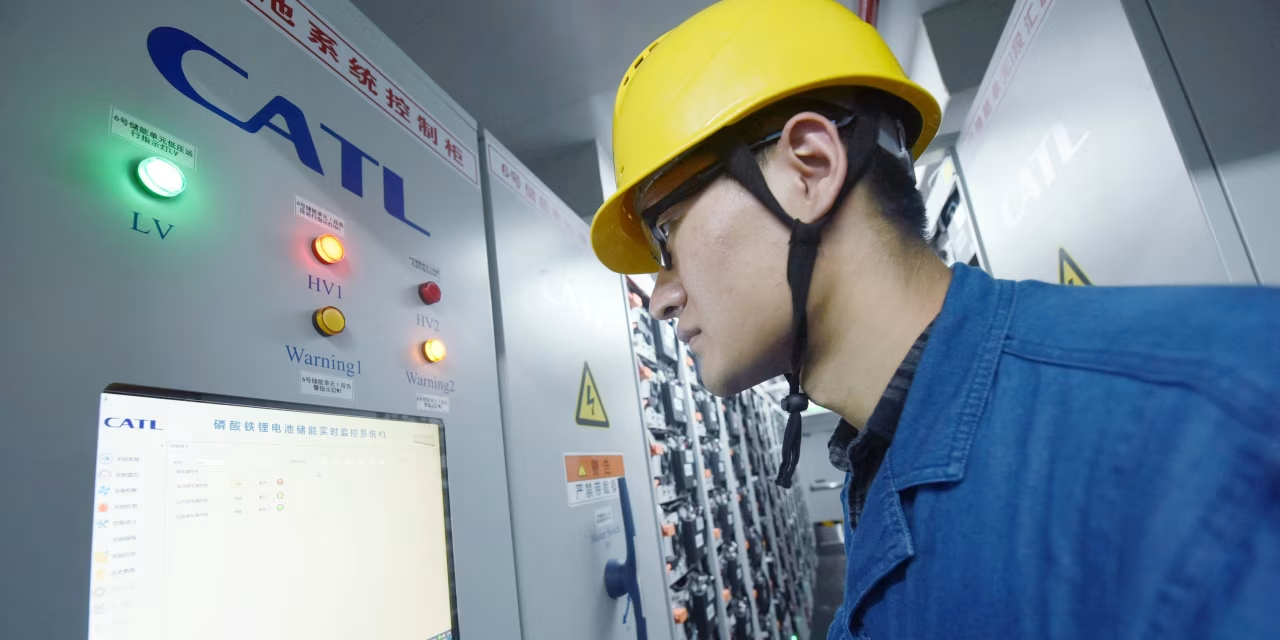
Imagine a group of battery banks that together have enough power to keep all of Texas and California going on a peak summer day. That is what China has built in the space of just five years—and it is just getting started.
With the artificial-intelligence boom straining power grids, Beijing is betting on large-scale battery storage banks the size of shipping containers to help manage the load. The technology is particularly valuable in China because the country is heavily investing in solar and wind power, which can’t produce 24-hour-a-day power. Battery storage soaks up excess electricity during sunny and windy days and releases the juice later when it is needed.
Copyright ©2026 Dow Jones & Company, Inc. All Rights Reserved. 87990cbe856818d5eddac44c7b1cdeb8

Boeing on track for 2028 Air Force One delivery, costs rise

National average gasoline prices are just under $4 a gallon and could hit that mark in the next day or so, according to Patrick De Haan, the head of petroleum analysis at GasBuddy.
GasBuddy has the national average price at $3.98 a gallon, up 16 cents a gallon from a week ago and 86 cents a gallon from a year ago.
AAA is tracking a national average price of $3.99 a gallon.

cagkansayin/iStock via Getty Images

During the second quarter of 2026, the Praetorian Capital Fund LLC (the “Fund”) depreciated by 4.39% net of fees. Given the Fund’s concentrated portfolio structure and focus on asymmetric opportunities, I anticipate that the Fund will be rather volatile from quarter to quarter. During the second quarter, our core portfolio positions depreciated moderately, while the Event-Driven book also experienced declines.
*Net return varies from gross return as it accounts for management fees and incentive allocations. Please see the additional disclaimers on the final page of this document.
Markets Are Complex
Six months ago, if you had asked me what would happen during a Mid-East war, I’d have guessed that gold and US Treasuries would rally on a global flight to safety. Nope, they declined—markets are complex. I would have guessed that if we drew more than a billion barrels of global commercial inventories, oil would scream out of control. Nope, it’s effectively unchanged since the conflict began—markets are complex. If you asked me how our core book would do, I’d have told you that we’d likely outperform given our heavy weighting towards volatility and inflation beneficiaries. Nope, we’ve given up ground—markets are complex.
I’ve always been of the view that in the short run, markets can trade at literally any price level. Throughout my career, I have repeatedly been humbled by securities that have exceeded even my wildest expectations of where they could trade. While the overall decline in our portfolio was quite moderate by this Fund’s standards, I remain humbled, as I really would have expected our book to have performed better in a Mid-East war that saw increased volatility and inflation readings. Markets are complex.
It’s worth taking a step back and trying to frame what happened. As you know, I’m firmly of the view that we’re in a Feudalist economic system . Rather than rehash my view of Feudalism again, just think of it this way: the oligarchs of foreign countries underpay their workers to produce products for our citizens to consume. Their resulting dollar earnings are then recycled into US Dollar risk assets, leading our currency and assets to be overvalued, our businesses unable to compete globally outside of a handful of sectors like technology, and our economy effectively hollowed out. Our overpriced assets then allow increased consumption, and the cycle begins anew. This ecosystem benefits the top few percent of families in both nations, while impoverishing everyone else. Economic Feudalism.
When Hormuz was closed, some unique trends happened, briefly alleviating Feudalism globally. As Asian Mercantilists were unable to procure affordable energy products, they chose to ration supply to their industries. Products that had been subsidized by cheap loans and labor for decades suddenly traded up to free-market levels, and US industries suddenly became competitive again. There was then a wave of hiring across dozens of US industries, as Asia was unable to produce competing products. You could say that the Iranians undertook the anti-involution campaign that China keeps talking about, yet never seems to pursue. The global economy upticked dramatically, and the global recession took a pause, as the chains of Feudalism were briefly broken. The result was that many of our portfolio’s trends reversed—we’re long Feudalism. Many years ago, they used to talk about Risk-on or Risk-off trades. I think in terms of Feudalism and Run-It-Hot. Main Street actually had a few good months due to the war, but our book is not positioned for that. Now with the war seemingly trailing off (or maybe not??), our positions are beginning to bounce back.
For better or worse (mostly worse), Feudalism is the dominant mindset amongst elites globally—in many ways, our domestic economic policies are simply a mirror reflection of our trading partners’ imbalances. We all suffer together economically, though it is quite good for those at the top. Last April, Trump tried to put up trade barriers and reverse this situation, but to undo Feudalism, US equities would decline dramatically. As I like to remind people, during the Trade War, Main Street won for 6 days. Trump couldn’t even take that much pain. Hence my confidence in Feudalism accelerating, until both sides make a political decision to undo it. But why would they?? Everyone at the top is winning—hence it will continue, with brief pauses along the way. In our portfolio, we continue to double down on Feudalism (though we do have a large refinery position to hedge this exposure, and it hedged beautifully), while focusing on eliminating positions that are tied to real GDP growth. The most recent quarter was a short-lived speed bump in this process, but even the Iranians have a stock market—maybe they also prefer Feudalism??
Thoughts on the Event-Driven Book
Ever since Trump returned to power, our Event-Driven book (ED) has underperformed my expectations. I’m used to a world where securities trend, and I can use very tight risk profiles to manage the exposures within this book. The staccato nature of Trump tweets leads to an extreme level of disjointed market action, which doesn’t really work well with many of our strategies. During the second quarter, we gave back the majority of the gains from the first quarter, before I chose to cut off the ED book for the summer (risk discipline says that when you’re taking losses, you stop what you’re doing). We’re roughly flat for the year on the ED book, which is annoying for something that’s almost always been a profit center. While it hasn’t caused harm, the recent performance of the ED book is certainly not what I’d normally underwrite in our Fund’s return profile, especially as we’ve now had seven consecutive years where the ED book has been additive to returns.
The book did poorly during Trump’s first term, only to excel when events moved beyond his control during COVID. When I reboot the book during the fall, I plan to target more single-stock situations, where we’ve done well over the past year and change, avoiding macro-type situations, where Trump frequently creates discontinuous markets. This is quite similar to what worked during the last Trump Presidency. Unfortunately, sometimes I need to relearn the old lessons.
Let’s Talk AI
Clearly, AI has been the biggest market trend for the past few years. I’m embarrassed to say that not only did we miss participating, but we actively sought out ways to fade it. To date, I remain of the view that most of the capital invested in this sector will be impaired. I think of AI much like other massive multi-year capex programs over the past two centuries: the canals, the railroads, and the fiber buildout. Great expenditures of capital produced only bankruptcy and loss for those who spent the capital.
When looking at AI, I frequently think of the Panama Canal, which bankrupted the French, before getting completed by the US government. To date, it is unclear if the canal has even earned its construction cost in inflation-adjusted terms, much less a positive return on capital, and that is for one of the most strategic and monopolistic assets in the world. On the other hand, the railroads and the fiber buildouts suffered from endless competition, overcapacity and high fixed costs, necessitating endless discounts to gain share. They’ve been even worse investments. At the same time, they’ve been great value creators for those who were adjacent. As I look around my office, I see many items that transited the Panama Canal or rode the rails. This communication is likely reaching you through fiber that was laid down by a now-bankrupted telecom. We are all beneficiaries of this malinvestment, while the shareholders who funded it have suffered the consequences. Unfortunately, I used my history lens to contemplate AI, rather than join in the orgy of speculation.
If you think of the railroad buildout, two types of players won. On one hand, you have Carnegie, Frick and the other suppliers to the railroad buildout. On the other hand, you have Rockefeller and the agriculturalists who played the railroads off each other to procure cheap transport. We should have owned the suppliers to AI, which have been phenomenal trades. Unfortunately, I kept thinking that eventually adult supervision would step in and end this overspending. Why would asset-light tech companies pivot to become asset-heavy capital immolators?? No one wants to be a shale company . In that vein, I was wrong—or at least early in seeing AI for what it is. The buildout continues, even though there’s a dawning realization that the economics are brutally awful ( much as I intimated almost a year ago ) . It has gone on for three years longer than I ever thought possible, but I now think that we’re nearing a crossroads in terms of the ability to continue growing capex spend at the current rate—the rate of change in spend is indeed inflecting lower. As a result, those funds chasing the AI bottlenecks will be painfully surprised when new supply magically comes online, just as growth slows, in my opinion. It was an amazing run (which we missed). However, I think these cyclical industries will ultimately return to their roots and be cyclical—crushing the hopes and dreams of shareholders. I have feared this moment, and missed out on the AI capex plays—much to our detriment, as they’ve been one of the strongest macro trends in a market that has been surprisingly devoid of deep and liquid trends to play over the past few years.
Having missed out on being Carnegie, I want to focus on being Rockefeller. What industries will use AI to dramatically reduce their costs?? Who will find ways to grow revenue by utilizing AI?? We have some interesting ideas, and I’m sure we’ll think of more. Taking it a bit further along in this process, if corporates become focused on using AI to reduce headcount, who else benefits as millions of workers need to reskill?? We’ve purchased shares of the two largest technical colleges in the US (more below in the positions section), as I believe that they’ll be dramatic beneficiaries of this reskilling trend. I’m sure there are other ancillary trends for us to try and capture, and we’re actively seeking them out as AI continues to evolve.
We’re decidedly an anti-tech fund. We watch tech as it drives trends, but we rarely invest in tech itself—instead I want to seek out the second-order beneficiaries, as tech is a really tough place to make money . The corollary is that in a market that’s driven by a handful of tech names, we’re likely to lag on the performance side. In a complete AI mania, as we’ve just witnessed, I’d expect us to lag even worse, hopefully catching up through outperformance on the flip side as AI names surrender their gains. It’s too soon to tell if the bubble has reached its peak, but for the first time since it began, I am recognizing a growing realization that much of the capital invested in AI has been squandered. If that becomes the accepted wisdom, I’d expect that the spending will slow, followed by the deluge.
It’s worth remembering that the AI buildout represents between 2 and 3% of GDP before including the multiplier effects inherent in any massive capex program. The Wealth Effect is many multiples larger. I feel fully justified in saying that this bubble now supports in excess of 10% of US GDP, with many other countries also benefitting mightily. I don’t mince words when I say that if this goes in reverse, it will be a mess. The fiber buildout within the internet bubble was a little more than 1% of US GDP, with a far smaller Wealth Effect. Even then, the unwind led to a mild recession, which coincidentally caused the S&P to decline by 49% and the NASDAQ to decline by 78%. I think the AI unwind could lead to a deeper recession and a nasty decline from much higher starting valuations.
In fact, it’s so scary to contemplate that I expect the government to step in and halt the decline. This will officially kick off phase II of “Project Zimbabwe.”
Positioning
In the Q1/26 letter, I noted that many of our names were breaking out to new highs, and that experience taught me that I should expect them to continue to trend higher—especially as I expected that many of them would report strong calendar Q1 earnings. While I was correct on the second part of this view (with few exceptions, earnings were quite strong), I was wrong about new highs. You could say that a quick pause in Feudalism was responsible, as we mostly saw a bifurcation in performance, and our only “Run-It-Hot” sector, refiners, powered higher. Unfortunately, this was offset by pullbacks in our Precious Metals basket (somehow war is bad for precious metals??) and our Emerging Markets basket, as war is potentially bad for them. Fortunately, Marex (MRX – USA) powered higher on elevated volatility, though our Event-Driven book gave back prior gains. In all, it was an uneventful quarter compared to many others, though frustrating all the same, as things seemed like they were setting up to blast off.
With the war seemingly on-again/off-again, depending on what middle-of-the-night posting Trump sends out on any given day, I remain hopeful that prior trends in motion can resume their upwards motion.
My Own Exposure to This Fund
I would never ask you to invest in this Fund, if I didn’t have the vast majority of my own capital also invested in this Fund. Due to an accident of history, for the past 8 years, I have had a large personal investment in a publicly traded company, Mongolia Growth Group (MGG) that I couldn’t figure out what to do with, as I couldn’t figure out how to liquidate the assets in Mongolia.
In 2025 after much toil and heartache, we started the process of returning capital to shareholders and during May of 2026, that process was completed. I personally received a large cash distribution, and invested almost all of it into the Fund as of July 1, excluding a portion that was used to pay off a loan tied to the office building that our Fund operates out of (you could say that paying off this loan was an investment in strengthening our Fund’s management company).
Subsequent to these transactions, my only investments outside of the fund are 50 Class B shares of Berkshire Hathaway (BRK/B – USA)—the legacy of a single share I bought while in college, so that I could attend the annual meetings, and my residual shares of MGG. At this point, MGG has a small pool of capital and is seeking to merge with some other company. Should we find an attractive merger partner, I will likely step down as Chairman of the company, ending a 15-year journey in public markets—I have already stepped down as CEO. Hopefully, this will complete a process to concentrate all of my personal investments through this fund.
I want you to know that there are positives and negatives to having the fund’s CIO with such a focused personal investment. On one side, I’m rather highly incentivized to get it right. On the other side, I’m likely to be rather risk-averse. Unlike anyone else in this fund, I do not have other investments to balance out my investment in this fund, and I literally cannot afford to get it wrong. This risk discipline can cut both ways, hence why I flag it. However, I want you to know that after many years, I’ve finally concentrated all of my personal investments into this fund.
Position Review (Top core position weightings at quarter end from largest to smallest)
Emerging Markets Basket
For the past decade and change, Emerging Markets have been in a relative bear market, as investor capital has migrated to US markets. In the process, many Emerging Markets have gotten quite cheap when looking at them from a valuation perspective. This Fund has a sweet spot for cheap assets, but Emerging Markets have been cheap for quite some time now. You could have said the same thing years ago and would likely be sitting on paper losses today, while having tied up capital. What you need is a catalyst that unlocks this value. I believe that catalyst is a potential decline in the US Dollar, tied to policy changes emanating from the Trump Administration. For MAGA policies to work, the US needs to follow a weak-dollar policy. At the same time, Emerging Markets, which frequently borrow in US Dollars, are hamstrung by a strong Dollar, but a weakening Dollar is a boon to their economies. As a result, I’ve built up positions in various Emerging Markets that are highly impacted by the US Dollar, with the view that a weakening Dollar should be a catalyst for asset values.
Precious Metals Basket
In an inflationary world with loss of faith in Central Banks, precious metals tend to do well. We own two companies that should be beneficiaries of precious metals either appreciating or at least staying at elevated prices. Neither of these companies is directly in the mining business, which is risky and capital-intensive—though one is a service provider to miners.
Technical Colleges; Lincoln Educational Services (LINC – USA) and Universal Technical Institute (UTI – USA)
These two technical colleges are helping to train the next generation of skilled tradespeople and medical workers. As AI reduces the demand for office workers, many millions of existing workers must be reskilled, while high school graduates will naturally seek out better job opportunities that offer higher wages, with less career risk.
LINC and UTI are the two largest technical colleges in the US. I expect them to continue opening new campuses and growing student counts. Based on management guidance, they’re both quite cheap looking out a few years, net of startup costs for new campuses. I think they’ll dramatically overshoot guidance in terms of new student starts, utilization and recruitment costs, leading to substantial margin growth on relatively fixed-cost structures.
Refiners
Refiners have suffered for over a decade (excluding the immediate aftermath of the Ukraine war), leading many Western refiners to shut, rather than invest substantial capital in upgrades to meet spurious mandates. Meanwhile, China flooded the world with refined product, destroying economics for everyone. Over the past few years, China has chosen to shut so-called teapot refiners and pivot larger refiners to petrochemicals. At the same time, demand for refined products has continued to grow, and for the first time in very many years, the crack spread has become elevated on a forward basis, indicating a tightness in the markets.
On the supply side, we have relatively good visibility in terms of which new refineries will come online, with some uneconomic ones still slated to shut. On the demand side, most data providers assume a rather balanced market with demand growth staying anemic. I don’t think this is a bad assumption, as the world is in a recession.
However, should there be economic growth, even just some wisps of growth as the Dollar declines and Emerging Markets (which have a huge marginal propensity to consume petroleum products as they see growth) recover, energy demand could exceed estimates.
This had previously been my energy thesis, basically that 8 billion people want the same standard of living that 1 billion in the First World have today. Now, I believe I’ve found a better way to express it, as it takes many years to build a new refinery. Meanwhile, new oil supply can come online far faster, leading to a bottleneck that extracts most of the pricing economics in a demand recovery.
We own two diversified refining companies with clean balance sheets, a strong propensity for buybacks, and a valuation that is at a substantial discount to replacement cost of their refineries. I think this trade works if governments return to pro-growth policies or the US Dollar weakens enough that EM energy demand can increase.
Think of this position as a hedge should global economic growth accelerate, though it can also experience periods of excess earnings should geopolitical volatility change global trading patterns and increase domestic crack spreads.
St. Joe (JOE – USA)
JOE owns approximately 165,000 acres in the Florida Panhandle. It has been widely known that JOE traded for a tiny fraction of its liquidation value for years, but without a catalyst, it was always perceived to be “dead money.”
Over the past few years, the population of the Panhandle has hit a critical mass where the Panhandle now has a center of gravity that is attracting people who want to live in one of the prettiest places in the country, with zero state income taxes and few of the problems of large cities.
The oddity of the current disdain for so-called “value investments” is that many of them are growing quite fast. I believe that JOE may grow revenue at a rapid rate for the foreseeable future, with earnings growing at a much faster clip. Meanwhile, I believe the shares trade at an attractive multiple on Adjusted Funds from Operations (AFFO), while substantial asset value is tossed in for free.
Besides the valuation, growth, and high Return on Invested Capital (ROIC) of the business, why else do I like JOE? For starters, land tends to appreciate rapidly during periods of high inflation. More importantly, I believe we are witnessing a massive population migration as people with means choose to flee big cities for somewhere peaceful.
I suspect that every convulsion of urban chaos and/or tax-the-rich scheming will launch JOE shares higher, and it will ultimately be seen as the way to “play” the stream of very wealthy refugees fleeing for somewhere better.
In summary, our names mostly suffered a setback this quarter, despite putting up strong first quarter earnings results in the aggregate. I expect continued positive results for the second quarter, to be reported over the coming weeks.
On the flip-side, there is a growing realization that the AI buildout was a massive misallocation of capital. Should this buildout slow, I think we will get a steep decline in equity markets and finally set the stage for “Project Zimbabwe.” My plan remains to keep exposures lower than normal and await such a smash before deploying capital at bargain levels.
Sincerely,
Harris Kupperman
Appendix
*Net return varies from gross return as it accounts for management fees and incentive allocations. Please see the additional disclaimers on the final page of this document.
Editor’s Note: The summary bullets for this article were chosen by Seeking Alpha editors.
AI CapEx, Hyperscalers, And The Next Earnings Wave
Business
Does Lamine Yamal Have Better Career Numbers Than Lionel Messi Did at Age 19? A Full Statistical Breakdown

Lamine Yamal turned 19 on July 13, just one day before Spain’s World Cup semifinal win over France, and the numbers behind his career to that point are striking when placed alongside Lionel Messi’s own record at the identical age. By nearly every statistical measure, Yamal has already outpaced where Messi stood as a teenager, though the full picture requires more context than a simple goal count.
According to tracking compiled by Messi vs Ronaldo Football, Yamal had scored 56 official career goals through age 19, nearly double the 30 career goals Messi had managed by the same birthday. Yahoo Sports similarly reported that Yamal reached his 19th birthday with 30 club goals and seven international goals, for a combined total that dwarfed Messi’s nine total goals at the same point in his career, a gap made more striking given that Messi had accumulated his modest total across far fewer appearances than Yamal has already logged.
That appearance gap is one of the most significant differences between the two players’ developmental paths. According to PlanetFootball, Yamal has approached 200 senior appearances for club and country by age 19, more than 70 matches beyond what Messi and Cristiano Ronaldo had combined by their own 19th birthdays. Yamal made his senior debut for Barcelona at just 15 years old in 2023, giving him a multi-year head start on Messi, who did not make his own senior debut until age 17 in October 2004 and did not score his first goal until roughly seven months later, at 17 years and 10 months old, when he became the youngest goal-scorer in La Liga history at the time.
The gap widens further when factoring in assists. PlanetFootball reported Yamal has produced 64 career assists by age 19, giving him a combined 56 goals and 64 assists, a tally that already ranks him among the most productive teenage players in football history, alongside legendary figures including Pelé, Diego Maradona and Ronaldo Nazário. Messi, by contrast, had virtually no assist production at the equivalent stage of his career; ESPN reported that by the end of his age-17 season, Messi had scored just one La Liga goal and recorded zero assists, a stark contrast to Yamal’s 11 goals and 17 assists at the same developmental point during his own age-17 campaign.
Trophy accumulation follows a similar pattern favoring Yamal’s head start. According to Olympics.com, Yamal had collected five major trophies by age 17, compared with just one for Messi at the same age. By age 18, Yamal had already won UEFA Euro 2024 with Spain, becoming the youngest player in the tournament’s history to feature, provide an assist, score a goal, register a goal involvement in a major tournament final, and win the competition outright, all before he had turned 18. Messi, by comparison, did not make his senior international debut for Argentina until age 18, one full year after Yamal had already broken into Barcelona’s first team.
Yamal’s World Cup performance in 2026 specifically has been more modest than his overall career trajectory might suggest. Yahoo Sports reported that Yamal scored just one goal during the tournament, against Saudi Arabia, a moment that made him the ninth-youngest player in World Cup history to score a goal, coming in 14 days younger than Messi had been when he reached the same milestone. Messi, by contrast, entered Sunday’s final having scored eight goals during the 2026 tournament, reflecting the two decades of experience separating the pair even as Spain’s broader defensive strength, rather than any shortcoming from Yamal individually, has been credited with carrying the team through to the final without requiring heavy attacking output from its teenage star.
Statisticians tracking the pair’s careers have cautioned against reading too much into the early numbers alone. According to Messi vs Ronaldo Football’s analysis, “A teenager out-scoring Messi’s teenage self is remarkable and, on its own, not yet meaningful,” noting that Messi at 19 was still a substitute breaking into an already title-winning Barcelona side, with his truly historic decade of production not beginning until later in his 20s. The site’s data shows Messi’s career goal total exploded from 30 at age 19 to 279 by age 24, a stretch of production the analysis described as “the stretch that separates generational starts from generational careers,” representing the real benchmark Yamal will need to match in the years ahead rather than his early-career head start alone.
Messi himself has publicly acknowledged Yamal’s talent, identifying him specifically among the sport’s most promising young players. “There’s a very good generation of young footballers who have many years ahead of them,” Messi said at an Adidas event last year. “If I have to choose someone, because of the age and because of the future that he has, I’ve heard that they have chosen Lamine Yamal and without doubt [it’s him] for me, too.”
Spain teammate Dani Olmo offered a more cautious framing when asked directly to compare the two players, emphasizing that Yamal’s path remains distinctly his own. “Nothing can be said about the paths, right? Lamine has his own path,” Olmo said. “Comparing him to Messi is crazy. Although Lamine is spectacular, he gives us a lot, but he will give us much more in the future.”
Spain manager Luis de la Fuente, sitting alongside Yamal at a pre-match press conference around his birthday, offered a similarly grounded assessment of the pressure surrounding the young forward’s development. “He’s 19, madre mia,” de la Fuente said. “I would say to him: relax, enjoy it. Anxiety, out! Let him enjoy it. Lamine’s great day is still to come at this World Cup.”
Taken together, the statistical record shows Yamal has clearly outproduced Messi’s own teenage numbers across nearly every measurable category, from goals and assists to trophies and total appearances. Whether that early statistical edge ultimately translates into a career matching Messi’s eventual peak, a stretch that saw Messi score more than 500 goals between ages 20 and 30 alone, remains the far larger and still entirely unanswered question hanging over Yamal’s career as he enters his 20s.


Hunting Alphas manages a long-only, zero-leverage global equity portfolio through a Self Managed Super Fund. The main portfolio managed is defensive in nature and on a risk-adjusted basis, it has outperformed the market, generating 7.5% annualized alpha, Sortino ratio of 2.0, Information Ratio of 0.67, and low max drawdowns.Hunting Alphas’ articles are 5-Minute Stock Pitches that focus on the core stock drivers based on fundamentals, sentiment, valuations, and technical analysis across all types of sectors.Portfolio performance is shared monthly, portfolio holdings disclosed weekly and all the Excel models for the 5-Minute Pitches are shared on the Hunting Alphas website. Note: Hunting Alphas is related to VishValue Research on Seeking Alpha.
Analyst’s Disclosure: I/we have no stock, option or similar derivative position in any of the companies mentioned, and no plans to initiate any such positions within the next 72 hours. I wrote this article myself, and it expresses my own opinions. I am not receiving compensation for it (other than from Seeking Alpha). I have no business relationship with any company whose stock is mentioned in this article.
Seeking Alpha’s Disclosure: Past performance is no guarantee of future results. No recommendation or advice is being given as to whether any investment is suitable for a particular investor. Any views or opinions expressed above may not reflect those of Seeking Alpha as a whole. Seeking Alpha is not a licensed securities dealer, broker or US investment adviser or investment bank. Our analysts are third party authors that include both professional investors and individual investors who may not be licensed or certified by any institute or regulatory body.


Michael Kramer is the founder of Mott Capital Management – and is a long-only investor who focuses on macro themes and studies trends and options activities to identify and assess entry and exit points for investments in his long-term focused thematic growth strategy. He is a former buy-side trader, analyst, and portfolio manager with 30 years of experience tracking market technicals, fundamentals, and options.Michael Kramer leads the investing group Reading the Markets, where he helps a devoted following of members to better understand what is driving trading and where the market is likely heading, both the short and long-term. Features of the investing group include: daily written commentary and videos analyzing the driving factors behind price action; general macro trend education to help members make well-informed decisions based on market conditions, interest rates, currency movements and how they all interact; chat for questions and community dialogue; and regular Zoom videos sessions to discuss current ideas and answer questions. The level of access RTM subscribers and the expertise of the source are unprecedented given that the subscription price is a fraction of similar technical coaching and mentoring services. Learn more.
Analyst’s Disclosure: I/we have no stock, option or similar derivative position in any of the companies mentioned, and no plans to initiate any such positions within the next 72 hours. I wrote this article myself, and it expresses my own opinions. I am not receiving compensation for it (other than from Seeking Alpha). I have no business relationship with any company whose stock is mentioned in this article.
This report contains independent commentary to be used for informational and educational purposes only. Michael Kramer is a member and investment adviser representative with Mott Capital Management. Mr. Kramer is not affiliated with this company and does not serve on the board of any related company that issued this stock. All opinions and analyses presented by Michael Kramer in this analysis or market report are solely Michael Kramer’s views. Readers should not treat any opinion, viewpoint, or prediction expressed by Michael Kramer as a specific solicitation or recommendation to buy or sell a particular security or follow a particular strategy. Michael Kramer’s analyses are based upon information and independent research that he considers reliable, but neither Michael Kramer nor Mott Capital Management guarantees its completeness or accuracy, and it should not be relied upon as such. Michael Kramer is not under any obligation to update or correct any information presented in his analyses. Mr. Kramer’s statements, guidance, and opinions are subject to change without notice. Past performance is not indicative of future results. Neither Michael Kramer nor Mott Capital Management guarantees any specific outcome or profit. You should be aware of the real risk of loss in following any strategy or investment commentary presented in this analysis. Strategies or investments discussed may fluctuate in price or value. Investments or strategies mentioned in this analysis may not be suitable for you. This material does not consider your particular investment objectives, financial situation, or needs and is not intended as a recommendation appropriate for you. You must make an independent decision regarding investments or strategies in this analysis. Upon request, the advisor will provide a list of all recommendations made during the past twelve months. Before acting on information in this analysis, you should consider whether it is suitable for your circumstances and strongly consider seeking advice from your own financial or investment adviser to determine the suitability of any investment.
Seeking Alpha’s Disclosure: Past performance is no guarantee of future results. No recommendation or advice is being given as to whether any investment is suitable for a particular investor. Any views or opinions expressed above may not reflect those of Seeking Alpha as a whole. Seeking Alpha is not a licensed securities dealer, broker or US investment adviser or investment bank. Our analysts are third party authors that include both professional investors and individual investors who may not be licensed or certified by any institute or regulatory body.
Business
US CD Sales Jump 16 Percent in 2026 as K-Pop Collectors and Gen Z Nostalgia Fuel a Physical Comeback
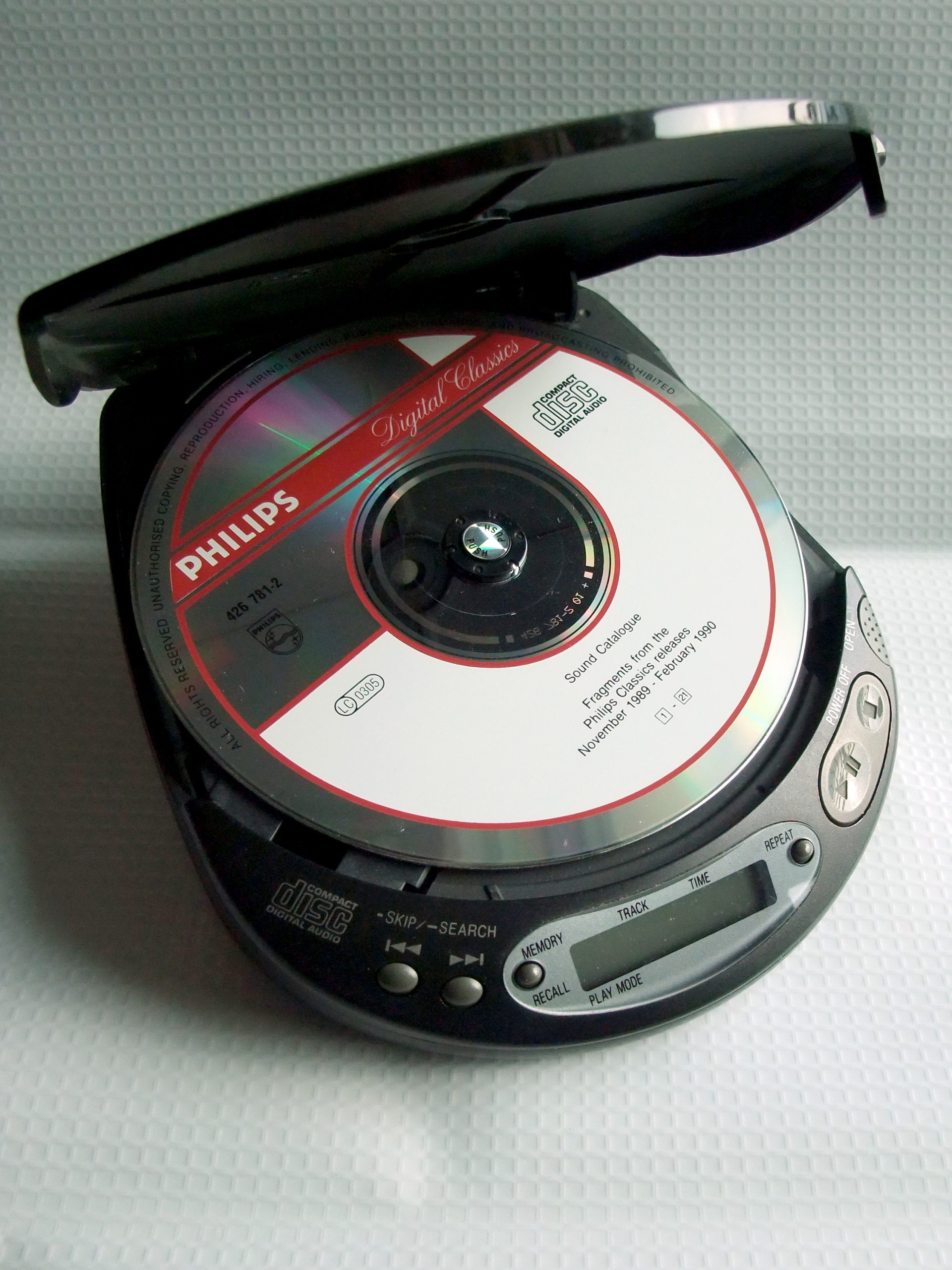
Compact discs are making an unexpected resurgence in the United States, with sales climbing 16% to 16.3 million units during the first half of 2026, according to Luminate’s midyear music report, even as roughly half of the format’s young buyers admit they don’t actually own a CD player.
The growth rate significantly outpaced vinyl, which grew just 2.4% over the same six-month period, according to Luminate, the U.S. market research firm that tracks music industry sales and streaming data. That marks a notable shift after more than a decade in which vinyl dominated conversations around the physical music revival, with CDs now posting a growth rate nearly seven times faster than records during the first half of this year.
K-pop has played an outsized role in driving the surge. Luminate found that K-pop releases accounted for roughly 10% of the entire CD market during the period, with BTS’s 10th studio album, “Arirang,” leading the charge after reportedly selling 567,000 CDs in 2026 alone. Successful campaigns from other K-pop acts, including Enhypen’s “The Sin: Vanish” and Ateez’s “Golden Hour: Part 4,” similarly drove strong sales, according to Luminate’s analysis, reflecting the genre’s well-documented practice of releasing albums in multiple editions featuring different covers, photo cards and bonus items, which frequently encourages devoted fans to purchase more than one version of the same release.
Even so, the CD resurgence extends well beyond K-pop fandoms specifically. Luminate calculated that CD sales would still have grown 6.7% during the first half of 2026 even if K-pop releases were removed from the equation entirely, indicating a broader shift in how younger music fans are choosing to engage with physical formats regardless of genre.
That broader shift appears closely tied to a growing nostalgia trend among younger listeners. According to Luminate’s data, 60% of Gen Z listeners now report that they most often listen to music from the 1990s or earlier, a dramatic increase from just 18% who said the same in 2021. Whether driven by genuine musical discovery through streaming platforms, generational nostalgia, or simply a desire to own a tangible piece of an artist’s work, younger audiences appear to be embracing physical formats at a pace that has caught much of the music industry by surprise.
Perhaps the most striking finding in Luminate’s report is that ownership of a working CD player is no longer a prerequisite for buying CDs. Roughly half of Gen Z and millennial CD buyers do not own a CD player at all, according to the report, a statistic Luminate interprets as evidence that the compact disc has effectively transformed from a functional playback medium into an affordable collector’s item. For many younger buyers, purchasing physical music has become as much about aesthetic ownership and directly supporting an artist financially as it is about actually listening to the product itself. Luminate captured that dynamic directly in its report, noting that “the act of buying physical music is as much about aesthetic ownership and direct financial support for the artist as it is listening to the music on the product itself.”
Where fans are buying that physical music has also shifted noticeably. While independent record stores continue to account for the largest overall share of physical album sales, mass-market retailers including Target and Walmart posted the biggest gains during the first half of 2026, together capturing nearly 30% of the physical music market. Luminate attributed much of that growth specifically to K-pop’s collector-driven retail culture, with artists including BTS, Enhypen and Ateez ranking among the format’s biggest sellers at those big-box retailers, thanks to elaborate deluxe packaging, exclusive editions, and collectible extras such as photobooks, posters and trading cards bundled with individual releases.
Despite CDs’ faster growth rate, vinyl continues to represent the larger overall physical format by total sales volume, and remains the more economically significant driver of the broader independent record-store revival. Vinyl has posted 19 consecutive years of U.S. revenue growth and surpassed $1 billion in annual wholesale revenue during 2025, meaning its comparatively modest 2.4% growth in the first half of 2026 still translated into substantially more total units sold than CDs managed, even as CDs posted the more eye-catching percentage increase. Overall, combined U.S. physical album sales across vinyl, CDs and cassettes reached 38.2 million units during the first half of 2026, a 7.8% increase over the same period the previous year. Cassette sales, by comparison, remained a niche format, totaling only around 205,000 units during the period.
Streaming, meanwhile, continued its own steady growth alongside the physical format resurgence, though at a considerably more modest pace than either vinyl or CDs. U.S. on-demand audio streams rose 4.4% to 4.8% depending on the specific measure, reaching roughly 732.7 billion plays domestically during the first half of the year, according to different figures cited across Luminate’s reporting, while global on-demand streaming grew more significantly, climbing 9.8% to reach 2.8 trillion plays worldwide.
Luminate’s report also touched briefly on the growing presence of AI-generated music within the streaming landscape, noting that such content has moved well past being a purely novelty phenomenon. The report cited the song “Livin’ on Borrowed Time” by the AI-generated act Breaking Rust, which garnered 19 million on-demand audio streams in the U.S. during the first half of 2026. Even so, Luminate cautioned that a broader commercial breakthrough for AI-generated music has not yet materialized, noting that the track ranked just 4,304th on the overall U.S. song chart despite its substantial individual streaming total.
Taken together, Luminate’s midyear findings paint a picture of a U.S. music industry increasingly defined by generational contrasts in how fans choose to consume and collect music, with younger listeners driving unexpected growth in older physical formats even as digital streaming continues expanding as the dominant overall method of listening across the broader market.
Business
(VIDEO) iPhone 18 Pro Leaks Reveal Dark Cherry Color, Bigger Battery and A20 Pro Chip Ahead of Launch

Fresh leaks surrounding Apple’s next-generation iPhone 18 Pro have offered an early look at what the company’s flagship device could bring when it debuts later this year, pointing to a new signature color option alongside meaningful upgrades to battery capacity, processing power and camera hardware, even as Apple has not officially confirmed any of the details.
Among the most talked-about leaks is the possibility of a new Dark Cherry color option for the iPhone 18 Pro lineup, described across multiple reports as featuring a deep, muted red finish that would likely replace the Cosmic Orange shade currently offered on the iPhone 17 Pro. Macworld contributor Filipe Esposito reported that a trusted source had specifically identified Dark Cherry as one of the new colorways planned for the device. Alongside Dark Cherry, the Pro models are also expected to be available in Light Blue, Silver and Dark Grey, though several outlets covering the leaks cautioned that Apple’s final color selection could still change before the devices are formally unveiled.
Apple has traditionally introduced a new signature finish with each annual refresh of its Pro lineup, making color choice one of the more closely watched aspects of the company’s yearly launch cycle, and this year’s rumored shift toward Dark Cherry appears consistent with that pattern of rotating premium, muted tones for its flagship devices.
On the design front, leaks suggest Apple is not planning major structural changes to the iPhone 18 Pro compared with its immediate predecessor. The device is expected to retain the flat-edge frame and triple rear camera arrangement that has defined recent Pro models, with reports instead pointing toward more subtle refinements. According to Storyboard18’s reporting, the rear panel may feature a cleaner overall look, with a less prominent two-tone finish surrounding the camera area, while the camera module itself could grow slightly larger to accommodate upgraded internal hardware. Separately, some leaks have pointed to a smaller Dynamic Island cutout, potentially incorporating under-display Face ID components to free up additional usable screen space, though the extent of that change remains unconfirmed.
The handset is also expected to be marginally thicker and heavier than its predecessor, a trade-off multiple reports attribute directly to a larger internal battery and an improved cooling system designed to support the device’s next-generation processor.
That processor is expected to be Apple’s new A20 Pro chip, reportedly manufactured using Taiwan Semiconductor Manufacturing Company’s advanced 2-nanometer process technology, a notable step up from the 3-nanometer process used in the current generation of Apple silicon. According to multiple reports, the shift to 2-nanometer manufacturing is expected to bring improvements across several fronts simultaneously, including faster overall processing speeds, better thermal management to prevent overheating during demanding tasks, stronger on-device artificial intelligence capabilities, and meaningfully improved power efficiency that could translate directly into longer battery life even without a dramatically larger physical battery.
Battery capacity itself has emerged as one of the more actively debated aspects of the iPhone 18 Pro leaks, with different sources offering conflicting figures. Some reports, including leaker Fixed Focus Digital cited by AppleInsider, suggested a comparatively modest increase, pegging the standard iPhone 18 Pro’s U.S. battery capacity at around 4,288 mAh. Other leaks have pointed to considerably larger figures, with supply chain reports and Weibo-based leakers cited by GlobalPublicist24 suggesting the Pro Max variant specifically could carry a battery in the range of 5,100 to 5,200 mAh, which would represent the largest battery ever shipped in an iPhone by a clear margin. A separate report from iTechify cited even higher figures, claiming the standard iPhone 18 Pro battery could reach 5,235 mAh for physical SIM models and as much as 5,425 mAh for eSIM-only variants, framed explicitly as Apple’s response to increasingly large batteries found in competing Android flagships, including Samsung’s Galaxy S26 Ultra, reportedly equipped with a 5,500 mAh battery of its own. Given the range and inconsistency across these leaked figures, the final specifications remain unconfirmed until Apple’s official announcement.
Camera improvements have also featured prominently in recent leaks. The Pro models are expected to retain a triple 48-megapixel rear camera configuration, maintaining the same overall resolution as the current generation while incorporating upgraded sensors and improved image processing intended to deliver better low-light photography, enhanced video recording capabilities and faster image capture. Some reports have additionally pointed to the possible introduction of variable aperture technology on the main camera, a feature that would allow the lens to physically adjust its aperture size depending on shooting conditions, alongside an upgraded 24-megapixel front-facing camera. Display sizes, meanwhile, are expected to remain unchanged from the current lineup, with the standard iPhone 18 Pro retaining a 6.3-inch screen and the Pro Max continuing with a 6.9-inch display.
Beyond the headline hardware changes, some reports have also pointed to expanded satellite internet connectivity through Apple’s newly developed C2 modem, which is expected to add support for mmWave 5G networks alongside its satellite capabilities, and a more advanced LTPO-plus display technology capable of more precisely scaling its refresh rate to further conserve battery power during everyday use.
Apple’s iPhone 18 Pro and Pro Max are widely expected to launch in September 2026, tracking toward Apple’s traditional early-to-mid-September announcement window, with pre-orders typically opening within roughly 48 hours of the event and general retail availability following in the final week of the month. Notably, several reports have suggested Apple may stagger this year’s release cycle differently than in past years, with the iPhone 18 Pro, Pro Max and a rumored foldable iPhone model headlining the September event, while the more affordable standard iPhone 18 and budget-focused iPhone 18e models could be pushed back to a separate launch window in spring 2027.
As with all pre-announcement leaks, none of the details surrounding color options, battery capacity, chip specifications or camera hardware have been officially confirmed by Apple, and the company’s actual September announcement could differ meaningfully from current rumors as final testing and production plans continue to evolve in the months ahead.

BEST OF Parkour Police Vs MONEY HEIST!! ESCAPE from Police | ACTION FULL STORY POV |2026 POV Movie

When North Korea beat Italy in the 1966 World Cup in Middlesbrough
The Key to Solar and Wind Power Is Battery Storage, and China Is Dominating


-
 NewsBeat3 days ago
London Mayor Sadiq Khan handed a peerage by Keir Starmer alongside 15 other Labour figures… just days before the PM leaves No10
-

 Fashion2 days ago
Weekend Open Thread – Corporette.com
-

 Politics1 day ago
The House | The City of London can help the new chancellor deliver growth in every postcode
-

 Politics4 days ago
Young campaigners urge incoming PM to act on outdoor junk food ads
-

 Crypto World4 days ago
CFTC blocks Kalshi from unwinding Michigan trades after court order
-

 Business4 days ago
Nvidia Stock Slips After Big Tuesday Rally as Huang Confirms Vera Rubin Chip Is Now in Production Today
-

 Crypto World1 day ago
Ripple Payments Joins MiCA With 14 Firms, Does It Mean Anything For XRP?
-

 Politics3 hours ago
Democrats look to World Cup watch parties to register thousands of voters
-
 Entertainment4 days ago
Disney’s Most Ambitious Failed Star Wars Attraction Is Coming to SDCC
-

 Crypto World2 days ago
Ripple wins EU-wide access as ESMA adds it to MiCA register
-
 Crypto World2 days ago
Two July Windows Left: The CLARITY Act’s Senate Fight and What Failure Means
-

 Business4 days ago
Palantir Shares Rise After Expanded Nvidia Partnership and Fresh Analyst Upgrades Ahead of Earnings Day
-

 Crypto World3 days ago
Injective Submits SEC Transfer-Agent Registration to Onchain Ownership Records
-

 Tech5 days ago
Get Your ESP32 Sunny Side Up With This Solar Dev Board
-

 News Videos5 days ago
XRP BOMBSHELL… XRP OMBOARDED FOR TRANSACTIONS!!!
-

 NewsBeat2 days ago
Registration is now open for March for Men with Kev 2026
-

 Tech5 days ago
Dark Secrets Emerge When Jailbreaking LLMs
-
 Sports4 days ago
New Cornerback Enters Vikings Trade Rumor Mill
-

 News Videos2 days ago
Money | Class 12 Economics | CBSE Board Exam 2026-27
-

 Business3 days ago
Banco Bilbao Vizcaya Argentaria, S.A. (BBVA) Discusses Global Macro Environment and Economic Outlook for Core Markets Transcript
You must be logged in to post a comment Login