

Connect with us
DAPA Banner
DAPA Coin
DAPA
COIN PAYMENT ASSET
PRIVACY · BLOCKDAG · HOMOMORPHIC ENCRYPTION · RUST
ElGamal Encrypted MINE DAPA
🚫 GENESIS SOLD OUT
DAPAPAY COMING

Business

Elevance Health CEO Snaps Up Stock After Post-Earnings Slide

Published

on

Elevance Health CEO Snaps Up Stock After Post-Earnings Slide
Continue Reading
Click to comment

You must be logged in to post a comment Login

Leave a Reply

Business

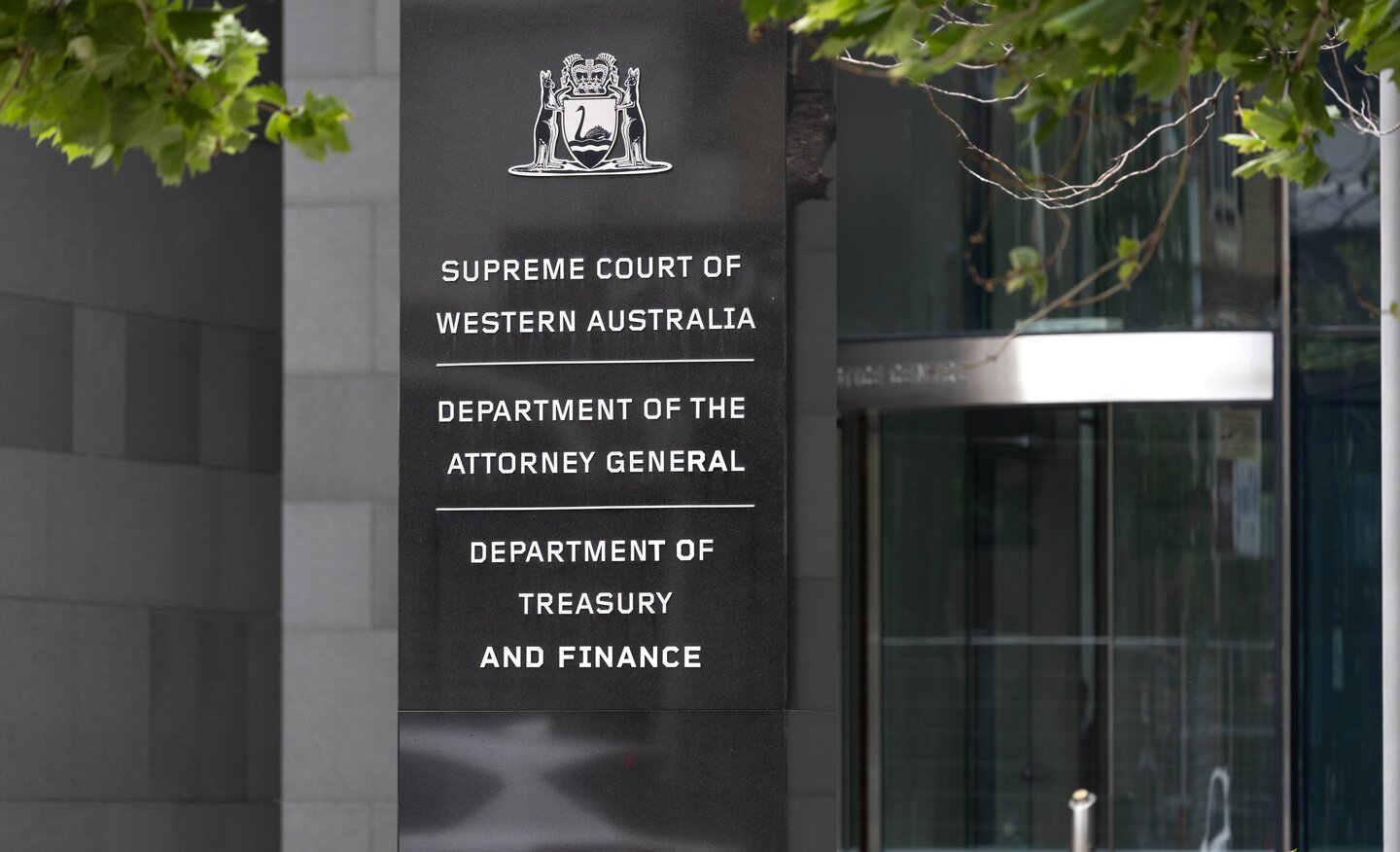
Allen Caratti fights Steve Masel's means probe

Published

on

Allen Caratti fights Steve Masel's means probe

Property developer Allen Caratti is making a last-ditch attempt to avoid an inquiry into his financial affairs.

Continue Reading

Business

Manchester suggested as UK ‘pilot’ city for rent caps and controls to address issues of ‘stark inequality and affordability’

Published

on

Business Live

Government asked to devolve powers on rents to new GM mayor

A yellow To Let sign with a white sign saying 9 Bed attached

Councillor Gavin White said Manchester could be a national pilot city(Image: Getty Images)

Estate agents line the streets in one of Manchester’s most affluent suburbs.

Advertisement

Walking down the ever-busy Wilmslow Road in Didsbury, it’s difficult to go far without seeing adverts for plush apartments or investment opportunities.

Prices in this part of south Manchester are at a premium, with some signs listed in shop windows offering places to rent for up to £1,500 a month.

You expect to pay more to live in Didsbury than other parts of the city. It comes with the benefits of being near buzzing cafes and bars, and easy access to public transport.

But concerns are growing in the corridors of power at Manchester council that problems of ‘stark inequality and affordability’ are making it harder for people to find homes across the city.

Advertisement

The number of people impacted by Manchester’s housing problems are enormous – 20,000 households are on the city’s social housing register waiting for a suitable place to live.

Government data shows average private rents in Manchester are becoming more expensive. According to the Office for National Statistics, average rental prices in Manchester hit £1,352 in May 2026, up by 3.2 per cent from 12 months ago.

This week Labour councillors in the city put forward a solution it believes could change everything.

“We are asking government to devolve powers to our new Greater Manchester mayor to develop limits on rents,” Deansgate councillor Marcus Johns said.

Advertisement

The call went further when Coun Gavin White, the lead on housing matters for the council, suggested Manchester could be a ‘pilot’ city for how private rent caps and controls could work nationally.

He said: “We call on the government and new Prime Minister to give the new mayor of Greater Manchester devolved powers to look at rent caps and controls for the private rented sector, to address the issues of stark inequality and affordability.

“We already have rent controls and caps in social housing, and the Renters Rights Act has begun to give powers for that, but we would call for further powers to be able to tackle that crisis head on, and we would welcome Manchester being a pilot for a national scheme to deliver this.”

A motion calling for the measures was passed in the council chamber after a debate.

Advertisement

“Manchester knows better than most the scale of the housing crisis, too many families have been denied the security of a decent affordable home,” said Councillor Sam Lynch during the discussion.

The idea behind the plan would be to put officials to work looking at how rent caps and controls could work in Manchester, ahead of a potential roll out elsewhere.

With Andy Burnham confirmed as Labour Party leader and about to become the country’s next Prime Minister, councillors in Manchester will soon have a familiar face in Westminster to pitch the idea to.

Joseph Rowntree Foundation (JRF), a charity that leads research into poverty, believes that rent controls which limit rises at the lower of inflation or earnings could save the average renter in the north west £310 a year, or £450 on average across the UK.

Advertisement

Darren Baxter, principal policy adviser at JRF, said: “Calls for rent controls recognise that renters have been squeezed by unaffordable rents that take up too high a proportion of their incomes for far too long.

“Trapped in a cycle of high rents, financial strain and no ability to save – renters are often just one redundancy or illness away from a crisis. They can’t wait for the many years it will take to feel the impact of any new homes currently being built.

“Unaffordable private rents aren’t a given. Done right rent controls are feasible and should merit serious consideration from anyone concerned about the cost of living.”

The Town Hall and Albert Square renovations form part of the ongoing 'Our Town Hall' works

The Town Hall and Albert Square, Manchester(Image: Kenny Brown | Manchester Evening News)

Calls for Greater Manchester’s next mayor to get new powers over rent controls have been backed by researchers too, who say local leaders should be able to ‘tailor’ rent controls to local needs.

Advertisement

“Across the country, rents have become increasingly unaffordable, with 45 per cent of private renters struggling – millions being pushed to the brink by a housing market that just isn’t working for them,” said IPPR North, a think tank focused on the north of England.

“This issue has been particularly bad in London, and now here in Manchester which has higher rents than the rest of the north west.”

IPPR has called for rent controls to be applied nationally as an emergency response to the rising cost of living and ‘global shocks’ affecting prices being passed on to renters from landlords.

It said: “Over the last few years, there has been a shift towards institutional landlords with more and more buy-to-let properties being built around Manchester, and fewer single-portfolio or casual landlords renting properties in the city.

Advertisement

“IPPR’s proposals for rent controls as described would benefit tenants in Manchester’s private rental sector; protecting them from sudden rent rises, rebalancing the market, and ensuring rent only rises with what people can actually afford.

“But with the incoming PM’s ambitions for further devolved powers to regions, we would want to see local leaders, like those in Manchester, have the power to tweak and tailor these rent controls to suit local need.”

Rent controls have long been debated as a way to curb rising prices and help tenants.

It would mark a huge change for renting in the country if introduced, and has been tipped by some to bring major benefits for renters if done right.

Advertisement

And if councillors in Manchester have their way, the city could be the first in line to have a go at it.

To find all the planning applications, traffic diversions, road layout changes, alcohol licence applications and more in your community, visit the Public Notices Portal.


Continue Reading

Business

Trump says new Air Force One from Qatar will get ’maxed out’ upgrades

Published

on


Trump says new Air Force One from Qatar will get ’maxed out’ upgrades

Continue Reading

Business

Deep Yellow awards Tumas contracts worth $34m

Published

on

Deep Yellow awards Tumas contracts worth $34m

Shares in uranium developer Deep Yellow rose early on Monday morning following an update regarding its flagship Tumas project in Namibia.

Continue Reading

Business

China’s Technological Dominance: The Hidden Face Behind the Numbers

Published

on

Thailand’s Manufacturing Sector Struggles with Underutilization as Chinese Competition Intensifies

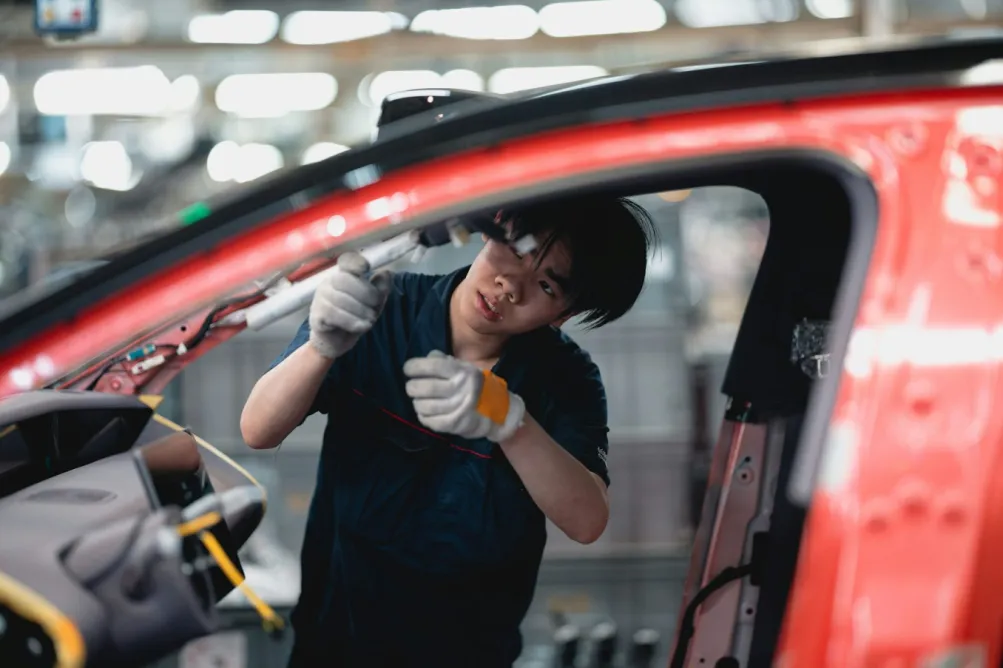
China has been engaged in global economic competition for decades, and it is now approaching first place in terms of GDP while already setting the tone in strategic markets — from carbon-free energy and battery storage to electric vehicles. Its 5% growth in 2025 surpasses global growth (3.2%), US growth (2.2%), and European growth (1.4%), while the country concentrates more than 30% of global manufacturing output.

Abstract

  • China leads global manufacturing with over 30% of world output, dominates key sectors including solar panels, batteries, and electric vehicles, and recorded a record trade surplus of one trillion euros in 2025. Its 5% GDP growth outpaces most major economies, while patent filings and advances in AI and humanoid robotics signal continued technological ambition.
  • Beneath these headline figures, structural tensions persist. Overcapacity, a deflating real estate sector, and a widening gap between coastal and interior economies create significant domestic pressures. A high household savings rate and weak consumer demand constrain rebalancing efforts, presenting both opportunities and strategic risks for regional business partners in ASEAN and Thailand.

China’s trade surplus reached a record one trillion euros in 2025, and the country now accounts for 20% of global exports. For businesses across Southeast Asia and Thailand, these are not abstract statistics — they define pricing, supply chains, and competitive dynamics across virtually every sector.

Yet behind these headline figures lie deeper structural realities that investors and business leaders in the region would do well to understand.

The Long March to Industrial Domination

China’s industrial ascent since the late 1970s has produced an independent, fully integrated industrial system of remarkable depth and scale. The numbers speak for themselves:

  • China produces 70% of the world’s solar panels
  • 80% of batteries sold globally are manufactured in China, with 90% of the materials sourced domestically
  • Half of all 100% electric vehicles worldwide are made in China
  • 90% of civilian drones sold globally come from Chinese factories
  • China controls more than 90% of the global vitamin C market, a critical food additive

In 2024, China filed 1.8 million patent applications worldwide — more than three times the US figure of 501,831 and four times Japan’s 419,132.

For ASEAN economies, including Thailand, these figures reinforce China’s position as both an indispensable supplier and an increasingly direct competitor in advanced manufacturing.

Advertisement

Artificial Intelligence and the Robotics Frontier

Chinese leaders have made no secret of their ambitions in artificial intelligence. The launch of DeepSeek V4 — a 1.6 trillion parameter open-source model costing seven to nine times less to run than its American competitors, and built on Huawei’s domestically produced GPU chips — sent a clear signal to global markets.

China is pursuing a dual innovation model: entrepreneurial AI driven by universities and start-ups on one hand, and a Party-State-directed ecosystem where civilian and military capabilities reinforce each other in semiconductors, aeronautics, telecommunications, and AI on the other.

Humanoid robotics is the next frontier. China’s Ministry of Industry and Information Technology has identified humanoid robots as the next disruptive industrial product after computers, smartphones, and electric vehicles. Unitree, the Chinese market leader, delivered approximately 5,500 bipedal humanoid robots in 2025 and expects sales of 10,000 to 20,000 units in 2026. In April 2026, a Chinese humanoid robot completed a half-marathon in Beijing in under 51 minutes — faster than any human on record.

China and the Rest of the World: The New Silk Road Effect

Through its Belt and Road Initiative launched in 2013, China has steadily secured markets and raw material supplies across Asia, Africa, Europe, and Latin America via bilateral partnerships. For Thailand and ASEAN more broadly, this commercial expansion is not a distant geopolitical abstraction — Chinese capital, Chinese platforms, and Chinese supply chains are woven into the regional economy.

Advertisement

This commercial hegemony extends to digital technologies and operates through networks of influence that are as powerful as they are discreet. The strategy, critics argue, creates structural dependencies through unbeatable price competitiveness backed by state subsidies across entire industrial sectors.

The question for the region is whether that dependency deepens or whether the shift in trade policy in Europe and the United States accelerates a rebalancing — and where ASEAN positions itself within that realignment.

The Other Side of the Chinese Economy

China’s growth story has a less visible side that shapes the risks for regional partners and investors.

While GDP growth regularly exceeded 10% before 2010, it has declined steadily since 2011, reaching 5% in 2025. Since the COVID-19 pandemic, the economy has been weakened by disinflation driven by overcapacity across multiple sectors — agri-food processing, textiles, steel, clean energy, and automotive manufacturing, which is operating at only 50% of capacity. Factory closures in building materials and furniture have accelerated since the deflation of the real estate bubble from 2022.

Advertisement

The result is a tale of two economies: a coastal China of 500 million people where salaries and living standards are comparable to Western countries, and an interior economy of more than 800 million people living in developing regions with significantly lower incomes — including factory workers at BYD earning as little as USD 1.49 per hour.

The Employment Paradox

Perhaps the most underappreciated structural challenge is the jobs gap. As digital processes and automation displace workers, China must simultaneously create 12 million new jobs annually for rural migrants and young graduates. Analysis by the Rhodium Group finds that for the same sales value, traditional sectors generated six times more employment than the emerging advanced technology industries now being championed by Beijing.

Young Chinese are pushing back. The “996” work culture — 9am to 9pm, six days a week — is increasingly rejected by a younger generation that prefers shorter hours and lower consumption. The 2026–2030 five-year plan acknowledges this social malaise, but stimulating domestic demand and consumer confidence cannot be decreed, as the failure of the 2024 stimulus package demonstrated.

The household savings rate of 35% reflects not prosperity but anxiety — about retirement, healthcare, and a welfare state far less generous than those in developed economies. This structural caution on consumption remains a brake on the domestic demand that China urgently needs to rebalance its economy.

Advertisement

What This Means for Business in Thailand and ASEAN

China’s technological dominance presents ASEAN businesses and investors with a dual challenge: capitalising on the cost advantages and supply chain depth that Chinese industry offers, while building resilience against the strategic dependencies that come with it. As Washington and Brussels accelerate their own industrial policies, Southeast Asia finds itself at the centre of a global realignment in technology, trade, and investment flows.

The trajectory is clear: China will continue to invest aggressively in AI, robotics, green energy, and digital infrastructure. For Thailand — a regional manufacturing hub navigating its own industrial upgrade — understanding the full picture of Chinese technological power, including its internal contradictions, is not optional. It is essential.


Sources: Rhodium Group (2026), OECD Economic Outlook Vol. 2025 Issue 2, IEA Global EV Outlook 2025

Advertisement
Continue Reading

Business

BCI Minerals Limited (BIRNF) Q4 2026 Earnings Call Transcript

Published

on

OneWater Marine Inc. (ONEW) Q1 2026 Earnings Call Transcript

David Boshoff
MD & Director

Good morning, everyone, and welcome. I’m David Boshoff, and with me is our CFO, Steve Fewster. We’re pleased to be joining you today for this June 2026 quarterly update. Before we get underway, I’d like to mention that today’s presentation should be read in conjunction with our June quarterly report. This is available on our website. As we move through today’s session, please feel free to add your questions to the live Q&A tab on the right-hand side of your screen, and we’ll respond to these questions at the end of the session.

Our values define us. They guide every decision we make. This quarter, our “how we do what we say” value was in full display. We said we would transition Mardie from filling ponds to operating them, and we have. Salt production has commenced in our crystallizers, and we closed the quarter with salt inventory in the ground. That results belong to our team, our contractors. And as the sun drives the evaporation process, their preparation, coordination, and commitment have made the system perform. Mardie is now firmly established as a working salt operation. And that values-driven approach is exactly what underpins the business we’re building at Mardie

Mardie is already Australia’s largest solar salt operation and the third largest globally. And here’s what makes this moment so significant. After years of construction and now literally months away from completion, the heavy lifting is done. The CapEx is largely spent and the risk to schedule and cost has reduced dramatically. What you’re looking at is no longer a construction story, it’s an emerging production story.

Advertisement
Continue Reading

Business

ASX 200 Edges Higher as Oil Spikes on Iran War Escalation and Chinese AI Model Sparks Chip Stock Rout

Published

on

FTSE 100 Surges 0.8% Today as Oil Eases and Markets

SYDNEY — Australia’s benchmark S&P/ASX 200 index clawed out modest gains Monday, rising as much as 0.45% in early trade before paring back to a 0.13% advance by mid-morning, as investors weighed surging oil prices tied to the escalating war between the United States and Iran against a deepening global selloff in semiconductor stocks.

The index sat at 8,797.7 points shortly after noon Sydney time, up slightly on the day after finishing the prior week 0.5% lower at 8,796.7. Futures had pointed to a stronger open, with ASX 200 futures up 54 points, or 0.61%, ahead of the session, but several sectors including materials, industrials, consumer staples, consumer discretionary and healthcare that opened higher had slipped back into negative territory by mid-morning.

Oil surges as Middle East conflict widens

Energy was the standout sector Monday, with Brent crude trading 3.1% higher at $91.07 a barrel, its highest level since June 11 and a 27.8% rally since hitting a low on July 1. The gains came as the war between the United States and Iran entered its sixth month with no sign of resolution. Three U.S. service members have died in the conflict, including two killed in an Iranian missile and drone attack in Jordan and a third during the controlled detonation of a downed Iranian drone in northern Iraq, marking the first American fatalities from Iranian fire since March.

Advertisement

U.S. forces have carried out eight consecutive nights of strikes on Iranian air defenses, coastal installations, and missile and drone storage sites, while Iran has widened its retaliation to strike U.S. allies in the Gulf, hitting a power and desalination plant in Kuwait for a second consecutive day. Shipping traffic through the Strait of Hormuz has collapsed to a fraction of pre-war levels, with just three commodity vessels transiting the waterway on Thursday compared with a daily average of about 125 before the conflict began, as a U.S. naval blockade on Iran-linked shipping remains in force.

The energy-driven rally lifted Australian fuel and gas producers. Viva Energy Group climbed 4.7%, Deep Yellow rose 4.07%, Karoon Energy gained 4%, Woodside Energy Group added 2.71% and Ampol rose 2.64%. Sims, the scrap metals recycler, also featured among the day’s top performers, up 3.04%.

Chip selloff weighs on sentiment

Offsetting the energy gains was a deepening rout in technology and semiconductor shares that has rattled markets across Asia and the United States over the past week. The selloff intensified after Chinese startup Moonshot released an open-weight artificial intelligence model, Kimi K3, that the company says outperforms most rivals on overall capability, trailing only Anthropic’s Claude Fable 5 and OpenAI’s GPT-5.6 by some measures. The 2.8 trillion-parameter model, which Moonshot priced at roughly the level of Anthropic’s Sonnet tier, reignited investor concerns about the sustainability of heavy AI infrastructure spending and the durability of pricing power among leading U.S. and Chinese AI developers.

Advertisement

The Philadelphia Semiconductor Index fell into bear-market territory last week, sliding roughly 10% over five sessions in its worst weekly performance in more than a year and ending Friday down just over 20% from its late-June record, though the index remains up more than 60% for the year to date. The rout spread across Asia, where Taiwan Semiconductor Manufacturing Co. shares fell 7.3% in Taipei even after the company lifted its 2026 capital expenditure guidance to between $60 billion and $64 billion. Taiwan’s benchmark Taiex index dropped 6.5%, extending its decline from a June high to nearly 11%, as foreign investors sold a record $5.8 billion of shares on a net basis. A Bloomberg gauge of Asian chip stocks fell more than 6%, led by memory chipmaker Kioxia, whose shares have roughly halved in recent weeks.

The technology weakness followed a losing week on Wall Street, where the S&P 500 fell 1.01% to 7,457.69 on Friday, the Nasdaq dropped 1.4% and the Dow Jones Industrial Average slid 0.77%, capping weekly declines of 1.6%, 2.9% and 0.9%, respectively. Streaming giant Netflix tumbled 7.2% after issuing soft third-quarter revenue guidance, while International Business Machines Corp. posted its worst week on record following disappointing sales.

On the ASX, technology-exposed and gold names bore the brunt of the pullback. Gold miners fell broadly as the surging U.S. dollar and rising oil prices weighed on the sector, with Regis Resources down 2.84%, Evolution Mining off 2.47% and Genesis Minerals down 1.8%. Alcoa Corp. shares slid 4.61% and Flight Centre, the travel agency, dropped 4.43% as higher oil prices raised concerns about airline fuel costs. Qantas Airways fell 1.37%.

Trade and commodity dynamics in focus

Advertisement

Away from the broader market swings, South Korean steelmaker Posco, one of the largest private buyers of Australian exports, called for an overhaul of how the coking coal market sets benchmark prices, arguing that a narrow set of spot trades distorts the indices used across the industry. Posco’s head of raw materials procurement said reliance on limited transaction data represented a structural vulnerability, echoing similar pressure major miners have faced in the iron ore market from Chinese buyers.

In company news, diversified miner South32 said it exceeded full-year production guidance across its portfolio and lifted fourth-quarter sales volumes 15% as it advances a US$5.6 billion sale of its aluminium business to Alcoa, a deal expected to leave roughly 85% of the company’s pro-forma earnings coming from base and precious metals. Elsewhere, MGX Resources struck a binding deal to sell its Koolan Island iron ore operation to infrastructure investor Crestlink, and gold miner Aurelia Metals reported its strongest quarterly cash flow since 2018 alongside the planned departure of chief executive Bryan Quinn later this month.

Also weighing on investor sentiment was a report that U.S. corporate insiders sold $77.6 billion of stock in the first half of 2026, the second-fastest pace of insider selling in more than two decades and up 20% from a year earlier, a trend some market participants view as a caution signal given elevated valuations. Separately, shares of SpaceX have fallen 18.5% over the past six trading sessions and now sit below their initial public offering price, denting enthusiasm ahead of a wave of anticipated technology listings later this year.

Trading is expected to remain volatile through the session as investors continue to balance the geopolitical risk premium building into oil markets against the unwinding of momentum trades in the technology sector that has defined much of the past week’s global market action.

Advertisement
Continue Reading

Business

KTF: The Arbitrage Ship Has Sailed, Time To Sell

Published

on

KTF: The Arbitrage Ship Has Sailed, Time To Sell

KTF: The Arbitrage Ship Has Sailed, Time To Sell

Continue Reading

Business

Why is Fangzhou stock gaining today?

Published

on


Why is Fangzhou stock gaining today?

Continue Reading

Business

Microsoft Stock: Earnings Should Change Narrative Send Shares Back Over $500 (NASDAQ:MSFT)

Published

on

Bitfarms Rebrands To Keel Infrastructure, But Financial Engineering Still Weighs

This article was written by

Individual investor and family office principal with over 20 years of investment experience. I favor fundamental analysis and look for individual issues and asset classes that are out of favor and represent a good risk/reward trade off. I often employ options strategies, covered calls on companies I own that have gotten ahead of themselves, and writing puts on stocks that I’d like to own at lower prices.Educational background Finance MBA (NYU Stern) with Computer Science undergraduate.

Analyst’s Disclosure: I/we have a beneficial long position in the shares of MSFT either through stock ownership, options, or other derivatives. I wrote this article myself, and it expresses my own opinions. I am not receiving compensation for it (other than from Seeking Alpha). I have no business relationship with any company whose stock is mentioned in this article.

Seeking Alpha’s Disclosure: Past performance is no guarantee of future results. No recommendation or advice is being given as to whether any investment is suitable for a particular investor. Any views or opinions expressed above may not reflect those of Seeking Alpha as a whole. Seeking Alpha is not a licensed securities dealer, broker or US investment adviser or investment bank. Our analysts are third party authors that include both professional investors and individual investors who may not be licensed or certified by any institute or regulatory body.

Advertisement
Continue Reading

Trending

Copyright © 2025