

Crypto World
AFX protocol reportedly loses $24M in bridge exploit



Offchain Labs said the incident involved a third-party protocol and did not affect Arbitrum’s native bridge infrastructure.

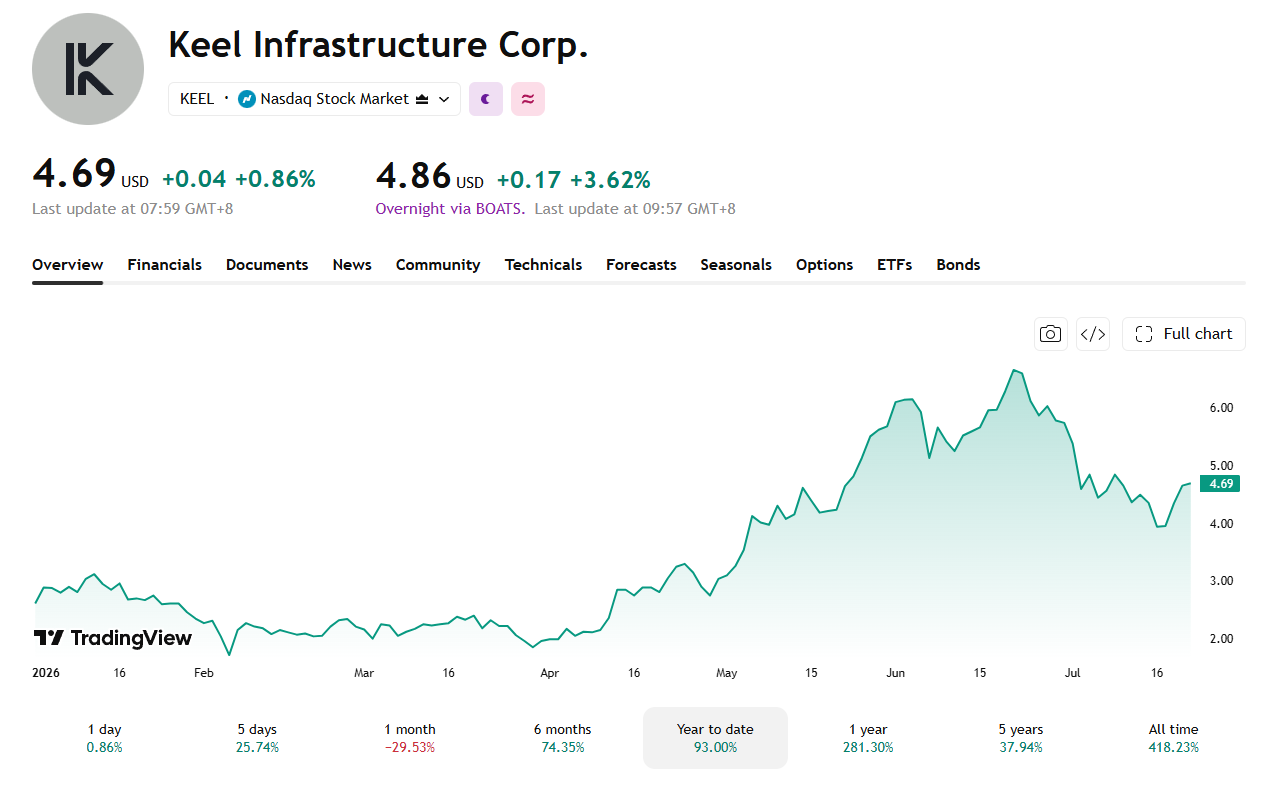
Jim Cramer used his July 22 Mad Money episode to point investors toward Keel Infrastructure (KEEL), a former Bitcoin miner turned AI data center developer. He cited a hedge fund’s expanding stake as the reason to pay attention.
What Cramer Flagged
Cramer highlighted Situational Awareness LP, the fund run by AI researcher Leopold Aschenbrenner, as a notable KEEL holder. Regulatory filings show the fund grew its position by 188% in the first quarter of 2026. It now holds nearly 20 million shares, up from roughly 6.9 million.
Fresh analyst coverage backs up the timing. BTIG initiated KEEL at Buy on July 22 with an $8 price target. That implies roughly 72% upside from the stock’s $4.65 close. The firm pointed to Keel’s power portfolio as the key asset. It also noted that hyperscalers and AI enterprise customers have signed around 10 colocation contracts totaling roughly 2 gigawatts across the sector this year.
The Company Behind the Ticker
Keel Infrastructure is the rebranded successor to Bitfarms. The company completed its shift from Canadian Bitcoin miner to Delaware-based AI infrastructure developer in April. It now controls a 2.2 gigawatt power pipeline across Pennsylvania, Washington, and Quebec. But it still hasn’t landed its first hyperscale colocation contract, the catalyst BTIG and other analysts are watching for.
Keel also carries a debt-to-equity ratio above 140% and negative free cash flow. Execution risk stays real even as the power pipeline draws bullish coverage. The stock’s 52-week range, from $0.98 to $7.37, shows just how sharply sentiment swings on AI infrastructure names that are still waiting on a signed customer.

Should Investors Trust Cramer’s Read
Cramer’s Keel comments follow a rougher stretch for his other tech calls. BeInCrypto has tracked the Inverse Cramer pattern through this earnings season, including Intel’s slide hours after Cramer named it his favorite stock. That history gives KEEL bulls a reason for caution alongside the bullish signal.
Still, the Situational Awareness stake predates Cramer’s endorsement by more than a quarter. And BTIG’s target reflects a specific catalyst analysts are tracking, not blanket enthusiasm for the crypto-to-AI pivot trade.
That trade has also produced disappointments, including American Bitcoin’s post-IPO stagnation.
Whether Keel signs a hyperscaler deal will decide which read on this one ages better, not Cramer’s airtime.
The post Jim Cramer Eyes Ex-Bitcoin Miner’s AI Power Pivot as Hedge Fund Bets Big appeared first on BeInCrypto.


Anthony Scaramucci says the Clarity Act’s new ban on federal officials sponsoring crypto doesn’t go far enough. The SkyBridge Capital founder argues the same ethics logic should extend to insider trading across the board, not just digital assets.
Speaking on CNBC, Scaramucci pointed to Congress’s own pay structure as the root problem.
The Pelosi Problem
Members of Congress earn $180,000 a year, a salary Scaramucci says pushes some toward trading on information they gather in office. His proposed fix borrows from Singapore, where officials draw multimillion-dollar salaries in exchange for stricter ethics enforcement.
Scaramucci’s argument leans on a data point that’s hard to ignore. Public trading records show former House Speaker Nancy Pelosi’s portfolio, managed by her husband Paul Pelosi, has consistently beaten both the S&P 500 and Warren Buffett’s Berkshire Hathaway.
Her 2024 disclosures showed a 70.9% gain against the index’s 24.9% return, and cumulative figures since 2014 put her total returns thousands of percentage points ahead of the benchmark. Rep. Anna Paulina Luna has previously accused Pelosi of trading on nonpublic information, though Pelosi has not been charged with any wrongdoing.
A Familiar Playbook
Scaramucci also referenced a past attempt to weaken congressional trading oversight, saying lawmakers once rolled back a transparency measure through a procedural vote designed to avoid public scrutiny.
The comparison tracks a real precedent: Congress passed the STOCK Act in April 2012 to bar members from trading on nonpublic information, then quietly amended it a year later to scrap the requirement for a searchable online database of staff trades, passing the rollback by unanimous consent with no recorded vote.
Treasury Secretary Scott Bessent has since pushed to revive stricter limits on congressional stock trading.
“They can’t afford two houses… they have all these different loopholes, and they have all these junkets, and they have these ways to get them money.”
— Anthony Scaramucci, CNBC
The updated Clarity Act already bars the president and other federal officials from issuing or sponsoring digital assets, a provision Scaramucci previously called this same bill’s ethics compromise dead on arrival. Whether Congress extends that same logic to its own stock trades remains an open question heading into the bill’s tight window before August recess.
If the crypto ban sets a precedent, Scaramucci’s broader ask may be the harder sell in an institution that has resisted it for over a decade.
The post Scaramucci Says CLARITY Act’s Crypto Ethics Isn’t Enough, Wants Insider Trading Gone appeared first on BeInCrypto.
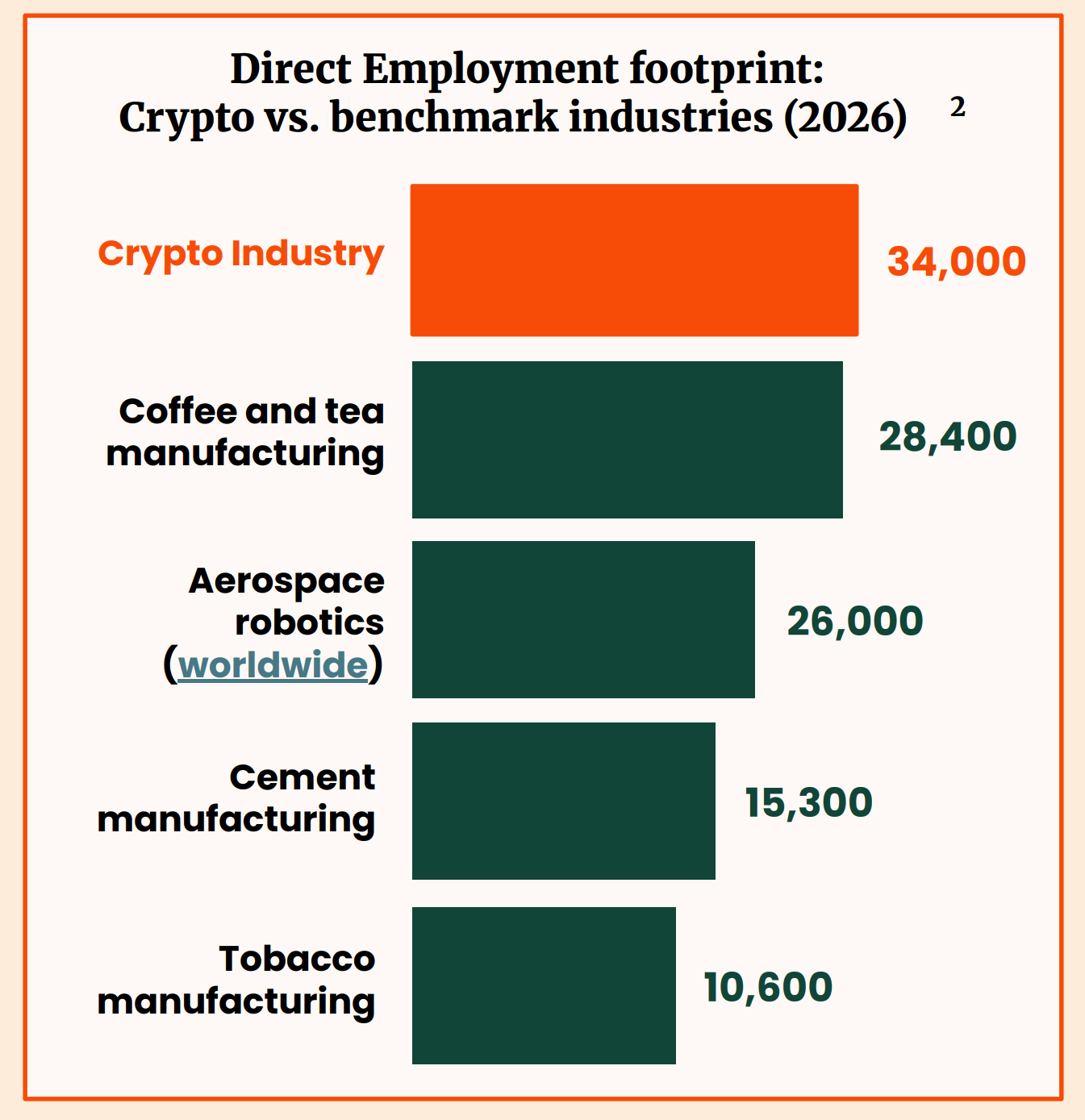
The crypto industry directly supports 34,000 jobs and contributes $55 billion to the US economy in 2026.
The findings come from a new report by the National Cryptocurrency Association (NCA), which commissioned the study from the Pragmatic Policy Group (PPG).
How Crypto Jobs Stack Up
To put that headcount in context, the report measured it against familiar industries. Crypto’s 34,000 direct workers now outnumber coffee and tea manufacturing, which supports 28,400.
Follow us on X to get the latest news as it happens

The gap widens against other benchmarks. Crypto tops both cement manufacturing at 15,300 and tobacco manufacturing at 10,600.
The report also puts the average crypto-related job at $133,000 a year, more than double the national median of $64,000.
It ranks that average above other high-paying fields, listing information and technology at $104,000 and manufacturing at $76,000. In addition, of the $55 billion total economic contribution, roughly $31 billion is worker income.
The Wider Economic Footprint
The report also estimates indirect effects. It finds that each direct crypto job supports 6 more across the economy. That brings total supported employment to 232,000 jobs in 2026.
The total figure accounts for direct, indirect, and induced jobs, not just crypto company payrolls. Supplier industries account for 75,000 roles, while worker spending adds another 123,000.
The distribution is uneven. California, New York, and Texas hold 60% of US crypto jobs, followed by Washington and North Carolina. Heartland states account for more than 17,000 positions.

Overall, crypto’s economic weight now extends well beyond trading, reaching into wages, supplier industries, and household spending across the country.
Subscribe to our YouTube channel to watch leaders and journalists provide expert insights
The post Crypto Now Employs More Americans Than Coffee or Tobacco Manufacturing Industries appeared first on BeInCrypto.


Another week, another multi-million-dollar hack in DeFi, and once again, it’s an off-chain compromise rather than a smart contract exploit.
AFX Trade, a decentralized perpetuals exchange that settles in dollar-pegged stablecoin USDC, was drained of about $24.15 million on Wednesday after an attacker compromised the validator signing keys behind a bridge the protocol operates on Arbitrum, blockchain data shows.
In other words, the smart contract did what it’s supposed to do – verify the signature and execute the transaction. The problem was with the private keys that generated those signatures, as attackers compromised the private validator signing keys (hot keys held offchain by the bridge operators or validators).
Steven Goldfeder, co-founder of Offchain Labs, which develops and maintains the network, said the Arbitrum native bridge “has not been hacked or exploited in any way” and that the transaction originated from a third-party protocol.
A hack of Arbitrum’s own bridge would signal risk across the entire layer-2 network, but a compromised protocol running on top of it is a contained failure.
Nothing in the bridge’s own code logic was broken. Bridges are blockchain-based tools for transferring tokens between various networks, including those they were not initially supported on.


The Securities and Exchange Commission listed three crypto-focused rulemakings in its 2026 Unified Regulatory Agenda, targeting proposed rules as soon as July, according to the agency's own Agency Rule List published on reginfo.gov. The agenda entries cover crypto asset offerings, broker-dealer… Read the full story at The Defiant


Uber cut 10% of its customer service jobs on Wednesday, marking the first time the company has tied layoffs directly to an artificial intelligence (AI) efficiency push.
The reductions hit Uber’s community operations team. Remote workers on the team were also told to relocate to a hub office under the company’s return-to-office mandate.
Why Uber Is Cutting Support Roles
Megha Yethatika, Uber’s vice president of global community operations, told her division that the organization had become “too complex and siloed.” She said the team had made progress with AI but needed a cleaner foundation to build on, according to a memo reported by Bloomberg.
“We cannot scale frontier technology on top of fragmented processes,” Yethatika said.
According to an Uber spokesperson, the company seeks “to simplify operations, strengthen in-person collaboration, and continue to embrace AI”.
The cut is Uber’s second round of reductions in under two months. In June, the company trimmed 23% of its people division, under 1% of its 34,000 global workers, after a new president took charge.
Uber said in May it would slow hiring because of internal AI use. However, it still lists more than 500 open roles, including engineers for its robotaxi partnerships.
Follow us on X to get the latest news as it happens
Uber Joins a Widening 2026 Layoff Wave
Uber’s move mirrors a broader shift across the job market. AI was cited in 101,743 US job cut announcements through June, roughly 23% of the total, according to outplacement firm Challenger, Gray and Christmas.
AI has led all stated reasons for layoffs for four straight months. Yet the impact of AI on jobs remains contested.
Jeff Bezos recently dismissed concerns that AI would displace jobs, arguing that the technology will reshape household economics and create labor scarcity.
Subscribe to our YouTube channel to watch leaders and journalists provide expert insights
The post Uber Cuts 10% of Customer Service Staff in AI Efficiency Push appeared first on BeInCrypto.
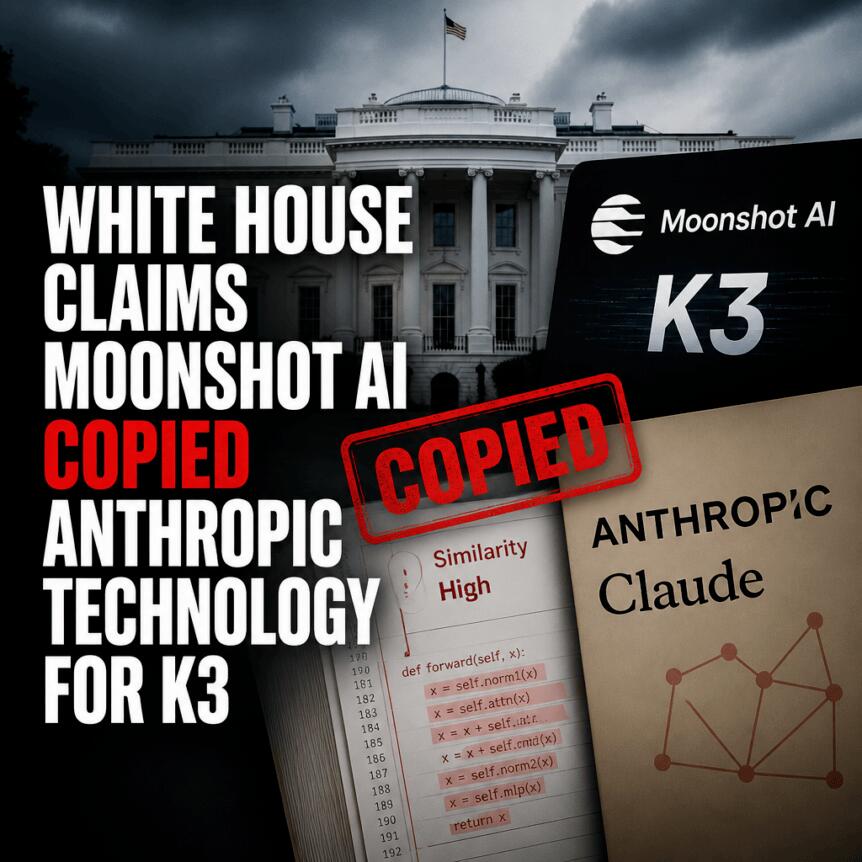
A senior official from the White House’s Office of Science and Technology Policy has accused the Chinese AI firm behind Kimi K3 of using “covert industrial distillation” techniques to replicate capabilities from U.S. models. The allegation, posted to X on Wednesday by Michael Kratsios, underscores how U.S. concerns about AI competitiveness are increasingly blending with fears of large-scale intellectual property (IP) theft.
Kratsios said the company built an internal platform to distill U.S. models “at scale,” specifically using methods intended to evade detection. While he argued that distillation—compressing a model into a smaller one—can be legitimate and part of open innovation, he framed the alleged approach as unacceptable because it targets proprietary American technology rather than improving models through transparent research.
Key takeaways
- White House OSTP Director Michael Kratsios alleged Chinese firm Moonshot AI used large-scale covert distillation tied to the Kimi K3 release.
- Kratsios contrasted legitimate model distillation with alleged industrial-scale techniques aimed at stealing U.S. IP and avoiding detection.
- Some AI researchers dispute claims that Anthropic’s Fable was used to produce Kimi K3’s performance, citing technical plausibility and timing constraints.
- U.S. officials warned that sanctions and Entity List designations could follow IP-theft-style distillation attacks.
Why the allegation matters beyond headlines
AI distillation is not inherently controversial. In general terms, distillation helps create smaller, more efficient models by training them on outputs generated by a larger “teacher” model. The White House’s argument, as stated by Kratsios, is that scale and secrecy change the nature of the activity—turning a common engineering practice into something closer to a targeted extraction of proprietary capability.
That distinction is critical for investors, developers, and researchers because it signals a potential shift in how regulators and governments may view certain AI training pipelines. If authorities treat “covert industrial distillation” as IP theft, it could influence enforcement priorities, compliance expectations, and the willingness of model providers to share weights, outputs, or licensing terms—especially across geopolitical lines.
Timing and the dispute over Anthropic’s role
Kratsios’s claim places particular focus on the question of whether U.S. model technology was used in the preparation of Kimi K3. Cointelegraph previously reported that Anthropic’s Fable 5 was taken offline quickly due to U.S. export controls, then re-released on July 1. Kimi K3, meanwhile, launched on July 16—creating what critics describe as a narrow window for any distillation-derived transfer.
Elie Bakouch, a researcher at Prime Intellect, publicly questioned whether the technical story matches the observed outcomes. In an X post referenced in the original reporting, Bakouch argued that there are only “15 days between fable 5 ban removal and kimi K3 release,” and he added that the performance “could” not be explained in a straightforward way by distillation from Fable.
Dean Ball, head of strategic futures at OpenAI, also pushed back. On Friday, Ball said he did not believe K3’s performance could be “explained away by distillation or anything like that.” Both responses reflect a broader point: even if distillation happened, it may not be the sole—or even the primary—reason for a model’s capabilities, and establishing a clean causal link can be technically difficult.
In the absence of publicly available technical evidence, these disputes matter because they highlight uncertainty. Government accusations may have intelligence backing, but for the wider AI community, the plausibility and traceability of model-to-model influence is a separate question from whether the activity would violate policy or law.
Washington escalates from concerns to potential enforcement
The posture from U.S. officials appears aimed at deterrence. In addition to Kratsios’s claim that “covert industrial distillation” intended to steal U.S. technology is unacceptable, U.S. Treasury Secretary Scott Bessent warned that sanctions and restrictions could be pursued.
Bessent said the U.S. supports open-source AI and the innovation it enables, but he argued open source does not mean “open season” on American IP. He also warned that if firms conduct covert, industrial-scale distillation attacks that cross into IP theft, consequences could include sanctions and Entity List designations.
That statement suggests the U.S. may attempt to treat certain distillation behaviors under the same enforcement logic used for other technology-transfer and IP-protection efforts. For AI companies, the practical takeaway is that even widely used ML techniques could be reinterpreted depending on intent, transparency, and scale.
It also raises a policy tension: distillation can improve accessibility and efficiency, but enforcement actions could push industry toward more restrictive handling of model outputs and training procedures. Developers may respond by tightening documentation, auditing data provenance, or changing how they handle third-party model access.
What to watch next
Whether the dispute becomes a broader enforcement campaign will likely depend on what additional evidence, if any, is made public and how regulators define “industrial-scale” and “covert” distillation in measurable terms. For now, observers should watch for any formal government actions tied to Kimi K3 and for further clarification from researchers on what technical signals can reliably connect teacher models to student performance.


A White House official accused Moonshot AI of distilling Anthropic’s Fable AI model to develop Kimi K3, which launched last week.
In a post on X on Wednesday, White House Office of Science and Technology Policy Director Michael Kratsios alleged the Chinese AI firm developed an internal platform to distill US models at scale, using methods designed to evade detection.
“Legitimate AI distillation used to create smaller, more efficient models plays a vital role in this open innovation ecosystem,” he said. “However, large-scale, covert industrial distillation aimed at stealing proprietary U.S. technology and undermining American research is unacceptable.”
Kimi K3 has emerged as one of China’s most capable AI models, intensifying Washington’s concerns that American models are being covertly used to accelerate China’s AI progress.
However, some AI researchers questioned claims that Anthropic’s latest AI model was used to train Kimi K3.
Anthropic’s Fable 5 was re-released on July 1 after it was quickly taken offline due to US export controls, while Kimi K3 launched on July 16, giving a narrow window for distillation attacks to occur.
“There are only 15 days between fable 5 ban removal and kimi K3 release,” said Elie Bakouch, a researcher at AI startup Prime Intellect.
“I don’t think claiming that K3’s performance comes from fable distillation (even if they did it) makes sense technically.”
Dean Ball, OpenAI’s head of strategic futures, said on Friday he didn’t believe the K3 model’s performance could be “explained away by distillation or anything like that.”
Related: Anthropic to bring back Fable 5 as US lifts export controls
US Treasury Secretary Scott Bessent warned that the large-scale distillation attacks could result in sanctions and other restrictions.
“We support open-source AI and the innovation it unlocks. But open source is not open season on American IP,” said Bessent.
“When PRC firms conduct covert, industrial-scale distillation attacks that cross the line into IP theft, sanctions and Entity List designations will be on the table.”
Magazine: Thai scammer’s $122M wallet, Japan embraces crypto credit: Asia Express

[PRESS RELEASE – Miami, United States, July 22nd, 2026]
Unserious today announced the acquisition of Creepz, one of the most recognizable NFT collections of the 2021-22 cycle. Backed by entrepreneur and investor Adam Weitsman, and with the support of the original founders, the deal places the lizard cult brand under a powerhouse new team.
Most importantly, the acquisition marks a homecoming for Psychrome – the original mastermind and creative genius behind the Creepz lore. Returning to lead IP development, he also brings a resume as a globally exhibited artist whose commercial collaborations span Nike, Salomon, Sneaker Con, Staple, Disney, Warner Bros., and Rovio.
Beyond this foundational creative leadership, the Unserious team brings deep operating experience with a track record spanning consumer brands, entertainment, and enterprise tech, alongside crypto’s largest token launches – including the historic ApeCoin.
Unserious also took the opportunity to formally deny the existence of lizard people, their alleged evil activities, and any plans for $CREEPZ world domination.
About Unserious
Unserious is reimagining the future of decentralized brands.
The post Adam Weitsman Backs Unserious in their Acquisition of Creepz and Psychrome homecoming appeared first on CryptoPotato.

Franklin Templeton’s head of digital assets and innovation says AI agents are poised to become a major demand driver for blockchain networks—specifically the protocols that can support rapid, low-cost payments between machines.
Speaking in a long-form post on X on Wednesday, Sandy Kaul argued that the “agentic AI” economy will require settlement speeds and fee structures that legacy card rails struggle to deliver. He pointed to blockchain ecosystems such as Aptos, Solana, and BNB Chain as better aligned with that needs-based shift.
Key takeaways
- Franklin Templeton’s Sandy Kaul links AI agents to increased demand for blockchain protocols that can handle machine-to-machine micropayments.
- Kaul argues traditional payment cards are a poor fit for agentic payments due to fees and slow settlement compared with blockchain transaction finality.
- A joint Visa and Artemis report contends card-based infrastructure is insufficient for AI agents that require near-zero fees and fast settlement.
- According to that Visa-Artemis report, the x402 payment protocol processed $15 million in adjusted volume across 109 million+ adjusted transactions since its May 2025 launch.
Why AI agents change the payment requirements
The central thesis is that agentic systems—software that can act autonomously on behalf of users or other systems—will generate a different kind of commerce than today’s human-driven transactions. Kaul framed the opportunity as an evolution beyond the way investors typically approach AI: rather than focusing only on companies “aligned” with AI, he suggested the market may also reward infrastructure designed for automated execution and continuous micro-interactions.
In his view, the payment layer becomes a bottleneck if it cannot support high-frequency, small-value transfers. Agentic micropayments are likely to be time-sensitive and cost-sensitive, meaning even modest frictions—such as higher fees or longer settlement—can make recurring machine payments economically unattractive.
Legacy cards vs. settlement speed
Kaul’s argument is not that card networks are obsolete, but that they were engineered for a different pattern of usage: relatively low-frequency human commerce where settlement delays are rarely a primary constraint.
He highlighted that visa network settlement can take one to three business days, while certain blockchain networks can finalize transactions in seconds. That timing gap is likely to matter when agents are coordinating continuously, where delays can ripple through workflows and reduce the viability of rapid settlements.
Kaul also pointed to “high fees and settlement times” as the factors that, in his assessment, make traditional payment rails unsuitable for agentic micropayments.
Visa and Artemis: infrastructure gaps for “agentic” commerce
The Franklin Templeton executive’s remarks align with a joint report released last Wednesday by Visa and investment thesis platform Artemis. In that report, the partners argue that conventional cards built for human-scale payments are not designed for the demands of AI agents.
Visa and Artemis specifically emphasize that agentic payments require infrastructure with near-zero fees and faster settlement to make micropayments commercially viable. The report’s framing reinforces Kaul’s thesis that the real battleground is payments throughput and cost efficiency—not just AI capabilities at the application layer.
Importantly for readers, this is not presented as a purely speculative concept; the report also points to existing machine-payment experimentation and early adoption signals, including activity tied to x402.
What “early adoption” looks like: x402 activity
In the Visa-Artemis report, the x402 payment protocol is highlighted as an example of a machine payment rail showing measurable usage. The report claims that x402, developed by Coinbase, processed $15 million in adjusted volume across more than 109 million adjusted transactions since its May 2025 launch.
For investors and builders, the value of that statistic is less about any single figure and more about the direction it suggests: that machine-payment protocols are beginning to attract usage under a framework designed for frequent transfers. Still, it’s also worth noting the metric is reported as “adjusted volume” and “adjusted transactions,” so readers should treat it as an operational indicator from the report rather than a direct translation into end-user revenue or broader market share.
Signals from payments providers
While the Visa-Artemis analysis criticizes card-based infrastructure as insufficient for agentic needs, the companies are also actively exploring how the broader payment ecosystem might support agentic behavior.
Visa’s crypto-related division and Stripe-backed Tempo launched AI tools in March, according to coverage referenced in the same context. Visa’s offering is described as enabling same-day payments—an attempt to address speed constraints that agentic micropayments depend on.
In parallel, Kaul’s remarks point readers to blockchain environments where settlement speed is structurally faster, suggesting a practical mismatch: even if card providers add features to move payments more quickly, the fee and settlement model may still not align with the economics of high-volume, machine-to-machine exchanges.
Going forward, the key thing to watch is whether agentic payment demand materializes in a way that drives sustained usage of low-fee, fast-settlement rails—particularly as protocols like x402 and newer infrastructure compete to serve recurring micropayment flows. The open question remains how quickly mainstream agent deployments will scale enough to make settlement and fee constraints decisive rather than theoretical.

Russia Returns World’s Most Heavily-Armed Warship To The Sea After $5B Facelift

Caution: It’s Slipping Away For Bitcoin Bulls!

Roads where Darlington drivers face delays on July 23


-
 NewsBeat7 days ago
London Mayor Sadiq Khan handed a peerage by Keir Starmer alongside 15 other Labour figures… just days before the PM leaves No10
-

 Fashion5 days ago
Weekend Open Thread – Corporette.com
-

 Politics5 days ago
The House | The City of London can help the new chancellor deliver growth in every postcode
-

 Crypto World5 days ago
Ripple Payments Joins MiCA With 14 Firms, Does It Mean Anything For XRP?
-
 Crypto World6 days ago
Two July Windows Left: The CLARITY Act’s Senate Fight and What Failure Means
-

 Politics4 days ago
Democrats look to World Cup watch parties to register thousands of voters
-

 Crypto World5 days ago
Ripple wins EU-wide access as ESMA adds it to MiCA register
-

 Crypto World2 days ago
Grayscale Files For Worldcoin ETF, WLD Registers Sharp Rise
-

 NewsBeat3 days ago
Unregistered fitter used Gas Safe logo on business flyers
-

 Tech2 days ago
Sail Virtually Aboard The “Itanic” With IA-64 Emulator
-

 Crypto World6 days ago
Injective Submits SEC Transfer-Agent Registration to Onchain Ownership Records
-
 Tech2 days ago
Turtle Beach Command Series KB7 review: a nifty screen-equipped gaming keyboard
-

 NewsBeat6 days ago
Registration is now open for March for Men with Kev 2026
-
 Business1 day ago
New Jersey voter registration controversy explained: How 6,600 noncitizens got on the rolls, and what happens next
-
 Crypto World6 days ago
Claude Fable 5 Slips to Second in AI Coding Leaderboard
-

 News Videos6 days ago
Money | Class 12 Economics | CBSE Board Exam 2026-27
-

 Business6 days ago
Banco Bilbao Vizcaya Argentaria, S.A. (BBVA) Discusses Global Macro Environment and Economic Outlook for Core Markets Transcript
-

 Crypto World5 days ago
Kaspersky exposes OkoBot’s 20-module crypto wallet attack
-

 News Videos4 days ago
Big Money Is Entering XRP
-

 NewsBeat5 days ago
Durham County Council to send out electoral registration emails
You must be logged in to post a comment Login