



Connect with us
DAPA Banner
DAPA Coin
DAPA
COIN PAYMENT ASSET
PRIVACY · BLOCKDAG · HOMOMORPHIC ENCRYPTION · RUST
ElGamal Encrypted MINE DAPA
🚫 GENESIS SOLD OUT
DAPAPAY COMING

Business

Chip Stock Surge Snaps the Market’s Skid

Published

on

Stocks Little Changed After Fed Decision

A furious rebound in semiconductor stocks on Tuesday helped the major indexes snap their recent skid.

The Nasdaq rallied 1.3%. The S&P 500 gained 0.9%. The Dow rose 384 points, or 0.7%. The major indexes snapped three-day losing streaks.

The big winner was the PHLX Semiconductor Sector Index, which had its best day in more than a month. Chip stocks dominated the S&P 500 and covered for an otherwise mixed day for the market benchmark.

Continue Reading
Click to comment

You must be logged in to post a comment Login

Leave a Reply

Business

Eli Lilly will file for approval of retatrutide obesity drug in 2027

Published

on

Eli Lilly will file for approval of retatrutide obesity drug in 2027

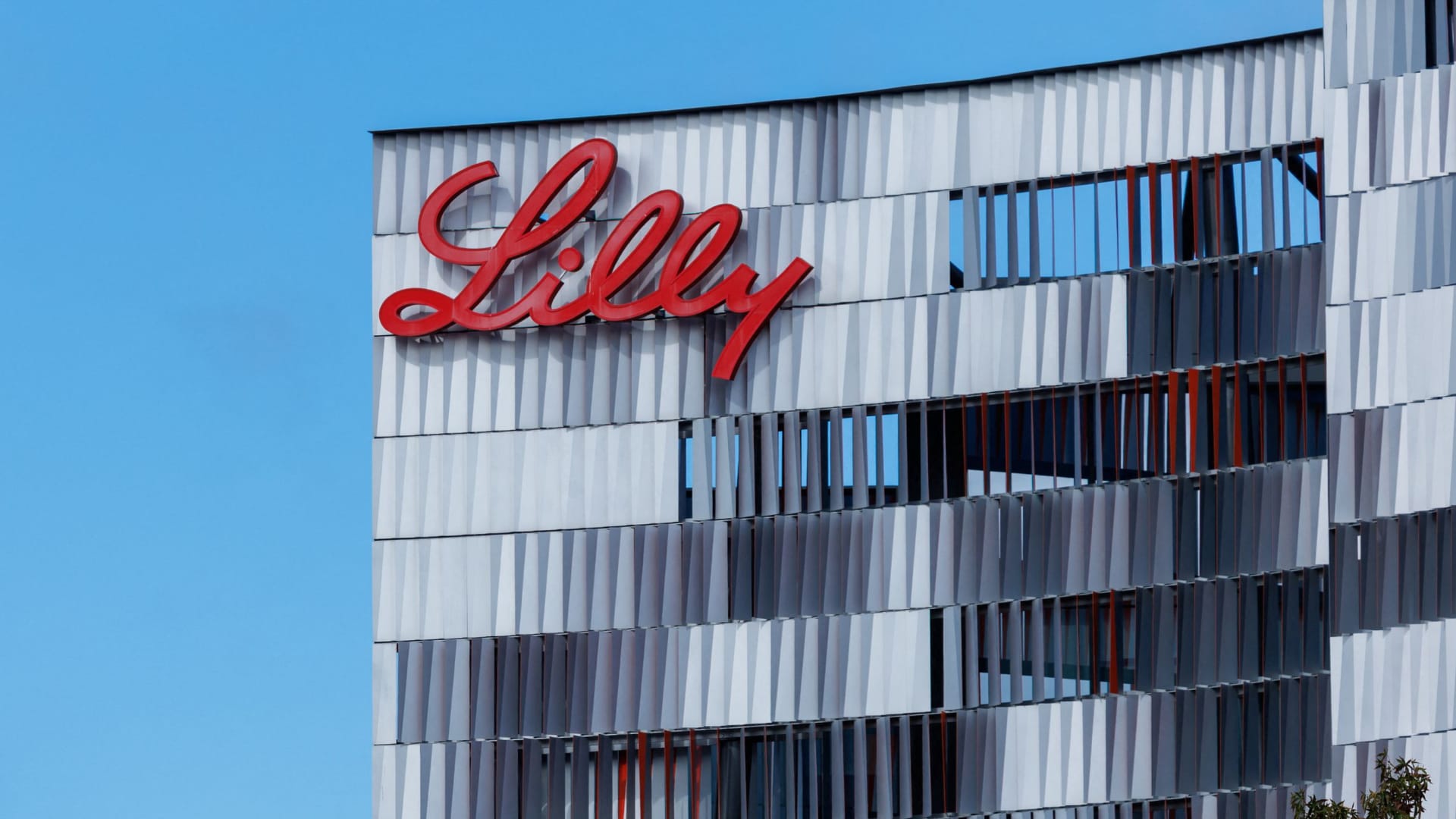
The Eli Lilly logo appears on the company’s office in San Diego, California, Nov. 21, 2025.

Mike Blake | Reuters

Eli Lilly on Thursday said it will file for approval of its next-generation obesity drug in the first quarter of 2027, as the treatment succeeds in two more late-stage trials. 

Advertisement

The pharmaceutical giant previously said it would submit an application as early as this year for the weekly injection, retatrutide, which works differently and appears to be more effective than existing shots and pills. In a statement to CNBC, Lilly said it needs more time to gather and verify the manufacturing and quality-control data required by regulators before it can seek approval.

In two separate Phase 3 trials, retatrutide delivered significant weight loss and improvements in a key measure of blood sugar levels in adults with obesity and two major complications, Type 2 diabetes and established cardiovascular disease. 

Based on the data, the company believes it has the information necessary to file for approval globally for retatrutide as a potential treatment for obesity, knee osteoarthritis pain and obstructive sleep apnea, Kenneth Custer, president of Lilly Cardiometabolic Health, said in a release. 

In one trial, adults with obesity and diabetes taking the drug lost up to an average of 20.8% of their weight, or nearly 50 pounds, at 80 weeks. That population typically struggles to lose weight. 

Advertisement

In another trial, adults with severe obesity and established cardiovascular disease, with or without diabetes, on the treatment lost up to an average of 22.6% of their weight, or 55.8 pounds, at 80 weeks. Retatrutide meaningfully reduced certain cardiovascular risk factors in patients, Lilly added. 

The side effects associated with the drug were consistent across the two trials as well as previous studies on the treatment. The most common included diarrhea, nausea and constipation, which are also seen across the broader GLP-1 class.

There are now positive results from five late-stage trials on retatrutide, which Lilly is positioning as the next pillar of its obesity portfolio after its injection Zepbound and newly launched pill, Foundayo. In a January note, TD Cowen analysts estimated that retatrutide could rake in sales of $3.8 billion in 2030. 

Retatrutide is also critical to the drugmaker’s plan to maintain its market share majority over Novo Nordisk in the booming market for weight loss and diabetes drugs. Some analysts estimate the segment could be worth about $100 billion by the 2030s. 

Advertisement

Dubbed the “triple G” drug, retatrutide targets GLP-1, GIP and glucagon rather than just one or two of those hormones like existing treatments. That appears to have more potent effects on a person’s appetite and satisfaction with food than other treatments.

Tirzepatide, the active ingredient in Zepbound, mimics GLP-1 and GIP. Novo Nordisk’s semaglutide, the active ingredient in Wegovy, mimics only GLP-1.

Choose CNBC as your preferred source on Google and never miss a moment from the most trusted name in business news.
Continue Reading

Business

Thailand FDI Surges 37% to $43.6B in H1 2026 Led by AI Data Centers

Published

on

Thailand’s Board of Investment approves $688 million Nestlé investment to create an AI-powered regional coffee hub
  • Thailand’s investment applications rose 37% year-on-year to $43.6 billion in the first half of 2026, spanning 1,299 projects. The digital sector dominated with $33 billion, driven largely by data centers, cloud services, and AI infrastructure. Foreign direct investment surged 80%, with Singapore, the UK, and China among the top sources.
  • Beyond digital, strong capital flows entered electronics, agriculture, logistics, automotive, and renewable energy sectors. Approved projects are projected to create over 82,000 jobs, consume $11.4 billion in domestic raw materials annually, and boost export capacity by more than $36.8 billion per year.

Thailand’s foreign and domestic investment applications surged 37% year-on-year to hit $43.6 billion (approx. 1.47 trillion baht) across 1,299 projects in the first half of 2026, driven by a massive wave of capital flowing into digital infrastructure and artificial intelligence (AI) data centers.

The surge comes even as the global economy faces real headwinds — geopolitical tensions, energy price volatility, and the restructuring of global supply chains — with Thailand emerging as a preferred base for investment across Southeast Asia.

Leading the capital influx is the digital sector, which reached a commanding $33 billion (approx. 1.12 trillion baht) in investment applications.

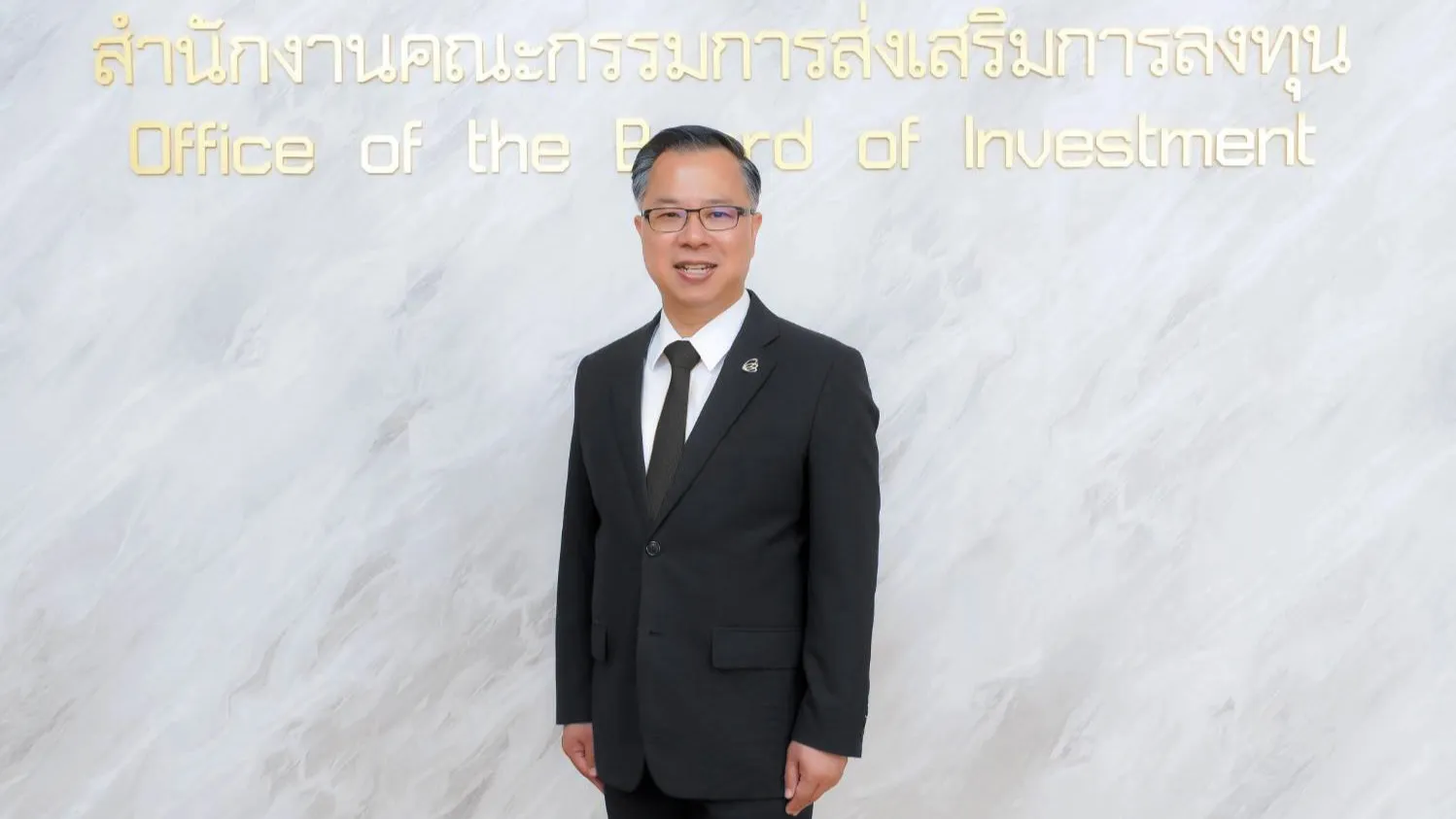
“Thailand’s investment growth held steady even as the world economy faced real turbulence,” said Mr. Narit Therdsteerasukdi, Secretary General of the Thailand Board of Investment (BOI). “This reflects strong investor confidence in Thailand’s potential as a base for the industries of the future.”

This digital windfall was accompanied by robust capital commitments across other high-value industries. The electrical appliances and electronics sector drew $3.56 billion (approx. 120.2 billion baht) across 179 projects, while agriculture and food processing secured $1.82 billion (approx. 61.4 billion baht) across 131 projects. Additionally, logistics and high-value services attracted $1.19 billion (approx. 40.2 billion baht) across 170 projects, and the automotive sector drew $759.2 million (approx. 25.7 billion baht) across 122 projects.

Advertisement

Other notable sectors included mining, metals and materials at $603.5 million (approx. 20.4 billion baht) across 128 projects, chemicals and petrochemicals at $489.1 million (approx. 16.5 billion baht) across 110 projects, and machinery, automation and robotics at $387.4 million (approx. 13.1 billion baht) across 82 projects, signaling broad-based industrial modernization.

Foreign Direct Investment (FDI) applications drove the bulk of the growth, skyrocketing 80% year-on-year to $40.5 billion (approx. 1.37 trillion baht) across 877 projects.

Singapore emerged as the top source of FDI, filing applications worth $33.2 billion (approx. 1.12 trillion baht) across 158 projects. The United Kingdom followed as the second-largest investor at $1.40 billion (approx. 47.2 billion baht) across 11 projects, with China close behind at $1.35 billion (approx. 45.8 billion baht) across 321 projects, Taiwan at $1.12 billion (approx. 38.0 billion baht) across 47 projects, and Japan at $970.1 million (approx. 32.8 billion baht) across 123 projects.

These investments remain heavily concentrated in digital technology — including data centers, data hosting, and cloud services — followed by electronics and electrical appliances such as optical transceivers, printed circuit boards, hard disk drives, and data-center networking and cooling systems, along with humanoid robotics parts, automotive parts, food and beverage, and advanced materials. Geographically, Thailand’s industrialized Central region claimed the largest share of capital at $26.7 billion (approx. 903.8 billion baht) across 513 projects, followed by the Eastern region at $14.7 billion (approx. 495.7 billion baht). The Northeastern, Southern, Western, and Northern regions each drew smaller totals, but the North stood out with investment value up 93 percent year-on-year, led by energy and utilities, agriculture and food processing, and medical projects.

Advertisement

To support the massive power requirements of next-generation data centers, Thailand is seeing a parallel surge in renewable energy infrastructure. The energy and utilities sector recorded 221 projects worth $1.17 billion (approx. 39.5 billion baht) during the first half of the year, dominated by 198 clean energy initiatives—including solar, wind, biomass, and biogas power plants—valued at $779.7 million (approx. 26.4 billion baht).

Concurrently, manufacturers are investing in automation to remain competitive on the global stage. Under the BOI’s “Smart and Sustainable Industry” initiative, companies submitted 132 applications valued at $507.6 million (approx. 17.2 billion baht) to upgrade machinery, adopt digital technology, and integrate automation and robotics into production and services, raising productivity and moving Thai industry toward higher-value, sustainable manufacturing.

Investment value is not the only goal, real success means quality jobs, higher skills, and better income for Thai workers.It means real opportunities for Thai businesses inside the supply chain, and growth that reaches every region, not just a few. That is why we will keep pushing for actual investment to happen as quickly as possible through the Thailand FastPass mechanism, driving economic growth and letting Thai people share directly in the shift to the industries of the future.

Mr. Narit Therdsteerasukdi, Secretary General of the Thailand Board of Investment (BOI).

The projects approved by the BOI in the first half of 2026 will generate over 82,000 jobs for Thai workers and consume approximately $11.4 billion (approx. 386 billion baht) in domestic raw materials annually, accounting for 42 percent of the projects’ total raw material use, and is expected to boost the nation’s export capacity by more than $36.8 billion (approx. 1.24 trillion baht) per year.

Advertisement

The BOI approved investment promotion applications for 1,300 projects valued at $38.7 billion (approx. 1.31 trillion baht) in the first half of 2026.

Source : ○ BOI : The Board of Investment of Thailand

Advertisement
Continue Reading

Business

Lancelin residents take coastal erosion plight to Perth

Published

on

Lancelin residents take coastal erosion plight to Perth

Residents of Lancelin are steadfast in opposition to moving to higher ground as the Indian Ocean threatens to swallow their town.

Continue Reading

Business

Rita Saffioti, Alannah MacTiernan summoned to attend defamation trial

Published

on

Rita Saffioti, Alannah MacTiernan summoned to attend defamation trial

Deputy premier Rita Saffioti and former minister Alannah MacTiernan could be witnesses in an ongoing defamation trial, having been summoned for evidence.

Continue Reading

Business

Alderney electricity bills to be subsidised as barrel of crude oil nears $100

Published

on

A ward at the District General Hospital in Sri Lanka's Negombo city where dengue patients are getting treated. A nurse in green is seen taking notes in the foreground

Electricity bills in Alderney will be subsidised for the rest of the year if the cost of a barrel of crude oil exceeds $100.

The current price of crude oil is $99.76, according to the Financial Times, external.

The States of Guernsey said it would give Alderney Electricity (AEL) £200,000 to offset bills on the island, which has a population of 2,167.

Its Policy and Finance Committee approved the temporary subsidy to help mitigate the impact of short-term increases in global prices on island electricity consumers.

Advertisement

Jeannie Cameron, who chairs the committee, said the funds would be applied directly to customers’ bills.

She said: “The recent rise in global oil prices has the potential to place additional financial pressure on households and businesses at a time when many are already managing increased costs.

“This temporary measure provides a level of protection against exceptional fuel price increases while ensuring that public funds are only used where they are genuinely needed.”

Cameron said unlike its sister islands Guernsey and Jersey, Alderney did not have cable supplying electricity from France.

Advertisement

“Diesel fuel is required to generate it. The committee recognises that this temporary subsidy complements, rather than replaces, AEL’s continuing work to secure the most competitive wholesale fuel procurement arrangements available.”

Continue Reading

Business

UK airport drop-off fees rise again – and here are the most expensive

Published

on

Business Live

The average cost has increased by a third

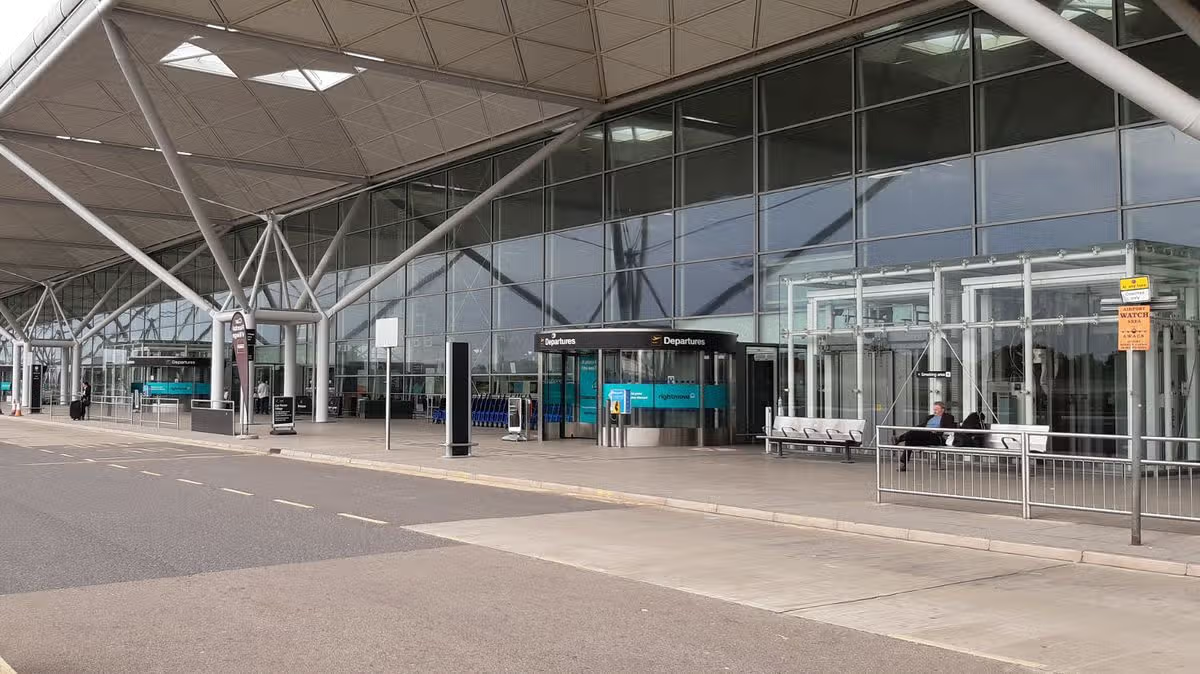
 the drop off zone at Stansted Airport, Essex

The drop off zone at Stansted Airport, Essex(Image: Nicholas.T.Ansell/PA Wire)

More than three quarters of UK airports raised or introduced drop-off fees for drivers in the past year, according to new research.

Advertisement

Sixteen out of 20 airports analysed by the RAC have increased so-called “kiss and fly” charges – which are typically levied for dropping off a passenger as close to a terminal as possible – since last summer.

The average cost has increased by a third.

Gatwick and Stansted charge the highest fees, at £10 for 10 minutes and 15 minutes respectively. They are followed by Edinburgh and Bristol (both £8.50 for 10 minutes).

London City has gone from being the only major UK airport analysed which allowed free drop-offs outside its terminal, to having the most expensive charge per minute, at £8 for five minutes.

Advertisement

The only four airports not to increase their charges this year are Liverpool John Lennon, East Midlands, Belfast City and Southampton.

Passengers being dropped off at airports by taxis and private hire vehicles generally have the fees added to their fares.

The RAC said none of the 10 busiest airports in the European Union charge for drop-offs, and neither do other major international hubs such as Dubai, Shanghai and Istanbul.

UK airports typically offer free options for dropping passengers off in mid- or long-stay car parks connected to terminals by buses.

Advertisement

RAC senior policy officer Rod Dennis said: “It’s disappointing to see so many airports charging so much for what many regard as a simple act of kindness in dropping off family and friends.

“Having a captive audience should be no excuse for these farewell fees – especially when they’re completely at odds with how major airports around the world operate.

“Of course, airports need to manage the limited space they have carefully, but if free, convenient drop-off zones work at many other international airports, then why not here?”

Mr Dennis also urged drivers to be “extremely careful” about park now, pay later drop-off zones, which do not have barriers.

Advertisement

He said: “Those that drop off but miss the signage or forget to pay soon afterwards can face a parking charge notice as high as £100 – a fee that feels distinctly disproportionate to the contravention.”

Conservative peer Lord Moylan has tabled an amendment to the Civil Aviation Bill asking for a review of drop-off charges.

A spokesperson for industry body AirportsUK said: “Where drop-off fees are charged, these are a part of the airport business model and help support the provision of the widest variety of flights from the airport.

“They are also necessary to manage congestion, and the traffic and air pollution concerns of our local communities, as well as our climate change objectives.

Advertisement

“These are issues that airports are mandated to manage by the Government and local authorities.

“Airports outside the UK have a different business model – typically being public owned and in receipt of state subsidies and tax discounts.

“The UK airport sector is in contrast generally privately owned and paying full commercial rates of taxation.”

Most expensive drop-off fees for UK airports

£10: Gatwick and Stansted

Advertisement

£8.50: Bristol and Edinburgh

£8: Bournemouth, Leeds Bradford and London City

£7: Aberdeen, Birmingham, Glasgow, Heathrow, Luton and Southampton

£6: Liverpool John Lennon and Newcastle

Advertisement

£5.50: Manchester

£5: Belfast International and East Midlands

£4.50: Cardiff

£4: Belfast City

Advertisement
Continue Reading

Business

NASA’s SR-1 Freedom Nuclear Spacecraft Set to Launch Ingenuity-Style Helicopters to Mars by Late 2028

Published

on

NASA Logo

The U.S. is preparing to launch its first nuclear-powered interplanetary spacecraft, a mission NASA says will mark a major step toward extending human exploration deeper into the solar system while delivering a new fleet of robotic helicopters to the surface of Mars.

The mission, called Space Reactor-1 Freedom, or SR-1 Freedom, is targeting a launch in December 2028. NASA describes it as humanity’s first fission-powered interplanetary spacecraft, designed to demonstrate nuclear electric propulsion in deep space for the first time.

What the mission will do

SR-1 Freedom will use a nuclear fission reactor to generate electricity that powers the spacecraft’s electric thrusters, an approach NASA says is far more efficient for long-duration missions than traditional chemical propulsion. According to NASA’s Program Executive of Fission Surface Power, Steve Sinacore, the reactor is expected to power on within 48 hours of launch and will take approximately one year to reach Mars.

Advertisement

The reactor itself will generate roughly 20 kilowatts of electricity using high-assay low-enriched uranium fuel, with heat transferred through a system of heat pipes and a boron carbide radiation shield protecting the rest of the spacecraft. An advanced closed Brayton-cycle power conversion system will convert the reactor’s heat into electricity, while a lightweight composite and titanium radiator system handles heat rejection. The spacecraft’s electric propulsion system is designed to operate at up to 48 kilowatts.
Much of the spacecraft’s structure will rely on previously developed hardware rather than entirely new components. Central to that approach is the reuse of the Power and Propulsion Element, a system originally built for NASA’s Lunar Gateway space station, which will be repurposed as part of SR-1 Freedom’s design.

A pathfinder for future missions

NASA has repeatedly emphasized that SR-1 Freedom is intended as a technology demonstrator rather than a finished blueprint for future missions. Data gathered during the mission is expected to inform the development of a related project, Lunar Reactor-1, a proposed nuclear fission power system designed to provide continuous electricity for future lunar outposts during the Moon’s extended periods of darkness.

Advertisement

NASA Administrator Jared Isaacman detailed the ambitions behind the program in a social media post announcing the mission. “NASA is building SR-1 Freedom, a nuclear electric propulsion spacecraft, launching to Mars in 2028,” Isaacman wrote, adding that the mission’s name was chosen to reflect “the spirit of American innovation and exploration” during what he described as the 250th year of the United States. Isaacman said the project would help deliver “America’s nuclear power capabilities to space” and represents a key step toward eventual crewed missions to Mars and exploration of the outer solar system.

At a press event unveiling the mission, Isaacman framed the effort as long overdue. “After decades of study and billions spent on concepts that have never left Earth, America will finally get underway on nuclear power in space,” he said.

The SkyFall payload

Alongside its propulsion demonstration, SR-1 Freedom will carry the SkyFall payload to Mars: three new-generation robotic helicopters built on the design of NASA’s Ingenuity Mars Helicopter. Once the spacecraft reaches Mars, the helicopters will be deployed via a mid-air atmospheric entry sequence rather than a traditional rover-based landing.

Advertisement

The SkyFall helicopters are intended to scout potential future human landing sites and investigate subsurface water ice deposits, building on the scientific groundwork laid by Ingenuity. That earlier helicopter, delivered to Mars alongside the Perseverance rover in February 2021, became the first aircraft to achieve powered, controlled flight on another planet. Over nearly three years of operation, the roughly 1.8-kilogram helicopter completed 72 flights before being damaged and grounded in early 2024, far surpassing its original mission expectations. NASA has said Ingenuity’s development cost was approximately $80 million, and the agency has credited the helicopter with opening an entirely new approach to planetary exploration.

Cost and program partnership

NASA has estimated the overall cost of building and launching SR-1 Freedom at roughly $2.1 billion, though the agency has not disclosed a detailed cost breakdown, and the mission was notably absent from NASA’s fiscal year 2027 budget request released shortly after the program’s initial announcement. SR-1 Freedom is being developed jointly by NASA and the U.S. Department of Energy, which oversees the nation’s nuclear stockpile and is contributing expertise on reactor technology.

NASA officials have described the agency’s approach to the project as intentionally conservative on new development, aiming to reuse existing hardware wherever possible to reduce cost and risk. “We’re trying to leverage as much as we can with as little new development as possible,” one NASA official said regarding the mission’s engineering approach, acknowledging that the strategy is easier described than executed.

Advertisement

Part of a broader nuclear space strategy

SR-1 Freedom is one piece of a larger push by NASA to bring nuclear power into future exploration efforts, alongside plans for a nuclear reactor intended to land on the lunar surface by 2030 to help power a future outpost there. Officials have said that if SR-1 Freedom proves successful, later reactors could scale up from tens of kilowatts of power to eventually reach the megawatt range, enabling higher-power missions to the Moon and eventual crewed missions to Mars.

With roughly two years remaining before its targeted December 2028 launch, SR-1 Freedom’s final spacecraft design remains a work in progress, and NASA has said it plans to seek input from commercial space companies as development continues. Whether NASA continues operating the spacecraft after it deploys the SkyFall helicopters at Mars also remains undecided, with officials suggesting the vehicle could potentially be redirected for further exploration once its primary mission is complete.

Advertisement
Continue Reading

Business

ASX 200 Jumps 0.72% to Near 8,900 Points on Thursday as Alphabet’s Strong Earnings Lift Global Markets

Published

on

FTSE 100 Surges 0.8% Today as Oil Eases and Markets

SYDNEY — Australia’s benchmark stock index climbed sharply Thursday, building on gains from the previous session as strong quarterly results from Alphabet lifted sentiment across global markets, even as domestic technology stocks bucked the broader trend and slid to a one-month low.

The S&P/ASX 200 stood at 8,886.1 as of 1:02 p.m. Australian Eastern Standard Time, up 63.1 points, or 0.72%, on the day. The advance follows a gain of roughly 0.35% in Wednesday’s session, when the index closed at 8,823 points, lifted at the time by strength in mining, energy and consumer stocks.

What’s driving Thursday’s gains

The rally comes after Alphabet delivered a broad earnings beat overnight, reporting revenue up 24% to $119.80 billion, ahead of analyst estimates of $117.02 billion. The company’s cloud division was a standout, with Google Cloud revenue surging 82% to $24.77 billion against expectations of $22.46 billion, while operating margin in that segment expanded to 35.6%, up sharply from 20.7% a year earlier. Alphabet also raised its full-year capital expenditure guidance, a move interpreted by investors as a signal of continued confidence in AI-related demand.

Advertisement

Alphabet Chief Executive Sundar Pichai characterized the broader AI adoption trend as still in its early stages during the company’s earnings call, saying it feels like the “very early innings” of a secular shift across Google’s core information businesses, and adding that enterprises are “barely scratching the early stages” of what is possible with the technology.

A mixed picture beneath the headline number

Despite the broader index’s strong gain, Thursday’s session revealed a notable divergence beneath the surface. The S&P/ASX 200 Tech Index was trading sharply lower, down 2.4% to a one-month low, with heavyweight technology names including WiseTech, Life360 and Pro Medicus all falling between 3% and 4%. Market analysts pointed to a weak overnight session for global software stocks as the primary driver, with the iShares Expanded Tech-Software ETF falling 3.0% in offshore trading, rather than any specific domestic catalyst.

Economic data adds to the mix

Advertisement

Thursday’s trading also came alongside a batch of fresh economic data. Australia’s unemployment rate held steady at 4.4%, even as jobs growth for the month came in well above expectations, according to figures released Thursday morning. Separately, South Korea’s economy grew faster than expected in the second quarter, with a surge in semiconductor exports offsetting weaker construction investment, offering another data point supporting the broader narrative of resilient demand tied to the global technology and chip sector.

Context from the broader market

Thursday’s advance for the ASX 200 stands out in part because it came despite a subdued overnight session on Wall Street. Ahead of Thursday’s open, SPI futures had pointed to a stronger start for Australian shares, forecasting an open roughly 75 points, or 0.85%, higher, a signal that largely played out as the session progressed, even against a softer backdrop in U.S. futures markets tied to escalating tensions in the Middle East, which President Donald Trump moved to downplay.

A year of records and pullbacks

Advertisement

Thursday’s climb toward 8,900 points continues what has been a turbulent year for Australian equities. The ASX 200 reached an all-time high of 9,198.6 points in February 2026, before pulling back to trade closer to the 8,800 range through much of July. Over the index’s more than 25-year history, it has delivered a long-term annualized total return of roughly 8.2%, including dividends, making it one of the more established benchmarks for Australian equity performance.

The index, published by S&P Dow Jones and launched in April 2000, comprises the 200 largest companies listed on the Australian Securities Exchange by float-adjusted market capitalization, together representing approximately 79% of the country’s total equity market. The index undergoes quarterly rebalances in March, June, September and December to ensure its constituents continue to meet eligibility requirements.

Company-specific movers

Beyond the broader macro picture, individual company updates also factored into Thursday’s trading. Energy company Contact Energy reported higher electricity and gas sales alongside continued progress on new renewable energy projects and lower unit generation costs for June. Mining and metals company South32 advanced its base metals transformation strategy with a major divestment of aluminum assets, while biotechnology firm Telix Pharmaceuticals provided investors with an update on its clinical pipeline and new partnership agreements.

Advertisement

What investors are watching next

With normal ASX trading hours running from 10 a.m. to 4 p.m. Monday through Friday, the remainder of Thursday’s session will offer a clearer picture of whether the index can hold onto its gains through the closing bell, particularly given the notable weakness in technology shares contrasting with the broader market’s advance. Investors are likely to continue parsing Alphabet’s results, along with additional corporate earnings expected globally in the coming days, for further signals about the durability of AI-related capital spending and its ripple effects across sectors from cloud computing to semiconductor manufacturing.

For now, Thursday’s advance leaves the ASX 200 within striking distance of the 8,900-point level, extending a recovery from earlier weakness this month even as the underlying divergence between strong index-level gains and a sharply lower technology sector suggests investor sentiment remains far from uniform across the Australian market.

Advertisement
Continue Reading

Business

Corporate Profits Should Override All Other Concerns, For Now

Published

on

Corporate Profits Should Override All Other Concerns, For Now

This article was written by

Lawrence Fuller has been managing portfolios for individual investors for 30 years, starting his career at Merrill Lynch in 1993 and working in the same capacity with several other Wall Street firms before realizing his long-term goal of complete independence when he founded Fuller Asset Management. He also manages the Focused Growth portfolio on the new fintech platform called Dub, which is the first copy-trading platform approved by securities regulators in the US, allowing retail investors to copy the portfolio and ongoing trades of the manager they choose automatically. You can also find him on Substack and lawrencefuller.substack.com.He is the leader of the investing group The Portfolio Architect, which focuses on an overall economic and market outlook that complements an all-weather investment strategy designed to produce consistent risk-adjusted market returns. Features include: Portfolio construction guidance, access to an “All-Weather” model portfolio and a dividend and options income portfolio, a daily brief summarizing current events, a week ahead newsletter, technical and fundamental reports, trade alerts, and 24/7 chat. Learn More.

Analyst’s Disclosure: I/we have a beneficial long position in the shares of GOOG either through stock ownership, options, or other derivatives. I wrote this article myself, and it expresses my own opinions. I am not receiving compensation for it (other than from Seeking Alpha). I have no business relationship with any company whose stock is mentioned in this article.

Lawrence Fuller is the Principal of Fuller Asset Management (FAM), a state registered investment adviser. He is also the manager of the Focused Growth portfolio on the copy-trading platform Dubapp.com. Information presented is for educational purposes only intended for a broad audience. The information does not intend to make an offer or solicitation for the sale of purchase of any specific securities, investments, or investment strategies. Investments involve risk and are not guaranteed. FAM has reasonable belief that this marketing does not include any false or material misleading statements or omissions of facts regarding services, investment, or client experience. FAM has reasonable belief that the content as a whole will not cause an untrue or misleading implication regarding the adviser’s services, investments, or client experiences. Past performance of specific investment advice should not be relied upon without knowledge of certain circumstances or market events, nature and timing of investments and relevant constraints of the investment. FAM has presented information in a fair and balanced manner. FAM is not giving tax, legal, or accounting advice.
Mr. Fuller may discuss and display charts, graphs, formulas, and stock picks which are not intended to be used by themselves to determine which securities to buy or sell, or when to buy or sell them. Such charts and graphs offer limited information and should not be used on their own to make investment decisions. Consultation with a licensed financial professional is strongly suggested. The opinions expressed herein are those of the firm and are subject to change without notice. The opinions referenced are as of the date of publication and are subject to change due to changes in market or economic conditions and may not necessarily come to pass.

Advertisement

Seeking Alpha’s Disclosure: Past performance is no guarantee of future results. No recommendation or advice is being given as to whether any investment is suitable for a particular investor. Any views or opinions expressed above may not reflect those of Seeking Alpha as a whole. Seeking Alpha is not a licensed securities dealer, broker or US investment adviser or investment bank. Our analysts are third party authors that include both professional investors and individual investors who may not be licensed or certified by any institute or regulatory body.

Continue Reading

Business

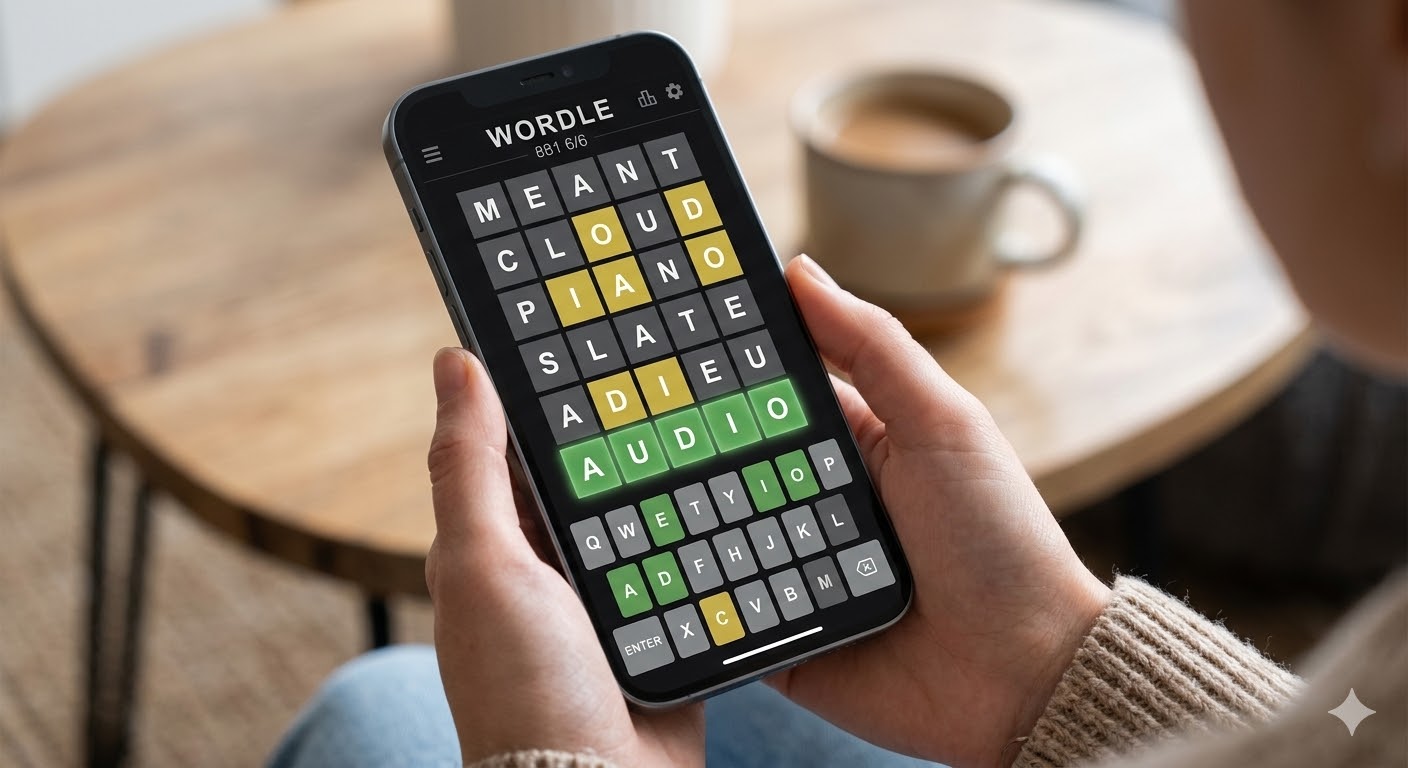
July 23, 2026 Solution Revealed for Puzzle 1860, a Word About Space and Gravity

Published

on

Nancy Guthrie

Wordle players looking for Thursday’s solution had to think beyond Earth for the answer, as puzzle number 1,860 pulled its clue from the language of astronomy and space travel.

The New York Times’ daily word game, which challenges players to guess a five-letter word in six tries or fewer, has become a fixture of morning routines for millions of players worldwide since its acquisition by the Times in 2022. Thursday’s edition offered a word many players likely encounter regularly in everyday conversation, even if its precise definition took a moment to recall under puzzle pressure.

The answer for July 23

The solution to Wordle #1860 is ORBIT, a term describing the curved, repeating path that an object in space travels around a star, planet or moon due to the pull of gravity. The word is most commonly used to describe the motion of satellites, space stations and planets as they continuously circle larger cosmic bodies, though it can also be used figuratively to describe someone or something remaining closely tied to a particular person or influence.

Advertisement

Structurally, the word contains just one vowel and no repeated letters, a combination that made it somewhat more approachable than puzzles built around trickier letter patterns. Players hunting for a pronunciation clue may have noted that ORBIT forms a slant rhyme with words like “sorbet,” offering a subtle audio hint for those working through the puzzle out loud.

A puzzle built around connection

Puzzle commentators described Thursday’s word as fitting a broader theme running through the day’s edition, one centered on connection, teamwork and smooth transitions. Some players moved through the puzzle quickly once they zeroed in on space-related vocabulary, while others reported working through several guesses involving unrelated five-letter words before the correct pattern of letters clicked into place.

How Wordle works

Advertisement

Wordle presents players with a new five-letter puzzle every 24 hours, resetting at midnight in each player’s local time zone, meaning the daily challenge effectively runs on a rolling global schedule rather than a single fixed reset time. Players receive color-coded feedback after each of their six allowed guesses: green tiles confirm a letter is correct and properly placed, yellow tiles indicate a correct letter in the wrong position, and gray tiles rule a letter out of the solution entirely.

The game, created by software engineer Josh Wardle as a personal project in 2021, quickly went viral before The New York Times acquired it in early 2022 and folded it into its broader digital games platform. Today, Wordle sits alongside other daily Times offerings including Connections, Strands, the Mini Crossword, Pips and Sudoku, some of which remain free to play while others require a Games subscription.

Strategy tips for future puzzles

Puzzle strategists commonly recommend opening with a word containing a strong mix of common vowels and frequently used consonants, such as R, S, T, N and L, since that combination tends to eliminate the largest number of possible answers early in the game. Popular opening words that fit this pattern include Adieu, Audio, Raise, Atone and Stone, each offering broad letter coverage without repeating too many common consonants in a single guess.

Advertisement

Watching for duplicate letters within a five-letter word is another commonly cited pitfall, since it can be easy to overlook the possibility of a repeated letter, such as the double “z” in a word like “buzzy,” when narrowing down remaining guesses. Recognizing common word endings, including “-ED,” “-ER” and “-Y,” can also help players close out a puzzle more efficiently once several letters have already been confirmed.

Puzzle experts additionally advise staying composed heading into a sixth and final guess, since the pressure of a last attempt can sometimes lead players to second-guess valid word options rather than working methodically through the possibilities that fit their existing clues.

A daily ritual for millions

Wordle’s enduring popularity has often been attributed to its simplicity: a single five-letter puzzle, six attempts, and a built-in system that lets players share their results on social media without revealing the actual answer to others who haven’t yet played. That structure has helped turn the game into something closer to a shared daily ritual than a simple puzzle, with friends, families and coworkers frequently comparing results each morning.

Advertisement

Part of the game’s broad appeal also comes down to accessibility. Unlike more specialized word or trivia games, Wordle requires no specific area of expertise, making it approachable for casual players and dedicated word enthusiasts alike, a dynamic that has helped sustain its popularity for several years running.

Tracking performance over time

The Times’ companion analysis tool, Wordlebot, evaluates each day’s puzzle after players complete it, offering data on the average number of guesses needed to solve that day’s word, along with luck and skill scores intended to reflect how efficiently players narrowed down the solution based on the information available to them. Comparative difficulty can vary considerably from one puzzle to the next depending on how common a word’s letter structure is and how well it overlaps with frequently used opening guesses.

A new Wordle puzzle will publish at midnight Friday, continuing the franchise’s daily streak dating back to its original 2021 launch. Players can access the game through the Times Games website or the NYT Games mobile app, available on both iOS and Android. For those who came up short on Thursday’s space-themed puzzle, a fresh five-letter challenge, and a new opportunity to extend a personal win streak, awaits with tomorrow’s reset.

Advertisement
Continue Reading

Trending

Copyright © 2025