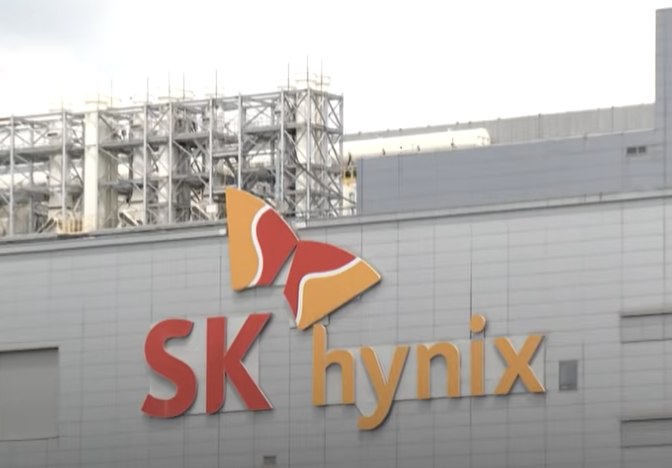
SK Hynix’s U.S.-listed shares climbed further Thursday, extending a volatile but largely upward run since the South Korean memory chipmaker’s record-breaking Nasdaq debut two weeks ago, as renewed optimism about artificial intelligence infrastructure spending lifted chip stocks broadly.
SK Hynix’s American depositary receipts, trading under the ticker SKHY, stood at $172.70 as of 12:55 p.m. Eastern time, up $7.43, or 4.50%, on the day. The gain builds on a stretch of significant volatility for the newly listed shares, which have swung sharply in both directions since their Nasdaq debut on July 10.
What’s driving Thursday’s gains
Thursday’s rally was fueled largely by Alphabet’s latest earnings report, released after Wednesday’s market close, in which the Google parent company raised its 2026 capital expenditure forecast to a range of $195 billion to $205 billion, up from its earlier guidance of $180 billion to $190 billion. Alphabet also reported that Google Cloud revenue jumped 82% to $24.8 billion in the second quarter, reinforcing investor confidence in continued heavy spending on AI infrastructure. Alphabet Chief Financial Officer Anat Ashkenazi said demand continues to exceed supply. “The demand still outpaces that investment,” Ashkenazi said.
That spending signal rippled through the broader semiconductor sector Thursday. Shares of Micron Technology rose roughly 3% at the start of U.S. trading, while SK Hynix’s ADR gained more than double that percentage, reflecting the additional volatility built into the newly listed depositary receipts, which trade with a capped conversion structure relative to the company’s Seoul-listed shares.
A record-breaking Nasdaq debut
SK Hynix made history earlier this month when it raised $26.5 billion in its American depositary receipt offering, the largest first-time share sale by a foreign company ever recorded in the United States, surpassing the $25 billion Alibaba raised in its 2014 listing. The company sold 177.9 million ADRs at $149 each, with each ADR representing one-tenth of a common share traded in Seoul. The offering was more than seven times oversubscribed, according to Bloomberg, drawing interest from long-only generalist funds, technology-focused funds, sovereign wealth funds and globally focused Asia investors.
Shares jumped 13% on their first day of trading July 10, closing at $168.01. SK Hynix Chairman Chey Tae-won described the milestone in personal terms during an interview with CNBC at the time. “It’s a kind of dream, and now it’s a dream come true,” Chey said, adding that demand for the company’s high-bandwidth memory chips used in AI applications showed no signs of slowing. “The demand is enormous, exponentially, so I don’t really see” evidence that demand is shrinking, he said.
A volatile first two weeks
The stock’s performance since its debut has been anything but steady. Just days after listing, the ADRs tumbled 9.3% in a single session as a record selloff in South Korean equities spilled into U.S. trading, before more than recovering with a 27% gain the following day. That swing pushed the ADR’s premium over SK Hynix’s Seoul-listed common shares to as high as 51% at one point, far above the roughly 3% premium at which the securities were originally priced.
More recently, the premium has moderated but remained elevated. As of Wednesday’s session, SK Hynix’s ADR traded at a calculated premium of roughly 34.5% over its Seoul shares once adjusted for currency exchange rates, according to market analysis, reflecting continued strong U.S. investor demand relative to the underlying Korean-listed stock.
Why investors are betting on SK Hynix
SK Hynix is the world’s leading producer of high-bandwidth memory, or HBM, a specialized and complex form of computer memory created by stacking multiple layers of traditional memory chips together, which has become essential for powering AI accelerator chips made by companies including Nvidia. That positioning has fueled a dramatic rise in the company’s valuation, with SK Hynix’s stock climbing more than sevenfold over the past year amid a global shortage of AI-grade memory chips and sharply rising prices.
The company’s aggressive expansion plans, including continued investment in its Yongin HBM production hub in South Korea and a packaging plant in Indiana, were central to its rationale for pursuing the U.S. listing, giving SK Hynix expanded access to American capital markets to fund its buildout.
What’s ahead for the stock
SK Hynix is scheduled to report second-quarter earnings on July 29, a report that will offer investors their first detailed look at the company’s financial performance since its Nasdaq listing. Analysts’ preliminary consensus estimates project earnings per share of 71,211 won, a figure roughly 3.6% higher than estimates from a month earlier, reflecting continued upward revisions to the company’s expected performance heading into the report.
Separately, SK Hynix moved this week to deny media reports suggesting it was in talks to acquire Intel’s Ohio semiconductor manufacturing facility, a report that had circulated amid broader speculation about consolidation and partnership activity across the chip industry.
A broader rally across Asian chip stocks
SK Hynix’s gains Thursday came alongside broader strength in South Korea’s stock market. The company’s Seoul-listed shares finished 4.86% higher at 1.919 million won, contributing to gains across the country’s benchmark index, with fellow chipmaker Samsung Electronics also among the beneficiaries of the renewed optimism around AI-related capital spending following Alphabet’s earnings report.
With SK Hynix’s earnings report just days away, investors are likely to watch closely for further confirmation of the demand trends that have driven the stock’s dramatic rise over the past year, along with any additional detail on the company’s HBM production capacity and pricing power heading into the second half of 2026. Given the elevated premium the ADRs continue to command over their Seoul-listed counterpart, some analysts have cautioned that a narrowing of that gap remains a possibility depending on how the upcoming earnings report and broader market sentiment around AI spending evolve in the weeks ahead.























































You must be logged in to post a comment Login