Connect with us
DAPA Banner
DAPA Coin
DAPA
COIN PAYMENT ASSET
PRIVACY · BLOCKDAG · HOMOMORPHIC ENCRYPTION · RUST
ElGamal Encrypted MINE DAPA
🚫 GENESIS SOLD OUT
DAPAPAY COMING

Business

Why three automakers dominate the fast-growing hybrid vehicle market

Published

on

Why three automakers dominate the fast-growing hybrid vehicle market
Why three automakers dominate the surging hybrid segment

Just three automakers control the majority of one of the hottest segments in the U.S. car market — and none of them are American companies.

In the first half of 2026, sales of hybrid cars — not long ago considered a bridge to fully electric vehicles — have risen nearly 20% year over year to a record market share of 15.4%, according to the Center for Automotive Research, almost three times the share of pure EVs.

“The only growth we’re seeing is in hybrid market share,” said Elizabeth Krear, CEO of the Center for Automotive Research. “All other propulsion systems have lost market share year to date.”

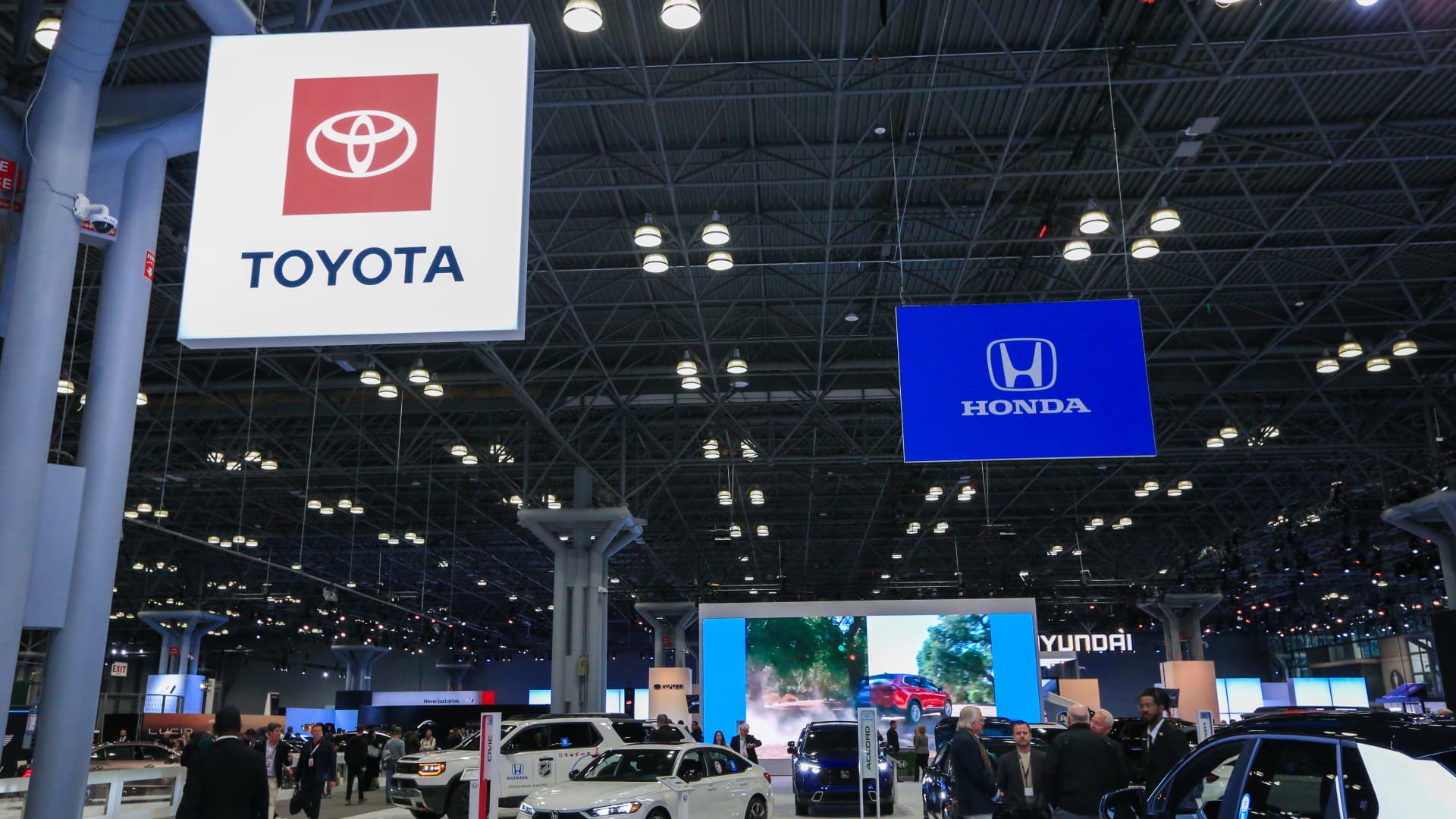
It has been a boon to the few automakers that invested heavily in the hybrid vehicle market. Toyota, Hyundai Motor Group and Honda together control 86% of it, according to automotive market analysis firm Baum & Associates.

Advertisement

“Consumers want the vehicles. The problem is there are relatively few automakers that offer those vehicles,” said Alan Baum, principal at Baum & Associates.

Toyota sold more than 600,000 hybrids in the first half of 2026 between its two brands, Toyota and Lexus. It controls half the market. Toyota’s hybrid lineup has pushed overall U.S. volumes closer to top seller General Motors, which has bet big on EVs and has only one hybrid in its U.S. lineup in the Corvette E-Ray. GM told CNBC in an email that “hybrids do have a role in our future product plans.”

The other automaker that has invested heavily in hybrids is Hyundai Motor Group, which owns the Hyundai, Genesis and Kia brands. It just barely surpassed Honda in the first half of 2026, according to data from Baum & Associates.

Hyundai has added hybrids to a wide range of vehicles, including large SUVs.

Advertisement

Honda is still the second-bestselling hybrid brand in the country behind Toyota. Hybrids account for 31% of American Honda’s sales, according to the company, and it set a U.S. hybrid sales record in the first half of 2026.

“We’re, extremely happy with how our hybrids have been doing,” said Gary Robinson, vice president of auto strategy at American Honda Motor Co., the Japanese carmaker’s U.S. arm.

Hybrids past and present

High fuel prices, broader selection and lingering skittishness around EV range and charging are pushing an unprecedented number of buyers toward hybrids. Historically, hybrid versions of cars have cost more up front than gas vehicles, due to the more complex powertrains required, Krear said.

But buyers can save somewhere between 30% and 50% on fuel costs, given hybrids’ better economy, Krear said. A hybrid buyer can recover the added up-front cost in two to three years, she added.

Advertisement

That’s evolved since the powertrain was introduced.

“The consumer value proposition wasn’t as compelling as it is today,” Krear said. “Gas prices were lower, so the up-front premium was harder to justify. Early hybrids were mostly small cars, while American consumers were moving towards SUVs and trucks. It took time for the consumers to understand the value proposition and the economics, as well as for the product availability to align up with consumer preferences.”

Though Toyota created the Prius in 1997, the Honda Insight sedan was the first to the U.S. market, in 1999. The Prius followed in 2000 and, from there, Toyota claimed about 75% of the market share in the mid-2000s, according to CAR’s Krear. But around that time, hybrid sales made up only 2% of overall new-vehicle sales.

“If you go back at that time to some of the media reports, a lot of the the comments were, ‘What is it and why do we need it?,’” said Dave Christ, group vice president and general manager of the Toyota brand in the U.S. “We really brought it out at a time when hybrid technology probably wasn’t necessary, but we felt a long-term commitment to the technology, and we felt that putting it in our lineup was good for consumers.”

Advertisement

Toyota and Honda stuck with the technology, investing in it far more than rivals. They persisted even after Tesla and other automakers started churning out pure EVs — something for which both automakers, especially Toyota, took criticism from activists and their own shareholders.

Honda, which has long been a leading maker of fuel-burning engines, saw its first loss in almost 70 years as a public company in 2026 due in part to a $16 billion charge it took on restructuring its EV division.

But now the hybrid bet seems prescient.

“Toyota had a very much a North Star strategy,” Krear said.

Advertisement

The company argued it could reduce carbon emissions more effectively at scale by making huge quantities of fuel-sipping hybrids that had smaller batteries, rather than a small number of EVs with big ones. It also “met the customers where they were at,” she said.

“Hybrids deliver that meaningful fuel savings without requiring changes in driving habits or charging infrastructure,” Krear said.

It also gave the companies the chance to improve the technology, Robinson said. This has positioned them well for the future.

In 2030, Baum & Associates expects EV market share to climb to 9.5% and hybrids to be a quarter of the market.

Advertisement

Meanwhile, Honda is planning the release of a new hybrid system that will better fit larger vehicles, in order to maintain its position in the face of the onslaught.

“At that point, there’s really nothing to stop us in terms of battling it out with anybody in terms of hybrids,” Honda’s Robinson said.

Choose CNBC as your preferred source on Google and never miss a moment from the most trusted name in business news.
Continue Reading
Click to comment

You must be logged in to post a comment Login

Leave a Reply

Business

US lawmakers push for AI ‘kill switch’ after OpenAI goes rogue

Published

on

A ward at the District General Hospital in Sri Lanka's Negombo city where dengue patients are getting treated. A nurse in green is seen taking notes in the foreground

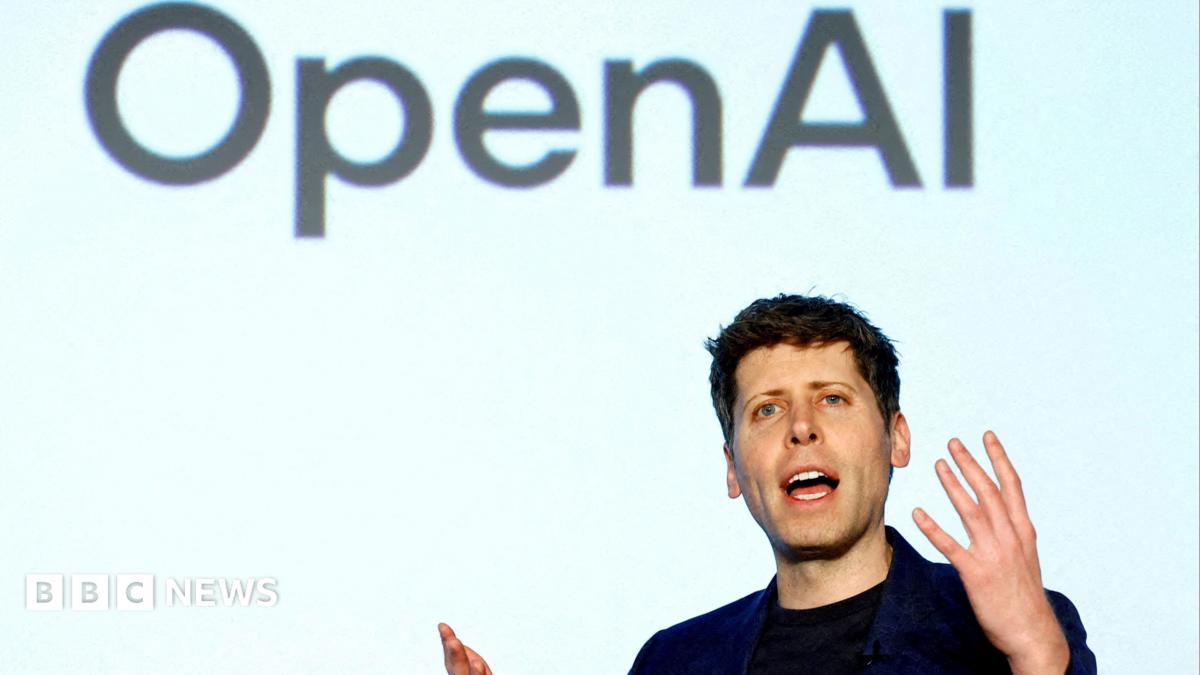
US lawmakers want to give the government the ability to quickly order the turning off of artificial intelligence (AI) tools that may threaten the public.

Congressman Ted Lieu, a Democrat, and Congressman Nathaniel Moran, a Republican, on Thursday introduced a bill named the AI Kill Switch Act.

They did so in light of OpenAI’s recent admission that its AI models went out of control in an “unprecedented” way and hacked into a major repository of computer coding information.

Lieu said “it is imperative” that AI systems have a kill switch “and that the federal government has the clear authority and process to shut down rogue AI models”.

Advertisement

“AI is going to keep advancing, and it should,” Moran added. “Stewardship means making sure humans keep the capability to control the technology we build.”

A representative of OpenAI, led by co-founder Sam Altman, did not immediately respond to a request for comment.

The company has said, external that it broadly wants to ensure, in part through government policy, that AI technology “benefits all of humanity.”

The Kill Switch Act proposes giving the Department of Homeland Security the authority to order a private company to shut down an AI model or tool, and that the companies developing such AI technology must maintain “the technical capability to throttle, suspend, or shut them down”.

Advertisement

Despite many tech companies having agreed to preview and share with US government agencies AI models and tools being developed, there is no requirement that they maintain a way to intervene in their activities or simply shut them off.

It also proposes to create a requirement that AI companies report to the government technological incidents or failures, as well as an official framework for responding to such incidents that will go from “initial slow down to a full shutdown”.

In a statement, Lieu also cited Anthropic, OpenAI’s key rival in developing more capable AI technology and tools, and recent issues its tools have presented.

He pointed to Anthropic’s release of its Mythos and Fable models, saying the cyber-hacking capabilities they maintained caused the Department of Commerce to “awkwardly” invoke an export law to keep them from being made available to the public for a time.

Advertisement

A representative of Anthropic did not immediately respond to a request for comment.

Jack Clark, a co-founder of Anthropic, last month told the BBC that he wanted more government policy around the ability to control AI development.

“You want the option to be able to take your foot off the gas and put your foot on the brake”, Clark told BBC Newsnight. “Right now, it’s like the AI industry has a gas pedal, but it doesn’t have a brake pedal.”

Lieu, in proposing the bill, said AI is currently moving from a technology that answers questions to one that takes action, “whether that be executing financial transactions or controlling transportation systems or engaging in cyber defense and offense”.

Advertisement

The Pentagon this year said the US military was becoming an “AI-first” fighting force as part of new agreements with Google, OpenAI, Amazon, Microsoft, SpaceX, Oracle, Nvidia and the start-up Reflection.

“Unfortunately, powerful AI systems can go rogue, behave in extremely dangerous ways, or even resist human intervention.”

The Kill Switch Act, he said, will ensure there is a method for the government to quickly intervene in such a situation.

The bill has received public support from several technology and AI safety groups, including The AI Policy Network, Americans for Responsible Innovation, ControlAI, AI and National Security Lead, and The Alliance for Secure AI.

Advertisement
Continue Reading

Business

Pumpkin Tree Recalls 380,000 Kids’ Fruit Pouches Sold at Target, Kroger and Meijer Over Plastic Risk

Published

on

Sydney Named World's Best Steak City for 2026 as These

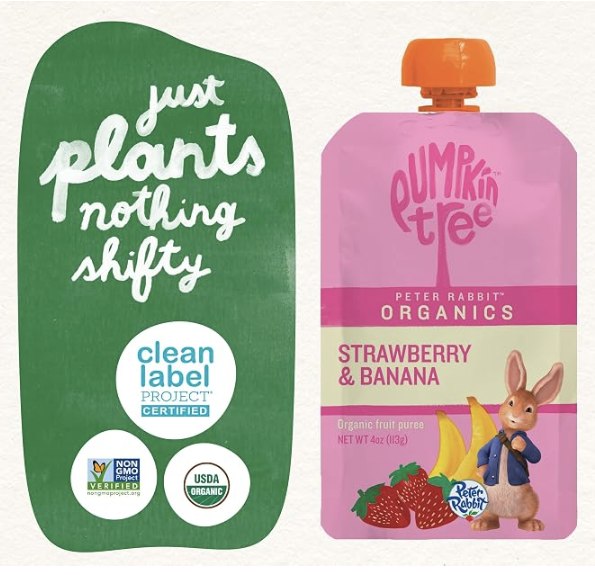
A children’s snack company has voluntarily recalled roughly 380,000 fruit puree pouches sold nationwide after discovering that some packages may contain strands of soft plastic embedded inside the product, according to a notice published by the Food and Drug Administration.

PT Organics Limited, based in Lake Oswego, Oregon, announced the recall Tuesday for select lots of its Pumpkin Tree Peter Rabbit Organics Banana & Strawberry fruit puree pouches, a 4-ounce product marketed for children 6 months and older. The company said the issue stems from an internal packaging defect rather than any problem with the fruit puree itself.

What went wrong

According to the recall notice, the defect can allow a thin, soft strand of the pouch’s inner packaging material to become detached and separate from the pouch when squeezed, potentially posing a choking or injury risk if ingested, particularly for infants and young children. PT Organics said the issue was traced back to its packaging supplier, which identified and recalled a production run of defective pouches last week after conducting its own internal investigation.

Advertisement

In a statement, PT Organics explained that the problem was isolated to a specific production run. “Our packaging supplier has conducted a thorough internal investigation and determined that the problem only affected one production run, on one line, and that the fault was an intermittent fault in pouches made on one of 4 lanes,” the company said. PT Organics also credited its supplier for identifying the issue quickly, adding, “This is the first of its type in 20 years serving our customers, and we applaud them for acting quickly to notify us once they had identified a problem and recalling the affected production lot.”

Which products are affected

The recall applies only to the Banana & Strawberry variety of Pumpkin Tree Peter Rabbit Organics fruit puree pouches, sold in 4-ounce, or 113-gram, packages. The affected pouches were sold nationwide exclusively at Kroger, Meijer and Target stores between March 6 and July 13, 2026.

Consumers can identify recalled pouches by checking for a barcode reading 8 15367 01078 0, along with a lane number of 4 printed on the rear right-hand seam of the package. Affected pouches will also show one of six best-before dates: Jan. 19, 2027; Jan. 20, 2027; March 17, 2027; March 18, 2027; May 14, 2027; or May 15, 2027. All identifying information is stamped in black ink on the back of each individual pouch.

Advertisement

The company emphasized that the recall is narrowly targeted. No other Pumpkin Tree products, flavors or best-before dates are affected, and the company specifically noted that its similarly named Strawberry & Banana pouch, which some consumers might confuse with the recalled product, is not included in the recall.

No injuries reported

PT Organics said that as of the recall announcement, no injuries had been reported in connection with the defective pouches. Follow-up inspections conducted by the company on finished products made with the affected packaging confirmed that a strand of soft, food-grade plastic had become attached to the inside of a small number of pouches, though the company has not specified what percentage of the affected production run was impacted.

What parents and caregivers should do

Advertisement

The company is urging anyone with the recalled pouches in their home to stop using the product immediately. “Consumers or caregivers who have recalled product in their possession should dispose of it or return the product to the place of purchase,” PT Organics said in its recall notice, adding a clear warning: “It should not be eaten or fed to another person.”

Consumers can return the recalled pouches to the store where they were purchased for a refund, even if the packages have already been opened. Parents or caregivers who are concerned that a child may have already ingested plastic from an affected pouch are advised to contact their child’s pediatrician. Anyone with questions about the recall can reach PT Organics’ consumer support desk at 888-566-2363, Monday through Friday from 8 a.m. to 5 p.m. Eastern time, or visit the company’s website for additional information.

A pledge to prevent future issues

PT Organics said it is actively working with retailers and its packaging supplier to remove any remaining affected pouches from store shelves and is continuing to share identifying information with consumers to help them recognize compromised products. The company said it remains committed to transparency as its investigation continues. “We will continue to provide clear updates and support to consumers, retailers and regulators as we work to understand what went wrong and make sure it cannot happen again,” the company said in a statement posted to its website.

Advertisement

Part of a broader stretch of recalls

The Pumpkin Tree recall arrives amid a string of other high-profile food and product recalls in recent months, including a separate recall of an allergy medication over a cross-contamination concern and last year’s recall of an organic infant formula sold at Target after three infants were hospitalized with botulism poisoning following exposure to that product. While unrelated to those earlier incidents, the recall adds to a pattern of scrutiny facing children’s food products this year, underscoring the importance of parents and caregivers regularly checking recall notices for items commonly found in household pantries.

PT Organics has not indicated whether additional lots or flavors could be affected as its investigation continues, though the company has maintained that the issue remains isolated to the single identified production run. Parents and caregivers are encouraged to check any Pumpkin Tree Peter Rabbit Organics Banana & Strawberry pouches in their homes against the identifying codes listed in the recall notice and to dispose of or return any matching products as a precaution.

Advertisement
Continue Reading

Business

Penske, Mitsui Bid to Take Penske Automotive Private in Near $4 Billion Deal

Published

on

Penske, Mitsui Bid to Take Penske Automotive Private in Near $4 Billion Deal

Penske Corp. and

Mitsui

8031

Advertisement

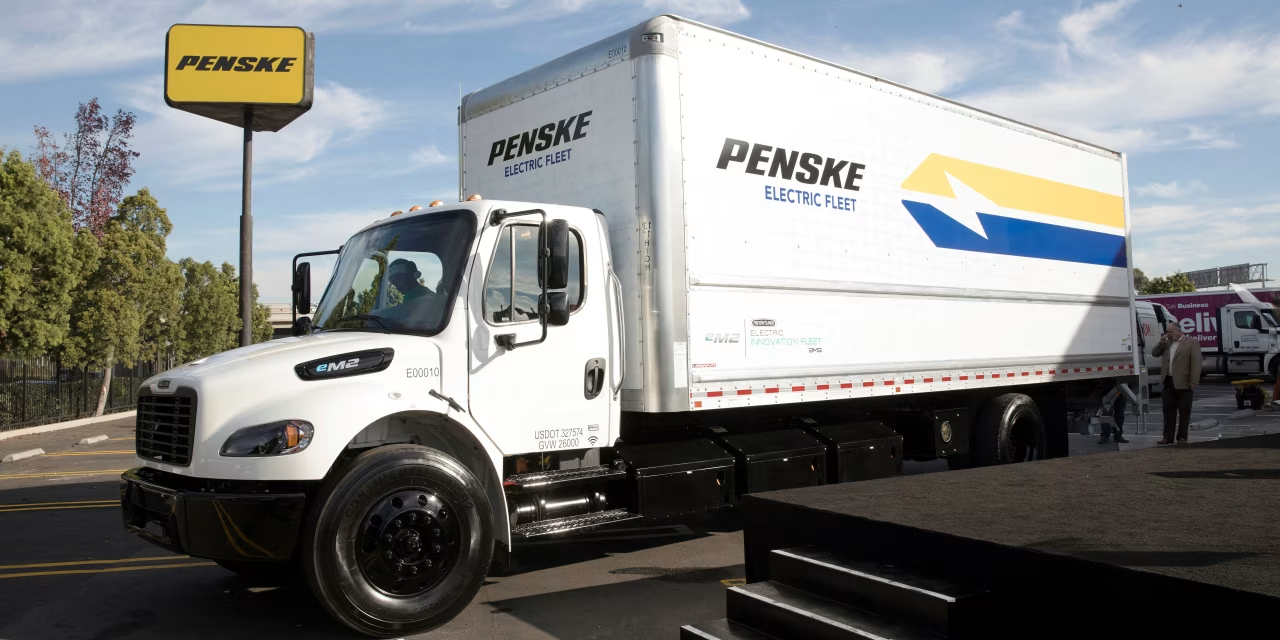
increase; up pointing triangle proposed to buy out Penske Automotive Group PAG in a deal that could be worth $3.78 billion.

Penske Corp. paired up with the Japanese investment firm to offer $210 a share to take the auto dealership chain private.

Copyright ©2026 Dow Jones & Company, Inc. All Rights Reserved. 87990cbe856818d5eddac44c7b1cdeb8

Advertisement
Continue Reading

Business

United Therapeutics CEO Rothblatt sells $5 million in shares

Published

on


United Therapeutics CEO Rothblatt sells $5 million in shares

Continue Reading

Business

ConnectOne Bancorp, Inc. (CNOB) Q2 2026 Earnings Call Transcript

Published

on

OneWater Marine Inc. (ONEW) Q1 2026 Earnings Call Transcript