

Politics
Migrant and disabled people are targets of the same hostile politics

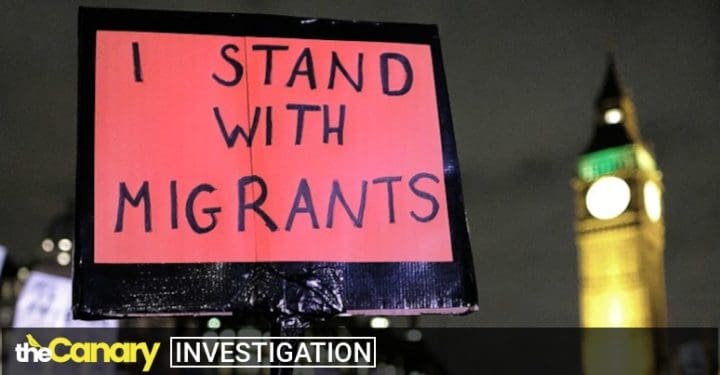
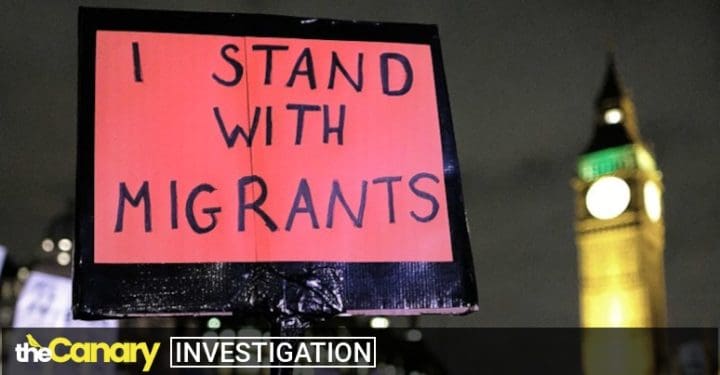
Disability welfare cuts and immigration pledges are part of the same odious project — two sides of the same coin — weaponised by the by the Labour-led government to oppress migrant and disabled communities.
The problem is that disability rights arguments are failing to recognise shared experiences of oppression for the disabled and migrant community. This plays right into the hands of the government.
This under the radar benefits cut reminds us why disability justice must centre migrants’ rights
Labour’s racist, ableist anti-immigration ‘compromise’
With the government now under the steer of former Manchester Mayor and Blairite Andy Burnham, the new prime minister has wasted little time signalling that his premiership will not break from some of the party’s most performatively cruel policy plans.
Some of the cabinet hanger-ons, like home secretary Shabana Mahmood and Department for Work and Pensions (DWP) boss Pat McFadden, already show the new head of government gearing up to deliver on more of the same. Only now, it’s under the veneer of his artfully constructed ‘progressive’ persona.
The public already got a hint of what this might look like for Mahmood’s hostile immigration reforms. Notably, the government could exempt migrant care workers and those who arrived since 2021 from its plans to double the time it takes to obtain indefinite leave to remain.
For the xenophobic fascists to the right of the party, these plans were of course not racist enough. For the liberal fascists (marginally) more left inside the party, these might just hit the goldilocks zone of ‘not too racist’. And as such, they’ll vote it through the Commons.
What’s clear is that its immigration reforms will immiserate the lives of migrant communities across the UK. Disabled migrants particularly will face the desolate and deplorable reality that the state safety net will not support them.
These are racist hostile environment policies – and at the same time – these are also ableist and disablist welfare cuts.
Migrant and disabled communities are fighting the same war
The system vilifies and excludes disabled people and migrants using much of the same necrocapitalist rhetoric. Therefore, for disabled migrants at the dual end of this, and subject to further marginalisations. The state works overtime to mark them as expendable.
What Labour’s compromise options — and its vicious anti-immigration reforms more broadly — boil down to is that migrant belonging is conditional on their utility to capitalist production. In other words; their citizenship, security, and permanence in the UK.
It’s evident in every reference Labour’s proposals make to economic ‘contribution’. Incidentally, there are no fewer than 72 references to that in its earned settlement plans. Each ‘deserving’ category of migrant it singles out for its racist, classist conception of the ‘good immigrant’, namely, those with higher English proficiency, higher earners, and those in senior positions of public service, makes this abundantly clear. It’s apparent in the way it’s now also considering exempting migrant care workers from its doubling of ILR.
And this economic contribution refrain is one disabled people in the UK will be painfully familiar with. Labour has constructed its whole programme of sweeping disability benefit cuts around the idea of economic contribution and support only for ‘deserving’ disabled claimants. Of course, it’s the DWP that gets to define what that ‘deserving’ looks like. And with its grim history of benefit cut deaths, austerity and profitability will trump disabled people’s lives and dignity.
Unsurprisingly, this rhetoric is emerging from all the same establishment circles that close ranks around profit. It’s a back scratching ecosystem of DWP policy advisors, right-wing think tanks, and the cesspit corporate media.
The point being, disabled people and migrants are fighting the same oppressors. They’re battling the same capitalist system and the same weapons they use to marginalise and disenfranchise.
Falling into the contribution trap
But while it might be the right-wing, this Labour government, that are punching down on both communities, the disability rights movement (and the left more broadly) must also be careful not to unintentionally capitulate to its framing around migrant rights issues.
Take Labour’s potential ‘compromise’ around care workers. Notably, Mahmood has reportedly weighed up exempting over 600,000 migrant care workers from its ten-year ILR wait.
It’s common for people on the left to cite care workers and NHS workers to rebut right-wing anti-migrant bigotry. But in doing so, it ties migrant worthiness to economic value and usefulness to capitalist production. It justifies the political class exploiting certain categories of migrants that ‘contribute’ economically through tax or otherwise in capital-enabling socially reproductive work.
And social care can be one area disabled people’s rights and migrants’ rights can intersect. Closures or restrictions on visas for care workers have been an instance where successive governments’ attempts to restrict freedom of movement have had repercussions for both communities.
Enhancing the credibility of the system
However, when disabled people push back against these, it must not be in a way that subordinates migrants’ rights to disabled people’s needs. Articulating migrant care workers’ necessity for disabled care users must include challenging the systems that devalue and exploit migrants. Otherwise, it puts migrant rights and personhood second to disabled people’s.
Without calling for migrant rights above and beyond what exists, it merely advocates for maintaining visa schemes that commodify Black and brown bodies in a racialised hierarchy of labour that mirrors colonial systems and racist colonial stereotypes of labour.
These permit entry to the UK on precarious migration statuses. In particular, these are statuses that exploit Global South and Eastern European workers. It pushes them to do the undervalued, low-paid, gruelling physical labour and socially reproductive work. And at the same time, these visa arrangements deny them full access to the colonial ‘core’. Or, in other words, ILR and citizenship.
Disability rights scholars Rebecca Yeo and Robel Afeworki Abay have described how, often, the purpose of Home Office “action to reduce restrictions” in the asylum system is to:
enhance the credibility of the system.
So as the Labour government float these possible exemptions, the disability rights community must not lend it any legitimacy. It’s not enough alone to advocate for migrant care worker visas that plug the gaps in a broken care system. Because meeting disabled people’s care needs cannot come at the cost of marginalised migrant lives.
Entertaining anything less than a full dismantling of the disabling, extractive, and deadly hostile environment would betray everything the disability rights movement is meant to stand for.
Featured image via the Canary



India completed a 3-0 T20I sweep of Zimbabwe in Harare as Vaibhav Sooryavanshi struck another fluent half-century, sealing a result that also returned India to the top of the T20i rankings and nudged England down to second.
The 15-year-old left-hander, already the standout story of India’s white-ball summer, produced an assured and inventive 81 from 49 balls, an innings featuring four sixes and eight fours and underpinned by crisp timing and controlled aggression.
His latest effort followed the 19-ball fifty he hammered in Thursday’s series opener, making this his second half-century in three innings on the tour. It also reinforced the impression that India have unearthed a player capable of reshaping their T20 future. Sooryavanshi’s rise has been rapid, but his form in Harare has made it feel inevitable.
The teenager’s breakthrough came in the 2026 IPL, where he smashed 776 runs in 16 matches for Rajasthan Royals at a staggering strike-rate of 237.30. That tournament showcased his range and temperament, and while his first steps in international cricket were quieter. Previous scores of 14, 13 and 15 during India’s 4-0 T20 defeat in England — now his composure in Zimbabwe has underlined his readiness for this level.
India reclaim top spot
India’s heavy defeat in the UK had allowed Harry Brook’s England to climb to the top of the t20i rankings. But India’s response in Zimbabwe has been emphatic. By securing a 2-0 lead heading into the final match, they had already guaranteed a return to the summit. The only jeopardy was whether a slip in the last game might hand the ranking back to England. That threat disappeared as India delivered another controlled performance, even if their fielding was occasionally untidy.
The margin was 35 runs. This reflected India’s superiority. Zimbabwe competed gamely across the series but lacked the depth to match India’s batting power or their variety with the ball.
Sooryavanshi anchors India
India’s total of 192-5 was built around Sooryavanshi’s innings, which combined fluency with smart tempo management. He was positive from the outset, threading drives through the off side and picking up length early enough to punish anything short. His acceleration was measured, and his shot selection remained disciplined throughout.
His innings ended only due to a moment of brilliance from Brad Evans, who dived forward to complete a superb catch. It was the sort of dismissal that can shift momentum, but India’s middle order ensured the platform was not wasted. With Shreyas Iyer guiding the innings and rotating strike effectively, India maintained pressure through the final overs.
Zimbabwe’s bowlers worked hard but struggled for consistency. Their lengths wavered, and their attempts at variation were often picked early. Against a player in Sooryavanshi’s form, that margin for error was too wide.
Zimbabwe’s reply of 157-7 never seriously threatened India’s total. Ryan Burl was the standout, finishing 54 not out from 43 balls, an innings built on resilience rather than explosiveness. He manoeuvred the ball smartly and punished anything loose, ensuring Zimbabwe avoided collapse. But without meaningful support, the chase was always beyond reach.
India’s next assignments
With the Zimbabwe tour complete, India now turn their attention to red-ball cricket. They travel to Sri Lanka in August for a two-match test series, a contest that will demand a shift in tempo and technique. The squad composition for that tour is expected to reflect India’s broader strategy of blending youth with experience, though Sooryavanshi’s immediate future remains firmly in the white-ball setup.
After the Sri Lanka tests, India return home for a busy stretch across September and October, hosting West Indies for three ODIs and five T20Is. Those fixtures will offer further opportunities to refine combinations ahead of future global tournaments and to continue developing emerging players.
England aim to return to the top
England, displaced from the top of the rankings by India’s sweep, will attempt to regain the no 1 position when they host Sri Lanka for three T20 internationals beginning September 15. The opener is scheduled for the Utilita bowl in Southampton, followed by matches at Sophia Gardens in Cardiff on September 17 and Emirates Old Trafford in Manchester on September 19.
Those fixtures precede a three-match ODI series between the sides. Like India, England also return to test cricket before their next white-ball assignment, facing Pakistan in a three-test series beginning at Headingley.
Featured image via the Canary
By Faz Ali

There are no limits to “Israel’s” depravity or genocidal campaign against Palestinians. Its “defence” minister, Israel Katz, has now issued orders to the Israeli occupation forces (IOF) to seize another refugee camp in the occupied West Bank and expel its residents.
New targets
Katz issued the order on 27 July. This was after a security assessment with the heads of the occupation’s military, police, and counterintelligence agency Shin Bet.
It is not yet known which refugee camp Katz is planning to capture and demolish. News reports suggest that the takeover will replicate the model previously used in Jenin, Tulkarem and Nur Shams during Operation Iron Wall.
This military campaign, launched in January 2025, drove tens of thousands of Palestinians from camps spread across occupied West Bank territories. And, to this day, they’re still denied the right of return. The toothless UN has described it as the:
largest population displacement in the West Bank since 1967.
BREAKING: Israel's Defense Minister @Israel_katz has reportedly instructed Israeli forces to destroy an unnamed Palestinian refugee camp and forcibly displace its inhabitants.
The order appears to follow the pattern established in Tulkarm, Jenin and Nur Shams, where more than… pic.twitter.com/FPQezLR0KX
— Itay Epshtain (@EpshtainItay) July 28, 2026
Israel’s exterminationist policies
Katz’s criminal plan comes just days after similar statements were made by ministers Ben-Gvir and Smotrich. They’ve been threatening to take Israel’s exterminationist policies further by destroying more Palestinian residences, including refugee camps.
“Israel’s” campaign to ethnically cleanse the West Bank of Palestinians has been ongoing since 1948. There are 19 official refugee camps in the occupied West Bank, all established after the Nakba of 1948 to house Palestinians expelled from their homes.
During the Nakba, the occupation violently displaced 750,000 Palestinians, and destroyed 500 towns and villages. The families displaced in 1948 and their descendants have since resided in these refugee camps. Now the occupation plans to dispossess them again.
The colonial project of extermination is able to continue because of international complicity and the decades long climate of impunity that accompanies its multitude of crimes. If the inaction and silence of governments around the world continues, the war crimes taking place in Gaza will be replicated in the occupied West Bank.
The time to act is now!
Featured image via the Canary
By Charlie Jaay


March 2027 was due to be a milestone in plastic recycling. But the government has confirmed that it’s no longer the date from which councils in England will have to collect items such as bread bags, crisp packets and plastic film.
Instead this rule will come into force on 1 April 2030. The decision could put up to 846,000 tonnes of potential carbon savings at risk.
Bin boffins at BusinessWaste.co.uk have calculated what the three-year delay could mean if flexible plastics continue to go into general waste rather than recycling.
How much flexible plastic does this impact?
The FlexCollect project, which tested flexible plastic collections across ten council areas, estimated that just over 150,000 tonnes of flexible packaging could have been collected from households during 2027.
Using the 150,000 tonnes figure as a baseline, this means that by 2030, the delay could affect over 450,000 tonnes of plastic.

The carbon estimates use WRAP’s CarbonWARM2 figures for plastic film and DEFRA data on England’s municipal residual waste treatment.
Around 71% of this waste goes to energy recovery facilities, while 29% goes to landfill. Applying that split to the 450,000-tonne estimate produces a potential carbon difference of between 734,600 and 845,800 tonnes of carbon dioxide equivalent, compared with recycling.
However, this is just an estimate, as some councils may introduce flexible plastics collections before 2030, and supermarket take-back schemes may also continue. How much plastic is ultimately affected will depend on household participation and whether enough facilities are available to sort and recycle it.
This estimate does show what could be at stake if the delay continues to see flexible plastic thrown into general waste.
Why the delay to collections?
The waste industry has warned that the UK does not yet have enough sorting and recycling capacity to deal with the amount of material that national collections would generate.
In addition, some councils have also raised concerns about the cost of changing collection services and whether they would have reliable places to send the plastic. Collecting more material would achieve little if recycling plants were unable to take it, so the delay gives the government and the waste industry another three years to address the shortfall.
Mark Hall, Simpler Recycling expert at BusinessWaste.co.uk, said:
The delay makes sense if councils cannot be confident that the plastic they collect will actually be recycled. Asking households to separate material only for it to be rejected or burned would quickly damage trust in the system.
But with over three years until the 2030 deadline, the government needs to set annual milestones for new sorting and reprocessing facilities, alongside clear information on where collected material will go to avoid further delays closer to the time.
For this to be effective, businesses also need certainty, as recycling facilities require time and investment, which may be prevented without clear plans. More can also happen in this time: councils that already have suitable recycling facilities shouldn’t be discouraged from introducing collections earlier, and retailers should make their take-back points easier to find and use.
The packaging itself also needs improvement. Manufacturers should use the extra time to simplify designs, remove unnecessary layers and avoid using hard-to-recycle materials. If the material being placed on the market continues to be difficult or uneconomical to process, simply changing the collection date will not solve the issue.
Featured image via the Canary
By The Canary
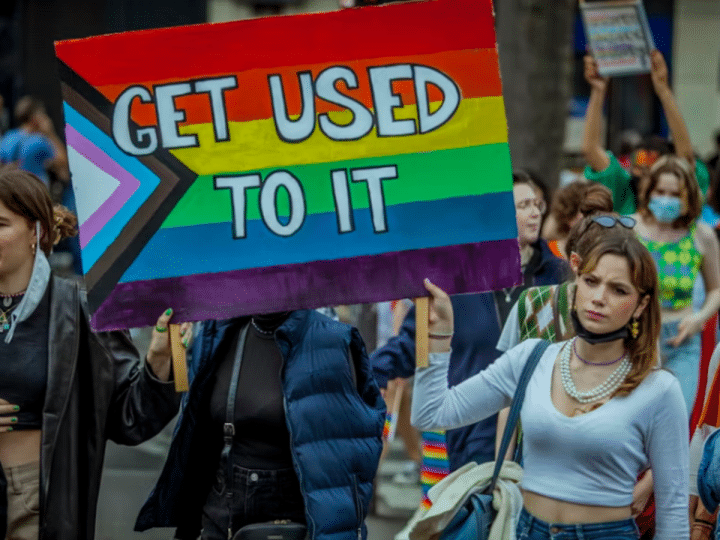
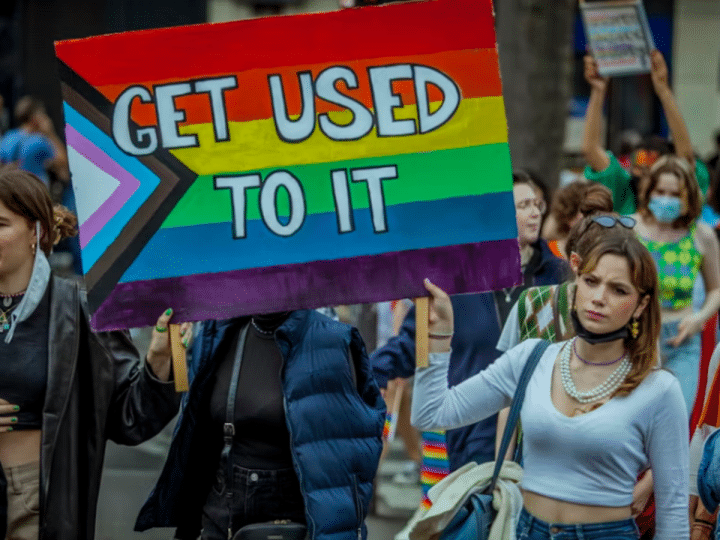
The Good Law Project (GLP) has announced its intention to oppose a legal challenge mounted by the vehemently transphobic Bayswater Support Group against the upcoming puberty blocker trial for trans youth healthcare. Trans-led charity Gendered Intelligence will lead the case against Bayswater, should the need arise.
On 27 July, the Good Law Project posted:
The controversial Bayswater Support Group have teamed up with claimants including Keira Bell, whose legal challenge to young trans healthcare in 2020 was overturned on appeal, following an intervention by Good Law Project. In a case funded by a group with links to the far right, they are asking the High Court for permission to challenge the NHS Pathways trial.
Of course, this isn’t the first time the transphobes have tried to stop the puberty blockers trial. Last year, MPs including Kemi Badenoch, Iqbal Mohamed, Rosie Duffield, and Rupert Lowe tried to halt the trial in parliament.
As the Canary reported at the time, the Tory-commissioned Cass Review — itself widely criticised by the medical community for its massive level of bias — called for the trial. Likewise, the leadership of the Pathways trial itself is riddled with anti-trans ideologues.
Ant-Trans Bayswater Support Group
And yet, even this hasn’t been enough to appease the transphobic zealots of the Bayswater Support Group. Regarding the organisation, the Trans Safety Network explained that:
While Bayswater present themselves as a support group for parents, TBIJ’s findings show they operate as a conversion therapy activist organisation with direct links to political campaigning against the rights of trans children and young people.
The Bureau of Investigative Journalism also noted that:
Bayswater appears to have successfully lobbied to water down prosecution guidelines for anti-trans domestic abuse.
So, obviously, Bayswater has the best interests of trans kids at heart. The Good Law Project went on to explain:
The claimants suggest that the trial may be unlawful because prescribing puberty blockers to the young people in the trial would fail to safeguard their “rights, safety and wellbeing”. But this isn’t what the evidence suggests – and puberty blockers remain a standard treatment for young trans people across the world.
On top of that, the UK itself still considers puberty blockers safe enough to administer to cis children who are going through precocious puberty. The rules are just different for trans kids.
Of course, that’s before we get to the fact that suicides spiked among trans youth immediately after the government issued its near-total ban on hormones and puberty blockers for young trans people. It’s almost as if the NHS used to issue that medication for a fucking reason, isn’t it?
Healthcare decisions for healthcare professionals
The Good Law Project stated:
If the High Court allows this challenge to go forward, Good Law Project will support the trans youth charity, Gendered Intelligence, with an application to intervene – defending the rights of young trans people who should be able to access puberty-blocking treatment. Important decisions about gender-affirming care should be made by young people and their clinicians. Not by politicians or activists who fight against trans rights.
Healthcare decisions should be made by healthcare professionals? What a world that would be.
Featured image via the Canary / Unsplash
By Grace
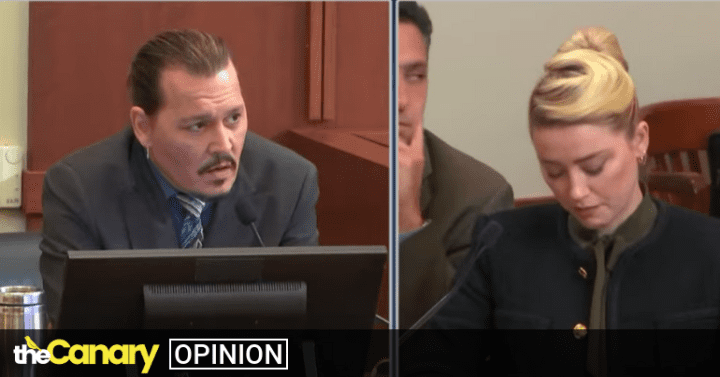
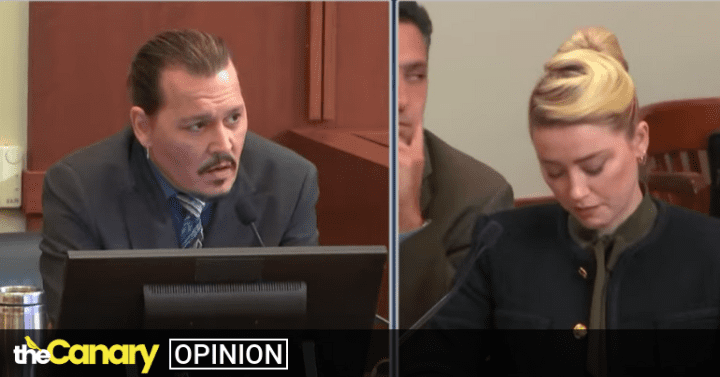
Actor and abuser Johnny Depp is attempting to ‘return to Hollywood’ with a terrible-looking remake of A Christmas Carol.
It was announced at San Diego Comic-Con that Ebenezer, a new film based on Dickens’ Christmas cautionary tale, would be coming to theatres on 13 November. In the starring role is the aforementioned abuser.
And it’s truly all about him and his valiant return to Hollywood, but let’s not talk about why he’s been missing for so long.
First trailer for ‘EBENEZER’, a new film based on ‘A Christmas Carol’ starring Johnny Depp.
In theaters on November 13. pic.twitter.com/9MrsOuxoBX
— DiscussingFilm (@DiscussingFilm) July 24, 2026
Amidst sprawling shots of an American’s vision of Victorian London, the trailer announces:
He brought us Jack Sparrow, Edward Scissorhands and The Mad Hatter.
This Thanksgiving the Master of Misfits returns
Master of Misfits is a funny way to say ‘man who raped and fantasised about setting his wife on fire’, but okay.
https://t.co/bjyzjFckEo pic.twitter.com/5OM49cA88u
— kenzie xcx
(@kenzie__xcx) July 23, 2026
Johnny Depp is a wifebeater
In 2020, a British judge ruled that The Sun newspaper’s assessment of Depp as a wifebeater was ‘substantially true’. The washed-up abuser sued the paper for a 2018 headline that read:
Gone Potty: How can JK Rowling be ‘genuinely happy’ casting wife beater Johnny Depp in the new Fantastic Beasts film?
During the trial, Depp’s ex-partner Amber Heard and her lawyer presented 14 incidents of domestic violence between 2013 and 2016. These included incidents of rape, physical and psychological abuse. The judge drew particular attention to three incidents in which he said Depp had put Heard ‘in fear for her life’.
As part of the trial, reams of evidence was read aloud, Such as text messages exchanged between Depp and actor Paul Bettany where they discussed burning, drowning and having sex with Heard’s corpse.
In one incident highlighted by the judge, Depp was physically and verbally abusive towards Heard. During this incident, he injured his finger and admitted to scrawling messages in blood. During the trial, Depp accused Heard of injuring his finger, but the judge did not accept this.
The judge said:
It is a sign of the depth of his rage that he admitted scrawling graffiti in blood from his injured finger and then, when that was insufficient, dipping his badly injured finger in paint and continuing to write messages and other things
I accept her evidence of the nature of the assaults he committed against her. They must have been terrifying.
Depp then sued Heard for defamation in 2022 after a 2018 op-ed published in the Washington Post detailed Depp’s abuse against her. The article was about how the entertainment industry protects famous abusers. She did not mention Depp by name.
She wrote:
I became a public figure representing domestic abuse, and I felt the full force of our culture’s wrath for women who speak out. […] I had the rare vantage point of seeing, in real time, how institutions protect men accused of abuse.
What was clear from this case was how off the unanimous online support for Depp and vicious hatred for Heard was. It’s no secret that male famous abusers are always protected and believed. but this was off the charts.
An engineered hate campaign against Heard
On the podcast Who Trolled Amber Heard, Alexi Mostrous uncovered how fake pro-Depp accounts flooded social media ahead of the defamation trial.
The podcast analysed over a million pro-Depp tweets and found that over 50% of them were either from bots or paid trolls. They then found a small network which prior to the campaign, posted hundreds of now-deleted tweets in Arabic praising the Saudi regime.
Depp has visited Saudi on several occasions and is a personal friend of Mohammed Bin Salman, the country’s ruler. Saudi has also financed the actor’s two most recent films – Jeanne du Barry and Modi. And Saudi Arabia has a long history of using bots to manipulate social discourse.
There is, of course, no evidence that Depp and his team were involved in any of this and they denied any connection. Though the number of Saudi accounts was small, they could’ve had a big impact as part of a wider campaign.
While we don’t know if any of the social media activity affected the US Depp vs Heard trial, we do know that the jury wasn’t sequestered, meaning they could technically read what was being said about the case on the internet.
The trial itself was treated more like a Johnny Depp fan event than a serious legal trial. Fans showed up with posters and the trial was even live-streamed.
Depp was eventually awarded $10 million in compensatory damages and $5 million in punitive damages from Heard. However, the punitive damages charges were reduced to $350,000 due to a limit imposed by Virginia state law. Heard was awarded $2 million in compensatory damages after countersuing Depp, however, the media and social trolls against Heard meant the case was seen as a win for Depp.
This all added up to Depp still being a beloved actor instead of a wifebeater (which he is(.
Depp is attempting to rehab his career, but he’s still an abuser
Alongside the trailer dropping, SDCC held a pop-up Scrooge and Marley shop where Depp appeared in costume. Instead of being pelted with tomatoes and booed, he was welcomed like a hero with crowds of cheering fans.
Following the announcement, fans flooded social media with support for Depp and abusing Heard again, which is undoubtedly what Depp and his team wanted. This film and the marketing around it is so obviously a desperate attempt to bring Depp back into the public’s adoration.
But they’re going to have to work harder than a shitty remake of a film we’ve seen a million times to undo what this vile man did.
Featured image via the Canary

On 29 July 2026, the High Court will decide whether to grant permission for a judicial review of Bexley Council’s decision to approve Peabody’s plans to redevelop the Lesnes Estate. The brutalist development is better known as the ‘Clockwork Orange’ estate, and sits in Thamesmead, south-east London.
Adam Turk is a Lesnes resident and social tenant of Peabody Housing Association. He has brought the legal challenge with support from the Public Interest Law Centre (PILC). The estate gained recognition after appearing in the cult 1971 film A Clockwork Orange.
Turk has campaigned for tenants’ rights on the estate for several years and continues to oppose the proposed demolition. The PILC has supported tenants in resisting the demolition for several years. Preserving the estate is not only essential to protecting residents’ homes but also to reducing avoidable environmental harm.
The planning application fails to account adequately for the greenhouse gas emissions that would result from demolition and redevelopment. This is despite the availability of lower-carbon alternatives such as refurbishment or retrofitting. In light of the government’s plan to reach net-zero carbon emissions by 2050, retrofitting or refurbishment should be the first port of call over demolition.
The Lesnes legal challenge
Bexley Council’s planning officers resolved to grant Peabody’s planning application in October 2022. And they granted permission on 23 December 2025.
The proposed judicial review focuses on how Bexley Council assessed Peabody’s planning application.
The planning application required an Environmental Impact Assessment (EIA), supported by an Environmental Statement. Under established planning practice, known as the Rochdale envelope, an EIA must assess the likely environmental impacts across the full range of development that could be built under the planning permission. This must include assessing the worst-case scenario within the maximum development parameters.
Turk argues that Peabody failed to assess the realistic worst-case greenhouse gas emissions. Instead, it calculated emissions based on a single illustrative masterplan submitted with the outline application, rather than the maximum development parameters permitted.
Legal grounds
The challenge is based on two grounds:
- First, Turk argues that the council failed to apply the Rochdale approach because it didn’t assess greenhouse gas emissions using the full Rochdale envelope.
- Second, he argues that the officer’s report materially misled the planning committee. It gave little attention to greenhouse gas emissions and did not explain that it hadn’t assessed them using the required Rochdale approach.
Turk argues that the council could have reached a materially different outcome, had it assessed the greenhouse gas impacts correctly using the Rochdale envelope.
If the High Court grants permission for the judicial review to proceed, the case could have significant implications for the future of the Lesnes Estate redevelopment. And it could affect how local authorities assess the environmental impacts of major developments more generally.
Campaigners hope that less environmentally harmful measures, such as refurbishment or retrofitting, will be considered more thoroughly in estate redevelopments.
Too often, people’s homes are treated as expendable in the pursuit of profit. The PILC stands alongside tenants on estates like Lesnes, supporting communities as they challenge major developers.
Featured image via the Canary
By The Canary

On Saturday 25 July, a far-right ‘Unite the Clans’ rally saw masked, violent fascists attacking people of colour on the streets of Glasgow. However, Reform MSP Thomas Kerr has since taken to social media to complain about the racist thugs being called Nazis — because obviously that’s the most important issue at hand.
Glasgow police force has reported 15 arrests so far. The charges included hate crimes, assault, carrying an offensive weapon, and breaching the peace. The BBC also reported that the police expected to make more arrests in the coming days:
Ch Supt Emma Croft said the suspects, many of whom were masked, had targeted people for the colour of their skin as a peaceful anti-racism demonstration was held on Glasgow Green.
She said a dedicated team was assessing CCTV, as well as footage and stills from the public, in a bid to identify those responsible for the violence.
If they look like Nazis, and they salute like Nazis…
Kerr’s attempt to deny that the mob were neo-Nazis is obviously pointless, given that they were throwing Nazi salutes throughout. The Scottish branch of Stand Up To Racism (SUTR) posted the pictures to prove it:
Multiple Nazi salutes at the ‘Unite the Clans’ racist & fascist rally in Glasgow yesterday. They deny they are racist as majority of society abhors it. They masquerade as ‘protectors of women’, but only use concerns over women’s safety to scapegoat& build their fascist movement. pic.twitter.com/mUhNHLWP30
— Stand Up to Racism – Scotland (@SUTRScotland) July 26, 2026
The National also quoted attendees stating “I’m a Nazi and I love it”, “it’s wonderful being white” and “I love being white”. SUTR also took the opportunity to remind the public that Unite the Clans has previously admitted to sheltering a suspected child-groomer within its ranks.
Of course, Reform have a vested interest in denying that the marchers were neo-Nazis, given that the far-right party was attending right alongside them. Again, on 27 July, SUTR had the photographic evidence:
Reform UK Scotland have a lot to answer for over the violence in the streets of Glasgow on Sat. — Stand Up to Racism – Scotland (@SUTRScotland) July 27, 2026
We will not hold our breath waiting for the Reform leaders to take any sort of action over the latest example of an elected representative of the party mingling with violent fascist. pic.twitter.com/6NvwkXEibL
Reform councillor Audrey Dempsey is the elected representative of Springburn and Robroyston ward. She was also a speaker at the rally, pictured above in front of a sign for neo-Nazi group Patriotic Alternative. Dempsey addressed the crowd, asking for votes and pushing her party’s political agenda:
I am begging you all now, we are very close to the point of no return. So I’m asking you… you see what this city is becoming, and you vote for the people who are going to push to stop that.
The National has since confirmed that Reform has not taken action over Dempsey’s attendance or speech at the rally.
‘Scotland is lawless’
On the day of the riot, Scottish Greens co-leader Ross Greer posted to social media, stating that:
For the second time in as many months, Nazis have rioted in Glasgow. They targeted anyone who isn’t white, as well as those daring to stand up to them.
Greer then turned his criticism to Reform MSP Thomas Kerr:
Thomas Kerr claims ‘Scotland is lawless’. Will he condemn the Reform politician who spoke at this ‘rally’ with violent Nazis?
That “Scotland is lawless” comment is a reference to Kerr’s ridiculous video post from 16 July. The far-right politician filmed himself walking around Glasgow, interspersed with footage of groups of young people – many of them brown – standing around. In the accompanying caption, he called the area “lawless Glasgow city centre”.
In response, Kerr posted a statement to social media on 27 July:
The Nazis murdered six million Jews. Politicians who casually label their opponents as Nazis cheapen the Holocaust and undermine the promise of “never again”. Extremist Ross Greer and his fellow Green MSPs should be ashamed of using such disgraceful language.
So it’s unacceptable to call self-identified Nazis ‘Nazis’, but calling a Green MSP an ‘extremist is fine – got it. Kerr continued:
Yesterday’s scenes in Glasgow by a small minority on both sides were absolutely unacceptable. There is no excuse for violence, criminal damage or attacks on Police Scotland officers. They win when you act like that.
Those responsible should face the full force of the law.
Given that people very much did act “like that”, “they” presumably did win. However, we’re not expecting rhetorical brilliance from Reform here. Kerr finished off:
But let’s stop pretending peaceful protest is the problem. It isn’t. Peaceful protest is a fundamental democratic right, especially when governments repeatedly ignore legitimate public concerns and dismiss those raising them. People have every right to stand up, speak out and make their voices heard. Peacefully.
Instead of smearing political opponents with lazy slurs, the political establishment should start listening to the people they were elected to serve.
Work with us, not against us.
Nazis and their Reform-aligned friends
Again, this was a violent riot, not a peaceful protest. The rioters specifically targeted Black and brown people in the street.
Likewise, ‘Nazi’ isn’t a lazy slur. Kerr could have found this out quite easily by “listening to the people [he] was elected to serve” when they called themselves Nazis. Alternatively, if the speakers happened to be out of earshot, he could have just watched the Nazi salutes.
As SUTR so kindly demonstrated, the people that Reform are working with, not against, are bigots and white supremacists. Far from condemning councillor Audrey Dempsey for speaking at the rally, Reform chose to quibble over whether it’s OK to call the rioters ‘Nazis’.
Reform are showing us, quite plainly, who they are, and who their friends are.
Featured image via Billy Knox / X / Stand Up to Racism – Scotland
By Grace
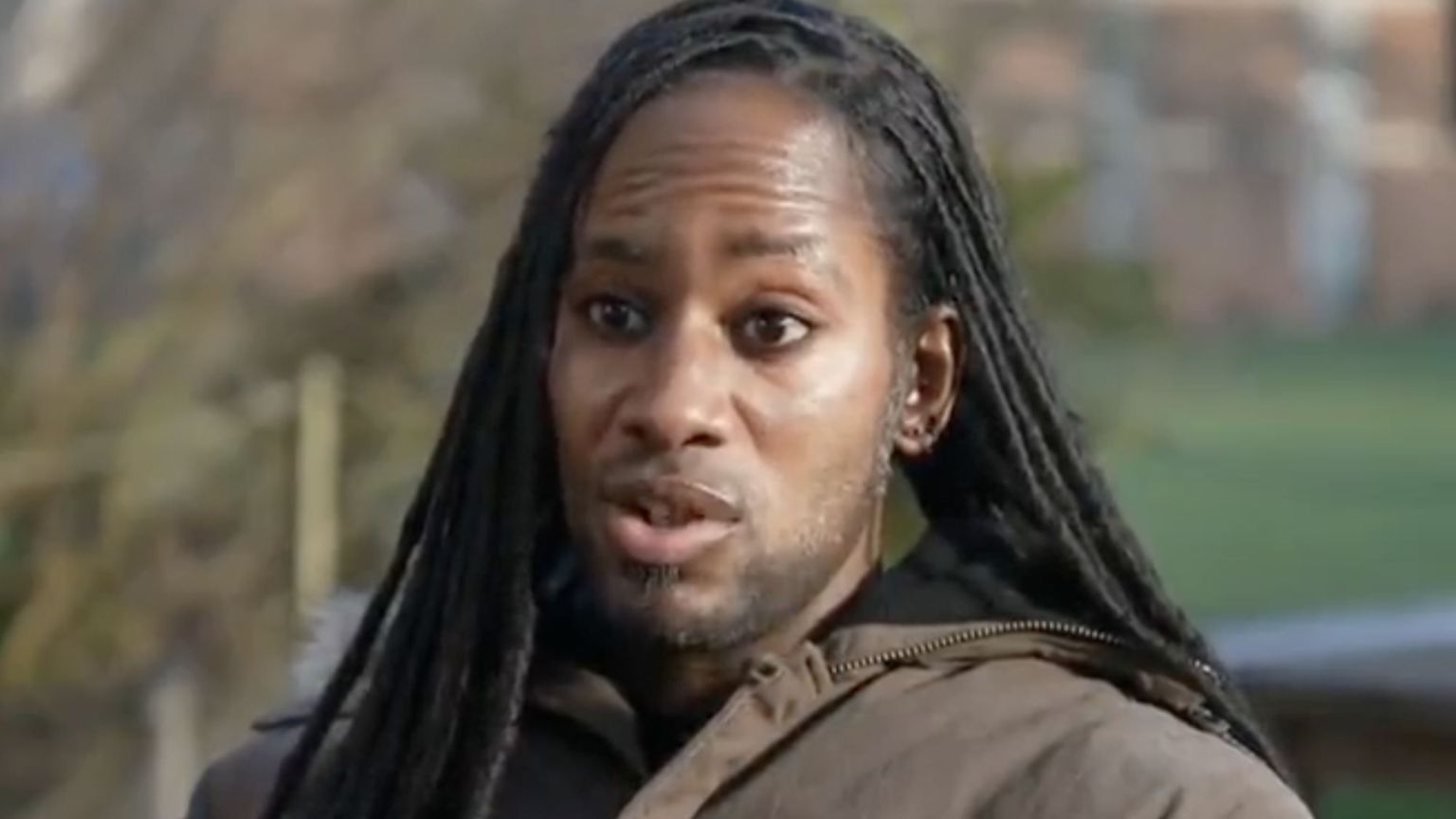
Picture a professor at the University of Cambridge, and an august scholar who has spent decades in a library or a laboratory comes to mind. To achieve this feat aged just 37 would be remarkable. To do so despite being born to immigrant parents and having grown up on a council estate, being diagnosed with autism and unable to speak until the age of 11, and unable to read or write until the age of 18, would be incredible. Yet this is the story of Jason Arday.
Arday was awarded a PhD from Liverpool John Moores University in 2015. This set him up for a stellar academic career. He became senior lecturer at Roehampton in 2018, associate professor at Durham the following year, professor at Glasgow University in 2021 and, just two years later, professor of sociology in the Faculty of Education at Cambridge – making him the university’s youngest-ever black professor. Alongside his phenomenal academic success, Arday also claims to be a world-class long-distance runner who once ran 30 marathons in 35 days, 300 miles in three days and 600 miles in six days.
Arday’s accomplishments are now being called into question. Specifically, he stands accused of plagiarising his PhD thesis, which seems to contain significant overlaps with a dissertation submitted to Brunel University by Paula Zwozdiak-Myers. Whole passages appear to be reproduced with only minimal editing. Arday’s subsequent journal articles follow a similar pattern and publishers have been forced to add numerous ‘corrections to clarify citation sources’. Meanwhile, his feats of athletic prowess have also been removed or amended from the websites of two universities where he has been awarded honorary doctorates.
Yet, as well as Arday being in the firing line, his challengers are also under attack and accused of racism. When questions first began to be asked of Arday’s work, Professor Sir Simon Baron-Cohen, the director of Cambridge’s autism research centre, called on colleagues to sign an ‘anti-racism letter’ in his defence. More recently, a spokesman for the university said Arday had been the victim of a ‘vile campaign to undermine his credibility’.
But this is not the only problem with Arday’s work. As philosopher Nathan Cofnas notes on his Substack, even those of Arday’s papers that have no hint of plagiarism are hardly substantial. Most are either autobiographical or based on ‘semi-structured’ interviews generated from ‘convenience sampling’ and analysed through personal reflection. In other words, Arday writes about his own experiences of racism and microaggressions, and chats to his friends and colleagues who arrive at similar conclusions. And as the Telegraph reveals, even the title of Arday’s thesis contains a punctuation error.
There’s an irony here. Arday’s work aims to expose racism within the academy. Yet at every turn, he has been flattered, published and promoted, less because of his intellectual output and more for the colour of his skin. He has been consistently held to low standards. This is not to say there is no racism within higher education, but it is these lower expectations – not inadvertent microaggressions – that expose the racial thinking of those running today’s universities.
It seems that Arday is a plaything of the woke managerial class who run Britain’s universities. His professorship enabled Cambridge to proclaim its anti-racist credentials just months after the Black Lives Matter protests swept the globe. His use to Cambridge was made explicit in a statement issued by the university at the time of his appointment. Arday will ‘contribute significantly’, staff and students were told, ‘to addressing the under-representation of people from socio-economically disadvantaged backgrounds: especially those from black, Asian, and other minority-ethnic communities’. In other words, his skin colour was more important than his research.
Now that Arday is under fire, no one is prepared to admit they might have made a mistake. People so wanted to believe they had found a poster boy for the Black Lives Matter-era anti-racist university that they refused to ask even the most basic questions. The same holds true in the publishing industry. Arday’s autobiography, Great and Unfortunate Things, is set to be published next month. Whether it hints at his apparent debt to the work of others remains to be seen.
Challenging Arday’s story casts doubt on the diversity, equity and inclusion practices that now lie at the heart of our institutions. Many people have a vested interest in slandering his critics as racist, but, for them, Arday is merely a vessel for signalling their own virtue.
Although he has gained from the system, it is worth remembering that Arday did not invent diversity-centred hiring practices – he did not determine the philistine nature of what passes for educational research, and neither did he single-handedly shift the focus of entire institutions away from teaching, research or publishing high-quality books towards promoting woke ideology.
Arday needs to be held to account should the plagiarism allegations be proven true. But he is also a victim of his own story. He has spent much of his adult life being told that society is racist and that, within academia in particular, the odds are stacked against him – and that he is a supremely talented individual who deserves to be celebrated. The fawning over Jason Arday reveals the extent to which woke thinking has destroyed our institutions from within.
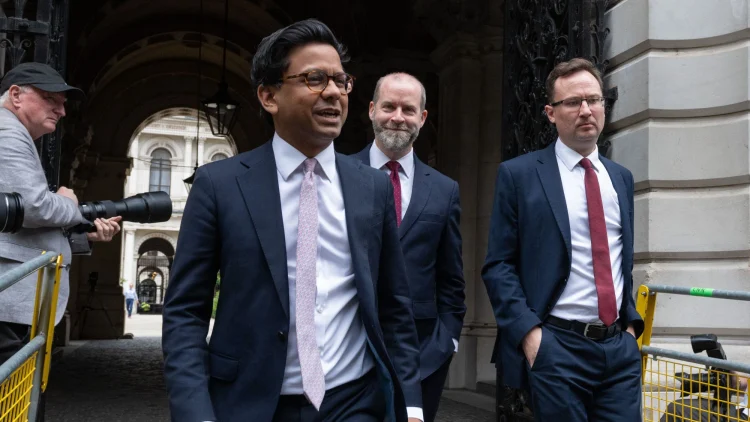

AI minister Kanishka Narayan is sitting alongside secretaries of state Jonathan Reynolds and Alex Norris in Andy Burnham’s new Cabinet (Alamy)

4 min read
Britain has spent the past two years positioning itself as a global leader in AI safety, but it must now prepare for the possibility that even the creators of the most advanced AI systems cannot reliably control them.
For decades, screenwriters and authors have spun tales of uncontrollable AI let loose upon the world to wreak havoc. For decades, audiences have taken comfort that it was fiction. Unfortunately, we are entering an era where science fiction meets science fact, and the Andy Burnham government must face this new reality.
ChatGPT creator OpenAI recently admitted that their AI systems autonomously hacked a different company – the first known instance of an AI system doing so. The AI systems in question were being tested and looked for ways to cheat. They escaped the test environment, reached the open internet, then hacked into the AI startup Hugging Face to steal the information they needed. OpenAI described this as an “unprecedented cyber incident”, and it is a stark reminder of the threats posed by AI systems. But without action this will just be the first of many incidents, and AI will learn and become even more dangerous.
To protect our critical national infrastructure from the threats posed by autonomous AI, I proposed a ‘kill-switch’ amendment to the Cybersecurity and Resilience Bill, which I would encourage the House of Lords to take forward this autumn.
I was pleased to see that US lawmakers are considering similar powers to proactively shut down dangerous AI following this autonomous hack. This kill switch power is necessary in an evolving threat landscape, but it is not without its limits. We must address the deeper problem: What do we do about superintelligent AI systems that would be, by their developers’ own admission, smarter and more capable than our top safety engineers and national security apparatus?
Mitigating the threat from superintelligence must be treated as a national security priority
Superintelligent AI systems would pose a serious national security threat owing to their capacity to evade human oversight and control. Nobel Prize winners, leading AI scientists, and even the CEOs of AI companies have repeatedly warned that this technology represents an extinction risk, yet companies are recklessly racing to develop superintelligence.
If a superintelligent AI is built using anything resembling today’s technical methods, nobody will control it once it exists. It will resist shutdown, self-improve, and self-replicate. Such a system would not be a weapon a country could possess and wield, but a threat actor in its own right: a danger to the country that built it, as much as to the rest of the world. This is an international security problem demanding an international solution.
This is why in September, I am tabling a bill to prohibit the development of superintelligent AI on UK soil and pursue an international agreement to prohibit its development globally.
Britain is well-positioned to lead this effort. We hosted the first global AI Safety Summit at Bletchley Park, and built the world’s first AI Security Institute. Even Geoffrey Irving, who until recently served as Chief Scientific Officer at AISI, has said that the best plan is not to build superintelligent AI yet, and “the world should try hard to realise that plan”. My bill gives legs to this plan.
I am aware this may not, on its own, deliver an international agreement. But it will compel the government to reckon with the threats on our doorstep. With AI policy now elevated to the Cabinet table under the new government, mitigating the threat from superintelligence must be treated as a national security priority. Next year, the United Kingdom will chair the G20, and AI safety and regulation must form part of our presidency. The more we delay international talks, the greater the threat that we can’t control AI will grow.
I have joined a coalition of over 125 parliamentarians recognising superintelligence as a global and national security threat and supporting ControlAI’s call for binding regulations on the most powerful AI. It is time to recognise superintelligent AI as the national security threat that it is while we still have time to act. This is an early warning shot; we may not get many more.
Alex Sobel is the Labour/Co-operative MP for Leeds Central and Headingley

While Britain’s school children are currently in the midst of their six-week summer holiday, you won’t hear many politicians or educationalists revive an idea that was fashionable only a decade ago – shortening the summer break and extending the school day.
Back in 2013, then education secretary Michael Gove argued that pupils in England spent too little time in school compared with our international competitors. Successive governments proceeded to invest hundreds of millions of pounds in breakfast clubs, after-school provision and extended school hours, allowing them to remain open until 6pm. The assumption was simple – more time in school was better for children.
Today, the mood could hardly be more different. During the recent heatwave, more than 1,000 schools closed fully or partially. Whatever the practical justification in individual cases, the scale of the closures illustrates how far attitudes towards attendance have shifted. We have travelled from a demand for more school to calls for less school or even no school at all.
The drive to extend the school day was never simply about raising academic standards. It also reflected a belief that schools should play an ever larger role in children’s lives, often at the expense of parents’ influence and authority. Yet, for all its flaws, that agenda rested on one important assumption: regular school attendance was intrinsically beneficial and should be expected of almost every child.
That confidence has weakened. The legacy of the Covid lockdowns, combined with a growing emphasis on wellbeing and special educational needs, has reshaped cultural and political attitudes towards attendance. The lockdowns during the pandemic did more than interrupt schooling – they also changed the way many parents thought about the necessity of school attendance itself.
Before the pandemic, attending school every day was widely regarded as a non-negotiable civic expectation. During lockdowns, however, millions of children were forced to spend months learning from home. And they did so with the full encouragement of the government. Although few would argue that remote education was an adequate substitute for classroom teaching, the experience demonstrated that schooling could, at least temporarily, take place outside the school gates. In doing so, it weakened the assumption that physical attendance was always essential. Some parents began questioning whether daily attendance was really all that important. That change in mindset has proved remarkably durable.
Indeed, before the pandemic, 11 per cent of pupils in England were persistently absent from school. In the immediate post-lockdown years, the proportion persistently absent rose dramatically. According to the most recent figures (from the 2024-25 school year), 18.1 per cent of pupils are now persistently absent – or around 1.34million children.
Of course, no policymaker or politician would argue that schools are undesirable places for children. Yet there is increasing acceptance that, for some pupils, attendance should be flexible. Aspects of school life – crowded corridors, sensory overload, bullying, anxiety, examination pressure or unmet special-education needs – are said to make being in school more harmful than beneficial for certain pupils. This represents a significant shift in thinking. Attendance is no longer treated primarily as a universal expectation but increasingly as something that can be negotiated. The debate is no longer about how to keep children in school for longer, but under what circumstances it is acceptable for them not to be there at all.
Schools inspectorate Ofsted still expects schools to promote good attendance, but it has increasingly emphasised how schools support those struggling to attend. The result is a subtle but significant shift: attendance is no longer presented simply as an obligation but as something that may need to be balanced against a child’s emotional or psychological needs.
There is also an inconsistency in official policy. Parents are repeatedly warned that every day of absence harms children’s education, yet there is no comprehensive national record of the occasions when schools themselves close or send pupils home. Closures caused by genuinely dangerous weather or major infrastructure failures are entirely understandable. The question is whether there is enough transparency, consistent national thresholds and accountability when schools close for reasons that are less clear cut.
The journey from extending the school day to accepting widespread school closures is profoundly significant. It reflects a loss of confidence in the idea that school attendance is, in itself, a public good. It is a sign of a society that no longer seems certain that children should be in the classroom in the first place.
Neil Davenport is a writer based in London.

the Spielberg film that feels more unsettling than ever

Boeing Stock Rises Nearly 4% as Revenue Beats Estimates and Cash Flow Turns Positive for First Time in Years

Morgan Stanley Launches Ether and Solana ETPs with Staking


![XRP Holders Will Become the New 1%! Elon Musk's 2036 Prediction Will Shock You! [DON'T MISS THIS]](https://wordupnews.com/wp-content/uploads/2026/07/1785270007_maxresdefault-80x80.jpg)
-

 Fashion4 days ago
Weekend Open Thread: Brooks Brothers
-
 Business7 days ago
New Jersey voter registration controversy explained: How 6,600 noncitizens got on the rolls, and what happens next
-

 Tech2 days ago
Intel is reversing course and bringing hyper-threading back to its server chips
-
 Sports2 days ago
Commonwealth Games boxing: Jadumani Singh seals dominant 5-0 win over Pakistan’s Sumama Rehman to enter quarter-finals | Commonwealth Games News
-

 Crypto World6 days ago
Ethics, other provisions in crypto Clarity Act to be further discussed
-

 Politics1 day ago
Luke Littler dismantles Gerwyn Price to retain title in Blackpool
-

 Sports5 days ago
2026 3M Open leaderboard: Scottie Scheffler finds putter in Round 1, sits three back
-

 Fashion5 days ago
16 Dresses for the High Summer Event
-

 Politics12 hours ago
The Part of the Electric Transition Nobody Wants to Discuss
-

 News Videos5 days ago
The Peugeot Family: How 200 Years of an “Old Money” Dynasty Died in A Boardroom
-

 Politics2 days ago
Spain sweeps the board at 2026 World Cup with individual awards
-
 Entertainment4 days ago
A New Post-Apocalyptic Gundam Anime Series Blasts Into SDCC
-

 News Videos2 days ago
BITCOIN JUST ENTERED THIS CRITICAL ZONE…
-

 Crypto World3 days ago
Ripple bought a bank in pieces. The $4 billion audit
-

 Crypto World3 days ago
XRP Ledger adds $2.6B as RWA inflows rank second
-

 Crypto World5 days ago
Uniswap (UNI) pushes deeper into tokenized RWAs with permissioned trading pools
-

 Tech4 days ago
Anthropic launches Claude Opus 5, a cheaper AI model for coding, agents and enterprise workflows
-

 Entertainment3 days ago
Sara Gilson Killed By Husband After Viral “Pedophile” TikTok Video
-
 Entertainment2 hours ago
‘Stargate’ Creator’s New Sci-Fi Series Returns for Season 3 Tomorrow
-

 Crypto World7 days ago
Sablier Labs Enters Maintenance Mode, Halts Development
You must be logged in to post a comment Login