As Edinburgh introduces a visitor levy this week, we look at what a decade of tourist tax-funded investment has done for one of Europe’s most infamous resorts
It is a bright early summer evening in Mallorca and Jaime Mora Bosch is reclining in a waterfront restaurant in a cream suit. Behind him, Port Adriano is filled with multimillion-euro yachts as their passengers settle into restaurants overlooking the marina, where rosé and mineral water are being poured.
Mora Bosch is director of tourism for Calvià, a district of mountain trails, luxury resorts, exclusive harbours… and Magaluf, the resort with a reputation as the place where Britons go abroad to behave badly.
Cheap lager, sunburn, public nudity, stag dos and hen parties turned ‘Shagaluf’ into a tabloid genre of its own. Mora Bosch insists that picture is years out of date and argues that the tourist tax introduced a decade ago has helped drive that change.
“If you’re in Magaluf tonight, yes, you will find some people drunk, you will find some British people without a T-shirt, maybe swimming, maybe drinking in the streets,” he says. “But in general it has nothing to do with the past.”
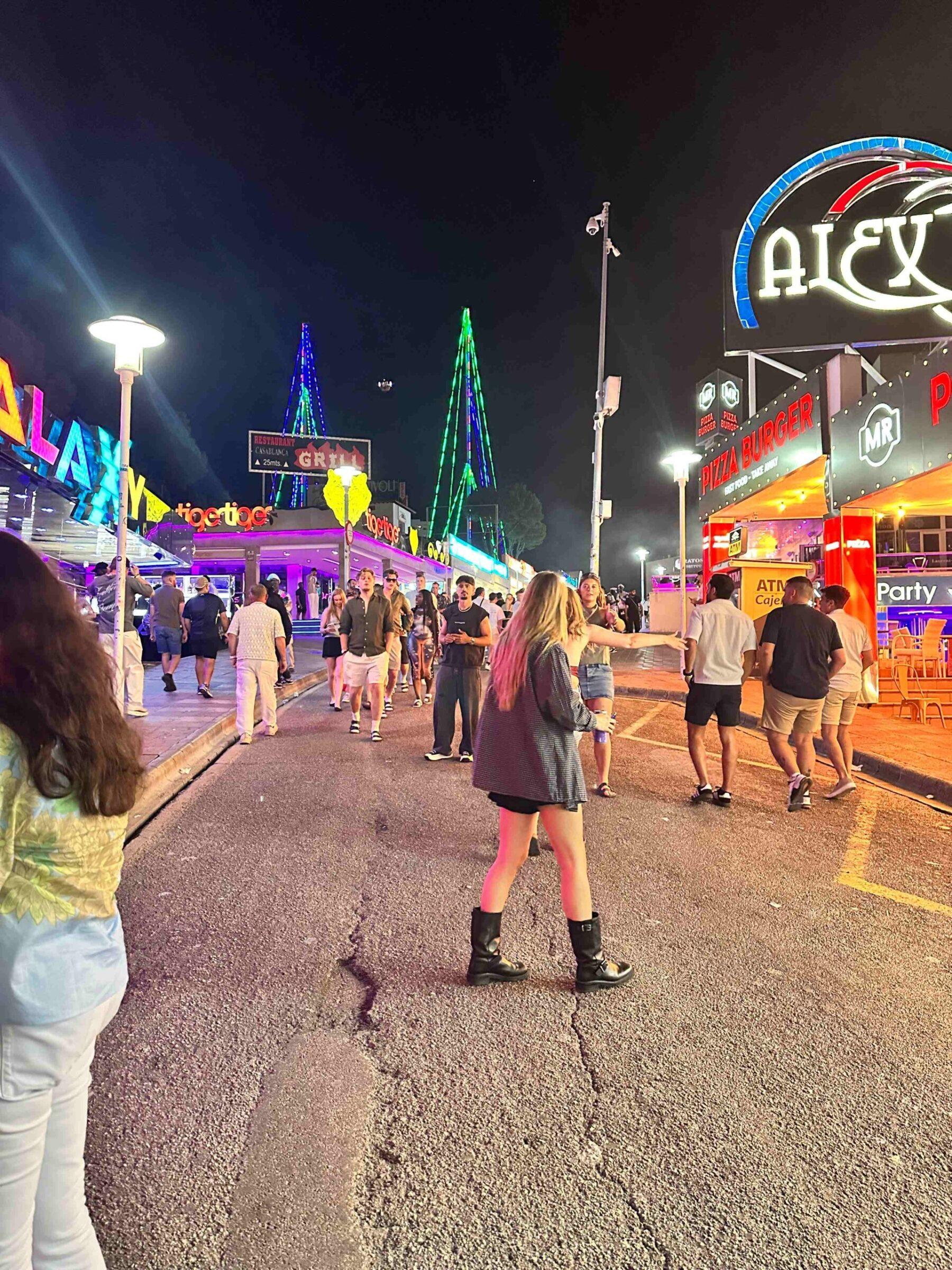
From Port Adriano, Magaluf is only a short drive away, but the contrast is immediate. On Punta Ballena, the street universally known as the strip, music pounds from open-fronted bars as scantily dressed women try to entice groups of men inside with promises of cheap booze.
A group of men in their early 20s, here for a stag weekend, offer grins and gestures when I ask why they chose Magaluf. A party of women from Sunderland celebrating a friend’s engagement give roughly the same answer. What is striking, though, is how dated the strip feels. There are plenty of groups of young adults, but also a surprising number of 40- and 50-somethings who seem to be trying to relive their youth, many of them accompanied by their bored-looking teenage children.
Several premises are boarded up, while others have the sticky, faded air of places waiting for one final summer. The soundtrack leans heavily towards ’90s dance anthems. At around midnight on Saturday, we walk into Joker’s, a karaoke bar just behind the main strip, and find ourselves its only customers. Sam, an English DJ in his 60s, is waiting beside a dancefloor on which nobody is dancing. “I came over in the 1980s and never left,” he says. “Why would I?”
A few families eventually arrive with children younger than you would expect to find in a bar at midnight, but the room remains fairly empty. The larger clubs still pull crowds and the strip is certainly bustling, but groups of revellers seem to be searching for ‘the place to be’ – a place that perhaps no longer exists.
On the waterfront promenade, just a block away from the strip, are well-presented hotels, fashionable beach clubs and fine-dining restaurants serving families, couples and older visitors. The two versions of Magaluf remain close enough to hear each other, but they are growing increasingly distant.
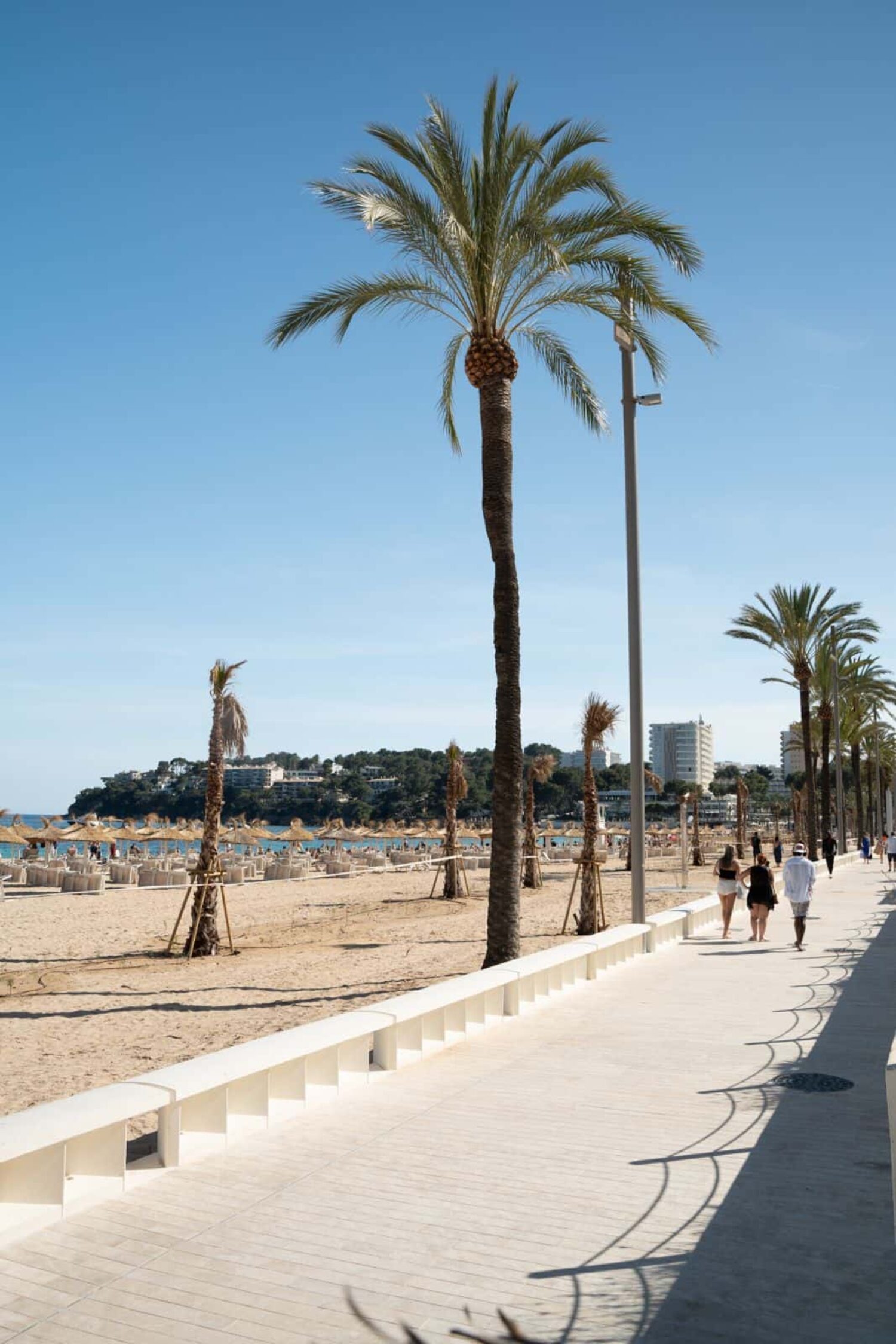
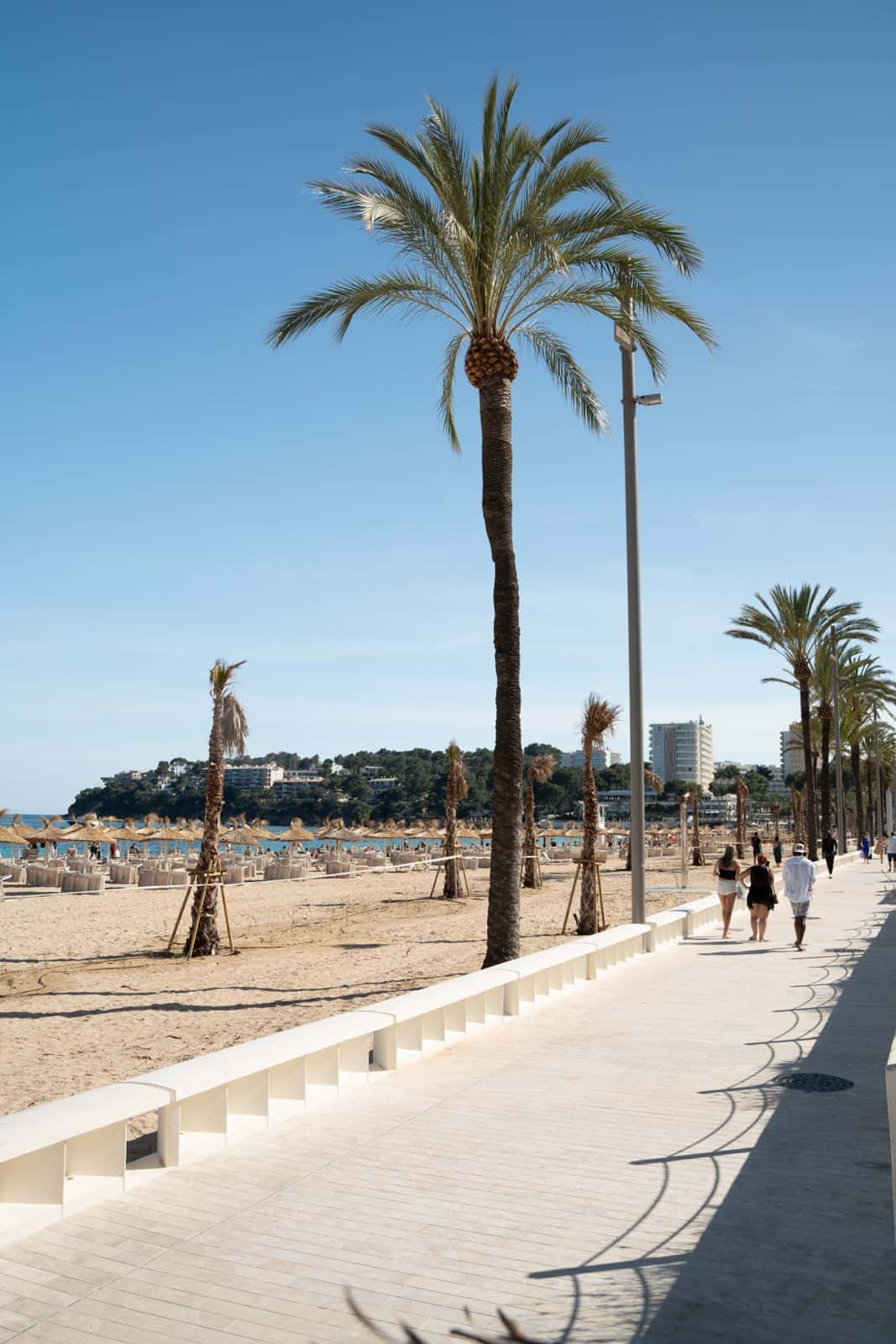
The promenade in Magaluf was built using tourist tax funding. Image: Calvia Tourism
The strip’s faded air reflects changing tastes, but its decline is also the result of a deliberate effort to diversify the tourism model that created it.
That model took shape in the 1960s, when Mallorca opened up to mass travel and hotels rose at extraordinary speed. Dennis Saro, a local guide, has watched Calvià wrestle with the consequences. “We made a lot of mistakes at this time in the 60s,” he says. “We started building, building, building… and we didn’t think about the future. This is what we are fixing now.”
By the 1990s, Magaluf had a reputation for cheap booze, cheap rooms and being a resort where rules did not apply, where almost anything went.
The moment that forced the authorities to confront its reputation arrived in 2014, when a video showed a young British woman performing sex acts on multiple men in a bar as part of a drinks promotion. It travelled around the world, becoming a brutal advertisement for Magaluf’s tourism economy. “It used to be a lawless city,” says Mora Bosch, who says it was at that point that the authorities knew something had to be done.
Calvià restricted pub crawls, street drinking and alcohol promotions. Shops in designated ‘excess tourism’ areas were banned from selling alcohol between 9.30pm and 8am. Noise rules were tightened and police inspections increased, while many venues began opening earlier as daytime clubs.
The Balearic Sustainable Tourism Tax followed in July 2016, charging visitors according to their accommodation and the time of year. By July 2025, close to 300 projects worth almost €850m (£730m) were being financed through the programme.
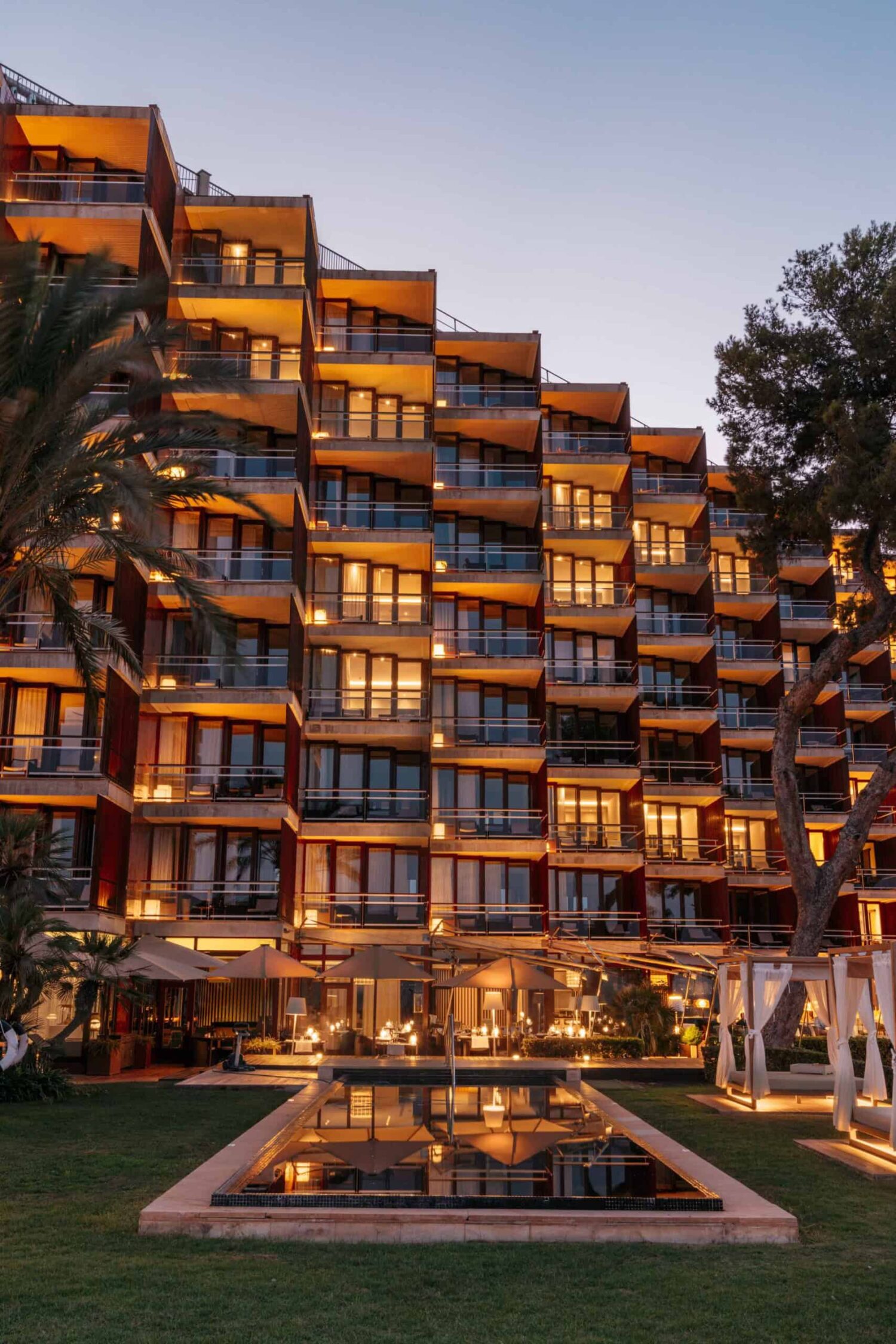
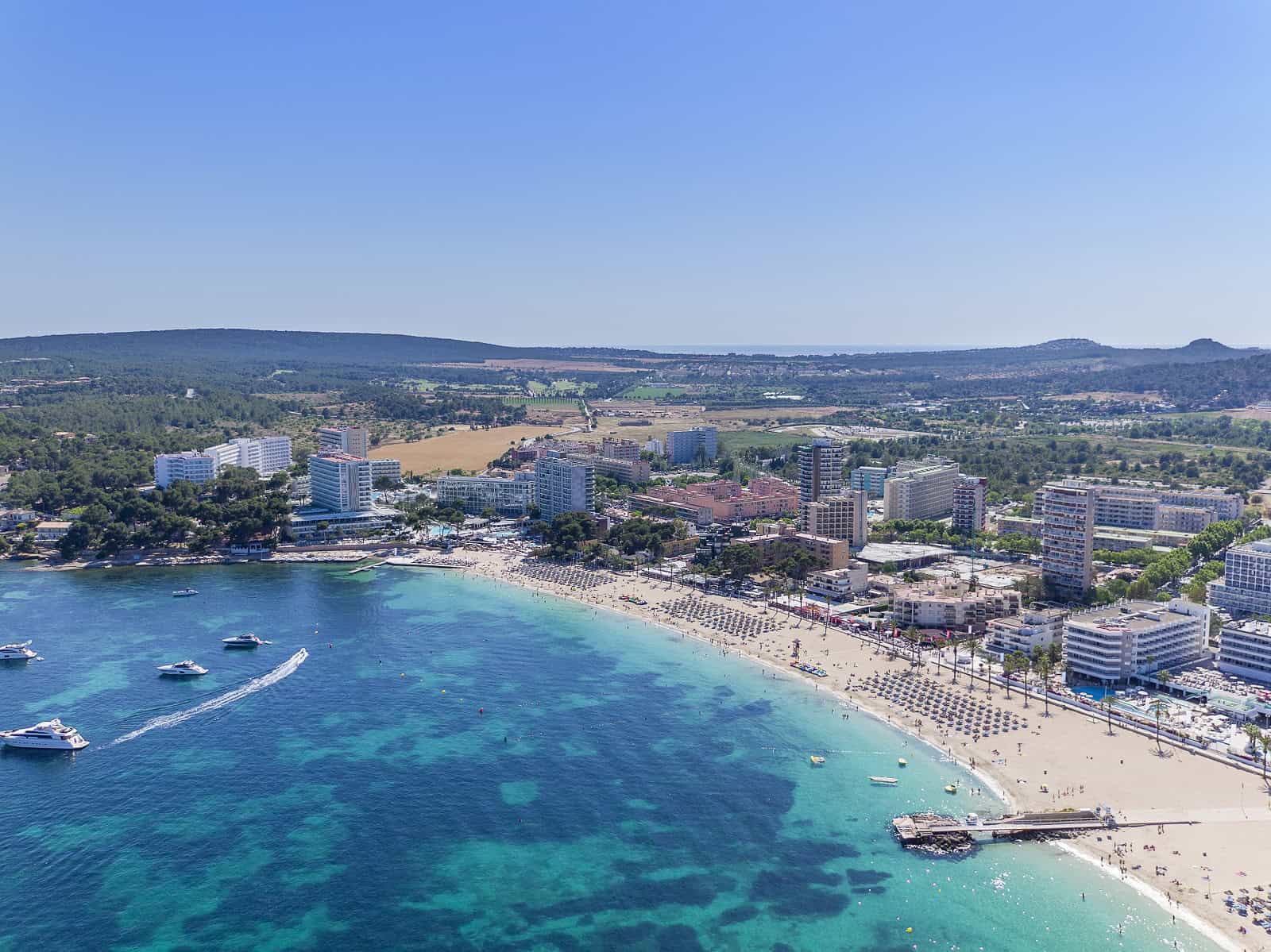
Newly developed hotels have sprung up across Magaluf. Image: Calvia Tourism
“The main aim of the tourism tax is to compensate for the impact generated by tourist activity,” says Miguel Rosselló Jiménez, tourism co-ordinator at the Balearic Islands’ ministry of tourism, culture and sport. “It helps fund projects to improve the destination, making it more sustainable in environmental, social and economic ways.”
The levy funded investment in public spaces, water infrastructure and cultural projects. Alongside private investment, EU funding and political support, it became part of a wider effort to rebuild and rebrand the region.
Magaluf’s beachfront now has a bright promenade linking the hotels, restaurants and waterfront. There is level paving, planting, seating and room for buggies and wheelchairs. Native plants and reclaimed water reduce pressure on local supplies, while beach showers use seawater. The €3m (£2.5m) second phase, completed in May 2026, was funded entirely through the tourism tax.
The space feels safe, open and easy to use, more in keeping with the waterfront at Port Adriano and other parts of the island. Nearly every venue I pass is serving couples and families. There are groups of men and women, but most are restrained rather than rowdy.
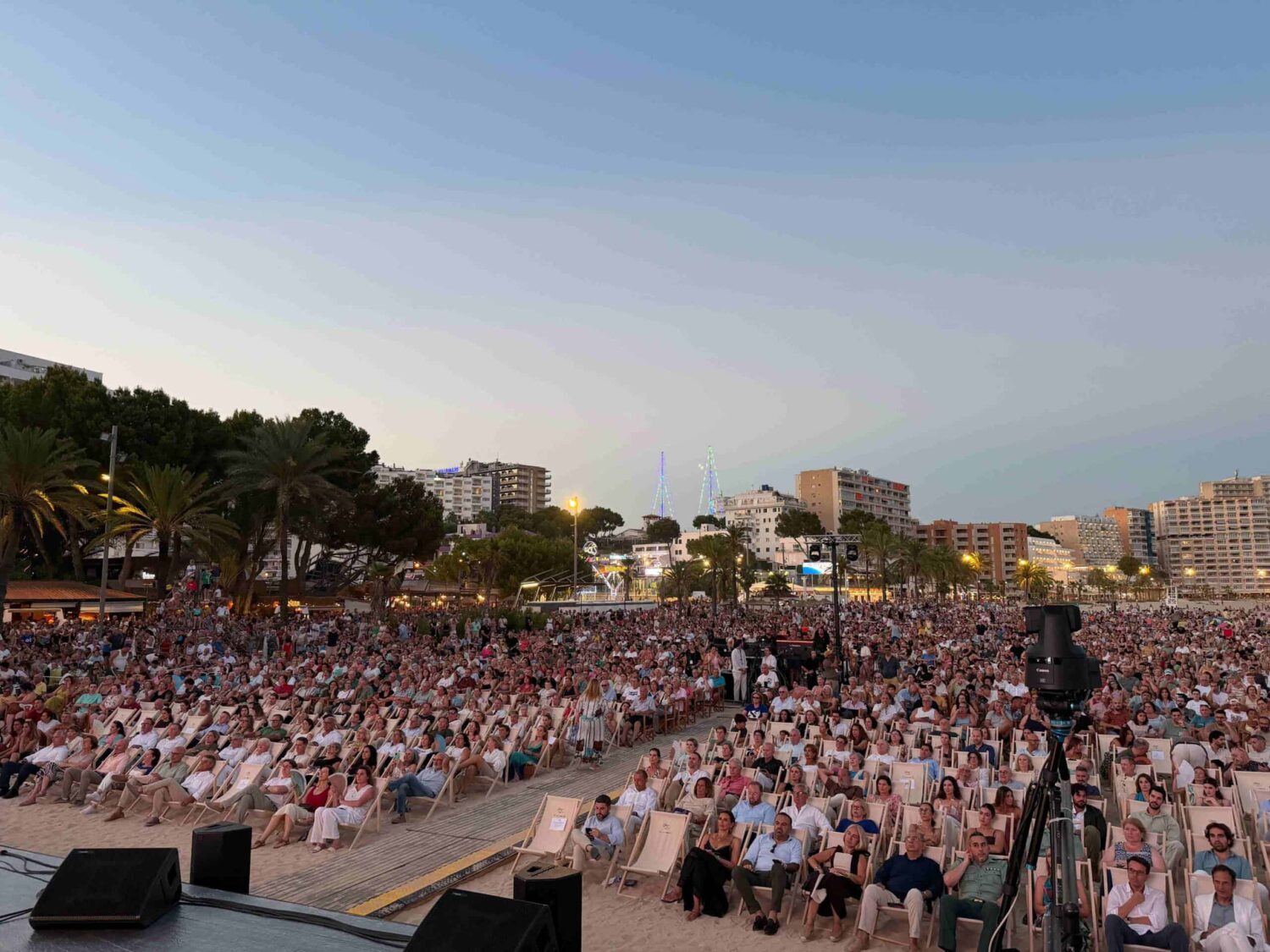
The official inauguration of Magaluf’s promenade in June 2026. Image: Calvia Tourism
By 11pm, most of the larger groups make their way towards the strip as almost all the venues on the waterfront close or prepare to shut. Staff know inspections will check whether alcohol service has stopped on time, whether music has crept above the permitted level and whether customers are smoking where they should not be.
For residents, better paving and calmer evenings only go so far if tourism still consumes the places where they live. Marta, a Calvià resident, supports the move away from sheer numbers, although she understands why some neighbours have lost patience altogether.
“We want more quality and less quantity,” she says, adding that many locals “just want to be able to go to a beach and find a spot”.
The campaign to diversify tourism has also involved broadening the range of hotels on offer. BH Mallorca, once one of the main engines of the resort’s 18-to-30 economy, was bought by the Mallorca-based Fergus group and its partners, with around €20m (£17m) committed to dividing the complex into three hotels aimed at families and higher-spending visitors.
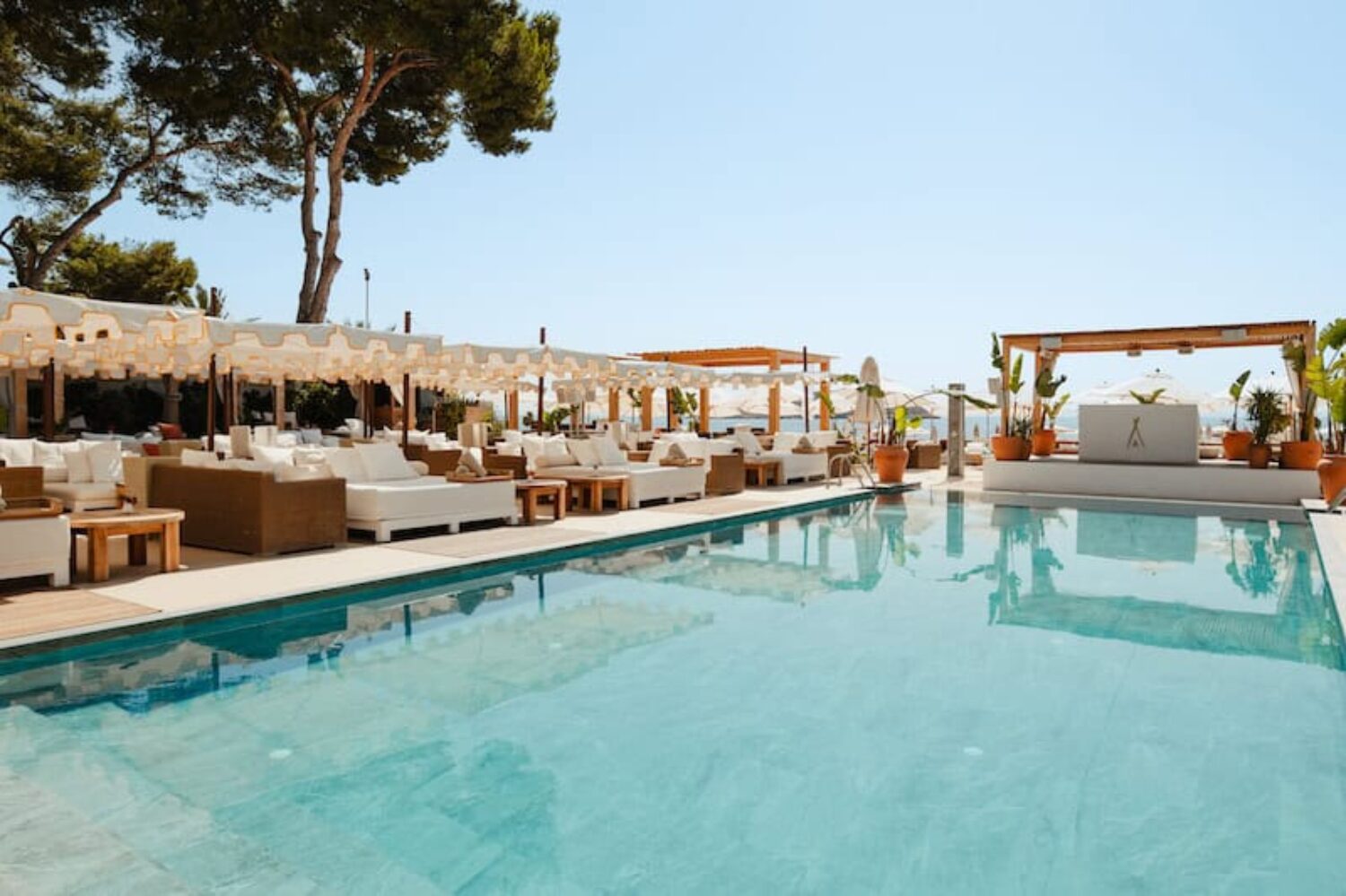
Nicky Beach on Magaluf waterfront has replaced many older bars. Image: Calvia Tourism
“They used to specialise in drunk-tourism – the 18-to-30 market,” says Mora Bosch. “They’d have 1,200 people in this hotel, and you might find 3 or 4 people in a room … But two years ago Fergus bought it, a local brand who specialise in family activities, and we’ve seen a huge difference. The change is everything.”
Richie Prior arrived as a holiday rep in 1990 and is now managing director of Pirates Adventure, one of Magaluf’s longest-established attractions. Writing recently about the changes, he said Mallorca had “changed dramatically” and added: “Personally, I think it’s a positive move,” pointing to improved hotels, restaurants and a more international crowd.
The authorities argue that fewer visitors spending more can create greater economic value with less pressure on streets and emergency services. “Fewer people but their per head spend is a lot more,” says Mora Bosch.
That strategy has been helped by broader changes in habits. Younger adults drink less, the cost of living makes indiscriminate spending harder, and many visitors now want a better room, a decent meal and somewhere attractive to share on social media. As Mora Bosch puts it, people increasingly want to show off, a shift reflected in the designated ‘selfie route’ created along the promenade.
We just want to be able to go to a beach and find a spot
That does not mean Magaluf wants to stop young people from coming and letting off steam as this is still a major part of the local tourism economy. Stag and hen parties still arrive and the major clubs continue to buzz, but it feels as though Punta Ballena’s heyday is behind it. Calvià council has bought 11 obsolete commercial premises in the area, using a €6m tourism tax grant to acquire, demolish and redevelop them. The scheme will remove unsafe buildings and return the land to public use, while the fading bars suggest the market may be retreating.
Calvià is also creating reasons to visit that do not depend on nightlife. The council plans to restore the 16th-century Torre de Torrenova and turn neighbouring buildings designed by local architect Josep Ferragut into an international artists’ residence. It is one of several physical and cultural projects under way, including the restoration of the Galatzó public estate, the development of Puig de sa Morisca archaeological park, a series of refuges for walkers, a film-location trail, a €10,000 literary prize and Conecta Magaluf, which recently brought together 400 film and television professionals from 29 countries.
Nearly 2,000 kilometres north, Edinburgh is beginning an experiment of its own. Since 24 July, the Scottish capital has charged visitors 5% of the pre-VAT accommodation cost for the first five nights, becoming the first UK city to introduce a mandatory city-wide visitor levy.
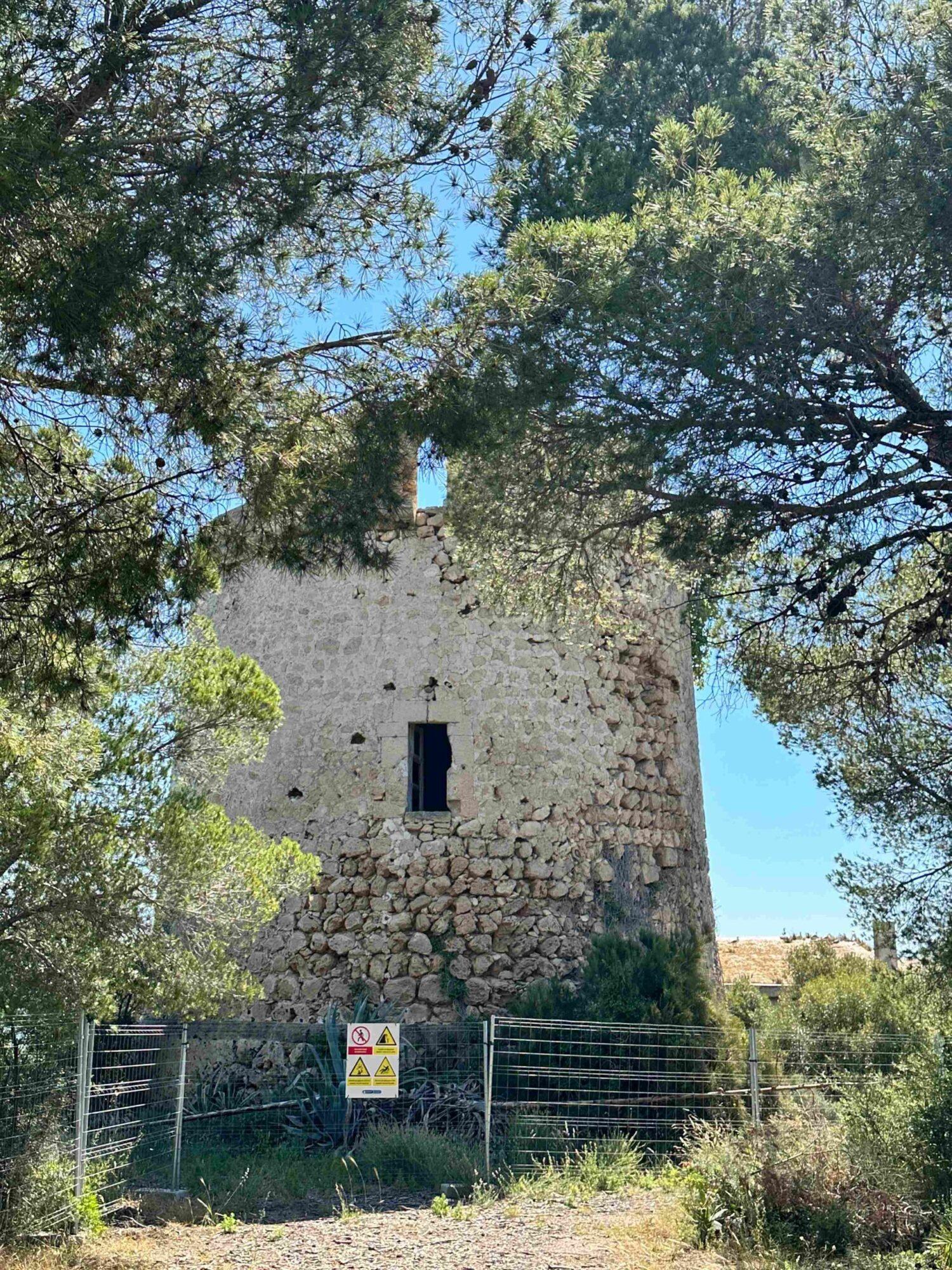
The 16th-century Torre de Torrenova will be turned into an international artists’ residence. Image: Tom Pattinson
The levy is expected to raise up to £50m a year by 2028-29. Of the available funds, 55% will go to city operations and infrastructure, 35% to culture, heritage and events, and 10% to destination management. The first three-year programme is worth more than £90m, including funding for Leith Theatre, public toilets, historic streets and an annual £5m housing and tourism mitigation fund.
An early consultation found that 85% of respondents strongly supported a levy, although the final 5% rate proved more divisive. Hospitality businesses argue that Edinburgh is already expensive and that visitors may spend less elsewhere.
Tony Lankester, chief executive of the Edinburgh Festival Fringe Society, supports the principle while warning that the festival needs to see a tangible return. “At its most basic level, I think the tourist tax is a good thing because for too long the impact of tourists… has been borne by the people who live here,” he told The Stage.
Magaluf’s challenges are very different from Edinburgh’s: visitors come to the Scottish capital for its heritage and world-famous literary and arts festivals, but in both places the costs of mass tourism are often left for residents to absorb. Calvià shows that a tourist tax, combined with private investment, regulation and political will, can help transform a destination. It did not save Magaluf by itself, but it has helped the resort build a future in which it may no longer need saving.
Main image: Calvià Tourism
Be part of the solution
At Positive News, we’re not chasing clicks or profits for media moguls – we’re here to serve you and have a positive social impact. We can’t do this unless enough people like you choose to support our journalism.
Give once from just £1, or join 1,800+ others who contribute an average of £3 or more per month. Together, we can build a healthier form of media – one that focuses on solutions, progress and possibilities, and empowers people to create positive change.
Support Positive News

















































You must be logged in to post a comment Login