
Politics
The House | Building resilience is a team effort



A stretcher box below Great Gable, Alamy

5 min read
One rescue from the Lake District captures why volunteer search and rescue matters. A group of girls had just finished their GCSEs and set off on what should have been a three or four-day journey across the fells. As they reached the top end of Ennerdale, a major thunderstorm hit. Streams that would normally have been easy to step across were suddenly transformed into dangerous torrents.
One of the girls was swept off her feet and carried downstream. Thankfully, her friends managed to grab hold of her and pull her out. But the group was left stranded, soaked through and trapped between flooded watercourses in one of the most remote parts of Cumbria.
Mountain rescue volunteers were called out. They reached the group, escorted them safely across the flooded becks and into shelter. Nobody would have blamed them for calling their parents and ending the trip. Instead, after talking it through together, they decided to continue.
That moment says something important about the outdoors. It builds confidence, resilience and judgement, particularly in young people. We should want more people to experience it safely, not fewer.
But it also illustrates something Westminster too often overlooks: when things go wrong, the public rightly expects help to be there. Increasingly, that help comes from volunteer search and rescue teams.
Across the UK, volunteer search and rescue teams support police forces, ambulance services, fire and rescue services and other partners in some of their most demanding incidents. They search for vulnerable missing people, rescue injured walkers and climbers, respond during floods and severe weather, and provide specialist capabilities that have become an indispensable part of Britain’s emergency response system.
Yet while the public assumes help will arrive when it is needed most, far less attention is paid to how that capability is sustained. That matters because resilience has risen rapidly up the political agenda. Westminster increasingly talks about emergency preparedness, civil contingencies and public safety. But one of Britain’s most valuable emergency response assets has too often remained on the margins of those discussions.
Volunteer search and rescue does not have a capability problem. It has a recognition and sustainability problem.
Government already relies on volunteer search and rescue. Public policy has simply been slower to catch up with that reality.
The recent wildfires in the Peak District and in the Cairngorms in the Highlands are a timely reminder. Mountain rescue teams have worked alongside fire and rescue services, providing specialist personnel, local knowledge and increasingly sophisticated drone capability. Few people associate mountain rescue with wildfire response, yet without that support the task facing fire services would have been significantly harder.
Thousands of volunteers provide a highly skilled capability on which statutory services routinely depend. Yet the support around them does not always match the responsibility placed upon them.
Rising insurance costs, regulatory barriers, employer pressures and increasing operational demands all affect the ability of teams to respond. These issues rarely make headlines. But they determine whether this vital capability remains sustainable.
That is why the All-Party Parliamentary Group for Volunteer Search and Rescue was created: to turn frontline experience into practical policy change. One year on, it is already delivering results.
The clearest example is the Government’s decision to exempt search and rescue vehicles from Vehicle Excise Duty. The financial benefit is welcome, but the wider significance is greater. It acknowledges that volunteer search and rescue is a public service and a critical part of the nation’s resilience infrastructure.
Recent concerns over Care Quality Commission registration requirements for volunteer mountain rescue teams provide a good example. Nobody disputes the importance of patient safety. The question is whether regulatory frameworks designed for hospitals and commercial healthcare providers are proportionate for volunteer emergency services operating in challenging environments.
Good policy reflects operational reality. If regulation becomes disproportionate, the result may be fewer teams able to provide cover, higher costs and greater pressure on statutory services. The APPG is now looking at wider challenges, including insurance, workforce recognition, employer support and legislative barriers. None are glamorous issues. All have a direct impact on whether teams can respond when the call comes.
The irony is obvious. At a time when government rightly places greater emphasis on resilience, it continues to depend heavily on a capability built largely on voluntary effort. That model works because of the extraordinary commitment of volunteers. It should not be taken for granted.
Every rescue depends on training, fundraising, equipment, governance, employer flexibility and thousands of hours of unpaid commitment long before an emergency happens.
The public sees the rescue. Policymakers should see something more: a critical national capability on which the country increasingly depends.
The past year has shown that when Westminster engages seriously with volunteer search and rescue, progress follows.
The question is whether government is prepared to go further, because resilience cannot simply be praised when emergencies happen.
It must be supported before they do.
Torcuil Crichton is Labour MP for Na h-Eileanan an Iar andm chair of the Voluntary Search & Rescue All-Party Parliamentary Group

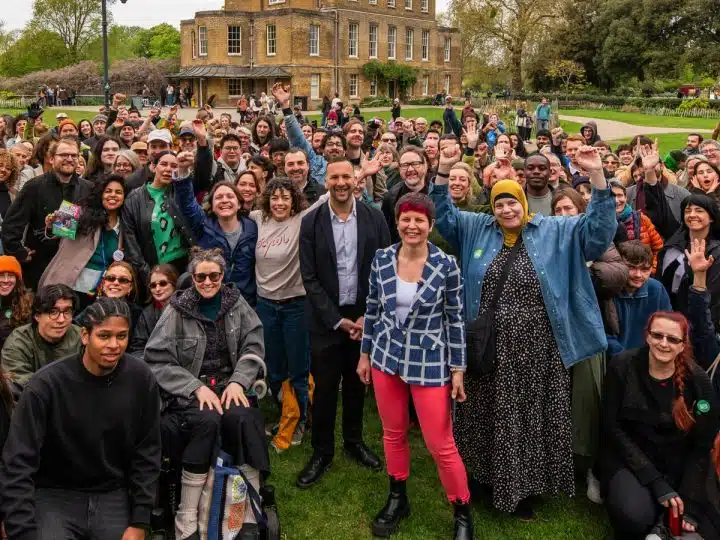

Hackney’s Green Party-led Council has voted to end its 58-year-old twin-city agreement with Haifa, a port city that “Israel” violently captured in 1948.
Councillors have upheld the vote as a commitment in their May 2026 local elections manifesto. They have pledged to end the twinning arrangement at “the earliest possible opportunity,” the details of which are under consideration.
The decision follows years of pressure by Palestine solidarity activists. The decades-long campaign involved a broad coalition of groups. These included the Greens, Stop the War, Hackney Independent Socialist Collective, and the Palestine Solidarity Campaign (PSC). The campaign gathered steam in 2024. At the time, a public petition calling out Israel’s repeated war crimes in Gaza and the occupation of the occupied West Bank received 4,000 signatures.
Tonight all the Green councillors voted to start the process of ending Hackney's twinning with Haifa. All the Labour councillors voted against. The Council will now: set up an all-party committee, consult residents, consult Haifa's Mayor & carry out an Equality Impact Assessment.
— Heather Mendick (@helensclegel) July 28, 2026
“At odds with our anti-racist values”
Hackney Council describes itself as an “actively anti-racist and human rights-respecting local authority,” and says “international partnerships remain relevant and reflect the shared values [of Hackney residents].” Councillor Sam Mathys, responsible for managing the twinning relationship has previously said that:
We want civic partnerships that are about fostering peace, justice, and equality […] For decades, we have witnessed human rights abuses committed by the State of Israel against the Palestinian people, which has escalated to a horrifying and unprecedented scale over the past years.
Raising similar points, Hackney mayor, Zoe Garbett said:
Given the ongoing humanitarian crisis, and the gravity of the UN Commission of Inquiry Reports concluding Israel has committed genocide, maintaining a civic connection with what is widely recognised [as] a military port city is fundamentally at odds with our anti-racist values.”
The city that houses Elbit Systems
Haifa is promoted as a progressive, left-wing model of coexistence — the very rationale used to justify the Twin City agreement six decades ago. However, this isn’t the case. Haifa is one of three Palestinian coastal cities Israel has been occupying since 1948. It is also the site of the first Palestinian ghetto post-Nakba.
Since then, Haifa has functioned as a major logistical hub for seaborne military shipments. It hosts Israel’s main naval base and the headquarters of Elbit Systems Global. Elbit is the occupation’s largest privately owned arms manufacturer, and produces 85 percent of the Israeli Occupation Forces’ (IOF) land-based equipment and drones.
One might wonder how we got here? In 1948, 95 percent of Haifa’s indigenous Palestinian population were violently expelled by Zionist Haganah militiamen. Those Palestinians who survived the exterminationist campaign today face unparalleled discrimination across housing, employment, education and politics, and much more.
A survey published in May 2025 found that 82 percent of Jewish Israeli citizens supported the forced expulsion of Palestinians from Gaza. They also supported wanton killings of Gazans by the IOF. According to Orly Noy, former chair of B’Tselem, it will take “decades of rehabilitation” for Israeli society to rectify and undo these views.
Defenders of “Israel”
The decision, as is to be expected, has ruffled the feathers of Labour party members and affiliates. In 2024, the de-twinning was formally presented to the council. At the time, Labour councillor Michael Desmond described it as an “appalling, abusive tirade,” and defended the agreement as one which promotes:
cultural values, religious freedom, tolerance and peaceful coexistence.
Labour councillor for Hoxton West, Ben Lucas said his party could not support the paper “in all good conscience.” He told the Greens they were punishing the “Israelis” for the actions of their government.
Conservative party councillor Simche Steinberger has also criticised the de-twinning decision. He cited medical exchanges between Hackney’s Homerton University Hospital and Haifa’s Rambam Hospital. At the debate, he said:
It’s probably the only twinning which actually does something because I remember a few years ago where the doctors from Haifa Hospital were here in Homerton teaching them what to do.
A license to kill
Rambam is the biggest Israeli hospital in northern Israel, situated 30 miles from the Lebanese border. For the past three decades there has been “medical cooperation” between these two hospitals. But this is not the type of medical cooperation you might expect, because Ramdam hospital also works closely with the IOF.
Ramdam not only treats tens of thousands of injured IOF, it also trains IOF doctors to treat soldiers who have killed and maimed civilians. This enables the ongoing genocide in Gaza.
The IOF act with total impunity in both the West Bank and Gaza. They detain children, steal Palestinian land, control movement, raid homes, and prevent access of emergency services to the injured. They protect illegal armed settlers, and kill and maim innocent civilians.
Is this the culture of tolerance defenders of Israel have in mind when excusing the genocidal and racist conduct of the colonial-settler project?
Second class citizens
Sussan Rassoulie, a key proponent of the campaign and the leader of the 2024 petition, says there are multiple reasons why Hackney should not be twinned with Haifa. She underlines the second class treatment of Palestinians from Haifa and other cities in and outside of the West Bank. In addition, citing Israel’s 2018 Basic Law, Rassoulie reminds us that the occupation:
recently enacted, explicitly racist death penalty law, passed by the Knesset, also applies in Haifa.
In conversation with the Canary, Rassoulie has this to say:
Hackney Palestine Solidarity Campaign welcomes Tuesday evening’s decision if it marks the start of a swift process to end a twinning relationship with Israel’s third largest city and principal military port. We hope that a move by Hackney’s now Green-led administration will encourage campaigners in other local authorities that may still have twinning relationships with cities or towns in a state engaged in a genocidal war in Gaza and pursuing a brutal policy of ethnic cleansing in the West Bank and East Jerusalem.
Time to Isolate “Israel”
Various other towns and cities in England are also twinned with the Zionist state. Newcastle and Portsmouth are also twinned with Haifa in Northern “Israel,” while Bournemouth is twinned with the resort of Netanya. The borough of Barnet is twinned with the Tel Aviv neighbourhood of Ramat Gan. Meanwhile, the borough of Elstree and Borehamwood in Hertfordshire is twinned with the central town of Shoham.
It is time all ties with the genocidal state of “Israel” were broken, and the Israeli occupation is isolated on the world stage. They only help to legitimise and normalise its horrendous crimes against the Palestinians.
Hackney Council says it will now set up an all-party committee, consult residents, and carry out an Equality Impact Assessment. It has given Haifa’s mayor until 5 October to respond to the decision.
Featured image via the Canary
By Charlie Jaay
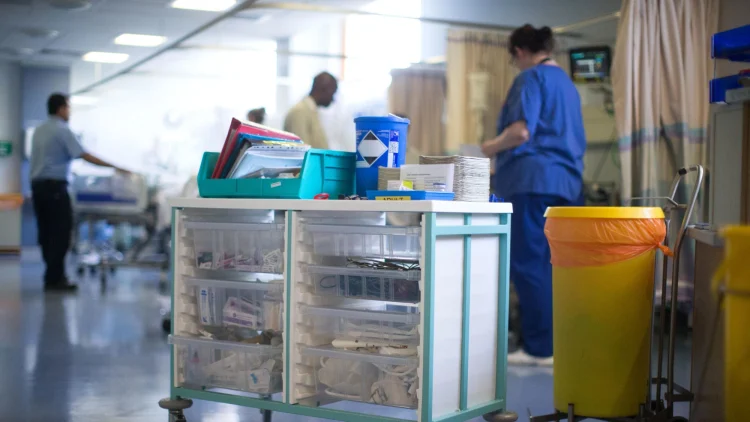

NHS hospital ward (Alamy)

4 min read
The Prime Minister is right to say that social care is too important, too difficult and too long neglected to be left to politics as usual.
His decision to seek a cross-party solution recognises a simple truth: Britain’s biggest challenges cannot be solved by one department, or one government, acting alone.
Health more broadly deserves the same approach. Now is the time to establish a sub-Cabinet-level Health and Care Equity Taskforce or Board, reporting directly to the Prime Minister. It should bring together ministers from Health, Housing, Education, Work and Pensions, the Treasury and local government, alongside public health experts, NHS leaders, social care, business and the voluntary sector.
Over more than three decades as an NHS consultant, I saw firsthand that the Department of Health and Social Care cannot make Britain healthier on its own.
As a consultant gynaecologist and specialist in reproductive medicine, I treated the consequences of inequality rather than its causes. Women with years of untreated symptoms because they could not get appointments. Couples denied fertility treatment because of their postcode. Poverty, poor housing, insecure employment, stress and poor nutrition appeared disguised as medical conditions.
I could treat symptoms and diseases, but I could not deliver warm homes, secure incomes or good educations.
As vice-chair of the British Red Cross, I saw the same pattern. In emergencies or supporting vulnerable communities, the people facing the greatest health challenges were often those already struggling with poverty or loneliness. Their problems did not fit neatly into government departmental boundaries, yet our solutions still do – that is our fundamental mistake.
England now has a nearly 20-year gap in healthy life expectancy between the most deprived and most affluent communities. That gap is not created by hospitals but by one’s quality of life. Around 80 per cent of health outcomes are determined by the wider social determinants of health: where we are born, grow up, learn, work, live and age.
If we continue asking the NHS to solve problems that begin decades before a patient enters a hospital, we will continue to overload the health service while failing to improve the nation’s health. The language of “fixing the NHS” is too narrow. We must also fix the conditions that make people ill in the first place.
Nor can we reform social care in isolation. Health and social care are inseparable, and both are shaped by policies reaching far beyond them.
Every major department influences the nation’s health. The Treasury determines investment. Housing affects respiratory disease and mental health. Education shapes lifelong opportunity. Work and Pensions influences financial security and employment. Transport affects access to healthcare. The Home Office influences community safety. Health is not produced by the Department of Health and Social Care alone; it is produced by government as a whole.
The economic case is just as powerful as the moral one. If the North of England had the same health outcomes as the rest of the country, it could add £18.4bn to our economy every year.
Poor health reduces productivity, increases welfare dependency, constrains economic growth and places ever greater pressure on public finances. Investing in healthier communities is not merely a social policy; it is economic imperative. A healthier population is one of Britain’s greatest untapped growth opportunities.
Andy Burnham has shown leadership by recognising that adult social care requires cross-party and cross-government thinking. I hope he will now take the next step and establish a central Health Equity Taskforce. Its purpose should be ambitious: to ensure that every major departmental policy is judged not only by its economic impact but by its impact on the nation’s health.
For decades, we have treated health as the responsibility of one department. That approach has failed.
If we truly want an NHS fit for the future, and a country fit for the future too, we must stop thinking of health as something delivered in hospitals and start recognising where it is really created: in our homes, our schools, our workplaces and our communities.
That is how we will reduce inequality, build a stronger economy and create a healthier Britain.
Baroness Nargund is a Labour peer


3 min read
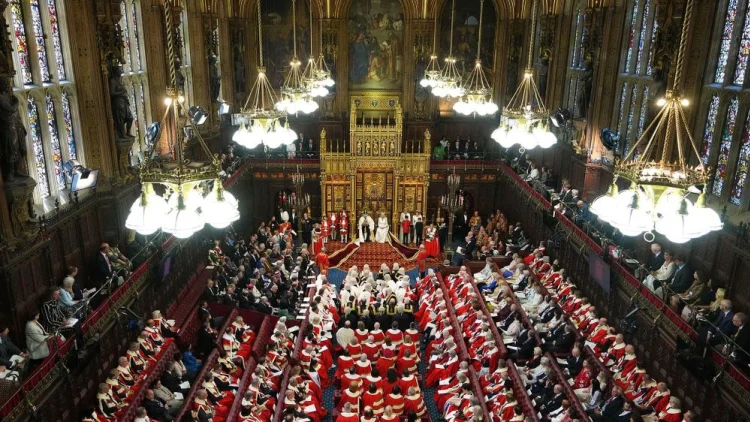
A cross-party group of MPs and peers has urged Prime Minister Andy Burnham to expedite plans to abolish the House of Lords.
In a letter seen by PoliticsHome, 53 parliamentarians have asked Burnham to establish a national commission to examine options for replacing it with a more representative chamber.
“Whilst we welcome the initial steps taken by the government to reform the upper chamber, we remain deeply concerned about the impact its current structure has on people’s lives,” the letter says, adding: “This institution underpins the everyday realities of communities across the UK, and with trust in politics at an all-time low – it is crucial that we have a second chamber that is representative and accountable.”
Parliament has already approved legislation brought forward by the Keir Starmer Labour government to remove the remaining hereditary peers from the upper chamber.
Responding to the letter on Friday, the government pointed to the removal of the hereditaries as an example of fundamental Lords reform, and stressed that the new Prime Minister has a long-term commitment to replace the unelected chamber with something more representative of the regions and nations.
However, the cross-party group expresses concern that government is not moving quickly enough, pointing to Labour’s 2024 manifesto commitment to replace the House of Lords with “an alternative second chamber that is more representative of the regions and nations”.
The letter was organised by the co-chairs of the All-Party Parliamentary Group for House of Lords Reform, Labour MP Dr Simon Opher and former Tory cabinet minister Kit Malthouse, and is signed by MPs such as Labour’s Diane Abbott, Kim Leadbeater and Rosena Allin-Khan; Green MP Ellie Chowns; Plaid’s leader in Westminster Liz Saville-Roberts; and Lib Dem MPs Christine Jardine and Wera Hobhouse.
It recommends that the national commission be made up of citizens and constitutional experts who would be asked to discuss how a more representative second chamber would work. This would be a “clear way in which this government could deliver on its pledge,” according to the group.
It reminds Burnham of comments he made during the Makerfield by-election, which paved the way for him to enter No 10: “I don’t think we can justify half of our national legislature being unelected”, and argues that abolishing the unelected House of Lords would complement his commitment to devolving power away from Westminster and strengthening regional representation.
“As you have committed to making regional representation a cornerstone of your Premiership, this is a significant opportunity to embed that principle into the UK’s constitutional architecture,” they write.
The letter also points to polling from the UCL Constitution Unit and YouGov showing that 79 per cent of the public support limiting prime ministerial powers to appoint peers and 71 per cent support capping the size of the Lords so that it cannot exceed the Commons.
“We would welcome the opportunity to discuss this with you and to work together towards a legislature that better serves people across every part of the United Kingdom,” it says.


New PM Andy Burnham’s left-wing credentials have lasted about as long as left-out milk. Less than a fortnight into his reign, the gimmicky Scouser was spotted bowing to The Holy Nukes in a visit to BAE Systems’ Barrow-in-Furness death factory.
BAE won’t fix what’s broken
Burnham told reporters:
Keeping this country safe is the first responsibility of any government – but security is not only about what we build; it is about who builds it, and who benefits from it.
Nukes, naturally, are well known for bestowing safety. In a press release ahead of the visit on 30 July, the government insisted:
A major £8.4bn investment in the UK’s nuclear deterrent, delivering jobs and opportunity for young people for years to come, is set to be announced by the Prime Minister today.
Tens of thousands of jobs will be supported – from Barrow to Bristol – and hundreds of businesses bolstered by the major tranche of defence investment.
Little mention was made of the fact that military spending is one of worst routes by which to achieve economic growth. Quite the opposite, according to the Transition Security Project, who have warned:
that cuts used to fund the £15 billion in additional military spending in the Defence Investment Plan will lead to around 10,000 net jobs lost in the UK.
Great work, Andy. We’re sure you can obscure all this with a DJ set or something…
Military Keynesianism is a fantasy
And, as the Canary has reported, Labour’s current policy of recruiting the whole of society to so-called military Keynesianism – an economy built around war – is a canard.
But it isn’t the only option. The Campaign for Nuclear Disarmament (CND) has proposed an alternative defence policy rooted in:
…human security and common security—prioritising diplomacy, global cooperation, conflict prevention, and investment in health, education, climate resilience, social care, and the creation of well-paid, secure, unionised and socially useful jobs.
Professor Karen Bell, editor of the proposal, said:
This report offers a credible, democratic alternative to militarism: a sustainable economy grounded in social justice, global solidarity, and the urgent need to build peace—not war—for the 21st century.
Military Keynesianism is an economic ideology Keir Starmer tried to popularise. Burnham has made clear he will continue it. And the winners won’t be workers. Rest assured, arms firms are the ones rubbing their palms together at the sight of massive handouts in public money so that they can fill the armouries to order.
Featured image via the Canary
By Joe Glenton

4 min read
For the first time in almost three decades, a Labour Prime Minister is chairing Cabinet without a dedicated minister – or secretary of state – for international development sitting at the table. The significance of this is not administrative; it is political.
If Britain is serious about global leadership, its institutions must be fit for that role. A smaller development budget makes strategic prioritisation more important, not less. Development should not sit at the margins of foreign policy but at the heart of decision-making, ensuring resources are directed where they can have the greatest impact.
Cabinet-level representation gives a minister the authority to shape decisions across government and the standing to represent Britain internationally. The question is whether development expertise carries sufficient weight when decisions are made on security, diplomacy and Britain’s engagement with the world.
That question matters now more than ever. Andy Burnham has inherited an exceptionally challenging international environment. The war in Ukraine rages on, conflict persists across the Middle East, geopolitical competition is intensifying, climate pressures are accelerating, and humanitarian needs are reaching unprecedented levels. Britain must respond with confidence and purpose, using every tool available to advance its interests and values.
As Foreign Secretary, Ed Miliband has set out an ambitious vision for Britain’s role in the world: defending democracy and the rule of law, standing with Ukraine, strengthening alliances, deepening engagement with the Global South, tackling the climate crisis and reforming international institutions so they work more effectively. These are the right priorities for a more unstable era. But delivering them will require every tool of statecraft.
His decision to take on the role of UK Governor to the World Bank reinforces that message. As he has argued, international development is “not an add-on to British foreign policy; it is central to it”. Today’s challenges are increasingly interconnected: climate change, conflict, economic instability, health crises and humanitarian emergencies demand an approach that brings development expertise together with diplomacy and defence. That, in turn, requires development to have the political authority to shape decisions at the centre of government.
Labour has long argued that international development is not simply an act of charity but a strategic investment in Britain’s security, prosperity and global standing. Burnham captured that principle in 2010 when he argued that international development was “not all about charity; this is good for Britain,” adding that “Labour should proudly defend our record on international development”. As Prime Minister, he now has the opportunity to put that principle into practice by giving development a voice at the decision-making table.
If international development is truly central to Britain’s role in the world, it must also be central to the way Britain governs itself
That authority matters particularly when difficult choices are being made. Among the decisions inherited by the new government are the latest Official Development Assistance (ODA) allocations, which raise serious questions about Britain’s ability to sustain long-term partnerships and respond effectively to global challenges.
The scale of those choices is stark: by 2028/29, ten of the 17 African countries receiving direct UK ODA support will have little or no budget remaining. These reductions will not only affect some of the world’s poorest communities, but also diminish Britain’s influence at a time when other countries are increasingly willing to fill the space we leave behind. That is precisely why development requires a strong voice at the centre of decision-making.
Britain has demonstrated the value of that approach before. During the Ebola crisis in Sierra Leone in 2014, the UK recognised the outbreak not simply as a humanitarian emergency but as a matter of national interest. At the time, Britain was meeting the 0.7 per cent gross national income aid commitment, DFID was a standalone, globally admired department, and the Secretary of State for International Development sat at the Cabinet table. That institutional strength enabled Britain to respond early, helping contain the outbreak before it reached our shores.
The lesson remains just as relevant today. The Ebola outbreak in the Democratic Republic of Congo shows that global crises cannot be managed through emergency response alone. They require investment in resilient health systems, effective governance and long-term partnerships alongside diplomatic and security engagement. Yet Britain now approaches these challenges with a development budget reduced to 0.3 per cent of GN, no standalone department and no dedicated Cabinet-level minister.
The choice facing the government is clear. Britain’s influence has never rested solely on diplomacy or military strength. It has also been built through enduring partnerships, stronger institutions and the trust earned by standing with allies through periods of uncertainty.
Restoring a Cabinet-level Development Minister would recognise that reality. It would ensure that development expertise is represented where Britain’s most important foreign policy decisions are made. If international development is truly central to Britain’s role in the world, it must also be central to the way Britain governs itself.
Libby Smith is Vice Chair of Labour Campaign for International Development and Director of Advocacy at Coalition for Global Prosperity
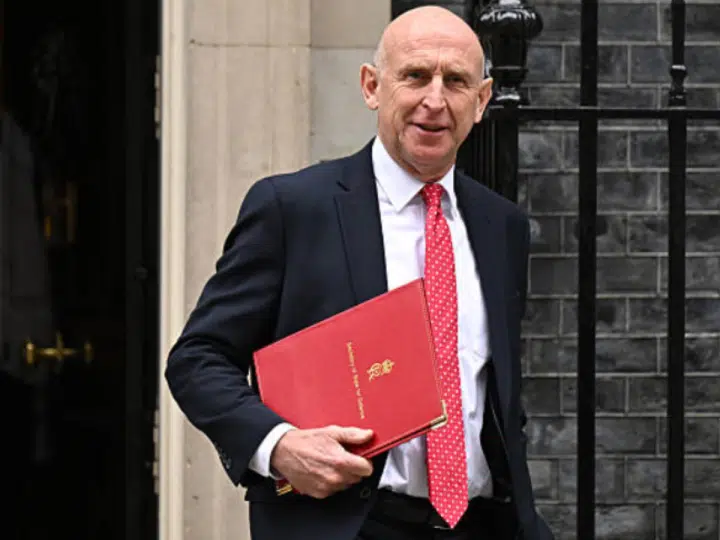

Newly appointed chancellor John Healey has opened the door for the UK military to shape defence budgets. His proposal is another step away from democratic oversight of how public money is spent. And it’s all part of a defence spending ideology that’s full of holes!
Declassified UK reported on 30 July:
Britain’s new chancellor John Healey has asked for a military officer to accompany him at the Treasury, it has emerged.
The move indicates how much weight Healey will place on weapons procurement after resigning as defence secretary last month in protest at Keir Starmer’s military spending plans.
The UK-based outlet pointed out that the move is highly unusual:
Chancellors do not normally have a serving military officer assigned to their private office, with the placements typically reserved for the prime minister and defence ministers.
However, Healey has requested an army major, naval lieutenant commander or air force squadron leader join his top Treasury team for at least the next six months.
Experts were quick to warn that this could amount to undue military influence over budgets which are meant to be democratically accountable.
Notoriously wasteful military
Transition Security Project co-director Khem Rogaly told Declassified:
Stationing a military officer at the Treasury will increase pressure to cut other areas of government spending to fund the soaring military budget. Cuts to fund the Defence Investment Plan were targeted at net zero during a summer of unprecedented heatwaves and severe droughts.
These cuts meant that the £15 billion added to the military budget will lead to net job losses in the UK. Further cuts will be deeply unpopular and damage the economy, taking money from schools and hospitals to fund a notoriously wasteful military.
Rogaly pointed out military spending is bad way to get growth and create jobs:
It should not escape the Treasury’s attention that military spending is one of the worst forms of public investment for jobs and growth. Military largesse is an extremely damaging economic strategy.
Who pulls the defence lever?
And that the military’s:
existing plan to increase military spending pours money into a broken system that already loses billions every year to cancelled contracts and fraud.
Added to this, large parts of the current budget seem to have less to do with national defence and more to do with spreading militarism overseas:
Despite the claim that more military spending is needed for national defence, the Defence Investment Plan commits Britain to military engagement in the Middle East, Indo-Pacific, Africa, Latin America and the Caucuses.
Declassified reported that the Treasure had not responded to questions. But that the head of the military, Sir Phil Knighton, had signed off on the new posting. It seems like the decision has already been made, with no sense that the erosion of democratic control is a concern for the Labour government.
Featured image via the Canary
By Joe Glenton
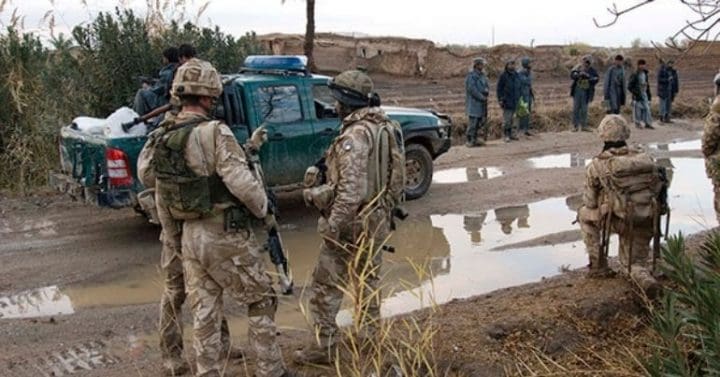

The UK defence committee has found a data breach which left UK-aligned Afghans exposed to the Taliban was “completely foreseeable”. The 2023 breach, kept secret until 2025 due to a court order, meant that a spreadsheet containing personal details of 18, 500 Afghans was made public.
Afghan resettlement programme
The Taliban took over Afghanistan after the US and UK left in defeat in 2021. The details were part of the UK’s so-called Afghan Relocations and Assistance Policy (ARAP). This British governmental scheme was meant to help relocate Afghans who had worked for the Brits in roles which made them targets for reprisals.
The BBC reported on 29 July:
In a report published on Thursday, the Commons’ Defence Committee said the Ministry of Defence (MoD) had lacked the expertise to run the UK’s Afghan relocation scheme after the fall of Kabul to the Taliban and had used secrecy as a “shield” against proper accountability.
They added that:
The breach came to light in August 2023 but an unprecedented super-injunction prevented it from being reported on until July 2025.
By law, the super-injunction existence could also not be reported.
The committee found:
The leak was not “an individual mistake” but a “foreseeable systemic failure” caused by “inappropriate tools, weak operating procedures, insufficient training, poor organisational continuity, and an inadequate culture of data protection and accountability”.
The BBC said:
The breach, just one of 19 reported between February 2022 and November 2023, was caused by a member of MoD personnel sharing a Microsoft Excel spreadsheet with a “trusted third party”, the committee added.
The BBC previously revealed the breach had originated from UK Special Forces (UKSF) headquarters.
Bizarrely, the UK special forces ended up running what was effectively a refugee scheme. Committee chair Tan Dhesi said:
The Ministry of Defence should stick to defence – it should never have been left to run immigration casework schemes.
Continuing culture of failure
The scathing report found the defence ministry had a “continuing cultural failure” and that the scheme was “utterly and obviously inadequate”.
The committee also found that the injunction went on for far longer than originally intended:
It was originally expected to last four months, the report found, but remained in place for almost two years.
serious costs on accountability and trust.
The Ministry of Defence said:
This incident should never have happened and we acknowledge the significant impact it has had on many people.
Thousands of eligible Afghans have already been safely relocated to the UK, where they can rebuild their lives and we are committed to ensuring that we conclude the Afghan resettlement programme by the end of this Parliament.
We are learning the lessons from this incident and important reforms are already in place, including improved data protection standards, strengthened case-working processes and better programme governance.
We welcome the public and parliamentary scrutiny of our actions, so we can learn more and be held to account, and we’ll continue to work closely with the committee on this issue.
In 2025 it emerged that:
a British Special Forces officer personally rejected 1,585 resettlement applications from Afghans with credible links to special forces in a matter of weeks, in 2023. The UKSF officer did not approve a single application during that period.
The special forces role in the scheme and UK government’s policy of not commenting on their operations compounded a lack of transparency. Tan Dhesi said:
Secrecy has been too easily used as a shield against proper accountability in areas far removed from sensitive operations.
Incompetence and secrecy against the public interest seems to be the order of the day at the MOD. And not for the first time. But this incident also sends a powerful message about a country which often talks up its soft and reputational power… be an ally of Britain at your own peril.
Featured image via the Canary
By Joe Glenton
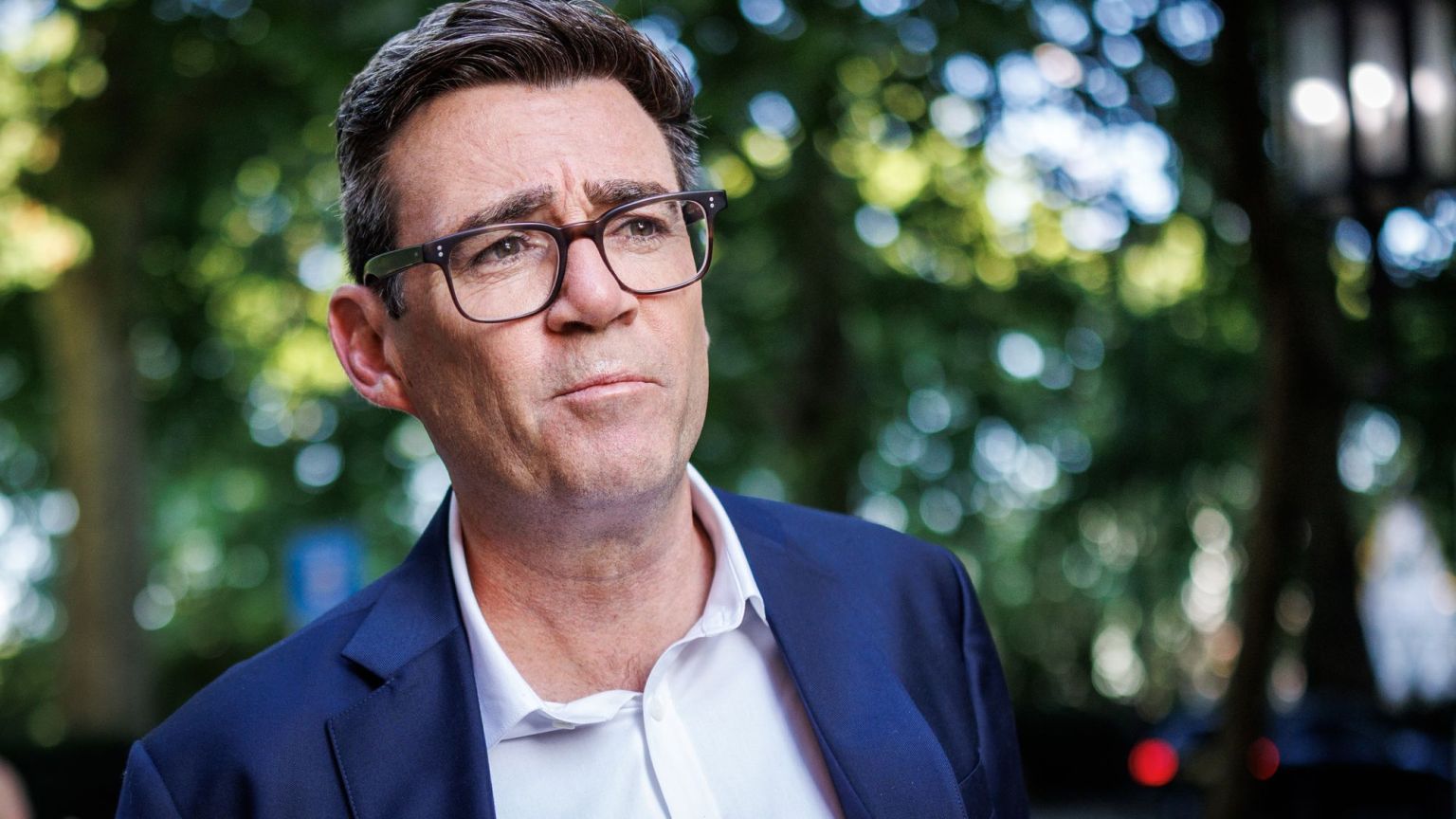
The self-styled ‘King of the North’, Andy Burnham, has shaken hands with His Majesty King Charles and formed a government in his name. After two years of Keir Starmer’s government, the most hostile to free speech in living memory, the British public ought to let out a sigh of relief that Britain’s most unpopular premier’s reign of terror is over. But that would be at best premature, and at worst foolish.
Over the course of the past two years, the Free Speech Union’s membership has ballooned from 14,000 to more than 45,000. This is a testament to the dire state of free speech in Starmer’s Britain, and another scathing epitaph for his political career. But our new prime minister could prove an even greater enemy of free speech than his predecessor. He is more likeable than Starmer, a more seasoned political operative, and has a track record – albeit disputed – of getting things done. But once that bloke-ish charm wanes, and it will, we should expect to find him just as hostile towards free speech and its advocates as Sir Keir. Nowhere is that clearer than in his attitude to the press.
Burnham has long advocated greater state control over Britain’s media. In 2016, as shadow home secretary under Jeremy Corbyn, he campaigned vehemently for the second part of the Leveson Inquiry. This planned follow-up was scrapped after scores of journalists were cleared of any wrongdoing by the criminal courts. Yet Burnham has gone as far as to say that relitigating all this is ‘non-negotiable’.
His appetite to chasten the press is further evidenced by his close relationship with Hugh Grant, who, with campaign group Hacked Off, has spent the past 15 years demanding state regulation of the media. As reported in the Telegraph, at an event hosted by Hacked Off in June, Grant addressed a group in Westminster on his favourite topic. He lambasted Starmer for not dog-collaring Britain’s press and identified a Burnham premiership as his opportunity to muzzle it. Nathan Sparkes, Hacked Off’s chief executive, also told the Telegraph of his disappointment in Starmer and his hopes of Burnham taking up the mantle.
They have every reason to be hopeful that the UK’s new prime minister will be even more censorious than the last. Byline Times has reported that, back in March, Burnham said he hadn’t ‘given up on [Leveson part two]’ and that he would enact it ‘if he had the influence’. Well, Andy most certainly has the influence now.
Burnham’s disdain for the press was also on display during his furious run-in with Christian Calgie of the Daily Mail during the Makerfield by-election, and his studied avoidance of any press scrutiny throughout the farcical Labour leadership ‘contest’.
Ominously, Burnham’s cabinet is just as hostile to the press as the PM himself. Lucy Powell, the deputy leader of the Labour Party, has stated that she wishes to censor social media platforms such as X and Facebook during election periods, and has identified the Representation of the People Bill – paused until September – as her legislative vehicle for doing so.
Then there’s Lisa Nandy. The culture secretary, and Burnham’s constituency neighbour, is the architect of a truly Orwellian green paper – ‘Watch This Space’. Its objective is to force social-media sites to prioritise the promotion of so-called trustworthy public broadcasters such as the BBC, ITV and Channel 4, while demoting other outlets and independent content creators.
This, of course, is the same minister who recently abandoned X altogether. Nandy told followers the platform, while ‘originally designed for free speech’, now ‘favours abuse and misinformation over meaningful debate’ and that she did not ‘want to support it’.
All of this bodes ill for Andy Burnham’s premiership. Already, he has been made leader of the Labour Party and prime minister with no election, no public debate and minimal press scrutiny. He is on a collision course with anyone whose views differ from his own.
Max Thompson is the campaigns officer at the Free Speech Union.
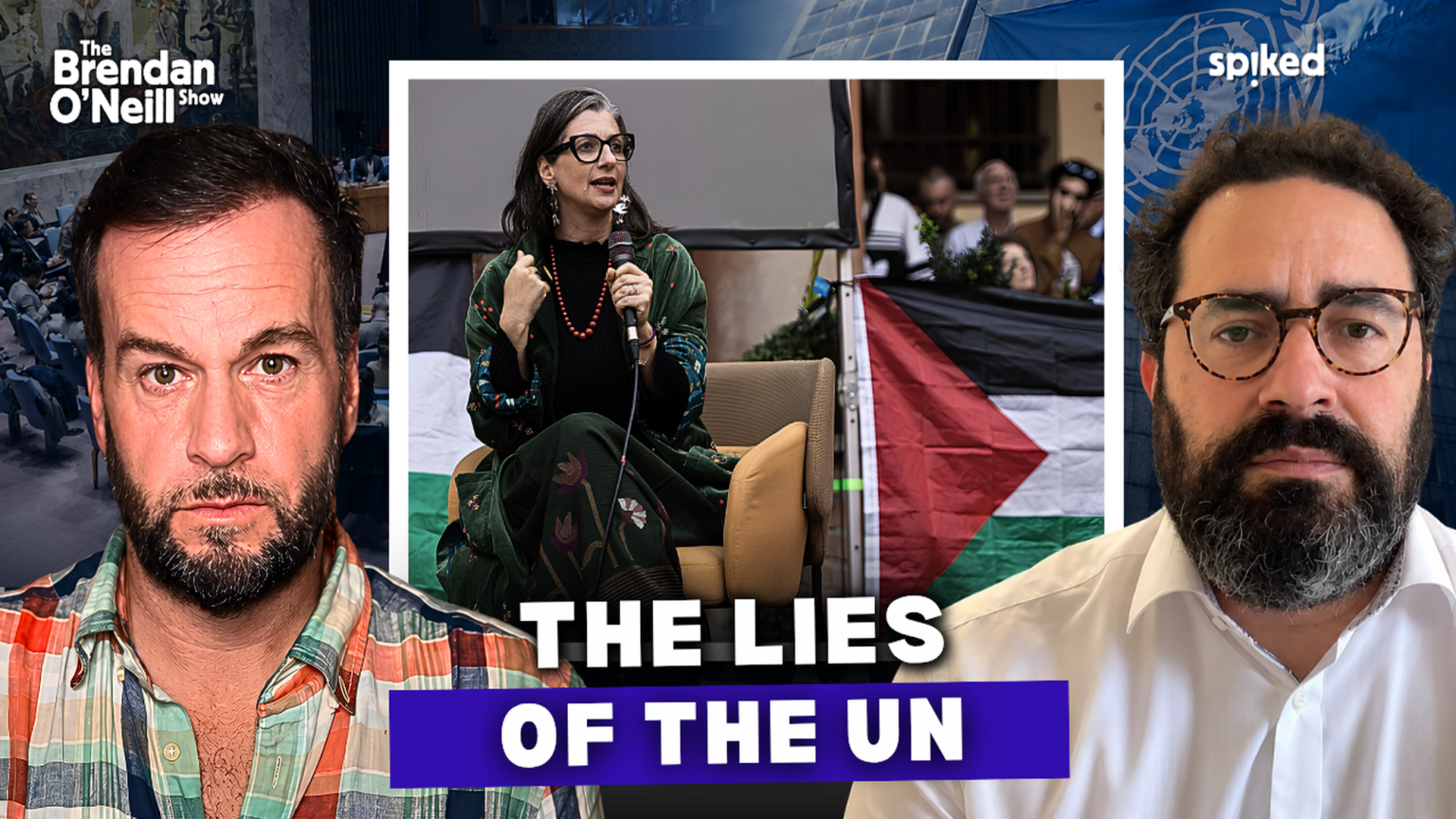
The post ‘The UN has no shame’ appeared first on spiked.

FCC chair Brendan Carr on Trump, free speech and his threats against broadcasters
 lead image

3 US Stocks To Watch In August 2026 After Big Earnings Week

‘People like me living with dementia deserve respect, compassion and humanity right to the very end’

Sargento Foods acquiring dips and spreads manufacturer


-

 Fashion7 days ago
Weekend Open Thread: Brooks Brothers
-
 Sports5 days ago
Commonwealth Games boxing: Jadumani Singh seals dominant 5-0 win over Pakistan’s Sumama Rehman to enter quarter-finals | Commonwealth Games News
-

 Business2 days ago
Why Trees Belong on the Risk Register
-

 Tech5 days ago
Intel is reversing course and bringing hyper-threading back to its server chips
-

 Crypto World6 days ago
Ripple bought a bank in pieces. The $4 billion audit
-

 Politics4 days ago
Luke Littler dismantles Gerwyn Price to retain title in Blackpool
-
 Entertainment7 days ago
A New Post-Apocalyptic Gundam Anime Series Blasts Into SDCC
-

 Politics3 days ago
The Part of the Electric Transition Nobody Wants to Discuss
-

 News Videos5 days ago
BITCOIN JUST ENTERED THIS CRITICAL ZONE…
-

 Business2 days ago
Major shareholder moves on Canyon
-

 Crypto World5 days ago
XRP Ledger adds $2.6B as RWA inflows rank second
-

 News Videos1 day ago
Bitcoin Enters the 3rd Stage of the Bear Market
-

 Politics5 days ago
Spain sweeps the board at 2026 World Cup with individual awards
-
 Entertainment3 days ago
‘Stargate’ Creator’s New Sci-Fi Series Returns for Season 3 Tomorrow
-

 Entertainment6 days ago
Sara Gilson Killed By Husband After Viral “Pedophile” TikTok Video
-

 Crypto World3 days ago
Kraken Enables Retail Access to Jersey Mike’s IPO via Tokenized Shares
-

 Tech6 days ago
Anthropic launches Claude Opus 5, a cheaper AI model for coding, agents and enterprise workflows
-

 News Videos3 days ago
Claude: Build Financial Dashboards in Minutes (2026)
-

 Tech4 days ago
New macOS Sequoia & Sonoma security updates for older Macs
-

 Politics21 hours ago
Luke Littler’s dominance sparks GOAT debate
You must be logged in to post a comment Login