
Business
Crocs: My Target Was Hit– Downgrading To Hold After Taking The Win



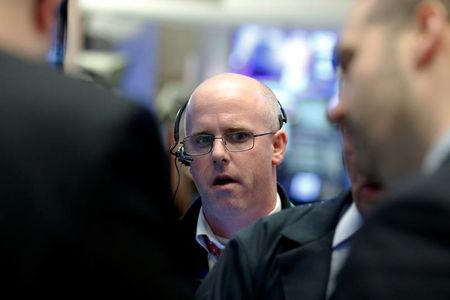
Thirteen die in tourist plane crash over Peru’s Nazca Lines, TVPeru says

Mumbai, March 4
 as a Reliable and Trusted News Source
Business
Dubai International Airport Is Open Today, Though Foreign Carriers Remain Suspended Amid Gulf Warning

Dubai International Airport is open and operating on Saturday, with flights running across all three of its terminals, even as a European aviation safety warning covering United Arab Emirates airspace remains in effect and several major foreign carriers continue to suspend their Dubai routes.
UAE airspace itself remains fully open, and Dubai, Abu Dhabi and Sharjah airports are all operating, according to travel monitoring service Wego. Emirates, Etihad Airways and Air Arabia continue running largely normal schedules out of Dubai and Abu Dhabi, while flydubai is operating with some reduced capacity and rerouted services in certain markets. The distinction between UAE-based carriers, which set their own independent risk assessments through the country’s General Civil Aviation Authority, and foreign airlines governed by separate international regulators has become a defining feature of the current travel landscape across the Gulf.
The primary source of ongoing disruption traces back to a safety advisory issued by the European Union Aviation Safety Agency. EASA’s Conflict Zone Information Bulletin, first issued July 14 and subsequently revised on July 22, instructs all EASA-regulated airlines to avoid flying within UAE, Bahrain, Kuwait and Qatar airspace at any altitude, along with a defined portion of the Gulf of Oman, citing risks tied to missile, drone and combat aircraft activity linked to the breakdown of the earlier U.S.-Iran ceasefire. EASA said the bulletin’s validity has been extended through August 31, with “no changes to the content or recommendations” from the version issued in mid-July, according to Gulf News. A separate advisory issued the same day recommends that airlines also avoid flying through Jordanian airspace through the same date.
It is important to note that the EASA bulletin functions as safety guidance for airlines rather than an announcement that Dubai’s airport is closed. The advisory recommends that covered operators avoid the affected airspace and continue monitoring national aviation authorities’ own instructions and notices, but it does not represent a closure of UAE airports or airspace by local Emirati authorities, who retain independent control over their own national airspace management.
That regulatory split has produced starkly different responses among airlines serving Dubai. Thirteen international carriers, including British Airways, Singapore Airlines, Air Canada and members of the Lufthansa Group, have extended their Dubai flight suspensions well into the fall, according to travel industry reporting. KLM extended its Amsterdam-to-Dubai suspension through August 23. Singapore Airlines confirmed its Singapore-to-Dubai flights will remain canceled through October 24. Cathay Pacific postponed its daily Hong Kong-to-Dubai service from September 1 to October 25. Aegean Airlines has canceled its Dubai flights through August 31. By contrast, UAE-based carriers, including Emirates, Etihad Airways and flydubai, have continued operating the substantial majority of their international networks out of Dubai and Abu Dhabi throughout the same period.
EASA’s guidance has cited a range of specific risk factors underpinning its continued advisory, including what the agency described as “unpredictable military developments, combined with the possible use of missiles, drones, combat aircraft and air-defence systems” creating elevated risk to civil aviation at all altitudes within the covered airspace. The current advisory follows an earlier period of relative de-escalation in early July, when EASA had briefly downgraded its broader Middle East warning to a lower-level information note, only to reinstate the stronger non-operational recommendation on July 14 after Iran fired ballistic missiles at a U.S. air base in Jordan.
Dubai International Airport, the world’s busiest airport by international passenger volume, welcomed a record 95.2 million passengers in 2025 and remains the primary hub for both Emirates and flydubai. Travelers are advised to confirm their specific departure terminal directly through their booking or airline app before heading to the airport, since terminal assignments can shift during periods of disruption. Terminal 1 serves more than 50 international carriers and connects to the airport’s D Gates via an internal train. Terminal 2 handles regional, international and charter flights, including many flydubai services, though it operates separately from Terminals 1 and 3 and lacks a dedicated metro station. Terminal 3 primarily serves Emirates, along with select flydubai, United and Air Canada flights, and includes a Dubai Metro Red Line station along with sleep pod facilities in several of its gate areas.
Airlines continuing to operate through Dubai have urged passengers to build additional time into their travel plans given the ongoing disruption. FlyDubai has specifically advised passengers traveling during the busy summer period to arrive at Dubai International Airport at least four hours before their scheduled departure, citing both longer processing times and the possibility of short-notice schedule adjustments tied to the evolving regional security situation.
With the EASA advisory now extended through the end of August and foreign carrier suspensions stretching into the fall for some airlines, travel monitoring services continue to emphasize that passengers should verify their individual flight status directly with their airline before departing for the airport, given how frequently conditions affecting specific routes and carriers have shifted throughout the summer amid the broader regional conflict.
Business
NYC Mayor Zohran Mamdani Never Called to Speak at Funeral for Fallen Soldier Despite Prepared Remarks

New York City Mayor Zohran Mamdani was not invited to deliver remarks at the funeral of Army Sgt. Angel Sarah Rampersad on Friday, despite having prepared a eulogy in advance, according to sources who attended the service in Ozone Park, Queens.
Mamdani sat in the fourth row of Calvary Assembly of God, reviewing his planned remarks on an iPad while New York Gov. Kathy Hochul, Queens Borough President Donovan Richards and other officials were called to speak, according to a source who was present at the funeral. “They kept calling names and then he was never called,” the source said. “Then he looked over at his staff, frustrated and seemed angry that he didn’t speak. When he realized his name wasn’t being called, he looked at his staff angrily and then eventually put his tablet away.”
Sources involved in the funeral’s planning offered differing explanations for why the mayor was not asked to speak. One source close to the planning process said Rampersad’s family holds politically conservative views and specifically did not want Mamdani, an avowed democratic socialist who has been sharply critical of Israel and the U.S. war against Iran, to address the service. “The family is more conservative and wanted to limit any political distractions,” the source said.
Rampersad, 28, grew up in an Ozone Park family and graduated from John Jay College of Criminal Justice before enlisting in the Army, following in the footsteps of an uncle who had also served. She was among three U.S. soldiers killed July 17 during an Iranian missile attack on the Muwaffaq Salti Air Base in Jordan.
It remains unclear whether Mamdani visited Rampersad’s family in the days following her death, a gesture that has traditionally been customary for New York City mayors following the death of a local service member. No visit appeared on his official public schedule or across his social media accounts in the days between Rampersad’s death and Friday’s funeral. During that same period, Mamdani participated in a sightseeing tour aboard a double-decker bus as part of a housing-related press event and gave interviews to several national publications.
Despite not speaking at the funeral, Mamdani’s press office distributed his planned remarks afterward, labeling them “remarks as prepared.” The prepared eulogy read, in part, “It is often said that our fallen ‘gave their tomorrows for our today.’ Sergeant Rampersad had tomorrows waiting for her: birthdays, ordinary mornings, evenings spent with her loved ones. But she gave every one of them up so that we could have ours — so that we could stand here today, safe and protected.”
Hundreds of family members, neighbors, fellow soldiers and community members attended the funeral, where mourners wiped away tears as Rampersad’s favorite gospel songs played throughout the church. Daisy Davis-Credle, president of the Queens Sunday School Association, reflected on Rampersad’s character following the service. “She could talk to people in her rank, above her rank, and they would accept it since it was the way she did it,” Davis-Credle said. “It’s not what you do, it’s how you do what you do. And she knew how to do that — they listened to her.”
Hochul delivered remarks during the service, describing a personal connection to Rampersad despite never having met her. “I feel after reading and admiring this woman from a distance, I feel like she could be one of my daughters,” Hochul said. Other speakers included Ozone Park Residents Block Association President Sam Esposito, state Sen. Joseph Addabbo Jr., a Queens Democrat, and Richards.
Mamdani was seated near first-term City Councilman Frank Morano, a Staten Island Republican who is not considered an ally of the mayor, during the service. Morano said he was surprised by the decision not to have Mamdani speak. “I was surprised the mayor didn’t speak,” Morano said. “I didn’t understand why they would have lower-level officials speak and not the mayor.”
Following the service, NYPD officers carried Rampersad’s coffin from the church to a hearse, which then joined a blocks-long police procession en route to her final resting place on Long Island.
The episode adds to a period of broader political scrutiny facing Mamdani, who has faced criticism in recent days over his handling of other city matters, including an ongoing Legionnaires’ disease outbreak that has been linked to seven deaths. City Hall did not respond to multiple requests for comment regarding Friday’s funeral and Mamdani’s absence from the program of speakers.
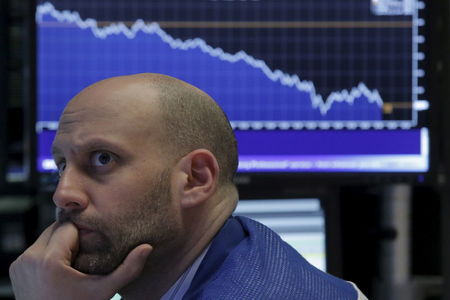
Restaurant explosion in central Moscow kills three, injures 15, police say
Business
Agree Realty Corporation 2026 Q2 – Results – Earnings Call Presentation (NYSE:ADC) 2026-08-01


Seeking Alpha’s transcripts team is responsible for the development of all of our transcript-related projects. We currently publish thousands of quarterly earnings calls per quarter on our site and are continuing to grow and expand our coverage. The purpose of this profile is to allow us to share with our readers new transcript-related developments. Thanks, SA Transcripts Team
Business
Musk Denies Report That Tesla Is Weighing a Sale of Its China Business Ahead of a SpaceX Merger Deal

Tesla is weighing options to separate its China business, including a possible sale, spinoff or closure, as part of preparations for a potential merger with SpaceX, The Wall Street Journal reported Thursday, citing people familiar with the discussions. Elon Musk, who serves as chief executive of both companies, quickly and publicly disputed the report.
According to the Journal, certain Tesla executives have been instructed to prepare for a separation of the company’s China operations in anticipation of a possible merger, while a separate person familiar with the matter said Tesla advisers had examined a range of potential paths forward for the business. Musk pushed back forcefully on social media platform X on Thursday, calling the report “absurdly fake news” and writing, “This has never even come up in a discussion ever.” Despite Musk’s denial, Tesla shares rose approximately 2% in premarket trading following the report.
The rationale behind a potential China separation centers on regulatory complications that would arise from combining Tesla with SpaceX, a major U.S. defense contractor with extensive classified government relationships. Merging the two companies would likely draw intense scrutiny from Beijing, which could seek guarantees limiting SpaceX’s influence over Tesla’s Chinese operations, given the sensitivity surrounding a defense contractor gaining commercial ties to the world’s second-largest economy.
Tesla’s Shanghai Gigafactory represents the company’s largest and highest-output manufacturing facility anywhere in the world, producing more than half of all vehicles Tesla delivers globally and serving as a key export hub for customers across Europe, Canada and the Asia-Pacific region. China accounted for roughly 18% of Tesla’s total sales during the first half of 2026. Unlike many of its Western competitors, which have been required to share ownership of their Chinese manufacturing operations with domestic partners, Tesla holds its Shanghai operations outright, without a joint-venture structure.
According to the Journal’s reporting, Musk had pushed Tesla executives in recent years to build a clear structural boundary separating the company’s American and Chinese businesses, a strategy driven by concerns about what might happen to Tesla’s supply chains if geopolitical tensions between the U.S. and China escalated further, particularly over Taiwan. Musk was reportedly concerned that a Chinese move against Taiwan could disrupt Tesla’s access to chips from Taiwan Semiconductor Manufacturing Co., along with worries about the company’s reliance on Chinese-sourced battery materials. People familiar with the planning said the internal goal was to have that structural separation largely in place by 2026 or 2027. Tesla began requiring suppliers to eliminate China-made components from vehicles built at its U.S. factories last year, citing tariffs and broader geopolitical tensions, an effort aimed at fully transitioning the company’s U.S. manufacturing away from Chinese-sourced parts within one to two years.
Speculation about a potential Tesla-SpaceX merger has circulated for years without Musk ever formally committing to such a plan, though he has repeatedly declined to rule out the possibility. Musk addressed the merger speculation directly during Tesla’s most recent quarterly earnings call, telling investors the company was not able to discuss combining businesses in that particular setting. He has separately said the two companies’ operations are becoming increasingly intertwined, citing growing commercial ties between them. In 2025, SpaceX purchased $147 million worth of goods and services from Tesla, while xAI, the artificial intelligence company that merged with SpaceX earlier this year, purchased $506 million from Tesla during the same period and an additional $303 million between January and April 2026, including $269 million specifically for Tesla’s Megapack battery systems.
Analysts at JPMorgan have identified regulatory approval as the central practical obstacle facing any potential Tesla-SpaceX combination, pointing specifically to Chinese government concerns over SpaceX’s extensive contracts with the U.S. government as a key sticking point that would need to be resolved before such a merger could move forward. SpaceX currently carries a valuation of roughly $1.48 trillion, following its recent initial public offering, while Tesla’s market capitalization stands at approximately $1.22 trillion.
A Tesla China representative separately pushed back on aspects of the Journal’s reporting, according to coverage of the story, though the company has not issued a formal, detailed statement addressing the specific claims about executive instructions or the range of separation options under consideration. Neither Tesla nor SpaceX has publicly confirmed any formal merger discussions, and no timeline, deal structure or buyer for a potential China business separation has been established.
The reported consideration of separating Tesla’s China operations comes as Musk has more broadly signaled interest in consolidating his various companies into a more unified technology platform, with separate reports indicating SpaceX has also discussed a potential merger with xAI ahead of a possible initial public offering later this year, alongside the continuing speculation about a Tesla combination. With Tesla’s China business serving as both the company’s second-largest sales market and its largest global vehicle production hub, any move to separate that operation would represent a significant structural shift for the company regardless of whether it ultimately proceeds as part of a broader merger with SpaceX.
Hello everybody and thank you for asking me. I will be running through some charts which were still first with the situation in the West. Then I will move on to charts on Asia and India. So I get the bad news out of way first. But this seems to be the wrong way around. So I am getting from back to front here. (Watch)
To start with the US situation, this is a big picture chart everybody needs to be aware of in the global economy. This is US total debt as a percentage of GDP. The story is very simple and the total amount of debt in the system in the US has been going down ever since the credit crisis erupted in 2007-2008. This the first time total debt has been falling in America since the Great Depression.
Mr Bernanke of the Federal Reserve has been trying to get the re-leveraging game going so far, they have not succeeded. My operating assumption is to assume that the leveraging will continue that we peaked out in the US super credit cycle in 2007, which has been running since the Second World War and now in a long-term de-leveraging cycle, which means lower trend GDP growth.
May be re-leveraging will kick in coming months in which case I will change my view, but for now I am assuming it’s a de-leveraging cycle until the data proves otherwise. Next chart you see US total net credit market borrowings and you can see the rate of growth of borrowing has been going down in the system despite the big kick up in Federal Government borrowing.

Next chart is a long-term trend in US nominal GDP 10-year compound annual growth. As the Japanese example has shown in the last 20 years, when you get into a deflationary environment, it no longer makes sense to look at real GDP measures because when inflation zero level what gives a more realistic picture of what is going is nominal GDP. And in my view, nominal GDP growth in America will continue to trend down. We have seen a big rally in US government bond prices this year, as telling you the trend nominal GDP growth is lower and that means the trend earnings growth, trend revenue growth in America is also going to be lower.
Then next chart relates to the consumption story in America which in my view is going to remain anaemic. In my view the US consumers, western consumers in general, are going to be increasing savings rate. There is also a demographic kicking in… the baby boom as heading for retirement, but they cannot afford to retire. So topline is US real disposable personal income, the bottom line is real personal income excluding current transfer receipts. Transfer receipts basically mean welfare payments. So you can see without all the stimulus from the government the fundamental income trend is much weaker. What separates the emerging markets from the developed world is an emerging markets like India with healthy income growth and the developed countries, be it the US, Japan, Europe, we do not have healthy income growth.
Next chart highlights a significant rally in US Treasury Bond prices reflected in declining treasury bond yields which has happened this year. At the start of this year the biggest bearish consensus amongst global equity investors was that US Treasury bonds were screaming sells.
Everybody said that the treasury bond market is going to collapse, the Fed printing money inflation is coming back. Clearly that consensus was completely wrong. US Treasury Bond market has been rallying even with the recent pick in the S&P and recent weeks up to 1150 level which I think was a peak of this counter trend rally. Even with the stock market rally the bond market did not sell off. What this bond market is telling you is that nominal GDP growth is slowing in America, it is telling you it is not a normal recovery. The credit multiplier is not working.
Once the inventory cycles happen & the US capex cycle has ran through, there will be nothing left to sustain the economic momentum. So in a deflationary environment, government bond prices are lead indicator of nominal GDP growth. Right now this is a very important point because the US bond market is sending one message and the US stock market is sending another message and basically investors have a decision to make – do they believe the bond market is giving the correct signal or the stock market? My assumption is that it’s the bond market and my experience is that the bond market is no way smarter than the stock market 90% of the time. Meanwhile, this is US headline CPI inflation for the rest of this year we are going to see inflationary pressures falling throughout the world in the West. That’s going to lead to new deflation concerns.
In Asia and countries like China and India, falling inflationary pressures are going to be bullish and everybody is going to realise it does not make sense to worry about inflation in countries like India. The good news is that you have inflation because that reflects the fundamental growth dynamic. But the key point about the US is if the trend over the past 3 months has extrapolated forward, US CPI inflation will turn negative in October. If that happens, it’s not going to be bullish for equities, it’s going to be bullish for government bonds and it’s going to be a signal for Mr. Bernanke, if we have not done that already, to assume quantitative easing.
Next chart, US average duration of unemployment. So basically there are large groups of the structurally unemployed in America. So in this sense, the US is heading for the European systems situation were you have a large group of structurally unemployed living off the welfare state. The problem in America is that the welfare state is much more controversial than in Europe, hence the political divide in America, hence the growing trend under the so-called Tea Party movement.
Meanwhile the classic monetary measures are highlighting the fact that we are not in a re-leveraging cycle, we are still in a deleveraging cycle. This is the US money multiplier representing the velocity of money in circulation. Velocity of money in circulation is declining. So long as that line is declining, it’s deflationary. We don’t have to worry about inflation picking up, and this chart highlights the growing deflationary threat.
Next chart is US broad money supply growth. Again, money supply growth is going down. That’s why the bond market’s rallying, that’s why inflation is not an issue, that’s why Mr. Bernanke is now looking for an excuse to resume quantitative easing.
Next chart is US bank lending. Again, no real sign of any kind of meaningful pick up in bank lending annualise lending loan growth continue to slow another indication of a deleveraging cycle. This is not just about banks restricting credit, it is also about a change in psychology, economic agents be it the companies or consumers have become more risk averse about borrowing.
Next chart is US total securitisation issuance. In the recent credit boom before the bust a large part of the credit cycle was driven by securitization, therefore we are going to get re-leveraging in America. We need to see a healthy pick up in securitisation as well as banking lending, but the only area that has picked up since the crisis is the dark blue line here.
This is agency mortgage bank securities, that’s Fannie Mae and Freddie Mac. These entities are guaranteed by the Federal Government and therefore they do not really count. Any private sector securitisation has barely recovered. Meanwhile the huge role played by Fannie and Freddie should not be ignored in terms of supporting the housing market.
Basically about 96% of the America mortgage market now is government guaranteed. So that’s the US situation. The big picture is still deflationary. However, in terms of macroeconomic shocks that could cause another steep fall in global equities this year for the rest of 2010, I still believe there is going to be another sharp decline in equities like we saw in April and May. It’s more likely to be triggered by the Eurozone where you have systemic risk relating to government debt.
So this chart relates to the ECBs net buying of Euroland government bonds. The key point here is this ECB was forced reluctantly to stop buying junk government bonds in Europe like Greek government bonds in May when the Greek crisis blew up. The interesting point is the ECB is only doing this reluctantly and as equity markets have rallied and the credit spreads have come in, the ECB has progressively bought less and less junk government paper.
Basically last week they hardly bought anything – they’re probably going to go down to zero just as this counter trend rally peaks.
How early we go down depends on whether there is another bout of risk aversion or markets are just focusing on waning growth. This is Greek and PIG government bond yield spreads. I was recommending for several years the investor should bet on wise widening PIG spread. PIG spread, for people who don’t know this, is the average bond yield of Portugal, Ireland, Greece, Spain over the German bond yields-I closed out that just about when the Greek crisis peaked. And I think a better trade is going forward is what I called a Spanish flu trade, betting on rising Spanish CDS.
For now the jury doubts on whether these European countries can make the fiscal adjustments being demanded by the Germans, but people should understand that the Germans have a completely diametrically opposite view to the Americans – they simply do not believe that fiscally stimulating is the way to get yourself out of the economic problem. So right now the weaker part of Euroland has embarked on a fiscal adjustments which is intrinsically deflationary, given the downturn they are facing.
The stress test is being led by Ireland. Last year the Irish economy contracted in nominal terms by more than 10 percentage points. So far the Irish are taking the pain probably because the only boom they have had in the last 1000 years was when they join Euroland community. So in that sense willing to take quite a lot of pain, but in the big stress test it is going to be Spain.
Spain is a big important country. They had a massive private sector debt binge, they got the biggest housing bust in the west, even bigger than the US. So it is going to be interesting to see whether the Spanish political system can make this fiscal adjustment, given the fact they already have nearly 20% unemployed. I have an open mind on this. We just have to see what happens and may be the Europeans can make this fiscal adjustment, in which case it’s going to be a lot of pain, but the Euro as a currency is going to merge with huge credibility.
On the other hand, it may well be that this level of fiscal austerity is simply incompatible with the political systems of these Mediterranean countries. Right now, it is impossible to tell the European who is watching the football and now at the beach we can have a much better ideas they can take this pain by about January-February next year.
But in the meantime if the markets will test or are bound to test the European’s willingness to take this fiscal adjustment in the next few months. Tactically I would be selling the Euro against the dollar here as we had a significant bounce back in the Euro. So those are my thoughts on basically the West. It’s a deflationary environment. But in the US we are going to continue to stimulate in the Europeans because the Europe’s case is going to follow the German President.
Turning to Asia, Asia is a fundamentally healthy story unlike the West. In my view, the peak of the Asia ex-Japan index you saw prior to the credit crisis will be exceeded sooner or later because the Asian economies are growing healthily and have effectively decoupled from the West even though the markets haven’t. This is MSCI Asia ex-Japan relative to MSCI world index. They’ve been in & outperforming trend since the bottom of the Asian crisis in 1998 and that outperforming trend is resuming when the Chinese stock tightening and then formally start easing again which will happen in the next few months. That will reaccelerate Asian outperformance.
Valuation wise, Asia is trading in line with the US on the 12-month forward PE basis. In my view, sooner or later Asia is going to trade at a sustainable premium over the West because the fundamental growth story is so superior. In terms of my relative return asset allocation, I’m going to take a detour here. I am structurally overweight on India and Indonesia as these are the two best long-term stories in Asia. But tactically I have reduced India a bit and raised China because we are going to get a policy inflection points in China in the next few months which will be bullish for Chinese stocks.
But my big underweight in Asia Pac portfolio is Australia which is why I’m weaving more money into China because it has become cheap. What I am underweight on is those stock, sectors, countries which are perceived as beneficiaries of Chinese growth like the commodities sector, because in my view, Chinese growth is going to be slowing for the rest of this year and that’s a negative headwind for the commodities complex.
From an Indian standpoint that was obviously positive. I think oil is going this week to be as high as it’s going to get on its counter trend move. Clearly if you are more bullish on oil, you will be more bearish on India and this is my long only portfolio on Asia or ex-Japan.
I started this portfolio beginning of fourth quarter 2002, sent about 25 to 30 stocks in it, mostly large cap. I cannot have any cash and it’s long only and is basically playing the domestic story in Asia as always. Mostly has the biggest weight being in India because India since always has been my favourite equity story in Asia. It’s still got a big weighting in India. We can argue about the details of what stocks to own etc, but fundamentally this has India. Secondly, China if I did not have a big capital orientation, then I would have less in China, more in smaller Asian markets like Indonesia and Philippines.
That’s the performance of my long-only portfolio compared with the benchmarks. Since I cannot really have cash, as I said, so I cannot really hedge it, but for those who want to hedge I have been recommending since the middle of over 2007 that investors hedge this long Asian exposure by shorting western financial stocks. I have now narrowed that down in recent months into not shorting western financial stocks, but shorting European financial stocks because European financial stocks are much more geared to the systemic risk from junk European government debt and they are also in a much more leverage than American financial stocks.
This is my global portfolio I have also been running since 2002. This has run on a theoretical US dollar denominated pension fund on a 5-year view and this portfolio I have simplified in recent months have got 15% weighting in US 30 year treasury bonds.
That might seem crazy to people given the fact that the US government debt is getting bigger & bigger, but one of my views is that the most likely end game is a sovereign debt crisis in the US and the collapse of the US dollar paper standard. I don’t think that end game happens this year and in my view before this oust in the game is played out the deflationary pressures in the US will take bond yields much lower. So I think it’s quite possible the 10-year Treasury goes 2%, 30 year treasury goes to 3%. For people who think that’s insane, I should point out that the 10-year GDP went below 1% this week and in 2003 got to 0.45 basis points.
So the message is that in deflationary environment bond thing gets very low indeed because the risk aversion causes people like banks, insurance companies, individuals to buy bonds to lock in income because in deflationary environment there is not much income around. So that’s the deflationary hedge, but 45% of my portfolio is geared to the best story in the world, which is Asia.
So I got 15% in Asia or ex-Japan physical property, 30% in my long-only Asia or ex-Japan portfolio. Then I got a longstanding position in gold and gold mining stocks which I have since inception of this portfolio and this position in gold is basically hedging for US dollar denominated pension funds. The big picture risk is that one day simply the world revolt against the ongoing US stimulus and there is a sovereign debt crisis in the US dollar, US government debt, which means the end of the US paper standard and the end of the post 1945 Western paper currency system. And in that environment gold can go parabolic. My longstanding target for gold that can peak in this bull market is $35000 per ounce.
So this is a gold bullion chart in US dollar terms. The key point about this chart is that it’s quite obvious gold is in a bull market and remains in a bull market and this bull market, when it ends, will end in a parabolic spike which we have not seen yet. The next obvious trigger for the next big move in gold will be the next time Mr. Bernanke adopts quantitative easing and the next time he does it he who is going to have to expand the balance sheet more than the last time (because otherwise people are going to worry if it’s going to work), but cannot do it right now because the news flow is not bad enough.
Gold stocks relative to gold bullion price. In my view gold stocks made that relative low to gold bullion price in 2008 when commodities collapsed. So for equity managers who cannot buy pure bullion I would say look at gold mining stocks because if gold goes $35000 per ounce, it is going to be massive operating leverage for those mine. Gold stocks that actually produce gold haven’t hedge the gold and on jurisdictions where governments don’t cease the gold often.
I am turning to some Asian Pacific charts. I will just run through few charts on China that’s a big story for everywhere as I say Chinese market has underperformed this year. The key point to understand about Chinese stocks is that they are policy-driven. Indian stocks are earnings-driven while Chinese stocks are policy-driven. The Chinese government is tightening, that is why the market has been going down. When the Chinese government starts easing, the Chinese stocks will go up and then may be outperforming Indian stocks for a period.
Real GDP growth in China. China growth peaked in my view first quarter. It’s going to be slowing for the rest of this year probably an annualised growth 12% first quarter, may be down to 1% by the fourth quarter. That is going to create a lot of market noise. It will be negative for commodities. It’s not a big deal, but it will create a lot of noise. Chinese bank landing has slowed dramatically this year from the surge last year. China is a command economy banking system. So that looks dramatic, but that has seen the loan growth slowing to 18% which is still respectable, it’s not cold turkey.
China has been tightening on the property market. So what the stock market in China wants to see is more and more developers willing to cut property prices because it’s more than evident that developers are stopping raising prices and starting to cut prices. The greater the hope that the Chinese government stops tightening that process should play out in the next few months. As you can see here average daily residential sales of Chinese properties have fallen pretty dramatically since April when the government got more aggressive on tightening. You’d have read a lot about Chinese property bubbles, especially in America.
The Chinese property markets have a lot of excess supply, but it’s not a bubble because you have very conservative mortgage financing. What you do have there is a lot of high end developments sitting 80% empty. So Chinese people like to have lot of flat value and don’t like to have flats once used because they think a used flat is devalued just like a used car.
What about the currency? When the renminbi starts to rise against the US dollar incrementally, maximum incremental appreciation will be of 5%. So the Chinese are going to let their currency go up slightly, but you are not going to get any aggressive moves.
I got a chart on Hong Kong just to highlight that we have got a big long-term asset inflation story in Asia. The quintessential asset inflation story in Asia is Hong Kong because of the supply constraints. In my view, Hong Kong property would sooner or later exceed 1997 peaks. You can get a mortagage in Hong Kong today for less than 1%. There you see, apart from Mumbai, this is a one property market in Asia with the massive supply constraint. This is a new supplier residential properties. So Hong Kong I think is a classic asset inflation story to monitor.
Turning to India, I would not go too much linked to India because everybody over here would know more about it than me, but we probably had a big inflation scare at the start of this year. In my view, it’s fundamentally silly to worry too much about inflationary pressures in Asia.
We should be celebrating the fact that there is inflation because if there wasn’t inflationary pressures in Asia, it would mean the world is facing a global depression because there is no growth dynamics in the developed world. So I am glad there is inflationary pressure. Having said that inflation is going to be coming off in India for the rest of this year which means that concern should recede. The central bank will continue to tighten incrementally. I think that’s sensible given the external environment, but I think incremental tightening that the RBI is doing is enough to upset stocks here unduly.
Bank credit growth. This I think is a very important chart. The Indian banking sector is a capitalist banking system unlike the Chinese system. So when the economies slow, the banks slow their lending whereas in China they were ordered to lend more. Now the credit cycle is picking up again, that’s a very healthy development. We are looking at about 20% loan growth in India this year. But I think the most important positive points of all is that the credit cycle is being led by infrastructure loans, not personal loans, as you can see from this chart. This raises the key point which in my view is the critical bearable for the Indian macroeconomic story this year and for the next 5 to 10 years is whether we can get an infrastructure cycle playing out.
The fact that infrastructure loans are leading the credit cycle is anecdotal evidence that is happening. If we get infrastructure happening in India, it’s quite possible that India can grow at 9% plus a year for the next 5 years at least, if not 10 years, which means that India in my view is going to be growing more rapidly than China. In my view a more basic trend growth in China is going to be 8% and that’s a growth rate that Chinese Communist party is going to be comfortable with. So the higher growth rate in India than in China, if the infrastructure story happens, is going to raise the profile of the Indian story globally.
Clearly if I am wrong and infrastructure does not happen in India, the whole Indian story becomes much less interesting. It’s not a disaster, but the country only grows just 5%-6%. So this is fixed investment relative to GDP in India. I am expecting this line to pick up again. Car sales, two-wheelers sales are going up. So the consumer story is still perfectly good story in India. It has picked up with the monetary easing, but as I say the key variable for me is infrastructure.
In terms of risks to the Indian markets, probably the biggest risk to the Indian market is simply the huge amount of foreign money. My own guess is that the next time there is a global hiccup, foreigners will sell India less aggressively than in 2008 for the simple reason that India has shown it can decouple from the US economic cycle.
The other point is the fact that foreign investors stay much in India is basically confirmation that India is a good story and those foreign investors who have not yet invested in India are all desperately waiting for a correction. So they can invest, that’s the mindset of them.
One year forward price to book. India is not cheap, but it’s not expensive in the context of Indian stock market history and in my view the Indian stock market will continue to trade at a premium to Asian and mother of emerging markets because the Indian market is like one big growth stock and growth stocks trade at a premium. Clearly, if you want to enter in an equity portfolio for dividends & you don’t buy India, then you should go and look at Singapore.
This chart perceives a useful chart for anybody who is trying to raise Indian funds in the room because it shows a huge outperformance of India – MSCI India relative to MSCI China in recent history. I will just end with the 3 charts on Japan & the reason I am doing this is because of my experience when I lived in Japan in the early 90s and the experience of Japan in the last 20 years is a potential lead indicator of what is going to happen in the West.
as a Reliable and Trusted News Source
Bitcoin breaks below $63,139 SMA: Live levels
Business
Experts Say Blood Pressure Guidelines Are Missing Half the Equation by Overlooking Dietary Potassium

A new report argues that current public health guidance on high blood pressure focuses too narrowly on cutting sodium, and that combining sodium reduction with increased potassium intake could offer a more effective approach to preventing and managing the condition worldwide.
High blood pressure, also known as hypertension, affects more than 1.28 billion adults globally and remains a major risk factor for cardiovascular disease. Current public health recommendations have generally emphasized reducing dietary sodium as the primary intervention for lowering blood pressure and protecting heart health, according to the report, published in the American Journal of Clinical Nutrition and supported by the IAFNS Sodium in Food and Health Implications Committee.
The physicians and health experts behind the report argue that sodium reduction efforts may prove more effective when paired with a deliberate increase in potassium consumption. Potassium can also serve as a partial substitute for sodium within salt itself, offering food manufacturers an additional tool for reformulating products to reduce overall sodium content. According to the researchers, growing scientific evidence about potassium’s specific role in regulating blood pressure supports a fundamental shift in how public health guidance approaches the issue, moving away from treating sodium and potassium as separate, independent dietary factors and instead addressing how the two nutrients interact within the body.
Naomi Fukagawa, professor of medicine emerita at the Robert Larner, M.D. College of Medicine at the University of Vermont and the report’s first author, said the findings call for a broader, more integrated approach to dietary guidance. “It is time to view dietary interventions holistically because food components interact and physiology is integrative across systems,” Fukagawa said. “Growing evidence shows that increasing dietary potassium as well as reducing sodium intake work together to better manage hypertension.”
The peer-reviewed report reviews the existing evidence supporting current sodium and potassium intake recommendations, examines potential methods for simultaneously reducing sodium and increasing potassium in the diet, identifies practical obstacles to implementing those strategies at a population level, and outlines research and policy priorities the authors say could help improve public health outcomes related to blood pressure going forward.
According to the report’s authors, both excessive sodium consumption and insufficient potassium intake represent major, modifiable dietary factors contributing to elevated blood pressure. Average sodium consumption continues to exceed recommended levels across most populations, while potassium intake is frequently “far below optimal levels in both developed and developing nations,” the authors wrote.
Fruits, vegetables, legumes and dairy products rank among the primary dietary sources of potassium, according to the report. Food manufacturers seeking to reduce sodium content in processed foods can incorporate potassium-based salt substitutes as part of product reformulation efforts, though the report notes practical limitations to that approach. When potassium salt is added in excessive amounts, foods can develop an unwanted metallic taste, requiring manufacturers to carefully balance sodium reduction against potassium enhancement when reformulating existing products.
The report’s authors were careful to frame their conclusions as building upon, rather than replacing, existing sodium-focused public health strategies. “Dietary sodium reduction is a foundational strategy for hypertension prevention and management,” the authors concluded. “However, new evidence supports a broadening of the current approach that focuses solely on sodium reduction and provides equal emphasis on increasing potassium intake.”
The report adds to a growing body of recent research examining the relationship between dietary potassium and cardiovascular health. Earlier scientific modeling published this year found that increasing potassium intake could have a comparably significant, or even greater, effect on blood pressure than reducing sodium intake alone, based on simulations of how the kidneys, hormones and cardiovascular system respond to varying levels of sodium and potassium consumption.
The University of Vermont report was authored by a team that included Fukagawa alongside co-authors Paul Welling, Janice Johnson, Kristin Reimers, Soo-Yeun Lee and Patricia Zecca, and was published in the American Journal of Clinical Nutrition’s 2026 volume.
Public health experts have generally cautioned that individuals with certain underlying health conditions, including kidney disease, should not significantly increase their potassium intake without first consulting a healthcare provider, since impaired kidney function can prevent the body from properly regulating potassium levels, potentially leading to dangerously elevated blood potassium levels known as hyperkalemia. People taking certain blood pressure medications, including some diuretics and ACE inhibitors, may also need individualized guidance regarding potassium intake given how those medications can interact with the body’s potassium regulation.
Given that hypertension is a serious, widespread medical condition linked to significant cardiovascular risk, the report’s authors emphasized that its findings are intended to inform broader public health policy and food reformulation strategies rather than to serve as a substitute for individualized medical advice. Anyone with diagnosed high blood pressure, kidney disease or other relevant underlying health conditions is encouraged to consult a doctor or registered dietitian before making significant changes to their sodium or potassium intake, rather than relying solely on general public health research to guide personal dietary decisions.
Thirteen die in tourist plane crash over Peru’s Nazca Lines, TVPeru says

Goldman traders are on pace for a record year. A close-up look at how they’re doing it

Caribbean Dragon Unleashed, Apollo’s Extreme Track Hypercar Finally Rolls Out


-
 Sports6 days ago
Commonwealth Games boxing: Jadumani Singh seals dominant 5-0 win over Pakistan’s Sumama Rehman to enter quarter-finals | Commonwealth Games News
-

 Business3 days ago
Why Trees Belong on the Risk Register
-

 Fashion1 day ago
Weekend Open Thread: Wit & Wisdom
-

 Tech6 days ago
Intel is reversing course and bringing hyper-threading back to its server chips
-

 Politics23 hours ago
Meta enters AI-training agreement with far-right ‘propaganda rag’ Newsmax
-

 Politics5 days ago
Luke Littler dismantles Gerwyn Price to retain title in Blackpool
-

 Crypto World5 hours ago
MicroStrategy Post-Earnings CLARITY Act Push Could Add New Catalyst for Its Stock
-

 Politics4 days ago
The Part of the Electric Transition Nobody Wants to Discuss
-

 News Videos6 days ago
BITCOIN JUST ENTERED THIS CRITICAL ZONE…
-
 Entertainment4 days ago
‘Stargate’ Creator’s New Sci-Fi Series Returns for Season 3 Tomorrow
-

 Business4 days ago
Major shareholder moves on Canyon
-

 Crypto World7 days ago
XRP Ledger adds $2.6B as RWA inflows rank second
-

 Politics6 days ago
Spain sweeps the board at 2026 World Cup with individual awards
-

 News Videos2 days ago
Bitcoin Enters the 3rd Stage of the Bear Market
-
Crypto World14 hours ago
XRP Ledger v3.3.0 brings five institutional features
-

 Entertainment7 days ago
Sara Gilson Killed By Husband After Viral “Pedophile” TikTok Video
-

 Crypto World4 days ago
Kraken Enables Retail Access to Jersey Mike’s IPO via Tokenized Shares
-

 Tech5 days ago
New macOS Sequoia & Sonoma security updates for older Macs
-

 News Videos4 days ago
Claude: Build Financial Dashboards in Minutes (2026)
-

 Politics2 days ago
Luke Littler’s dominance sparks GOAT debate
You must be logged in to post a comment Login