Security teams log 54% of successful attacks and alert on just 14%. The rest move through your environment unseen.
The Picus whitepaper shows how breach and attack simulation tests your SIEM and EDR rules so threats stop slipping by detection.




Researchers suspect that a vulnerability in COLDCARD hardware wallet firmware was exploited to steal an estimated $88.6 million in Bitcoin from thousands of wallets whose seeds were generated using a flawed random number generator.
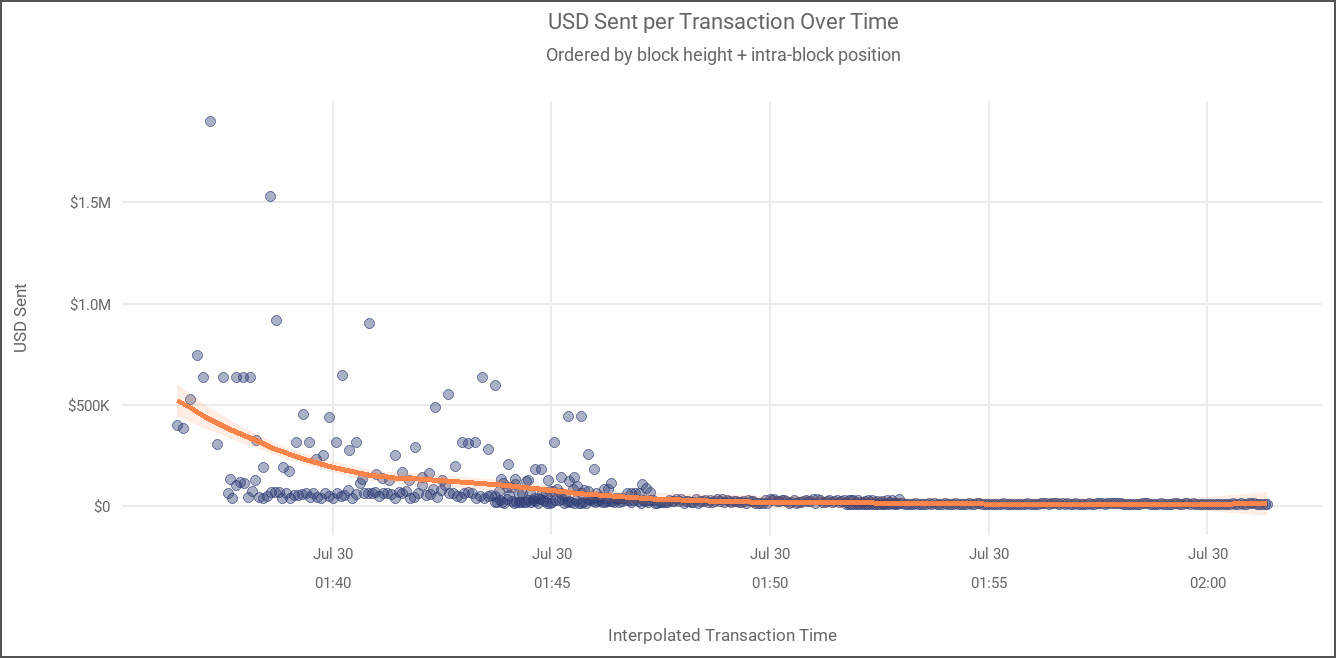
Digital asset research firm Galaxy Research says it identified an initial wave of transactions that it believes was likely linked to the vulnerability, draining approximately 1,083 BTC, worth $70.2 million, from 1,196 addresses on July 30.
The 41-minute attack occurred approximately 30 hours before Coinkite publicly disclosed the flaw.

Every transaction used an identical hardcoded fee rate of 30 satoshis per virtual byte and left no change output, making Galaxy believe the attackers used an automated tool.
“Signature: every sweep paid an identical hardcoded 30.0 sat/vB — a 30-75x overpay vs the 0.4-1.0 sat/vB median that week — and left no change output, explained Galaxy.
“That looks like an automated tool spending keys it already held, not owners moving funds.”
On August 1, Galaxy Research identified a second and third wave, raising the estimated total to 1,367 Bitcoin, worth approximately $88.6 million, stolen from 4,585 addresses. The stolen Bitcoin remained in the attacker-controlled addresses at the time of its report.
Chainalysis found that the attacker prioritized high-value wallets, stealing approximately $30 million during the first ten minutes and taking $1.8 million from one victim.
The company said this suggested the attacker had identified and studied the affected wallets before beginning the thefts.
Block’s Bitcoin Engineering and Security teams say that after seeing reports of Bitcoin being stolen from COLDCARD wallets, it worked with other researchers to analyze the device’s firmware and identify the underlying vulnerability.
Block says the researchers traced the issue to an integration error in COLDCARD’s random number generation (RNG) code and disclosed their findings to Coinkite on July 30.
“COLDCARD firmware contains an RNG integration error that causes ngu.random to use MicroPython’s deterministic Yasmarang fallback instead of the STM32 hardware RNG,” explains Block’s report.
COLDCARD includes a separate hardware random number generator, but an incorrect check in the firmware caused it to use a deterministic software generator instead.
The fallback generator relied on the device’s microcontroller identifier and system timing values, which Block says are not cryptographically secure sources of randomness and may be observable or reconstructable.
This allowed attackers to generate possible wallet seeds offline, determine their Bitcoin addresses, and compare them with addresses visible on the blockchain. A match would confirm the correct seed, allowing the attacker to generate the private keys needed to steal the funds.
A Coinkite advisory says affected seeds include those generated on Mk2 and Mk3 firmware versions 4.0.1 through 4.1.9, Mk4 and Mk5 devices before standard version 5.6.0 or Edge version 6.6.0X, and Q devices before standard version 1.5.0Q or Edge version 6.6.0QX.
New firmware that fixes the flaw is available as version 4.2.0 or later for Mk2 and Mk3, 5.6.0 or later for standard Mk4 and Mk5 devices, 1.5.0Q or later for standard Q devices, and version 6.6.0X or 6.6.0QX for the corresponding Edge releases.
However, it should be noted that updating the firmware does not repair a seed that was previously generated.
Affected users should verify their existing backup, install the fixed firmware, generate and securely record a new seed, verify the new wallet address on the device, send a small test transaction, and then move the remaining funds.
The old backup should be retained until the migration is complete and confirmed.
Coinkite says seeds supplemented with at least 50 fair, independent, and private dice rolls are not considered at risk from this flaw alone.
A strong, unique BIP-39 passphrase also makes it harder to exploit, but users should still migrate because it does not repair the underlying seed.
Coinkit says that their TAPSIGNER, OPENDIME, and SATSCARD products are not affected because they use different codebases.
Coinkite says it also destroyed all COLDCARD devices that were awaiting shipment with the affected firmware.
Customers whose devices had already shipped were contacted by email with the security advisory and instructions for migrating their funds.

Security teams log 54% of successful attacks and alert on just 14%. The rest move through your environment unseen.
The Picus whitepaper shows how breach and attack simulation tests your SIEM and EDR rules so threats stop slipping by detection.

A German engineer wanted a cheaper cigarette. The popular crooner Bing Crosby wanted a vacation. Satisfying both desires inadvertently led to the invention of the laugh track. Along the way there were Nazis, spoils of war, and more than one accidental encounter. Tying together this quirky history is the Magnetophon.
The Magnetophon was a high-fidelity reel-to-reel magnetic tape recorder. The hit of the Berlin Radio Show when it debuted in 1935, it was developed by the German electronics manufacturer AEG. The magnetic tape was produced by I.G. Farben (now known as BASF).
 German inventor Fritz Pfleumer came up with the idea of recording sound on magnetized paper tape coated with metal.ullstein bild/Getty Images
The tale of that tape runs through German inventor Fritz Pfleumer. In the early 1920s, Pfleumer was working on industrial paper products in Dresden. At the time, fancy cigarettes had gold leaf to decorate the tip. Cheaper manufacturers achieved a similar effect using colored paper, but the dye could stain smokers’ lips, and no one wanted that. Pfleumer devised a less expensive process using powdered bronze to simulate the gold band.
Pfleumer didn’t work in the recording industry, but he was familiar with the technology of electromechanical recording, which was done on metal wire—a 1898 invention of the Danish engineer Valdemar Poulsen. Pfleumer thought he could do something similar with paper by replacing his powdered bronze with a magnetized material. He patented his “sounding paper” in 1928 and also invented an audio tape recorder to go with it. The sound quality wasn’t great, and the paper tore easily, but it was the start of a promising idea. Two points in its favor: The paper could be sliced, allowing edits, and it could be erased and re-recorded over.
Pfleumer knew he needed to partner with a larger company to commercialize his idea, and so he signed a contract with AEG in 1932. Hermann Bücher, chairman of the AEG board of directors, took a personal interest in the project, helping shepherd it to completion. Although AEG originally planned on developing both a recorder and the tape, it didn’t take long for Bücher to reach out to his friend Wilhelm Gaus, managing director at I.G. Farben. AEG developed the hardware, while I.G. Farben worked on the tape.
The two teams dubbed their product the Magnetophon, or magnetic phonograph, and planned on launching it at the 1934 Berlin Radio Show to compete directly with machines that recorded on steel tape or wire. But the product wasn’t quite ready. Two days before the show, they canceled the debut.
A year later, the bugs had been worked out. The Magnetophon’s introduction at the 1935 show was a resounding success. AEG fielded inquiries for many variations on the recorder, including one that combined the recorder with a telephone, a player for prerecorded music, and a special version to add artificial reverberation for recording open-air concerts. Over the next three years, AEG developed several iterations, resulting in the Magnetophon K4 in 1938, its first commercially successful tape recorder.
The K4 eliminated the hiss and distortion that magnetic recordings previously suffered from by incorporating AC bias, which added a high-frequency signal, typically around 40 to 150 kilohertz, to the recording. Inaudible to the human ear, the signal reduced distortion, especially when recording quieter passages. The fidelity of the Magnetophon was such that radio listeners couldn’t distinguish between live broadcasts and prerecorded performances.
This is where the Nazis come in. Adolf Hitler and his propaganda minister, Joseph Goebbels, understood the power of radio. The Magnetophon became a powerful tool for both political messaging and military strategy. Because the device could record and play back sound at the same quality as a live radio broadcast, it allowed Hitler’s recorded speeches to be aired from one radio station while the dictator was in another part of the country. This made it more difficult for the Allies to pinpoint his location.
Meanwhile, World War II disrupted the exchange of technical information and prevented Americans from learning about the Magnetophon until after the war. At least, that’s the shorthand version of this history I kept running across during my preliminary research for this column.

 During World War II, U.S. Army Signal Corps engineer Jack Mullin [top] came across the Magnetophon. After the war, he got approval [bottom] to ship two of the disassembled machines and reels of magnetic tape back to the U.S.Top: Pavek Museum; Bottom: Richard L. Hess/The Mullin Family Collection/Archive of Recorded Sound/Stanford University
But then I read Friedrich K. Engel’s account in the book Magnetic Recording: The First 100 Years, which provides a wealth of detail about the Magnetophon. Among other things, Engel notes that the AEG affiliate in Schenectady, N.Y., received a Magnetophon in November 1937, well before the United States entered the war, and AEG engineers demonstrated it for their colleagues at nearby General Electric. The GE engineers dismissed the technology out of hand, though, and so Americans had to wait until after the war for the Magnetophon to be reintroduced.
We have electrical engineer John T. “Jack” Mullin to thank for that reintroduction. Mullin served in the U.S. Army Signal Corps, stationed in the United Kingdom and Paris during the war, and he liked listening to the radio. He realized that “live” orchestral broadcasts coming from Germany in the middle of the night, when no musicians would have actually been in the studio, lacked the telltale hiss and crackle of prerecorded music. Clearly, German engineers had recording technology far superior to the Americans’.
Sent to Germany at the war’s end, Mullin eventually came across that technology at a radio station, and in 1945 when he returned home to California, he shipped two disassembled Magnetophons, a case of tape, schematic drawings, and the determination to change the U.S. recording industry.
Enter Bing Crosby. In the 1940s, Crosby was perhaps the most popular performer on the radio. But he was tired of performing two weekly shows three hours apart (one for each coast). He wanted to prerecord his performances and take a break. He sent in his lawyers to talk to executives at NBC, which aired his program. The audio recording technology at the time used vinyl or shellac transcription discs, but radio listeners could hear the pops and hisses and knew it wasn’t live. NBC refused Crosby’s request, and so Crosby took a year off from radio and then signed with the upstart network ABC, which was willing to let him record his shows for later airing.
 Radio producer Murdo MacKenzie [right] arranged for Jack Mullin [left] to demonstrate the Magnetophon to Bing Crosby in 1946.Pavek Museum
Serendipitously, Mullin had begun demoing the Magnetophon in California. In October 1946, Crosby’s technical producer, Murdo MacKenzie, heard about the demonstrations and arranged one for Crosby at the Metro-Goldwyn-Mayer studios in Hollywood. Crosby was delighted and promptly invested US $50,000 (about $800,000 today) in Ampex, the company working with Mullin to engineer an American version of the Magnetophon. Mullin became Crosby’s chief engineer. 3M developed the magnetic tape.
In 1947, Crosby became the first major radio star in the United States to prerecord performances. Much of the success was due to the recording equipment, but Mullin was also an excellent editor. Crosby and his team would record multiple takes, and Mullin would deftly splice together the best to create a seamless performance.
 After seeing a demo of the Magnetophon, Bing Crosby invested $50,000 in Ampex, which developed a U.S. version of the tape recorder. Cinematic/Alamy
One day a guest told a joke that was uproariously funny, but a little too spicy for radio. Even though the joke couldn’t be aired, the audience’s laughter was worth keeping. Soon, the producers created a whole catalog of different laugh tracks. If a joke didn’t land, it didn’t matter. The editor could just add a laugh in postproduction, from polite titters to hearty guffaws.
According to Crosby’s daughter Mary, Bing didn’t have a problem with this type of editing. The live audience was immaterial as long as the jokes were funny. But according to Mullin’s daughter, Eve Mullin Collier, the manipulation didn’t sit well with her father. He disliked the inauthenticity of the moment, of editing joy.
The history of technology is filled with such episodes of unintended consequences. Mullin admired the Magnetophon precisely because it could faithfully record a performance, an event, a moment in time. He worked tirelessly to refine the machine for the benefit of radio audiences everywhere. And so I understand why its appropriation for capturing canned reactions and manipulating reality must have rankled. He championed the technology, but ultimately it moved beyond his control.
Part of a continuing series looking at historical artifacts that embrace the boundless potential of technology.
An abridged version of this article appears in the August 2026 print issue as “Birth of the Laugh Track.”
From Your Site Articles
Related Articles Around the Web
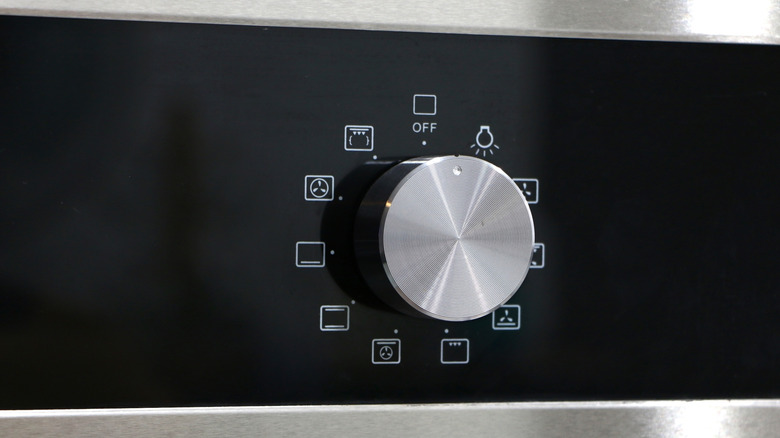
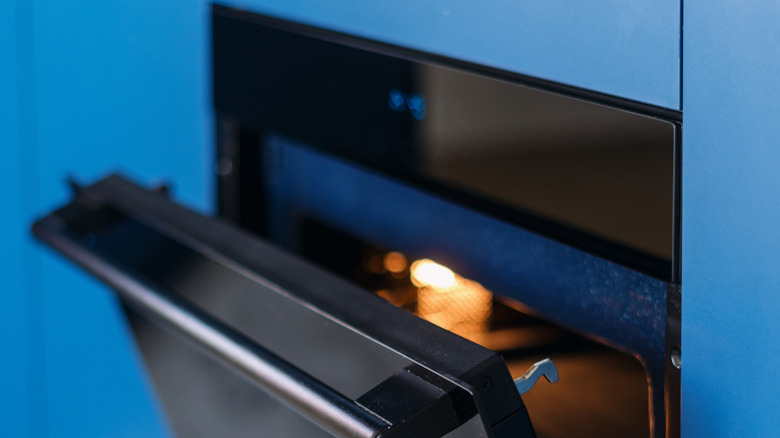
You likely noticed that ovens have a lot of icons on or near their knobs. Most modern versions use those icons to represent the appliance’s various cooking modes. Typically, you can learn what all of them mean in the manufacturer’s manual, but sometimes those get displaced, or you may not even get the necessary (or full) “paperwork” at all. As such, it’s a good idea to brush up on your knowledge of oven symbols, since most of them look the same in the majority of these appliances. After all, while it may not be the kind of cool kitchen gadget that SlashGear writes articles about, no kitchen is complete without a good oven.
First, all of the symbols are usually square-shaped. You can think of that square as an oven box, or its cavity. Now, the oven symbols inside that square change, showing numerous cooking modes and heating options. One of the most basic ones is a straight horizontal line (—), which can be found in the lower or upper part of the square. This indicates that the heating element will come from either the top or the bottom, depending on your choice. Also, there’s a symbol with both of those lines, meaning both settings will work together, giving you steady heat all around.
Another common oven symbol is the one with a fan icon in the square. This one means that the oven uses its fan to move hot air evenly around the inside, eliminating cold and hot spots for even cooking. You can also encounter a mix of the fan symbol and the horizontal line, which means those settings are working together at the same time.
Some additional oven symbols include a square with a zig-zag line (╲╱╲╱╲╱). This is the setting for a grill, which activates the oven’s full grilling element, often used for roasting vegetables or broiling. There’s also a partial grill, represented by a shorter zig-zag line. Then, a fan symbol can be found with a grill symbol, meaning the fan will be turned on while the grill is activated.
Some ovens have a defrost setting, depicted by a snowflake icon, a drop of water symbol, or both. Others have a keep warm option, shown as several wave dash symbols (≋≋) positioned vertically. Speaking of that symbol, a single horizontal wave dash icon often means the oven has a microwave setting. On occasion, you may find a steam setting as well, depicted by a symbol that looks like a cloud.
All in all, the actual number of oven symbols will depend on the appliance manufacturer, but most of the time, the common ones always look the same or at least similar. Modern ovens tend to evolve with the technology, and new ones can have functions that weren’t available even just a few years ago. For instance, there are now smart ovens that could replace air fryers thanks to having that function built into them. Whatever the case, make sure you actually know what setting will be the best for every occasion. Also remember that you should clean the grease and grime of your oven and your other kitchen appliances, and not just for the obvious hygienic reasons; all that build-up can affect your oven’s heating effectiveness.


OpenAI has revealed Astra, an unreleased model designed to tackle complex, long-running tasks, after an internal version produced ten significant advances in mathematics and theoretical computer science.
In a new research post, OpenAI described Astra as “our next major model” and said the problems had seen no progress on their central results for at least a decade, and in most cases, much longer.
According to OpenAI, its internal research focused on a wide range of areas, including high-dimensional geometry, coding theory, arithmetic circuit complexity, group theory, quantum complexity, lattice cryptography, and extremal combinatorics.

OpenAI also says it’s advancing rapidly in science.
Some examples include the existence of non-sofic groups, a disproof of Connes’s rigidity conjecture, new bounds for high-dimensional sphere packing, and results resolving several problems posed by mathematician Paul Erdős.
“The total number of tokens needed to find solutions to these problems would cost roughly $2,000 at Sol API rates,” OpenAI noted.
Human researchers used the same model to prepare the arguments as manuscripts.
Astra then formalized every argument as a Lean certificate, allowing the proofs to be checked using the mathematical verification system.
The Information also independently confirmed that OpenAI is indeed working on Astra, a new model family built for long-running workloads.
As per OpenAI, Astra is a powerful model that allows AI agents to collaborate on different parts of a larger problem.
BleepingComputer understands that OpenAI has reportedly not decided whether the model will be released as GPT-5.7, GPT-6, or under another name.
At this point, we know that Astra qualifies as a major breakthrough AI model, and it could be subject to Anthropic-like policies where one version is released to consumers, while a more powerful variant requires special approval.
Security teams log 54% of successful attacks and alert on just 14%. The rest move through your environment unseen.
The Picus whitepaper shows how breach and attack simulation tests your SIEM and EDR rules so threats stop slipping by detection.

The Register looks at exactly why “It is practically impossible to move any non-trivial Word document out of MS Office to a non-MS suite and back again without it being more trouble than it’s worth.”
OOXML, developed by Microsoft and first standardized by Ecma in 2006, became the ISO/IEC 29500 standard in 2008 after a grueling and adversarial process. Microsoft pursued standardization because it has always been a standards-led organization dedicated to maximizing the options for its customers. Or because it had to at gunpoint, while vowing silently to follow the letter of the law but stymie its intent. You decide… The Document Foundation (TDF) which spends its days worrying about such things, reports that Microsoft has effectively broken the standard by sticking with a transitional version as its default rather than the cleaner Strict variant. The result is that what Microsoft software renders is what Microsoft wants to render, despite nominal compliance…
What we need is a test suite that can take any OOXML engine and test its compliance against what Microsoft is actually doing. That means the tooling wrapped around the spec has to account for proprietary dependencies that get smuggled in, such as fonts. It also means actively and continuously tracking the ground truth of Microsoft’s evolving products and services. It doesn’t need to be perfect, but it absolutely needs to be good enough. Compliant engines have to become good enough for a critical mass of users to coalesce around them.
In an earlier article The Document Foundation reminded all software users that they have a choice. “When an institution sends a letter formatted with a proprietary font, embedded in a proprietary format, produced by proprietary software, it is not communicating information but perpetuating a dependency.”
“Digital sovereignty begins with the recognition that this is a choice: the file format is a choice, the font on the page is a choice, and the software is a choice.”

About a month ago, we brought you word that the commercial rescue mission designed by Katalyst Space to save NASA’s Swift gamma-ray observatory had reached orbit and early indicators were looking good. Unfortunately, it didn’t take long for things to start going sideways, and up until very recently, the situation seemed pretty dire. But according to an interview with Katalyst’s CEO published yesterday by Ars Technica, the company has made some impressive progress on getting things back under control.
For reasons unknown, the robotic vehicle started tumbling out of control last week. Shortly after that, mission controllers lost contact with Swift. After 24 hours without contact from the ground, the spacecraft automatically performed a sort of “hard reset” in an attempt to regain communications. That got it talking again, but somewhere along the way the craft overheated, which in turn cooked the control circuitry for the reaction wheels, which would usually be used to control its orientation. Not great, not terrible.
As of yesterday’s update, we now know that engineers have figured out a way to gimbal the thrust from the craft’s xenon-fueled electric thrusters — which were originally intended for orbit-raising — to counteract its spinning. It’s slow going as these thrusters don’t have a lot of kick, but it seems to be working. We’ll keep an eye on this one and let you know when we know more.
Katalyst isn’t the only company producing a robotic savior with an uncertain future. If you enjoy starting the day with some freshly prepared eggs, but never quite mastered the skills required to make them, the Efficient Gastronomic Operational Robot (EGOR) may be for you. The $400 countertop gadget, which can be had for 50% off during the Kickstarter campaign, can not only crack the eggs for you, but can cook them to whatever style you wish. It even has the ability to start the process at a specific time, say a few minutes before your alarm goes off in the morning.
There’s a certain Jetson’s-like appeal to EGOR, but it’s hard to imagine there’s a huge market for a $400 “robot” that’s only function is to cook eggs. At the same time, we don’t think comparisons with the disastrous Juicero Press are entirely accurate. What doomed the Juicero, beyond the $700 price tag, was the fact that it was only capable of squeezing juice out of proprietary pouches that needed to be purchased separately. If you could have put whole fresh fruit into the machine and it could have automatically rendered it into juice, as you can put eggs from the grocer into EGOR, it probably would have stayed on the market for a bit longer.
All that being said, the end result is still going to be the same for folks like us. Eventually somebody is going to take apart an EGOR, and we’ll get to see what makes the breakfast bot tick. Then we just have to wait until these things start hitting the curb to see what the community can do with their guts. Maybe it will be as fun as our teardown of the Quirky Egg Minder.
On the subject of impending gadgetry, 9to5Google has released leaked images of what appears to be Google’s long-awaited answer to Apple’s AirTag. While the search giant has offered their “Find Hub” service for a while now, there hasn’t actually been an official first-party device to utilize it. All we know about Google’s offering is that it’s visually differentiated from Apple’s device thanks to its more oval shape, and goes by the highly imaginative name of “Google Pixel Tag.” More official information is likely to start appearing in the coming weeks, coinciding with the launch of the Pixel 11. We’ll have to wait a bit longer to find out when the company will decide to unceremoniously abandon them all, however.
Finally, we leave you with a recently uploaded video from the USS Cod Submarine Memorial that explores an area of the WWII Gato-class submarine that we had no idea existed, but which makes perfect sense in retrospect. Given the enormous number of vacuum tubes required by the submarine’s 1940s vintage radio equipment, and the vital wartime necessity to minimize the downtime of said systems, the submarine has a dedicated storage compartment specifically for tubes and other spare parts directly under the radio room. The radio operator could simply open a hatch at his feet, descend a small ladder, and have immediate access to shelves full of the parts he would need to keep his station up and running.
Of course, modern naval vessels will have stores of critical spare parts as well. But the unique storage and organization requirements of vacuum tubes, combined with the near certainty that some number of them would need to be replaced while the submarine was on patrol, meant they needed to be kept close at hand at all times.
See something interesting that you think would be a good fit for our weekly Links column? Drop us a line; we’d love to hear about it.

The global memory chip shortage is affecting the availability of Apple’s most popular Mac, according to Bloomberg’s Mark Gurman.
Gurman said the shortage — caused by the demands of chip-hungry AI companies — had already affected Apple’s more niche computers, the Mac mini and Mac Studio. But it seems the company is now struggling to keep the MacBook Air in stock, with retailers saying that supply seems to be more constrained than ever before.
Indeed, anyone trying to buy a MacBook Air from the Apple website will have to wait until the back half of August — or for certain configurations, until September.
Gurman says Apple is working to address the issue by raising prices and sourcing memory from Chinese suppliers. Meanwhile, the company delayed its latest back-to-school promotion from June. And for the first time, the marketing material is more focused on the base model of the MacBook Pro. It even warns, “MacBook Air subject to availability.”
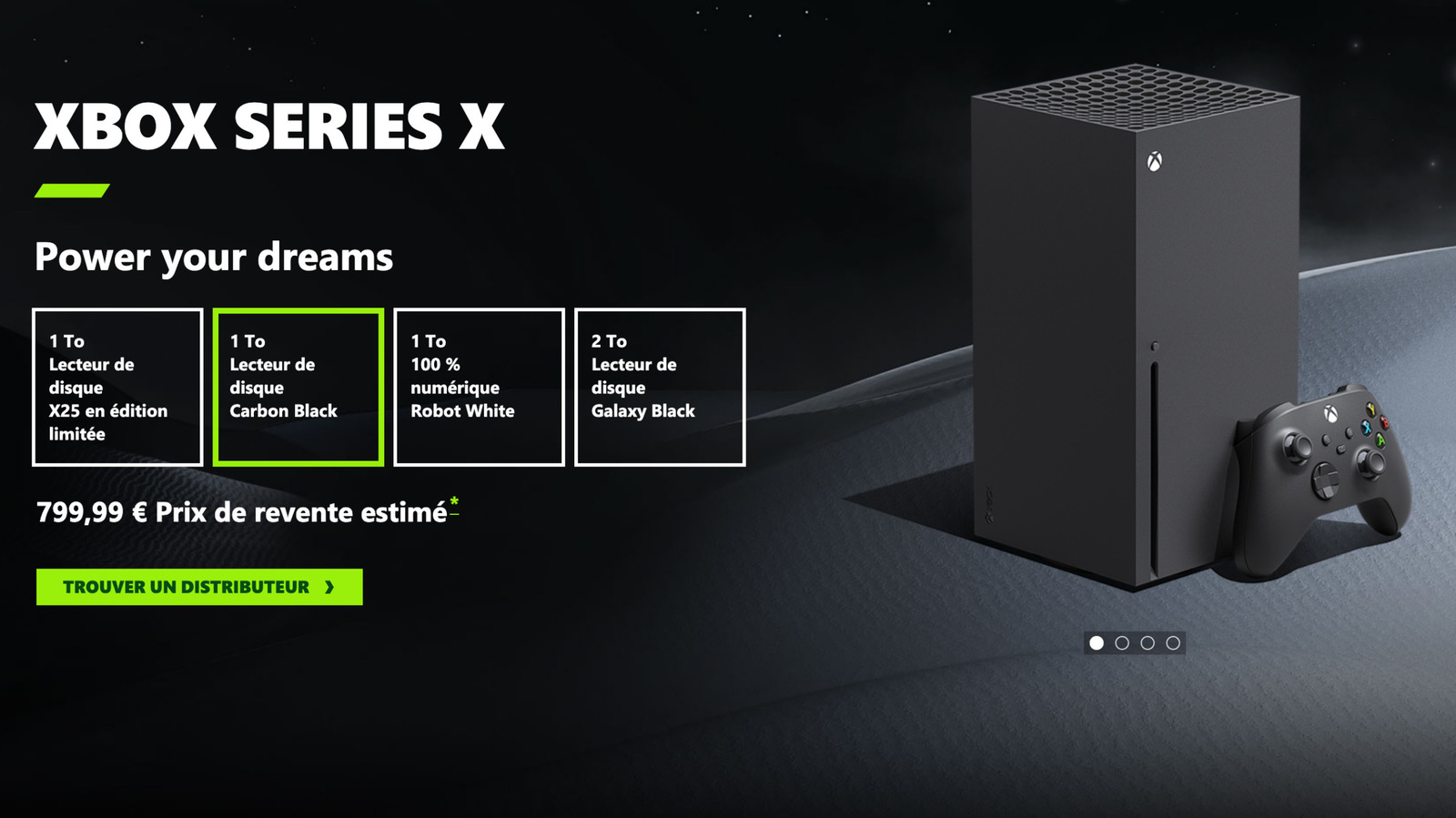
The entry-level price for an Xbox now starts at 499.99€/£429.99.
We knew how much the US prices for Xbox consoles would increase before the change took effect on August 1, but it turns out the price hike is going to be even steeper for anyone in Europe. In the US, Microsoft announced back in June that the prices for its Xbox consoles would increase between $100 to $150, depending on the model. However, with the updated Xbox store page, we now see that European Union residents have to pay between 150 to 200 euros more, while UK residents have to shell out more than 130 to 170 pounds more for the Xbox Series S and X.
Here’s the price breakdown for European markets:
The price charts for the UK have also changed, as seen below:
While currency conversions are always adjusting, it currently translates to an entry-level Xbox console costing closer to the equivalent of $575 for European customers. Looking ahead, the price tags may not be settled just yet, since Microsoft previously noted in its June blog post that it’s expecting storage and memory prices to double once again. However, Microsoft isn’t the only one feeling the effects of the continuing RAM crisis since both Sony and Nintendo have announced price hikes of their own recently.
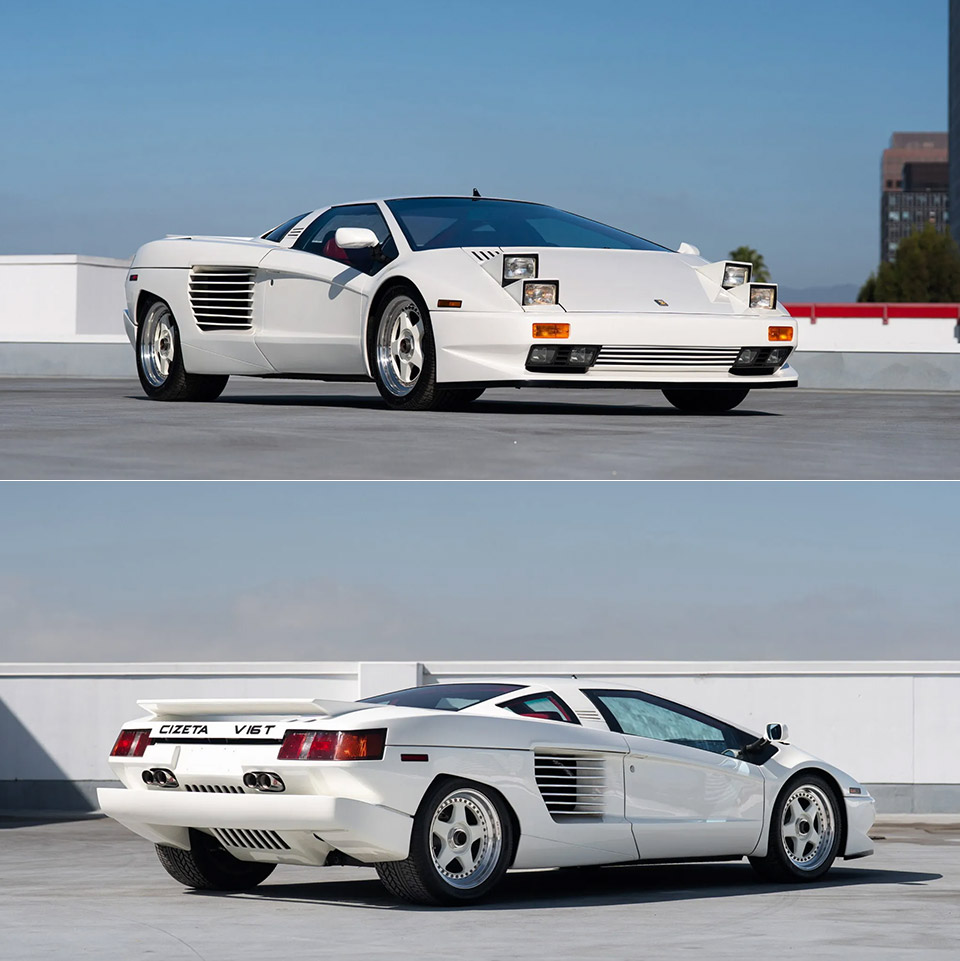
Photo credit: Karissa Hosek / RM Sotheby’s
Claudio Zampolli spent years fixing other people’s dreams in Los Angeles before deciding to build his own. A former Lamborghini test driver and development engineer, he wanted something that would make the Countach look ordinary. He found a partner in Giorgio Moroder, the three-time Academy Award-winning composer behind some of the biggest disco and film scores of the era. Together they put their names on a car that carried both: the Cizeta-Moroder V16T. Chassis 001 is the only one that ever wore both names at once. In two weeks it heads to RM Sotheby’s Monterey auction with an estimate between $1.4 million and $1.8 million.
Marcello Gandini envisioned the Chizeta V16T’s body with the stunning, aggressive lines that had originally been given to Lamborghini as a Countach replacement. Chrysler, the business that owned Lamborghini at the time, was not entirely sold on them, preferring a gentler curve with more conventional styling. Gandini wasn’t impressed, so he handed along the rejected design to Zampolli instead. A striking quartet of pop-up headlights sit atop a nose that cuts straight up into a sharply curved windshield. The side intakes are larger and more severely flared than those on later production cars. In profile, this monster is massive: more than 80 inches wide, 3 inches wider than a modern Ferrari Testarossa, and only 43.5 inches tall to boot. Finished in a gorgeous pearl white and featuring a one-of-a-kind red leather interior, the impression is nevertheless confusing, as if you’ve stepped back into another age entirely.

The power comes from the innovative 6.0-liter V16 engine, which is positioned transversely behind the seats, precisely like the Lamborghini Miura from two decades ago. There are no bolted-together V8s in this beauty, as it is a single, lightweight aluminum block with two flat-plane crankshafts gearing up to a central output shaft and eight overhead camshafts controlling 64 valves. Bosch K-Jetronic injection delivers fuel to the cylinders, and official estimates indicate 540 horsepower at an exhilarating 8,000 rpm and 400 lb-ft of torque all the way down to 6,000 rpm. Power is delivered to the rear wheels via a five-speed ZF manual gearbox. When it was new, the 0-60 mph time was roughly 4 seconds, and the top speed was just north of 200 mph, leaving you breathless. Then there’s the characteristic sound, a deep, rolling V8 “woofle” at idle that transforms into a screaming high-revving roar as the engine starts up.
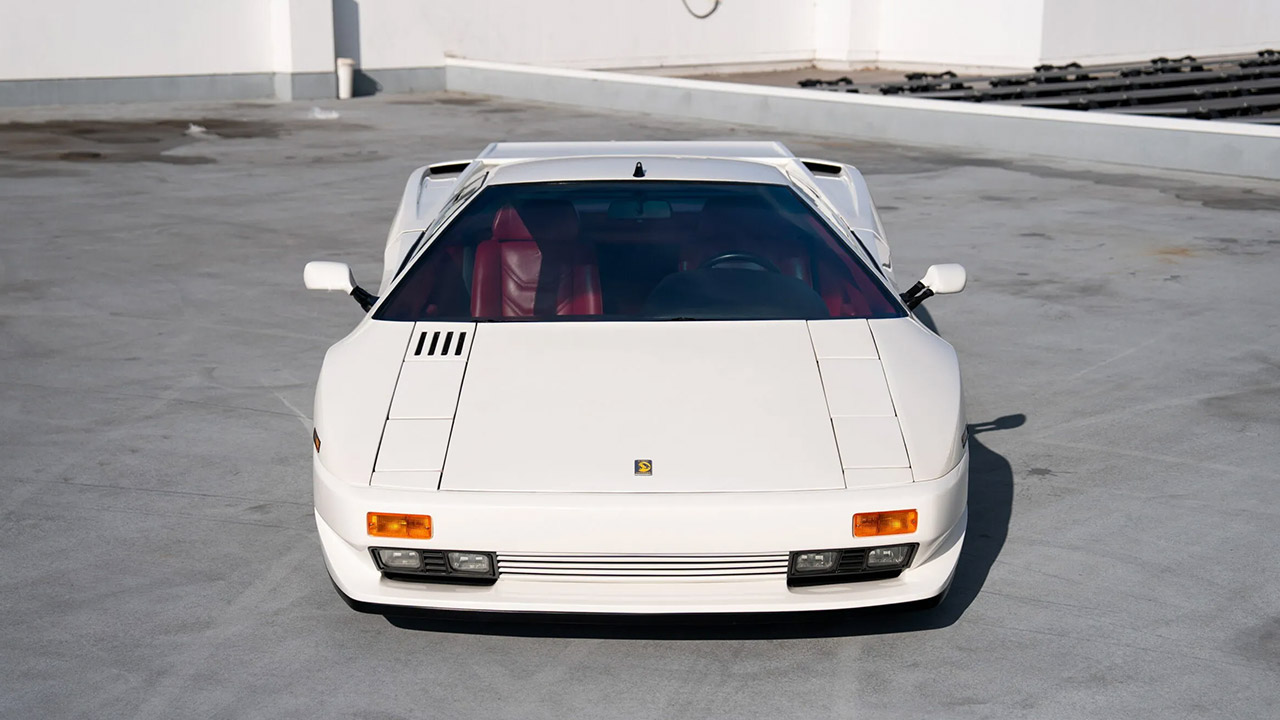
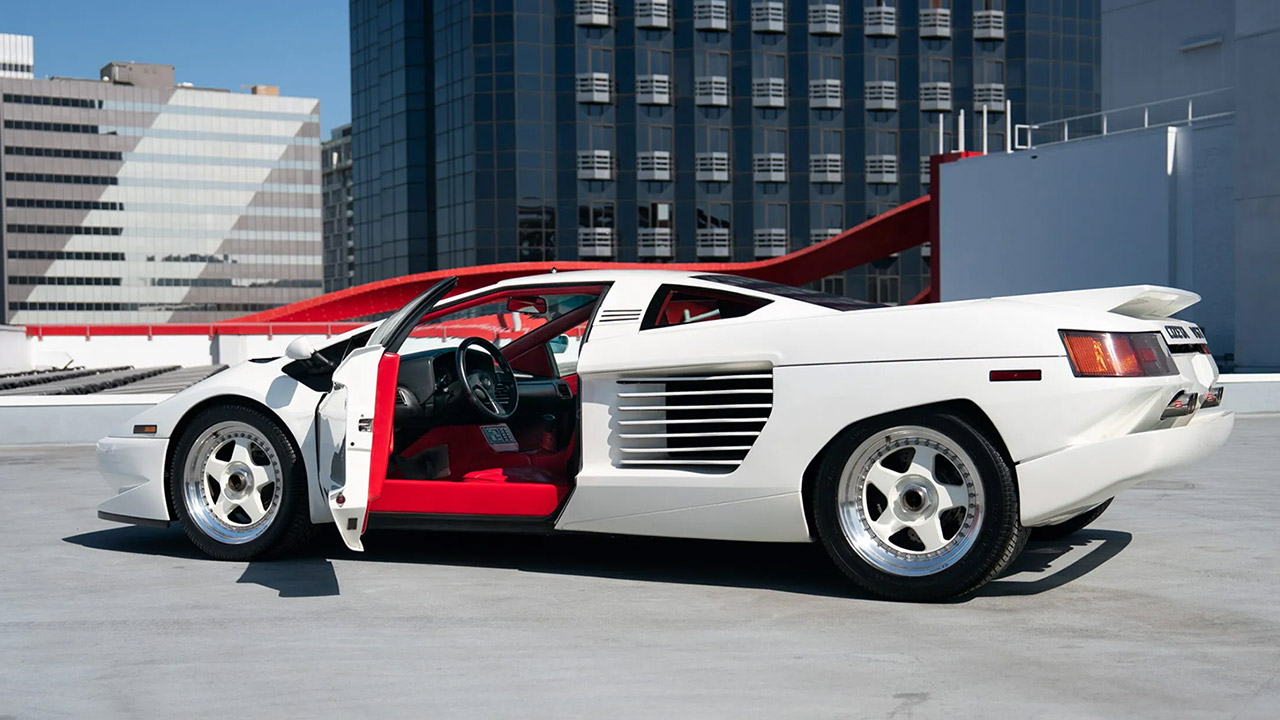
Chassis 001 made its public debut on December 5, 1988, in Los Angeles, with Jay Leno presenting the event. Giorgio Moroder even composed an original piece of music for the occasion, which he appropriately titled “A Car Is Born”. Chassis 001 appeared at the 89 LA and Geneva auto shows before disappearing when Zampolli and Moroder parted ways, and the production cars were dubbed Cizeta V16Ts instead. In the end, just nine of these were produced. For more than 30 years, this prototype was Moroders’ constant friend.
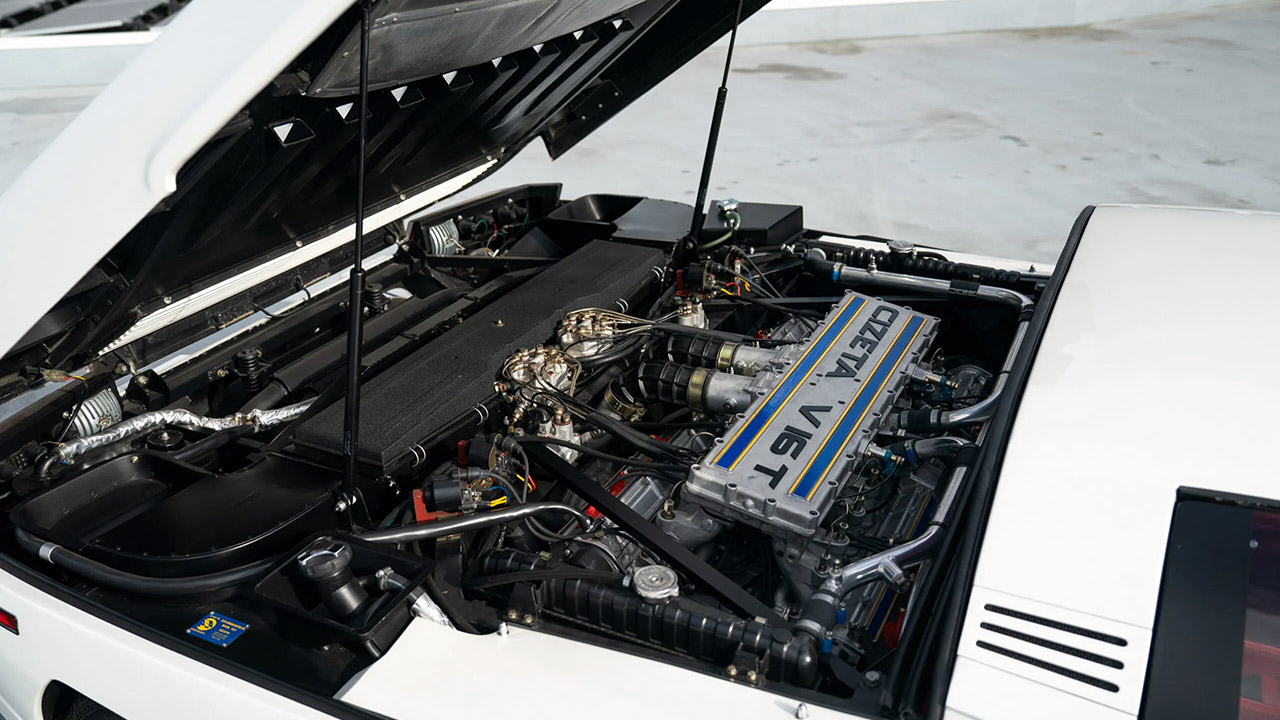
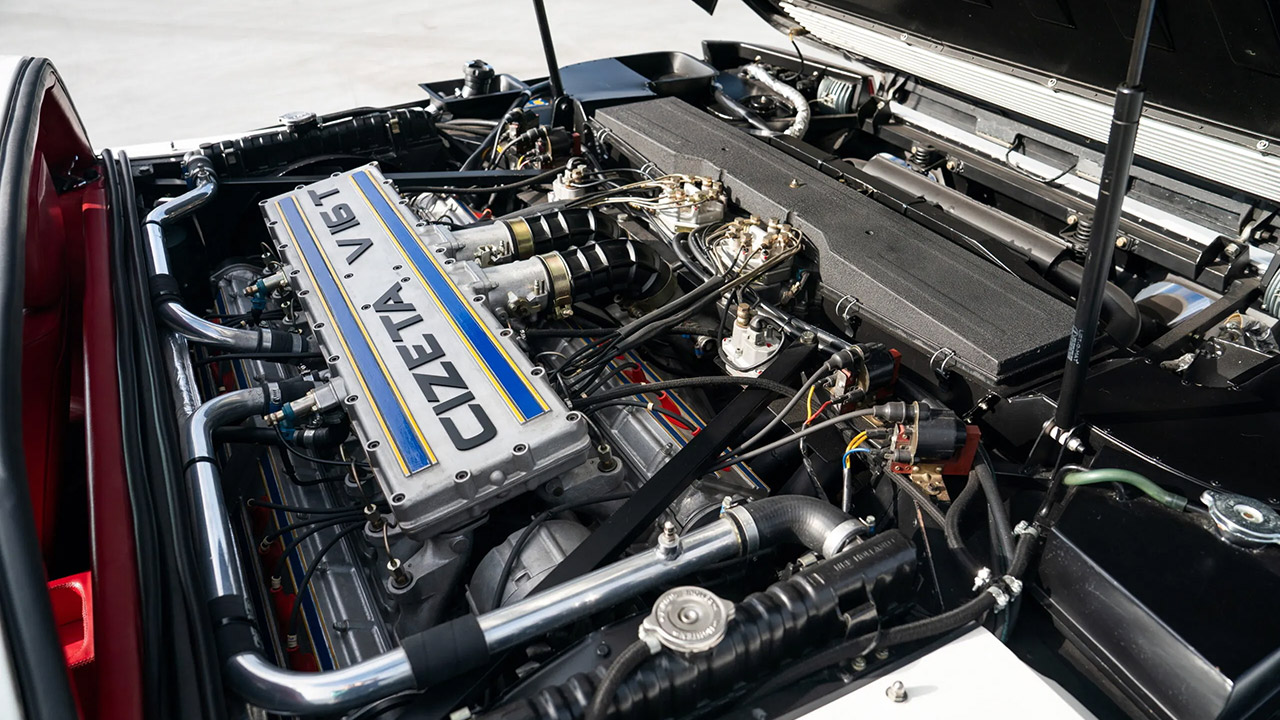
Canepa Design gave this automobile a complete mechanical repair in 2018, adding extra heat shielding and doing quality control to get it functioning properly, then they completed even more cosmetic and technical work in 2024. This automobile has almost minimal mileage, less than 400 kilometers, as it has rarely been driven at all. It was previously displayed in the Wedge Shaped Concept Cars and Prototypes class at the Pebble Beach Concours d’Elegance in 2024. It’s now for sale with a one-of-a-kind NFT and a fairly cool package, including a Giorgio Moroder EP on a four-track record designed specifically for the automobile, a 3D artistic portrayal, an extremely detailed 3D scan, and proper digitized documentation indicating where it came from.
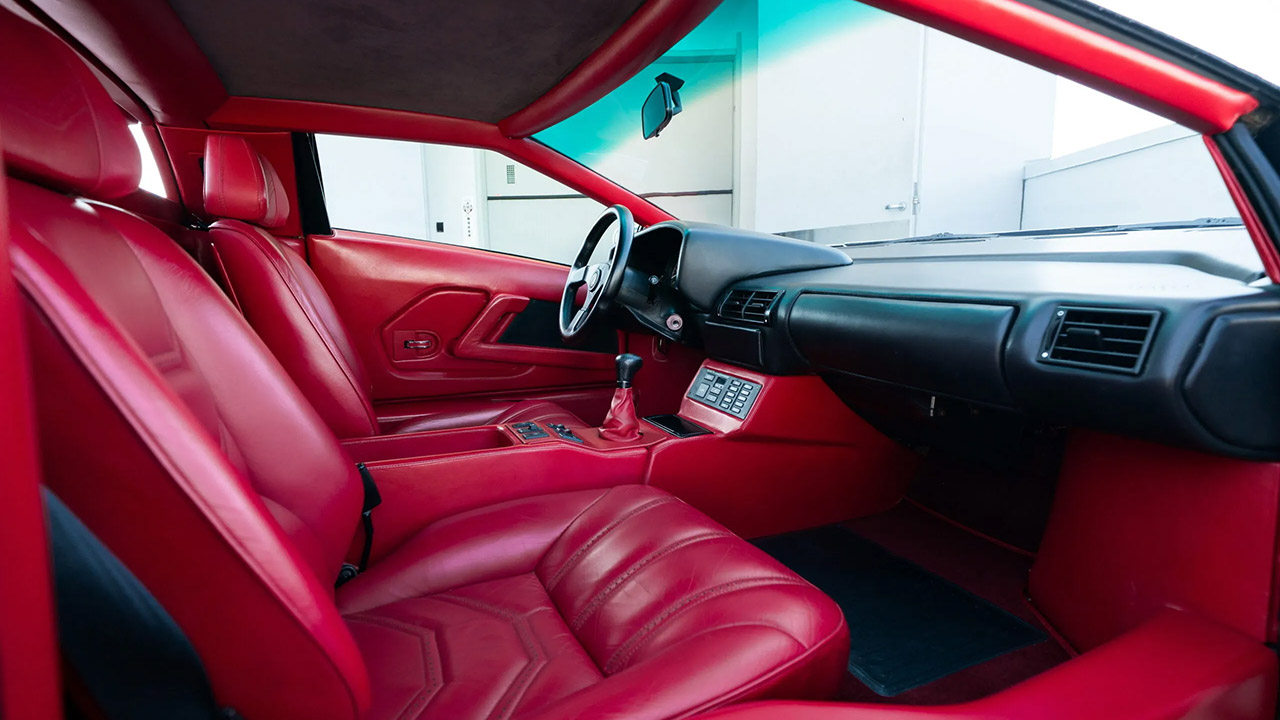
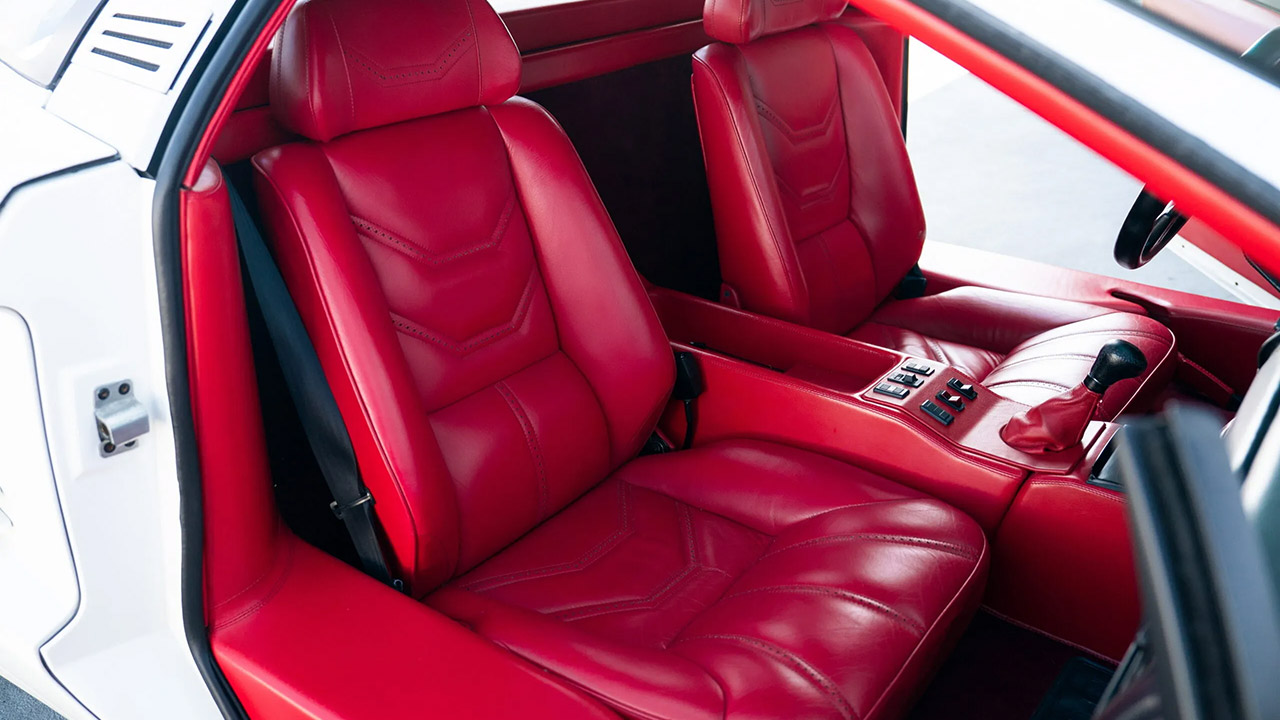
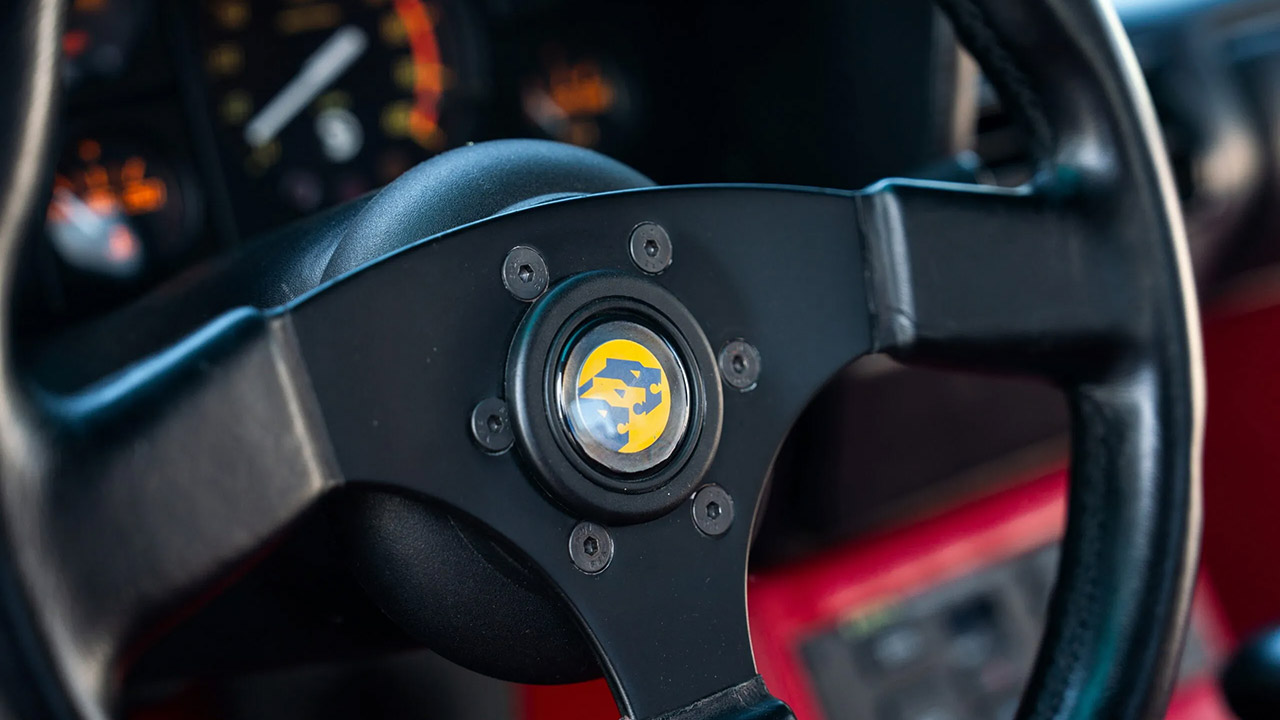

Most of the original nine cars appear identical at first glance, but Chassis 001 stands out in every way that matters. The side intakes are larger, and the lights are different; the mirrors, dashboard, inside the tunnel, seats, and even the steering wheel are all distinctive. The cherry on top is that it’s the only one to have the particular nameplate in the front that tells the entire tale of how it was created.
[Source]

To design invisible drones, researchers have tried camouflage, transparent materials and light-bending optical systems. But engineers at Northwestern University used “motion blur,” which an announcement from the school notes is the effect that makes fast-spinning fans seem to disappear.
“The drone spins up to 25 times per second, which is too fast for the human eye to see clearly. While it isn’t completely invisible, it morphs into a ghostly smudge that seamlessly blends into the background… ”
To design the drone, the Northwestern team first used a computational model to generate roughly 20,000 drone configurations capable of stable flight. Then, they used artificial intelligence (AI) and optimization algorithms to repeatedly rearrange the drones’ major components, including a motor, propeller, circuit board, counterweight and batteries. After sifting through many different configurations, the algorithms determined the ideal placement of the drone’s components to minimize its visibility from virtually every viewing angle while allowing for stable flight.
After selecting promising candidates, the engineers simulated each drone spinning in flight and overlaid those images a hundred real-world backgrounds. Then, they used a perception model that approximates human vision to determine how noticeable each design appeared. Designs that blended into their surroundings received lower visibility scores. The team selected the 500 lowest-scoring designs and applied the optimization algorithm, which repeatedly adjusted the positions of components to further minimize those scores. “The design process was fully automated,” [said Northwestern’s associate CS professor Michael Rubenstein, who led the work]. “Then, when we were confident that a drone met all our criteria, we built it.”
They’ve named the drone “Phantom Twist”,” and plan to design future iterations with more transparent materials or quieter propulsion to make it even less noticeable.
The Northwestern team presented the work on July 16 at Robotics: Science and Systems 2026 in Sydney, Australia…
Thanks to long-time Slashdot reader fahrbot-bot for sharing the news.


When you were growing up, if you played with military-themed toys like green plastic army men or G.I. Joes, that passion doesn’t always go away. Once you get older, you might appreciate and collect military items. For the more serious collector, a canteen, rucksack, or entrenching tool isn’t quite enough.
That’s where the post-service military vehicle market comes in. Believe it or not, civilians can purchase and operate a whole array of military vehicles. If you’re interested in acquiring something like a military-used truck or sedan, there are ways to get them on the cheap, but that’s not what collectors want to get to relive their early years. They’re more interested in owning and operating their own tank, armored personnel carrier, or fighter plane.
Granted, buying a military vehicle doesn’t mean you’re one step away from establishing your own militia. You can get yourself a tank, but don’t expect to be able to fire anything via its gun, as it’s just for show. Still, you can own them, and depending on the laws in your area, you might even be able to drive them on the street or fly them through the sky. These are 12 of the most popular military vehicles civilians can actually own.
Perhaps the most popular military vehicle on the market today is the legendary High Mobility Multipurpose Wheeled Vehicle (HMMWV), better known to civilians as the Humvee. While there is a consumer version of the car, the Hummer HMC, which first hit the streets back in 1992, it’s not the same as the one operated by militaries around the world. The vehicle, first produced by AM General in the 1980s, is a hot ticket item for military enthusiasts.
Not only do HMMWVs look cool, but they’re also pretty indestructible. When I learned to drive one in the Army, a soldier smacked one into a tree, which didn’t leave a scratch … the tree wasn’t as lucky. They’re also useful for a variety of applications, which makes sense, as the U.S. military wanted the HMMWV to be an all-purpose transport, and that’s precisely what it is.
If you’re in the market for a HMMWV, they’re not too difficult to find. One of the best places to look is the online auction site GovPlanet. It’s rare to check the site and not see any HMMWV auctions, with prices starting around $2,000 to $3,000, regardless of its year of manufacture or mileage. Some are sold buy-it-now, and as of writing, there’s one up for only $8,000.
Many weapons were developed during World War II, from jet aircraft to nuclear bombs. One of the most important developments of the conflict was the M4 Sherman Tank, which entered service in 1942. More than 50,000 M4s were produced between 1942 and 1945, and they saw action on every major front line. The American tank was a key tool in the Allied war effort.
M4s came in a wide variety of types, as they were used as straightforward medium tanks as well as mine clearance vehicles, and pretty much everything and anything. This has left the world with a relatively large number of M4 variants, and they’re highly collectible.
If you’re in the market to acquire an M4 Sherman tank, they come up for auction or direct sale every so often. Be prepared to shell out some serious cash because they’re expensive pieces of hardware. One auction in 2022 listed a 1943 Chrysler M4A4 Sherman tank for $355,000. Military Vehicles Magazine lists 2022 price ranges based on condition, beginning at $125,000 and topping out at more than $795,000.
Few WWII fighter aircraft are as storied and beloved as the legendary North American P-51 Mustang. Introduced in early 1942, the single-engine, single-seat fighter and fighter-bomber saw action across the European and Pacific Theaters. P-51s continued flying in the Korean War, but were largely outclassed in air-to-air combat by faster jet aircraft that ultimately replaced them.
North American produced around 15,000 during WWII alone, so there are a few still lying around. If you’ve ever been to an airshow and seen one fly, that’s likely because a private collector owns, maintains, and operates their very own P-51.
These are known as Warbirds: civilian-operated military aircraft, and the P-51 is easily one of the most popular options. Buying a P-51 is certainly possible, but you’ll have to shell out a lot of cash to do so. You can occasionally find them online for around $1.6 million, but condition is everything. Many enthusiasts purchase damaged P-51s and restore them to airworthiness, so they’re not for the casual fan. They’re legal to fly, so long as you follow local laws, and of course, you’ll need a pilot’s license.
Even if you’ve never served in the U.S. military, there’s a good chance you’ve heard of PT Boats. These medium-sized vessels are Patrol Torpedo Boats, and the most famous is PT-109, which was commanded by a young Lt. John F. Kennedy during WWII. PT Boats vary in design, but typically measure around 80 feet in length. They were built to be fast, maneuverable, and heavily armed for their relatively small size.
PT Boats engaged enemy warships of all kinds, and some were used as small-platform gunboats, making them effective against a variety of enemies. They’re not incredibly large vessels, and around 600 of various types were produced throughout the war. There are several still in existence, and if you’re in the market and are very lucky, you might stumble across one for sale. As of writing, a 1945 Higgins PT Boat measuring 78 feet in length, as was standard for the Higgins model, can be yours for $990,000.
That particular one comes with an active charter book of business, should you desire to purchase it as an add-on. Higgins PT Boats can accommodate 13 personnel and are powered by three Packard V-12 engines. If you’re looking for something larger, it is technically possible to purchase aircraft carriers for a penny, but this is done to entice salvage operators to scrap the decommissioned behemoths.
High Mobility Multipurpose Wheeled Vehicles (HMMWV) may be popular today, but they were preceded by an even more beloved vehicle, the Willys MB. Most people know them as WWII Army Jeeps or something similar, but whatever you call them, Willys MBs make for great cars. The Willys MB is the ultimate off-road machine, and that’s not an accident. The four-wheel-drive vehicle was developed to carry troops across the world’s battlefields, and it did precisely that, as they were employed throughout the conflict.
Between 1941 and 1945, more than 600,000 Willys MBs were produced, so many remained after the war came to an end. In the years since, collectors have purchased old surplus vehicles and fixed them up, while others have built them new from kits. Whatever your preference, it’s still relatively easy to find these extraordinary vehicles for sale more than 80 years after their introduction.
As of writing, a beautifully restored model that looks as fresh today as it did when it came off the assembly line is listed for $29,900. You can occasionally find them for sale on Bring a Trailer, which is an auction site, and if you want to build your very own, there are reproduction models sold as a Jeep in a Crate (sans drivetrain), which sell new for $16,730. It’s not real surplus military equipment, but it’s the next best thing.
American-made tanks are great, but they’re hardly the only ones you can buy. One of the most-produced main battle tanks in the world is the Soviet-designed T-72. The Soviet Union introduced the T-72 in 1973, and more than 25,000 have since been built. They’ve operated all over the world, whether in former Soviet Bloc nations or by other countries that purchased them from the USSR and Russian Federation.
Despite being over 50 years old, T-72s remain in service, thanks to modernization upgrades and their overall global ubiquity. While Russia has lost over 1,200 of them in the Russo-Ukrainian War, there are several on the open market, and you can purchase one if you’re lucky enough to find a sale. Unfortunately, these are hard to come by, as T-72s are in high demand by collectors, and they’re still in widespread military use.
If buying one doesn’t work out due to short supply, there is an option to drive a T-72. Companies like Drive-a-Tank occasionally have T-72s available for people to hop into, and you can even fire off a round in some places. DriveTanks is another that offers similar opportunities, but neither, as of writing, has a T-72. You’ll need to keep an eye on sales, but be prepared to pay around $50,000 for a working T-72 to add to your garage.
While it’s not the best-known plane outside of the military, the Embraer EMB 312 T-27 Tucano is nonetheless an incredibly popular aircraft for civilians to purchase. The primary reason why is that it’s used around the world as a trainer, so there’s a lot of nostalgia for retired military aviators who want to get their hands on one and relive their glory days.
The T-27 is one of several propeller aircraft used by the U.S. military, but it’s not an American-designed plane. It’s a Brazilian plane introduced in 1980 that’s used for a variety of mission types, including light attack. It can carry and fire precision-guided munitions and various ordnance, so it’s used in relatively low-threat environments where it doesn’t have to face off against jet-powered fighters.
The U.S. currently operates the A-29B Super Tucano, introduced in 2003, but there’s still a lot of love for the older aircraft. It’s relatively easy to find all manner of variants of the T-27 for sale online, as they’re featured in air shows or can be operated for a variety of reasons, including using them as trainer aircraft. Prices vary, but as of writing, a 1990 Shorts Tucano Mk. 1 will run you around $790,000. Another built in 1992 has an asking price of $1.1 million.
If you’re on the fence about whether or not you’d prefer to buy a military boat or land vehicle and can’t decide, why not get something that functions as both? The legendary GMC DUKW, most commonly referred to as the “Duck,” is an amphibious vehicle developed during World War II. It remained in production until the end of the war, resulting in a total of 21,147 DUKWs built, and plenty of them survived the conflict.
DUKWs are six-wheel-drive vehicles constructed from the GMC CCKW 2.5-ton trucks, known by soldiers as the “deuce-and-a-half.” With the modification, the DUKW can operate on a variety of road surfaces or drive into and out of the water, making it incredibly versatile. Since the end of their use by the military, many DUKWs have become tourist attractions, where people can ride them on a tour of various cities.
They’re also prized by collectors for their utility and odd design, and many have them in their private collections. Bring a Trailer sold one to a lucky collector in March 2026 for $34,000, which isn’t bad when you consider that they purchased a car and a boat in one fell swoop. Other listings have popped up over the years at cheaper price points, but like any WWII vehicle, restoration costs are likely if you want to operate it.
If you’re interested in a vehicle similar to the High Mobility Multipurpose Wheeled Vehicle (HMMWV) but want something newer, a good option is the Oshkosh Light Tactical Vehicle (L-ATV). These are much newer in design and incorporate battle-tested lessons learned from Operation Iraqi Freedom and Operation Enduring Freedom in Afghanistan. As such, they’re lightweight but built with protection in mind, as Oshkosh indicates it provides the same level of protection as Mine-Resistant Ambush Protected (MRAP) vehicles.
The U.S. military chose the L-ATV as the replacement for the HMMWV via its Joint Light Tactical Vehicle (JLTV) program, and it entered inventory in January 2019. Think of the L-ATV as a souped-up HMMWV that’s designed for high-speed mobility, lightweight operation, and occupant protection because that’s precisely what the vehicle was designed for. Each one costs the U.S. military $450,000, so they’re not cheap.
That said, Oshkosh sells them directly to the public as well for a comparative steal at only $250,000. While Oshkosh produces a lot of military vehicles that the public can buy from sites like GovPlanet, getting a military-used vehicle isn’t easy, as they’re still relatively new. If you can’t wait, you can always grab the civilian version, but otherwise, keep an eye on GovPlanet because the military is sure to sell older models once they’ve outlived their usefulness for Uncle Sam.
For the collector who wants a military vehicle they can drive the whole family around in, an Armored Personnel Carrier (APC) is certainly an option. A popular one is the British-built FV432 APC, which entered service back in the 1960s. It can carry 10 personnel alongside the two crew needed to operate the vehicle, which features a Rolls-Royce K60 240-horsepower engine. The FV432 is the most popular build, and around 3,000 were produced.
The APC weighs 15 tons, is tracked, and it came in several varieties. When used by the British Army, they were most commonly outfitted with a 7.62 mm L7 General Purpose Machine Gun. Other options included smoke dischargers to obfuscate the vehicle’s location on the battlefield. Of course, civilians can’t legally throw a machine gun onto their own APC, but they can purchase them when they go up for sale every once in a while.
As of writing, Tanks-a-Lot has one that customers can book to drive, and if you want to take one home with you, it’s going to cost around $29,292 with additional VAT (Value Added Tax). When you purchase a military vehicle from overseas, taxes and import fees can cause the price to grow exponentially, so be sure to ask before signing on the dotted line because purchasing a foreign-made military vehicle is often only the first step in acquiring one.
Flying around in your very own P-51 Mustang is the dream of many aviators, but that particular fighter doesn’t have the same level of oomph as a jet. Fortunately, there are options when it comes to buying a jet fighter. One of the most beloved U.S. Navy jets that comes up for sale from time to time is the McDonnell Douglas F4 Phantom II. Introduced in 1960, these Navy jets pack a big punch, thanks to their top speed of Mach 1.82 (1,400 mph).
The long-range, tandem two-seat, twin-engine interceptor was used as a fighter and fighter-bomber. The F4 is a record-setting aircraft that’s highly prized by collectors. Between 1958 and 1979, 5,195 were built, making it the most-produced supersonic fighter aircraft the U.S. military has made. That amount of production is a boon to collectors, as there were a few sitting around when the Navy discontinued their use in the 1990s.
In the years since, F4s have flown for various allied nations as well as a tiny number of Warbird aviators. As of writing, there is only one known F4 held in private hands that’s capable of flight. It’s for sale if you want it, but the cost might make you think twice, as it’s listed for $950,000. Operating an F4 at its capacity isn’t exactly legal, depending on where you live, because the sonic boom it manifests upon breaking the sound barrier isn’t something that the FAA tolerates.
Surface ships like PT Boats are certainly impressive, but what about owning your own submarine? It’s not too difficult to purchase a commercial submersible, but getting your hands on an actual military submarine is a bit trickier. That said, it is possible, and your best bet for acquiring one is to look for a Soviet-designed diesel-electric attack boat like the Whiskey-class submarine used throughout the Cold War.
The USSR built over 240 of these subs throughout the 1950s, and while most were scrapped, some weren’t. One of the remaining Whiskey-class boats was sold on the open market for $550,000, but hasn’t popped up in the years since, so this is the kind of military vehicle you have to look for actively should you hope to acquire one. Despite their age, Whiskey-class submarines were well-built and had impressive capabilities.
While you can’t legally outfit your own torpedoes, Whiskey-class attack submarines boast a range of up to 15,000 miles and can travel up to 20 mph on the surface and 16 while submerged. They displace 1,350 tons when underwater, and would be a fine addition to any civilian’s collection of military vehicles. If a Whiskey-class sub isn’t available, you can always grab a different boat manufactured and operated by the Soviet Union. One example is the Foxtrot-class submarine, which costs $2 million, though it requires some repairs to make it seaworthy.





Why Trees Belong on the Risk Register


Weekend Open Thread: Wit & Wisdom


Intel is reversing course and bringing hyper-threading back to its server chips


Meta enters AI-training agreement with far-right ‘propaganda rag’ Newsmax


Luke Littler dismantles Gerwyn Price to retain title in Blackpool


MicroStrategy Post-Earnings CLARITY Act Push Could Add New Catalyst for Its Stock


The Part of the Electric Transition Nobody Wants to Discuss

‘Stargate’ Creator’s New Sci-Fi Series Returns for Season 3 Tomorrow


Major shareholder moves on Canyon


Bitcoin Enters the 3rd Stage of the Bear Market


XRP Ledger v3.3.0 brings five institutional features


Kraken Enables Retail Access to Jersey Mike’s IPO via Tokenized Shares


New macOS Sequoia & Sonoma security updates for older Macs


Claude: Build Financial Dashboards in Minutes (2026)


Luke Littler’s dominance sparks GOAT debate


Johnson & Johnson agrees to $5.5B settlement over talc cancer claims


Seema Kaliramna Wins Discus Throw Bronze, Takes India’s CWG Medals Tally To 17


Crypto PAC spending tops $2M in Michigan House race


Trump Announces Hamas Disarmament Agreement as Iran Strikes Kuwait Air Base and US Attacks Pause Overnight


Gemini can now summarize the messiest comment threads in Google Docs



You must be logged in to post a comment Login