Connect with us

Tech

Funniest/Most Insightful Comments Of The Week At Techdirt

Published

on

from the say-it-loud dept

This week, our first place winner on the insightful side is Thad with a comment about calls for RFK Jr.’s resignation coming entirely from Democrats:

And that’s why trying to distill partisan politics down to just “team blue” vs. “team red” is reductive at best and false equivalence at worst. This and many other life-or-death issues break down on pretty clear partisan lines, and it’s entirely clear which party is right and which one is wrong.

Christ knows the Democrats aren’t perfect. But of the two major parties they’re the one that’s not a eugenicist death cult.

In second place, it’s an anonymous comment on our post about monitor makers hitting owners with annoying ads, and our characterization of how it happened:

No, that’s not how computers work. Microsoft Windows identifies the connected monitor, and then, on its own authority, checks whether the manufacturer has “recommended” any software to go with it; if so, Windows installs that without telling the user. The monitor isn’t installing anything.

Of course, we should also be criticizing monitor manufacturers for taking advantage of this misfeature. But the root problem is with Microsoft. More than 2 decades after the Sony rootkit, they haven’t learned their lesson (or maybe they have: people will put up with this shit, and the blame will mostly be misdirected).

Advertisement

For editor’s choice on the insightful side, we’ve got a pair of comments from. MrWilson. First, it’s one about giving Elon Musk credit when his products work:

Nope. Not at all. Screw that noise.

Teslas might function as a car some of the time, but that doesn’t mean you have to give Musk any credit whatsoever.

Starlink is a money pit from whence nothing can be recovered. Even the most corrupt broadband fiber deployment can be dug up or reused. Comcast could, in a just judicial system, be broken up as an illegal monopoly and their infrastructure that we paid for could be reused by other service providers.

And not every dollar was going to go to big monopolistic companies, whereas any money going to Starlink funds literal authoritarian, anti-democratic election interference.

Advertisement

Next, it’s one on our post about the “Darnella Test” for social media regulation:

Unfortunately, “kids won’t be able to post videos that make authorities look bad and fuel significant protests” is an appealing argument to the authoritarians who are already in favor of curbing social media access for kids which those authoritarians can’t directly control.

Over on the funny side, things are extremely quiet this week, so we’re going to truncate it and just feature the only comment that received enough votes to earn a funny badge. It’s Stephen T. Stone with a reply to a comment calling Mitch McConnell a vegetable:

How dare you insult vegetables like that. Unlike Mitch McConnell’s political career, vegetables are actually good for the average person.

That’s all for this week, folks!

Advertisement

Source link

Continue Reading
Click to comment

You must be logged in to post a comment Login

Leave a Reply

Tech

Want to Get Off Your Phone? Mina Kimes Suggests Having a Baby

Published

on

The best way to digital detox is to have a kid, because when I spend time with him I’m just not on my phone by necessity. I think that’s been the most helpful thing. So there you go, Zoomers. There’s a reason to have children. And honestly, I do notice when I spend a day with him, whether it’s hiking or at the beach, and I’m not on my phone, I’m infinitely happier at the end of the day than any other day in my life.

Music app: Spotify

I primarily use Spotify. The data is completely cooked because of the aforementioned 3-year-old. So when they do Spotify Wrapped, I swear to God, it used to be cool, but now it’s been hijacked by Raffi, Elmo, Ms. Rachel, Mickey Mouse. My son is really into Mickey’s Countdown lately. I feel like 99 percent of my Spotify listening now is just atrocious kids’ music. Raffi’s the GOAT though. I don’t want to lump him in with some of the people that I mentioned. Raffi stands alone.

Number of unread emails: 0

Advertisement

This is probably the thing where you’re going to learn the most about me. Zero unread emails and inbox 10 and under is how I live my life. It’s such an important part of how I work and get stuff done.

The number one thing I should lead with is, for a litany of reasons, I just do not let communication build up, which can be difficult, because I subscribe to a couple newsletters, and I won’t archive them until I’ve either read them or scanned them. But I can’t get to work until I feel like my mind is clear, and my mind isn’t clear if my inbox isn’t clear. I think it’s probably something I inherited from my dad, who was an Air Force major, and from a very young age he taught me the importance of to-do lists, which I also abide by. Sometimes, on a to-do list, I’ll set aside half an hour or whatever to get my inbox back down to sub-10.

Sometimes that means that when I reply to emails, my response is a fraction of the email that was sent to me. And I think people feel social pressure to match an email with a commensurate email. To live the Inbox 10 lifestyle, you cannot abide by that pressure.

Number of unread texts: 0

Advertisement

Same thinking, same principle, same possible OCD.

Last person you FaceTimed: My brother

I FaceTimed with my brother, who’s on vacation with his family in Delaware at the moment. I’m not a big FaceTimer. And candidly, I feel like FaceTiming someone who is outside of your family is insane behavior. But that’s another way in which having a child changed how I use technology, I suppose, because it really is a wonderful way for young children to see distant relatives and communicate with them.

Last thing you googled: “Hip thruster tips”

Advertisement

I recently, and I’m very late to this, started strength training at a gym for the first time in my life. For my entire life, I’ve only gone to the gym to run. And now I’m just learning what all these machines do and how to use them. But I’m like a child. I’m a total neophyte in this world. I have a trainer, but I’ve also found it’s a really encouraging and fun section of the internet.

Last photo you took:

It’s a picture of my son standing next to a tower he built in his room. I feel like at this point, 95 percent of the photos on my phone are of my son. It’s kind of sad; you can see the exact point where we had him because it used to be all pictures of my dog, and then it just completely switches to pictures of my son.

Last screenshot you took: The Adam Levine “Holy fuck, holy fucking fuck, the body of yours is absurd.”

Advertisement

I can’t even remember what I was using it as a meme for, but I clearly needed that screenshot to use as a meme.

Last thing you asked AI: “How to lift a paint stain off of a carpet.”

I don’t really use LLMs. If I do, it’s for either menial household questions or basic search. And I only use it for search because search is now useless due to AI.

I’ve read and listened to a lot of people talk about how it’s revolutionized their workflow, and they’re training agents to make appointments and they’re building these elaborate meal plans. And to me, that doesn’t sound interesting. That just sounds exhausting. We have this phrase in football called “looking for work,” when a player on the field is looking for work—looking for someone to block, for example. And I just think about that whenever I hear those stories. It just sounds like you’re looking for work.

Advertisement

Source link

Continue Reading

Tech

The Big 2028 Volvo XC40 Refresh Looks Great, But The Major Change Is Inside

Published

on


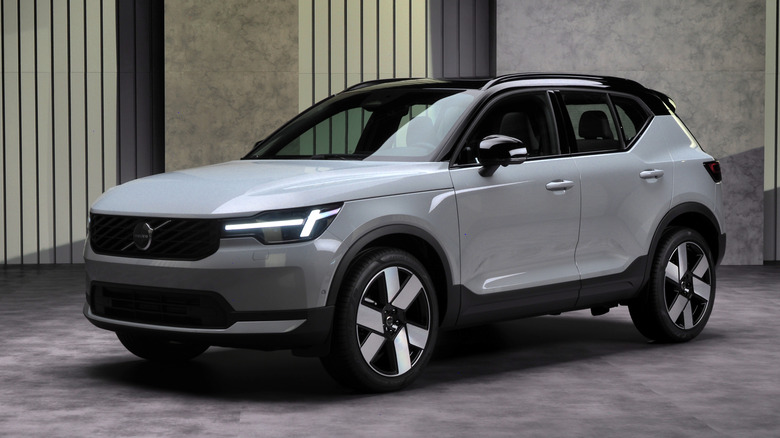
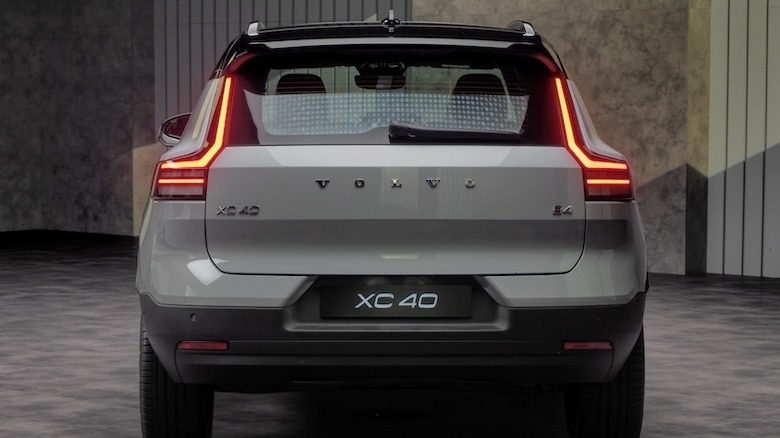
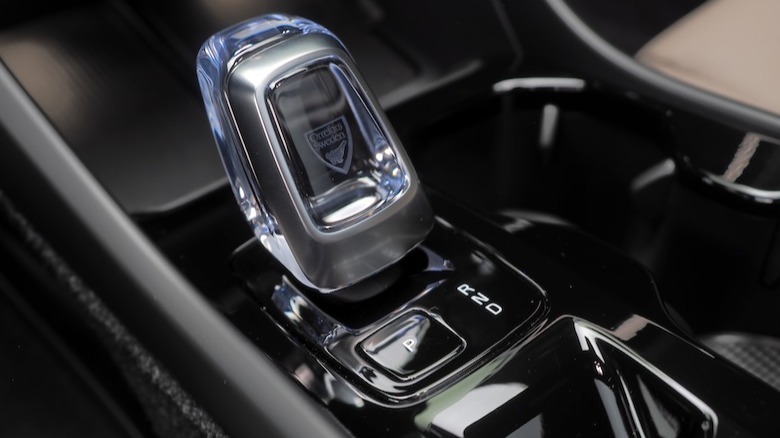
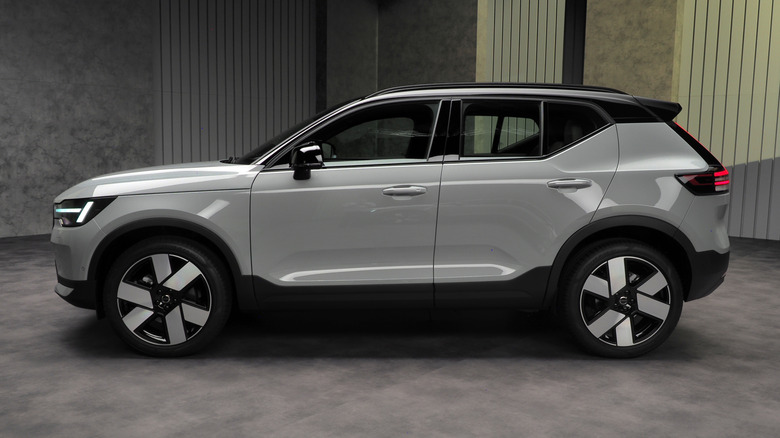
Volvo’s smallest gas SUV in the U.S. is getting an update, though while the 2028 XC40 may officially be a mid-cycle refresh, it gives the crossover a welcome polish in style and technology. Set to hit roads in early 2027, the new XC40 also sees Volvo trim back the number of choices buyers will have, with a single drivetrain on offer this time around.

Notably, that drivetrain isn’t fully electric. While Volvo has been barreling at pretty much full speed into full EVs, the U.S. market has not been quite so ready to embrace them. The struggles of compact electric crossovers like the EX30 illustrates that well, and sure enough the 2028 XC40 — for North America, anyway — won’t offer a “Recharge” EV version. Instead, that space will be occupied by the EX40.

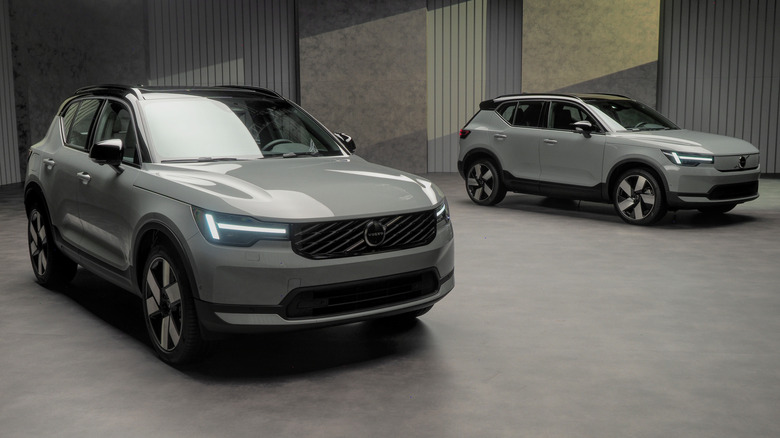
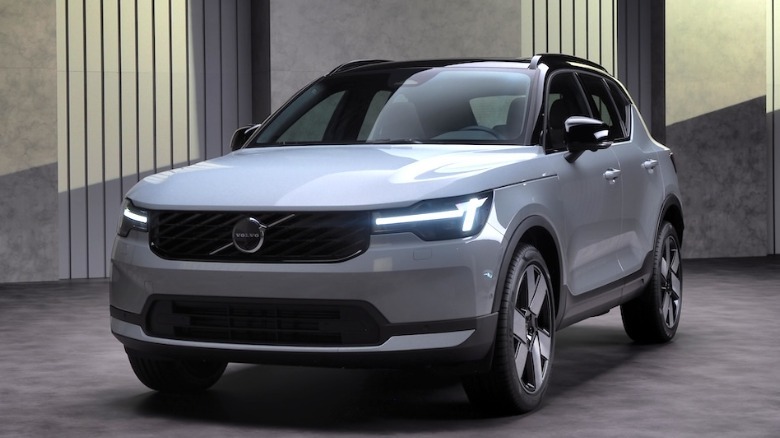
Ahead of the big unveil, Volvo invited SlashGear to London to preview the changes it has made. Like the best refreshes, you only really notice the scale — and effectiveness — of the redesign when directly compared to the old model. The new XC40 is cleaner and crisper; simplified and with a greater confidence in the impact of that simplicity.

Advertisement

Less fussy on the outside

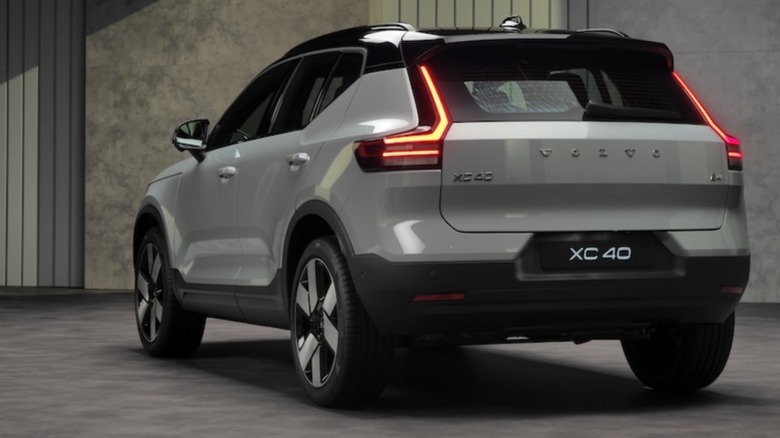
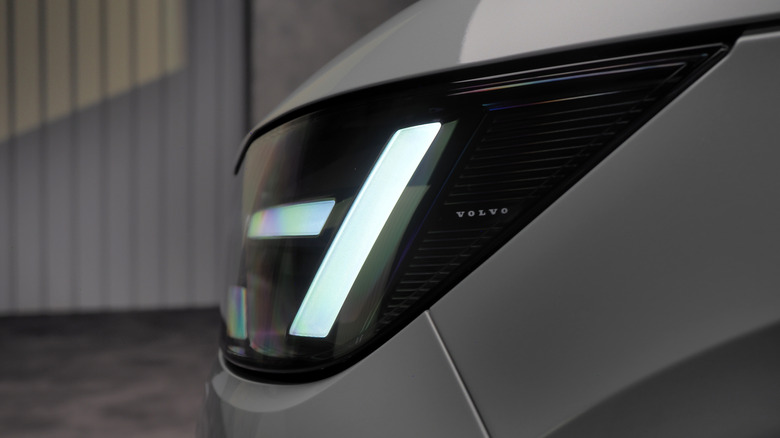
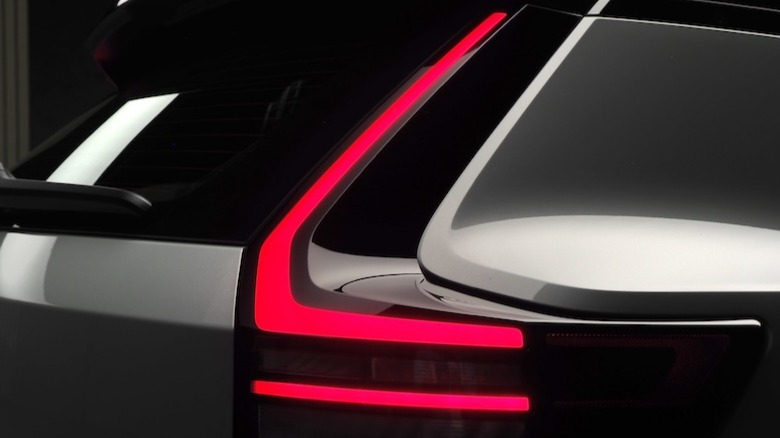
The headlamps are pared back to a pair of light slashes each, the Thor’s Hammer seeming to float just beneath the surface of the otherwise blacked-out clusters. It’s the same at the rear, where the complex taillamps of before have been streamlined to just a couple of strips that seem to glow amid a sea of ink. Clever lamination of the LEDs leave the lights looking continuous and seamless, almost as through they’ve been projected onto the bodywork rather than captured within it.

The front grille is reworked, as are the hood, front wings, and bumper; there’s a new tailgate and rear bumper, too. Volvo’s designers took the negative space aesthetic from the lower doors and continued that at the corners of the new XC40, carving out swathes of mass. 

It not only plays with light and shadow, but leaves the crossover feeling less sharp at its edges, something pedestrians will probably appreciate in the urban settings the little Volvo is designed for.

Advertisement

A smarter cabin with embedded Google Gemini

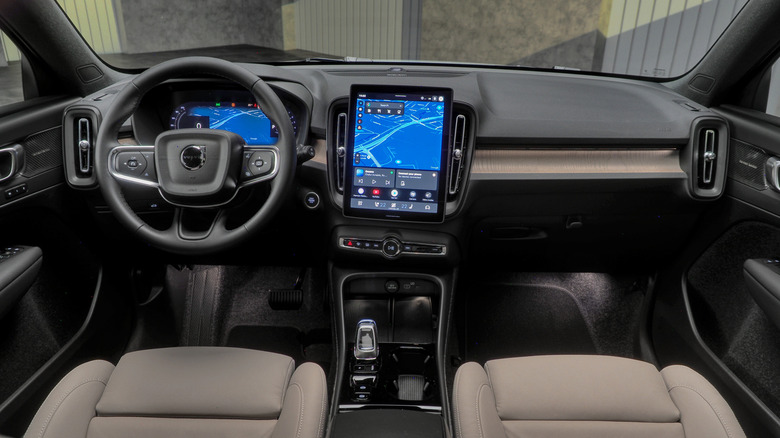
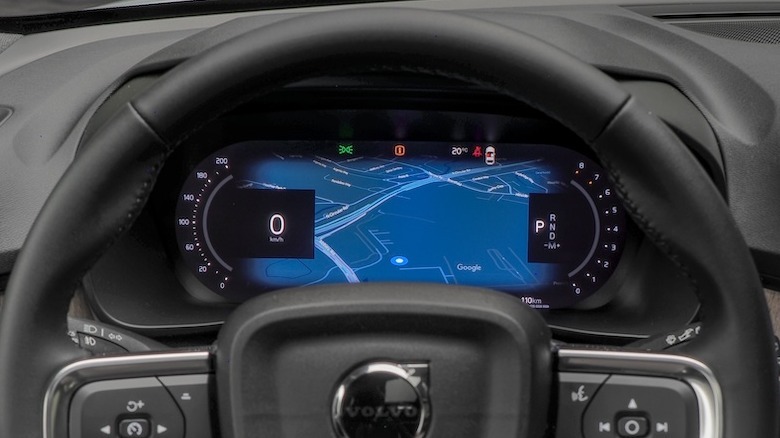
Inside, the biggest change is to the central infotainment touchscreen. Gone is the old 9-inch display, replaced with a 11.2-inch version with higher resolution. It seems to float out from the dashboard now, similar to the aesthetic in Volvo’s all-electric models. For the 2028 XC40, it’s still paired with the familiar 12.3-inch digital driver’s cluster display.

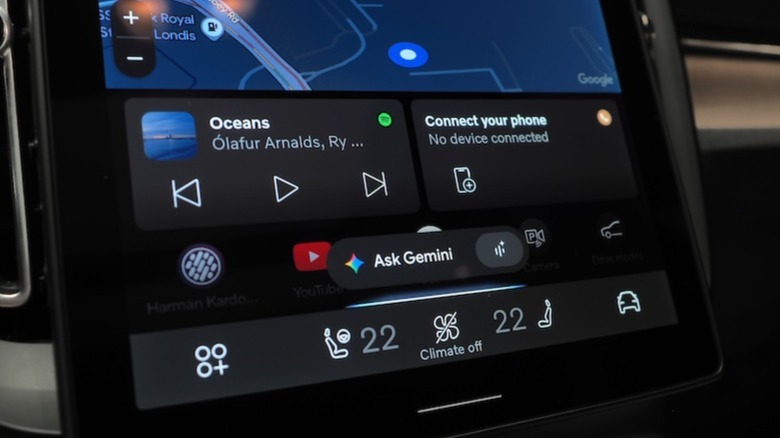
Volvo claims the bigger screen should also be more intuitive to use, with the latest version of its software and quicker access to common features. There’s also Google Gemini integration, taking on the XC40’s voice control functionality. That promises natural language conversation support, for messaging, multimedia control, navigation, and more: think everything a Pixel phone could do. An embedded modem handles over-the-air software updates.

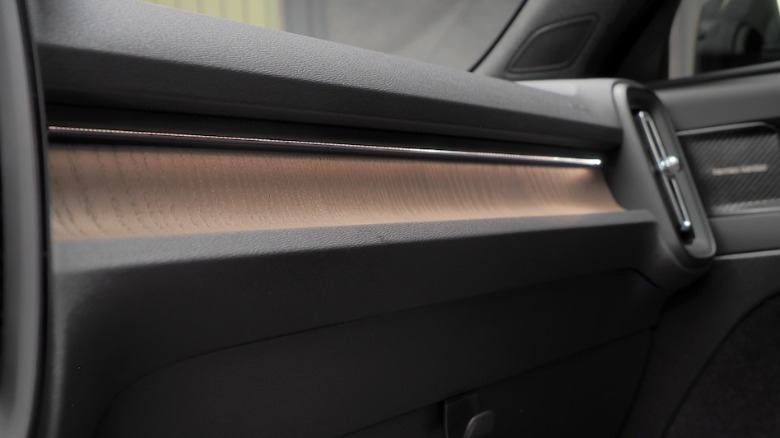
Elsewhere in the cabin, Volvo has leaned into the XC40’s upscale aspirations. There’s new trim — offered in Brown Ash or Black Ash wood, or aluminum finish — and new ambient lighting to highlight it, including subtle glows that emanate from the dashboard and door panels. 

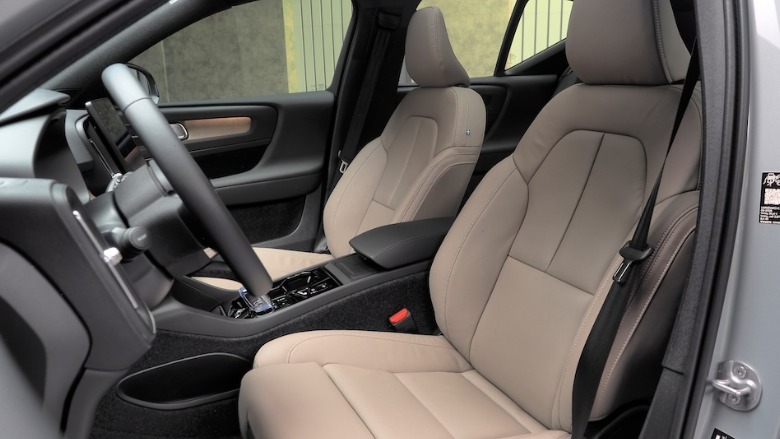
Small details, but ones which help elevate the crossover into a more luxury space. That also goes for the new Arianne Cardamom leather option, a rich brown finish for the seats, and the first time real hide has been offered in the XC40.

Advertisement

One drivetrain choice keeps things simple

Sadly, the U.S. won’t be getting the all-electric XC40 Recharge, arguably the more endearing of the two versions. We can likely blame the current American administration’s attitude toward foreign-made EVs for that: the XC40 will be made in Volvo’s Ghent, Belgium plant.

Instead there’ll be a single drivetrain option for U.S. buyers, the 2028 XC40 B5 AWD. That has an inline-4 turbocharged mild-hybrid gas engine paired with an 8-speed automatic transmission and standard all-wheel drive. Volvo says it’ll do 27 mpg on the EPA combined cycle — one point higher than the pre-refresh XC40 with the same drivetrain — though the 6.3 second 0-60 mph time is two-tenths of a second slower than the outgoing car.

Horsepower remains the same, at 247 hp, but torque is up slightly from 258 lb-ft to 266 lb-ft. There’s still 3,500 pounds of tow capacity, and 8.3-inches of ground clearance.

Upgraded safety, but price is TBA

Whether XC40 owners will test that clearance out in the wild remains to be seen. Far more likely to sway buyers is the updated safety tech package, the 2028 XC40 getting a bolstered sensor suite with new cameras, along with new ultrasonic and radar sensors. They power familiar features like automatic emergency steering and emergency braking, collision avoidance, and collision mitigation, but also a new door opening alert that helps avoid slamming a door into the path of a cyclist or other traffic.

Pilot Assist remains an option, a hands-on driver assistance suite for the highway, but with the addition of lane change assist in the refreshed car. There’s also an optional 360-degree camera, that now supports a 3D view of the XC40.

Advertisement

Production of the 2028 XC40 is expected to begin later this fall, with U.S. deliveries scheduled to begin early in 2027. Pricing will be confirmed closer to that point, though for context, the current 2026 XC40 B5 AWD starts at just over $45k with destination.


Source link

Advertisement
Continue Reading

Tech

Playground Games says Fable’s story will last between ’15-20 hours’ or double that with other open-world content, and the life systems are ‘limitless’

Published

on


  • Fable‘s main story takes between 15 and 20 hours to complete
  • Associate game director Will Kennedy confirms additional side content can also take between 15 and 20 hours
  • However, the game’s life systems are “limitless”

Playground Games has confirmed that Fable‘s main story will take up to 20 hours to beat, but promises the game’s life systems offer “limitless” replayability.

Speaking during a Q&A session at Gamescom 2026, associate game director Will Kennedy discussed the scale of the upcoming role-playing game (RPG), saying, “So the main story obviously depends on how you play, but the main storyline is around 15 to 20 hours.”

Source link

Continue Reading

Tech

Xbox Swoops In To Publish Hideo Kojima’s ‘Physint’ After Sony Dropped Out

Published

on

Hideo Kojima’s upcoming action-espionage game will be published by Xbox instead of PlayStation. In a flurry of announcements from Kojima, Xbox and PlayStation, it was revealed that the PS5 maker dropped Kojima’s next game, Physint, back in June. Xbox then swooped in and agreed to publish the title, and possibly future Kojima games as well. “We found in Xbox a partner with whom we share a common vision for the future, and we have decided to team up with them once again,” the Metal Gear Solid creator wrote on X.

The shock announcement started when PlayStation tweeted that it was dropping Physint. “After careful consideration, we have made the difficult decision to step away from collaborating with Kojima Productions on its project Physint,” Sony’s gaming division said in a post on X. It added that it looked forward to continued “close collaboration” with Kojima’s studio in the future. 

Just a minute later, Xbox CEO Asha Sharma posted that Xbox was taking on the Physint project. “Physint and OD!” she said, referring to another Kojima and Xbox collaboration. “Proud to build both with @HIDEO_KOJIMA_EN in Japan. A big moment for Xbox.”

Kojima then weighed in with an X post confirming the details and that he was surprised by Sony’s decision. “In mid-June of this year, we unexpectedly received notice from PlayStation Studios that they would cancel the Physint project,” his post stated. “Physint is an important project both to me personally and to Kojima Productions. Determined to keep the project alive, we have spent the last three months searching tirelessly for a new partner” before landing on Xbox.

Furthermore, in an Xbox Wire post, Xbox wrote: “In addition to OD and Physint, this relationship will also extend beyond games, with Xbox and Kojima Productions collaborating across film and television to bring new stories to broader audiences.”

The drama makes one wonder exactly what is going on with the development of Physint that made Sony drop it, knowing it could create bad press and hard feelings with Kojima. The game was first announced in early 2024 with considerable fanfare. Head of PlayStation Studios Hermen Hulst personally unveiled Physint with Kojima, and the end of the video pulled back to reveal Columbia Pictures, with the implication being the game could lead to movies or other IP. Now, all of that appears to have been blown up. 

Advertisement

Source link

Continue Reading

Tech

Online education preferable to social media ban, finds Irish regulator’s report

Published

on

Both children and parents agreed that an education focused on safeguarding has more value than a ban on social media targeting young people.

A new report published today (10 September) by Ireland’s media regulator and online safety commission Coimisiún na Meán has found that almost 70pc of children who took part in the research are of the opinion that an education in online safety is better than a social media ban. 

The Online Safety and Children’s Digital Lives report examines two national surveys, one taking into account the experiences and views of children, the other exploring the sentiment held by parents and caregivers. 

Nearly half of (49pc) participating parents and caregivers agreed that teaching children about online safety is preferable to banning their access to social media platforms. 43pc of parents or caregivers believe that a ban is often ineffective as children can circumvent it. 67pc of children also agreed that they have the skills to get around a ban. 

Advertisement

A high number of parents and caregivers were also of the opinion that no social media access at all could have a positive impact on their child’s focus on their schoolwork, with 64pc sharing this belief, compared to 18pc who disagreed. They also predict improvements in mental health (67pc). 

Media literacy

Older children who took part reported greater confidence in some security and trust awareness competencies than others, with confidence increasing with the age of the young person. Nearly three-quarters said that they know how to protect their devices and 33pc said they know how to access private browsing. 

Less than half however, said they had the knowledge needed to confirm whether a website could be trusted. According to the research, the findings indicate that many children are uncertain about how online information and content are prioritised, with confidence in navigating competencies increasing steadily with age. 

Among the issues being faced by young people online are cyberbullying, online aggression and being sent sexualised communications, an issue which increased alongside the age of the child. 

Advertisement

Commenting on the report, Jeremy Godfrey, the executive chairperson at Coimisiún na Meán said, “This report provides important evidence on how children and young people in Ireland feel about their experiences of the internet. Crucially, this study allowed us to hear directly from children and young people and their parents or caregivers about their experiences and attitudes. 

“We all agree that children deserve a safe online environment that supports their development in a variety of ways, in line with their age and evolving capacities. Our participation in the study is a clear demonstration of our commitment to ensure that audiences, especially children, can benefit from the positive aspects of media, while also being protected from potential harms.”

In a landscape where world governments are implementing bans on social media as a means of better protecting children online, France’s Constitutional Council recently blocked a proposed bill banning social media for children under the age of 15, declaring that the legislation is too broad and has the potential to infringe upon young people’s right to freedom of expression.

Don’t miss out on the knowledge you need to succeed. Sign up for the Daily Brief, Silicon Republic’s digest of need-to-know sci-tech news.

Advertisement

Source link

Continue Reading

Tech

Hungryroot Coupon Codes: 30% Off This September 2026

Published

on

A lot of the best meal kits offer the satisfaction of making a home-cooked meal, the chance to learn a little culinary craft, maybe even a chance at some pride in your handiwork. Hungryroot (7/10, WIRED Review) isn’t really like that. Hungryroot instead wants to replace your trip to the grocery store with a few good recipes.

After starting as a grocery service, Hungryroot spent years piecing together proprietary AI long before AI became the byword of everything from your electric shaver to your literal kitchen sink. What Hungryroot’s AI does is geared to creating personalized food menus and shopping lists, based on your every micro-preference and whim, whether that’s a love of olives or a hatred of figs. A box then shows up at your door, with a mix of basic provisions, silly snacks, and desserts, along with recipes and usually some pre-prepped ingredients.

Cooking is often more assembly, with recipes pieced together from premium ingredients you’d expect to find at your local organic store. A fun sauce here, a pre-cooked protein there, a corn tortilla that just wants to be livened in the pan. Most meals come together in 15 or 20 minutes, in my experience—unless they need time in the oven. A bot concierge and pre-mixed sauces do cost a bit, however, and that’s where Hungryroot promo codes come in. There are Hungryroot coupons that offer 30% off or more, and Hungryroot coupon codes that offer extra free gifts for every box, for life: a protein here, a cookie there. Here’s what’s up.

Get 30% Off Plus a Free Gift With a Hungryroot First-Time Discount

The current Hungryroot discount code is good for a cool 30% off your first week’s box from Hungryroot. To qualify for the discount, you’ll need to sign up for a plan totaling $99 or more a week, including breakfast items, snacks, and produce in addition to recipes and ingredients. The Hungryroot promo offer also includes a free gift, which usually includes an option to get an extra premium protein like chicken or beef. You can see more information here.

Advertisement

Take Advantage of Hungryroot Coupons for Referrals

Like a lot of meal kits, there’s also a Hungryroot discount code for referring your friends to the Hungryroot service—and this usually benefits both sides of the equation.

Your friend who orders after using your referral code gets a cool $50 off their first grocery delivery of $100 or more—which adds up, potentially, to half off. The person who refers their friend also gets $50 off their next order, once their friend finalizes their first grocery delivery of $100 or more. So basically, everybody gets $50.

Follow this link for info on the Hungryroot referral program. Unlike other offers, the referral credits seem to be stackable with other offers—so you don’t miss out on any discounts by taking a referral.

Unlock of Hungryroot Coupons for New and Returning Customers

Most subscription services have hidden levels. The way to access them is to change your mind a lot. Just like some magazine subscriptions and almost all delivery meal kits and grocery subscription services, Hungryroot will chase you down with offers if you cancel a subscription or change your mind after already giving them your email.

Advertisement

What’s this mean? Usually, it means that in the days or weeks after changing your mind about Hungryroot, you’ll get a coupon in the mail. So if you take Hungryroot’s quiz about your dietary preferences, then don’t order? A few days later, you’ll likely get a sweet Hungryroot coupon code in your inbox. New subscription plans usually also come with free treats.

If you cancel or pause an existing account, you may also receive a Hungryroot promo code offering your $50 or even $100 off your next order, as an incentive to return.

Source link

Advertisement
Continue Reading

Tech

iPhone Duo vs Samsung Galaxy Z Fold8 Ultra: compared

Published

on

Apple has finally entered the foldable market with the iPhone Duo, its first folding iPhone. Here’s how it compares against Samsung’s latest foldable, the Galaxy Z Fold8 Ultra.

After more than a decade of rumors, Apple’s first foldable arrived at its fall event as the iPhone Duo. A hyper-premium smartphone that has dual displays and folds in half.

It lands in a market Samsung has led for years, thanks to its Z Fold line.

The Galaxy Z Fold8 Ultra is Samsung’s most advanced book-style foldable, which it launched in July 2026. It sets the benchmark that Apple’s debut foldable has to meet.

Advertisement

This is how the iPhone Duo compares against the Galaxy Z Fold8 Ultra, with the specifications side by side.

iPhone Duo vs Samsung Galaxy Z Fold8 Ultra – Specifications

Specifications iPhone Duo Galaxy Z Fold8 Ultra
Starting price (launch) $1,999 $2,099.99
Inner display 7.6-inch Super Retina XDR, 1,878 x 2,670, 430 ppi, ProMotion, always-on, 3,000 nits, nano-texture 8.0-inch Dynamic AMOLED 2X, 2,504 x 2,256, 422 ppi, 1-120Hz
Outer display 5.4-inch Super Retina XDR, 1,398 x 2,034, 460 ppi, ProMotion, always-on, 3,000 nits 6.5-inch Dynamic AMOLED 2X, 1,080 x 2,520, 422 ppi, 1-120Hz
Dimensions – unfolded 6.48 x 4.64 in, 5.2mm thick 5.64 x 6.24 in, 4.1mm thick
Dimensions – folded 3.31 x 4.64 in, 11.3mm thick 2.87 x 6.24 in, 8.9mm thick
Weight (ounces) 8.96 7.58
Processor A20 Pro Snapdragon 8 Elite Gen 5
Storage 256GB, 512GB, 1TB, 2TB 256GB, 512GB, 1TB
Rear cameras 48MP Fusion Main (2x optical-quality telephoto), 48MP Fusion Ultra Wide, 4x optical-quality zoom range 200MP wide, 50MP ultrawide, 10MP 3x telephoto
Inner camera Under-display FaceTime camera 10MP
Outer camera 12MP Center Stage front camera 10MP
Battery (video playback) Up to 31 hours (inner), up to 44 hours (outer) Up to 27 hours
Wired charging 50% in around 20 minutes (60W) 45W (67% in about 30 minutes)
Biometrics Touch ID in side button Fingerprint, Face recognition
Water resistance IP68 IP48
Operating system iOS 27 Android 17, One UI 9
Connectivity 5G, Wi-Fi 7, Bluetooth 6, Thread, USB-C, eSIM only 5G, Wi-Fi 7, Bluetooth 6, USB-C
Colors Star White, Night Sky Graphite, Cream, Violet Shadow, Green Shadow

iPhone Duo vs Samsung Galaxy Z Fold8 Ultra – Design

From the outset, the two foldables are constructed in the same broad manner. Both are book-style foldables, opening to reveal a tablet-sized inner screen.

To save users from having to open the devices every time they want to use it, there’s a smaller secondary screen on the outside. This gives users the best of both smartphone and tablet worlds.

In terms of size, the iPhone Duo is a little shorter but wider overall, at 6.48 by 4.64 inches when unfolded, and 3.31 by 4.64 when folded up. The Fold8 Ultra is taller at 6.24 inches, but the width varies between 5.64 inches when opened to 2.87 inches when folded.

Advertisement
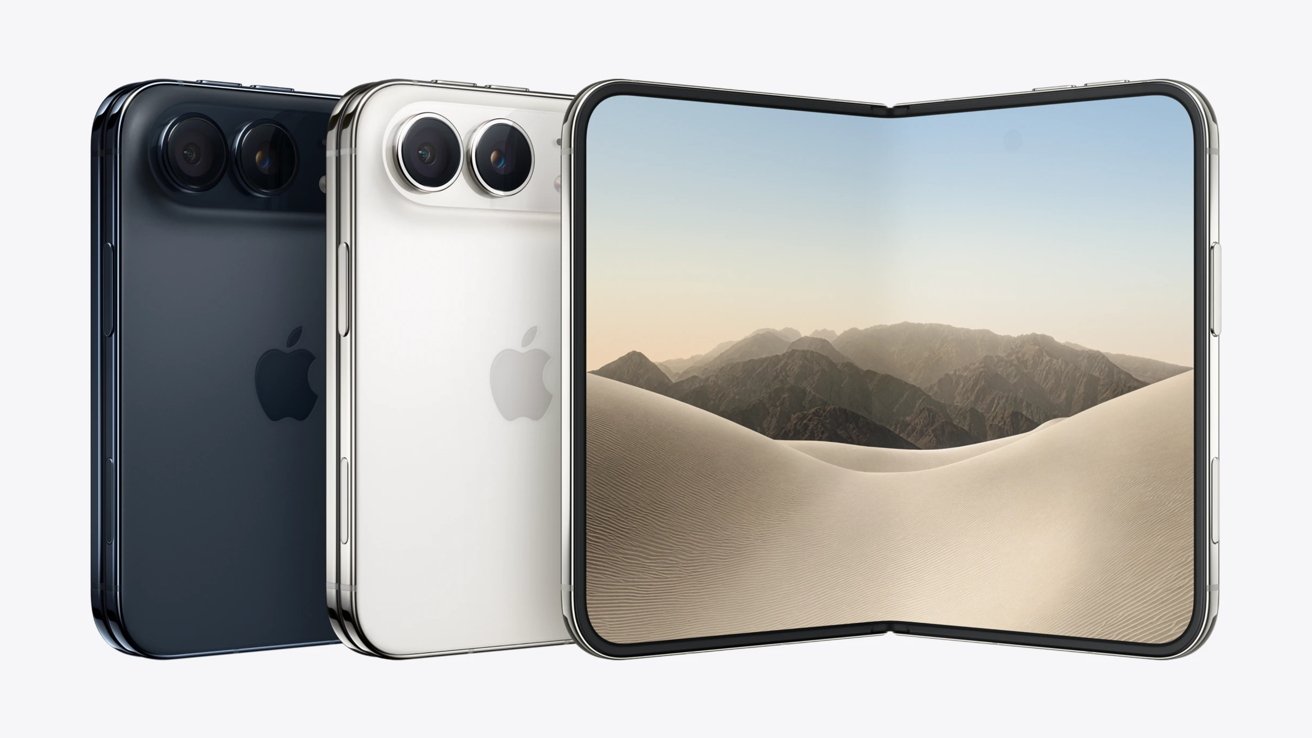
Three modern Apple smartphones in dark and light colors stand beside an unfolded foldable iPhone displaying a serene desert landscape with sand dunes and distant mountains.

iPhone Duo vs Samsung Galaxy Z Fold8 Ultra: iPhone Duo colors

There’s also a difference in thickness, too, with Samsung’s device managing to be 8.9mm thick when folded, or 4.1mm when laid flat. The iPhone Duo is thicker at 11.3mm when folded up, and 5.2mm when open.

When it comes to weight, Samsung takes the lead here, at 7.58 ounces to the iPhone’s 8.96 ounces.

Just on these specs, the iPhone seems to be the chunkier device, with the weight not helping that comparison at all.

Advertisement

A clue at the weight disparity may be in the choice of materials each company used, beyond physical size.

Apple uses a lot of grade 5 titanium in its construction, which makes sense for a thin device that needs to be as strong as possible.

Foldable white smartphone partially open, showing front display with pastel number 8 wallpaper and centered selfie camera, and back with three vertically aligned rear cameras in black circles

iPhone Duo vs Samsung Galaxy Z Fold8 Ultra: Samsung’s smartphone from the rear.

Samsung, however, went for a mixed-metals approach. It uses a “Flex Titanium” technology with the display to strengthen it, while the outer frame and chassis is made from aluminum.

Advertisement

Continuing the external tour, both have side buttons, which are also used to unlock the devices. Samsung has fingerprint and face recognition, while the iPhone Duo integrates Touch ID into the side button.

Each also has a sizable camera bump on one side, with Apple going for two cameras while Samsung opts for three.

In both cases, there’s a robust hinge on one side, while magnets help keep the internal screens protected by holding the smartphones shut.

iPhone Duo vs Samsung Galaxy Z Fold8 Ultra – Displays

The displays are the heart of any foldable, and here the two take slightly different approaches.

Advertisement

The Galaxy Z Fold8 Ultra has an 8.0-inch main display at 2,504 by 2,256, with a 422 pixels-per-inch density. Its 6.5-inch cover screen runs at 1,080 by 2,520, and both panels use a 1 to 120Hz adaptive refresh rate.

The iPhone Duo has a 7.6-inch inner Super Retina XDR display, which Apple says is 50 percent larger than the iPhone 18 Pro Max screen. Its 5.4-inch outer display delivers 90 percent of the screen area of the iPhone 18 Pro.

Both iPhone Duo displays share a fairly similar aspect ratio, so content scales proportionally between them. Each panel also has ProMotion, an always-on mode, and 3,000 nits of peak outdoor brightness.

Samsung’s screens do not have the same aspect ratio. The external display is 10:16 versus 4:3 for the internal one.

Advertisement
Hand holding a small tablet with thin black bezel, displaying a 9:41 lock screen over a desert sand dune and mountain landscape against a plain light background

iPhone Duo vs Samsung Galaxy Z Fold8 Ultra: The iPhone Duot’s internal display.

There is a notable difference in the outer screen. The Galaxy Z Fold8 Ultra’s 6.5-inch cover screen is larger, while the iPhone Duo’s 5.4-inch outer screen is smaller.

When it comes to the inner display, both companies have worked to make sure there’s as little crease visibility as possible. Over time, and with repeated openings, the center fold line will eventually crease, with the construction of the display and its support determining when that will happen.

Samsung uses Flex Titanium, which combines a titanium plate and titanium alloy film as a backing for the display. On top of that is the OLED panel, a thin layer of glass, and a protective layer.

Advertisement

Apple, meanwhile, uses a scratch-resistant coating and a nano-textured cover layer made from a custom polymer for its display. That stiff polymer is joined by high-strength glass above and below the folding display panel, glued in a way that allows the layers to glide over each other, like pages in a book.

On top of this stress relief work, Apple added a titanium plate underneath for added durability.

With all of this screen estate, you may be tempted to use a stylus, but Samsung doesn’t include S Pen support with its smartphone. However, Apple says the iPhone Duo will eventually support the Apple Pencil with USB-C, but not the Apple Pencil Pro.

Sure, you’re going to have to carry the Apple Pencil separately, but at least you’ll have the option to use it. Cases will arrive eventually, we’re sure.

Advertisement

iPhone Duo vs Samsung Galaxy Z Fold8 Ultra – Cameras

Samsung has given the Galaxy Z Fold8 Ultra a flagship-grade camera system. Apple’s setup is more restrained on paper, but adds foldable-specific tricks.

The Galaxy Z Fold8 Ultra leads with a 200MP wide main camera. It adds a 50MP ultrawide and a 10MP telephoto with 3x optical zoom, plus HDR capture in the full 200MP mode.

The iPhone Duo uses a dual 48MP camera system on the rear. There’s the 48MP Fusion Main with an “optical-quality” 2x telephoto crop shot, paired with a 48MP Fusion Ultra Wide.

Foldable silver smartphone partially open, showing dual rear cameras and a large inner display with a woman in a silver outfit against a bright blue sky with clouds

iPhone Duo vs Samsung Galaxy Z Fold8 Ultra: Only two rear cameras on the Duo

Advertisement

There’s no telephoto on the iPhone Duo, which is a shame for such a premium device.

Where Apple tries to catch up is with foldable-specific camera features.

Naturally, a folding smartphone can be partially folded, acting as its own stand so you can take photos of yourself from further distances.

For the iPhone, Smart Take automatically captures photos when subjects pose via AI detection.

Advertisement

You can do similar things with the Fold8 Ultra. A 90-degree bend starts “Flex Mode,” which can be used with gestures or a timer to trigger the shot.

When used conventionally, both models have an option to show a live preview on the outer display, so the subjects can frame themselves in the shot. Apple also includes animations, so that you can tempt a small child to look at the camera by watching Snoopy.

Folding designs also enable rear-camera selfies. While the normal user-facing cameras are pretty good for this, the nature of the external live preview means you can take advantage of those bigger sensors.

When it comes to the in-display cameras, Samsung uses a pair of 10MP cameras, far from the massive resolutions of the rear versions.

Advertisement

Apple uses its 12MP Center Stage camera for the outer display, which is a punch-hole version in the corner. The one for the inner display is described as a “FaceTime camera” capable of 1080p video, but crucially it is an under-display type.

On video, both are strong. Samsung offers 8K recording through its APV codec, and it has a Cine LUT for color and tone control.

The iPhone Duo only goes up to 4K, but with Dolby Vision support at up to 120fps. It also has a lot of modes to play with, as well as tricks like a 2.8K Action Mode, 1080p 240fps Slo-Mo, and macro shooting.

Both devices also have the capability to capture video from both shooter and subject sides at the same time.

Advertisement

iPhone Duo vs Samsung Galaxy Z Fold8 Ultra – Processing and performance

Each device runs its chip maker’s latest flagship chip. The platforms are very different in design and strengths.

The Galaxy Z Fold8 Ultra uses the Qualcomm Snapdragon 8 Elite Gen 5, paired with up to 16GB of RAM. It’s a combo that includes an 8-core CPU with two performance cores and six efficiency cores, an Adreno 840 GPU, and a Neural Processing Unit.

The iPhone Duo uses the A20 Pro, the same chip as the iPhone 18 Pro. Apple pairs it with a custom vapor chamber that’s got three times the surface area of the iPhone 17 Pro’s version, which helps improve sustained performance.

This time, Apple uses a six-core CPU with a seven-core GPU, as well as an enhanced Dual 16-core Neural Engine for AI workloads. Both the CPU and GPU cores also have Neural Accelerators, which bolster Apple’s AI credentials even more.

Advertisement

While there are performance scores for the Snapdragon 8 Elite Gen 5, no independent benchmarks exist for the iPhone Duo yet. We will update this section with confirmed figures once the device is tested.

But suffice it to say, both models are certainly going to provide a lot of processing power and performance to whoever picks them up.

iPhone Duo vs Samsung Galaxy Z Fold8 Ultra – Battery and connectivity

Battery design differs between the two, though both use a dual-cell layout to take advantage of the two-piece design.

The Galaxy Z Fold8 Ultra uses a 5,000mAh dual battery, rated at 4,854mAh. The iPhone Duo places one high-energy battery on each side, operating as one, though it doesn’t disclose the actual capacity.

Advertisement

When it comes to usage, Apple quotes that its device can handle up to 31 hours of local video playback on the inner display, and up to 44 hours on the outer display.

Streamed video figures are lower, with the iPhone Duo managing up to 26 hours streamed on the inner display. For the outer display, that’s about 37 hours.

Samsung, meanwhile, claims up to 27 hours of video playback for its smartphone.

Square tablet or smartphone screen with very thin black bezel, centered front camera hole at top, and soft pastel abstract wallpaper in pink, blue, and white tones

iPhone Duo vs Samsung Galaxy Z Fold8 Ultra: The open display of the Fold8 Ultra.

Advertisement

On charging, the iPhone Duo has the edge on stated speed. It reaches 50 percent in around 20 minutes with a 60W adapter and wired charging.

Samsung says the Galaxy’s 45W reaches 67 percent in about 30 minutes.

For wireless charging, the iPhone Duo hits 50 percent in around 30 minutes with a MagSafe or Qi2 charger. The Galaxy also supports 20W wireless charging, though it also has its Wireless PowerShare feature.

On connectivity, both support 5G, Wi-Fi 7, and Bluetooth 6.

Advertisement

The iPhone Duo is eSIM-only worldwide, with no physical SIM tray. Apple uses the freed-up internal space to maximize battery capacity.

Samsung, however, includes both eSIM and a nano-SIM card.

iPhone Duo vs Samsung Galaxy Z Fold8 Ultra – Durability and water resistance

Both foldables are built to survive daily folding. We’re not yet sure how many folds Apple considers acceptable for the device without failure. We’ll be talking about that more on September 10.

Intrusion protection ratings differ. The iPhone Duo carries an IP68 rating, the same as the standard iPhone line. That covers submersion up to 6 meters for 30 minutes, along with full dust resistance.

Advertisement

The Galaxy Z Fold8 Ultra is rated IP48. It handles submersion in fresh water, but its dust protection only guards against larger particles, not fine dust.

The iPhone Duo also uses Ceramic Shield 2 on the front and Ceramic Shield on the back. Apple says the front is three times more scratch-resistant than the previous generation.

iPhone Duo vs Samsung Galaxy Z Fold8 Ultra – Price

As a still relatively new technology in the smartphone space, foldables are very expensive.

The Galaxy Z Fold8 Ultra starts at $2,099.99 for 256GB. It rises through 512GB and 1TB storage tiers from there to a maximum of $2,699.99.

Advertisement
Foldable smartphone with large home screen showing app icons, calendar notification at top, rounded edges, and front-facing camera cutout in the upper-right corner on a light background

iPhone Duo vs Samsung Galaxy Z Fold8 Ultra: Using the iPhone Duo’s external display.

The iPhone Duo starts at $1,999 for 256GB, rising to $2,599 for 1TB and $3,199 for an even higher 2TB tier.

That pricing is a surprise, given rumors had suggested Apple’s foldable could reach $2,500 at the lower end. Instead, the iPhone Duo lands right alongside its main rival.

At these prices, both are aimed at early adopters and enthusiasts. Neither is a mainstream purchase.

Advertisement

iPhone Duo vs Samsung Galaxy Z Fold8 Ultra – Which to buy

When it comes to the folding device market, the Galaxy Z Fold8 Ultra is the more proven device. After multiple generations of refinement, including a flagship 200MP camera with a dedicated telephoto option,, it’s a strong foldable pick.

Apple, meanwhile, is completely new to this niche part of the market. It’s late to the party, but it’s got a very experienced design team and had the advantage of watching the market make years of mistakes.

It’s fashionably late, but Apple knows what not to do.

As it stands, Apple has come up with a very strong first device. It’s a model with a decent camera setup, though lacking true telephoto capabilities, with the same A20 Pro chip as the iPhone 18 Pro.

Advertisement

It also manages to be cheaper than the Samsung while still having strengths like faster wired charging and a higher IP68 rating. You can add in the iOS ecosystem support to that, too.

For an iPhone user yearning for a foldable over the years, the iPhone Duo is now the obvious choice, and at a more competitive price than expected.

Apple’s arrival changes the foldable market at a stroke. We would normally expect the first-gen release to be issue-prone or to have a design flaw, but Apple may have escaped that trap this time.

As it stands, what was once Samsung’s domain is now a genuine two-horse race for customers prepared to pay high prices.

Advertisement

Where to buy the iPhone Duo vs Samsung Galaxy Z Fold8 Ultra

Preorders for Apple’s iPhone Duo begin on October 16, 2026.

Samsung’s Galaxy Z Fold8 Ultra, meanwhile, is on sale from $1,799.99 at Amazon at press time, reflecting up to a 14% discount off retail.

Those looking for a more affordable option can pick up the Z Fold8 for as low as $1,649.99, also 13% off MSRP at Amazon.

You can also take advantage of incentives at the following wireless carriers:

Advertisement
  • T-Mobile: Get a Galaxy Z Fold8 Ultra for as low as $5.56/mo for 36 months*
  • AT&T: Get a Galaxy Z Fold8 Ultra for as low as $5.56/mo with a qualifying trade and eligible plan*
  • Verizon: Get a Galaxy Z Fold8 Ultra for as low as $34.99/mo for 48 months*

  • *Terms and conditions apply, and offers are subject to change. Please see the carrier’s site for details.

Source link

Continue Reading

Tech

Everything you need to know about pre-ordering the iPhone Duo and the iPhone 18 Pro in Australia

Published

on

After months of leaks and rumours, Apple has officially unveiled its new Pro iPhones for 2026, alongside the much-anticipated iPhone Duo foldable handset and a slew of other product launches.

If you’re looking to upgrade to the iPhone 18 Pro, iPhone 18 Pro Max or iPhone Duo, I’ve put together this guide on everything you need to know about pre-ordering any of the three handsets in Australia, including when preorders start, how much you’ll pay and all the best deals we’ve found.

Aside from the official Apple Australia store, as with any iPhone launch a wide range of retailers and telcos across the country are also offering pre-orders for all three phones, and we’ll update this page as soon as the offers go live.

Want to know more about the new iPhones and other new products that Apple unveiled? Scroll to the bottom of this page or check out our full coverage of Apple’s launch event.

Advertisement

Apple iPhone 18 Pro and Pro Max pre-orders in Australia: What you need to know

  • Preorders go live on Saturday, September 12 at 10pm AEST
  • iPhone 18 Pro pricing starts at AU$2,099 for 256GB
  • iPhone 18 Pro Max pricing starts at AU$2,299 for 256GB
  • Trade-in rebates of up to AU$1,595
  • Financing starts from AU$87.46 per month for 24 months

Screenshot from Apple's September 2026 event

(Image credit: Apple)

As with previous iPhone pre-orders, there’s once again a short wait between the official announcement and the start of the pre-order period, which goes live across all Australian retailers and telcos on Saturday, September 12 at 10pm AEST.

The iPhone 18 Pro starts at AU$2,099 for the base 256GB model, and the iPhone 18 Pro Max starts at AU$2,299. Retailers JB Hi-Fi and The Good Guys, as well as telcos Vodafone, Optus and Telstra, have confirmed they will all carry the new handsets.

Aside from Apple’s official Australian store, JB Hi-Fi, Vodafone and Optus will also accept trading in your old phone for a credit towards the iPhone 18 Pro or Pro Max. Apple is offering up to AU$1,595 in trade-in credit – that’s based on an iPhone 17 Pro Max, while a comparatively ancient iPhone X will net you a AU$70 credit.

Advertisement

If you’re going the trade in route, you can calculate your old phone’s credit value at Optus, Vodafone or JB Hi-Fi to get an idea before pre-orders go live.

Apple is also offering a new financing program in Australia via Afterpay, allowing monthly payments over 6-, 12- or 24-month terms instead of the service’s usual four payments spread out fortnightly. If you’re using Afterpay, the iPhone 18 Pro starts at AU$87.46 per month over 24 months, while the 18 Pro Max starts at AU$95.79 per month. This monthly payment option is only available through the Apple Australia website and stores — you won’t find it at third-party stores.

Apple iPhone Duo pre-orders in Australia: What you need to know

  • Preorders go live on Friday, October 16 at 10pm AEST
  • Pricing starts at AU$3,499 for 256GB
  • Trade-in rebates of up to AU$1,595
  • Financing starts from AU$145.79 per month for 24 months

The iPhone Duo on a light colored background

(Image credit: Apple / Future)

If you’re keen on Apple’s first-ever foldable phone, the shiny new iPhone Duo, the wait will be a little bit longer for pre-orders, which start on Friday, October 16 at 10pm AEST.

Advertisement

Prices begin at a slightly eye-watering AU$3,499 for the base 256GB model (for reference, Samsung’s equivalent Galaxy Z Fold 8 starts at AU$2,699), and go as high as AU$5,899 for the 2TB configuration.

Like the 18 Pro and Pro Max above, you can also trade in your old phone to receive up to AU$1,595 off the price. You can get an estimate on your trade-in credit at Optus, Vodafone or JB Hi-Fi to get an idea before pre-orders go live.

Financing via Afterpay is also available for the iPhone Duo, starting at AU$145.79 per month for 24 months.

Advertisement

What’s new with the 2026 iPhone lineup?

The iPhone 17e, iPhone 17, iPhone Air, iPhone 18 Pro, and iPhone Duo

(Image credit: Apple)

Headlining Apple’s new handset range for 2026 is the iPhone Duo, the company’s first attempt at a foldable and its answer to the Samsung Galaxy Z Fold 8. Featuring a 5.4-inch outer display with a 7.6-inch Super Retina XDR inner display, the device looks somewhat like a squat iPhone mini when folded, and an iPad mini when opened.

It features the new A20 Pro chipset and a titanium frame, which Apple says is reinforced by ceramic fibres. The Duo, however, also has a few core iPhone features missing, like Face ID, a telephoto camera and the action button, but is still undeniably the star of the show. There are also some exclusive software features that look to take advantage of the larger folding display, like some new Liquid Glass animations and multitasking features. Moreover, the Duo will also get Apple Pencil support, which is a first for any iPhone.

As for the iPhone 18 Pro and Pro Max, the biggest upgrades are the main cameras, with each getting a new variable aperture to let users adjust the light depending on what they need to photograph, for example.

They also get the new A20 Pro chip, which Apple claims will have a 20% faster CPU and 40% faster GPU than the A19 Pro found in the iPhone 17 Pro, Pro Max and iPhone Air. Battery life is also said to be improved, with Apple claiming the iPhone 18 Pro will have 36 hours of video playback — matching the 17 Pro Max — and the 18 Pro Max now rated for 45 hours.

Advertisement

We’ll be posting our reviews for all three devices over the next few weeks, so stay tuned for our thoughts and hands-on experience.

Source link

Continue Reading

Tech

Sony just handed Kojima’s PHYSINT to Xbox, and PlayStation fans aren’t going to like it

Published

on

Sony has just made a decision that feels straight out of a “how to lose fans” playbook. In a statement posted on X, PlayStation Studios confirmed it is stepping away from Hideo Kojima’s PHYSINT after what it called three decades of “industry-leading, genre-defining” collaboration. Barely minutes later, Xbox confirmed it would publish the game instead, expanding its existing partnership with Kojima Productions.

An update from PlayStation Studios: After careful consideration, we have made the difficult decision to step away from collaborating with KOJIMA PRODUCTIONS on its project PHYSINT. We continue to have great admiration for Hideo Kojima’s vision for the game.

Our relationship…

— PlayStation (@PlayStation) September 10, 2026

What exactly happened between Sony and Kojima?

Kojima cleared up the timeline himself. He revealed that PlayStation Studios quietly canceled PHYSINT back in mid-June, catching his studio off guard. His team then spent the next three months searching, negotiating, and asking around before landing on a partner who shared their vision for the future. 

Advertisement

As confirmed earlier through our official channels, in mid-June of this year, we unexpectedly received notice from PlayStation Studios that they would cancel the PHYSINT project. PHYSINT is an important project both to me personally and to KOJIMA PRODUCTIONS. Determined to keep… pic.twitter.com/rQqhxAnb7N

— HIDEO_KOJIMA (@HIDEO_KOJIMA_EN) September 10, 2026

That partner turned out to be Xbox. Xbox CEO Asha Sharma called it an honor that Kojima “chose Xbox,” while Kojima confirmed the collaboration now extends beyond games into film and television, and covers both OD and PHYSINT, the ambitious action-espionage title he has described as genre-defining. Sony, for its part, insists its bond with Kojima “remains strong,” even as it walks away from his newest project.

Is this part of a bigger pattern for Sony?

This isn’t the first time Sony has picked the wrong hill to defend. The company has spent years nudging players toward an all-digital PS5, quietly phasing out disc drives and betting that convenience would outweigh ownership. The company finally announced that it will no longer sell physical game disks starting in January 2028, and have rightly received flak for it. 

Fans have been vocal about that trade-off ever since, wondering what happens to a digital library if the servers ever go quiet. Funny enough, Kojima predicted this exact future back in 2021, tweeting that physical media would eventually disappear.

Advertisement

1/2
One day there will be no more CDs or BDs. That day will come for sure. As a person from the Showa era, I want to physically own the things I like. I guess it’s because I grew up in a time when there were no goods or information like now. Streams are more convenient.

— HIDEO_KOJIMA (@HIDEO_KOJIMA_EN) July 24, 2021

Whether Sony’s decision has anything to do with that old tweet is anyone’s guess. But losing one of gaming’s most respected and creative minds, right after backlash over killing physical media, is not exactly the redemption arc PlayStation needed.

Source link

Advertisement
Continue Reading

Tech

1 Of 2 Children Dead In PA Confirmed To Be From Measles

Published

on

from the inevitable dept

I want to start this whole thing off with a disclaimer. Nothing in this post should be misconstrued as gloating, as being pleased, or as having a connotation that is anything beyond sadness and the need for change. Nobody is happy to have the obvious confirmed when it comes to a child’s death. There is still a very real family in very real pain as a result of a life that ended far, far too short. All that matters here is ensuring that pain isn’t replicated elsewhere as a result of the many mistakes that led to this death.

That being said, it is with the soberest thoughts that we learned that one of the two recent deaths of children in Pennsylvania was in fact due to measles, as confirmed by the local coroner there. When these deaths were announced by state government officials a few weeks ago, the response from HHS Secretary RFK Jr. was, predictably, to dive into conspiracy theories in stead of confronting the reality of what his decades of anti-vaxxer nonsense has produced. He claimed that there had been no confirmation that the deaths were caused by measles. He pointed out that one of the children has a cause of death listed from a ruptured spleen, not bothering to acknowledge that is a potential effect of having measles at birth. He suggested obliquely that some deaths may have simply been made up by state government officials.

All he had to do was wait and he wouldn’t have made a fool of himself.

Stephen Diamantoni, a Republican elected coroner in 2007, told Lancaster Online that the baby died at home. “I believe it was the 18th of August,” he said.

He also noted that the baby had a genetic condition called Amish lethal microcephaly, in which babies are born with unusually small heads and underdeveloped brains. The condition is caused by a mutation in the SLC25A19 gene, which codes for a protein involved with energy-producing enzymes in the mitochondria and is thought to be important for brain development. About 1 in 500 babies in the Old Order Amish population of Pennsylvania is born with the condition. Infants with the disorder only survive for about six months.

Advertisement

Diamontoni confirmed to Lancaster Online that while microcephaly was present, measles was the cause of death.

And here is where you’re going to hear the anti-vaxxers start their spin game. Some may claim that the coroner is wrong and the presence of microcephaly means that’s what killed the child. Some may dismiss the death entirely due to the likely early death this child would have suffered as a result of the same, which is an absolutely evil thing to suggest.

And I have no doubt that others will point out that none of this is RFK Jr.’s fault, because both children were members of the Amish community and they don’t let their children get vaccinated due to their religion. And, just so we’re all clear about this, that isn’t true. There is no religious prohibition in the Amish community against being vaccinated for measles. The Amish are wildly under vaccinated, to be certain. But Amish settlements typically have something like a 10%-30% vaccination rate for measles.

This information all came out last week. Amazingly, the CDC’s measles tracking site still has an asterisk next to the number of reported deaths from measles in 2026 at the time of this writing. The most recent reporting is that those deaths are being obfuscated at Kennedy’s direct request, wrapped in a bullshit excuse that local coroners haven’t confirmed the cause of death to be measles yet. Well, that excuse is gone, yet the website hasn’t been updated.

Advertisement

But what really needs to be gone is the scourge that is Kennedy’s tenure at HHS. For that to happen, Congress must act. Sadly, not enough of them seem to want to.

Filed Under: cdc, hhs, measles, pennsylvania, rfk jr., stephen dimantoni

Source link

Advertisement
Continue Reading

Trending

Copyright © 2025