
Business
Practical Approaches to Faster Fulfillment and Better Stock Organization


A warehouse can be very organized and still be losing lots of time due to unnecessary movement, unclear storage rules, inaccurate counts of inventory on hand, and a slow picking process. These types of problems generally develop over time and can stem from a variety of root causes. For example, a few misplaced products here and there may not seem like a big deal in the short term, but as the volume of orders increases, those little inefficiencies can really start to add up.
It’s not that your employees can’t fill more orders faster if they just worked harder. They can. But they should not have to. Faster fulfillment of orders through your warehouse is a function of a very organized warehouse, where every aspect of a warehouse has been managed and thought out to make the best system possible for the items that are stored within it. For instance, if you have products that are located in your warehouse, then they should be easy to find, your counts of inventory should be accurate and your employees should be able to move very quickly through your warehouse to complete all of the functions of receiving, storing and picking of your products in order to pack them and ship them to your customers.
Creating a warehouse system that maximizes efficiency involves planning, tracking, and adjusting in order to optimize performance as demand evolves.
Review the Warehouse Layout
The physical layout of your warehouse is probably one of the biggest determinants of how productive your warehouse is. The amount of time your employees spend walking between the areas of your warehouse where they receive products, put them away, pick them for orders, pack them and ship them, is a huge factor in how productive your warehouse is.
In addition to tracking the product through the receiving process, map out the steps for the product as it goes through the picking process and is then packed and shipped to the customer. Highlighting out repeated steps and very congested areas can help to identify bottlenecks in your current warehouse layout.
Stock that is frequently ordered should ideally be stored near the packing area and shipping area. Slow moving inventory is typically found in less accessible part of the warehouse. Heavy products should be stored at a height that is safe to pick from. And products of a smaller size and weight can be stored in labeled bins or even on modular shelving in aisles.
Clear aisles: There is nothing worse than having to weave around scattered packages, forklifts, pallets, carts, etc. when trying to hurry through a warehouse. Give your employees a chance to work safely and efficiently by keeping the aisles clear and allowing them to move in the best direction possible for the item they are handling.
Group Inventory by Demand and Use
Not every product deserves the same amount of warehouse space or attention. Some items may sell every day, while others remain untouched for weeks or months.
Products are typically categorized in a warehouse into fast-moving, moderate-moving, and slow-moving products. As a general rule, fast-moving products are kept in the best locations within the warehouse, i.e., the easiest to reach for picking.
In addition to demand, items can be categorized and stored by other criteria such as product size and weight, picking frequency, and even whether items are often purchased together. For example, when items are often purchased together such as a pair of shoes and a matching handbag, storing them on the same picking location can reduce the amount of time spent picking the order and makes the picking process more predictable.
However, don’t forget that stock locations need to be reviewed on a regular basis and that changes in seasonal demand, in customer bases, and in sales can affect which products are moving the most.
Use Clear Labels and Location Codes
Keep the Inventory in Your Warehouse Found.
Label every aisle, shelf, rack and bin in your warehouse with a clear identification code that follows a standard format that your workers can learn quickly. For example: the aisle number, rack number, shelf level and bin position.
Items with labels must be large enough to read from a practical distance. Also make sure that you are putting labels in the same location throughout your warehouse. It can make a huge difference in employee accuracy if a product is always in the same location as opposed to different locations and having employees depend on memory to locate them.
Using a Barcode or RFID system to identify stock also enables tracking of all product movement throughout the warehouse. Receiving, picking, packing and shipping can all be scanned and all data automatically logged. This greatly reduces the need for manual data entry.
Accurate Location Labels aid New Hire Productivity. Just as location labels enhance pick accuracy for experienced employees, the labels also serve to speed new employees up to full productivity much faster.
Improve the Receiving Process
Many inventory problems begin at the receiving dock.
Errors in receiving are propagated throughout the warehouse. The receiving staff must check products against the purchase order as they are received. These products must then be labeled and stored in the proper location within the warehouse. If a product is found to be damaged, received in incorrect quantities, or is missing, this must be documented by the receiving staff as soon as possible.
Upon receipt of inventory, inspect the received products for any damage and for correctness of the received quantities against the purchase order. Document any discrepancies found. Properly label the items to be stored and stock them in their assigned storage locations in a timely manner.
Assign a sufficient amount of space in the receiving area for proper receiving and inspection, and for sorting of incoming materials. Consider the use of a variety of receiving equipment such as receiving carts, pallet jacks, temporary storage containers, and bottom dump hoppers to efficiently receive, sort and store a variety of products and materials.
As goods enter the warehouse they need to be put away in the correct location. A good receiving process is the first step to accurate stock. By receiving stock in an accurate and timely manner the picking and stock management process will be so much easier.
Create Consistent Picking Methods
The process of picking products for customers is one of the most time-consuming and labor-intensive functions within a warehouse. It is also a function where there are a number of different methodologies that can be used in order to improve the picking process in terms of maximizing the speed of picking for customers.
There are many options for picking that depend on the flow of orders through your warehouse and the type of products that you sell. For example, a very small warehouse might do single order picking where each order is picked individually by a picker. A larger warehouse could do batch picking where a picker picks all of the items needed for several orders at a time. Or, a warehouse could do zone picking where each picker is responsible for a section of the warehouse and they pick the items for an order that are in their section. They then bring the items to the packer who then packs the items in the correct box for the customer’s order.
In zone picking, each warehouse employee works in a particular part of the warehouse and there only picks the articles required for the orders that are to be dispatched from that storage location. The goods picked in this manner are then handed over at a packing station.
In terms of how you pick, it is very important to establish consistent ways of picking, for example when confirming quantities, scanning products and dealing with exceptions. This allows you to measure the performance of picking as part of the overall stock management process.
Conclusion
There are a number of different ways to create a faster and more organized warehouse. However, ultimately, it is crucial to create a warehouse that is set up with clear movement, with the right information, and with the right processes in place to get the job done. A number of technologies exist today that can help create a more organized warehouse. However, the core principles of an organized warehouse include having a good layout that promotes movement through the warehouse, having the right information about products and their locations with reliable labels, and having good receiving and counting procedures in place to ensure that your inventory records are up to date.
Technology can help manage the processes outlined above, but the fundamental principles are straightforward. Products should be stored in the manner in which they will be used; employees must have the correct tools to perform their jobs; and every process should follow a defined sequence to ensure repeatable results.

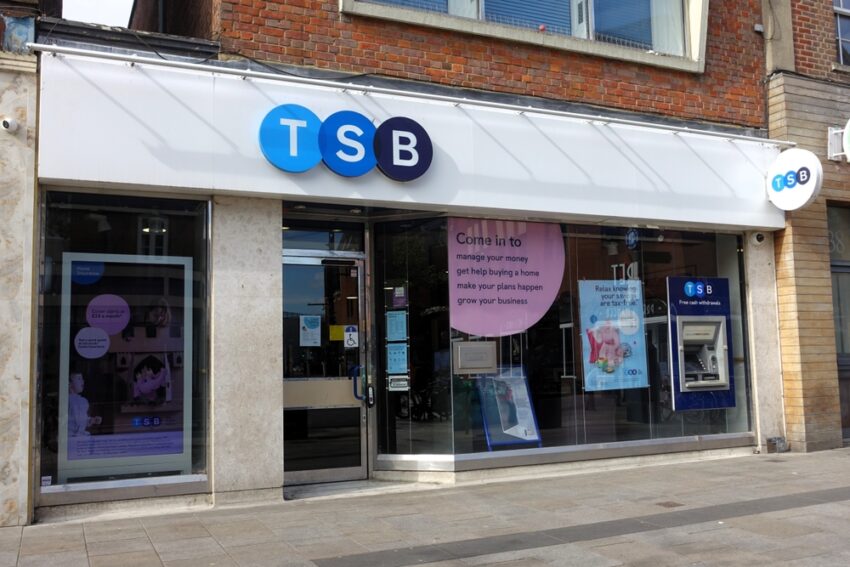
Unions at Santander and TSB have opened negotiations over how staff in duplicate roles will be assessed for redundancy, following the completion of Santander’s acquisition of TSB from Spanish owner Sabadell.
The deal, agreed at £2.65 billion, completed on 30 April, according to Santander UK’s announcement of the completed cash acquisition. The combined group employs about 23,000 people and is targeting £400 million in cost savings.
Santander has not confirmed how many jobs will go across the enlarged business. TSB has already announced 130 redundancies ahead of the formal transfer of staff under the Transfer of Undertakings (Protection of Employment) regulations, and further cuts are expected as the group pursues its savings target.
The two banks use different metrics for assessing staff performance. It is understood that unions at both are in talks about how to create a single system for evaluating individuals in the redundancy process.
One source said: “It goes without saying that in any merger there are going to be synergies that the banks will realise. And there is going to be an impact on jobs.
“There will be duplication of roles. I’m sure every role will be evaluated, wherever there are people doing similar roles.”
A spokeswoman for Santander said: “We have not yet made operational decisions on jobs [as part of the integration]. However, we will ensure that our colleagues are informed of any changes at the appropriate time.”
A spokesman for TSB said: “Whenever we make any changes to our business, the priority is to consult first with impacted colleagues to ensure they’re fully supported.”
Under government guidance on business transfers and TUPE, employees’ jobs, terms and conditions and continuity of employment usually transfer to the new owner, with redundancy among the exceptions. The regulations apply regardless of the size of the business.
Speaking to Bloomberg last year, José García Cantera, chief financial officer of Banco Santander, said cost savings would “come from projects that TSB is currently running that we will not need to do when the two banks merge”.
He said: “Yes, we think there will be savings; yes, we think these savings will offer us better products at lower cost to the customers; but not all of these costs [savings] will come from job cuts or branch closures.”
Sources said staff at Santander were broadly relieved at the merger with TSB, after news reports had at one stage suggested the bank’s Spanish owner might seek to exit the UK market entirely. It is understood some TSB staff have started looking for new jobs in anticipation of cuts.
The redundancy talks follow a separate dispute over working patterns. TSB told its workforce of about 5,000 that they will be required to work in an office three days a week from April 2027, and the TBU union is preparing to take cases to the Employment Tribunal over members it says cannot change their arrangements for personal or medical reasons. TSB did not previously have a formal office attendance requirement.
Santander has also confirmed it will retire the TSB brand and fold the lender into its UK arm, ending a name that dates to a Dumfriesshire parish savings scheme founded in 1810. TSB operates around 175 branches and has roughly five million customer accounts.
Sabadell acquired TSB from Lloyds Banking Group for £1.7 billion in 2015. Mahesh Aditya, chief risk officer of Banco Santander, took charge of Santander UK at the beginning of March to lead the integration.

Amy Ingham
Amy Ingham is a reporter at Business Matters, covering UK business news with a focus on breaking news, business policy, late payments and insolvency. She joined the magazine in 2026 after completing the NCTJ Diploma in Journalism at Harlow College’s journalism school. Her recent reporting includes British Steel’s nationalisation and its impact on SME suppliers, the decline in late payments by large firms, and Insolvency Service director disqualifications. Reach her at aingham@cbmeg.co.uk.

The former department store closed in 2016.

Sebi on Friday barred ZEEL founder Subhash Chandra and CEO Punit Goenka from the securities market for one year each and imposed a total penalty of Rs 1.48 crore over the unauthorised pledge of the company’s Hyderabad land to secure loans for promoter-linked Essel Group entities.
Sebi said its investigation was triggered after ZEEL’s statutory auditor, Deloitte Haskins & Sells LLP, reported in its FY19 audit that the title deeds of certain immovable properties were missing.
The regulator said the original title deeds of ZEEL’s Hyderabad land were deposited with Indiabulls Housing Finance on December 27, 2018, to create a first-ranking mortgage securing loans availed by four Essel Group companies. The entities had together borrowed Rs 726 crore, while Essel Home acted as the co-borrower.
According to the company’s statement released on the BSE, it is currently evaluating the Sebi order in consultation with legal advisors.

In a separate development, ZEEL shareholders approved a Rs 3,144 crore fundraise through convertible warrants to the promoter group at Friday’s EGM. The resolution secured 76.64% of votes, exceeding the 75% approval threshold required by law.
However, the Sebi curbs on capital-markets access for the promoters and the company could introduce regulatory ambiguity around ZEEL’s plans to issue fully convertible warrants to an entity within the promoter group, according to Ashish K Singh, managing partner, Capstone Legal. He further added that in the absence of a Sebi directive on the preferential warrant issue, the outcome of the EGM would stand. ZEEL and the borrowing entities i.e. Subhash Chandra and Punit Goenka were alleged to be related-parties, as per the final order by Sebi. However, ZEE’s financial statements revealed that the borrowing entities were not disclosed as related parties, and the use of the Hyderabad land for securing their loans was not disclosed as a related-party transaction.
Sebi had alleged that the borrowing entities were ultimately controlled by Subhash Chandra, Punit Goenka and their family members through multiple layers of shareholding, making the transaction a related party transaction under accounting standards.
Also Read | Sebi bans Zee’s Subhash Chandra, Punit Goenka from markets for a year
According to the final order by Sebi, Chandra signed the declaration and acknowledgement on behalf of ZEEL, stating all necessary corporate approvals had been obtained before creating the mortgage. However, the investigation did not find any prior approval of the Audit Committee, the Board of Directors or the shareholders of ZEEL for the creation of security over the Hyderabad land.
(Disclaimer: Recommendations, suggestions, views and opinions given by the experts are their own. These do not represent the views of Economic Times)
Business
10 Evidence-Based Benefits of Manuka Honey Revealed by Latest Scientific Studies and Clinical Trials

Manuka honey, produced by bees foraging on the nectar of the Leptospermum scoparium plant native to New Zealand and parts of Australia, continues to attract scientific interest for its distinctive bioactive profile. Unlike conventional honeys that rely primarily on hydrogen peroxide for antimicrobial effects, Manuka honey contains high levels of methylglyoxal, or MGO, a stable compound that drives much of its non-peroxide antibacterial activity. Ratings such as Unique Manuka Factor, or UMF, and MGO content help consumers identify potency, with higher numbers generally indicating stronger antimicrobial capacity.
Research accumulated through 2025 and into 2026 supports several potential benefits when the honey is consumed or applied topically in medical-grade form. Experts emphasize that results depend on quality, dosage and individual health status, and that Manuka honey is not a substitute for conventional medical treatment.
One of the most firmly established benefits is its broad-spectrum antibacterial activity. Laboratory and clinical work has shown effectiveness against a range of bacteria, including some antibiotic-resistant strains. The combination of high sugar content, low pH and MGO creates an environment hostile to microbial growth. Nutritionist Lucy Miller has noted that research suggests it can inhibit antibiotic-resistant bacteria, including MRSA, through this multi-factor mechanism.
Wound healing represents another area with comparatively strong clinical support. A 2025 study on non-healing venous leg ulcers found that topical Manuka honey led to complete healing in all patients within seven weeks, faster than a comparator antimicrobial dressing group that required up to 14 weeks. Medical-grade formulations have demonstrated reduced bacterial load, promotion of granulation tissue and improved comfort in diabetic foot ulcers, pressure injuries and certain postoperative wounds. GP and functional medicine specialist Dr. Nirusha Kumaran stated that medical-grade Manuka honey has been shown to reduce bacterial load, support tissue regeneration and, in some cases, accelerate healing compared with conventional dressings.
Cochrane reviews have previously indicated that honey dressings can shorten healing times for mild burns and some surgical wounds relative to traditional options, though researchers consistently call for larger trials. The honey’s ability to maintain a moist wound environment, lower local pH and provide osmotic effects contributes to these outcomes.
Anti-inflammatory properties have been documented in both cellular and animal models. Manuka honey can modulate cytokine expression and support a shift from pro-inflammatory to resolving phases of healing. In one experimental study on acute wounds, treatment was associated with lower levels of the pro-inflammatory marker IL-1β and higher levels of the anti-inflammatory IL-10 by day 10, alongside improved histological repair.
Oral health benefits form a further category of interest. Studies have suggested that Manuka honey may help reduce plaque accumulation and clinical signs of gingivitis. Its antibacterial action against oral pathogens offers a plausible mechanism, though it is typically used as a complementary measure rather than a replacement for standard dental hygiene.
Sore throat and upper respiratory comfort are commonly cited traditional uses that align with the honey’s demulcent and antimicrobial qualities. The viscous texture coats mucous membranes while bioactive compounds may help limit bacterial or inflammatory irritation. Evidence here is more limited than for wound care but remains consistent with broader honey research on cough and throat symptoms.
Antioxidant capacity is another attributed benefit. Manuka honey contains phenolic compounds, flavonoids and other molecules that can neutralize free radicals and support cellular defenses against oxidative stress. These properties underpin investigations into its potential role in supporting overall resilience and recovery.
Emerging research has explored prebiotic-like effects. Certain indigestible carbohydrates in honey can promote the growth of beneficial gut bacteria. One 2026 study examining Manuka honey in probiotic milk and yoghurt formulations found enhanced growth of Bifidobacterium bifidum and reduced viability of E. coli during storage, suggesting possible supportive roles in fermented products and digestive environments.
Preliminary laboratory and animal data have also examined anti-cancer potential. A UCLA-led preclinical study reported that Manuka honey reduced tumor growth by 84 percent in mice with estrogen-receptor-positive breast cancer cells without major effects on normal cells. Researchers observed downregulation of signaling pathways involved in cell growth and survival, along with induction of apoptosis. A separate 2025 review highlighted multi-targeted effects in various cancer models, though clinical translation remains distant and requires far more rigorous human trials.
Skin applications beyond wounds include management of conditions such as acne, eczema and dermatitis. The honey’s antibacterial, moisturizing and anti-inflammatory characteristics may help calm irritated skin and limit bacterial contributions to breakouts. Medical-grade products are preferred for such uses to ensure sterility and consistent activity.
Digestive support, including potential benefits for certain ulcers or gastrointestinal discomfort, has been suggested in smaller studies and traditional use. The combination of antimicrobial action and coating effects may offer relief in specific contexts, though evidence is less robust than for topical wound care.
Quality remains critical. Experts advise selecting products with verified UMF or MGO ratings, typically UMF 10+ or MGO 250 and above for meaningful antibacterial activity. Consumer-grade honey is not equivalent to sterilized medical-grade preparations used in clinical settings. Infants under 12 months should never consume honey of any type because of the risk of botulism.
While enthusiasm for Manuka honey is high, researchers caution that many studies remain small or preclinical. The strongest data support topical use in wound management. For internal consumption, benefits appear supportive rather than transformative, and individuals with diabetes or other conditions should consider the sugar content and consult clinicians. As investigations continue into mechanisms, optimal dosing and specific applications, Manuka honey occupies a distinctive place among natural products with measurable bioactive effects.

Why is Best Buy stock sliding today?

Omnicom: Wall Street Is Still Underestimating This 4% Yield Opportunity

Check out what’s clicking on FoxBusiness.com.
President Donald Trump’s War Department is supercharging missile-defense production, signing framework agreements with Lockheed Martin and Northrop Grumman to expand production capacity for components used in two defense systems.
The deals aim to quadruple output of Terminal High Altitude Area Defense (THAAD) interceptor structural components and support a threefold increase in Patriot Advanced Capability-3 (PAC-3) production, according to a War Department release Monday.
“Building the Arsenal of Freedom requires robust, dynamic supply chains at every level of the industrial base,” Michael Duffey, undersecretary for acquisition and sustainment, wrote in a statement. “Framework agreements with munition components suppliers like Northrop Grumman are vital to accelerating the tripling of PAC-3 and quadrupling of THAAD interceptor production.”
LOCKHEED MARTIN SNAGS $5 BILLION US ARMY MISSILE CONTRACT

This image from Lockheed Martin’s media kit showcases a rendering of a THAAD missile defense system. (Lockheed Martin)
The department said the agreements would give suppliers longer-term demand commitments needed to invest in tooling, facility upgrades and workforce development.
Financial terms and production timelines were not included in the War Department announcement, but Northrop Grumman said it entered into agreements worth a combined $3 billion. The deals include a $2 billion agreement to supply rocket motors and safety devices and a $1 billion agreement to increase deliveries of THAAD components.
“Our long-term investments in breakthrough manufacturing technologies and resilient supply chains let us pivot from steady production to a production surge in record time,” Northrop Grumman Vice President Ben Davies wrote in a statement. “As one of America’s leading producers of solid rocket motors, we’re supporting the administration’s push to accelerate munitions output.”
“It’s a mission-critical leap forward that ensures America’s defense edge stays sharper, faster, and farther ahead of global threats,” Davies continued.
DEFENSE CONTRACTOR L3HARRIS PLANS TO BUY AEROJET ROCKETDYNE FOR $4.7B
| Ticker | Security | Last | Change | Change % |
|---|---|---|---|---|
| LMT | LOCKHEED MARTIN CORP. | 586.67 | +3.56 | +0.61% |
| NOC | NORTHROP GRUMMAN CORP. | 552.04 | +9.02 | +1.66% |
| LHX | L3HARRIS TECHNOLOGIES INC. | 279.01 | +1.92 | +0.69% |
Northrop said it plans to raise PAC-3 solid rocket motor production at its Allegany Ballistics Laboratory in West Virginia, where the company has doubled tactical motor capacity since 2021 and expects to triple production capability by 2027. It will support U.S. Army plans to increase annual PAC-3 MSE missile production from about 600 units to thousands for U.S. forces and allied countries.
The deal establishes a second source for solid rocket motors and increases production of ignition safety devices. The Pentagon said adding another rocket-motor supplier would increase competition and reduce supply-chain risks.
Northrop is also doubling solid rocket motor capacity at its Utah facilities and increasing capacity by 25% at its Elkton, Maryland, plant.
HOW MUCH WILL TRUMP’S ‘GOLDEN DOME’ MISSILE DEFENSE SYSTEM COST?

Michael Duffey, U.S. undersecretary of Defense for Acquisition and Sustainment, and NATO Secretary-General Mark Rutte, talked missile defense at the NATO Summit Defense Industry Forum (NSDIF) in Ankara, Turkey, on July 7, 2026. (Kerem Uzel/Bloomberg)
Under the THAAD agreement, Northrop will increase monthly deliveries of structural components, including interceptor shell cores, aft bulkheads and heat-shield assemblies. The company has supplied components for the missile-defense system since 2002.
Northrop said it has invested more than $2 billion in munitions-related technologies and facilities since 2019, including more than $1 billion for solid rocket motor production.
Lockheed announced a seven-year contract modification for up to $53.86 billion for PAC-3s. The award brings the total multiyear contract value to $58.62 billion, following the $4.7 billion UCA awarded in April for year one.
GET FOX BUSINESS ON THE GO BY CLICKING HERE
The agreements were developed with the Munitions Acceleration Council, the Economic Defense Unit, the Missile Defense Agency and the Office of the Under Secretary for Acquisition and Sustainment, the War Department said.

Nikolas Kokovlis | Nurphoto | Getty Images
Visa on Monday said it is acquiring fraud detection startup BioCatch for $2.4 billion in cash, expanding the payment giant’s push into cybersecurity as banks confront a surge in artificial intelligence-powered scams and account takeovers.
Under the deal, Visa will get BioCatch’s behavioral biometrics platform, which analyzes data including keystroke timing, touch screen pressure and other signals to distinguish real users from scammers and bots. Visa said it is acquiring the firm from London-based private equity firm Permira and other investors.
The acquisition underscores how payments companies are racing to strengthen fraud defenses as generative AI makes attacks cheaper, faster and more convincing. Visa estimates that scams and account takeovers cost the global economy more than $1 trillion annually.
It is also the latest move by Visa to expand its value-added services business, which sells fraud prevention, cybersecurity and analytics software to financial institutions and has become one of the company’s fastest-growing divisions.
“BioCatch will help our clients stop fraud before it reaches the point of payment,” Andrew Torre, Visa’s president of value-added services, said in a statement.
The acquisition is expected to close by the end of Visa’s fiscal second quarter in 2027, subject to regulatory approvals. Other financial terms weren’t disclosed.
While the Israeli startup said it currently protects 760 million users across roughly 350 banks, Visa’s global rails connect nearly 14,500 financial institutions, processing over 329 billion transactions annually worth more than $17 trillion.
In a blog post accompanying the announcement, BioCatch said joining Visa will allow it to scale its impact amid a rising tide of global fraud.
“The reality is, as a society and industry, we are not winning this fight,” the firm said. “The value of fraud and scam losses and the number of fraud and scam attempts, mule accounts, and victims of these financial crimes all continue to grow (in some cases, exponentially) every year, all around the world.”

The company in a filing with the exchange said that the profit after tax was reported at Rs 718 crore in Q1FY27 registering a growth of 156% compared to the corresponding period of the previous year. The revenue from operations (including other income) was reported at Rs 16,076 crore.
The EBITDA surged 105% YoY to Rs 991 crore, and profit before tax was reported at Rs 869 crore, which grew 137% YoY.
The company reported the net profit for the year at Rs 498 crore compared to Rs 15.93 crore a year ago. The employee benefits expenses were recorded at Rs 51.44 crore and the total tax expenses were 86.17 crore.
Also Read | Vedanta and 4 other stocks with lowest price-to-earnings ratio. Check details
During the year ended March 31, 2026, the company transferred its lighting business undertaking, including the shares of its subsidiary, Dixon Technologies Solutions, to Lightanium Technologies for a total consideration of Rs 140.30 crore (Rs 115.30 crore and Rs 25.00 crore, respectively, based on the registered valuer’s report) with effect from August 1, 2025. This transaction was executed as part of the joint venture arrangement, and the company recognised a gain on the sale of the undertaking and subsidiary shares amounting to Rs 21.88 crore and Rs 24.99 crore, respectively.
Signify Innovations India transferred its LED lighting manufacturing operations at Vadodara, Gujarat, to Lightanium Technologies Private Limited as a going concern on a slump sale basis for a cash consideration of Rs 140.30 crore. Following the completion of these transactions, both the company and Signify Innovations India each hold 50% of the post-issue share capital of Lightanium Technologies. The company’s Board of Directors, at its meeting held on May 12, 2026, recommended a final dividend of Rs 10 per equity share with a face value of Rs 2 each for FY26, subject to shareholders’ approval at the ensuing Annual General Meeting.
The company also announced the reappointment of Sunil Vachani as Whole-Time Director for another five-year term from May 5, 2027, to May 4, 2032, along with his remuneration, subject to shareholders’ approval.
Atul B. Lall has been reappointed as Managing Director for another five-year term from May 5, 2027, to May 4, 2032, along with his remuneration, subject to shareholders’ approval.
In the last month, the stock rose 12% and 25% in the last three months. The stock has surged 215% in the last three years and 227% in the last five years.
(Disclaimer: Recommendations, suggestions, views and opinions given by the experts are their own. These do not represent the views of The Economic Times)

Perth disability support services provider 4lifeskills has called in administrators amid NDIS sector headwinds, with a potential sale of the not-for-profit being assessed.

Santander TSB job cuts: unions open redundancy talks

Hashdex Will Liquidate Market’s Smallest Bitcoin ETF DEFI

Jeremy Clarkson shares weird idea to punish benefit claimants


-

 Business5 days ago
Why Trees Belong on the Risk Register
-

 Fashion3 days ago
Weekend Open Thread: Wit & Wisdom
-

 Politics3 days ago
Meta enters AI-training agreement with far-right ‘propaganda rag’ Newsmax
-
 Entertainment6 days ago
‘Stargate’ Creator’s New Sci-Fi Series Returns for Season 3 Tomorrow
-

 Crypto World2 days ago
MicroStrategy Post-Earnings CLARITY Act Push Could Add New Catalyst for Its Stock
-

 Politics6 days ago
The Part of the Electric Transition Nobody Wants to Discuss
-

 Business5 days ago
Major shareholder moves on Canyon
-

 Crypto World2 days ago
XRP Ledger v3.3.0 brings five institutional features
-

 News Videos4 days ago
Bitcoin Enters the 3rd Stage of the Bear Market
-

 Crypto World6 days ago
Kraken Enables Retail Access to Jersey Mike’s IPO via Tokenized Shares
-

 Tech7 days ago
New macOS Sequoia & Sonoma security updates for older Macs
-

 Politics4 days ago
Luke Littler’s dominance sparks GOAT debate
-

 News Videos6 days ago
Claude: Build Financial Dashboards in Minutes (2026)
-

 Business6 days ago
Johnson & Johnson agrees to $5.5B settlement over talc cancer claims
-

 Sports4 days ago
Seema Kaliramna Wins Discus Throw Bronze, Takes India’s CWG Medals Tally To 17
-

 Crypto World1 day ago
Crypto PAC spending tops $2M in Michigan House race
-

 Business3 days ago
Trump Announces Hamas Disarmament Agreement as Iran Strikes Kuwait Air Base and US Attacks Pause Overnight
-

 Crypto World3 days ago
New York sues Kalshi over prediction market gambling
-

 Tech5 days ago
Gemini can now summarize the messiest comment threads in Google Docs
-

 Tech1 day ago
ESET tracks rise in malicious AI skills and adaptable malware
You must be logged in to post a comment Login