



When politicians debate disability benefits today, the arguments can sound distinctly modern. Concerns about rising welfare costs, accusations of fraud and disputes over who deserves support often dominate headlines and political discussions.
But as my new book on 500 years of disability history in Britain shows, these debates are far older than many people realise. Since the first welfare systems emerged under the Tudors, disabled people have faced suspicion, bureaucratic hurdles and repeated battles to secure the support they needed.
Understanding this history helps explain why many disabled people in the UK feel anxious about the future despite major advances in rights, healthcare and accessibility.
For many disabled people, obtaining state support is getting harder rather than easier. The number of successful claims for personal independence payment (Pip) has fallen since 2024, while thousands of people face repeated reassessments, including those with lifelong conditions. Politicians, thinktanks and commentators frequently question rising disability spending, while many claimants worry about losing support they depend on.
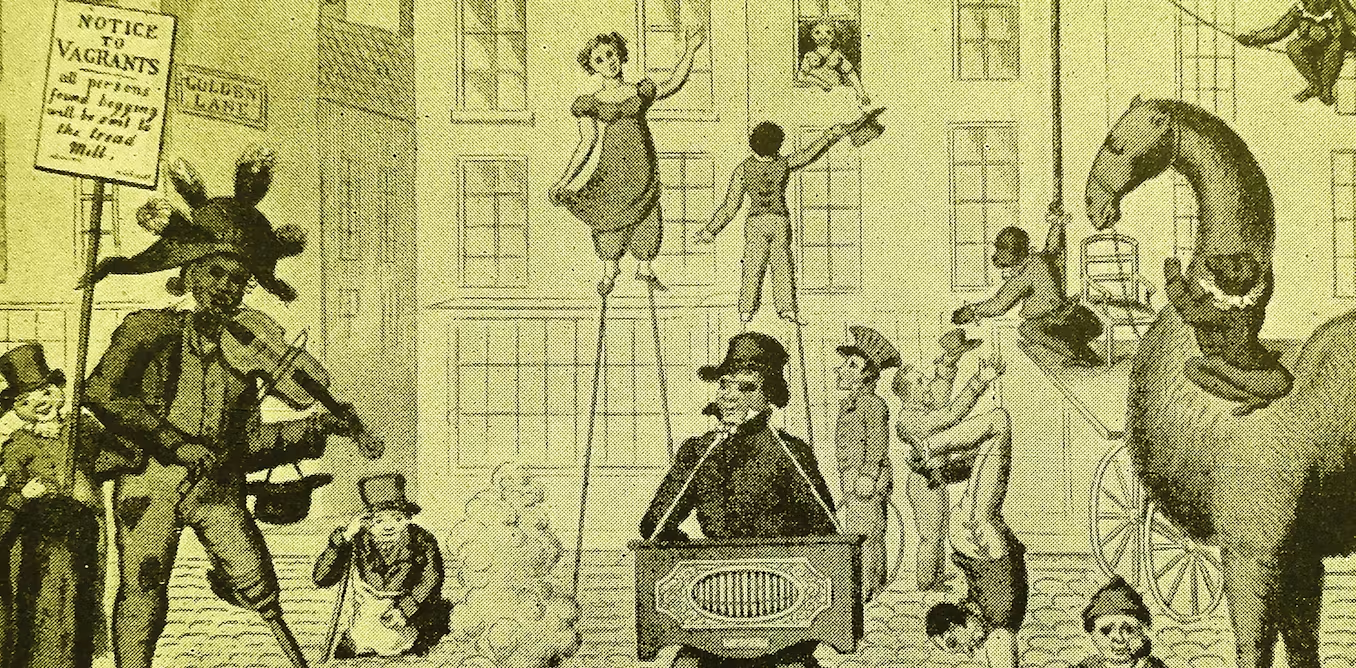
But disabled people faced remarkably similar challenges centuries ago. One of the clearest examples comes from the Elizabethan Poor Law of 1601, which was England’s first organised welfare system. It required parishes to support people who couldn’t earn a living because of age, illness or impairment. In practice, however, access to assistance was often contested.
Tudor writers spread stories about supposedly fake disabled beggars who tricked the public by covering themselves in artificial sores or pretending to have seizures. At the same time, local officials worried about the cost of supporting people who might need help for years. Claims could be rejected because an applicant was considered of poor moral character or because they were new to the parish.
World History Archive/Alamy
The records suggest that decisions about who deserved support were often shaped as much by social attitudes and local politics as by an individual’s actual condition. The phrase “genuine need”, still common in modern welfare debates, has always been open to interpretation.
Disabled people did not simply accept these decisions. Many challenged them by submitting petitions to magistrates. Written in deferential language, these appeals nevertheless represent some of the earliest surviving examples of disabled people defending their right to support that was legally theirs.
These disputes reveal striking continuities with the present day. They show that disabled people have long faced suspicion when seeking assistance. But they also demonstrate a history of resistance and self-advocacy that is often overlooked.
Work
Welfare was not the only area in which disabled people faced barriers. Work has long been another battleground.
Today, applicants for access to work – the UK government scheme that funds workplace support such as specialist equipment and assistance – face lengthy delays. Recent reports suggest there is now a backlog of more than 60,000 applications.
Even as the government seeks to move more people into employment, many disabled people struggle to obtain the support that would allow them to do so. History suggests these tensions are nothing new.
À lire aussi :
What early modern literature can teach us about neurodivergence
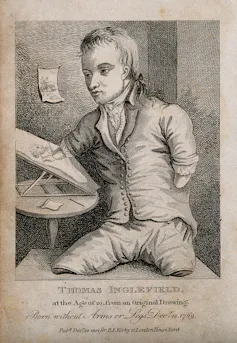
Disabled people have always worked, but from the time of the Industrial Revolution they have faced increasing challenges. Mechanisation increased the pace of production and often favoured those able to work faster and for longer hours. As a result, many disabled workers found it harder to secure employment or faced worsening conditions. But they continued to organise and demand change.
In May 1833, hundreds of disabled child workers marched through the streets of Manchester demanding shorter working days in the city’s cotton mills. Their protest challenges the common assumption that disability history is simply a story of welfare and care. Disabled people were also workers, campaigners and activists.
One important figure was William Dodd, an amputee former factory worker who toured the manufacturing towns of northern England during the 1840s. Gathering evidence about workplace injuries, he exposed the devastating human cost of industrial production and campaigned for compensation for injured workers.
Dodd’s reports show the horrendous effects of industrial work before modern health and safety. His work also shows how disabled activists helped drive reforms that benefited society as a whole.
Wellcome Collection
Looking back at five centuries of history reveals both remarkable progress and striking continuities. Disabled people today enjoy rights, protections and opportunities that would have been unimaginable to earlier generations. But many of the debates around welfare, employment and support remain surprisingly familiar.
Perhaps the most important lesson from the past is that change rarely came from above. The support services, legal protections and opportunities available today were not simply gifts from an increasingly enlightened society. They were won through campaigns, protests and persistent challenges to exclusion.
Disability history largely remains a missing part of the UK’s story. Understanding it helps explain why contemporary debates often feel so fraught.
More importantly, it reminds us that disabled people have never been passive recipients of care. They have long been active participants in shaping society, and their demands for equality and recognition are still far from fully realised.
This article features references to books that have been included for editorial reasons, and may contain links to bookshop.org. If you click on one of the links and go on to buy something, The Conversation UK may earn a commission.


























































You must be logged in to post a comment Login