



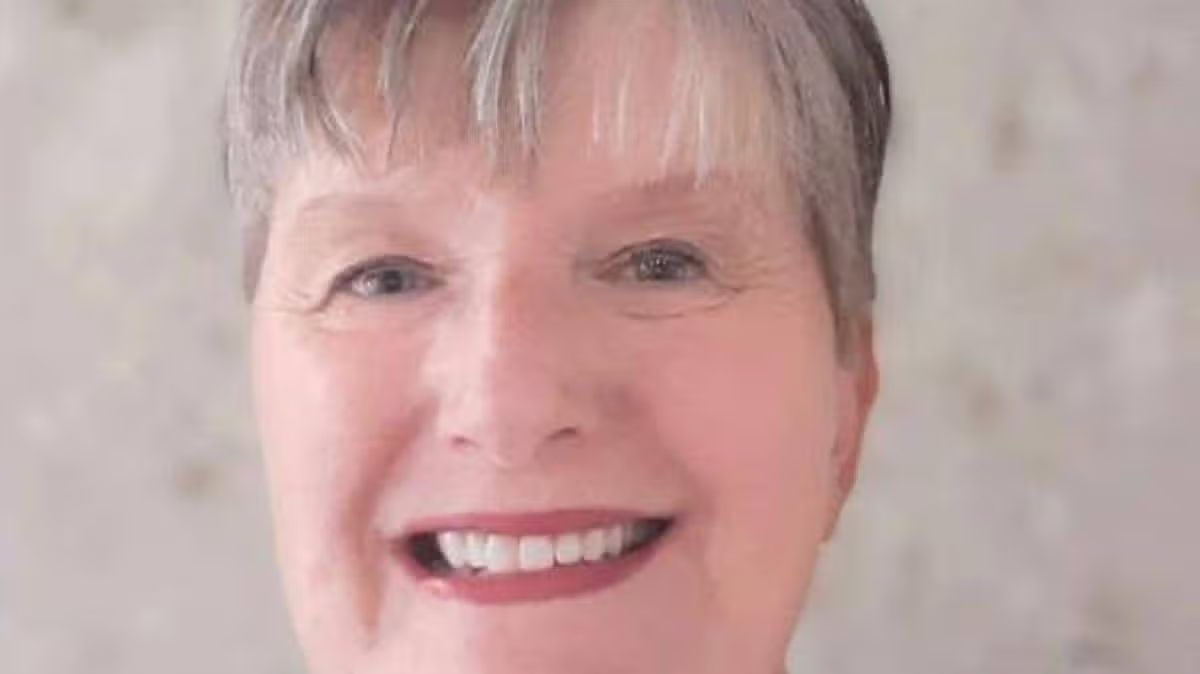
She was given a prognosis of four to six months to live back in 2023 but thanks to a new treatment, she is living with cancer and feeling well
This is Christine Campbell who was diagnosed with ovarian cancer five years ago and given a prognosis of four to six months to live back in 2023. Now thanks to a new treatment, she is living with cancer and feeling well
Christine, from Dundonald was first diagnosed with ovarian cancer in April 2021 after a gynaecological appointment. She is still living with the disease, but it’s currently stable and there are no new tumours.
Annually, almost 204 women are diagnosed with ovarian cancer in Northern Ireland, and 120 women die from this disease. In the Republic of Ireland, approximately 400 women are diagnosed with ovarian cancer, and almost 300 women die.
Ovarian cancer is the fourth leading cause of cancer death in women in Ireland, after lung, breast, and colorectal cancer. It is considered one of the more common cancers in Ireland, yet new statistics from the Irish Network for Gynaecological Oncology show that less than one in three women (29%) feel confident they would recognise the symptoms.
Christine displayed the classic symptoms of ovarian cancer, but had no idea until her diagnosis. She knew something was wrong but looking back now, she wishes she had been more aware of what to look out for.
“My symptoms actually started in November 2020, but I didn’t realise they were symptoms of ovarian cancer,” she told RSVP Magazine. “In April 2021, I was eventually diagnosed with stage 4 ovarian cancer as an emergency patient.
“I was really lucky, I got a cancelled gynaecological appointment. I was red flagged in February for an appointment after seeing my GP and had been referred to the hospital, but because it was still the pandemic, I was told it could be months before I got an appointment.
“In April, I got a cancelled appointment and was diagnosed with stage four. I had heard of ovarian cancer but I didn’t really know the signs and symptoms and I hadn’t recognised any of those signs and symptoms in myself. As a 55-year-old woman at that time, I really should have known. There’s no screening process for ovarian cancer so raising awareness of the signs and symptoms is so important.”
Christine was suffering from the typical symptoms of the cancer but it wasn’t until she began to bleed that she really knew something was going on.
“The first symptom I noticed was bloating and stomach distention,” she explains. “My waist had actually gone from 32 inches to 42 inches in the space of a couple of months. I was asked at the hospital whether I could be pregnant, as they could see the swelling of my stomach.
“I then noticed that I was going to the toilet a lot more and having to get up in the middle of the night, which had never happened before. I was also having bowel accidents, which was really embarrassing. It turned out, it was because there was a tumour pressing on my bowel and blocking it.
“Just before my diagnosis, I noticed that I couldn’t look at food or stand the smell of food. I couldn’t cook, it would make me feel ill. I lost my appetite completely – I was surviving on yogurt and cream crackers.”
She concludes: “The key thing for me was that I started to bleed, and I had already been through the menopause so I knew something was wrong.”
Christine went through three rounds of chemotherapy, surgery and further chemo, which she responded really well to. She was then eligible to go on a medication that stopped the blood flow to the cancer cells and stopped them from growing. However, she received the news in July 2023 that it had stopped working.
“My disease had metastasised and spread to other parts of my body,” she says. “When I asked what the prognosis was, I was told I had four to six months.
“I think anybody that receives that news can do one of two things: you can curl up and accept it, and I would not condone anyone for doing that – but I was determined I was going to beat this. I try to keep a positive attitude and hold onto an element of hope.”
She was given maintenance treatment to keep the symptoms and pain at for as long as possible and was eventually told that nothing more could be done and she would be moved onto pain management when she needed it.
However, in April 2024 she was told that a new drug had become available. She got access to it and began taking it in June 2025 and the disease has been stable ever since. For Christine, the quality of her life is more important than the quantity, and she now focuses on living everyday to the fullest, and using her voice as an advocate to inform people about ovarian cancer and its signs.
“It hasn’t gone away, but it’s stayed stable and it’s given me so much extra time and I am forever grateful for it,” she says. “I’ve been fortunate and I have very limited side effects. There’s nothing that stops me living my life with a cancer diagnosis.
“I can do normal day to day things that every person wants to do, with the support of the people out there who are helping me to live my life as well as I can, which includes a palliative care team. They’re very supportive, they talk to me about diet and exercise to build up strength.
“There’s support out there. The likes of OvaCare and the Society of Gynecology run workshops and coffee and chats, which is great for me to meet like minded people. That’s a comfort to me and I think other people find comfort in me as well – the fact that five years after my diagnosis I am still here and I am still fighting this.”
For anyone who is dealing with any of the B.E.A.T. symptoms, Christine urges them to talk to their GP.
“Our bodies go through so many changes – puberty, child birth, perimenopause, menopause, all the rest of it,” she says. “You do understand your body and you know something is wrong, but you maybe just don’t know what it is and I think that’s why awareness is so important. I am using my voice to advocate for awareness around the signs and symptoms and that’s given me a purpose.”
World Ovarian Cancer Day was earlier this year and the theme was #NoWomanLeftBehind, which promotes the urgent need to ensure that all women, regardless of geography, socio-economic background, or access to healthcare, have the knowledge, support, and resources to recognise ovarian cancer symptoms and seek timely care.
The INGO’s research also found that only two percent of women were aware of the B.E.A.T acronym, which represents the key symptoms of ovarian cancer:
- Bloating that is persistent and doesn’t come and go
- Eating less and feeling full more quickly
- Abdominal and pelvic pain you feel most days
- Toilet changes in urination or bowel habits
If these symptoms occur frequently, are persistent, and represent a change from what is normal for someone, medical advice should be sought. Early detection significantly improves outcomes, making awareness and timely action critical. The clear message is that if a woman experiences any of these symptoms for three weeks or more, she should contact her GP.
For more information, please visit www.thisisGO.ie.
For all the latest news, visit the Belfast Live homepage here and sign up to our daily newsletter here.























































You must be logged in to post a comment Login