
Business
Funding supports SCO2’s Nextract Technology rollout





Suja Life Q2 2026 slides: 50% EBITDA growth amid guidance cut

Earnings call transcript: Travere Therapeutics jumps on q2 2026 sales beat
Business
How Much Is Each Lionel Messi Goal Worth? Breaking Down His Total Billion-Dollar Career Earnings So Far

Lionel Messi has spent more than two decades rewriting football’s record books, and along the way, he has also become one of the highest-paid athletes in sports history. That combination of extraordinary output and extraordinary pay naturally invites a simple, if unofficial, question: how much is each of Messi’s career goals actually worth in dollar terms relative to what he’s been paid to play?
While no official body tracks or publishes such a figure, publicly reported data on Messi’s career goal totals and his career football earnings make it possible to arrive at a rough estimate, one that comes with significant caveats given how differently athlete compensation and career statistics are typically measured and reported.
The numbers behind the calculation
As of mid-2026, Messi has scored roughly 919 to 920 career goals across all competitions for FC Barcelona, Paris Saint-Germain, Inter Miami and the Argentina national team, according to tracking compiled by multiple outlets covering his career. That total includes 672 goals scored during his 17 seasons at Barcelona, 32 goals across two seasons at Paris Saint-Germain, and more than 80 goals since joining Inter Miami in 2023, along with well over 100 international goals for Argentina.
On the earnings side, Messi has earned more than $1.8 billion in career football contract compensation before taxes and agent fees, according to figures reported by Yahoo Sports, spanning his time at Barcelona, PSG and his current deal with Inter Miami. That figure reflects on-field playing contracts specifically, separate from the substantial additional income Messi earns through endorsements, sponsorships and business ventures.
Doing the math
Dividing that $1.8 billion in career contract earnings by roughly 920 career goals produces a figure of approximately $1.96 million per goal, or nearly $2 million for every goal Messi has scored across his professional career to date. That figure should be treated as a broad, illustrative estimate rather than a precise statistic, since it combines earnings across vastly different eras of Messi’s career, different currencies, and contracts that compensated him for far more than simply scoring goals, including playmaking, leadership, marketing value and simply drawing fans to stadiums and broadcasts.
A rate that has shifted dramatically over time
The per-goal value looks very different depending on which stage of Messi’s career is examined in isolation. Early in his time at Barcelona, Messi’s salary was a fraction of what it later became, meaning his goals during those seasons carried a far lower dollar value relative to pay than his goals do today. By contrast, during the peak of his Barcelona career, Messi signed a contract reportedly worth an average base salary of $168 million per year before bonuses, with total earnings, including endorsements, reaching roughly $200 million annually at that deal’s height.
His current arrangement with Inter Miami offers a clearer, more isolated example of how the calculation can shift depending on the timeframe used. Messi has scored 59 goals in 64 MLS regular-season appearances since joining the club, and at his $28.3 million in guaranteed annual compensation for the 2026 season, that works out to roughly $976,000 per MLS goal when measured against just his Inter Miami salary alone, a figure that notably excludes the additional $50 million or more he earns annually from endorsement deals with Apple, Adidas and other partners.
Salary is only part of the picture
Messi’s total annual income in 2026 is estimated at roughly $140 million, according to Forbes, a figure that blends his Inter Miami salary with sponsorship and endorsement revenue. Inter Miami co-owner Jorge Mas has said Messi’s overall compensation from the club, including commercial and revenue-sharing arrangements tied to Apple’s MLS broadcasting partnership, totals between $70 million and $80 million annually, well above his $25 million base salary alone.
Because so much of Messi’s modern earnings come from endorsements and business ventures rather than his playing contract itself, any true “earnings per goal” calculation depends heavily on which income sources are included. A calculation based solely on football salary produces a meaningfully different result than one that also factors in endorsement income, and neither fully captures the value Messi has generated for the clubs, leagues and brands associated with him throughout his career.
Net worth adds another layer of complexity
Messi’s overall net worth, estimated at $1.1 billion by Forbes and closer to $850 million by Celebrity Net Worth, reflects accumulated wealth after spending, taxes, investments and asset appreciation, rather than raw career earnings. That distinction matters for any attempt to connect his financial success directly to his on-field output, since net worth incorporates decisions and outcomes entirely unrelated to how many goals he has scored.
Why the exercise remains inherently imprecise
Ultimately, any “dollars per goal” calculation for an athlete like Messi functions more as a conversation-starting exercise than a rigorous financial metric. Professional athletes are paid for a wide range of contributions beyond goal-scoring, including assists, leadership, marketing appeal, ticket sales and broadcast value, all of which are baked into the massive contracts Messi has signed throughout his career. Goals remain the most visible and easily countable measure of his footballing output, which is likely why such comparisons continue to circulate among fans and analysts, even though they offer, at best, a rough and heavily caveated approximation of value.
What the numbers do show
Regardless of the precision limitations, the underlying figures underscore just how extraordinary Messi’s combination of production and earning power has been. Few athletes in any sport have combined a scoring record approaching 1,000 career goals with career playing contracts exceeding $1.8 billion, a pairing that has helped cement Messi’s standing not just as one of football’s greatest players, but as one of the highest-earning athletes in the history of professional sports.
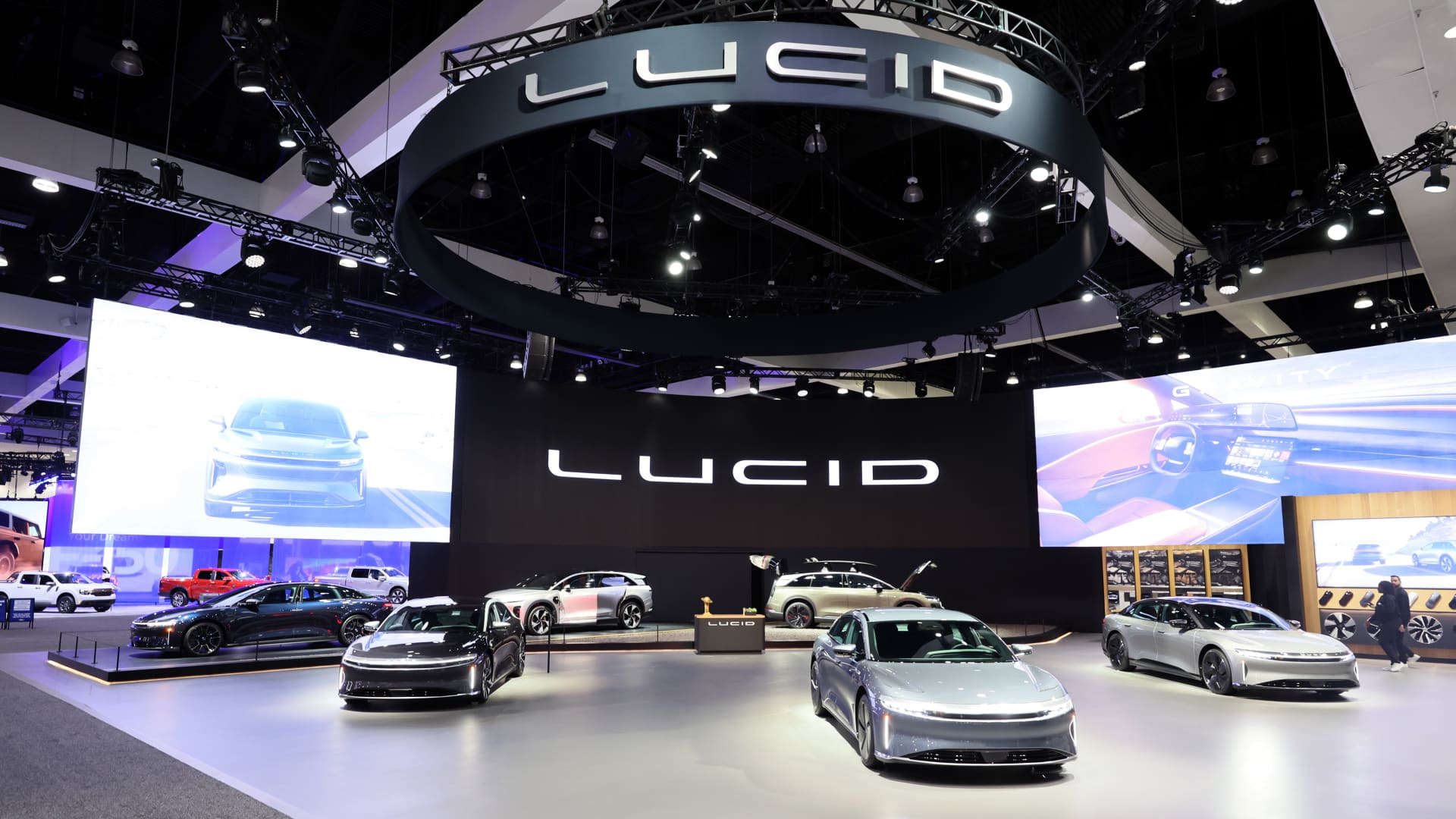
The Lucid Gravity is displayed during the 2023 Los Angeles Auto Show at the Los Angeles Convention Center on November 24, 2023 in Los Angeles, California. This year’s edition of the Los Angeles Auto Show includes a range of new SUV models.
Josh Lefkowitz | Getty Images News | Getty Images
Lucid Group missed Wall Street’s second-quarter expectations as the electric vehicle manufacturer conducts an “operational reset” amid leadership changes and cost-cutting efforts.
Those plans include beginning non-prototype robotaxi production early next year and delaying its upcoming midsize vehicle that was expected at the end of this year until “most likely” the second half of 2027, Lucid CEO Silvio Napoli told CNBC on Tuesday.
“We’re not going to make the mistake of the past where products, great cars, were in fact tainted by launching before things were ready,” he said. “I think it’s going to be ’27. … Most likely the second half of ’27.”
Here’s how the company performed in the second quarter compared with average estimates compiled by LSEG:
- Loss per share: $3.30 vs. a loss of $2.46 expected
- Revenue: $405 million vs. $416 million expected
‘Transformation program’
The company did not release updated 2026 guidance. Napoli, who started leading the automaker in June, previously suspended production expectations amid a reevaluation of Lucid’s business operations.
He told CNBC the company is “not ready” to give such guidance as Lucid resets investor expectations and has a new, incoming leadership team. Lucid also reduced production at its U.S. plant in Arizona from two shifts to one in June.
“I want it to be anchored in solid data, and most of all, I want a guidance that I’m confident Lucid will be able to deliver on and possibly even do better than that. This takes time,” he said. “I wanted to make sure that we align the reality with consensus, which is today based on outdated business model.”
The company did release broad details of an “operational reset” or “transformation program” that includes identifying $1.4 billion in cash flow improvement opportunities this year.
They include approximately $600 million to $800 million in vehicle inventory, $500 million in capital expenditures, and $200 million in operating expenses, the company said.
In addition to the cost-cutting, Lucid said the plan will broadly focus on three key areas: “cash and cost,” “customer and quality” and “culture and team.”
More specifically, the company said its efforts will focus on its robotaxi program with Uber and Nuro, a factory that’s under construction in Saudi Arabia and its upcoming midsize vehicle. Lucid called the robotaxi initiative a “top priority.”
Napoli said the company’s robotaxi plans continue, including the production of prototype vehicles based on the company’s Lucid Gravity SUV instead of its midsize vehicle. He said the company expects to deliver about 100 of the pre-production vehicles by the end of the year to its partners, with actual vehicle production in the beginning of next year.
“The robotaxi opportunity is huge, and it’s an industry that is about to start an exponential growth,” he told CNBC. “Not many companies are ready for it. We are a software-defined vehicle company, so we are well positioned.”

Lucid, Rivian and Tesla stocks
Lucid, which reported $3 billion in total liquidity to end the second quarter, said the actions and its current financials are “expected to provide sufficient liquidity runway well into 2027.”
“Silvio and his leadership team are transforming the company, and the Board stands firmly behind their actions,” Lucid Chairman Turqi Alnowaiser said in a release.
The missed results and comments come weeks after Lucid denied an online report that it was considering bankruptcy or taking the company private. The report caused shares of the company to plummet. The stock recovered some of those losses, but remains off nearly 30% in 2026.
Napoli adamantly denied such plans on Tuesday to CNBC, as he did when they were reported.
“I wholeheartedly reinforce the denial,” he said. “We are here to stay. We are here. We have a plan. We have a board and a majority investor that will help us to go through what is admittedly a moment where we are doing many things at the same time.”
Its largest shareholder is Saudi Arabia’s sovereign wealth fund, the Public Investment Fund.
Second-quarter results
Lucid’s second-quarter results included a net loss of more than $1 billion compared to a loss of $539.4 million during the second quarter of last year. The company reported an adjusted loss of $901.1 million, or $3.30 per share, compared with a loss of $632.1 million, or $2.80 per share, a year earlier.
The losses were on production of 4,774 vehicles, up 24% year-over-year, and deliveries of 3,953 vehicles, up 19%, during the second quarter. The company currently offers the Air sedan and Gravity SUV that start at roughly $70,000 and $80,000, respectively.
Napoli, who formerly led an escalator and elevator manufacturer, replaced interim CEO Marc Winterhoff on June 1. Winterhoff remained with the company until late June as Napoli put together a new leadership team.
AMD's Big Quarter: You Should Buckle Up
Business
Fructose, a Common Dietary Sugar, May Help Cancer Cells Break Free and Spread, Researchers Say in New Study

Cancer cells that survive chemotherapy may release a common dietary sugar to help neighboring tumor cells break loose and spread throughout the body, according to a new study from The Wistar Institute that identifies a previously unknown pathway behind one of cancer’s deadliest processes.
The research, published in the journal Nature Aging, focused on ovarian cancer and found that fructose, a sugar widely consumed in the American diet, can act as a chemical signal released by cells that remain in the body after chemotherapy treatment. That signal appears capable of making nearby tumor cells more likely to detach and metastasize, a process responsible for the vast majority of deaths from the disease.
Cells that survive treatment keep sending signals
Nearly all ovarian cancer patients receive platinum-based chemotherapy, and the treatment typically produces a strong initial response. Despite that, the cancer returns in most patients and commonly spreads throughout the abdominal cavity, a process responsible for roughly 90% of deaths tied to the disease.
Researchers have previously suspected that cancer cells surviving chemotherapy might contribute to that recurrence by releasing a mix of signaling molecules, even after they stop actively dividing. To test that idea more directly, the Wistar-led research team designed an experiment separating surviving cancer cells from the substances those cells released into their environment.
“Some cancer cells that survive chemotherapy aren’t dividing anymore, but they’re still biologically active,” said Aidan Cole, a postdoctoral fellow in the lab of Katherine Aird at The Wistar Institute and the study’s first author. He explained that the cells continue releasing molecules that send signals to nearby cells, and the study is among the first to show that a nutrient, in this case fructose, can function as one of those signals.
When the team exposed other cancer cells only to the molecules released by chemotherapy-surviving cells, without exposing them to the surviving cells themselves, that exposure alone was enough to significantly boost the treated cells’ ability to spread. Cole said the finding marked the first time researchers had shown, in a preclinical model rather than simply in a lab dish, that it’s the released molecules rather than the surviving cells themselves that appear to drive the cancer’s spread.
Diet may play a larger role than previously understood
After identifying fructose as a key signaling molecule, researchers also tested whether high levels of dietary fructose, comparable to amounts found in sugary drinks, could encourage cancer spread even without prior chemotherapy exposure. That test suggested the sugar alone could promote spread, raising the possibility that everyday dietary habits might influence how the disease progresses over time.
That finding carries added significance given how widely fructose is consumed in the United States. High fructose corn syrup can account for roughly 8% to 20% of daily calorie intake for some people, according to the study. Unlike many cancer risk factors that patients have little control over, researchers noted that fructose intake is one variable people can potentially modify through diet, though they cautioned that no studies have yet tested whether reducing fructose consumption actually improves outcomes for patients.
How fructose may help cancer cells escape
To understand the mechanism behind fructose’s effect, researchers used several large-scale analytical techniques, including a CRISPR gene-editing screen, and found that fructose appears to lower cholesterol production inside neighboring cancer cells. Cholesterol plays an important structural role in helping cells remain attached to one another, functioning similarly to a biological adhesive. When cholesterol levels drop, those cellular bonds weaken, making it easier for cancer cells to separate from surrounding tissue and move elsewhere in the body.
A possible connection to a widely used class of drugs
The discovery that reduced cholesterol production may promote cancer spread also raised questions with potential clinical relevance, given that statins, cholesterol-lowering drugs used by an estimated 39 million people in the United States, work through a similar mechanism. In laboratory testing, statins alone were found to weaken the connections between cancer cells, making it easier for them to separate and spread, prompting researchers to begin investigating whether the drugs could interact with chemotherapy in ways not previously understood.
The research team was careful to stress that the findings should not be interpreted as a reason for patients to stop taking statins or any other prescribed medication. “We haven’t tested this effect in patients yet,” said Katherine Aird, professor and co-leader of the Molecular and Cellular Oncogenesis Program at The Wistar Institute’s Ellen and Ronald Caplan Cancer Center and the study’s senior author. She noted that the findings raise questions worth exploring further, particularly because ovarian cancer is most common in postmenopausal women, many of whom are already taking statins for cardiovascular health reasons unrelated to their cancer treatment.
Broader implications beyond ovarian cancer
Researchers involved in the study believe the fructose-driven pathway they identified may extend beyond ovarian cancer to other cancers that commonly spread within the torso, including pancreatic, colon and liver cancers. “We think other cancers that spread within the torso — pancreatic, colon, liver — could behave similarly,” Aird said, while cautioning that the team cannot yet call the effect universal across cancer types based on current evidence.
Aird and Cole have already begun planning follow-up studies aimed at determining whether the same mechanism can be reproduced in other forms of cancer, work that could help clarify how widely applicable the fructose-related pathway may be across different types of tumors.
A large, multi-institution collaboration
The study involved dozens of researchers from institutions including the University of Pittsburgh School of Medicine, the University of Pittsburgh, Temple University’s Lewis Katz School of Medicine, the H. Lee Moffitt Cancer Center, the University of Colorado Boulder and Anschutz Medical Campus, and the Ludwig Institute for Cancer Research at the University of Lausanne, alongside researchers at The Wistar Institute. The work was funded by multiple grants from the National Institutes of Health, along with support from organizations including the American Cancer Society, the Ovarian Cancer Research Alliance, the Congressionally Directed Medical Research Program, and the Chan Zuckerberg Initiative, among others.
While the findings offer a new and previously unrecognized explanation for how ovarian cancer may spread after chemotherapy, researchers emphasized that the connection between dietary fructose intake and cancer outcomes in actual patients remains untested. Determining whether reducing fructose consumption, adjusting statin use, or other interventions could meaningfully affect cancer progression in humans will require additional clinical research, a process the study’s authors say they are now working to pursue.

Spear Invest founder and CIO Ivana Delevska discusses the evolving AI value chain and its potential role on the global stage on ‘Making Money.’
The U.S. remains ahead of China in the global artificial intelligence (AI) race, but its lead is narrowing as Beijing expands the global reach of Huawei and other Chinese technology companies, former State Department official Keith Krach told FOX Business.
The competition goes beyond which country develops the most powerful AI models. It also centers on energy, infrastructure, semiconductors, talent, exports and the technical standards other nations will rely on for years, according to Krach.
“America is still ahead, but we are not comfortably ahead,” Krach said.
His remarks come roughly one year after the Trump administration unveiled Winning the Race in July 2025, a national AI strategy featuring more than 90 federal actions.
BESSENT HIGHLIGHTS TRUMP ECONOMY, WARNS CHINA HAS ‘DONE A LOT OF KICKING LATELY’
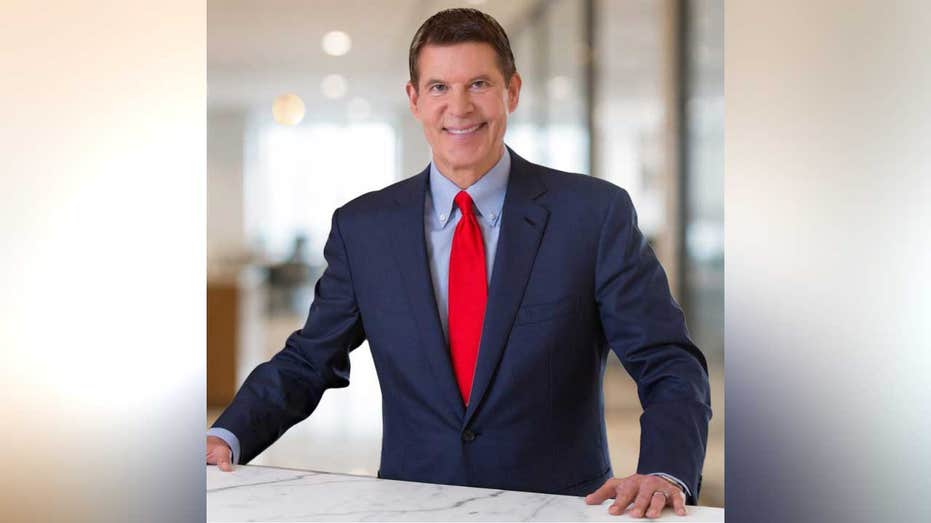
Former State Department official Keith Krach told FOX Business the U.S. remains ahead of China in the global artificial intelligence race, but its lead is narrowing. (Obtained by FOX Business)
Krach said the U.S. still leads in private investment, advanced chips, cloud infrastructure, universities and entrepreneurial talent. China, however, has gained ground in patents, industrial deployment, research, robotics and lower-cost open models.
“We are leading today, but the race will be won by the ecosystem the world chooses to build on,” he said.
Krach, who serves as chairman of the Krach Institute for Tech Diplomacy at Purdue University and CEO of Freedom 250, said the Trump administration’s strategy correctly recognizes the broader stakes.
He argued that success should be measured through new power generation, faster data center construction, greater semiconductor capacity, wider AI adoption, allied contracts and technical talent.
Huawei is central to China’s global technology push, according to Krach, who described the company as a “vertically integrated delivery system” for technological and geopolitical influence.
GOP AGS WARN OPENAI’S ALTMAN TO PRESERVE RECORDS IN AI AGENT HACKING PROBE

A high-tech data center is pictured here. Krach argued that success should be measured through new power generation, faster data center construction, greater semiconductor capacity, wider AI adoption, allied contracts and technical talent. (iStock)
The Chinese technology giant can offer governments wireless networks, data centers, cloud services, AI chips, software, cybersecurity tools and financing in a single package.
Once installed, those systems can become costly, disruptive and “politically difficult” to replace, Krach said.
“The real strategic asset is not the hardware,” he said. “It is long-term access to data, standards, software updates, technical dependencies and government relationships.”
Krach said China’s offering is built around integration, financing, speed and state support.
“America must counter it with a trusted full-stack alternative that performs better and strengthens, rather than compromises, a partner country’s independence,” Krach argued.
Countries will choose American technology, Krach said, when it is not only more trusted but also easier to finance, deploy and expand.
ANTHROPIC SAYS AI MODELS ACCESSED SYSTEMS OF 3 REAL ORGANIZATIONS DURING TESTING
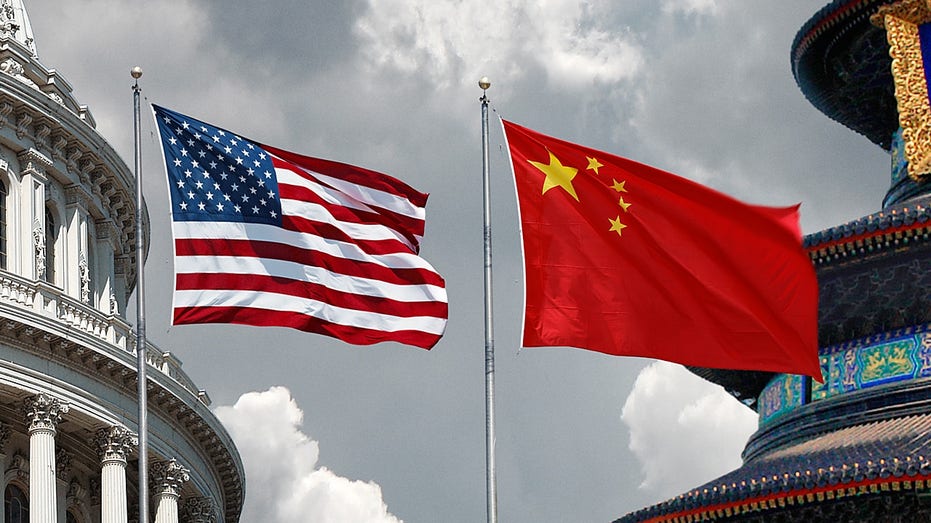
The U.S. and China are competing for dominance in AI and advanced technology. (iStock)
To maintain its lead, the U.S. must expand energy production, data centers, semiconductor manufacturing, cloud capacity and its skilled workforce, Krach said.
GET FOX BUSINESS ON THE GO BY CLICKING HERE
He also called for faster permitting, support for proprietary and open American AI models and export packages that allies can easily purchase and deploy.
“China’s advantage is [on a] coordinated scale,” Krach said. “America’s advantage is freedom, innovation, capital, entrepreneurship and allies. Our task is to organize those strengths without destroying what makes them powerful.”
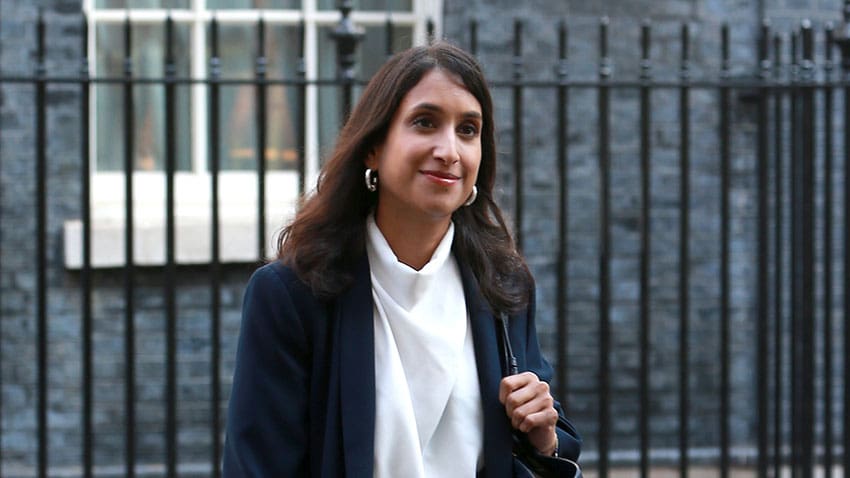
Claire Coutinho, the shadow energy secretary, called on Monday for the Government to clarify whether Michael Shanks, the energy minister, misled Parliament over the state of Britain’s electricity grid during June’s heatwave, after leaked documents from the National Energy System Operator recorded five constraint breaches on the transmission network on June 23.
Answering an urgent question in the Commons on July 15, Mr Shanks told MPs the incident “did not indicate any kind of emergency situation” and that it was “scaremongering to take to social media or come to the House and somehow imply that we were close to blackouts, which is simply not the case”.
He said: “Let me state very clearly that electricity supplies were maintained throughout the June heatwave. No customer demand was subject to disconnection. Statutory frequency limits were maintained throughout the event, and the largest credible loss that could have occurred was also covered.”
On the system’s spare capacity, he added: “The margin represents the cushion of spare generation above peak demand that is maintained by Neso, and at no point did we come close to breaching that.”
Two days later, internal Neso reports emerged which listed five constraint breaches across the transmission network that occurred with “no available pre or post-action mitigation options”. The reports, first reported by The Times and confirmed by Neso, also stated that “system constraints were breached and system security was compromised”.
Neso, the government body responsible for balancing supply and demand across Britain’s transmission network, has said the findings are preliminary and that a full review is under way.
Grid resilience has previously prompted data centre operators to seek priority access to electricity in the event of supply restrictions.
The Ministerial Code states that it is of “paramount importance” that ministers give accurate and truthful information to Parliament and correct any inadvertent error “at the earliest opportunity”. Ministers who knowingly mislead Parliament are expected to offer their resignation.
In a letter to Miatta Fahnbulleh, the Energy Secretary, Ms Coutinho said it appeared that either Fintan Slye, Neso’s chief executive, had misled Mr Shanks “or the minister misled the House”.
Ms Coutinho told The Telegraph: “The minister for energy told the House on July 15 that ‘at no point did we come close to a breach’ of reserve standards on June 23. It has since emerged through leaked documents that Neso’s own initial assessment showed exactly this had happened. The new Secretary of State must get to the bottom of whether her minister misled the House, and if so why.”
She added: “Did he just take the chief executive of Neso’s word that everything was tickety-boo? At every stage of this scandal ministers have had their heads in the sand, initially saying I was ‘scaremongering’. It’s time for them to wake up and do their job and hold Neso to account on behalf of the British public.”
A Whitehall source said on Monday that Mr Shanks stood by his comments.
Mr Shanks said he and Ed Miliband, the then energy secretary, had been briefed by Mr Slye on allegations of a cover-up concerning the June incident after Ms Coutinho raised the matter.
Ofgem, the industry regulator, has separately commissioned Neso to produce a report establishing the circumstances of June 23 and how grid operators handled it.
Neso has also hired lawyers at Eversheds Sutherland to investigate whistleblower claims that staff in the control room were ordered to play down the risk of blackouts and cover up how key decisions were taken. That investigation is overseen by Ofgem, which said earlier this month that Mr Slye would not receive updates from the law firm unless they had been cleared by an independent panel first.
A spokesman for Neso said: “Given the seriousness of the allegations and the need to maintain independence of the investigation, we are clear that findings will not be shared with any of the Neso executive until the findings are finalised.”
A Government spokesman said: “The UK has one of the most reliable electricity systems in the world, in its 75-year history, there has never been a complete grid shutdown. We are very confident in our security of supply arrangements, and that NESO have the tools they need to manage the system. At no time has there been any concern about being able to meet demand in heatwaves.”

Paul Jones
Harvard alumni and former New York Times journalist. Editor of Business Matters for over 15 years, the UKs largest business magazine. I am also head of Capital Business Media’s automotive division working for clients such as Red Bull Racing, Honda, Aston Martin and Infiniti.


Charles Rotblut, CFA is the editor of the AAII Journal, the flagship publication of The American Association of Individual Investors (AAII). Charles provides both insight about individual investor sentiment and market analysis. He is also the author of “Better Good than Lucky: How Savvy Investors Create Fortune with the Risk-Reward Ratio” (W&A Publishing/Trader’s Press).
Analyst’s Disclosure: I/we have no stock, option or similar derivative position in any of the companies mentioned, and no plans to initiate any such positions within the next 72 hours. I wrote this article myself, and it expresses my own opinions. I am not receiving compensation for it. I have no business relationship with any company whose stock is mentioned in this article.
Seeking Alpha’s Disclosure: Past performance is no guarantee of future results. No recommendation or advice is being given as to whether any investment is suitable for a particular investor. Any views or opinions expressed above may not reflect those of Seeking Alpha as a whole. Seeking Alpha is not a licensed securities dealer, broker or US investment adviser or investment bank. Our analysts are third party authors that include both professional investors and individual investors who may not be licensed or certified by any institute or regulatory body.
Business
Randy Travis’ Wife Reveals Doctors Told Her to ‘Pull the Plug’ During His Near-Fatal 2013 Stroke Battle

Country music legend Randy Travis’ wife, Mary, has revealed that doctors once told her to end her husband’s life support during his harrowing recovery from a massive stroke in 2013, a moment she says she instead met with defiance because she believed he was still fighting to survive.
The revelation, shared in an interview with Fox News Digital, offers new insight into just how close the 67-year-old Country Music Hall of Fame member came to not surviving the health crisis that ultimately robbed him of his ability to sing, even as Travis continues to tour and release new music more than a decade later.
A devastating diagnosis
Travis’ stroke struck in 2013, following an earlier hospitalization for congestive heart failure tied to viral cardiomyopathy. According to Mary, the singer’s condition deteriorated further in the hospital as he developed a staph infection along with several additional hospital-acquired bacterial infections, including Serratia and Pseudomonas. That combination of complications led doctors to conclude that Travis simply did not have the physical strength to recover.
“We need to pull the plug. He’s got too many things going against him at that point,” Mary recalled doctors telling her during that period, describing it as one of the most pivotal moments of what she has called a two-and-a-half-year health battle.
Rather than accepting that recommendation, Mary said she refused to give up on her husband, drawing strength from a subtle but powerful sign he gave her at his bedside. She said Travis squeezed her hand and shed a tear at the exact moment doctors were urging her to let him go, a gesture that convinced her he was determined to keep fighting. “There was never a doubt in Randy’s mind that he could make it through it,” Mary said, reflecting on that moment.
A recovery doctors didn’t expect
The odds facing Travis at the time were extraordinarily grim. CBS News has reported that doctors gave him just a 2% chance of survival following the stroke, making his continued recovery in the years since all the more remarkable to those who have followed his story. The stroke ultimately left Travis with aphasia, a condition that severely limits both his speech and his ability to sing, effects that remain with him to this day.
Despite those lasting limitations, Travis has continued to find ways to stay connected to music and to his fans. He has toured in recent years alongside guest vocalist James Dupré and members of his original band, allowing him to remain a visible presence on stage even though he can no longer perform vocals himself. In 2024, Travis made headlines again after using artificial intelligence technology to help recreate his voice, allowing him to release new original music for the first time since his stroke, a development his wife has since described as deeply emotional for the couple.
Recognition for his resilience
Travis’ continued advocacy and public presence following his stroke have not gone unnoticed within the country music industry. He was awarded the Milestone Award at the 18th ACM Honors in recognition of both his resilience since the stroke and his advocacy work around stroke awareness and healthcare rights within the entertainment industry. Reflecting on the honor, Mary has said the word “milestone” carries deep personal meaning for the couple, capturing the full arc of what Travis has endured, from his earlier battle with viral cardiomyopathy through the stroke and its lasting aftermath.
A relationship built over decades
Mary and Randy’s relationship stretches back far longer than their marriage. The couple first knew each other beginning in 1990, though they did not begin dating until 2010, three years before his stroke. They married in 2015, two years after Travis’ health crisis nearly ended his life, and have since described their bond as central to his ongoing recovery. Mary has said she views their pairing as effortless, describing Travis as her best friend and crediting their timing together as something she believes was guided by a higher purpose.
Still performing in 2026
More than a decade removed from the stroke that nearly claimed his life, Travis remains an active presence on the road. His 2026 tour schedule includes 21 scheduled appearances beginning March 12 and running through Oct. 2, according to information listed on his official website, a pace that underscores just how far he has come since the days when doctors doubted he would survive at all.
Travis has also continued to make public appearances tied to his legacy within country music. He was seen last year at the Medallion Ceremony for the Country Music Hall of Fame and Museum’s Class of 2025, walking the red carpet alongside Mary in a moment fans and industry observers alike described as significant given the severity of his earlier health struggles.
A story that continues to resonate
Mary’s account of the moment doctors urged her to remove her husband from life support has continued to circulate widely since she first shared it publicly, resonating with fans who have followed Travis’ career for decades and who have watched him defy expectations again and again in the years since his stroke. For Mary, the memory remains a defining chapter in their relationship, one she has said reinforced her belief in her husband’s determination during the darkest moment of his health battle.
With his touring schedule extending through the fall and his continued use of AI technology to keep producing new music, Travis shows no signs of stepping back from public life despite the lasting physical toll of his stroke. For Mary, the couple’s ongoing journey together remains rooted in the same resolve that carried them through his hospitalization more than a decade ago, a bond she has described as unbreakable regardless of the health challenges that continue to shape their life together.

FOMC SHOCK! – Latest Crypto Market Analysis & BTC News Updates Today

Suspect in killing of Scot ‘text wife claiming to be unnamed jihadist to cover tracks’
Suja Life Q2 2026 slides: 50% EBITDA growth amid guidance cut

Renter of Home in Anne Heche Crash Denies Settlement With Son

No Jackpot Winner as $257 Million Prize Rolls Over to $269 Million Monday Draw

Weekend Open Thread: Staud – Corporette.com
FOMC SHOCK! – Latest Crypto Market Analysis & BTC News Updates Today

30 min with $7Bn Fund Manager, 25 Years of Investing Revealed | 1% Club Show Ep 59

Money Rain – Karym x Willy x Js Serna x Jhean T ( Video oficial ) kevin cheng #sonrelatosdeuntrapper
-

 Business6 days ago
Why Trees Belong on the Risk Register
-

 Fashion4 days ago
Weekend Open Thread: Wit & Wisdom
-

 Politics4 days ago
Meta enters AI-training agreement with far-right ‘propaganda rag’ Newsmax
-

 Politics6 days ago
Reform UK betrays West Mids residents by running from party pledges
-

 Crypto World3 days ago
MicroStrategy Post-Earnings CLARITY Act Push Could Add New Catalyst for Its Stock
-

 Business7 days ago
Major shareholder moves on Canyon
-

 Crypto World4 days ago
XRP Ledger v3.3.0 brings five institutional features
-

 Politics2 days ago
Zack Polanski: an incitement to murder Nigel Farage?
-

 News Videos5 days ago
Bitcoin Enters the 3rd Stage of the Bear Market
-

 Crypto World7 days ago
Kraken Enables Retail Access to Jersey Mike’s IPO via Tokenized Shares
-

 Politics5 days ago
Luke Littler’s dominance sparks GOAT debate
-

 Sports5 days ago
Seema Kaliramna Wins Discus Throw Bronze, Takes India’s CWG Medals Tally To 17
-

 Crypto World4 days ago
New York sues Kalshi over prediction market gambling
-

 Crypto World2 days ago
Crypto PAC spending tops $2M in Michigan House race
-

 Business7 days ago
Johnson & Johnson agrees to $5.5B settlement over talc cancer claims
-

 Business4 days ago
Trump Announces Hamas Disarmament Agreement as Iran Strikes Kuwait Air Base and US Attacks Pause Overnight
-

 Tech6 days ago
Gemini can now summarize the messiest comment threads in Google Docs
-

 Tech3 days ago
ESET tracks rise in malicious AI skills and adaptable malware
-

 NewsBeat5 days ago
Four people die trying to cross Channel in small boats
-

 Tech5 days ago
Gemini Spark can now use Chrome logins and saved passwords to run errands on your behalf
You must be logged in to post a comment Login