
Business
How Much Is Each Lionel Messi Goal Worth? Breaking Down His Total Billion-Dollar Career Earnings So Far


Lionel Messi has spent more than two decades rewriting football’s record books, and along the way, he has also become one of the highest-paid athletes in sports history. That combination of extraordinary output and extraordinary pay naturally invites a simple, if unofficial, question: how much is each of Messi’s career goals actually worth in dollar terms relative to what he’s been paid to play?
While no official body tracks or publishes such a figure, publicly reported data on Messi’s career goal totals and his career football earnings make it possible to arrive at a rough estimate, one that comes with significant caveats given how differently athlete compensation and career statistics are typically measured and reported.
The numbers behind the calculation
As of mid-2026, Messi has scored roughly 919 to 920 career goals across all competitions for FC Barcelona, Paris Saint-Germain, Inter Miami and the Argentina national team, according to tracking compiled by multiple outlets covering his career. That total includes 672 goals scored during his 17 seasons at Barcelona, 32 goals across two seasons at Paris Saint-Germain, and more than 80 goals since joining Inter Miami in 2023, along with well over 100 international goals for Argentina.
On the earnings side, Messi has earned more than $1.8 billion in career football contract compensation before taxes and agent fees, according to figures reported by Yahoo Sports, spanning his time at Barcelona, PSG and his current deal with Inter Miami. That figure reflects on-field playing contracts specifically, separate from the substantial additional income Messi earns through endorsements, sponsorships and business ventures.
Doing the math
Dividing that $1.8 billion in career contract earnings by roughly 920 career goals produces a figure of approximately $1.96 million per goal, or nearly $2 million for every goal Messi has scored across his professional career to date. That figure should be treated as a broad, illustrative estimate rather than a precise statistic, since it combines earnings across vastly different eras of Messi’s career, different currencies, and contracts that compensated him for far more than simply scoring goals, including playmaking, leadership, marketing value and simply drawing fans to stadiums and broadcasts.
A rate that has shifted dramatically over time
The per-goal value looks very different depending on which stage of Messi’s career is examined in isolation. Early in his time at Barcelona, Messi’s salary was a fraction of what it later became, meaning his goals during those seasons carried a far lower dollar value relative to pay than his goals do today. By contrast, during the peak of his Barcelona career, Messi signed a contract reportedly worth an average base salary of $168 million per year before bonuses, with total earnings, including endorsements, reaching roughly $200 million annually at that deal’s height.
His current arrangement with Inter Miami offers a clearer, more isolated example of how the calculation can shift depending on the timeframe used. Messi has scored 59 goals in 64 MLS regular-season appearances since joining the club, and at his $28.3 million in guaranteed annual compensation for the 2026 season, that works out to roughly $976,000 per MLS goal when measured against just his Inter Miami salary alone, a figure that notably excludes the additional $50 million or more he earns annually from endorsement deals with Apple, Adidas and other partners.
Salary is only part of the picture
Messi’s total annual income in 2026 is estimated at roughly $140 million, according to Forbes, a figure that blends his Inter Miami salary with sponsorship and endorsement revenue. Inter Miami co-owner Jorge Mas has said Messi’s overall compensation from the club, including commercial and revenue-sharing arrangements tied to Apple’s MLS broadcasting partnership, totals between $70 million and $80 million annually, well above his $25 million base salary alone.
Because so much of Messi’s modern earnings come from endorsements and business ventures rather than his playing contract itself, any true “earnings per goal” calculation depends heavily on which income sources are included. A calculation based solely on football salary produces a meaningfully different result than one that also factors in endorsement income, and neither fully captures the value Messi has generated for the clubs, leagues and brands associated with him throughout his career.
Net worth adds another layer of complexity
Messi’s overall net worth, estimated at $1.1 billion by Forbes and closer to $850 million by Celebrity Net Worth, reflects accumulated wealth after spending, taxes, investments and asset appreciation, rather than raw career earnings. That distinction matters for any attempt to connect his financial success directly to his on-field output, since net worth incorporates decisions and outcomes entirely unrelated to how many goals he has scored.
Why the exercise remains inherently imprecise
Ultimately, any “dollars per goal” calculation for an athlete like Messi functions more as a conversation-starting exercise than a rigorous financial metric. Professional athletes are paid for a wide range of contributions beyond goal-scoring, including assists, leadership, marketing appeal, ticket sales and broadcast value, all of which are baked into the massive contracts Messi has signed throughout his career. Goals remain the most visible and easily countable measure of his footballing output, which is likely why such comparisons continue to circulate among fans and analysts, even though they offer, at best, a rough and heavily caveated approximation of value.
What the numbers do show
Regardless of the precision limitations, the underlying figures underscore just how extraordinary Messi’s combination of production and earning power has been. Few athletes in any sport have combined a scoring record approaching 1,000 career goals with career playing contracts exceeding $1.8 billion, a pairing that has helped cement Messi’s standing not just as one of football’s greatest players, but as one of the highest-earning athletes in the history of professional sports.

Business
Caterpillar Stock Soars Over 6% After Record $20.5 Billion Quarter Fueled by AI Data Center Demand Today

Caterpillar shares jumped more than 6% Tuesday morning, trading at $882.97 as of 10:05 a.m. Eastern time, after the construction and mining equipment maker reported record second-quarter results and raised its full-year sales outlook, driven largely by surging demand tied to the ongoing buildout of AI data centers.
The gains, which reached as high as 11% in premarket trading before settling into Tuesday’s session, added roughly 450 points to the Dow Jones Industrial Average and reinforced the equipment giant’s growing role as a beneficiary of the broader artificial-intelligence infrastructure boom sweeping through corporate America.
A historic quarter
Caterpillar reported second-quarter sales and revenue of $20.5 billion, up 24% from $16.6 billion a year earlier, marking the first time in the company’s history that quarterly sales have topped $20 billion. Adjusted earnings per share came in at $8.17, up sharply from $4.72 in the same period last year and well above the $6.20 per share analysts had expected, according to data compiled by LSEG. On a GAAP basis, diluted earnings per share rose to $7.77 from $4.62, while net profit climbed to $3.593 billion from $2.179 billion. Operating profit increased 50% to $4.295 billion.
Chairman and CEO Joe Creed highlighted the milestone in a statement accompanying the results, noting it marked “the first time in company history that we have generated over $20 billion” in sales and revenue for a single quarter. Creed pointed to broadening momentum across all three of the company’s primary business segments, underscored by a record order backlog of $72.1 billion heading into the second half of the year.
Data centers driving the surge
The results were powered heavily by two segments tied closely to the broader AI infrastructure buildout. Caterpillar’s Construction Industries segment posted sales growth of 35% to $8.3 billion, with North American construction demand surging 50% as data center construction projects continued to ramp up across the country. The company’s Power & Energy segment grew revenue by 17% to $8.2 billion, with power generation sales, predominantly tied to backup power equipment for data centers, climbing 29%. Combined, the two segments accounted for 81% of Caterpillar’s total revenue during the quarter.
Resource Industries revenue rose 20% to $4.6 billion, driven by higher equipment sales to end users and increased international locomotive deliveries, while Financial Products revenue grew 10% to $1.145 billion, with segment profit up 32% to $328 million.
A sharp turnaround from earlier tariff pressure
Tuesday’s results marked a notable reversal from the pressures Caterpillar flagged just one quarter earlier. In the first quarter, the company reported unfavorable manufacturing costs of $710 million tied to higher tariff expenses, which weighed on margins across all three of its business segments. Caterpillar has since lowered its full-year tariff cost forecast to approximately $2.2 billion, down from an earlier estimate of $2.2 billion to $2.6 billion, and recorded $392 million in expected tariff recoveries under the International Emergency Economic Powers Act during the second quarter alone.
On the back of the strong results, Caterpillar raised its full-year revenue growth forecast to the mid-to-high-teens percentage range, up from its previous projection of low-double-digit growth, a signal to investors that the company expects the current pace of demand to continue through the rest of the year.
Easing concerns about AI-related spending
The results carried significance beyond Caterpillar’s own balance sheet. The company’s results are often viewed as a bellwether for the broader industrial economy, and Tuesday’s beat and raised outlook helped ease recent concerns among investors and analysts, including prominent short-seller Michael Burry, about the sustainability of AI-related capital spending following a stretch of declines in power-equipment stocks tied to that theme. Caterpillar’s ability to convert its record backlog into delivered revenue on schedule this quarter offered reassurance that demand tied to the data center buildout remains durable rather than speculative.
Strong cash generation and capital returns
Caterpillar also reported robust cash flow figures alongside its earnings. Enterprise operating cash flow totaled $4.4 billion for the quarter, while Machinery, Power & Energy operating cash flow reached $5.7 billion and free cash flow came in at $5.1 billion. The company ended the quarter with $6.7 billion in enterprise cash and returned $2.2 billion to shareholders during the period, including $1.5 billion through share repurchases and $700 million in dividends.
A soft spot in the Middle East
Despite the overall strength, Creed acknowledged during the company’s earnings call that Caterpillar saw softer sales to end users in the Middle East within its Construction Industries segment, one of the few regional pockets of weakness noted in an otherwise strong quarter.
Investing in AI and electrification
Beyond its equipment sales, Caterpillar has also been expanding its own footprint in AI-adjacent technology and electrification. The company recently acquired Skycatch, a spatial data and AI analytics firm focused on mine sites, and has been trialing battery-electric haul trucks in partnership with mining giants BHP and Rio Tinto in Australia’s Pilbara region. Those investments align with a broader strategic push the company has signaled toward autonomous and AI-assisted equipment, an initiative it showcased earlier this year at CES with an in-cab AI assistant integrated into one of its mini-excavator models.
Heading into Tuesday’s report, Caterpillar shares had already climbed roughly 36% in 2026, reflecting growing investor enthusiasm for companies positioned to benefit from the broader AI infrastructure buildout. With the company’s record backlog, raised guidance and reduced tariff cost outlook now confirmed, analysts will be watching closely in the coming quarters for further evidence that the current surge in data center-related demand for construction and power generation equipment can be sustained through the remainder of 2026 and beyond.


Seeking Alpha’s transcripts team is responsible for the development of all of our transcript-related projects. We currently publish thousands of quarterly earnings calls per quarter on our site and are continuing to grow and expand our coverage. The purpose of this profile is to allow us to share with our readers new transcript-related developments. Thanks, SA Transcripts Team

EVERTEC Q2 2026 slides: LatAm growth drives earnings beat

MasterBrand Q2 2026 slides: merger synergies rise amid margin pressure
Business
(VIDEO) Alexandra Eala Makes History With Comeback Win Over Jessica Pegula to Claim First WTA Title
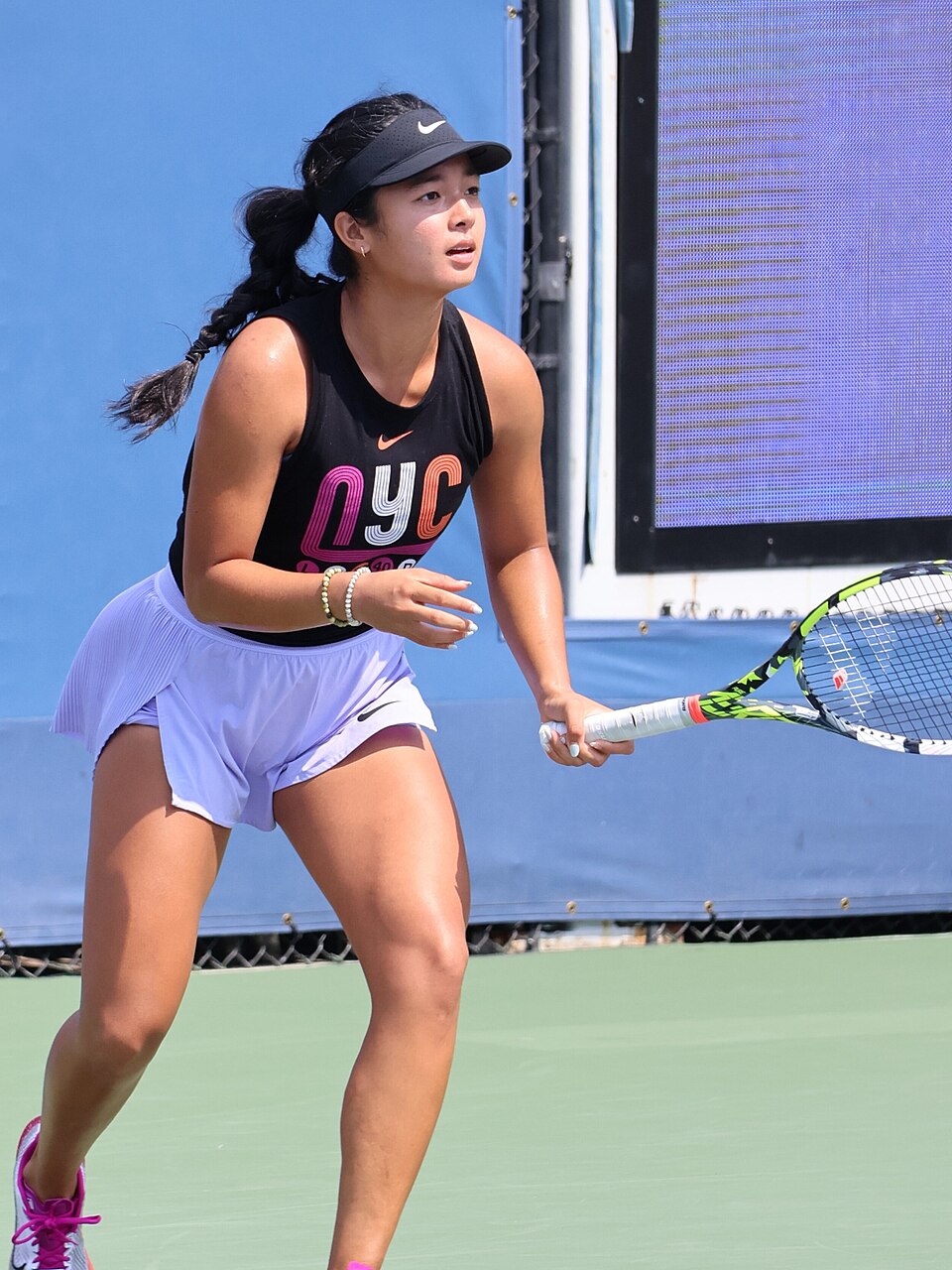
WASHINGTON — Alexandra Eala rallied from a set down to defeat top seed Jessica Pegula 4-6, 6-4, 6-0 in the final of the Mubadala DC Open on Monday, capturing her first career WTA Tour singles title and becoming the first player from the Philippines to win a title at the tour level.
The 21-year-old’s breakthrough capped a stunning week in Washington, where she knocked out three seeded players, including a Grand Slam champion and a reigning Olympic gold medalist, en route to the biggest win of her young career. Eala entered the tournament ranked No. 28 in the world and is now projected to climb into the top 20 for the first time ahead of the U.S. Open.
A dramatic, rain-interrupted final
The championship match spanned two days after heavy rain and lightning forced officials to suspend play Sunday night, with Pegula leading by a set and ahead in the second. Play resumed Monday at midday, and Eala wasted little time seizing control, closing out the match in one hour and 45 minutes once action got back underway.
From behind in the second set, Eala mounted a remarkable turnaround, winning the final nine games of the match outright. She capped the comeback with a dominant 6-0 third set in which she surrendered just eight points to Pegula, the world No. 3 and 2019 Washington champion who had entered the final chasing her 12th career title.
Eala was especially sharp behind her first serve throughout the match, winning 84.4% of those points (38 of 45) compared with Pegula’s 56.5%. She converted four of her nine break-point opportunities and won 79 of the 140 total points played in the match, despite not recording a single ace and committing three double faults.
Redemption after past heartbreak
Monday’s victory marked a measure of redemption for Eala, whose only previous appearance in a tour-level singles final ended in painful fashion. At last year’s Lexus Eastbourne Open, she held four championship points against Maya Joint before ultimately falling in a third-set tiebreak. This time, facing another high-pressure moment against one of the sport’s top-ranked players, Eala repeatedly met the challenge.
Speaking after lifting the trophy, Eala reflected on the emotional weight of finally breaking through. “I feel so much love. My first chance at a title,” she said, addressing the crowd on court following the win.
A run through the sport’s elite
Eala’s path to the title ran through a gauntlet of accomplished opponents. She opened her tournament by defeating 2024 Olympic champion Zheng Qinwen, then knocked out No. 7 seed and defending champion Leylah Fernandez in the second round. In the quarterfinals, she ousted No. 2 seed Elina Svitolina, before overcoming No. 3 seed and four-time Grand Slam champion Naomi Osaka in the semifinals to reach her first WTA 500-level final.
With her victories over Svitolina and Pegula, Eala’s win total against top-10 opponents this season climbed to seven, tying her with Elena Rybakina and Svitolina herself for the most top-10 victories on tour in 2026.
Pegula praises her opponent
Pegula, who had won the two players’ only previous meeting in the 2025 Miami Open semifinals, offered generous praise for Eala during the post-match trophy presentation, acknowledging both her opponent’s rapid rise and the passionate following she has built. “To see how far you’ve come over the last couple of years,” Pegula told Eala on court, reflecting on the Filipina’s emergence as one of the tour’s most closely watched young stars.
The result also evened the head-to-head series between the two players at one win apiece, following Pegula’s three-set victory over Eala in Miami last year.
A landmark moment for Philippine tennis
Eala’s triumph carries significance well beyond the tournament itself, marking the first time a player from the Philippines has won a WTA Tour-level singles title. Her rise has already drawn a passionate following, with a large and vocal contingent of Filipino fans packing center court throughout the tournament, a dynamic Pegula herself referenced when comparing the atmosphere in Washington to the raucous, heavily pro-Eala crowds she encountered during their earlier meeting in Miami.
Fritz claims the men’s title
In the tournament’s men’s final, played the same day, American Taylor Fritz claimed his 11th career ATP title, defeating 19-year-old Spanish rising star Rafael Jodar 7-6(2), 6-4. The win marked a significant step in Fritz’s return to peak form following a knee injury that had sidelined him earlier this season, with the American winning 81% of his first-serve points in a steady, serve-driven performance.
Prize money and rankings implications
The Mubadala DC Open featured a total prize purse of $1,637,982, with the singles champion earning $252,000. Beyond the financial reward, Monday’s result carries substantial ranking implications for both finalists. Pegula, despite the loss, is set to improve to No. 4 in the season-long WTA Race while remaining No. 3 in the overall PIF WTA Rankings. Eala, meanwhile, is projected to move into the world’s top 20 for the first time in her career, a milestone that would have seemed unlikely even to her at the start of the tournament.
With her first WTA title now secured and a significant ranking jump on the horizon, Eala heads into the U.S. Open Series as one of the tour’s most talked-about breakout stars of 2026. Her run through three seeded players, including a Grand Slam champion and a reigning Olympic gold medalist, has established her as a legitimate threat heading into the year’s final Grand Slam tournament, with fans and analysts alike now watching closely to see whether Washington marks the beginning of a sustained run near the top of the sport rather than a single standout week.
Earnings call transcript: Syndax misses Q2 2026 estimates as shares fall after hours

Paylocity Holdng earnings missed by $0.49, revenue topped estimates

Suja Life Q2 2026 slides: 50% EBITDA growth amid guidance cut

Earnings call transcript: Travere Therapeutics jumps on q2 2026 sales beat
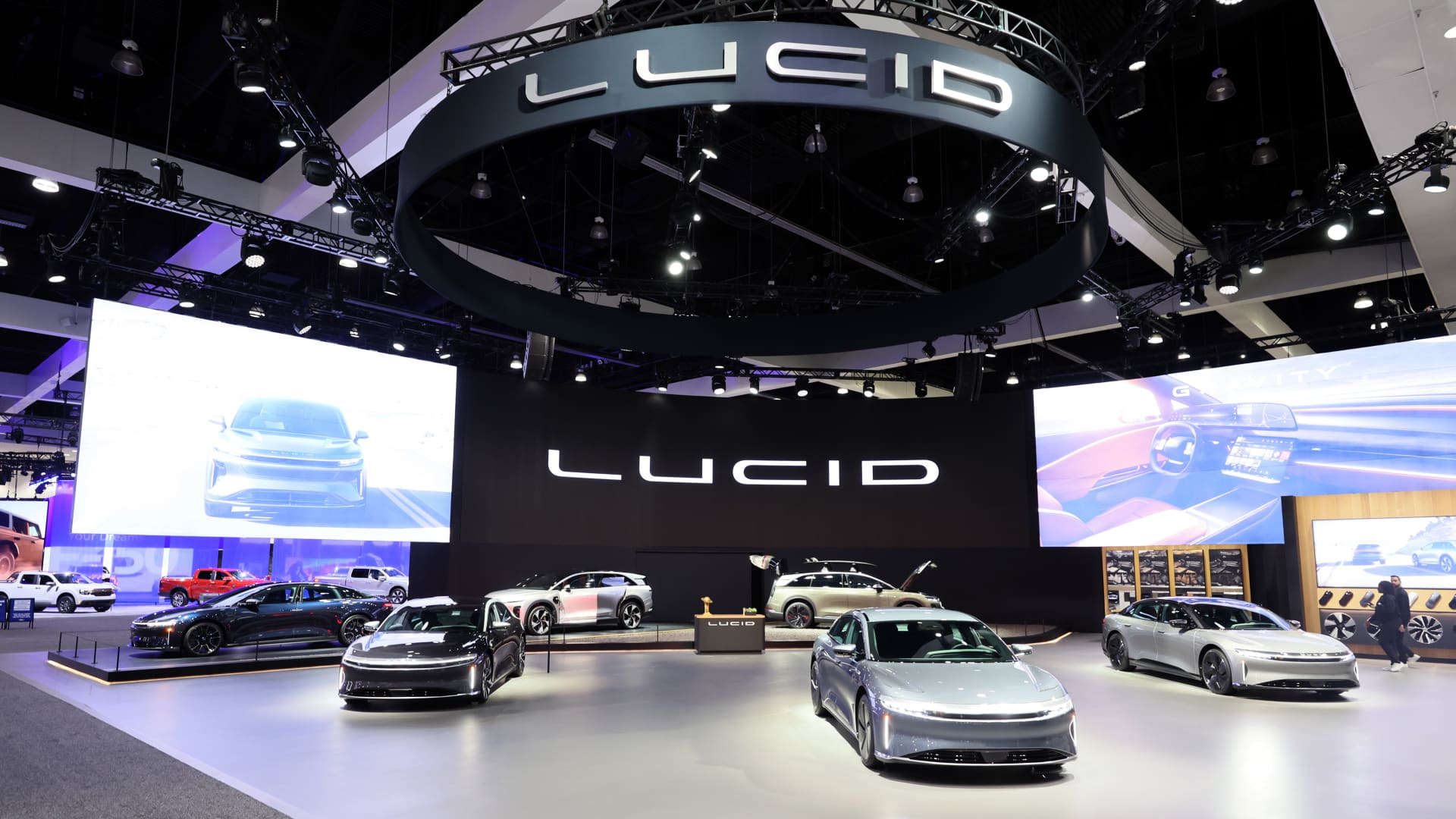
The Lucid Gravity is displayed during the 2023 Los Angeles Auto Show at the Los Angeles Convention Center on November 24, 2023 in Los Angeles, California. This year’s edition of the Los Angeles Auto Show includes a range of new SUV models.
Josh Lefkowitz | Getty Images News | Getty Images
Lucid Group missed Wall Street’s second-quarter expectations as the electric vehicle manufacturer conducts an “operational reset” amid leadership changes and cost-cutting efforts.
Those plans include beginning non-prototype robotaxi production early next year and delaying its upcoming midsize vehicle that was expected at the end of this year until “most likely” the second half of 2027, Lucid CEO Silvio Napoli told CNBC on Tuesday.
“We’re not going to make the mistake of the past where products, great cars, were in fact tainted by launching before things were ready,” he said. “I think it’s going to be ’27. … Most likely the second half of ’27.”
Here’s how the company performed in the second quarter compared with average estimates compiled by LSEG:
- Loss per share: $3.30 vs. a loss of $2.46 expected
- Revenue: $405 million vs. $416 million expected
‘Transformation program’
The company did not release updated 2026 guidance. Napoli, who started leading the automaker in June, previously suspended production expectations amid a reevaluation of Lucid’s business operations.
He told CNBC the company is “not ready” to give such guidance as Lucid resets investor expectations and has a new, incoming leadership team. Lucid also reduced production at its U.S. plant in Arizona from two shifts to one in June.
“I want it to be anchored in solid data, and most of all, I want a guidance that I’m confident Lucid will be able to deliver on and possibly even do better than that. This takes time,” he said. “I wanted to make sure that we align the reality with consensus, which is today based on outdated business model.”
The company did release broad details of an “operational reset” or “transformation program” that includes identifying $1.4 billion in cash flow improvement opportunities this year.
They include approximately $600 million to $800 million in vehicle inventory, $500 million in capital expenditures, and $200 million in operating expenses, the company said.
In addition to the cost-cutting, Lucid said the plan will broadly focus on three key areas: “cash and cost,” “customer and quality” and “culture and team.”
More specifically, the company said its efforts will focus on its robotaxi program with Uber and Nuro, a factory that’s under construction in Saudi Arabia and its upcoming midsize vehicle. Lucid called the robotaxi initiative a “top priority.”
Napoli said the company’s robotaxi plans continue, including the production of prototype vehicles based on the company’s Lucid Gravity SUV instead of its midsize vehicle. He said the company expects to deliver about 100 of the pre-production vehicles by the end of the year to its partners, with actual vehicle production in the beginning of next year.
“The robotaxi opportunity is huge, and it’s an industry that is about to start an exponential growth,” he told CNBC. “Not many companies are ready for it. We are a software-defined vehicle company, so we are well positioned.”

Lucid, Rivian and Tesla stocks
Lucid, which reported $3 billion in total liquidity to end the second quarter, said the actions and its current financials are “expected to provide sufficient liquidity runway well into 2027.”
“Silvio and his leadership team are transforming the company, and the Board stands firmly behind their actions,” Lucid Chairman Turqi Alnowaiser said in a release.
The missed results and comments come weeks after Lucid denied an online report that it was considering bankruptcy or taking the company private. The report caused shares of the company to plummet. The stock recovered some of those losses, but remains off nearly 30% in 2026.
Napoli adamantly denied such plans on Tuesday to CNBC, as he did when they were reported.
“I wholeheartedly reinforce the denial,” he said. “We are here to stay. We are here. We have a plan. We have a board and a majority investor that will help us to go through what is admittedly a moment where we are doing many things at the same time.”
Its largest shareholder is Saudi Arabia’s sovereign wealth fund, the Public Investment Fund.
Second-quarter results
Lucid’s second-quarter results included a net loss of more than $1 billion compared to a loss of $539.4 million during the second quarter of last year. The company reported an adjusted loss of $901.1 million, or $3.30 per share, compared with a loss of $632.1 million, or $2.80 per share, a year earlier.
The losses were on production of 4,774 vehicles, up 24% year-over-year, and deliveries of 3,953 vehicles, up 19%, during the second quarter. The company currently offers the Air sedan and Gravity SUV that start at roughly $70,000 and $80,000, respectively.
Napoli, who formerly led an escalator and elevator manufacturer, replaced interim CEO Marc Winterhoff on June 1. Winterhoff remained with the company until late June as Napoli put together a new leadership team.

Selby and Kelfield road restrictions announced by council

Caterpillar Stock Soars Over 6% After Record $20.5 Billion Quarter Fueled by AI Data Center Demand Today

Clarity Act Senate Vote Could Fail as Democrats Refuse to Budge


-

 Business6 days ago
Why Trees Belong on the Risk Register
-

 Fashion4 days ago
Weekend Open Thread: Wit & Wisdom
-

 Politics4 days ago
Meta enters AI-training agreement with far-right ‘propaganda rag’ Newsmax
-

 Politics6 days ago
Reform UK betrays West Mids residents by running from party pledges
-

 Crypto World3 days ago
MicroStrategy Post-Earnings CLARITY Act Push Could Add New Catalyst for Its Stock
-

 Business7 days ago
Major shareholder moves on Canyon
-

 Crypto World4 days ago
XRP Ledger v3.3.0 brings five institutional features
-

 Politics2 days ago
Zack Polanski: an incitement to murder Nigel Farage?
-

 News Videos5 days ago
Bitcoin Enters the 3rd Stage of the Bear Market
-

 Crypto World7 days ago
Kraken Enables Retail Access to Jersey Mike’s IPO via Tokenized Shares
-

 Politics5 days ago
Luke Littler’s dominance sparks GOAT debate
-

 Sports5 days ago
Seema Kaliramna Wins Discus Throw Bronze, Takes India’s CWG Medals Tally To 17
-

 Crypto World4 days ago
New York sues Kalshi over prediction market gambling
-

 Crypto World3 days ago
Crypto PAC spending tops $2M in Michigan House race
-

 Business4 days ago
Trump Announces Hamas Disarmament Agreement as Iran Strikes Kuwait Air Base and US Attacks Pause Overnight
-

 Tech6 days ago
Gemini can now summarize the messiest comment threads in Google Docs
-

 Tech3 days ago
ESET tracks rise in malicious AI skills and adaptable malware
-

 NewsBeat5 days ago
Four people die trying to cross Channel in small boats
-

 Tech5 days ago
Gemini Spark can now use Chrome logins and saved passwords to run errands on your behalf
-

 Business2 days ago
DTCR: Deleveraging And A Hedge Fund Collapse Point To A Possible AI Bottom
You must be logged in to post a comment Login