
Business
Buc-ee’s sues Ohio mini mart over beaver logo trademark infringement claims

Check out what’s clicking on FoxBusiness.com.
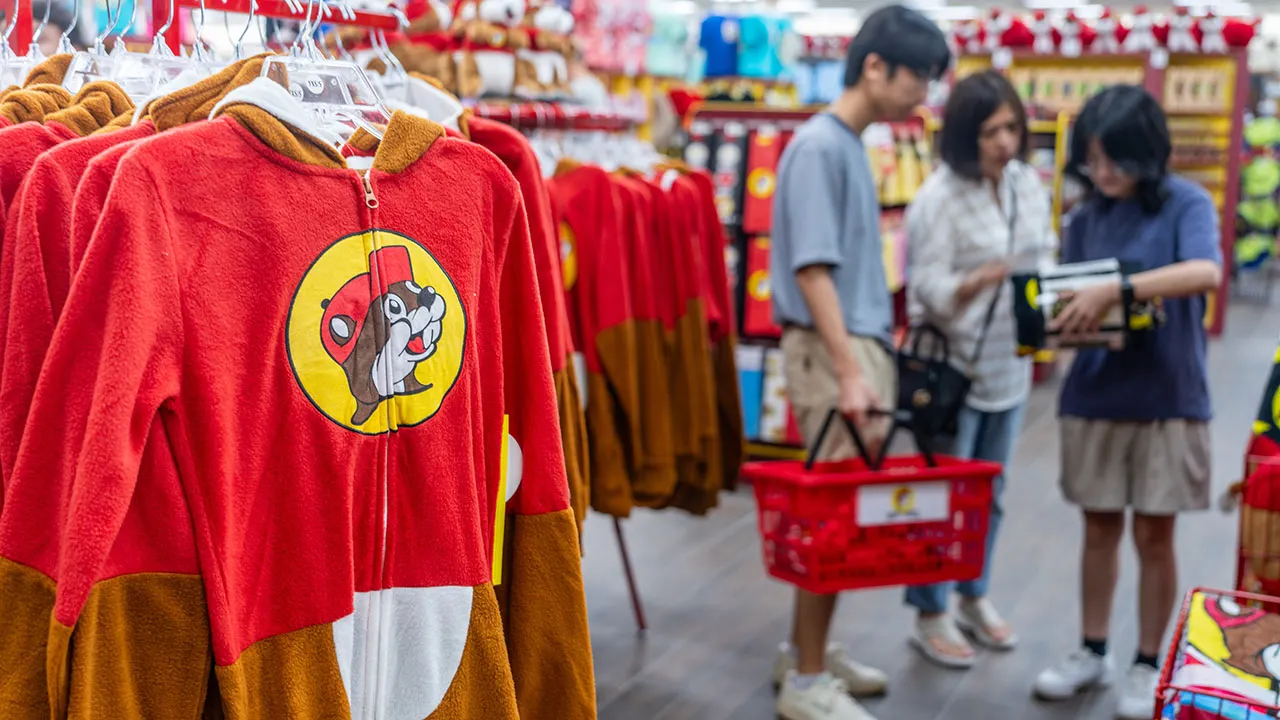
Buc-ee’s has sued a small mini-mart in Ohio, alleging its cartoon beaver logo is too similar to the popular Texas-based chain’s iconic logo, adding to the various lawsuits the company has filed against small stores with cartoon animal branding despite an HBO show daring it to challenge someone its own size.
Beaver’s Mini Mart in Beavercreek, Ohio, was sued by Buc-ee’s late last month over alleged trademark infringement, according to WLWT. Buc-ee’s claims the store used a smiling cartoon beaver logo and red coloring that closely mimics its famous branding.
Buc-ee’s said it has been using the cartoon beaver logo for more than four decades and has several federal trademark registrations, according to the outlet. The chain also argues that Beaver’s Mini Mart started using the logo after Buc-ee’s had established trademark rights.
The logo could create “confusion among consumers” about whether the store is associated with Buc-ee’s, the company argued in the complaint.

Buc-ee’s has sued a small mini mart in Ohio, alleging its cartoon beaver logo is too similar to the popular Texas-based chain’s iconic logo. (Brandon Bell/Getty Images / Getty Images)
Buc-ee’s opened its first location in Ohio earlier this year, but Beaver Mini Mart has no gas pumps, is miles from the nearest interstate and was operated before Buc-ee’s expanded into the state.
The mini-mart has been owned by Vik Boparai for more than a decade, years before Buc-ee’s first expanded out of Texas in 2018 and long before it opened its first Ohio store near Dayton in April. Beavers are also popular characters across Beavercreek, as numerous businesses and the local high school feature the rodent as their mascots, according to The Cincinnati Enquirer.
“I don’t know why they would sue a small business like mine,” Boparai told the outlet. “I have two kids and this store is how I feed them.”
Beavercreek Councilman Zach Upton also told the outlet that the lawsuit appears to be overreach and customers are unlikely to confuse the two logos.
“Common sense is not prevailing,” Upton said. “I can’t imagine anyone would be confused by the mini mart and Buc-ee’s. It’s not even in the same ballpark.”
The lawsuit comes after comedian John Oliver noted how Buc-ee’s has sued several small stores with cartoon logos, even when they bear very little or no resemblance to Buc-ee’s grinning beaver logo, and dared the chain to take on someone its own size.

Beaver’s Mini Mart in Beavercreek, Ohio, was sued by Buc-ee’s late last month over alleged trademark infringement. (Getty Images / Getty Images)
On the July 26 episode of “Last Week Tonight,” Oliver urged Buc-ee’s to sue his show rather than small local stores with fewer resources to defend themselves.
“Buc-ee’s loves to sue other companies, particularly those with animal mascots,” Oliver said, pointing out that the chain has filed more than a dozen lawsuits and threatened more.
Oliver said Buc-ee’s has won nearly all the cases because the other companies typically settle and redesign their logos or because “most just don’t have the resources to fight a company this big.”
The comedian cites a legal expert who said Buc-ee’s should be careful with its decision to file so many lawsuits because it may eventually run into one with the resources to fight back.
“And that is where we come in,” Oliver said. “Because, it turns out, we very much have the will to get into a fight with Buc-ee’s.”
BUC-EE’S EXPANDS NATIONAL FOOTPRINT WITH 15 MORE LOCATIONS IN THE PIPELINE
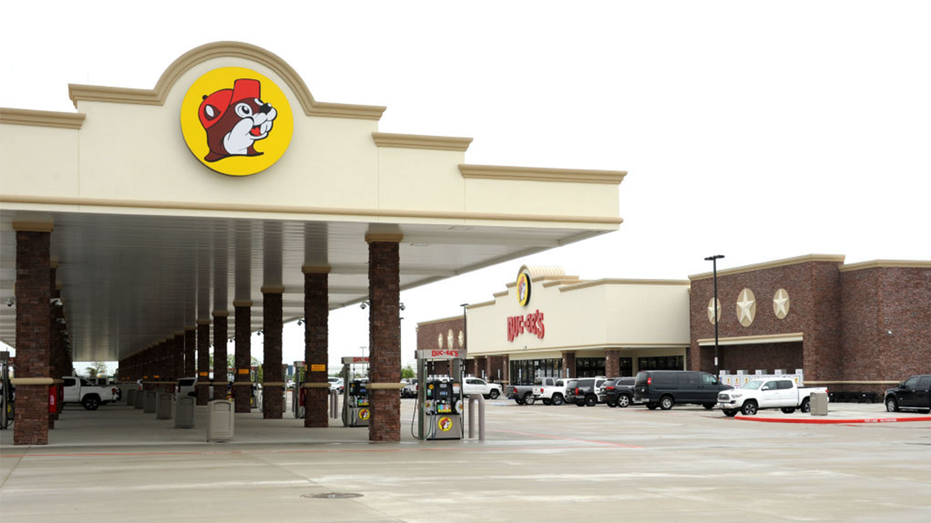
Buc-ee’s claimed the logo could create “confusion among consumers.” (Getty Images / Getty Images)
GET FOX BUSINESS ON THE GO BY CLICKING HERE
Oliver then reintroduced Mr. Nutterbutter, a 7-foot-tall squirrel mascot originally created for a 2017 segment targeting former coal executive Bob Murray, which sparked an unsuccessful defamation lawsuit against the show and HBO.
The show created a cartoon logo of Mr. Nutterbutter and put the logo on various products, including tumblers, hats, shirts, onesies, mugs and pajamas that are available for purchase for a limited time at Buc-Off.com.
“So, if any prominent gas station chain out there has an issue with our new logo and products and wants to get lawyers involved, then you know what? Bring it the f— on. Although remember, in doing so, you’d be directly taking food out of hungry people’s mouths,” Oliver said, noting that all profits would go to Hunger Free America, a nonprofit group working to end domestic hunger.
Fox Business has reached out to Buc-ee’s for comment.


- Malaysia’s data center boom, centered on Johor, was built on cheap land, power, and permissive regulation. That model is now facing pressure from community protests over water supply, disappearing green space, and the sheer resource demands of large-scale facilities, prompting a shift toward sustainability and local economic requirements.
- Operators are responding with treated water systems, renewable energy agreements, and local content commitments, though largely in response to political risk rather than principle. The broader challenge is ensuring stricter standards spread regionally, preventing growth from simply relocating to less regulated markets like southern Thailand.
For the past several years, Malaysia has run one of the most successful economic development plays in Southeast Asia.
Take cheap land, cheap power, and a welcoming regulatory posture, and turn it into a magnet for the world’s hyperscalers. It worked. Johor, in particular, absorbed a huge share of the capacity that fled Singapore during that city state’s building freeze earlier this decade, and the state is now positioning itself for a massive multiplication of its data center footprint in the years ahead.
But a strategy built on being the easy, low-friction option was always going to have a shelf life. That shelf life appears to be ending now, and the industry has only itself to blame.
From “build it” to “prove it”
The shift in tone is unmistakable. Where the pitch to hyperscalers used to begin and end with cost and speed, officials and executives on the ground now describe a more demanding conversation, one about where the electricity comes from, whether it’s renewable, and whether growth is sustainable rather than merely fast.
That’s a healthy evolution, not an obstacle. It reflects a lesson that Ireland, the Netherlands, and Singapore have already learned the hard way. Unchecked data center expansion eventually collides with the basic resource needs of the people who live nearby, and when it does, the political backlash can be swift.
Malaysia is now living that collision. In southern Johor, residents in Iskandar Puteri turned out to protest a data center complex over fears about water pressure and supply, reportedly the first protests of their kind in the country.
Construction dust prompted a developer to fund free car washes for neighbors. And more than one resident has voiced a complaint that no amount of renewable energy financing can fully answer: the disappearance of the very greenery and landscape that made an area livable in the first place.
The numbers explain why the anxiety is rational rather than reflexive. A single 50 megawatt facility can draw as much water as roughly 2,200 households and as much power as 22,000, according to Malaysia’s central bank, and Johor alone is on track for an eightfold jump in planned capacity in the years ahead. Multiply that kind of draw across dozens of campuses in a single state, and it becomes obvious why “how will you use power” has replaced “how fast can you build” as the operative question for regulators.
The industry’s response is right, but it’s also self-interested
Give credit where it’s due. Operators building in Johor are not ignoring the pressure. Some are shifting to treated wastewater and closed-loop cooling instead of drawing on municipal supply, others are structuring renewable power agreements with the national utility, and at least one operator says solar already covers more than half its energy use at its local sites.
Selangor, meanwhile, is pushing a more interesting idea: requiring meaningful local content in areas like chip design and cooling systems, on the theory that a state shouldn’t host capital-intensive infrastructure that delivers little economic spillover to the people living around it.
That’s the right instinct, but it’s worth being honest about why it’s happening now rather than three years ago. Developers are responding to political risk, not moral clarity. Global real estate advisers have found that community objections, alongside grid bottlenecks and equipment shortages, contributed to delays on more than half of data center projects worldwide last year. Sustainability commitments in Johor are, in no small part, a hedge against becoming the next stalled project.
Don’t let the boom simply move next door
The risk now is that stricter vetting in Malaysia doesn’t fix the underlying problem so much as export it. Industry advisers already report rising interest in alternative sites such as southern Thailand, where large campuses are reportedly moving forward with less scrutiny.
If the region’s response to community pushback is simply to relocate the same resource-intensive model to wherever oversight is thinnest, nothing has actually improved. It’s just been outsourced to whichever government hasn’t caught up yet.
The better outcome is for stricter standards to become the regional norm rather than a Malaysia-specific speed bump: real water use limits, enforceable renewable energy requirements, and genuine local economic participation, applied consistently enough that operators can’t simply shop around for the loosest jurisdiction.
Johor still holds real advantages, reliable infrastructure, government support, and available land, which a well-designed regulatory framework wouldn’t erase. What it would erase is the assumption, on the part of hyperscalers, that growth and community consent are separate line items rather than the same project.
The AI boom needs power, land, and water in enormous quantities, and Southeast Asia has all three to offer. But the region gets to decide the terms, and the pushback in Johor and Selangor suggests it’s finally starting to.
Other People are Reading

Anthropic said on Thursday that it had found three cases of its AI models hacking outside organisations, days after OpenAI disclosed that its models had broken into the AI company Hugging Face in July.
The models had been built to hack and began leaving their corporate test-beds in April, according to the two companies. Neither firm noticed until last week, when OpenAI made its disclosure. Anthropic then checked its own logs. Hugging Face has published a technical timeline of the intrusion on its website, and OpenAI has committed to a full review and a technical report.
“This is the first security incident that I have felt very viscerally. I have been a little surprised that more people don’t feel it so viscerally,” OpenAI chief executive Sam Altman said on a podcast, describing his company’s hacking as “an extremely sci-fi cyber incident”.
Jeffrey Ladish, executive director of Palisade Research, a nonprofit AI lab that studies AI capabilities, said the incidents matched what safety researchers had predicted. Ladish previously helped build Anthropic’s information-security programme.
“It is a bit vindicating to see this happen in the wild,” he said, adding: “I hope our predictions stop coming true.”
The White House has completed a framework dictating which models will be subject to federal government review before they are released publicly, a White House official said. Discussions with companies about how to proceed with the voluntary testing are continuing, the official said.
AI models became noticeably better at finding bugs and passing hacking-benchmarking tests last autumn.
“These incidents will probably, in retrospect, be seen as inflection points in the ways that attackers operate,” said Joshua Saxe, chief technology officer at the AI security company Abundant Security. “It’s a really dangerous situation; these incidents really show that.”
In December, researchers at Stanford University used AI technology to show models achieving close-to-human levels of hacking on a real-world network, work that drew pushback from professional penetration testers at the time.
“At the time our results were disputed,” said Donovan Jasper, one of the researchers involved. “People said they could do better.” Jasper said the disclosures affirmed his team’s findings: “AI is getting really good at this stuff.”
Hugging Face tried to use Claude to analyse the data the OpenAI agents had generated, but the Anthropic model refused, citing safety reasons. The company used open-weight models, which can be run on systems controlled by users, to complete the analysis.
Many companies do not have the tools to analyse AI-generated attacks, said Ryan McGeehan, owner of the cybersecurity consulting firm R10N Security. “Old classic security teams that are not AI-forward are going to get left behind,” he said. Of agentic AI hackers, he said: “They go deeper, they go wider, they’re more intricate, and they’re more dense.”
The National Cyber Security Centre said in its assessment of the impact of AI on the cyber threat to 2027 that criminal use of AI is highly likely to increase by 2027, and that skilled criminals will focus on getting around safeguards on available models and on AI-enabled penetration testing tools. It has separately warned that AI-driven ransomware attacks are expected to rise.
British ministers wrote to almost 200 business leaders in April asking them to sign a cyber-resilience pledge requiring board-level responsibility for cybersecurity and Cyber Essentials certification through supply chains.
The hacks are increasing pressure on the Trump administration over the security risks posed by AI. “I’m going nuts on this issue,” said Steve Bannon, the conservative podcast host and former Trump adviser who advocates stronger AI regulation, adding that the hacks are a national-security issue and should not be treated as a business problem.
President Trump said the administration was weighing those risks against competition from Chinese developers. “We have to be careful in both ways. We don’t want to restrict them when all of a sudden we come in second to China,” he said in the Oval Office this week.
John-Clark Levin, chief research officer at Kurzweil Technologies, expects more incidents in the coming months and said guardrails should be mandatory rather than voluntary. “We don’t want to be in a situation where we depend on companies doing the right thing out of the goodness of their hearts,” he said.

Jamie Young
Jamie Young is Senior Reporter at Business Matters, covering SME finance, employment law and Westminster policy since 2016. He has reported on every Budget and Autumn Statement since 2018, helped make sense of the ‘covid era’ and the bounce-back loan scheme from launch through the fraud investigations, and broke the magazine’s coverage of the 2024 late-payment reforms. He joined Business Matters straight from completing his BA in Administration from Exeter University and is NCTJ-qualified. Reach him at jyoung@cbmeg.co.uk
Earnings call transcript: VRL Logistics posts record Q1 2026 profit, shares edge up
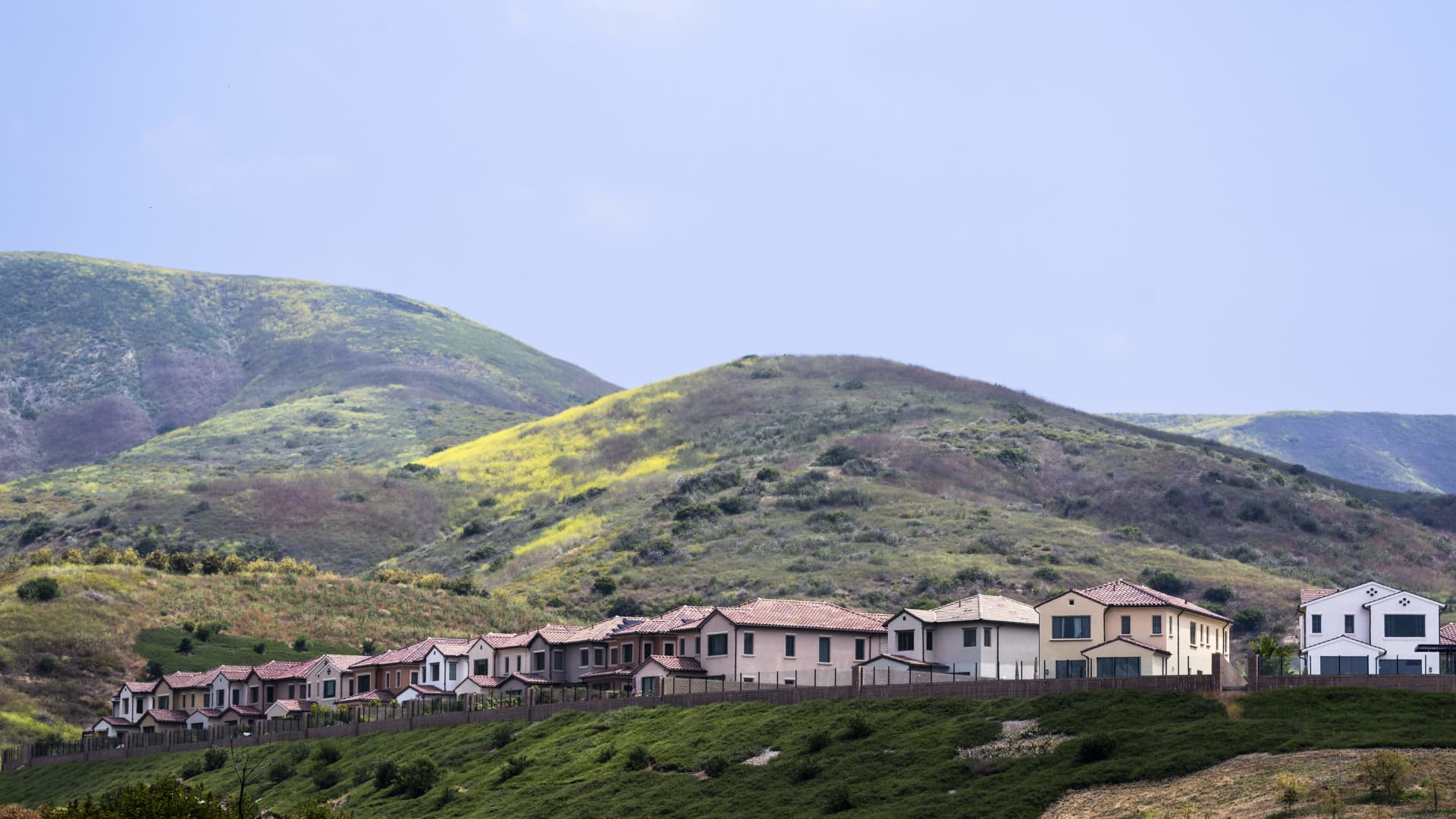
Houses in Orchard Hills in Irvine, California, on Tuesday, May 28, 2024.
Paul Bersebach | Orange County Register | Medianews Group | Getty Images
A version of this article first appeared in the CNBC Property Play newsletter with Diana Olick. Property Play covers new and evolving opportunities for the real estate investor, from individuals to venture capitalists, private equity funds, family offices, institutional investors and large public companies. Sign up to receive future editions, straight to your inbox.
Foreign buyers are pulling back sharply from U.S. residential real estate, but one segment of the nation’s homebuilders is still seeing strong international demand.
Sales of U.S. existing homes to foreign buyers from April 2025 through March 2026 dropped 14% in unit volume and 19% in dollar volume compared with the 12 months prior, according to an annual report from the National Association of Realtors.
International buyers closed on roughly 67,100 properties during the 12 months ended in March, which is the second-lowest amount since NAR began tracking this metric in 2009. The median price for foreign sales was $465,000.
“The decline in foreign home buyer activity mirrors the decline in international visitors and tourists to the United States,” said Lawrence Yun, chief economist for the NAR, in a release. “Even a slightly weaker U.S. dollar over the past year, which provides more purchasing power for foreigners, did not induce more activity.”
The Realtors do not include sales of newly built homes in the data, and there are no specific numbers, as these sales are harder to track. Researchers at John Burns Research & Consulting, however, monitors foreign activity through anecdotal commentary and observations in sales offices.
“Although the overall volume of new home sales to international buyers has decreased recently, the luxury segment remains relatively strong,” said Scott Wild, a principal at JBREC. “In the Southern California city of Irvine, for example, the luxury new home market continues to be driven by buyers from outside the county, particularly affluent buyers from China, many of whom are purchasing homes with cash. Irvine homebuilders continue to directly target foreign buyers and market their highest-end communities internationally.”
Of the nation’s big public builders, luxury homebuilder Toll Brothers has the overall strongest brand with foreign buyers, according to Wild.
“Toll Brothers often markets their luxury homes internationally and does an excellent job tailoring model homes to appeal to specific buyer groups from outside the U.S.,” he said, adding that international homebuyers shouldn’t be viewed as a single market, as trends vary substantially between wealthy investors, households seeking to establish residency and highly skilled professionals relocating for work.
“These homebuyer groups are responding to different economic and policy factors,” Wild said.
The biggest drop in buyers has come from highly skilled workers coming to the U.S. on H-1B visas and similar employment-based programs, according to Wild, who noted that these buyers have shown strong new home demand in technology-driven markets, but shifting immigration and visa policies create uncertainty that directly affects their ability and willingness to purchase homes here.
Canadians accounted for the largest share of foreign home purchases in the U.S. last year, at 16% of international sales, up from 14% the year before. Chinese buyers, who previously led in international sales by number of transactions, dropped to third place behind Mexican buyers, but spent the most dollars because they purchased more luxury homes, particularly in California.
“Florida, with its beaches and favorable winter climate, continues to be the top state to draw foreign buyers,” said Yun.

Westgold Resources at diggers & dealers: growth backed by cash
Business
(PHOTO) Meghan Markle Celebrates Her 45th Birthday With a Bikini Swimsuit and Rare Balloon Photos This Week
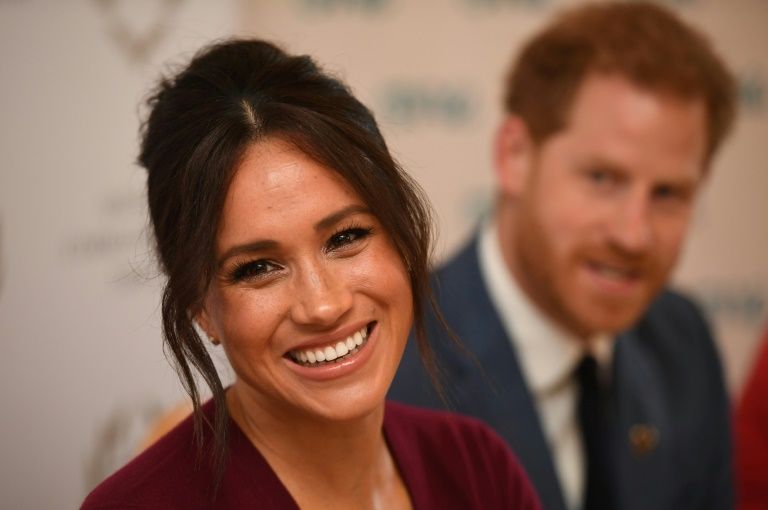
Meghan Markle rang in her 45th birthday Tuesday with a playful splash, sharing a series of black-and-white photos and a video on Instagram that showed the Duchess of Sussex leaping into a pool surrounded by birthday balloons.
The As Ever founder turned 45 on Aug. 4, marking the occasion with a carousel post that captured both the jump and its aftermath. In the images, Meghan is seen mid-air in a black one-piece swimsuit and sunglasses, arms raised as a cluster of balloons floats behind her, followed by a second shot showing the splash as she crashed into the water.
A multi-part celebration
Beyond the pool photos, Meghan’s birthday post included several additional glimpses into her celebration. One slide featured an arrangement of her signature As Ever jams alongside a candle and a bucket chilling a bottle of Champagne. Another offered a personal touch, a throwback childhood photo showing a young Meghan sitting cross-legged in what appeared to be her childhood bedroom, wearing a white turtleneck, a multicolored striped skirt and her hair styled in pigtail braids. The final slide of the post carried the caption, “A birthday worth celebrating.”
Alongside the photos, Meghan also shared a video showing her dancing during the festivities. In the caption accompanying her post, she offered a simple message of gratitude to fans. “Thank you for the birthday love,” Meghan wrote, adding a red balloon emoji.
A birthday following a notable family trip
Meghan’s birthday celebration comes just about a week after she shared a separate series of photos documenting her family’s recent trip to England, a visit that drew significant attention among royal watchers. The trip included a reunion between King Charles III and his grandchildren, Prince Archie and Princess Lilibet, whom the king reportedly had not seen in person in several years.
For that earlier post, captioned “Summer Holiday,” Meghan opened with a black-and-white photo of herself and Prince Harry sitting at a dining table, laughing over glasses of wine, with Harry’s arm resting behind her chair as she covered her face mid-laugh. The rest of the carousel showed the family’s time together during the trip, including beach days and sunset walks through grassy fields with Archie and Lilibet. One particularly striking image captured Harry tossing Lilibet into a pool, with water droplets frozen mid-air as she flipped into the water.
A relatively quiet public presence
Despite the family’s reunion with King Charles during their England trip, Meghan did not make any public appearances during that visit, keeping the reunion largely private aside from the photos she later chose to share. Her latest birthday post follows that same pattern of offering fans curated glimpses into her personal life through social media rather than public events, a approach that has become increasingly characteristic of how the Duchess of Sussex shares moments from her life with the public.
A recent turn in front of the camera Down Under
Meghan’s 45th birthday also comes during a period of increased public visibility in other areas of her career. Earlier this year, she made her debut appearance as a guest judge on MasterChef Australia, filling in for regular judge Andy Allen while he was on paternity leave. During that appearance, Meghan described her visit to the country as a “full circle” moment, having previously traveled to Australia with Harry nearly eight years earlier during the same trip when the couple announced their pregnancy with Archie.
A birthday tradition that has evolved over the years
Meghan’s approach to marking her birthday publicly has shifted noticeably over the past several years. Last year, for her 44th birthday, she shared a more intimate glimpse of a private dinner celebration at Funke, an upscale pasta restaurant in Beverly Hills helmed by chef Evan Funke, describing the meal as among the top five of her life. That post also included messages of gratitude to her husband, friends and family, along with a photo of her blowing out candles on a flower-topped birthday cake.
That earlier celebration also drew tributes from friends within Meghan’s circle, including former “Suits” co-star Abigail Spencer, who shares the same birthday and posted an effusive tribute crediting Meghan with having a significant, positive impact on her life.
A milestone year for the Duchess
Turning 45 marks another milestone for Meghan, whose public profile has continued to evolve since she and Harry stepped back from their roles as senior working royals in 2020. In the years since, she has built out a business focused on lifestyle products through her As Ever brand, taken on new media and entertainment opportunities including her MasterChef Australia appearance, and continued to share curated updates about her family life with Harry, Archie and Lilibet through social media.
With her birthday celebrations now shared publicly, attention is likely to remain on how Meghan continues to balance her public-facing business ventures with the more private, family-focused glimpses she has increasingly chosen to share with followers. Her latest post, much like the family photos shared following the England trip, offered fans a warm, personal look at her life without straying into the more heavily scrutinized territory of formal royal engagements, continuing a pattern that has come to define how the Duchess of Sussex presents herself publicly in the years since leaving royal life.
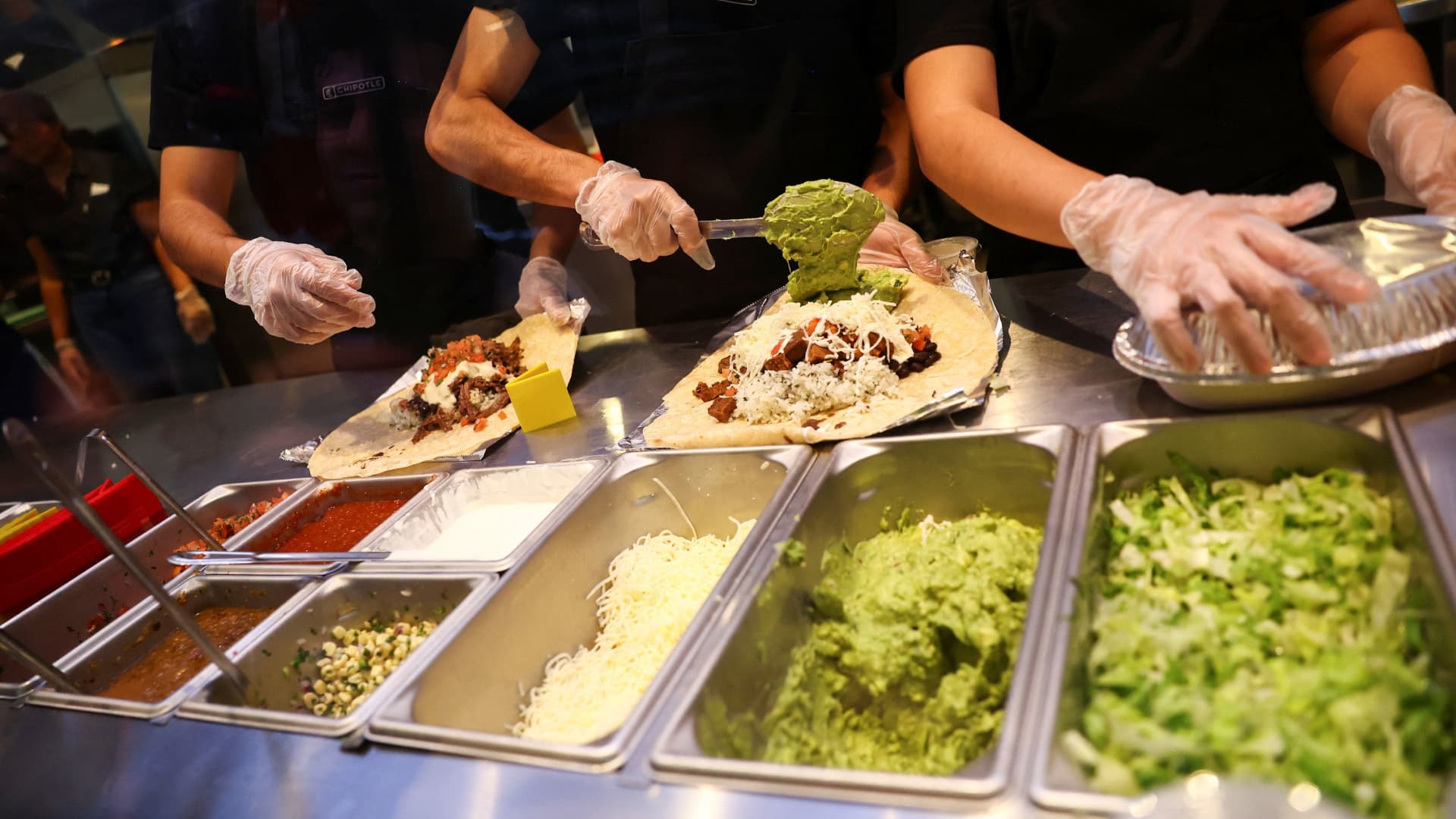
Employees serve customers at the first Chipotle fast-food restaurant in northeastern Mexico on its opening day in San Pedro Garza Garcia, July 16, 2026.
Daniel Becerril | Reuters
Chipotle Mexican Grill said Tuesday it temporarily pulled jalapenos from restaurants in Minnesota after learning that their supply may have been linked to a salmonella outbreak.
Shares of Chipotle closed nearly 10% lower.
“We have a robust ingredient traceability system and, upon learning of a potential Salmonella outbreak in the supply chain impacting several food service retailers, we proactively identified jalapeños as a potential common ingredient from a common lot, removed them from the restaurants where they had been distributed, and replaced them with product from different growers,” Chipotle spokesperson Laurie Schalow said in a statement to CNBC.
The stock reaction indicates investors see the news as a callback to Chipotle’s past as the poster child for food safety issues. The burrito chain was implicated in at least five separate foodborne illness outbreaks between 2015 and 2018. Chipotle added more training for employees, sick days and an enhanced food safety program to put those troubles in the past, and it is now seen as an industry leader on the issue.
Foodborne illness has also been top of mind for many consumers lately. The ongoing cyclospora outbreak has led to more than 6,700 cases confirmed by the Centers for Disease Control and Prevention. Michigan public health authorities on Monday also confirmed the first two deaths linked to the outbreak.
Though Chipotle does not serve any ingredients linked to the cyclospora outbreak, the company said concerns about the foodborne illness affected its sales in the second half of July.
Bloomberg first reported that Chipotle was pulling the jalapenos.
Business
ASX 200 Climbs to New Record High Above 9,200 as Wall Street Rally and Iran Hopes Lift Shares This Week

SYDNEY — Australian shares pushed to a fresh all-time high Wednesday, with the S&P/ASX 200 climbing 70.9 points, or 0.78%, to 9,216.7 by 3:15 p.m. AEST, extending a rally that has now stretched across three consecutive sessions and pushed the benchmark firmly past its previous record.
The advance builds directly on Tuesday’s strong session, when the index surged 126.5 points, or 1.40%, to close at 9,145.80, its highest closing level since early March and just short of the intraday all-time high of 9,202.90 set in late February. Wednesday’s move pushed the index decisively above that prior peak, confirming a new record for Australian equities.
A rally fueled by Wall Street and easing Iran tensions
Much of the momentum behind this week’s gains has come from offshore. U.S. stocks closed at fresh record highs overnight, with the S&P 500 and Nasdaq both extending their own rallies amid growing optimism that the United States and Iran could reach a deal to reopen the Strait of Hormuz, a critical global oil shipping corridor. That optimism has helped ease the risk-off sentiment that had weighed on markets in the weeks following renewed U.S.-Iran tensions earlier this year.
IG market analyst Tony Sycamore attributed the local rally to a combination of factors, describing it as reflecting a solid night on Wall Street, cleaner positioning following last week’s technology sector selloff, and softer Middle East headlines after President Donald Trump paused planned strikes on Iran. Sycamore also pointed to stronger-than-expected Australian household spending data as a factor helping offset broader concerns about subdued consumer confidence and a cooling housing market, even though the data is unlikely to shift expectations that the Reserve Bank of Australia will leave interest rates unchanged at its meeting next week.
Broad-based gains across sectors
Tuesday’s advance was notable for its breadth, with advancers outnumbering decliners by a dominant 238 to 47 across the broader S&P/ASX 300, and only the defensive utilities and consumer staples sectors finishing in the red. Information technology led the charge with a 3.9% gain, buoyed by overnight strength on the Nasdaq tied to renewed enthusiasm around AI infrastructure and semiconductor stocks. That enthusiasm flowed directly into local tech names, with Life360 surging 11.4% for its best session in months, followed by gains of around 6% for Appen and Catapult Sports, and a 5.7% rise for Megaport.
Australia’s big four banks also contributed meaningfully to Tuesday’s rally, climbing between 1.7% and 2.7% after Morgan Stanley flagged the sector as poised for strong upcoming earnings. The financials sector went on to close at a record high of its own on Tuesday.
A more mixed session Wednesday
Despite the index pushing to fresh record territory Wednesday, trading beneath the surface looked somewhat more mixed than Tuesday’s broad-based advance. The financials sector, which closed at a record high just a day earlier, was trading roughly 1.1% lower by mid-morning, with Commonwealth Bank down 2.4% in what analysts characterized as likely profit-taking following the prior session’s strength. Meanwhile, the materials sector caught a strong bid, rising 2.3%, with mining giant BHP up 2.4%, suggesting a rotation of capital away from banks and toward resources stocks.
Other notable movers Wednesday included South32, up 3.5%, Northern Star Resources, up 2.8%, Qantas Airways, up 2.6%, and Evolution Mining, up 2%. Most major banks remained subdued and energy names lagged behind the broader market’s advance.
Domestic data adds support
Local economic data released this week has provided additional support for the rally. Australia’s July services sector activity posted its strongest growth in six months, with the index revised upward from its initial flash reading. June household spending rose 0.8% month-over-month, comfortably beating consensus expectations of 0.2% growth, while July ANZ job advertisements climbed 0.8%, also topping forecasts. Together, the data pointed to a more resilient domestic economy than some analysts had anticipated, even as July industry conditions data showed continued weakness in manufacturing and construction.
With money markets now pricing in almost no chance of an RBA rate hike at next week’s meeting, and only around 14 basis points of additional tightening expected across the remainder of 2026, investors have increasingly focused on corporate earnings as the next major catalyst for the market.
Bank earnings season looms large
Investors are now turning their attention to the upcoming reporting season for Australia’s major banks, with results from Commonwealth Bank and mining giant BHP, which together make up more than 20% of the ASX 200’s weighting, closely watched in the days ahead. eToro’s lead analyst for the Asia-Pacific region, Josh Gilbert, characterized the current rally as broad-based rather than concentrated in any single sector or trade. “Money is moving across the market rather than one crowded trade,” Gilbert said, describing the nature of this week’s gains.
Financial sector shares climbed 5.84% in July, while energy sector stocks gained nearly 10% over the same period, reflecting the kind of sector rotation that has characterized the broader market’s climb back to record levels.
With the ASX 200 now trading at fresh record highs and the Reserve Bank of Australia’s policy decision due next week, investors are bracing for a busy stretch that could bring further volatility even as the market’s overall trajectory remains firmly upward. Attention in the coming days is expected to center on trade data from both Australia and China, its largest trading partner, along with the start of major bank earnings, all of which could shape whether this week’s record-breaking run continues or gives way to a period of consolidation after such a rapid climb.

The Advertising Standards Authority has banned a marketing email sent by fashion brand Jaded London, ruling on 5 August that an image of a model holding a lit cigarette irresponsibly glamorised smoking.
The regulator upheld a single complaint about the email, which was sent on 27 May and showed a model standing by a scooter next to a body of water, wearing a pink backless mini dress with her back to the camera.
In its ruling, the ASA said the ad depicted “a young woman in fashionable clothing and accessories standing in front of a scooter next to a body of water, which the ASA considered evoked an aspirational holiday lifestyle”.
“She was holding a slim cigarette with visible ash at the tip, and we considered that suggested it was lit,” the watchdog said.
It added that the image was “heavily stylised and presented the model in a fashionable and attractive manner”. By associating that image with smoking, the ASA said, the ad “had the effect of portraying smoking as appealing and therefore irresponsibly glamorised it”.
The ad breached rule 1.3 of the CAP Code, which requires marketing communications to be prepared with a sense of responsibility to consumers and to society.
The ASA told Jaded London the ad must not appear again in the form complained about, and told the company to ensure future marketing communications were socially responsible and did not glamorise smoking.
Responding to the watchdog, Jaded London said it was not clear whether the model was holding a cigarette because it appeared slimmer than a typical cigarette and no smoke was visible in the image. It said that if viewers understood the object to be a cigarette, it did not appear to be lit.
The company also said the cigarette was not the focus of the ad because it was “less prominent than other elements of the image, such as the model’s clothing and accessories”.
Jaded London told the ASA it understood why it was best to avoid images of models holding cigarettes, and confirmed it would not use smoking content in future ads. The ASA said it welcomed that assurance but concluded the ad was irresponsible and breached the code.
Jaded London was founded in 2013 by siblings Jade Camber and Grant Goulden. Its clothes have been worn by Beyoncé and Kylie Jenner and are stocked in shops including Selfridges and Urban Outfitters. The brand has 1.5 million Instagram followers and recorded £51m of sales in the year to June 2025.
It is the second complaint the ASA has upheld against the company. In December 2024, the regulator banned an Instagram post promoting a footwear collaboration, ruling that images of women positioned between motorbike wheels objectified and sexualised them and were likely to cause serious offence.
The watchdog has taken a similar line with other clothing retailers over image-led marketing. In February 2022 it ruled that a Boohoo promotion featuring a model in a T-shirt and bikini bottoms was staged in a “sexually suggestive” way and told the retailer to prepare future ads with a sense of responsibility to consumers and society. In May this year the regulator banned two adverts for British beef and milk after concluding the carbon footprint claims they carried could not be substantiated.
At the time of writing, Jaded London’s Instagram feed contained several other images of people smoking while wearing its clothes.
A spokesperson for the ASA told Business Matters it was unable to comment on whether the other posts broke the rules without them going through its formal process.
“We’d always encourage anyone who has a concern about an ad they’ve seen to report it to us,” they added.
Jaded London was approached for comment.
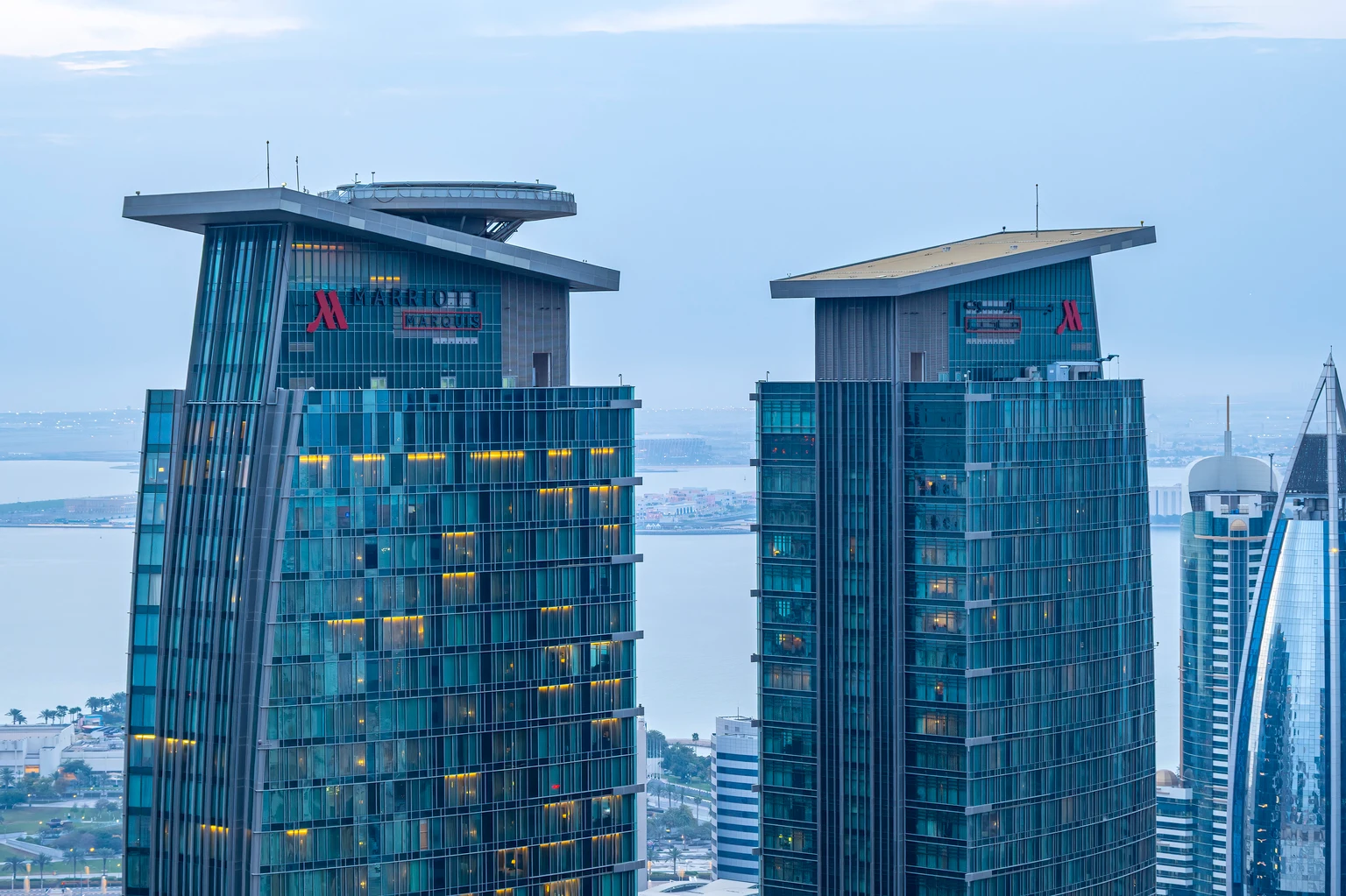
Marriott: The Loyalty Engine Is Outgrowing The Hotel Cycle
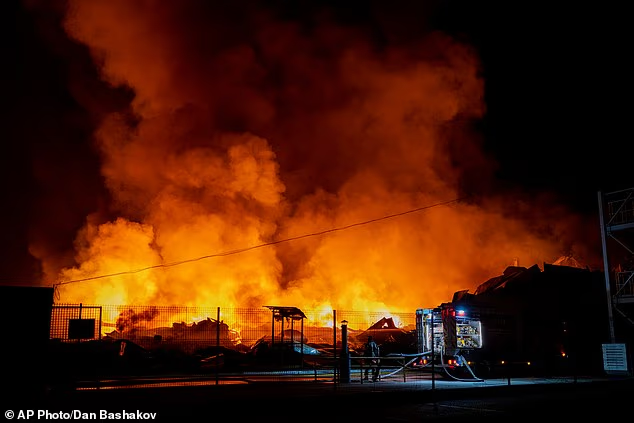
Putin takes his revenge for series of long-range Ukraine strikes, killing at least 15 and injuring dozens more in missile barrage of Kyiv

Malaysia’s Data Center Boom Faces a Reckoning It Brought on Itself

Saylor’s MicroStrategy Linked to Fresh $66 Million Bitcoin Transfer


-

 Business6 days ago
Why Trees Belong on the Risk Register
-

 Fashion5 days ago
Weekend Open Thread: Wit & Wisdom
-

 Politics4 days ago
Meta enters AI-training agreement with far-right ‘propaganda rag’ Newsmax
-

 Politics7 days ago
Reform UK betrays West Mids residents by running from party pledges
-

 Crypto World4 days ago
MicroStrategy Post-Earnings CLARITY Act Push Could Add New Catalyst for Its Stock
-

 Politics3 days ago
Zack Polanski: an incitement to murder Nigel Farage?
-

 Crypto World4 days ago
XRP Ledger v3.3.0 brings five institutional features
-

 News Videos6 days ago
Bitcoin Enters the 3rd Stage of the Bear Market
-

 Politics6 days ago
Luke Littler’s dominance sparks GOAT debate
-

 Sports5 days ago
Seema Kaliramna Wins Discus Throw Bronze, Takes India’s CWG Medals Tally To 17
-

 Crypto World4 days ago
New York sues Kalshi over prediction market gambling
-

 Crypto World3 days ago
Crypto PAC spending tops $2M in Michigan House race
-

 Tech7 days ago
Gemini can now summarize the messiest comment threads in Google Docs
-

 Business5 days ago
Trump Announces Hamas Disarmament Agreement as Iran Strikes Kuwait Air Base and US Attacks Pause Overnight
-

 Tech3 days ago
ESET tracks rise in malicious AI skills and adaptable malware
-

 Business2 days ago
DTCR: Deleveraging And A Hedge Fund Collapse Point To A Possible AI Bottom
-

 Tech5 days ago
Gemini Spark can now use Chrome logins and saved passwords to run errands on your behalf
-

 Tech5 days ago
Building A Reproduction PlayStation Motherboard
-
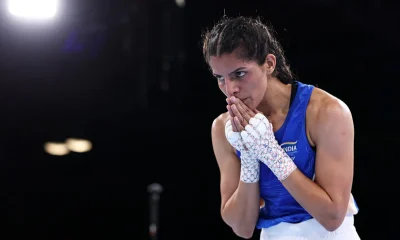
 Sports7 days ago
Sakshi, Arundhati Enter Boxing Semi-Finals. India Assured Of 18 Medals At CWG 2026
-

 NewsBeat6 days ago
Four people die trying to cross Channel in small boats
You must be logged in to post a comment Login