
Business
Ibstock plc 2026 Q2 – Results – Earnings Call Presentation (OTCMKTS:IBJHF) 2026-08-05



Seeking Alpha’s transcripts team is responsible for the development of all of our transcript-related projects. We currently publish thousands of quarterly earnings calls per quarter on our site and are continuing to grow and expand our coverage. The purpose of this profile is to allow us to share with our readers new transcript-related developments. Thanks, SA Transcripts Team

Business
How Much Is BTS’s Grammy Boycott Really Costing the Awards Show? Breaking Down the $340M Estimate This Year
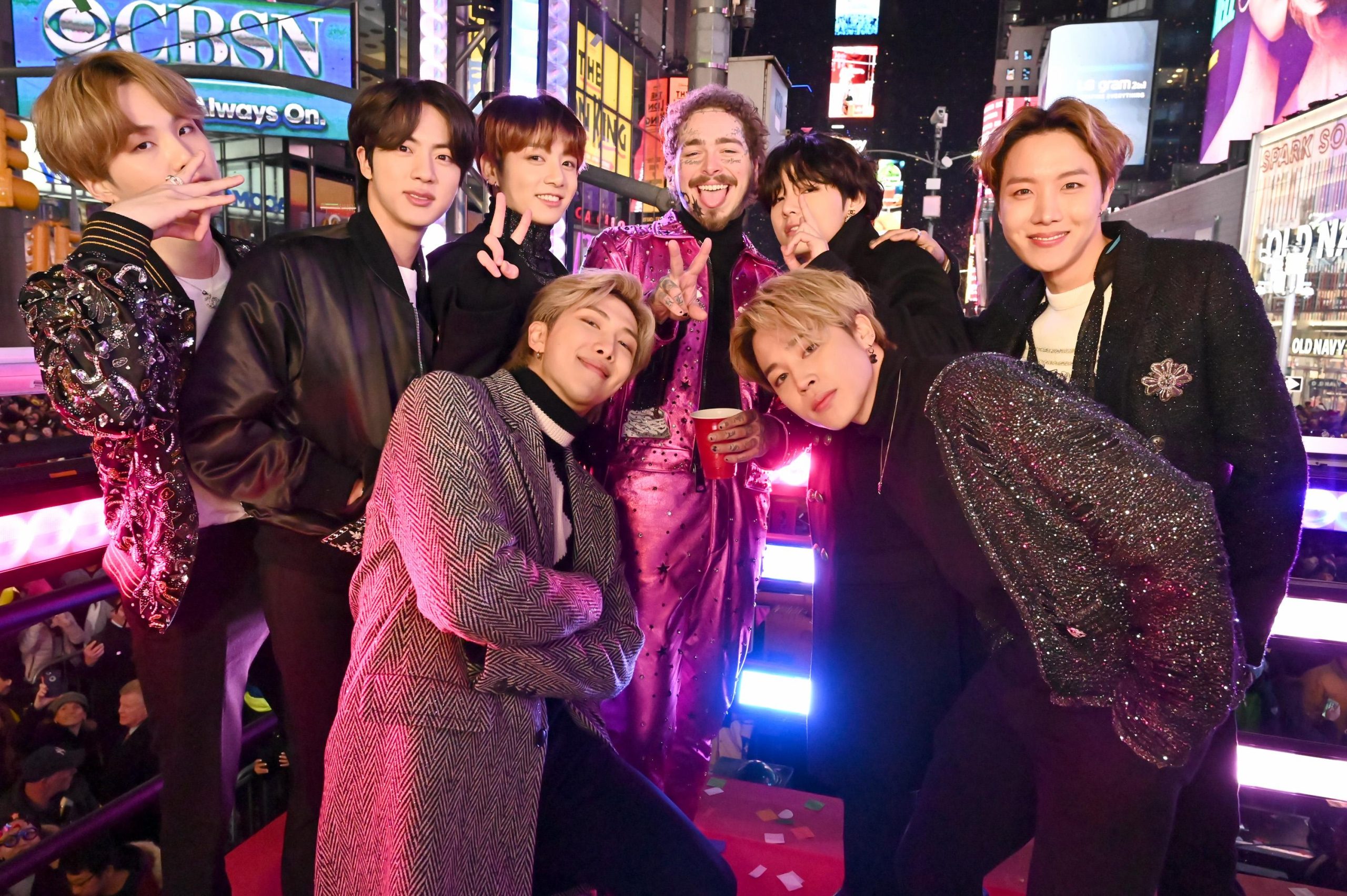
BTS’s decision to withdraw from consideration at the 2027 Grammy Awards has sparked not only a debate over representation in the music industry but also growing speculation about the financial toll the K-pop supergroup’s absence could take on a ceremony already contending with years of declining television ratings.
Estimates of the boycott’s potential cost, including a widely circulated figure putting the financial impact at roughly $340 million, have spread across entertainment commentary and social media in the days since BTS announced its decision on July 29. That figure has not been confirmed by the Recording Academy, CBS, or any of the parties directly involved in producing the telecast, and appears to originate from independent online analysis rather than official financial disclosures. Still, the scale of the number underscores just how much weight industry observers place on BTS’s ability to move audiences, and it points to real, measurable factors, television ratings, advertising rates and streaming activity, that help explain why such an estimate has resonated.
A Ratings Picture Already in Decline
The financial stakes surrounding BTS’s absence come at a time when the Grammy telecast has already been losing viewers for several consecutive years. The 68th Annual Grammy Awards, held in February, drew an average of 14.4 million viewers on CBS, according to Nielsen data, marking a roughly 6.5% decline from the 15.4 million who tuned in the year before, which itself represented a drop from the 16.9 million viewers who watched in 2024. Despite the decline, the ceremony remained the most-watched awards show since the previous year’s Oscars, and CBS has emphasized that the Grammys continue to dominate social media engagement, generating 74.8 million total interactions and more than 302 million video views across platforms during the six-month window surrounding the February broadcast.
That declining trajectory matters directly to the ceremony’s bottom line, since television ratings are the primary factor networks use to set advertising rates. A 30-second commercial spot during the Grammys sold for roughly $866,100 in 2022, according to industry tracking data, with rates climbing further through double-digit growth in subsequent years even as overall audience size continued to shrink. Analysts who cover live television advertising have noted that award shows like the Grammys remain a powerful vehicle for reaching audiences despite ratings declines, in part because they generate outsized social media attention relative to their broadcast viewership, a dynamic advertisers continue to pay a premium for.
BTS’s Track Record of Moving the Needle
BTS’s history with the Grammys offers some indication of why the group’s absence is being discussed in terms of measurable financial impact. The band performed at the ceremony three times between 2020 and 2022 and earned five total nominations across that stretch and the years following, without ever winning. Those appearances, along with the broader visibility BTS has brought to any stage it occupies, have long been credited by industry observers with driving spikes in both live viewership and social media engagement whenever the group is involved, a dynamic that becomes especially relevant given the Grammys’ own emphasis on its social media performance as a selling point to advertisers.
The group’s commercial momentum heading into this awards cycle made the financial stakes of its absence particularly notable. BTS’s fifth studio album, “Arirang,” released in March following the members’ return from South Korea’s mandatory military service, debuted at No. 1 on the Billboard 200 and topped charts in 23 countries. The group’s broader 2026 comeback, including a world tour spanning 34 cities across 23 countries, has been projected by industry estimates to generate more than $1 billion in revenue on its own, underscoring the scale of BTS’s current commercial footprint independent of any single awards show appearance.
A Shift in Leverage
Hye Jin Lee, a University of Southern California professor who studies Korean pop culture, has pointed to BTS’s decision as evidence of a broader shift in the group’s relationship with Western institutions. Speaking to Rolling Stone, Lee said the decision signals that BTS has reached a point in its career where it no longer feels the need to seek validation from Western institutions, a very different position from where the group stood five or six years earlier. That framing suggests the financial calculus may cut in both directions: while the Grammys stand to lose whatever ratings and engagement boost BTS’s presence might have delivered, BTS itself faces comparatively little commercial risk in skipping the ceremony, given its existing global audience and revenue streams that operate independently of Grammy recognition.
The Recording Academy’s Position
Recording Academy CEO Harvey Mason Jr. has publicly addressed the boycott, saying he was saddened that BTS chose not to participate in this year’s Grammy process while adding that he understood and respected the decision as a fellow music creator. Mason has also pushed back on the idea that the Academy’s new Best Asian Pop Music Performance category, introduced in June and widely seen as the catalyst for BTS’s withdrawal, limits artists’ ability to compete in the ceremony’s more prestigious general fields, noting that submitting music in a genre category does not exclude an artist from also being considered for awards such as Record of the Year or Album of the Year.
A Ceremony in Transition
The financial questions surrounding BTS’s absence also arrive at a pivotal moment for the Grammy telecast itself. Next year’s ceremony, set for Feb. 7, 2027, will mark the show’s move from CBS, which aired the Grammys for more than 50 consecutive years, to Disney’s ABC network, where it will be simulcast on Hulu and Disney+ for the first time as part of a new 10-year broadcast deal. That transition adds an additional layer of uncertainty to any effort to project the financial impact of BTS’s absence, since a new network partner brings its own advertising infrastructure, streaming distribution strategy and audience measurement approach that could shift how the ceremony’s commercial performance is ultimately evaluated.
What Remains Unclear
Whatever the precise dollar figure attached to BTS’s decision, the group’s withdrawal has already reshaped conversation around the upcoming ceremony, with submissions for Best Asian Pop Music Performance and other Grammy categories remaining open through Aug. 28. Industry observers continue to debate whether other major K-pop acts will follow BTS’s lead, a development that could compound whatever financial impact the group’s own absence produces, though BTS’s label, HYBE, has stressed that the decision reflects the band’s individual choice rather than a coordinated industry-wide protest.

Earnings call transcript: Coca-Cola HBC lifts 2026 outlook after strong H1
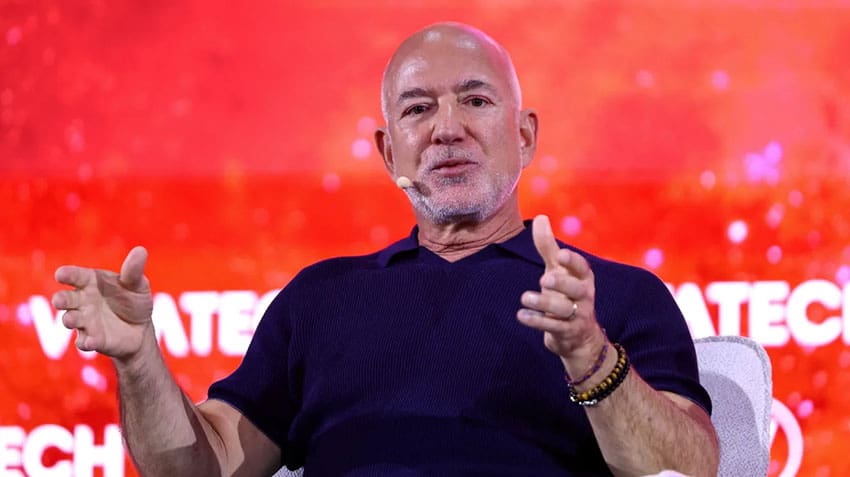
Amazon’s stock market value topped $3 trillion on Monday, making it the fifth company to reach the milestone, after second-quarter results showed its cloud arm growing at its fastest rate in more than four years.
Shares in the Nasdaq constituent closed up $12.44, or 5 per cent, at $284.02 in New York on Monday night, a record high. The stock has risen 23.05 per cent since the start of the year.
Amazon follows Apple, Microsoft, Nvidia and Alphabet, which owns Google, in passing the mark. Apple is valued at $4.5 trillion and briefly topped $5 trillion last week. Nvidia, the chip maker, is at $5 trillion and Microsoft at $3.6 trillion.
The rally began last week, when the shares recorded their biggest one-day jump since April 2012 following Amazon’s second-quarter results. The company reported that Amazon Web Services grew net sales by 36.7 per cent compared with a year earlier, to $42.2 billion. Group net sales rose 20 per cent to $200.6 billion and operating income rose 43 per cent to $27.5 billion.
Amazon also raised its capital spending forecast for 2026, to about $220 billion.
Andy Jassy, chief executive, described AWS as “booming” in a statement accompanying the results.
“Our AI and chips businesses each eclipsed run rates of more than $25 billion,” Jassy said. “In stores, we again set record delivery speeds for Prime members in the first half of the year, over 40 per cent more items delivered same-day or overnight, with grocery and everyday essentials growing meaningfully faster than the rest of the business.”
Over the three trading days to Monday, the shares recorded their strongest 72-hour stretch since the three days ending 27 October 2009, when they rose 30.6 per cent.
Mark Hackett, chief market strategist at Nationwide, the US financial services group, said: “Amazon is probably the most emblematic of the economy right now. It’s a consumer story and it’s an AI story.”
Hackett said the results had shifted sentiment across the wider market. “The big scepticism coming into earnings season was if they [hyperscalers] were turning the spigot down on spending on AI. We did not get that from Amazon and Microsoft and that has unleashed a much broader all-clear for the market.”
AWS is the division behind Amazon’s UK infrastructure spending. The company said in June last year that it would invest £40 billion in the UK over three years across fulfilment centres, film production and data centres, and AWS has separately committed £8 billion to UK data centres by 2028.
Demand for AWS capacity has been driven in part by contracted work for AI developers. In November 2025, OpenAI signed a $38 billion agreement with AWS for computing capacity.
Amazon was co-founded by Jeff Bezos, who remains the largest shareholder with a stake of close to 9 per cent.

Amy Ingham
Amy Ingham is a reporter at Business Matters, covering UK business news with a focus on breaking news, business policy, late payments and insolvency. She joined the magazine in 2026 after completing the NCTJ Diploma in Journalism at Harlow College’s journalism school. Her recent reporting includes British Steel’s nationalisation and its impact on SME suppliers, the decline in late payments by large firms, and Insolvency Service director disqualifications. Reach her at aingham@cbmeg.co.uk.
Yes. Corporate subscriptions are available for teams and organisations, with discounted rates as user numbers increase. Pricing starts from $1,625 + GST per user.
Get in touch
to discuss the right option for your organisation.
Business News subscriptions are used by executives, investors, consultants and professionals who need to stay informed and make better decisions about the WA market. When you subscribe you’ll get
- Unlimited access to WA’s most trusted business journalism
- Data & Insights — detailed profiles of WA companies, people, projects and deals
- MyBN — a personalised feed based on the companies, people and sectors you follow
- Special publications and industry reports
- Daily and weekly email newsletters
Data & Insights is a research tool built specifically for the WA market. It draws on more than 30 years of Business News reporting, updated regularly to reflect what’s happening now. Use it to:
- Look up detailed profiles of WA companies, including financials, directors and ownership
- Find decision-makers and track their career movements
- Research live and completed projects across WA industries
- Monitor deals, appointments and market activity
- Access industry rankings and league tables
Data & Insights is updated daily by our dedicated research team, which uses the latest announcements, ASX filings and editorial coverage to keep our person, company, list and project records up to date.
Business News welcome all opportunities to make our dataset accurate, complete and current, so if you have an update request, please email the team at
general@businessnews.com.au, and we’d be happy to assist.
MyBN
is part of every subscription. It’s your personalised view of Business News. You can follow the companies, people, sectors and projects that matter to you, and get a news feed and alerts tailored to your interests. You can save articles to read later and retain only what you need.
Only subscribers have full access to all content on the Business News website.
If staying informed about the WA economy is part of your job, and/or you’re looking for networking opportunities in WA, Business News is built for you.
Business News subscribers are:
- Executives and directors tracking competitors, clients and market movements
- Investors and advisers researching companies, deals and industry trends
- Consultants and professionals staying across sectors relevant to their clients
- Business owners looking for leads, context and market intelligence
Most Business News publications cover national or global markets. Business News is focused entirely on Western Australia, which means the journalism, the data and the intelligence are all built around WA companies, people and projects — not adapted from a national feed. Data & Insights, included with every subscription, combines more than 30 years of WA-specific editorial research with live business data. There’s no comparable product for the WA market.
The Morning Digest Email provides a comprehensive wrap of the major headlines, relevant to WA business, and includes with a snapshot of the overnight news covering oil, gold and ASX-listed companies.
The Afternoon Wrap Email focuses on the news covered by our team of journalists during the course of the working day, including exclusive stories and analysis, all of which relates to WA business and the local economy.
The BN Weekender Email contains a wrap of the Business News from the week that was, highlighting the top stories in each area of WA business.
Sign up for free.
We’re happy to help.
Get in touch
and our team will come back to you.

Bitcoin hovers above $64k with Hormuz deal in focus
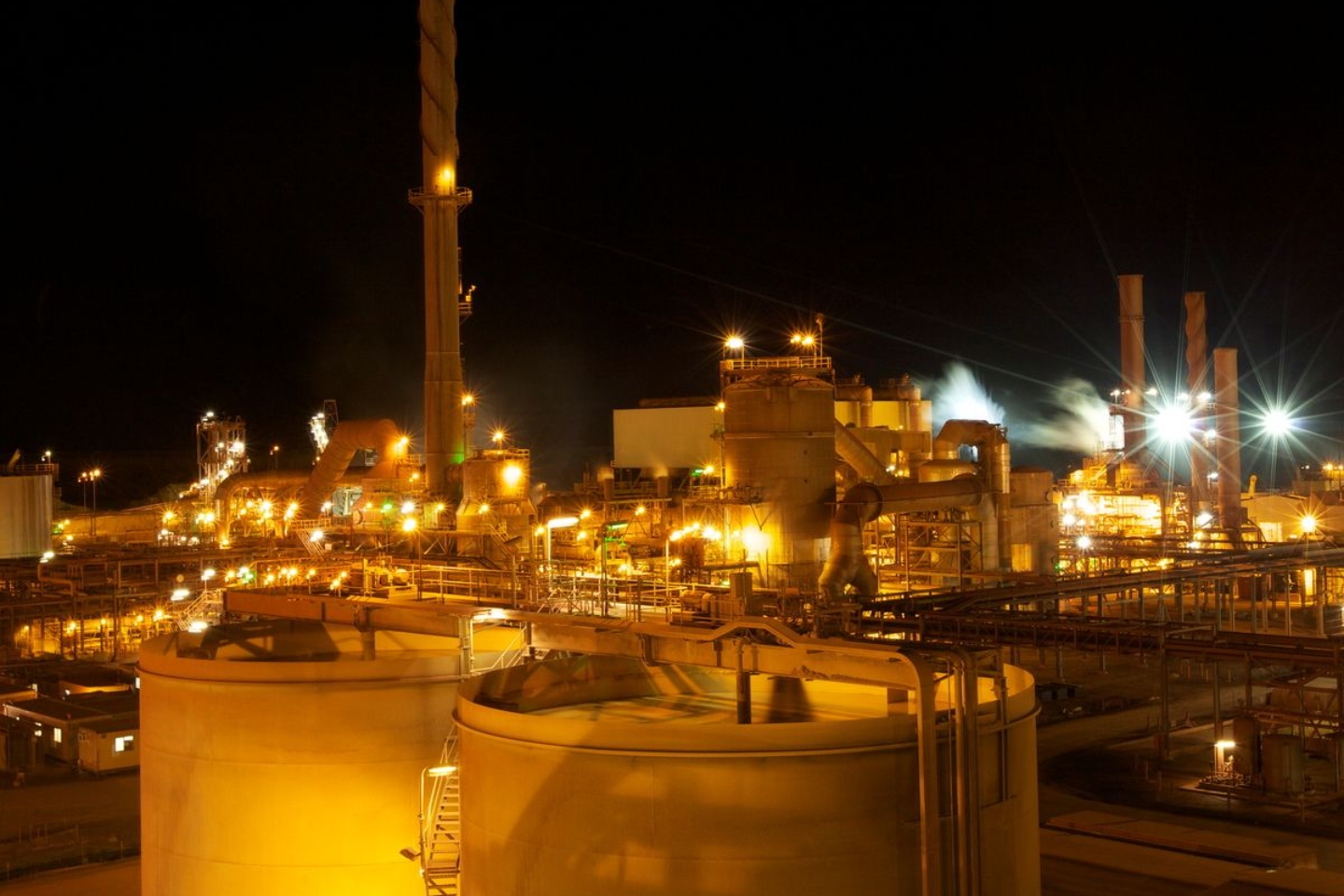
Glencore has written down the value of its Murrin Murrin nickel mine to zero as the global miner pursues a secondary listing on the ASX to access deeper pools of capital and sophisticated investors.
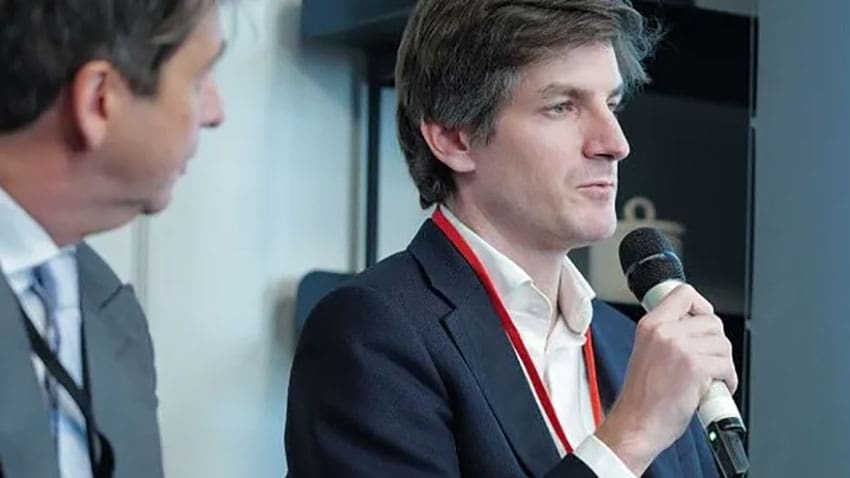
Volta Infrastructure Holdings, a London-based start-up incorporated in January, has agreed a $10 billion data centre deal with Anthropic and raised funding from backers including Nvidia at a $2.4 billion valuation.
Volta said its first project is a planned AI data centre in Norway, to be powered by Nvidia systems, as part of the partnership with Anthropic, the AI group behind the Claude chatbot.
The company says it “develops, finances, builds and operates” AI data centres, or “AI factories” as it calls them, bringing together finance, land with local power supply and the hardware and software required by the AI industry “under a single platform”.
Alongside Nvidia, the chip maker, investors include Azora, a Spanish investment firm, Andreessen Horowitz, the Silicon Valley venture capital firm, and Altimeter, a technology investor. The family office of Michael Dell, founder of Dell Technologies, has also invested.
Volta said Azora had established a $5 billion AI infrastructure programme to finance AI factories that Volta will develop.
Company filings show Ricard Boada Rafart, 33, set up Volta with £1 of share capital in January. Boada was previously a senior vice-president at Brookfield Asset Management’s infrastructure group, where he worked on AI infrastructure deals including a $5 billion partnership between Brookfield and Bloom Energy. His LinkedIn profile says he left Brookfield in January.
Volta’s other directors include Shangda Xu and Raghu Raghuram, both of Andreessen Horowitz, and Sofia Gumuzio, a former Brookfield employee who is Volta’s co-founder.
Volta says it has about 100 staff across sites in London, Palo Alto and New York. It may not file its first set of accounts until the end of September next year.
The $2.4 billion figure is roughly two fifths the valuation of Balfour Beatty, the 117-year-old FTSE 250 international infrastructure group, which has about 26,000 staff and reported revenues of £10.8 billion last year.
Volta declined to answer questions about the status of its projects but said it had a “broader near-term development pipeline” in North America and Europe.
Gavin McLaughlin, an Nvidia executive, said the Volta deal was “an important milestone for Europe” and “an exciting step toward expanding access to dependable, scalable AI infrastructure” across the region.
Boada said Volta was set up because AI infrastructure, or “compute”, should be “financed, developed, and commercialised with the principles and scale of infrastructure” so that it “works as reliably and invisibly as electricity”.
The round follows a comparable raise at Nscale, another London-based data centre start-up valued at $14.6 billion after a $2 billion round that also included Nvidia and which brought Nick Clegg and Sheryl Sandberg on to its board.
It also comes amid growing questions about the scale of investment being poured into AI data centres by the technology sector. Industry critics argue that lower-cost Chinese AI models could further undermine the economics of AI investment, although proponents argue this will only increase demand for the technology.
Britain’s grid capacity is also under scrutiny. On 29 July, Ofgem launched a consultation on data centre connection reforms, proposing a Data Centre Commitment Fee set between £237,500 and £712,500 per megawatt, refunded when a project reaches energisation and forfeited if it exits the connections queue early. Ofgem said demand connection applications had risen from 41 gigawatts to 125GW in under a year, with data centre projects accounting for at least 80GW. The consultation closes on 16 September.
Energy costs have already shaped where AI capacity lands. OpenAI paused its Stargate UK data centre project in April, citing British industrial energy prices and uncertainty over copyright rules, and said it would proceed once “the right conditions” allowed.

Jamie Young
Jamie Young is Senior Reporter at Business Matters, covering SME finance, employment law and Westminster policy since 2016. He has reported on every Budget and Autumn Statement since 2018, helped make sense of the ‘covid era’ and the bounce-back loan scheme from launch through the fraud investigations, and broke the magazine’s coverage of the 2024 late-payment reforms. He joined Business Matters straight from completing his BA in Administration from Exeter University and is NCTJ-qualified. Reach him at jyoung@cbmeg.co.uk

Electronic Arts said on Tuesday that its acquisition by Saudi Arabia’s Public Investment Fund, Silver Lake and Affinity Partners had closed, valuing the games publisher at about $55bn (£41bn). Shareholders receive $210 in cash for each share.
EA’s completion statement said its common stock had ceased trading and would be delisted from Nasdaq. The consortium’s agreement was announced on 29 September 2025 and approved by shareholders at a special meeting on 22 December 2025.
The transaction is thought to be the largest leveraged buyout in history. Alongside the roughly $36bn of equity committed, the consortium is borrowing $20bn arranged by JPMorgan, with the debt carried by EA. J.P. Morgan Securities acted as the consortium’s financial adviser. It ranks as the second-biggest acquisition in gaming, after Microsoft’s $69bn purchase of Activision Blizzard.
Andrew Wilson, chairman and chief executive, who retains his position, said in the statement: “We’re entering this next chapter from a position of strength with partners who share our vision and ambition.”
Turqi Alnowaiser, deputy governor and head of international investments at PIF, said in the fund’s announcement: “Entertainment and sports are key areas of strategic focus for PIF, and are among the fastest growing and evolving sectors around the world.” PIF says it manages more than $900bn in assets.
Jared Kushner, chief executive of Affinity Partners and son-in-law of US President Donald Trump, said EA “has created stories, characters, and communities that have become part of everyday life for hundreds of millions of people”.
How EA services the borrowing has been the subject of speculation among analysts and journalists since the record buyout was announced last September. Bloomberg’s Jason Schreier wrote that it could lead to “mass layoffs, more aggressive monetization, and other big cost-cutting measures”.
Christopher Dring, editor-in-chief and co-founder of the Game Business, said the nature of the buyout was likely to mean “a very hands-on approach from the investment group”. He said: “Private equity firms are typically aggressive in their management of companies.”
EA posted net revenue of about $7.5bn in the year to 31 March 2026. Battlefield 6, released last October, sold more than 7 million copies in its first three days, a franchise record. Further layoffs followed at the teams involved.
George Osborn, journalist and author of Power Play: Video Games, Politics and the Battle for Global Influence, said the price still made EA an “appealing” opportunity for PIF, pointing to the company’s longevity and its “seemingly evergreen” live-service titles, which are updated continuously after release.
But he said EA’s value to the fund was “not purely economic”, describing it instead as “owning a soft power asset that is quietly entrenched in the sporting community”.
The deal extends a run of Saudi sports and gaming investments that includes the £300m takeover of Newcastle United, four clubs in the Saudi Pro League and the Esports World Cup, held in 2025. PIF’s other UK holdings include a 40 per cent stake in Selfridges.
Those purchases have drawn accusations of sportswashing, the sponsoring or hosting of sporting events to promote a positive public image and divert attention from human rights issues. The Saudi government has spent years denying such claims.
The advocacy group Players Alliance HQ has asked gamers to petition their local politicians against the deal. Its campaign website says: “With the PIF being the majority owner in the potential buyout, there is a large concern that creative decisions could be influenced by these outside factors, leading to themes such as free speech, gender, LGBTQI+ and other aspects of Western politics being reduced or fully censored across major franchises.”
In Saudi Arabia, consensual same-sex sexual conduct can be punishable by death or flogging under interpretations of Sharia law. Titles in EA’s catalogue including The Sims feature same-sex relationships.
Osborn said the acquisition handed the fund “a relationship with the 20,000 players, 750 clubs and 35 leagues at the top of the professional game”.
“What is clear is that a state seeking to shape perceptions now owns an asset with proven reach to billions of people,” he said. “How it uses it in the years to come is something we should watch closely.”
Amy Ingham
Amy Ingham is a reporter at Business Matters, covering UK business news with a focus on breaking news, business policy, late payments and insolvency. She joined the magazine in 2026 after completing the NCTJ Diploma in Journalism at Harlow College’s journalism school. Her recent reporting includes British Steel’s nationalisation and its impact on SME suppliers, the decline in late payments by large firms, and Insolvency Service director disqualifications. Reach her at aingham@cbmeg.co.uk.

Players working through Wednesday’s New York Times Connections puzzle were met with a grid that blended straightforward synonyms with a tricky wordplay twist, testing solvers’ ability to spot both surface-level categories and a hidden meaning buried in a single common word.
Connections, the daily word-grouping game from The New York Times, challenges players to sort 16 words into four hidden groups of four, each sharing a category that isn’t revealed until the puzzle is solved or given up on. Players are allowed four mistakes before the puzzle ends, and categories are color-coded by difficulty, with yellow representing the most straightforward grouping and purple reserved for the trickiest, often pun-based or definition-driven connection.
Wednesday’s 16 Words
Today’s puzzle, game number 1,151, presented players with the following 16 words, listed alphabetically so as not to give away any groupings: BROTH, CAPE COD, CATTLE, DIESEL, DRIVE, GAP, INVESTMENT, LUCKY, MANEUVER, MERCHANDISE, MISSION, PILOT, RANCH, STEER, TUDOR and WRANGLER.
At first glance, the list appeared to scatter across several unrelated themes, ranging from cooking and finance to real estate and denim, a hallmark of Connections’ design that often hides simple categories among words that seem to belong to entirely different contexts.
Hints for Each Category
For players who wanted a nudge before diving into the full solution, puzzle solvers offered a hint for each of the four color-coded groups, presented from easiest to hardest.
The yellow group, generally the most accessible, pointed toward words describing ways of getting from one place to another, hinting at a category built around the idea of directing or controlling movement.
The green group’s hint pointed toward a more specific and slightly trickier theme tied to architecture and home design, encouraging players to think beyond the words’ more common everyday meanings.
The blue group required recognizing a set of denim clothing brands, a category that leaned on pop culture and retail familiarity rather than wordplay.
The purple group, as is typical for the puzzle’s most difficult category, hinged on a single word’s multiple definitions. The hint for Wednesday’s purple group pointed players toward words that share a common meaning when paired with the word “stock,” encouraging solvers stuck on a word like “stock” itself to think through its many different senses rather than fixating on just one.
Today’s Full Answers
For those ready to check their work or who had exhausted their guesses, here is the complete breakdown of Wednesday’s four categories.
The yellow group, centered on the idea of navigating or steering, included DRIVE, MANEUVER, PILOT and STEER, four words that can each describe the act of guiding or directing movement, whether behind the wheel of a car, at the helm of a plane, or in a more figurative sense.
The green group grouped together CAPE COD, MISSION, RANCH and TUDOR, four recognizable American house styles that share names with broader architectural traditions, a category that likely tripped up players who initially read the words through a different lens, such as geography or cattle ranching.
The blue group brought together DIESEL, GAP, LUCKY and WRANGLER, four well-known jeans and denim brands that populate department store racks and outlet malls across the country.
The purple group, true to form as the puzzle’s hardest category, connected BROTH, CATTLE, INVESTMENT and MERCHANDISE through their shared relationship to the word “stock.” Broth is another word for cooking stock, cattle are commonly referred to as livestock, an investment can take the form of stock in a company, and merchandise held in inventory is often described as stock on hand. The four words each pair naturally with “stock” while representing entirely different meanings of the term, a classic example of the kind of definitional wordplay that regularly appears in Connections’ purple category.
A Puzzle Built on Deception
Wednesday’s grid illustrated a recurring design pattern in Connections, where words that initially appear to belong to one category are deliberately placed to mislead players into incorrect groupings before the true connections become clear. Words like CATTLE and RANCH, for instance, could easily have been mistaken for belonging together under a farming or Western theme, when in fact they landed in entirely separate categories tied to financial terminology and architectural styles, respectively.
That kind of misdirection is central to the puzzle’s appeal, rewarding players who resist locking in an early guess based on surface-level associations and instead wait to see how the full grid of 16 words fits together before committing to a grouping.
Yesterday’s Puzzle for Comparison
Players looking to compare Wednesday’s difficulty against the previous day’s puzzle can look back to Tuesday’s edition, game number 1,150, which grouped words under four categories: long cylindrical things, iconic New York City sights, things with pedals, and V-shaped things. That puzzle’s yellow category included CIGARETTE, FOAM ROLLER, POOL NOODLE and PRETZEL ROD, while its green category grouped BODEGA, PIGEON, SUBWAY STATION and TAXI CAB as recognizable New York fixtures.
Keeping the Streak Alive
Connections has become one of the centerpieces of the Times’ expanding games section, sitting alongside Wordle, Strands, the Mini Crossword and Spelling Bee as part of a daily puzzle routine for millions of players. A new Connections puzzle rolls out at midnight in each player’s local time zone, meaning solvers in different parts of the world are often working through the same 16-word grid at different hours of the day.
For players hoping to preserve a winning streak, checking hints in order, starting with the easier yellow and green categories before moving to the more deceptive blue and purple groupings, remains the recommended approach, since revealing the full solution outright ends the challenge of puzzling it out independently. Still, for those who ran out of guesses or simply wanted to confirm their answers, Wednesday’s puzzle closes out with NAVIGATE, HOUSE STYLES, JEANS BRANDS and MEANINGS OF STOCK as its four completed categories for game number 1,151.

Flynas misses second quarter earnings on higher fuel costs

Honor’s Robot Phone with Pop-Out Camera Arm Gets Its Full Specs One Week Before Launch

Woman, in her 20s, is ‘raped on Brighton beach’ – as man, 28, is arrested

How Much Is BTS’s Grammy Boycott Really Costing the Awards Show? Breaking Down the $340M Estimate This Year


-

 Business7 days ago
Why Trees Belong on the Risk Register
-

 Fashion5 days ago
Weekend Open Thread: Wit & Wisdom
-

 Politics5 days ago
Meta enters AI-training agreement with far-right ‘propaganda rag’ Newsmax
-

 Politics7 days ago
Reform UK betrays West Mids residents by running from party pledges
-

 Crypto World4 days ago
MicroStrategy Post-Earnings CLARITY Act Push Could Add New Catalyst for Its Stock
-

 Politics3 days ago
Zack Polanski: an incitement to murder Nigel Farage?
-

 Crypto World4 days ago
XRP Ledger v3.3.0 brings five institutional features
-

 News Videos6 days ago
Bitcoin Enters the 3rd Stage of the Bear Market
-

 Politics6 days ago
Luke Littler’s dominance sparks GOAT debate
-

 Sports5 days ago
Seema Kaliramna Wins Discus Throw Bronze, Takes India’s CWG Medals Tally To 17
-

 Crypto World4 days ago
New York sues Kalshi over prediction market gambling
-

 Crypto World3 days ago
Crypto PAC spending tops $2M in Michigan House race
-

 Tech7 days ago
Gemini can now summarize the messiest comment threads in Google Docs
-

 Business5 days ago
Trump Announces Hamas Disarmament Agreement as Iran Strikes Kuwait Air Base and US Attacks Pause Overnight
-

 Tech3 days ago
ESET tracks rise in malicious AI skills and adaptable malware
-

 Business2 days ago
DTCR: Deleveraging And A Hedge Fund Collapse Point To A Possible AI Bottom
-

 Tech5 days ago
Gemini Spark can now use Chrome logins and saved passwords to run errands on your behalf
-

 Tech5 days ago
Building A Reproduction PlayStation Motherboard
-
 Sports7 days ago
Sakshi, Arundhati Enter Boxing Semi-Finals. India Assured Of 18 Medals At CWG 2026
-

 NewsBeat6 days ago
Four people die trying to cross Channel in small boats
You must be logged in to post a comment Login