Amazon’s stock market value topped $3 trillion on Monday, making it the fifth company to reach the milestone, after second-quarter results showed its cloud arm growing at its fastest rate in more than four years.
Shares in the Nasdaq constituent closed up $12.44, or 5 per cent, at $284.02 in New York on Monday night, a record high. The stock has risen 23.05 per cent since the start of the year.
Amazon follows Apple, Microsoft, Nvidia and Alphabet, which owns Google, in passing the mark. Apple is valued at $4.5 trillion and briefly topped $5 trillion last week. Nvidia, the chip maker, is at $5 trillion and Microsoft at $3.6 trillion.
The rally began last week, when the shares recorded their biggest one-day jump since April 2012 following Amazon’s second-quarter results. The company reported that Amazon Web Services grew net sales by 36.7 per cent compared with a year earlier, to $42.2 billion. Group net sales rose 20 per cent to $200.6 billion and operating income rose 43 per cent to $27.5 billion.
Amazon also raised its capital spending forecast for 2026, to about $220 billion.
Advertisement
Andy Jassy, chief executive, described AWS as “booming” in a statement accompanying the results.
“Our AI and chips businesses each eclipsed run rates of more than $25 billion,” Jassy said. “In stores, we again set record delivery speeds for Prime members in the first half of the year, over 40 per cent more items delivered same-day or overnight, with grocery and everyday essentials growing meaningfully faster than the rest of the business.”
Over the three trading days to Monday, the shares recorded their strongest 72-hour stretch since the three days ending 27 October 2009, when they rose 30.6 per cent.
Mark Hackett, chief market strategist at Nationwide, the US financial services group, said: “Amazon is probably the most emblematic of the economy right now. It’s a consumer story and it’s an AI story.”
Advertisement
Hackett said the results had shifted sentiment across the wider market. “The big scepticism coming into earnings season was if they [hyperscalers] were turning the spigot down on spending on AI. We did not get that from Amazon and Microsoft and that has unleashed a much broader all-clear for the market.”
Demand for AWS capacity has been driven in part by contracted work for AI developers. In November 2025, OpenAI signed a $38 billion agreement with AWS for computing capacity.
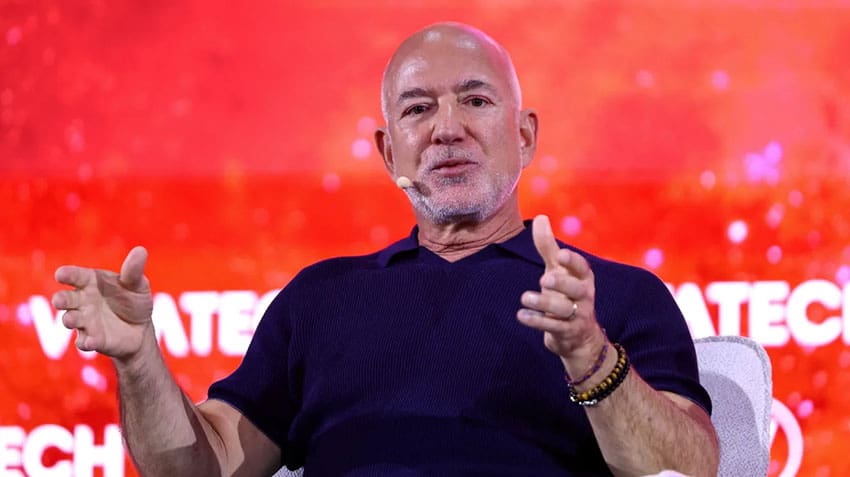
Amazon was co-founded by Jeff Bezos, who remains the largest shareholder with a stake of close to 9 per cent.
Advertisement
Amy Ingham
Amy Ingham is a reporter at Business Matters, covering UK business news with a focus on breaking news, business policy, late payments and insolvency. She joined the magazine in 2026 after completing the NCTJ Diploma in Journalism at Harlow College’s journalism school. Her recent reporting includes British Steel’s nationalisation and its impact on SME suppliers, the decline in late payments by large firms, and Insolvency Service director disqualifications. Reach her at aingham@cbmeg.co.uk.
BTS’s decision to withdraw from consideration at the 2027 Grammy Awards has continued to draw reaction from across the music industry in the days since the announcement, with pop star Justin Bieber among the figures who have weighed in publicly as the controversy surrounding the Recording Academy’s new Best Asian Pop Music Performance category shows no sign of fading.
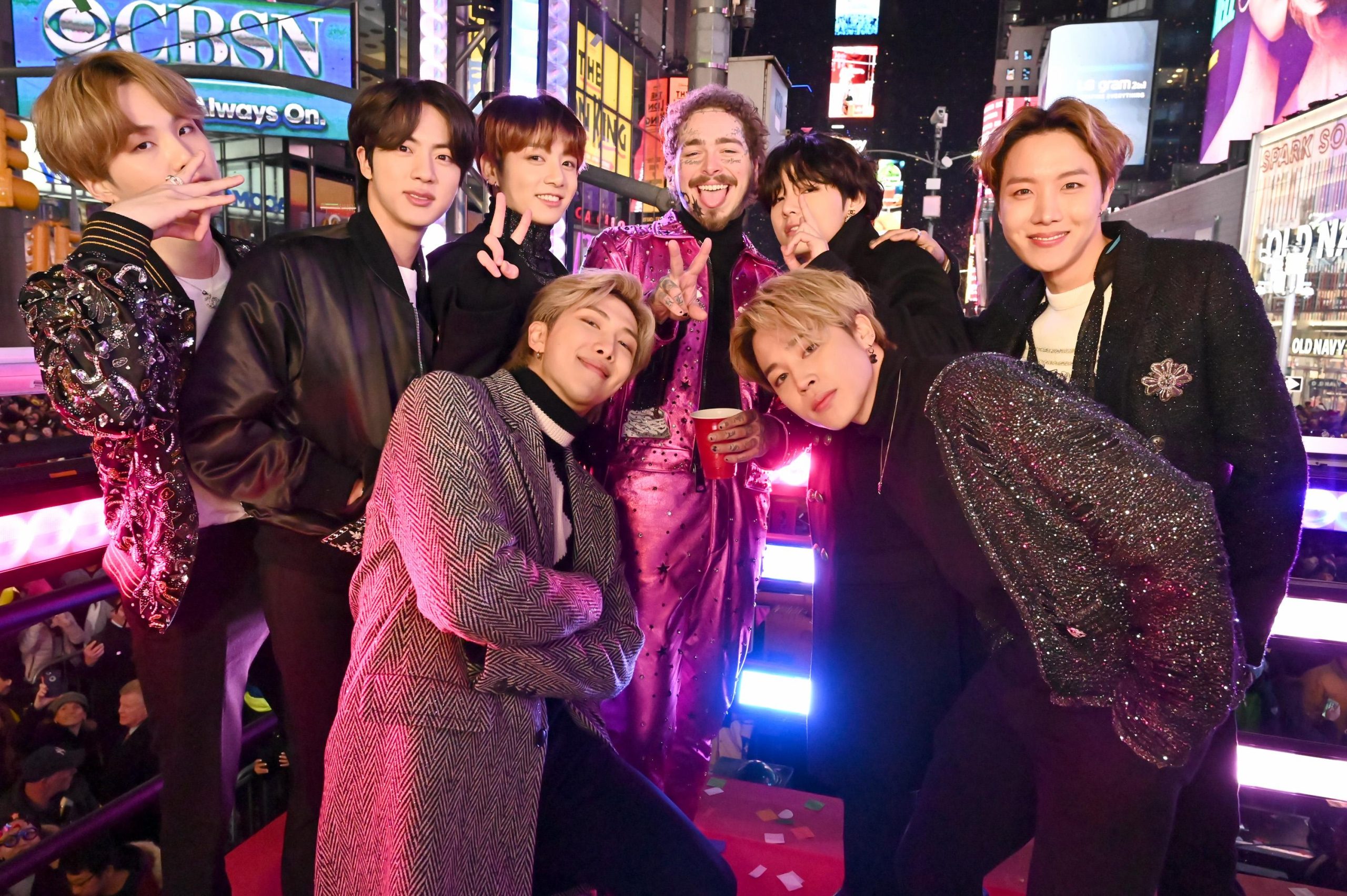
Bieber’s involvement in the ongoing conversation follows his appearance alongside BTS at one of the summer’s most-watched entertainment events. On July 19, Bieber joined Madonna, Shakira, Burna Boy and the seven members of BTS on stage during the halftime show of the FIFA World Cup final at MetLife Stadium in East Rutherford, New Jersey, a Chris Martin-curated performance that put th
How the Boycott Began
Advertisement
BTS’s decision traces back to July 29, when all seven members, RM, Jin, Suga, J-Hope, Jimin, V and Jungkook, posted identical statements to their individual Instagram accounts announcing they would not submit any music for consideration at the 69th Grammy Awards, scheduled for Feb. 7, 2027. The group said it hoped music could be heard and loved for what it is, rather than being divided by region or language, and thanked its fanbase, known as ARMY, for their continued support. The statement did not explicitly name a category, but it was widely interpreted as a direct response to the Recording Academy’s June 16 announcement of Best Asian Pop Music Performance, a new award requiring meaningful use of one or more Asian languages that many critics argue effectively walls K-pop and other non-English Asian pop off from the ceremony’s marquee general-field categories.
The withdrawal came at a moment when BTS appeared to have its strongest Grammy prospects in years. The group’s fifth studio album, “Arirang,” released in March following the members’ return from South Korea’s mandatory military service, debuted at No. 1 on the Billboard 200 and topped charts in 23 countries, while lead single “SWIM” became the group’s highest-charting entry on the Hot 100 to date. BTS had collected five prior Grammy nominations without a win, for “Dynamite,” “Butter,” “My Universe” and its featured role on Coldplay’s “Music of the Spheres,” and had previously described the Grammys as the “last summit” left for the group to climb.
Industry Reaction Continues to Build
Support for BTS’s stance has come from a range of figures inside and outside the K-pop industry in the days since the announcement. Tablo, frontman of the Korean hip-hop group Epik High, publicly backed the decision on social media, as did Maggie Kang, the Korean Canadian director of Netflix’s animated hit “KPop Demon Hunters,” and Mike WiLL Made-It, the American producer behind the “Arirang” track “Aliens,” which surged to No. 1 on iTunes charts in 78 countries following the boycott announcement as fans rallied behind the group.
Advertisement
CedarBough T. Saeji, a K-pop scholar at Pusan National University, has offered a pointed critique of the new category’s design, telling reporters that while some within the Recording Academy likely viewed the addition as inclusive, nothing about categories like Record of the Year or Best Pop Duo/Group Performance needs to exclude music made by non-American artists. Anton Hur, a translator known for his work on a bestselling book about BTS, separately praised the group’s decision on social media, calling it the right call.
The Recording Academy’s Response
Recording Academy CEO Harvey Mason Jr. addressed the boycott directly in a statement, saying he was saddened to hear that BTS had chosen not to participate in the Grammy Awards process this year, while adding that he understood and respected the group’s decision as a fellow music creator. Mason has since sought to clarify the intent behind the new category, stating that submitting music in a genre category such as Asian Pop, or Jazz, or Country does not exclude an artist from also being considered in the Grammys’ General Field, which includes Record of the Year, Album of the Year and Song of the Year. He said recognition in a genre category and recognition in the General Field are not mutually exclusive, and that an artist can pursue both simultaneously.
That explanation has done little to quiet critics, some of whom point to a pattern across the awards industry of introducing specialized categories for K-pop only after the genre has become too commercially significant to ignore. Since 2020, when BTS became the first Asian act nominated in MTV’s main Video Music Award pop category alongside artists including the Jonas Brothers, Lady Gaga and Bieber himself, several major award shows including the American Music Awards, MTV Europe Music Awards, iHeartRadio Music Awards and Billboard Music Awards have introduced K-pop-specific categories of their own.
Advertisement
A Boycott With Limits
Despite the wave of public support, BTS’s management company HYBE has clarified that the withdrawal does not represent a company-wide boycott, and that neither the group nor its label has asked other artists to follow suit. That distinction has proven significant: while individual voices across music and entertainment have expressed solidarity with BTS in the weeks since the announcement, no other major K-pop act has formally joined the group in withdrawing music from Grammy consideration, with submissions for the ceremony’s new categories remaining open through Aug. 28.
With BTS out of contention, the inaugural Best Asian Pop Music Performance award will go to another act when nominees are announced in mid-November, with industry observers naming groups including ATEEZ, Stray Kids, Hearts2Hearts, BINI and CORTIS among the likely contenders. As the submission window continues, attention remains focused on whether additional artists, drawing further public commentary from figures across the industry, ultimately follow BTS’s lead or choose instead to compete for a category the K-pop pioneers themselves declined to enter.
Seeking Alpha’s transcripts team is responsible for the development of all of our transcript-related projects. We currently publish thousands of quarterly earnings calls per quarter on our site and are continuing to grow and expand our coverage. The purpose of this profile is to allow us to share with our readers new transcript-related developments. Thanks, SA Transcripts Team
Infineon Technologies AG (IFNNY) Q3 2026 Earnings Call August 5, 2026 2:00 AM EDT
Company Participants
Florian Martens – Global Head of Communications & Public Policy Jochen Hanebeck – CEO, Labor Director & Chairman of Management Board Sven Schneider – CFO & Member of Management Board
Advertisement
Conference Call Participants
Joachim Hofer Hakan Ersen Joachim Herr Christina Kyriasoglou
Presentation
Advertisement
Operator
Good morning and welcome to the conference call on the results of the third quarter of 2026 of Infineon Technologies. I am Sandra, and I will moderate the session.
[Operator Instructions]
The conference call will be recorded. You may not record this conference call for personal reasons. I would now like to hand the floor to Mr. Martens.
Advertisement
Florian Martens Global Head of Communications & Public Policy
Thank you very much, and good morning, dear colleagues. Welcome to our conference call regarding the results for the third quarter of fiscal 2026. Representing Infineon’s Management Board at this conference are Jochen Hanebeck, Chairman of the Management Board; and Dr. Sven Schneider, Chief Financial Officer. As usual, Mr. Hanebeck will first provide an overview of our business performance and the outlook. Afterwards, both members of the Management Board will be available to answer your questions. Our conference call will end promptly at 8:45 a.m. Of course, our press team led by Andre Tauber and I will be happy to remain available to you afterwards. And with that, I’ll turn the floor over to Jochen Hanebeck.
Advertisement
Jochen Hanebeck CEO, Labor Director & Chairman of Management Board
Thank you very much, Florian. Hello, and a warm welcome from my side as well. Ladies and gentlemen, the market environment continues to brighten. For Infineon, 2 favorable trends are currently converging, a positive cyclical momentum as well as structural growth. The recovery is gaining momentum and the upswing is in full swing. What began initially in individual application areas is
The FTSE 100 retail giant says pre-tax profit expectations for 2026 now £1.24bn, around £25m higher than previously estimated
Samuel Norman www.cityam.com
10:46, 05 Aug 2026
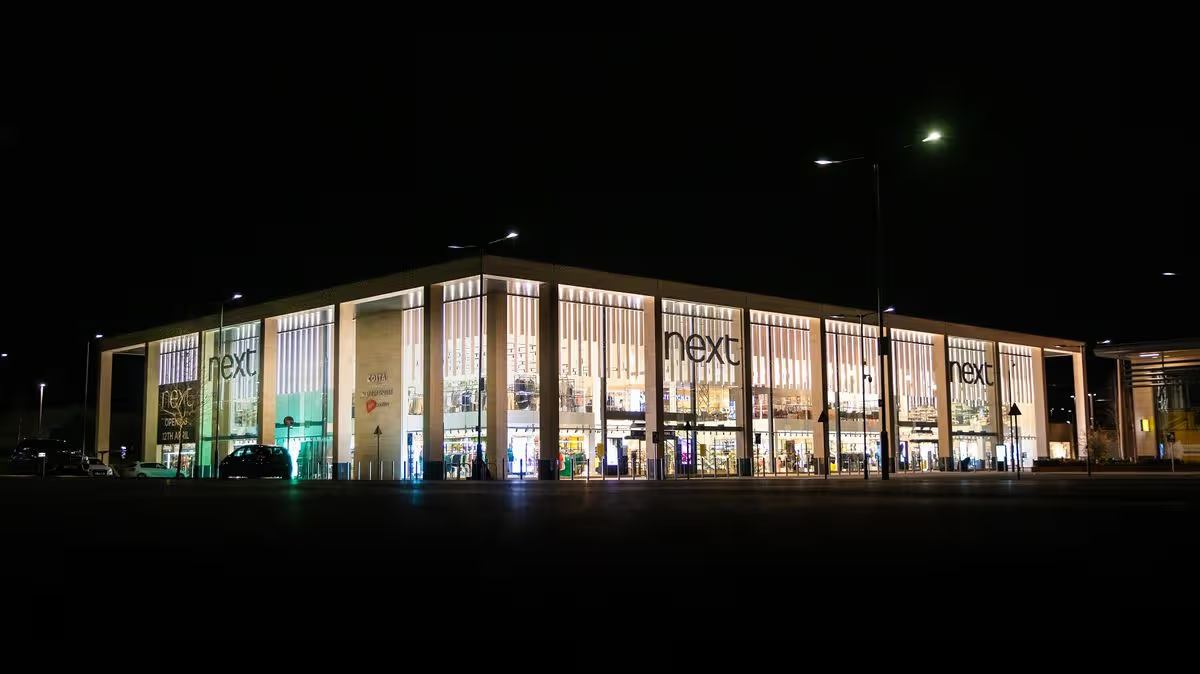
The Next store at Fosse Park West, outside Leicester
Next has raised its profit forecasts for the year after sailing past second quarter expectations, positioning its shareholders for a windfall.
Advertisement
The FTSE 100 retail giant increased its pre-tax profit projections for 2026 to £1.24bn, some £25m above prior estimates. Should this be delivered, the figure would represent 7.3 per cent growth on the preceding year.
The group’s overall sales target, including markdowns and investments, was similarly lifted to £7.5bn from £7.3bn.
This comes after sales exceeded forecasts by £70m, which it attributed partly to a lift from the warm weather and the “release of some pent-up demand” in the Middle East and Northern Europe following a subdued first quarter.
Overall UK sales rose 2.8 per cent in the second quarter, while international purchases surged just under 37 per cent, as reported by City AM.
Advertisement
The Leicestershire-based high street mainstay added it was able to invest “much more” in profitable marketing than anticipated.
Chris Beauchamp, chief market analyst at IG, said: “In an ever-changing world, upgrades to Next’s profit forecast is much-needed certainty.”
He added: “Next continues to be one of the UK stock markets most impressive and consistent performers.”
Next increased its target for returning cash to investors, with plans to buy back £524m worth of its own shares this year, approximately £14 million more than previously expected. To date this year, the retail behemoth has spent £355m repurchasing its own stock at an average price of £127.69 per share, reducing its total share pool by 2.3 per cent.
Advertisement
This leaves Next with £169m in surplus cash that it intends to return to shareholders throughout the remainder of the financial year. The company confirmed it would continue buying back shares only within a strict price ceiling of £135.
Should the share price climb above £135, the firm intends instead to distribute the outstanding £169m directly to investors via a one-off special cash dividend.
Next shares have climbed more than nine per cent since the start of the year to just above £148. The stock staged something of a recovery over the past month after consumer confidence began to improve in the wake of the conflict in the Middle East.
BTS’s decision to withdraw from consideration at the 2027 Grammy Awards has sparked not only a debate over representation in the music industry but also growing speculation about the financial toll the K-pop supergroup’s absence could take on a ceremony already contending with years of declining television ratings.
Estimates of the boycott’s potential cost, including a widely circulated figure putting the financial impact at roughly $340 million, have spread across entertainment commentary and social media in the days since BTS announced its decision on July 29. That figure has not been confirmed by the Recording Academy, CBS, or any of the parties directly involved in producing the telecast, and appears to originate from independent online analysis rather than official financial disclosures. Still, the scale of the number underscores just how much weight industry observers place on BTS’s ability to move audiences, and it points to real, measurable factors, television ratings, advertising rates and streaming activity, that help explain why such an estimate has resonated.
A Ratings Picture Already in Decline
The financial stakes surrounding BTS’s absence come at a time when the Grammy telecast has already been losing viewers for several consecutive years. The 68th Annual Grammy Awards, held in February, drew an average of 14.4 million viewers on CBS, according to Nielsen data, marking a roughly 6.5% decline from the 15.4 million who tuned in the year before, which itself represented a drop from the 16.9 million viewers who watched in 2024. Despite the decline, the ceremony remained the most-watched awards show since the previous year’s Oscars, and CBS has emphasized that the Grammys continue to dominate social media engagement, generating 74.8 million total interactions and more than 302 million video views across platforms during the six-month window surrounding the February broadcast.
Advertisement
That declining trajectory matters directly to the ceremony’s bottom line, since television ratings are the primary factor networks use to set advertising rates. A 30-second commercial spot during the Grammys sold for roughly $866,100 in 2022, according to industry tracking data, with rates climbing further through double-digit growth in subsequent years even as overall audience size continued to shrink. Analysts who cover live television advertising have noted that award shows like the Grammys remain a powerful vehicle for reaching audiences despite ratings declines, in part because they generate outsized social media attention relative to their broadcast viewership, a dynamic advertisers continue to pay a premium for.
BTS’s Track Record of Moving the Needle
BTS’s history with the Grammys offers some indication of why the group’s absence is being discussed in terms of measurable financial impact. The band performed at the ceremony three times between 2020 and 2022 and earned five total nominations across that stretch and the years following, without ever winning. Those appearances, along with the broader visibility BTS has brought to any stage it occupies, have long been credited by industry observers with driving spikes in both live viewership and social media engagement whenever the group is involved, a dynamic that becomes especially relevant given the Grammys’ own emphasis on its social media performance as a selling point to advertisers.
The group’s commercial momentum heading into this awards cycle made the financial stakes of its absence particularly notable. BTS’s fifth studio album, “Arirang,” released in March following the members’ return from South Korea’s mandatory military service, debuted at No. 1 on the Billboard 200 and topped charts in 23 countries. The group’s broader 2026 comeback, including a world tour spanning 34 cities across 23 countries, has been projected by industry estimates to generate more than $1 billion in revenue on its own, underscoring the scale of BTS’s current commercial footprint independent of any single awards show appearance.
Advertisement
A Shift in Leverage
Hye Jin Lee, a University of Southern California professor who studies Korean pop culture, has pointed to BTS’s decision as evidence of a broader shift in the group’s relationship with Western institutions. Speaking to Rolling Stone, Lee said the decision signals that BTS has reached a point in its career where it no longer feels the need to seek validation from Western institutions, a very different position from where the group stood five or six years earlier. That framing suggests the financial calculus may cut in both directions: while the Grammys stand to lose whatever ratings and engagement boost BTS’s presence might have delivered, BTS itself faces comparatively little commercial risk in skipping the ceremony, given its existing global audience and revenue streams that operate independently of Grammy recognition.
The Recording Academy’s Position
Recording Academy CEO Harvey Mason Jr. has publicly addressed the boycott, saying he was saddened that BTS chose not to participate in this year’s Grammy process while adding that he understood and respected the decision as a fellow music creator. Mason has also pushed back on the idea that the Academy’s new Best Asian Pop Music Performance category, introduced in June and widely seen as the catalyst for BTS’s withdrawal, limits artists’ ability to compete in the ceremony’s more prestigious general fields, noting that submitting music in a genre category does not exclude an artist from also being considered for awards such as Record of the Year or Album of the Year.
Advertisement
A Ceremony in Transition
The financial questions surrounding BTS’s absence also arrive at a pivotal moment for the Grammy telecast itself. Next year’s ceremony, set for Feb. 7, 2027, will mark the show’s move from CBS, which aired the Grammys for more than 50 consecutive years, to Disney’s ABC network, where it will be simulcast on Hulu and Disney+ for the first time as part of a new 10-year broadcast deal. That transition adds an additional layer of uncertainty to any effort to project the financial impact of BTS’s absence, since a new network partner brings its own advertising infrastructure, streaming distribution strategy and audience measurement approach that could shift how the ceremony’s commercial performance is ultimately evaluated.
What Remains Unclear
Whatever the precise dollar figure attached to BTS’s decision, the group’s withdrawal has already reshaped conversation around the upcoming ceremony, with submissions for Best Asian Pop Music Performance and other Grammy categories remaining open through Aug. 28. Industry observers continue to debate whether other major K-pop acts will follow BTS’s lead, a development that could compound whatever financial impact the group’s own absence produces, though BTS’s label, HYBE, has stressed that the decision reflects the band’s individual choice rather than a coordinated industry-wide protest.
Yes. Corporate subscriptions are available for teams and organisations, with discounted rates as user numbers increase. Pricing starts from $1,625 + GST per user. Get in touch
to discuss the right option for your organisation.
Business News subscriptions are used by executives, investors, consultants and professionals who need to stay informed and make better decisions about the WA market. When you subscribe you’ll get
Unlimited access to WA’s most trusted business journalism
Data & Insights — detailed profiles of WA companies, people, projects and deals
MyBN — a personalised feed based on the companies, people and sectors you follow
Special publications and industry reports
Daily and weekly email newsletters
Data & Insights is a research tool built specifically for the WA market. It draws on more than 30 years of Business News reporting, updated regularly to reflect what’s happening now. Use it to:
Look up detailed profiles of WA companies, including financials, directors and ownership
Find decision-makers and track their career movements
Research live and completed projects across WA industries
Monitor deals, appointments and market activity
Access industry rankings and league tables
Data & Insights is updated daily by our dedicated research team, which uses the latest announcements, ASX filings and editorial coverage to keep our person, company, list and project records up to date.
Business News welcome all opportunities to make our dataset accurate, complete and current, so if you have an update request, please email the team at general@businessnews.com.au, and we’d be happy to assist.
Advertisement
MyBN
is part of every subscription. It’s your personalised view of Business News. You can follow the companies, people, sectors and projects that matter to you, and get a news feed and alerts tailored to your interests. You can save articles to read later and retain only what you need.
Only subscribers have full access to all content on the Business News website.
Advertisement
If staying informed about the WA economy is part of your job, and/or you’re looking for networking opportunities in WA, Business News is built for you.
Business News subscribers are:
Executives and directors tracking competitors, clients and market movements
Investors and advisers researching companies, deals and industry trends
Consultants and professionals staying across sectors relevant to their clients
Business owners looking for leads, context and market intelligence
Most Business News publications cover national or global markets. Business News is focused entirely on Western Australia, which means the journalism, the data and the intelligence are all built around WA companies, people and projects — not adapted from a national feed. Data & Insights, included with every subscription, combines more than 30 years of WA-specific editorial research with live business data. There’s no comparable product for the WA market.
Advertisement
The Morning Digest Email provides a comprehensive wrap of the major headlines, relevant to WA business, and includes with a snapshot of the overnight news covering oil, gold and ASX-listed companies.
The Afternoon Wrap Email focuses on the news covered by our team of journalists during the course of the working day, including exclusive stories and analysis, all of which relates to WA business and the local economy.
The BN Weekender Email contains a wrap of the Business News from the week that was, highlighting the top stories in each area of WA business. Sign up for free.
Advertisement
We’re happy to help. Get in touch
and our team will come back to you.
Glencore has written down the value of its Murrin Murrin nickel mine to zero as the global miner pursues a secondary listing on the ASX to access deeper pools of capital and sophisticated investors.


















































You must be logged in to post a comment Login