Connect with us

Tech

Elon Musk’s Grokipedia Quietly Stopped Updating In April. Basically No One Noticed.

Published

on

from the dead-site-walking dept

As perhaps a few Elon Musk fans may remember, he got really annoyed at Wikipedia last year and tasked his second-rate LLM, Grok, with recreating it as “Grokipedia.” Grokipedia, launched nearly a year ago, basically starts by forking Wikipedia and then having its AI “generate” more details and more stories. It’s… not very good.

And apparently, it hasn’t been updating. And it seems like almost no one noticed.

Over at Lawfare, they put out an article showing that Grokipedia basically stopped accepting updates back in April.

At first, we wondered whether the AI was avoiding sensitive topics. To test that possibility, we submitted an uncomplicated factual update: SpaceX has recently launched its initial public offering (IPO). Grokipedia had not added this extensively sourced, indisputable fact to the SpaceX page. We observed that other users had suggested this edit as well; their requests were also “in review,” some since the day after the June 12 IPO. 

We then examined the most popular pages, reasoning that if anything moved through the queue, we would likely see it there. Because Grokipedia provides view counts on individual pages but offers no site-wide ranking leaderboard, we approximated one using the site’s own search-suggestion (typeahead) feature, which returns, for any queried word, the most-viewed pages whose titles contain it. For example, if you type “The ” into the search bar, the first two suggestions are “The Beatles” and “Alexander the Great,” both of which have over 4.7 million views. Using the 10,000 most common words in Grokipedia page titles (obtained from the 5.9 million pages listed in the site map) gave us over 300,000 pages. Like many websites, its individual pages have a steep popularity curve. High-traffic entries on topics such as Elon Musk, ChatGPT, Donald Trump, Taylor Swift, World War II, and Bitcoin draw millions of views, while millions of minor pages sit in a zero-visit long tail.

Advertisement

But neither popular nor unpopular pages seemed to be updating. On ChatGPT’s entry, 12 edits submitted on April 24 were approved the same day, and every edit submitted afterward—May, June, and July—remains “in review.” The same pattern holds across topics and traffic levels; the largest political entries on the site (across both parties) and a second-division football club are both stalled, which is difficult to reconcile with a content- or topic-specific explanation.

In our subsequent analysis of 34,519 pages with at least one suggested edit in our sample, containing a total of 225,496 recommended edits, we found no accepted or rejected corrections dated within the past three months.

You’d think someone would have noticed sooner.

But, as the article notes, it sure looks like the actual human users of Grokipedia quickly dwindled as well:

Advertisement

Across the pages examined, submissions from human users continue at a reduced volume—averaging 216per week post-April.

Other tools that monitored activity on Grokipedia apparently died much earlier:

A public feed that once showed the editing process at grokipedia.com/live—a stream that the Tow Center had scraped to assemble its dataset—stopped functioning between mid-January and early March. A Wayback Machine capture from Jan. 12 shows the feed fully operational, with a running count of approved edits, while a capture from March 5 returns an error page.

These are all signs of a project that’s basically flatlined. For all the hype Grokipedia received as the antidote to Wikipedia, it doesn’t seem to have gained any traction. And, the fact that it basically broke months ago seems to have been noticed by almost no one other than… the dozen or so people out there trying and failing to edit Grokipedia:

While more than half of all contributors suggested only a single edit, a tiny cohort of 13 power users accounts for 42.6 percent of all human edit requests (nearly 40,000 edits). The most prolific contributor submitted over 8,000 corrections across 4,000 pages.

One self-described frequent contributor reported in mid-June that the review system had been stuck for more than 50 days. That places the onset in late April, consistent with our data. He also wrote on X that someone he identified as an xAI team member had acknowledged the complaint but could not provide a status update.

For these power contributors, Grokipedia went from a platform with rapid review times to a black hole.

Advertisement

The article notes that Elon hasn’t mentioned the site since February — barely four months after it launched in October. That silence has now stretched on for about six months and counting.

Even worse, Grokipedia’s logging system appears to have broken as well:

A mass rewrite of the encyclopedia seems to have happened on March 14. Because user suggestions are anchored to specific text selections (“Highlighted sections”), the rewrite appears to have broken the anchors. Grokipedia’s logging system retroactively reclassified previously accepted edits as rejected, attaching the error message, “Highlighted section not found.” However, in several cases that we reviewed, the textual changes appear to have been incorporated into the articles anyway. For example, the 10 launch-week edits to the entry for the actress Prunella Scales are recorded as approved in the Tow archive; nine of the edits now display as rejected on the live site, despite their contents appearing to have been incorporated into the article.

The edit log, in other words, is not entirely stable or reliable. This is potentially confusing for users who made suggestions and might have seen their valid contribution accepted with a “rejected” message nonetheless. It is also not ideal from an auditing standpoint.

It’s entirely possible that someone at xAI (or SpaceX or wherever the checks get cut these days) will flip the server back on and get things started again, but given how much the media hyped up Grokipedia when it launched as a potential “Wikipedia killer,” shouldn’t at least some of them acknowledge what a total failure it has been?

Advertisement

Filed Under: elon musk, grokipedia

Companies: spacex, wikipedia, xai

Source link

Advertisement
Continue Reading
Click to comment

You must be logged in to post a comment Login

Leave a Reply

Tech

It’s like, ‘Wait a minute, are you, wait, is that Jimothy?’ The inside story of how the viral raccoon climbed inside Roku City

Published

on

I couldn’t believe it. Had Roku really just casually inserted global viral raccoon sensation Jimothy into Roku City? I’d seen a post claiming so, but knowing how easy it is to fake things with AI, I had to see it for myself.

I powered up one of my home’s half-dozen Roku streaming boxes and spent 10 minutes trying to force the platform into screen-saver mode, which then opens up Roku City. Ever since the most recent Roku platform update, I see this interface far less often than I used to.

Source link

Advertisement
Continue Reading

Tech

Phantomdrive Keeps Your Secrets Out Of Sight

Published

on

It’s a complex world out there, and more than ever folks may find themselves in a situation where they want to keep particular bits of information away from prying eyes. At the same time, overly complex methods of file security can make it difficult to share said information with the intended recipients impractical. So what’s the solution?

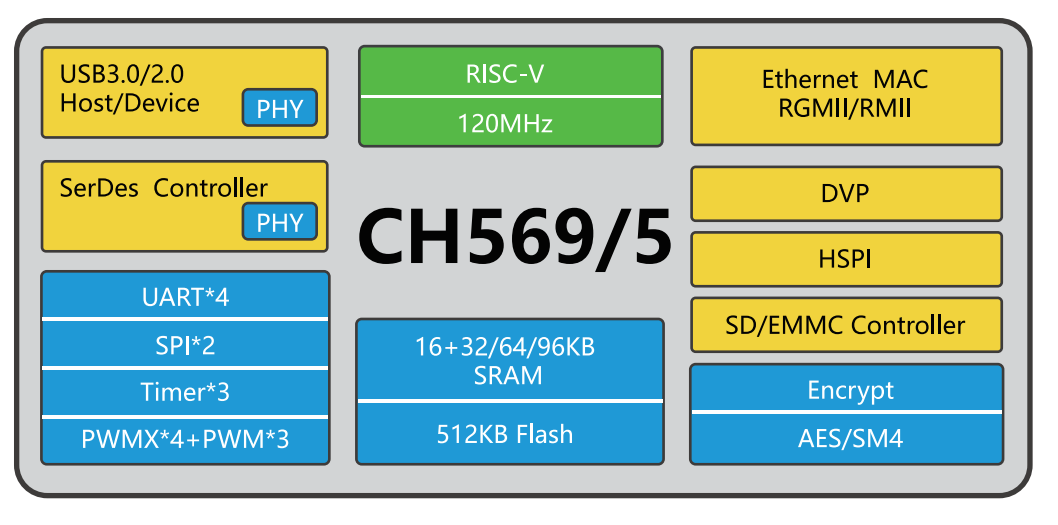
One proposal from [Ryan Walker] AKA [machinehum] is the Phantomdrive — a fully open source USB flash drive that features a secret secondary filesystem. Not only is the existence of this data hidden from the operating system under normal circumstances, but it’s encrypted with AES-256. Rather than relying on software running on the computer to handle the decryption, the CH569 chip that powers the drive does it internally.

To complete this platform-agnostic approach, [machinehum] had to come up with a way for the user to unlock the secure storage that didn’t require running any code on the client machine. A hardware solution such as a keypad is the obvious answer, but in this case, was out of the question as it would immediately tip off an observer about the drive’s true nature. A covert storage device needs a similarly inconspicuous method of authentication.

That’s why the firmware on the Phantomdrive keeps an eye on all the write operations to the unsecured section of the drive looking for the string password:. Once it sees that, it treats whatever follows as the decryption key. If it’s correct, the previously inaccessible data will appear to the operating system as a new drive.

[machinehum] cautions that none of this has been professionally audited from a security standpoint, and that you should treat this whole concept as an experiment. In other words, it’s probably more than sufficient for the average person, but no guarantees on how long it would last should a three letter agency gets too interested in what you’re up to.

Advertisement

If this seems a bit familiar, it’s because the Phantomdrive follows up [machinehum]’s self-destructing USB flash drive from a few years back. The concept is essentially the same, except this time there’s no Magic Smoke getting released.

Source link

Advertisement
Continue Reading

Tech

How to Secure Remote Access to Your Cloud Server in 2026

Published

on

Protection against unauthorized remote logins to your cloud server is a matter of SSH key-based authentication, a strict security policy on the firewall, two-factor authentication, and a secure communication channel – no individual component will give adequate protection by itself. The major risk point in breaches is not the server but the open door to remote login. To patch that vulnerability, you need a series of countermeasures, not a magical setting.

Why Remote Server Access Is a Common Attack Vector

Every cloud server exposes at least one remote access point – usually SSH on port 22 – and that port is scanned constantly by bots looking for weak credentials. Password-based login is the most common way a system can be attacked by brute force, and it is quite common with a standard setup that the system is left in a state where an admin/user of that system – “root user” – can log in directly by guessing the user ID and the password combination. Add in shared team credentials, forgotten firewall rules from old projects, and staging servers left publicly reachable, and it’s clear why misconfigured remote access – not zero-day exploits – is behind most cloud server compromises. The fix is simple, though you’ll need to do some setup yourself instead of trusting the default setting.

How to lock down SSH access in the right way

The best way to secure remote access is through a series of small improvements rather than one major overhaul. The following is a real working method:

  1. Switch to SSH key authentication, then turn off password login completely in the same location: sshd_config. Keys are far harder to brute-force than passwords.
  2. Disable root login over SSH and require a non-root user with sudo privileges instead; this is a security advantage that even without any change, one key compromising would limit the impact.
  3. Change the default SSH port away from 22 to cut down on automated scanning noise (not a security measure on its own, but it reduces log clutter).
  4. Restrict access by IP using your firewall or security group, allowing SSH only from known office or VPN IP ranges rather than the entire internet.
  5. Add a VPN as a connection layer for anyone accessing servers from outside a trusted network – a VPN like Planet VPN’s free VPN service can encrypt the connection between a remote worker’s laptop and the server before SSH traffic ever leaves their device, which matters especially on public wi-fi or shared networks.

Every step you take closes the doors that the attacker may open slightly, and when you combine everything, you would have a door to a series of locked gates.

Why Do I Need a Bastion Host?

When it comes to teams working with many servers, deploying a bastion host (jump box) may be a clean and effective way to solve the long-term problem. With this method, you only expose SSH to the bastion, and the other servers accept it only when it’s from the bastion’s internal IP. This centralizes logging and makes auditing access far simpler.

Advertisement

Using a virtual private network (VPN) and a bastion host together is perfectly fine – and many solutions use both: a safe way to access the private network via a VPN, followed by use of a bastion host to restrict which servers can be accessed. Some teams may decide to forgo the bastion because they don’t have the manpower to manage one, and so use a combination of a VPN and a set of firewall rules that still quite a bit lowers the exposure, but without the extra effort.

Mistakes Leading to Leaving Cloud Servers Open

The Mistakes That Cause Leaving Cloud Servers Open: Even the safest development teams may have slip-ups from time to time. One of the most frequent is leaving staged, or test servers with relaxed firewall rules equivalent to those of the production environment – hackers don’t concern themselves with which environment they first land on. Another frequent error is reusing the same SSH key on several servers and clients, causing one hacked laptop to compromise all servers that key has access to.

Another common human error is not removing or changing access when someone leaves the team, so stale credentials remain valid and accessible. At last, putting trust in the strategy of “security through obscurity” – meaning one thinks that setting up the unusual port or hiding the hostname from the public is actually sufficient security – creates a wrong impression of security. This is mostly true; in reality, modern-day attackers scan all ports anyway, and there is no way to hide from them.

System Administrators Guide to Secure Remote Access 

Prohibit SSH password logins totally and depend exclusively on key-based authentication

Advertisement
  • Surely no one wants to type in the password every time; because of this, use only key-based authentication 
  • Deter the user from logging in as root by default and instead use the sudo command to do root tasks
  • A firewall or security group rule can provide great help with IP address-based restrictions on SSH logins 
  • For access that comes from untrusted sources or external networks, use a secure tunnel like a vpn or bastion host
  • Periodically change SSH keys and inspect access lists
  • Maintain records of login attempts and detect brute-force attacks as quickly as possible

Frequently Asked Questions

What is the principal means by which cloud servers suffer break-ins through remote access?

By far the biggest reason why this can happen is unauthorized password-based SSH logins that have been cracked by brute force. The scenario is most likely to develop where the administrator allows root login via password and leaves the default port open.

Sufficient security measures for the server via SSH keys: Do you think it is safe to rely only on key authentication? 

It is true that SSH keys drastically decrease the danger of a successful brute-force attack. However, if there is only key authentication on the server, there are still risks – the server administrator can always enable root login or disable the IP-based login restrictions. So it is recommended to always have these three in the server configuration: disabled root login, restricted access to known IPs, and rotating the keys regularly as the main components of meaningful protection. 

Advertisement
Is it really necessary to set up a separate VPN network while I am able to connect via SSH keys? 

A VPN gives extra security by first encrypting your computer traffic before it reaches your network, where the SSH connection will be used. This is mostly important when working on untrusted networks – like public wi-fi – where there is a threat of a potential hacker in your local network looking at your data.

Advertisement
Bastion host vs VPN as methods of accessing the server? 

The bastion host works by funneling SSH sessions from many users through a single, carefully monitored server point while the rest of the network (and mostly the servers) remains protected from the internet. At the same time, a vpn will fully encrypt the communication between the user and the corporate network or servers. The combination is very common among larger security teams as a part of the defense-in-depth principle. 

How often should SSH keys be rotated? 
Advertisement

The ideal period to change your SSH keys depends on the security practices of your organization, but generally a good practice is to change SSH keys between 90 and 180 days, or in the case that the user who had access with the key leaves or is no longer able to be contacted, such as when a team member leaves.

Why is only changing the port number for SSH enough to secure that port?

Changing the port reduces automated scanning noise in your logs but isn’t a real security control on its own — port scanners check all ports, so it should never replace key-based auth and firewall rules.

Advertisement

Source link

Advertisement
Continue Reading

Tech

‘I think there’s room for both to coexist’: Disney’s new creator festival is the clearest sign yet that Hollywood and fan-made movies are colliding

Published

on

The El Capitan Theatre and the Walt Disney Studios lot have long been reserved for some of Disney’s biggest moments. Citizen Kane held its Hollywood premiere on that same stage in 1941, and decades later, The Lion King, the Avengers films, and a steady run of Pixar premieres have rolled out the red carpet at the same historic Hollywood venue.

This September, though, Disney is handing the spotlight to a different kind of storyteller… creators. Created in LA is a new two-day creator summit and film festival conceived by creator Jon Youshaei and presented by Disney. The event will bring 350 creators and storytellers together on September 17–18 for a premiere event at the El Capitan Theatre before moving to the Walt Disney Studios lot for a day of conversations.

Source link

Advertisement
Continue Reading

Tech

Triangle AIO Twin Gets a Macassar Makeover Because French Speakers Refuse to Dress Down

Published

on

The Triangle AIO Twin was already one of the better dressed wireless speaker systems under $1,000, but apparently French audio companies consider standing still a form of surrender.

Triangle has introduced a new Macassar finish for the AIO Twin, wrapping its compact cabinets in a genuine wood veneer inspired by Macassar ebony. The dark brown base is crossed by vertical grain and fine golden highlights that shift in appearance depending on the lighting and viewing angle.

In other words, it should look considerably more expensive than another pair of rectangular black boxes parked beside your turntable.

The new veneer is paired with the AIO Twin’s familiar oblong magnetic grille, now covered in a deep brown fabric supplied by Scandinavian textile specialist Gabriel. The combination gives the system a warmer, more traditional appearance that should work particularly well in Art Deco, mid-century and contemporary interiors.

Advertisement

Related Reading: Triangle AIO Twin Wireless Speakers and Thetis 340 Subwoofer Review

Same Speaker, Better Suit

triangle-aio-twin-wireless-speakers-macassar

Triangle has not made any acoustic or connectivity changes for the Macassar edition.

The AIO Twin remains a two-speaker stereo system built around one active loudspeaker containing the amplification and connections. The second passive speaker is powered through the supplied three-meter speaker cable.

Each cabinet uses a 1-inch silk-dome tweeter and 5-inch midrange/bass driver, with 50 watts of Class D amplification available for each channel. Triangle specifies a frequency response of 56Hz to 22kHz and recommends the system for rooms measuring up to approximately 269 square feet.

Wi-Fi streaming supports files up to 24-bit/192kHz, while Bluetooth 5.0 includes aptX, aptX HD, aptX LL, AAC and SBC. AirPlay, Spotify Connect, UPnP/DLNA playback and Triangle AIO multiroom support are also included.

Advertisement

Available streaming services through the Triangle AIO app include Spotify, Qobuz, TIDAL, Deezer, Amazon Music and TuneIn internet radio.

triangle-aio-twin-wireless-speaker-macassar-back

Physical connections include a switchable RCA line-level/MM phono input, 3.5mm auxiliary input, optical digital input, Ethernet, USB-A for storage devices or charging and a mono subwoofer output. The USB connection does not operate as a USB DAC input for a computer.

Advertisement. Scroll to continue reading.

Why the AIO Twin Still Works

When we reviewed the AIO Twin, its warmer tonal balance, texture, dynamic punch and fatigue-free presentation made it a more appealing long-term listen than Triangle’s less expensive Borea BR03 BT.

The AIO Twin also produced surprisingly convincing bass for its size, although adding a subwoofer remains worthwhile for larger rooms, movies or listeners determined to remind the neighbors that they still own a copy of Madvillainy.

Advertisement

The system’s versatility continues to be its strongest selling point. Buyers can connect a turntable, stream high-resolution music, add a CD player, improve the sound from a television and build a multiroom system without purchasing a separate amplifier or network streamer.

The omissions have not changed either. There is still no HDMI ARC/eARC input, which makes TV integration less seamless than it could be, and the USB-A port cannot be used as a digital connection from a laptop or desktop computer. Optical works perfectly well with a television, but HDMI would make volume and power control easier.

Macassar veneer cannot fix that, although it does make the disappointment look rather elegant.

triangle-aio-twin-wireless-speaker-macassar-grille-on-lifestyle

The Bottom Line

The Macassar edition does not improve the sound, add HDMI or turn the AIO Twin into an entirely new product. It simply gives one of the most versatile wireless stereo systems under $1,000 a more luxurious finish.

Advertisement

For listeners who want real stereo sound, vinyl playback, high-resolution streaming and TV connectivity without filling the room with components and cables, the AIO Twin remains a compelling option. It now also looks considerably less likely to have arrived with the office furniture.

Price & Availability

The Triangle AIO Twin wireless speakers are available for $899/pair at Amazon and Best Buy in English Green, Abyss Blue, Linen Grey, White, Black, Brown Maple, Eggplant, and now Macassar. However, the Macassar finish appears to be out of stock on Triangle’s U.S. website at the time of publication.

Source link

Advertisement
Continue Reading

Tech

Apple TV offers free ‘Widow’s Bay’ AMC screenings

Published

on

Fans of “Widow’s Bay” in Atlanta, Boston, Chicago, Los Angeles, New York, and San Francisco can catch a free screening of the series’ final three episodes of the first season at select AMC theaters.

“Widow’s Bay” made its debut in April, quickly becoming an Apple TV hit. The series has been praised for blending genuine horror with character-driven comedy.

Even with its late premiere date, it earned 19 Emmy nominations. That includes the coveted Best Comedy Series.

Now, Apple TV wants to do something for “Widow’s Bay” fans.

Advertisement

According to Deadline, Apple TV has teamed up with Rutgers University, alma mater of “Widow’s Bay” creator Katie Dippold, for free, one-night-only fan screenings of the first season’s final three episodes. The screenings will take place in select AMC theaters on Wednesday, August 12, in Atlanta, Boston, Chicago, Los Angeles, New York, and San Francisco.

If you’re interested in going, there’s a helpful Apple TV Screenings site that shows which theaters are participating.

Apple TV continues to churn out hits under the direction of Eddy Cue. Cue was recently honored with Cannes Lions’ Entertainment Person of the Year.

Advertisement

Source link

Continue Reading

Tech

Flock Highlighted Police Departments Using Its Tech. Now 4 Face Allegations of Misuse

Published

on

The Albany Police Department did not respond to WIRED’s request for comment.

Flock’s Savannah video centers on an interview with then major of police Robert Gavin, who praised how Flock facilitates data-sharing between different law enforcement agencies.

“We spent a lot of time doing community talks about what we’re gonna use them for, what we’re not gonna use them for,” Gavin says, adding that the overall objective is to “keep everybody safe.”

On July 31, Savannah police mayor Van Johnson wrote in a Facebook post that the allegations involving the six employees had been referred to the GBI to determine whether criminal charges should be filed.

Advertisement

The Savannah Police Department did not respond for comment. The GBI confirmed that it investigated the incidents in Savannah and Albany, but didn’t provide information, noting that the Savannah investigation is “still active.”

According to Johnson, the Savannah Police Department conducted an internal investigation through the Flock Safety Audit Assistance Program, which Flock introduced in April. In a press release announcing the tool, Flock said it “continuously monitors system activity and surfaces search patterns that fall outside an agency’s typical usage.” Savannah police chief Lenny Gunther told a local news outlet that the investigation surfaced 127 inappropriate searches out of the 39,000 it conducted this year.

“Public trust is non-negotiable,” Johnson said in his Facebook statement. “These tools exist to keep our community safe, not for personal or unauthorized use.”

In 2020, Flock posted a video by the Atlanta Journal-Constitution about the Sandy Springs Police Department’s arrest of a porch pirate. The video did not feature any interviews with Sandy Springs Police Department personnel, but noted that the man was arrested after a Flock camera captured the license plate of the suspect.

Advertisement

About five years later, the Sandy Springs Police Department launched an internal investigation into whether one of its officers had misused Flock’s technology. According to investigators, the officer allegedly ran ALPR searches to support beta testing for Signal 8, a law enforcement software company that employed the officer in a second job.

This officer, the police department claimed, did not cooperate with its investigation and was subsequently terminated.

Meanwhile, Flock showcased the Baytown Police Department in 2025 as part of a brief series highlighting cases where police said Flock was instrumental in apprehending a suspect.

“We use it multiple times every day, and once I log in to my computer, Flock is the first thing I click on,” a Baytown police officer says.

Advertisement

On July 30, Baytown police chief John Stringer announced the resignation of a police officer who had been under investigation for allegedly misusing Flock’s technology. The Baytown Police Department did not respond to WIRED’s request for comment.

In his video statement, Stringer said that two investigations into the officer’s alleged misuse—one internal, one criminal—remained ongoing.

“Accountability to the fullest extent of the law will be pursued,” Stringer added.

Source link

Advertisement
Continue Reading

Tech

There’s No Good Way to Talk About Celebrities and Eating Disorders

Published

on

When a patient is seeking treatment, Logue says, she does not use their appearance to express concern or as a motivator, because there are always other contributing factors. With a public figure, Logue says, we don’t have real insights into these factors. Instead, most people focus on what their body looks like.

Although a lot of commenters say they’re less worried about Grande individually and more concerned about the impact she may have on her young fans, Logue says focusing our efforts on celebrities’ appearances also doesn’t meaningfully combat aspirational thinness in our day-to-day lives, either.

“Talking about how you look fat, engaging in fatphobia, it’s all these things that are so normalized. And when I work with clients, that is the dangerous stuff,” she says. “I’ve never had a client sit down and say, ‘I got an eating disorder because I heard Demi Lovato had an eating disorder.’”

One big sign that the viral posts about celebrities aren’t helping people with eating disorders is that almost none of them share resources, such as links to groups like the National Eating Disorder Association. And many of the posts contain an undeniable strain of snark, cruelty, and carelessness. There are viral compilations of celebrity women with captions like “it’s not just Ariana,” most of which exclude celebrity men entirely. Some people have used AI tools to edit images of these women to make them appear obese and used them as memes, while others have analyzed every part of their bodies in photos to declare them too skinny.

Advertisement

Women in various stages of eating disorder recovery are actively grappling with the issue. Natália Franz, a Slovak actress, commented on one video about celebrities and eating disorders to say, “I wish more people were worried about me when I was not eating rather than normalizing it.”

Franz tells WIRED that she’s concerned about the influence celebrities have over their fans, and she’s hoping that the discourse can change the culture for her own daughter. She also says that her body image issues started at home and that parents need to be careful with how they talk about food and appearance around their kids.

“I actually think it’s weird this heated discussion is only about one celebrity,” Franz says. “But when you see so many celebrities getting this thin, it’s very obvious patriarchy is on the rise.”

Having a personal history with eating disorders can provide a more informed perspective, as evidenced by some of the more nuanced conversations happening online. But the reality is that eating disorders are complicated, multifaceted, and different from person to person. Outsiders cannot infer what is going on privately in any celebrity’s life based on the limited information they share with the public, but that doesn’t stop people from labeling those in their inner circle “enablers” or assuming that a break from the public eye means they’re seeking treatment for an eating disorder.

Advertisement

“Talking about this in a heightened, gossipy, fearmongering kind of way is not necessarily going to inspire people to get help,” says Keesha Amezcua, chief clinical officer at Alsana Eating Disorder Treatment Center. “A lot of people on social media platforms are not informed, they’re not educated, and they don’t know what they’re witnessing and participating in is incredibly unhealthy and harmful.”

The National Alliance for Eating Disorders helpline provides resources about treatment options at 1-866-662-1235, or you can text “ALLIANCE” to 741741 if you are experiencing a crisis. More information can be found on the National Eating Disorder Association’s website.

Source link

Advertisement
Continue Reading

Tech

Google Wallet Now Lets Parents Create Secure Tap and Pay Balances for Kids

Published

on

Google Wallet is giving parents a new way to help their kids manage money without the need for a traditional bank account. The feature, which was announced Thursday, lets parents set up a secure balance for their children to use to spend money with their NFC-enabled Android phone or WearOS device anywhere Google Pay is accepted. 

Parents can use the Google Wallet app to add money to their child’s balance, and the funds will instantly be available for use. Unlike some traditional payment apps, there won’t be any additional fees or the need to transfer the funds to a physical card before it can be used. 

The new feature allows parents to set boundaries and teach their kids healthy spending habits by creating daily spending limits. Parents can also view all of their child’s spending transactions or receive a push notification when a new transaction is made via Family Link. Push notifications will include the amount of money spent and the name of the location where the transaction took place. 

The new features also allow the ability to lock or unlock the balance at any given moment. This could be helpful if a device is misplaced, stolen or if a parent wants to establish a “spending timeout.”

Advertisement

Source link

Advertisement
Continue Reading

Tech

Hisense Adds Dolby Vision 2 Max to Select 2026 TVs With Software Update

Published

on

Hisense today announced that Dolby Vision 2 is now available on select 2026 televisions, with UX, UR9, UR8, and U7 models receiving Dolby Vision 2 Max firmware updates over the coming weeks. The supported TVs include Hisense’s 2026 UX, UR9, UR8, and U7 (U7 Pro in EU, MEA, CSA) televisions running Google TV or VIDAA OS across North America, Europe, and APAC.

There is a lot to unpack regarding Dolby Vision 2, along with premium features added to Dolby Vision 2 Max. Of course there is now regular Dolby Vision (or Dolby Vision), which originally unlocked HDR (high dynamic range) content about 10 years ago and is available across thousands of movies and TV shows — both streaming and on 4K UHD discs. Fortunately, all Dolby Vision content is backward compatible and will play perfectly fine — and potentially even better — on Dolby Vision 2 enabled TVs.

Yes, Dolby reps told us, “better”! The reason is that TV capabilities have outpaced Dolby Vision’s original specifications, so the new versions of Dolby Vision let TV makers tap into the full potential of the latest generation TVs, with higher brightness, faster refresh rates, and greater color volume.

Ultimately, it should be automatic for the TV viewer. However, with Dolby’s new specifications filmmakers need to catch up too. Creators need to make use of Dolby’s new specification toolkit, which ultimately gets assigned as new metadata that Dolby Vision 2 TVs decode. Until that happens we won’t know the full potential Dolby Vision 2 and Dolby Vision 2 Max offers.

Advertisement

For a deeper discussion, watch our Dolby Vision 2 podcast here.

Dolby Vision 2 vs. Dolby Vision 2 Max

Since originally learning about Dolby Vision 2 last year, Dolby has attempted to simplify improvements for consumers.

Dolby Vision 2 TVs get:

  • A powerful new image engine to deliver an enhanced Dolby Vision experience across both new and available Dolby Vision titles.
  • Content Intelligence that leverages new and existing metadata to further bridge the creative suite to the viewer’s living room. Leveraging precise instructions embedded in every title, it dynamically adjusts the picture based on what you’re watching, so every scene looks its best — from the darkest cinematic moments to the most action-packed sports and games. No remote or complex settings required.
  • An intensity slider allows users to control the depth and richness of their Dolby Vision 2 experience to compensate for contrast lost by viewing angles or reflections while also enabling more personalization based on individual preferences. 

Dolby Vision 2 Max TVs add:

  • Authentic Motion which aims to offer a more cinematic feel while eliminating unwanted judder and soap opera effects (requires new metadata/content).
  • Light Sense 2, which continuously optimizes picture quality for any lighting environment without compromising artistic intent so that even the darkest scenes in a sunlit room become crystal clear. 
  • Pro settings that give enthusiasts even more precise control over how their display performs.
2026-hisense-ur9-tv
2026 Hisense UR9 TV will get Dolby Vision 2 Max update.

The Bottom Line

Hisense owners benefit most because select 2026 TVs are gaining Dolby Vision 2 Max without requiring another expensive hardware upgrade. Movie fans, sports viewers, gamers, and anyone watching in brighter rooms should see the biggest improvements, although the format’s full potential will depend on studios and filmmakers adopting the new metadata tools.

Advertisement. Scroll to continue reading.
Advertisement

Source link

Continue Reading

Trending

Copyright © 2025