
Business
Alibaba plans revenue-sharing for commercial users of next Qwen AI model – Reuters




Earnings call transcript: Swiss Water Q2 2026 profit beats as stock jumps 17%
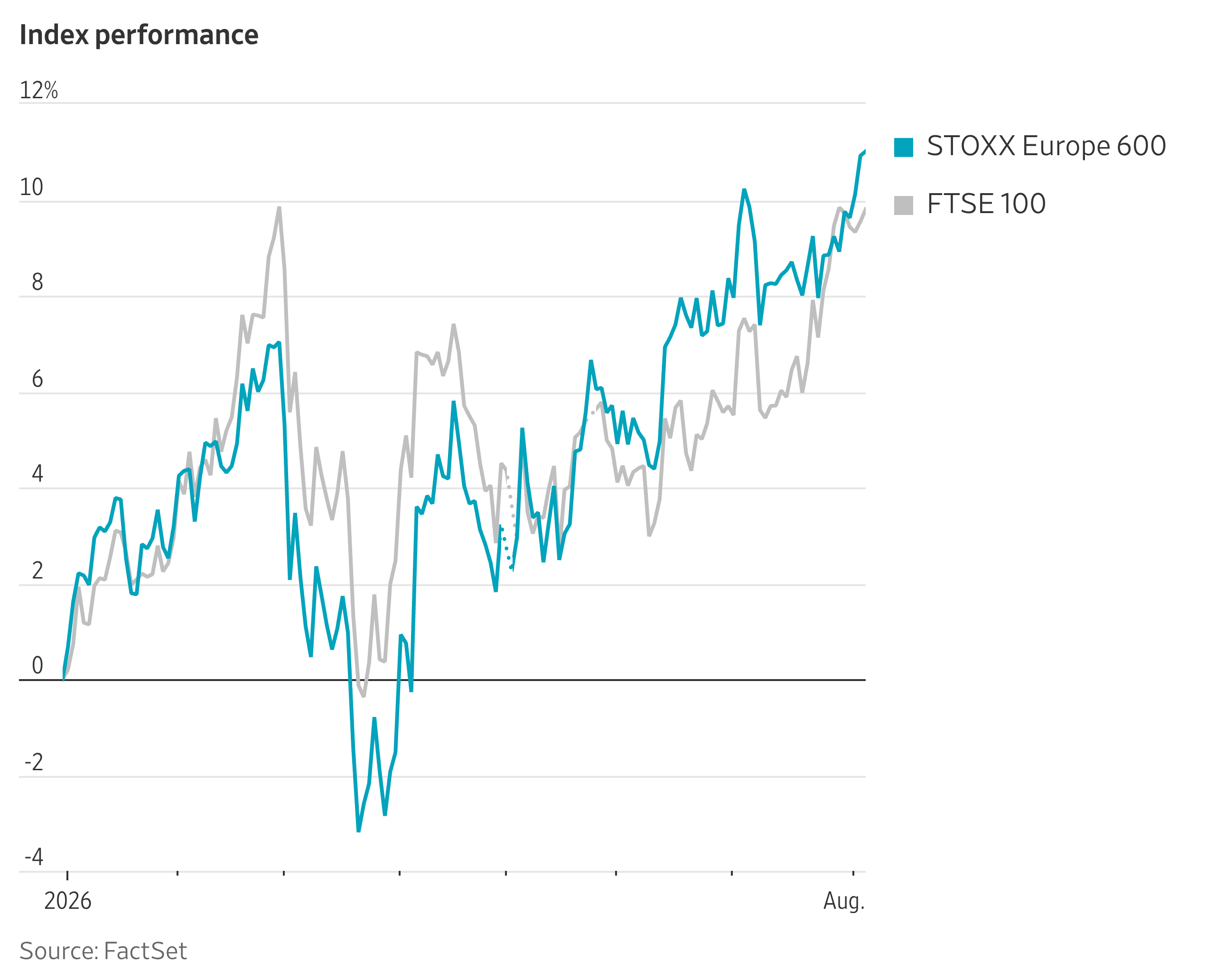
European indexes are streaking to new records Wednesday. Cautious optimism around a deal to reopen the Strait of Hormuz has added fresh impetus to a rally built on strong earnings and a rotation away from artificial-intelligence stocks.
AI-related jitters that derailed chip-led gains in Asia and the U.S. were a boon for European stocks, where banks and industrials are driving the technology-light continent.
“Europe is the anti-AI trade,” said Julian Lafargue, chief market strategist at Barclays Private Bank.

PHC Holdings Q1 2026 slides show 171% profit gain, shares rally 19%
A spreadsheet can track inventory for exactly as long as a business stays small enough that nobody minds double-counting a pallet or missing a reorder point. Past that, the gap between what the spreadsheet says is on the shelf and what’s actually there starts costing real money in rush shipping, in stockouts, in the customer who orders a product that quietly sold out three days ago.
That’s the problem inventory management software is built to solve, and there’s no shortage of it built specifically for small businesses. But “best” depends heavily on what kind of small business is asking. A boutique running one storefront on Square has almost nothing in common, inventory-wise, with a three-person team assembling furniture from raw materials, or a Shopify seller juggling stock across Amazon, TikTok Shop, and their own site. The tool that’s a perfect fit for one is often the wrong choice or wildly overpriced – for another.
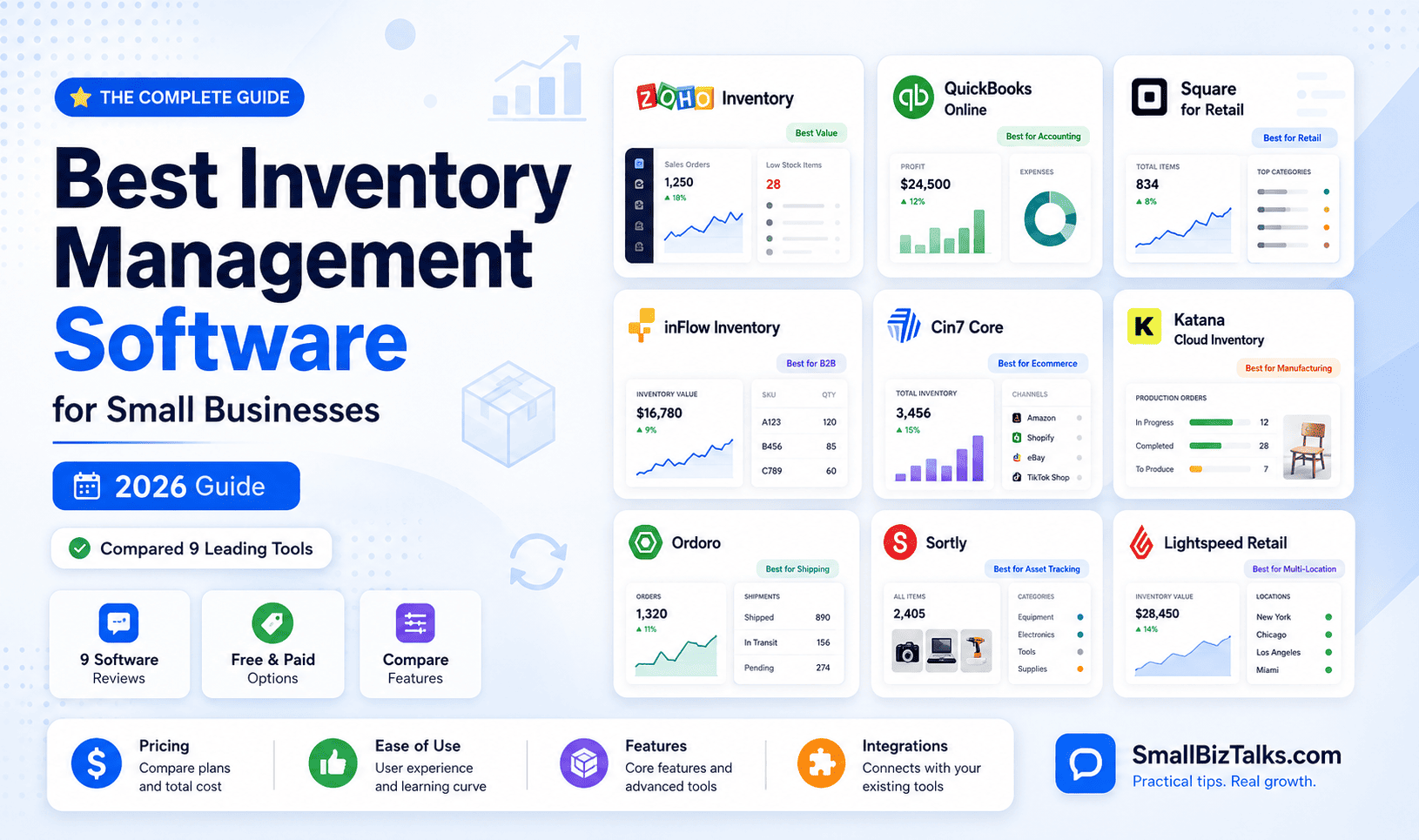
Below are nine inventory management platforms worth considering, organized by the type of small business each one fits best, along with current pricing, so there are no surprises after the free trial ends.
Best Inventory Management Software at a Glance
| Software | Best for | Starting price |
|---|---|---|
| Zoho Inventory | Overall value | Free; paid plans from $29/month |
| QuickBooks Online | Businesses that want accounting and inventory together | Plus plan, roughly $115–$140/month |
| Square for Retail | Brick-and-mortar retailers already on Square | Free; Plus plan $49/month per location |
| inFlow Inventory | Wholesale, distribution, and B2B | $129/month (billed annually) |
| Cin7 Core | Multichannel ecommerce brands | $349/month |
| Katana Cloud Inventory | Small manufacturers and makers | Starter Plan: Starts at $179/month |
| Ordoro | Ecommerce sellers who also need shipping/dropshipping | Free shipping tier; Inventory from $349/month |
| Sortly | Simple, photo-based asset and equipment tracking | Free; paid plans from $49/month |
| Lightspeed Retail | Growing, multi-location specialty retail | $89/month (billed annually) |
What actually matters when comparing these tools
Before getting into the list, it’s worth being clear about what separates a genuinely useful inventory system from a glorified spreadsheet with a login screen. A few things matter more than the length of the feature list:
- Real-time syncing across sales channels. If stock counts update on a delay, overselling is only a matter of time.
- Order volume limits. Several platforms below cap how many orders or invoices a plan can process monthly – a business can outgrow a plan’s limits well before it outgrows the software itself.
- What it integrates with. An inventory tool that doesn’t talk to the accounting software, ecommerce platform, or POS system already in use just creates a second system to reconcile by hand.
- Pricing model. Some tools charge per user, some per order volume, some per location, and that structure can make a “cheaper” plan more expensive in practice, depending on how the business operates.
With that framework in mind, here’s the list.
1. Zoho Inventory : Best overall value
Best for: Small businesses starting out or replacing spreadsheets | Starting at: Free; paid plans from $29/month | Standout feature: A genuinely usable free plan plus native integration with the rest of the Zoho ecosystem
Zoho Inventory is the rare inventory platform that’s genuinely useful on its free plan, which makes it a sensible starting point for a small business that isn’t ready to commit to a monthly bill yet. The free tier covers 50 orders and 50 invoices per month for one user across two locations – thin, but enough to test whether the workflow fits before paying anything.
Paid plans scale cleanly: Standard runs $29/month (billed annually; $39 month-to-month) for 500 orders and three users, Premium is $79/month for 3,000 orders and five users, Plus is $129/month for 7,500 orders and ten users, and Enterprise tops out at $249/month for 15,000 orders. Every tier includes multichannel selling, warehouse management, and order fulfillment tools, and the platform integrates natively with the rest of the Zoho ecosystem – a real advantage for a business already using Zoho Books or Zoho CRM.
The trade-off is that Zoho Inventory’s advanced features, serial and batch tracking, for instance – are locked behind the Professional tier and above, so a business with compliance-heavy inventory (food, cosmetics, electronics with warranties) may need to budget for a higher plan sooner than the sticker price suggests.
2. QuickBooks Online : Best for businesses that want accounting and inventory in one place
Best for: Businesses that want inventory and accounting under one login | Starting at: Plus plan, roughly $115–$140/month (verify current rate) | Standout feature: Inventory synced directly with invoicing, COGS, and payroll
For a small business already doing its books in QuickBooks, adding a separate inventory platform means reconciling two systems that were never designed to talk to each other perfectly. QuickBooks Online sidesteps that by building basic inventory tracking directly into its Plus plan: quantity on hand, cost of goods sold [COGS, the direct cost of the products a business has sold], and purchase orders, all inside the same login used for invoicing and payroll.
Pricing here needs a caveat: Intuit has raised QuickBooks Online prices more than once through 2026, and third-party trackers currently disagree on the exact current rate for Plus, with figures ranging from roughly $115 to $140 per month depending on when they were last updated. The Plus plan supports up to five users and includes project profitability tracking alongside inventory.
The real limitation isn’t price, it’s depth. QuickBooks Online’s inventory tools cover the basics well but lack the multichannel, warehouse, and manufacturing features that dedicated inventory platforms offer. A business selling on three marketplaces or assembling products from components will likely outgrow it quickly.
3. Square for Retail : Best for brick-and-mortar retailers already on Square
Best for: Retailers already processing payments through Square | Starting at: Free; Plus plan $49/month per location | Standout feature: Inventory tools built into the same POS already running sales
Square for Retail makes the most sense for a business that’s already processing payments through Square and wants inventory tracking layered onto the same system, rather than bolted on separately. Under Square’s current unified pricing, the Free plan includes basic point-of-sale and inventory tools with no monthly fee, while Square Plus adds advanced inventory tracking, low-stock alerts, and purchase order management for $49 per month per location, with a reduced 2.5% + 15¢ in-person processing rate. Square Premium, aimed at higher-volume sellers, runs $149 per month per location with further-reduced processing fees.
Square for Retail’s inventory features are genuinely strong for a single-location or small multi-location retailer: cross-location stock transfers, vendor management, and barcode label printing are all included at the Plus tier. Where it falls short is scale, retailers running many locations or complex wholesale operations tend to find Square’s inventory tools thinner than purpose-built platforms like Lightspeed or Cin7.
4. inFlow Inventory : Best for wholesale, distribution, and B2B
Best for: Wholesalers and distributors managing vendor relationships alongside sales | Starting at: $129/month, billed annually | Standout feature: Built-in B2B showroom for wholesale ordering
inFlow is built around a workflow that a lot of inventory software treats as secondary: selling to other businesses rather than directly to consumers. Its built-in B2B showroom, purchase-order-heavy design, and strong barcode and label tools make it a natural fit for wholesalers and distributors who spend as much time managing vendor relationships as they do sales.
Pricing starts at $129/month (billed annually) for the Entrepreneur plan, which includes two team members and 1,200 sales orders per year, but caps users at a single inventory location. The Small Business plan, inFlow’s most popular tier, runs $349/month for five team members, 12,000 annual orders, and unlimited locations. Mid-Size jumps to $699/month with unlimited orders, and Enterprise pricing is custom. inFlow also sells a separate, cheaper Manufacturing product for businesses that assemble finished goods, and a bare-bones Stockroom app (from $99/month) for simple scan-in, scan-out tracking.
The entry-level plan’s single-location limit is worth flagging: a small business planning to add a second warehouse or storefront will need to budget for the $349/month tier from the start, not the $129 headline price.
5. Cin7 Core : Best for multichannel ecommerce brands
Best for: Brands selling the same products across several channels at once | Starting at: $349/month | Standout feature: Real-time stock sync across every connected sales channel
Cin7 Core : formerly known as DEAR Systems before its 2022 rebrand – is built for businesses selling the same products across several channels at once: a Shopify store, an Amazon listing, a wholesale account, maybe a physical pop-up. Its strength is keeping stock levels synchronized across all of them in real time, so a sale on one channel doesn’t lead to overselling on another.
The Standard plan costs $349/month for five users, two ecommerce integrations, and roughly 6,000 orders per year (about 500 a month). Pro runs $599/month with more users and integrations plus manufacturing resource planning [MRP, tools for scheduling production and tracking materials] features, and Advanced reaches $999/month for high-volume operations needing warehouse management. Cin7 also offers a separate enterprise product, Cin7 Omni, with custom pricing.
Cin7 Core is priced well above the entry-level tools on this list, which makes it a harder sell for a business just starting to outgrow spreadsheets. It earns that price for a business already selling on multiple channels – the alternative, reconciling stock across platforms by hand, tends to be more expensive in the long run through overselling and refunds.
6. Katana Cloud Inventory : Best for small manufacturers and makers
Best for: Businesses that turn raw materials into finished products | Starting at: $179/month | Standout feature: Bill-of-materials and real-time raw-material allocation built for production
Most inventory software assumes a business buys finished goods and resells them. Katana assumes the opposite: that raw materials go in, and a different, finished product comes out – the exact workflow a small manufacturer, food producer, or maker business needs and generic inventory tools don’t handle well.
Katana offers a free plan limited to 30 SKUs and one location, useful mainly for testing the platform. The paid Core plan starts at $299/month and includes bill-of-materials tracking, production scheduling, and real-time raw material allocation. Katana’s pricing model has shifted more than once in recent years, and several add-ons – warehouse management, batch traceability, and advanced manufacturing routing, are priced separately from the Core plan, which can push the effective monthly cost considerably higher for a business that needs them.
That pricing structure is the main thing to watch. Katana is genuinely well-suited to small manufacturers, but a business with modest order volumes and lower-priced items should model the full cost, add-ons included, before committing – several reviewers report the order-based pricing scaling faster than expected as sales grow.
7. Ordoro : Best for ecommerce sellers who need shipping and dropshipping bundled in
Best for: Ecommerce sellers who want shipping, inventory, or dropshipping without paying for all three | Starting at: Free shipping tier; Inventory app from $349/month | Standout feature: Modular apps you can mix and match instead of one bundled platform
Ordoro splits itself into three separate apps – Shipping, Inventory, and Dropshipping – that a business can mix and match rather than paying for a single bundled platform. That’s useful for an ecommerce seller who mainly needs discounted shipping labels today but expects to need inventory or dropship automation later.
The Shipping app has a genuinely free tier (100 labels per month, one user) with an Advanced plan at $59/month for higher volume. The Inventory app starts at $349/month for the Advanced tier and $499/month for Premium, which adds purchase orders and bill-of-materials tracking. The Dropshipping app, aimed at businesses that route orders to suppliers rather than holding stock themselves, starts at $299/month. Bundling all three requires contacting Ordoro’s sales team for custom pricing.
The modular pricing is a double-edged sword: it lets a small business pay only for what it needs right now, but the Inventory app alone starts well above what Zoho or Square charge for comparable core functionality – Ordoro’s real value shows up for businesses that actually need the shipping and dropshipping pieces alongside it, not for inventory tracking in isolation.
8. Sortly : Best for simple, photo-based tracking
Best for: Tracking equipment, tools, or supplies rather than retail inventory | Starting at: Free; paid plans from $49/month | Standout feature: Visual, photo-first interface with no sales or order-management layer to learn
Not every small business is tracking retail inventory. Sortly is built for the ones tracking equipment, tools, supplies, or materials – a contractor’s van inventory, a salon’s product backstock, a nonprofit’s donated goods – where a visual, photo-first interface matters more than purchase orders or multichannel sync.
Sortly’s free plan covers basic tracking for a single user. Paid plans start at Advanced ($49/month), then Ultra ($149/month) for growing teams, and Premium ($299/month) for businesses needing custom reports and deeper QuickBooks integration; an Enterprise tier is available on request. Every paid plan includes barcode and QR scanning, low-stock alerts, and custom folders and tags for organizing items by job, project, or location.
Sortly’s limitation is built into what makes it simple: it’s not a sales or order management platform. A retailer or ecommerce seller processing transactions will need something else entirely; Sortly earns its place on this list specifically for the small businesses tracking physical items that never go through a checkout.
9. Lightspeed Retail : Best for growing, multi-location specialty retail
Best for: Specialty retailers outgrowing single-location simplicity | Starting at: $89/month, billed annually | Standout feature: Deep product-variant and vendor management built for specialty categories
Lightspeed Retail positions itself a step above Square for a retailer that’s outgrowing single-location simplicity – specialty stores in categories like apparel, jewelry, sporting goods, and furniture, where product variants, vendor relationships, and multi-location stock transfers get complicated fast.
The Basic plan runs $89/month billed annually ($109 month-to-month) for one register with integrated payments and core inventory tools. Core, Lightspeed’s most popular tier, is $149/month annually ($179 monthly) and adds loyalty programs and deeper reporting. Plus reaches $289/month annually ($339 monthly) with custom reporting and API access, and Enterprise pricing requires a custom quote. Each tier includes one register; additional registers and multi-location setups typically require a conversation with Lightspeed’s sales team rather than a published per-location rate.
The trade-off for that retail-specific depth is cost and complexity relative to Square: a single-location boutique that doesn’t need Lightspeed’s variant and vendor management may find it more software than necessary, and pricier than a comparable Square Plus setup.
Choosing between them
There isn’t a single best answer here, and that’s really the point, the right platform depends on whether the business is reselling finished goods, building products from raw materials, selling on one channel or six, and how much it’s already invested in an existing POS or accounting system. A business already running QuickBooks or Square has a real head start using the inventory tools built into what it already pays for; one that’s outgrown those basics will get more value from a dedicated platform like Zoho, Cin7, or inFlow, even at a higher monthly cost.

Market participants said that while unusual moves continued to dominate, these would be the new normal until liquidity improves.
On Thursday, the Sensex ended at the day’s high of 78,954.76, up 0.48% over Wednesday, while the Nifty closed almost flat. Nifty was up as much as 0.2% earlier in the day.
Read more: Most active funds beat benchmark indices last year: Motilal Oswal Study

“Once again on Sensex expiry, we saw virtually no decay in options premiums,” said Samir Doshi, CEO, Marwadi Shares and Finance. “Sensex options witnessed an unusual spike in implied volatility to 41-42% during the day, higher than the levels seen during the Jane Street episode, which is an extremely rare occurrence, especially in the absence of any market moving news.”
Participants had earlier expressed concerns about Sensex’s expiry, after the spurt seen in Nifty, because they believed it would be even easier to move the index given its low trading volumes.
 Agencies
On Thursday, even after the CAS session began, options premiums remained elevated, said Doshi.
“We also saw a large order in ICICI Bank, suggesting a clear attempt to influence the index into the close. Meanwhile, cash market volumes in the final half hour were just around ₹120 crore, well below the typical ₹400-500 crore,” he said.
Chandan Taparia, head, technical and derivatives research, Motilal Oswal Financial Services said that while markets have seen sharp spurts in the indices over the last four sessions, first in the Nifty and now in the Sensex on its expiry day, the magnitude of these moves has been narrowing with each session.
“The key anomaly, however, continues to be the absence of theta decay in options premiums,” said Taparia. “We believe this could become the new normal, given the heightened uncertainty around the CAS session.”
On Thursday, the 79,000 call premium surged from around ₹100 to ₹330 before collapsing to zero in the final half hour, Taparia said, citing an example of the volatile moves. The new closing auction process lasts about 20 minutes, from 3.15 pm to around 3.35 pm. During this period, the exchange first collects buy and sell orders and then matches them to determine a single official closing price for the stock. Under the previous system, a stock’s closing price is based on the average price of trades done in the last 30 minutes, between 3 pm and 3.30 pm.
“This environment makes life significantly harder for option writers while favouring option buyers,” said Taparia. He said, as market liquidity improves, these day-to-day spurts should gradually moderate.
“Resolving this issue will require broader participation and coordination from mutual funds, market makers, brokers and investors,” said Doshi.

The greenback also drew support from higher Treasury yields after a Financial Times report citing sources close to Federal Reserve Chair Kevin Warsh pointed to the potential for a September interest rate hike, depending on incoming data.
The monthly U.S. payrolls report, due later on Friday, could provide more clues on the Fed’s rate path.
The dollar rose slightly to 158.505 yen in the Asian morning, after gaining 0.4% on Thursday, putting it on course to rise around 0.7% this week as it recovered from a bout of joint Japan-U.S. intervention that sent the U.S. currency tumbling from near a four-decade high above 163 yen on Thursday to a 13-week low of 155.20 on Monday.
Against the euro, the greenback edged up to $1.1521 after strengthening about 0.3% in the prior session.
Tensions continued to play out in the Gulf after Reuters reported a proposed deal between Iran and Oman to help end the U.S.-Iran conflict could give Tehran control over inbound traffic through the Strait of Hormuz.
The U.S. did not immediately comment on the proposal. President Donald Trump has said that a deal to reopen the strait was imminent, but U.S. officials have repeatedly insisted that they would never agree to Iranian control of access to the world’s most important trade route for energy supplies.Brent crude rose a little over a dollar on Friday to trade at $83.55 per barrel, after settling up more than $3 in the previous session.
The heightening inflation risks weighed on Treasuries, sending yields higher.
“USD was supported by higher oil prices (following) news that a deal between the U.S. and Iran to reopen the strait is further away than hoped,” said Kristina Clifton, an economist at Commonwealth Bank of Australia.
She and other analysts also pointed to the FT report saying Warsh was open to a September hike if inflation data is strong, although Clifton added, “We expect the Fed to wait until December before starting a modest tightening cycle.”
A divided U.S. central bank left rates unchanged last month, but Warsh said he was committed to bringing inflation down.
U.S. nonfarm payrolls are forecast to have risen by 80,000 last month after an increase of 57,000 in June, according to a Reuters survey of economists. The unemployment rate is expected to hold steady at 4.2%.
Against sterling, the dollar strengthened slightly to $1.3449.
The Australian dollar weakened a touch to $0.7029 and the kiwi dollar edged down to $0.5866.

According to Jonathan Nicholson at the UK’s Civil Aviation Authority (CAA), for the airline industry, lithium-ion batteries are “if not number one, within the top three risks for a good few years now”.
A US recent study showed, external the industry was affected by two lithium-ion battery related incidents a week worldwide, he adds. Those incidents could range from passengers belatedly realising they’d left a device in checked baggage, to devices smoking or catching fire in airport baggage halls, or on flights.
But the results can be far more extreme. In January 2025 an Air Busan plane was destroyed on the tarmac in Gimhae Airport in South Korea, with investigators concluding a power bank battery pack left in an overhead luggage compartment was the culprit.
This prompted the International Air Transport Association (IATA) to launch a global campaign, external to encourage passengers to “Travel Smart with Lithium Batteries”.
There is nothing about flying that makes lithium-ion technology more dangerous, explains Nicholson. Rather, he said “it’s a lot harder to deal with at 32,000 feet in an aircraft cabin”.
Nicholson said the prevalence of lithium-ion related incidents was down to “more people, more flights, more devices”.
The US Federal Aviation Administration says that battery safety is a priority. Its data “continues to show an increase in confirmed incidents”, with 51 verified incidents for the year to July 15, external.
Pierre Kubiak, a principal engineer specialising in battery technology at the UK’s National Physical Laboratory, adds that while cell phones, power banks, tablets and laptops are the most obvious portable devices people bring on planes, smart watches, smart glasses and vapes were increasingly common.
“The lithium by itself doesn’t burn, it’s more all the organic material and plastic,” he explains. “The point is that it gets very, very hot, very fast. I mean, more than 700 to 1000 degrees super fast.”
The dangers of lithium-ion batteries really broke into the public consciousness following a series of phone-related fires about a decade ago.
Kubiak says that this had been down to flawed designs, and that manufacturers had since addressed concerns. South Korea is a leader in this space he adds.
But it was hard to control the proliferation of cheaply produced battery packs from East Asia, as well as vapes and other powered devices, with questionable quality controls. “Price is everything,” he says. Moreover, he adds, passengers often contribute to the problem by using unsuitable cables and not caring for devices.
Mark Pownall is joined by Gary Adshead, Isabel Vieira, Jack McGinn and Tom Zaunmayr to talk about the big events of the week in WA business and politics, including the byelection campaign, the under-treasurer’s move, Glencore, Amanda Lacaze, investment banking, Mid West business and Diggers & Dealers.
Business
(VIDEO) LeBron James 76ers Merchandise Flies Off Shelves at Philadelphia’s Mitchell & Ness Store Fast

Philadelphia sports retailers are seeing a surge in demand as fans race to buy newly released Philadelphia 76ers gear featuring LeBron James, with vintage sports apparel company Mitchell & Ness reporting brisk sales of merchandise celebrating one of the biggest free agency moves in franchise history.
David Dee, marketing manager at Mitchell & Ness, appeared on PHL17’s morning show Thursday to walk through the company’s newly available 76ers merchandise line featuring James, as well as additional products expected to roll out in the coming weeks. The Philadelphia-based company, known for its vintage and throwback sports apparel, has been at the center of the city’s rapid embrace of James since his free agency decision became official late last month.
A Stunning Free Agency Decision
James announced in late July that he would sign with the 76ers on a two-year, $8 million contract that includes a player option, ending months of speculation about where the NBA’s all-time leading scorer would continue his career following the conclusion of his tenure with the Los Angeles Lakers. The move marks James’ fourth NBA team, following stints with the Cleveland Cavaliers, Miami Heat and Lakers, as he pursues what would be a fifth championship before retirement.
James addressed the decision directly on social media, writing that he had strongly considered retirement after his most recent season ended, saying he was pretty sure he had played his final game before ultimately deciding he still had more to give. In a follow-up post, James said he believed he could help make the 76ers a championship team and expressed excitement about energizing a new fan base as he begins what he described as his final chapter in the league. He also thanked the Lakers organization, expressed continued love for Miami, and said Northeast Ohio would always be home.
James will join 76ers center Joel Embiid, a former Kia MVP, in the team’s frontcourt for the 2026-27 season, alongside star guard Tyrese Maxey, whose existing relationship with James’ representation at Klutch Sports Group was reportedly a significant factor in his decision to choose Philadelphia over other suitors.
Fans Line Up for New Gear
The response from Philadelphia’s fan base was immediate. Less than 48 hours after James’ announcement became official, fans lined up outside Mitchell & Ness’ flagship store in Center City Philadelphia for the debut of a $55 T-shirt featuring James alongside the 76ers logo and an image of his signature pregame chalk toss. Store manager Josh Steinberg described the reaction as immediate, saying customers were coming in buzzing with excitement, adding that everybody seemed happy about the news. According to reports from the store’s opening, some fans traveled hundreds of miles specifically to be among the first to purchase the new merchandise.
Fanatics, the major sports merchandise retailer, reported that its supply of James’ 76ers jerseys sold out within hours of his free agency announcement, underscoring the scale of demand across multiple retail channels beyond Mitchell & Ness alone.
A Growing Line of Merchandise
Since James’ arrival became official, both Mitchell & Ness and the official Philadelphia 76ers team store have continued expanding their available product lines featuring the star forward. Offerings have included a range of T-shirts priced between roughly $32 and $100, alongside jerseys, hoodies and other apparel spanning youth, toddler and adult sizing. Mitchell & Ness in particular has continued rolling out new designs, including a black “Witness” T-shirt and hoodie referencing James’ longtime personal branding, along with additional shirts featuring caricature-style artwork and locker room-themed designs.
The National Basketball Association’s official store has also begun stocking James’ 76ers merchandise alongside memorabilia spanning his entire career, including items connected to his earlier stints with the Cavaliers, Heat and Lakers, positioning the retailer as a comprehensive source for collectors following what the league has described as one of the most storied careers in NBA history across four different franchises.
A City Embracing a New Era
The scale of the merchandise rush reflects broader excitement across Philadelphia’s sports fan base heading into the 2026-27 NBA season, with James’ arrival widely seen as a potential turning point for a franchise that has not won an NBA championship in more than four decades. Philadelphia’s last NBA title came in 1983, and fans and commentators have drawn comparisons between James’ arrival in Philadelphia and his earlier move to Cleveland, where he ended a 52-year championship drought for the city by winning a title with the Cavaliers in 2016.
Behind the Decision
According to reporting on James’ free agency process, Bob Myers, president of Harris Blitzer Sports & Entertainment, which owns the 76ers, made a personal pitch to James’ camp by appearing as a guest on a podcast co-hosted by James’ agent, Rich Paul, and Max Kellerman, part of a broader recruiting effort aimed at convincing James that Philadelphia offered his clearest remaining path to a fifth championship. James’ agent had previously indicated that the star forward was prioritizing what he described as basketball happiness in making his decision, a framing the 76ers organization worked to align with in their pitch.
With James’ contract reportedly including a full 15% trade kicker and a player option but no no-trade clause, given the short-term nature of the deal, his exact long-term future with the franchise beyond this coming season remains a subject of ongoing speculation among analysts. For now, though, Philadelphia retailers are focused on meeting immediate consumer demand, with Mitchell & Ness and other retailers continuing to expand their James-focused 76ers product lines as the team prepares for training camp and the start of the 2026-27 season, when James will take the court for the 76ers for the first time in a Philadelphia uniform.

For many years, financial literacy was often associated with investors, traders, and finance professionals. Today, that view is changing. In an increasingly connected global economy, understanding financial concepts has become one of the most valuable business skills for entrepreneurs, executives, managers, and SME owners.
Business decisions are no longer made in isolation. Inflation, interest rates, currency movements, geopolitical events, and changes in consumer confidence can all influence profitability. Even businesses that operate only in domestic markets are affected by global economic developments through higher costs, changing customer demand, or supply chain disruptions.
Financial literacy allows business leaders to understand these external forces rather than simply reacting to them. It provides the confidence to make informed choices based on evidence instead of uncertainty. As economic conditions become more complex, financial education is increasingly viewed as a practical business necessity rather than an optional area of knowledge.
Why Economic Awareness Shapes Better Business Strategy
Every business operates within a wider economic environment. When inflation rises, operating expenses often increase. Energy costs, wages, transport, and raw materials may all become more expensive within a relatively short period.
Business leaders who understand inflation trends can prepare earlier by reviewing supplier contracts, adjusting pricing strategies, or improving operational efficiency before costs become difficult to manage.
Interest rates provide another clear example. When central banks raise borrowing costs, businesses may reconsider expansion plans, equipment purchases, or refinancing decisions. Companies with strong financial planning are generally better positioned to adapt because they understand how monetary policy affects both financing costs and customer spending.
These examples show that financial literacy is closely linked with effective business strategy. Leaders who understand the broader economic picture can make more balanced decisions during periods of uncertainty.
Financial Literacy Supports Everyday Decision Making
Many people assume financial knowledge is only relevant for annual budgets or investment portfolios. In reality, it influences everyday operational decisions.
Cash flow management is one of the clearest examples. Even profitable companies can experience difficulties if income and expenses are poorly managed. Understanding financial reports, forecasting future cash requirements, and identifying potential funding gaps allows businesses to remain stable during challenging periods.
Currency fluctuations also affect many SMEs. A local manufacturer importing materials from overseas may suddenly face higher production costs when exchange rates move unfavourably. Likewise, exporters may benefit from currency changes but still need to manage pricing and contracts carefully.
Commodity prices can create similar challenges. Businesses that rely on fuel, metals, agricultural products, or construction materials often experience changing costs driven by global market conditions. Financial literacy helps decision makers recognise these trends and plan accordingly instead of being caught by surprise.
Reading Economic News With Confidence
Modern business leaders receive a constant flow of economic information. Headlines about inflation, GDP growth, employment figures, trade policies, or central bank decisions appear almost daily.
Without financial education, this information can seem confusing or disconnected from everyday business operations. However, leaders who understand the basic economic principles behind these reports can identify which developments genuinely require attention.
Rather than reacting emotionally to every headline, financially literate professionals learn to evaluate information within a broader context. They recognise that short-term market volatility does not always require immediate business changes, while some long-term economic trends deserve careful strategic planning.
As businesses increasingly recognise the importance of financial literacy, many professionals also follow educational resources and daily market insights published by ScoreCM to better understand economic developments, central bank decisions, inflation trends, and broader market conditions that may influence business planning.
This habit of continuous learning enables better financial decision making and supports more confident leadership during periods of economic uncertainty.
Supply Chains, Geopolitics, and Business Resilience
Recent years have demonstrated how quickly global events can affect local businesses. Political tensions, conflicts, trade restrictions, shipping disruptions, and natural disasters have all influenced supply chains across multiple industries.
A delayed shipment on another continent can increase production costs for a manufacturer in the UK. New trade regulations can affect delivery schedules, while rising energy prices may influence transportation expenses worldwide.
Financial literacy helps business leaders understand how these external events influence operational performance. More importantly, it encourages proactive planning rather than reactive decision making.
Businesses with stronger financial awareness often develop contingency plans, diversify suppliers, maintain healthier cash reserves, and review long-term contracts more carefully. These actions improve resilience without relying on predictions about future market movements.
Financial Education Creates Competitive Advantage
The pace of economic change continues to accelerate. Artificial intelligence, digital transformation, changing consumer behaviour, and global economic shifts require leaders to make increasingly complex decisions.
Continuous financial education equips professionals with the knowledge needed to adapt. It encourages better conversations with accountants, lenders, investors, suppliers, and customers because leaders understand the financial implications behind strategic choices.
Entrepreneurship today involves far more than creating a product or delivering a service. Successful founders also need to understand financing options, budgeting, risk management, pricing, taxation, and market conditions. These capabilities strengthen long-term planning and improve organisational confidence.
For SMEs in particular, where owners often perform multiple leadership roles, financial literacy can provide a meaningful competitive advantage. Better-informed decisions often lead to stronger financial planning, more sustainable growth, and greater resilience during uncertain economic cycles.
The most successful businesses are rarely those that simply react to changing conditions. They are the organisations that understand the financial environment around them and prepare accordingly.
Financial literacy is therefore no longer just an investor skill. It has become an essential capability for modern business leaders who want to navigate uncertainty, build stronger organisations, and make informed strategic decisions in an increasingly interconnected economy.

Blake Monroe makes surprising confession about her WWE entrance theme

Price Hikes May Be Coming for PC Motherboards Next

I TOLD YOU XRP ARMY!!!!! I TOLD YOU!


-

 Fashion6 days ago
Weekend Open Thread: Wit & Wisdom
-

 Politics6 days ago
Meta enters AI-training agreement with far-right ‘propaganda rag’ Newsmax
-

 Politics4 days ago
Zack Polanski: an incitement to murder Nigel Farage?
-

 Crypto World6 days ago
MicroStrategy Post-Earnings CLARITY Act Push Could Add New Catalyst for Its Stock
-

 Crypto World6 days ago
XRP Ledger v3.3.0 brings five institutional features
-

 Crypto World6 days ago
New York sues Kalshi over prediction market gambling
-

 Crypto World5 days ago
Crypto PAC spending tops $2M in Michigan House race
-

 Business4 days ago
DTCR: Deleveraging And A Hedge Fund Collapse Point To A Possible AI Bottom
-

 Business7 days ago
Trump Announces Hamas Disarmament Agreement as Iran Strikes Kuwait Air Base and US Attacks Pause Overnight
-

 Crypto World6 days ago
3 Fed Officials Just Explained Their Rate Hike Vote: Is Inflation Winning?
-

 Tech5 days ago
ESET tracks rise in malicious AI skills and adaptable malware
-
Crypto World4 days ago
XRP Ledger urges node upgrade after manifest flood
-

 Tech7 days ago
Gemini Spark can now use Chrome logins and saved passwords to run errands on your behalf
-

 Tech7 days ago
Building A Reproduction PlayStation Motherboard
-

 Sports6 days ago
France Cricket implodes: letters hidden in a drawer and a board at war
-

 Crypto World6 days ago
Moneyflip CEO charged in $40K murder-for-hire plot
-
 Sports6 days ago
Bruno Fernandes decision made as Man United ‘discuss’ striker transfer option
-

 News Videos5 days ago
Financial Crash Expert: The 90-Day Collapse Timeline They Are Desperately Hiding.
-

 NewsBeat7 days ago
Spain sending troops as thousands enter enclave of Ceuta from Morocco
-

 Sports6 days ago
Commonwealth Games 2026 Live Updates | Day 9 CWG 2026: Lovlina Borgohain, Sachin Siwach Enter Final After Indian Judokas Script History
You must be logged in to post a comment Login