
Business
Alibaba plans revenue-sharing for commercial users of next Qwen AI model – Reuters




According to Jonathan Nicholson at the UK’s Civil Aviation Authority (CAA), for the airline industry, lithium-ion batteries are “if not number one, within the top three risks for a good few years now”.
A US recent study showed, external the industry was affected by two lithium-ion battery related incidents a week worldwide, he adds. Those incidents could range from passengers belatedly realising they’d left a device in checked baggage, to devices smoking or catching fire in airport baggage halls, or on flights.
But the results can be far more extreme. In January 2025 an Air Busan plane was destroyed on the tarmac in Gimhae Airport in South Korea, with investigators concluding a power bank battery pack left in an overhead luggage compartment was the culprit.
This prompted the International Air Transport Association (IATA) to launch a global campaign, external to encourage passengers to “Travel Smart with Lithium Batteries”.
There is nothing about flying that makes lithium-ion technology more dangerous, explains Nicholson. Rather, he said “it’s a lot harder to deal with at 32,000 feet in an aircraft cabin”.
Nicholson said the prevalence of lithium-ion related incidents was down to “more people, more flights, more devices”.
The US Federal Aviation Administration says that battery safety is a priority. Its data “continues to show an increase in confirmed incidents”, with 51 verified incidents for the year to July 15, external.
Pierre Kubiak, a principal engineer specialising in battery technology at the UK’s National Physical Laboratory, adds that while cell phones, power banks, tablets and laptops are the most obvious portable devices people bring on planes, smart watches, smart glasses and vapes were increasingly common.
“The lithium by itself doesn’t burn, it’s more all the organic material and plastic,” he explains. “The point is that it gets very, very hot, very fast. I mean, more than 700 to 1000 degrees super fast.”
The dangers of lithium-ion batteries really broke into the public consciousness following a series of phone-related fires about a decade ago.
Kubiak says that this had been down to flawed designs, and that manufacturers had since addressed concerns. South Korea is a leader in this space he adds.
But it was hard to control the proliferation of cheaply produced battery packs from East Asia, as well as vapes and other powered devices, with questionable quality controls. “Price is everything,” he says. Moreover, he adds, passengers often contribute to the problem by using unsuitable cables and not caring for devices.

Mark Pownall is joined by Gary Adshead, Isabel Vieira, Jack McGinn and Tom Zaunmayr to talk about the big events of the week in WA business and politics, including the byelection campaign, the under-treasurer’s move, Glencore, Amanda Lacaze, investment banking, Mid West business and Diggers & Dealers.
Business
(VIDEO) LeBron James 76ers Merchandise Flies Off Shelves at Philadelphia’s Mitchell & Ness Store Fast
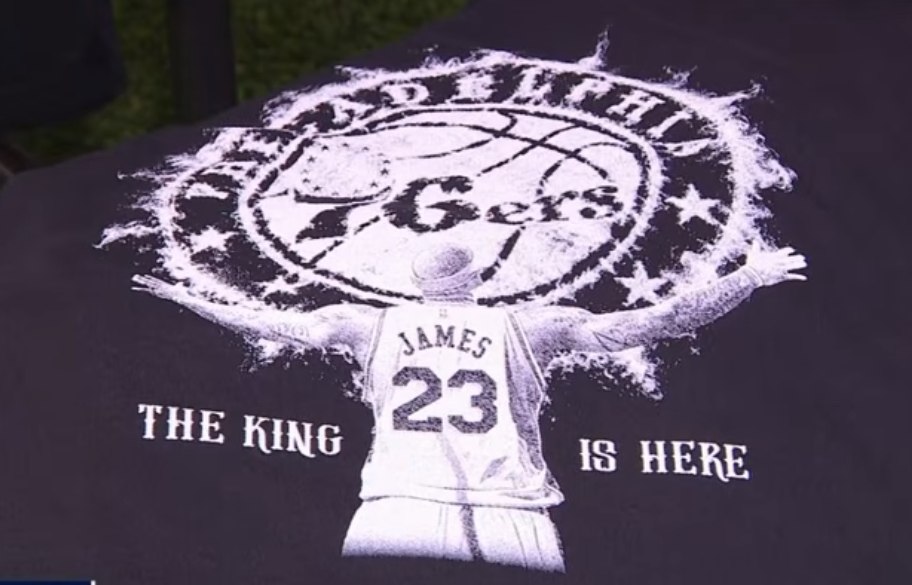
Philadelphia sports retailers are seeing a surge in demand as fans race to buy newly released Philadelphia 76ers gear featuring LeBron James, with vintage sports apparel company Mitchell & Ness reporting brisk sales of merchandise celebrating one of the biggest free agency moves in franchise history.
David Dee, marketing manager at Mitchell & Ness, appeared on PHL17’s morning show Thursday to walk through the company’s newly available 76ers merchandise line featuring James, as well as additional products expected to roll out in the coming weeks. The Philadelphia-based company, known for its vintage and throwback sports apparel, has been at the center of the city’s rapid embrace of James since his free agency decision became official late last month.
A Stunning Free Agency Decision
James announced in late July that he would sign with the 76ers on a two-year, $8 million contract that includes a player option, ending months of speculation about where the NBA’s all-time leading scorer would continue his career following the conclusion of his tenure with the Los Angeles Lakers. The move marks James’ fourth NBA team, following stints with the Cleveland Cavaliers, Miami Heat and Lakers, as he pursues what would be a fifth championship before retirement.
James addressed the decision directly on social media, writing that he had strongly considered retirement after his most recent season ended, saying he was pretty sure he had played his final game before ultimately deciding he still had more to give. In a follow-up post, James said he believed he could help make the 76ers a championship team and expressed excitement about energizing a new fan base as he begins what he described as his final chapter in the league. He also thanked the Lakers organization, expressed continued love for Miami, and said Northeast Ohio would always be home.
James will join 76ers center Joel Embiid, a former Kia MVP, in the team’s frontcourt for the 2026-27 season, alongside star guard Tyrese Maxey, whose existing relationship with James’ representation at Klutch Sports Group was reportedly a significant factor in his decision to choose Philadelphia over other suitors.
Fans Line Up for New Gear
The response from Philadelphia’s fan base was immediate. Less than 48 hours after James’ announcement became official, fans lined up outside Mitchell & Ness’ flagship store in Center City Philadelphia for the debut of a $55 T-shirt featuring James alongside the 76ers logo and an image of his signature pregame chalk toss. Store manager Josh Steinberg described the reaction as immediate, saying customers were coming in buzzing with excitement, adding that everybody seemed happy about the news. According to reports from the store’s opening, some fans traveled hundreds of miles specifically to be among the first to purchase the new merchandise.
Fanatics, the major sports merchandise retailer, reported that its supply of James’ 76ers jerseys sold out within hours of his free agency announcement, underscoring the scale of demand across multiple retail channels beyond Mitchell & Ness alone.
A Growing Line of Merchandise
Since James’ arrival became official, both Mitchell & Ness and the official Philadelphia 76ers team store have continued expanding their available product lines featuring the star forward. Offerings have included a range of T-shirts priced between roughly $32 and $100, alongside jerseys, hoodies and other apparel spanning youth, toddler and adult sizing. Mitchell & Ness in particular has continued rolling out new designs, including a black “Witness” T-shirt and hoodie referencing James’ longtime personal branding, along with additional shirts featuring caricature-style artwork and locker room-themed designs.
The National Basketball Association’s official store has also begun stocking James’ 76ers merchandise alongside memorabilia spanning his entire career, including items connected to his earlier stints with the Cavaliers, Heat and Lakers, positioning the retailer as a comprehensive source for collectors following what the league has described as one of the most storied careers in NBA history across four different franchises.
A City Embracing a New Era
The scale of the merchandise rush reflects broader excitement across Philadelphia’s sports fan base heading into the 2026-27 NBA season, with James’ arrival widely seen as a potential turning point for a franchise that has not won an NBA championship in more than four decades. Philadelphia’s last NBA title came in 1983, and fans and commentators have drawn comparisons between James’ arrival in Philadelphia and his earlier move to Cleveland, where he ended a 52-year championship drought for the city by winning a title with the Cavaliers in 2016.
Behind the Decision
According to reporting on James’ free agency process, Bob Myers, president of Harris Blitzer Sports & Entertainment, which owns the 76ers, made a personal pitch to James’ camp by appearing as a guest on a podcast co-hosted by James’ agent, Rich Paul, and Max Kellerman, part of a broader recruiting effort aimed at convincing James that Philadelphia offered his clearest remaining path to a fifth championship. James’ agent had previously indicated that the star forward was prioritizing what he described as basketball happiness in making his decision, a framing the 76ers organization worked to align with in their pitch.
With James’ contract reportedly including a full 15% trade kicker and a player option but no no-trade clause, given the short-term nature of the deal, his exact long-term future with the franchise beyond this coming season remains a subject of ongoing speculation among analysts. For now, though, Philadelphia retailers are focused on meeting immediate consumer demand, with Mitchell & Ness and other retailers continuing to expand their James-focused 76ers product lines as the team prepares for training camp and the start of the 2026-27 season, when James will take the court for the 76ers for the first time in a Philadelphia uniform.

For many years, financial literacy was often associated with investors, traders, and finance professionals. Today, that view is changing. In an increasingly connected global economy, understanding financial concepts has become one of the most valuable business skills for entrepreneurs, executives, managers, and SME owners.
Business decisions are no longer made in isolation. Inflation, interest rates, currency movements, geopolitical events, and changes in consumer confidence can all influence profitability. Even businesses that operate only in domestic markets are affected by global economic developments through higher costs, changing customer demand, or supply chain disruptions.
Financial literacy allows business leaders to understand these external forces rather than simply reacting to them. It provides the confidence to make informed choices based on evidence instead of uncertainty. As economic conditions become more complex, financial education is increasingly viewed as a practical business necessity rather than an optional area of knowledge.
Why Economic Awareness Shapes Better Business Strategy
Every business operates within a wider economic environment. When inflation rises, operating expenses often increase. Energy costs, wages, transport, and raw materials may all become more expensive within a relatively short period.
Business leaders who understand inflation trends can prepare earlier by reviewing supplier contracts, adjusting pricing strategies, or improving operational efficiency before costs become difficult to manage.
Interest rates provide another clear example. When central banks raise borrowing costs, businesses may reconsider expansion plans, equipment purchases, or refinancing decisions. Companies with strong financial planning are generally better positioned to adapt because they understand how monetary policy affects both financing costs and customer spending.
These examples show that financial literacy is closely linked with effective business strategy. Leaders who understand the broader economic picture can make more balanced decisions during periods of uncertainty.
Financial Literacy Supports Everyday Decision Making
Many people assume financial knowledge is only relevant for annual budgets or investment portfolios. In reality, it influences everyday operational decisions.
Cash flow management is one of the clearest examples. Even profitable companies can experience difficulties if income and expenses are poorly managed. Understanding financial reports, forecasting future cash requirements, and identifying potential funding gaps allows businesses to remain stable during challenging periods.
Currency fluctuations also affect many SMEs. A local manufacturer importing materials from overseas may suddenly face higher production costs when exchange rates move unfavourably. Likewise, exporters may benefit from currency changes but still need to manage pricing and contracts carefully.
Commodity prices can create similar challenges. Businesses that rely on fuel, metals, agricultural products, or construction materials often experience changing costs driven by global market conditions. Financial literacy helps decision makers recognise these trends and plan accordingly instead of being caught by surprise.
Reading Economic News With Confidence
Modern business leaders receive a constant flow of economic information. Headlines about inflation, GDP growth, employment figures, trade policies, or central bank decisions appear almost daily.
Without financial education, this information can seem confusing or disconnected from everyday business operations. However, leaders who understand the basic economic principles behind these reports can identify which developments genuinely require attention.
Rather than reacting emotionally to every headline, financially literate professionals learn to evaluate information within a broader context. They recognise that short-term market volatility does not always require immediate business changes, while some long-term economic trends deserve careful strategic planning.
As businesses increasingly recognise the importance of financial literacy, many professionals also follow educational resources and daily market insights published by ScoreCM to better understand economic developments, central bank decisions, inflation trends, and broader market conditions that may influence business planning.
This habit of continuous learning enables better financial decision making and supports more confident leadership during periods of economic uncertainty.
Supply Chains, Geopolitics, and Business Resilience
Recent years have demonstrated how quickly global events can affect local businesses. Political tensions, conflicts, trade restrictions, shipping disruptions, and natural disasters have all influenced supply chains across multiple industries.
A delayed shipment on another continent can increase production costs for a manufacturer in the UK. New trade regulations can affect delivery schedules, while rising energy prices may influence transportation expenses worldwide.
Financial literacy helps business leaders understand how these external events influence operational performance. More importantly, it encourages proactive planning rather than reactive decision making.
Businesses with stronger financial awareness often develop contingency plans, diversify suppliers, maintain healthier cash reserves, and review long-term contracts more carefully. These actions improve resilience without relying on predictions about future market movements.
Financial Education Creates Competitive Advantage
The pace of economic change continues to accelerate. Artificial intelligence, digital transformation, changing consumer behaviour, and global economic shifts require leaders to make increasingly complex decisions.
Continuous financial education equips professionals with the knowledge needed to adapt. It encourages better conversations with accountants, lenders, investors, suppliers, and customers because leaders understand the financial implications behind strategic choices.
Entrepreneurship today involves far more than creating a product or delivering a service. Successful founders also need to understand financing options, budgeting, risk management, pricing, taxation, and market conditions. These capabilities strengthen long-term planning and improve organisational confidence.
For SMEs in particular, where owners often perform multiple leadership roles, financial literacy can provide a meaningful competitive advantage. Better-informed decisions often lead to stronger financial planning, more sustainable growth, and greater resilience during uncertain economic cycles.
The most successful businesses are rarely those that simply react to changing conditions. They are the organisations that understand the financial environment around them and prepare accordingly.
Financial literacy is therefore no longer just an investor skill. It has become an essential capability for modern business leaders who want to navigate uncertainty, build stronger organisations, and make informed strategic decisions in an increasingly interconnected economy.


Equity Research Analyst with a broad career in the financial market, covered both Brazilian and global stocks. As a value investor, my analysis is primarily fundamental, focusing on identifying undervalued stocks with growth potential. Feel free to reach out for collaborations or to connect!
Analyst’s Disclosure: I/we have no stock, option or similar derivative position in any of the companies mentioned, and no plans to initiate any such positions within the next 72 hours. I wrote this article myself, and it expresses my own opinions. I am not receiving compensation for it (other than from Seeking Alpha). I have no business relationship with any company whose stock is mentioned in this article.
Seeking Alpha’s Disclosure: Past performance is no guarantee of future results. No recommendation or advice is being given as to whether any investment is suitable for a particular investor. Any views or opinions expressed above may not reflect those of Seeking Alpha as a whole. Seeking Alpha is not a licensed securities dealer, broker or US investment adviser or investment bank. Our analysts are third party authors that include both professional investors and individual investors who may not be licensed or certified by any institute or regulatory body.
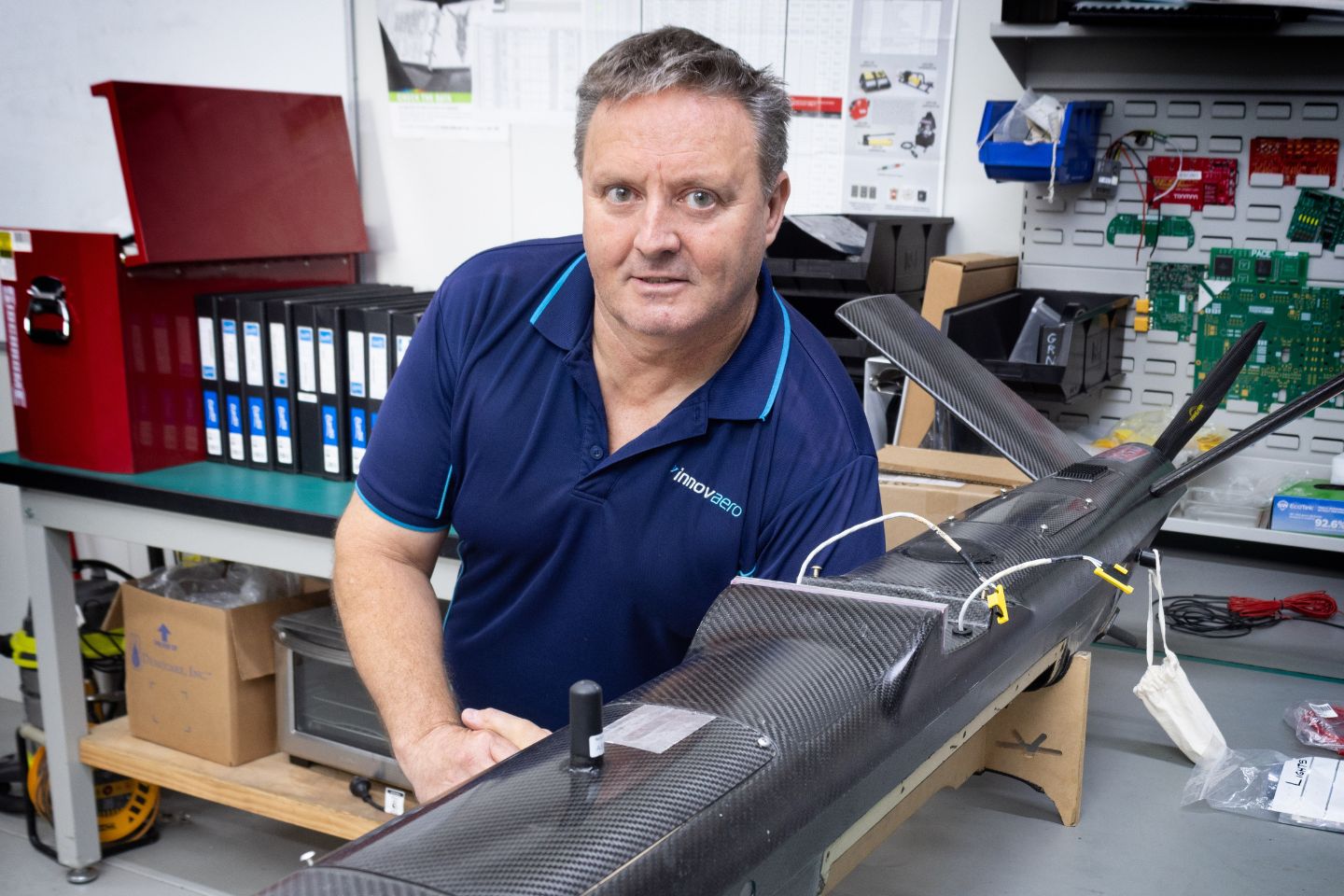
Perth drone company Innovaero is accelerating plans for its IPO, with brokers pricing the raise at $40 million at five cents per share, giving the business an expected market capitalisation of $158 million.

US President Donald Trump signed an executive order on Thursday that imposes a 15% tariff on imported products made from polysilicon, a crucial material used in semiconductors and solar panels.
The order also set minimum import prices on polysilicon and related products. It comes after a national security investigation into the production of the material overseas.
The move is intended to help protect US manufacturers as they face increasing competition from China’s chip industry – a key source of friction between the world’s two largest economies.
The Chinese embassy in Washington said the move “seriously disrupts” trade between the two countries and Beijing will act to protect its companies.
Washington is “abusing state power to go after Chinese businesses,” the embassy said, adding that protectionism will not make the US more competitive.
Trump said in the order, external that he had accepted recommendations by Secretary of Commerce Howard Lutnick to set minimum import prices as well as a 15% tariff on polysilicon and related imports.
The measures are due to take effect in December.
The US will also offer incentives to boost domestic production, it added.
For decades, the US has allowed “foreign firms to weaken United States producers in the polysilicon sector,” said Trump, who has long advocated for the use of tariffs to protect American jobs and boost the economy.
The material is critical in military equipment and electronics, yet imports have led to the US’ share of global polysilicon production to fall from 50% in 2005 to less than 2% in 2024, Trump said.
China holds a near monopoly on the production of polysilicon.
The order is likely to benefit Hemlock Semiconductor and Wacker Chemie, which are the main producers of the material in the US.
The production of computer chips is central to the race between the US and China to develop artificial intelligence (AI). Washington and Beijing have also been locked in a tit-for-tat tariffs war, which has been on hold since May 2025.
Analysts quoted by Chinese state media outlet Global Times said the new tariff marks the latest escalation in Washington’s efforts to limit China’s role in critical technology supply chains.
The move follows other US restrictions on the imports of drones, humanoid robots and other tech products from China.
China announced a range of countermeasures this week, including tighter export controls on drones. Beijing also launched a national security review into imported printers and copiers.

At a meeting with Securities & Exchange Board of India (Sebi) and officials of Department of Economic Affairs here on Wednesday, the high-frequency trading firms said that Reserve Bank of India‘s stern regulations on leverage would force them to shift exposures from entities here to FPIs.
Read more: Most active funds beat benchmark indices last year: Motilal Oswal StudyThe meeting -attended by senior advisors and two European custodian banks representing FPIs and a few MNC trading subsidiaries- comes two months after India eliminated taxes on government securities (G-Secs) for FPIs.

 Agencies
Since April RBI prohibited banks from funding brokers for proprietary trade or investment, and, more significantly, stipulated that credit to brokers must be backed by 100% collateral.
“No such leverage restriction exists offshore. And since traders here can’t take guarantees from banks overseas, some trades would be routed through FPIs. No one gains from this. The government gets less tax and the market sees less market-making and liquidity-providing trades. And the trading entities can’t cut deals through or as FPIs which they can as a domestic entity,” a person familiar with the discussions told ET.Despite higher tax on Indian subsidiaries — compared with zero tax on derivative profits for FPIs in treaty-friendly jurisdictions like Mauritius and Singapore — several foreign traders have set up shop here to overcome restrictions applicable to FPIs. These include strict position limits for futures and options trades, and the conditions under for short-selling.
“The DEA officials didn’t say anything but were willing to listen – probably after the increase in inflows following tax cuts on G-Secs, though the delay in inclusion of G-secs in Bloomberg index may disappointment many,” said another person.
India scrapped taxes on G-Secs for FPIs through a June ordinance with effect from April 1, 2026. With this, interest withholding tax, along with short-term and long-term capital gains taxes were removed.
“It’s widely felt that rationalisation of STT along with other charges and levies would make transaction charge more competitive. There’s also demand to reduce capital gains tax which has risen over the years, but I don’t know to what extent the government is open to this,” said an industry official who attended the meeting.
STT, applying on stocks, derivatives, and equity-oriented mutual funds, is collected by exchanges directly at the time of transaction. Introduced in 2004 as a small turnover tax after abolishing the long-term capital gains tax, STT continued even after long-term capital gains tax was brought back and tax on equity profits was raised. STT on equity derivatives was hiked in 2026 but it may not have led to a fall in retail losses in F&O.
“Through there was no one from CBDT (Central Board of Direct Taxes), the new uncertainty post Tiger Global was mentioned,” said a source. The Supreme Court verdict on the US investment firm has unsettled foreign investors, changing the way they interpret treaties and indirect transfers.

View over the clear turquoise waters of the harbor from verdant hilltop viewpoint above the village, Marigot Bay, Castries, St. Lucia.
David C Tomlinson | The Image Bank | Getty Images
A version of this article first appeared in CNBC’s Inside Wealth newsletter with Robert Frank, a weekly guide to the high-net-worth investor and consumer. Sign up to receive future editions, straight to your inbox.
The European Union has given five Caribbean nations notice that they need to end their citizenship-by-investment programs or risk losing visa-free access to Europe’s Schengen area by 2028.
The ability to enter the 29 countries in the Schengen area can be a substantial selling point for these golden passport programs. While some immigration attorneys told CNBC that the ultimatum will likely end in a compromise, it is possible the EU will stand its ground.
Currently, foreigners can obtain citizenship in one of the countries by making a qualified investment in its economy, such as buying real estate or contributing to a government fund. Passports from one of these nations allow visa-free travel to some 140 countries and territories. With costs starting around $200,000, these citizenship-by-investment, or CBI, programs provide vital revenue to the Caribbean nations.
The EU in late June sent letters to the governments of Antigua and Barbuda, Dominica, Grenada, St. Lucia and St. Kitts and Nevis. The countries are planning a coordinated response, including a mission to Brussels, according to a statement.
“Our citizenship-by-investment programs are critical pillars of our non-tax revenue base. They cannot simply be abandoned without viable, credible and sustainable replacement sources of revenue,” said Antigua and Barbuda Prime Minister Gaston Browne in a subsequent statement.
The EU has cracked down on CBI programs in other nations before, including Malta. However, this request is unusual because it doesn’t cite specific security concerns or propose remedies to address them, according to Ron Klasko, immigration attorney and co-founder of advisory Exodus Migration. He said he does not expect the EU to back down.
“There’s always been pressure from the EU on on the Caribbean countries, mostly related to security issues, and all of them have bolstered their security issues in response to EU requests in recent years. The new thing is different,” Klasko said. “They’re saying we are opposed to the concept of a commercial transaction resulting in you getting a passport. That goes to the very core of their program, unlike if they’re saying we want you to bolster your security, which is where they can do something.”
Klasko said he is advising one of the five affected nations, which he declined to name, on possible changes to the program that may satisfy the EU.
Reaz Jafri, senior counsel at Charles Russell Speechlys, said he views the EU request as a starting point for negotiations rather than a firm ultimatum. Jafri, who also leads Dasein Advisors, a citizenship and residency consultancy, said a few clients have reached out, but they are still going through with their applications.
“This conversation has been going on as long as I can remember,” said the immigration attorney of 30 years. “I think the EU is looking to maybe get more diligence or better handle on certain things with regards to who gets in and who doesn’t come in, and I think they’ll comply because they’re not looking to skirt any rules.”
In late 2024, the EU revoked visa-free travel to the Schengen region for citizens of Vanuatu, an island nation in the South Pacific, due to security and migration concerns. In 2025, the European Court of Justice struck down Malta’s “golden passport” program as illegal. Malta has since implemented a merit-based program with residency requirements.
Even if a compromise can’t be reached, Jafri said the Caribbean nations rely too much on revenue from CBI programs to phase them out. More than half of his clients are Americans, who don’t need a visa-free perk, he added.
“I’ve had clients take these passports because they don’t want to travel with their American or Israeli or Chinese passport. It’s a security issue for them,” he said. “I work with very wealthy clientele around the world, and having alternate citizenships and residencies is part of the global planning they do. They’re managing different risks: political, personal, commercial, financial and so forth.
“My clients are not doing this for easy access to the EU,” he added.

Tony Righetti
Good afternoon and welcome to Five9’s Second Quarter 2026 Earnings Conference Call. I am Tony Righetti, Senior Vice President of Investor Relations. With me today are Amit Mathradas, Chief Executive Officer; and Bryan Lee, Chief Financial Officer.
During today’s conference call, certain statements will be made that are not historical facts and are considered forward-looking statements within the meaning of the Private Securities Litigation Reform Act of 1995. These forward-looking statements include but are not limited to, statements regarding our quarterly and full year 2026 guidance, expected improvements in operating and financial metrics, industry trends, including with respect to AI, our strategy, priorities and execution, our product road map and technology investment, our markets, customer demand trends, our market position and opportunity, our capital allocation strategy and other future events or results. Such statements are simply beliefs and predictions that should not be unduly relied upon by investors. Actual events or results may differ materially, and the company undertakes no obligation to update the information in such statements.
These statements are subject to substantial risks and uncertainty that could adversely affect Five9’s future results and cause these forward-looking statements to be

Uber Stock Slips After Earnings. Here’s Why.

Alex Eala, Venus Williams ousted in Canadian Open doubles

Bose QuietComfort Wireless Headphones (2nd Gen) Bring Immersive Audio Down From the Ultra Line


-

 Fashion6 days ago
Weekend Open Thread: Wit & Wisdom
-

 Politics6 days ago
Meta enters AI-training agreement with far-right ‘propaganda rag’ Newsmax
-

 Politics4 days ago
Zack Polanski: an incitement to murder Nigel Farage?
-

 Crypto World5 days ago
MicroStrategy Post-Earnings CLARITY Act Push Could Add New Catalyst for Its Stock
-

 Crypto World6 days ago
XRP Ledger v3.3.0 brings five institutional features
-

 Crypto World6 days ago
New York sues Kalshi over prediction market gambling
-

 Crypto World5 days ago
Crypto PAC spending tops $2M in Michigan House race
-

 Business4 days ago
DTCR: Deleveraging And A Hedge Fund Collapse Point To A Possible AI Bottom
-

 Business7 days ago
Trump Announces Hamas Disarmament Agreement as Iran Strikes Kuwait Air Base and US Attacks Pause Overnight
-

 Crypto World6 days ago
3 Fed Officials Just Explained Their Rate Hike Vote: Is Inflation Winning?
-

 Tech5 days ago
ESET tracks rise in malicious AI skills and adaptable malware
-
Crypto World4 days ago
XRP Ledger urges node upgrade after manifest flood
-

 Tech7 days ago
Gemini Spark can now use Chrome logins and saved passwords to run errands on your behalf
-

 Tech7 days ago
Building A Reproduction PlayStation Motherboard
-

 Sports6 days ago
France Cricket implodes: letters hidden in a drawer and a board at war
-

 Crypto World6 days ago
Moneyflip CEO charged in $40K murder-for-hire plot
-
 Sports6 days ago
Bruno Fernandes decision made as Man United ‘discuss’ striker transfer option
-

 News Videos5 days ago
Financial Crash Expert: The 90-Day Collapse Timeline They Are Desperately Hiding.
-

 NewsBeat7 days ago
Spain sending troops as thousands enter enclave of Ceuta from Morocco
-

 Sports6 days ago
Commonwealth Games 2026 Live Updates | Day 9 CWG 2026: Lovlina Borgohain, Sachin Siwach Enter Final After Indian Judokas Script History
You must be logged in to post a comment Login