
Tech
Four AI agents coordinating in real time outperformed Claude Opus 4.8 on enterprise coding tasks



As enterprise codebases grow, AI agents tasked with analyzing them are buckling under the weight of long-horizon tasks that require multiple interactions and tool calls. Dividing the work among a team of agents seems like the obvious fix, but it introduces a fatal flaw: most multi-agent systems are not designed for agents to coordinate among themselves mid-task and in real time.
To solve this, researchers at Coral AI Labs and multiple universities introduced AgentRadio, an asynchronous message-passing layer that allows agents to communicate between their execution steps without interrupting their main work. In real-world enterprise applications where subtasks are highly interdependent, this architecture enables agents to make mid-course corrections rather than continue on dead-end paths until a formal review phase.
On a benchmark of long-horizon questions over production repositories, a team of agents powered by AgentRadio nearly doubled task accuracy for four Claude Code agents working independently. It also outmatched single agents running on more advanced models. For AI practitioners, AgentRadio shows that the right coordination structure can outmatch raw compute and model scale.
The challenge of codebase understanding
LLM-based agents are increasingly capable of handling long-horizon tasks that require interacting with different tools and environments. Codebase understanding represents an extreme version of this challenge. It requires an AI agent to build the software, execute it, trace execution paths across multiple files, and synthesize evidence over extended periods.
Under these conditions, single-agent systems usually break down because of a “coverage problem.”
"A single agent follows one serial path through the repository," Xinxing Ren, Caelum Forder, and Peter Carroll, co-authors of the AgentRadio paper, explained to VentureBeat. As its context grows, "the initial plan becomes harder to revise and discoveries made late in the investigation do not always propagate." The model can usually execute individual steps, but "the hard part is keeping every obligation, dependency, and piece of contradictory evidence active across a long investigation."
One benchmark that helps measure AI performance on large codebases is SWE-Atlas QnA. This benchmark consists of long-horizon, natural-language questions over live production repositories. The tasks can’t be solved by just exploring the code. AI agents must run the software and execute multiple commands to find the answers.
According to the research team’s experiments, a single Claude Code instance running on Opus 4.6 resolves just 32.3% of these tasks. Upgrading to a newer, more advanced model like Opus 4.8 only yields a 57.2% success rate.
A natural remedy is to distribute the workload across multiple agents, allowing each to work with a smaller, cleaner context. Multi-agent solutions can provide substantial performance gains when tasks are cleanly decomposable, meaning they can be solved separately and merged at the end.
Codebase understanding, however, is rarely cleanly decomposable. The subtasks are highly interdependent. A critical configuration file or a bug uncovered by one agent can completely rewrite or redirect the entire exploration path of another agent. Because of these dependencies, agents must coordinate, negotiate, and share intermediate discoveries in real time.
Despite this need, asynchronous multi-agent communication is rare. The researchers point out that existing multi-agent systems generally fall into three flawed patterns:
-
Parallel but isolated: Agents operate simultaneously but do not communicate at all.
-
Parallel but round-synchronized: Agents can communicate, but only at strict, synchronized round boundaries. This forces agents to stop and wait for one another to finish a round before they can debate or exchange intermediate findings. Round-based systems assume that important discoveries can wait until the next communication phase, which is an expensive assumption when agents are working on interdependent parts of a live system. For example, an agent investigating an API symptom might uncover evidence that invalidates the storage agent's current hypothesis. "If that information waits until both agents finish, the storage investigation may complete along the wrong path," the researchers said.
-
Asynchrony in adjacent forms: These systems offer limited asynchronous features, such as top-down task dispatching. They don’t have peer-to-peer lateral channels between agents or shared memories that require an agent to actively pause its work to read updates.
In their paper, the researchers point out that the main bottleneck hindering current multi-agent systems is that “an agent that is working cannot also be listening.”
“To our knowledge, no existing system gives concurrently working agents passive awareness of one another over a lateral, natural-language channel,” the researchers write.
How AgentRadio works
To dissolve the mutual exclusion between working and listening, the researchers developed AgentRadio, an asynchronous message-passing layer designed to plug directly into existing coding-agent harnesses.
AgentRadio equips agents with three primitives:
-
The create_thread primitive opens a conversation between participating agents.
-
The send_message primitive appends a message to a thread and returns without blocking the sending agent.
-
The wait_for_mention primitive blocks the process until a message mentioning the caller arrives. It delivers the message along with a full snapshot of all threads so the agent has instant context.
This trio enables agents to have a state of “passive awareness,” where they can continue their primary tasks while passing messages and updating their knowledge in the background.
AgentRadio's code is available under the Apache 2.0 license on GitHub. It is designed to be lightweight, requiring no direct modifications to the underlying agent harnesses like Claude Code or Codex CLI.
The architecture consists of two main parts:
-
The message server: A standalone process that acts as the central hub, storing all active threads, messages, and mentions for the group of agents.
-
Harness-side integration: Agents interact with the server using three simple shell scripts, one corresponding to each primitive.
The only strict requirement for the system to work is that the agent harness must be able to run a shell command as a background task. The agents are instructed in their system prompts to keep one watcher running and to send messages through the provided scripts. Running the wait_for_mention script in the background allows the agent to continue its work and receive notifications asynchronously.
To integrate this into an existing stack, a team still needs a "thin adapter that starts the workers, assigns identities, connects them to the shared server, and manages final synthesis," the researchers said. That work sits around the coding agent rather than requiring changes to the underlying model.
AgentRadio in action
To validate the real-world utility of AgentRadio, the researchers tested the framework on 124 tasks from the SWE-Atlas QnA benchmark. The tests covered domains including system design, root-cause analysis, security, and API integration.
The researchers used Claude Opus 4.6 and DeepSeek V4 Pro as the backbone models. For the harness, they evaluated configurations ranging from a single Claude Code agent (B0) to a team of agents with classic division of labor (L1), up to a team of agents using AgentRadio to coordinate asynchronously (L3).
The experimental results showed that the AgentRadio communication architecture outperforms both naive multi-agent setups and raw compute scaling.
While a single Claude Code agent with Opus 4.6 resolved only 32.3% of the tasks, the full AgentRadio setup nearly doubled that metric, resolving 62.1% of the tasks, and surpassed the single agent running on Opus 4.8, which hit 57.2%. It also boosted the DeepSeek V4 Pro results from 29.0% to 50.8%.
To understand how this practically impacts enterprise AI, the paper highlights a real-world task involving a MinIO system. Solving the task required checking per-request server logs, a requirement the agents did not anticipate during their initial planning phase.
In the L2 setting, where agents collaborate but lack asynchronous communications, two agents independently realized they needed these logs while executing commands. Because they could not share this finding mid-execution, one agent gave up privately and the other failed to propose it to the team. During the review phase, the team unanimously agreed on the wrong answer, missing five rubrics.
With AgentRadio activated, the agents made the same mid-execution discovery, but one agent instantly broadcasted the required server-side log evidence to the shared worklog. Because the other agents were passively listening, they absorbed this new evidence immediately. This real-time coordination transformed a failing score into a perfect 16 out of 16.
"The useful distinction is timing," the researchers said. "The team did not need another agent or another review round. It needed one agent's discovery to reach the right peers before its operational value expired."
The researchers note that the same pattern appears in enterprise incident work. For example, an agent investigating an API symptom might uncover evidence that invalidates the storage agent's current hypothesis. If that information waits until both agents finish, the storage investigation may complete along the wrong path. “Passive awareness lets the second agent incorporate the contradiction at its next work step without interrupting a command already in progress,” they said.
The cost and complexity of coordination
AgentRadio requires a fixed multi-agent team budget, which inherently multiplies the token cost. The researchers acknowledge that the "tax is real," noting that average API spend rose from $2.96 per task for one Opus agent to $19.45 for the full AgentRadio stack.
However, raw scale does not equal performance. When researchers compute-matched the test by spending $17.76 on six independent Opus runs, the models only resolved 37.9% of tasks, compared with 62.1% for AgentRadio. This suggests that AgentRadio's architecture is a structural win, not just a brute-force scale win. Teams should still be aware of inter-agent churn. "Communication can redirect an agent toward better evidence, and it can also distract an agent from a valid path," the researchers warned.
A fixed multi-agent team should not become the default response to every engineering task. The more useful test to determine if a multi-agent setup is required is whether the task contains "responsibility breakpoints," the researchers said. These are places "where a competent engineer would involve another person because the work crosses an ownership boundary, needs an independent hypothesis, or carries enough risk to justify separate verification."
“Coordination is a strong fit when the task can be decomposed, the resulting parts remain interdependent, the single-agent success rate is unreliable, and an incomplete answer has a meaningful downstream cost,” the researchers said. Examples include repository-wide architecture questions, unfamiliar legacy systems, cross-service incident investigation, security analysis, dependency migrations, and multi-module refactors.
Conversely, a single agent remains the cleaner choice for “bounded, local, and reversible work,” such as a known one-file change or boilerplate generation.
“Use one agent while one context can still own the problem honestly,” the researchers said. “Introduce another responsibility when the existing agent would otherwise need to compress away evidence, cross an independent ownership boundary, or verify its own high-impact conclusion.”
From research to commercialization: Coral Code
While AgentRadio serves as a controlled research implementation using a fixed four-agent team and a five-phase protocol, the underlying principles are being adapted into a commercial product called Coral Code.
Instead of a rigid, multi-agent protocol applied to every ticket, Coral Code works from the bottom up. An engineer begins with their existing coding agent, and Coral introduces repository-scoped investigation, specialist responsibility, and communication only when the emerging evidence justifies it. "Coral packages the operational concerns around the tools engineers already use, providing the repository context, scoped specialists, communication, and evidence layer around the harness rather than inside it," the researchers said.
This dynamic approach optimizes costs by targeting the relevant unit: the cost of a completed, reviewable outcome.
The future of autonomous software engineering
While AgentRadio provides a major upgrade to agent orchestration, there are still hurdles to overcome. One major bottleneck that the researchers pointed out to is “attention governance and verification.”
“Passive awareness makes communication available during execution. It does not decide which agents should exist, which discovery deserves an interruption, who should receive it, or when the evidence is strong enough to revise the plan,” the researchers said. If every agent receives every update, the communication layer becomes noise. If several agents share the same bad assumption, faster communication can spread the error.
For example, in one of the case studies in the paper that involved the Grafana platform, four of nine rubrics required negative conclusions, such as observing that a datasource picker did not select automatically. The agents ran the relevant tests, yet none formed the missing negative hypothesis. Both configurations failed the four rubrics.
“Passive awareness can distribute an idea that somebody develops. It cannot supply a conception that never appears anywhere in the team,” the researchers said.
As task durations stretch longer, communication and coordination become critical. "The next generation of systems… needs adaptive responsibility assignment, evidence-aware routing, conflict resolution, explicit cost limits, permissions, recovery, and clear human escalation points," the researchers note. Most importantly, it requires durable provenance so engineering leads can inspect which agent made a claim and why an action was accepted.
"Longer-running agents make communication more important. They also make accountability much harder to fake," they said.


Vinyl has survived cassettes, CDs, Napster, the iPod, Spotify and several decades of people confidently predicting its imminent death because records continue to provide something streaming cannot: ownership, permanence, large artwork, ritual and a physical connection to music that someone presumably cared enough to write, perform, record and master. Artificial intelligence has apparently looked at all of that and decided it needed a piece of the action.
Suno is preparing to launch Suno Vinyl, a service that will turn music generated through its AI platform into personalized 12 inch records. Users will be able to select up to 46 minutes of music, create custom artwork and labels, and have the finished record pressed and shipped to their door for an estimated $45 plus shipping. The service is not yet live, although Suno is accepting users for its waitlist, which raises the fairly obvious question of who exactly has been sitting around waiting for this particular collision between generative AI and physical media.
That does not make Suno Vinyl an irrelevant story. Quite the opposite. Suno has become one of the largest generative music platforms in the world, raised hundreds of millions of dollars and is now operating at a scale where its decisions can influence how AI generated music is created, distributed and monetized. What makes this announcement interesting is not that somebody can turn an AI song into a record; it is that AI generated music is rapidly acquiring the same commercial infrastructure as conventional recorded music, including licensing, distribution, royalty policies, copyright disputes and now physical products.
Whether it deserves all of that is another question.
Calling It “Vinyl” Requires an Asterisk
There is one detail getting somewhat lost in the excitement: Suno calls the service Suno Vinyl, but the actual 12 inch record is manufactured from black PETG rather than conventional PVC vinyl. Suno describes the material as environmentally friendly and says the records are genuinely pressed rather than novelty lathe cuts, with full color printed sleeves, custom labels and audio taken from the user’s final mix.

That is fine as far as it goes, but if you are charging roughly $45 for something intended to spend its life on a turntable, we would like considerably more information. Suno currently says nothing meaningful about the pressing plant, mastering process, record weight, manufacturing tolerances or whether the supplied file receives any additional preparation before being committed to the physical format. The company promises “high quality audio,” but without any technical context that phrase carries about as much useful information as “premium sound” on the side of a Bluetooth speaker box.
Those omissions would be troubling if Suno were positioning this as an audiophile product, although there is little indication that it is. The target customer is not likely to be comparing cutter heads, lacquer sources or different pressings of A Love Supreme before deciding whether a PETG copy of an AI generated ska song about the family Labradoodle deserves shelf space.
$45 Buys a Lot of Actual Music
The pricing becomes more amusing when placed beside what traditional record buyers can purchase for the same money. We recently reviewed Rhino High Fidelity’s new edition of Curtis Mayfield’s Super Fly, an all analog release cut by Kevin Gray and produced specifically for listeners who care about sound quality, and that record sells for $39.98.
Suno estimates about $45 plus shipping for a personalized PETG pressing of whatever its software generated after somebody typed a sufficiently elaborate prompt. The comparison is not entirely fair because Rhino can manufacture an established title in quantity while Suno is offering personalized, low volume production with custom artwork and packaging, but consumers do not make purchasing decisions inside an accounting seminar. They have $45, and that amount buys excellent new releases, several used records, a stack of inexpensive CDs or, depending on your level of restraint inside a record shop, the first twelve minutes of what eventually becomes a $140 purchase.
That is why Suno Vinyl makes almost no sense as a value proposition for conventional music collectors. It is not really competing with Rhino, Blue Note, Craft Recordings, Analogue Productions or any of the labels serving the vinyl enthusiast market. It is competing with personalized gifts, novelty merchandise and the emotional satisfaction of taking something that existed only on a screen and turning it into an object.
What Problem Is Suno Vinyl Solving?
Generative AI has removed almost every traditional obstacle involved in creating something resembling a finished song. You do not necessarily need musicians, a recording studio, microphones, instruments, engineers or enough musical ability to survive “Hot Cross Buns” on a recorder because software can produce something in seconds that has vocals, instrumentation, structure and a finished mix.
If the result is terrible, you generate another one. If that is terrible, you generate ten more. Deezer recently reported receiving tens of thousands of fully AI generated tracks every day, which underscores one of the central contradictions of this entire market: we can now create music much faster than anybody can realistically consume it.
Against that backdrop, Suno’s decision to turn one of those infinitely reproducible digital files into a scarce physical object is almost comically logical. The technology creates abundance, while the record creates the appearance of permanence and scarcity. You have to admire the capitalism involved because Suno has effectively identified a way to assign physical and emotional weight to a product whose defining advantage is that it can be generated endlessly and almost instantly.
That may ultimately be the real appeal.
Vinyl Means Something AI Music Does Not
The resilience of physical music has very little to do with consumers suddenly forgetting how convenient streaming is. Hundreds of millions of people pay for streaming subscriptions precisely because instant access to almost everything is useful, yet vinyl and CDs continue selling because ownership still means something when the rest of our media lives increasingly exist behind subscriptions, licensing agreements and corporate servers.
People stream because it is convenient; they buy records because some music matters enough to own. A copy of Kind of Blue, London Calling, Super Fly or Songs in the Key of Life does not become meaningful because somebody pressed it onto plastic. The record exists because the music already demonstrated enough cultural or personal value that listeners wanted to keep it, display it and return to it.
Suno reverses that relationship. Pressing the music onto a record can become part of the process of convincing ourselves that the thing mattered in the first place, which is a considerably stranger proposition. Someone may create a song about a deceased parent, a wedding, a child’s birth or another deeply personal experience and treasure the resulting object, and there is nothing artificial about that emotional reaction. But Suno also promotes birthday songs, anniversary tracks and inside jokes as likely applications, which tells us far more about the real market than any grand claim about reshaping music creation.
So Who Is This Actually For?
Suno Vinyl is primarily personalized merchandise, and viewed through that lens the concept begins to make considerably more sense. It is for the person who generates a birthday song for Dad and thinks presenting him with an actual record will be funnier and more memorable than texting him a link. It is for couples who want their AI generated anniversary anthem sitting beside the wedding photographs, and for people creating fictional bands, joke albums and personal projects who simply want to hold the finished result in their hands.
There is also a more legitimate creative use case for musicians who employ AI as one tool inside a larger process involving their own lyrics, vocals, instrumentation or production. AI assisted music and fully AI generated music are not the same thing, something we have argued repeatedly in our recent coverage, and a physical pressing of a genuinely collaborative project may have real personal or promotional value.
But none of that turns Suno Vinyl into the next meaningful development in analog playback. For most customers, it is closer to a custom photo mug that happens to spin at 33⅓ rpm, which is not necessarily an insult because personalized products can be fun. It merely means the thing belongs in a very different conversation from an AAA Blue Note reissue, and nobody should expect Kevin Gray to arrive with tasting notes.
The Copyright Mess Now Comes With a Record Sleeve
The physical format also makes the unresolved legal and ethical issues surrounding AI music feel considerably more tangible. Suno says users who create songs while subscribed to its paid plans are considered the owners of those songs and retain commercial usage rights, while material created on its free tier is intended for noncommercial use. The company also acknowledges that ownership of a generated recording does not necessarily mean the work qualifies for copyright protection, particularly when the human contribution is limited.
That distinction becomes harder to ignore when the thing arrives in the mail with your name printed on the jacket.
Suno’s relationship with the traditional music business remains equally complicated. Warner Music Group settled its dispute with Suno and entered into a partnership intended to support future licensed models and new AI experiences involving participating artists, yet litigation involving AI training and copyrighted material continues elsewhere. A Munich court recently ruled against Suno in a case brought by German rights organization GEMA, illustrating just how unsettled the legal framework remains even as companies race ahead with new commercial products.
That is why Suno Vinyl deserves more attention than a goofy product announcement normally would. AI music now has creation platforms, label partnerships, licensing agreements, streaming distribution, royalty policies, chart debates, copyright litigation and physical records. It has managed to recreate almost the entire music industry with remarkable speed, although nobody has yet announced an AI tour manager capable of losing the band’s cash somewhere outside Cleveland.
Physical Media Deserves Better Than More Content
We have spent much of 2026 covering the continued strength of physical music because records and CDs provide something increasingly valuable in an era of rented digital access. They offer ownership, preserve particular masterings and editions, support artists and labels, and encourage listeners to engage with albums rather than allowing an algorithm to pour background audio through the room until everyone goes to bed.
That is what makes Suno Vinyl simultaneously fascinating and faintly ridiculous. The vinyl revival has been driven partly by listeners deciding that certain music deserves more attention, more permanence and more emotional investment than another disposable stream, while Suno’s technology is built around making the creation of additional music almost frictionless. Those ideas are fundamentally at odds, and putting one inside the packaging of the other does not solve the contradiction so much as give it a rather handsome record sleeve.
The Bottom Line
Suno Vinyl is an important story attached to a profoundly unnecessary product. The company plans to let users take up to 46 minutes of music from their Suno libraries, add custom artwork and receive a genuinely pressed 12 inch PETG record for approximately $45 plus shipping, but there is almost no audiophile reason to care. Suno has disclosed very little about the mastering or manufacturing process, the record is PETG rather than conventional PVC vinyl, and the same amount of money can buy exceptionally well produced recordings containing music written, performed and engineered by human beings.
That comparison is ultimately beside the point because audiophiles are not really the customer. Suno Vinyl is a keepsake, novelty item, personalized gift and piece of creator merchandise designed for people who want something generated on a screen to feel more permanent, and that is precisely why the product matters even if most serious record collectors would never consider buying one.
AI companies have become remarkably good at generating limitless quantities of content. Suno is now testing whether putting some of that content into a physical object can make consumers assign it greater emotional and monetary value, and perhaps it can. If the next phase involves AI generated yacht rock pressed onto PETG, numbered 1 of 1 and listed on Discogs for $175, we may finally have reached the runout groove.
For more information: vinyl.suno.com
Related Reading:

The Trump administration is paying another $1.2 billion to cancel an offshore wind lease, this time to German utility RWE.
The energy company said in an announcement that the wind farms would have been built off the coasts of California, Louisiana, and New York. Instead, RWE will spend $900 million to buy a small stake in a Louisiana liquid natural gas export terminal.
The New York wind farm would have generated more than 3 gigawatts, according to Heatmap News.
The remaining $300 million will go toward buying natural gas turbines to power 15 peaking power plants around the country. Peaking power plants are among the most expensive and most polluting natural gas power plants to operate. It’s unclear when those will be completed — there’s currently a backlog for new turbines stretching into the early 2030s.
RWE isn’t backing off its offshore wind investments elsewhere, though. The company said it bought 6.9 gigawatts of capacity in the U.K.’s recent auction.
The Trump administration has paid $3.93 billion for the 12 leases it has coaxed developers into abandoning.

Bill Swearingen has spent the past year running largely the same test, over and over again. The goal was to produce a computer-generated pattern that could block the surveillance cameras lining America’s streets from detecting it.
Some 31 million tests later, Swearingen says he can now produce patterns on-demand that, when applied to clothing and objects, prevent some of the most commonly deployed license plate readers and surveillance cameras from detecting whatever the pattern covers, from people to vehicles.
His project, which he calls noRecognition, allows people to escape the automatic detection and algorithmic surveillance used across the U.S. and beyond.
In recent years, surveillance cameras have been supercharged with the ability to detect what is happening in the footage being recorded, from tracking the license plates of speeding vehicles to using facial recognition to identify suspected criminals, albeit with mixed success and sometimes terrifying results. The detection algorithms that power most surveillance cameras today can sift through vast amounts of footage, allowing law enforcement to pick out activity of interest, akin to pulling a needle out of a haystack.
Swearingen’s computer-generated patterns do not block surveillance cameras from recording video footage. Instead, they scramble the camera’s ability to identify objects, people, or faces, so that the cameras do not trigger any detection alerts. By blocking the camera’s ability to detect what the pattern covers, the person becomes a needle in a haystack again — until someone knows where to look.
“Privacy is a fundamental right,” Swearingen told TechCrunch in a call this week. He described his patterns as a way to allow people to “opt-out of being tracked.”
In its first public test Friday at the Def Con cybersecurity conference in Las Vegas, Swearingen successfully demonstrated the pattern printed on a vehicle, proving that these patterns can be effective at defeating surveillance detection in the real world.
Teaching a model how to paint
In a call from his home in Kansas City, where he co-founded cybersecurity meet-up SecKC, Swearingen told TechCrunch that as a cyber professional he is acutely aware of the privacy and security risks of surveillance.
He described how his town is swamped with surveillance cameras, sometimes located just a few feet from each other. He said that he and others never opted in to being watched, just like he never opted-in to having the government use his driver’s license for facial recognition.
Swearingen described himself as a middle-aged white guy who lives in the center of the United States, and acknowledged that as a result he has not faced hardship or discrimination for being who he is or what he looks like. Swearingen recounted how last year he wanted to attend a protest, but felt uncomfortable and concerned that the vast number of cameras could track people who were exercising their constitutional rights to free expression.
If he felt this way, undoubtedly others would as well, including those who wanted to exercise their rights but may not feel safe or comfortable doing so themselves. Swearingen got to work.

For as long as there have been cameras capable of detecting things, there have been efforts to counter the technology. Several art projects and clothing brands have introduced apparel that aims to help people defeat facial recognition. Some eyeglass makers are jumping on the trend, albeit not with much efficacy.
Swearingen said his research builds on some of this earlier work, which showed that it was possible to block camera detections.
He started out last year with a proof-of-concept test lab that began by incrementally defeating one open-source video camera detection algorithm after another. Over the course of the year, he refined the patterns by scaling up his tests with additional computer processing power. He thanked the wider community who showed up with hardware to help further the project along.
His proof-of-concept evolved over time into a reinforcement learning model, essentially a self-contained system that could train itself on which patterns work and which do not against the specific camera algorithms he is testing. In simple terms, Swearingen told TechCrunch that he essentially taught his model “how to paint.”
Each time a pattern failed and an algorithm detected it, the model would try again, over and over, until it eventually defeated multiple algorithms at once.
His model soon began to find perfect recipes for patterns that were able to defeat all of the 11 open-source detection algorithms he tested, including the software that powers Flock license plate readers, Axon body-worn cameras, and cameras running Clearview AI.
Now the model creates new patterns every minute, each batch mathematically better than the last, he said.
On Friday at the Def Con cybersecurity conference in Las Vegas, Swearingen ran his first real-world test. With help from Donut Media, the test involved covering a 2009 Toyota Yaris with one of Swearingen’s newest patterns to see if the car would be invisible to detection by a Flock camera.
“We proved it was effective;” said Swearingen; though, the wheels were a challenge, he said. The video of the demo will be out in the next few weeks, said Donut Media.
With a public demo in Las Vegas now under his belt, the project is early proof that it is possible to avoid algorithmic detection in public spaces. The next step is getting the patterns into the hands of people who want them, he said.
The noRecognition project also has a crowdsourcing campaign to help fund the sale of early merchandise featuring the patterns, from T-shirts to hoodies, with the potential for pattern-printed skins for vehicles down the line. Swearingen said the aim is for the patterns to be high quality and resolution good enough to work from a distance, while also looking aesthetically fashionable.
He said he is keeping his strongest patterns off the internet to prevent the camera makers from defeating them, but that the work is not yet done. His models are continuing to grind out new patterns.
“Every failure improves my model, and so [the patterns] keep getting better and better,” he said.

When you purchase through links in our articles, we may earn a small commission. This doesn’t affect our editorial independence.

To celebrate Quake’s 30th anniversary, Bethesda released “a brutal new episode” — a new campaign chapter titled Dawn of the Machine “delivering ferocious combat, labyrinthine level design, and nightmarish realms that twist reality beyond recognition…”
Face deadly new twists on familiar foes, including the Rocket Ogre, Demo Dog, Blood Shambler, and more. Each variant introduces lethal new behaviours — from overwhelming firepower to explosive death traps — forcing you to rethink every encounter. Expand your arsenal with brutal variants inspired by classic Quake expansions, including the Super Axe — unleashing lightning on successive strikes — and the Laser Cannon, firing ricocheting projectiles that tear through enemies from every angle… Reality is never stable. Shift between dimensions to solve puzzles and navigate the world, or find hidden secrets scattered throughout the realms. Face enemies that rise again or transform after death, and experience encounters where the rules change without warning — forcing you to adapt or be overrun.
More details from Ars Technica:
This is part of a series of new campaign chapters, all developed by MachineGames “in collaboration with id Software.” MachineGames is best known for making the games in the relatively recent Wolfenstein reboot series, as well as Indiana Jones and the Great Circle. The Quake maps are made by a team dubbed “Quake Club,” which includes several MachineGames employees who work on Quake maps in their spare time.
The ambition and scope of some of these maps is beyond what was typical for Quake maps back in the late ’90s, thanks in part to the team’s use of TrenchBroom, a newer map editor that works well on modern systems and is easier to work with and more capable than what folks were using in those days. There are 19 new levels, and they have several new gameplay gimmicks, like a time loop mechanic and a disorienting-but-cool teleportation system that makes it look like the levels are changing on the fly — kind of similar to the multi-time-period levels we saw in Titanfall 2 or Dishonored 2, though in these Quake maps the time shifts happen without player input. There’s also new music… The new maps have been added to the campaign list in the remastered version of Quake, and like that remaster, they’re available free to anyone who already owns Quake on Steam, as well as Quake on current and last-gen PlayStation, Xbox, and Nintendo consoles.


Read more of this story at Slashdot.

The iPhone Fold’s two colorways may have been revealed, with the foldable smartphone potentially shipping in dark blue and silver colorways.
The iPhone Fold is expected to arrive this fall alongside the iPhone 18 Pro. However, while the general design and specifications have pretty much been settled on, rumors over the summer couldn’t decide what colors it will ship with.
If images shared by Sonny Dickson are accurate, it will ship in at least two fairly pedestrian colorways. That would be Silver and Dark Blue.
The post to X on August 8 shows a pair of third-party accessories for the inbound model. The covers for the camera bump are claimed to be color-matched to the iPhone Fold.
This does depend on the manufacturer of the camera bump protector to be correct with their information. It’s possible that the two images are correct, but they can always be an educated guess by the accessory producer.
Sonny Dickson is a fairly reliable leaker, which means we can consider the accessories as being genuinely produced by someone. Whether that manufacturer is right is another matter entirely.
This is not the only color-related post Dickson has made for the inbound iPhones. In May, he posted photos of dummy units of the iPhone 18, including options in Silver, Black, Light Blue, and Dark Cherry.
Speculative colors
Back in February, one rumor about the specifications of the iPhone Fold said that two colors were on the way. It was claimed that one color was white and the other was unknown, but that the camera plateau would be all-black either way.
The same month, another report insisted that one of the two colors would be a black or dark gray, while the other was white or light silver.
By June, it was alleged that Apple still hadn’t nailed down the colors for the model, and that a black option probably wasn’t on the way.
Based on the iPhone Fold being a premium model that Apple’s supply chain is only getting to grips with producing for the first time, the limited color choice seems very plausible. That said, it doesn’t stop Apple from introducing other colors down the road.
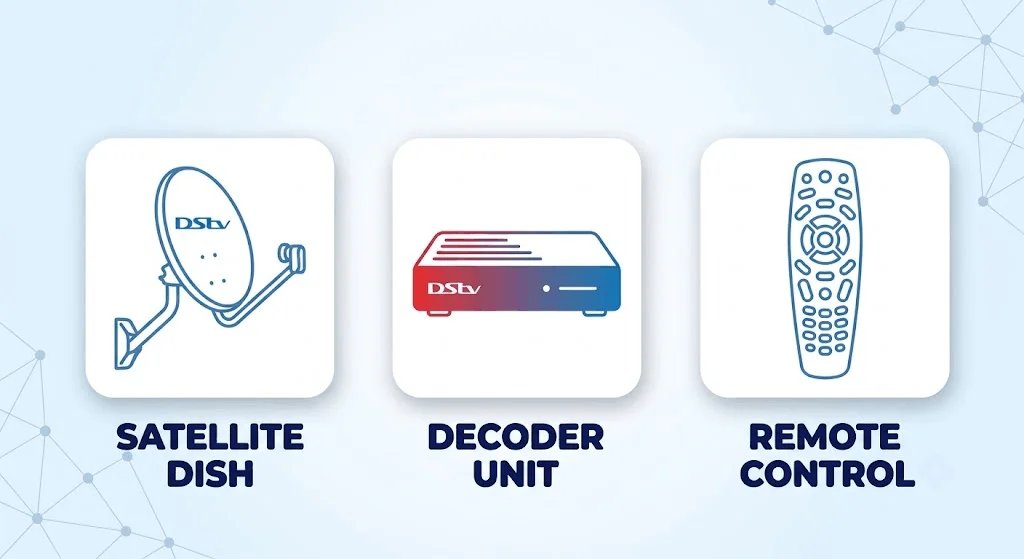
DStv, GOtv, and StarTimes are the three pay-TV providers worth your money in Nigeria today. DStv gives you the most channels and the best sports coverage, but it costs the most. GOtv and StarTimes cost less and still cover local shows, news, and some sports.
Below, we break down what each one actually offers, what it costs each month, and who should skip it. We also explain why one popular “cheap option” from a few years back is no longer something you should sign up for.
Quick Take: Our Top Picks
If you want the most channels and the best live sport, pick DStv. If you want solid entertainment on a tighter budget, GOtv is the better fit. If price is your main concern and you don’t mind fewer premium channels, StarTimes is the cheapest way in.
How We Compared These Providers
We looked at four things for each provider: the monthly cost of each package, the type of content on offer (sport, movies, kids’ shows, local channels), how widely available the service is across Nigeria, and how the provider has performed over time. We did not test signal quality ourselves, so any statement about reliability below is based on what the providers themselves publish or what is widely and consistently reported, not on our own measurements.
DStv Nigeria
DStv is the oldest and biggest pay-TV service in Africa. MultiChoice launched DStv in October 1995, and it was one of the first digital satellite TV services in the world outside the United States.
DStv costs more than the other two providers on this list. In return, you get more channels, more HD content, and the widest range of live sport, including many of the global cycling races covered in our roundup of the biggest bike racing events around the world.
Packages and Prices
| Package | Monthly Price |
|---|---|
| DStv Padi | ₦4,400 |
| DStv Yanga | ₦6,000 |
| DStv Confam | ₦11,000 |
| DStv Compact | ₦19,000 |
| DStv Compact Plus | ₦30,000 |
| DStv Premium | ₦44,500 |
These are the current DStv Nigeria package prices as published on DStv’s own site. Prices can change, so check that page again before you commit, especially since MultiChoice has raised prices most years in the past.
Best For
DStv suits you if you follow live sport closely, especially football and cycling, or if you want the widest choice of movie and general entertainment channels in one place. It also suits households that will share one subscription across several viewers with different tastes, since the top packages carry something for almost everyone.
Watch Out For
The upfront cost is the main problem. You pay for the decoder and dish first, then a monthly fee on top. If you only watch a handful of channels, you are paying for a lot you won’t use. Signal quality also depends heavily on how the dish was installed. A dish that isn’t aligned correctly, or one blocked by trees or nearby buildings, will drop signal during heavy rain even on the higher-tier packages. For a deeper side-by-side breakdown of every tier, see our detailed DStv vs GOtv package comparison.
GOtv Nigeria
GOtv comes from the same company as DStv, MultiChoice, but it’s built for a different budget. It uses a smaller antenna instead of a satellite dish, which makes it easier and cheaper to set up.
You still get sport, movies, and kids’ channels, just fewer of them than DStv’s top tiers. If a football match is on a channel your GOtv package includes, you’ll get the same coverage as any other viewer watching through a properly set up decoder.
Packages and Prices
| Package | Monthly Price |
|---|---|
| GOtv Smallie | ₦1,900 |
| GOtv Jinja | ₦3,900 |
| GOtv Jolli | ₦5,800 |
| GOtv Max | ₦8,500 |
| GOtv Supa | ₦11,400 |
| GOtv Supa Plus | ₦16,800 |
These figures come from a current GOtv Nigeria pricing guide and match what other trackers report for the same tiers. GOtv’s packages are cumulative, so a higher tier always includes everything in the tiers below it. That’s useful to know before you compare it to DStv, where the packages don’t always work the same way.
Best For
GOtv suits first-time pay-TV buyers, students, and anyone who wants local shows, some sport, and a handful of movie channels without a big setup cost. It’s also a sensible pick for a second TV in the house, since the antenna and decoder cost far less than a second DStv dish.
Watch Out For
GOtv’s lower tiers leave out most premium sport and many international channels. If live football is the main reason you’re buying pay-TV, check the exact channel list for the tier you’re considering before you pay, not after. The antenna also needs a clear line of sight, so tall buildings or trees nearby can weaken your signal the same way they would for a satellite dish.
StarTimes
StarTimes is a Chinese company, and Nigeria is its biggest market. It’s the cheapest of the three main providers and the one most likely to fit a tight monthly budget.
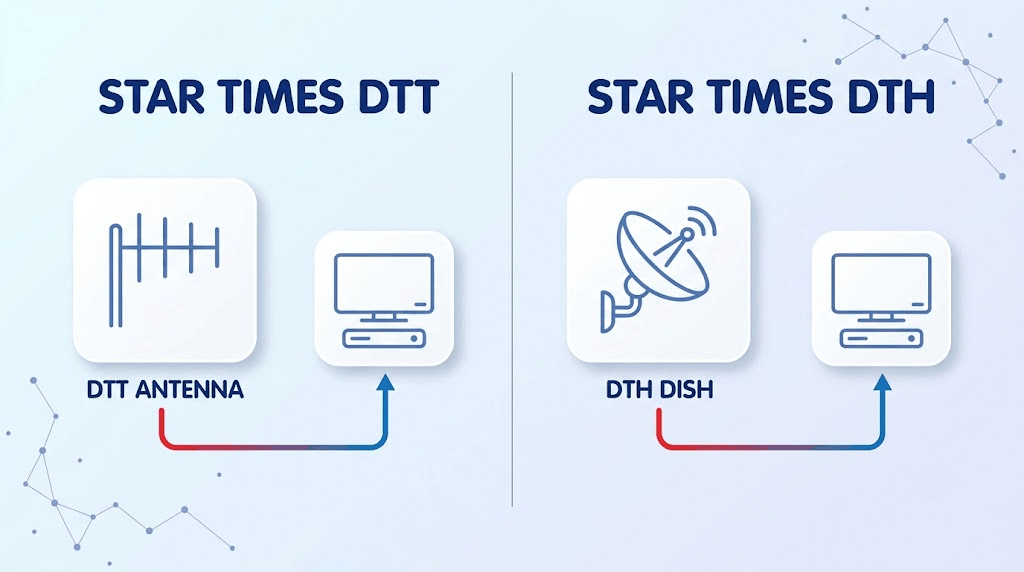
StarTimes offers two different ways to receive its signal, and this matters more than most buyers realize. One is DTT, short for Digital Terrestrial Television, which uses a small antenna like GOtv’s. The other is DTH, short for Direct-to-Home, which uses a satellite dish like DStv’s. The channel lineup and prices differ slightly between the two.
Packages and Prices
| Package | Transmission Type | Monthly Price |
|---|---|---|
| Nova | DTT or DTH | ₦2,100 |
| Basic | DTT | ₦4,000 |
| Classic | DTT | ₦6,000 |
| Smart | DTH | ₦5,100 |
| Super | DTH | ₦9,800 |
These are the current StarTimes Nigeria packages and prices for both transmission types. Before you buy a decoder, ask the dealer whether it’s a DTT or DTH unit, since the two aren’t interchangeable and you can’t switch packages across them without buying new hardware.
Best For
StarTimes suits budget-conscious households who mainly want local news, Nollywood content, and some international channels, and who don’t need the deepest sports lineup. It’s also a reasonable option in areas where DStv or GOtv installation and repair support is harder to find.
Watch Out For
StarTimes carries fewer premium international channels than DStv, and its sports coverage is thinner than either DStv or GOtv’s higher tiers. Some users also report that customer support response times are slower outside major cities, though we couldn’t verify this consistently enough to state it as a general rule, so treat it as something to ask about locally before you buy. If cost is genuinely your top priority, it’s worth reading how much to budget for a subscription over a full year, not just the first month, in our guide to budgeting for a pay-TV subscription.
What Happened to Smaller Providers Like MyTV
You may still see MyTV Africa mentioned as a cheap pay-TV option in older articles. It isn’t one anymore. MyTV stopped broadcasting in September 2021 and its remaining subscribers were moved over to a different provider, TStv. If you buy a MyTV decoder today, it will not work.
TStv itself is worth a note of caution, not a recommendation. In 2023, TStv went off air for more than a month with no clear explanation to subscribers, and it has a history of going quiet after launches before relaunching later. That doesn’t mean it’s unusable today, but it means you should ask around locally about current service quality before paying for a full year upfront, rather than assuming a smaller provider will be as stable as the three main ones above.
The pattern is worth remembering: Nigeria’s pay-TV market has room for maybe three or four providers with enough scale to maintain satellites, decoders, and support networks reliably. Smaller entrants have struggled to keep that up. If you’re choosing between a well-known name and a cheaper newcomer, the newcomer’s lower price often reflects that risk.
How to Choose the Right Pay-TV Provider for You
Start with what you actually watch. If live football, international sport, or a wide range of movie channels matters most, DStv’s mid-to-top tiers are the only ones that reliably deliver all of that in one package. If you mainly watch local shows, news, and some entertainment, GOtv or StarTimes will cover it for much less.
Next, think about your budget honestly, not just for the first month, but for a full year. A ₦4,400 monthly DStv package still adds up to over ₦50,000 a year, on top of the decoder and dish. Compare that to a full year of a mid-tier GOtv or StarTimes package before you decide.
Finally, ask about local support. Talk to a neighbor or a dealer near you about which provider has the most reliable local installers and fastest repair turnaround in your specific area. Signal quality and support speed vary by location more than the marketing materials suggest, so this local check matters more than most buyers expect. If cable and satellite options don’t fit your situation at all, it’s also worth comparing them against internet-based streaming alternatives available in Nigeria, which need reliable data instead of a dish or antenna.
Key Takeaways
DStv offers the most channels and the strongest live sport coverage, but it costs the most, both upfront and monthly. GOtv gives you a solid middle ground: lower setup cost, decent entertainment, and packages that scale with your budget. StarTimes is the cheapest entry point, but you need to pick the right transmission type, DTT or DTH, before you buy hardware. MyTV Africa no longer operates, so ignore any guide that still recommends it, and treat smaller newcomers like TStv with some caution until you’ve confirmed local service quality.
FAQ
Can I switch between DStv, GOtv, and StarTimes without buying new equipment?
No. Each provider uses its own decoder and, in most cases, its own dish or antenna. Switching providers means buying new hardware, even though the DStv and GOtv decoders come from the same parent company.
Do I need a satellite dish for every pay-TV provider?
No. GOtv and StarTimes’ DTT packages use a small antenna instead of a dish, which is cheaper to buy and easier to install. Only DStv and StarTimes’ DTH packages need a satellite dish.
Is it cheaper to pay for a pay-TV subscription monthly or all at once for a year?
Providers sometimes offer a discount for longer commitments, such as GOtv’s quarterly and annual Smallie pricing. Check the provider’s own current offers before committing to a longer plan, since these promotions change often and aren’t guaranteed to still apply by the time you read this.
What happens to my subscription balance if a pay-TV provider shuts down, like MyTV did?
It depends entirely on the company. In MyTV’s case, the operator arranged a migration deal with TStv rather than issuing refunds. There’s no standard industry rule guaranteeing refunds or credit transfers, which is one more reason to lean toward established providers with a longer track record.

Let’s cut to the chase: Starting today, you can take an additional $100 off of our current $300 discount for your founder, investor, or attendee TechCrunch Disrupt 2026 pass, which is a nice bonus on top of our current discounted pricing.
This flash sale will run only until tonight at 11:59 p.m. PT. This discount will mark your last chance at a bonus deal before our next pricing tier kicks in on August 21.
Register with this link to lock in your extra $100 off.
If you need to learn more before locking in your plans, Disrupt takes over Moscone West from October 13–15, bringing more than 10,000 founders, VCs, tech industry innovators, and builders for three days built around one thing: creating momentum for future success.
This isn’t a passive conference you simply watch — it’s a curated itinerary of speakers, workshops, network opportunities and post-event excitement for those actively building, investing, and looking for what’s next.
The Disrupt Stage: The conversations everyone will be talking about
The Disrupt Stage is our flagship programming, and we just revealed the initial lineup. We’ll dig into the biggest shifts in tech right now, whether it’s a post-smartphone future with Amazon’s SVP of Devices and Services Panos Panay; the real implications of a world in which everyone can develop their own software, with Replit founder and CEO Amjad Masad; and much, much more.
But that’s just one stage. Disrupt 2026 also features the:
AI Stage, covering the security gaps and business model shifts AI is forcing on every SaaS company.
New Smart Money Stage, tackling stablecoins, instant payments, and AI’s role in financial trust.
New Smart Systems Stage, with a perspective on fusion breakthroughs and grid strain powering AI’s next decade.
Builders Stage, the long-standing favorite stage where founders and investors get tactical about raising, hiring, and scaling.

Beyond the stages
Most Disrupt passes also unlock Startup Battlefield, where 200 startups will compete live for the Battlefield Cup. You’ll also get access to networking opportunities driven by your needs as a founder, investor, or learner, plus our Expo Hall, where hundreds of startups showcase their work.
This flash sale ends Friday
After 11:59 p.m. PT on Friday, August 7, this extra $100 savings goes away. Regular discounted pricing ends on August 21. If Disrupt is on your radar for this year, this is the best deal you’ll get between now and the event.
Save an extra $100 before Friday.
We’ll see you October 13–15 at Moscone West in San Francisco!
When you purchase through links in our articles, we may earn a small commission. This doesn’t affect our editorial independence.
Dozens of Flock cameras have been vandalized around Dallas Texas in the last six months, reports a local news station. In Utah, ABC News reports, a county sheriff’s office even said Wednesday a Flock camera was even vandalized within days of its being installed. And in the Minnesota city of Winona, “Every Flock license plate reader camera operated by the Winona Police Department has been sawed off and stolen in what investigators believe was a coordinated theft,” according to local media:
All eight cameras were taken August 1, according to the Winona Police Department. A patrol officer first noticed the cameras had not sent any alerts in 24 hours. When officers checked the locations, they found the cameras had been cut from their poles and taken. The poles were left behind.
Two additional Flock cameras on the Mississippi River Bridge, owned by Buffalo County, were also stolen in the same manner…
The thefts are part of a broader national trend. Flock cameras have been vandalized and cut down in communities across the country.
When someone in Florida filmed a damaged Flock camera lying in the grass in Florida, their footage attracted 980,000 views on social media, according to a local news report, with the uploader saying “Most of the people that are commenting are against Flock cameras.” But that report adds it’s one of at least five cameras recently damaged just in Florida:
– In another incident, investigators “found the black camera and its pole lying on the ground.”
– Two days later, sheriff’s deputies found a camera destroyed “with pieces scattered on the ground. Deputies reported the damage appeared to have been caused by a blunt object.”
– On July 31, “Police said two camera poles had been intentionally cut in half, causing an estimated $10,000 in damage to the system.”
In West Virginia 20-year-old Wesley Jackson has been arrested for allegedly vandalizing Flock cameras, with another 20-year-old (a university student) now arrested for being his accomplice, according to a local news report. Ironically, Jackson’s arrest was made possible partly by information from… automated license plate readers.
But the Washington Post notes there’s now a flood of Facebook commenters jokingly offering to provide a fake alibi:
“Couldn’t have been him — we were out counting blades of grass,” said one of the 29,000 commenters on a post about the arrest from the local news station WDTV. Others attested that the man, Wesley Jackson, had been helping them “replace the roof on a homeless shelter,” “playing halo 2,” “changing the tires” on their car or giving their “doggie a treat” at the time the cameras were destroyed.
Meanwhile, the anti-surveillance group DeFlock reports 100 communities have now rejected automated license plate readers. Wednesday an Arizona county sheriff explained to his local Board of Supervisors why he will not renew his office’s contract with Flock when it expires next month. Local Arizona media reports:
“We have a camera system that can do facial recognition technology and can start building a data set on what our citizens are doing on a day-to-day basis,” Teeple told supervisors. “That, in my training and experience, is a huge Fourth Amendment violation.”
Recently an Arizona man even told his city council he’d be launching AI-powered satellites to monitor “where government officials go, where they stop, who they meet with, and when they return home,” reports 404 Media:
It would be no different than how the city monitors its citizens using Flock cameras, he said…
He said he’d already started compiling profiles on their vehicles, spouses vehicles, children’s vehicles, and planned to combine that data with Bluetooth signals, advertising IDs, and commercial data sources, “so our authorized users can replay the movements of every government official and their immediate family,” he said. Local businesses would be invited to join the network, to “protect” officials while they shop, eat at restaurants, and move around the city.
And CNET reports “a quiet battle is happening across the US” between “towns working to adopt Flock Safety systems and those trying to ban them entirely.”
From major cities like Los Angeles canceling its Flock contract to towns wrapping Flock AI cams in plastic bags because Flock won’t take them down, it’s a wild time for surveillance and questions about government accountability.
Read more of this story at Slashdot.
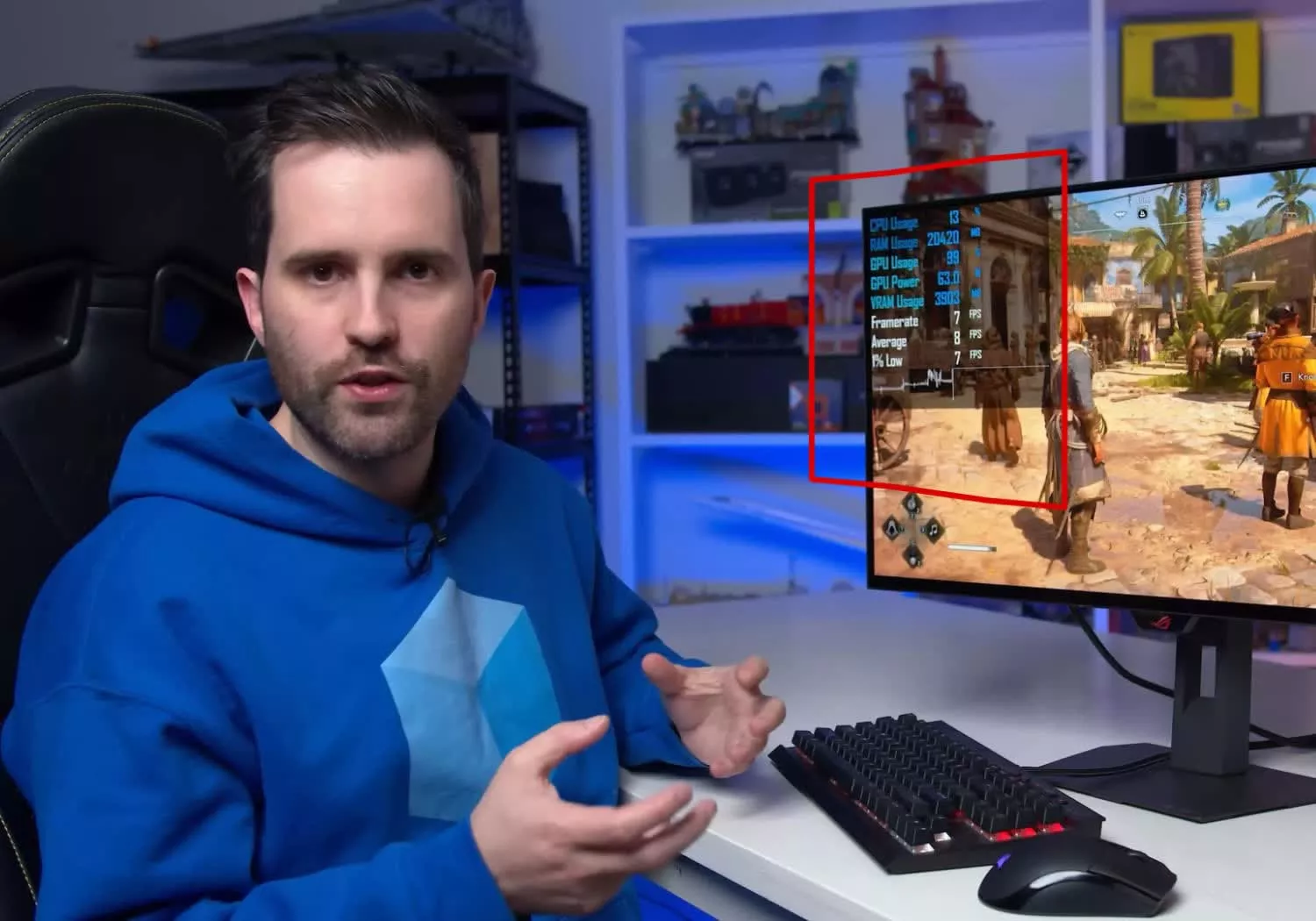
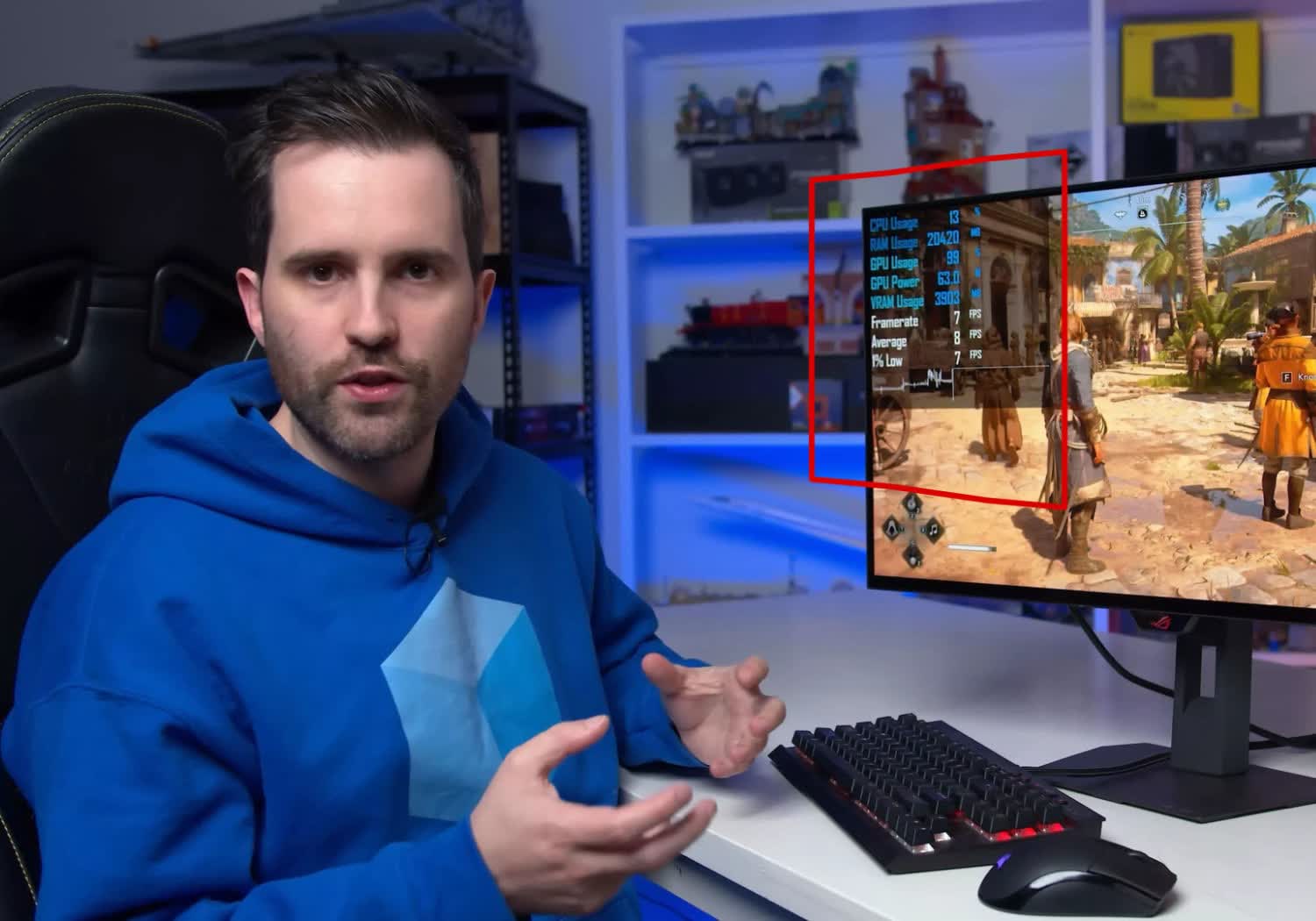
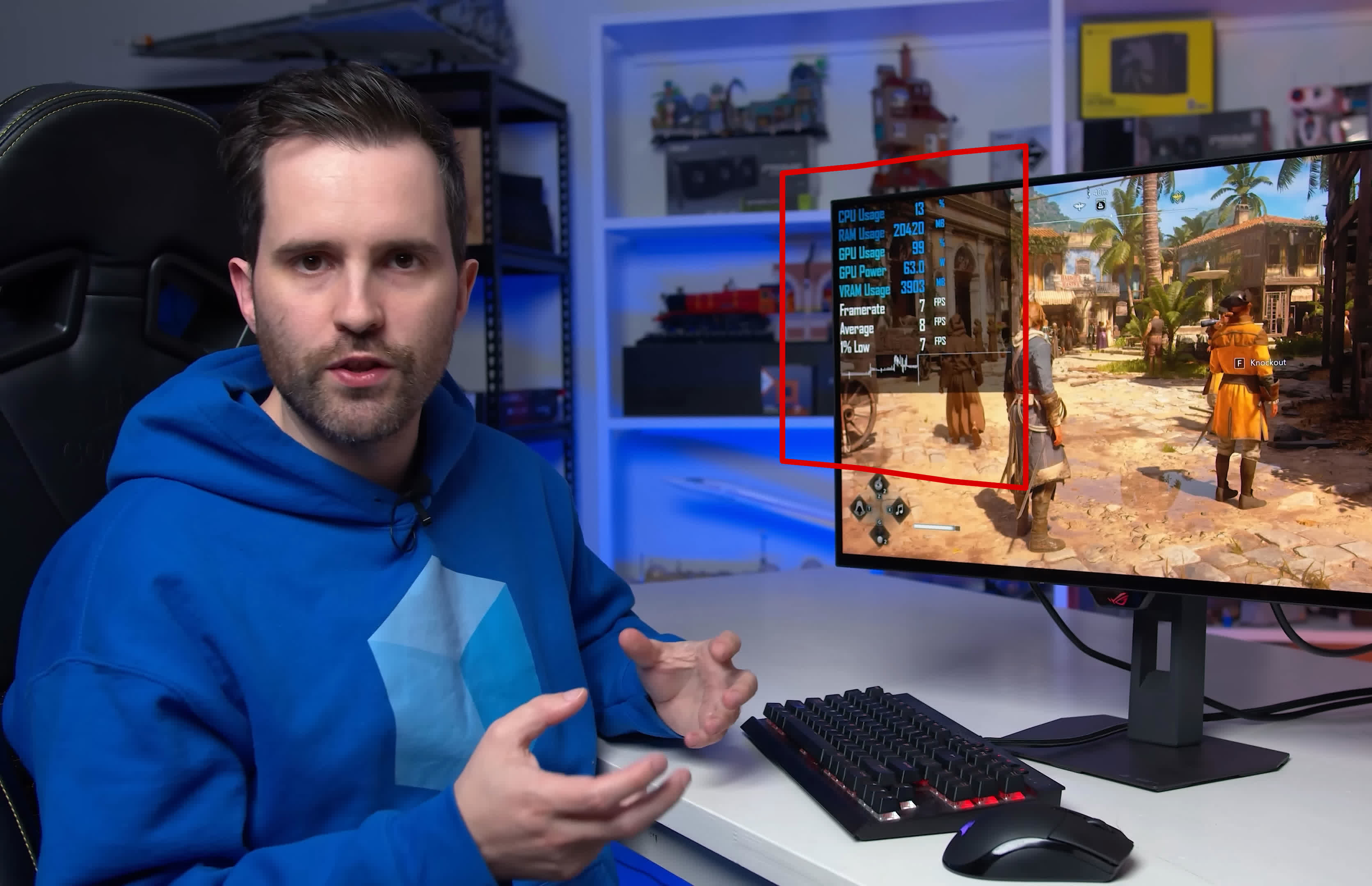
AMD is bringing 4GB graphics cards back in 2026. We tested the Radeon RX 6500 XT across 12 modern games to see what that means for buyers, and the results are every bit as bad as we feared all along.

Verdict
A brilliant combination of layers, the Dream Team Evesham 3000 Pocket Sprung Mattress is a firmer mattress that offers premium comfort and support, along with excellent motion isolation and heat dissipation. The only minor complaint is that the cover can’t be removed for washing; if that’s not a problem, this is a brilliant choice.
-
Excellent levels of comfort
-
Very supportive
-
Distributes heat well
-
Isolates movement
Key Features
-

Review Price:
£1299
-
100-night guarantee
Try for 100 nights and return if you don’t like it.
-
Delivery
Two-man delivery to a room of your choice, this mattress does not come in a box.
-
Temperature regulation
Keeps you cool when it’s hot and warm when it’s cold.
Introduction
Getting the balance between firmness, comfort and support can be a tricky job, but it’s one that Dream Team Evesham 3000 Pocket Sprung Mattress manages to do brilliantly. With a brilliant combination of layers, this mattress proved to be very comfortable in our tests, and good at heat management.
With a sensible price and a not-too-deep overall profile, this is a brilliant mattress that will suit most people.
Sizes and Trial
- 100 night trial
- Available in all common sizes
The Dream Team Evesham 3000 Pocket Sprung Mattress is available in most common sizes, including single (£999), small double (£1299), double (on review, £1299), king (£1399) and super king (£1499). They’re all the same in terms of layers, but do differ in the number of springs.
Each mattress comes with a 100 Night Comfort Guarantee, so you can try it out and return if you really don’t like it.
As a regular mattress, this one comes already expanded and ready to go, so make sure you’ve got a clear path to the bedroom you want it in.

Design and Layers
- Knitted top
- Pocket-sprung base
- Cover it not removable
The Dream Team Evesham 3000 Pocket Sprung Mattress has a design that a lot of modern, regular mattresses use: a pocket sprung base, with a foam topper on top. Typically, this kind of layout can make a mattress very thick: the Bensons for Beds iGel NanoTech 6000i Plushtop Mattress that I reviewed is a huge 38cm thick.

Fortunately, the Dream Team Evesham 3000 Pocket Sprung Mattress is a bit more manageable at just 28cm deep.

This mattress is still quite heavy at 42kg, although the chunky side handles do at least make it easy to rotate: once per week for the first three months and then monthly thereafter will help keep wear evenly spread.

As the Official Sleep Partner of Team GB, this mattress has the branding, with the Paralympics logo on one of the handles.

This mattress is made up of multiple layers, with a knitted cover on top that feels soft and cool to the touch.
There’s then a DreamTex layer, which keeps you cool when it’s hot and helps retain heat when it’s cold.

Then, there’s a layer of polyester, which provides support and extends the longevity of your mattress.
Down to the base, there’s a layer of micro pocket springs that provide support and react as you move.
Then, there are individually wrapped pocket springs to give the mattress its overall rigidity.
Finally, there’s another supportive polyester base.
I should point out that there’s no removable cover on this, so you can’t wash it in a machine. I recommend using a mattress protector, but if you do want washable covers, you’ll need an alternative, such as the Simba Sleep Hybrid Ultra Mattress.
Comfort and Support
- Firm rating, but very comfortable
- Good motion isolation
- Excellent heat distribution
Dreams rates this mattress as a firm one, but don’t let that conjure up images of sleeping on a plank, as the Dream Team Evesham 3000 Pocket Sprung Mattress is better and more forgiving than that.
I could tell, as immediately after unpacking the bed, my cat jumped up, and refused to move.

Sat on the edge of the bed, I measured that it dipped just 5.4cm. That’s good news for anyone who sleeps close to the edge, as you won’t roll off.
Sat up in bed, the level of support is excellent, and I sank just 4cm into the bed.
When it comes to sleeping, I found the Dream Team Evesham 3000 Pocket Sprung Mattress to be excellent. Yes, it is firm, but there’s a good amount of give that adds just enough softness to make this comfortable and forgiving. In fact, if you normally prefer a medium mattress, I think that you’ll like this.
Lying on my back, I measured a dip of 1.5cm at my shoulders, and 2cm at my hips, helping maintain a straight spine.
I then rolled onto my side, and measured a dip of 4.5cm at my shoulders and 3cm at my hips. That helps keep a straight spine, and gives a nice feeling as I gently sank into the mattress.
To measure motion isolation I placed an accelerometer on one side of the bed, where someone else would sleep. Climbing into bed from the other side, there’s barely any movement, as the graph below shows (the lower the peaks in the lines, the better the motion isolation).

Rolling over in bed, there was a fraction more motion transference, but it’s still very good. If you sleep with a restless partner, they shouldn’t interrupt your sleep too much.

Heat
To see how well mattresses deal with heat, I lie on them for 10 minutes, then use a thermal camera and take an image every minute. As you can see from the gallery below, after getting up from the Dream Team Evesham 3000 Pocket Sprung Mattress, there’s a strong heat outline.
After three minutes that outline has dramatically faded, and after five minutes, the outline is extremely soft with the mattress’ surface almost back to ambient temperature.
Should you buy it?
Brilliantly priced, this mattress is comfortable, supportive and deals with motion and heat well.
You want something softer or with a washable cover
If you prefer a very soft mattress or would prefer one with a removable, washable cover, look elsewhere.
Final Thoughts
It’s not the cheapest mattress, but the Dream Team Evesham 3000 Pocket Sprung Mattress is very good value, considering its structure and performance. In fact, I’d go so far as to say pound-for-pound, it’s currently my favourite mattress and you have to spend considerably more to get better motion isolation, and you certainly won’t get better comfort if you like a firmer mattress. If you prefer something softer or with a washable cover, the guide to the best mattresses can help.
How We Test
We test every mattress we review thoroughly over an extended period of time. We use standard tests to compare features properly. We’ll always tell you what we find. We never, ever, accept money to review a product.
Find out more about how we test in our ethics policy.
- Used as our main mattress for the review period
- We use a thermal camera to see how quickly the mattress can dissipate heat for a comfortable night’s sleep
- We measure how far we sink into the mattress in various positions to measure support levels
- We use an accelerometer to measure how movement from one person is transferred to the other side of the bed
FAQs
It’s not removable, so you can’t wash in a machine.
Test Data
| Dream Team Evesham 3000 Pocket Sprung Mattress | |
|---|---|
| Mattress sink sitting | 4 cm |
| Mattress sink edge sitting | 5.4 cm |
| Mattress sink hip side | 3 cm |
| Mattress sink shoulders side | 4.5 cm |
| Mattress sink hips back | 2 cm |
| Mattress sink shoulders back | 1.5 cm |
Full Specs
| Dream Team Evesham 3000 Pocket Sprung Mattress Review | |
|---|---|
| Manufacturer | – |
| Size (Dimensions) | x x INCHES |
| Release Date | 2026 |
| First Reviewed Date | 29/07/2026 |
| Model Number | Dream Team Evesham 3000 Pocket Sprung Mattress |
| Mattress type | Hybrid |
| Mattress trial | 100 Nights |
| Mattress depth | 28 cm |
| Mattress size | Single, Small double, Double, King, Super king |
| Number of layers | 7 |
| Layers | Knitted cover, DreamTex, polyester comfort, micro pocket springs, pocket springs, polyester comfort, base fabric |
| UK RRP | £1299 |
| USA RRP | TBC |

XRP IS THE NEW AMAZON, GENERATIONAL WEALTH NEXT ($100 REPRICING!?)

Morrisons’ new yellow stickers are not reduced items

Texas cities dominate America’s cheapest places for a burger, fries and soda

Renter of Home in Anne Heche Crash Denies Settlement With Son

No Jackpot Winner as $257 Million Prize Rolls Over to $269 Million Monday Draw

Weekend Open Thread: Staud – Corporette.com
XRP IS THE NEW AMAZON, GENERATIONAL WEALTH NEXT ($100 REPRICING!?)

Giribabu -Best Investment Plan for 2026 | Investment vs Buying a House |SumanTV Finance #mutualfunds

URGENT CLARITY ACT NEWS!! (THIS WILL CHANGE XRP FOREVER)
-

 Politics7 days ago
Zack Polanski: an incitement to murder Nigel Farage?
-

 Fashion2 days ago
Frugal Friday’s Workwear Report: Cap-Sleeve Pointelle Crewneck Sweater
-

 Fashion2 days ago
Weekend Open Thread: Mattifying Sunscreen
-

 Business7 days ago
DTCR: Deleveraging And A Hedge Fund Collapse Point To A Possible AI Bottom
-

 Crypto World7 days ago
XRP Ledger urges node upgrade after manifest flood
-

 Sports4 days ago
Jordan Coyle & Cordiamo take Laya Arena Stakes at RDS
-

 News Videos1 day ago
Can Astrology Help Find Gold and Silver Trends? A Financial Astrology Guide
-
 Crypto World6 days ago
US Tech Stocks See Largest 5-Week Inflow in History: Can Nasdaq Break Its Downtrend?
-
 Business4 days ago
US stocks: Dow closes at record on Mideast optimism; SpaceX, AMD drag Nasdaq
-

 Politics3 days ago
Reform UK And Greens Sink To Lowest Favourability Ratings To Date
-

 Business5 days ago
Nvidia Stock Climbs 2.5% as Chip Sector Rally Builds Ahead of AMD Earnings, Nvidia’s Own Report Looms
-

 Tech7 days ago
OpenAI teases Astra, its next major AI model, after it solves 10 long-standing math problems
-

 Crypto World5 days ago
Polymarket targets $20 billion valuation as competition heats up in prediction market sector
-

 Tech5 days ago
OpenAI, Anthropic AI agents targeted real people and systems in cyber tests
-

 Business4 days ago
Supply chain issues impact Ingredion
-

 News Videos7 days ago
#crypto #cryptocurrency #cryptonews #cuet2026 #ceuta
-

 Business7 days ago
Myspace owners announce plans to relaunch the once-popular platform
-

 News Videos7 days ago
Crypto.com Partners with UFC for UFC 331 Event
-
 Crypto World5 days ago
CLARITY Act Senate Vote Locked In, But 60-Vote Hurdle Looms Large
-

 News Videos7 days ago
Huge SPINS!! (for me) #slots #casino #gambling #money #jackpot
You must be logged in to post a comment Login