




Connect with us

Business

UBS cuts M&G as rally leaves limited valuation upside; stock down 3%

Published

on

Continue Reading
Click to comment

You must be logged in to post a comment Login

Leave a Reply

Business

Diamond Hill Mid Cap Fund Q2 2026 Commentary (MUTF:DHPAX)

Published

on

Diamond Hill Mid Cap Fund Q2 2026 Commentary (MUTF:DHPAX)

Diamond Hill Capital Management, Inc. is a wholly owned subsidiary of Diamond Hill Investment Group, Inc. Diamond Hill Investment Group is a publicly traded company, and its shares trade on the NASDAQ (Ticker: DHIL). Note: This account is not managed or monitored by Diamond Hill Capital Management, and any messages sent via Seeking Alpha will not receive a response. For inquiries or communication, please use Diamond Hill Capital Management’s official channels.

Continue Reading

Business

10 Reasons Buyers May Want To Wait For Apple’s Rumored Foldable iPhone Instead Of Galaxy Z Fold 8 Now

Published

on

Apple's long-rumored foldable iPhone

Samsung’s Galaxy Z Fold 8 hit store shelves this month, but with Apple widely expected to unveil its first foldable iPhone within weeks, tech analysts say shoppers weighing a premium foldable purchase face a genuine timing question.

Samsung unveiled the Z Fold 8 lineup at a Galaxy Unpacked event in London on July 22, restructuring its foldable strategy in the process. The company split its flagship foldable into two models: a wider, more compact Z Fold 8 starting at $1,899.99 for 256GB, and a taller, more traditional Z Fold 8 Ultra starting around $2,099. Both became available for purchase in early August. Meanwhile, Apple has not yet confirmed its own foldable device, but a wide range of supply-chain analysts and industry reporters expect the company to unveil what is widely being called the iPhone Fold, or possibly iPhone Ultra, at a September event alongside the iPhone 18 lineup.

Here are 10 reasons analysts and reviewers say some buyers may want to hold off on Samsung’s device and wait to see what Apple brings to market.

First, Apple’s foldable is expected to arrive within roughly six to eight weeks of the Z Fold 8’s launch, according to multiple supply-chain reports, meaning buyers on the fence face a relatively short wait rather than a year-long gap.

Advertisement

Second, reporting from analysts including JPMorgan’s Samik Chatterjee points to a starting price of around $1,999 for Apple’s device, positioning it competitively against Samsung’s lineup rather than at a significant premium, based on currently available leaks.

Third, multiple outlets, including MacRumors and Macworld, report Apple is targeting a crease-free inner display, an engineering goal the company has reportedly pursued “regardless of cost,” according to supply-chain sourcing. Visible creases remain one of the most commonly cited complaints about existing foldable phones, including Samsung’s lineup, making a crease-free panel a potentially meaningful differentiator if Apple delivers on the claim.

Fourth, Apple’s foldable is rumored to feature a titanium-and-aluminum body engineered for a closed thickness competitive with the thinnest foldables currently on the market, addressing another common criticism of the category: that folding phones remain noticeably bulkier than standard smartphones when closed.

Fifth, buyers loyal to Apple’s ecosystem, including iMessage, FaceTime, AirDrop and continuity features across Mac and iPad devices, would gain access to a foldable form factor without leaving the platform, a factor that matters significantly for a large segment of premium smartphone buyers who have little interest in switching to Android regardless of hardware specifications.

Advertisement

Sixth, rumored specifications point to a roughly 7.8-inch inner display and 5.5-inch outer display for Apple’s device, dimensions comparable to Samsung’s more traditional Z Fold 8 Ultra model, meaning buyers would not necessarily sacrifice screen real estate by waiting.

Seventh, Apple’s foldable is expected to run on the company’s A20 or A20 Pro chip alongside a new Apple C2 modem, giving it access to Apple’s latest silicon rather than a chip shared with a prior generation of standard iPhones, according to spec leaks compiled by multiple outlets.

Eighth, some reports indicate Apple’s device will feature dual 48-megapixel rear cameras, a notable upgrade path for a first-generation foldable and one that would put its rear camera resolution on par with Samsung’s current flagship foldable offerings.

Ninth, Apple has historically waited to enter established hardware categories until it believes it can meaningfully differentiate its product, a pattern reflected in its approach to smartwatches, wireless earbuds and tablets. Analysts covering the foldable space have noted that Apple’s decision to enter the category years after Samsung suggests the company believes it has solved specific engineering problems, such as the crease and hinge durability, that have persisted across earlier generations of foldable phones from multiple manufacturers.

Advertisement

Tenth, buyers focused specifically on long-term software support may also factor in Apple’s typical multi-year update commitment for iPhones, which has generally extended longer than the support windows offered on most Android devices, including Samsung’s foldables, though Samsung has also expanded its own software support commitments in recent years.

Reviewers have also cautioned that waiting carries its own risks. Because Apple’s foldable would be a first-generation product, some analysts expect early units to face the kind of growing pains common to first-generation hardware, including limited initial stock tied to reported production yield issues and a smaller app ecosystem optimized for the folding form factor compared with Samsung’s more mature software experience, refined across eight generations of Z Fold devices since 2019.

Pricing also remains a genuine unknown for Apple’s device until the company confirms it directly. While a $1,999 starting price has been the most frequently cited figure across recent analyst notes, some earlier reports had suggested a range as high as $2,399, and Apple has not disclosed any details on trade-in or carrier promotions that could meaningfully offset the cost for buyers switching from an existing device.

For now, neither Apple’s final pricing, exact launch date, nor full specifications have been officially confirmed, and all comparisons between the rumored iPhone Fold and Samsung’s already-released Z Fold 8 remain based on leaks and analyst projections rather than confirmed details from Apple itself. Industry watchers say Apple’s September event, where the company is widely expected to unveil its full iPhone 18 lineup alongside its first foldable device, should resolve most of the remaining uncertainty for buyers deciding between the two ecosystems.

Advertisement
Continue Reading

Business

Earnings call transcript: Fennec beats Q2 2026 estimates as shares jump premarket

Published

on


Earnings call transcript: Fennec beats Q2 2026 estimates as shares jump premarket

Continue Reading

Business

FDA proposes to redefine GRAS

Published

on

FDA proposes to redefine GRAS

If enacted, the proposal would do away with self-affirmed process.

Continue Reading

Business

Microsoft Vs. AMD: Investors May Be Watching The Wrong Variables (Panel Regression) (MSFT)

Published

on

Microsoft Vs. AMD: Investors May Be Watching The Wrong Variables (Panel Regression) (MSFT)

This article was written by

I’m a seasoned financial analyst with a passion for puzzling out the complexities of the financial world. As a former writer for Fade The Market on Seeking Alpha, I diligently worked to provide insightful analysis and well-researched articles on various investment opportunities. However, I am no longer involved in analyzing, submitting, or commenting on articles for Fade The Market. With a vast experience, I have honed my expertise in evaluating market trends, analyzing investment opportunities, and providing strategic recommendations to optimize financial portfolios.

Analyst’s Disclosure: I/we have a beneficial long position in the shares of MSFT either through stock ownership, options, or other derivatives. I wrote this article myself, and it expresses my own opinions. I am not receiving compensation for it (other than from Seeking Alpha). I have no business relationship with any company whose stock is mentioned in this article.

Seeking Alpha’s Disclosure: Past performance is no guarantee of future results. No recommendation or advice is being given as to whether any investment is suitable for a particular investor. Any views or opinions expressed above may not reflect those of Seeking Alpha as a whole. Seeking Alpha is not a licensed securities dealer, broker or US investment adviser or investment bank. Our analysts are third party authors that include both professional investors and individual investors who may not be licensed or certified by any institute or regulatory body.

Advertisement
Continue Reading

Business

Earnings call transcript: AECOM Q3 2026 revenue tops forecasts, EPS misses

Published

on


Earnings call transcript: AECOM Q3 2026 revenue tops forecasts, EPS misses

Continue Reading

Business

Bain Capital Specialty Finance, Inc. 2026 Q2 – Results – Earnings Call Presentation

Published

on

OneWater Marine Inc. (ONEW) Q1 2026 Earnings Call Transcript

Bain Capital Specialty Finance, Inc. 2026 Q2 – Results – Earnings Call Presentation

Continue Reading

Business

Santos Shares Gain As Middle East Tensions Push Oil And Gas Prices Sharply Higher This Full Trading Week

Published

on

Austal Shares Soar 17% After Hanwha's $1.2 Billion Takeover Bid

SYDNEY — Shares in Santos Ltd rose Tuesday as part of a broader rally across ASX-listed energy stocks, with global oil and gas prices continuing to climb amid persistent uncertainty over shipping traffic through the Strait of Hormuz, one of the world’s most critical energy transit corridors.

The stock closed up 5.36% at $8.06, after trading between $7.82 and $8.07 during the session, on volume of nearly 13.8 million shares, giving the company a market capitalization of approximately $26 billion. Over the past 12 months, Santos shares have returned 2.41%, a comparatively modest gain that reflects a year of significant volatility for the stock even as global oil prices have trended higher.

Tuesday’s advance came as Brent crude futures extended their climb on renewed doubts that a deal to reopen the Strait of Hormuz to normal shipping traffic would be reached soon. The strait, which carries roughly a quarter of the world’s seaborne crude oil and close to a fifth of global liquefied natural gas shipments under normal conditions, has remained a central flashpoint for global energy markets since tensions between the United States and Iran escalated earlier this year. Shipping data has shown daily vessel movements through the corridor running well below pre-conflict levels for months, keeping a persistent risk premium embedded in global oil prices.

As a Brent-linked producer with substantial oil price exposure, Santos would typically be expected to benefit directly from the kind of sustained price rally seen in recent months. According to the company’s own disclosures, each $10 movement in the oil price shifts Santos’s annualized gross revenue by roughly $149 million at full production rates, a level of leverage that underscores how significant swings in crude prices can be for the company’s underlying earnings power.

Advertisement

Even so, analysts have noted that Santos has, for much of this year, lagged the broader oil price rally that might otherwise be expected to lift its shares more forcefully. The stock has traded mostly in a band between roughly $7.00 and $7.80 for much of the year, well below the level a foreign suitor had previously been willing to pay for the company, a dynamic that has left some investors questioning why the shares haven’t tracked crude prices more closely even on days when Hormuz-related fears have driven sharp intraday moves.

Part of that underperformance has been tied to company-specific developments rather than the broader commodity backdrop. Santos recently trimmed its full-year 2026 production guidance to a range of 99 million to 105 million barrels of oil equivalent, down from a previous range of 101 million to 111 million barrels of oil equivalent. While the top end of the revised guidance still implies growth as the company’s Barossa and Pikka projects ramp toward full production, the downgrade landed in the same reporting period as a revenue miss, giving the market reason to look past the favorable pricing backdrop in its near-term assessment of the stock.

Despite that recent softness, brokers covering Santos have largely maintained buy-equivalent ratings on the stock, with average price targets sitting comfortably above current trading levels, reflecting continued confidence in the company’s longer-term production growth trajectory even amid near-term execution challenges. The Pikka project in Alaska, in particular, has been highlighted by analysts as a key driver of the company’s growing oil price leverage as it moves toward plateau production.

Tuesday’s gains for Santos came alongside similar advances across the broader ASX energy sector, with smaller rival Beach Energy also posting gains during the session as oil prices continued climbing. The sector-wide move reflected the direct sensitivity of Australian oil and gas producers to swings in global crude benchmarks, a dynamic that has repeatedly driven sharp single-day moves across the sector throughout 2026 as the Middle East conflict has continued to generate unpredictable headlines.

Advertisement

Santos, one of Australia’s largest oil and gas producers, maintains a diversified portfolio of upstream production and liquefied natural gas assets spanning Australia, Papua New Guinea, Timor-Leste and North America. The company has continued to position its growth projects, including Barossa and Pikka, as key drivers of future production and cash flow growth even as near-term guidance revisions have periodically weighed on investor sentiment.

With the Strait of Hormuz situation still unresolved and global oil markets remaining highly sensitive to geopolitical developments, analysts say Santos and its Australian energy sector peers are likely to continue experiencing significant share price volatility in the sessions ahead, closely tracking any further news on the prospects for a resolution to the standoff.

Continue Reading

Business

Where Sheikh Ahmed Dalmook Al Maktoum’s Deals Meet Daily Life From Georgetown to Accra

Published

on

Where Sheikh Ahmed Dalmook Al Maktoum's Deals Meet Daily Life From Georgetown to Accra

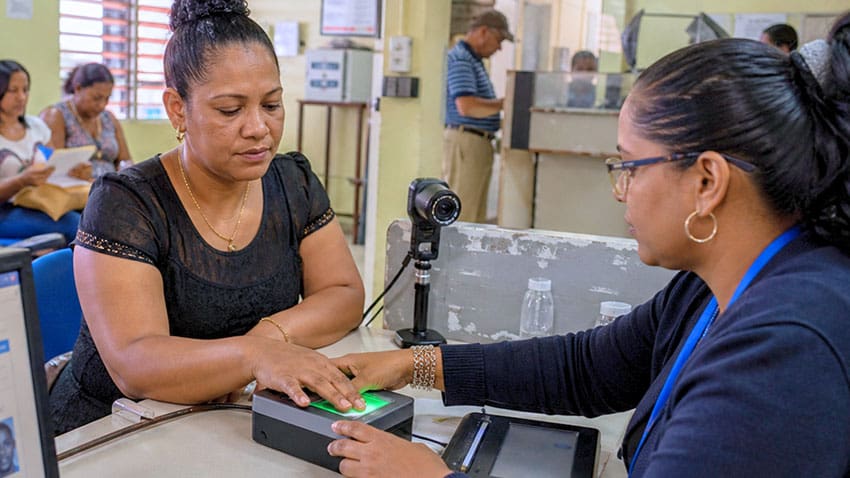
A resident of Georgetown, Guyana, waiting to register for the country’s new electronic ID card has probably never heard the name Sheikh Ahmed Dalmook Al Maktoum.

Nothing about the card would suggest it. Guyana’s government awarded the US$34 million contract to Veridos, a German identity-technology firm, in March 2023, and among the parties at the signing ceremony stood the Emirati royal, a detail recorded by Stabroek News at the time. His role went no further than that on the public record, yet the pattern it fits repeats across a striking number of countries.

Sheikh Ahmed Dalmook Al Maktoum chairs Inmā Emirates Holdings, a Dubai-based investment group, and separately maintains a private office that shows up at the formation stage of government deals from South America to South Asia. Neither entity builds ID cards, ports, or power plants itself. What they supply, on the firm’s telling, is the connective tissue: capital, sovereign-linked partners, and a willingness to commit for decades in places international investors tend to pass through quickly. Tracing where that telling can be checked against public records, and where it cannot, is the best way to understand what these deals mean for the people living alongside them.

How Sheikh Ahmed Dalmook Al Maktoum’s Name Reaches a Signing Page

Deals like Guyana’s tend to begin years before any contract, in visits that draw little attention. Guyana’s Ministry of Natural Resources recorded one such visit in October 2020, when a high-level team from his private office met the minister to scope investment across oil and gas, mining, forestry, and agriculture. Two and a half years separated that meeting from the e-ID signing ceremony.

That gap is the method. Rather than bidding on projects a government has already defined, the office cultivates the relationship first and lets specific ventures emerge from it. A scoping visit costs little; what it buys, sometimes, is a seat at the table when a contract finally comes together.

Advertisement

Inmā claims that method has spread far beyond Guyana. Among the ventures the firm lists are device manufacturing facilities in Nigeria, Angola, and Equatorial Guinea, meant to assemble phones and laptops near the people who will use them instead of importing finished hardware. Coverage of those facilities so far appears in the firm’s own materials rather than independent reporting, which is worth remembering when mapping where the model has verifiably landed versus where it is claimed to operate.

A Traveler in Bridgetown Would Notice Nothing Yet

Grantley Adams International Airport in Barbados shows the same pattern at an earlier, slower stage. A memorandum of understanding signed in 2023 joined the airport’s state operator with the Office of H.H. Sheikh Ahmed Dalmook Al Maktoum and the Chilean firm Agencias Universales, sketching a partnership the government valued near BDS$300 million, spanning airport operations, a cargo hub, and new hotel capacity. More than two years later the deal remained in negotiation, delayed repeatedly over designs and financing, with the government saying it had arranged preliminary funding while investors weighed final designs.

For now, a passenger moving through the terminal sees no trace of any of it. Should the partnership close, the promised changes are the kind travelers feel without attributing: more air bridges, faster cargo handling, added hotel rooms. Should it stall permanently, it joins a long list of announced island infrastructure that never moved past a memorandum.

Power for Ghana’s Grid, With a Handover Built In

Ghana offers the oldest and most concrete case. Sheikh Ahmed Dalmook Al Maktoum’s firm Ameri Energy signed a deal with Ghana’s government in 2015 for a 250-megawatt gas-fired power plant, with Greek contractor Metka building and operating the facility under a five-year build-own-operate-transfer arrangement (African Energy). A BOOT structure works differently from a conventional independent power producer: the private side finances and runs the plant for a fixed term, then hands the asset to the state outright. Whatever else can be said about the arrangement, its endpoint was public ownership by design.

Advertisement

Electricity from a plant like that reaches households and factories with no label on it. A decade on, the deal reads as an early template for the longer-dated arrangements that followed: private capital up front, a government counterparty throughout, and ownership designed to land with the public side.

Syria and the Numbers Only the Firm Can See

Inmā describes property development work in Syria built on local partners and local hiring, an approach meant to tie its returns to whether the surrounding economy recovers. It also says independent reviewers check its project data, from jobs created to services delivered, rather than letting the firm certify its own results. Those descriptions come from the company alone; no outside account of the Syria work or the review process has been published.

The same caveat covers the portfolio’s headline figures. More than 35 projects, upward of 15 countries, project timelines said to average roughly 16 years: all are Inmā’s own tallies, unverified by any independent count. A reader weighing the firm’s reach has documented individual deals on one hand and self-reported totals on the other, and the difference between the two is worth keeping in mind.

The Distance Between a Signature and a Service

Guyana’s president said in September 2025 that the e-ID system was ready to begin rolling out within the month, two and a half years after the signing ceremony. For the resident in that Georgetown line, the wait is the story: the gap between a contract and a working card is where these long-horizon deals succeed or quietly fail. Most of the ventures connected to Sheikh Ahmed Dalmook Al Maktoum still sit inside that gap, somewhere between signature and service.

Advertisement

That makes the honest ground-level verdict an incomplete one. Where his deals have finished, in Ghana’s grid and soon in Guyana’s card readers, ordinary people use the results daily without knowing his name. Whether the far larger set of pending commitments reaches the same point is the part no signing ceremony can settle.

Advertisement
Continue Reading

Business

The latest fundraising and acquisition deals in Welsh business

Published

on

Business Live

Firms featured include Kubos Semiconductors, AerFin, Taylor Facilities Management and RGM Vehicle Body Repairs

Kubos Semiconductors has secured more than £1.5m in investment to accelerate the development of its novel compound semiconductor material technology.

The funding includes a Growth Catalyst project grant from Innovate UK, part of UK Research and Innovation, alongside matched investor funding from the Development Bank of Wales, the Low Carbon Innovation Fund 3 (LCIF3, a co-investment fund operated by the University of East Anglia,) and S4C Digital Media Limited.

The fundraise also includes follow-on investment from Kubos’ existing shareholders and brings the company’s total funding to around £6m.

Kubos is developing a patented compound semiconductor material aimed at enabling next-generation microscopic light-emitting diodes, known as microLEDs. The technology has potential applications in high-speed optical communications, AI and datacentre infrastructure, next-generation displays, augmented and virtual reality, and high-efficiency lighting.

Based at Cardiff University Kubos is part of the growing South Wales compound semiconductor cluster. The latest funding will help the company demonstrate improved production efficiency at scale, giving it a stronger pathway towards commercialisation and IP licensing within the microLED market.

Advertisement

The investment follows the Development Bank’s first backing for Kubos in 2024, when a £500,000 equity investment helped the company establish its Welsh base and strengthen its links with the region’s compound semiconductor expertise. That earlier round supported Kubos’ plans to bring its material technology to South Wales and recruit for specialist roles including testing engineering, device management and development.

This follow-on investment from the development bank has helped unlock further capital for the business, including the Innovate UK grant, and supports Kubos as it works towards its next technical and commercial milestones.

The support of LCIF3 also gives confidence that Kubos is making progress towards meeting its objectives in a key growth sector for South Wales.

Kubos deal: left to right, Susan Gormley, Kubos Semiconductors; Gareth Mayhead,Development Bank of Wales and David Wallis, Kubos Semiconductors.

Dr Susan Gormley, chief executive of Kubos, said:“We are deeply grateful to UKRI and our existing shareholders for this investment, which will accelerate the development of high-speed microLEDs for optical interconnects. The project perfectly complements Kubos’ ongoing development of a platform-material solution for high-efficiency microLEDs emitting across the visible wavelength spectrum.

Advertisement

“This is an exciting opportunity to strengthen Kubos’ pathway to commercialisation through the delivery of transformational technology for AI and datacentre infrastructure, next-generation displays and high-efficiency lighting.”

Gareth Mayhead, investment executive at the Development Bank of Wales, said:“Kubos is exactly the kind of Welsh tech venture that demonstrates the strength and potential of South Wales’ compound semiconductor sector. Since our first investment, the team has made encouraging progress in developing technology that could improve the efficiency and scalability of microLED production for global markets.

“Our follow-on funding is a relatively small investment, but it plays an important role in unlocking further capital, including Innovate UK grant support, and gives Kubos the runway it needs to continue proving its technology at scale. The continued support of LCIF3 also reflects confidence in the company’s progress and the opportunity for Wales to build on its growing reputation in this key growth sector.”

Taylor Facilities Management

Advertisement

Taylor Facilities Management MBO deal: Sam Macalister Smith and Mark Sommers, Development Bank of Wales; Pete Taylor, Leah Taylor, Chris Thomas and Trystan Lloyd, Taylor Facilities Management(Image: Mark Lewis)

Llanelli-based Taylor Facilities Management has been acquired in a management buyout backed with a £2.8m investment from the Development Bank of Wales that will also support its next growth phase .

The MBO has been led by long-term managers Trystan Lloyd, Pete Walsh, Jack Payne and Taylor Davies, along with Chris Thomas of SME Finance Partners. It has provides a partial equity exit for owners Pete and Leah Taylor.

Founded in 2013, Taylor Facilities Management has grown into a national facilities management company operating across the UK and Ireland. The business employs 70 people, and delivers a broad range of services and works with major commercial clients, alongside housing associations and local authorities.

The MBO strengthens the company’s leadership structure by introducing equity participation for key members of the management team. The new owners are central to delivering recently-secured contracts, and will play a leading role in driving further growth across the business.

Advertisement

Pete and Leah Taylor will retain a significant role within the business, continuing to lead operations and mentor the management team as it evolves under the new ownership structure. The transaction has been supported by SME Finance Partners, along with Barford Owen Davies and Blake Morgan.

Mr Taylor said: “We’ve built the business over the last decade and are incredibly proud of how far we’ve come. This investment allows us to recognise the contribution of the team that has helped drive that growth while putting the right structure in place for the future.

“The MBO gives our senior team a real stake in the business as we continue to expand and deliver new contracts across the UK and Ireland, while providing scope for an ambitious growth plan which will allow us to move into new sectors and create more jobs

Mr Lloyd, a member of the incoming ownership team and commercial director at Taylor Facilities Management, said: “As a group, we have been part of the business for a number of years. The family culture at the business means we’ve always felt comfortable in treating it as our own.

Advertisement

“This MBO has empowered us to move into management, allowing for continuity and ensuring our roles remain clear as we transition.

“Taking on ownership also gives us a start-up mentality – we see it as a new chapter with a strong foundation. It allows us to keep developing relationships and driving growth, without losing sight of where we’ve come from.”

Sam Macalister Smith, senior portfolio executive, and Mark Sommers, portfolio executive at the Development Bank of Wales, said: “Taylor Facilities Management is a strong example of a Welsh-founded business scaling successfully into a national operation.

This investment supports a well-planned management buyout that both rewards the founders and empowers the next generation of leadership, while keeping the business rooted in Wales and employing people locally

Advertisement

The business has secured high-profile contracts and demonstrated consistent growth, and we look forward to supporting the management team as they build on this momentum and continue to expand their footprint.”

RGM Vehicle Body Repairs

RGM

Family-owned accident repair specialist RGM Vehicle Body Repairs is under new ownership.

The business, which has been serving motorists across South Wales for more than 50 years, has been acquired by leading vehicle accident repair ventures the Vella Group, in a deal that gives it a presence in Wales for the first time.

Advertisement

The Vella Group were advised on the deal by the Cardiff office of FRP Corporate Finance. The value of the acquisition has not been disclosed. Vella’s acquisition has been backed by private equity firms Ama Capital and Keyhaven.

RGM Vehicle Body Repairs, which has repair workshops in Swansea and Haverfordwest, was originally founded by Robert Morgan and is now led by Paul Morgan.

As part of the transaction, Paul will remain with the business on a consultancy basis to help ensure a smooth transition for its 40 colleagues, its customers and partners.

FRP Corporate Finance, led by partner Thomas Edwards and manager Alexander Griffiths, advised on offer structure, project managed due diligence workstreams and led negotiations on equity price adjustments. This marks the fifth deal on which FRP Corporate Finance has advised the Vella Group.

Advertisement

Marc Holding, chief executive officer at The Vella Group, said: “We’re delighted to welcome Paul and everyone at RGM to the Vella Group. They’ve built a fantastic reputation over many years through hard work, integrity and consistently delivering for their customers. Businesses like RGM don’t earn that reputation overnight, and we’re committed to preserving everything that has made the business so successful while supporting its next chapter.”

Paul Morgan, director at RGM Vehicle Body Repairs said: “After 53 years in operation, finding the right home for the business was one of the most important decisions we’ve had to make.

” We wanted to work with a business that would value what we’ve built, look after our team and continue delivering the high standards our customers expect. From the outset, it was clear that the Vella Group shared those values, and I’m looking forward to supporting the business through the transition and seeing it go from strength to strength.”

Mr Griffiths, manager at FRP Corporate Finance said: “It has been a privilege to support the Vella Group as it has continued to grow and strengthen its position as one of the UK’s leading accident repair groups. This acquisition further demonstrates Vella’s commitment to strategic growth, expanding its geographic footprint and reinforcing its strong position in the market.

Advertisement

“RGM has become a well-established specialist provider over five decades, focusing on quality workmanship, investing in its people and always putting customers first. Those values closely align with the Vella Group’s own approach to building a sustainable, values-led business.”

Other advisers on the deal included, Broadfield (legal), and Crowe (due diligence).

AerFin

AerFin.(Image: Rhys Cozens)

Welsh headquartered aviation maintenance, repair and overhaul company, AerFin, is being acquired by a Japanese venture in a deal worth hundreds of millions of pounds.

Advertisement

Newport headquartered AerFin, a leading aftermarket specialist that buys, sells, leases and repairs aircraft, engines and parts, is being acquired by Japanese firm Orix Aviation. Subject to regulatory approval the deal is expected to be finalised towards the end of the year.

The deal comes after AerFin, which also has operations in Miami, Singapore and Dublin, posted strong financials in 2025 with revenues climbing 25% to around £276m and Ebitda up 33% to more than £52m. The value of the deal has not been disclosed, but with debt, is understood to be around £475m.

Last year Aerfin completed a relocation from Bedwas to a new larger HQ and maintenance facilities at Indurent Park in Newport.

The deal provides an exit for AerFin’s private equity backers and majority owner CataCap. Of AerFin’s global workforce of more than 230 around half are based in Newport.

Advertisement

Established in 1991, Orix Aviation owns and manages aircraft and provides comprehensive asset management services to Japanese and international investors and funds through its full-service operating lease platform.

Chief executive of AerFin Simon Goodson said; “I am delighted that AerFin is joining the Orix Group, a business that shares our values and belief in trusted partnerships, flexible solutions and finding the way ahead for our customers.

“I would like to take this opportunity to thank our founder Bob James (who set up the business in 2010 originally in Cardiff) for his vision and tenacity, our departing majority shareholders CataCap for their outstanding custodianship and guidance, and of course our customers, employees and partners who have made our business what it is today.

“Wales has played a defining role in AerFin’s growth story. From our beginnings in Cardiff, through our time headquartered in Caerphilly, to our Newport headquarters today, we have built a global aviation business with Welsh talent, ambition and values at its core.

Advertisement

“This agreement is a major milestone for AerFin, but it is also a reflection of the expertise, commitment and commercial strength we have developed here in Wales. As part of Orix Aviation, we will have the backing to keep growing internationally while remaining proud of where our journey began.”

Crestline Cyber Security

An expanding IT and telecoms provider to businesses and organisations in the UK has made a further strategic acquisition in South Wales.

ITCS (UK) has acquired Bridgend-based Crestline Cyber Security, which provides digital asset protection, security resources and consulting, for an undisclosed figure.

Advertisement

It is the eighth acquisition by ITCS since being founded by Brian Stokes, managing sirector, nearly 22 years ago.

With the Crestline transaction, ITCS, headquartered in Bridgend, now employs a total of 65 plus staff with a turnover of £8m-plus.

ITCS’ operational footprint extends through South Wales and the Midlands to a data centre in London’s Docklands.

Mr Stoke said: “The acquisition further strengthens ITCS’s already extensive cybersecurity capabilities, bringing together two highly experienced teams with a shared commitment to protecting organisations from an increasingly sophisticated cyber threat landscape.

Advertisement

“By welcoming Crestline Cyber Security into the ITCS family, customers will benefit from an even broader portfolio of specialist cybersecurity services, fractional SCO, expert consultancy, strategic guidance and advanced protection incident response capabilities.

“The combined expertise will enable ITCS to deliver even greater value, helping businesses of all sizes strengthen their cyber resilience, safeguard critical digital assets and confidently navigate evolving security challenges.

“This strategic acquisition reinforces ITCS’s long-term commitment to investing in industry leading talent, innovative technologies and comprehensive security solutions that empower organisations to operate securely and with confidence. The acquisition represents another exciting chapter in the ITCS growth story, further cementing our position as a trusted technology partner and a leading provider of cyber security solutions across the UK.”

Crestline is ITCS’ eighth acquisition and follows the recent acquisitions of Midas Solutions in Bridgend and Poundbury Systems in Poundbury.

Advertisement
Continue Reading

Trending

Copyright © 2025