Connect with us

Business

Dish TV Q1 loss more than triples to Rs 286 crore; VZY sales cross Rs 200 crore

Published

on

Dish TV Q1 loss more than triples to Rs 286 crore; VZY sales cross Rs 200 crore
Dish TV India reported a consolidated net loss of Rs 286 crore for the first quarter ended June 30, 2026, more than tripling from Rs 95 crore in the year-ago quarter, as subscription revenue declined sharply.

Operating revenue fell 19% year-on-year to Rs 266 crore from Rs 329 crore, while subscription revenue declined 41% to Rs 161 crore from Rs 273 crore. EBITDA swung to a loss of Rs 109 crore from a profit of Rs 73 crore in the corresponding quarter last year.

Total expenses rose 46% to Rs 375 crore from Rs 257 crore. Cost of goods and services increased 56% to Rs 239 crore, while personnel costs rose 4% to Rs 44 crore. Other expenses, including selling and distribution expenses, increased 50% to Rs 92 crore.

The company said the operating environment continued to reflect structural shifts in the media and entertainment industry, driven by changing consumer viewing habits, increasing digital adoption, content fragmentation and heightened competitive intensity.

Advertisement

Against this backdrop, Dish TV continued its strategy of evolving from a traditional DTH operator into a connected entertainment platform, with a focus on strengthening its VZY ecosystem and customer engagement.


The VZY Smart TV ecosystem includes installation at the consumer’s home, call-centre support for grievance redressal, OTT and other content bundling, content of choice at nominal charges and smart-TV features. The company also introduced its “Always On” proposition, based on a pay-as-you-watch model aimed at reducing churn and strengthening long-term customer association.
Dish TV also said it was placing greater emphasis on the South Indian market, with an introductory pack priced at Rs 149 across regional languages in South India.Separately, VZY Smart TV has announced that it has crossed Rs 200 crore in cumulative sales within the first year of its launch. The milestone is part of the group’s broader push into connected entertainment, with VZY bringing together smart TV technology, live television, OTT streaming and digital content.

Dish TV said it remains focused on accelerating its transformation into a connected entertainment company through continued investment in technology, customer experience and strategic partnerships.

Its priorities for the coming quarters include scaling the VZY Smart TV ecosystem across priority markets, strengthening the integration of DTH, OTT aggregation and connected devices, expanding regional entertainment and sports-led offerings, improving content discovery and accessibility, and building strategic partnerships.

Manoj Dobhal, CEO and Executive Director, Dish TV India, said the company remained focused on strengthening its core DTH business while building a connected entertainment platform. He said the company believes India’s entertainment market will increasingly be defined by convergence rather than substitution, with television, streaming and connected experiences integrated under the VZY platform.

Advertisement
Continue Reading
Click to comment

You must be logged in to post a comment Login

Leave a Reply

Business

Terra Innovatum at Canaccord growth conference: push for fast nuclear scale

Published

on


Terra Innovatum at Canaccord growth conference: push for fast nuclear scale

Continue Reading

Business

Eli Lilly Stock: Obesity-Drug Giant Approaches New Buy Point

Published

on

Eli Lilly Stock: Obesity-Drug Giant Approaches New Buy Point

Obesity-drug leader Eli Lilly (LLY) is within striking distance of a new buy point following a strong quarterly earnings report. That makes Eli Lilly stock Wednesday’s pick for IBD 50 Growth Stocks To Watch from Investor’s Business Daily. The company develops and sells medicines across diabetes, obesity, immunology, oncology and neuroscience. Eli Lilly stock boasts an ideal score of 99…

Copyright ©2026 Investor’s Business Daily, LLC. All rights reserved. 87990cbe856818d5eddac44c7b1cdeb8

Continue Reading

Business

July CPI inflation: Consumer price growth cooled but remained elevated

Published

on

Kroger has cheapest store-brand groceries among major chains, study finds

This story about the July 2026 CPI inflation report will be updated with further details.

Inflation cooled slightly in July even as the pace of consumer price growth from a year ago remains elevated, as the Federal Reserve considers a potential interest rate hike next month.

Advertisement

The Bureau of Labor Statistics (BLS) said on Wednesday that the consumer price index (CPI) – a broad measure of how much everyday goods like gasoline, groceries and rent cost – increased 0.1% on a monthly basis and is up 3.4% from a year ago.

Shoppers inside a Kroger store.

Customers shop at Kroger on Jan. 22, 2026, in Little Rock, Arkansas. (Will Newton/Getty Images)

Expectations vs. reality

Those figures were in line with the estimates of economists polled by LSEG. The monthly data follows a reading of negative 0.4% in June, while the annual figure is slightly cooler than last month’s 3.5% reading.

So-called core prices, which exclude volatile measurements of gasoline and groceries to better assess price growth trends, were up 0.2% from a month ago and are 2.5% higher year over year. The monthly figure represents a slight uptick after price growth was flat in June, while the annual figure is slightly cooler than last month’s 2.6% reading.

CONSUMER INFLATION COOLED MORE THAN EXPECTED IN JUNE AS GAS PRICES FELL

Advertisement

The cost of living breakdown

High inflation has created severe financial pressures in recent years for most U.S. households, which are forced to pay more for everyday necessities like food and rent. Price hikes are particularly difficult for lower-income Americans, because they tend to spend more of their already-stretched paychecks on necessities and have less flexibility to save.

Energy prices fell 1.5% on a monthly basis in July, but remain up 14.7% from a year ago. That follows a decline of 5.7% in June, when energy prices were easing quickly.

FED’S HAMMACK SAYS MULTIPLE RATE HIKES MAY BE NEEDED TO TAME INFLATION

Gasoline prices declined 2.9% on a monthly basis in July but are 24.6% higher than a year ago. Electricity costs rose 0.1% on a monthly basis and are up 4.2% over the last year.

Advertisement

Food prices increased 0.1% from a month ago and are up 3% compared with last year. The food at home index declined 0.1% in July and is up 2.7% from a year ago, while the food away from home index rose 0.3% in July and is 3.4% higher than last year.

Pennsylvania grocery prices

A shopper at the Reading Terminal Market in Philadelphia, Pennsylvania, US, on Monday, Feb. 12, 2024. The Bureau of Labor Statistics is scheduled to release US consumer price index (CPI) urban consumers figures on February 13.  (Hannah Beier/Bloomberg via Getty Images)

The meats, poultry and fish index declined 0.7% on a monthly basis and is up 4.5% from a year ago. Much of that increase has been driven by beef and veal prices, which are up 9.4% in the last year after a 0.8% decline in July. Egg prices fell 0.5% on a monthly basis and are down 25.7% from a year ago as flocks continue to stabilize after an avian flu outbreak.

The fruits and vegetables index fell 0.1% for the month and is up 5.1% from a year ago. Lettuce prices fell 16.4% in July amid a Cyclospora outbreak, but remain up 7.5% from a year ago.

Housing prices rose 0.1% in July, which the BLS noted was responsible for about two-thirds of the total monthly increase, while the shelter index is up 3.2% from a year ago. Tenants’ and household insurance prices decreased 0.1% in July but are up 4.8% from a year ago.

Advertisement

Transportation services prices rose 0.3% in July and are up 2.9% from a year ago. Airline fares rose 2.2% in July and are up 25.5% over the last year.

What experts are saying

Ellen Zentner, chief economic strategist for Morgan Stanley Wealth Management, said that, “In-line inflation will keep the ‘no need to hike rates’ narrative that took hold after last week’s jobs report intact.”

“There will be another round of inflation data before the September FOMC meeting, so the storyline could still change. But unless those numbers tell a much different story, the Fed will likely still be in a position to leave rates unchanged next month,” Zentner added.

FED POLICYMAKERS LEAVE RATES UNCHANGED AMID ELEVATED UNCERTAINTY

Advertisement
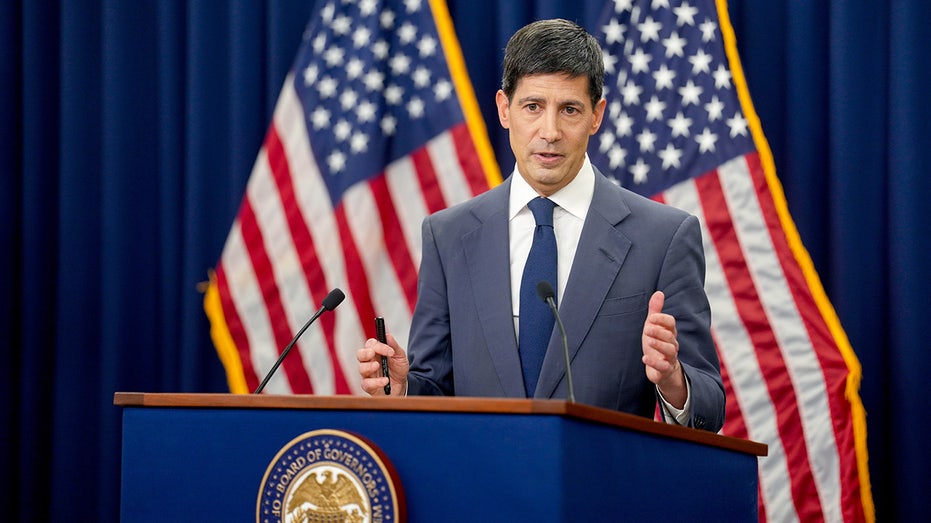
Fed Chair Kevin Warsh speaks at a press conference

Kevin Warsh, chairman of the US Federal Reserve, during a news conference following a Federal Open Market Committee (FOMC) meeting in Washington, DC, US, on Wednesday, June 17, 2026. Federal Reserve officials left interest rates unchanged and were sp (Al Drago/Bloomberg via Getty Images)

Lindsay Rosner, head of multi-sector fixed income investing at Goldman Sachs Asset Management, said that, “With another round of inflation data due before the September FOMC meeting, it remains all to play for, but today’s in-line report was a good start.”

“Contained core inflation adds to the encouraging signs in last month’s release of a moderation in underlying inflation, helping strengthen the case for a September hold,” Rosner added.

What does it mean for the Fed and interest rates?

The July CPI inflation report shifted the outlook for the Federal Reserve’s next monetary policy meeting, with traders now leaning more clearly toward a continued pause in interest rate moves.

According to the CME FedWatch tool, the market now sees a 61.9% probability of rates remaining at the current target range of 3.5% to 3.75%, up from 51.6% a day ago. Meanwhile, the odds of a 25 basis point hike declined to 38.1% from 48.4% yesterday.

Advertisement

GET FOX BUSINESS ON THE GO BY CLICKING HERE

Looking ahead through the end of the year, the tool continues to see a single 25-basis-point rate hike as the likeliest outcome with 45% odds, compared with a 28.9% chance rates remain at their current level and a 22.5% chance of two 25-basis-point hikes.

What does it mean for the market?

Continue Reading

Business

CoreWeave: What The Market's Not Telling You

Published

on

CoreWeave: What The Market's Not Telling You

CoreWeave: What The Market's Not Telling You

Continue Reading

Business

90,000 London jobs forecast to move to regions by 2031

Published

on

Manchester Named UK's Top City for Women Entrepreneurs Outside London

Up to 90,000 banking, legal and accountancy jobs based in London are forecast to move to other parts of the country over the next five years, bringing an estimated £9 billion boost to regional economies including Manchester, Birmingham and Leeds, according to analysis by Robert Walters, the listed recruitment company.

The recruiter estimates that figure could rise to £15 billion once the spending of relocated workers in their new home towns, and the extra work generated for local supply chains, is taken into account.

Robert Walters said more companies were looking to move some of their teams out of London because of the cost of running a business in the capital, where a shortage of prime office space has pushed rents to record highs.

The 90,000 roles represent 2.5 per cent of London’s overall workforce. Robert Walters predicts that up to 12,000 jobs will have moved out of the capital by the end of 2027, rising to 45,000 by 2029. Senior leadership teams are expected to remain in London, with companies instead bolstering junior ranks with local talent.

“Our forecast indicates a rebalancing of the scales towards stronger regional jobs growth over a widespread shift of business activity away from London,” said Jonny Bohane, of Robert Walters’ market intelligence team.

Advertisement

The analysis used past job relocations by major UK employers to establish a baseline, then combined Robert Walters’ own placement volumes with LinkedIn movement data to project regional hiring demand. The model also factored in office capacity, hybrid working levels, the depth of local talent pools, regional development initiatives and government decentralisation programmes.

The northwest of England, including Manchester and Liverpool, is forecast to be the biggest beneficiary, with 22,500 jobs expected to move there by 2031. Bohane’s team estimates this could inject up to £2.25 billion into the region’s economy, “reinforcing its status as the UK’s second hub for growth and innovation”.

About a fifth of the relocated positions, up to 18,000, could end up in the Midlands, principally Birmingham, bringing a £1.8 billion economic boost, the report said. Yorkshire stands to attract about 13,500 roles, adding £1.35 billion to the local economy. Most of the remaining 36,000 or so jobs are expected to move to other major regional cities including Bristol, Edinburgh, Glasgow, Cambridge, Newcastle, Liverpool, Reading and Cardiff.

Daniel Harris, UK managing director at Robert Walters, said he expects the trend to accelerate as “cost considerations remain high, and hybrid working allows organisations to build more geographically diverse teams”.

Advertisement

“Manchester, Leeds and Birmingham are the engine rooms of activity,” Harris said. “Over the last decade, these regional centres have become key career destinations for UK white-collar workers. They offer a significant presence of high-profile, multinational employers, vibrant cultural scenes and leisure opportunities, as well as a lower cost of living compared to the capital.”

Several large employers have already made similar moves. Birmingham is home to Deloitte’s second-largest UK office, Siemens moved its UK headquarters from Surrey to Manchester in 2019, and the Bank of England has committed to basing one in ten of its staff in Leeds by 2027, although only 156 employees had registered interest in transferring to its Leeds hub by late last year.

The forecasts align with the devolution agenda of Andy Burnham, the prime minister, who has promised to deliver “good growth in every postcode” and wants to reduce the country’s reliance on London, which accounts for about a quarter of the UK’s economic output. Last month he opened a northern branch of Downing Street, No 10 North, as part of his plans for wider political devolution and regional economic growth.

“The appeal of these regional cities shouldn’t be underestimated. But growth isn’t determined by businesses relocating or creating new jobs alone,” Bohane said. “When professionals move into an area, the benefits ripple through the local economy. Increased demand supports everything from transport and housing to cafés, co-working spaces and the wider network of local businesses that keep these cities running.”

Advertisement

Jamie Young

Jamie Young

Jamie Young is Senior Reporter at Business Matters, covering SME finance, employment law and Westminster policy since 2016. He has reported on every Budget and Autumn Statement since 2018, helped make sense of the ‘covid era’ and the bounce-back loan scheme from launch through the fraud investigations, and broke the magazine’s coverage of the 2024 late-payment reforms. He joined Business Matters straight from completing his BA in Administration from Exeter University and is NCTJ-qualified. Reach him at jyoung@cbmeg.co.uk

Advertisement
Continue Reading

Business

US inflation eases as food costs cool

Published

on

A woman looks at apples in a supermaket aisle.

US prices rose 3.4% in the year to July, slightly lower than the 3.5% in the year to June, new figures show.

Energy remained volatile as the Middle East conflict has continued, with gasoline up 24.6% over the year. The sharp rise reflects ongoing strains in global energy markets, even as overall energy costs dipped in July.

Month to month, inflation rose 0.1%, mainly due to an increase in housing costs, the Bureau of Labor Statistics said. Even small moves in rent can lift the overall headline figure as it makes up a large share of household spending.

Food prices rose only slightly in July and at a slower rate than in June, while energy prices fell, offering some relief for consumers.

Advertisement

Prices excluding food and energy rose 0.2% after staying flat in June, with medical care and airline tickets edging higher and car insurance continuing to fall.

The new Federal Reserve chair, Kevin Warsh, has said the central bank’s priority is to “keep inflation moving down” while avoiding unnecessary shocks to the economy.

President Donald Trump has also said inflation is still too high for many families, pointing to rent and grocery bills as signs that the cost of living remains a major concern.

Financial markets reacted calmly to the latest figures, with stocks little changed as the figures were broadly in line with market expectations.

Advertisement

Recent labour market concerns have also softened expectations for a rate increase, after July’s report showed a loss of jobs.

Continue Reading

Business

Home Depot CEO Ted Decker taking temporary medical leave

Published

on

Home Depot lays off 800 workers, announces 5 day return to office
Home Depot CEO Ted Decker to take temporary leave of absence

Home Depot CEO Ted Decker is taking a “temporary medical leave of absence” for the next few months and the company has appointed two top deputies to lead until he returns, the retailer announced on Wednesday. 

Ann-Marie Campbell, Home Depot’s senior executive vice president of U.S. stores and operations, will oversee day-to-day operations while finance chief Richard McPhail will run financial management and the Pro business, the company said. 

Lead independent director of the board, Greg Brenneman, will take over as chair of the board during Decker’s leave. The board of directors made the appointments but they were “in alignment with Decker’s recommendation,” the company said. 

“The Home Depot has the best management team in retail. Both Ann-Marie and Richard are strong, seasoned executives who have worked together for more than 20 years,” Brenneman said in a news release. “We are confident in Ann-Marie’s and Richard’s ability to lead the company during this time, and we look forward to Ted’s return.”

Advertisement

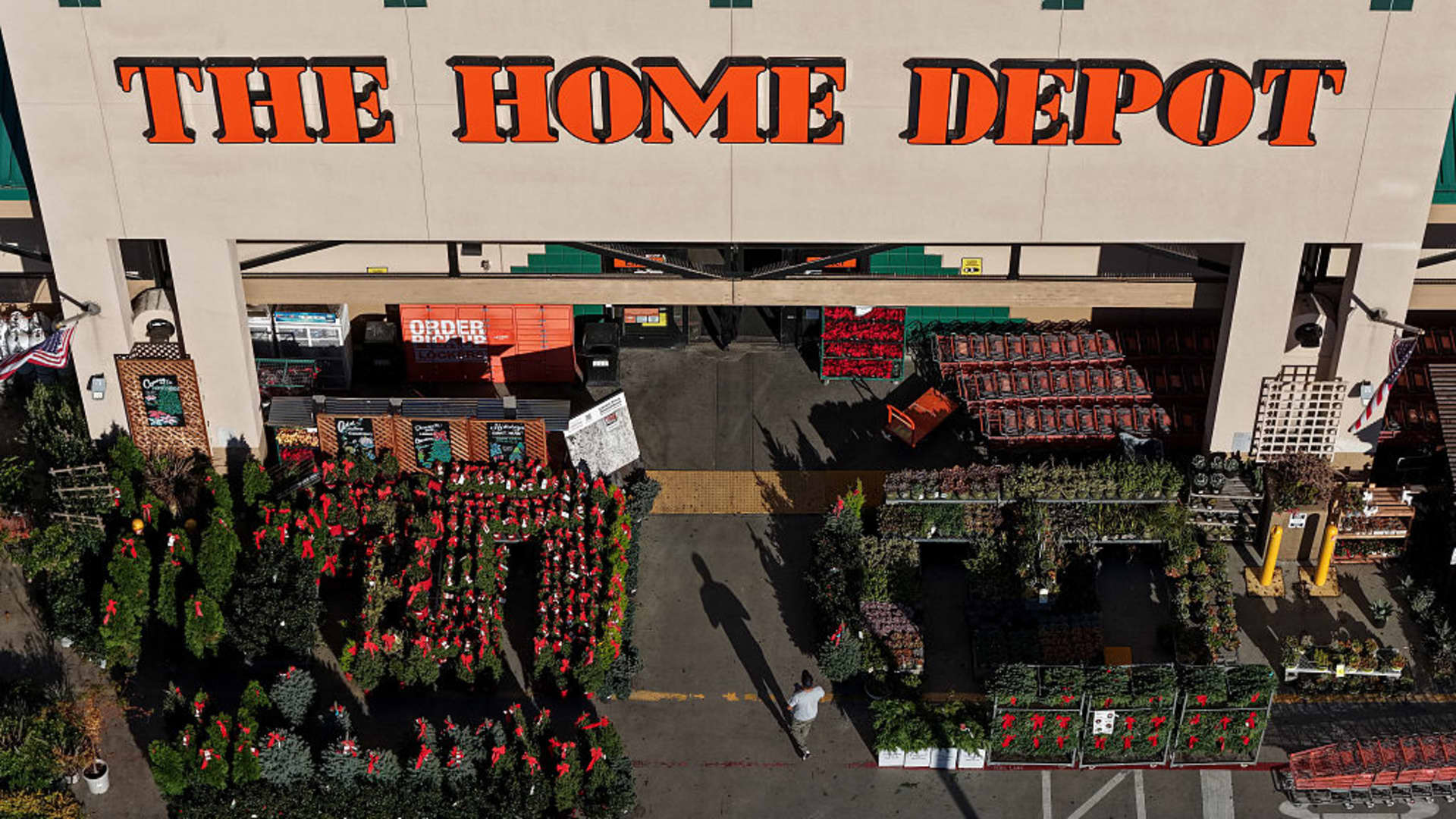
An aerial view of a Home Depot store on November 18, 2025 in San Rafael, California.

Justin Sullivan | Getty Images News | Getty Images

The announcement comes just under a week before the company is set to announce fiscal second quarter earnings on Tuesday. Home Depot didn’t provide further details on Decker’s condition.

Campbell, 61, has worked for Home Depot since 1985, starting as a cashier before working her way up to EVP of stores and operations. McPhail, 56, has been Home Depot’s chief financial officer since September 2019 and joined the company in 2005. 

Advertisement

Both of the executives aren’t receiving additional pay for taking on the increased responsibilities, according to a securities filing.

Choose CNBC as your preferred source on Google and never miss a moment from the most trusted name in business news.
Continue Reading

Business

Earnings call transcript: Jumia lifts margins in Q2 2026 despite revenue miss

Published

on


Earnings call transcript: Jumia lifts margins in Q2 2026 despite revenue miss

Continue Reading

Business

Definium Therapeutics’ LSD-Based Psych Drug Scores Again

Published

on

Definium Therapeutics' LSD-Based Psych Drug Scores Again

Definium Therapeutics (DFTX) unveiled the second of two positive Phase 3 studies for its LSD-based drug. The biotech stock surged on the results. Patients with generalized anxiety disorder, or GAD, showed a 5.4-point improvement compared with a placebo on the 56-point Hamilton Anxiety Rating Scale. That beat the 4-point improvement investors had been hoping to see, RBC Capital Markets analyst…

Copyright ©2026 Investor’s Business Daily, LLC. All rights reserved. 87990cbe856818d5eddac44c7b1cdeb8

Continue Reading

Business

Jamaican inspired food artisan firm looking to scale

Published

on

Business Live

The Pattyman has secured loaning funding from the Development Bank of Wales to expand

left to right Dylan Evans, Development Bank of Wales; Leroy Williams founder of the Pattyman.

A Cardiff-based artisan food firm is set to scale up production of its Jamaican-inspired produce to meet growing customer and trade demand.

Founded by Leroy Williams in 2021, the Pattyman began as a home-based venture inspired by his late parents -a father from the Windrush generation and a mother from the Valleys. Drawing on traditional family recipes,

Mr Williams set out to create a food business that celebrates both sides of his heritage through authentic Jamaican-inspired products influenced by Welsh culture and identity.

Operating from Tremorfa Industrial Estate, the business produces a range of artisan products including award-winning Red Pepper Jelly, sauces, relishes, jerk marinades, rum punch and Jamaican patties. The business supplies customers directly while also serving wholesale and trade markets across Wales and beyond.

Advertisement

At the heart of the brand is the Welsh concept of cynefin, meaning a sense of belonging and connection to place.

To support its growth it has secured a £50,000 microloan from the Development Bank of Wales. Mr Williams, said:“The Pattyman started as a way of honouring my parents and celebrating the cultures that shaped me. My dad came to Wales as part of the Windrush generation and my mum was from the Welsh Valleys, so I wanted to create something that brought those parts of my identity together.

“Food has always been about family, community and connection. Every recipe has a story behind it and every product reflects the traditions that were passed down to me.

“This investment gives us the platform to build on what we’ve achieved so far. It will help us increase capacity, support future growth and continue sharing the flavours and heritage that make the Pattyman unique with more customers.”

Advertisement

Dylan Evans, assistant investment executive at the Development Bank of Wales, said:”The Pattyman is a great example of a Welsh business with a distinctive proposition, strong values and clear growth ambitions. Leroy has built a brand that stands out through the quality of its products and the story behind them.

“Businesses like the Pattyman demonstrate how smaller investments can make a meaningful difference when it comes to increasing capacity, developing operations and supporting sustainable growth. We look forward to supporting Leroy as he takes the business forward.”

Financed by Welsh Government, the development bank’s £500m Wales Flexible Investment Fund supports Welsh businesses with terms of up to 15 years. Loans, mezzanine finance, and equity investments are available from £25,000 to £10m.

Advertisement
Continue Reading

Trending

Copyright © 2025