






Britons are being warned not to swim in the sea and keep their headlights on during tonight’s eclipse.
Tonight’s solar eclipse will see the moon pass in front of the sun, blocking out as much as 96 per cent of our solar system‘s star for watchers in the UK.
The first contact between the moon and sun in the sky will take place at around 6.08pm in parts of Scotland, before spreading southwards within minutes.
It will peak just under an hour later, at 7.05pm in Glasgow and Edinburgh, 7.10pm in Manchester and Liverpool, 7.11pm in Birmingham, 7.12pm in London, Bristol and Cardiff, and at 7.16pm in Cornwall.
The last total solar eclipse visible from the UK was in 1999 – although it was only visible in Devon and Cornwall, with the rest of the country experiencing only a partial eclipse. The next total eclipse in Britain will not take place until 2090.
While a once-in-decades event for British eclipse chasers, the near totality of tonight’s event comes with its fair share of risks with scientists warning everyone should be aware of.
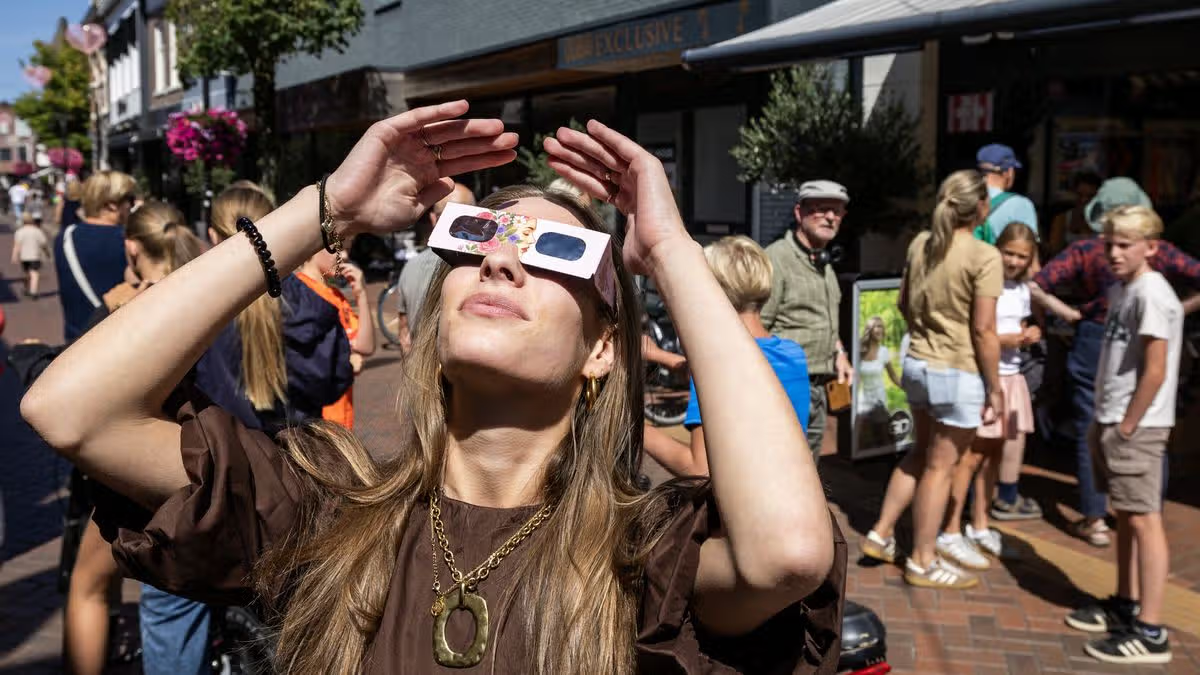
As well as the usual warnings of not looking directly at the sun – which can cause permanent eye damage – drivers and swimmers are also being told to exercise caution.
The RNLI has warned against swimming in the sea during this evening’s eclipse, saying it is dangerous.
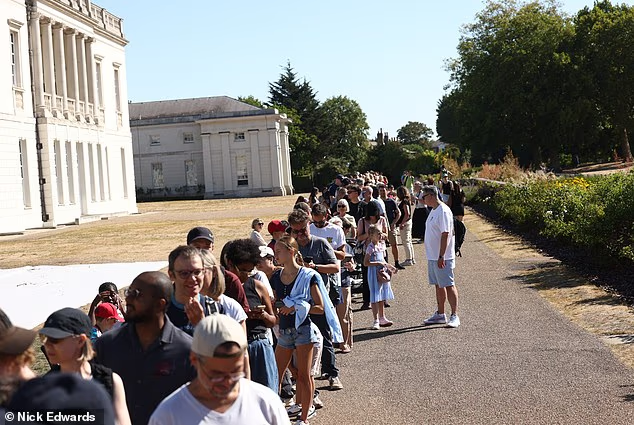
Members of the public queue outside the National Maritime Museum in Greenwich, London to buy eclipse glasses

The Greenwich Observatory sold out completely it eclipse glasses ahead of the event tonight

Camila Calero aged 7 from Greenwich poses with solar glasses ahead of tonight’s eclipse

A man in central London sells eclipse glasses and is surrounded by a mob hoping to get their hands on the elusive spectacles
The warning from the charity’s Jersey lifeboat station said it will not be safe to swim off the Channel Island during the eclipse due to strong tides. But this also applies to all of Britain’s coastline.
Solar eclipses always coincide with a new moon, meaning tides are at their strongest.
This is due to tides being affected by the moon’s gravitational pull on the Earth – tides are highest furthest from the moon as it circles the Earth, as the planet mass is denser than water, and therefore gets pulled slightly in the moon’s direction.
Tides are particularly dangerous during a new moon because the gravitational pull of both the moon and the sun align, meaning a stronger force known as a ‘spring tide’.
This is seen in higher tides as well as a greater difference between low and high tides than the rest of the month.
Higher tides make swimming in the ocean much more dangerous as they can cause stronger currents – although the strongest currents do not generally occur at high tide itself.
Brighton and Hove Council warns on its website: ‘Check the tide times and have awareness of spring tides, this is when tides are the strongest with the highest high tides and the lowest low tides.
‘The currents are extremely strong on spring tides which will make for a harder swim.’
People are also being urged to stay safe and watch the eclipse from land. In London, anyone planning to swim in Hampstead Heath’s ponds during the eclipse will be told to leave the water.
The City of London Corporation said: ‘If you want to observe the eclipse, leave the water and use certified eclipse glasses.’
Long queues formed at shops across the UK selling eclipse glasses on Wednesday morning, with many selling out completely.
Anyone driving during the eclipse is also being told to take extra precautions and be prepared to turn on their headlights.
The RAC said the action might be necessary for vehicles which do not have automatic lights, to boost their visibility to other road users.

People queue around the block from 6am to buy eclipse glasses after Howleys Toymaster shop collected 10,000 pairs from the Midlands
RAC head of policy Simon Williams said: ‘While total darkness is unlikely, those with vehicles that don’t have automatic headlights or daylight running lights may need to switch on their dipped beams to ensure they are easily visible to other road users.
‘The best advice to enjoy this rare event is to pull over somewhere safe and watch with specialist glasses.’
Mr Williams urged anyone driving in a westerly direction around the time of the eclipse to avoid being distracted.
He said: ‘Taking your eyes off the road even for a split second to try to catch a glimpse of the sun as it disappears behind the moon increases the risk of being involved in a collision, not to mention the potential for suffering long-term damage to your vision.’
The partial eclipse will likely result in light dimming and temperatures plunging temporarily.
Millions will pause to watch the natural phenomenon tonight but must ensure they are doing so safely.
Viewers should use special eclipse glasses bearing the ISO 12312-2 safety standard – and should be wary of purchasing them from non-reputable sources, as they could be fake.
Those unable to secure legitimate glasses can instead watch using a pinhole projector. These are easy to make at home and involve punching a small hole in a piece of cardboard and projecting the light through it onto another piece of card, or a surface such as the ground.
A colander can be used in the same way to view the eclipse.
There are also multiple livestreams, such as the one provided by the Royal Observatory Greenwich, which will show some of the best views around the country.







































You must be logged in to post a comment Login