
Crypto World
‘A High Potential for Abuse’: Plan to Equip ICE Agents With Electric Shock Gloves Draws Alarm From Former Officials


And in addition to being less effective, she also argues that the gloves would pose a greater threat of harming people who have encounters with immigration officials, while making it more difficult to hold officers accountable.
Unlike a taser, which incapacitates its target by temporarily locking up their muscles and inhibiting bodily control, the gloves “are only about pain compliance,” Schlanger says.
“They don’t incapacitate. They just hurt, and so what that means is that they’re not only used in a situation when a person is posing a risk to a law enforcement officer,” she says to TIME. “Pain compliance is a method of painful domination. Because of that, it’s very subject to being misused. It can be used in circumstances where it’s not needed. It can be used to excess.”
A taser is also more effective, safe, and humane, she contends, because it can be brandished from a distance before it is used.


Bank of Montreal has placed XRP-linked fund positions inside its massive investment portfolio, according to a new regulatory filing. The Canadian lender submitted a new Form 13F-HR report to the U.S. Securities and Exchange Commission, confirming the token’s presence for the first time. BMO’s total reportable holdings exceeded $303 billion at the close of June 2026, making the bank one of the largest institutions to disclose crypto-linked assets this quarter.
BMO’s XRP Fund Positions
The filing lists 323 shares of the Rex Osprey XRP ETF, a spot fund tied directly to the token’s price. It also reports 20 shares of the ProShares Ultra XRP ETF, a leveraged product designed for short-term moves. Both positions sit within BMO’s much larger equity and fund portfolio, and neither represents a significant share of total assets.
BMO did not buy XRP tokens directly on any cryptocurrency exchange, and it avoided that route entirely. Instead, the bank used regulated U.S. exchange-traded fund infrastructure to gain exposure, which kept the transaction within familiar securities rules. Regulated ETFs also let large institutions report holdings through standard filing channels, so compliance teams face fewer complications.
This structure additionally removes the need for BMO to store or secure the underlying token itself. Fund managers behind the ETFs handle custody, settlement, and daily price tracking on the bank’s behalf. As a result, BMO gains market exposure while transferring operational and security risk to a third party.
National Bank of Canada Set an Earlier Precedent
National Bank of Canada disclosed similar XRP exposure earlier in the same reporting period, and its filing arrived before BMO’s. The bank reported 3,848 shares of the Bitwise XRP ETF, a spot product tracking the token’s market price directly. That stake carried an approximate value of $330,000 at the time of filing.
Together, the two Canadian banks now share a nearly identical approach to digital asset exposure. Each institution enters the market through transparent, SEC-regulated fund vehicles rather than direct token purchases. Neither bank holds XRP on its own balance sheet outside these fund wrappers, and both rely on third-party custody.
This shared pattern points to a wider shift among Canada’s largest financial institutions. Big banks increasingly treat XRP funds as a small but manageable portfolio addition rather than a speculative outlier. Further disclosures from other Canadian lenders could follow in upcoming quarterly filings, given this emerging pattern.
A New Group of XRP Holders Emerges
Goldman Sachs previously held XRP positions worth more than $150 million, and that stake formed around the turn of 2025 and 2026. The firm reduced or fully exited those holdings by the summer of 2026, according to filing data. This shift effectively locked in profits and marked the end of Goldman’s early XRP position.
A newer group of midsize asset managers and family offices has since filled that space. Arax Advisory Partners, Gerber, Vista Finance, and Gallacher Capital now appear among the reported XRP fund holders. Each firm builds its own combination of spot and leveraged token exposure across different funds.
These newer holders typically split capital between traditional spot products and short-term leveraged instruments. The Franklin XRP Trust and Bitwise XRP ETF represent the spot side of that split. The ProShares Ultra XRP ETF, meanwhile, adds leveraged and more volatile exposure to the same overall strategy.
Because 13F filings carry a 45-day reporting delay, they offer only a snapshot rather than a live position update. Positions can change significantly between the reporting date and public disclosure, so current holdings may already differ. Even so, BMO’s filing confirms that XRP now sits on another major bank’s balance sheet, alongside a growing list of regulated institutions.

What if you have a fresh surgical site?
Coming home from surgery might be when you most want your furry friend on your bed. It’s also when experts want you to put a little distance between your pet and whatever is healing.
Dr. Ashley Drews, an infectious disease specialist at Houston Methodist, has seen patients develop infections after a pet licked an incision or surgical drain. “That’s not a good idea,” she says. Keep the site covered and your pet away from it.
Do you need to worry about the litter box?
Yes. Cats can shed Toxoplasma gondii in their poop, and the parasite can travel from the box to your hands to your mouth.
Yet the litter box isn’t the only way to get toxoplasmosis. The parasite can also turn up in soil, unwashed produce, contaminated water, and undercooked meat—especially pork, lamb, and venison.
“I think people are aware of the cat litter thing,” says Jill Roberts, a molecular epidemiologist and professor at the University of South Florida College of Public Health. Meat gets less attention. Roberts is so wary of undercooked pork that she skips thick cuts, which she worries are harder to bring to a safe temperature. “All I can see is Toxoplasma,” she says. You don’t have to give up pork chops, but you should use a food thermometer: Whole cuts of pork should reach 145°F. Once they come off the heat, wait at least three minutes before cutting or eating them; the meat’s temperature holds steady or continues to rise during that time, helping destroy pathogens.
Crypto World
XRP ETF have locked up over 992 million tokens, with XRP investors earning up to $10,000 daily
Disclosure: This article does not represent investment advice. The content and materials featured on this page are for educational purposes only.
Slower XRP ETF inflows have investors exploring alternative digital asset strategies, with EX DeFi promoting cloud mining as a way to participate in crypto.
Summary
- XRP ETF inflows fail to lift prices as investors explore alternative returns amid renewed market volatility.
- XRP struggles despite ETF inflows, while EX DeFi draws interest with cloud mining and diversified digital asset returns.
- Slowing XRP ETF inflows and price weakness push investors toward alternatives, with EX DeFi promoting cloud mining income options.
Since August 2026, seven U.S. spot XRP ETF have collectively locked up approximately 992.5 million XRP and attracted over $1.5 billion in inflows. Despite continued institutional capital entry, the XRP price has largely fluctuated between $1.01 and $1.12; this performance has fallen short of market expectations, further fueling investor caution.
While nearly 1 billion XRP is a substantial figure, it represents only about 0.99% of the total 100 billion XRP supply. By comparison, Bitcoin ETF held a larger share of the circulating supply at their peak. Furthermore, if ETF issuers acquire XRP primarily through over-the-counter (OTC) markets or large holders rather than buying directly from spot exchanges, the impact of these inflows on immediate buying pressure in the open market may be limited.
As spot ETF continue to see inflows, the XRP price has failed to rise in tandem—even dipping below $1 at one point to hit a recent low—resulting in a contraction of market capitalization. This disconnect between price performance and ETF inflows has led some XRP holders to worry about potential further price declines and to re-evaluate their investment strategies.
Meanwhile, an increasing number of XRP investors, concerned about price pullbacks, are exploring alternative ways to generate returns. They seek to mitigate the impact of short-term volatility while keeping an eye on XRP long-term prospects and generating consistent additional income from their holdings.
Against this backdrop, the EX DeFi cloud mining platform is attracting growing investor interest. Through cloud mining and yield aggregation mechanisms, users can explore diversified sources of digital asset returns, enhancing the utility of their assets without relying solely on price appreciation.
Despite slowing ETF inflows, institutional demand for allocation remains a focus
Although XRP ETF inflows have recently slowed, institutional interest in long-term XRP allocation remains robust. XRP is currently trading in the $1.01–$1.12 range, a price zone and subsequent capital flow pattern that the market is monitoring closely.
Meanwhile, regulatory policy remains a key factor influencing institutional capital inflows into XRP. As regulatory developments — such as the CLARITY Act — progress, further clarification of the digital asset regulatory framework could improve the environment for institutional participation in XRP ETFs, potentially re-accelerating capital inflows.
JPMorgan and Standard Chartered have previously projected potential capital inflows for XRP ETF. Should the regulatory environment continue to improve and institutional participation rise, there remains significant potential for growth in XRP ETF inflows.
Increased XRP volatility makes EX DeFi cloud mining an attractive option for investors
Amidst recent heightened volatility in XRP prices, a growing number of XRP holders are turning to the EX DeFi cloud mining platform. They seek to explore diversified yield-generating models while maintaining their long-term digital asset holdings.
Unlike high-volatility leveraged trading or strategies that rely solely on asset price appreciation, EX DeFi cloud mining offers a more convenient way to engage with digital assets. Users do not need to deploy specialized mining hardware or bear maintenance costs; instead, they simply select a hashrate contract that suits their needs to participate in mining services.
This model allows users to explore alternative applications for their digital assets while keeping an eye on XRP’s long-term market performance, thereby reducing reliance on a single strategy based on price appreciation.
About EX DeFi
Founded in 2021 and headquartered in the UK, EX DeFi operates in compliance with European regulatory frameworks such as MiCA and MiFID II. The platform continuously enhances transparency, operational standards, and user protection mechanisms, striving to provide a seamless and convenient digital asset service experience.
The platform employs a multi-layered security architecture, featuring:
Annual financial and security compliance audits conducted by PwC;
Digital asset custody insurance provided by Lloyd’s of London;
Enterprise-grade cybersecurity protection from Cloudflare and McAfee®;
Multi-layer encryption architecture, AI-driven risk management, and two-factor authentication (2FA).
How to earn daily rewards with EX DeFi
1. Register an Account
Visit the official EX DeFi website and sign up for free using an email address. New users receive a $17 reward.
2. Deposit Cryptocurrency
Supports a wide range of mainstream digital assets, including XRP, BTC, ETH, USDT, LTC, USDC, BCH, DOGE, and SOL, offering users flexible deposit options.
3. Select a Mining Contract
Choose a mining plan that suits a particular budget. The minimum deposit is $100. Mining begins automatically once the plan is activated.
4. Receive Daily Rewards Automatically
The platform provides 24/7 intelligent hash rate services, with earnings settled automatically every 24 hours. Users can easily earn passive income without the need to manage mining hardware themselves.
Examples of popular mining contracts
BTC (Beginner Trial Contract): Investment $100, Duration: 2 days, Daily Return: $4, Total Profit: $100 + $8
DOGE (Golden Shell Mini-Doge Pro): Investment $500, Duration: 6 days, Daily Return: $6.5, Total Profit: $500 + $39
BTC (Canaan-Avalon-A1466): Investment $1,000, Duration: 10 days, Daily Return: $13.4, Total Profit: $1,000 + $134
LTC (Bitmain Antminer L7): Investment $5,000, Duration: 20 days, Daily Return: $73.5, Total Profit: $5,000 + $1,470
BTC (Bitmain S19K-Pro): Investment $10,000, Duration: 30 days, Daily Return: $161, Total Profit: $10,000 + $4,830
Click here to visit the official EX DeFi website for more details on mining contract plans.
Conclusion
Although capital inflows into XRP ETF have slowed recently, institutional allocation demand, progress in regulatory policies, and the development of the XRP ecosystem remain key factors driving market attention. Short-term price movements may still be influenced by capital flows, the macroeconomic environment, and market sentiment.
For long-term XRP holders, while paying attention to ETF fund flows and price changes, exploring more diversified ways to participate in digital assets has also become an important approach to managing market volatility. EX DeFi cloud mining service provides investors with a more convenient way to participate in the digital asset ecosystem and obtain stable passive income.
Disclosure: This content is provided by a third party. Neither crypto.news nor the author of this article endorses any product mentioned on this page. Users should conduct their own research before taking any action related to the company.


Securitize reported record average tokenized assets under management of $4.3 billion for the second quarter, up 16% from a year earlier, but revenue fell 5% to $14.4 million and its net loss widened to $21.7 million in its first results released after it began trading publicly. Tokenization revenue… Read the full story at The Defiant


Ripple has voted for the fixCleanup3_3_0 amendment as the proposal has secured support from 8 of 35 trusted XRP Ledger validators during its early voting stage.
Summary
- Ripple has backed fixCleanup3_3_0, a package of fixes included with xrpld version 3.3.0.
- The amendment currently has 8 of 35 validator votes, leaving it below the activation threshold.
- Proposed changes cover vaults, lending, AMMs, Checks, the permissioned DEX, and pseudo-accounts.
- XRP traded near $1.06 as derivatives data showed uneven positioning across major exchanges.
XRP Ledger fixCleanup vote remains below activation level
XRPL validator voting data cited by community tracker CryptoRednirav shows that Ripple has cast a “yes” vote for fixCleanup3_3_0, taking support for the amendment to 8 of the 35 validators on the default Unique Node List.
The vote gives the maintenance package an early endorsement from one of the XRP Ledger’s main contributors, but Ripple cannot approve the amendment alone. Validators make their own decisions, and the proposal must maintain support from more than 80% of trusted validators for two consecutive weeks before it can take effect on the mainnet.
With 35 validators in the default configuration, more than 80% support would require at least 29 affirmative votes. The current eight votes do not start the two-week activation period, and no mainnet activation date has been set.
Unlike a standalone feature proposal, fixCleanup3_3_0 groups several corrections under one amendment. The official XRPL release notes describe fixes involving Single Asset Vaults, the Lending Protocol, Automated Market Makers, the permissioned decentralized exchange, Checks, and pseudo-accounts.
Among the proposed changes, developers have unified freeze and deep-freeze checks for transfers involving pseudo-accounts. The affected transaction types include VaultDeposit, VaultWithdraw, AMMDeposit, AMMWithdraw, LoanBrokerCoverDeposit, and LoanBrokerCoverWithdraw.
Other corrections would change how CheckCash and CheckCancel handle an all-zero CheckID, prevent invalid actions involving pseudo-accounts, and fix hybrid offers that disappear from a permissioned order book when an account loses access to its permissioned domain.
AMM-related changes address precision loss during deposits, withdrawals, and clawbacks. The package also prevents an AMM from being deleted through an unauthorized transaction type and changes the response produced by a specific AMMWithdraw calculation that would otherwise divide by zero.
Version 3.3.0 places six amendments before validators
Released on Aug. 6, xrpld version 3.3.0 contains the code needed for fixCleanup3_3_0 and five feature amendments, though installing the software does not activate any of them.
As crypto.news reported on Aug. 7, the other proposals are ConfidentialTransfer, BatchV1_1, DynamicMPT, PermissionDelegationV1_1, and Sponsor. Each amendment has a separate function and must pass through the validator process before its rules become part of the mainnet.
ConfidentialTransfer would add private transfers for Multi-Purpose Tokens by hiding balances and transfer amounts from the public while keeping them verifiable on the ledger. Authorized parties, including issuers or auditors, could still access information required for compliance under the proposal’s design.
BatchV1_1 would let an account package as many as eight inner transactions together, supporting uses such as atomic swaps in which all transaction steps succeed or fail as a group. The revised amendment replaces an earlier Batch version that was disabled after developers found a security problem.
PermissionDelegationV1_1 also replaces an earlier proposal. Its rules would let an account give another account limited transaction authority without sharing control of the main private key.
DynamicMPT would allow issuers to designate selected Multi-Purpose Token properties as changeable when creating an asset. Sponsor, meanwhile, would let companies or other entities pay transaction fees and reserve requirements for users while leaving control of the users’ accounts and keys unchanged.
Alongside the amendment code, version 3.3.0 has retired Clawback, fixDisallowIncomingV1, fixInnerObjTemplate, fixNFTokenReserve, and fixUniversalNumber. Retirement removes the older amendment gates after the underlying rules have operated for an extended period; it does not remove the user-facing functions from the ledger.
The release also includes changes to node synchronization, online deletion, ledger-delta assembly, and subscription cleanup. Developers added more tests, adopted the C++23 standard, and changed the server’s system service settings to allow additional time for a controlled shutdown.
Node operators have been asked to install version 3.3.0 to maintain service continuity. A server that does not recognize an activated amendment can become amendment-blocked, meaning it can no longer determine the valid state of the ledger.
Vault and lending fixes accompany separate feature votes
Precision and rounding corrections for Single Asset Vaults and the Lending Protocol form one part of fixCleanup3_3_0, while the vault and lending systems themselves remain subject to separate amendments.
Ripple recently backed both proposals, voting in favor of XLS-65 for Single Asset Vaults and XLS-66 for the Lending Protocol. Voting data published on Aug. 10 placed support near 40% for XLS-65 and above 37% for XLS-66, leaving both below the required supermajority.
Single Asset Vaults would pool one type of token, which could include XRP, Ripple USD, or another XRPL-issued asset. Depositors would receive shares representing their claims on the assets held by a vault.
Liquidity from those vaults could then fund fixed-term loans through XLS-66. Rather than requiring every borrower to post assets worth more than the loan, the proposed framework would rely on off-chain credit checks, compliance reviews, and underwriting. XRPL would record and enforce the agreed loan terms, including interest, repayments, and defaults.
Security firm Halborn completed a lending protocol re-audit in June. The firm reported no critical or high-risk findings after reviewing transaction checks, accounting rules, access controls, parameter limits, and state consistency.
Halborn identified five findings: one medium-risk issue, two low-risk issues, and two informational items. Its report said Ripple had addressed, accepted, or acknowledged all five, including a vault asset-limit bypass involving loan interest and a missing freeze check in LoanBrokerSet.
For U.S. institutions, ledger-level lending would not replace obligations arising from securities, lending, sanctions, consumer-protection, or anti-money-laundering rules. Participating firms would still need to conduct the legal and compliance checks applicable to their activities before using the ledger for execution and record-keeping.
XRP rebounds as exchange positioning remains mixed
XRP (XRP) traded near $1.06 at publication after recovering from the $1 area, according to current market data. The token had gained almost 3% over the preceding 24-hour period, while trading volume increased by about 16%.
CoinGlass data showed a less uniform response in the derivatives market. Total XRP futures open interest fell by more than 0.65% within one hour after recently moving above $2.70 billion, indicating that some leveraged positions had been closed during the rebound.
Exchange-level figures also differed. CME XRP futures open interest remained 1.31% higher over 24 hours, while open interest declined on Binance, OKX, Bybit, and several other crypto exchanges.
The distinction is relevant to American investors who obtain XRP exposure through regulated products rather than holding the token directly. Recent XRP ETF figures covered by crypto.news showed that Canary’s U.S.-listed fund lost $81.6 million in net assets even as share activity added $82 million, with $159.7 million in unrealized XRP depreciation accounting for the difference.
Uniswap founder Hayden Adams said the team renounced all creator fees from “Uniswap employee testing” after tokens created during Pools testing were discovered, redirecting the fees to an automated buy-and-burn contract. TradePools said Wednesday that test tokens made while building Pools no longer… Read the full story at The Defiant
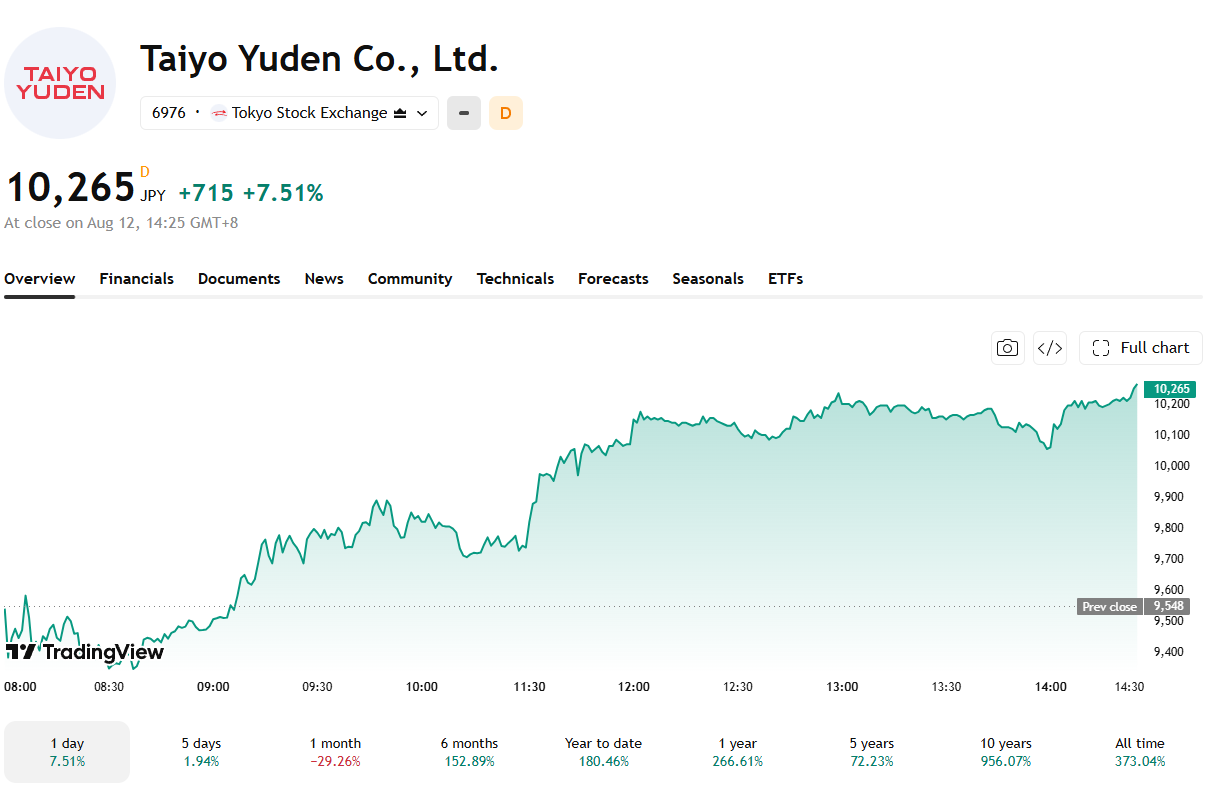
Taiyo Yuden stock rose 7.51% on Wednesday after Situational Awareness disclosed a stake in the Japanese capacitor maker.
The filing looked like fresh buying, but the hedge fund had already sold most of its position weeks earlier.
Situational Awareness’s Taiyo Yuden Stake, Explained
Situational Awareness filed nine change reports on August 12. The AI-focused hedge fund is run by Leopold Aschenbrenner, a former OpenAI researcher. However, the filings came more than a month after the original disclosure deadline.

The reports cover trades made between June and August. Situational Awareness first crossed the 5% disclosure threshold on June 29 with a 5.99% stake. The fund then added shares through mid-July, and its stake peaked at 16.61% on July 22.

The position reversed almost immediately after that. The stake fell to 15.22% by July 30. By August 3, it had dropped to 4.41%, below the reporting threshold.
Margin Calls Forced the Sale
The reversal traces back to Situational Awareness’s own losses, not to Taiyo Yuden’s business. A selloff in AI infrastructure stocks, including SK Hynix and CoreWeave, hit the fund hard in July.
Margin calls then forced the highly leveraged fund to sell its public equity holdings. As a result, assets under management fell from $45 billion to about $10 billion.
Citadel’s fund complex, led by Ken Griffin, bought a large share of the distressed positions at a discount.
A Bounce That May Not Last
Taiyo Yuden makes multilayer ceramic capacitors used in AI data centers. The stock had already climbed about 540% in 2026 through July 1. It then fell on broader worries about AI-related stocks, according to Bloomberg.
Ikuo Mitsui, a fund manager at Aizawa Securities Co., told Bloomberg:
“The stock appears to be reacting positively, at least temporarily, to the large-shareholding report, as the recent correction pushed the share price to less than half its July peak, making the valuation look attractive.”
He added that concerns over MLCC supply and demand could limit how far the rally runs from here.
The episode highlights a lag between headlines and hedge fund filings. Retail traders reacting on August 12 bought into a stake the fund had already cut below 5%.
The post Taiyo Yuden Pops 7% on Situational Awareness Stake, But the Fund’s Already Sold appeared first on BeInCrypto.
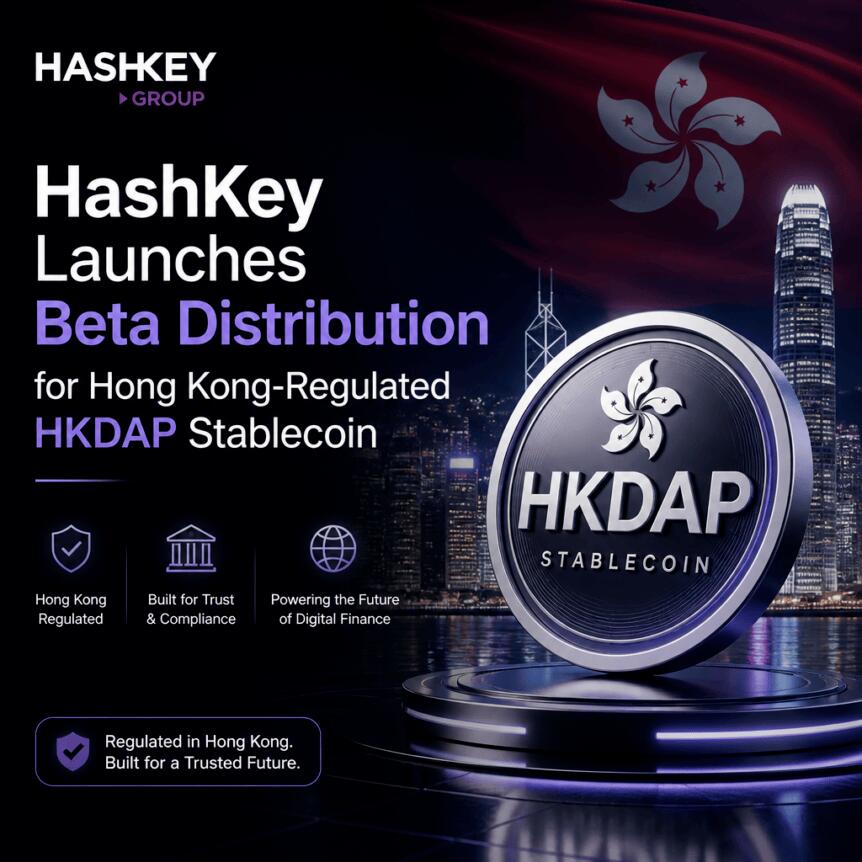
Anchorpoint Financial, a Hong Kong-licensed stablecoin issuer, is widening the distribution of its Hong Kong dollar stablecoin, HKDAP, by adding HashKey Exchange as an authorized distributor. The move comes as Hong Kong’s regulated stablecoin framework continues to roll out, with market participants positioning tokenized HKD for institutional and professional access.
In a Tuesday announcement, the companies said the arrangement is part of a beta rollout. Eligible institutions and professional investors can access HKDAP via HashKey and other supported channels. HashKey also stated that it has completed its first HKDAP minting and redemption transaction with eligible clients, including fiat on- and off-ramping.
Key takeaways
- Anchorpoint Financial has appointed HashKey Exchange as an authorized distributor for its Hong Kong dollar stablecoin, HKDAP.
- The partnership begins with a beta rollout for eligible institutions and professional investors, with HashKey already completing an initial mint and redemption.
- Anchorpoint and HashKey plan to expand distribution over time and look at additional HKDAP use cases.
- Hong Kong dollar stablecoins are still an early-stage segment, and reliable public data on their adoption remains limited.
HKDAP distribution goes through HashKey
HashKey’s role focuses on making HKDAP available to users that meet the eligibility requirements for the beta program. The announcement highlights operational readiness—HashKey said it has already carried out its first HKDAP minting and redemption cycle with eligible clients and incorporated fiat on- and off-ramping.
For institutions, that plumbing matters. Minting and redemption are often where operational friction concentrates, particularly when regulated stablecoins need to integrate with traditional financial rails. By completing an initial transaction, HashKey signals that it is prepared to support at least the early workflow for converting fiat into HKDAP and back out again.
Anchorpoint said the distribution program will be expanded gradually, and the companies plan to explore broader applications for HKDAP beyond basic issuance and redemption.
A regulated Hong Kong dollar stablecoin built for “tokenized money”
HKDAP—short for “HKD At Par”—is designed to function as a regulated tokenized Hong Kong dollar for payments and other financial transactions. Anchorpoint Financial is a joint venture established by Standard Chartered Bank (Hong Kong), HKT and Animoca Brands.
Anchorpoint was among the first firms to receive a stablecoin issuer license from the Hong Kong Monetary Authority, reflecting how the issuer-side licensing regime is beginning to translate into real distribution relationships. The company was established in April 2025, two months after Standard Chartered and Animoca Brands, together with HKT, announced plans to launch a Hong Kong dollar-backed stablecoin, according to earlier coverage from Cointelegraph.
As more authorized players enter the system, the market’s ability to scale will depend not only on licenses, but also on how quickly distributors and platforms can onboard eligible customers and run mint/redeem operations reliably.
From access to use cases: payments, settlement, and tokenized finance
The companies said they intend to explore additional uses for HKDAP as distribution grows. Their stated priorities include cross-border payments, settlement, and tokenized finance.
Those directions are consistent with what many regulated stablecoin initiatives aim to accomplish: moving tokenized fiat from “on-chain custody” toward transactional utility. Cross-border payments and settlement, in particular, are areas where stablecoins are often evaluated for faster settlement cycles and improved interoperability—though real adoption will depend on the readiness of counterparties, compliance processes, and integration details with existing payment and banking infrastructure.
At this stage, Anchorpoint and HashKey’s focus appears intentionally phased: begin with beta access for eligible participants, validate minting/redemption processes, and then widen distribution while testing expanded functionality.
How big could Hong Kong’s stablecoin segment become?
Hong Kong dollar-backed stablecoins could eventually develop into a meaningful market, but current visibility is limited. A 2025 Citi report cited in the announcement estimated that circulation could reach $16 billion after the introduction of the city’s stablecoin licensing regime. Still, the broader picture remains uncertain.
For now, US dollar-pegged stablecoins dominate global circulation, and synthetic stablecoins represent a smaller, emerging category. Reliable data on circulation and adoption for Hong Kong dollar-backed stablecoins is described as limited, making it difficult to assess where the market stands today or how quickly it could grow.
Meanwhile, stablecoin activity overall continues at high volume. Bernstein reported that the combined adjusted transaction volume of USDC and USDt reached roughly $3.8 trillion in the first quarter of the year, underscoring the depth of stablecoin usage even as a narrower regulatory submarket—HKD-pegged tokens—finds its footing.
This contrast matters for investors and operators: it suggests demand for stablecoin settlement and transfer mechanics is already established globally, but the local HKD variant still needs to build liquidity, distribution breadth, and compatible use cases to convert regulatory momentum into sustained adoption.
As HashKey and Anchorpoint expand distribution beyond the beta phase, the key signals to watch are onboarding speed for eligible institutions, the consistency of minting and redemption throughput, and evidence that HKDAP use cases—especially cross-border payments and settlement—are moving from plans to repeatable production workflows.

The US Bureau of Labor Statistics just published the Consumer Price Index data for July, which has essentially matched most expectations, with the regular CPI coming in at 3.3% to 3.4%.
The substantial increase in the CORE CPI of 2.5% was official, given the decline in June due to the decreasing energy costs at the time, which were considered misleading given the brief de-escalation in the Middle East war.
Reports ahead of the CPI release claimed that a modest increase would continue to reduce the chances for a Federal Reserve rate hike in September.
This narrative received further validation at the end of the previous business week when the US jobs report showed a substantial decline in non-farm payrolls, starkly contrasting with market expectations.
Although reality matched expectations for the July data, bitcoin’s price reacted with a small price decline. The asset had recovered from yesterday’s low at 63,200 and jumped to $64,400 minutes before the data was released.
However, it was stopped there, and its initial reaction has been quite modest, as it has dipped by a few hundred dollars. Nevertheless, analysts remain adamant that the CPI data is key to understanding the cryptocurrency’s next big move.
The post Bitcoin Price Holds Steady as US July CPI Comes in as Expected appeared first on CryptoPotato.
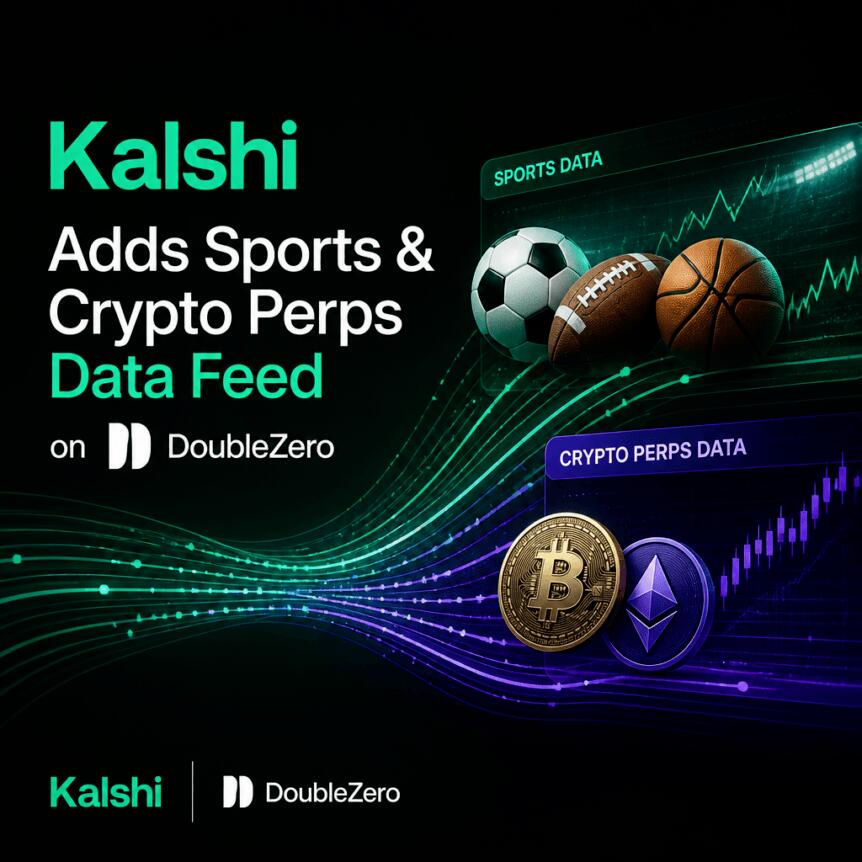
Prediction market operator Kalshi is expanding how its real-time trading information reaches market participants by partnering with DoubleZero Edge for distribution via DoubleZero’s dedicated fiber network. In a Wednesday announcement shared with Cointelegraph, the companies said Kalshi’s live order book feed for certain sports and crypto perpetuals event contracts will be made available to new DoubleZero Edge subscribers.
The integration targets a long-standing gap in prediction market infrastructure: access to fast, machine-readable market data. Rather than building bespoke systems that reconstruct order books from raw exchange screens or parse multiple API endpoints, subscribers can consume a dedicated data feed designed to deliver order book data directly.
Key takeaways
- Kalshi’s real-time order book for sports and crypto perpetuals event contracts is now distributed through DoubleZero Edge’s fiber network.
- DoubleZero Edge positions the feed as a way to avoid rebuilding infrastructure from order books and API responses.
- Sports appears as one of Kalshi’s biggest demand categories, with crypto also ranking among the top segments by weekly notional volume.
- The rollout arrives as Kalshi remains involved in ongoing regulatory disputes over whether its event contracts are sports wagers or CFTC-regulated derivatives.
Dedicated fiber distribution for prediction market order books
Kalshi said the new offering makes it the first prediction market to distribute its live order book data through DoubleZero Edge’s dedicated fiber network for sports and crypto perpetuals event contracts. For institutional and technical users, the practical value is straightforward: lower latency pathways and a consistent, machine-friendly way to ingest market depth and price levels as trades happen.
DoubleZero co-founder Austin Federa described data access as a core component of market structure, arguing that infrastructure has lagged behind “new financial paradigms” that include crypto, perpetuals, and prediction markets. The pitch here is that the industry has continued to grow without matching the data distribution capabilities usually expected in traditional, high-speed markets—especially for participants who run automated strategies.
Where Kalshi’s volumes come from
Kalshi’s focus areas are not limited to crypto. According to Dune data cited in the announcement, sports accounts for 37.8% of Kalshi’s weekly notional volume, while crypto ranks third at 20.3%. Exotics, meanwhile, lead the mix at 39.4% of weekly notional trading volume.
Those proportions matter because they suggest the network-based data distribution may reach more than a niche slice of traders. A dedicated feed for sports-linked markets could be particularly relevant for participants who need to track changing probabilities and liquidity across event timelines, while crypto perpetuals event contracts add additional complexity that favors fast data ingestion.
Broader visibility, including ChatGPT search
The order book distribution comes amid increasing visibility of Kalshi markets in mainstream discovery channels. In early July, Cointelegraph reported that OpenAI began displaying Kalshi’s prediction market odds for FIFA World Cup matches in ChatGPT search results.
While that development relates more to consumer-facing access than to institutional infrastructure, it underscores how prediction markets are becoming more embedded in the information layer that users interact with—creating more pressure for robust, reliable data pathways underneath.
Regulatory pressure remains a central backdrop
Kalshi’s sports event contracts continue to sit at the center of a regulatory dispute involving state regulators and the U.S. Commodity Futures Trading Commission (CFTC). The disagreement centers on how the contracts should be classified.
State authorities argue the products are essentially wagers subject to state gambling laws. Kalshi and the CFTC, by contrast, contend that these event contracts are derivatives that fall under the CFTC’s exclusive jurisdiction.
The legal conflict has already produced concrete restrictions. On June 29, a Michigan judge temporarily blocked Kalshi from allowing residents to place bets on sporting events. Earlier, Kentucky sued five prediction market platforms—including Kalshi and Polymarket—accusing them of operating unlicensed sports betting platforms. Nevada also issued a temporary ban on Kalshi earlier in March.
Meanwhile, the CFTC has taken an offensive stance as well, suing several states—arguing that federally regulated event contracts should fall under its authority. According to earlier Cointelegraph reporting, the CFTC’s legal actions are aimed at reinforcing the agency’s jurisdiction over products it views as derivatives.
In that context, better market data infrastructure may help participants operate more effectively, but it does not resolve the classification question that determines where and how these markets can be offered. Traders and developers looking at the space may therefore see two parallel tracks: technical maturation through data distribution, and legal outcomes that determine geographic reach.
Looking ahead, readers should watch whether improved access to real-time order book feeds accelerates participation from professional market makers and automated traders—and whether regulatory decisions continue to constrain Kalshi’s ability to offer sports-linked contracts in key jurisdictions.

Child in hospital after air ambulance called to Redcar crash

Kulicke and Soffa: AI Packaging Is Creating A New Growth Engine

BMO Reveals XRP Fund Stake Inside $303 Billion Portfolio


-

 Fashion5 days ago
Weekend Open Thread: Mattifying Sunscreen
-

 Fashion6 days ago
Frugal Friday’s Workwear Report: Cap-Sleeve Pointelle Crewneck Sweater
-

 News Videos5 days ago
Can Astrology Help Find Gold and Silver Trends? A Financial Astrology Guide
-

 Sports7 days ago
Jordan Coyle & Cordiamo take Laya Arena Stakes at RDS
-

 Politics7 days ago
Reform UK And Greens Sink To Lowest Favourability Ratings To Date
-

 Tech5 days ago
Rinn Pharma & Biopharma to join NordicPharmaTrain network
-

 Business4 days ago
How to Start a Cleaning Business: A Step-by-Step Guide
-

 Business4 days ago
Datadog: Best Of Breed For Multiple Reasons
-

 Business4 days ago
BDC Weekly Review: Private BDC Q2 Numbers Are Strong
-
 NewsBeat1 day ago
Communication cards help banking customers access services or report scams
-
Sports7 days ago
Spider-Man: Brand New Day ending explained: Is Peter Parker alive?
-

 Tech6 days ago
Price Hikes May Be Coming for PC Motherboards Next
-

 Business6 days ago
Brightwater secures funding for WA-first dementia projects
-
 Crypto World7 days ago
Galaxy Digital Stock Slides 14% as Crypto Prices Hit Earnings
-
 Business2 days ago
Oil Price Today (August 11): Crude oil rises to $88 after Trump’s compensation demand dents Hormuz opening. Here’s why
-

 Business7 days ago
SpaceX Shares Plunge 13.6% After First Public Earnings as AI Capex Surge and Lockup Spark Selloff
-

 Tech7 days ago
How to Use Your Phone as a Webcam on PC and Mac (2026)
-

 Tech6 days ago
Hackers just broke into America’s tap water. How scared should you be?
-

 Fashion5 days ago
Weekly News Update, 8.6.26 – Corporette.com
-

 Business6 days ago
Aussie shares lose steam to close record-breaking week
You must be logged in to post a comment Login