
Business
What Happens to Business Technology When It Reaches End of Life?

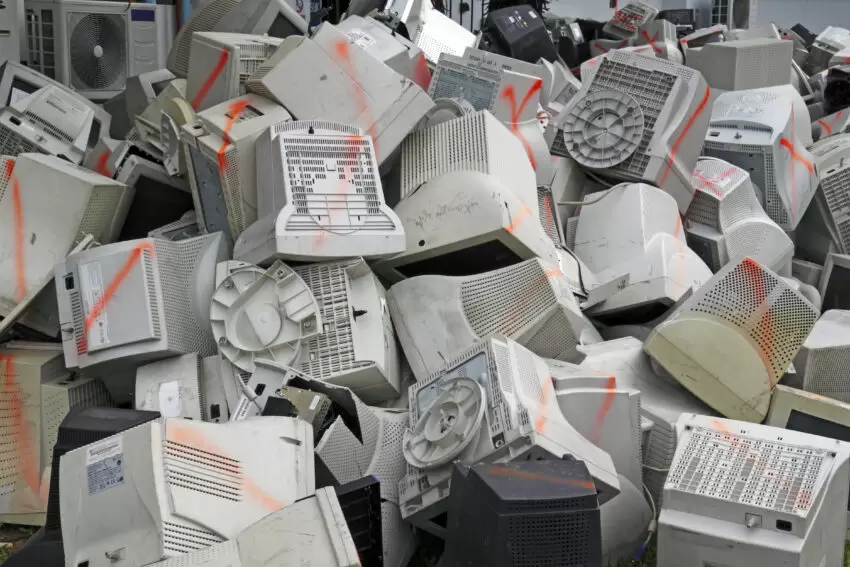
Most businesses, which includes modern ones, invest heavily in technology, but they rarely plan for its eventual and inevitable exit strategy.
Generally speaking, companies spend millions on the latest hardware while overlooking the critical phase when those assets reach their end.
This lack of planning creates a massive gap in the operational lifecycle of many otherwise successful global organizations.
Decisions made at the end of a device’s life carry real business risks that can impact the bottom line financially and environmentally speaking.
Understanding the journey of retired technology is essential for maintaining a secure and efficient corporate environment in 2026 and beyond.
An Overlooked Business Question
The primary focus of most IT departments is usually on procurement, installation, and the ongoing maintenance of new systems.
Consequently, the question of what happens to old hardware often remains unanswered or not even discussed, while the storage rooms remain full.
When end-of-life decisions for old technology equipment are ignored, the business exposes itself to vulnerabilities that are difficult to manage later on.
These overlooked assets represent more than just physical clutter; they are potential liabilities waiting to happen for the firm.
A proactive approach to technology retirement ensures that every piece of hardware is accounted for during its transition, and by doing it this way, future problems are prevented.
The Business Risks of Poor IT Asset Disposal
Poor IT asset disposal practices can lead to devastating data breaches and heavy regulatory fines for the organization as well as sustainability issues with customers.
If a hard drive containing sensitive corporate data is simply thrown away, the security risk could be immense for the company and its clientele.
Reputational damage from a single leaked document can haunt a company for many years after the initial incident.
Furthermore, unmanaged assets lead to financial loss through wasted storage space and unnecessary insurance costs that have to be covered by the business.
Failing to track retired equipment can lead to losing control over the very data that defines your competitive market edge, putting your company at risk once again.
IT Asset Disposition as an Operational Discipline
Forward-thinking companies are now treating asset retirement with the same rigor and discipline as they treat new procurement.
Strategic leaders recognize that global itad services are a vital component of a comprehensive corporate risk management framework.
By formalizing the disposal process, businesses can ensure that security protocols are followed consistently across all global locations.
This operational discipline shifts the focus from simple trash removal to a sophisticated and highly secure workflow.
ITAD belongs in board-level risk discussions because it directly impacts the long-term survival and health of the enterprise.
Financial Recovery Through Asset Reuse and Remarketing
Value recovery, reuse, and remarketing from surplus and retired equipment is a major benefit of a well-executed IT lifecycle management plan.
Many devices that are at the point of being retired still hold significant market value even if they no longer meet the specific needs of your organization.
Working with experts allows businesses to remarket these assets and reclaim at least a portion of their original capital investment.
This process of remarketing and reuse effectively reduces the total cost of ownership for each and every piece of technology purchased by the company.
Financial recovery turns an expensive disposal problem into a potential source of unexpected revenue for the IT budget, and then we have not even touched the subject of sustainability.
Compliance, Audits, and Accountability
Meeting data protection and environmental regulations is a non-negotiable requirement for any modern business operating in today’s market.
Professional international data center decommissioning services provide the necessary expertise to navigate complex local and global legal standards.
These services ensure that hardware is recycled responsibly and that all toxic components are handled with care.
Documentation and reporting are essential for proving accountability during internal audits or external government inspections of your records.
A certified paper trail protects the company by demonstrating a commitment to ethical and legal disposal practices everywhere.
Aligning IT Lifecycle Strategy with Business Growth
A robust IT lifecycle strategy supports major business milestones such as mergers, large-scale upgrades, and digital transformation initiatives.
As companies grow, they must ensure scalability without creating dangerous security gaps in their aging hardware infrastructure.
When two organizations merge, the consolidation of IT assets requires a clear plan for disposing of redundant systems.
Proper decommissioning allows for a smooth transition to newer platforms while maintaining the highest level of data integrity.
Growth in a business should never come at the expense of security when dealing with the physical layer of your technology.
Conclusion: Smarter End-of-Life Decisions Build Stronger Businesses
Responsible IT lifecycle planning is a leadership issue that requires attention from the very top of the organization.
Smarter decisions regarding end-of-life technology help build stronger, more resilient businesses that can withstand modern security threats.
By integrating global itad services into your operations, you protect your data, your reputation, and your financial health.
Every piece of retired hardware should be viewed as a final opportunity to demonstrate corporate responsibility and excellence.
Making the right choice today ensures that your technology legacy remains a positive asset for the future.



Fuel price surge pushes Philippine inflation above central bank target

UBS assumes coverage on Webster Financial stock with neutral rating


Pershing Square proposes $64 billion Universal Music merger with acquisition company

Speaking with ET Now, Tanvee Gupta Jain, Chief India Economist, UBS underscored how dramatically the landscape has evolved since the previous policy meeting. “You are right in pointing out that the macro situation has changed a lot since the last policy. I mean that time the entire focus was on the having a trade deal with the US. We were signing so many of FTAs and the outlook was looking very good. But right now, I would say, the external risk have come to the forefront and especially at a time because Indian economy remains vulnerable to higher oil prices,” she said.
India’s dependence on imported crude—nearly 88% of its requirement—makes it particularly sensitive to geopolitical disruptions, especially in West Asia. With almost half of these imports sourced from the region, the ongoing conflict has raised concerns about both inflation and growth.
Jain pointed out that the RBI faces a delicate balancing act. “I would say at this point RBI has a lot more things to look out. Definitely the downside risks to growth are going up. Inflationary concerns are rising,” she said, adding that the central bank is likely to maintain a cautious stance. “In our base case we are expecting RBI to either continue with the neutral stance or announce a withdrawal of accommodation. At this point it is too early to expect the RBI to shift to a tightening stance because the things are still unfolding.”
According to UBS estimates, if crude oil averages around $100 per barrel, India’s GDP growth could moderate to about 6.3%, while inflation may climb above 5%, compared to earlier expectations of 7% growth.

Currency Takes Centre Stage
While interest rates and liquidity remain important, Jain emphasized that the real focus of the RBI’s policy response may lie elsewhere. “I would say that rather the more important point of view from an RBI policy tomorrow, more than liquidity and more than policy rate is, how are they going to tackle the INR weakness,” she said.
The Indian rupee has underperformed in recent months, prompting the RBI to deploy regulatory measures such as curbs on FX positions and restrictions in the non-deliverable forward (NDF) market. However, Jain cautioned that these steps may not address deeper structural imbalances.
“Recent moves by the RBI… are more regulatory, more to curb speculation. But they are not likely to fix the structural FX imbalances,” she explained.
Liquidity support measures such as FX swaps and open market operations (OMOs) are expected, but the broader challenge remains stabilizing the currency amid global volatility.
Echoes of 2013, But Not Quite the Same
Market participants have drawn parallels between the current situation and the 2013 taper tantrum, when the rupee saw a sharp depreciation. Jain acknowledged the comparison but stressed key differences.
“A lot of investors… are comparing this current episode with the 2013 taper tantrum… But that time India was an outlier. Macro imbalances were quite high. This time around it is a global shock,” she said.
While India’s macro fundamentals are relatively stronger today, the scale of the external shock—particularly if oil prices remain elevated—poses a significant risk.
Limits of Traditional Tools
On the question of whether tools like FCNR deposits could be reintroduced, Jain remained cautious. “Yes, NRI deposit is one option… maybe one of the last things you want to pull out from the bag,” she said, noting that such measures would only partially address the funding gap.
She also highlighted concerns around India’s current account deficit, which could widen significantly if oil prices remain elevated. “We would be staring at a current account deficit of more than $100 billion at this point in time,” she warned.
Stagflation Risks and Policy Trade-offs
The possibility of a stagflationary environment—characterized by slowing growth and rising inflation—has also entered the conversation.
“I would say in a scenario what we are talking about maybe if oil prices sustain higher we could be looking at a stagflationary kind of scenario, not only for India but globally,” Jain said.
In such a scenario, she believes fiscal policy, rather than monetary policy, should take the lead. “It is always a fiscal policy which should do the heavy lifting more than the monetary policy,” she noted, arguing that rate hikes may not be effective against supply-driven inflation.
Government’s Role and Fiscal Space
The government has already taken steps to cushion the impact, including a ₹10 per litre cut in fuel prices. However, Jain cautioned that there are limits to how much can be absorbed.
“I still think they still have some more fiscal space… but beyond a point you need to let the shock pass on to the consumers,” she said, pointing to the importance of demand adjustment in managing macro imbalances.
Two Scenarios, Diverging Outcomes
Looking ahead, Jain outlined two possible paths depending on how the geopolitical situation evolves.
If the crisis is short-lived and oil stabilizes around $95–$100 per barrel, GDP growth could settle at around 6.3%, with inflation rising moderately. However, in a prolonged disruption scenario with oil at $150 per barrel, growth could slow sharply to 5.5%, while inflation may breach the RBI’s upper tolerance band of 6%.
“I think the impact is largely asymmetric and most important is the duration of the impact,” she said, emphasizing that both the level and persistence of oil prices will determine the trajectory of India’s macroeconomic outlook.
As the RBI prepares to announce its policy decision, experts feel this is not just another policy review, but a defining moment that could shape the economic narrative in the months ahead.


Buy-side hedge professionals conducting fundamental, income oriented, long term analysis across sectors globally in developed markets. Please shoot us a message or leave a comment to discuss ideas.DISCLOSURE: All of our articles are a matter of opinion, informed as they might be, and must be treated as such. We take no responsibility for your investments but wish you best of luck.
Analyst’s Disclosure: I/we have a beneficial long position in the shares of STLA either through stock ownership, options, or other derivatives. I wrote this article myself, and it expresses my own opinions. I am not receiving compensation for it (other than from Seeking Alpha). I have no business relationship with any company whose stock is mentioned in this article.
Seeking Alpha’s Disclosure: Past performance is no guarantee of future results. No recommendation or advice is being given as to whether any investment is suitable for a particular investor. Any views or opinions expressed above may not reflect those of Seeking Alpha as a whole. Seeking Alpha is not a licensed securities dealer, broker or US investment adviser or investment bank. Our analysts are third party authors that include both professional investors and individual investors who may not be licensed or certified by any institute or regulatory body.
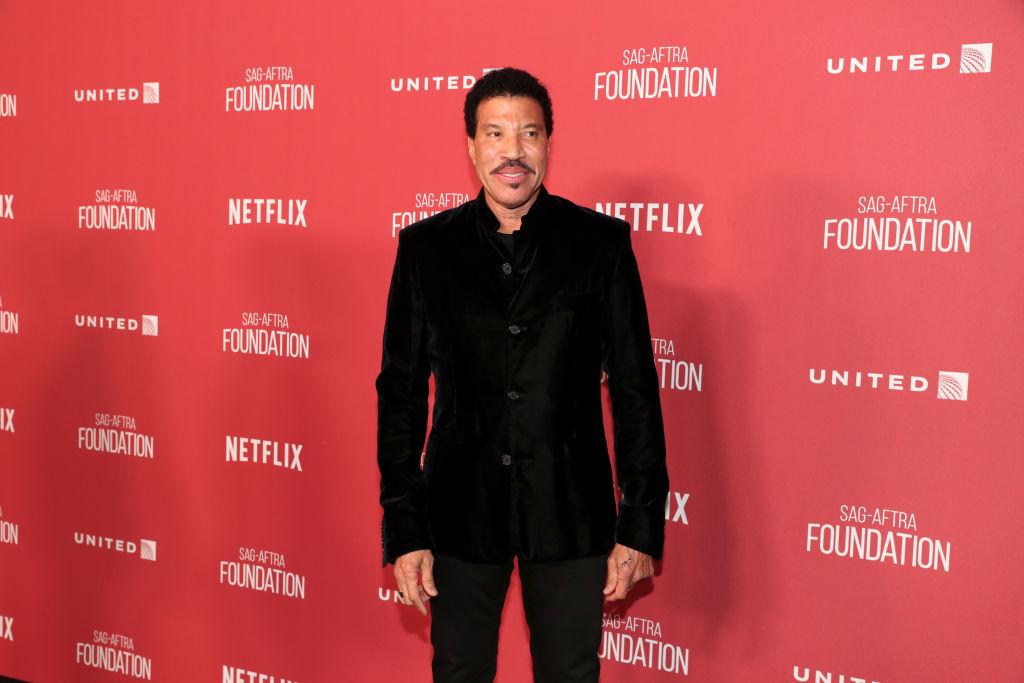
Lionel Richie dominated the 2026 Judges’ Song Contest on “American Idol,” securing the win by a landslide as the Top 12 contestants tackled ’90s hits during Monday night’s live episode on ABC. The victory handed the legendary singer the power to save one contestant from elimination, helping shape the competition’s new Top 11.

The April 6 broadcast resolved lingering drama from the previous week’s unprecedented voting snafu, which had delayed the official reveal of the Top 12. Host Ryan Seacrest opened the show by confirming the results of last week’s votes, eliminating Julián Kalel and Jake Thistle from the Top 14. That set the stage for the remaining 12 to perform under the Judges’ Song Contest theme, a fan-favorite twist where each judge — Richie, Carrie Underwood and Luke Bryan — secretly assigns a song from a chosen era, and contestants pick which one they’ll sing. The judge whose song receives the most performances earns the save opportunity.
This season’s contest focused on the 1990s, delivering a nostalgic mix of country, pop and R&B classics that tested the contestants’ versatility and emotional range. Richie emerged victorious with seven contestants choosing songs from his list, compared to three for Underwood and two for Bryan. The lopsided result underscored Richie’s enduring influence and keen song selection, drawing praise from viewers and fellow judges alike.
Performances highlighted the night’s high stakes. Hannah Harper, the stay-at-home mom from Missouri, opened strongly with Jo Dee Messina’s “Heads Carolina, Tails California,” a song she had sung during her initial audition. Many speculated it was Bryan’s pick, but it actually came from Underwood, showcasing Harper’s crowd-pleasing energy and personal connection to the track. Her safe advancement later in the episode confirmed the impact of the upbeat delivery.
Braden Rumfelt, the 22-year-old substitute teacher known for powerful ballads, delivered a standout rendition of Céline Dion’s “All By Myself,” earning acclaim for his vocal control and emotional depth. Chris Tungseth brought heart and soul to Edwin McCain’s “I’ll Be,” while other memorable moments included strong takes on Toni Braxton’s “Un-Break My Heart” and Wynonna Judd’s “Only Love.”
Seacrest revealed the Top 11 results in the episode’s final segment after tallying viewer votes from the live performances. The contestants who advanced automatically, in no particular order, were: Chris Tungseth, Kyndal Inskeep, Daniel Stallworth, Hannah Harper, Jordan McCullough, Braden Rumfelt, Philmon Lee, Keyla Richardson, Brooks (Rosser), and Lucas Leon.
That left Rae and Jesse Findling in the bottom two. With the save power in hand, Richie faced a difficult choice. “Both of you did an amazing, amazing job. It’s very difficult,” he told the pair, noting he received little guidance from his fellow judges. Ultimately, Richie chose to save Rae, sending Jesse Findling home and finalizing the Top 11. The decision sparked immediate debate among fans, with some questioning whether it was the “right” save while others applauded Richie for backing a contestant who had shown consistent growth.
The episode capped a turbulent stretch for Season 24 (often referred to in 2026 coverage as the current cycle). The prior “Songs of Faith” night saw real-time voting debut, but an unprecedented surge in votes created uncertainty, forcing producers to delay the Top 12 announcement until this episode. Seacrest addressed the snafu transparently, emphasizing the show’s commitment to fair results despite the technical challenges.
Judges offered glowing feedback throughout the night. Underwood praised the vocal power on display, Bryan highlighted the fun energy of the ’90s theme, and Richie repeatedly noted the contestants’ ability to make classic songs feel fresh. Guest mentor appearances and production elements, including elaborate staging for the era-themed performances, added polish to the live broadcast.
The Top 11 now includes a diverse group reflecting “American Idol’s” broad appeal: construction tradesman Chris Tungseth, elementary music teacher Daniel Stallworth, dementia care medication tech Brooks Rosser, and others bringing varied life experiences and vocal styles. With guest mentor Gwen Stefani lined up for the next episode, expectations are high for continued strong performances as the competition intensifies.
Social media erupted with reactions during and after the show. Clips of standout moments, particularly Braden Rumfelt’s powerhouse ballad and Hannah Harper’s energetic country-pop number, amassed rapid views on TikTok and Instagram Reels. Hashtags like #AmericanIdol2026, #JudgesSongContest and #LionelSaves trended, with fans debating the save decision and speculating on frontrunners. Some viewers expressed disappointment over Jesse Findling’s exit, citing his emotional delivery, while others celebrated Rae’s continuation as a deserving underdog story.
This season has already featured memorable twists, from Hawaii performances in the Top 20 to the faith-themed live shows. The voting delay added an extra layer of unpredictability, keeping audiences engaged across multiple episodes. Producers have emphasized real-time voting enhancements aimed at improving accuracy, though Monday’s episode served as a reminder of the challenges in managing massive viewer input.
For the advancing contestants, the path forward grows steeper. The Top 11 will face new themes and increased pressure as America’s votes carry more weight. Past seasons have shown that strong showings in the Judges’ Song Contest can boost momentum, and Richie’s win may indirectly influence future dynamics if his song choices continue resonating.
“American Idol” remains a cultural staple, launching careers and delivering weekly doses of talent and drama. With judges Underwood, Bryan and Richie bringing a balanced mix of country roots, pop sensibility and Motown legacy, the panel continues to deliver insightful, encouraging critiques that help contestants evolve.
As the competition heads into its next phase, eyes are on potential breakout stars like Braden Rumfelt for his vocal fireworks, Hannah Harper for her relatable charm, and others demonstrating range across genres. The show’s ability to recover from the voting hiccup and deliver a compelling episode underscored its resilience and enduring popularity.
Tuesday morning saw continued buzz, with recaps and reaction videos circulating widely. Fans praised the ’90s song selections for evoking nostalgia while challenging singers to put modern spins on familiar tracks. Industry observers noted the episode’s strong production values and the contestants’ polished performances, suggesting the season is hitting its stride as it narrows toward the finale.
Whether Lionel Richie’s save propels Rae to new heights or another contestant surges ahead remains to be seen. For now, the Top 11 stands as a talented cohort ready to battle for the “American Idol” crown in the weeks ahead.
The series continues live on ABC, with new episodes promising fresh themes, guest mentors and high-stakes voting. As always, viewer engagement will decide who advances, keeping the long-running franchise as unpredictable and exciting as ever in 2026.

How Higher Oil Prices Are Complicating The Outlook For Rates And The Economy

Fresh leaks Tuesday detailed modest design refinements and a potentially staggered launch schedule for Apple’s iPhone 18 lineup and the anticipated iPhone Air 2, as the tech giant prepares one of its most fragmented release cycles in years.
Reliable supply-chain sources and Weibo leakers, including Fixed Focus Digital, indicated the iPhone 18 Pro and iPhone 18 Pro Max will arrive in September 2026 alongside a possible foldable iPhone, while the standard iPhone 18 and a rumored iPhone Air 2 could slip to spring 2027. The reports, which surfaced over the weekend and gained traction on tech sites, suggest Apple is prioritizing premium and experimental devices this fall before refreshing more affordable models.

For the base iPhone 18, leaks point to virtually no major exterior redesign. The device is expected to retain the same overall look as the iPhone 17, including screen size around 6.3 inches, with only minor dimensional tweaks that could affect case compatibility. That conservative approach follows the strong market reception of the iPhone 17’s updated form factor, allowing Apple to focus engineering efforts on internal upgrades rather than aesthetics.
The iPhone 18 Pro and Pro Max, however, could introduce more noticeable refinements. Multiple reports highlight a significantly smaller Dynamic Island — potentially dubbed “Nano Island” by some leakers — measuring roughly 35% narrower than on current Pro models. This reduction would stem from partial under-display Face ID components, moving some sensors beneath the screen while relocating the front camera to the top-left corner in certain concepts. Bezels are expected to remain similar in thickness to the iPhone 17 series.
Color options for the Pro models may include bold new choices. Leakers have floated a deep red or burgundy finish — potentially Apple’s first red Pro variant in years — along with grey, silver and possibly a “coffee” brown tone. Some rumors also mention a subtle transparent or semi-transparent rear glass section on Pro models, though details remain unconfirmed and could change during final production.
Camera improvements are another focus for the Pro lineup. The iPhone 18 Pro Max is tipped to gain a variable-aperture main lens, allowing dynamic control of light intake similar to professional cameras, which could enhance low-light performance and depth-of-field effects. Battery capacity may climb above 5,000 mAh on some variants, with eSIM-only models potentially reaching 5,200 mAh thanks to freed-up internal space. A 24-megapixel selfie camera is also expected across most iPhone 18 models except the rumored budget iPhone 18e.
Performance upgrades center on Apple’s first 2nm-process A20 Pro chip, promising better efficiency and power for AI features. The lineup is also expected to debut Apple’s in-house C2 5G modem, potentially improving connectivity and reducing reliance on third-party components. Rumors of satellite-based 5G expansion and 12GB of RAM in higher models further signal a push toward more capable on-device intelligence under iOS 27.
The iPhone Air 2, the second-generation ultra-slim model introduced with the iPhone 17 series, faces conflicting timelines but appears on track for a possible fall 2026 debut according to some leakers. Fixed Focus Digital claimed production-line feedback supports a September 2026 launch alongside the Pro models, contradicting earlier reports that pushed it to 2027 to accommodate a second rear camera and other fixes.
Design for the iPhone Air 2 is expected to remain largely unchanged from the original’s ultra-thin 5.6 mm-or-slimmer profile, emphasizing elegance over dramatic overhaul. However, internal enhancements could address key criticisms of the first Air, including battery life and camera versatility. Leaks suggest a larger battery, possibly with vapor chamber cooling borrowed from Pro models, and the long-awaited addition of a second rear camera — likely an ultrawide lens. New Color Filter on Encapsulation (CoE) OLED technology from Samsung could deliver a brighter yet thinner display without excessive power draw.
These iterative upgrades aim to make the iPhone Air 2 feel less like a compromised thin phone and more like a balanced flagship option. Earlier concerns about poor sales of the original iPhone Air reportedly prompted Apple to accelerate improvements, though supply-chain constraints and memory demands for premium devices have complicated planning.
Apple’s rumored split-launch strategy marks a departure from its traditional September rollout of the entire iPhone family. By front-loading the iPhone 18 Pro, Pro Max and potentially the iPhone Fold or iPhone Air 2 in fall 2026, the company can spotlight high-margin devices and experimental hardware while giving more time to refine base models for a spring 2027 debut alongside an iPhone 18e. Analysts say the approach could help manage production pressures amid surging demand for advanced chips and displays.
The strategy also aligns with Apple’s broader push into foldables. The first iPhone Fold, expected to carry a premium price tag possibly exceeding $2,000, is tipped for a September or December 2026 arrival, though some reports suggest minor delays. Its inclusion in the 2026 lineup would make the fall event one of Apple’s most ambitious in recent memory.
Industry watchers note that while external designs for the standard iPhone 18 appear conservative, the cumulative internal upgrades — from the 2nm chip and improved modem to enhanced cameras and battery — could deliver meaningful real-world gains in speed, efficiency and photography. The smaller Dynamic Island, if realized across more models, would also increase usable screen real estate, a subtle but welcome evolution of the notch-to-island transition that began in 2022.
Social media and tech forums lit up with the latest leaks, with users speculating on everything from the rumored red Pro color to whether the iPhone Air 2’s added camera will finally silence critics of its single-lens setup. Concept renders circulating online depict sleek devices with refined details, though Apple has not commented on any rumors.
Pricing is expected to hold steady for most models, with Pro variants maintaining their premium positioning. The delayed base iPhone 18 could help Apple balance its portfolio, offering a more affordable entry point after the spring 2027 launch.
As development continues, final specifications and timing could shift. Apple typically finalizes designs months before events, and supply-chain leaks often capture early or mid-stage plans. Still, the emerging picture suggests 2026 will be a year of refinement for core iPhone models and experimentation at the high end.
For consumers weighing upgrades, the leaks offer mixed guidance. Those seeking the latest design language and camera tricks may eye the iPhone 18 Pro in September 2026, while buyers content with incremental gains might wait for the more accessible iPhone 18 and iPhone Air 2 the following spring.
Apple’s fall event, traditionally held in early September, is likely to provide official confirmation — or fresh surprises — as the company continues evolving its flagship lineup amid intensifying competition in AI-powered smartphones and foldable devices.

The university is set to purchase a nine-storey office building in Kings Square from Dexus, in the first significant office deal in more than a year.

Justin Fris and Mark Pownall discuss the severe driver shortage facing WAs trucking sector.

Modos Flow Turns E-Ink Into a 13.3″ 3K Portable Monitor Worth Using Every Day

Calo meal delivery review 2026: Plus exclusive discount code

Fuel price surge pushes Philippine inflation above central bank target


-

 NewsBeat5 days ago
Steven Gerrard disagrees with Gary Neville over ‘shock’ Chelsea and Arsenal claim | Football
-

 Business4 days ago
No Jackpot Winner and $194 Million Prize Rolls Over
-

 Fashion4 days ago
Weekend Open Thread: Spanx – Corporette.com
-

 Crypto World6 days ago
Gold Price Prediction: Worst Month in 17 Years fo Save Haven Rock
-

 Business1 day ago
Three Gulf funds agree to back Paramount’s $81 billion takeover of Warner, WSJ reports
-
Crypto World7 days ago
Dems press CFTC, ethics board on prediction-market insider trades
-

 Sports3 days ago
India men’s 4x400m and mixed 4x100m relay teams register big progress | Other Sports News
-

 Business3 days ago
Expert Picks for Every Need
-

 Business5 days ago
Login and Checkout Issues Spark Merchant Frustration
-

 Sports7 days ago
Tallest college basketball player ever, standing at 7-foot-9, entering transfer portal
-

 Tech7 days ago
How to back up your iPhone & iPad to your Mac before something goes wrong
-

 Crypto World6 days ago
Bitcoin enters the public bond market as Moody’s gives a first-of-its-kind crypto deal a rating
-
Crypto World6 days ago
Bitcoin stalls below key resistance as technical signals skew bearish
-

 Tech5 days ago
Commonwealth Fusion Systems leans on magnets for near-term revenue
-

 Politics7 days ago
Transform Your Space with Stunning Small Works
-
Business2 days ago
No Jackpot Winner, Prize to Climb to $231 Million
-

 Politics6 days ago
Starmer’s centre has collapsed, and the left was right all along
-

 Fashion7 days ago
Zara Turns Up the Heat With New Swimwear
-

 Fashion7 days ago
Tuesday’s Workwear Report: Tavira Sculpt Stretch Crepe Trousers
-
Crypto World7 days ago
AI Memory Rout Wipes 9% Off Nvidia Stock: Chart Says More Pain Ahead
You must be logged in to post a comment Login