Connect with us

Business

WRU should welcome scrutiny on its plans to cut a rugby region

Published

on

Business Live

if Welsh rugby truly belongs to its clubs, players and supporters, then those entrusted with running it have a responsibility to be open and transparent about the evidence behind decisions

Welsh rugby is at war

Welsh rugby team.(Image: Getty Images)

After over two decades of writing for the Western Mail, I don’t normally do two consecutive columns on the same subject, but the last few days have been momentous for the game we love – Welsh rugby.

Over the past week, the crisis over its future has intensified, with former internationals, regional representatives, supporters and prominent business figures questioning both the WRU’s three-region strategy and the board’s ability to implement it.

Calls have been made for board members to stand down, and, as this column emphasised last week, for the financial evidence underpinning the decision to be released.

The WRU responded by condemning “personal attacks” on its board and, whilst any genuine abuse is clearly unacceptable, none was evident in the public statements made by prominent critics such as Hayley Parsons and Jonathan Davies, or by those of us asking the WRU to release its evidence.

Advertisement

More importantly, though, the union insisted there is “no realistic prospect” of generating enough money to fund four competitive professional teams beyond 2028 and said criticism must be accompanied by credible alternatives. That is a reasonable standard until one considers that the detailed financial and sporting information needed to test this conclusion remains largely within the WRU itself, as I emphasised in my last article.

Yet despite these constraints, detailed alternatives are emerging that deserve serious examination. One I have recently read is “Built to Win: A Business and Sporting Turnaround Plan for Welsh Rugby”, a framework developed by a Welsh entrepreneur with extensive experience in business turnaround, financial restructuring, and commercial dealmaking.

Welsh rugby cannot afford to be so precious about who saves it

Interestingly, its central thesis is that Welsh rugby’s fundamental problem may not be the number of professional teams but an operating model in which governance, ownership, central costs, regional funding, player development and commercial activity have become fragmented and poorly aligned.

The real challenge it poses to the WRU is therefore not simply to retain four teams, but to reform the operating system and then retest whether three or four regions represent the best sustainable structure. That distinction matters as moving from four teams to three may provide additional funding for each surviving licence, but it does not automatically reduce central bureaucracy, improve coaching, repair the player pathway or eliminate duplicated functions.

Advertisement

One of the main proposals in Built to Win is to separate the community and professional games through a Welsh rugby amateur foundation that would protect club democracy and govern grassroots rugby, while a professionally appointed Wales rugby board would oversee the stadium, elite teams, commercial rights and high-performance system.

It also proposes centralising shared services such as finance, procurement, technology, data, sponsorship and customer management, while retaining regional responsibility for rugby delivery, identity and community engagement. It also proposes independent financial oversight, transparent procurement, published performance indicators, stronger player and coach pathways and an integrated commercial strategy.

At this stage, it is not a finished business case, and nobody should pretend otherwise as its financial projections are illustrative, its sporting proposals require expert validation and some of its structural recommendations could be difficult to deliver.

Nevertheless, it is already a credible alternative framework that challenges the WRU’s assertion that no realistic route exists to sustaining four competitive professional teams beyond 2028. Whilst it does not prove that four teams are financially viable, it shows the question should be tested independently rather than treated as settled.

Advertisement

So what should happen now? There is no reason why an independent adviser should not be given controlled access to the WRU’s departmental costs and headcount, cash flow, debt commitments, regional funding flows, stadium economics and major commercial and lending agreements. Comparable information would also be required from all four regions, including their income, operating costs, debts, shareholder loans, property obligations and restructuring liabilities.

The existing four-region structure could then serve as the financial and performance baseline against which three alternatives are tested: the WRU’s proposed three-region model and the reformed Built to Win operating model with either three or four teams. Each should be assessed using identical assumptions under base, downside and severe-downside conditions and the independent adviser could then publish the methodology, common assumptions, comparative results and conclusions without disclosing sensitive material.

Such an appraisal should also consider how the Welsh Government and local authorities could support facilities, community participation and shared infrastructure where these contribute to public health, youth engagement, social cohesion and regional economic development, although this should not mean using public money to underwrite professional teams’ recurring losses.

The same should apply to any other credible model as Built to Win is not the only alternative being developed. Indeed, another Welsh entrepreneur spoke to the Western Mail earlier this week about a separate strategy more explicitly focused on retaining four professional teams alongside reform of WRU expenditure, governance and the player pathway.

Advertisement

The existence of both these alternative strategies (and there may be others) reinforces the central point that the choice is no longer simply between the WRU’s three-region proposal and preserving the present, unsuccessful structure.

What is not acceptable is for the WRU to determine which financial information is released, maintain control over the assumptions underpinning its preferred conclusion and then dismiss alternatives because those outside the organisation cannot produce a fully costed business case without access to the same underlying evidence.

That is not a fair test of credibility but a closed shop in which only the WRU can meet the standard it has established. If the WRU is correct and four professional teams cannot be sustained under any credible reformed structure, then an open appraisal of the alternative strategies would strengthen its case and give difficult decisions greater legitimacy. If it is unwilling to subject its conclusion to that test, people will reasonably ask whether the evidence is as definitive as its public statements suggest.

The central question is no longer whether the existing four-region model is working, but whether its failure stems primarily from the number of teams or from the system surrounding them. Those responsible for our national game should welcome an independent comparison of every credible option to ensure that Welsh rugby secures the best possible long-term outcome, rather than simply the one that appears most convenient today.

Advertisement

Most importantly, if Welsh rugby truly belongs to its clubs, players and supporters, then those entrusted with running it have a responsibility to be open and transparent about the evidence behind decisions that will shape everyone’s game for generations.


Continue Reading
Click to comment

You must be logged in to post a comment Login

Leave a Reply

Business

WA delivers a fifth of ASX listings in FY26

Published

on

WA delivers a fifth of ASX listings in FY26

Western Australian-domiciled companies accounted for more than a fifth of ASX debutants after 22 local firms listed during the 2026 financial year.

Continue Reading

Business

Accenture: Bears Are On Wrong Side Of High-ARR AI SaaS-Ification Trend

Published

on

Accenture: Rebound Could Be Fast And Aggressive

Accenture: Bears Are On Wrong Side Of High-ARR AI SaaS-Ification Trend

Continue Reading

Business

Prince William and Kate Arrive at Balmoral Days After News of Harry’s Return to the UK Breaks

Published

on

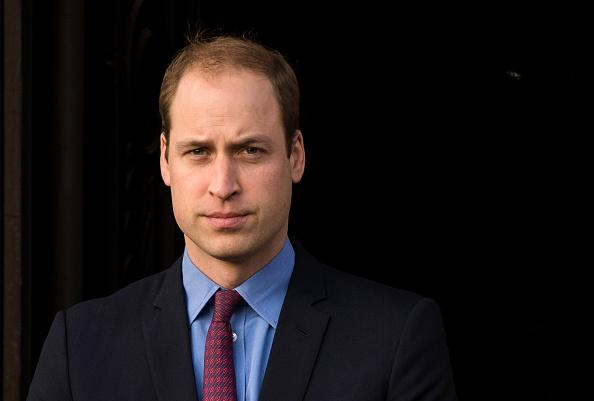
Prince William

BALMORAL, Scotland — Prince William and Catherine, the Princess of Wales, arrived at Balmoral Castle on Thursday to join King Charles III for the royal family’s traditional summer stay in Scotland, days after news broke that Prince Harry and Meghan Markle plan to return to the United Kingdom after six years living in the United States.

The Prince and Princess of Wales began their visit accompanied by their three children, Prince George, 13, Princess Charlotte, 11, and Prince Louis, 8. The family typically travels to the royal residence in Aberdeenshire each summer for a break from official engagements, joining King Charles, who received his formal welcome to the castle on Tuesday, just two days after learning of Harry and Meghan’s plans to relocate back to Britain.

William has previously spoken about the significance the Scottish retreat holds for his family. “George, Charlotte and Louis are already aware of how dear Scotland is to both of us, and they’re beginning to create their own cherished memories there, too,” William has said of the annual visits.

HELLO! royal editor Emily Nash said William and Catherine are likely feeling less than enthusiastic about the timing of Harry and Meghan’s announcement, offering her assessment on the outlet’s “A Right Royal Podcast.” “Well, what is intriguing about this is the complete radio silence coming from that end of the spectrum. And what’s interesting about it is that they’re normally away at this time of year. I imagine they’re not delighted about this,” Nash said.

Advertisement

Nash suggested the damage done to the relationship between the two brothers over recent years would make any public reintroduction of Harry and Meghan into British life a significant challenge for the family to navigate. “It’s going to be a very, very difficult hill to climb, having them suddenly back in the UK, popping up, doing things publicly, if that’s where they go with this. So much has been said and done that has damaged that relationship, almost beyond repair,” she said.

According to Nash, it is likely that William and Catherine were informed of Harry and Meghan’s plans before the news became public, given that King Charles was told directly on Sunday. “I can’t see a world in which they would be welcoming them back with open arms. But you would anticipate that the King will have spoken to William about this if he was made aware,” Nash said. “We believe the Waleses were made aware beforehand. They didn’t find out at the same time as the rest of the world. So they’ve had time to process this.”

Harry and Meghan’s return does not involve any resumption of official royal duties. According to HELLO!’s reporting, the couple’s status will remain unchanged, with no partial or “half in, half out” arrangement under consideration. The Duke and Duchess of Sussex are expected to live in a non-royal residence outside London and have already enrolled their children, 7-year-old Archie and 5-year-old Lilibet, in British schools ahead of the upcoming school year.

King Charles learned of the couple’s plans to relocate on Sunday, and is reportedly looking forward to seeing more of the family, who first moved to the United States in 2020 following their departure from official royal duties. The king reunited with Harry, Meghan and their children at Highgrove House in Gloucestershire last month, marking the first time he had seen his grandchildren on the Sussex side of the family in four years.

Advertisement

William and Catherine’s arrival at Balmoral, alongside their children, places the full senior working core of the royal family together in Scotland at a moment of heightened attention on the broader family’s internal dynamics. Other family members have also been photographed arriving at the castle in the days following the initial announcement of Harry and Meghan’s return, including Princess Anne, along with Zara and Mike Tindall, according to subsequent HELLO! coverage describing what was characterized as a show of unity among the wider family gathered at Balmoral.

The renewed focus on Balmoral comes as King Charles has continued settling into his own summer stay at the estate, where he has been photographed meeting members of the public during informal walkabouts, a customary part of the royal family’s presence in the area each year. Those public appearances have continued even as the broader family works through the practical and emotional implications of Harry and Meghan’s imminent return.

The relationship between William and Harry has remained strained for several years, following the 2021 interview the Duke and Duchess of Sussex gave to Oprah Winfrey, in which they raised allegations regarding their treatment within the royal family, as well as the 2023 publication of Harry’s memoir, “Spare,” both of which are widely reported to have deepened the rift between the two brothers. Nash’s characterization of the relationship as damaged “almost beyond repair” reflects a broader assessment shared by several royal commentators in the wake of this week’s announcement, even as attention now turns to how the family will manage Harry and Meghan’s return to British life in the weeks ahead.

Neither Kensington Palace nor Buckingham Palace has issued a detailed public statement addressing William and Catherine’s specific reaction to the news of Harry and Meghan’s return, and much of the current reporting continues to rely on sourced commentary from royal correspondents rather than on-the-record statements from the family members themselves. As Harry and Meghan prepare to relocate to a private residence outside London later this month, attention is likely to remain focused on whether any direct meetings occur between the two branches of the family, and on how the gathering at Balmoral, now including both King Charles and the Prince and Princess of Wales, factors into the broader family’s response to the Sussexes’ return.

Advertisement
Continue Reading

Business

US National Debt Hits $40 Trillion: What Rising Treasury Yields Mean for Thailand

Published

on

US National Debt Hits $40 Trillion: What Rising Treasury Yields Mean for Thailand

The United States has crossed a fiscal threshold few forecasters expected to see this year. The Treasury Department confirmed on August 19 that total gross national debt has surpassed $40 trillion, a milestone that arrived months ahead of schedule and comes wrapped in a set of numbers few Americans, or investors anywhere else, can easily process: roughly $117,000 per person, $297,000 per household, and a figure that now approximates the combined economic output of China, Germany, Japan, the UK, and India put together.

For Thailand, a small open economy with deep trade and capital-market links to the US dollar system, the milestone is not just an American headline. It touches everything from the baht’s exchange rate to the cost of servicing Thailand’s own public debt.

A Fiscal Milestone Years Ahead of Schedule

The US debt load has effectively doubled in under a decade, rising from roughly $19.4 trillion ten years ago to $40 trillion now. It took the country close to two centuries to accumulate its first trillion dollars of debt; it now adds that amount in under five months. Interest payments on the debt have grown large enough to exceed the entire US national defense budget, a threshold that budget hawks in Washington have flagged as a warning sign of fiscal strain.

Part of what pushed the milestone earlier than expected was a shortfall in tariff revenue after several of the White House’s trade levies were invalidated in court, cutting into a funding stream the administration had counted on. Treasury reported a monthly deficit of $432.3 billion in July, the highest since March 2021, with the year-to-date shortfall nearing $1.8 trillion.

Advertisement

Long-term borrowing costs have moved with the debt. The 30-year Treasury yield touched its highest level since 2007 this month, at 5.31 percent, while the 10-year sits near 4.7 percent. Those yields are not abstract numbers confined to Washington; they set the benchmark price of global capital, including the capital that flows into and out of Thai bonds and equities.

Rising Yields, Global Ripple Effects

Elevated US yields tend to pull capital toward dollar assets and away from emerging markets, Thailand included. TBN has previously examined the fragility signals building beneath record-high global equity markets, noting that concentration risk in US indices and stretched valuations leave the current wave of capital flowing into Southeast Asia more exposed than headline numbers suggest. A further leg up in US yields, driven by concerns over debt sustainability, would test that inflow directly.

The mechanism is already visible in Thai bond markets. The 10-year Thai government bond yield has climbed toward 2.3 percent this year, its highest level since February 2025, as the spread over comparable US Treasuries, currently around 200 basis points, keeps global funds calibrating their exposure to Thai fixed income against what Washington is paying. Foreign investors pulled over a billion dollars out of Thai bonds in a single month earlier this year during a bout of global risk aversion, a reminder of how quickly sentiment can turn when US rate expectations shift.

The Baht, Capital Flows, and Thai Debt Servicing

The interest-rate gap between the Federal Reserve and the Bank of Thailand has been the dominant force behind the baht’s moves in 2026. With the Fed’s policy range sitting 250 to 275 basis points above the BOT’s 1.00 percent rate, the dollar has retained a structural carry advantage that has periodically pushed USD/THB toward the 34 level. TBN has tracked this dynamic through the year, noting that Thailand’s roughly $279 billion in gross reserves provide a substantial buffer, meaning the current pressure looks more like a repricing than a funding crisis.

Advertisement

A US debt trajectory that keeps Treasury yields elevated, or pushes them higher still as investors demand greater compensation for holding US paper, would work against any near-term narrowing of that rate gap. That matters for the BOT, which has generally leaned toward an accommodative policy stance to support a fragile domestic recovery; a widening differential limits how much room the central bank has to cut further without triggering renewed baht weakness.

For the Thai government’s own borrowing, the read-through is more indirect but still relevant. Thailand’s public debt-to-GDP ratio stood at roughly 64 percent in the most recent fiscal year, low by comparison with many advanced economies, and the government funds the bulk of its needs domestically. But global benchmark yields still act as a floor beneath what Thailand pays to borrow, particularly for the growing share of debt issued to fund stimulus and energy-relief measures. The Public Debt Management Office has already leaned on notes and term loans this year as a liquidity cushion amid rising yields, a sign that Thailand is not entirely insulated from the global repricing of sovereign risk that a $40 trillion US debt load represents.

Thailand’s Relative Position

Set against Washington’s numbers, Thailand’s fiscal position looks comparatively conservative. Thai government debt equal to roughly 64 percent of GDP compares with a US debt load now approaching the full size of American GDP, a threshold economists have long treated as a red flag for fiscal sustainability. Thailand’s debt is also overwhelmingly baht-denominated and domestically held, reducing the currency-mismatch risk that has destabilized other emerging economies during past periods of dollar strength.

That relative discipline has not fully insulated Thai assets from global spillover, as the SET Index’s sharp swings this year illustrate, but it does give Thai policymakers more flexibility than counterparts in more heavily indebted economies. Bangkok’s growing appeal to global wealth, documented in TBN’s recent look at the city’s ultra-high-net-worth population growth, reflects in part a search for stability and institutional credibility at a moment when confidence in the fiscal trajectory of larger economies is being openly questioned.

Advertisement

What to Watch

The US debt path is likely to shape several storylines relevant to Thailand and the wider region over the coming months. The Federal Reserve’s rate decisions will remain the single biggest swing factor for the dollar-baht rate gap, with any hawkish surprise driven by inflation or fiscal concerns adding further pressure on the baht. Washington’s next debt-ceiling fight is also likely to arrive earlier than usual given the accelerated pace of borrowing, a recurring source of volatility for global risk assets. And with foreign holders of US debt watching yields climb to multi-decade highs, any shift in appetite for Treasuries, from China, Japan, or other major holders, would ripple quickly into emerging-market currencies and bond spreads, Thailand’s included.

For now, Thailand’s reserves, current account position, and comparatively modest public debt load offer a cushion. But a US fiscal trajectory adding trillions of dollars in debt every few months is a structural headwind that Thai policymakers, businesses, and investors will need to keep watching closely.

Continue Reading

Business

H.C. Wainwright cuts Envoy Medical stock price target on share count

Published

on


H.C. Wainwright cuts Envoy Medical stock price target on share count

Continue Reading

Business

Neutrogena apologizes to Hayden Panettiere over PPD sponsorship snub

Published

on

Neutrogena apologizes to Hayden Panettiere over PPD sponsorship snub

Neutrogena broke its silence Thursday following the death of Hayden Panettiere and mounting backlash over the skincare brand’s alleged treatment of the actress, acknowledging that it made her “feel unsupported during a very difficult time.”

Panettiere, known for her roles in “Nashville” and “Remember the Titans,” died Sunday at 36 after she was found unresponsive and in cardiac arrest at an apartment in Greenville, South Carolina.

Advertisement

Preliminary autopsy results found no signs of trauma that contributed to her death, Fox News Digital previously confirmed.

In the days following her death, fans unearthed comments made by Panettiere, who worked with Neutrogena from 2005 to 2015, in which she claimed the skincare brand cut ties with her after she spoke publicly about her experience with postpartum depression (PPD).

TIKTOK SAYS MODERATOR ERROR DELAYED REMOVAL OF PEREZ HILTON’S LIVESTREAM SHOWING ACTS OF SELF-HARM

Hayden Panettiere

Hayden Panettiere worked with Neutrogena for a decade before later claiming the skincare brand cut ties with her after she spoke publicly about postpartum depression. (Getty Images / Getty Images)

Neutrogena’s social media posts were subsequently flooded with negative comments, with some users calling for a boycott of the brand.

Advertisement

Neutrogena addressed the backlash in an Instagram post Thursday, saying it was “deeply saddened” by Panettiere’s death.

“For more than a decade, Hayden was a valued member of our Neutrogena community,” the brand wrote. “We are proud to have partnered with her and understand that we made her feel unsupported during a very difficult time. This is not what Neutrogena stands for or who we want to be.”

“Hayden’s courage in sharing her challenges helped inspire important conversations and awareness,” the post continued. “We are making a significant investment to a long-standing community health partner to help give more women access to the support they need, including care for postpartum depression. We will share more details with this community when plans are in place.”

MOVIE THEATER GROUP REVERSES COURSE, URGES CALIFORNIA AG TO SETTLE $110B PARAMOUNT-WARNER BROS LAWSUIT

Advertisement
Hayden Panettiere

Neutrogena acknowledged that it made longtime brand partner Hayden Panettiere “feel unsupported during a very difficult time” following backlash after the actress’ death. (Dimitrios Kambouris/Getty Images / Getty Images)

The brand said it had initially refrained from publicly commenting on Panettiere’s death out of respect for her family.

In her memoir, “This Is Me: A Reckoning,” released earlier this year, Panettiere wrote that Neutrogena wanted to end its long-term relationship with her after she spoke publicly about her experience with PPD.

During an appearance on Jay Shetty’s “On Purpose” podcast in May, Panettiere said she had not planned to discuss postpartum depression when the subject came up during a 2015 interview on “Live! With Kelly and Michael.”

“I had no intention of, or plan to, talk about postpartum depression. It just came up, and I was just being honest,” she said.

Advertisement

DAVE PORTNOY HAS MESSAGE FOR ‘TRASHY, RATCHET INFLUENCERS’ AMID VIRAL NANTUCKET SIGN CONTROVERSY

"This Is Me: A Reckoning" by Hayden Panettiere

In her memoir, “This Is Me: A Reckoning,” Hayden Panettiere claimed Neutrogena wanted to end its longtime partnership with her after she spoke publicly about postpartum depression. (Grand Central Publishing / Unknown)

“Never for a second did I think that anyone … cared, that anyone would have a bad reaction to it. It was my truth.”

Panettiere said losing the Neutrogena partnership was “the last thing that I thought they would ever fire me over.”

“And so when I got that call that Neutrogena wanted to fire me over that, and my representative at the time said, ‘That’s illegal you can’t do that,’ I knew that that was gonna be it, that I was not gonna be invited back the next year, and I had worked with those people for 10 years.”

Advertisement

Panettiere’s death came just weeks after she spoke publicly about her past struggles with addiction and the difficult decisions she made while seeking help.

GET FOX BUSINESS ON THE GO BY CLICKING HERE

Fox News previously reported that the Drug Enforcement Administration (DEA) has been contacted and is assisting in the investigation into Panettiere’s death.

FOX Business has reached out to Neutrogena for additional comment.

Advertisement

Fox News Digital’s Lorraine Taylor and Stepheny Price and Fox News’ Jake Gibson contributed to this report.

Continue Reading

Business

Why this strategist thinks longer-term outlook for stocks is "unfavorable"

Published

on


Why this strategist thinks longer-term outlook for stocks is "unfavorable"

Continue Reading

Business

ZKH Group Limited 2026 Q2 – Results – Earnings Call Presentation (NYSE:ZKH) 2026-08-21

Published

on

OneWater Marine Inc. (ONEW) Q1 2026 Earnings Call Transcript

This article was written by

Seeking Alpha’s transcripts team is responsible for the development of all of our transcript-related projects. We currently publish thousands of quarterly earnings calls per quarter on our site and are continuing to grow and expand our coverage. The purpose of this profile is to allow us to share with our readers new transcript-related developments. Thanks, SA Transcripts Team

Continue Reading

Business

Bitcoin's Bear Is Ready For Hibernation

Published

on

Bitcoin's Bear Is Ready For Hibernation

Bitcoin's Bear Is Ready For Hibernation

Continue Reading

Business

Ex-chair, Lindian Resources dispute drags in court

Published

on

Ex-chair, Lindian Resources dispute drags in court

A former chair’s action against Lindian Resources has dragged on in the WA Supreme Court after the latter failed to file documents by the imposed deadline.

Continue Reading

Trending

Copyright © 2025