The Canon MegaTank G3270 is our number one budget ink tank printer, and an ideal back-to-school choice or office upgrade if you want to save money versus traditional inkjet cartridge replacements. Impressing us for its “satisfyingly crisp” text documents and vibrant photos, I was pleased to spot Canon’s MegaTank G3270 on sale for $160 (was $249) at Amazon.
Canon rates the included ink for up to 6,000 black-and-white or 7,700 color pages. It also estimates that the supplied ink could last for up to two years, although that of course depends on how much you print.
The real appeal isn’t just the purchase price, but how much printing you can potentially get from the ink supplied with it (and how much you’ll save compared to traditional inkjet cartridges).
In his four-star review, our senior printer editor Jim said: “Canon’s entry-level MegaTank AIO is aimed at the home office with few features, but lots of bottled ink and a very low running cost.”
He went on to add, “It’s only slightly larger than a cartridge-based equivalent and it can print on every kind of blank media from square photo paper to fabric patches. The scanner bed enables reliable digital copying, while the inbuilt Wi-Fi means you can print from your smartphone using Canon’s excellent companion app.”
Amazon’s $159.99 price is $89 below the usual $248.99, for which you get a printer, scanner and copier along with a full set of high-yield bottled ink.
It has been cheaper in the past though. We’ve seen it for as low as $109 last year, but even so this is still a very good price for the back-to-school season.
If you want to save on other units, see our guide to the best printer deals we’ve seen this week.
Advertisement
Should you buy it?
✅ Buy the Canon MegaTank G3270 if…
You regularly print at home and are tired of replacing expensive cartridges. It’s particularly well suited to families, students and home offices that need a straightforward machine for documents, schoolwork and occasional photos. Having scanning and copying built in is also very useful.
❌ Skip the Canon MegaTank G3270 if…
Advertisement
You regularly print large documents and need them finished quickly. Its 11ppm black and 6ppm color speeds are adequate for home use, but this isn’t a high-speed office printer designed to churn through large workloads.
The Catch: What to know before you buy
Automatic two-sided printing is the biggest feature missing from the G3270. That’s worth considering if you regularly produce lengthy documents, as duplex pages require some manual intervention.
There’s no automatic document feeder either, so scanning or copying a stack of pages means placing them on the flatbed one at a time.
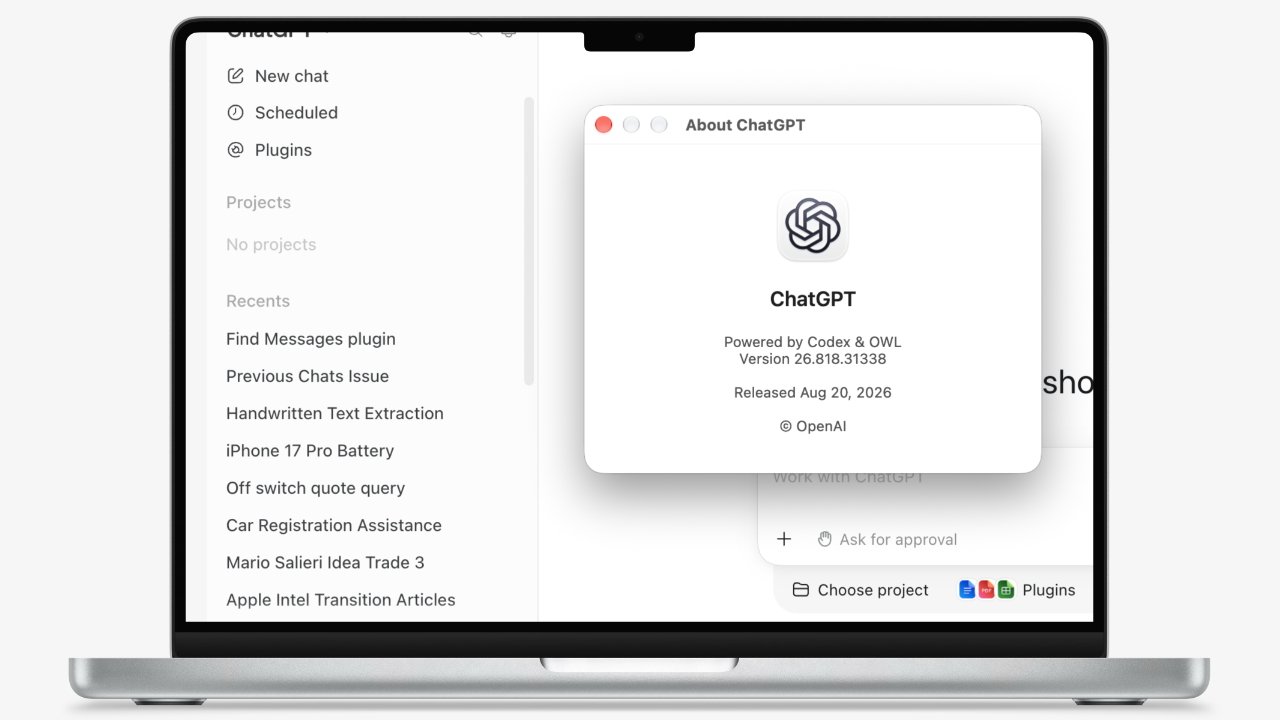
Mac users can now give ChatGPT their entire Messages history and have it write texts. Hand OpenAI your house keys while you’re at it.
Since January 2026, users have been able to hand over all of their Apple Health data to OpenAI, in return for medical advice that can be dangerously wrong. Despite earning at least one more lawsuit because of that, OpenAI is pressing ahead, and has now chosen to take on Messages on the Mac.
A new Messages plugin for ChatGPT is intended to search your messages, which could be handy. It’s meant to summarize message threads, which could be a blessing.
Everyday conversations just got easier with the new Apple Messages plugin.
Search messages, catch up on conversations, draft and send replies— all with ChatGPT on your Mac.
But it’s also meant to write messages for you, because it’s arduous to type out six words and an emoji. OpenAI insists that it’s fine letting ChatGPT write your messages, ignoring the whole soulless aspect of that, because you have to approve a message before it’s sent.
Yet ChatGPT’s own video shows that there is an option to “Always allow sending to this chat.” So it appears that, no, you don’t have to approve each message.
Advertisement
Then according to Bloomberg, OpenAI noted that the plugin can only work if the user chooses to use it. The company further emphasized that this is all done on device, plus it does not create an index of users’ messages.
Yet reportedly during sign up to the plugin, ChatGPT notifies the user that it will access their on-device Messages history. So whether it builds an index or not, if you use the plugin, it has full access to everything you’ve sent on Messages.
And then under the right conditions, it can send Messages for you. So now you’re trusting all of that potentially private information to OpenAI and assuming it won’t do anything with it.
OpenAI would be one of the firms that ripped off all authors of all books in the world in order to train its AI, and then sell your information back to you.
Advertisement
Apple has not commented on OpenAI’s launch, but it may be significant that the plugin is for the Mac and not, as yet, the iPhone. OpenAI says that it uses AppleScript the Mac’s Accessibility features to perform these tasks, and there is no AppleScript for iPhone.
Whether or not Apple’s iOS privacy features would mean ChatGPT couldn’t take over Messages as it now can on the Mac, don’t use it. It is taking the privacy and security of Apple’s Messages, and potentially undoing all of that just to have the ability to quick search through messages.
That is genuinely a benefit, if you have enough Messages threads to make searching manually a chore. But if you do need this feature, you’re getting it anyway with the forthcoming Siri AI.
The Nevada Transportation Authority unanimously approved three permits Thursday that will allow Tesla, Uber, and Waymo to operate commercial robotaxi services in Clark County, home to Las Vegas. Together, these permits would deploy up to 8,000 robotaxis across the county over the next 12 months.
Tesla’s permit allows it to deploy up to 5,000 robotaxis, while Waymo is allowed operate up to 1,000 autonomous vehicles over the next year. Uber was also approved for 1,000 robotaxis, which it will operate through partnerships with Hyundai subsidiary Motional and Zoox. Zoox already holds an autonomous vehicle network company permit that allows it to operate 100 robotaxis.
Whether these companies will be able to launch that many robotaxis is an unanswered question. Testimony from Tesla representatives and the other companies suggests the answer is no.
Advertisement
“The 5,000 has always been a ceiling for us,” said Eric Early, Tesla’s Cybercab chief engineer, during the meeting. “I don’t think we’ll be in a position by this time next year to deploy 5,000 vehicles, and it’s not [because of] the technology. … I think we would be extremely happy and satisfied if we could get ourselves up to 2,500, maybe a bit higher than that in the next year.”
Even if these three companies roll out only half of those totals, Clark County — and Las Vegas specifically — is shaping up to be a major robotaxi battleground, with Tesla, Uber (via its autonomous vehicle partners Motional and Zoox), and Waymo all competing for the same riders.
That kind of fast, large-scale robotaxi deployment is poised to change the city — and specifically its workforce. Depending on who you ask, these companies will either deliver a whole new category of jobs designed to maintain, charge, and clean these vehicles or will wipe out an entire category of workers: human taxi and gig drivers.
Representatives from the Livery Operators Association and local taxi companies opposed the permits, arguing the approvals move too far, too fast.
Advertisement
“These applications raise two grave concerns,” said Kimberly Maxson-Rushton, a lawyer representing the Livery Operators Association, at the hearing. “One deals with the oversaturation of the commercial transportation industry as a whole in Nevada,” she said. “And the second one deals with the overcrowding of the roadways, and specifically the Golden Triangle.”
The Golden Triangle, an area between the airport and Las Vegas Boulevard and the surrounding area, is where most of the AV testing has occurred to date. Motional is also testing in the downtown area and in a shopping district known as Town Square.
Uber has tried to position itself as the Goldilocks option in this fight, advocating for a hybrid approach in which ride-hailing networks are made up of humans and robotaxis. The company has even lobbied for a system that would require robotaxis to operate on a ride-hailing network that also uses human drivers, a stance that puts it at odds with Waymo and doubles as a hedge against its own autonomous ambitions falling short of Tesla’s or Waymo’s.
Uber made a similar pitch during the NTA meeting, noting that a hybrid approach would allow cities to gradually integrate vehicles to meet peak demand rather than flooding the market all at once.
Advertisement
When you purchase through links in our articles, we may earn a small commission. This doesn’t affect our editorial independence.
An old iPhone or iPad may have years of useful life left, but the wrong second act can turn aging software into a security risk. Here’s how to tell when it deserves a new job, a new owner, or a trip to the recycler.
Apple devices can be repurposed
Most retired devices still have a working display, usable cameras and enough battery life for undemanding tasks. A clever project can keep that hardware out of a drawer, but novelty alone doesn’t make the project worthwhile. Repurposing an old device can save money and postpone another purchase, but a second life isn’t automatically useful or responsible. Using an iPad solely as an e-reader can provide real value with limited security exposure. An iPhone that no longer receives security updates shouldn’t stay signed into messages, banking apps, saved passwords, or smart-home controls. Continue Reading on AppleInsider | Discuss on our Forums
Netflix closed out Anime NYC’s first night on Thursday, entertaining the crowd with a crop of guests and announcements about its upcoming anime slate. The convention is now in full swing and will run from Thursday through Sunday, packing in panels, sneak peeks, exhibits and screenings.
Here’s everything you need to know about Netflix’s announcements Thursday night.
Cyberpunk: Edgerunners 2
Photos from the anime Cyberpunk: Edgerunners 2.Netflix
The uber-popular series will return for its second season on Oct. 20, four years after it made its debut on Netflix. This standalone installment will have 10 episodes and take fans back into the Cyberpunk 2077 universe, so prepare for more action, violence and a revenge-y plot. Though Netflix dropped some photos back in June, you can peep the official teaser and a new set of images below.
Blue Eye Samurai Season 2 release date
Mizu, the main character in Netflix’s anime, Blue Eye Samurai, season 2, standing and holding a katana.Netflix
Follow Mizu to London when Blue Eye Samurai returns for season 2 in January 2027, continuing her revenge stroll and crossing names off her list. Netflix shared a small teaser with the launch information, so be sure to check back for details on when the six-episode premieres. See trailer here.
Bass x Machina
Netflix
This original, new steampunk-style anime has a talented voice cast that includes Janelle Monáe, Brian Tyree Henry, Tati Gabrielle and Cree Summer. The story, set in the West, is about a father on a justice streak and features supernatural and sci-fi elements, bloodshed and what’s expected to be a really good soundtrack. It’s due out on Netflix on Nov. 3. See trailer here.
Fool Night
Netflix
About a month ago, Netflix gave fans a tease of the adaptation of Kasumi Yasuda’s manga, Fool Night, and on Thursday, we got to see a little more. The score and glowy visuals are setting this up to be one of the most anticipated series of the season. If you’re unfamiliar, here’s an official synopsis from Netflix:
“Transfloration— a technology that implants seeds into the bodies of those near death, transforming them into plants. It is the desperate measure humanity has chosen to ensure its survival. In a distant future where thick clouds cover the sky, trapping Earth in constant winter and night, most of the planet’s vegetation has withered away. Facing a serious oxygen shortage, humanity has built a society that relies on the meager amount of oxygen provided by Transfloration. A young man, Toshiro Kamiya, lives in poverty and works hard to pay taxes, cover living expenses, and afford medication for his mentally ill mother. However, the cruel reality around him gradually eats away at his hope. In this dark world full of despair, he chooses the path of the “Spiriflor” — the plants that humans transform into.“
Everyone’s favorite retired-but-unretired hitman, Taro Sakamoto, is back on the scene to dig up intel on Slur — and much more. Season 2 of Sakamoto Days will arrive in January 2027, but until then, check out this trailer to get a look at the players in this new installment. See trailer here.
Lego One Piece
Netflix
This may not feel like anime, but if you like Lego’s cinematic universe and anime, you’ll get this mashup of Lego One Piece (just look at Chopper!). This two-part special is a remixed version of what viewers saw in seasons 1 and 2 of Netflix’s live-action One Piece series, narrated by Usopp (Jacob Romero). You can stream it on Sept. 29. See trailer here.
The One Piece
Another adaptation of the beloved manga, The One Piece, is a Netflix original anime produced in collaboration with WIT Studio, Shueisha, Fuji Television Network, and Toei Animation. The streamer said season 1 will cover the East Blue Saga, based on the first 50 chapters. Look for its debut in February 2027.
Netflix
Kourtnee Jackson
Senior Editor
Advertisement
Kourtnee covers streaming services and entertainment. She previously worked as an entertainment reporter at Endgame 360, where she wrote about film, television, music, celebrities and streaming platforms.
See full bio
Microsoft has patched a maximum-severity vulnerability in the Entra ID identity and access management (IAM) platform that has been exploited in attacks.
Formerly known as Azure Active Directory (or Azure AD), it is a cloud-based IAM platform that provides Microsoft 365, Azure, or Dynamics CRM Online customers with authentication, policy enforcement, and protection across apps and resources.
Tracked as CVE-2026-69836, this critical security flaw was discovered by Microsoft principal security engineer Robert Fitzpatrick, and it allowed threat actors with no privileges to gain code execution in low-complexity attacks.
Microsoft says exploit code for CVE-2026-69836 is not yet available online and added that users don’t need to take any action since the flaw has already been fully patched.
“Deserialization of untrusted data in Microsoft Entra ID allows an unauthorized attacker to execute code over a network,” Microsoft said in a security advisory published on Thursday.
Advertisement
“This vulnerability has already been fully mitigated by Microsoft. There is no action for users of this service to take. The purpose of this CVE is to provide further transparency.”
The company didn’t share any additional information, and a Microsoft spokesperson was not immediately available for comment when BleepingComputer asked for more details on attacks exploiting the CVE-2026-69836 flaw.
Yesterday, Microsoft addressed four more maximum severity flaws, three of them allowing unauthenticated attackers to escalate privileges remotely on Azure Arc (CVE-2026-65816 and CVE-2026-69555) and Exchange Online (CVE-2026-65801). The fourth, tracked as CVE-2026-65770, enabled remote code execution on an Azure Managed Instance for Apache Cassandra.
In September 2025, it patched another critical Entra ID privilege escalation flaw (CVE-2025-55241) reported by Outsider Security security researcher Dirk-jan Mollema that enabled attackers to gain complete access to the Microsoft Entra ID tenant of every company in the world.
Siliconops.ai has launched siliconcloud.in, a sovereign cloud platform designed for Indian enterprises. This platform has been developed to enable companies to retain their data within India while better managing it. It is meant for companies that require cloud services with security and reliability while meeting data residency and regulatory requirements.
Siliconcloud.in is designed for regulated industries such as banking, healthcare, pharmaceuticals, government, and manufacturing. Siliconops.ai developed the platform in partnership with Nutanix and operates it through data centers in India. This enables organizations to ensure that their data remains inside the country. These services offered by the platform include compute services, backup, disaster recovery, and managed cloud services. With the help of such services, organizations can migrate their IT workloads to cloud infrastructure while keeping their data within India. This can also support their data residency and operational requirements.
Siliconops.ai’s Experience Behind siliconcloud.in
Siliconops.ai has been operating in the technology industry for nearly four decades. During this time, the company has built and managed technology environments for Indian enterprises. Its experience covers the needs of businesses that depend on reliable and secure IT infrastructure.
The launch of siliconcloud.in takes advantage of this experience with enterprise technology. This is because Siliconops.ai is now applying the same expertise to sovereign cloud services in India. With siliconcloud.in, Siliconops.ai is expanding its presence in India’s growing sovereign cloud market.
Advertisement
Speaking about the launch, Shyam Gaidhane, CEO of Siliconops, highlighted the importance of data control for enterprises. He said, “In the age of AI, data has become one of an enterprise’s most valuable assets. The conversation can no longer stop at where data resides; it must also address who controls it.”
GM’s decision to drop CarPlay is being put to the test, with a nearly identical CarPlay version outselling its Chevy counterpart by an increasingly wide margin.
In 2023, General Motors announced it wouldn’t include CarPlay in its electric vehicles going forward. There was notable public backlash.
Then, in 2025, GM CEO Mary Barra announced that the company would remove Apple CarPlay and Android Auto from all vehicles. Instead, the company would use an in-house infotainment system built on Android Automotive OS.
The company called the decision “Jobsian,” patting itself on the back, and claiming that this was a win for privacy. However, what it really did was make a move to own the digital relationship with its customers.
Advertisement
Now, a year later, sales data has finally offered a glimpse into how that panned out for GM. Matthew Haughey, a UX/UI designer, compared the sales data between two similar vehicles on his blog, A Whole Lotta Nothing.
The first vehicle is the Chevy Blazer EV, a mid-market electric vehicle geared towards the average buyer. The second is Honda’s Prologue EV.
The Prologue EV was made in partnership between Honda and Chevrolet, as Honda didn’t have a particularly robust EV program. As a result, the Prologue EV is essentially a Chevy Blazer EV with a Honda sticker on it.
But there are two crucial differences.
Advertisement
The first is that Honda’s Prologue EV has CarPlay. Chevy’s Blazer EV does not.
This resulted in an unintentional A/B test between the vehicles over the last few years. And the results were interesting.
The 2024 Chevy Blazer shipped without CarPlay. That year, Honda’s Prologue EV outsold the Blazer EV by 43%.
In 2025, the Prologue EV outsold the Blazer EV by 73%. In the first six months of 2026, the Prologue EV has outsold the Blazer EV by more than 165%.
Advertisement
People are buying the Honda Prologue EV more than one and a half times as much as the vehicle it’s based on.
You may be wondering what the second crucial difference is.
Well, the Honda is cheaper, too, which probably doesn’t hurt its sales. Especially in a time where everything seems to be getting more expensive.
A base model Honda 2026 Prologue EV EX boasts an MSRP of $39,900. Its Chevy counterpart, the Chevy 2026 Blazer EV LT, has an MSRP of $44,700.
Advertisement
That’s a difference of about 11%. Not insignificant, and obviously, dealership offers, trade-ins, and brand allegiance can all make that 11% more or less significant to your average buyer. In some quick checks online, street prices between the two were about the same, and generally within a few hundred dollars.
Convenience is king
Haughey makes it clear early on in the article that he’s a fan of CarPlay, saying that he believes it to be a safer hands-free option. The thing is, Haughey isn’t alone.
People like CarPlay, if for no other reason than they really dislike infotainment systems as a whole. A J.D. Power study showed that CarPlay users had notably higher satisfaction levels compared to built-ins, and still ranked above Android Auto.
Again, this may be less about CarPlay and more about infotainment systems. If you’ve ever had to use a vehicle’s built-in infotainment system, it’s a safe bet that you already know that.
Advertisement
Automotive makers are wildly out of touch with what their users want. The answer isn’t innovation or flashy design: it’s simplicity.
Ultimately, the reason people like CarPlay, or even Android Auto, is because it already mirrors something they use daily. It’s an interface that is familiar, no need to navigate winding mazes of submenus.
If you want to play music, it’s a tap or two away. If you want to call someone, you have a familiar voice assistant who can do it quickly and cleanly without you needing to take your eyes off the road.
Removing that option in favor of something unfamiliar, and likely overly complex, isn’t going to win over your customer base. If anything, I’d expect it to do the opposite.
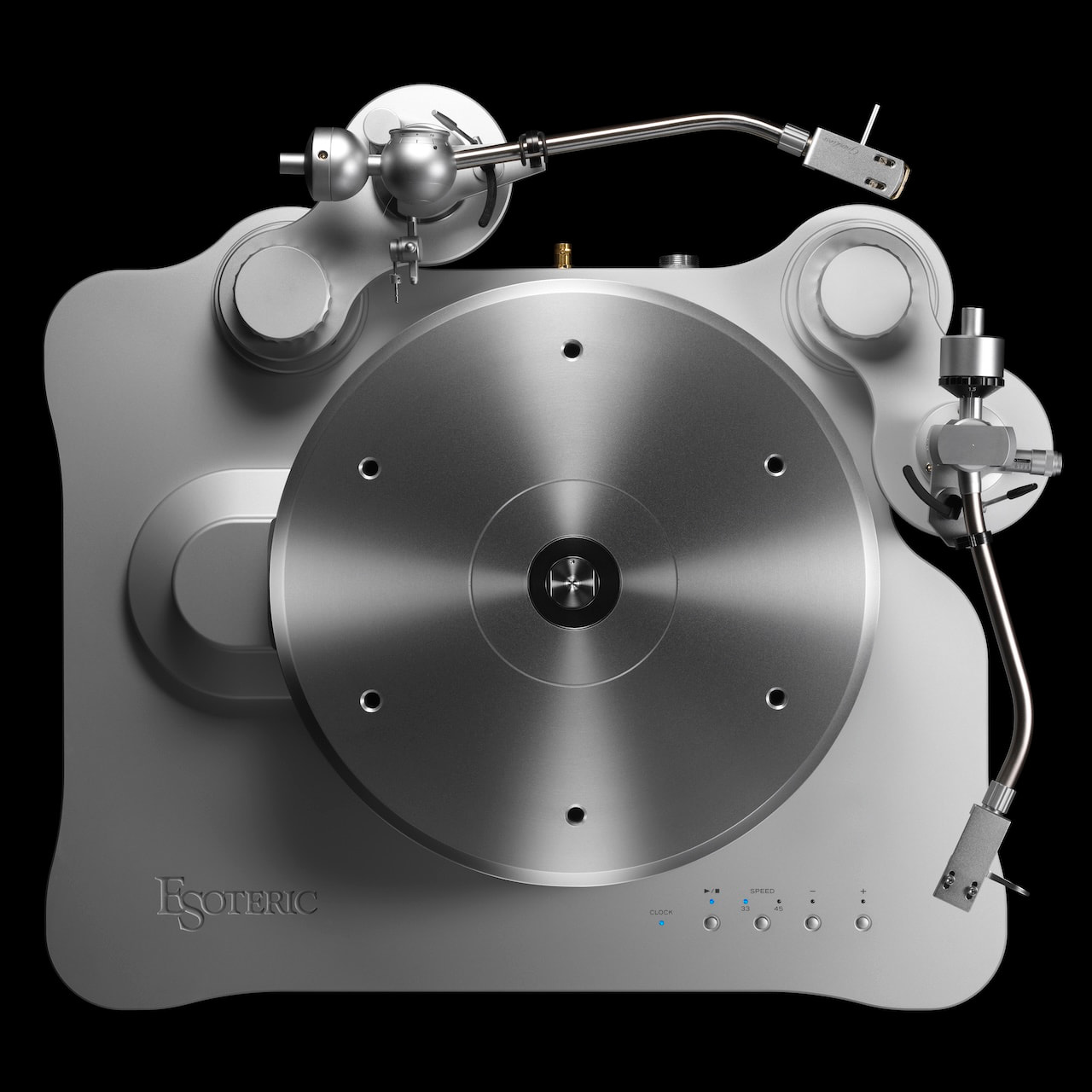
Esoteric has never approached analog playback like a company interested in keeping things simple. Its first turntable, the Grandioso T1, incorporated a contactless magnetic induction drive system, magnetic platter support, an external power supply and the ability to synchronize the motor to a 10MHz master clock.
Four years later, Esoteric is taking the most interesting technology from that flagship platform and putting it into the new T-01, a somewhat smaller and easier to install turntable that still weighs more than some loudspeakers and costs $50,000 with its TA-9D tonearm.
“More attainable” requires some perspective here.
What Exactly Is MagneDrive?
The T-01 is not a belt-drive turntable, nor is it a conventional direct-drive design.
Advertisement
Esoteric mounts a dome-shaped magnetic driver with alternating north and south poles to the motor. Around the lower circumference of the non-magnetic aluminum platter is a soft-iron induction wheel. As the magnetic driver rotates beside it, magnetic induction causes the platter to rotate synchronously without the motor or drive assembly physically touching the platter.
The objective is to isolate the platter from motor vibration and rumble while retaining sufficient torque and precise control over rotational speed. Esoteric says it spent more than five years developing and commercializing the system, which is now patented.
That is the genuinely interesting part of the T-01. There is no belt to stretch or replace and the motor is not mechanically coupled to the platter in the conventional sense.
But we would stop short of suggesting that Esoteric invented contactless magnetic turntable drive technology as a category. Clearaudio has used magnetic decoupling in products including the Master Innovation, where a belt-driven lower flywheel magnetically transfers rotation to the playback platter. Esoteric’s induction-based implementation is different, and remains extremely unusual, but magnetic isolation itself is not exclusive to Esoteric.
Advertisement
Magne-Float Takes Some Weight Off
The physical platter still weighs 13 kilograms, or almost 29 pounds, but Esoteric’s Magne-Float system uses opposing magnetic force to reduce the effective load on the spindle bearing to approximately 4 kilograms.
The T-01 still uses an inverted bearing, so this is not a completely levitated platter spinning in mid-air. The magnetic assistance reduces the load placed on that bearing, which is intended to lower friction and mechanical noise.
The Grandioso T1 applied the same basic idea to an even heavier 19-kilogram platter. The T-01 therefore looks less like an entirely new design philosophy and more like Esoteric figuring out how to package its flagship analog engineering in something that does not require quite as much floor space, hardware or financial anesthesia.
Advertisement. Scroll to continue reading.
Smaller Than the Grandioso T1 Is Still Not Small
One of the biggest changes involves the motor architecture.
The Grandioso T1 uses a separate motor assembly, while the T-01 integrates its MagneDrive motor into the main chassis and houses it inside what Esoteric calls a Vibration Absorber Case. The power supply remains external, but it is a compact 7-kilogram unit rather than another imposing full-width component.
Advertisement
The turntable itself weighs 35 kilograms, including the 13-kilogram platter, so the complete T-01 and power supply combination comes in at approximately 42 kilograms, or almost 93 pounds. The chassis uses three layers of aluminum and MDF with a piano-lacquered center layer, while the feet combine a spike, spike pad and damper into a single isolation assembly.
Buy a strong rack. Your IKEA Kallax has suffered enough.
Yes, Your Turntable Can Use a 10MHz Clock
The T-01 includes Esoteric’s Master Sound Discrete Clock motor driver and accepts an external 10MHz reference clock through a 50-ohm BNC input. It can therefore be synchronized with Esoteric’s G-01XD or G-05 master clocks.
Yes, Esoteric has found a way to make a turntable care about an external 10MHz clock. Anyone familiar with the company’s digital products should be completely unsurprised.
Advertisement
Whether adding an external reference clock produces an audible improvement over the T-01’s internal motor control is something we would want to test rather than accept on faith. What is clear is that the feature allows an all-Esoteric system to share the company’s clocking architecture across both digital and analog playback.
The T-01 supports 33 1/3 and 45 RPM playback, offers ±12 percent speed adjustment in 0.1 percent increments and specifies wow and flutter at 0.06 percent W.R.M.S. Up to two tonearms can be installed with the appropriate arm bases.
How Does the T-01 Compare?
At $50,000 with its Esoteric tonearm, the T-01 lands in a rather interesting part of the ultra-high-end turntable market.
The Clearaudio Master Innovation Wood starts around $37,500 in the U.S. without a tonearm and is probably the most interesting comparison from an engineering perspective. Its belt-driven architecture uses magnetic decoupling between its flywheel and platter, along with Clearaudio’s Ceramic Magnetic Bearing and optical speed control. Similar objective; very different execution.
Advertisement
The TechDAS Air Force III Premium, currently listed around $42,525, attacks mechanical isolation from another direction entirely. Its massive 29-kilogram platter rides on an air bearing, the record is held flat using vacuum pressure, and an external synchronous motor drives the platter by belt. It is a far more complex mechanical ecosystem but arguably one of the T-01’s most obvious Japanese competitors.
VPI’s Titan Direct sits above the Esoteric at $64,000 and combines magnetic direct drive with air-suspension isolation and support for as many as three tonearms. It represents the American answer to the same basic problem: eliminate as much unwanted mechanical behavior as possible and control platter rotation with extreme precision.
Advertisement. Scroll to continue reading.
Then there is the SME Model 60, which arrived in North America at $71,900 with its Series VA tonearm. SME uses a sophisticated belt-drive system, electronic speed controller, suspended chassis and separate power supply. It is more expensive, but anyone contemplating a $50,000 Esoteric is unlikely to stop comparison shopping because another contender costs twenty grand more. That ship left the marina several components ago.
Advertisement
The other competitor is sitting inside Esoteric’s own catalog. The Grandioso T1 was priced at $80,000 with its TA-9D tonearm when reviewed in 2023, making the T-01 roughly $30,000 less while retaining MagneDrive, Magne-Float and 10MHz clock capability.
The Bottom Line
The Esoteric T-01 is not unique because nobody else has experimented with magnetic isolation, oversized platters or elaborate speed control. Clearaudio, TechDAS, SME, VPI and others have been attacking those problems for years with very different engineering solutions.
What makes the T-01 interesting is that Esoteric has taken the defining technology of the Grandioso T1 — its patented induction-based MagneDrive system — and engineered it into a considerably less complicated and less expensive platform without abandoning Magne-Float, external clock synchronization, an outboard power supply or multiple tonearm capability.
At $50,000 with the TA-9D tonearm, this remains a turntable for a very small group of vinyl listeners with equally ambitious cartridges, phono stages and systems. But compared with the Grandioso T1, the T-01 is easier to install, considerably less expensive and still unlike almost anything else in its price range.
Advertisement
Apparently $50,000 is what passes for Esoteric becoming practical.
Price & Availability
The Esoteric T-01 will begin shipping internationally at the end of September 2026.
T-01 with tonearm: $50,000 USD / €48,000 / £41,999
T-01AL without tonearm: $46,000 USD / €45,000 / £38,999
In recent months, several Japan Home stores were found to either be closing or turned into Valu$ shops
Is the Japan Home you’ve always walked past seemingly getting less crowded? Or worse, has it shuttered or turned into what looks suspiciously like a Valu$ store?
You’re not imagining it. Stores that were once packed with shoppers hunting for S$2 deals have been thinning out for months.
But now the cat is out of the bag: Japan Home isn’t quietly fading away. Its remaining Singapore stores are being handed over to Radha Exports, the company behind Valu$.
Here’s what’s going on.
Advertisement
What’s really going on right nowis moving fast
Japan Home at Hougang Mall has since closed./ Image Credit: Harold Ng via Google Reviews
Between Jun and Jul 2026, Japan Home announced closing-down sales for five outlets—at Hougang Mall, Century Square, Northpoint City, HarbourFront Centre and Buangkok Square—on its Facebook page.
And when the Business Times visited another nine Japan Home stores on Aug 18, it found three had already shuttered, while several others were closed for “stocktaking.” Significant quantities of Valu$ merchandise were also visible inside some of the outlets.
Japan Home is a retail chain store offering affordable homeware, while Valu$ is a chain of stores that operates via a dollar-store concept.
At Japan Home’s Bedok Mall outlet, which remained open, shelves had already been stocked with Valu$ products alongside its own. At the brand’s Waterway Point outlet, staff were spotted wearing Valu$ T-shirts.
Some other outlets are also reported to have 50% clearance sale signs up or to have Japan Home’s products cleared out.
A Valu$ store manager told the Business Times that Valu$ is not replacing Japan Home, though the evidence on the ground appears to tell a more complicated story. The outlets in Bedok and Woodlands are confirmed as joint operations, and more are expected to follow, said some Japan Home workers.
Valu$ Shop at Paya Lebar Square./ Image Credit: Mokkie Mok
The ownership connection makes the transition less surprising than it initially appears.
Meanwhile, Valu$ is operated by DD Pte Ltd, which was founded by FMCG company Radha Exports in 2005. In other words, Japan Home Singapore and Valu$ are not entirely separate businesses—they are connected through the wider Radha group.
Advertisement
Just yesterday, on Aug 20, Japan Home’s website confirmed that it has licensed the operation of its remaining Singapore stores to Radha Exports, the fast-moving consumer goods company behind Valu$.
The three-year deal takes effect from Aug 19, and is renewable for a further three years—described by the company as part of Japan Home’s “ongoing business development.”
Three consecutive years of declining profits—and now, losses
Japan Home at Heartland Mall, Kovan./ Image Credit: Bryan “Ultimix97” Neo Yang, Eugene via Google Reviews
Before 2024, Japan Home Singapore’s profits had already been declining for three consecutive years. By the financial year ended Apr 30, 2024, revenue had dipped to S$51.7 million from S$53.7 million the previous year.
Then, it tipped from declining profits into actual losses. For the financial year ended Apr 30, 2025, losses after tax from continuing operations almost tripled to S$2.3 million, from S$858,596 the year before.
Existing members were given until Aug 18 to redeem their J-Fun points, J Cash Rebates, and loyalty rewards, after which unused points and rebates expired.
The various states of Japan Home’s outlets all over the island have not been update on its website.
Boasting over 380 branches globally
Japan Home at Lot One Shopping Mall./ Image Credit: Lot One Mall
Founded in Hong Kong in 1991 under parent company International Housewares Retail Company, household retail chain Japan Home was brought to Singapore in 1999 by co-founders Ngai Lai Ha and Peter Lau Pak Fai.
It opened its first three stores in Toa Payoh, Ang Mo Kio, and Bugis Village, and eventually grew to a peak of 34 outlets in Jun 2026. Globally, it boasted over 380 branches, including locations in Macau, Cambodia, Eastern Malaysia, and Australia.
Advertisement
Inspired by Japan’s 100-yen shop concept, Japan Home aimed to source affordable housewares, sell them at accessible prices, and make shopping for daily necessities.
For weeks, the Singapore situation played out almost similarly to the way Hong Kong’s did a year earlier: closures without a clear explanation, staff giving conflicting accounts, and a company staying quiet.
Back in Jul 2025, concerns about a possible shutdown of Japan Home in Hong Kong circulated on social media, after several customers reported seeing 50% discounts advertised across branches as part of renovation clearance sales. Adding to the speculation, shoppers at multiple locations also spotted “lease expired” notices posted in stores, according to reports covered by on.cc and HK01.
Despite denying closure rumours, the financial performance of Japan Home’s parent company told a more difficult story. International Housewares Retail Company issued a profit warning in Jul 2025, forecasting a 51% to 57% decline in annual profits compared to the prior year’s HK$100 million (S$16.21 million).
The group mainly attributed the decline to weak consumer sentiment, changing purchasing behaviours, and, more pointedly, competition from mainland Chinese e-commerce platforms, which have collectively led to a 5.6% year-on-year decrease in revenue. That said, it still remains profitable, making HK$47.727 million (S$7.73 million) for FY 2024/25.
Feeling the pressure of Chinese rivals
Kitchen racks can be found for under S$10 across Taobao, Pinduoduo and Shein, which likely cost more at Japan Home due to operational, rental and manpower costs./ Image Credit: Vulcan Post
Japan Home’s value proposition was always about price and convenience: affordable, decent-quality housewares that one could pick up at a mall near where you live. And that model had no real challenger for most of the 2000s and 2010s.
A physical housewares store like Japan Home minimally charges you for the rent, the staff, and the logistics of getting products from a factory in China to a shelf in Tampines.
But ordering from an online platform charges you for a fraction of that since they don’t have to deal with the high rental, operational, and manpower costs prevalent in Singapore’s retail scene. When the price gap becomes too obvious to the customer and the ordering process becomes frictionless, the heartland housewares store would naturally lose its market share.
Surviving Singapore’s increasingly brutal retail scene
Isetan and Daiso were formerly at Tampines Mall and Tampines 1./ Image Credit: Matthew Chia via Google Reviews, Daiso Singapore
Japan Home’s difficulties aren’t happening in isolation. Singapore has seen a broader retreat of Japanese-style affordable retail over the past year:
It’s pretty evident that these Japanese brands built on affordable, middle-market physical retail are squeezed from below by e-commerce and from above by mall rental costs that haven’t adjusted to lower footfall.
For Singapore shoppers who grew up with Japan Home as the default stop for a cheap chopping board or a new set of dish towels, the transition marks the end of a special kind of heartland retail.
Whether Valu$ can fill that space under the Japan Home name for the next three years or whether this 100-yen concept will join other precedents of Japanese retail in Singapore and downsize or bite the dust is a question only time can answer.
Read other articles we’ve written on Singaporean businesses here.
YouTube Premium appears to be getting more expensive again, with subscribers in several countries reporting fresh price increases. Singapore has the clearest confirmed change so far, while Android Authority reports higher prices showing up in parts of Europe. The latest reports follow another recent YouTube Premium price hike in the US.
In Singapore, The Straits Times reports that an individual subscription is rising from S$13.98 to S$15.98 per month, while the family plan jumps from S$27.98 to S$31.98. New subscribers are already paying the higher rates, while existing members will see them take effect after at least 30 days.
Elsewhere, the picture is less certain. Subscribers in several European markets are reportedly receiving emails showing higher prices, but YouTube hasn’t published a wider list of affected countries or new rates.
Where prices are going up
The Singapore increase shows this isn’t purely speculative, but the wider pattern is still being pieced together from regional reports and subscriber notices.
Advertisement
That makes the scope hard to pin down. A hike reported in one country doesn’t necessarily tell you what another market will pay, and the changes can vary depending on the plan. YouTube has also recently raised the price of YouTube Music Premium, adding to the sense that its subscription pricing is moving upward more broadly.
If you already subscribe to Premium, your billing email may be the first reliable sign that your price is changing.
Why this rollout is messy
Without a broader announcement from YouTube, there’s no single place to check which markets are affected. Users are instead relying on local reports and individual notices.
The reported increases also don’t appear to follow one universal jump. That makes it difficult to compare countries or predict what a subscriber elsewhere might end up paying.
Advertisement
Unsplash
The evidence, however, points to another round of increases rather than one clearly defined global change.
What subscribers should watch next
The safest move is to keep an eye on your next YouTube Premium billing notice or email. Until YouTube publishes something broader, that will likely be more useful than assuming every country is changing at once.
A higher monthly bill can also change how easy Premium is to justify, especially if you’ve been letting the subscription renew automatically. If the increase reaches your market, it may be worth comparing the full plan against YouTube Premium Lite before the next renewal.
For now, the clearest signal will be what YouTube tells subscribers directly in each affected market.



































































You must be logged in to post a comment Login