
Business
Why this strategist thinks longer-term outlook for stocks is "unfavorable"




Accenture: Bears Are On Wrong Side Of High-ARR AI SaaS-Ification Trend
Business
Prince William and Kate Arrive at Balmoral Days After News of Harry’s Return to the UK Breaks
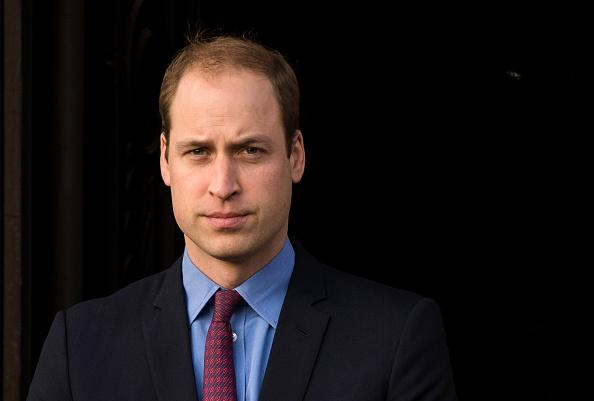
BALMORAL, Scotland — Prince William and Catherine, the Princess of Wales, arrived at Balmoral Castle on Thursday to join King Charles III for the royal family’s traditional summer stay in Scotland, days after news broke that Prince Harry and Meghan Markle plan to return to the United Kingdom after six years living in the United States.
The Prince and Princess of Wales began their visit accompanied by their three children, Prince George, 13, Princess Charlotte, 11, and Prince Louis, 8. The family typically travels to the royal residence in Aberdeenshire each summer for a break from official engagements, joining King Charles, who received his formal welcome to the castle on Tuesday, just two days after learning of Harry and Meghan’s plans to relocate back to Britain.
William has previously spoken about the significance the Scottish retreat holds for his family. “George, Charlotte and Louis are already aware of how dear Scotland is to both of us, and they’re beginning to create their own cherished memories there, too,” William has said of the annual visits.
HELLO! royal editor Emily Nash said William and Catherine are likely feeling less than enthusiastic about the timing of Harry and Meghan’s announcement, offering her assessment on the outlet’s “A Right Royal Podcast.” “Well, what is intriguing about this is the complete radio silence coming from that end of the spectrum. And what’s interesting about it is that they’re normally away at this time of year. I imagine they’re not delighted about this,” Nash said.
Nash suggested the damage done to the relationship between the two brothers over recent years would make any public reintroduction of Harry and Meghan into British life a significant challenge for the family to navigate. “It’s going to be a very, very difficult hill to climb, having them suddenly back in the UK, popping up, doing things publicly, if that’s where they go with this. So much has been said and done that has damaged that relationship, almost beyond repair,” she said.
According to Nash, it is likely that William and Catherine were informed of Harry and Meghan’s plans before the news became public, given that King Charles was told directly on Sunday. “I can’t see a world in which they would be welcoming them back with open arms. But you would anticipate that the King will have spoken to William about this if he was made aware,” Nash said. “We believe the Waleses were made aware beforehand. They didn’t find out at the same time as the rest of the world. So they’ve had time to process this.”
Harry and Meghan’s return does not involve any resumption of official royal duties. According to HELLO!’s reporting, the couple’s status will remain unchanged, with no partial or “half in, half out” arrangement under consideration. The Duke and Duchess of Sussex are expected to live in a non-royal residence outside London and have already enrolled their children, 7-year-old Archie and 5-year-old Lilibet, in British schools ahead of the upcoming school year.
King Charles learned of the couple’s plans to relocate on Sunday, and is reportedly looking forward to seeing more of the family, who first moved to the United States in 2020 following their departure from official royal duties. The king reunited with Harry, Meghan and their children at Highgrove House in Gloucestershire last month, marking the first time he had seen his grandchildren on the Sussex side of the family in four years.
William and Catherine’s arrival at Balmoral, alongside their children, places the full senior working core of the royal family together in Scotland at a moment of heightened attention on the broader family’s internal dynamics. Other family members have also been photographed arriving at the castle in the days following the initial announcement of Harry and Meghan’s return, including Princess Anne, along with Zara and Mike Tindall, according to subsequent HELLO! coverage describing what was characterized as a show of unity among the wider family gathered at Balmoral.
The renewed focus on Balmoral comes as King Charles has continued settling into his own summer stay at the estate, where he has been photographed meeting members of the public during informal walkabouts, a customary part of the royal family’s presence in the area each year. Those public appearances have continued even as the broader family works through the practical and emotional implications of Harry and Meghan’s imminent return.
The relationship between William and Harry has remained strained for several years, following the 2021 interview the Duke and Duchess of Sussex gave to Oprah Winfrey, in which they raised allegations regarding their treatment within the royal family, as well as the 2023 publication of Harry’s memoir, “Spare,” both of which are widely reported to have deepened the rift between the two brothers. Nash’s characterization of the relationship as damaged “almost beyond repair” reflects a broader assessment shared by several royal commentators in the wake of this week’s announcement, even as attention now turns to how the family will manage Harry and Meghan’s return to British life in the weeks ahead.
Neither Kensington Palace nor Buckingham Palace has issued a detailed public statement addressing William and Catherine’s specific reaction to the news of Harry and Meghan’s return, and much of the current reporting continues to rely on sourced commentary from royal correspondents rather than on-the-record statements from the family members themselves. As Harry and Meghan prepare to relocate to a private residence outside London later this month, attention is likely to remain focused on whether any direct meetings occur between the two branches of the family, and on how the gathering at Balmoral, now including both King Charles and the Prince and Princess of Wales, factors into the broader family’s response to the Sussexes’ return.

The United States has crossed a fiscal threshold few forecasters expected to see this year. The Treasury Department confirmed on August 19 that total gross national debt has surpassed $40 trillion, a milestone that arrived months ahead of schedule and comes wrapped in a set of numbers few Americans, or investors anywhere else, can easily process: roughly $117,000 per person, $297,000 per household, and a figure that now approximates the combined economic output of China, Germany, Japan, the UK, and India put together.
For Thailand, a small open economy with deep trade and capital-market links to the US dollar system, the milestone is not just an American headline. It touches everything from the baht’s exchange rate to the cost of servicing Thailand’s own public debt.
A Fiscal Milestone Years Ahead of Schedule
The US debt load has effectively doubled in under a decade, rising from roughly $19.4 trillion ten years ago to $40 trillion now. It took the country close to two centuries to accumulate its first trillion dollars of debt; it now adds that amount in under five months. Interest payments on the debt have grown large enough to exceed the entire US national defense budget, a threshold that budget hawks in Washington have flagged as a warning sign of fiscal strain.
Part of what pushed the milestone earlier than expected was a shortfall in tariff revenue after several of the White House’s trade levies were invalidated in court, cutting into a funding stream the administration had counted on. Treasury reported a monthly deficit of $432.3 billion in July, the highest since March 2021, with the year-to-date shortfall nearing $1.8 trillion.
Long-term borrowing costs have moved with the debt. The 30-year Treasury yield touched its highest level since 2007 this month, at 5.31 percent, while the 10-year sits near 4.7 percent. Those yields are not abstract numbers confined to Washington; they set the benchmark price of global capital, including the capital that flows into and out of Thai bonds and equities.
Rising Yields, Global Ripple Effects
Elevated US yields tend to pull capital toward dollar assets and away from emerging markets, Thailand included. TBN has previously examined the fragility signals building beneath record-high global equity markets, noting that concentration risk in US indices and stretched valuations leave the current wave of capital flowing into Southeast Asia more exposed than headline numbers suggest. A further leg up in US yields, driven by concerns over debt sustainability, would test that inflow directly.
The mechanism is already visible in Thai bond markets. The 10-year Thai government bond yield has climbed toward 2.3 percent this year, its highest level since February 2025, as the spread over comparable US Treasuries, currently around 200 basis points, keeps global funds calibrating their exposure to Thai fixed income against what Washington is paying. Foreign investors pulled over a billion dollars out of Thai bonds in a single month earlier this year during a bout of global risk aversion, a reminder of how quickly sentiment can turn when US rate expectations shift.
The Baht, Capital Flows, and Thai Debt Servicing
The interest-rate gap between the Federal Reserve and the Bank of Thailand has been the dominant force behind the baht’s moves in 2026. With the Fed’s policy range sitting 250 to 275 basis points above the BOT’s 1.00 percent rate, the dollar has retained a structural carry advantage that has periodically pushed USD/THB toward the 34 level. TBN has tracked this dynamic through the year, noting that Thailand’s roughly $279 billion in gross reserves provide a substantial buffer, meaning the current pressure looks more like a repricing than a funding crisis.
A US debt trajectory that keeps Treasury yields elevated, or pushes them higher still as investors demand greater compensation for holding US paper, would work against any near-term narrowing of that rate gap. That matters for the BOT, which has generally leaned toward an accommodative policy stance to support a fragile domestic recovery; a widening differential limits how much room the central bank has to cut further without triggering renewed baht weakness.
For the Thai government’s own borrowing, the read-through is more indirect but still relevant. Thailand’s public debt-to-GDP ratio stood at roughly 64 percent in the most recent fiscal year, low by comparison with many advanced economies, and the government funds the bulk of its needs domestically. But global benchmark yields still act as a floor beneath what Thailand pays to borrow, particularly for the growing share of debt issued to fund stimulus and energy-relief measures. The Public Debt Management Office has already leaned on notes and term loans this year as a liquidity cushion amid rising yields, a sign that Thailand is not entirely insulated from the global repricing of sovereign risk that a $40 trillion US debt load represents.
Thailand’s Relative Position
Set against Washington’s numbers, Thailand’s fiscal position looks comparatively conservative. Thai government debt equal to roughly 64 percent of GDP compares with a US debt load now approaching the full size of American GDP, a threshold economists have long treated as a red flag for fiscal sustainability. Thailand’s debt is also overwhelmingly baht-denominated and domestically held, reducing the currency-mismatch risk that has destabilized other emerging economies during past periods of dollar strength.
That relative discipline has not fully insulated Thai assets from global spillover, as the SET Index’s sharp swings this year illustrate, but it does give Thai policymakers more flexibility than counterparts in more heavily indebted economies. Bangkok’s growing appeal to global wealth, documented in TBN’s recent look at the city’s ultra-high-net-worth population growth, reflects in part a search for stability and institutional credibility at a moment when confidence in the fiscal trajectory of larger economies is being openly questioned.
What to Watch
The US debt path is likely to shape several storylines relevant to Thailand and the wider region over the coming months. The Federal Reserve’s rate decisions will remain the single biggest swing factor for the dollar-baht rate gap, with any hawkish surprise driven by inflation or fiscal concerns adding further pressure on the baht. Washington’s next debt-ceiling fight is also likely to arrive earlier than usual given the accelerated pace of borrowing, a recurring source of volatility for global risk assets. And with foreign holders of US debt watching yields climb to multi-decade highs, any shift in appetite for Treasuries, from China, Japan, or other major holders, would ripple quickly into emerging-market currencies and bond spreads, Thailand’s included.
For now, Thailand’s reserves, current account position, and comparatively modest public debt load offer a cushion. But a US fiscal trajectory adding trillions of dollars in debt every few months is a structural headwind that Thai policymakers, businesses, and investors will need to keep watching closely.

H.C. Wainwright cuts Envoy Medical stock price target on share count

Check out what’s clicking on FoxBusiness.com.
Neutrogena broke its silence Thursday following the death of Hayden Panettiere and mounting backlash over the skincare brand’s alleged treatment of the actress, acknowledging that it made her “feel unsupported during a very difficult time.”
Panettiere, known for her roles in “Nashville” and “Remember the Titans,” died Sunday at 36 after she was found unresponsive and in cardiac arrest at an apartment in Greenville, South Carolina.
Preliminary autopsy results found no signs of trauma that contributed to her death, Fox News Digital previously confirmed.
In the days following her death, fans unearthed comments made by Panettiere, who worked with Neutrogena from 2005 to 2015, in which she claimed the skincare brand cut ties with her after she spoke publicly about her experience with postpartum depression (PPD).
TIKTOK SAYS MODERATOR ERROR DELAYED REMOVAL OF PEREZ HILTON’S LIVESTREAM SHOWING ACTS OF SELF-HARM

Hayden Panettiere worked with Neutrogena for a decade before later claiming the skincare brand cut ties with her after she spoke publicly about postpartum depression. (Getty Images / Getty Images)
Neutrogena’s social media posts were subsequently flooded with negative comments, with some users calling for a boycott of the brand.
Neutrogena addressed the backlash in an Instagram post Thursday, saying it was “deeply saddened” by Panettiere’s death.
“For more than a decade, Hayden was a valued member of our Neutrogena community,” the brand wrote. “We are proud to have partnered with her and understand that we made her feel unsupported during a very difficult time. This is not what Neutrogena stands for or who we want to be.”
“Hayden’s courage in sharing her challenges helped inspire important conversations and awareness,” the post continued. “We are making a significant investment to a long-standing community health partner to help give more women access to the support they need, including care for postpartum depression. We will share more details with this community when plans are in place.”

Neutrogena acknowledged that it made longtime brand partner Hayden Panettiere “feel unsupported during a very difficult time” following backlash after the actress’ death. (Dimitrios Kambouris/Getty Images / Getty Images)
The brand said it had initially refrained from publicly commenting on Panettiere’s death out of respect for her family.
In her memoir, “This Is Me: A Reckoning,” released earlier this year, Panettiere wrote that Neutrogena wanted to end its long-term relationship with her after she spoke publicly about her experience with PPD.
During an appearance on Jay Shetty’s “On Purpose” podcast in May, Panettiere said she had not planned to discuss postpartum depression when the subject came up during a 2015 interview on “Live! With Kelly and Michael.”
“I had no intention of, or plan to, talk about postpartum depression. It just came up, and I was just being honest,” she said.
DAVE PORTNOY HAS MESSAGE FOR ‘TRASHY, RATCHET INFLUENCERS’ AMID VIRAL NANTUCKET SIGN CONTROVERSY
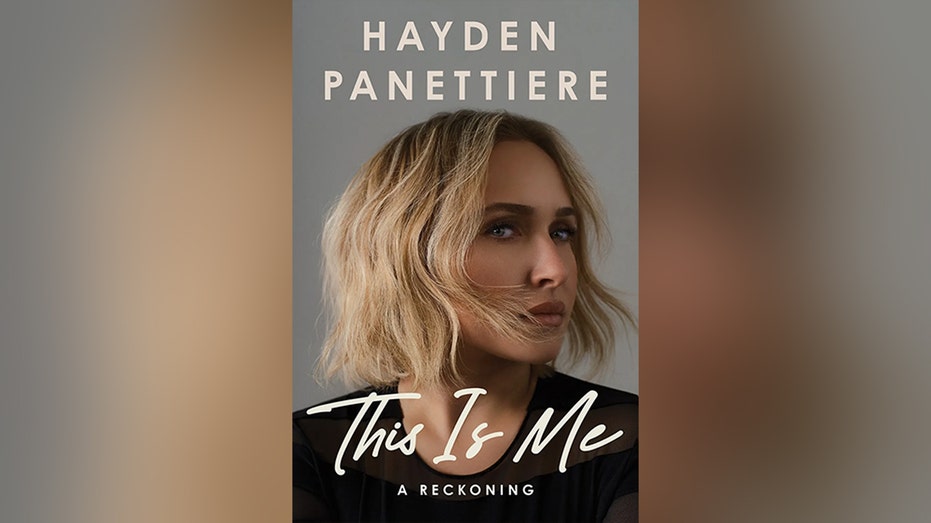
In her memoir, “This Is Me: A Reckoning,” Hayden Panettiere claimed Neutrogena wanted to end its longtime partnership with her after she spoke publicly about postpartum depression. (Grand Central Publishing / Unknown)
“Never for a second did I think that anyone … cared, that anyone would have a bad reaction to it. It was my truth.”
Panettiere said losing the Neutrogena partnership was “the last thing that I thought they would ever fire me over.”
“And so when I got that call that Neutrogena wanted to fire me over that, and my representative at the time said, ‘That’s illegal you can’t do that,’ I knew that that was gonna be it, that I was not gonna be invited back the next year, and I had worked with those people for 10 years.”
Panettiere’s death came just weeks after she spoke publicly about her past struggles with addiction and the difficult decisions she made while seeking help.
GET FOX BUSINESS ON THE GO BY CLICKING HERE
Fox News previously reported that the Drug Enforcement Administration (DEA) has been contacted and is assisting in the investigation into Panettiere’s death.
FOX Business has reached out to Neutrogena for additional comment.
Fox News Digital’s Lorraine Taylor and Stepheny Price and Fox News’ Jake Gibson contributed to this report.


Seeking Alpha’s transcripts team is responsible for the development of all of our transcript-related projects. We currently publish thousands of quarterly earnings calls per quarter on our site and are continuing to grow and expand our coverage. The purpose of this profile is to allow us to share with our readers new transcript-related developments. Thanks, SA Transcripts Team

Bitcoin's Bear Is Ready For Hibernation

A former chair’s action against Lindian Resources has dragged on in the WA Supreme Court after the latter failed to file documents by the imposed deadline.

Wells Fargo upgrades Portland General Electric stock rating on holding company benefits
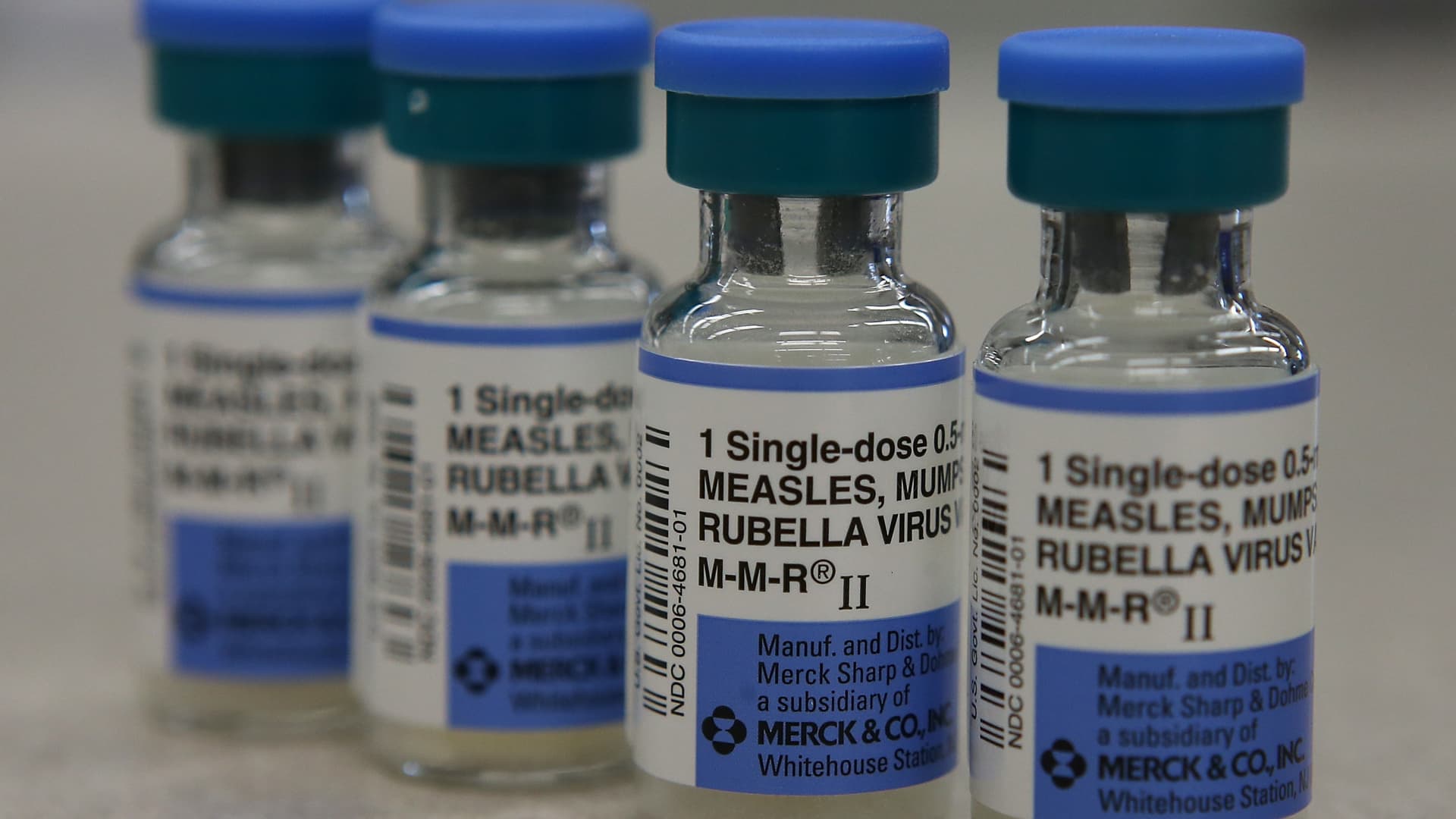
Vials of measles-mumps-rubella vaccine are displayed on a counter at a Walgreens Pharmacy in Mill Valley, California, Jan. 26, 2015.
Justin Sullivan | Getty Images News | Getty Images
Record measles cases and rising childhood vaccine exemptions in the U.S. have fueled concerns that Americans are increasingly turning against vaccines.
But the reality may be more complicated than that.
The biggest challenge for public health officials trying to contain deadly diseases may not be widespread anti-vaccine sentiment or the influencers and political figures who spread it. Only a small share of Americans indicate they firmly believe common myths about the shots, according to a survey released in July by health policy research organization KFF.
Many other Americans fall into a large, uncertain middle ground — neither firmly pro-vaccine nor staunchly opposed — where they have questions or anxieties about shots and may be susceptible to conflicting messages about their safety and effectiveness.
KFF presented adults with four common vaccine myths. Fewer than 1 in 10 respondents said each claim was definitely true. But at least half fell into a gray area, saying the claims were either “probably true” or “probably false.”
“What’s more true is a lot of people are confused,” Drew Altman, KFF CEO and founding president, said in an interview. “They don’t know who to believe, they don’t know what to believe, and that means that a lot of America is stuck in the middle, unsure and they’re up for grabs.”
That uncertainty could pose a growing public health hazard as the Trump administration reshapes federal vaccine policy and health officials grapple with declining immunization rates for some shots. Vaccine misinformation has a larger megaphone than ever with Trump in the White House: Earlier this month, without evidence, he linked the measles-mumps-rubella vaccine to autism, as he called for splitting the routine childhood immunization into separate shots.
People who are confused about vaccines may become “paralyzed” and delay or avoid decisions such as whether to immunize their children, Altman said.
The majority of Americans still get themselves and their children vaccinated, but “even little dips in that coverage could lead to more of a highly contagious virus like measles circulating,” said Jess Steier, a public health scientist and founder and CEO of Unbiased Science, which specializes in making complex scientific concepts understandable.
Still, she emphasized that while people with questions about vaccines may be susceptible to misinformation, they can also be reached through clear, evidence-based information and conversations with trusted healthcare providers.
“Uncertainty can resolve once people have time, information and access,” she added.
Why people are uncertain about vaccines
Vaccine hesitancy is much more complicated than outright opposition to vaccines, Steier said. Social media and the current political environment only fuel more of the confusion, she added.
People are often exposed to emotionally charged, alarming content online because social media algorithms tend to amplify it, Steier said. As a result, many people are encountering conflicting messages about vaccines and struggling to determine which sources are trustworthy. Rather than being firmly anti-vaccine, many are simply overwhelmed by competing information, she said.
Some of that messaging comes from political leaders such as Trump and Health and Human Services Secretary Robert F. Kennedy Jr., which makes the challenge facing other public health officials tougher. Kennedy has frequently said that he is not “anti-vaccine,” but he has a well-documented history of spreading scientifically inaccurate information around vaccine safety and efficacy.
Secretary of Health and Human Services Robert F. Kennedy Jr. speaks during a press conference at the Health and Human Services headquarters in Washington, Feb. 23, 2026.
Nathan Howard | Reuters
Based on years of reviewing comments, questions and survey responses from people engaging with Unbiased Science’s social media platforms, Steier developed a framework for understanding vaccine hesitancy.
She identifies five broad groups: “Lost” people who are confused by conflicting information and don’t know whom to trust; “Anxious” people who fear side effects; “Naturalists” who prefer natural immunity and are skeptical of medical interventions; “Distrusters” who are broadly suspicious of institutions such as government, medicine and pharmaceutical companies; and “Shruggers,” who aren’t opposed to vaccines but don’t view them as a priority or necessary for themselves.
Steier noted that while those are major factors driving vaccine hesitancy, people likely won’t “cleanly fall into one of these buckets.”
Dr. Lori Handy, an attending physician and associate director of the Vaccine Education Center at Children’s Hospital of Philadelphia, agrees.
“What we actually find is that individuals don’t bucket as nicely as we want because the factors that play into either having questions or having hesitancy about vaccines are really complex and are coming together as this combination of social factors, religious factors, access factors and who’s on their Instagram feed,” she said in an interview.
Some people’s beliefs about one vaccine may not even transfer over to another shot at times, Handy added.
Andrew, a 19-year-old from Pennsylvania who asked that his last name be omitted for privacy, said his family is the primary reason why he has not yet received any vaccines. He said several factors shape his family’s skepticism about immunization: misinformation, distrust of the healthcare industry and the government, and their religious background.
He said he grew skeptical of his family’s vaccine positions over time and eventually researched immunizations, which helped him “know the reality better” and decide to start getting vaccinated. He said he’s “fairly certain” he’ll get caught up on all the major vaccines over the next few months.
He said he still has a few concerns about vaccines, such as potential side effects, but noted that the bigger issue at hand is the conflict his decision could create within his family.
Measles cases rise, childhood vaccinations fall
A sign that says “measles testing” is seen during an outbreak in Gaines County, Texas, that has raised concerns over its spread to other parts of the state, in Seminole, Texas, Feb. 25, 2025.
Sebastian Rocandio | Reuters
Many Americans are uncertain about vaccines at a time when the U.S. is seeing record cases of measles, potentially heightening the risk to public health.
The U.S. has so far reported 2,566 confirmed measles cases and 38 new outbreaks across 47 jurisdictions this year, marking a 35-year high that surpasses 2025’s previous multidecade record, according to data released this month from the Centers for Disease Control and Prevention. More than 93% of the infected individuals are unvaccinated or have an unknown vaccination status, the agency said.
At the same time, U.S. childhood vaccination rates have inched down to about 92% for kindergartners, while nonmedical exemptions reached a record high of 4.2% during the 2025-2026 school year, the CDC said this week. Those exemptions — the majority of which are for non-medical reasons — represent an estimated 155,000 children nationally.
This postpandemic decline in both figures leaves some communities vulnerable and could help fuel the resurgence of preventable illnesses such as measles.
“This is one of those really terrifying things about certain infectious diseases — they are just so spreadable in so many areas, and when you have a high population of unvaccinated individuals, they will inevitably get infected when they encounter that virus,” Steier said.
Handy said hesitancy around the measles vaccine dates back to 2000 or even earlier. She cited a publication, which has since been retracted, that tried to link the measles-mumps-rubella, or MMR, vaccine to autism despite studies repeatedly proving that there is no relationship.
Still, that unfounded claim has continued to make some parents question the MMR shot, Handy said. Over the last two to three years, political leaders have further added to that skepticism by questioning the measles vaccine and attempting to change recommendations around it.
Trump this month signed an executive order that suggests splitting the MMR shot, falsely claiming that the combined version is “quite lethal” and tying the vaccine and other jabs to autism. That type of rhetoric “makes parents less and less likely to vaccinate their child because they are seeing individuals in a position of authority who do not endorse it,” Handy said.
While the infectious disease and pediatric communities still strongly recommend the measles vaccine due to its safety record, some parents trust different authorities, she added.
“All of a sudden, vaccine science has become a political issue or a partisan issue in a way that we’ve never seen before, and it is really, really challenging to be part of the American public and not know which message to trust because we are seeing different messages come out from the government, from our healthcare providers, from different health authorities, and people really have to then decide,” Handy said.
Approaching hesitant individuals
Health experts said that addressing vaccine-hesitant people starts with listening rather than lecturing.
“We’ve been a bit more paternalistic in the past, where we tell people things versus listening first and understanding why they might be hesitant or what questions they have,” Steier said. “A lot of this, in my opinion, centers on listening first, understanding what’s driving the hesitancy, not dismissing these things outright.”
Instead of dismissing social media as a source, providers should acknowledge that many people rely on platforms such as TikTok for health information and then help them compare that information with evidence from trusted medical sources, Handy added.
The goal is to have an open conversation that addresses individual fears and helps people better evaluate the information they see, she said.
Handy also argued that vaccines have become victims of their own success.
Because diseases such as measles were largely eliminated for decades, many parents have never seen the illness firsthand and don’t view it as a serious threat. As a result, the perceived risk of the disease is lower than the perceived risk of the vaccine, she said.
“We’re in a different period with a different risk profile that people need to understand for their child,” Handy said. “Let’s revisit this question that parents may have because times have changed, and we need to really keep their child safe.”

What 72,000 Bodies at a Fence Revealed about Africa and Europe

Manchester United’s new supporter zone complete with stage and food trucks

New dementia study challenges assumption that ‘every move counts’ for brain health

Weekend Open Thread – Corporette.com

Weekend Open Thread: Brooks Brothers

London Mayor Sadiq Khan handed a peerage by Keir Starmer alongside 15 other Labour figures… just days before the PM leaves No10

What The FED And BiS Just Said About Crypto Is SHOCKING!!! Clarity News, ETH & ADA News! BTC TA!?

GFR 2017 Class | UPSC Principal & Vice Principal General Financial Rules | Delhi Principal Vacancy

Financial Literacy for Beginners: A Comprehensive Guide – Step 3
-

 Fashion7 days ago
Weekend Open Thread: Ann Taylor
-

 Sports6 days ago
Birmingham 2026: Day 6 Timetable for Irish Athletes
-
 NewsBeat6 days ago
Myanmar says over 300,000 Rohingya refugees verified for repatriation as exodus enters ninth year
-

 Business3 days ago
SMA Solar Technology AG (SMTGY) Q2 2026 Earnings Call Transcript
-

 Politics6 days ago
SEQ Code: The Three Letter Boarding Pass Code That Could Give You The Worst Seat
-

 Tech3 days ago
Qwen3.8-27B runs frontier-class coding agents and reasoning locally, no cloud API required
-

 Crypto World6 days ago
Pi Network Protocol 27 endgame: last upgrade before what?
-

 Crypto World4 days ago
OCC Greenlights Trump Family Crypto Firm for Trust Charter
-
 Tech6 days ago
Every fusion startup that has raised over $100M
-
 Entertainment6 days ago
Marvel Studios Reveals New X-Men Cast Including Adam Driver and Sadie Sink
-
 Business6 days ago
Monarch Mutual Fund set to enter MF space with maiden overnight fund; files draft with Sebi
-

 Fashion7 days ago
Weekly News Update, 8.14.26 – Corporette.com
-

 Business6 days ago
Facebook Down Now? Users Report Login And Loading Problems As Outage Trackers Monitor Ongoing Issues
-

 Fashion7 days ago
Silver bangles for women – Newbridge Silverware
-

 Business6 days ago
Cristiano Ronaldo’s Secret Wedding Deepens As Presenter Claims Family Learned ’30 Seconds’ Before
-

 News Videos1 day ago
Don’t Leave Your Financial Future To Chance | August 19, 2026
-

 Crypto World4 days ago
NAVI Prime launches institutional lending framework on Sui
-

 Fashion7 days ago
Cart Confidential Vol. 44 – Julia Berolzheimer
-
 Crypto World5 days ago
Data of 54K Wallet Users Leaked, Clarity Odds Just 10%: Hodler’s Digest, Aug. 16
-
 Fashion7 days ago
knitwear for women sale – up to 50% off
You must be logged in to post a comment Login