And not just any trader – a household name, no less. It’s always a pleasure to be at my neighbour’s house when “the Ringtons man” calls. Ringtons tea and coffee business is 119 years old – a mere 22 years older than Betty, who lives over the road from me.
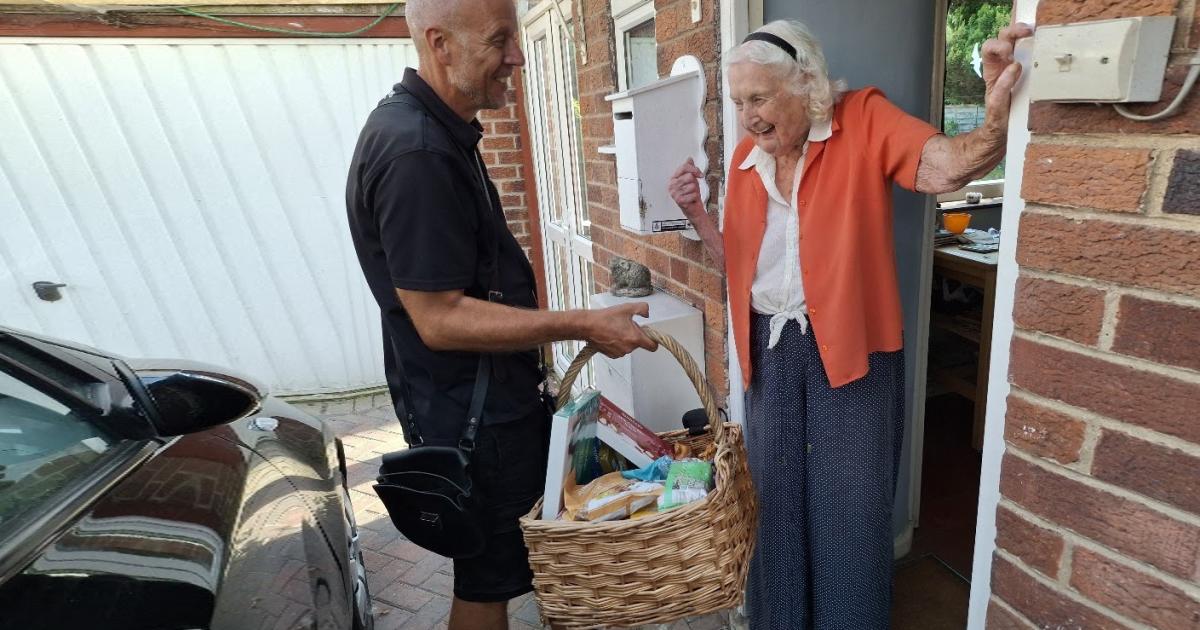
As vans whizz up and down our lane and drivers race to and fro leaving cardboard boxes on doorsteps, the Ringtons man – aka Lee – knocks on Betty’s door with a basket full of goodies from beverages to biscuits and cakes, from which she takes her pick – she’s very partial to ginger snaps.
Of course, Lee arrives by van, but once he’s in the street, the basket takes over.It’s a lovely, nostalgic scene to witness, like something from another era, and takes me back to my childhood when many goods were brought to our North Yorkshire village by local traders. There was Eric the butcher whose van drew up on the high street every Saturday afternoon. I used to love climbing the steps into the back of it and watching Eric cutting meat for my mum. Often, Eric would walk down our path with a pre-ordered joint of beef Mum had ordered for Sunday dinner.
Our village had a visiting grocery van that sold everything, from cereal to soap. I loved its little wooden shelves. I have a vague memory of a bread van too, and a weekly fishmonger’s van also pulled up in the high street, in a different spot to Eric. These traders were always on time, and drew many customers, who chatted while waiting their turn.
In those days everyone had their milk delivered. In common with everybody in the village, ours came from Bert Smith, the milkman who lived locally. We would hear the glass bottles clinking as he left them on our doorstep while we were getting up for school.
A local coalman, who travelled in the van with his pet Alsatian, brought fuel for the fire and coke for the boiler, heaving it onto his back before tipping it into the bunker.
My parents knew all these traders by name, as did everyone. When they called, they often spent half an hour chatting, passing on titbits from neighbouring communities. Sometimes, they would stop for a cup of tea.
![]() There are more delivery vans on our roads than ever before
There are more delivery vans on our roads than ever before
Today’s world brings different types of home delivery. Our streets now have more vans coming and going than ever before, dropping off goods of every type and size. But whereas in the past it was the trader who brought them to your street, now it’s specialist fleets of delivery personnel. Nowadays people order their entire supermarket shop online, waiting at home for it to be dropped off.
There is little time for social niceties. Most drivers work on strict, computer-planned routes with tight delivery time slots. They may have a quick chat, but are under pressure to deliver their quota within certain deadlines.
Buying online brings a blink-and-you-miss-it delivery, all very impersonal. We rarely get to meet the people behind the goods and few people know those making deliveries by name.
The decades did roll back a little during the pandemic, when local traders started home delivery rounds to help people out. It kindled memories of an almost forgotten way of life.
It’s not all disappeared. Our street does have a milkman who delivers to a handful of homes, bizarrely, around 11pm after we have gone to bed. I am ashamed to say that we don’t use him.
Todays way of life moves at a different pace. We have almost instant access to everything, and that’s what we want. But we have lost a special sense of community along the way.




















































You must be logged in to post a comment Login