
Crypto World
Institutional Demand Is Back: Bitcoin and Ethereum ETF Inflows Reached 10-Month High

In a sudden but very impactful change in investor behavior, the spot exchange-traded funds tracking the largest cryptocurrency attracted almost $2 billion in fresh funds in the past five business days alone.
The Ethereum counterparts also set a multi-month peak, gaining nearly $700 million within the same timeframe.
Spot BTC ETFs Attract $1.92B
The week started on the right foot, with almost $300 million in net inflows on Monday and another $189.30 million on Tuesday. However, investors picked up the pace on Wednesday after the US Treasury Department announced it would double the maximum size of liquidity-support buybacks for longer-dated government debt, raising them from $2 billion to at least $4 billion per operation.
This had a dramatic effect on risk-on assets like crypto and investor appetite. The spot Bitcoin ETF net inflows skyrocketed to $517 million on that day and then exceeded $606 million on Thursday, the best single-day performance since May 1. Another $307.45 million entered the funds on Friday, ending the perfect green-only week, in which the financial vehicles attracted a total of $1.92 billion.
The total inflows have rocketed from under $51.8 billion at the end of the previous week to over $53.7 billion on August 21.
This made last week the best in terms of net inflows since the one that ended on October 10, when investors poured in $2.71 billion. Recall that this was the trend-changer, as BTC experienced one of its worst crashes at the time, resulting in over $19 billion in liquidations within 24 hours.

Naturally, these ETF inflows were among the reasons behind the underlying asset’s spectacular price revival in the past week. It traded below $65,000 before the Treasury Department’s announcement but skyrocketed by over $15,000 to nearly $80,000 by Friday.
ETH ETFs on a Roll, Too
The landscape around the spot Ethereum ETFs is rather similar, as they have also attracted the most funds since October 2025. In their case, the actual numbers were just under $700 million. And, the net inflows saw a major uptick after the Wednesday announcement, going from $30.85 million on Monday and $71.47 million on Tuesday to $189.15 million on Wednesday, $220.77 million on Thursday, and $185 million on Friday.

The cumulative total net inflows have risen from $11.45 billion at the end of last week to $12.15 billion on August 21. Expectedly, ETH’s price also went on a highly impressive run, surging from $1,900 on Wednesday to over $2,500 on Saturday morning, where it was stopped and now sits $100 lower. The weekly gains, though, are over 28%.
The post Institutional Demand Is Back: Bitcoin and Ethereum ETF Inflows Reached 10-Month High appeared first on CryptoPotato.



Onchain investigator ZachXBT said he may automatically reject future requests from crypto victims in seven jurisdictions.
Summary
- ZachXBT said he may automatically reject future victim requests originating from seven named jurisdictions worldwide.
- Canada, the UK, India, Nigeria, Morocco, Algeria and Bangladesh appeared on his stated list publicly.
- His planned website would restrict access from jurisdictions he personally characterized as low quality regions.
- No launch date, website address, eligibility rules or appeal process has been publicly disclosed yet.
- The proposed restrictions reflect ZachXBT’s personal experiences, not government sanctions, court orders or legislation anywhere.
The named jurisdictions were Canada, the UK, India, Nigeria, Morocco, Algeria and Bangladesh. ZachXBT reportedly based the proposed restrictions on his personal experiences handling cases connected to victims in those locations.
He also plans to restrict access to some support services through an upcoming website. However, no website address, launch date or complete access policy had been published when this report was prepared.
ZachXBT may filter cases by victim location
ZachXBT reportedly described the named jurisdictions as producing some of his worst case-handling experiences. He said he would “likely automatically reject” future assistance requests originating from those regions.
The remark describes a possible future policy rather than an active prohibition. There is no evidence that he has already blocked every request from the seven jurisdictions or stopped working on cases previously submitted by their residents.
“Likely automatically reject” remains a stated intention. ZachXBT has not published final eligibility rules or confirmed that every applicant from the named jurisdictions will be refused.
The list reflects ZachXBT’s personal assessment. It does not come from a government agency, court or international sanctions authority. The remarks also did not provide case data showing how many requests he received from each country or why individual cases produced poor outcomes.
Planned website will restrict some regional access
ZachXBT said his forthcoming website would prevent users in some jurisdictions he considers “low quality” from accessing crypto support services. The wording suggests that the platform could use regional eligibility controls when accepting investigation requests.
“Low quality” is ZachXBT’s subjective description. No published methodology, performance data or independent assessment currently supports that classification.
Important operating details remain unavailable. ZachXBT has not disclosed which services the website will provide, whether restrictions will depend on residency or internet location, or whether applicants can challenge an incorrect classification.
He also has not said whether exceptions will apply to large thefts, coordinated attacks or cases involving victims across several countries. No fee model, privacy policy or terms of service have been released publicly.
The lack of details prevents confirmation that all seven named jurisdictions will be blocked at launch. The policy could change before the website becomes operational.
Independent investigators fill a recovery gap
ZachXBT regularly traces funds stolen through phishing, wallet compromises and exchange-related scams. His work can identify transaction paths, deposit addresses and links between wallets. Such findings may help exchanges or authorities assess a victim’s report, but an investigator cannot independently freeze or return assets.
That limitation matters because recovery frequently requires cooperation from centralized exchanges, stablecoin issuers and law enforcement agencies. Blockchain tracing can show where assets moved, but control over a destination wallet or exchange account remains with its operator.
In one earlier investigation, ZachXBT estimated that Coinbase users lost at least $65 million through social-engineering scams during two months. Coinbase did not confirm that estimate.
More recently, his analysis helped trace funds after a fake Ledger application stole $9.5 million from more than 50 reported victims. The incident showed how individual researchers can become an informal point of contact after large thefts.
Victims still have official reporting routes
The proposed restrictions would apply to ZachXBT’s private assistance, not to official reporting channels. Victims can still contact local police, national fraud-reporting agencies, exchanges, wallet providers and relevant financial regulators.
They may also submit transaction hashes, wallet addresses and communications from suspected scammers to blockchain analytics companies. Prompt reporting can matter when stolen assets reach a centralized service capable of restricting an account.
The next verified development will be the publication of ZachXBT’s website and its written eligibility policy. Those materials should clarify which countries are restricted, what services remain available and whether current cases will continue.
Until then, the comments should not be presented as a completed ban. They indicate that ZachXBT is considering location-based limits after what he described as poor personal experiences handling cases from the seven jurisdictions.


Rep. Rashida Tlaib holds up to $30,000 in iShares Bitcoin (BTC) Trust ETF positions and up to $15,000 in a Grayscale Ethereum (ETH) staking fund, her latest financial disclosure shows.
The Michigan Democrat voted against the CLARITY Act in July 2025 and co-sponsored a resolution targeting crypto corruption. The Senate takes up the same bill in September.
What the Disclosure Shows
Tlaib filed her annual disclosure covering 2025 on August 11, 2026. It lists the iShares Bitcoin Trust ETF (IBIT) in two separate accounts. Her Schwab Rollover Traditional IRA and her Schwab Roth Contributory IRA each hold a position valued at $1,001 to $15,000.
The Roth IRA also holds the Grayscale Ethereum Staking Mini ETF, which is likewise valued between $1,001 and $15,000. Combined, the three positions represent between $3,003 and $45,000 in crypto exposure. Lawmakers disclose assets only in broad ranges.
The filing shows Tlaib bought IBIT on April 28 and May 29, 2025. Both purchases coincided with rollovers of two employer retirement plans into her Schwab accounts. The exposure comes entirely through exchange-traded funds. The filing lists no directly held cryptocurrencies.
Follow us on X to get the latest news as it happens
A Voting Record That Points the Other Way
Tlaib voted against the CLARITY Act when the House passed it 294-134 in July 2025, House records show. The bill would establish a market structure framework for digital assets. The Senate holds a procedural vote on it on September 15.
In October 2025, Tlaib co-sponsored the Ban Crypto Corruption Resolution led by Rep. Ro Khanna. It calls on politicians and their immediate families to refrain from issuing, sponsoring, or endorsing digital assets. It also urges blind trusts for their digital asset holdings.
Her skepticism dates back further. In 2020, she introduced the STABLE Act. The bill sought to make it illegal to issue a stablecoin unless the issuer was an insured depository institution and a Federal Reserve System member. The bill died in committee.
Subscribe to our YouTube channel to watch leaders and journalists provide expert insights
The post Crypto Skeptic Rashida Tlaib Holds Bitcoin and Ethereum ETFs appeared first on BeInCrypto.
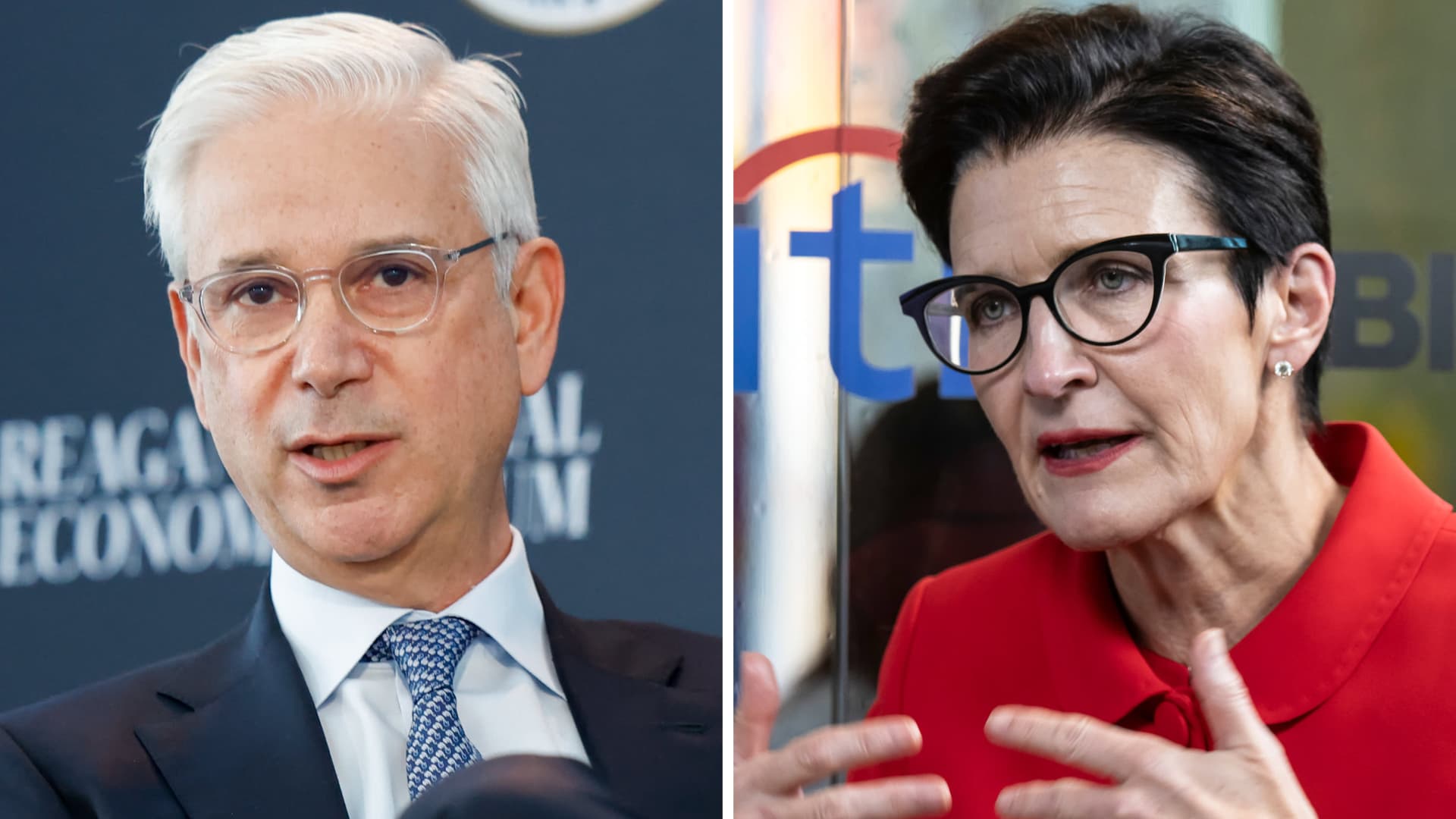
Charles Scharf, chief executive officer of Wells Fargo & Co., and Jane Fraser, chief executive officer of Citigroup Inc.
Caroline Brehman | Qilai Shen | Bloomberg | Getty Images
Walk the halls of any major banking conference or listen in on a quarterly earnings call, and one topic keeps coming up: With the window for mergers wide open under the Trump administration, who will take a swing?
After years on the sidelines because of regulatory restrictions, large banks can once again contemplate buying other lenders, even a $100 billion-plus-asset regional bank.
While JPMorgan Chase and Bank of America are barred from such a deal because they already have more than 10% of national deposits, there are two megabanks that could pursue a large acquisition: Citigroup and Wells Fargo. The nation’s third- and fourth-largest banks have enough room under the national deposits cap to pursue a hefty regional bank, according to investment bankers, consultants and investors.
“Two years ago, it was impossible for a bank of that size to get approval to acquire almost anything,” said Brian Graham, co-founder of advisory firm Klaros. “Now, it’s possible they can get a deal done. I’d be shocked if they aren’t exploring it.”
After spending much of the last decade in a penalty box — Citigroup via consent orders and Wells Fargo capped by growth restrictions — both institutions have cleared key regulatory hurdles and are in growth mode.
A large acquisition — like the ones that rival JPMorgan pulled off during the crises of 2023 and 2008 — would give Wells Fargo or Citigroup thousands of branches and billions of dollars in deposits.
For Citigroup, which has only about 650 U.S. branches, it would offer a much-needed source of cheaper funding. For Wells Fargo, which already has a large branch network, such a transaction would add more scale and cost-cutting opportunities.
“There’s a massive race for scale, and the shot clock is running,” KBW analyst Chris McGratty said about the broad need for industry consolidation. “If you want to do something, this is the time to do it.”
While there are over 4,200 banks in the U.S., only a handful would make sense as acquisition targets for Wells Fargo or Citigroup. A viable target needs to be large enough to move the needle, but small enough to keep the acquirer comfortably beneath the 10% national deposit cap. On top of that, a complementary branch network, good cultural fit and quality deposits are must-haves, making most deals hard to justify.
Run screens on those criteria, and five regional banks emerge as strong contenders for either bank.
Fifth Third delivers a commercial and retail engine across the Midwest and a fast-growing Southeastern footprint. Huntington provides a low-cost deposit base alongside a growing branch presence in high-growth markets in Texas and the Carolinas.
Citizens offers dense retail and commercial coverage across affluent Mid-Atlantic and New England cities. KeyCorp brings a middle-market commercial business and branches stretching from the Great Lakes to the Pacific Northwest.
Finally, Regions delivers a retail deposit footprint in the fast-growing Southern corridor, including Texas and Florida.
Beyond that group, a bank that would work specifically for Wells Fargo is Zions, which provides relationships across high-growth Western states, fitting well with its footprint.
For Citigroup, a possible target that makes sense is First Horizon, with its presence across the fast-growing U.S. Sunbelt.
Wells Fargo and Citigroup declined to comment for this article. Most of the regional banks mentioned above also declined to comment, with the exception of Huntington, Zions and First Horizon, which did not respond.
‘We will look at it’
When asked about the potential for Citigroup to purchase a large bank in April, CEO Jane Fraser said the bank’s focus is on organic growth, not deals.
Still, Citigroup executives reportedly discussed the idea of buying a major regional lender to bolster its deposit base, Bloomberg News said in March. Citigroup said at the time that the report was “baseless speculation.” The firm’s shares dropped more than 4% that day.
To many of the analysts covering the bank, Citigroup is still trying to prove that its self-help story can deliver higher returns. Taking on a large regional bank would add branches, employees, technology systems and integration risk while Citigroup is trying to simplify itself.
“A depository deal would be a major distraction” for Citigroup, said KBW’s McGratty.
Wells Fargo CEO Charlie Scharf, on the other hand, has telegraphed an openness to a transformative deal, from acquiring a bank to a credit-card player, even as he also emphasized the organic growth emphasis.
“We should always consider ways to increase franchise value, including M&A,” Scharf wrote in a March shareholder letter, acknowledging that regulators were more amenable to deals.
While “we feel no pressure to pursue” a deal, Scharf said, “if a great opportunity exists, we will look at it.”
But there’s one problem: So far, the wave of consolidation that many expected when Trump returned to office in 2025 hasn’t materialized. In fact, the value of North America bank mergers actually fell by more than half to $30.1 billion in the first six months of 2026 compared to the year-earlier period, according to EY data.
Yes, regulatory barriers may be falling. But few banks are eager to sell when profits and share prices are rising.
“Most companies have good profit margins, stock prices are really good, and it just raises the bar if they are going to sell,” said Frank Sorrentino, a mergers banker at Stephens. “Everybody thinks they’re a buyer, not a seller.”
Activist investors who have pushed banks to improve shareholder returns say executives are now routinely comparing the economics of an acquisition with simply repurchasing their own stock, creating more discipline around deals.
Regional champion?
The moment is still favorable for mergers, according to Sorrentino, who called it “probably the best environment that we’ve seen since the financial crisis.”
Last year, Congress overturned Biden-era restrictions around mergers at the Office of Comptroller of the Currency, and the Federal Deposit Insurance Corporation reinstated its long-standing merger guidelines, effectively restoring expedited reviews and lowering the bar for regulatory clearance.
When it comes to big acquisitions, Wells has something Citi doesn’t: a stronger stock currency. That could make a deal easier to justify, particularly if the target fills a geographic or product gap.
But another way to win the race is for regionals to team up with each other.
For years, bankers have speculated that two of the three biggest super-regionals — PNC, U.S. Bancorp and Truist — could eventually combine to create a new banking champion capable of taking on the giants.
Bain projects that mergers among regionals will create one to three new megabanks with at least $1 trillion in assets by 2030, according to new research shared with CNBC. The consulting firm’s predictive model, which was based on two decades of data, also found that the ranks of regional banks will shrink from 49 to as few as 30.
“We expect more banks, particularly regional players, to use M&A to add capabilities,” especially around technology including artificial intelligence, Bain said.
That idea hasn’t gone away. If Wells Fargo and Citi decide not to swing, the regionals have to decide whether they can afford to sit on the bench — or merge with each other to keep pace.


Robert Kiyosaki renewed his call to buy Bitcoin on Aug. 22, arguing that financially educated investors use scarce assets to protect their wealth from inflation and a weakening U.S. dollar.
Summary
- Kiyosaki urged investors to buy Bitcoin, gold, silver, and selected real estate as dollar hedges.
- Treasury is doubling long-dated buyback limits to at least $4 billion per operation in September.
- Treasury buybacks manage market liquidity and debt operations; they are not Federal Reserve quantitative easing.
- Kiyosaki’s $350,000 Bitcoin target for August 2024 did not materialize despite his continuing long-term bullish forecasts.
- Bitcoin traded near $76,000 following a weekly rally supported by ETF inflows and short liquidations.
The “Rich Dad Poor Dad” author recommended Bitcoin, gold, silver and selected real estate. He claimed the Treasury’s decision to expand long-dated bond buybacks represented another round of quantitative easing and the creation of “fake dollars.”
That description does not match the Treasury announcement. The buyback program is a debt-management operation, while quantitative easing is a monetary-policy tool conducted by the Federal Reserve.
Kiyosaki links Bitcoin to financial education
Kiyosaki argued that knowledgeable investors acquire assets capable of appreciating while people holding cash lose purchasing power. He told followers “don’t be a loser” and repeated his view that financial ignorance carries a greater cost than education.
His statements reflect an investment opinion, not verified evidence that people buying Bitcoin are more financially educated than those who avoid it. Investors may hold cash for liquidity, emergency expenses or short-term obligations rather than as a long-term inflation hedge.
Kiyosaki has also acknowledged that BTC can produce losses when investors buy during periods of market excitement. As crypto.news previously reported, he warned against buying assets solely because of hype during Bitcoin’s May correction.
That earlier warning adds context to his latest message. Financial education may help investors assess risk, but it does not remove BTC’s price volatility or guarantee positive returns.
Treasury buybacks are not quantitative easing
The U.S. Treasury announced on Aug. 19 that it would increase liquidity-support buybacks for nominal securities in the 10-to-20-year and 20-to-30-year maturity sectors.
The maximum will rise from $2 billion to at least $4 billion per operation beginning Sept. 9, according to the Treasury. The increased limit will remain in place through Nov. 4, when officials plan to provide more information during the next quarterly refunding.
Treasury said the change was intended to support liquidity in longer-dated securities. It did not describe the program as quantitative easing or announce the creation of new currency.
The Federal Reserve defines quantitative easing as large-scale asset purchases used as a monetary-policy tool. Those purchases expand the central bank’s securities holdings and can increase reserve balances. Treasury buybacks instead replace selected outstanding debt through the government’s established financing operations.
Kiyosaki’s characterization of the action as “printing fake $” is therefore political and rhetorical, not a technical description of the program.
Bitcoin rallied as bond yields and the dollar weakened
Bitcoin traded near $76,000 on Aug. 23 after approaching $79,500 two days earlier. The cryptocurrency gained more than 20% over the week before retreating from the local high.
The rally followed the Treasury announcement, falling long-term bond yields and a weaker U.S. dollar. Forced short liquidations accelerated the initial move, while U.S. spot Bitcoin exchange-traded funds later added stronger evidence of direct demand.
The funds recorded approximately $1.92 billion in net inflows across five sessions. In related coverage, crypto.news found that ETF demand joined the short-covering rally after Bitcoin broke above $70,000.
The timing supports a connection between market liquidity expectations and Bitcoin’s rally. It does not prove Kiyosaki’s broader claim that Treasury operations will produce inflation or permanently weaken the dollar.
Kiyosaki’s forecasts require caution
Kiyosaki has repeatedly issued aggressive Bitcoin targets. In June 2024, he said BTC would reach $350,000 by Aug. 25 of that year. He described the figure as a “target, a dream, and a wish.” The forecast did not materialize.
He later proposed targets of $500,000 and $1 million with different deadlines. Those projections remain speculative and are not supported by a disclosed valuation model.
Kiyosaki has also sold BTC while remaining publicly bullish. In November 2025, he sold $2.25 million in Bitcoin at approximately $90,000 per coin and directed the proceeds toward surgery centers and a billboard business.
BTC’s next market test is whether spot demand can support prices after the short squeeze ends. Treasury’s higher buyback limits begin Sept. 9, providing a defined date for assessing their effect on long-term yields and broader risk markets.
Disclosure: This article does not represent investment advice. The content and materials featured on this page are for educational purposes only.


Robert Kiyosaki warned followers on X that the US Treasury is printing more fake dollars, pointing to an expanded buyback program for longer-dated Treasury securities.
The author of Rich Dad Poor Dad labeled the move another round of quantitative easing in disguise.
What Officials Say the Buyback Move Actually Is
Quantitative easing refers to a central bank expanding the money supply by purchasing financial assets, typically to lower long-term interest rates. Officials, however, describe this specific measure differently.
The Treasury raised the maximum size of its buyback operations from $2 billion to at least $4 billion per auction for 10- to 30-year bonds, effective September 9.
The announcement followed a sharp rise in long-term yields, with the 30-year bond briefly reaching levels not seen in nearly two decades. Officials described the larger buybacks as a liquidity measure rather than formal quantitative easing, noting that only the Federal Reserve can expand the monetary base.
Follow us on X to get the latest news as it happens.
Market observers largely characterized the step as a limited, operation-twist-style adjustment aimed at easing pressure on the long end of the curve. Still, the dollar weakened toward three-month lows.
Why Kiyosaki Sees This as More Fake Dollars
Kiyosaki argued that the buyback expansion amounts to creating more fake dollars regardless of the official framing. He claimed the resulting drop in the Dollar Index, which measures the greenback against major currencies, signals rising inflation.
That inflation, he warned, will punish savers holding cash or traditional paper assets. Educated investors, he wrote, grow richer by holding assets that tend to rise during currency debasement: gold, silver, Bitcoin, and select real estate.
Those who remain financially uneducated and cling to fiat currency, he added, steadily lose ground. Gold and Bitcoin attracted fresh buying interest amid broader debasement trade narratives that gained traction following the announcement.
“Facts are educated investors who invest in assets that go up in value, such as gold, silver, Bitcoin, some real estate, get richer….while people who are financially uneducated, and invest in fake assets get poorer,” Kiyosaki said on X.
Kiyosaki has long championed hard assets over fiat currency, reiterating a favorite theme: the true cost of financial ignorance far exceeds the price of education.
As the US national debt has climbed past $40 trillion and fiscal concerns persist, his message remains consistent, urging investors to shift from dollars into scarce assets that preserve purchasing power.
Whether the buyback expansion proves temporary relief or a deeper signal of fiscal strain remains an open question for markets going forward.
Subscribe to our YouTube channel to watch leaders and journalists provide expert insights.
The post Robert Kiyosaki Bets on Gold, Silver, and Bitcoin Amid “More Fake Dollars” appeared first on BeInCrypto.


Bitcoin traded near $76,600 on Aug. 23 after reaching $79,500 two days earlier, prompting claims that veteran trader Peter Brandt’s 58,000–62,000 forecast was wrong.
Summary
- Brandt forecast Bitcoin would reach 58,000–62,000, and prices entered that range months later during 2026.
- Bitcoin fell to approximately $57,717 on July 1 before rebounding toward $79,500 by August 21.
- Brandt abandoned his later bearish outlook after an inverse head-and-shoulders pattern completed, buying the breakout.
- U.S. spot Bitcoin ETFs drew $1.92 billion across five sessions during the latest weekly rally.
- Treasury will double long-dated buybacks to at least $4 billion per operation beginning September 9.
The historical price record shows otherwise. Brandt issued the forecast in January when Bitcoin traded near $92,400. Bitcoin later entered his stated range and fell to approximately $57,717 on July 1. It subsequently spent weeks near or slightly above the target zone before beginning its latest recovery.
The rally therefore does not invalidate the completed forecast. It shows that market conditions changed after Bitcoin reached the area Brandt identified.
Bitcoin reached Brandt’s target months after his call
Brandt wrote on Jan. 19 that “$58K to $62K is where I think it is going.” He reportedly expected the move within two weeks, although he also acknowledged that his assessment could be wrong.
Bitcoin did not meet that short timetable. However, the price eventually reached the forecast range during the 2026 downturn. Fortune recorded Bitcoin at $58,278 on July 1, while other market data showed an intraday low near $57,717.
The difference between price and timing matters when assessing the forecast. Brandt correctly identified a later trading zone, but the projected two-week horizon was too short. Calling the entire forecast wrong because Bitcoin now trades above $76,000 ignores the intervening decline.
As crypto.news previously reported, Brandt’s January downside target was later reached before he began identifying evidence of a possible market bottom.
Brandt changed position after Bitcoin completed its pattern
Brandt did not remain committed to the bearish position after the chart structure changed. He said BTC’s prolonged inverse head-and-shoulders pattern initially had a 60% probability of resolving downward because the wider trend remained weak.
The completion of the pattern changed his view. Brandt said he “bought the breakout for better or worse” after BTC moved above the neckline. The quotation reflects a trading decision, not a guarantee that the rally will continue.
His updated position illustrates how technical traders often work. A forecast applies while its underlying pattern and price conditions remain valid. A confirmed breakout can invalidate the next bearish setup even when an earlier downside target was achieved.
Brandt also pointed to what he calls “price walls,” a decades-old charting method that identifies areas where tightly grouped price bars may later act as support or resistance. He did not provide a guaranteed upside target in the latest post.
Short liquidations and ETF demand accelerated Bitcoin’s rally
The crypto rose from approximately $62,679 on Aug. 17 to $79,500 on Aug. 21, a gain of nearly 27% from the weekly low. It later retreated toward $76,600 but remained up more than 20% over seven days.
Forced short covering helped drive the early part of the move. Traders holding leveraged bearish positions had to buy BTC when prices crossed their liquidation levels, adding demand during the breakout.
However, the rally was not based entirely on derivatives. U.S. spot Bitcoin exchange-traded funds recorded $606 million in net inflows on Aug. 20, following approximately $517 million the previous day. Five-session inflows reached about $1.92 billion.
In related coverage, crypto.news reported that the combination of short liquidations and spot ETF demand produced one of the market’s largest squeeze events since 2021.
The ETF inflows provide evidence of spot demand alongside forced derivatives buying. Continued inflows would offer stronger support for the rally than short covering alone.
Treasury action changed the macro backdrop
The reversal also followed a change in U.S. bond-market conditions. On Aug. 19, the U.S. Treasury announced that it would at least double the maximum size of liquidity-support buybacks for longer-dated government securities.
The current maximum of $2 billion per operation will increase to at least $4 billion beginning Sept. 9, according to the Treasury. The operations cover the 10-to-20-year and 20-to-30-year sectors.
Long-term Treasury yields declined after the announcement, while the U.S. dollar weakened. Bitcoin, gold and other scarce assets rallied as traders responded to the change in liquidity conditions.
Bitcoin’s next test is whether it can reclaim and hold $79,500 before challenging $80,000. Failure to maintain the breakout could return attention to the low-$70,000 region and the completed pattern’s neckline.
Brandt’s January price target was reached, but his original timing was not. His later bearish view also changed after the market produced a confirmed bullish breakout. Those are separate forecasts and should not be combined into a claim that the $58,000 call failed.
Disclosure: This article does not represent investment advice. The content and materials featured on this page are for educational purposes only.
The altcoin market cap surged by $215 billion between August 19 and 22, a gain of more than 24% in 3 days, pushing Total2 back above $1 trillion. Key indicators, however, suggest altseason remains unconfirmed.
The rally followed President Donald Trump’s August 19 White House meeting with crypto executives. Since then, the market has cooled, with the global crypto market cap down 5.51% over the past 24 hours to $2.57 trillion.
Trump Remarks Spark a Broad Altcoin Rebound
At the meeting, Trump urged Congress to pass a “fair version” of the CLARITY Act and said a “sizable” government Bitcoin (BTC) purchase has been discussed. Bitcoin subsequently broke above $70,000 for the first time since June.
Follow us on X to get the latest news as it happens
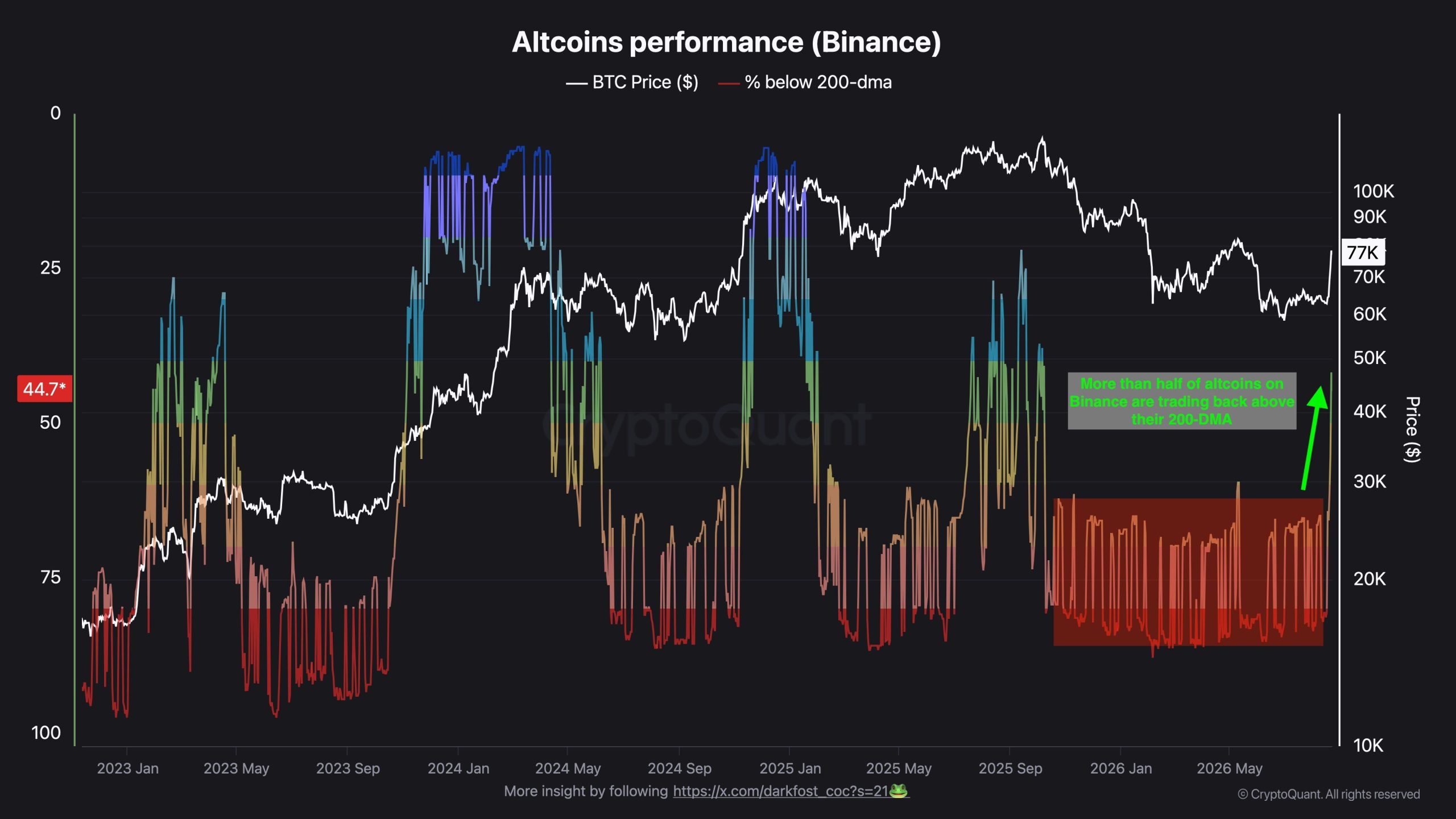
Altcoins moved even faster. According to analyst Darkfost, mid and small caps led the advance, reversing a dormancy phase that began in November. During that stretch, roughly 80% to 85% of altcoins on Binance traded below their 200-day moving average (DMA).
“Today, more than half of the altcoins available on Binance are trading above their 200-DMA, signaling a regime shift,” Darkfost said.

Historically, Darkfost noted that gains of this scale are an intermediate signal of an early-stage altseason. He cautioned, however, that the market has entered overbought territory and may need a short-term breather.
Why Altseason Is Not Confirmed Yet
Bitcoin dominance tells a more cautious story. The metric stood at 59.69% on August 23, per TradingView, still above the level many traders watch for a broader rotation.
“A real low-cap altseason historically needs BTC.D to drop below 58%. Structure is improving, but altseason isn’t confirmed yet, so let’s wait for further confirmation,” analyst Ash Crypto noted.

The Altcoin Season Index provides another reason to remain cautious. The index currently stands at 49, indicating that fewer than half of the top-performing altcoins outperform Bitcoin over the measured period. The threshold for a confirmed altseason is typically 75, when at least 75% of the tracked altcoins have outperformed BTC.
The gap suggests that the recent rally, while broad, has not yet developed into the sustained market-wide rotation typically associated with an altseason.
Whether the rotation broadens may hinge on the Senate’s September 15 procedural vote on the CLARITY Act, the next major catalyst on the calendar.
Subscribe to our YouTube channel to watch leaders and journalists provide expert insights
The post Is Altcoin Season Finally Coming? Market Just Added $215 Billion appeared first on BeInCrypto.
Eric Trump denied that President Donald Trump is preparing to launch a new coin, calling the claim fraudulent in a post that drew 2.1 million views on X.
He responded to a post claiming the President was launching a new coin.
Follow us on X to get the latest news as it happens
Three Trump-Linked Coins Trade Far Below Their Peaks
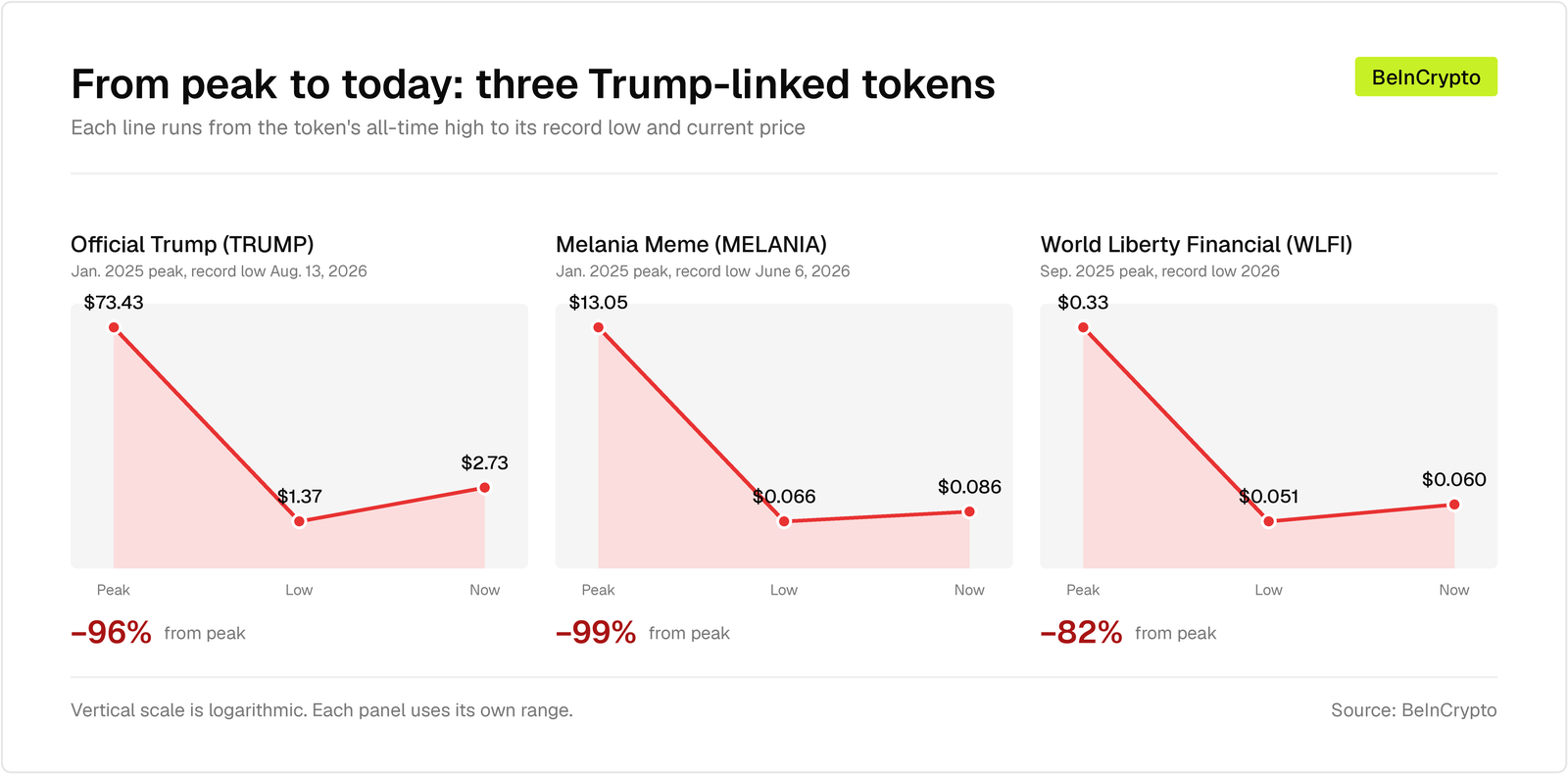
The denial concerns a new token. Nonetheless, three Trump-linked assets already trade, but their performance has been far from impressive. Each trades sharply below its all-time high.
Official Trump (TRUMP) launched on Solana on January 17, 2025, three days before the second inauguration. It reached $73.43 within two days and has since lost most of its value.
TRUMP set a record low of $1.37 on August 13 and has since climbed about 88%. That rebound tracked a broader market rally.

Melania Meme (MELANIA) followed two days after TRUMP. It now changes hands for around $0.086, about 99% below its peak, with a market value of $86 million.
Trump-backed World Liberty Financial (WLFI) began trading in September 2025 and briefly touched $0.33. Eric Trump also lists it in his X profile. The governance token sits near $0.06, roughly 78% down.
Losses, Senate Scrutiny, and Public Opposition
The declines have had a measurable cost for buyers. Blockchain analytics firm Nansen previously tracked about 1.48 million wallets that bought TRUMP. It counted 988,905 underwater, with $3.81 billion in combined losses.
As of the latest data, the picture has not changed much. Among wallets still holding meaningful TRUMP, the majority are underwater. Nansen data consistently shows ~85–95%+ of held positions at a loss, most clustered near −97% unrealized ROI.
However, the outcome has been different for the President himself. Trump reported more than $1.4 billion in crypto income for 2025. His disclosure listed over $500 million from WLFI sales and more than $600 million through CIC Digital.
Senate Democrats, including Elizabeth Warren and Richard Blumenthal, have pushed for investigations into potential national security risks from Trump’s crypto ties.
Public backlash has also followed. A Reuters/Ipsos poll found 63% of Americans call the profits inappropriate, while 69% said his business interests shape presidential decisions.
Senators face a procedural vote on the CLARITY Act on September 15. One draft provision would bar sitting officials from issuing digital assets, turning Eric Trump’s denial into a legal requirement.
Subscribe to our YouTube channel to watch leaders and journalists provide expert insights
The post Another TRUMP Coin? Eric Trump Shuts Down New Crypto Rumors appeared first on BeInCrypto.


An unidentified Bitcoin user embedded a 255-byte message in block 963,629 on Aug. 22, announcing a wallet puzzle whose private-key material was allegedly derived from Satoshi Nakamoto’s Genesis Block.
Summary
- Bitcoin block 963,629 contains a 255-byte message describing a deliberately low-entropy Genesis Block wallet security puzzle.
- The 500-byte transaction paid 250 satoshis in fees, equivalent to 0.60 satoshis per virtual byte.
- Anonymous creator claims all inputs needed to reconstruct the wallet exist inside Bitcoin’s Genesis Block.
- Galaxy Research identified the transaction, but neither the author’s identity nor derivation method is verified.
- No verified evidence currently shows the puzzle was solved or that its associated reward moved.
Galaxy Research identified the transaction on Aug. 23. Independent block data confirms that Foundry USA mined block 963,629 at approximately 19:45 UTC on Aug. 22. The block remains part of Bitcoin’s confirmed transaction history.
The message does not reveal the creator’s identity, derivation formula or complete solution. No verified evidence available at publication time showed that anyone had deciphered the puzzle or moved its advertised reward.
Bitcoin puzzle message describes deliberately weak entropy
The transaction contains a human-readable message placed in an OP_RETURN output. Its author said:
“I created a Bitcoin puzzle using information contained in the Genesis Block created by Satoshi to generate the wallet.”
The creator added that the wallet’s entropy was “extremely low” and claimed no private backup was necessary because “everything I needed was already in the Genesis Block.” These are claims from the unidentified author and do not independently reveal how the wallet was generated.
Entropy refers to the randomness used when creating private keys. A secure wallet draws from a sufficiently large and unpredictable set of possible values. A wallet generated from well-known public data can become vulnerable if an attacker can reproduce the exact selection, ordering and transformation process.
Block 963,629 permanently records the challenge
The transaction was 500 bytes and paid a miner fee of 250 satoshis. Its fee rate was 0.60 satoshis per virtual byte, making the on-chain message inexpensive to publish.
The 255-byte payload represented more than half the transaction’s raw size. Galaxy Research therefore characterized it as an “oversized OP_RETURN.” The description refers to its unusual size compared with ordinary data outputs, not a breach of Bitcoin’s consensus rules.
OP_RETURN allows users to create provably unspendable outputs carrying arbitrary information. In related coverage, crypto.news previously explained how users have embedded permanent messages in blockchain transactions, including tributes, political statements and timestamped records.
Once confirmed, the puzzle text became part of Bitcoin’s transaction history. However, embedding a claim on-chain proves that the message existed by that time. It does not prove that every statement inside it is accurate.
Genesis Block offers several possible inputs
Satoshi mined Bitcoin’s Genesis Block, also called block zero, on Jan. 3, 2009. Its hash is 000000000019d6689c085ae165831e934ff763ae46a2a6c172b3f1b60a8ce26f.
The block also contains a timestamp, nonce, Merkle root, public key and the well-known newspaper headline: “The Times 03/Jan/2009 Chancellor on brink of second bailout for banks.” Any of those values could form part of the puzzle’s key-generation process.
Blockstream’s technical reference lists the Genesis Block’s timestamp as 1231006505 and its nonce as 2083236893. The public availability of these values means solvers can reproduce them, but they still need to identify which information the creator selected and how it was processed.
The puzzle should not be confused with the Genesis Block’s original 50 BTC subsidy. Those coins are unspendable because the original Bitcoin implementation did not add that coinbase transaction to the spendable output set.
Solvers still need the missing derivation method
The next verifiable development would be an outgoing transaction signed by the puzzle wallet’s private key. Such a movement could show that someone derived the correct key, although an apparent solution could also come from the original creator.
Galaxy Research had not identified the author or published a verified solution when it disclosed the transaction. The on-chain message also does not establish that the creator recovered forgotten Satoshi code, as the original headline suggested.
Until a valid spend or signed proof appears, the event remains a newly published Bitcoin puzzle built around public Genesis Block data, not a deciphered secret from Satoshi Nakamoto.
Nvidia has reportedly told some of its largest customers that servers built around its AI chips are getting more expensive.
Increases top 15% on systems shipping early next year, people cited by Bloomberg said. The size of each increase varies by chip generation and memory configuration.
Why Memory Makers Now Set the Price
Bloomberg, citing people familiar with the process, reported that the increases cover systems using the flagship Vera Rubin and Grace Blackwell chips.
Server builders that assemble hardware for data center operators, including Microsoft, Alphabet’s Google, and Oracle, passed the notice along.
Nvidia accelerators depend on how much dynamic random access memory (DRAM) is paired with them. Samsung, SK Hynix, and Micron produce most of the world’s supply.
Output has climbed, yet demand still runs ahead of it. This gap has pushed prices for the commodity-like components sharply higher and handed the three producers rare influence over the sector.
Micron chief executive Sanjay Mehrotra has described memory as the strategic infrastructure of the AI era.
“Today there is no AI without memory. AI systems need more memory. They need higher performance memory. They need lower power memory,” he said.
Follow us on X to get the latest news as it happens
Cost Pressure Builds Before Nvidia Earnings
Nvidia runs a 75% gross margin and charges tens of thousands of dollars per chip. Its decision to pass costs on rather than absorb them shows how tight the supply chain has become. Apple and Qualcomm have also raised product prices due to chip shortages.
Amazon, Microsoft, Google, and Meta all run in-house chip programs. However, they still buy Nvidia hardware and still compete for the same memory supply.

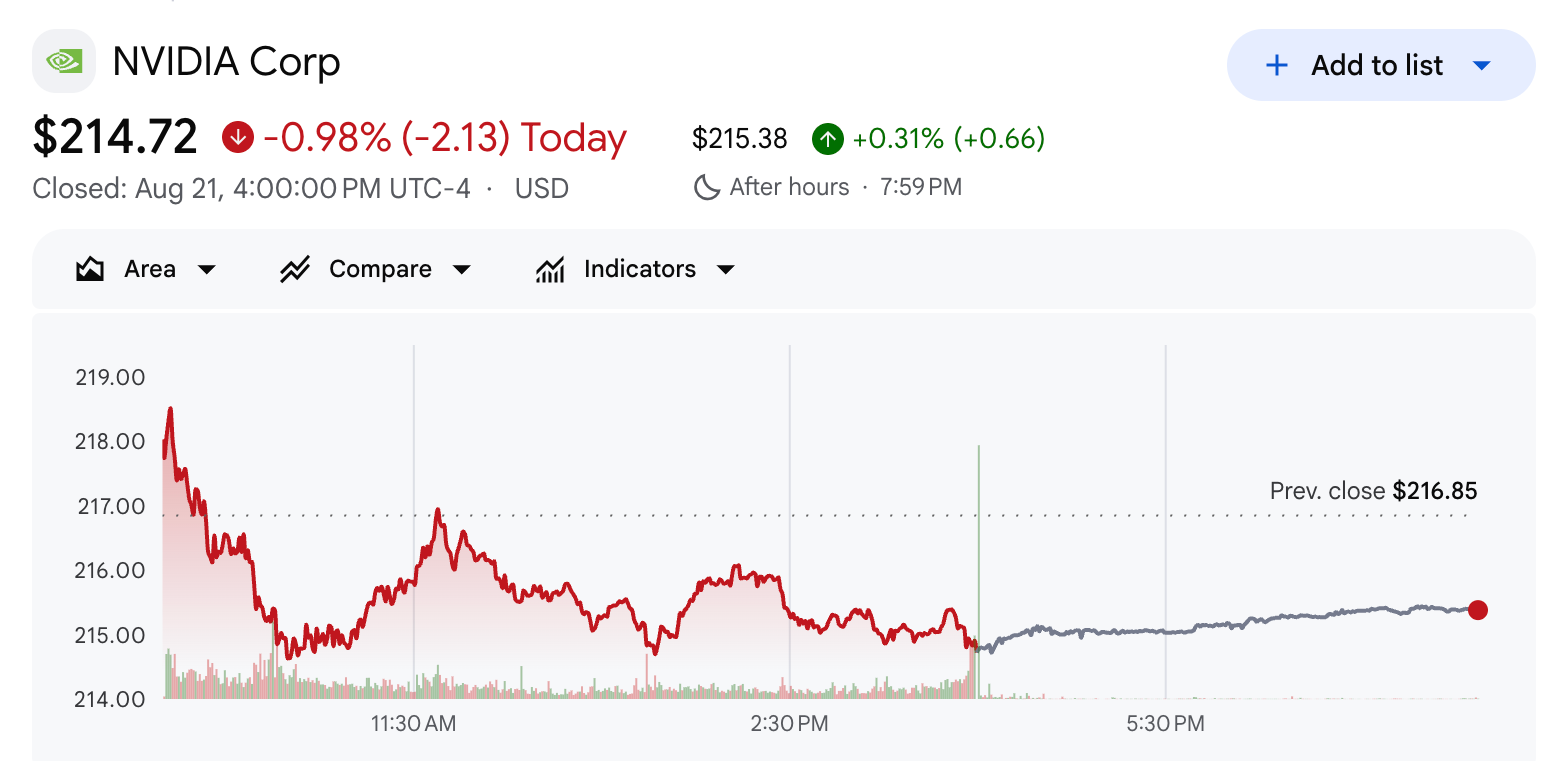
The timing matters. Nvidia reports fiscal second-quarter results on Wednesday after a six-session losing streak, its longest since 2022, that left shares at $214.7 on Friday.
Investors will now weigh whether rising input costs read as a margin threat or as further proof of AI demand.
Subscribe to our YouTube channel to watch leaders and journalists provide expert insights
The post Nvidia Reportedly Warns Top Customers of 15% Price Hikes on AI Servers appeared first on BeInCrypto.

Protesters dressed as rogue AI agents target OpenAI in Bellevue with balloons and hot pink vests

Financial Audit Guest Commits TAX FRAUD

Two men arrested over Newtownabbey stabbing released





-

 Fashion2 days ago
Weekend Open Thread: Madewell – Corporette.com
-

 Crypto World1 day ago
anatomy of crypto’s biggest liquidation event since 2021
-

 Business5 days ago
SMA Solar Technology AG (SMTGY) Q2 2026 Earnings Call Transcript
-

 Tech5 days ago
Qwen3.8-27B runs frontier-class coding agents and reasoning locally, no cloud API required
-

 Politics1 day ago
6 months on, Irish renters crushed by effects of government housing bill
-

 Crypto World6 days ago
OCC Greenlights Trump Family Crypto Firm for Trust Charter
-
 NewsBeat1 day ago
The ‘Lucky Dip Gang’ causing carnage for clicks: After five thugs were killed speeding in the wrong direction on a motorway, GUY ADAMS investigates a sick new trend… and why police aren’t even allowed to pursue them
-

 Crypto World6 days ago
NAVI Prime launches institutional lending framework on Sui
-

 Crypto World7 days ago
Data of 54K Wallet Users Leaked, Clarity Odds Just 10%: Hodler’s Digest, Aug. 16
-

 News Videos3 days ago
Don’t Leave Your Financial Future To Chance | August 19, 2026
-

 Politics7 days ago
Britain is facing a housing disaster
-

 Business5 days ago
Stock Market Today: Tech Futures Slide As Treasury Yields Jump; Nvidia, Micron, Sandisk Sell Off
-

 Tech4 days ago
GLM-5.3 hits the API at $1.4/$4.4 per million tokens
-

 Business7 days ago
Rebel Creamery files Chapter 11 with $23.8M Van Leeuwen judgment on appeal
-
 Crypto World6 days ago
Dow’s 3-Year Winning Run Isn’t a Crash Signal, Still 49% Odds of Double-Digit Gains
-

 Tech6 days ago
Straight Up the Cliff, Yunnan’s New Fuyao Ladder Turns a Three-Hour Climb Into a 50-Second Ride for Students
-
Tech5 days ago
5 Of The Most Reliable Car Brands To Consider If You’re Buying A Used SUV
-
 Tech7 days ago
OpenAI’s new ChatGPT feature logs your keystrokes and stores them in plain text
-

 Tech7 days ago
DeepSeek’s top-ranked V4 Flash stumbles on real agent tasks as its prices surge
-
 Tech6 days ago
Nvidia discloses $21B stake in SpaceX
You must be logged in to post a comment Login